I finally got around to having a walk through Finsbury Circus since it was reclaimed from the Crossrail excavations last year.
The park has two boasts – firstly, that it’s the largest public space in the City, and secondly, that it’s the oldest public park in London. At two acres, the first statement is undoubtedly true. The second, however, is a bit tenuous but I’ll relate the history of the space and you can reach your own conclusion.
Once upon a time, this area was part of the 12th century manor of Finsbury (hence the name). According to the Museum of London archive, archaeological investigations at seven sites within the nearby Finsbury Square area have revealed important evidence for the medieval and post-medieval development of this former marshy area north of the city walls. Evidence was recovered for Finsbury manor house, documented from 1272 and moated by the 14th/15th centuries, and for widespread quarrying and brick manufacturing beyond the manor in the later 15th century, along with dumping from nearby leather workshops in the 15th and 16th centuries.
The 16th century Agas map identifies the area as More Fyeld and, as you can see from this section of the map, it was a public open space where clothes could be laid out to dry …
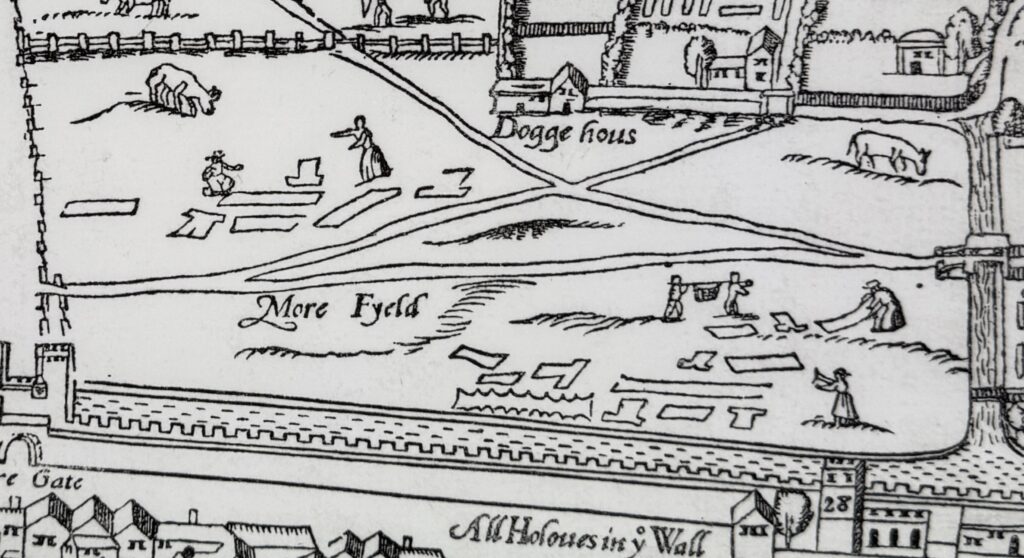
The dog house, incidentally, was where the Lord Mayor of London kept his hunting dogs.
The area in a wider perspective. Note the windmills, the men practising archery and the packed housing inside the London Wall. You can also see two of the City gates – Moorgate and Bishopsgate. Look north of the latter and you can observe how the City is already spreading out into farmland …
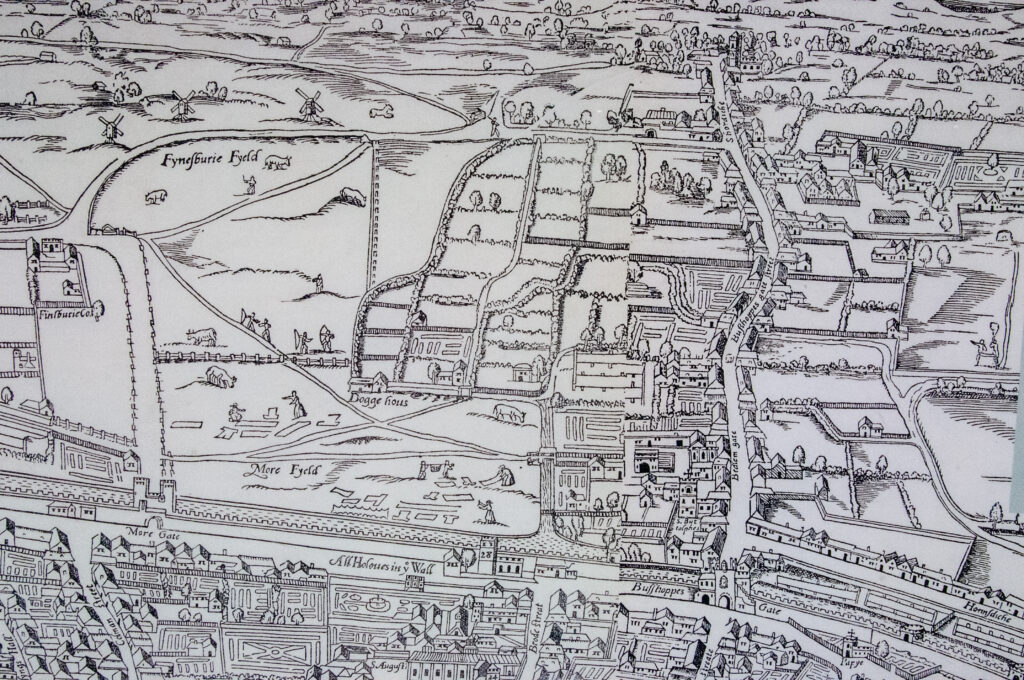
The designation of this as a public open space in 1607 was quite revolutionary since previously large open spaces tended to be enclosed (and were often the property of institutions such as the monasteries or the inns of court).
By the late 17th century it had acquired a notorious neighbour, as can be seen in this map of 1682 …
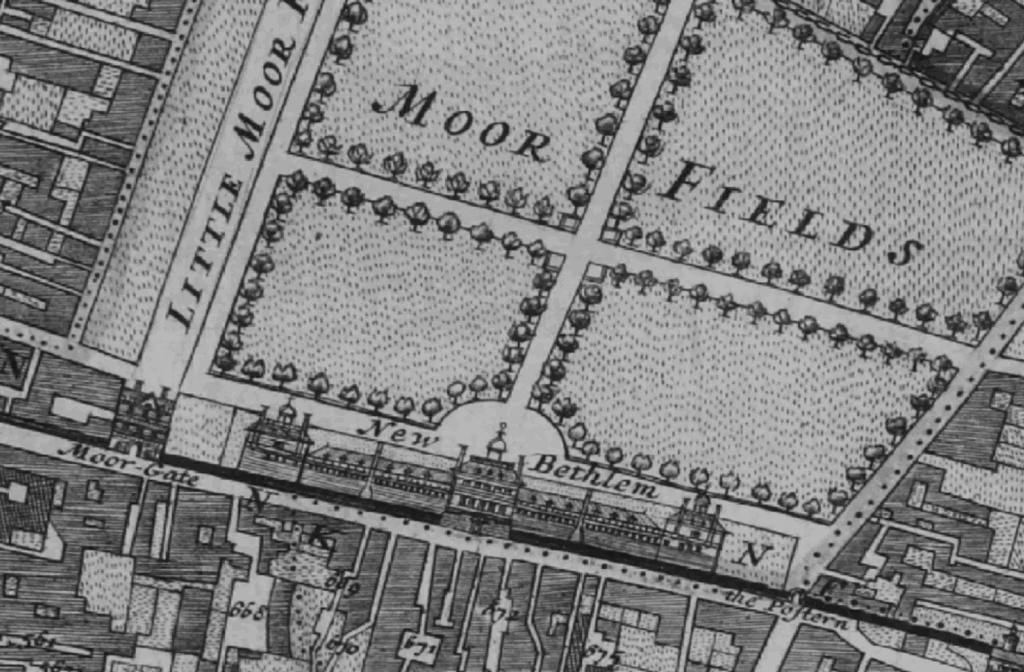
Bethlem Royal Hospital was England’s first asylum for the treatment of mental illness, and for many years a place of inhumane conditions, the nickname of which – Bedlam – became a byword for mayhem or madness. It was also a popular London attraction for the morbidly entertained.
Old Bethlehem Hospital at Moorfields about 1750 …
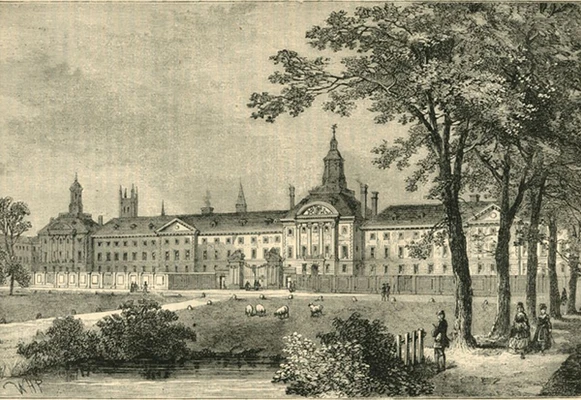
By the 1750s Bethlem was accepting tens of thousands of paying visitors a year, making it a top tourist attraction for Londoners, second only to St Paul’s Cathedral in popularity. Most did not wish to admire the manicured gardens or ornate architecture but came instead to visit the hospital’s ‘crackbrained’ patients. For as little as a penny, anyone could gain access to Bethlem’s wards in order to stare at, taunt or abuse inmates.
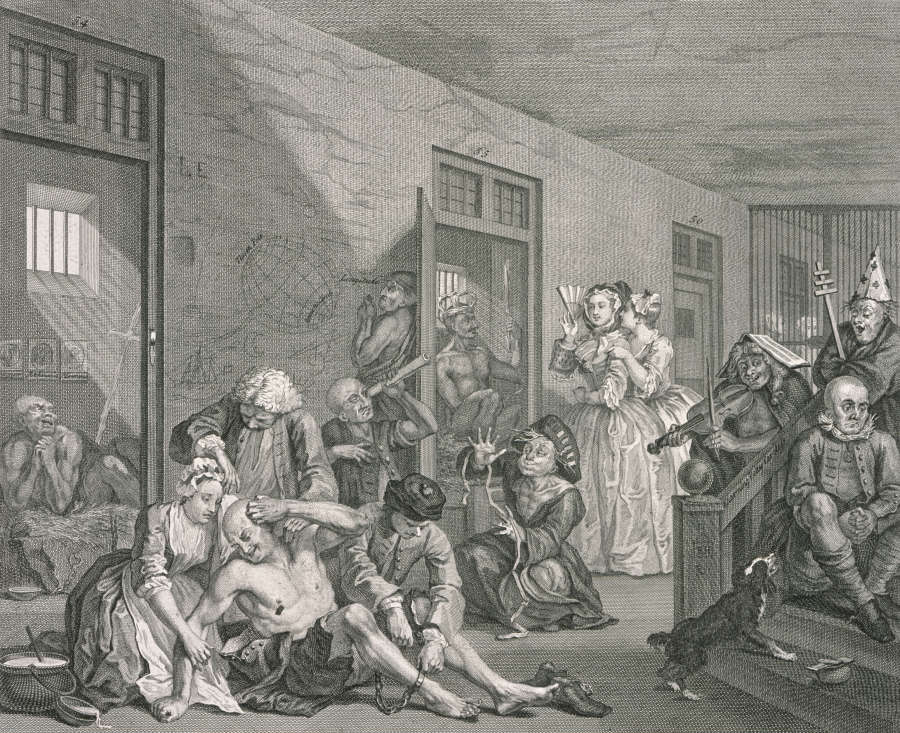
An insight into the chaos of the hospital can be seen in Hogarth’s ‘madhouse’ scene from his series, A Rake’s Progress. The ‘Rake’, a previously wealthy young man has lost his money gambling and is thrown into Bethlehem Hospital. He is half naked with his head shaved, his ankles about to be shackled, while around him are various scenes of madness while two well-dressed women visitors look on in amusement …
In 1815, Bethlem was moved from its collapsing Moorfields site to a brand new building at St George’s Fields, south of the Thames. Lessons had been learned and an 1818 report found patients ‘clean, amply supplied with wholesome provisions and well clothed [with none] under restraint’. A financial audit suggested that the hospital was solvent and generally well-managed.
In 1815 the City Surveyor, William Mountague laid out the large, oval design that still exists today. The space was unique in the City of London, a copy of the grand garden squares in the West End, and the circus was originally flanked by houses whose residents had exclusive use of the garden. Eventually, however, the houses were gradually demolished and the circus was opened as a public park in the early 20th century.
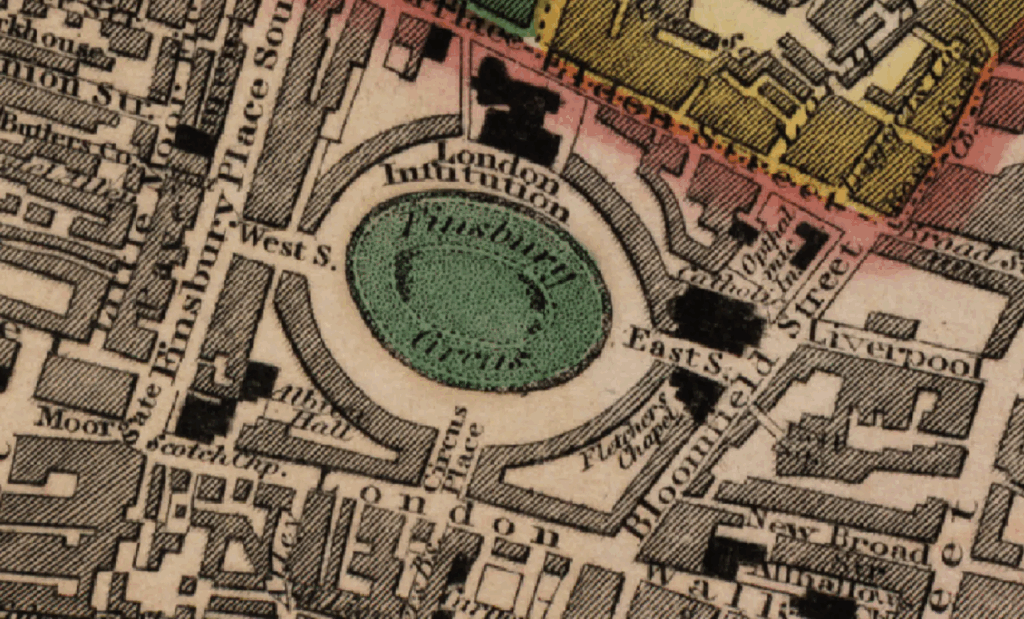
Looking at the 1828 C and J Greenwood map, the oval lawn is clear and one of the most prominent buildings is the London Institution. The educational institution specialised in the study of chemistry and only closed in 1912. It was briefly used by University of London but then the buildings were demolished in 1936 …
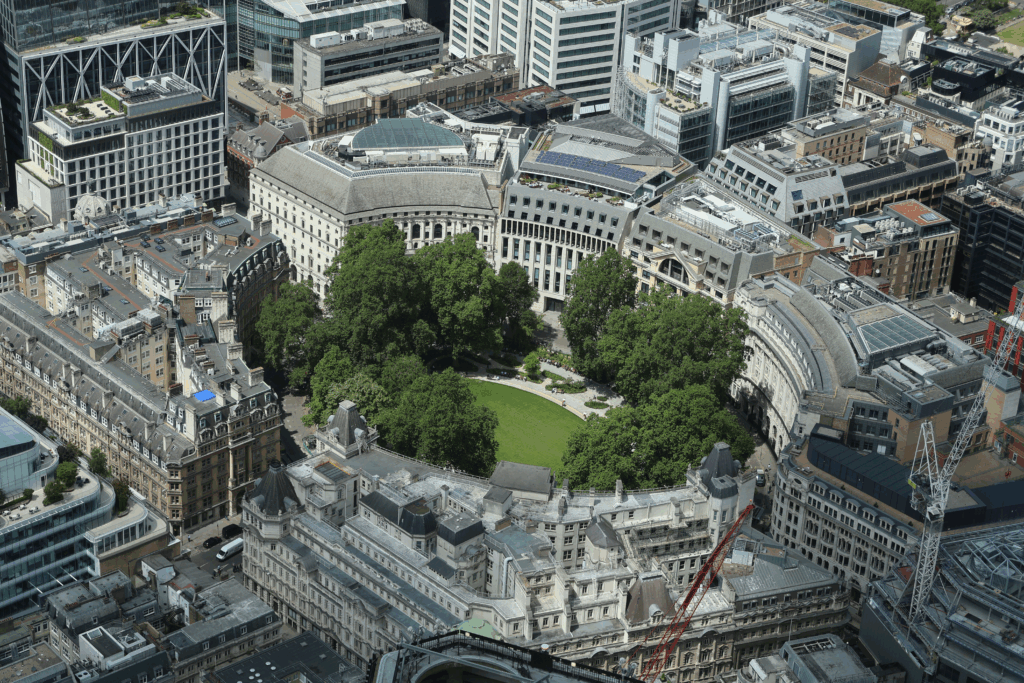
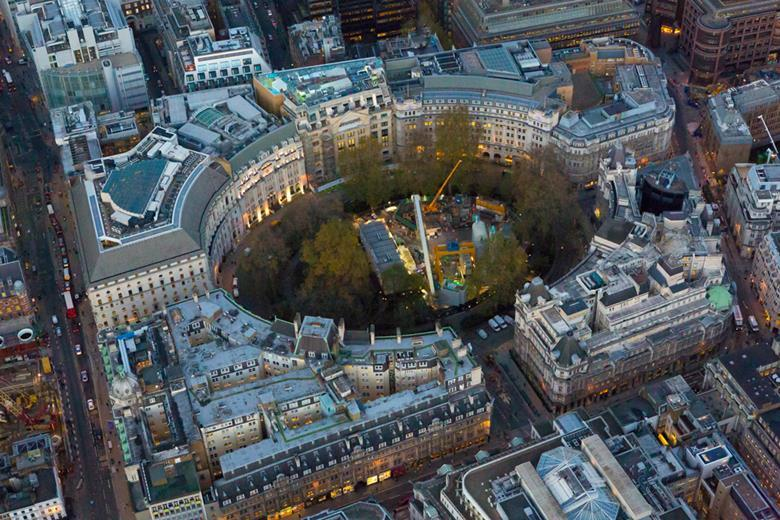
The ‘circus’ of the name reflects the elliptical shape of the space, similar to the circus venues of ancient Rome. This recent aerial image illustrates this nicely …
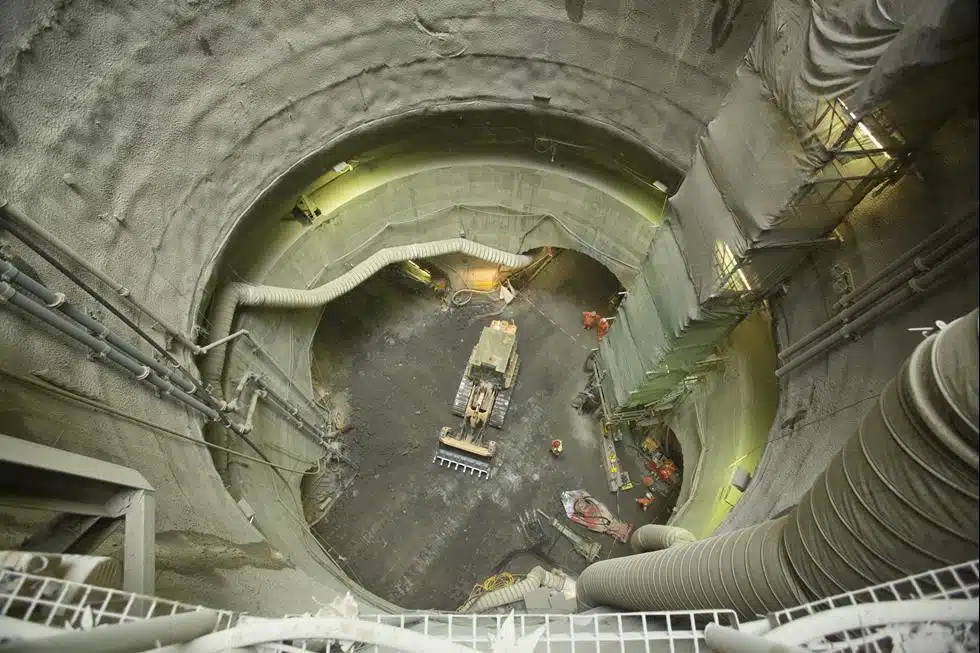
From 2010 Crossrail took over the site to utilise the open green space as an access shaft to building the Elizabeth Line’s Liverpool Street Station. This was an extraordinary feat of engineering and here are some images showing the work in progress at the circus …
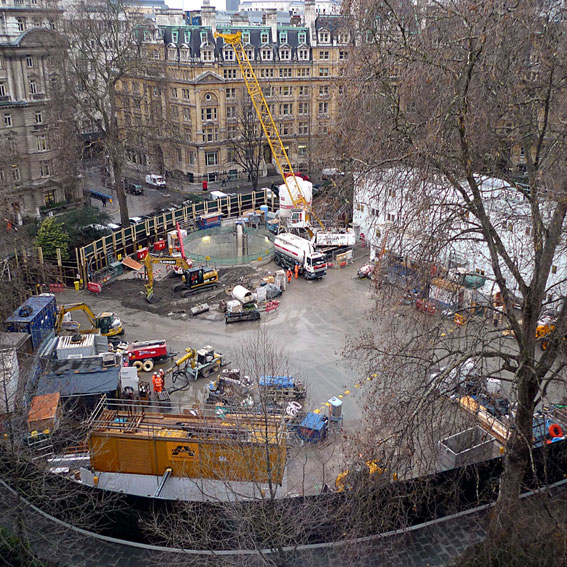
Looking down the shaft. It was 42 metres deep (that’s twice the height of the surrounding buildings if you want to picture it!) …
The garden is now restored and open. Policy Chairman at the City of London Corporation, Chris Hayward, said: Finsbury Circus Gardens is a beautiful, tranquil retreat in the heart of the City – now revitalised and ready to be rediscovered. Our green spaces play a vital role in making the Square Mile a welcoming and attractive place to live, work, and visit – delivering on our vision for a more inclusive, innovative, and sustainable City. These gardens reflect what makes the City of London so special – not just a global financial powerhouse, but a destination rich in beauty, history, and moments of escape.
I’m inclined to agree. Here are some images I took last week when there was actually some sunshine for a change!
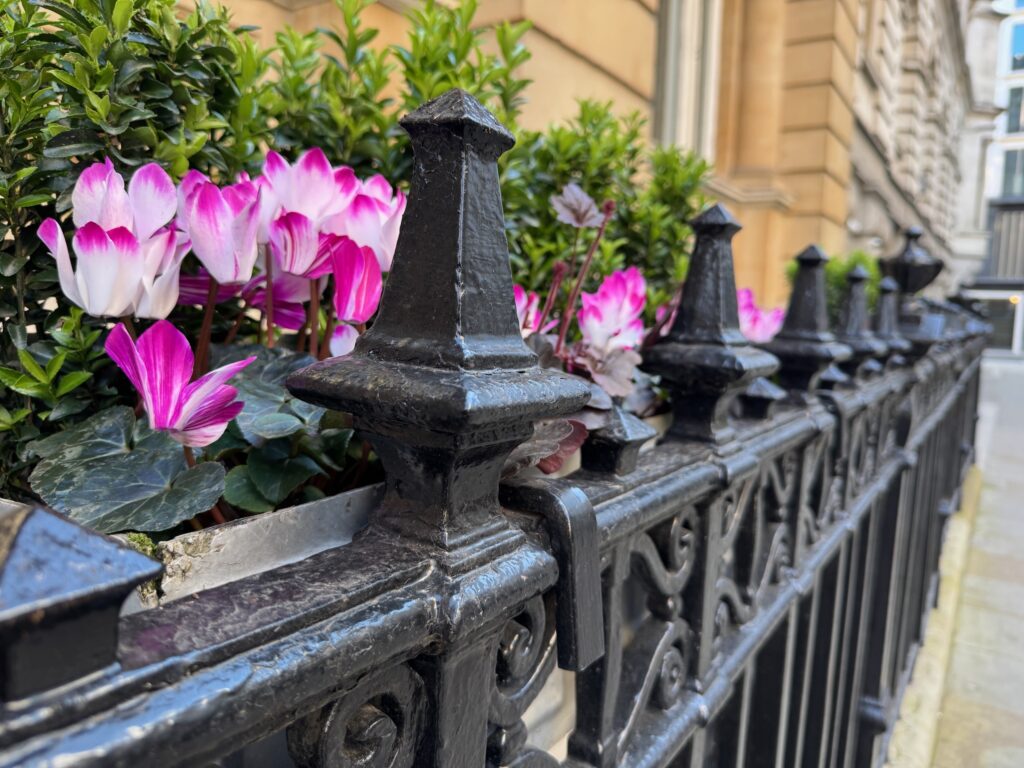
The approach from Moorgate has been pedestrianised with some nice new planting …
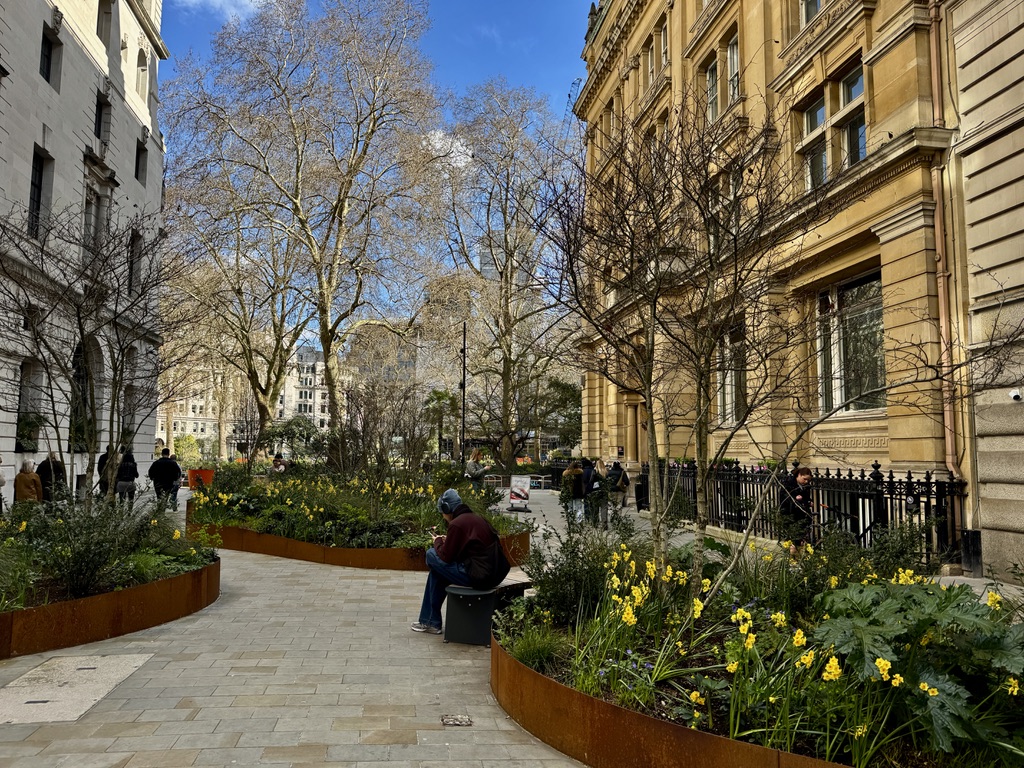
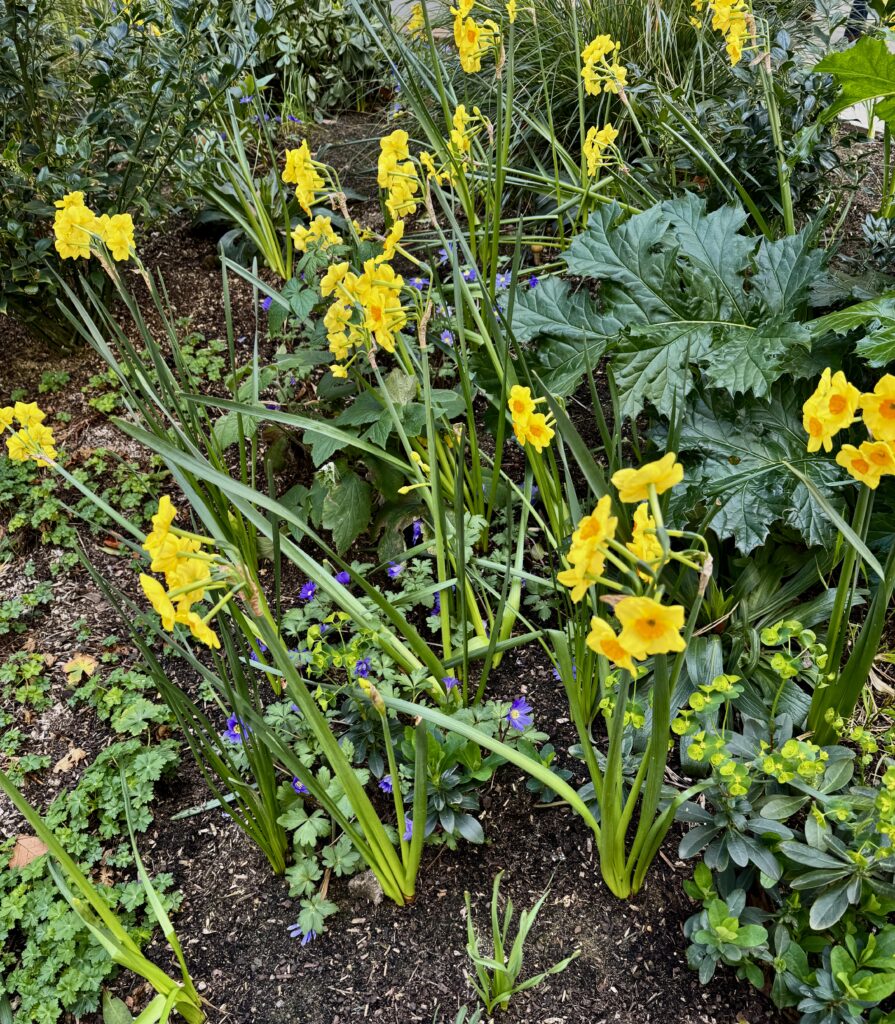
New landscaping has allowed 12 additional tree species to be introduced, along with 13,000 plants and 6,000 bulbs, creating a habitat for birds, bees and bats. A large central lawn is surrounded by flat, wide pathways and seating in the form of many benches, which will no doubt be popular with workers from nearby offices during sunny lunchtimes …
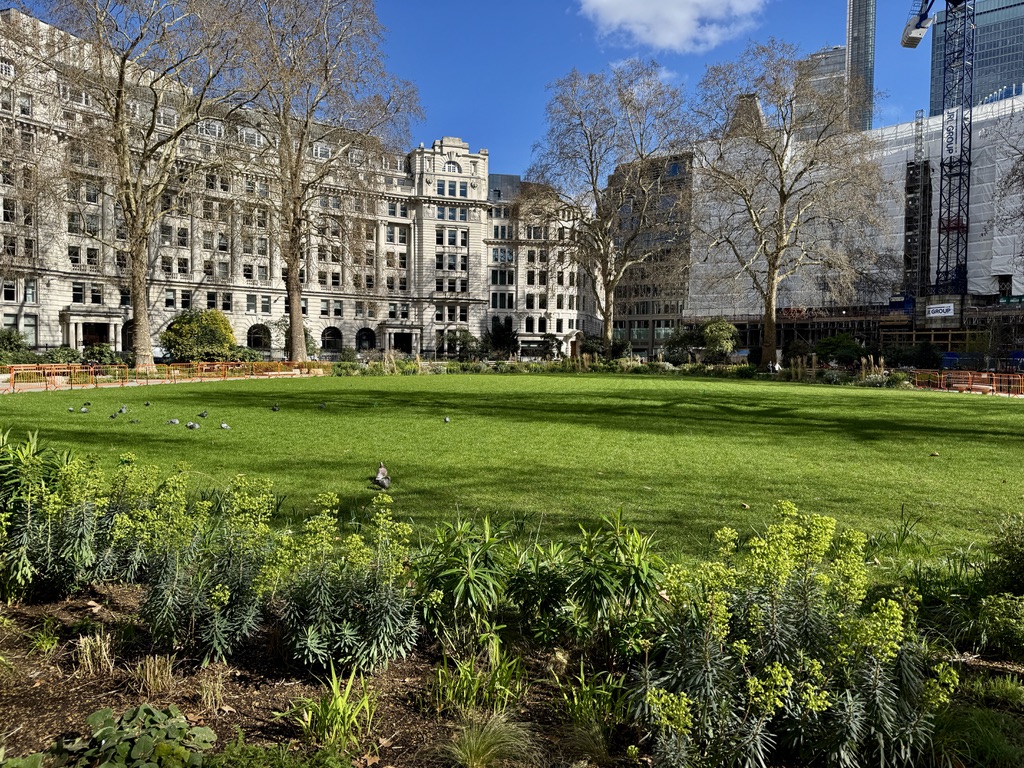
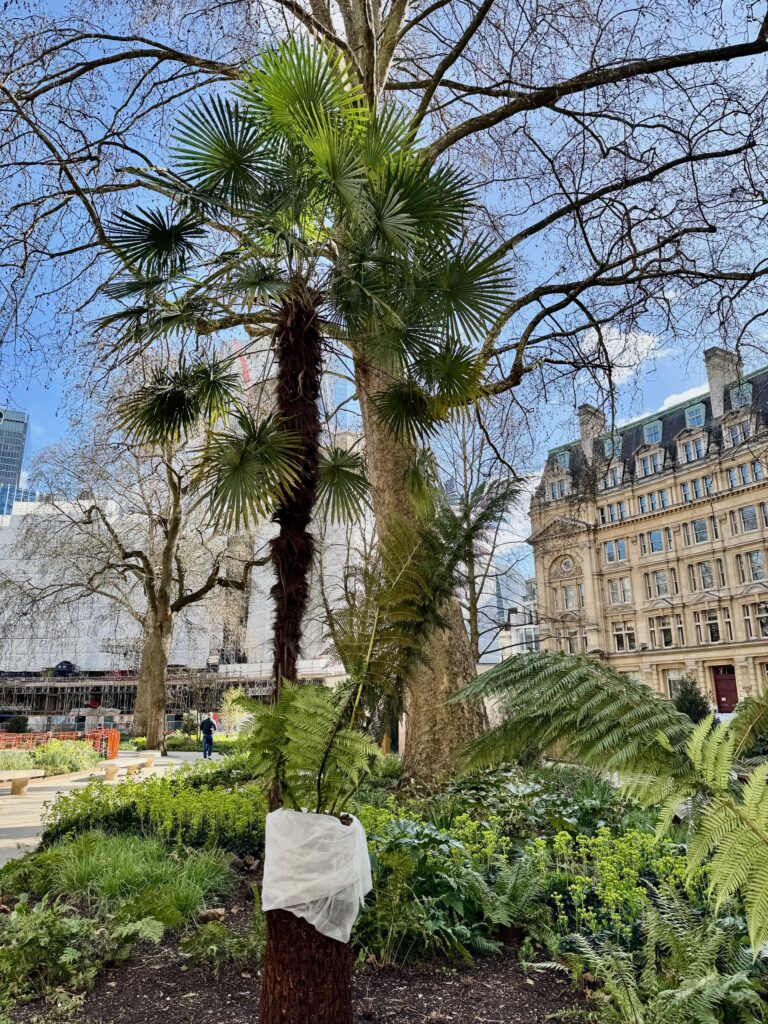
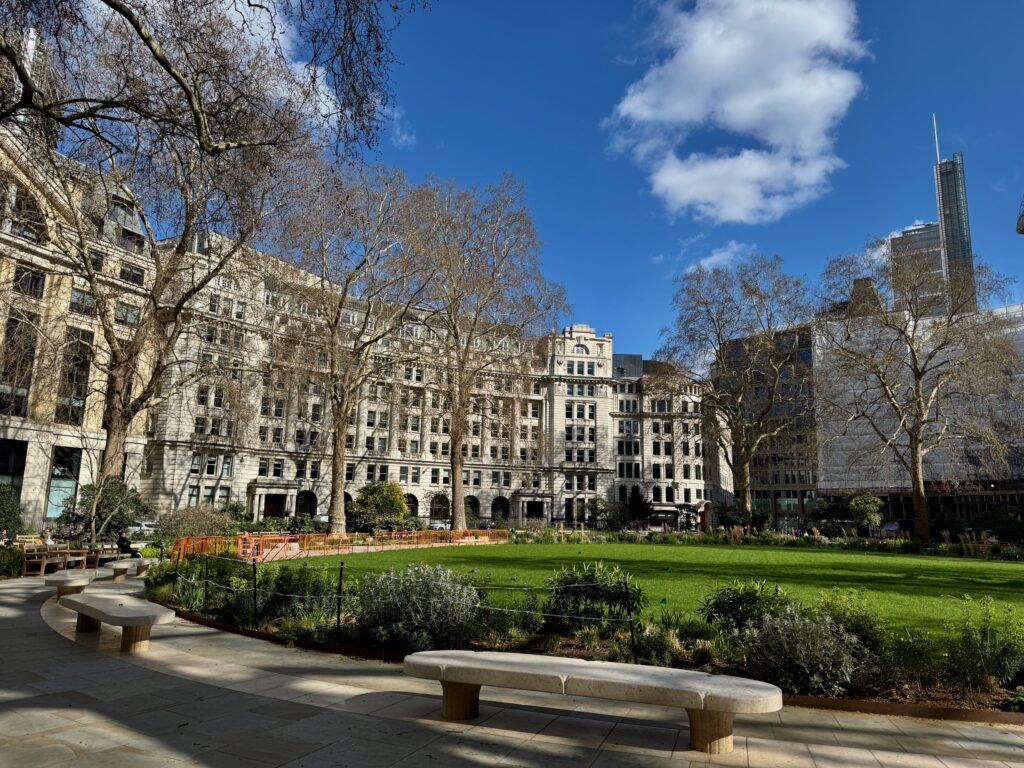
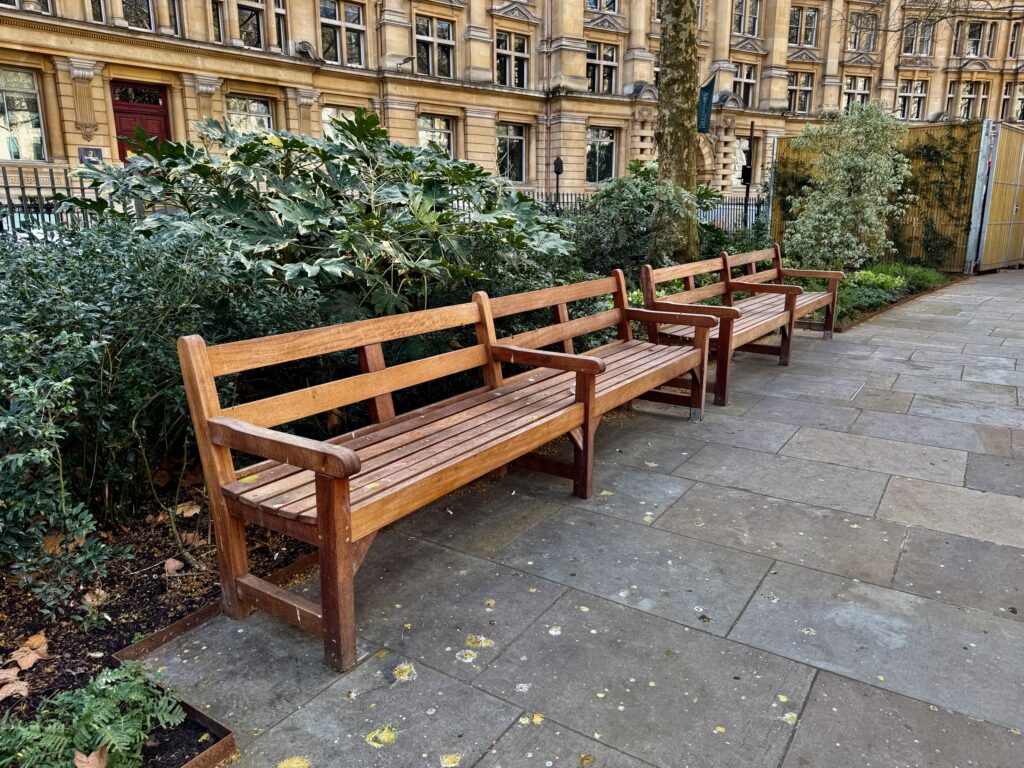
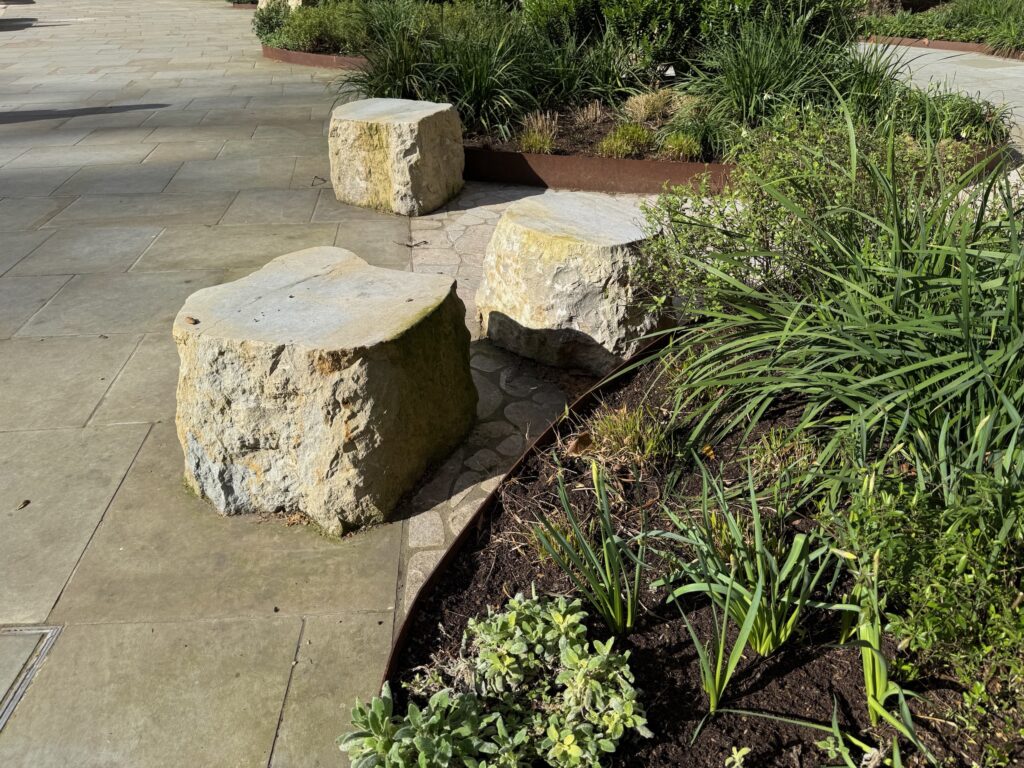
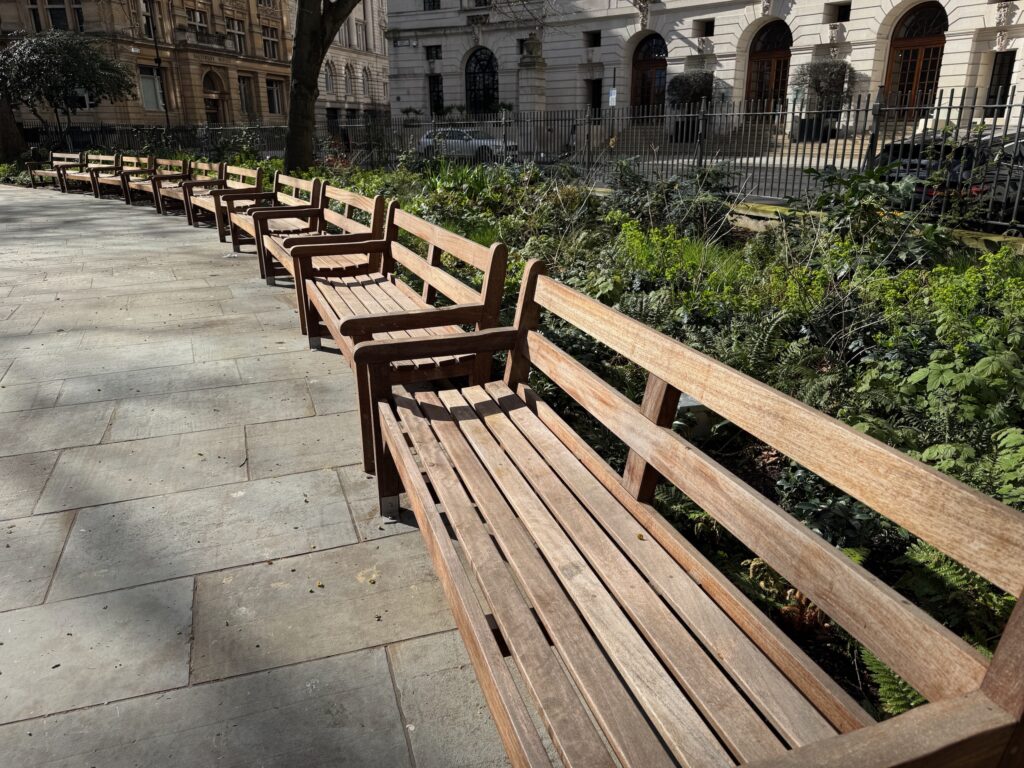
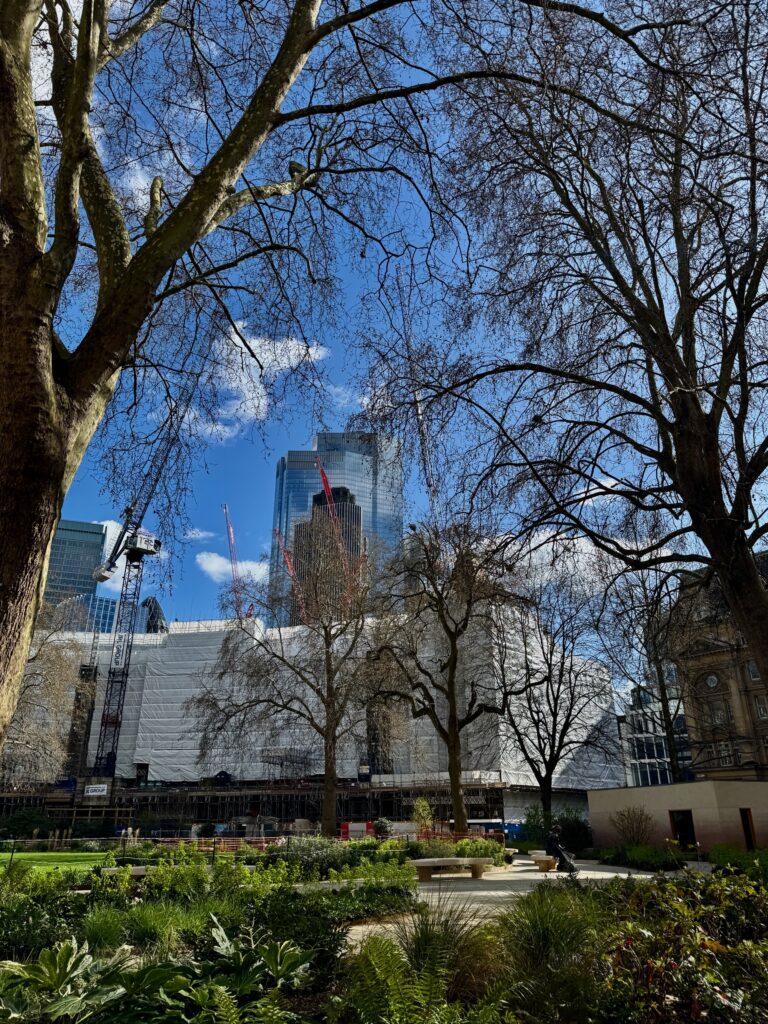
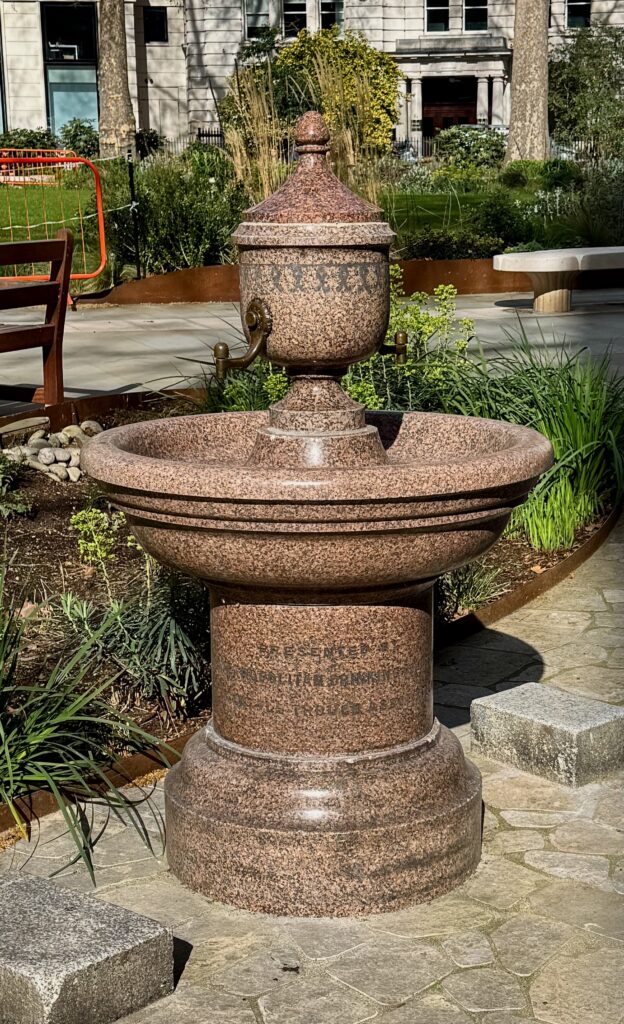
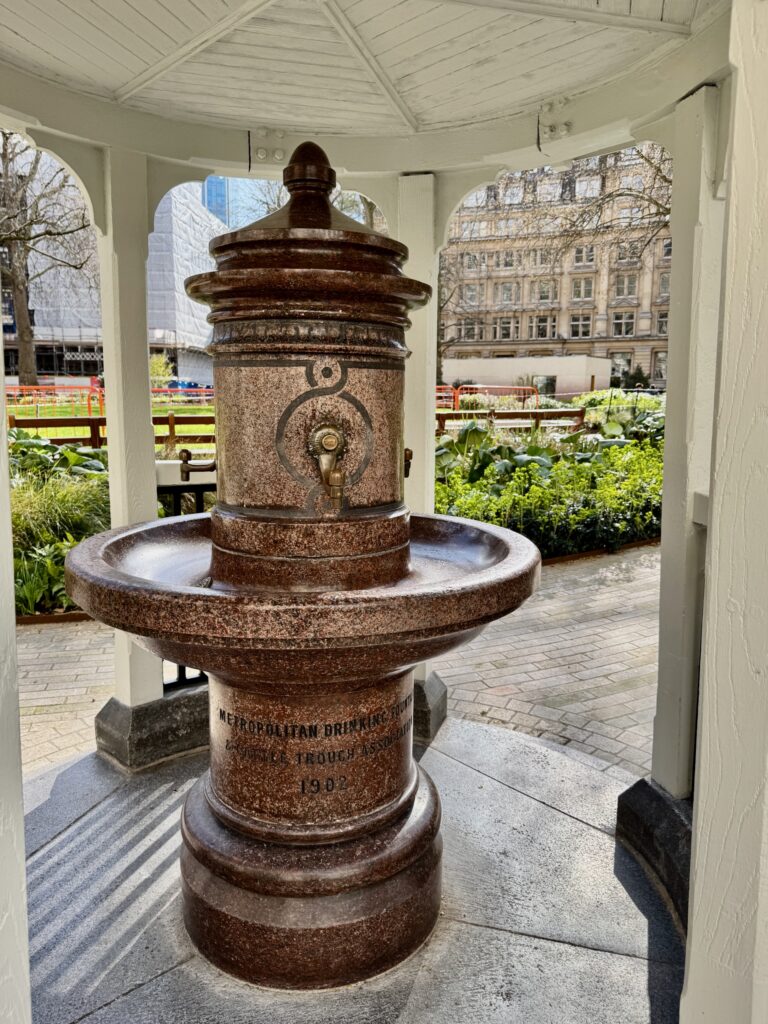
Two lovely old drinking fountains …
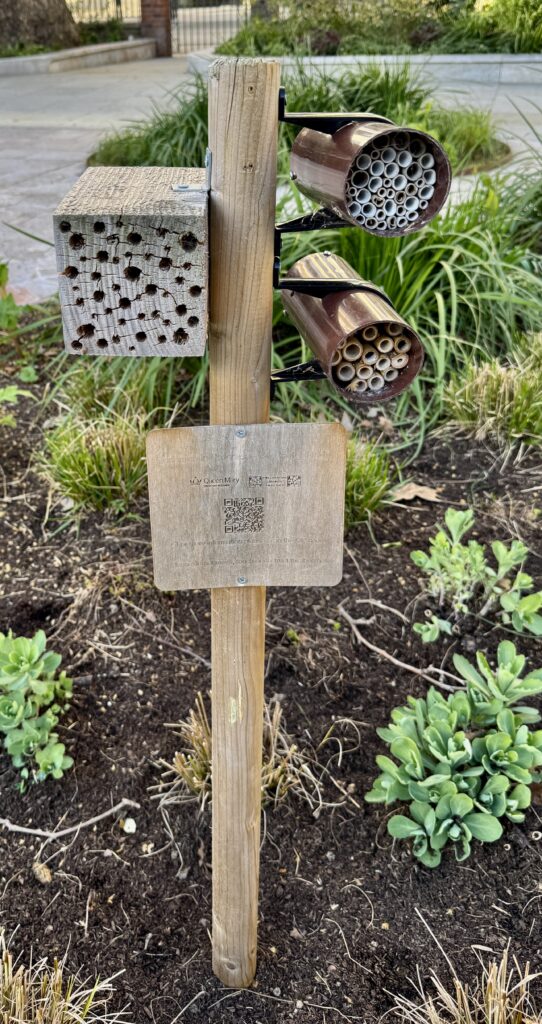
Insect hotel …
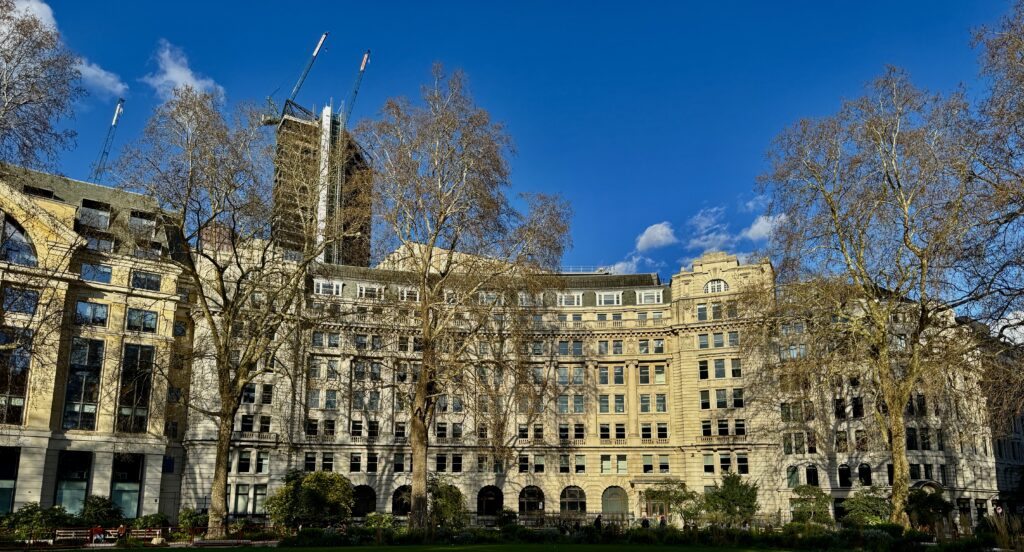
I was relieved to see that the beautiful mature trees had survived the disruption …
The squirrels and pigeons carry on their traditional roles as professional beggars …
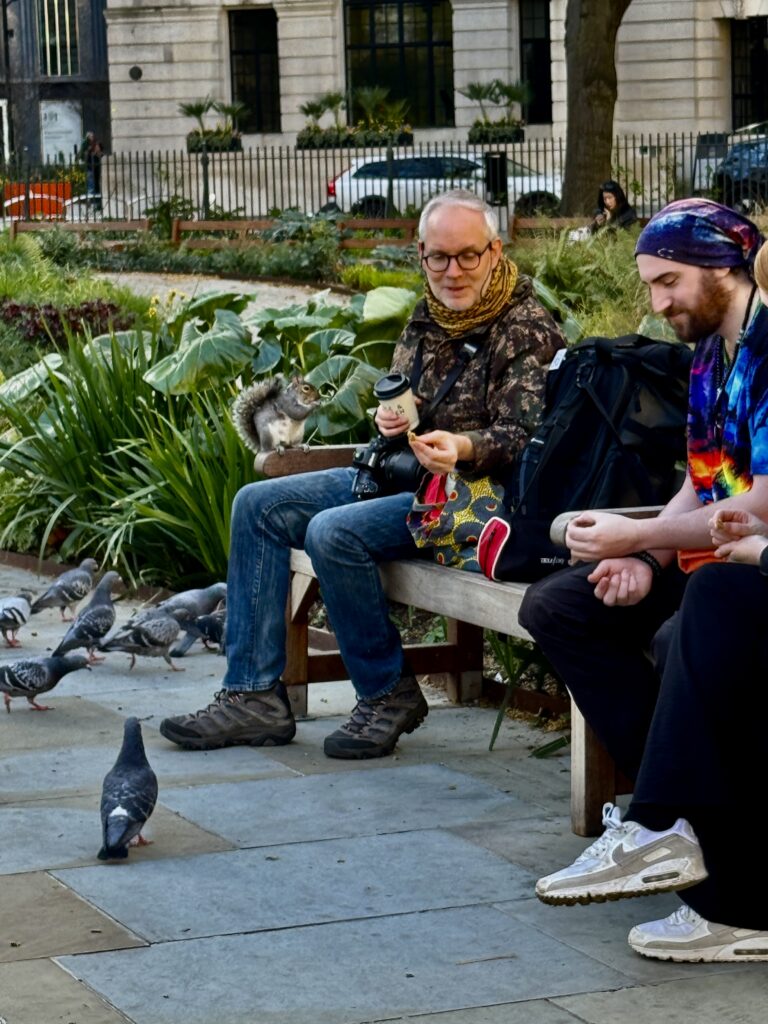
I was puzzled as to what became of the squirrels during the fifteen years of disruption after Crossrail moved in. Did they hang around in the trees or did they arrange an orderly retreat up City Road to Bunhill Fields until things returned to normal? I suppose I’ll never know.
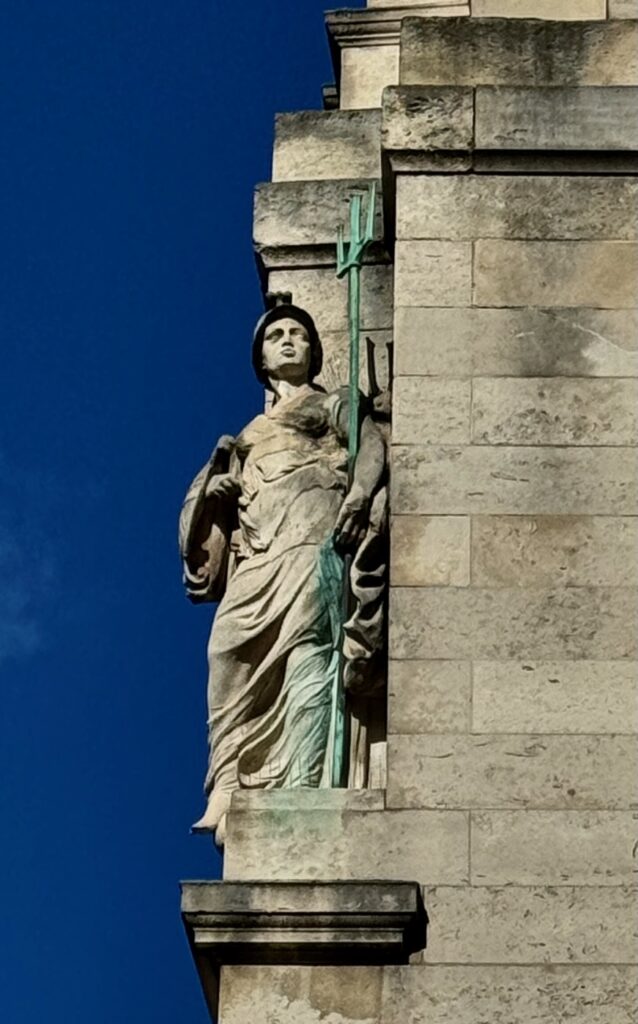
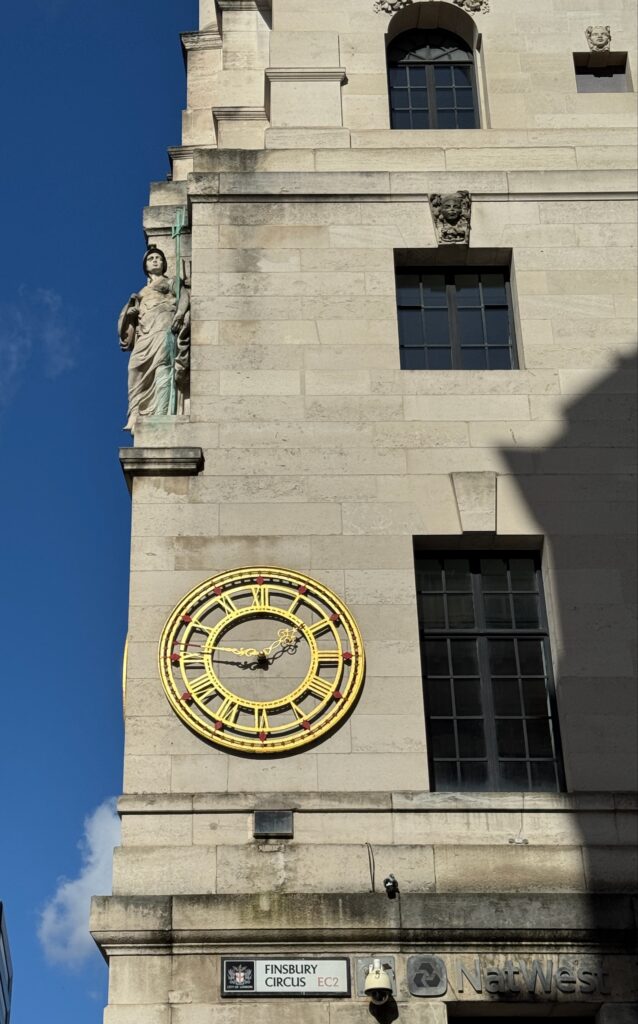
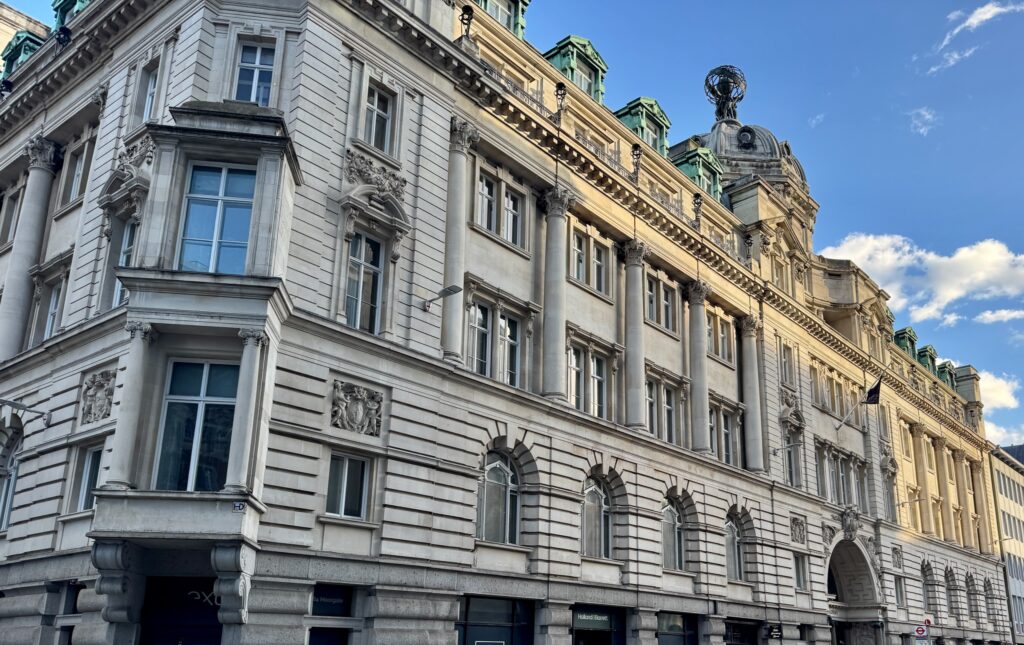
There are interesting buildings both near and overlooking the circus and I shall write about them in another blog. Here’s a taster …
My thanks to Katie Wignall of Look Up London whose blog gave me some of the ideas for this week’s edition. You can read her post on Finsbury Circus here.
If you would like to follow me on Instagram here is the link …