As promised last week, I’m going to write a little more about my journey ‘west’ to Fitzrovia.
Firstly, I’m grateful to the Fitzrovia Neighbourhood Association for the explanation on their website as to where the name Fitzrovia originated. Here is an extract: Biographer Paul Willetts describes the name Fitzrovia as a “retrospective label applied to a district of central London where, between roughly 1925 and 1950, the pubs, restaurants, cafés, and drinking clubs provided a fashionable rendezvous for a diverse range of writers with a taste for bohemian life. The label, which had passed into common usage by the early 1960s, acknowledged the one-time status of the Fitzroy Tavern, at 16 Charlotte Street, as the area’s pre-eminent venue. Together with Rathbone Place, Charlotte Street forms the crooked spine of Fitzrovia.” You can read more on their very informative and interesting website.
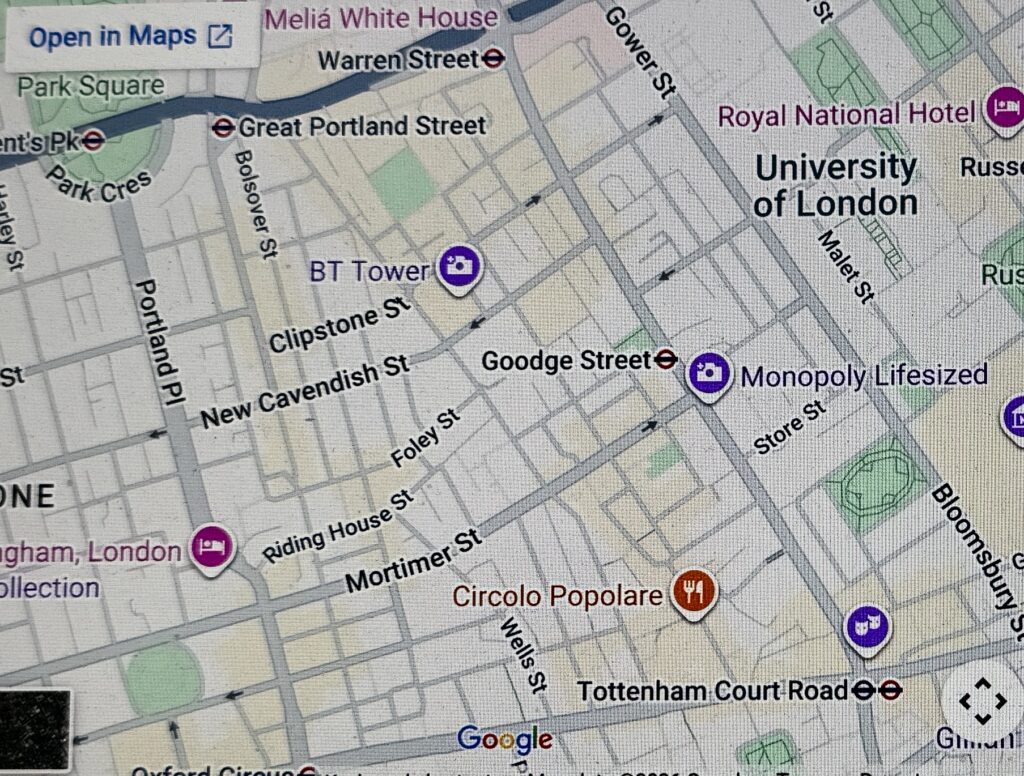
Where is Fitzrovia? A screenshot from the Association website …
I wrote about the beautiful Fitzrovia Chapel in last week’s blog and here are some more aspects of the area that I found interesting.
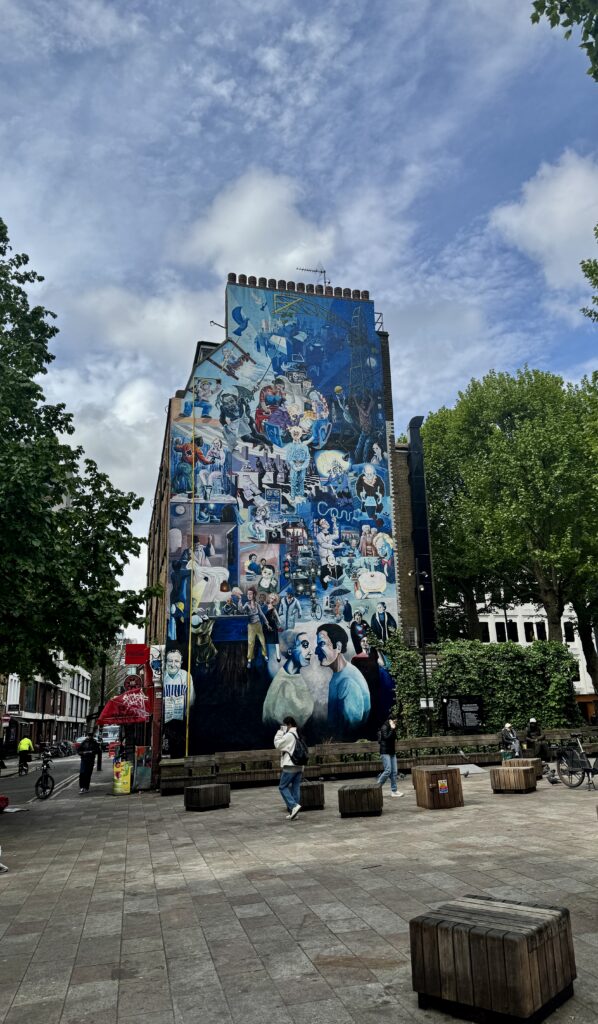
First up is the Fitzrovia Mural …
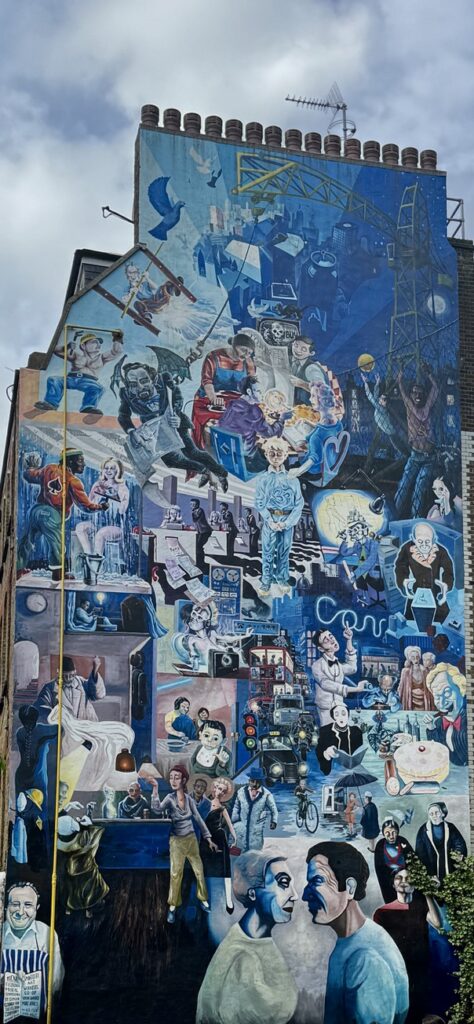
Here’s the key …
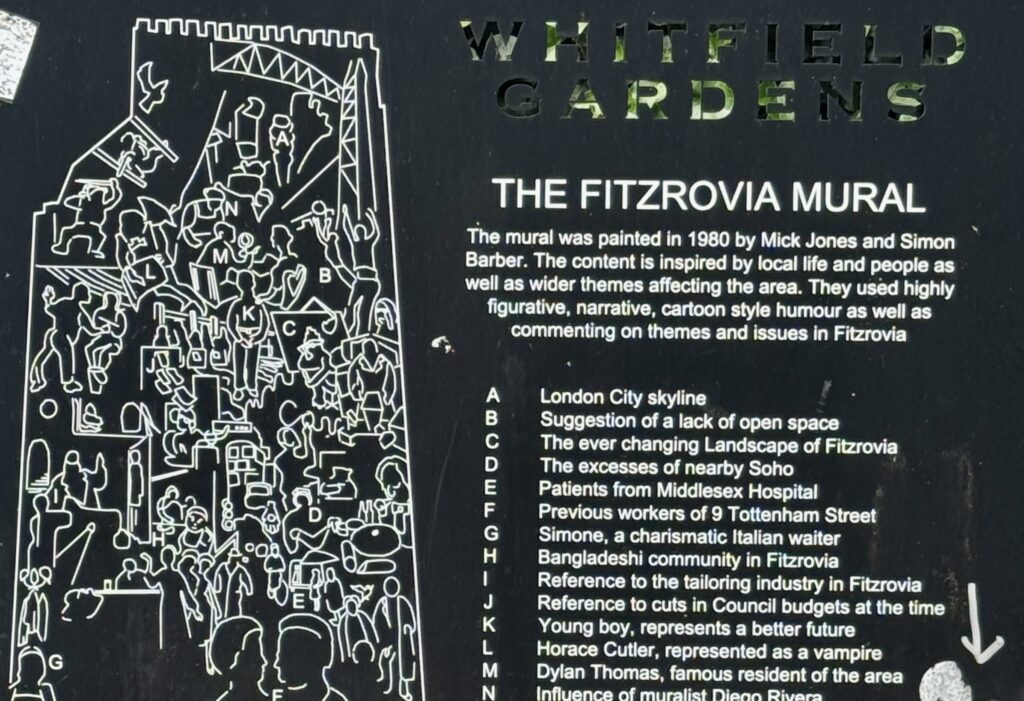
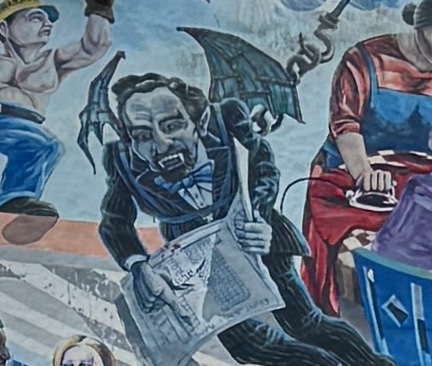
The area was often under threat of redevelopment, so the former leader of the Greater London Council, Horace Cutler, is depicted as a vampire. He was also famous at the time for his bow ties …
The mural started to deteriorate significantly over the years but has now been restored. You can read more about the work here.
The best view is from Whitfield Gardens …
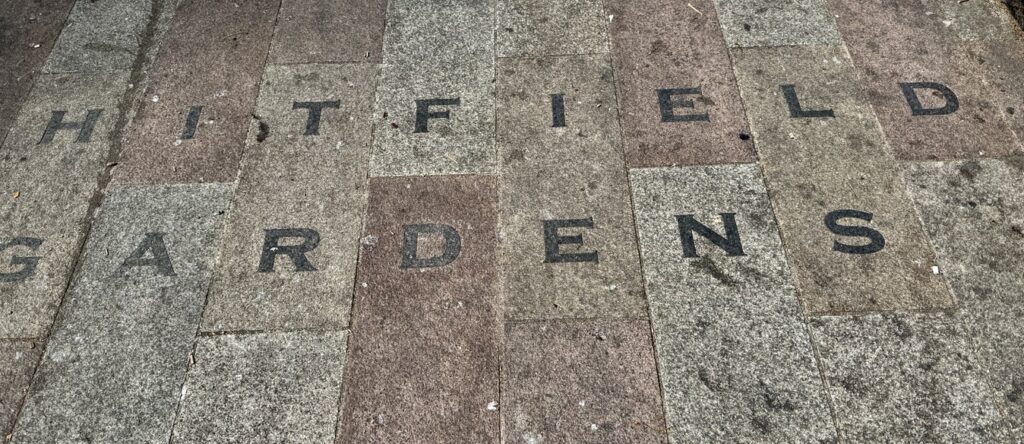
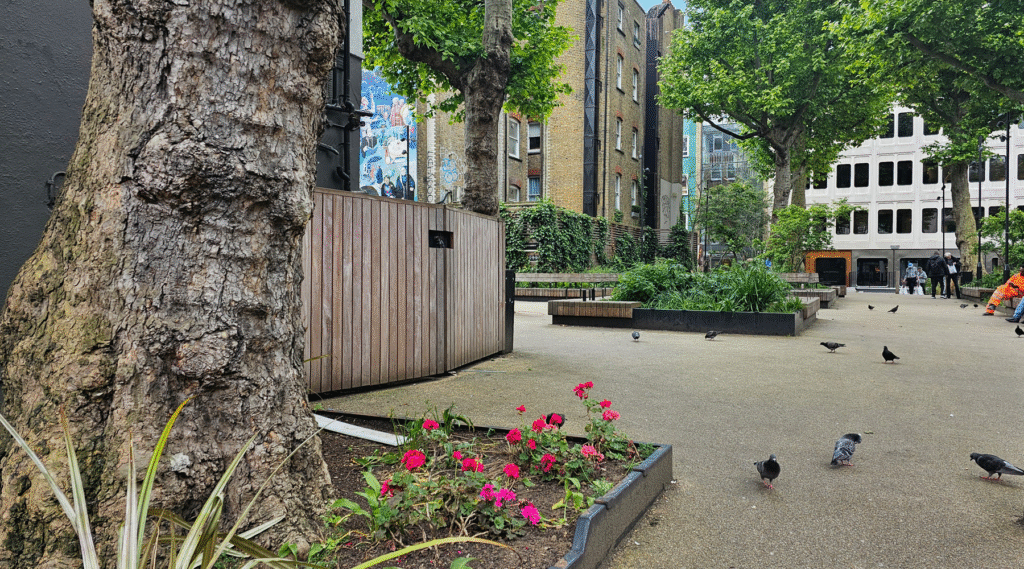
I am indebted to the brilliant blog Ian Visits for the background to this area. There’s much more on his website.
Sitting to the north of the park is a church. The original Congregational Chapel opened in 1756 with a graveyard space to the south. Thanks to being a bit too popular, the original building was demolished and rebuilt in 1890. However, that chapel was destroyed on Palm Sunday 1945 by the last V-2 rocket to fall on London.The current chapel was built in 1957, and was taken over by the American International Church in 1972.
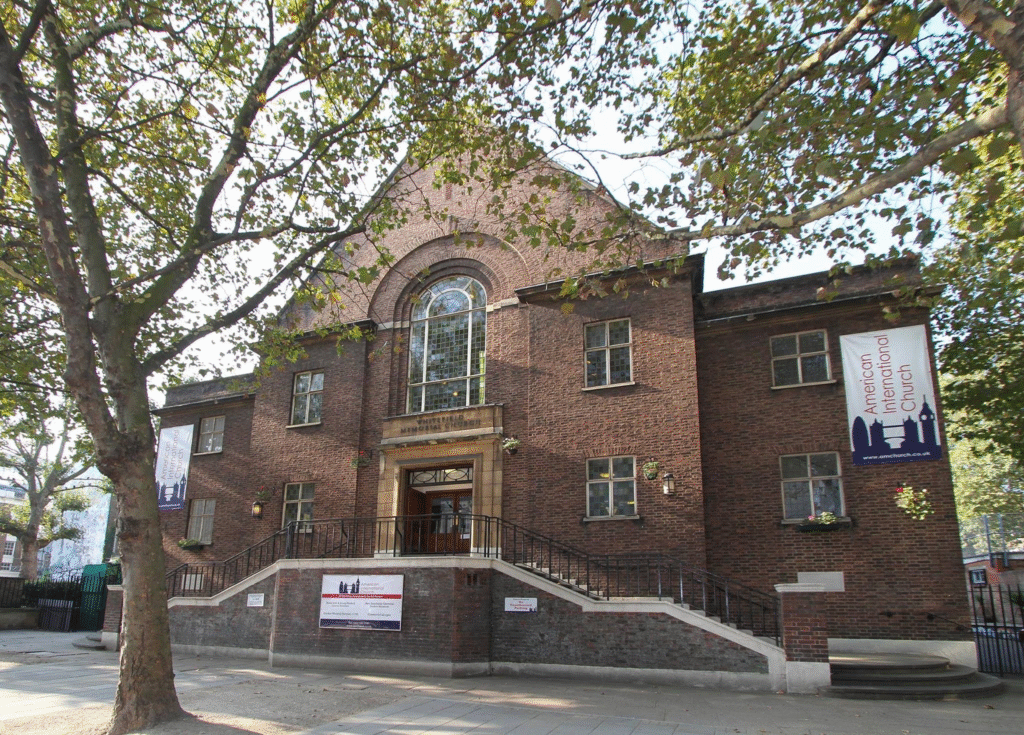
The original church’s graveyard had closed to burials in 1856. It was later bought by the London County Council in 1894, possibly in a deal aligned with the rebuilding of the chapel.
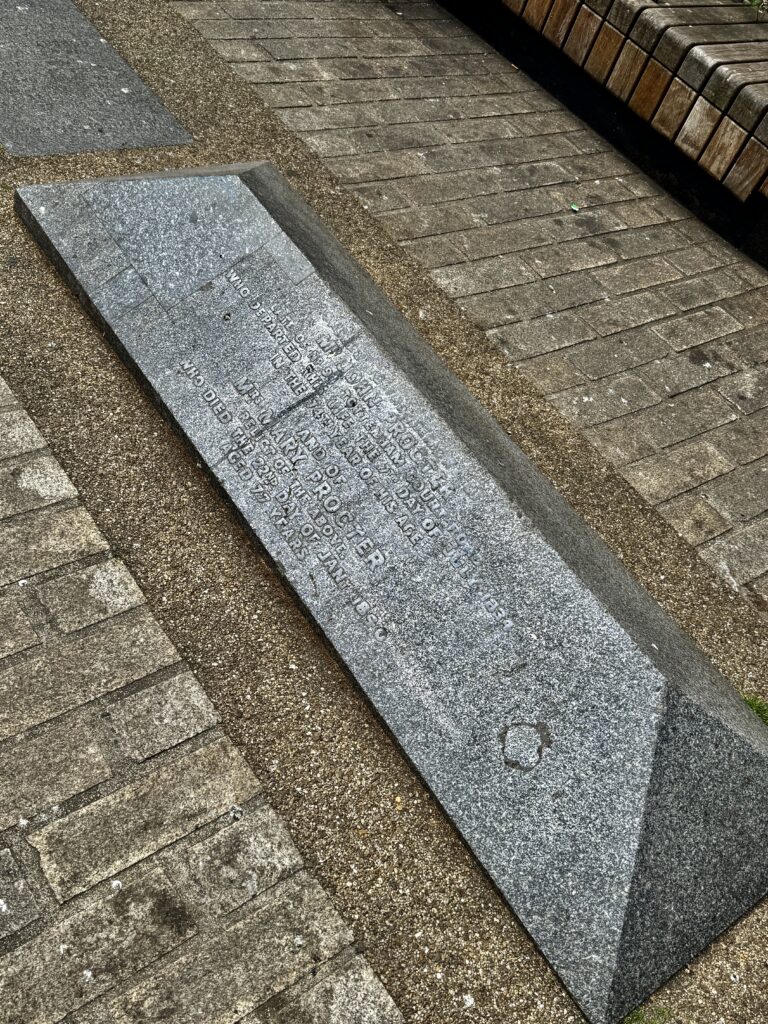
Although former graveyards that are turned into public parks are often lined with graves, the only noticeable one is the very easy to trip over grave for John and Mary Procter, and (in the top left of this picture) a stone plaque marking the decision of local cheese shop owners, Robert and Esther Procter to donate some land here for the public …
Nearby (but now long lost) was the grave of this man, Olaudah Equiano …
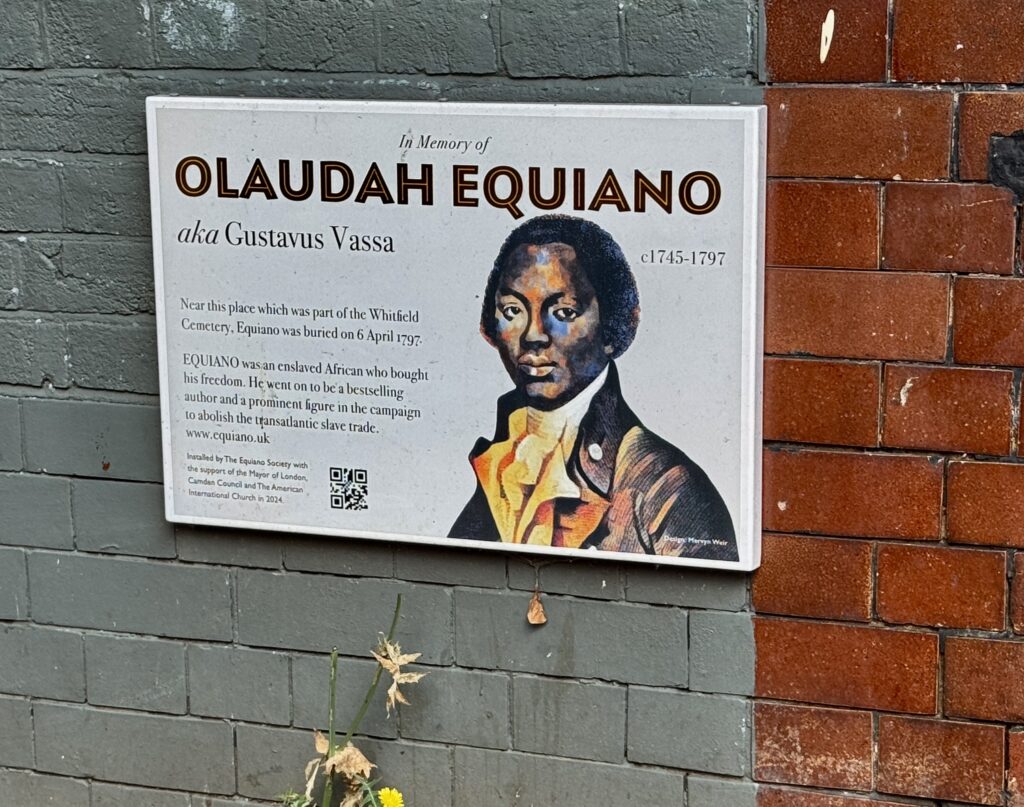
Born in about 1745, a free man in part of present day Nigeria, at the age of about eleven, Equiano was captured and enslaved. His ownership changed hands several times until one of his owners allowed him to buy his freedom in 1766. He subsequently travelled widely before settling in London where he became one of the leading lights of the campaign to end slavery …
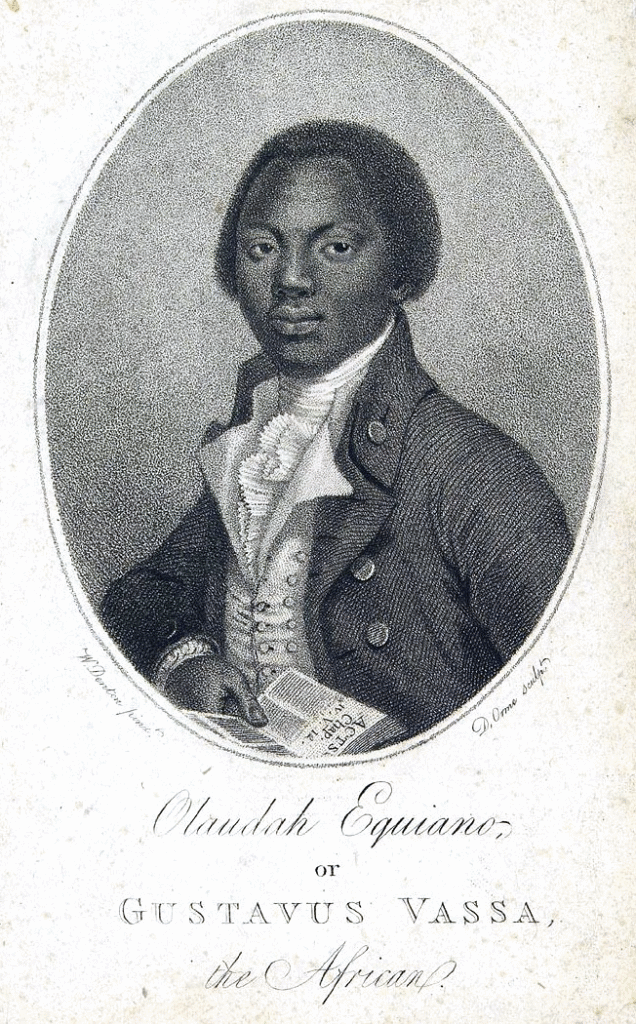
Equiano was a shrewd businessman and his ‘Interesting Narrative’ was also a major success (it went through nine editions in his lifetime alone) and, when he died in 1797, he left a sum equivalent to about £80,000 at today’s prices to his surviving daughter (his will can be viewed at The National Archives in Kew).
You can read more here.
Just across the road is the magnificent frontage of Heal & Son …
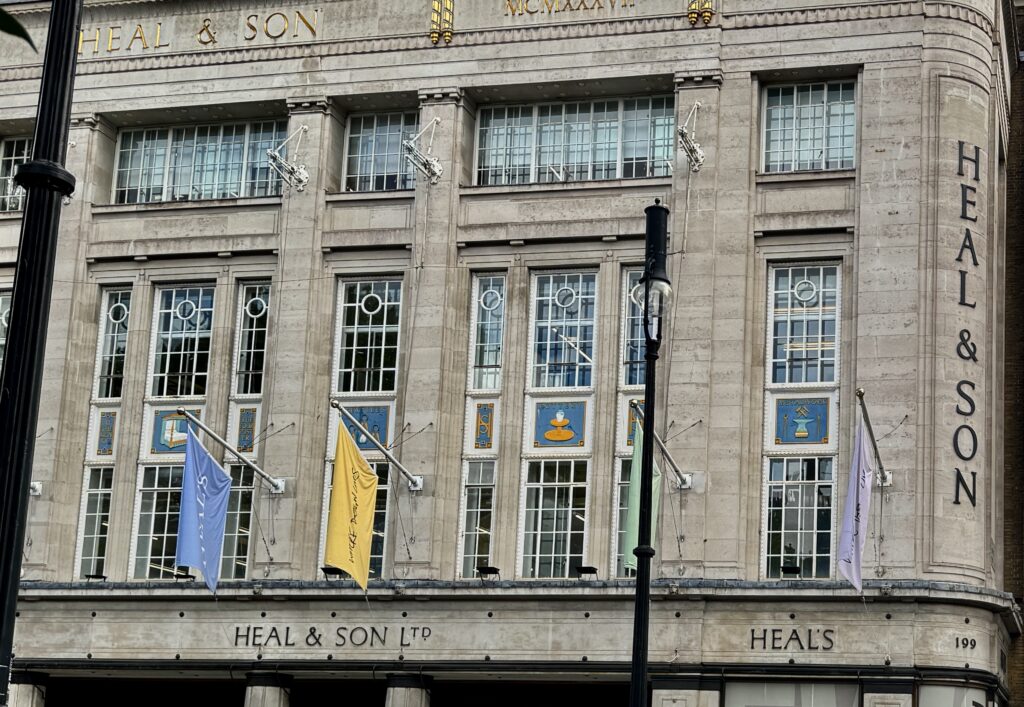
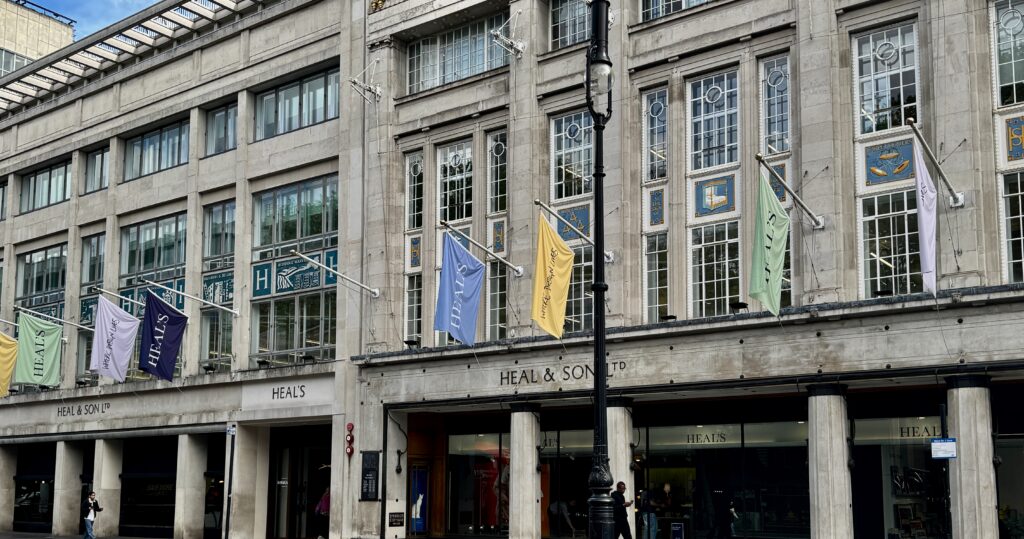
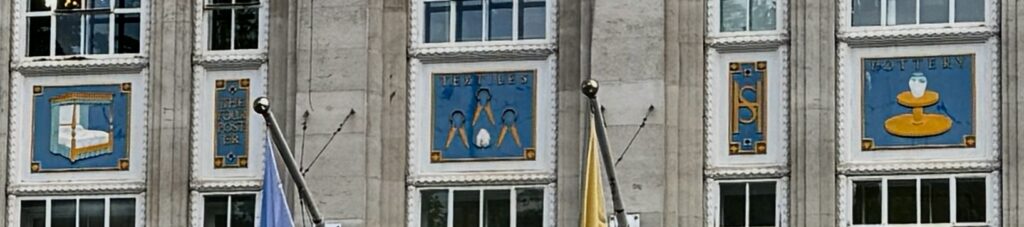
I love the panels displaying the goods and services available …

You can read a fascinating history of the store here. For example, after John Heal the founder died in 1833 his widow renamed the business Fanny Heal & Son!
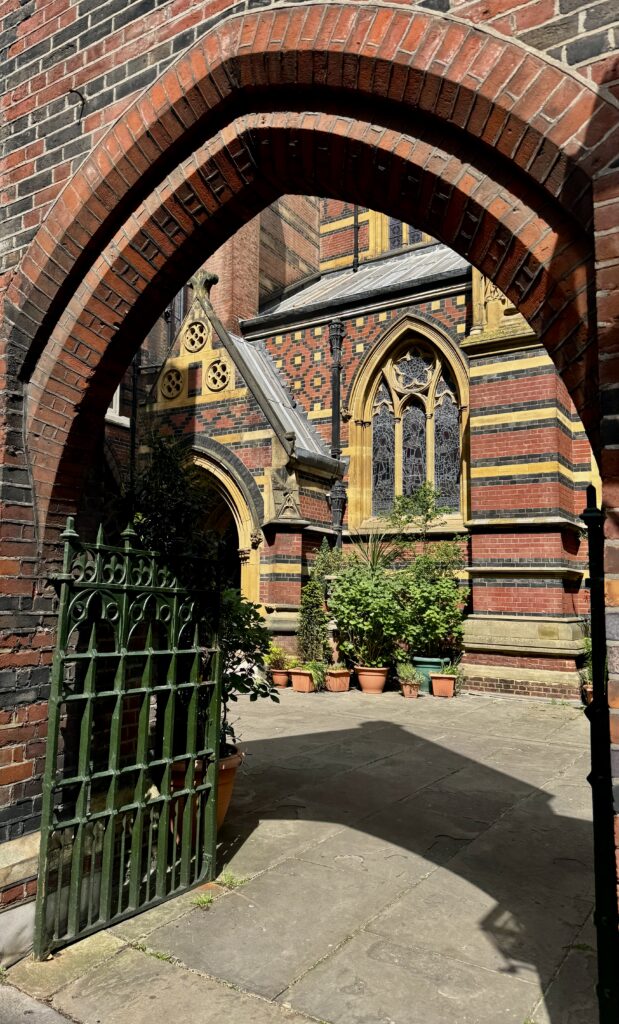
All Saints Margaret Street is the most well-known church in the area. It is built in the high-Victorian gothic style and is Grade I listed …
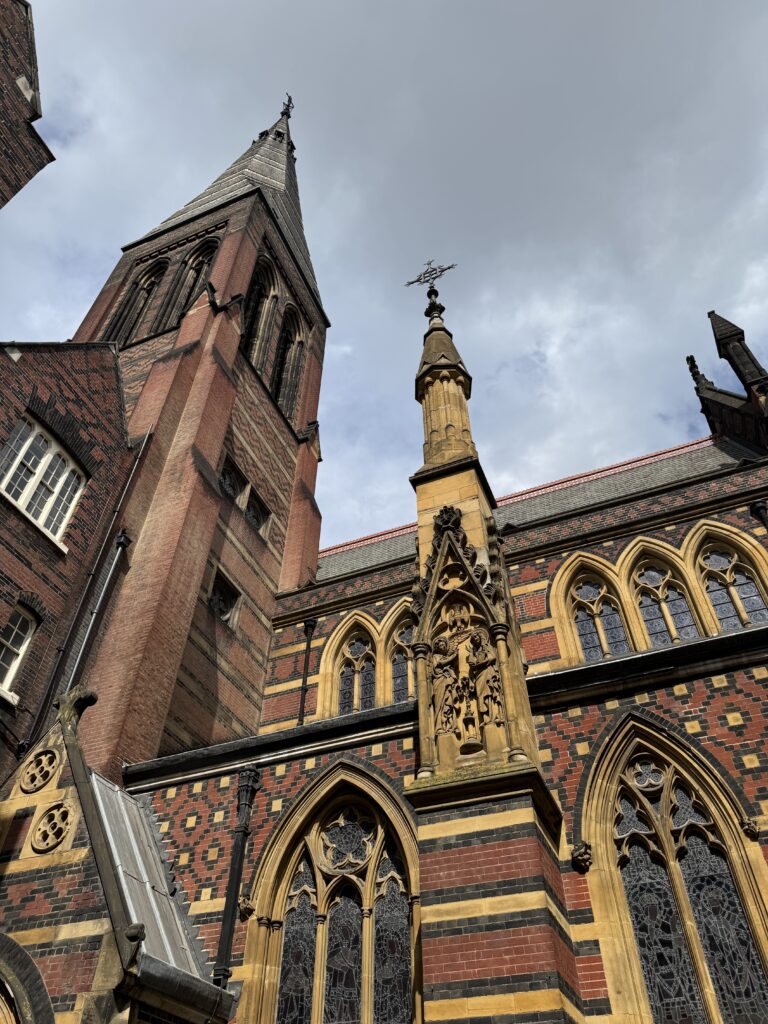
The 1841 specification for a ‘Model Church on a large and splendid scale’ specified that:
- It must be in the Gothic style of the late 13th and early 14th centuries
- It must be honestly built of solid materials
- Its ornament should decorate its construction
- Its artist should be ‘a single, pious and laborious artist alone, pondering deeply over his duty to do his best for the service of God’s Holy Religion
Above all the church must be built so that the ‘Rubricks and Canons of the Church of England may be consistently observed, and the Sacraments rubrically and decently administered’.
My images of this splendid building will give you an idea whether expectations were met.
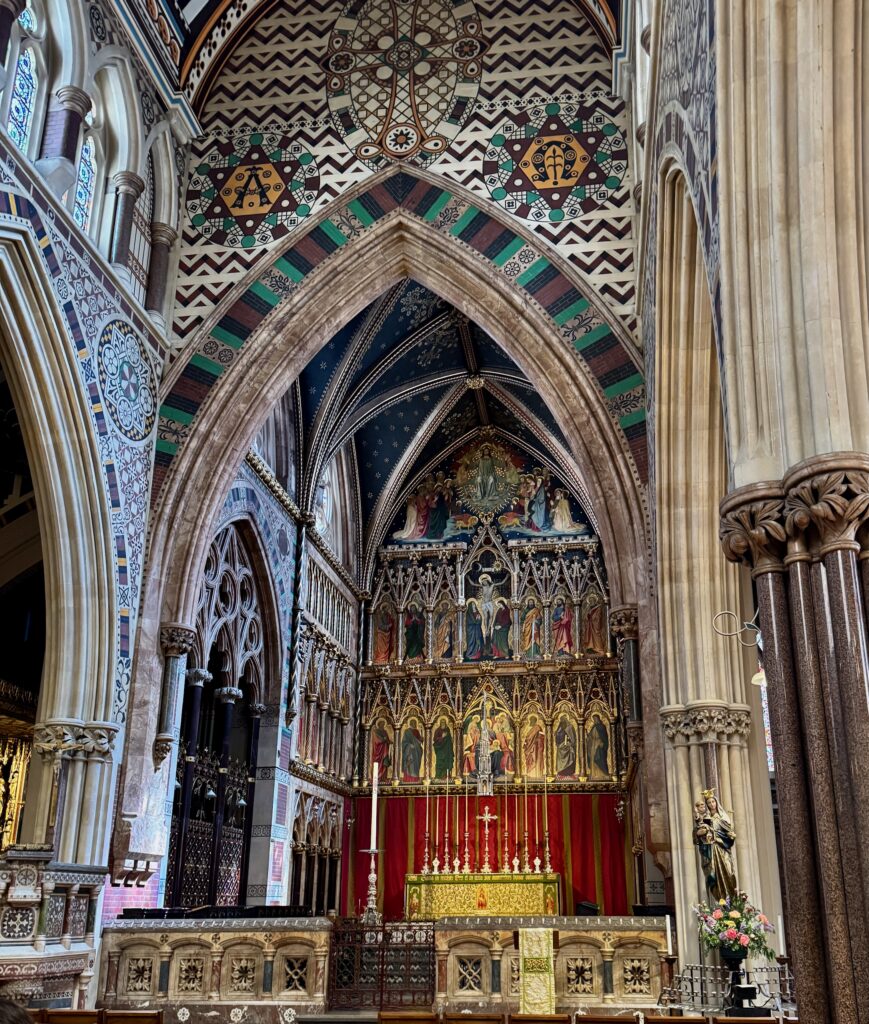
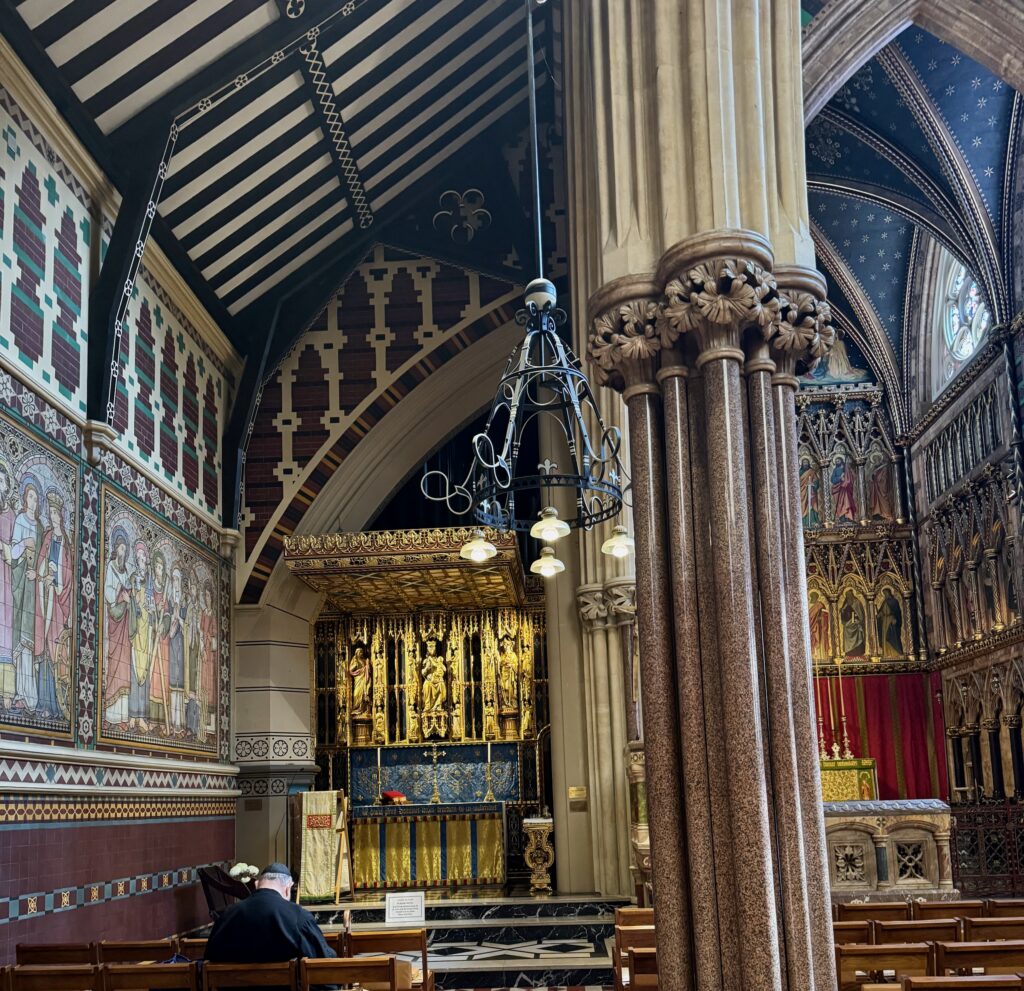
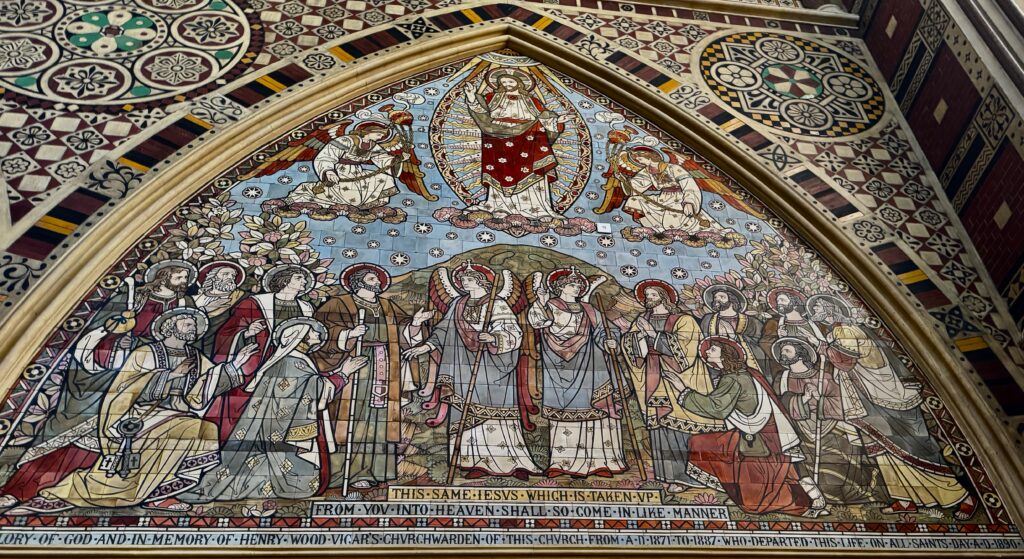
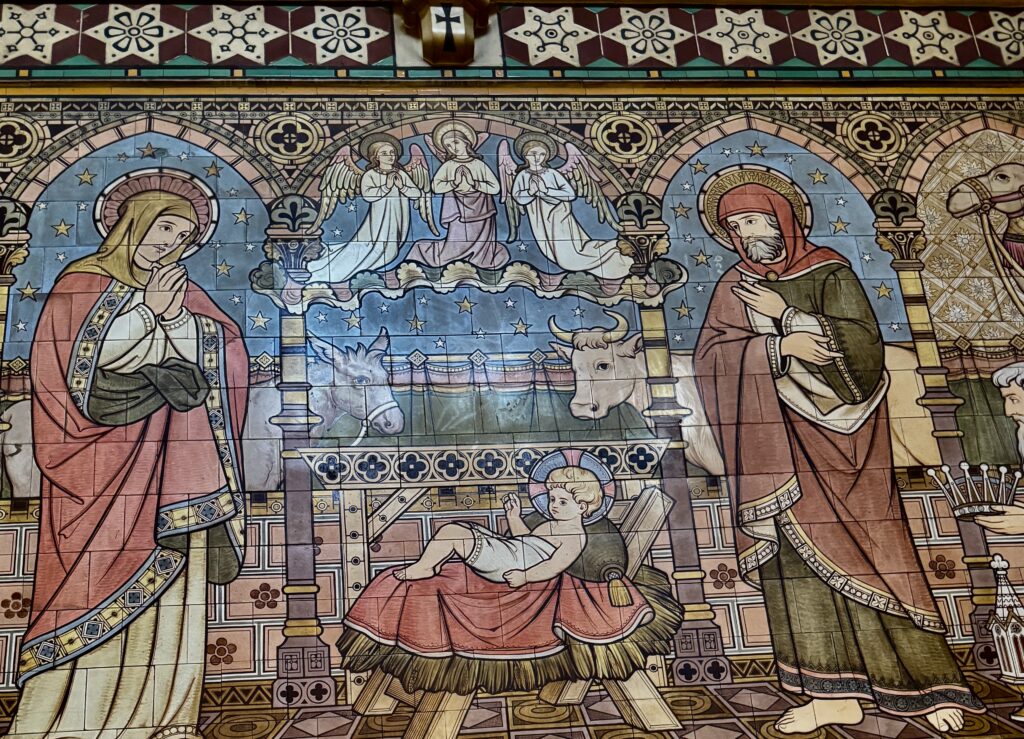
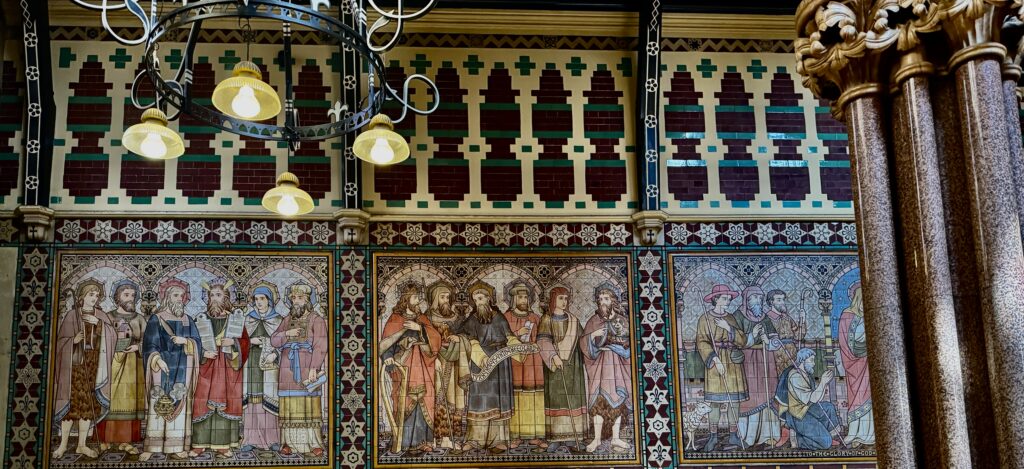
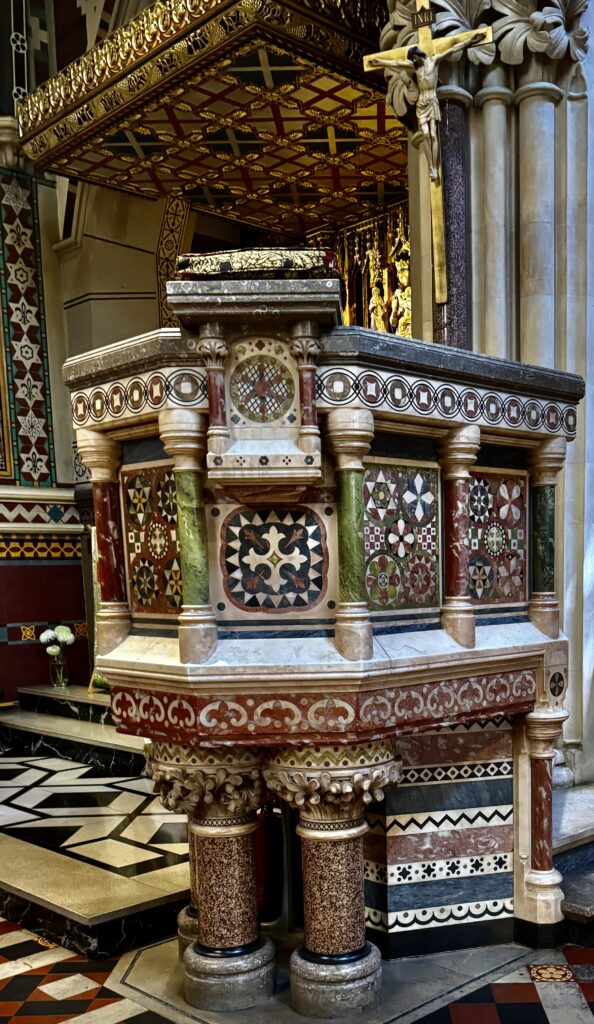
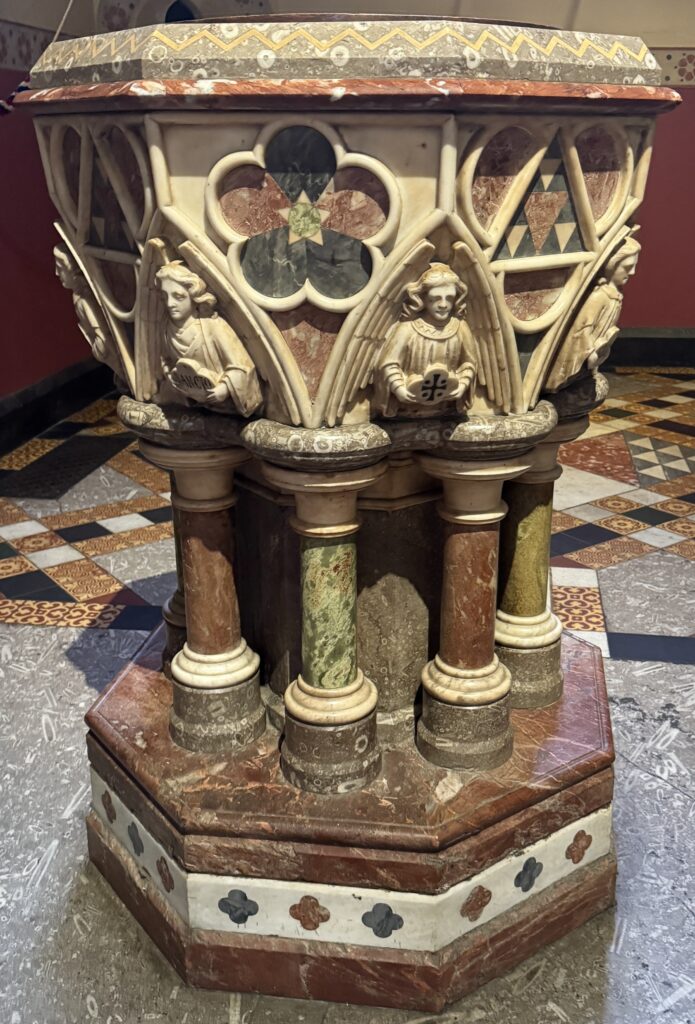
You can read more about the church’s history and architecture here.
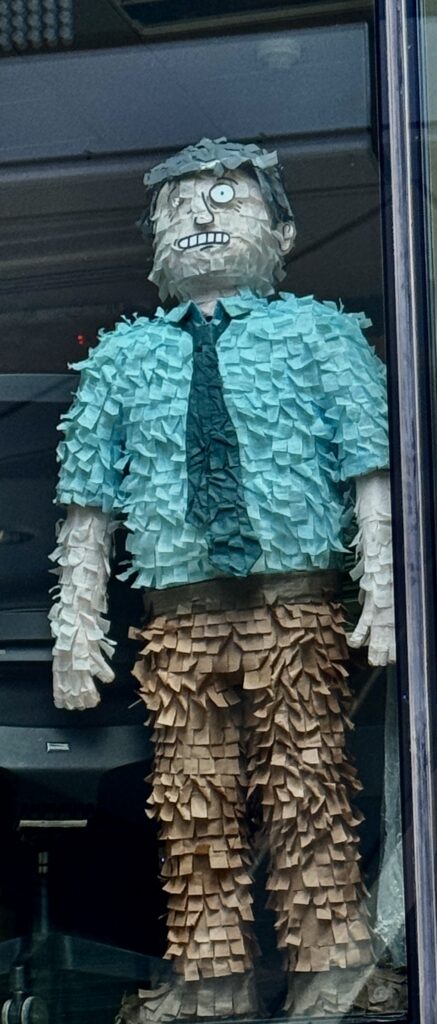
Closer to home, and just across the footbridge between the Barbican Highwalk and Moorfields, Post-it Man is back – and he doesn’t look very happy …
Finally, there are two things happening at the Barbican Centre at the moment that you may like to visit.
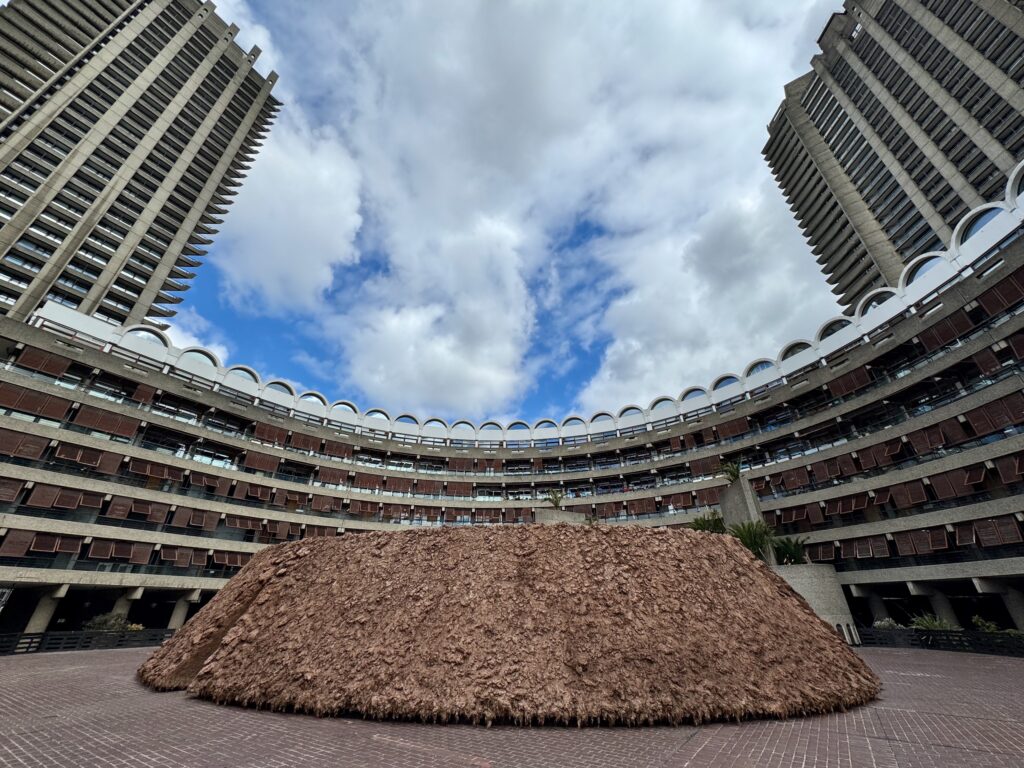
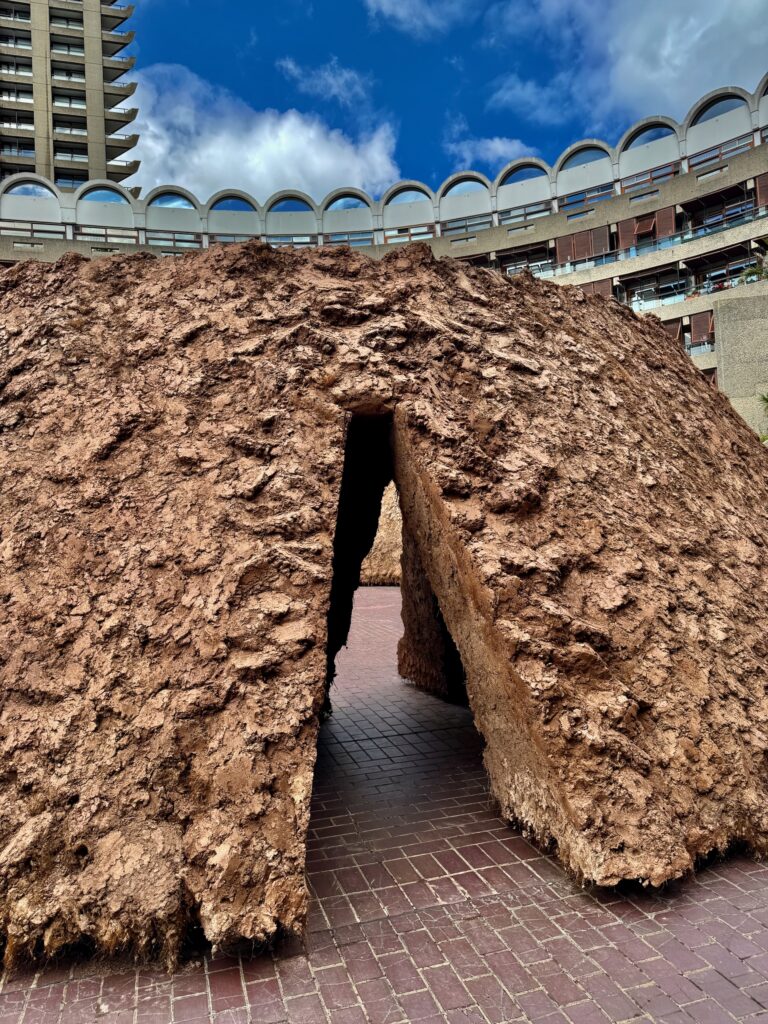
Origo at the Sculpture Court …
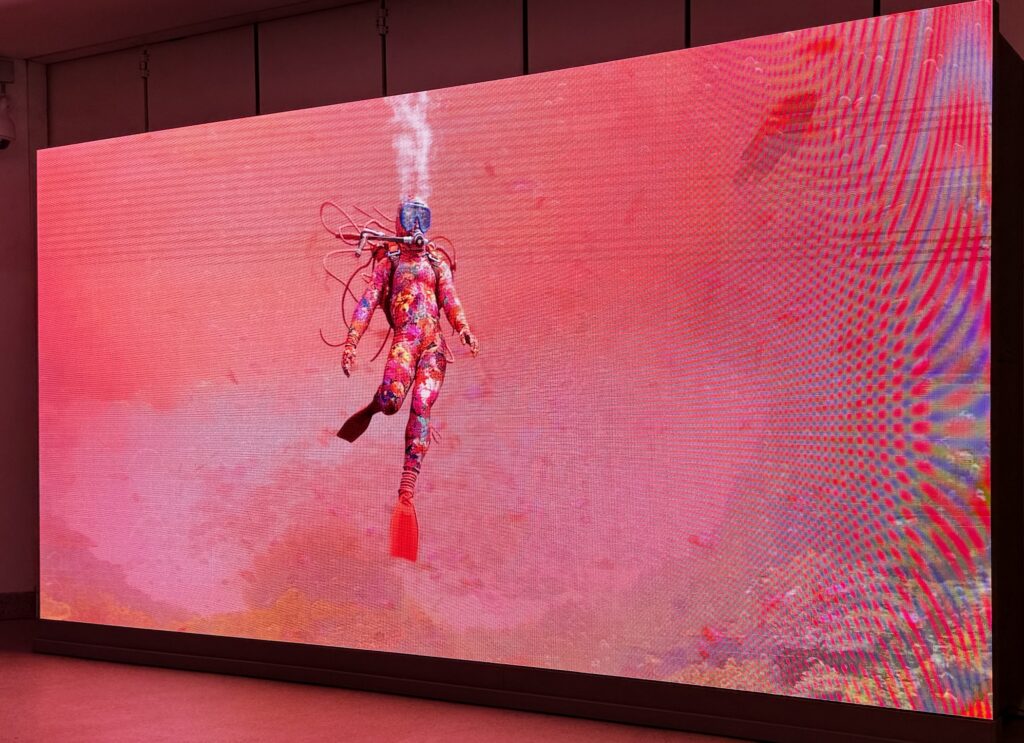
And In Other Worlds in The Curve …

I’ll probably write about both next week.
If you would like to follow me on Instagram here is the link …