Walking the City of London

Category: Commerce Page 26 of 27

Insurance Company Ghosts

I started my career in the City working for the Legal & General Assurance Society in the much criticised Temple Court headquarters in Queen Victoria Street. Although the company had plonked a ‘restored’ part of the Roman Temple of Mithras (discovered during construction) on the forecourt, the building was seen as an example of poor, unimaginative 1950s design. It has now been demolished and a new facility has been created in Wallbrook for people to view the Temple and some of the fascinating Roman period artifacts that miraculously survived successive redevelopments. You will find more on the London Mithraeum website.

The City then was home to numerous insurance companies but many have now either decamped elsewhere or become subsumed into larger entities.

I have been hunting for traces of their existence and, like the Roman ruins, many pieces of evidence have survived.

Take a walk down the shadowy and rather mysterious Change Alley and you will come across a building that once housed the Scottish Widows insurance company along with its magnificent crest. At the centre is the mythical winged horse, Pegasus, symbol of immortality and mastery of time. A naked figure, the Greek hero Bellerophon, is shown grasping its mane.  In mythology, Bellerophon captured Pegasus and rode him into battle. This explains the motto ‘Take time by the forelock’, or ‘seize the opportunity’. Presumably time could be tamed by taking out a Scottish Widows policy to make provision against the uncertainties of the future.
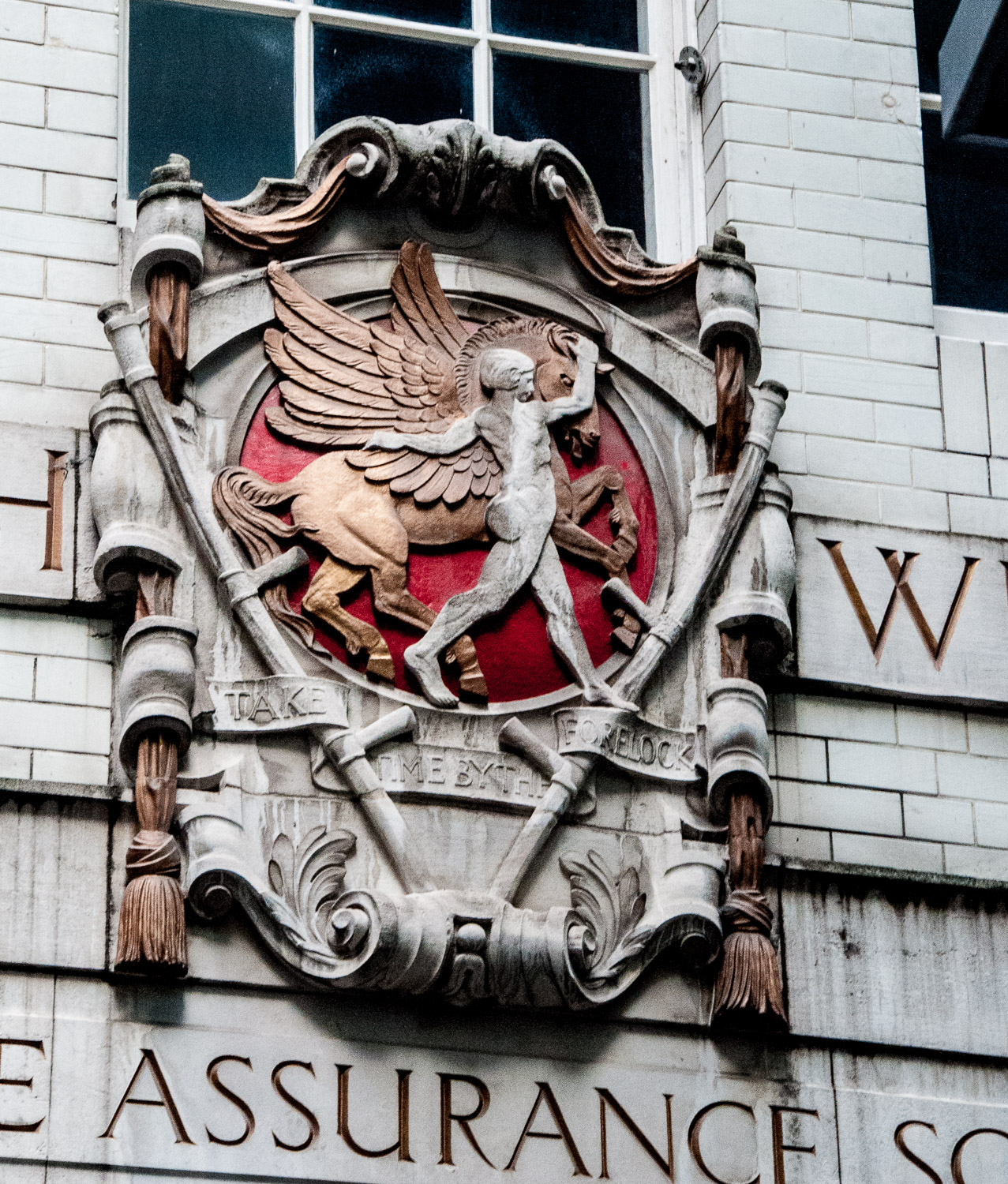
The Scottish Widows building in Change Alley

Here is a Scottish Widows advertisement from the turn of the 20th century …
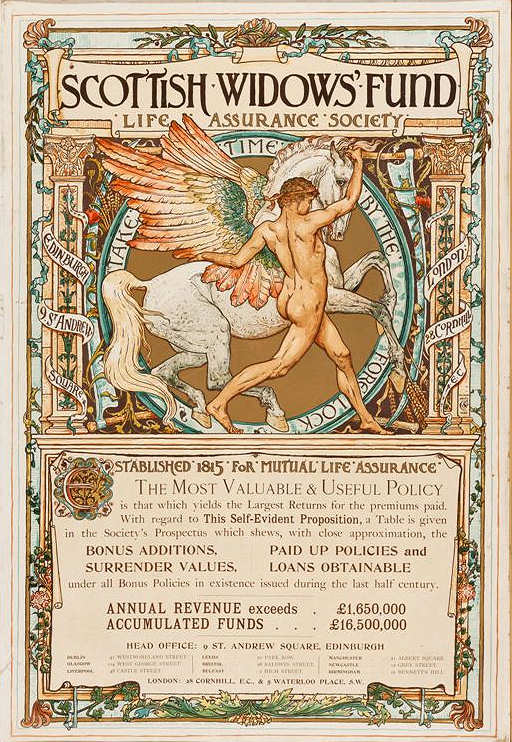
Scottish Widows’ advertising placard, early 1900s, featuring Walter Crane’s Pegasus

This striking piece of advertising features a beautiful full colour version of the Pegasus motif created by Walter Crane. Crane (1845 – 1915) was an English artist and book illustrator. He is considered to be the most influential, and among the most prolific, children’s book creator of his generation.

Fast forward to the present day and Scottish Widows is now part of Lloyds Banking group, its corporate symbol now being the beautiful ‘Scottish Widow’.

Amber Martinez is the fourth Scottish Widow

Rising from the flames and just about to take off over the City is the legendary Phoenix bird and from 1915 until 1983 this was the headquarters of the Phoenix Assurance Company. One can see why the Phoenix legend of rebirth and restoration appealed as the name for an insurance company.
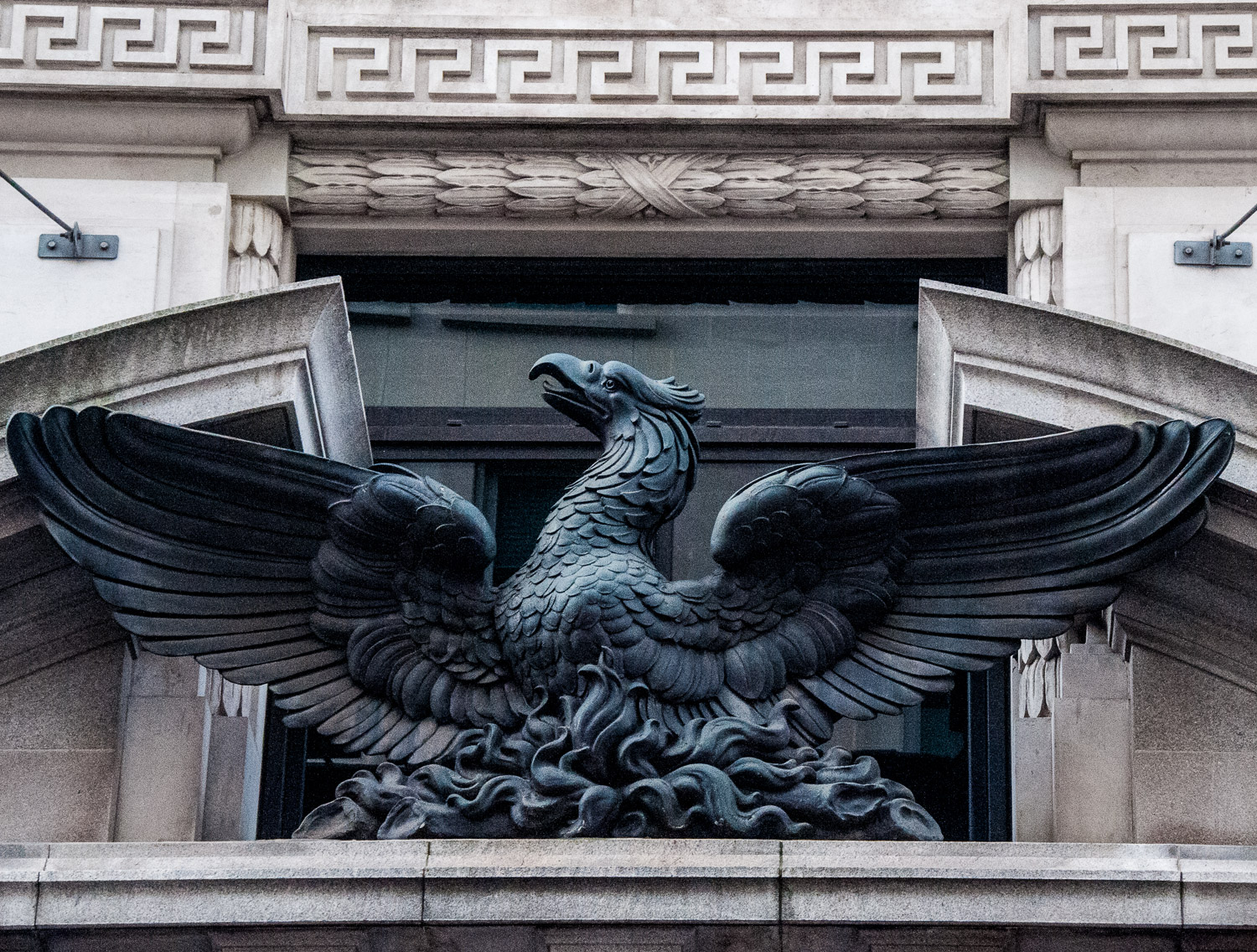
5 King William Street
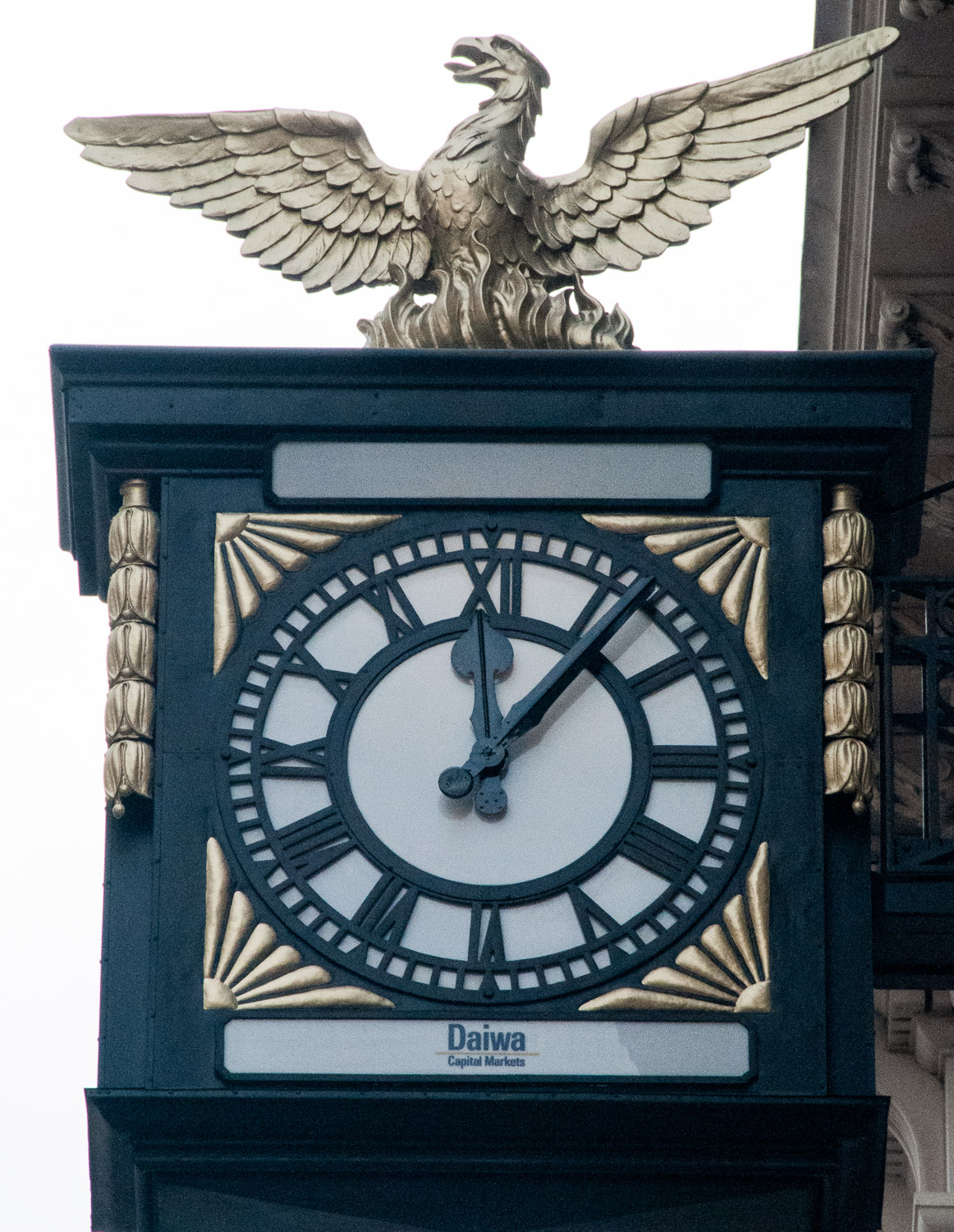
 

The clock shows the name of the present tenants, Daiwa Capital Markets

Insurance companies often seemed to favour having clocks outside their buildings – a neat form of advertising when not everyone could afford a watch.

This wise old owl looks across the road to the north side of London Bridge, observing the thousands of commuters flowing back and forth every day from London Bridge Station. He is perched outside what was once the offices of the Guardian Royal Exchange Insurance Company (later just ‘Guardian’) and was for a while their symbol, presumably signifying wisdom and watchfulness.
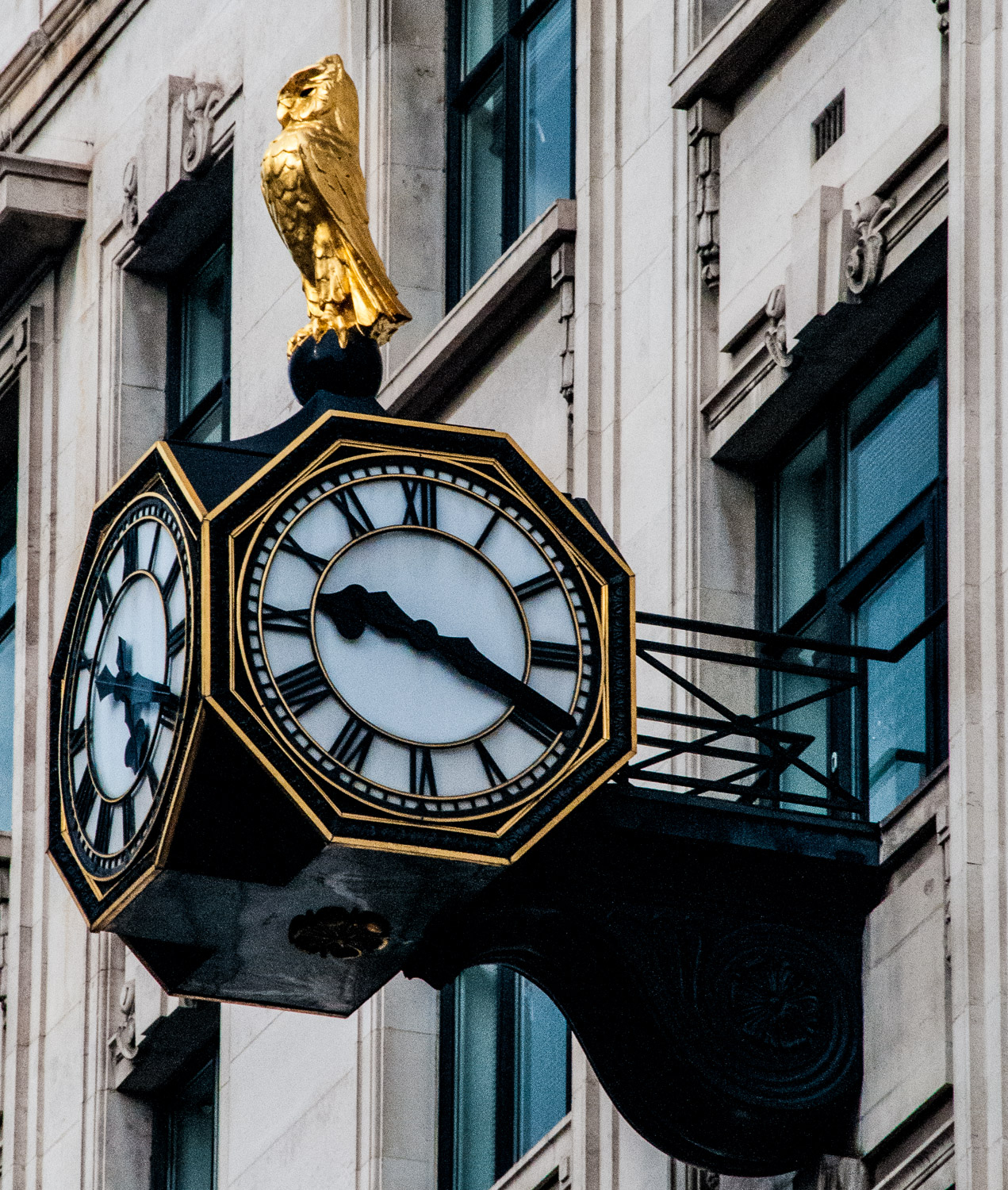
68 King William Street – he now watches over a branch of House of Fraser

Since 1893 this golden lady has been standing at the top of  13-15 Moorgate facing the Bank of England.
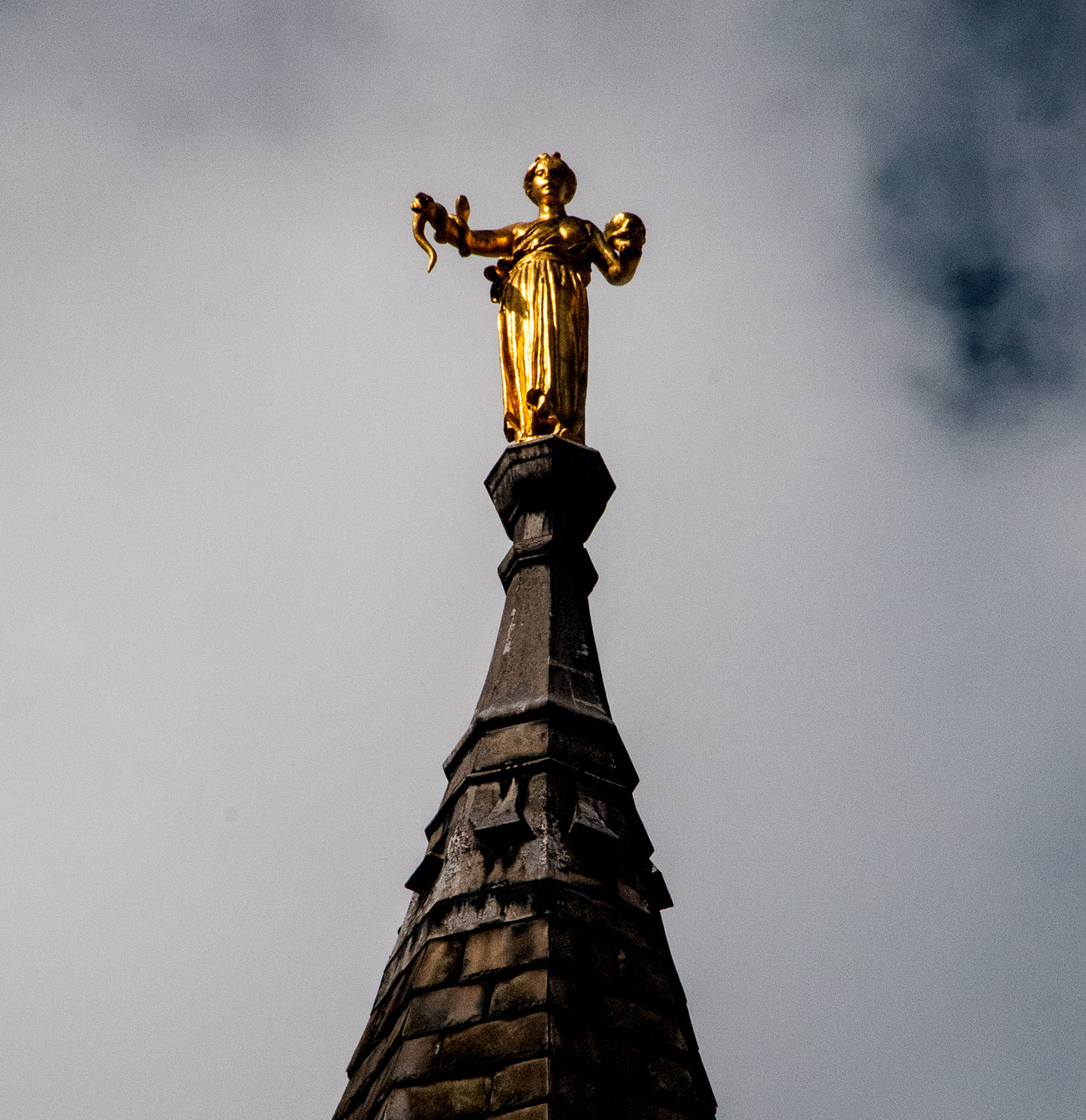
Her image is repeated on the side of the building.
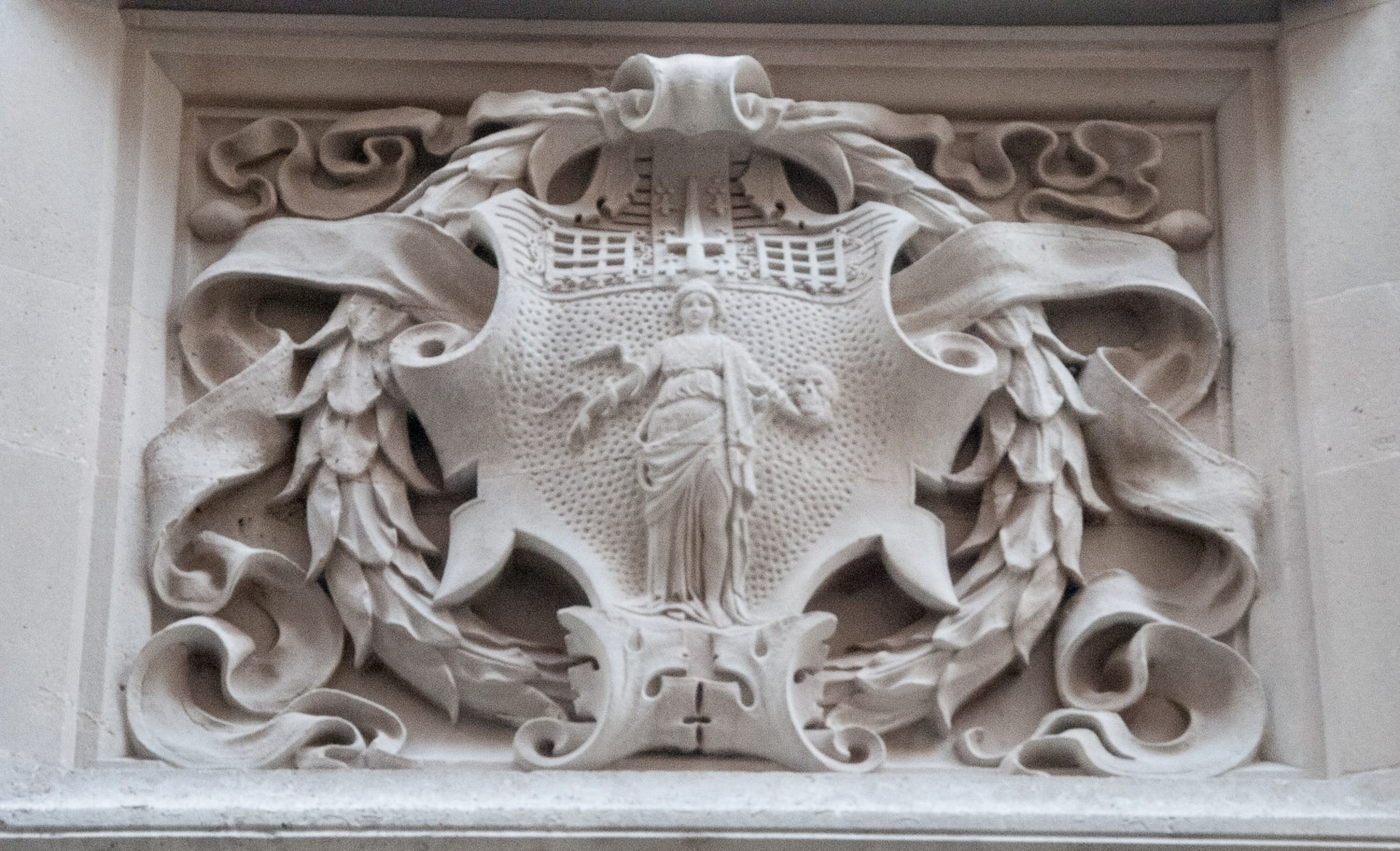
This was originally the London headquarters of the Metropolitan Life Assurance Society. The lady comes from its coat of arms (granted in 1885) which show her holding a skull (mortality) in her left hand with a serpent (signifying wisdom) entwined on her right.

The building also incorporates an attractive set of figures representing Prudence, Justice, Truth and Thrift – presumably all Virtues that the Insurer would like to be identified with.
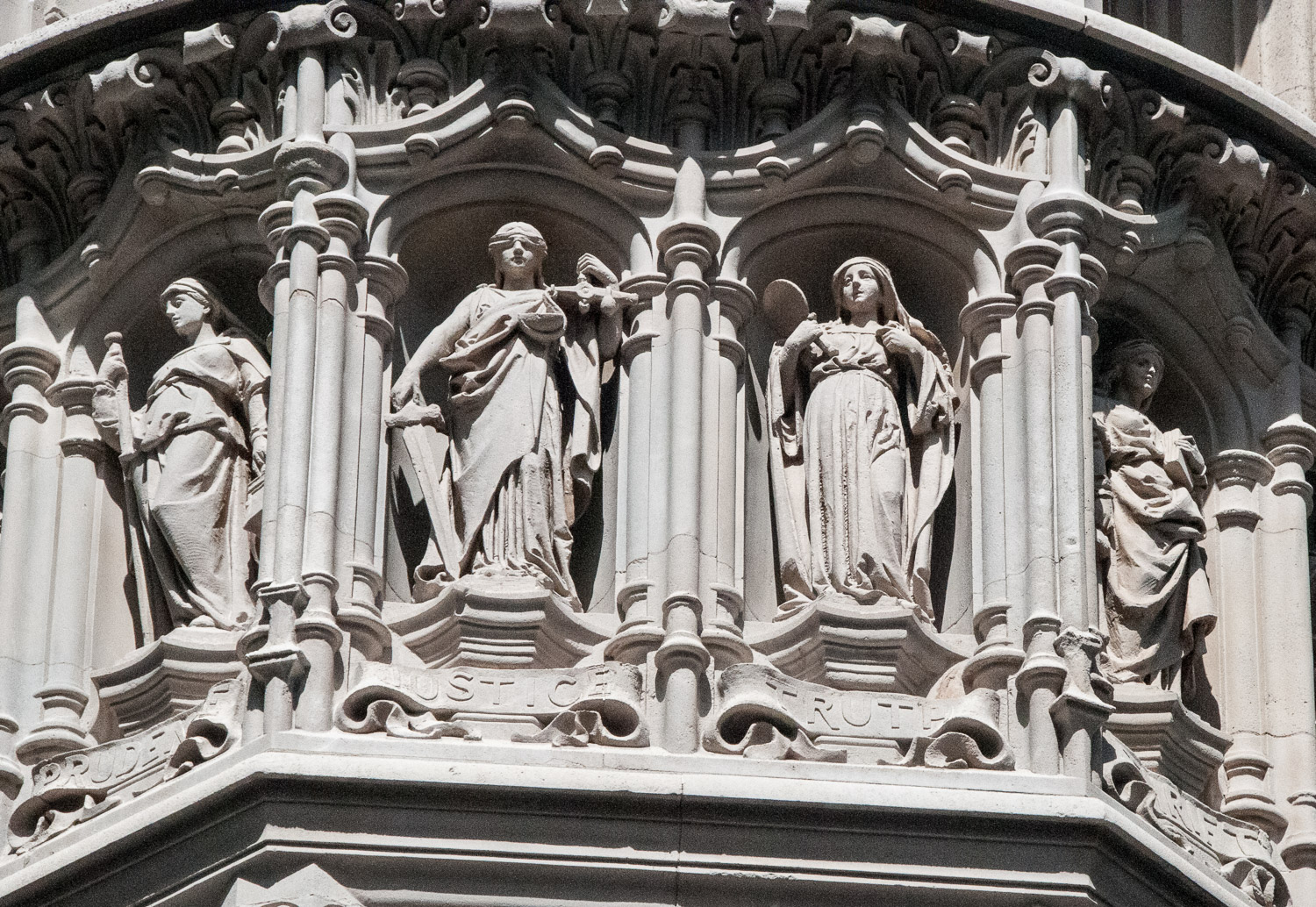
The Cardinal Virtues look down on Moorgate

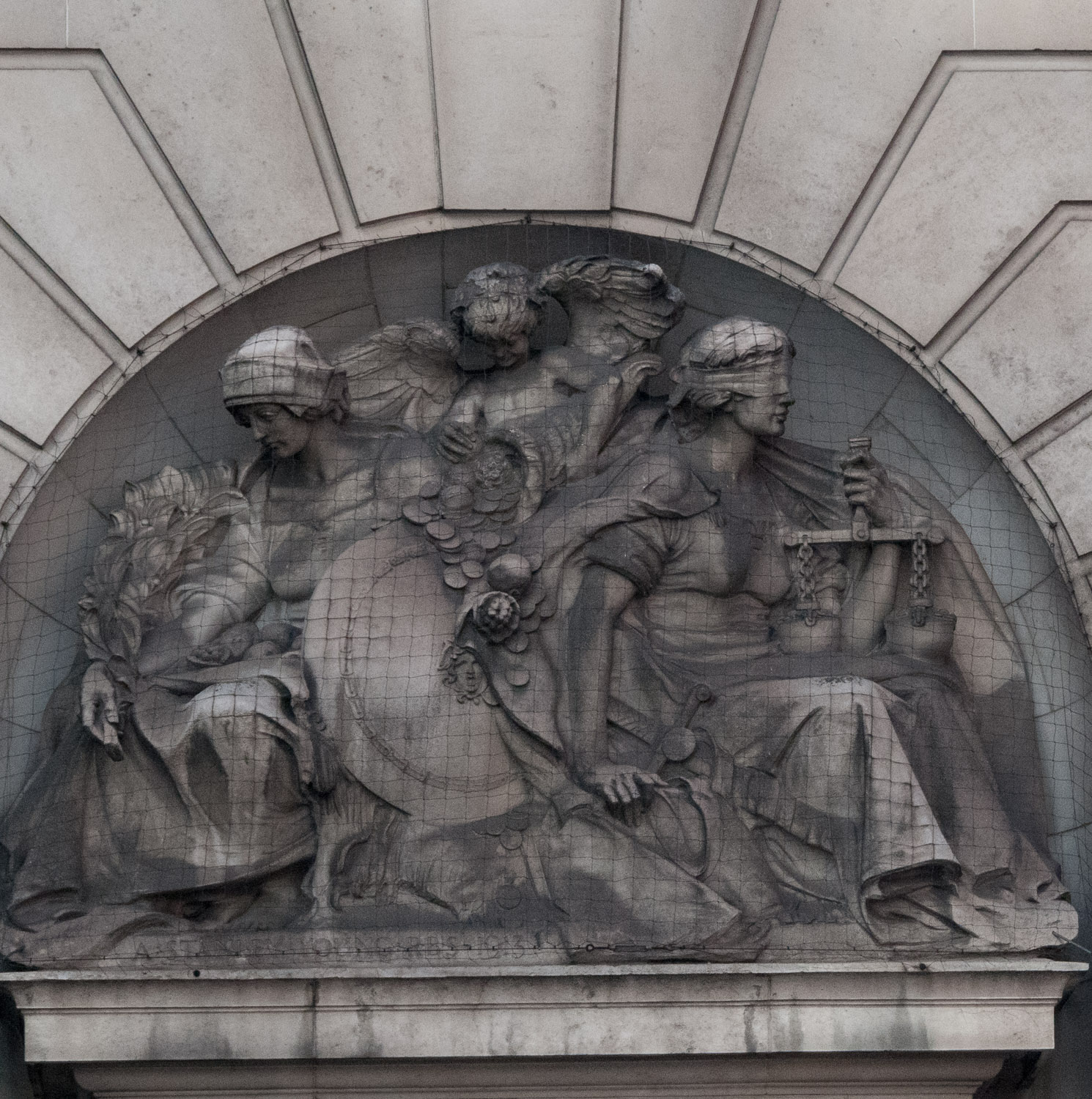
Some sadly rather dusty ladies in Fleet Street on what were once the offices of the Norwich Union Insurance Company (now Aviva). Prudence is on the left, with her little hoard of fruits and a leafy branch whilst the cherubic figure of Liberality, or Plenty, spills his cornucopia of coins and fruits over Lady Justice’s shield. She is probably there because the entrance arch is shared with Serjeants’ Inn and, as usual, she holds scales and a sword.
And finally, completed in 1958 for the Sun Life Assurance Society, these two sundials  incorporate the company’s sunburst logo.The south facing sundial has the letters GMT under the sun face and covers hours from 8:00 am to 6:00 pm. The west facing sundial also shows the letters GMT in the bottom right corner of the dial and covers the hours 2:00 in the afternoon until 7:00 in the evening.
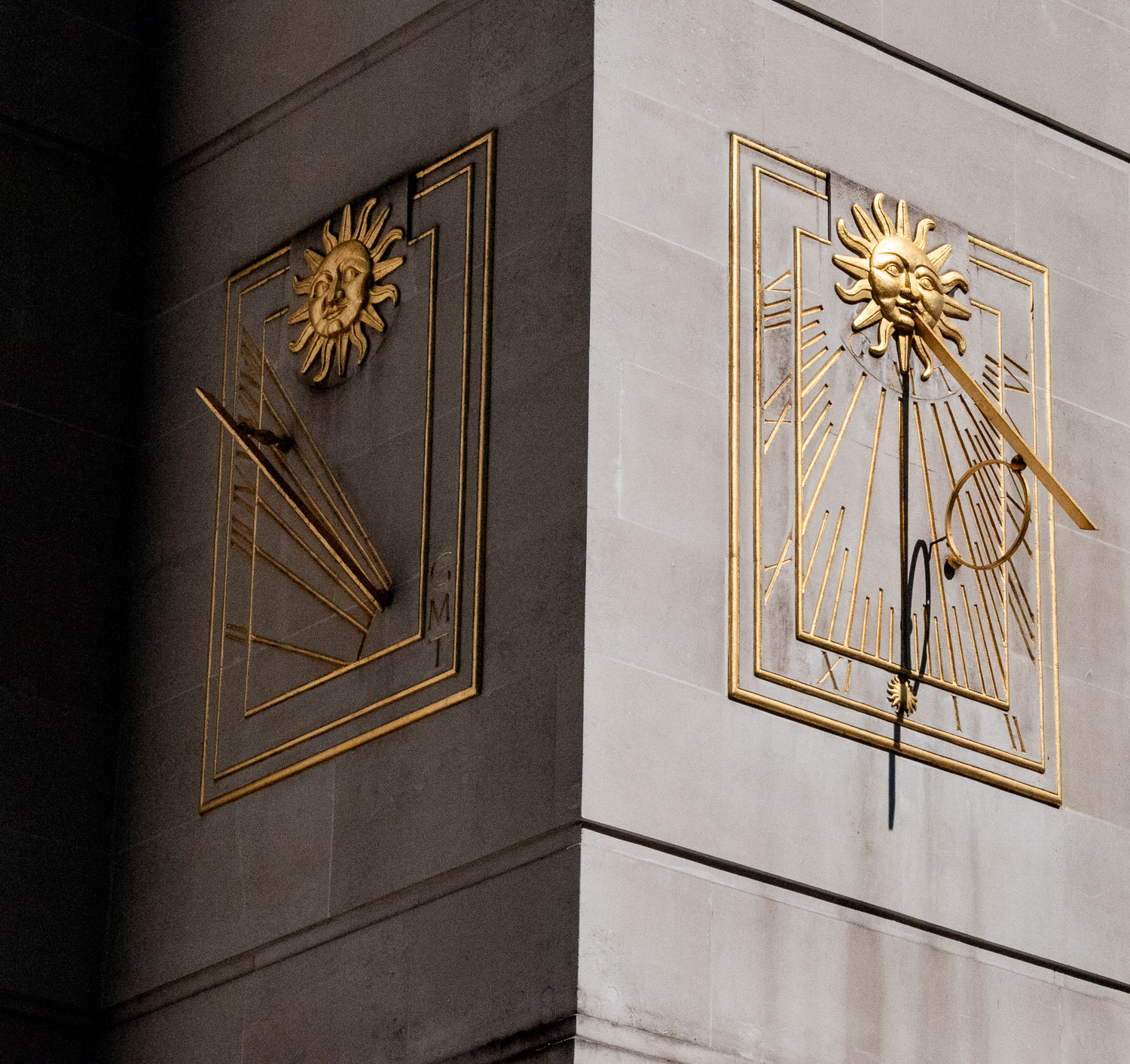
107 Cheapside

Also at 107 Cheapside you will find a splendid collection of Zodiacal signs arranged in twelve relief panels around the main door. When the Lord Mayor opened the building in July 1958 he said he felt sure that the signs would ‘attract a considerable number of people to inquire what you can do for them’. This would have been a remarkable marketing success, but sadly there is no record of long queues forming to purchase life insurance. The sculptor was John Skeaping who, incidentally, was Barbara Hepworth’s first husband.
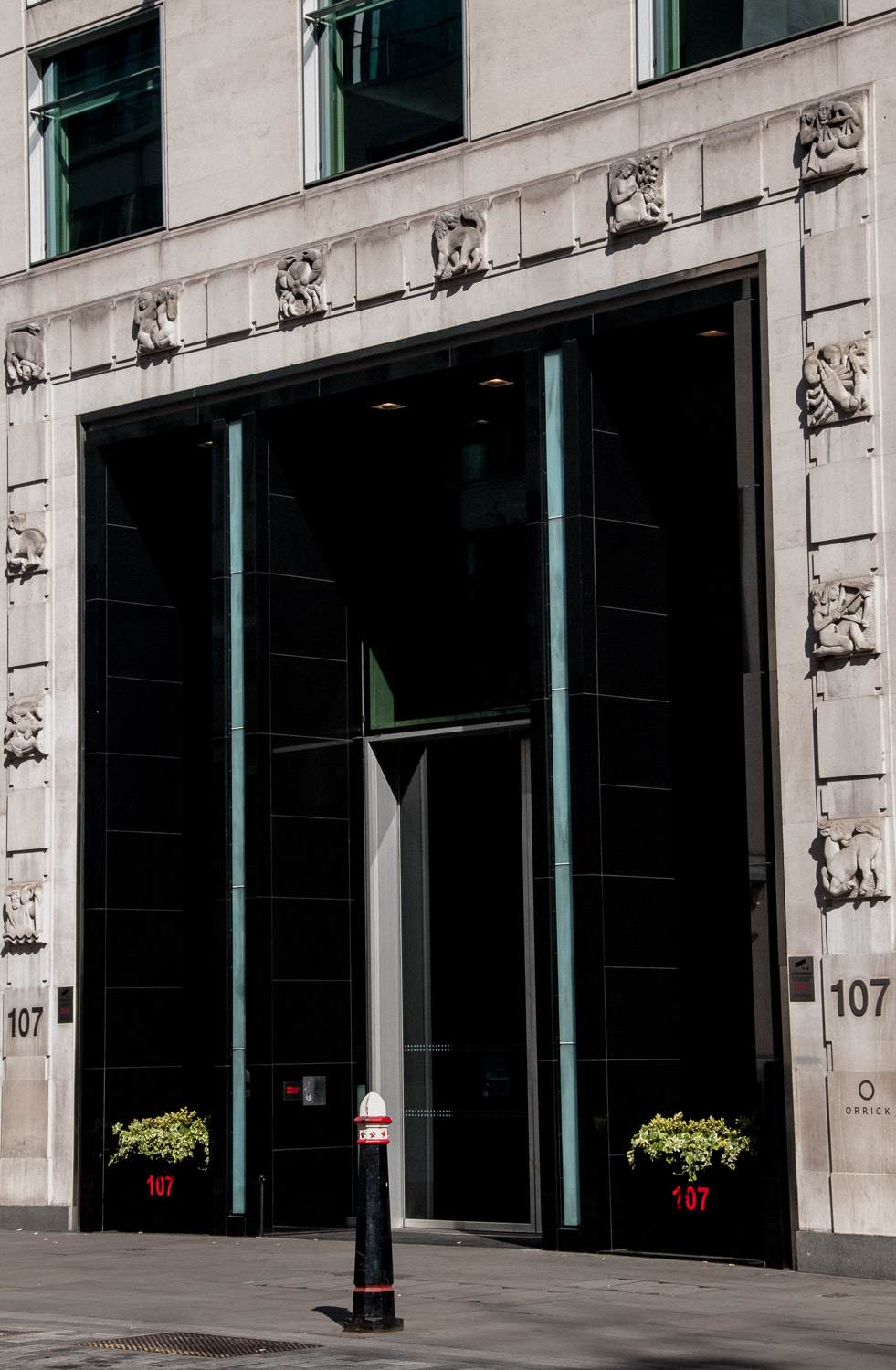
The Zodiacal signs around the entrance
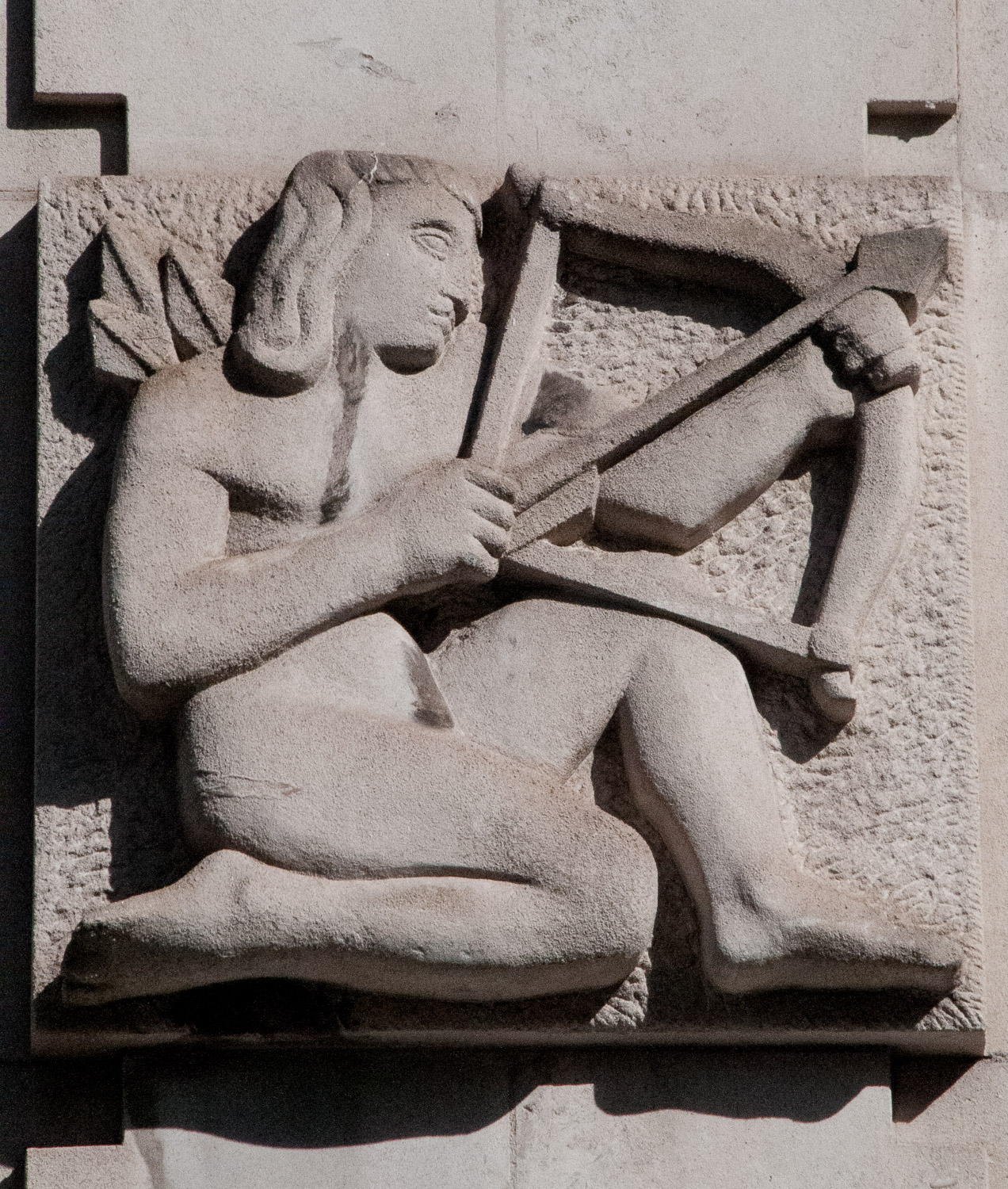
Sagittarius – November 22 to December 21
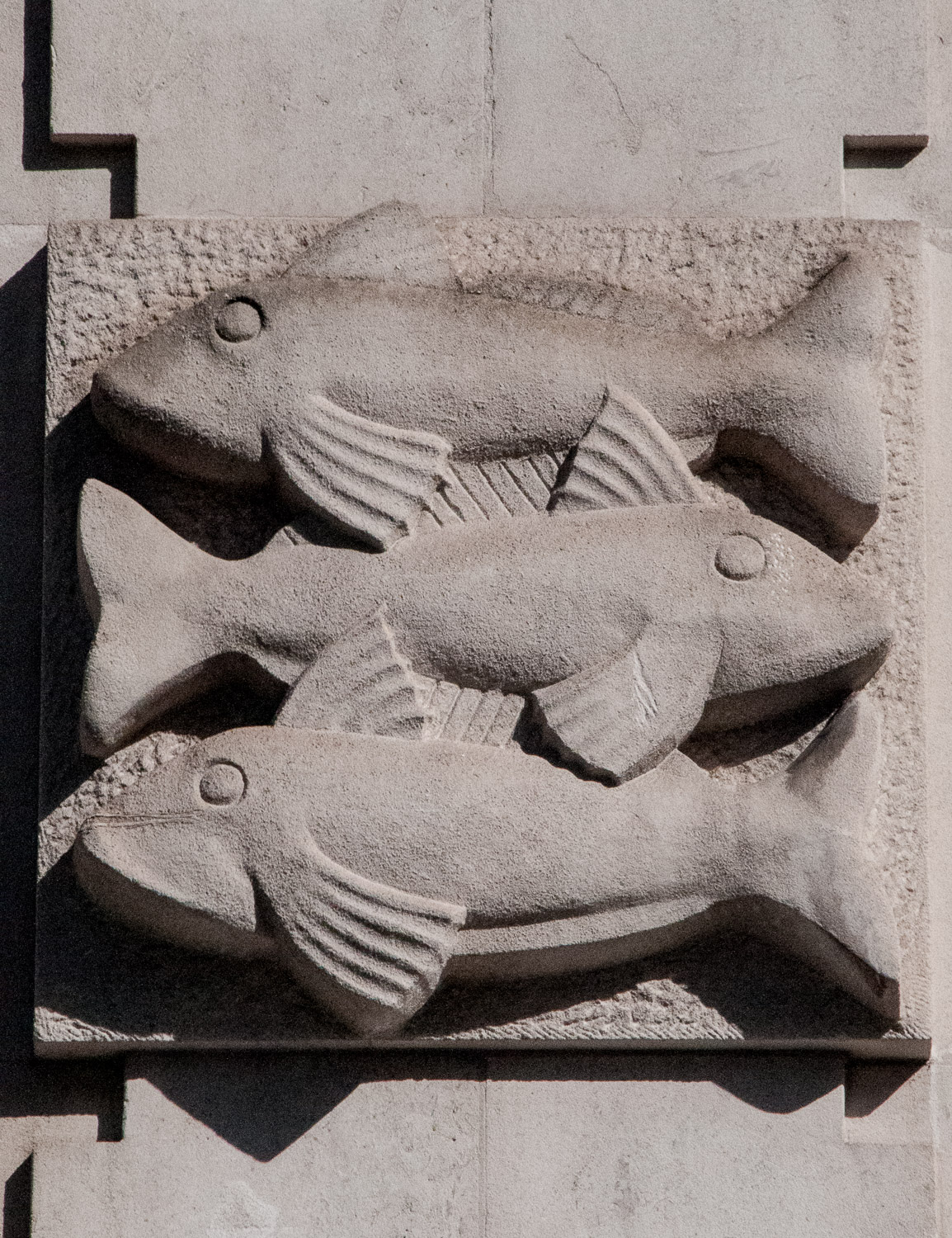
Pisces – February 19 to March 20
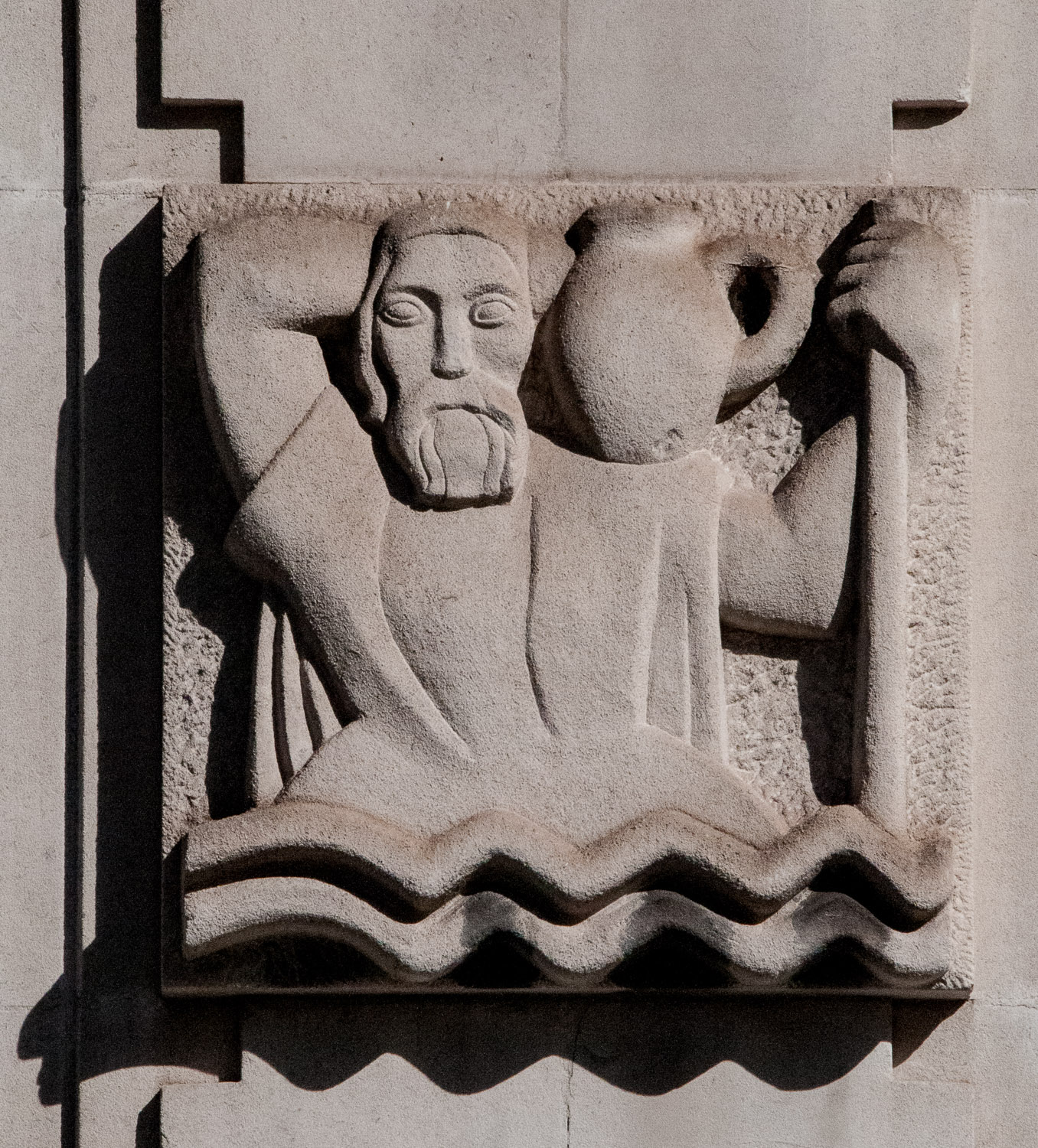
Aquarius – January 20 to February 18
City animals 3

A neat little book called City of London Safari by Helen Long was recommended to me by my friend Annetta and reading it inspired me to go out again and take more pictures of the many animals that inhabit the City.

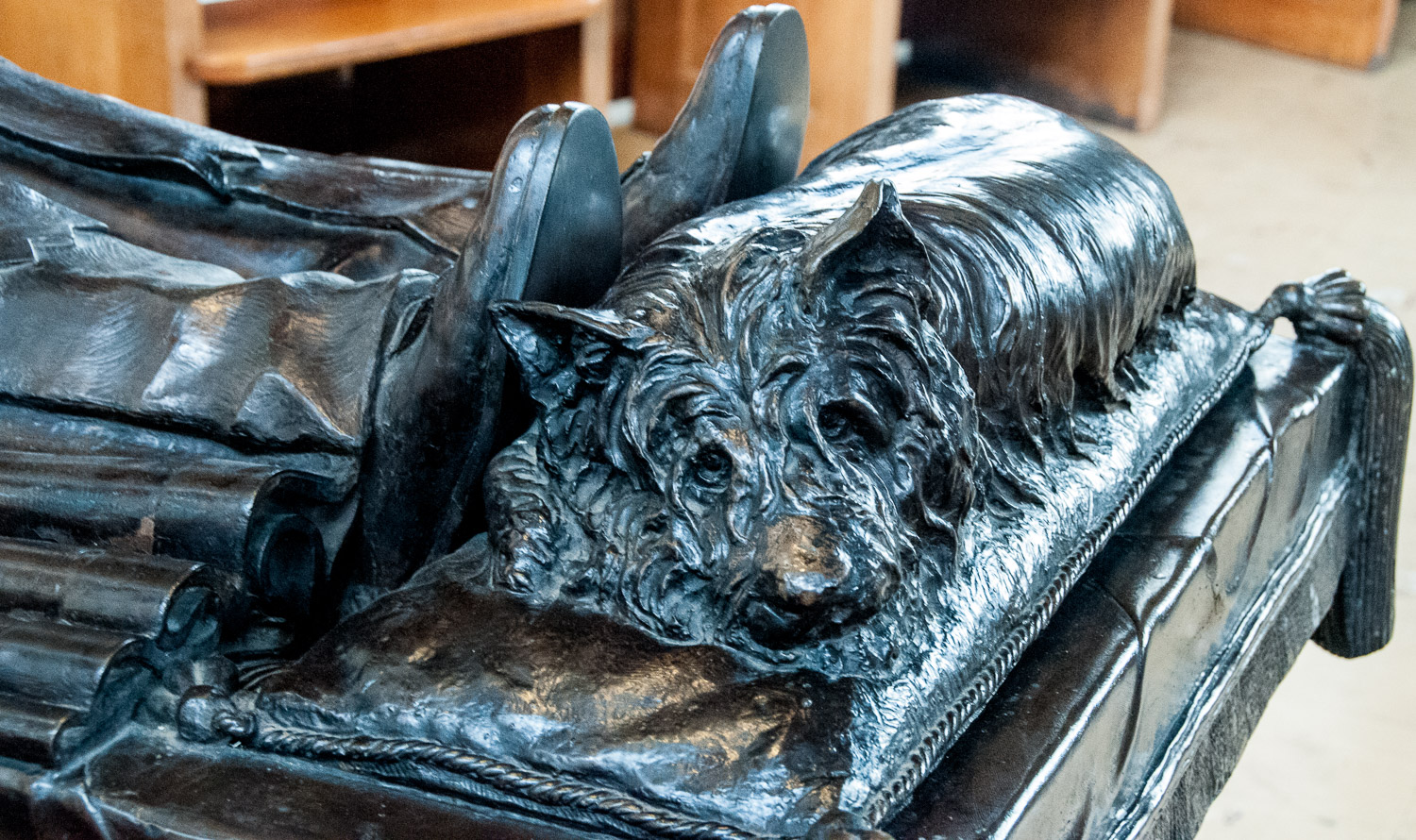
My most pleasing discovery in the book was this little Scottish terrier called Chippy. He rests now in All Hallows by the Tower at the feet of his master the Reverend ‘Tubby’ Clayton CH MC who became vicar of the Church in 1922 and remained there until 1963.  He is best known for his work initially as an army chaplain during the First World War and in particular the establishment of Talbot House, a unique place of rest and sanctuary for British troops. After the war the spirit and intent of Talbot House became expressed through the Toc H movement.

All Clayton’s Scottish Terriers were called Chippy

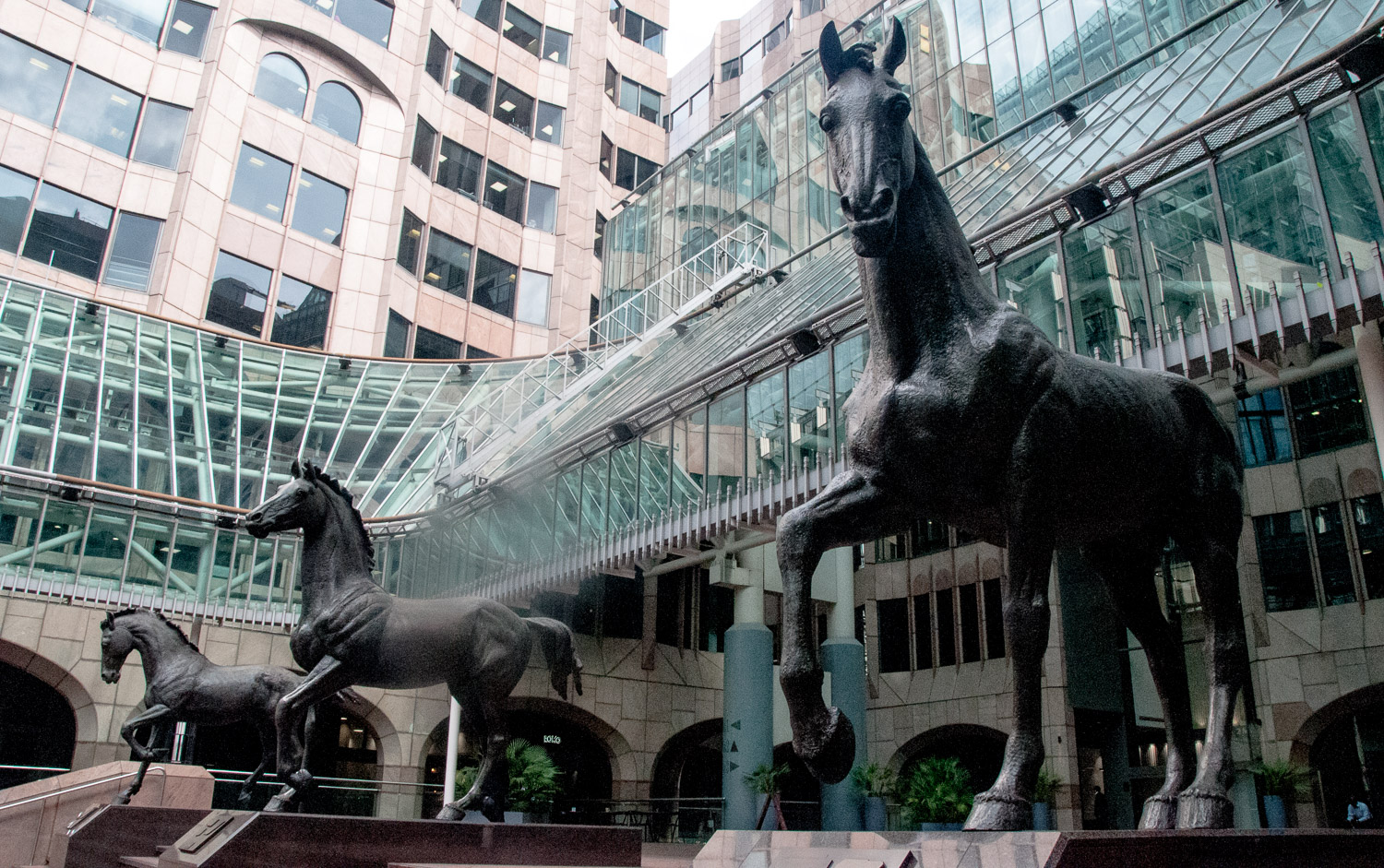
These one and a half times life-size bronzes are outside the headquarters of the London Underwriting Centre in Mincing Lane and the sculptor was Althea Wynne, who sadly died in 2012. She was a keen rider and her love of horses shows through clearly along with influences from classical art, especially Etruscan. There is also a deliberate reference to the classical horses in front of St Mark’s in Venice, whose wealth was also almost entirely built on trade.

Each horse stands 10ft high, weighs 4.5 tonnes and is shown pawing the ground. They are intended ‘to exemplify the dynamism and power of new City buildings …’

In typical City fashion they were swiftly nicknamed Sterling, Dollar and Yen

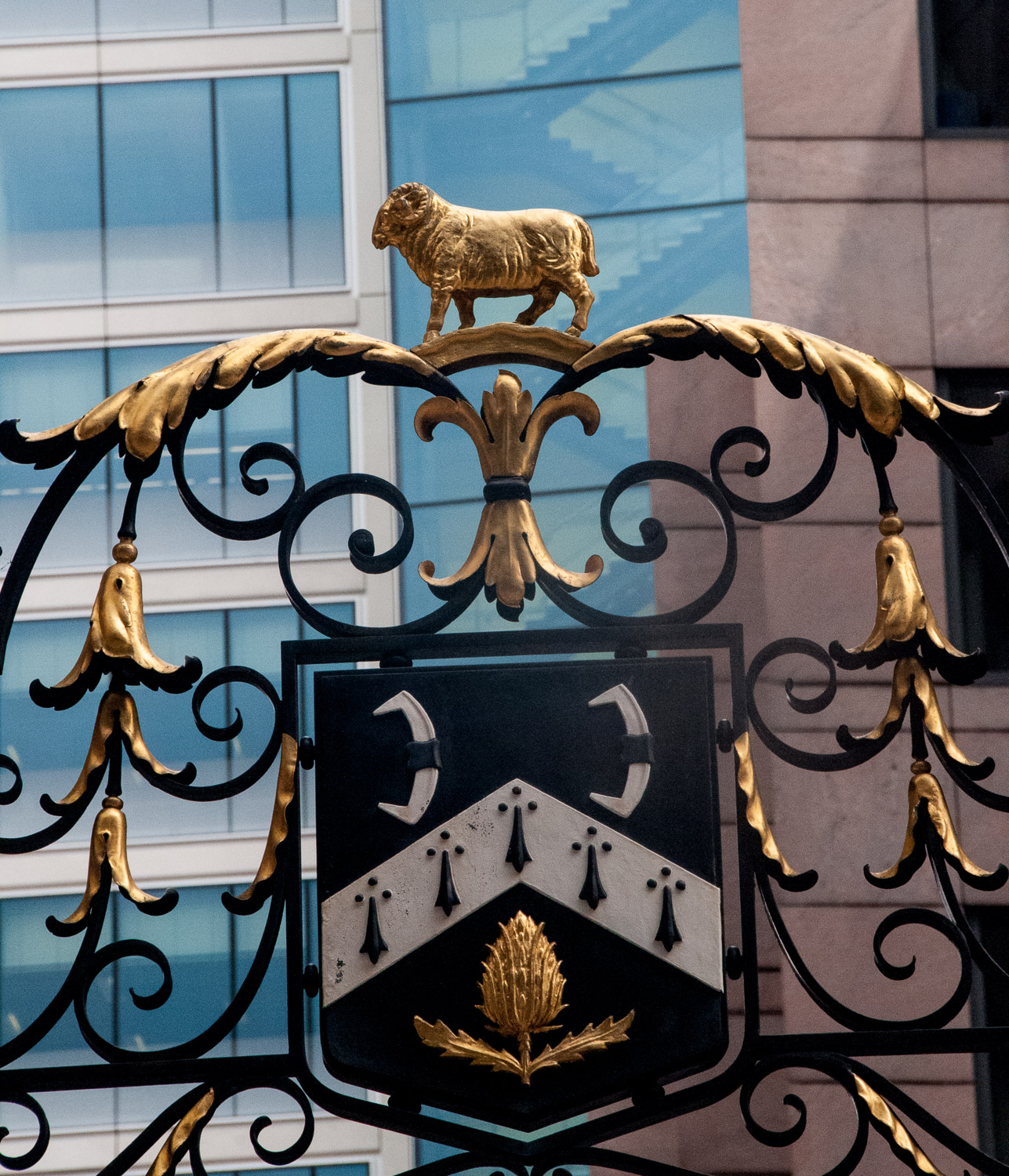
A ram stands proudly on the crest of the Clothworkers’ Company on the entrance to Dunster Court, Mincing Lane.

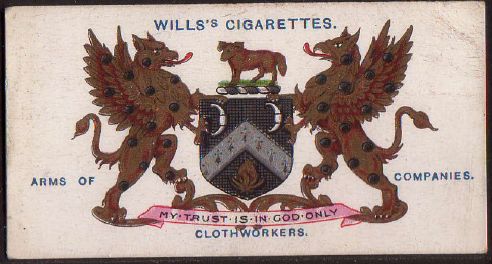
Once upon a time you could learn more about the City Livery Companies if you smoked Wills’s cigarettes!

Founded by Royal Charter in 1528, the original purpose of The Clothworkers’ Company was to protect its members and promote the craft of cloth-finishing within the City of London. Although few of their present members are involved in the textile industry in any direct way, the Company continues to support textiles, principally through educational grants, fostering the development of technical textiles and colour science, and support for the nation’s textile heritage.

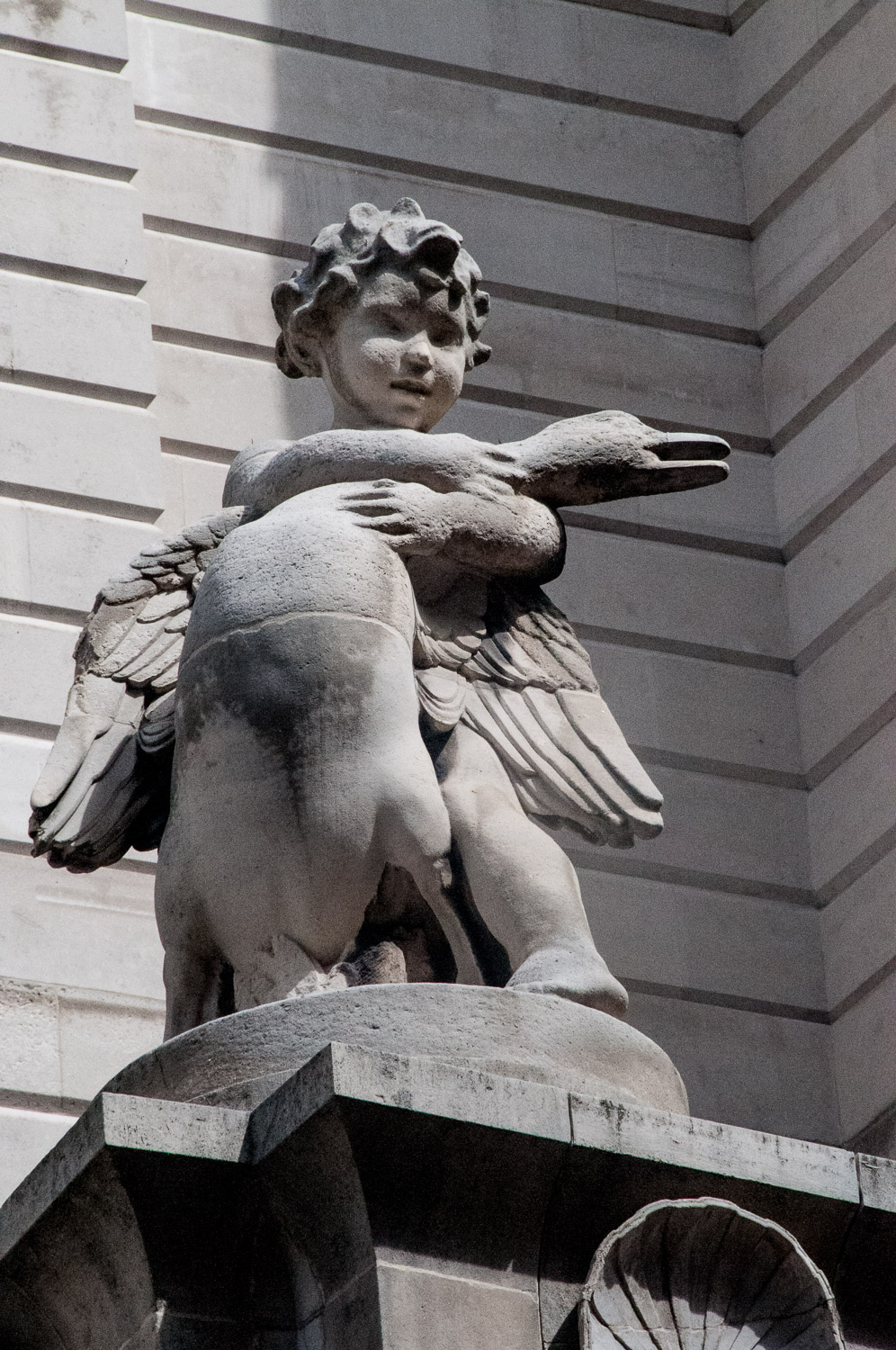
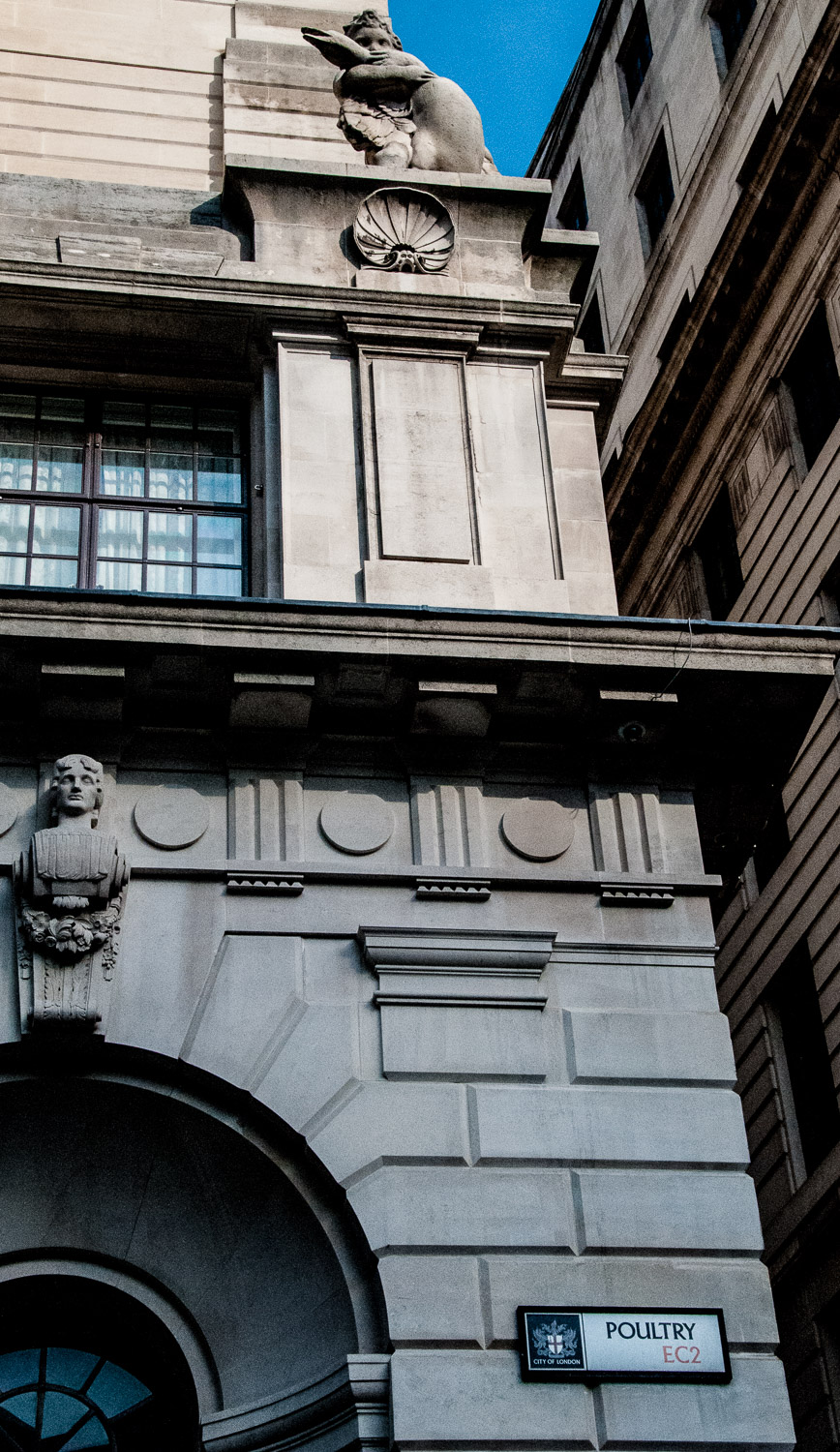
As you approach the Bank junction from Cheapside look up and you will see two young boys at either end of the grand building that was once the City headquarters of Midland Bank (1935). The are both struggling with a rather angry looking Goose.

The sculptor was William Reid Dick

Why a goose? A clue is the ancient name of the street and the goose was a suggestion by the architect Sir Edwin Lutyens to commemorate its original market function. The building is now a private club and restaurant, called The Ned in Sir Edwin’s honour.

The name of the street is a clue

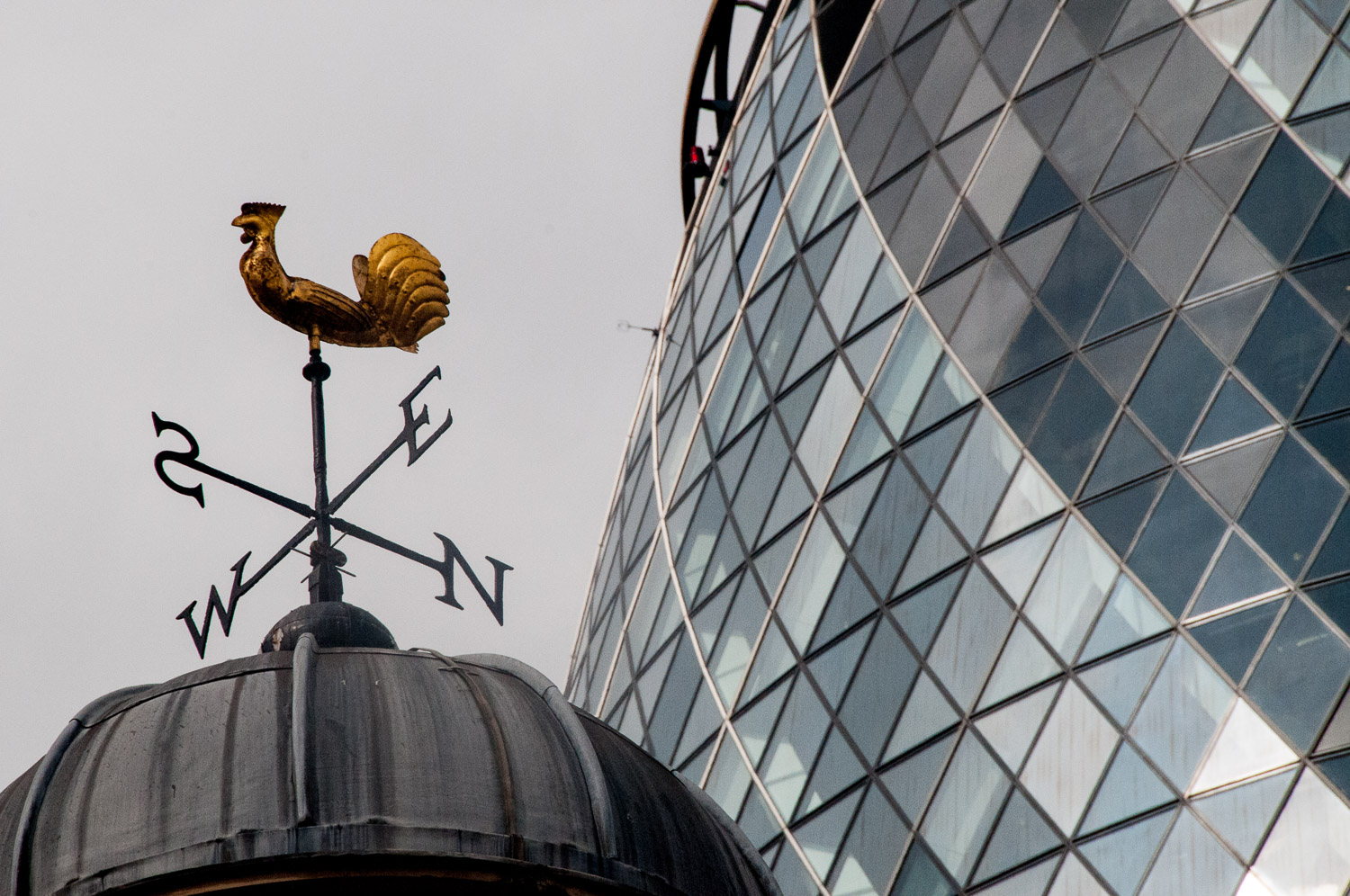
The Church of St Katherine Cree in Leadenhall Street, one of the few to almost totally survive the Great Fire and the Blitz, has a rooster on its weathervane.

The St Katherine Cree weathercock with The Gherkin in the background

The Bible tells the story of St Peter denying Christ three times ‘before the cock crowed’. In the late 6th Century Pope Gregory I declared the rooster to be the emblem of St Peter and also of Christianity generally. Later, in the 9th Century, Pope Nicholas decreed that all churches should display it and, although the practice gradually faded away, the tradition of rooster weathervanes survived in may places.

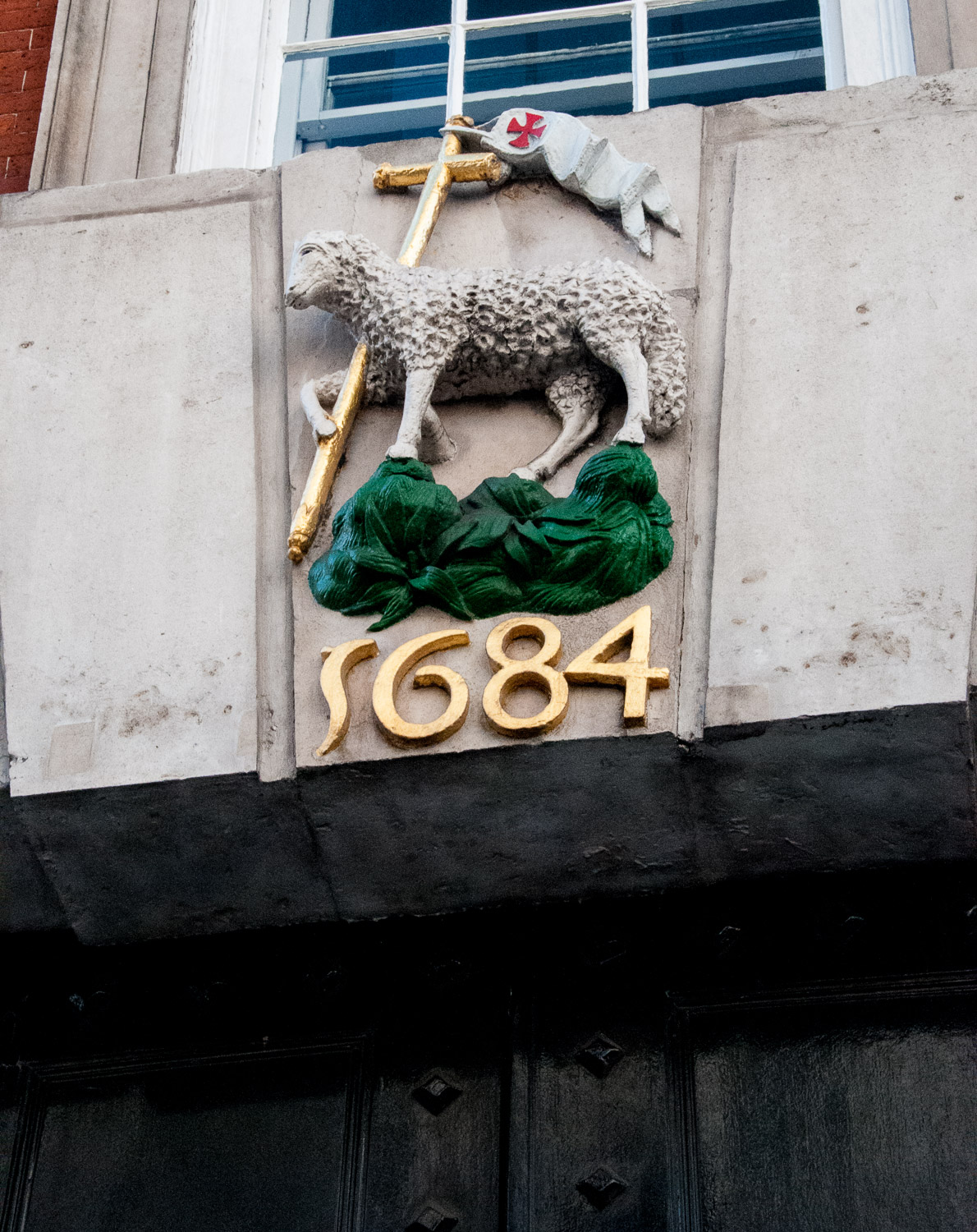
The Agnus Dei, or Lamb of God, is the adopted emblem of the Middle Temple and can be seen in many places around the Inn.

Lamb and Flag keystone, Fleet Street entrance to the Middle Temple (notwithstanding the date, the precision suggests it has been substantially recut over time)

There is a theory that the holy lamb was chosen as the emblem because it had originally been used by the Knights Templar whose arms were two knights mounted on one horse with a trotting Agnus Dei.

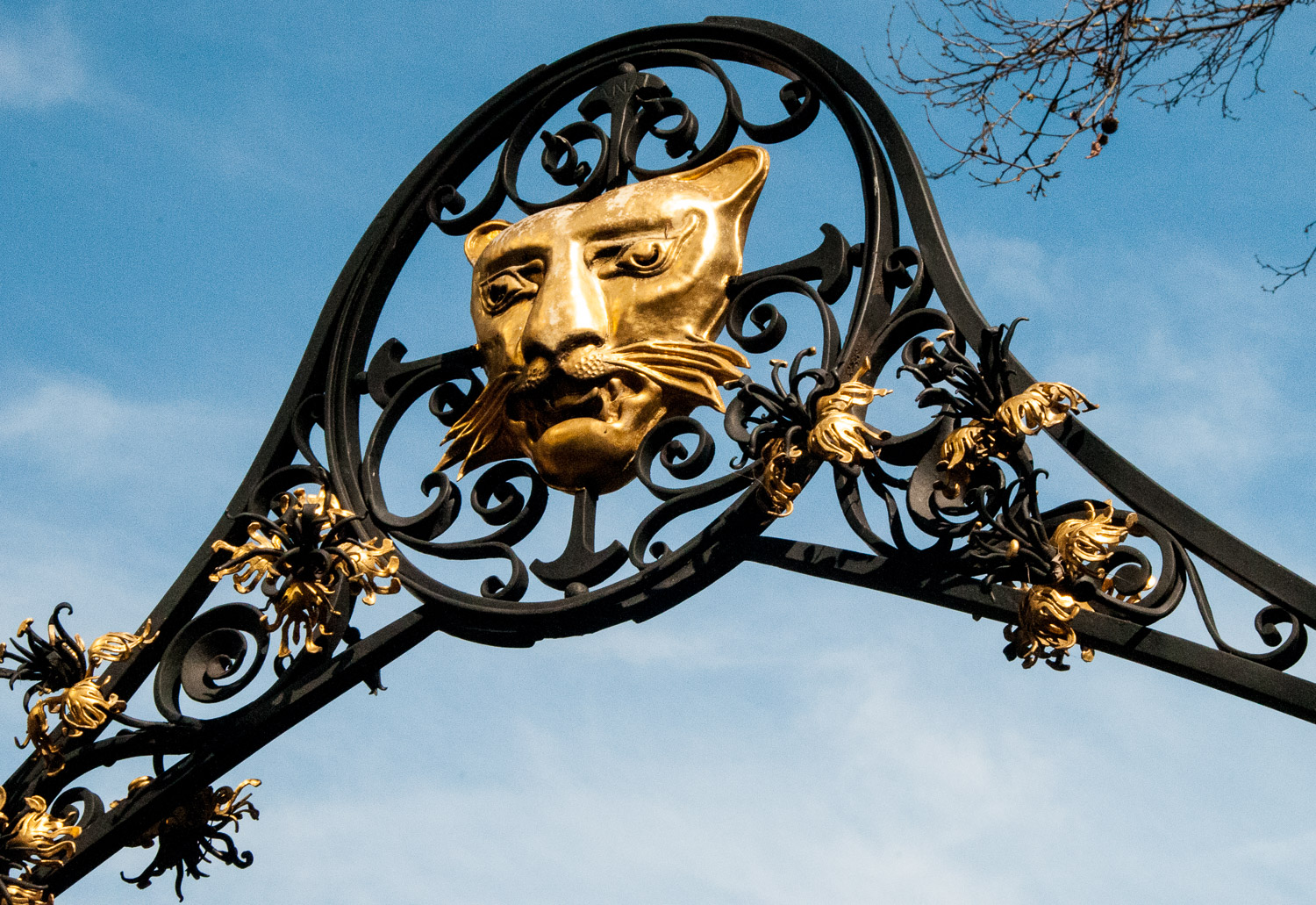
A Goldsmith’s Company symbolic leopard head over the entrance to the old churchyard of St John Zachary

The St John Zachary garden is on the site of the former churchyard and church of St John Zachary, which was partly destroyed in the Great Fire. In 1339 the Worshipful Company of Goldsmiths had acquired land here and built the earliest recorded livery hall on this site. The present multi-level garden includes mature trees, benches, lawn and a fountain.

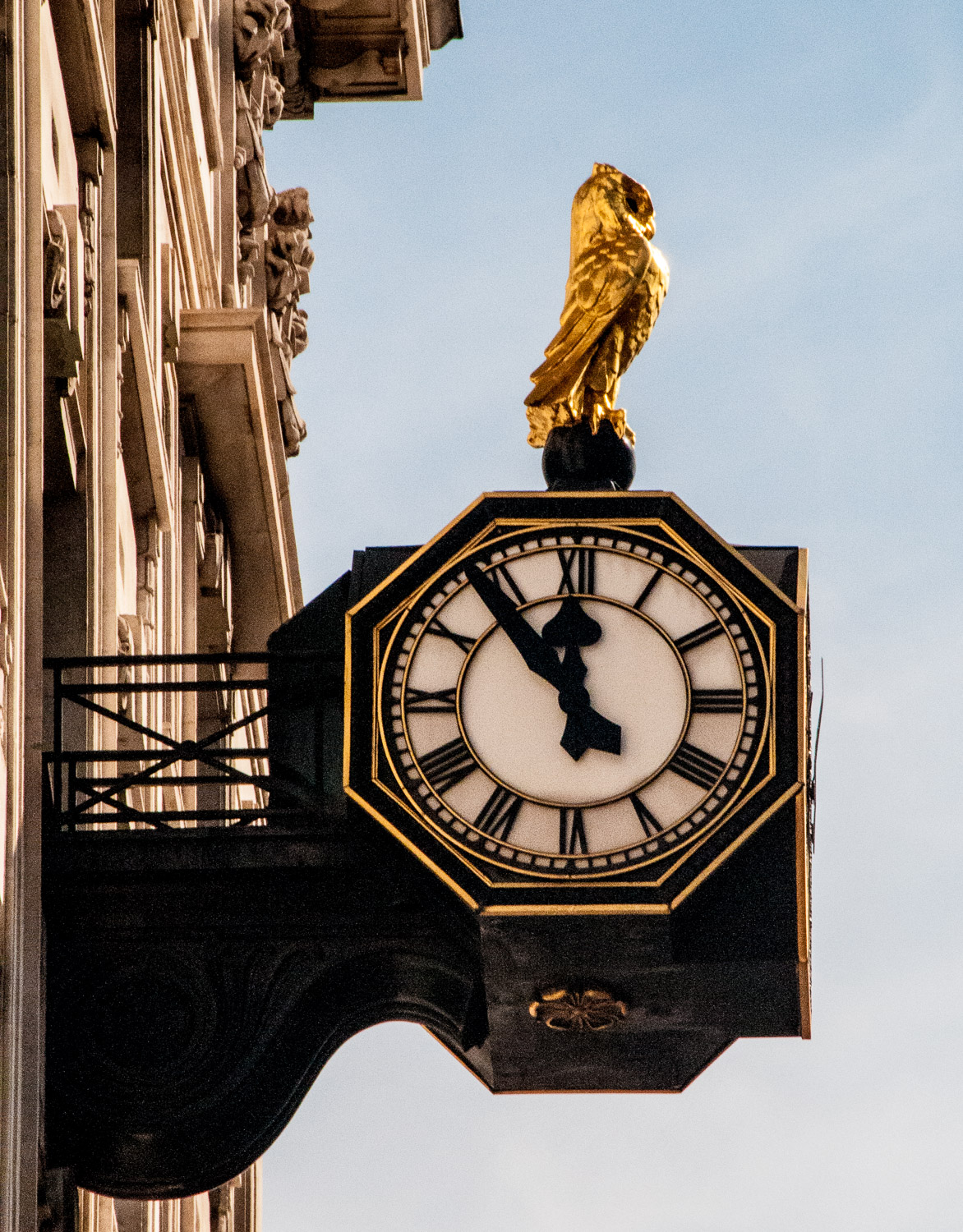
A wise owl gazes at the commuters as they trek over London Bridge from his perch on the House of Fraser store opposite the north entrance to the bridge.

The building used to be the offices of the Guardian Royal Exchange Insurance Company

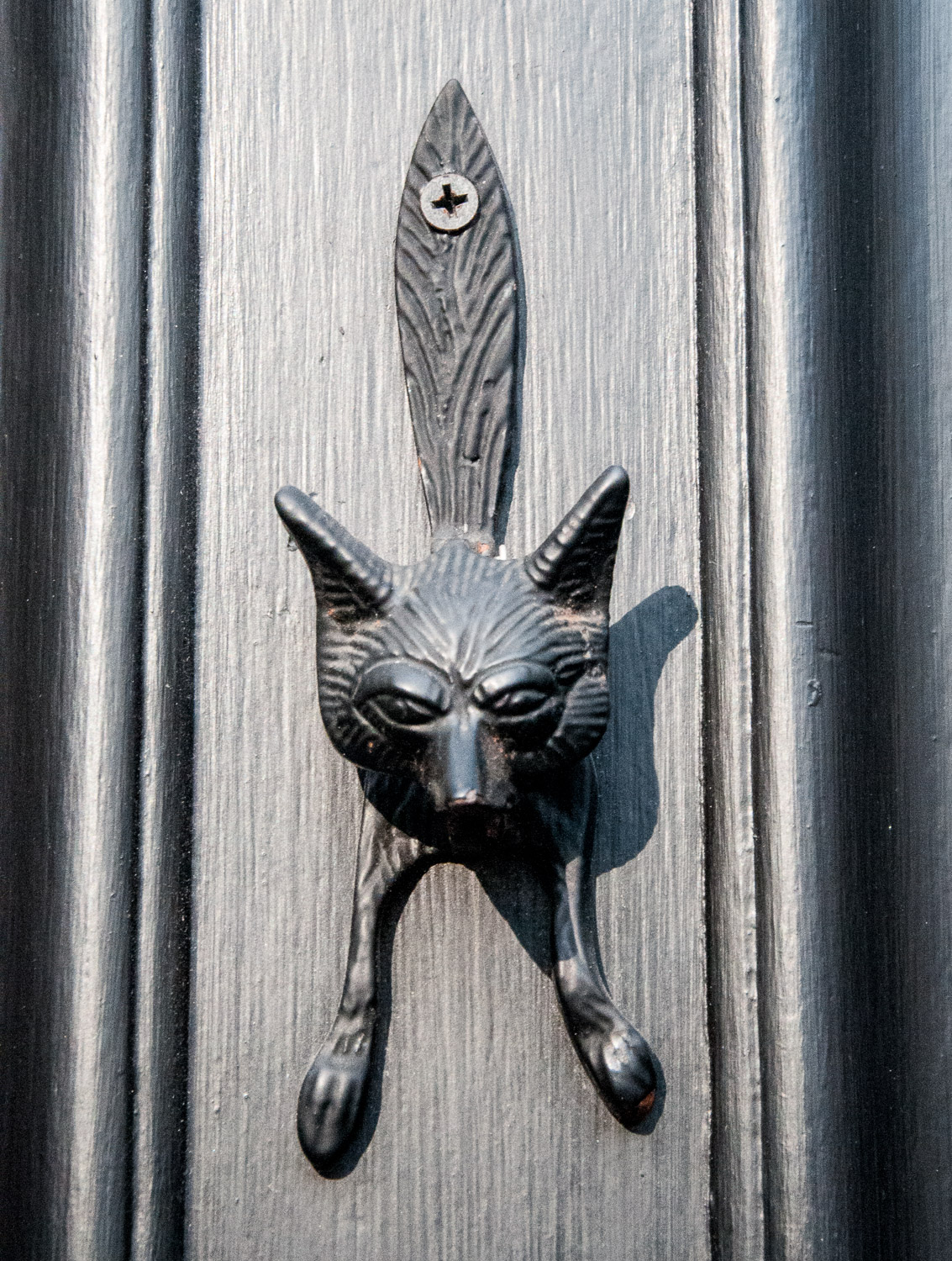
And finally, a wily fox decorates the door of the old Fox’s umbrella shop on London Wall.


Looking at the Stars

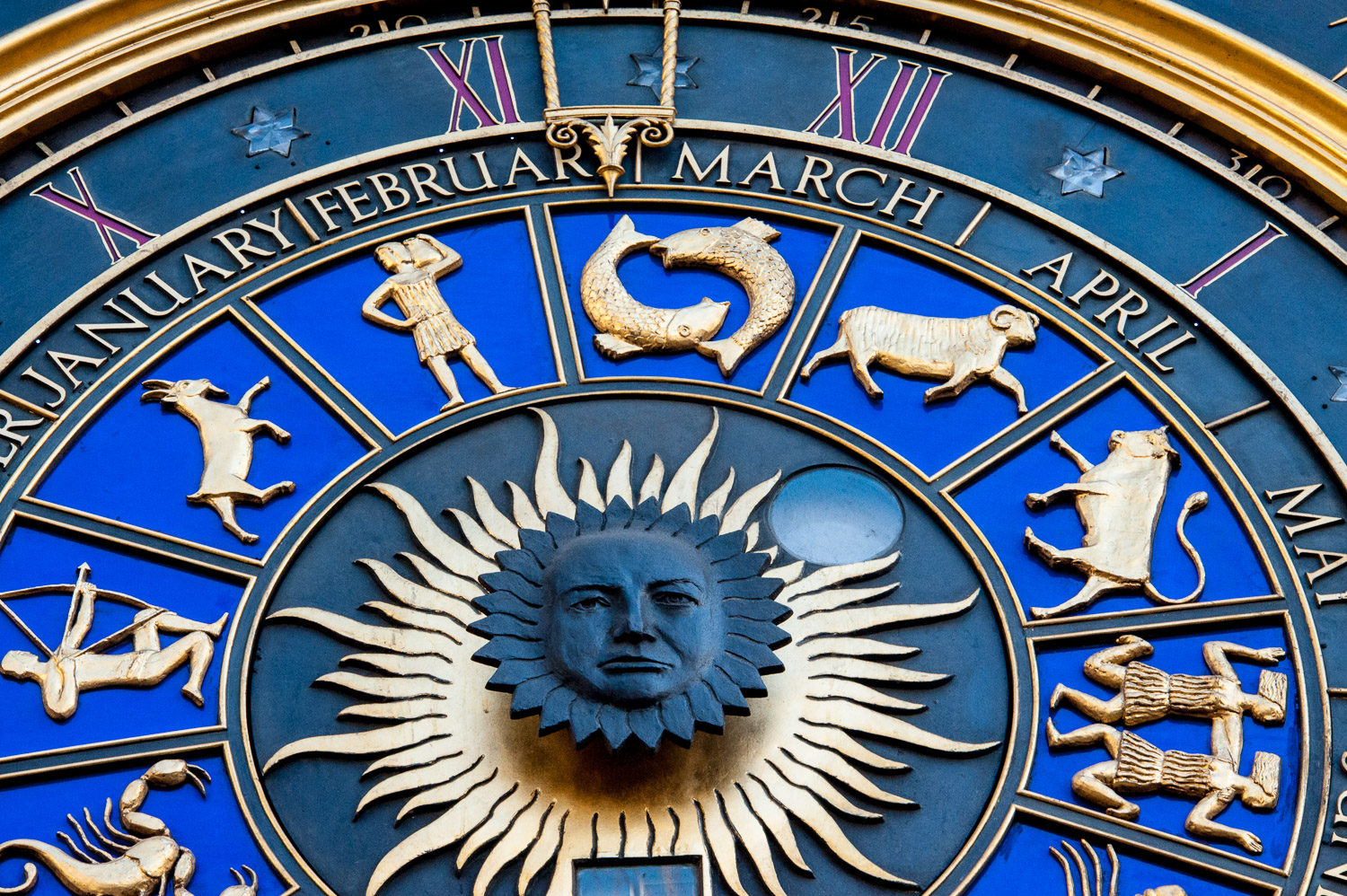
Walking along Cannon Street one day I was captivated by this wonderful Zodiacal clock – especially as one wouldn’t expect to see astrological symbols in the pragmatic, businesslike, City of London. Configured like a dial, the names of the months are inscribed around the circumference and the inner ring has panels with signs of the Zodiac corresponding to the months. What also caught my eye was the gilt bronze sunburst at the centre, on which can be plainly seen the features of Winston Churchill. The building is called Bracken House and used to be the head office of the Financial Times. It is named after Brendan Bracken, its chief editor after the war.

During the War Bracken served in Churchill’s wartime cabinet as Minister of Information. George Orwell worked under Bracken on the BBC’s Indian Service and deeply resented wartime censorship and the need to manipulate information. If you like slightly wacky theories, there is one that the sinister ‘Leader’ in Orwell’s novel 1984, Big Brother, was inspired by Bracken, who was customarily referred to as ‘BB’ by his Ministry employees.

Only a five minute walk away at 107 Cheapside you will find another splendid collection of Zodiacal signs arranged in twelve relief panels around the main door. The building was originally the headquarters of the Sun Life Insurance Company. When the Lord Mayor opened the building in July 1958 he said he felt sure that the signs would ‘attract a considerable number of people to inquire what you can do for them’. This would have been a remarkable marketing success, but sadly there is no record of long queues forming to purchase life insurance. The sculptor was John Skeaping who, incidentally, was Barbara Hepworth’s first husband.

Sagittarius – November 22nd to December 21st

Pisces – February 19th to March 20th

Aquarius – January 20th to February 18th

The entrance to 107 Cheapside

Page 26 of 27

Powered by WordPress & Theme by Anders Norén

Symbols & Secrets
Privacy Overview

This website uses cookies so that we can provide you with the best user experience possible. Cookie information is stored in your browser and performs functions such as recognising you when you return to our website and helping our team to understand which sections of the website you find most interesting and useful.