Walking the City of London

Category: Commerce Page 20 of 27

City Clocks

One day in the 1660s a young apprentice lad was due to meet his Master on London Bridge. Unfortunately, because he had no way of telling the time, he was late and severely castigated for his tardiness. Some fifty years later the young man, Charles Duncombe, had become immensely wealthy and, along with being knighted, had been elected Lord Mayor of London. The story goes that, the day he got into trouble, he promised himself that one day he would erect a public clock, so that all in the vicinity would know the time.

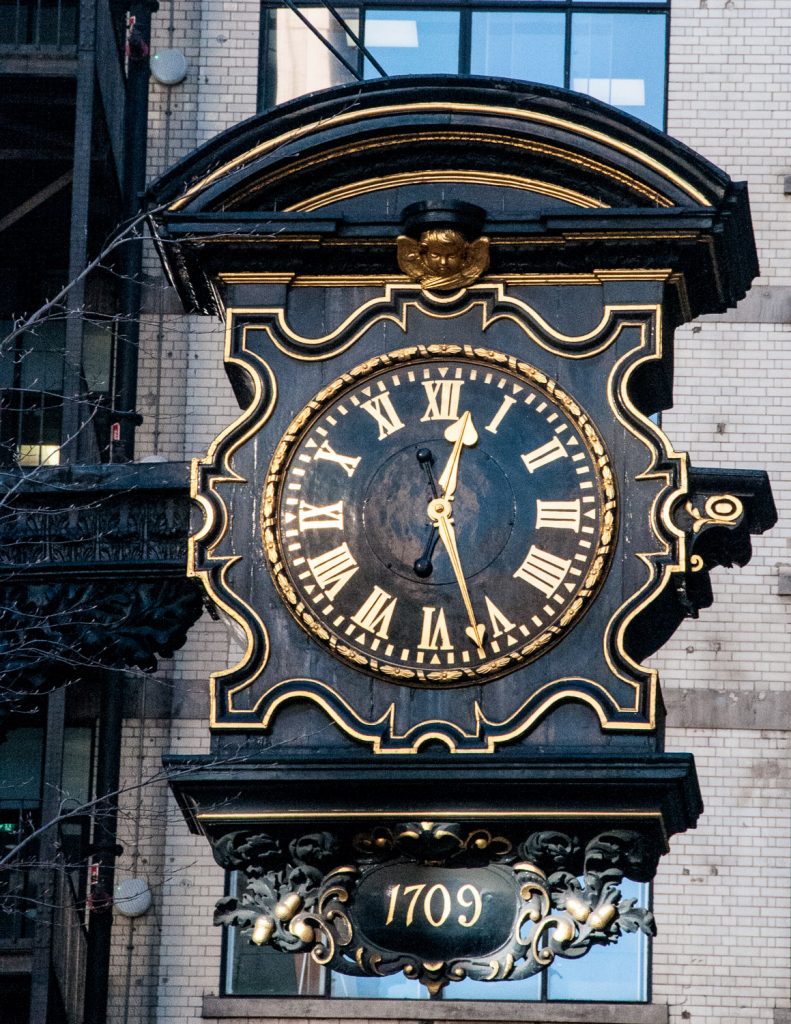
And we can still see today the clock he paid for and donated …
This image has an empty alt attribute; its file name is DSC_2853-791x1024.jpg
The clock was made by Langley Bradley of Fenchurch Street who frequently worked for Christopher Wren. Bradley made the first clock that was installed in St Paul’s Cathedral.

It’s at the side of the tower of St Magnus-the-Martyr, which once stood alongside the entrance to London Bridge until 1832, and so was highly visible both to people crossing the bridge and many in the City. Nowadays it is very hemmed in by office development …
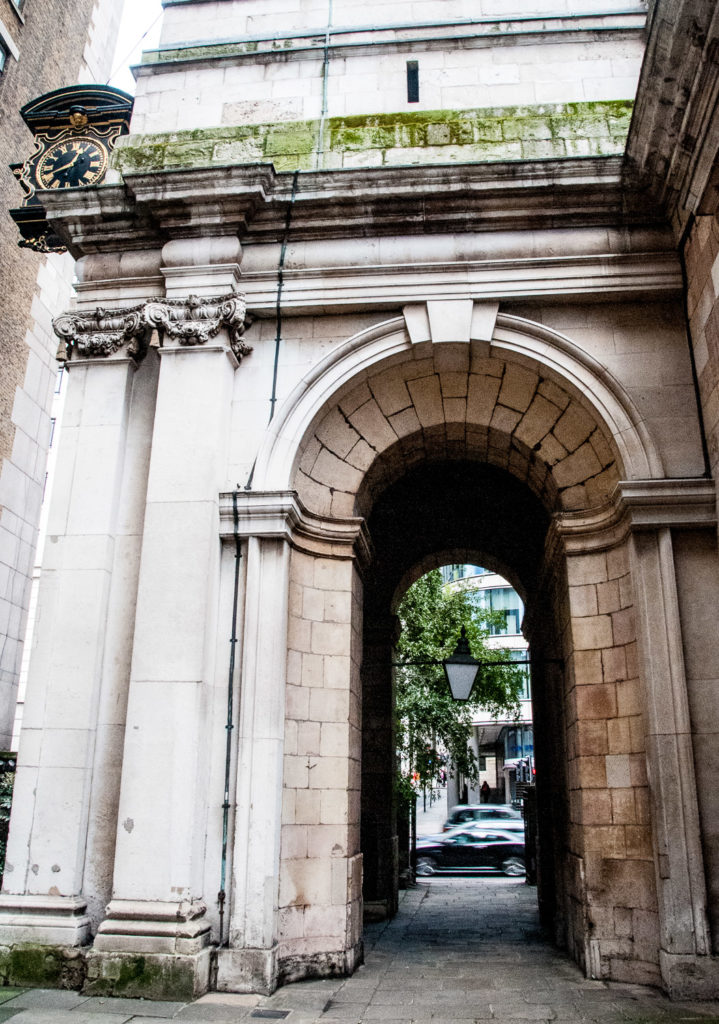
But its situation was quite different in the early 19th century …
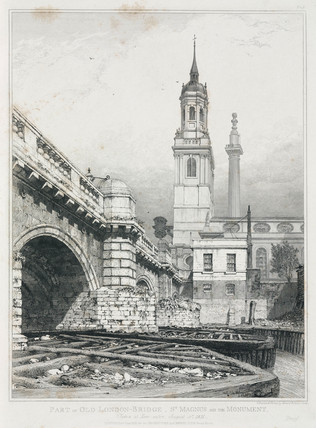
You can see the clock and its proximity to the bridge in this etching by Edward William Cooke entitled Part of Old London-Bridge, St Magnus and the Monument, taken at Low-water, August 15th, 1831.

Now I have to say that, although Duncombe definitely donated the clock, there are some doubts about whether it was linked to a ‘promise’ he made as an apprentice. Nonetheless, it’s a nice story and so I thought it was appropriate to include it here.

I have always liked this clock at the corner of Fleet Street and Ludgate Circus …
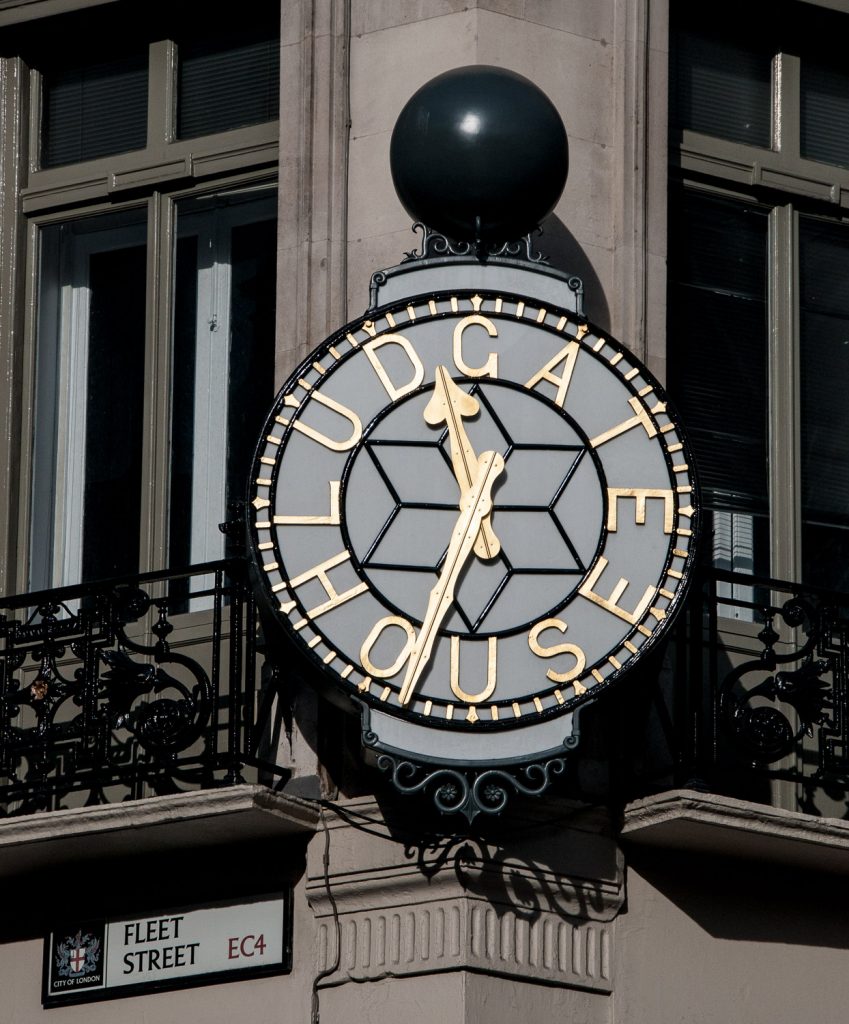
I read somewhere that, during the Blitz, an incendiary device became entangled in the ball at the top and dangled there for hours until it was deactivated. I often have this image in my head of gently swaying ordnance when I walk up Fleet Street.

And Fleet Street has a lot to offer when it comes to clock spotting.

How about this masterpiece …
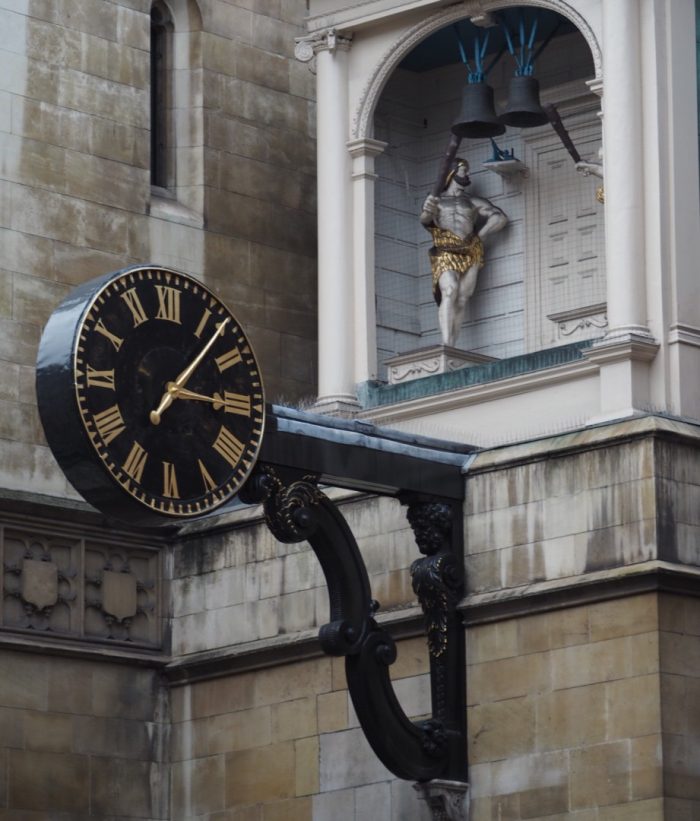
St Dunstan-in-the-West EC4A 2HR

Installed just after the Great Fire of London in 1671, it was the first clock in London to have a minute hand, with two figures (perhaps representing Gog and Magog) striking the hours and quarters with clubs, turning their heads whilst doing so.

The present version of the clock was installed in 1738 before, in 1828, being moved to the 3rd Marquess of Hertford’s house in Regent’s Park. The Great War saw the Regent’s Park residence housing soldiers blinded from combat. The charity which undertook this went on to name itself after where the clock in the house came from: St Dunstan’s. It was returned to the Church in 1935 by Lord Rothermere to mark the Silver Jubilee of King George V.

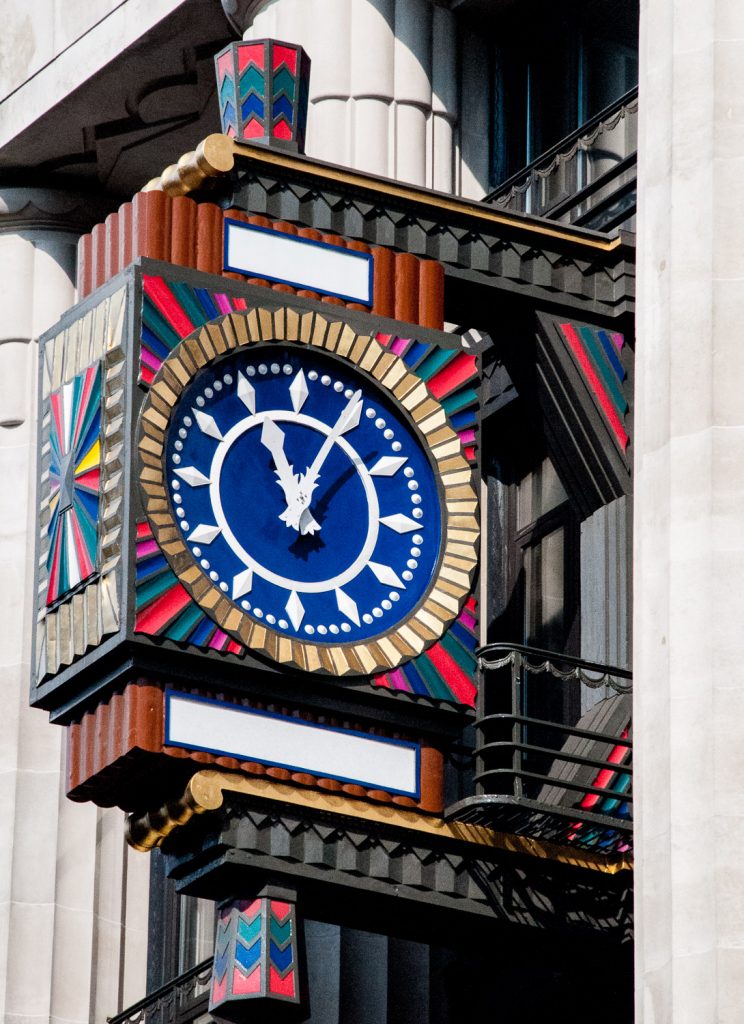
If you like the occasional burst of colour, look up at this Art Deco beauty outside the old Fleet Street offices of the Daily Telegraph (EC4A 2BB) …
Do any of you remember the original Number 1 Poultry, the 1870 Mappin & Webb building which, despite being listed, was demolished in 1994? Here is a picture taken a few years before demolition …
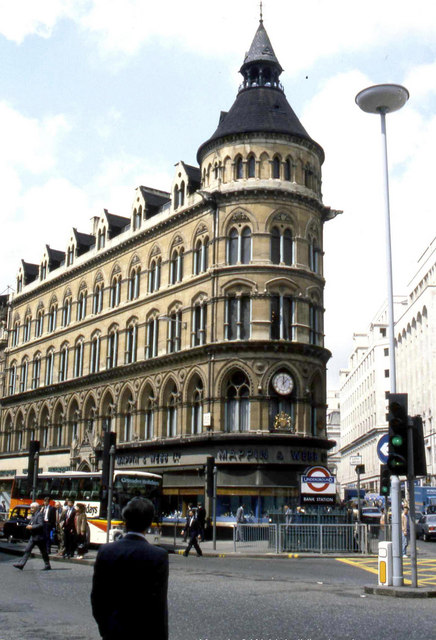
I was very familiar with the clock that faced the junction since, when I started work nearby and got off the Tube, it would indicate whether I was going to be late or not.

This is the new building that replaced it. I don’t dislike it, I’m just sad they felt they had to destroy the old one …
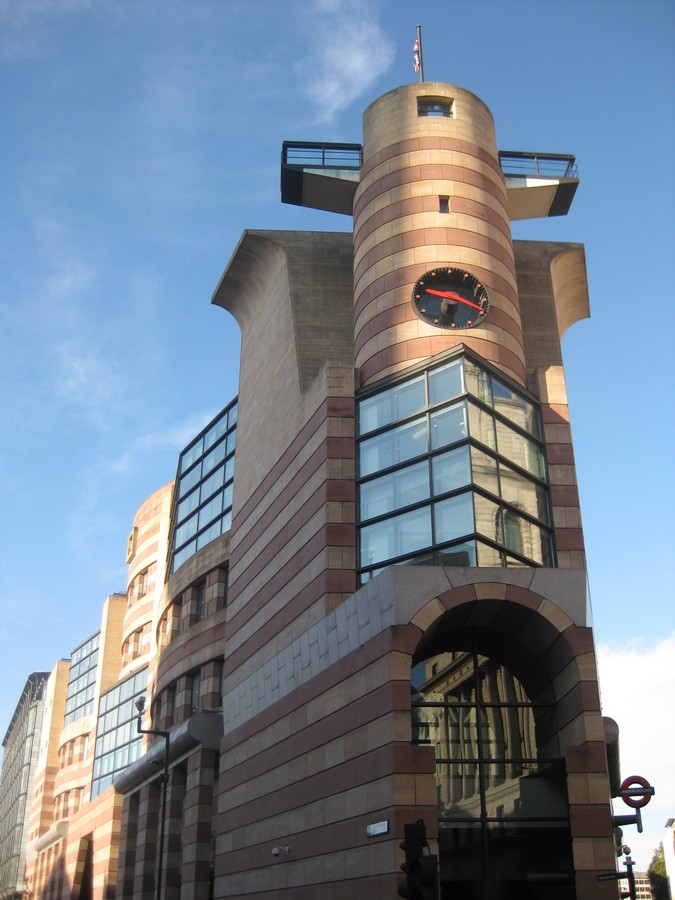
The building (by James Stirling and Michael Wilford & Partners) is now Grade II* listed. Photo copyright Adrian Welch

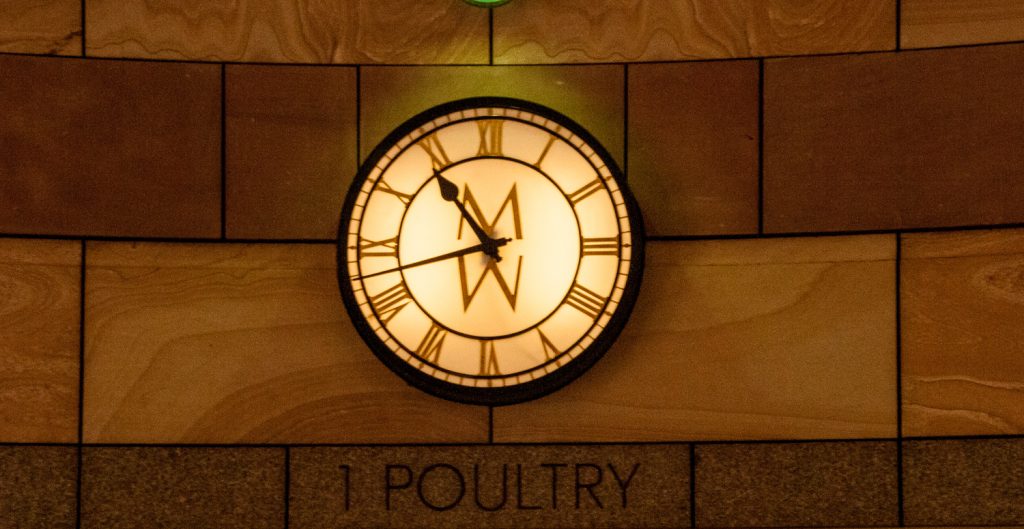
A small plus, I suppose, is that the old Mappin & Webb clock has been preserved in the public atrium …
And a wonderful frieze from the old building illustrating royal processions has also been preserved and relocated facing Poultry. Here is a small section …
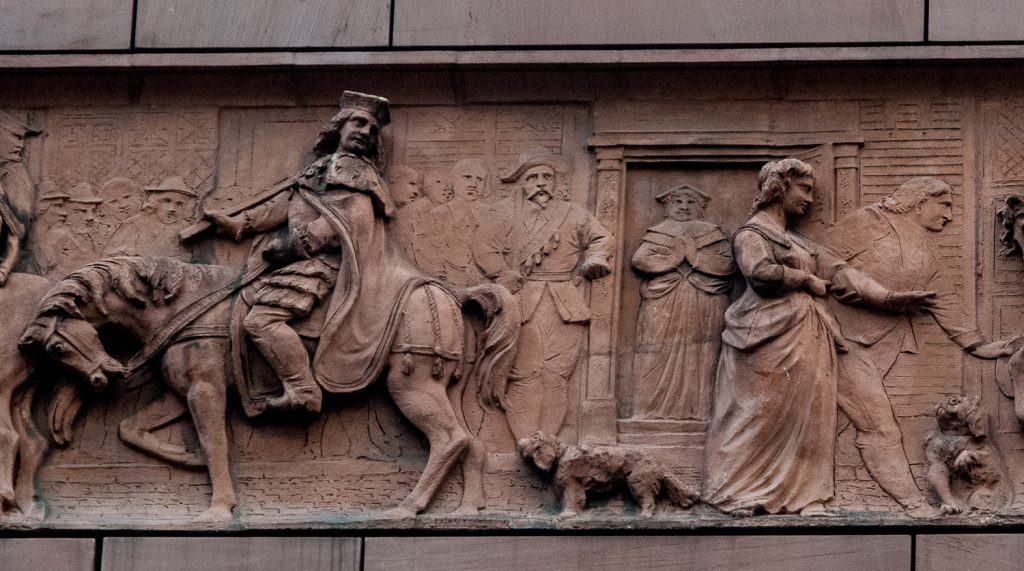
King Charles II rides past accompanied by his pet spaniels

I am really pleased to report that the refurbishment of Bracken House is now complete and we can see again the extraordinary Zodiacal clock on the side of the building that faces Cannon Street (EC3M 9JA).

Here it is in all its glory …
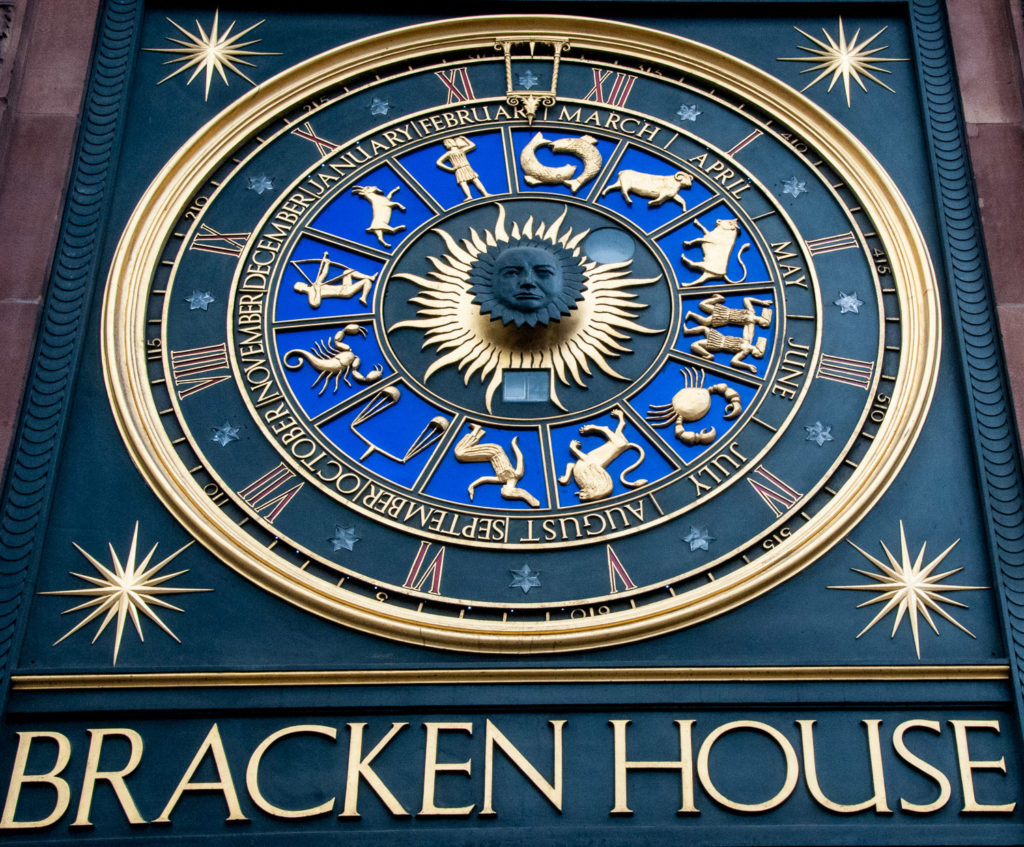
If you look more closely at the centre this is what you will see …
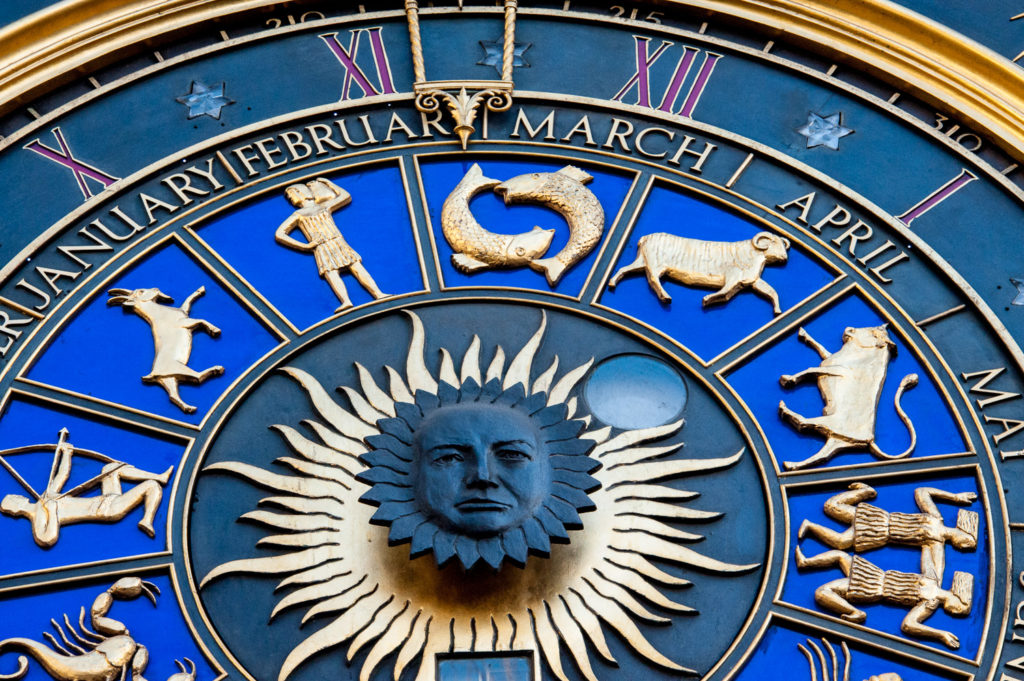
On the gilt bronze sunburst at the centre you can clearly see the features of Winston Churchill. The building used to be the headquarters of the Financial Times and is named after Brendan Bracken, its chief editor after the war.

During the War Bracken served in Churchill’s wartime cabinet as Minister of Information. George Orwell worked under Bracken on the BBC’s Indian Service and deeply resented wartime censorship and the need to manipulate information. If you like slightly wacky theories, there is one that the sinister ‘Leader’ in Orwell’s novel 1984, Big Brother, was inspired by Bracken, who was customarily referred to as ‘BB’ by his Ministry employees.

The oddly-shaped Blackfriar pub on Queen Victoria Street sports a pretty clock just above the jolly friar’s head …
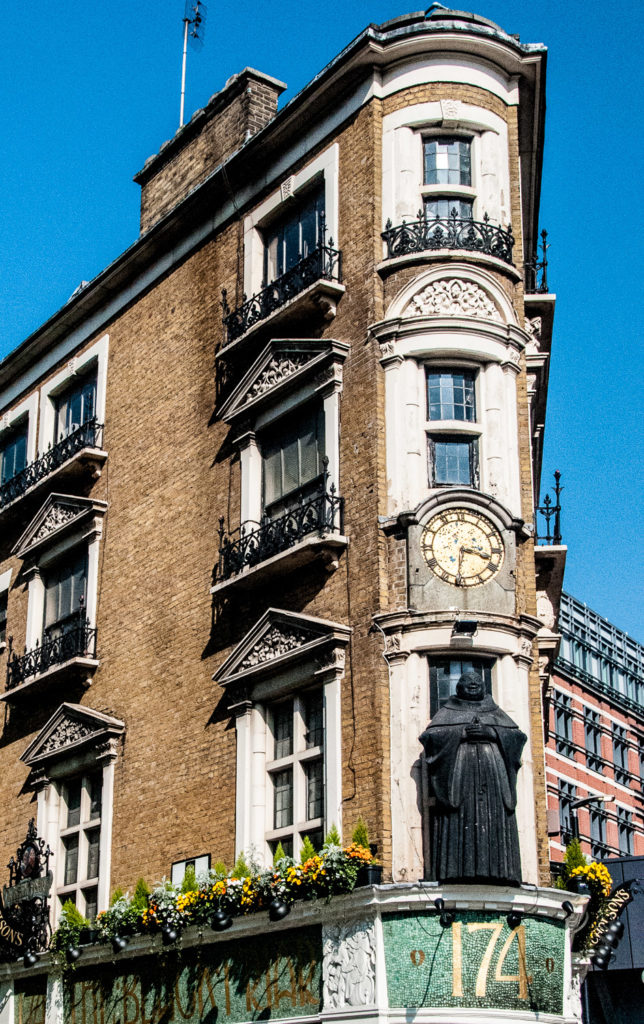
Unfortunately it hasn’t worked for long time.

The Royal Courts of Justice have a magnificent clock (WC2A 2LL). It was ‘set in motion’ when ‘the surveyor severed the cord holding the pendulum’. Here’s the event as recorded in the Illustrated London News of December 1883 …
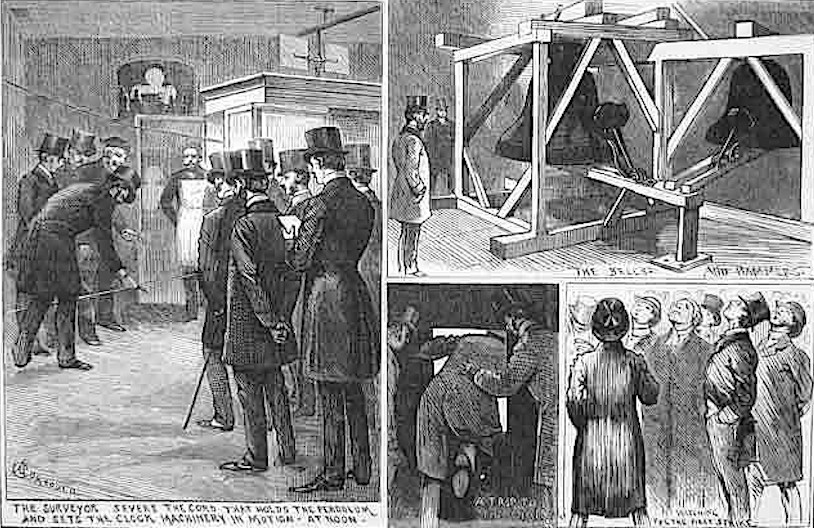
Designed by George Edmund Street, it has been described as ‘exuberant’ …
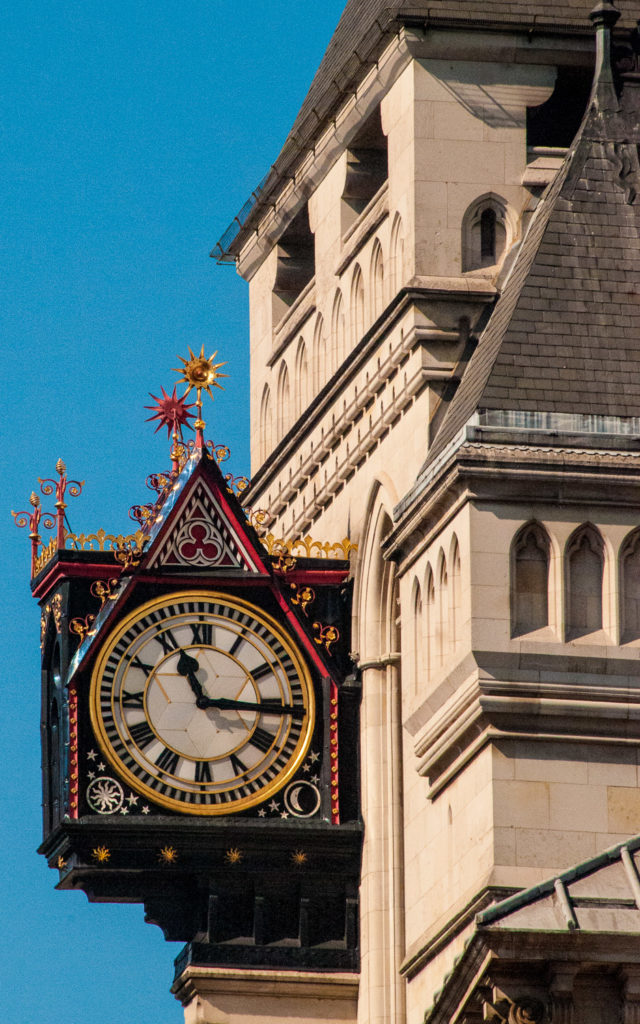
When doing research for this blog I discovered a tragic event relating to the clock. On 5th November 1954 a clock mechanic, Thomas Manners, was killed when his clothes were caught up in the machinery as he wound up the mechanism. He had been carrying out this task every week since 1937, as well as looking after the 800 or so other clocks in the law court buildings. You can read the press cutting I came across here.

The Royal Exchange has two ‘twin’ clocks, both exactly the same, one facing Threadneedle Street and one facing Cornhill …
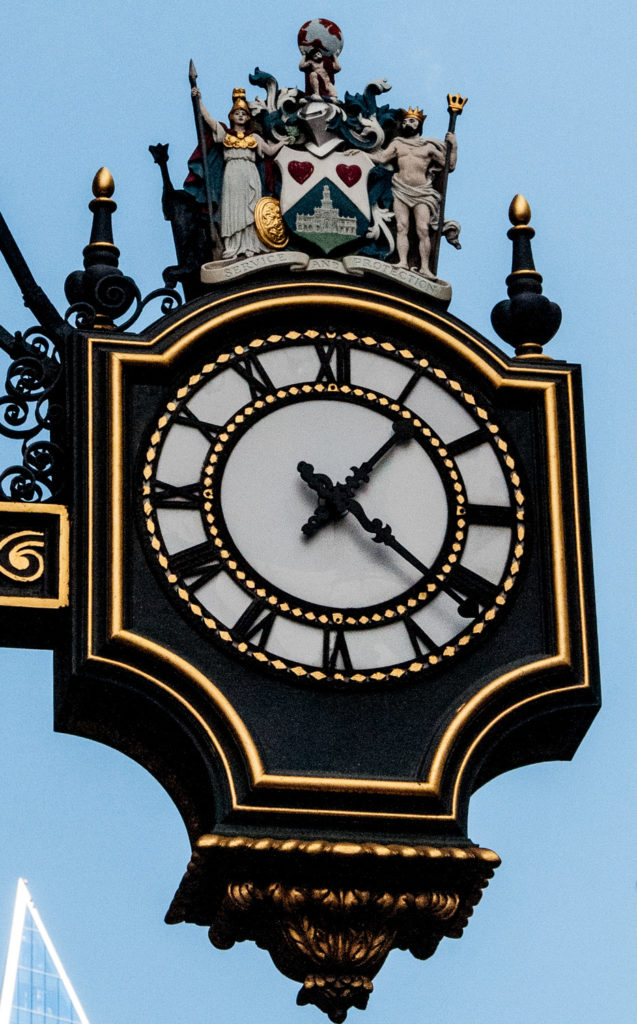
Britannia and Neptune hold a shield that contains an image of Gresham’s original Royal Exchange whilst above Atlas lifts a globe. I have seen it described as a Valentine’s Day clock because of the two red hearts. Ahhhh, sweet!

Clocks have featured regularly in my blogs and you can read more about some of them here and here.
Underground history at Moorgate station

I love old photographs, and there is a selection of them on display alongside the platforms at Mooorgate Station. For those of you who don’t board or alight there I have reproduced them here. For those of you that do, I have added a little more history.

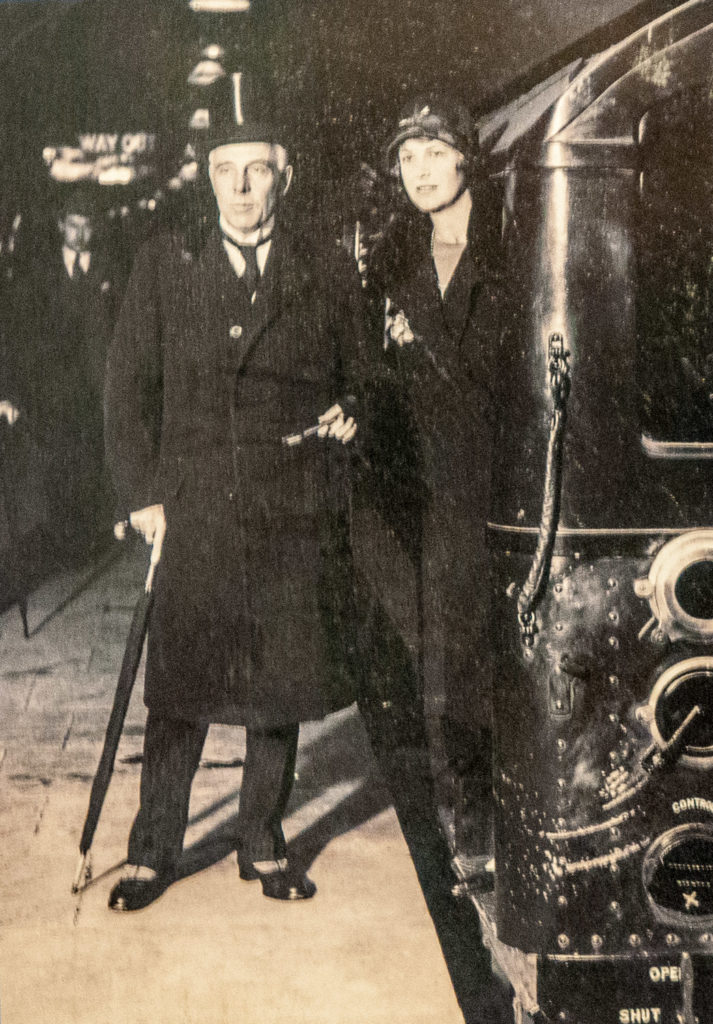
First up is this distinguished looking gentleman …

Lord Ashfield posed with his daughter at Moorgate Station in 1924

Ashfield was then Chairman of the Underground Electric Railways Company of London. He had joined the organisation as General Manager in 1907 when it was in such poor financial shape that he reserved the right to leave after a year and return to America where he was running the New Jersey transport system. A charming but tough character, on arrival he demanded and got resignation letters from all the UERL senior management, post-dated by six months.

An extraordinarily competent businessman, he turned the operation into a success and went on to hold numerous senior positions with the Underground railway as well as becoming President of the Board of Trade in 1916.

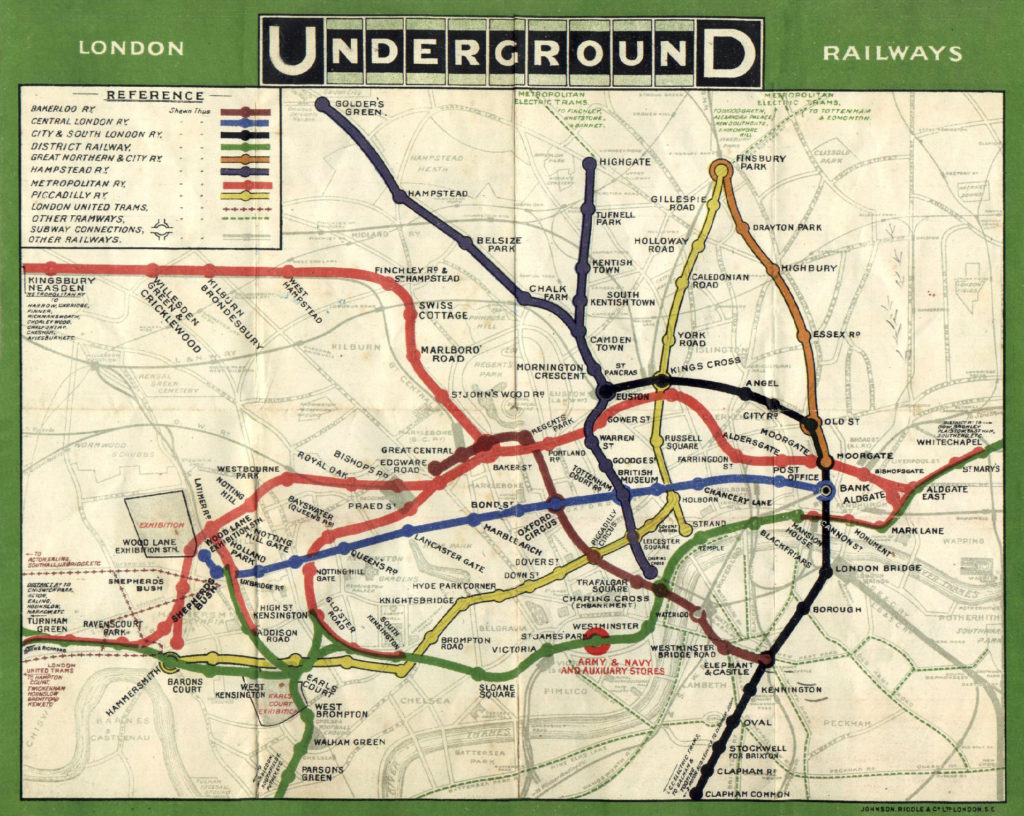
Here is a copy of the first Underground Map of 1908 showing the UERL’s lines and those of the other Tube lines including the Metropolitan Railway …

I still find it quite amazing that the Metropolitan opened for business over 150 years ago in 1863 as a possible solution to London’s desperately overcrowded streets. It was a great success, carrying over 30,000 passengers on its first day, despite the foul and disgusting atmosphere created by the steam trains that pulled the carriages. The Metropolitan’s owners claimed the ‘invigorating’ atmosphere ‘provided a sort of health resort for people who suffered from asthma’, but they also allowed drivers to grow beards in a futile bid to filter out the worst of the fumes. An attempt to ban smoking was thwarted by Parliament and a total ban didn’t take place until 1987 as a result of the King’s Cross fire.

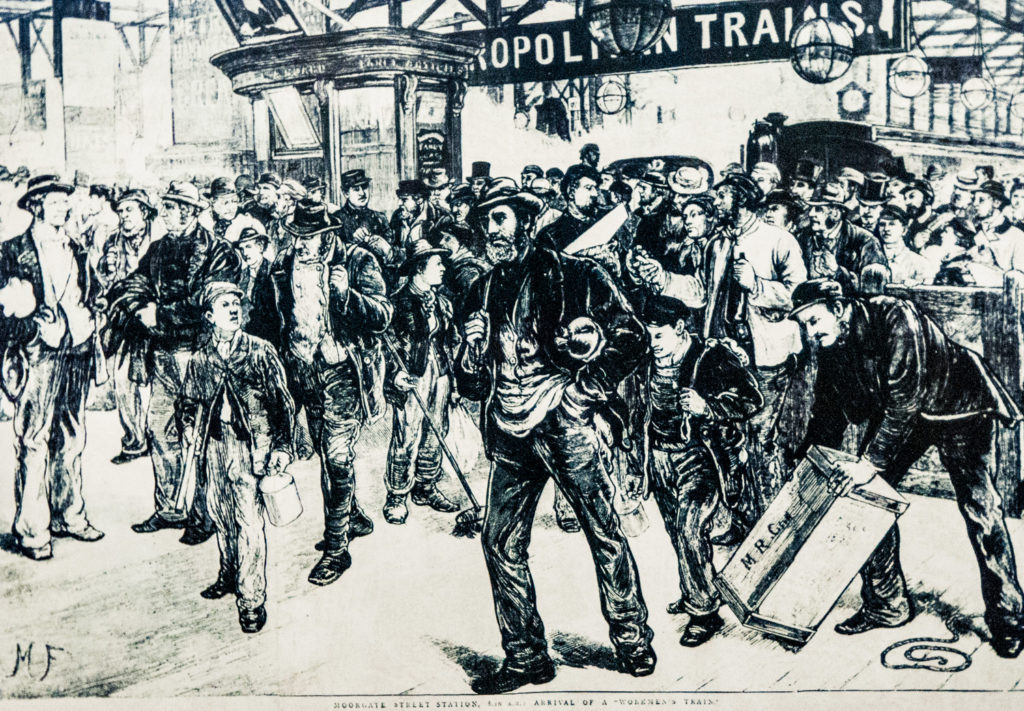
This drawing of circa 1865 shows early morning commuters arriving having taken advantage of cheap fares on ‘workmen’s trains’ …

Available if you travelled before 6:00 am, the cheap workmen’s tickets were incredibly popular. Interviewed by the journalist Henry Mayhew, the labourers he spoke to all voiced their enthusiasm for a service that allowed poorer Londoners to live further out, sparing them a six-mile walk to work and allowing their families to live in two rooms rather than one.

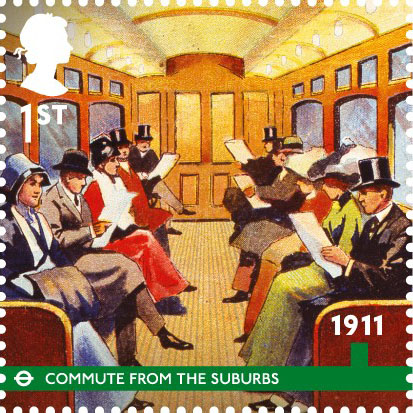
Commuting from the suburbs was portrayed in this poster as a very civilised experience …

Stamp issued in 2013 the celebrate 150 years of the Underground

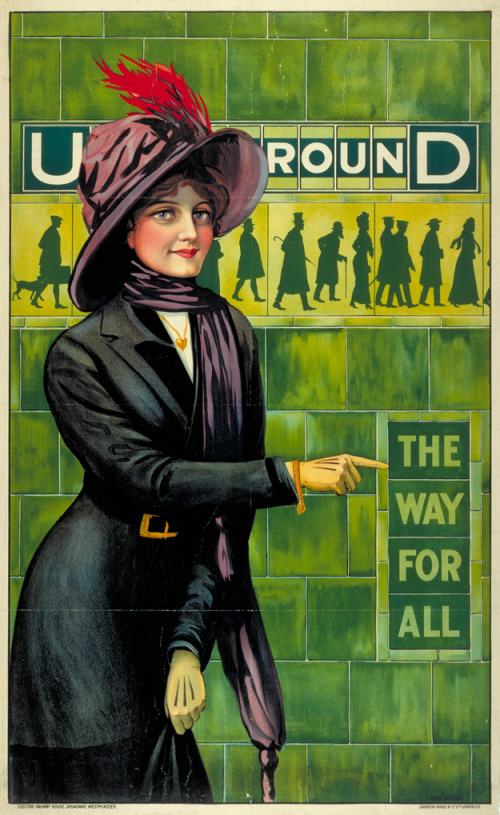
Isn’t this poster from 1911 by Alfred France splendid, look at the silhouettes …

The Underground really was for everyone

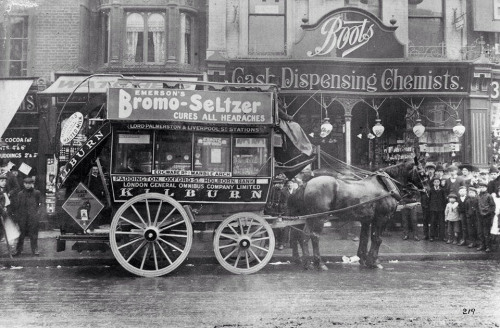
There was also a horse-drawn omnibus available at Moorgate for onward journeys. In fact, the very last journey of this nature in London was between Moorgate and London Bridge on October 25th 1911 …

The last journey

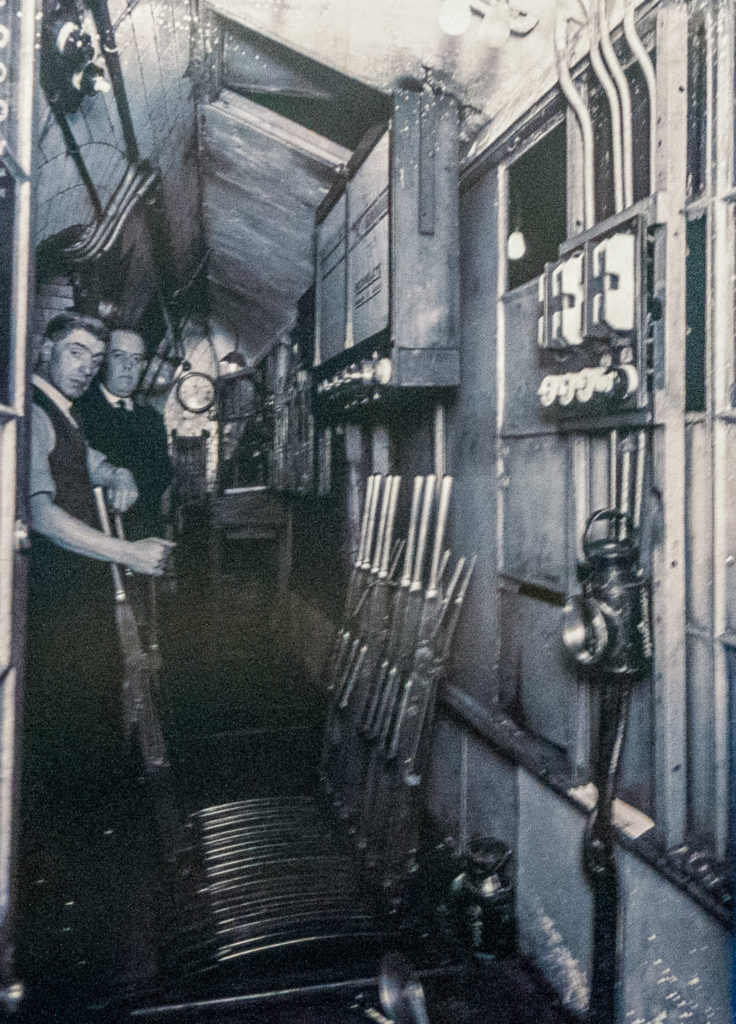
The station was busy enough to require a signal box …

1933 – Signallers operated their levers in a cabin by the Station

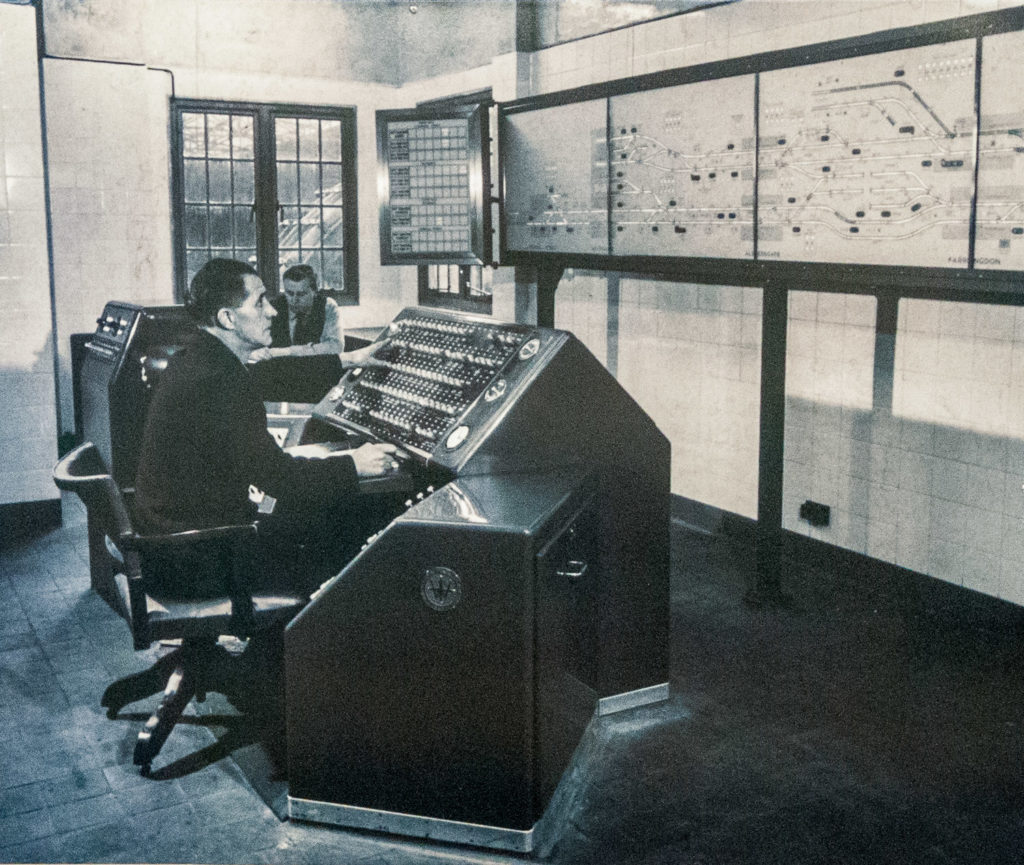
By 1955 a signaller controlled Moorgate’s section of track from a new push-button signalling cabin …

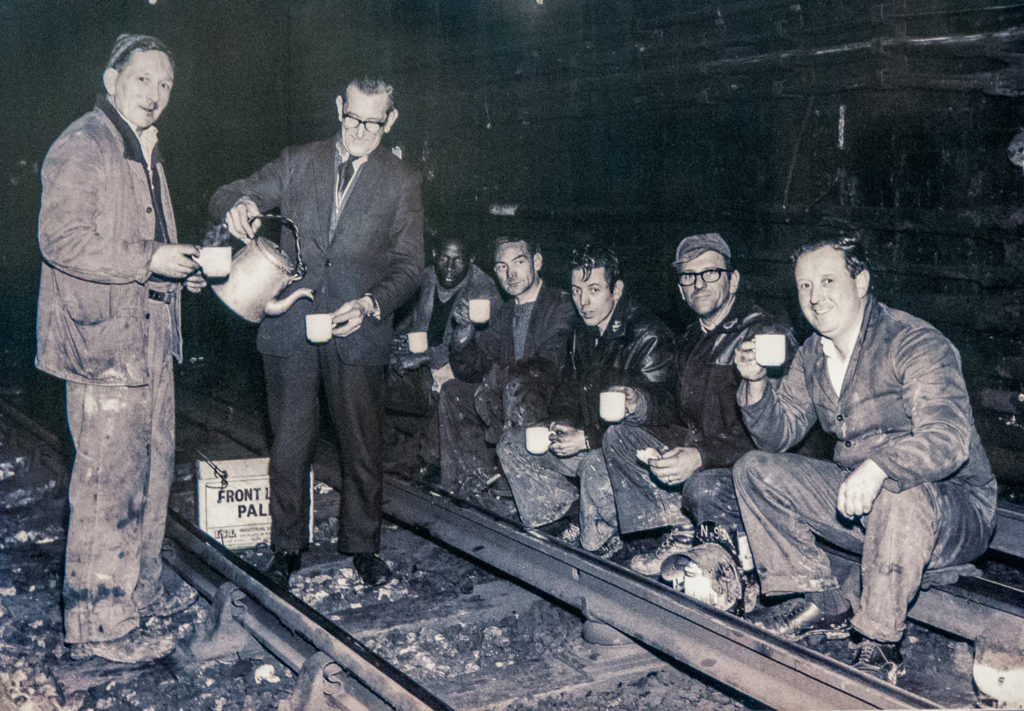
I think this is a great picture from 1965 of Underground workers stopping for a tea break during a shift realigning the Metropolitan line tracks …

‘I’ll be mother’. That’s a proper workers’ teapot!

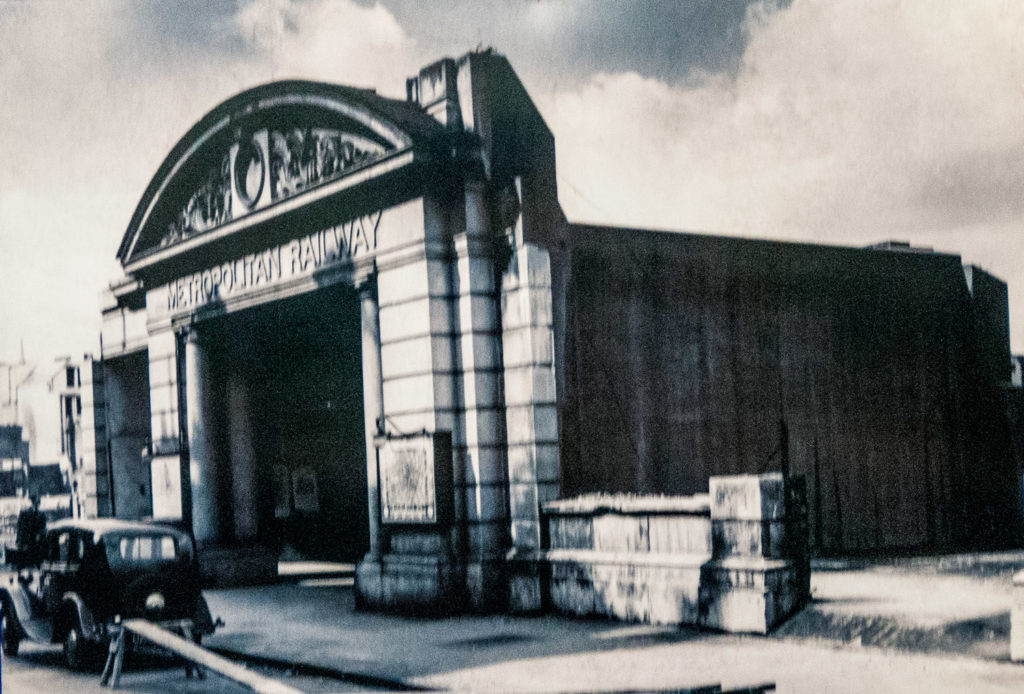
An entrance to the station survived the Second World War bombing that destroyed other parts of the building …

Picture taken in 1955

I found these pictures during my research and hope you find them interesting …

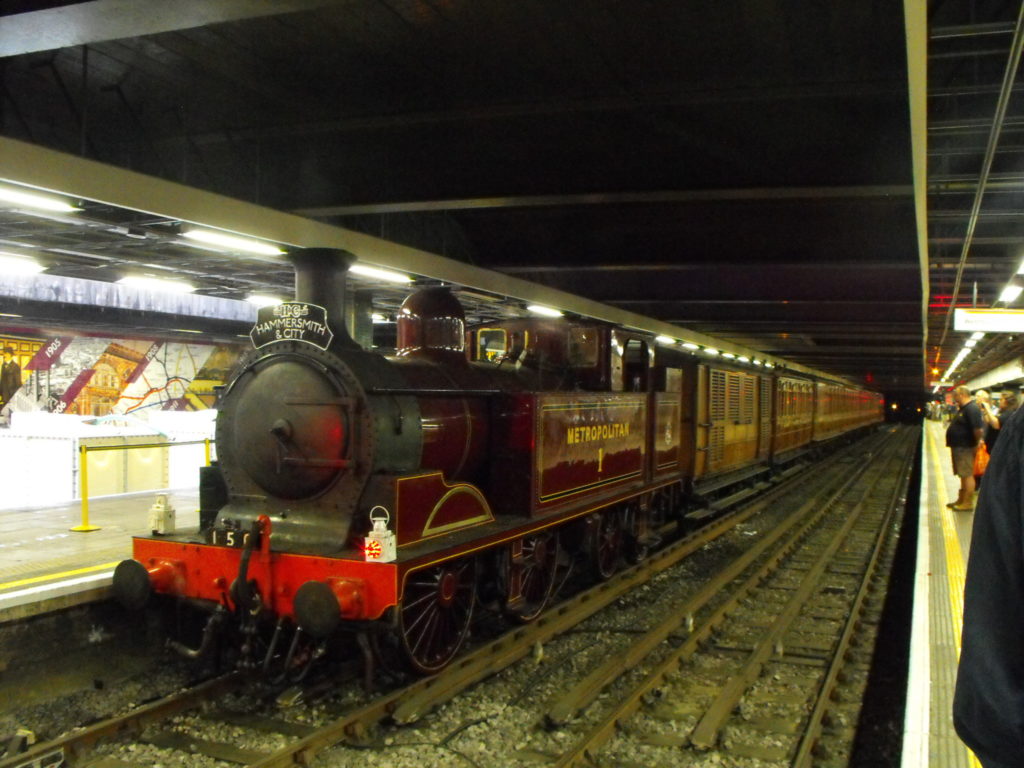
A heritage Metropolitan steam train at Moorgate in 2014 – Picture by Christian NX

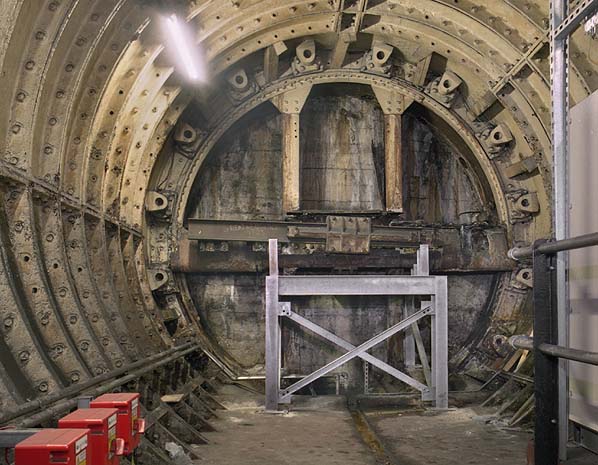
There is a Greathead tunneling shield which was left in place below the station in 1904 when the Lothbury extension to the Great Northern & City Line was abandoned …

You can find this picture and read more fascinating facts on the Subterranea Britannica website. I have also written about Greathead and where you can actually walk through one of his shields in an earlier blog. You can find a link here.

More City courtyards and alleys


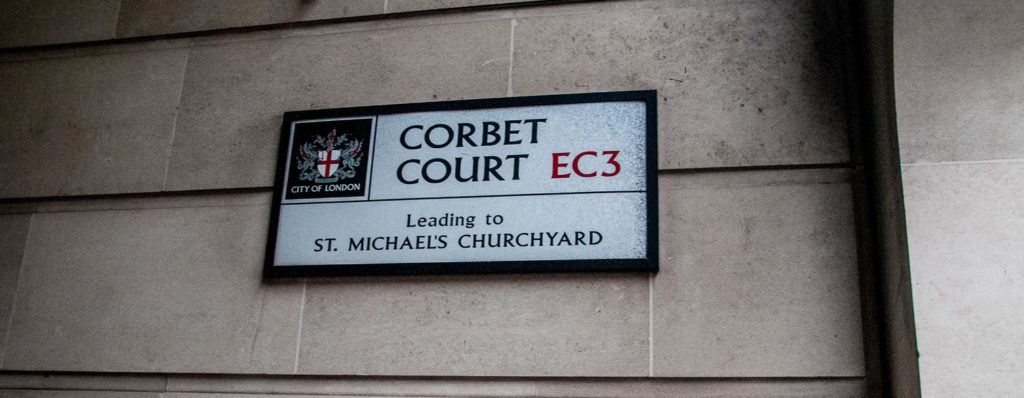
I have been back prowling around the alleys and courtyards just off Cornhill and again experiencing the atmosphere and surprises to be found here. Take, for example, Corbet Court (EC4V 0AT). The entrance doesn’t look very promising …
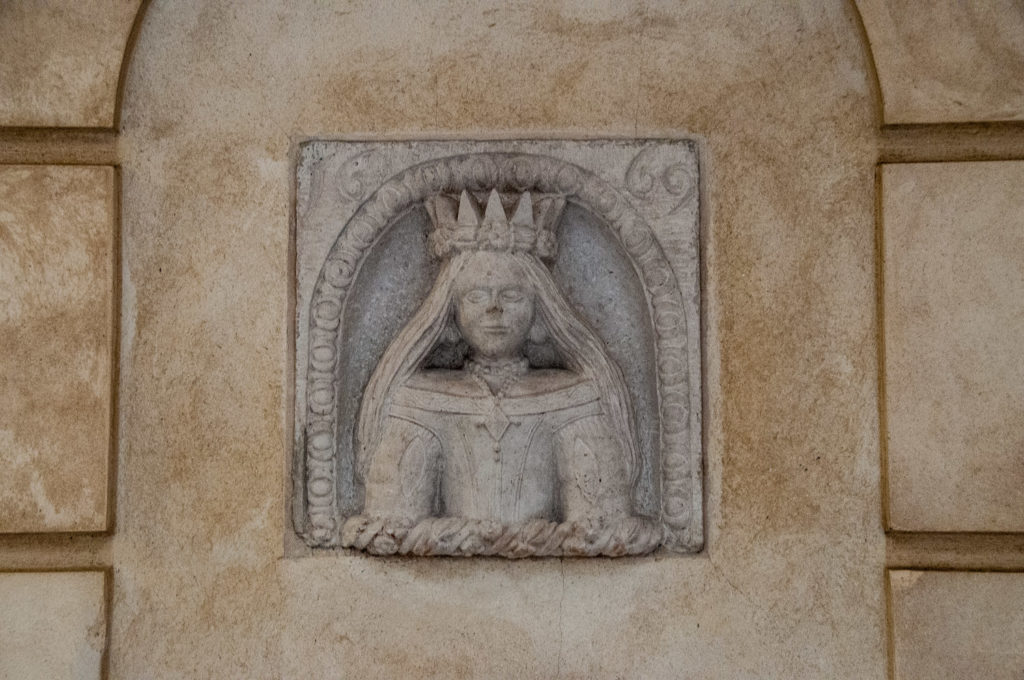
But once you have entered look around and you will come face to face with this lovely serene lady who has gazed out at London and Londoners since 1669 …

Regular readers will recognise her as a Mercer Maiden, the symbol and coat of arms of the Mercer Company. She first appeared on a seal in 1425 but her precise origins are unknown, and there is no written evidence as to why she was chosen as the Company’s emblem. She can be found all over London marking Mercer property and I have written about her in an earlier blog which can be found here.

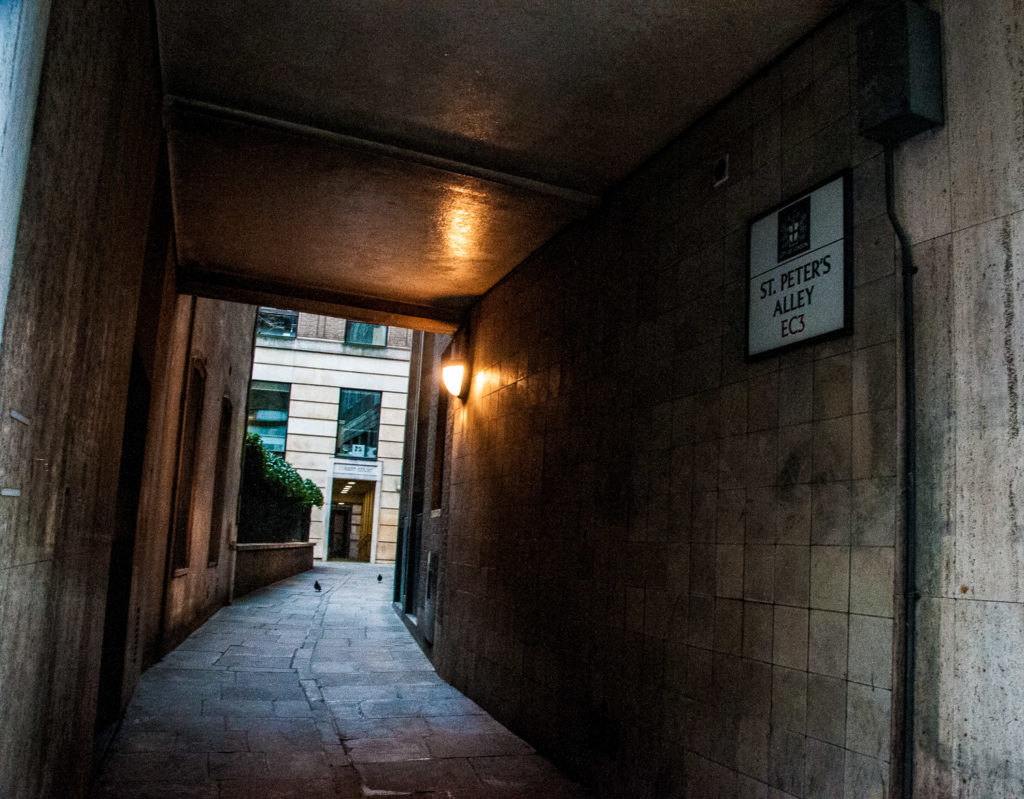
Nearby is St Peter’s Alley (EC3V 3PD) with its atmospheric entrance on Cornhill …

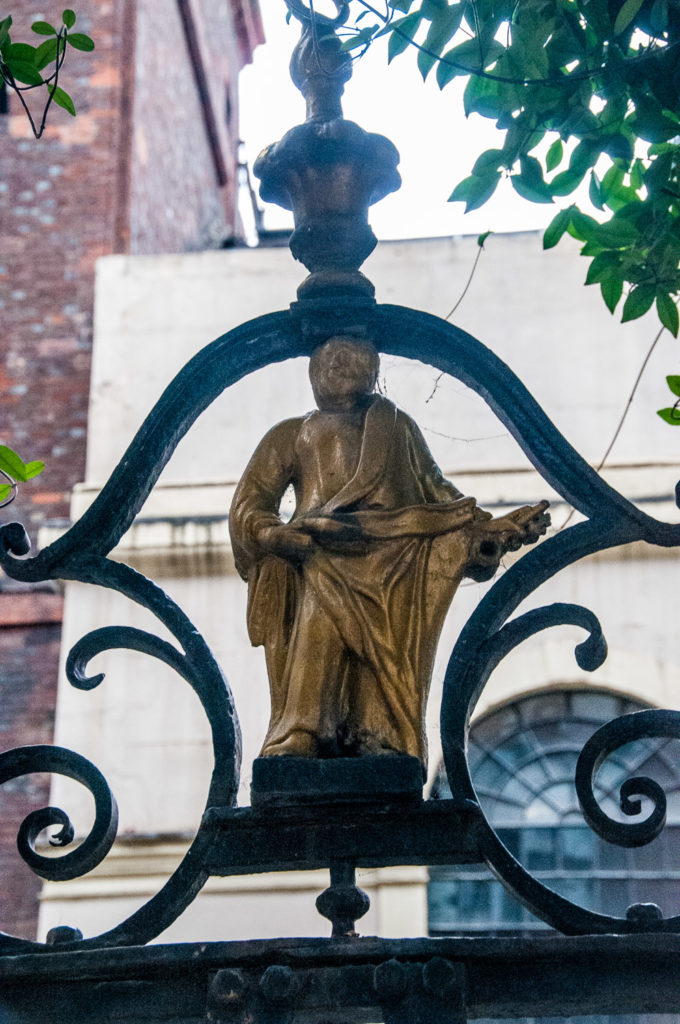
Here stands the church of St Peter’s, Cornhill which is now used as a Christian Aid study centre and is currently not open to the public. The Saint stands atop the entrance gate holding the keys to the Kingdom of Heaven …

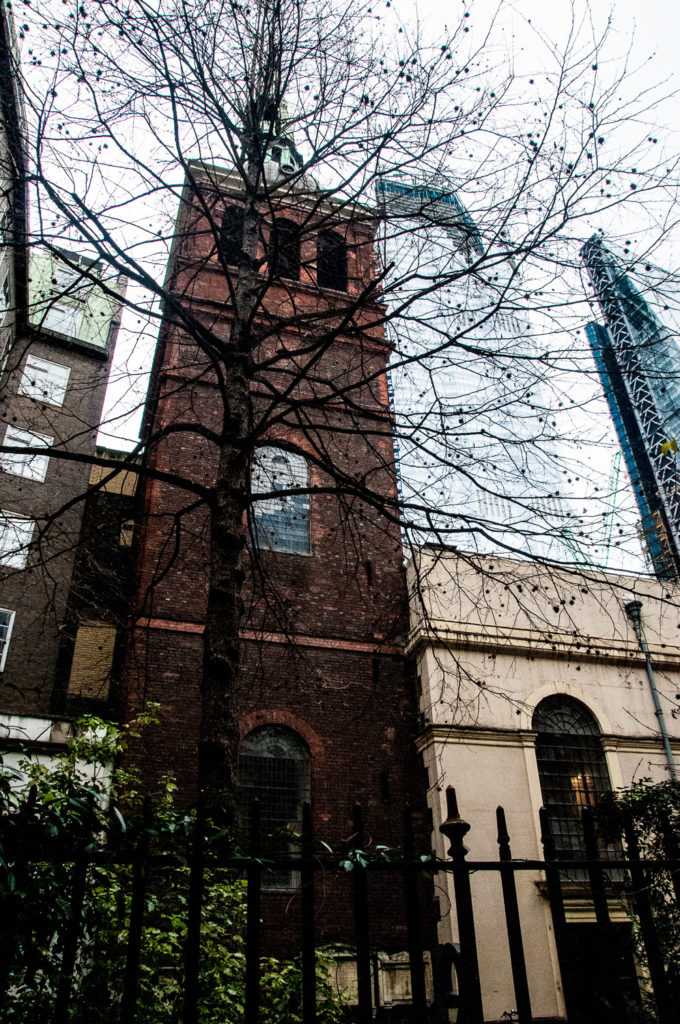
The church tower with some of its more recent neighbours such as the Cheesegrater …

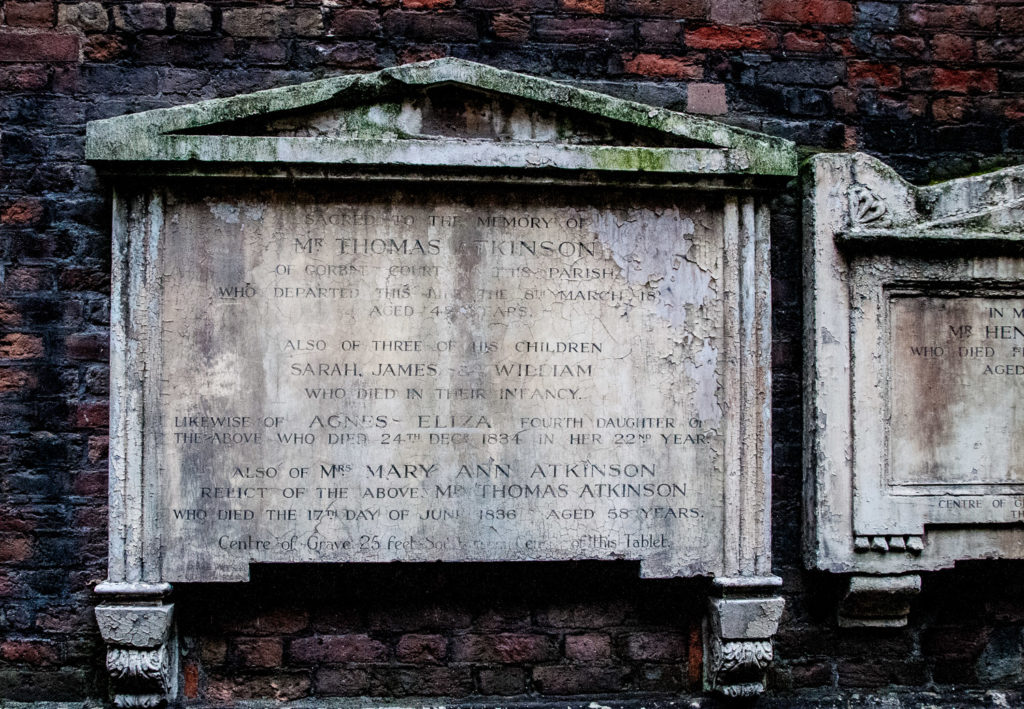
A few memorial stones are beginning to wear away …

Thomas Atkinson was a resident of Corbet Court

The churchyard was in use as the main place of burial for the parish until 1850 and following closure it was laid out as a garden for public use that you see now.

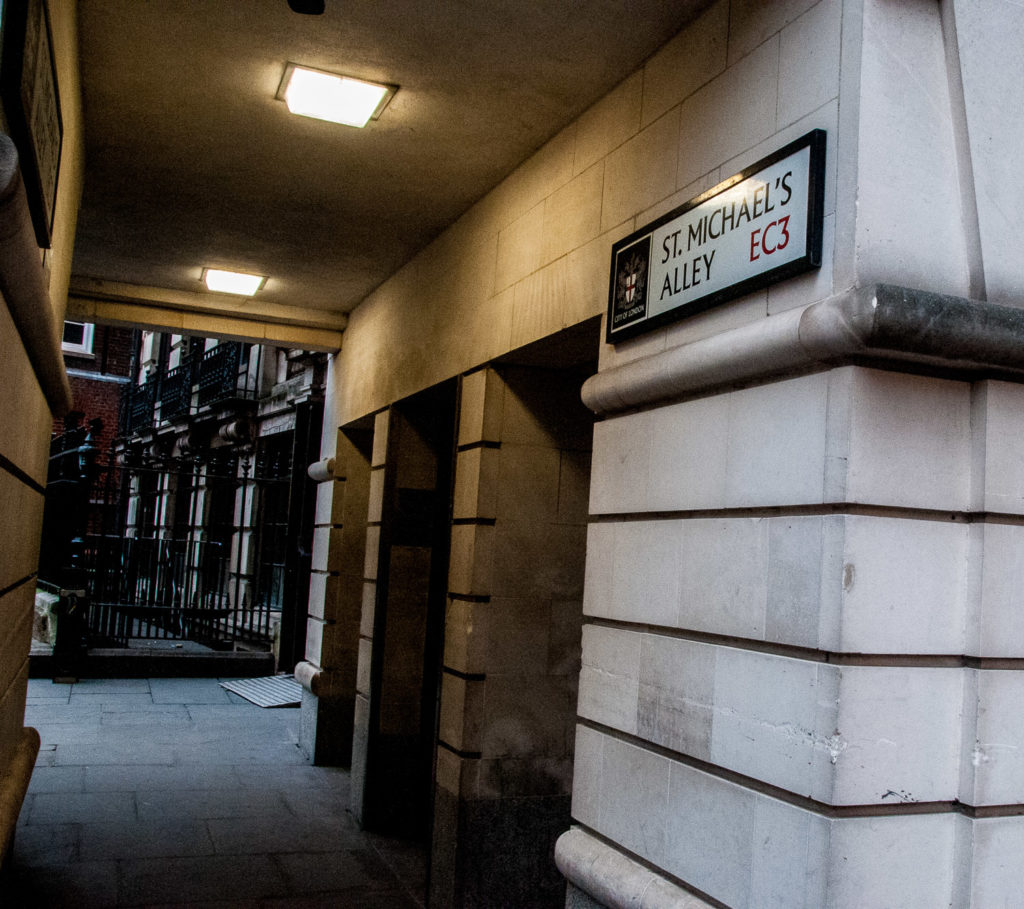
If you retrace your footsteps to Corbet Court, you can then walk down St Michael’s Alley (EC4V 9DS) which winds its way to back to Cornhill …

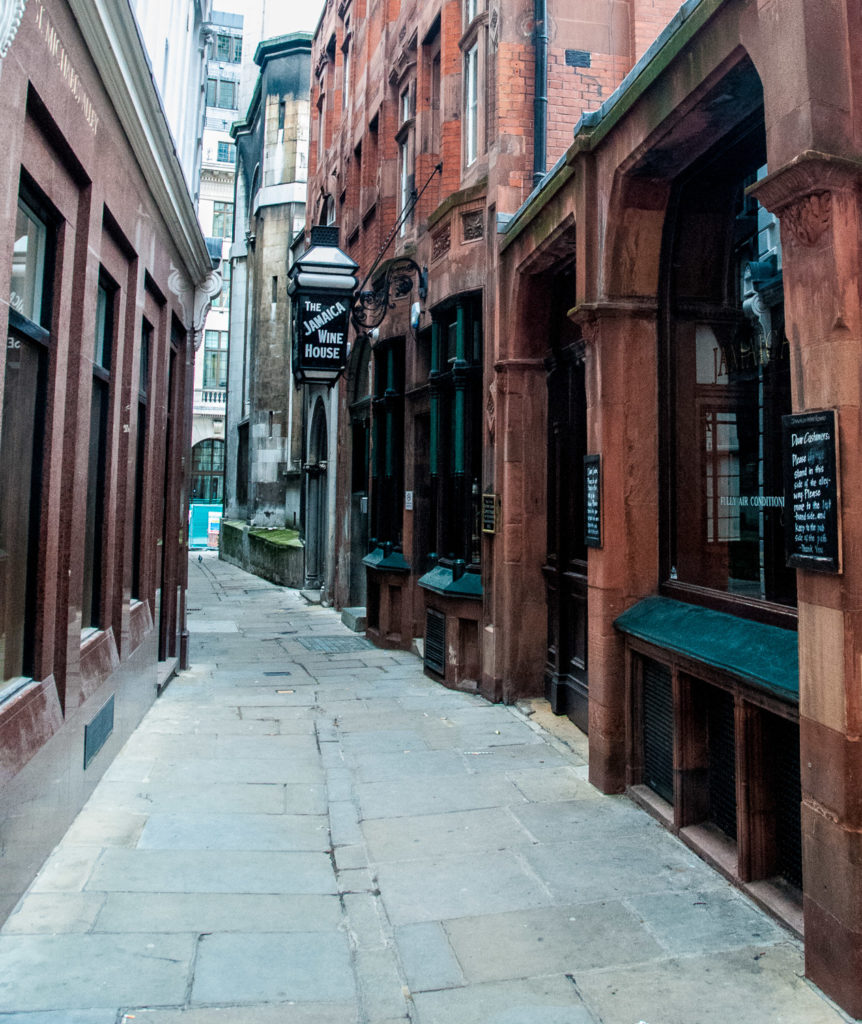
Your eye is immediately drawn to the gigantic lamp advertising the Jamaica Wine House, a Victorian stone fronted building which now stands on the site of the City’s first coffee house …

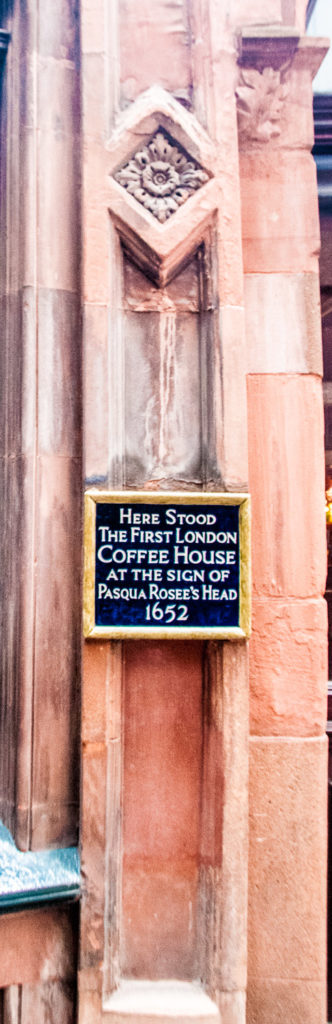
A plaque commemorates the coffee house and I wrote about this last week

Pasqua Rosée (Easter Rose) the proprietor was the servant of a Levant merchant named Daniel Edwards, a trader in Turkish goods, who imported the coffee and assisted Rosée in setting up the establishment.

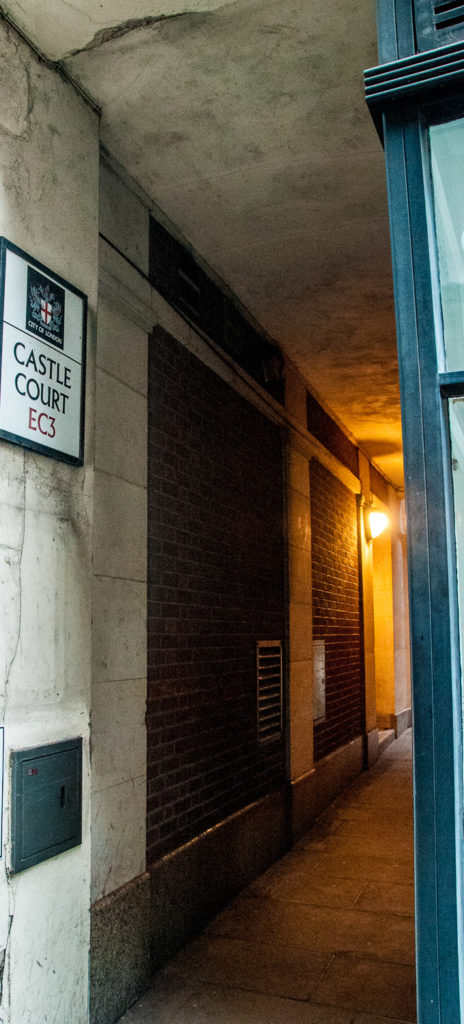
Look out for the entrance to Castle Court …

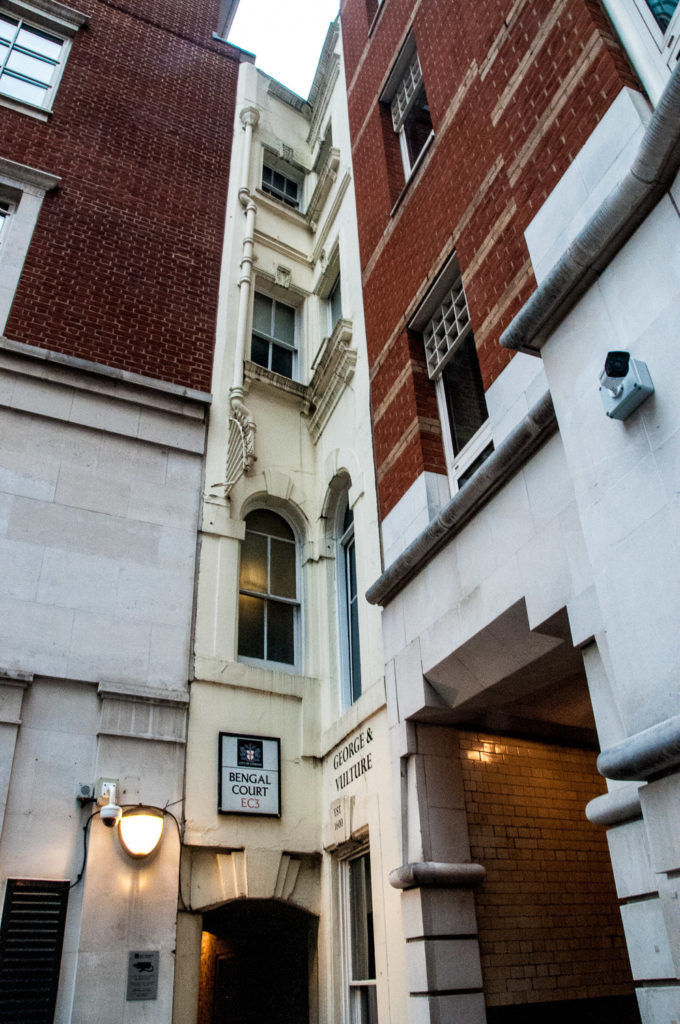
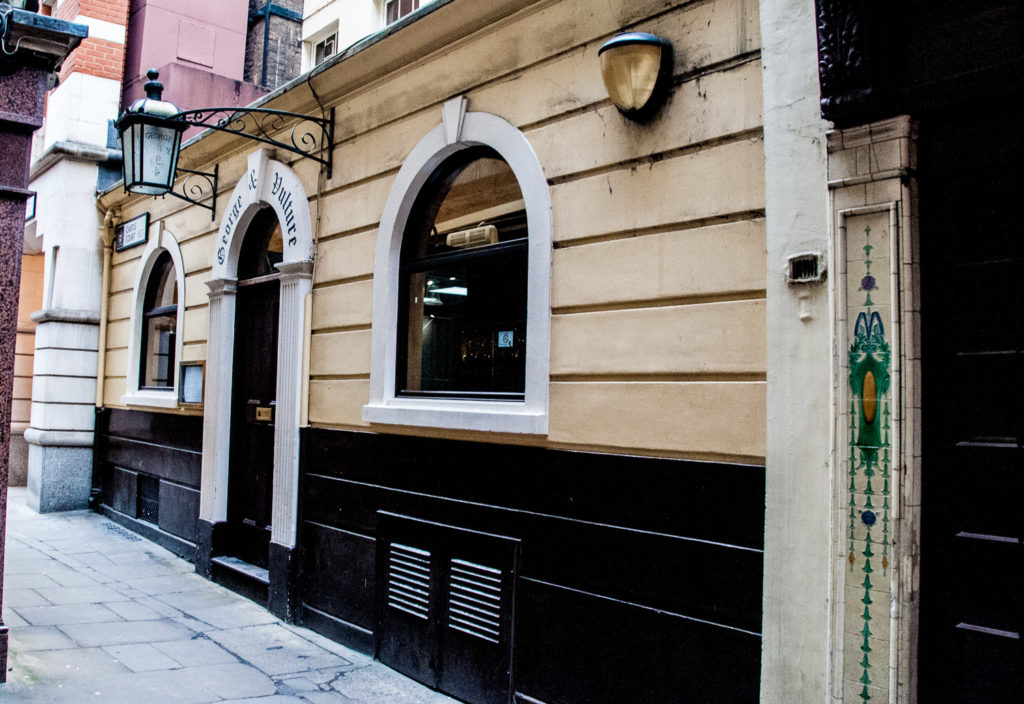
You’ll see the back of the George & Vulture … …

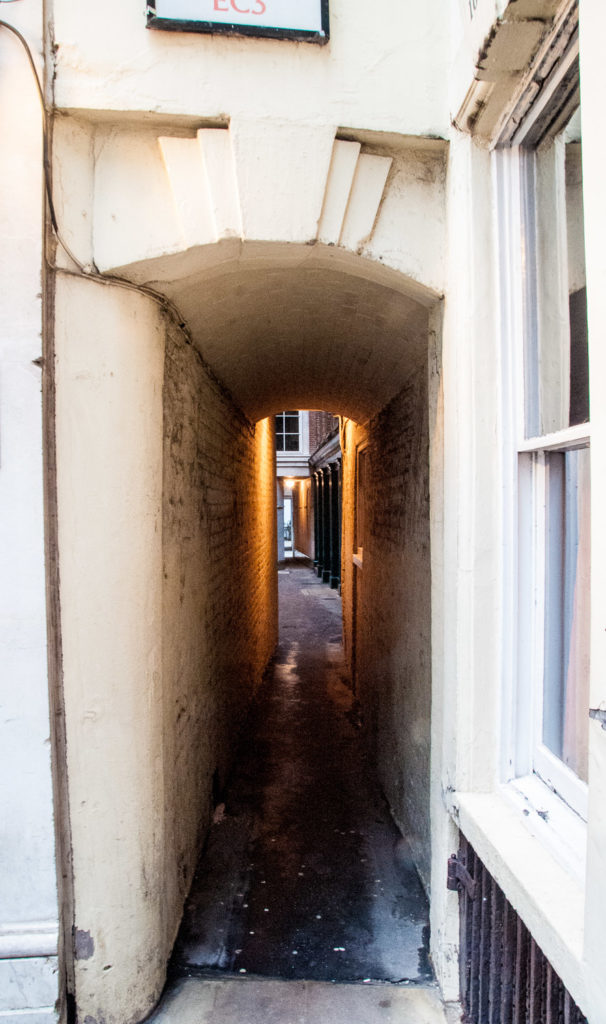
… and this splendid narrow alleyway.

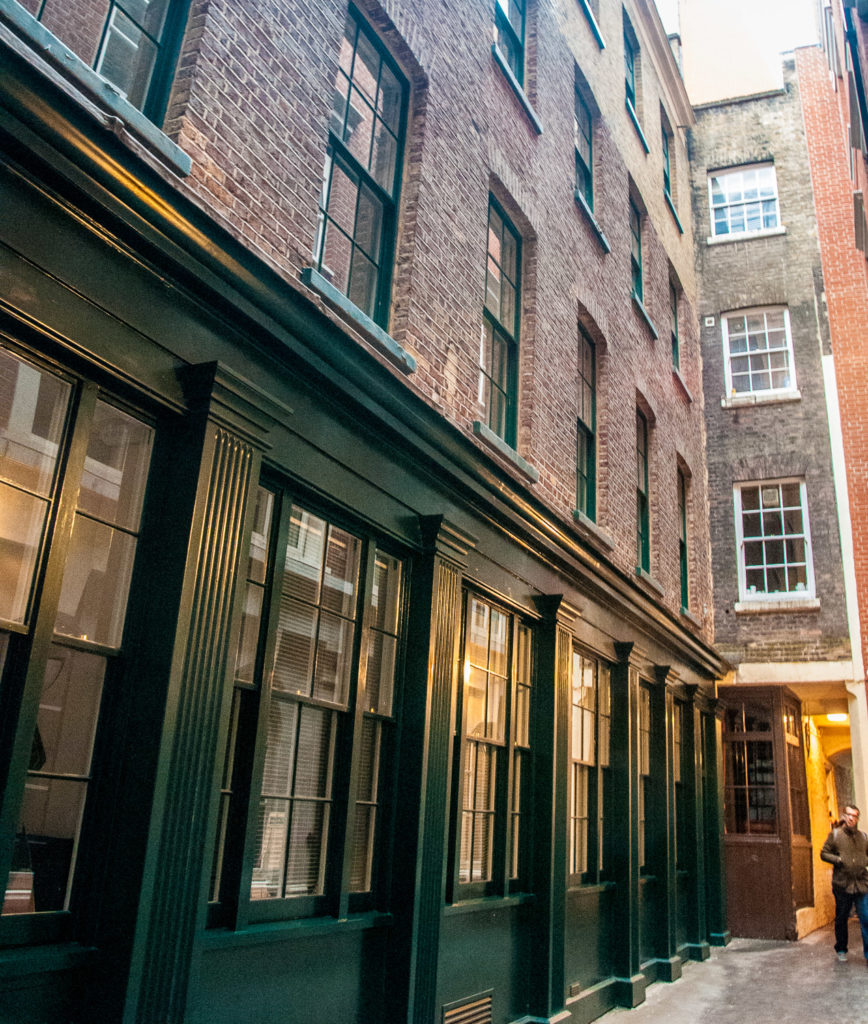
Squeeze through and enjoy the feeling that you are back in the 17th century …

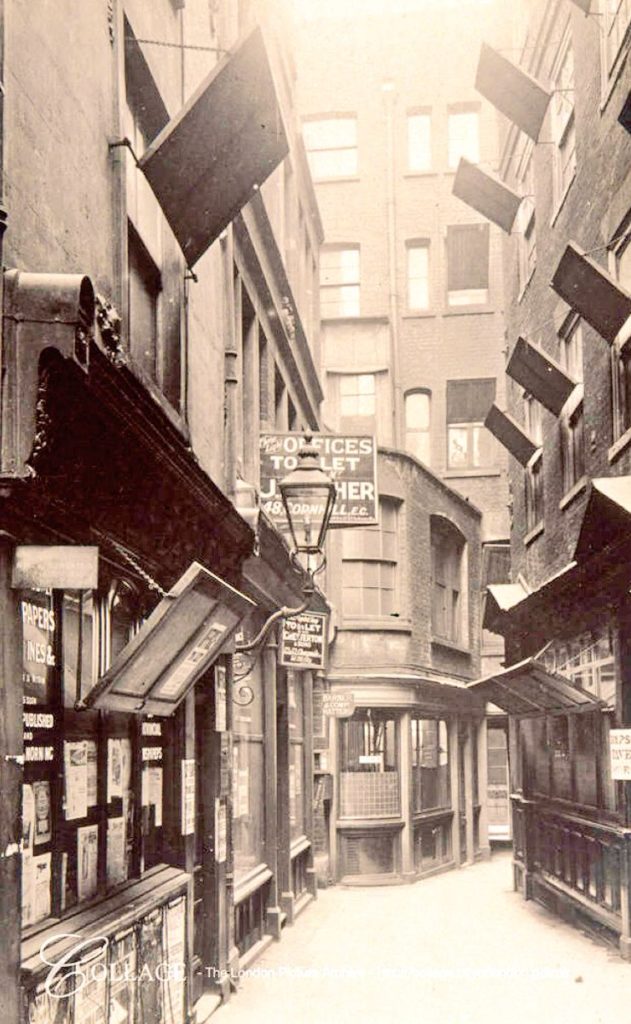
It was common at the turn of the 20th century for offices to have mirrors installed and hung outside to reflect light. I have come across this picture which is captioned Bengal Court 1910

Copyright Collage – The London Picture Library Record 36020

Make your way back to the front entrance of the George & Vulture …

You will find a fascinating history of this great pub here.

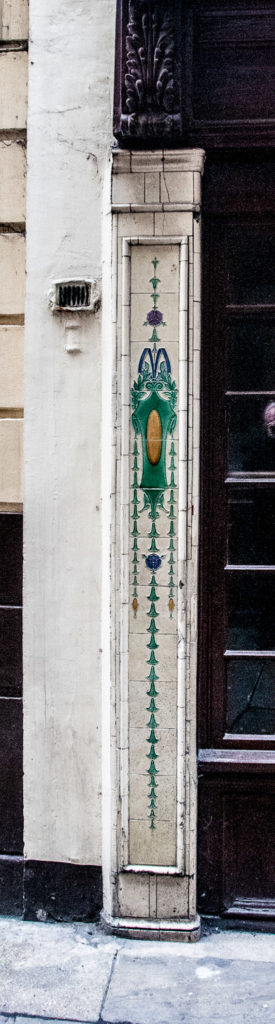
Of course, I couldn’t resist taking a picture of these old tiles …

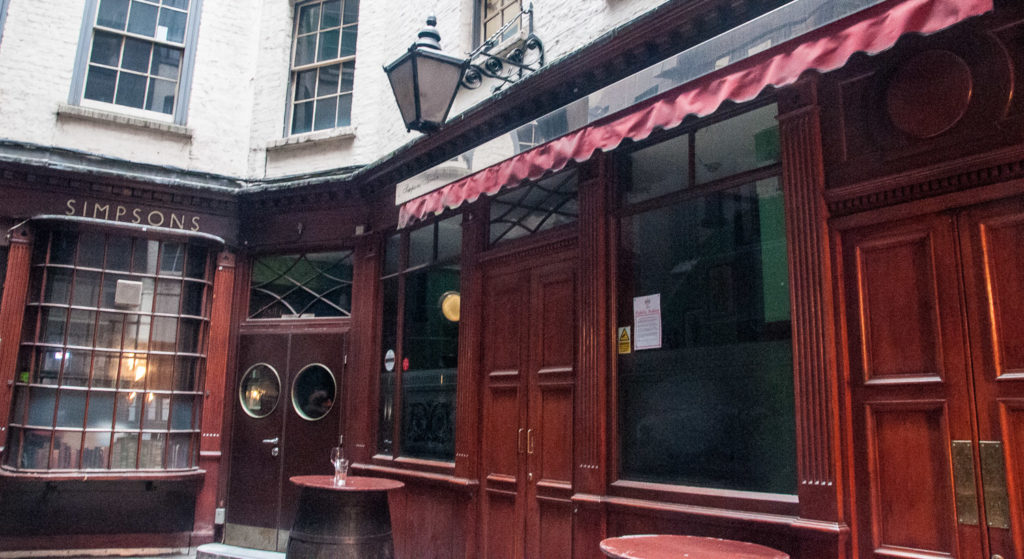
Simpson’s Tavern in Ball Court retains its character …

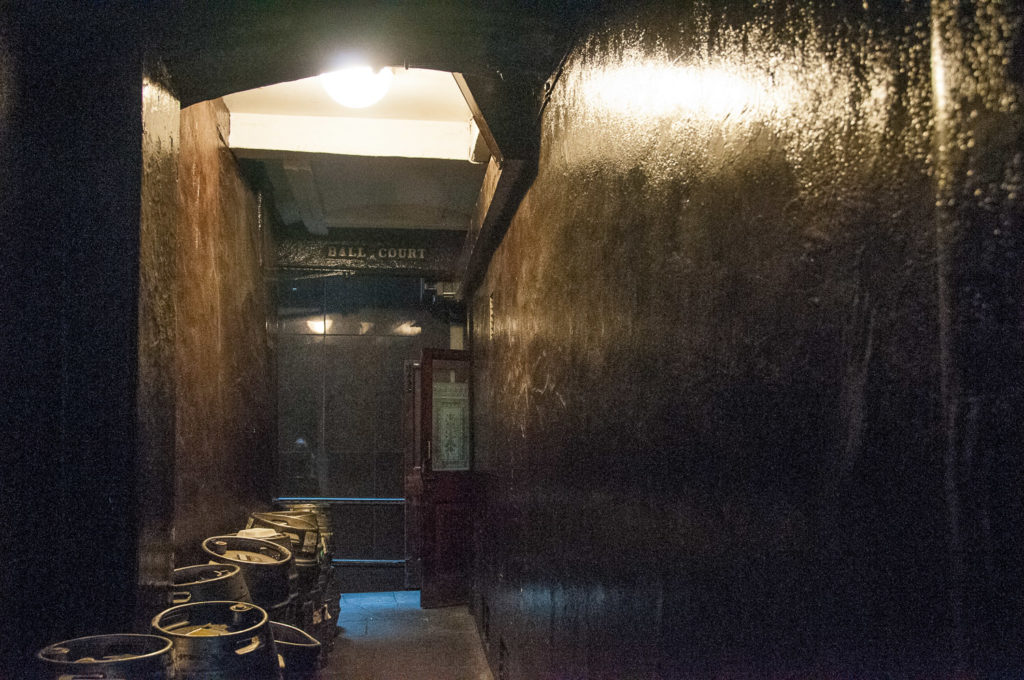
As does the Ball court entrance …

And finally, as I walked back down this alley towards Cheapside, I came across this old bank entrance …

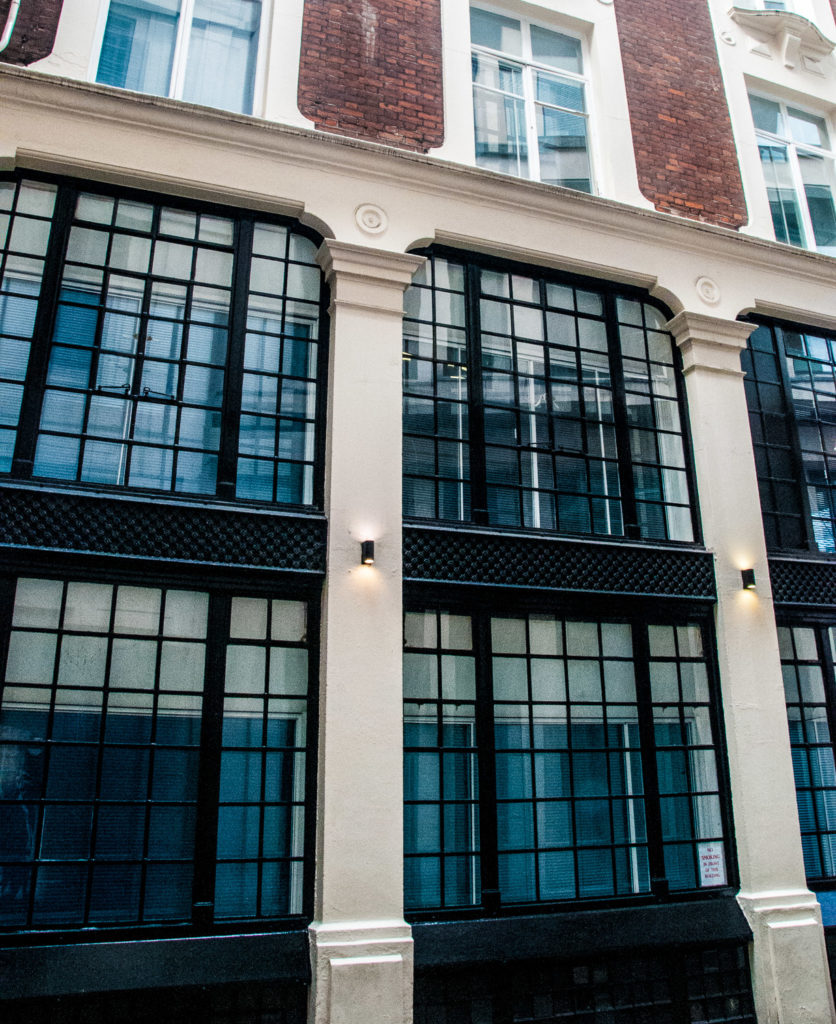
… and, around the corner, these extra large iron-framed windows designed to catch the maximum amount of light for the benefit of the clerks beavering away inside …

I am taking a break from alleys and courtyards now!

But I know I will be tempted back.

Page 20 of 27

Powered by WordPress & Theme by Anders Norén

Symbols & Secrets
Privacy Overview

This website uses cookies so that we can provide you with the best user experience possible. Cookie information is stored in your browser and performs functions such as recognising you when you return to our website and helping our team to understand which sections of the website you find most interesting and useful.