Walking the City of London

Category: Art Page 21 of 30

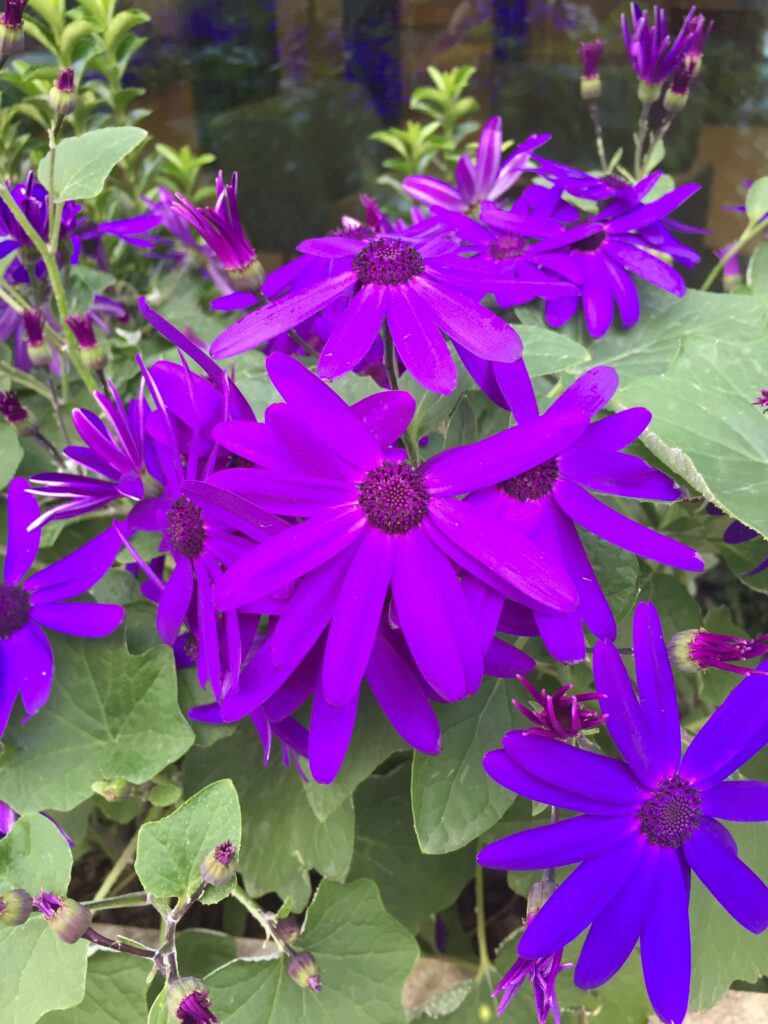
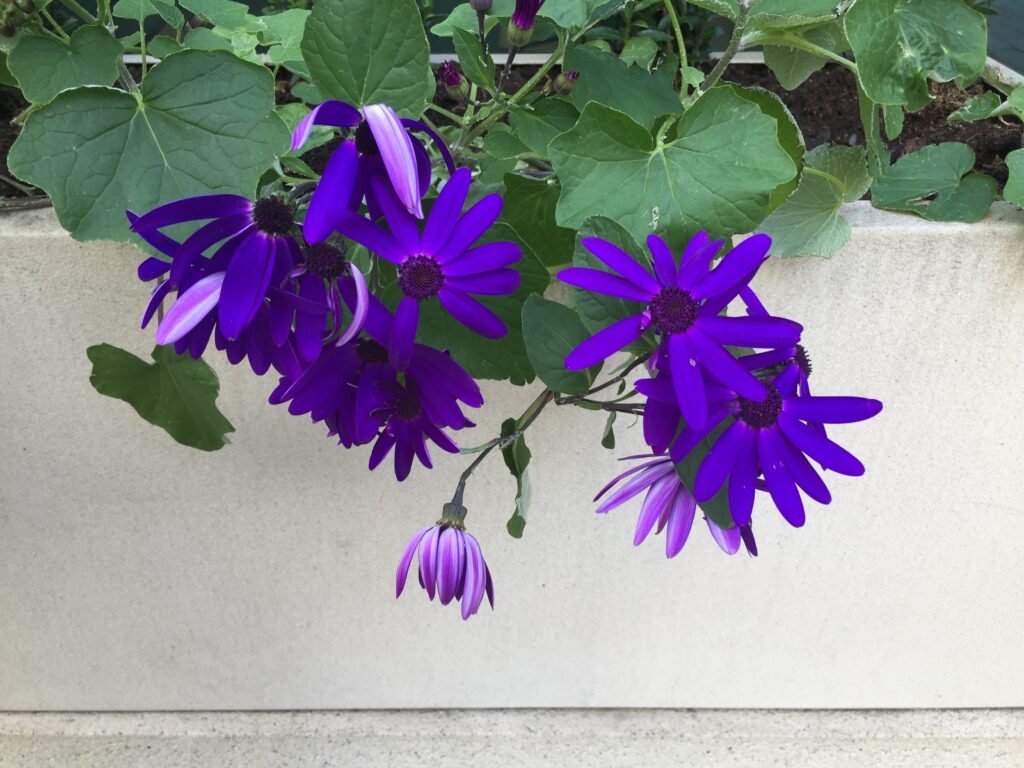
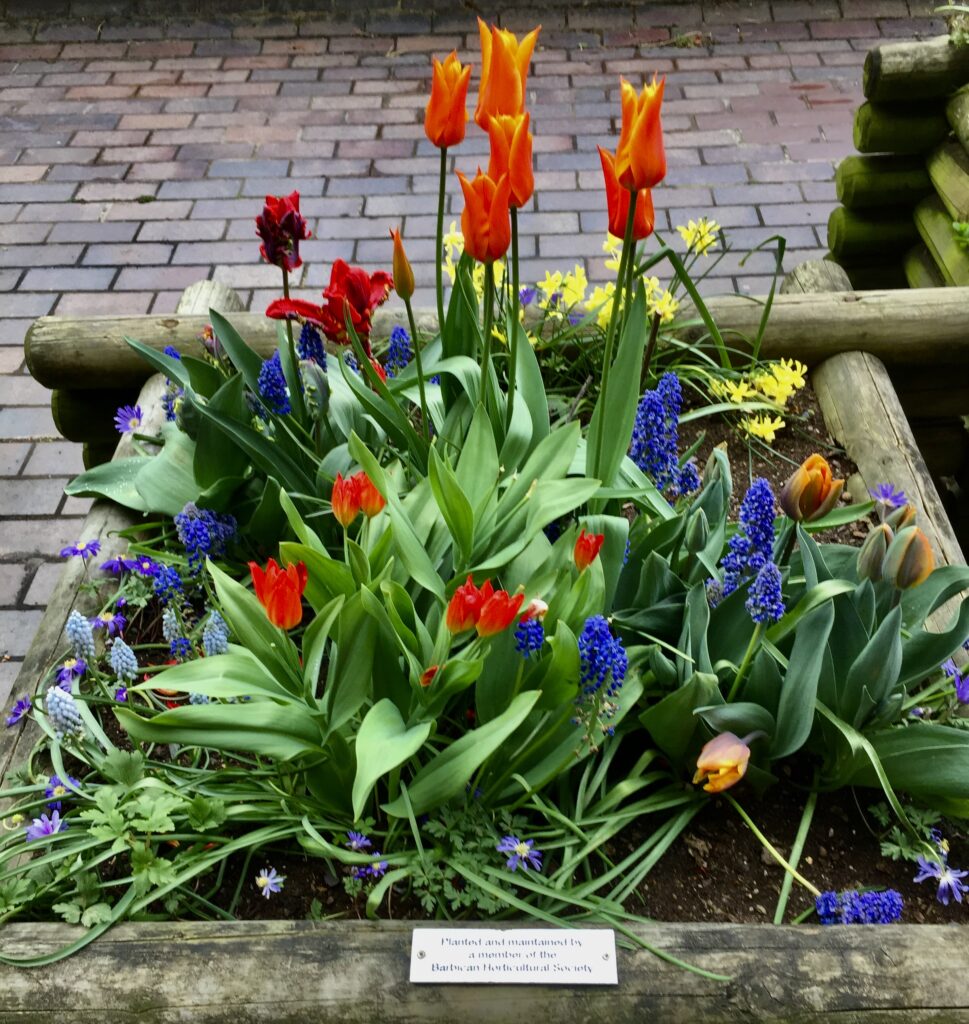
Special colour edition! The weather’s been a bit chilly so here’s some colour to warm us up!

Temple tube station’s grey concrete roof terrace has been given a kaleidoscopic makeover by London-based artist Lakwena Maciver. Titled ‘Back in the Air: A Meditation on Higher Ground,’ Maciver’s rooftop art installation features a series of interlocking geometric patterns inspired by her Ugandan heritage …

You can read more about the work here along with some great aerial images. Highly recommended since it also includes fascinating time lapse footage of the work’s construction.

You may wonder why Temple Station, built in 1870, has this unusual flat roof. Well, when the station building was proposed, the Duke of Norfolk, who owned land to the north, didn’t want a tall structure obstructing his view. As a result of his objection, the flat roof meant he could still gaze happily over the Thames and wander across the roof if that took his fancy. Another constraint was demanded by the barristers in the nearby Inns of Court. Train drivers were not allowed to blow their whistles in their proximity so members would not be distracted from their briefs (nor, presumably, have their slumbers interrupted).

If you like Italian food and produce Eataly, on Bishopsgate beside Liverpool Street Station, is the place for you. Great restaurants with scrumptious food and mini-shops selling all kinds of produce. There’s a great wine shop as well. I love this sparkling arcade …

Colourful stall at the Whitecross Street Party

My Party favourite, the Big Paintbrush …

Ventilation shafts dazzle underneath the Cheesegrater building at 122 Leadenhall Street (EC3V 4AB) …

Incidentally, there’s an interesting story behind the maypole you can see in the distance and the statue next to it. You can read all about it in my blog Around Leadenhall – Geishas, Sign Language, Maypoles and a Japanese proverb.

I like the ‘splashy’ roof over the pavement at 22 Bishopsgate (EC2N 4AJ) …

Fun pink ‘stuff’ at St Pancreas …

Crazy shop window nearby …

Street art near Rivington Street …

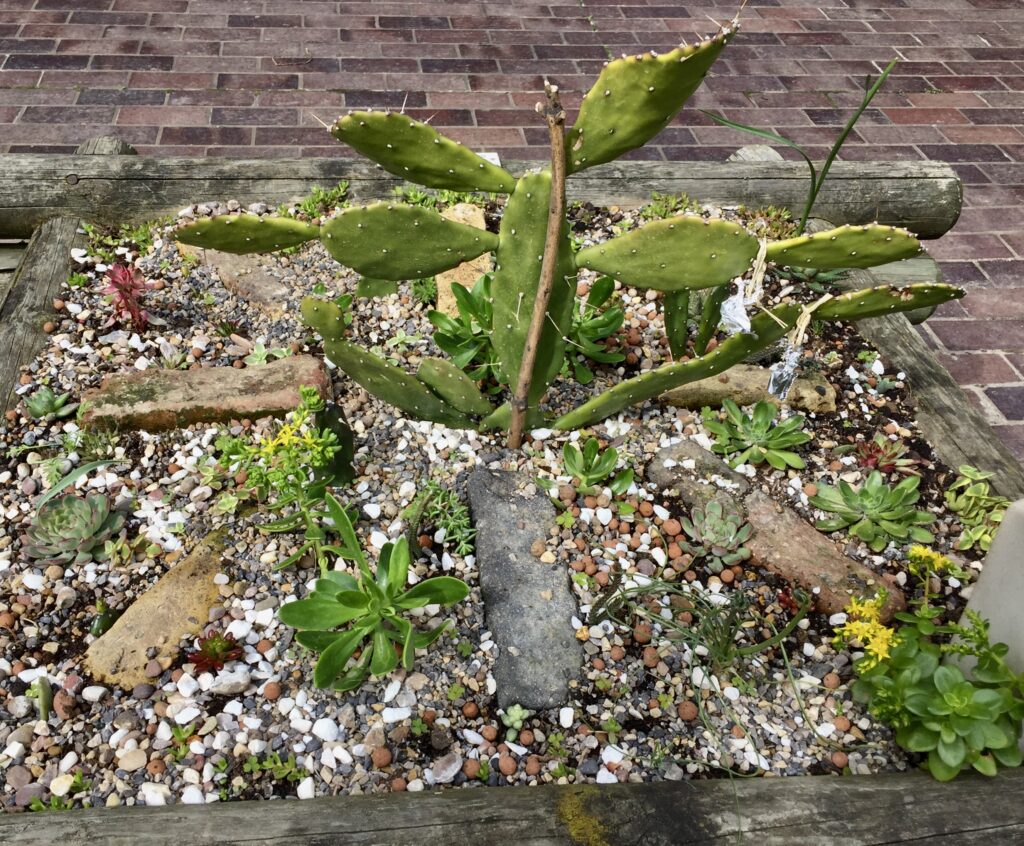
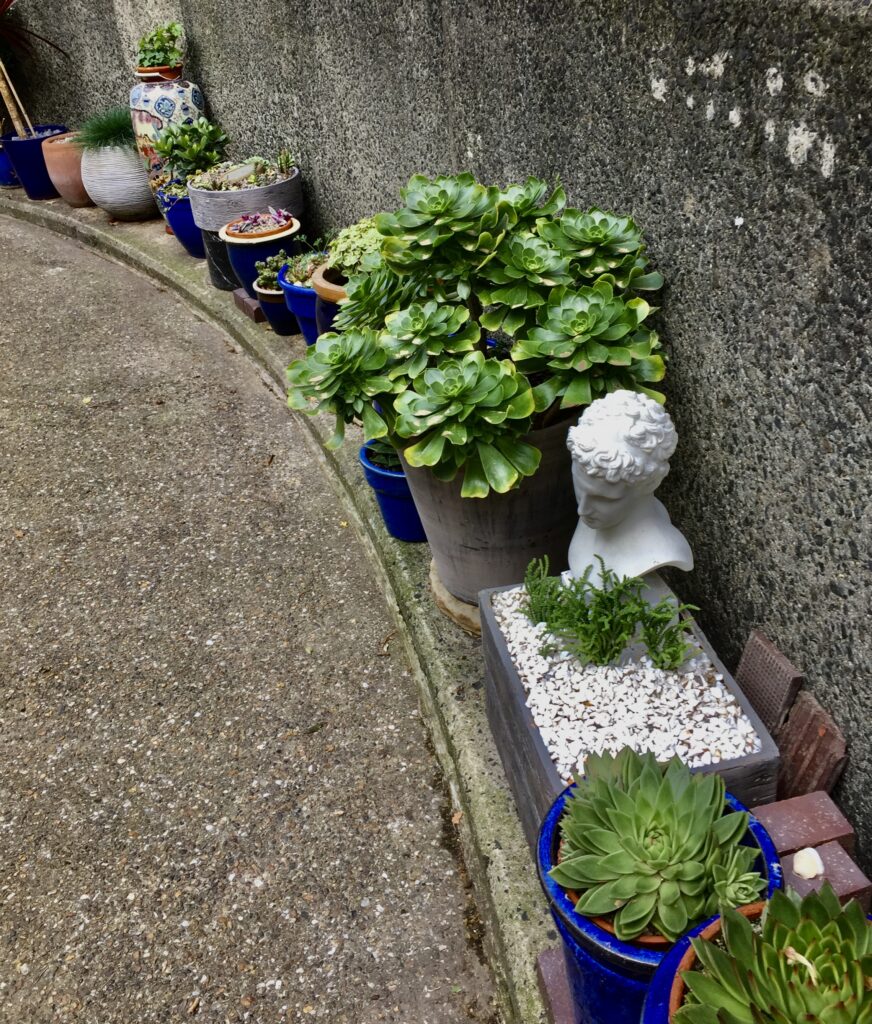
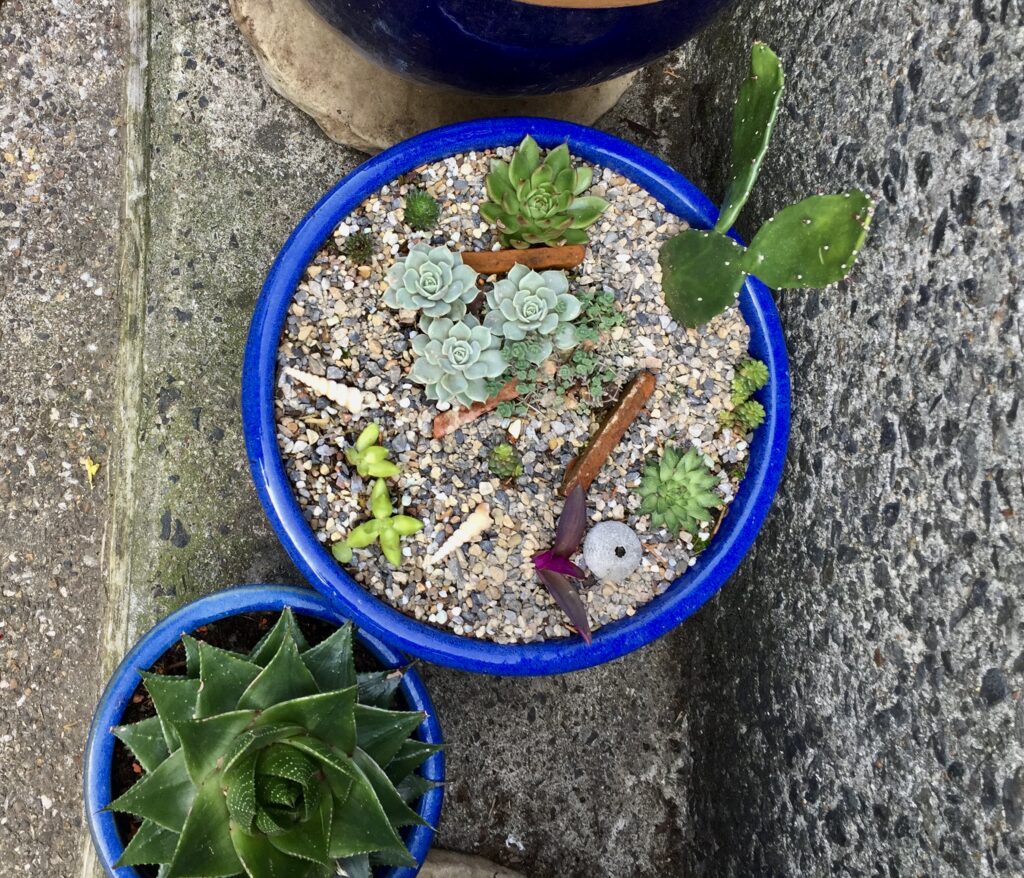
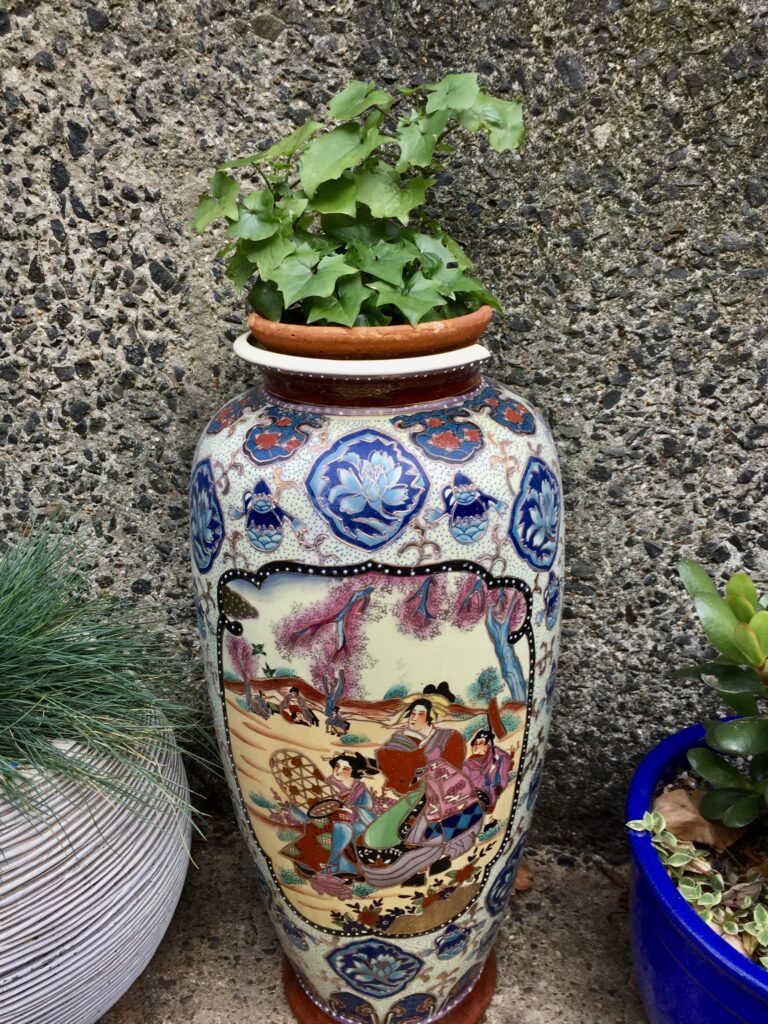
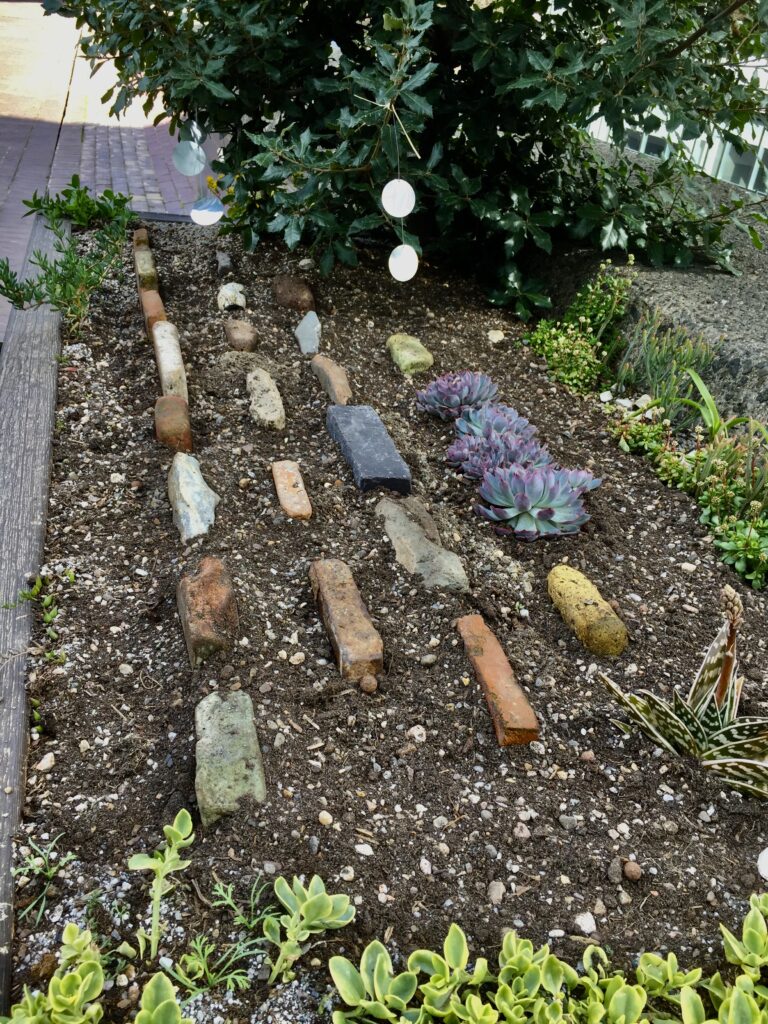
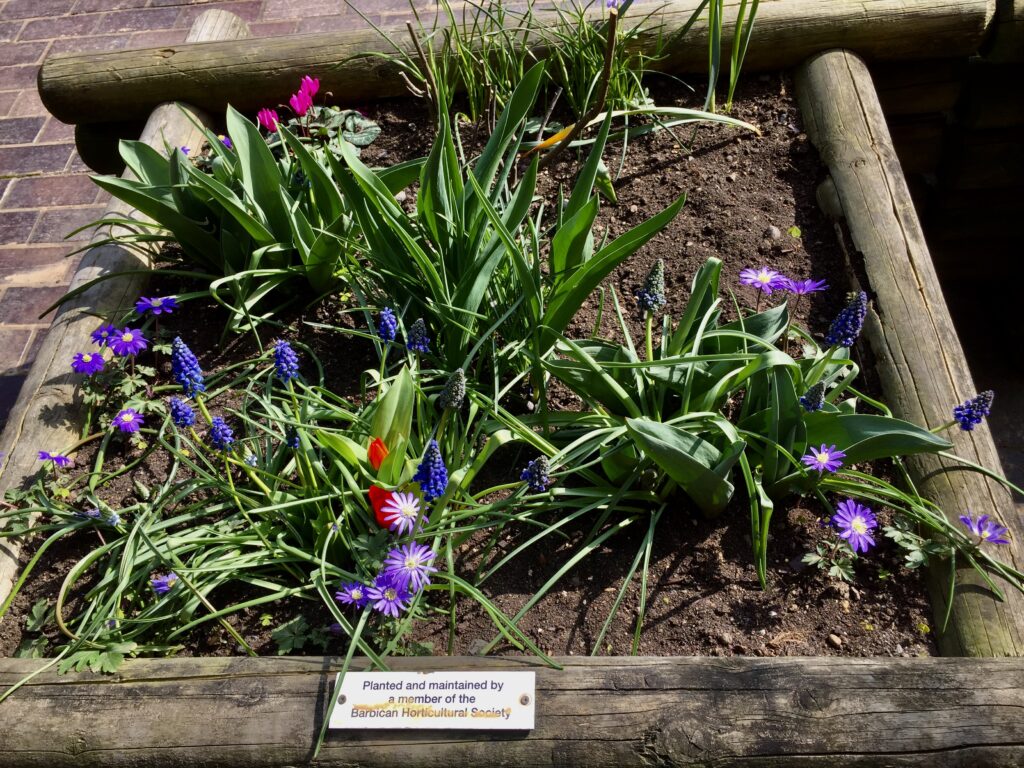
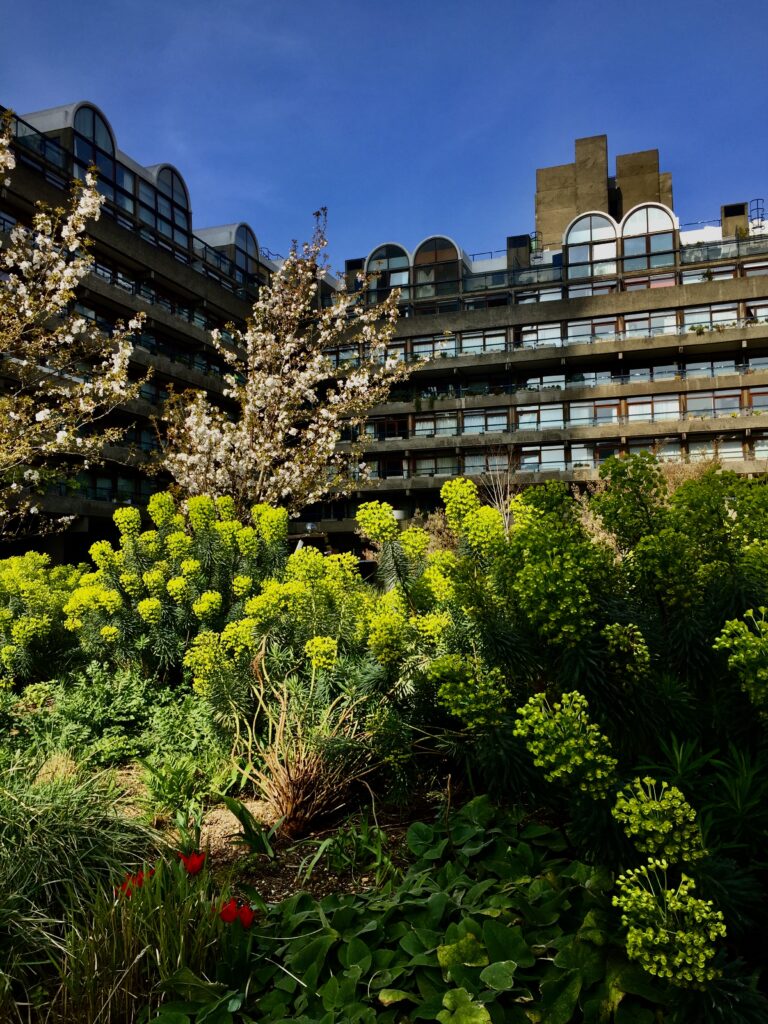
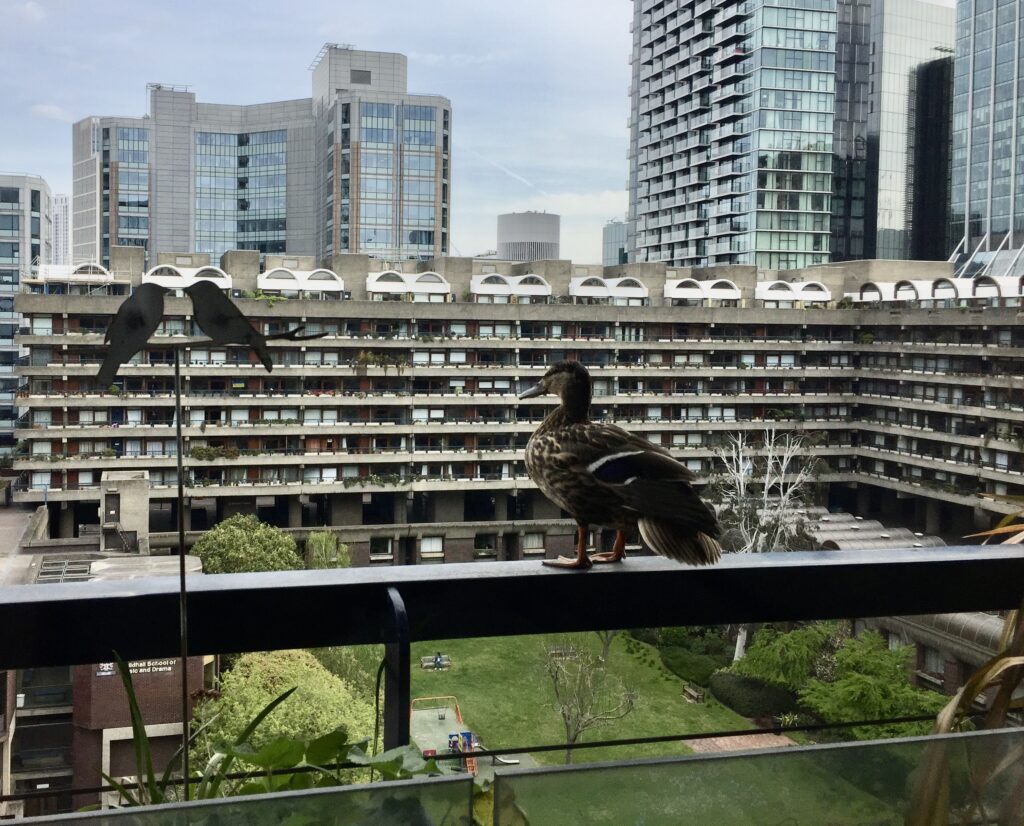
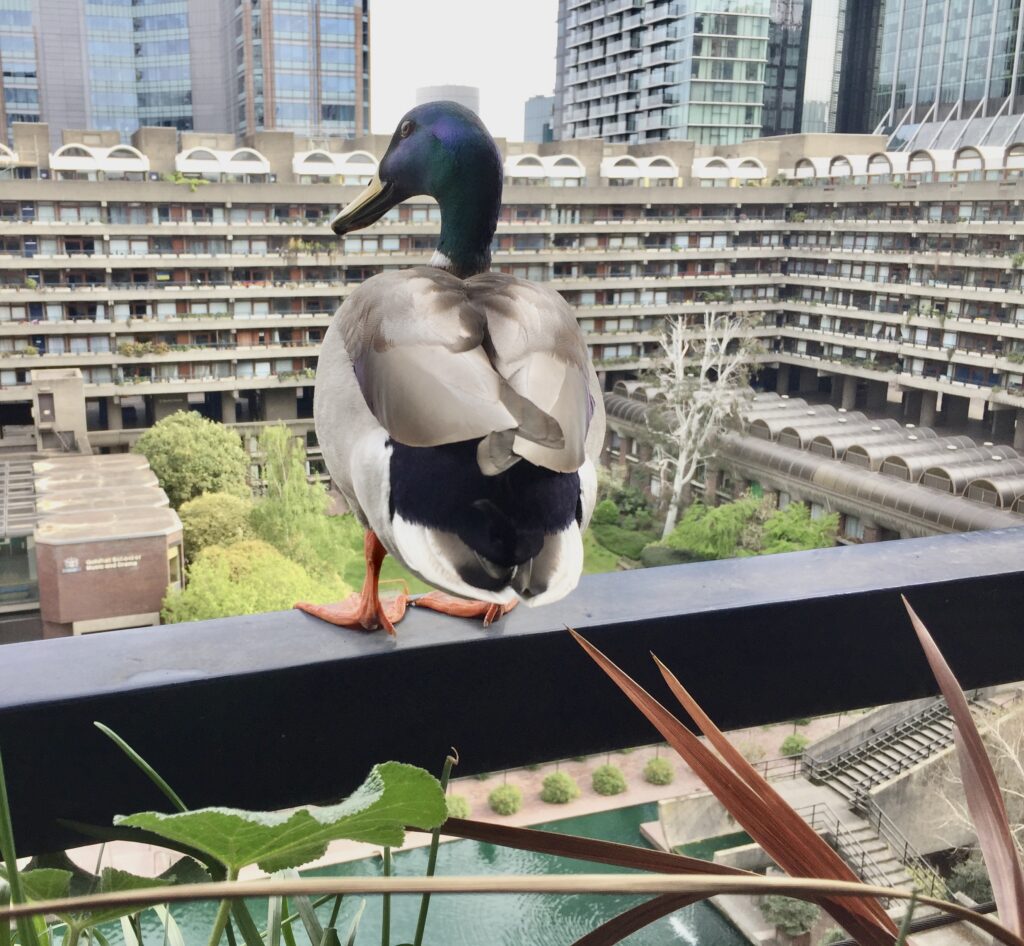
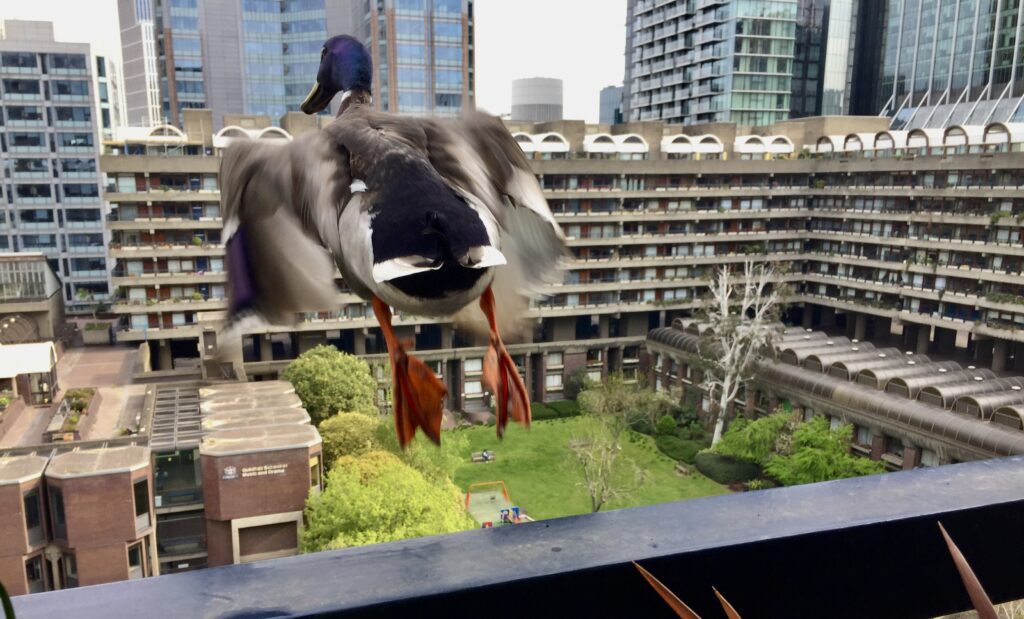
The ‘Hanging Gardens of the Barbican’ are gradually changing colour …

Sadly, the last hollyhock of the year …

However, there is cause for optimism. A little green leaf emerging from the Amaryllis!

Last Saturday I went on a guided tour of Highgate Cemetery and took this image of our excellent guide James in his natural green habitat …

The Cemetery is well worth visiting and the guided tours great value for money (or you can go self-guided if you prefer). Details can be found here on their website. You must book a time slot in advance.

And finally, can you spot the Tower 42 orange pumpkin head?

If you would like to follow me on Instagram here is the link …
https://www.instagram.com/london_city_gent/

Roman elephants and Suffragette bread – more fun at the Museum of London.

As regular readers of this blog will know, I love the Museum of London and it’s one of my go-to places if I feel I need a bit of cheering up (and, almost inevitably, I learn something new).

For example, it had completely escaped my notice that the Roman Emperor Claudius used elephants during his invasion of Britain in AD 43. Not far inside the entrance to the Museum is this totally bonkers mural illustrating their use in battle. The beasts look suitably angry at being dragged half way around the world just to stamp on a few ancient Britons …

There’s Claudius on the right on a white horse, possibly declaring ‘missio peracta’ (which Google assures me is ‘mission accomplished’ in Latin). Around the same time a young woman of the Iceni tribe called Boudica was aged about 30.

As Queen Boudica, she is now famous for her 60/61 AD uprising against the Romans. For resisting the appropriation of her property and that of her tribe, the local Roman procurator had her flogged and her daughters raped. Building on the fury of other tribes, she raised an army which went on to capture present day Colchester (Camulodunum) routing the Roman division there in the process. She then headed for Londinium.

Early London was a sprawling settlement, unwalled and defenceless since the Governor, Gaius Seutonius Paulinus, believing his troops to be disastrously outnumbered, made a tactical retreat (i.e. fled). On arriving, Boudica’s army burnt the place to the ground and slaughtered everyone they could find. These skulls on display in the Museum may be evidence of that massacre …

Primarily belonging to young adult men, a large number were found in the ancient Walbrook stream (although it must be said that there are alternative theories as to their origin).

The settlement of Verulamium – today’s St Albans – was next to feel the wrath of Boudica’s revenge as her, seemingly unstoppable, army sacked and burnt it en route to their inevitable confrontation with the now significantly strengthened Governor’s army.

The battle went badly and, rather than face the inevitable humiliation of capture, she is said to have poisoned herself and was buried by her people at a secret location. Some claim she’s buried beneath platform 10 of King’s Cross Station – maybe that’s why there’s a Boadicea Street nearby (N1 0UA)!

‘How’s my driving?’ Here she is with her daughters, driving her chariot, remarkably without the use of reins …

Boudica at Westminster : picture by Paul Walter/Wikipedia

Evidence of Boudica’s destruction of London lives on in a layer of burnt earth and debris known as the Red Layer that is occasionally uncovered during modern developments.

Not an elephant but the skull of a long extinct animal called an Auroch …

Up until the early 17th century you could still have encountered a live one (living in Poland). The one in the museum lived in Essex and was found in Ilford where it would have been part of a large herd. Incidentally, Aurochs live on today in the coats of arms of Romania and Moldova.

There’s a great temporary exhibition at the Museum illustrating the work of contemporary London makers.

I really like this stained glass work entitled Gorilla (2017) by Piotr Frac

And what about this piece by James Shaw entitled Plastic Baroque

And I love this witty Venus (2015) by Claire Partington

Pregnant and casually dressed, she poses with a ciggie in one hand and the dogs’ leash in another.

Now some brave women from a different era, the Suffragettes. This is the banner of the West Ham branch of the Women’s Social and Political Union 1909-1910 …

Suffragette prisoners often removed loaves of bread from Holloway Prison as a souvenir of their incarceration. Now well over 100 years old, this loaf was carefully preserved and gifted to the Museum in 1950 …

Read more about the campaign for Votes for Women and those who fought it here.

What a great poster …

If you’d like to cast you mind back to the heady, optimistic days of the 2012 London Olympics, the Olympic cauldron is on display again …

When you are appropriately Sanitised, the Victorian Walk is always a nice way to complete a visit …

By the way, if you are passing through Temple Station and have a bit of time to spare, get off and make your way to the station roof where you will find this fabulous installation by London-based artist Lakwena Maciver. It’s entitled ‘Back in the Air: A Meditation on Higher Ground’. This is only a small part of it …

I shall have more images for you next week.

If you would like to follow me on Instagram here is the link …
https://www.instagram.com/london_city_gent/

Sculpture in the City – from the joyous to the rather poignant.

Sculpture in the City is an annual sculpture exhibition that uses the City as a rotating gallery space. This is its 10th edition and will be in place until spring 2022.

I’m going to start with my absolute favourite …

The nearby notes tell us that the sculptor Jun T. Lai ‘created Bloom Paradise to symbolize hope and love. The artist’s intention was to bring greater positivity into the pandemic stricken world and release healing energy. The bright and colorful flowers call to an imaginative world, leading the visitor into a fantasy wonderland. Through this work, the artist hopes to bring positive energy and joy, a gift of life, to everyone’.

I think she has succeeded brilliantly. What a lovely vision to encounter as you leave Fenchurch Street Station on your way to work.

When I first caught a glimpse of this clock on the Corner of Bishopsgate and Wormwood Street (EC2M 3XD) I was rather puzzled …

Now I know that Silent Agitator by Ruth Ewan is a large clock based upon a detail of an illustration produced by Ralph Chaplin in 1917 for the Industrial Workers of the World union (the IWW). Chaplin’s illustration, bearing the inscription ‘What time is it? Time to organize!’, was reproduced on millions of gummed stickers, known as ‘silent agitators’, that were distributed by union members in workplaces and public spaces across the US. The clock hands bear workers’ clogs or, in French, sabots from which the word sabotage is derived (sabotage was originally used in English to specifically mean disruption instigated by workers).

At Undershaft, EC3A 8AH (Next to St Helen’s Church) is Harlequin Four By Mark Handforth

The descriptive notes state: ‘There is much symbolism in this number, for example it is considered a number of ‘being’, the number that connects mind-body-spirit with the physical world of structure and organisation’. Likewise, the use of lights is a commonality throughout his practice, in the form of candles, reflective neons and fluorescent lights. Handforth cites the way that the landscapes of artificial light that many of us live in, “means that night just becomes a different kind of day”.

Nearby at Undershaft, EC3P 3DQ (Between Aviva and the Leadenhall Building) is Cosmos by Eva Rothschild

The work is composed of three 3.5 metre-high slatted structures which lean into and support each other, painted black on the exterior and sprayed in a coloured gradient within. An imposing physical structure, the work encourages both a physical and aesthetic response. Says Rothschild: “The external piece is quite forbidding. Its black shiny surface is like a set of disruptive gates.”

In Beehive Passage, Leadenhall Market (EC3V 1LT) is Symbols by Guillaume Vandame

‘This is a sculptural installation consisting of 30 unique flags from the LGBTQ+ community. Spanning the original Pride Flag designed by Gilbert Baker in San Francisco in 1978 to its newest iteration by Daniel Quasar in 2018, the flags represent the diversity of gender, sexuality, and desire. The flags are standardised and ordinary, each five feet by three feet, and hang equidistant to represent the equal value and potential each community group has in the world today’.

And finally, Orphans, by Bram Ellens, a rather poignant work situated on Cullum Street (EC3M 7JJ) …

In Orphans, we see how the artist collected old paintings from deceased people to give them a new life …

Through undertakers and thrift stores, he managed to lay his hands on paintings that had become ‘orphaned’ after their owner died and the art was discarded by their heirs.

All of these paintings that ended up in damp storage basements longing for a new owner, contained both the energy of the original artist as well as the attachment of the deceased owner.

The above are only six of the sixteen works you can discover around the City. More details are available here.

If you would like to follow me on Instagram here is the link …
https://www.instagram.com/london_city_gent/

Page 21 of 30

Powered by WordPress & Theme by Anders Norén

Symbols & Secrets
Privacy Overview

This website uses cookies so that we can provide you with the best user experience possible. Cookie information is stored in your browser and performs functions such as recognising you when you return to our website and helping our team to understand which sections of the website you find most interesting and useful.