Dedicated to the 6th century St Benedict who founded the original monastic code, St Benet’s stands rather isolated with the fast traffic of Queen Victoria Street flowing high above (EC4V 4ER) …
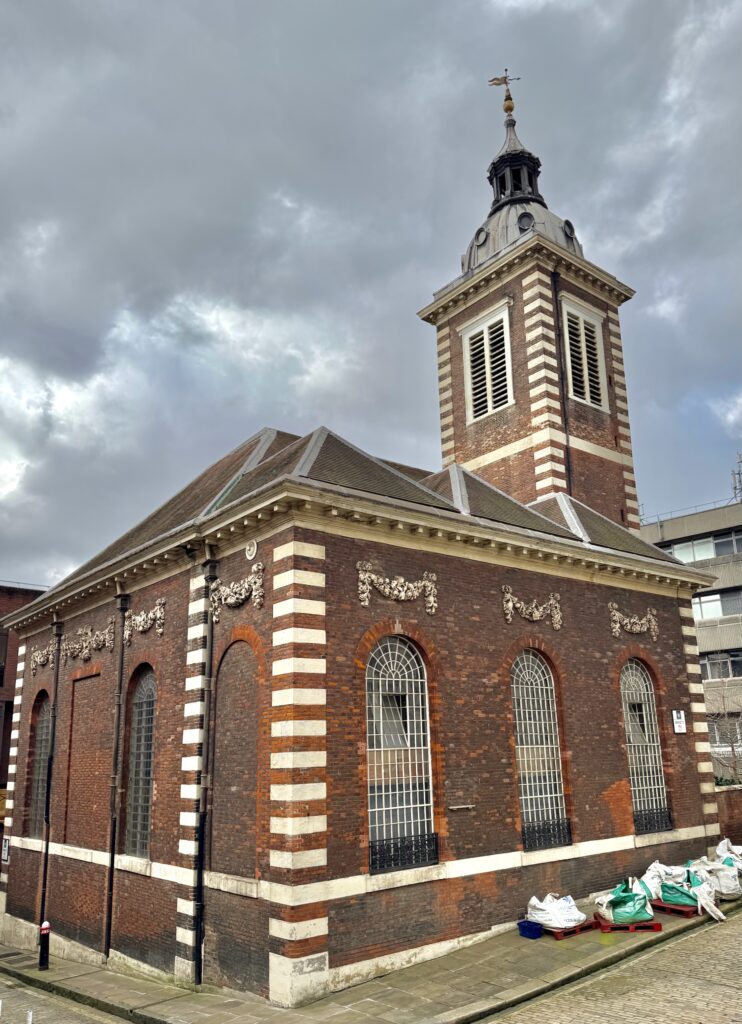
It was built between 1678 and 1684 under the auspices of Sir Christopher Wren (1632-1723) with original drawings by Robert Hooke (1635-1703). It’s one of the few City churches to survive Victorian reordering and 20th century bomb damage and remains much as it was built.
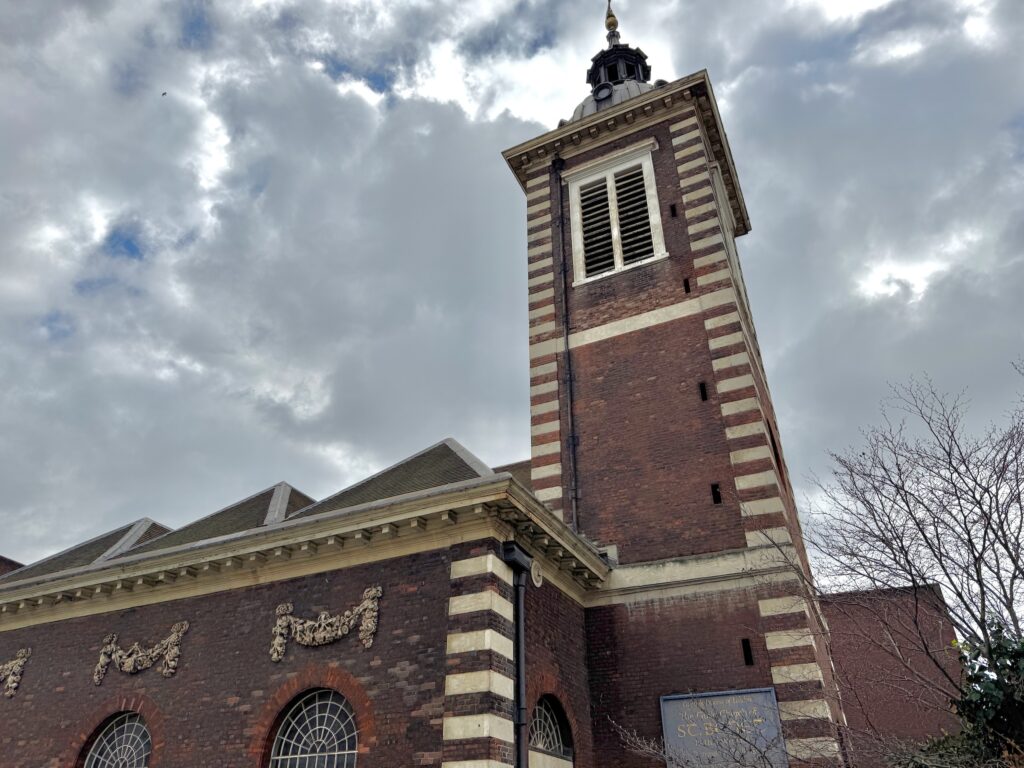
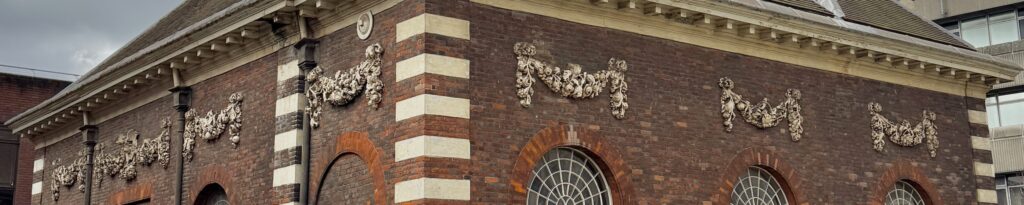
The Dutch-influenced exterior is built of red and blue brick, with stone quoins on the corners and carved stone garlands over the winows …
The interior of the church retains substantial galleries on the west and north side. The north side gallery …
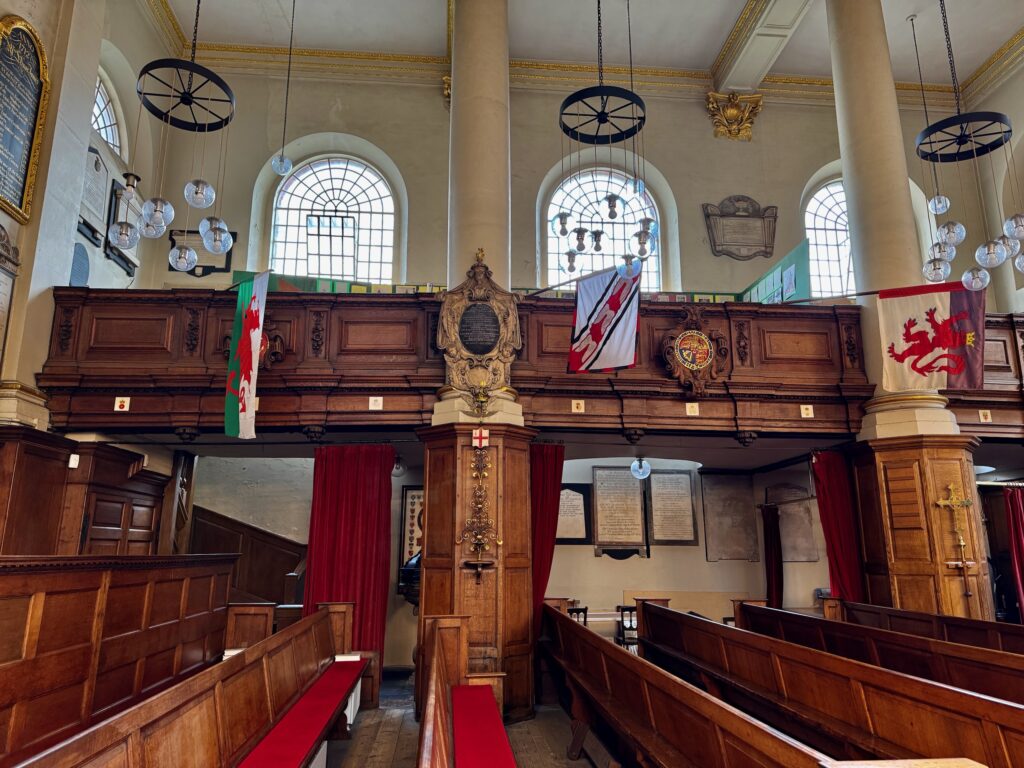
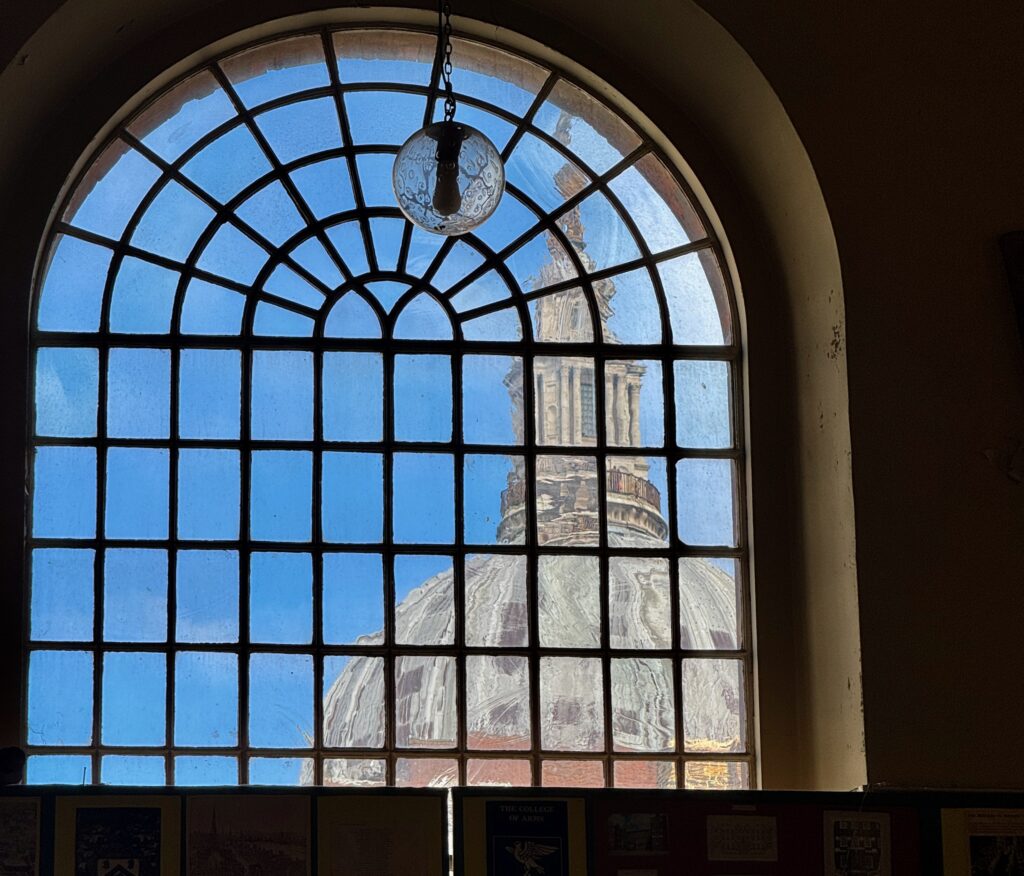
… which offers a striking view of St Paul’s Cathedral from the main aisle …
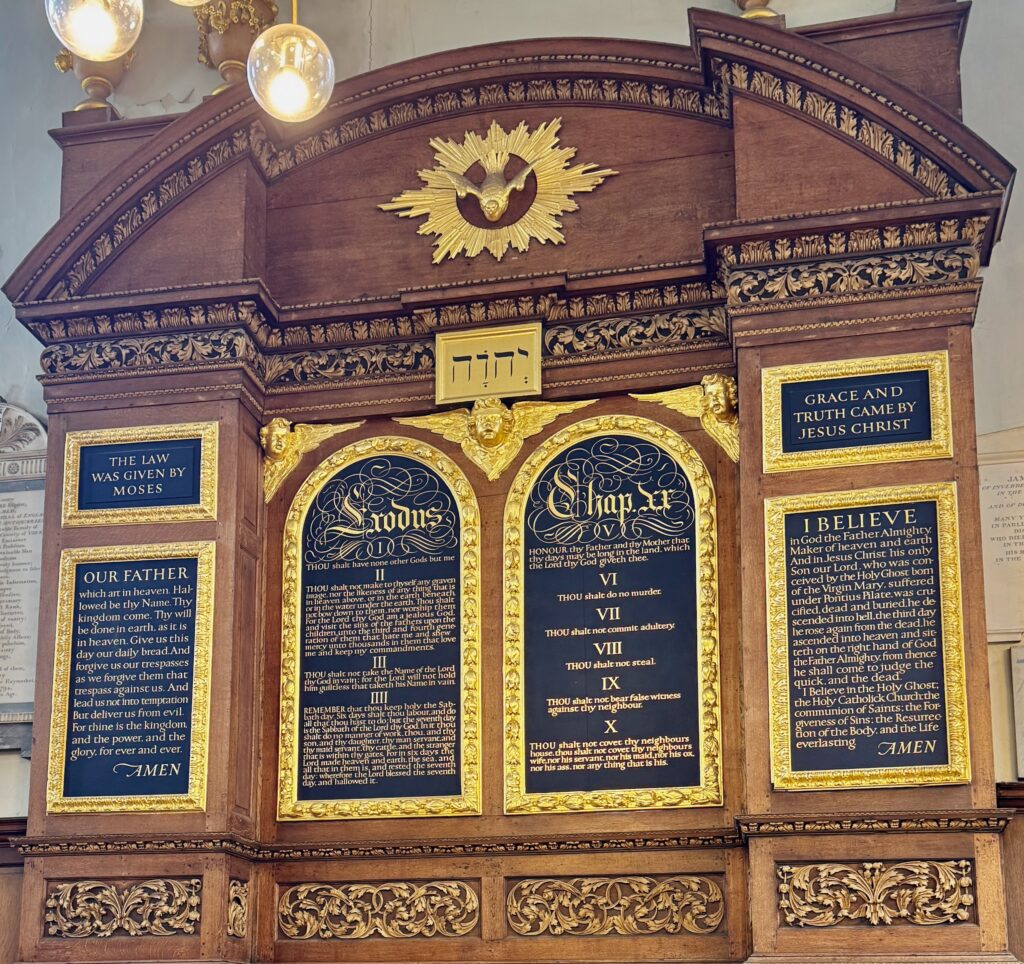
Original furnishings include the reredos, which displays the Ten Commandments, Creed and Lord’s Prayer, beneath the tetragrammaton (the name of God in Hebrew characters) …
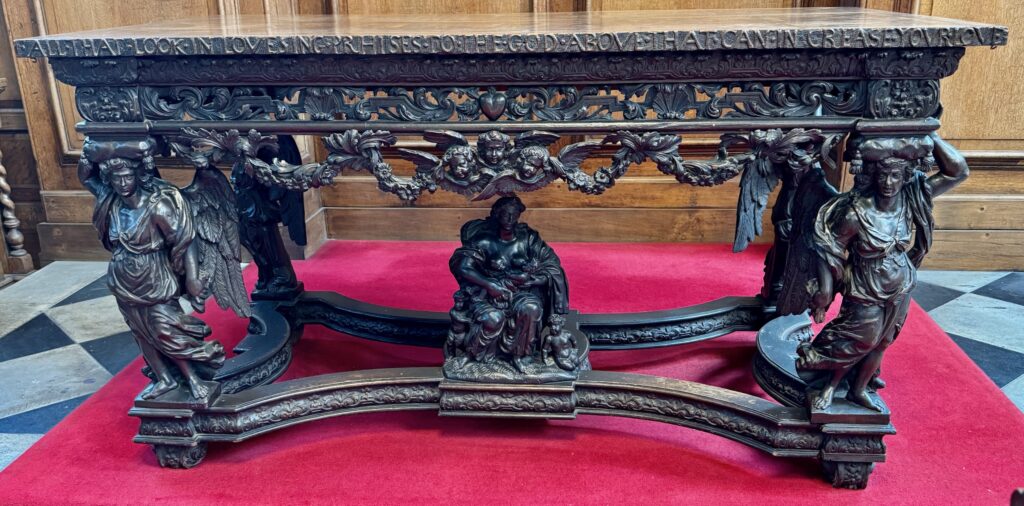
The magnificent Communion table (possibly Flemish) with its carved angels and central figure of Charity …
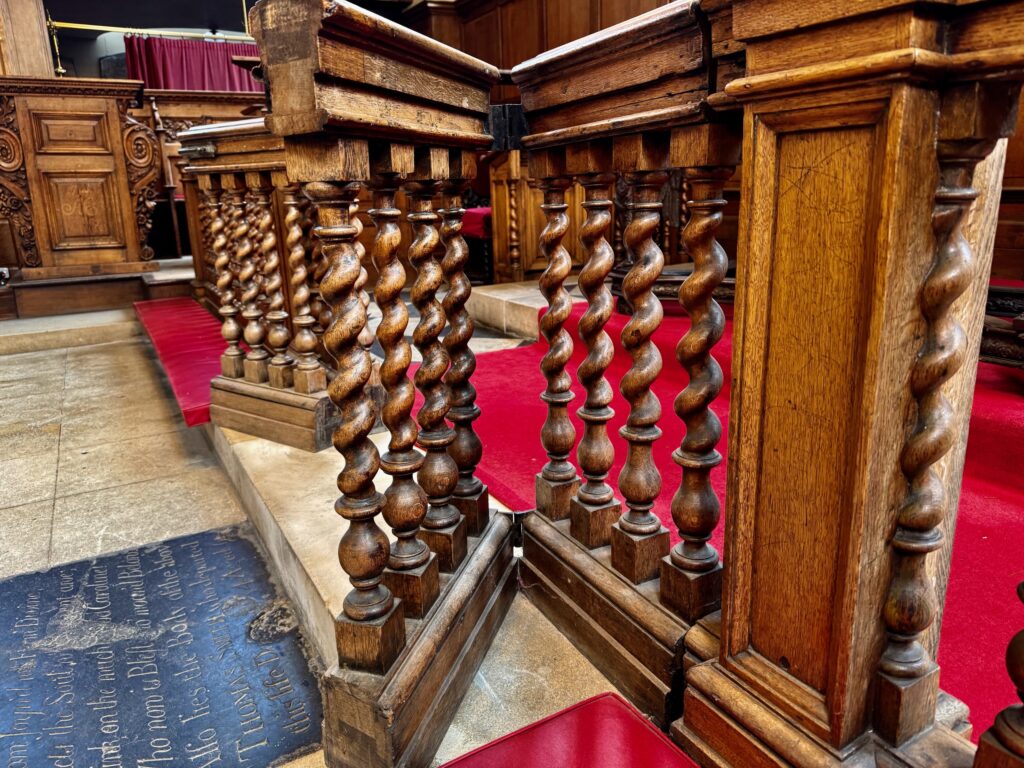
The original elegant Communion rails with twisted balusters …
The pulpit, originally marked with the royal cipher and ‘Donum [given] 1683’ …
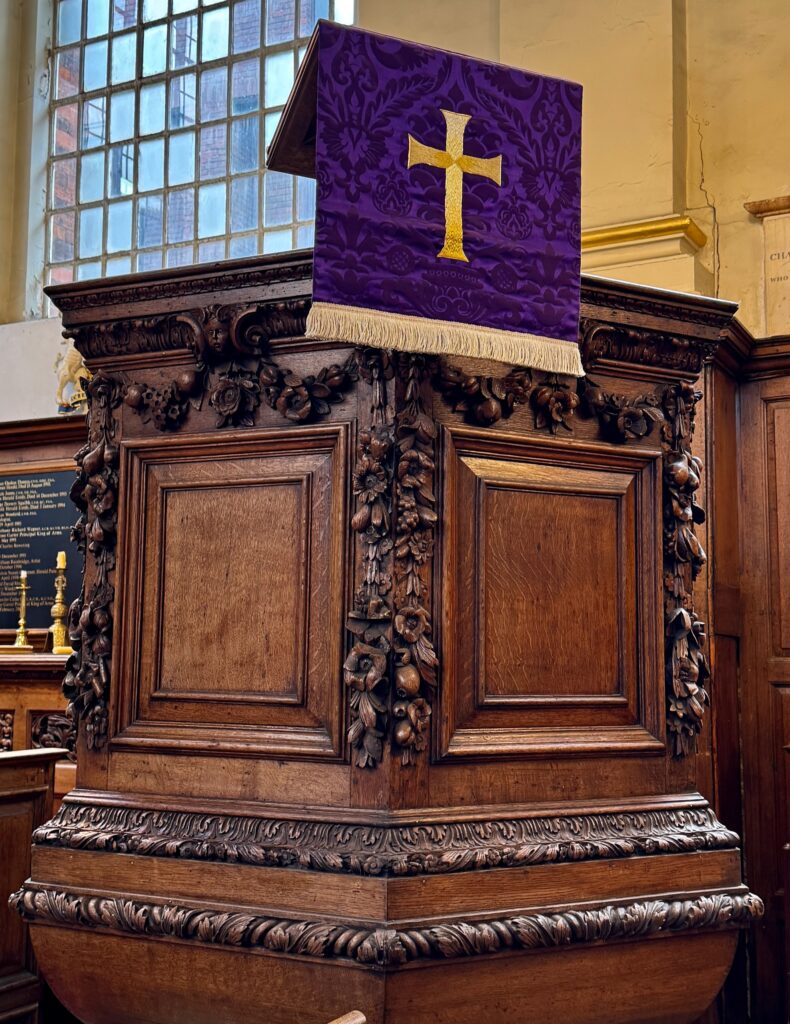
Some online guides attribute the carving to Grinling Gibbons but evidence is, apparently, not convincing. It’s still beautiful though …
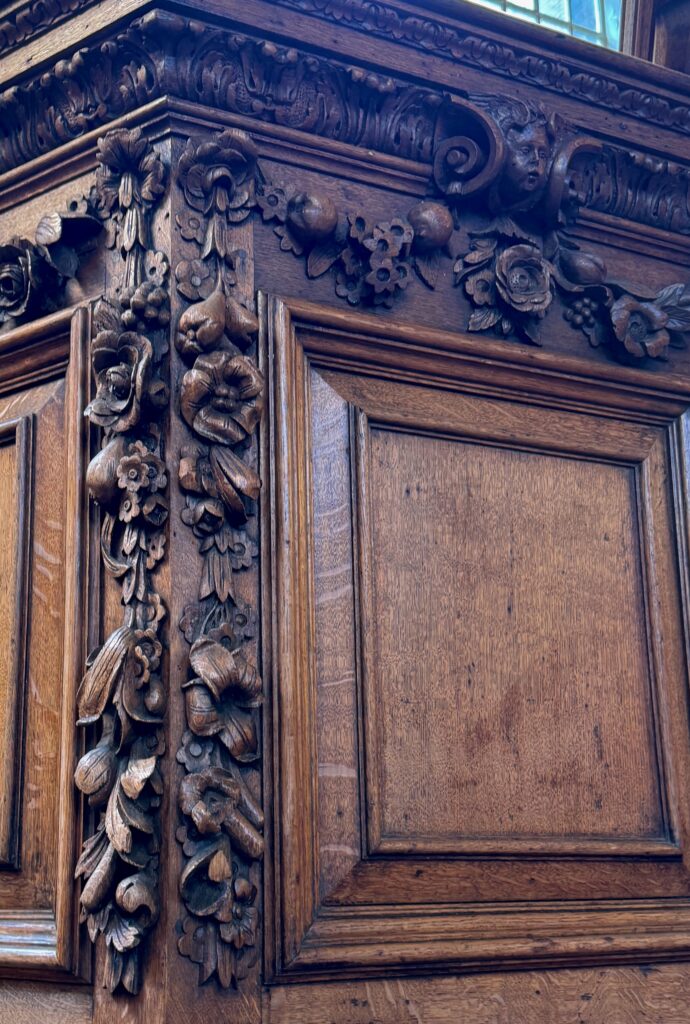
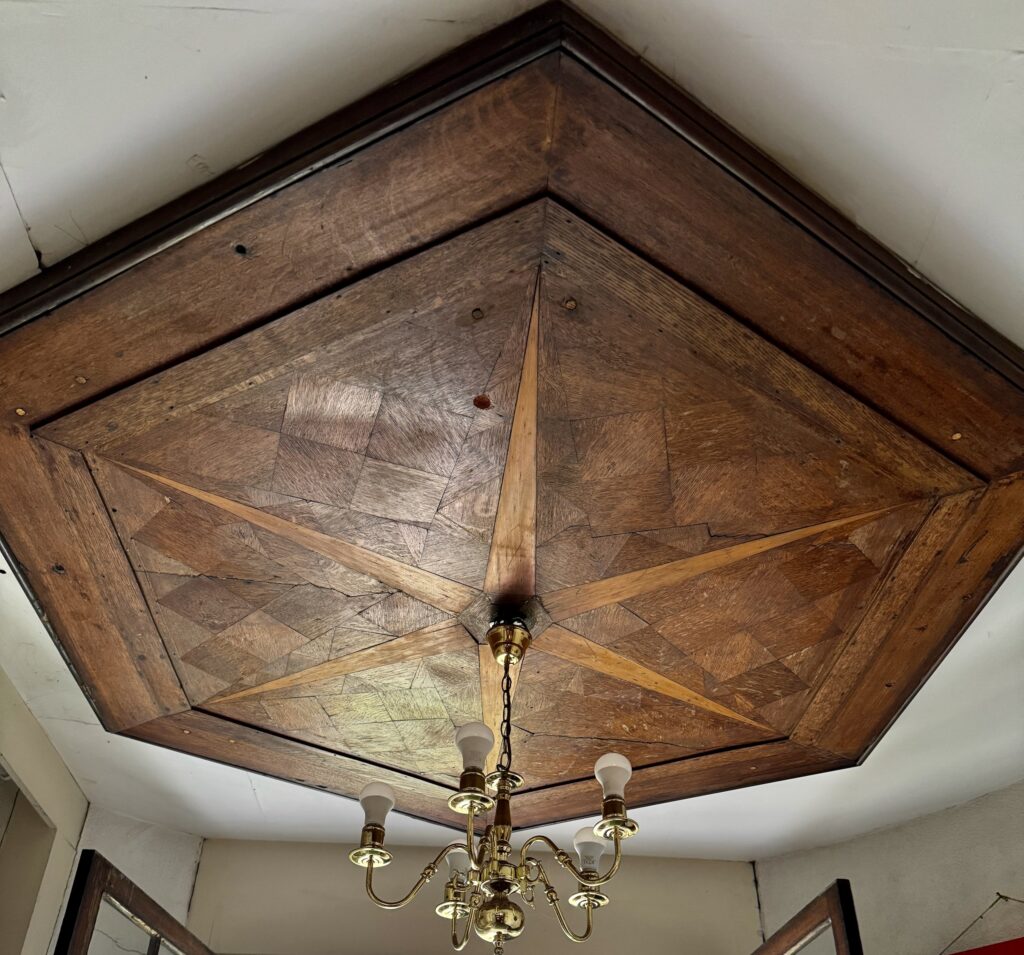
The pulpit’s tester, or sounding board, is now located in the vestibule below the tower …
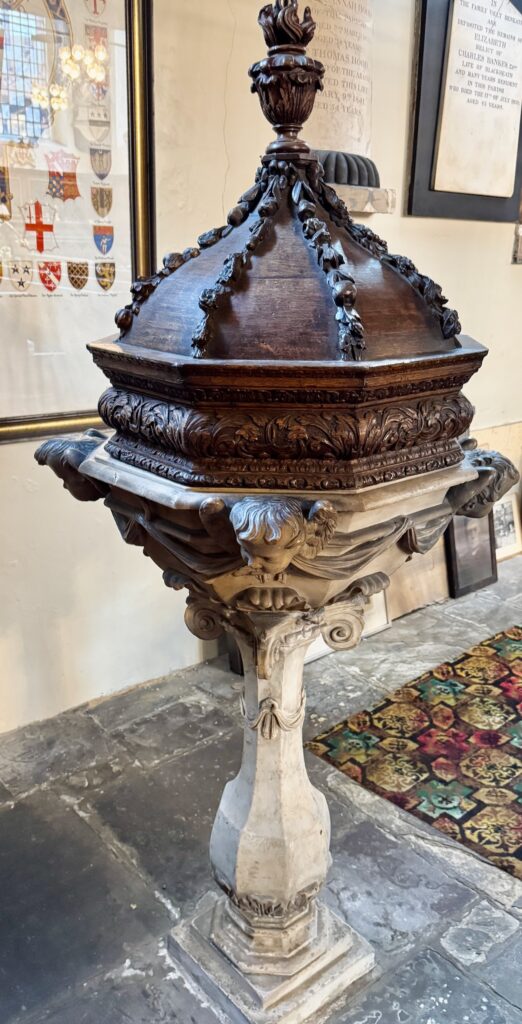
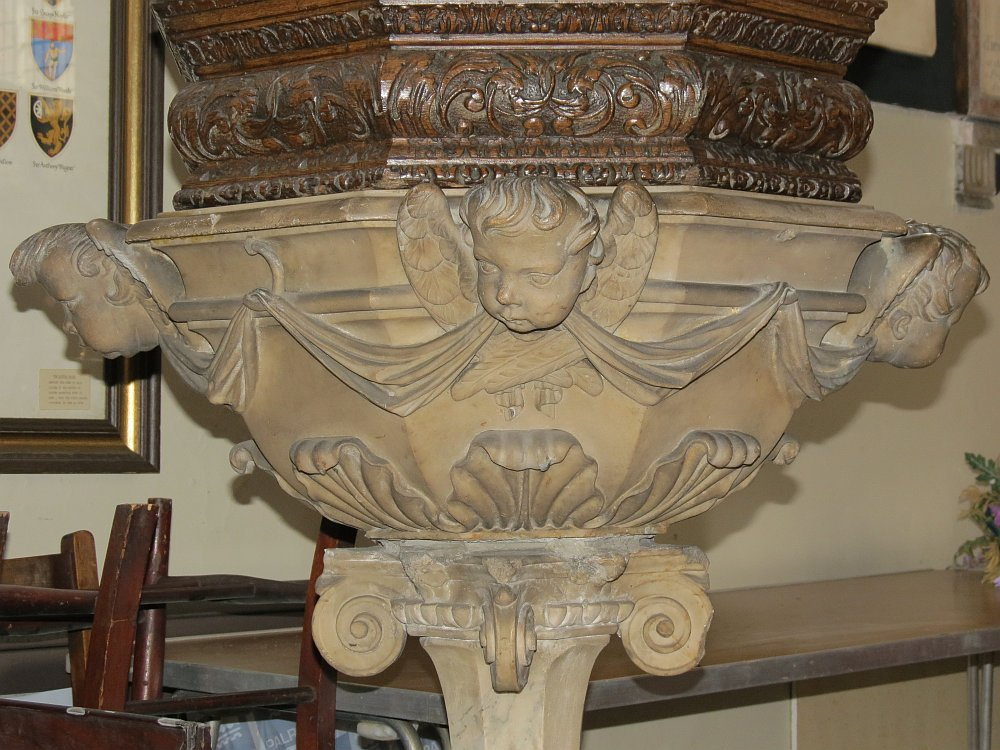
Another original furnishing is the octagonal marble font and its carved wooden cover …
Many of these furnishings were given by the lawyer and diplomat Sir Leoline (Llewellyn) Jenkins (1625-1685).
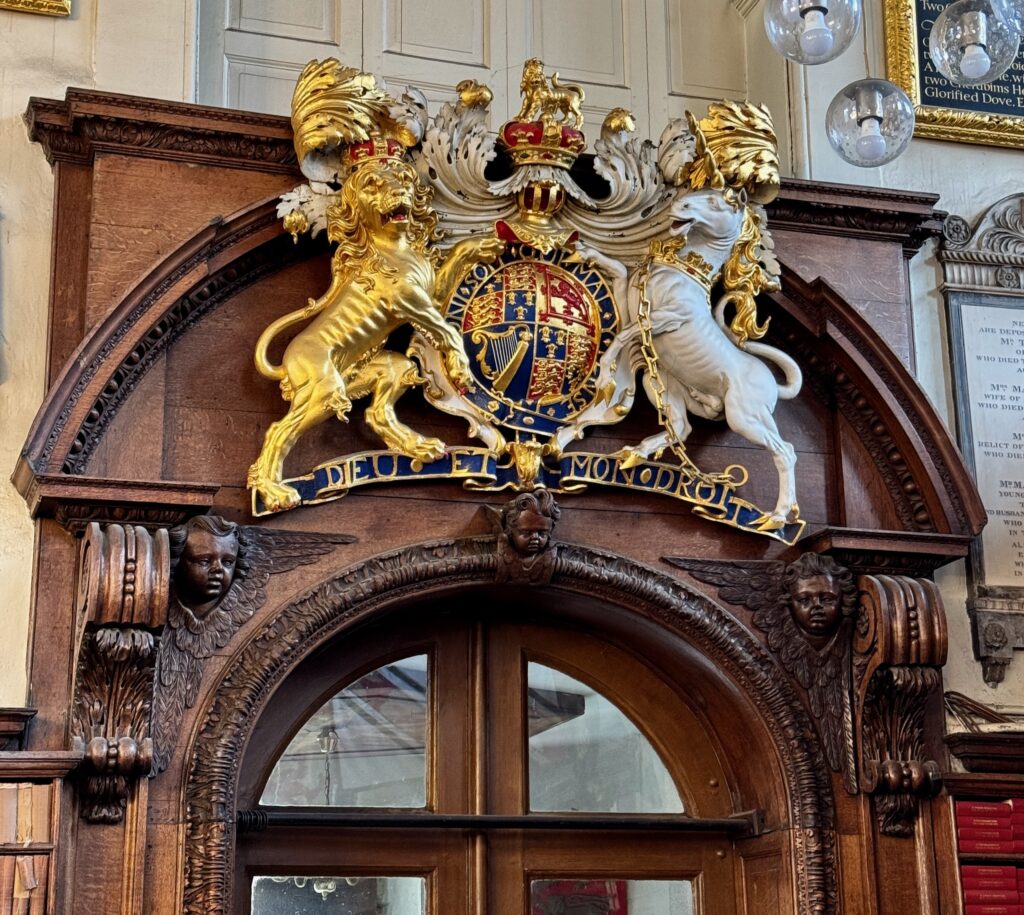
The splendid doorcase to the tower lobby is surmounted by the royal arms of Charles II …
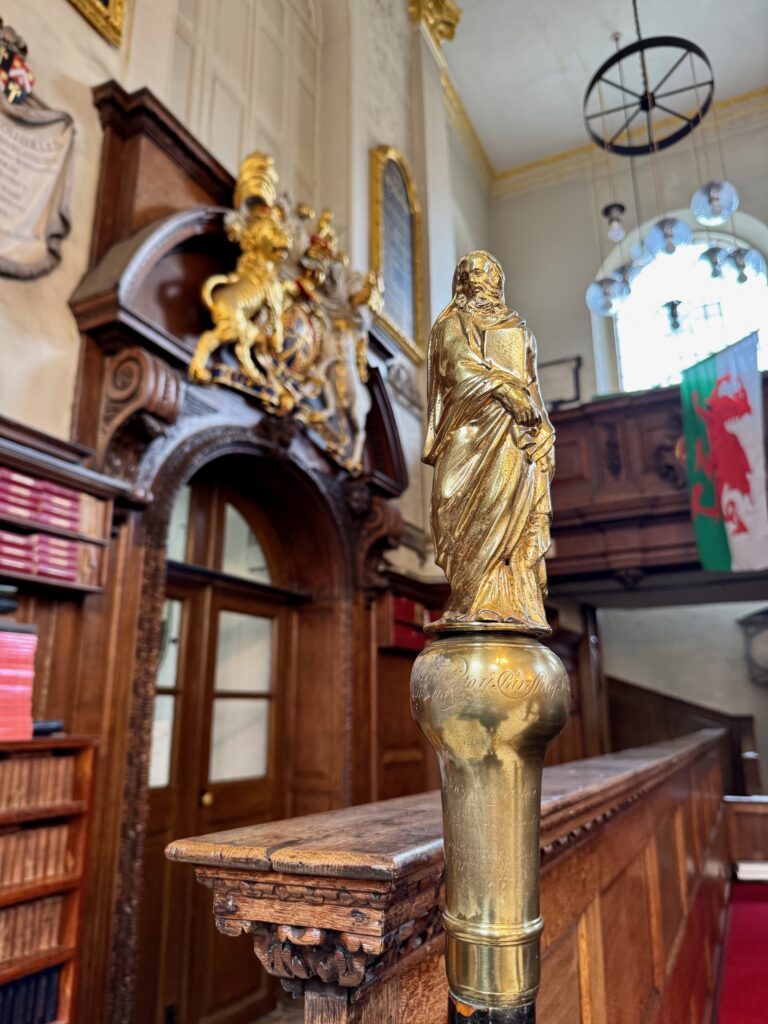
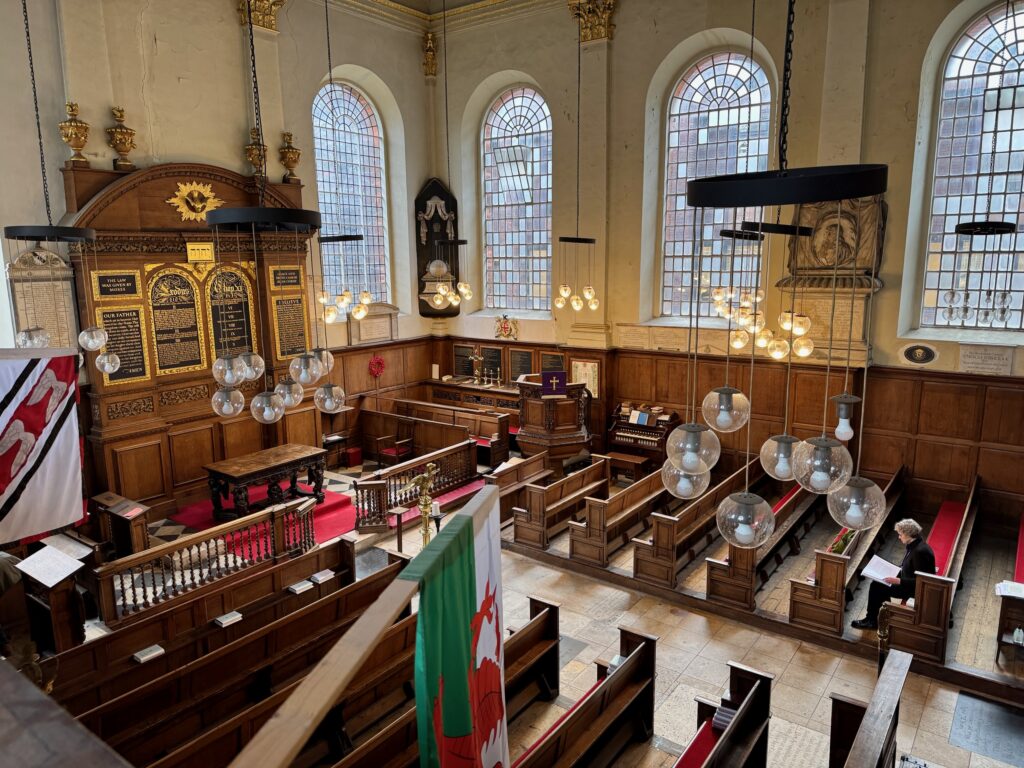
View from the north gallery …
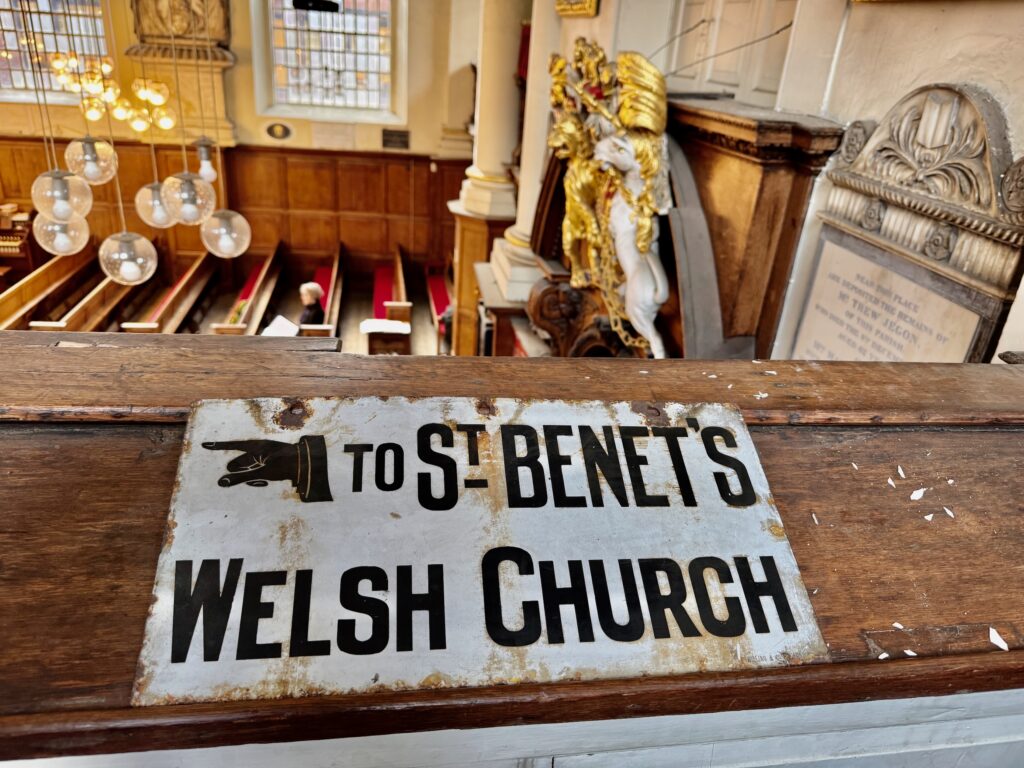
Balcony miscellany ..
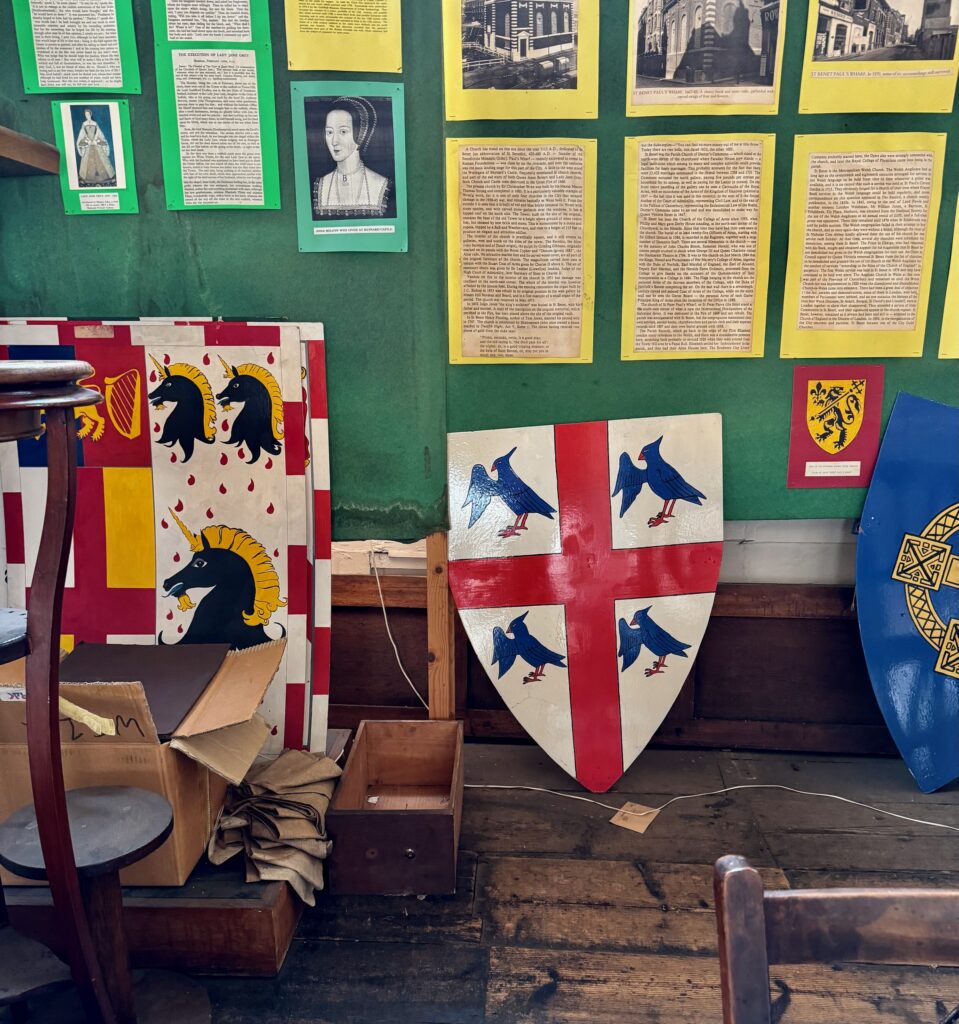
Since 1555, St Benet has been the church of the College of Arms (the heraldic authority for England, Wales, Northern Ireland and much of the Commonwealth) which stands nearly opposite on Queen Victoria Street.
The view of the church from the College forecourt …
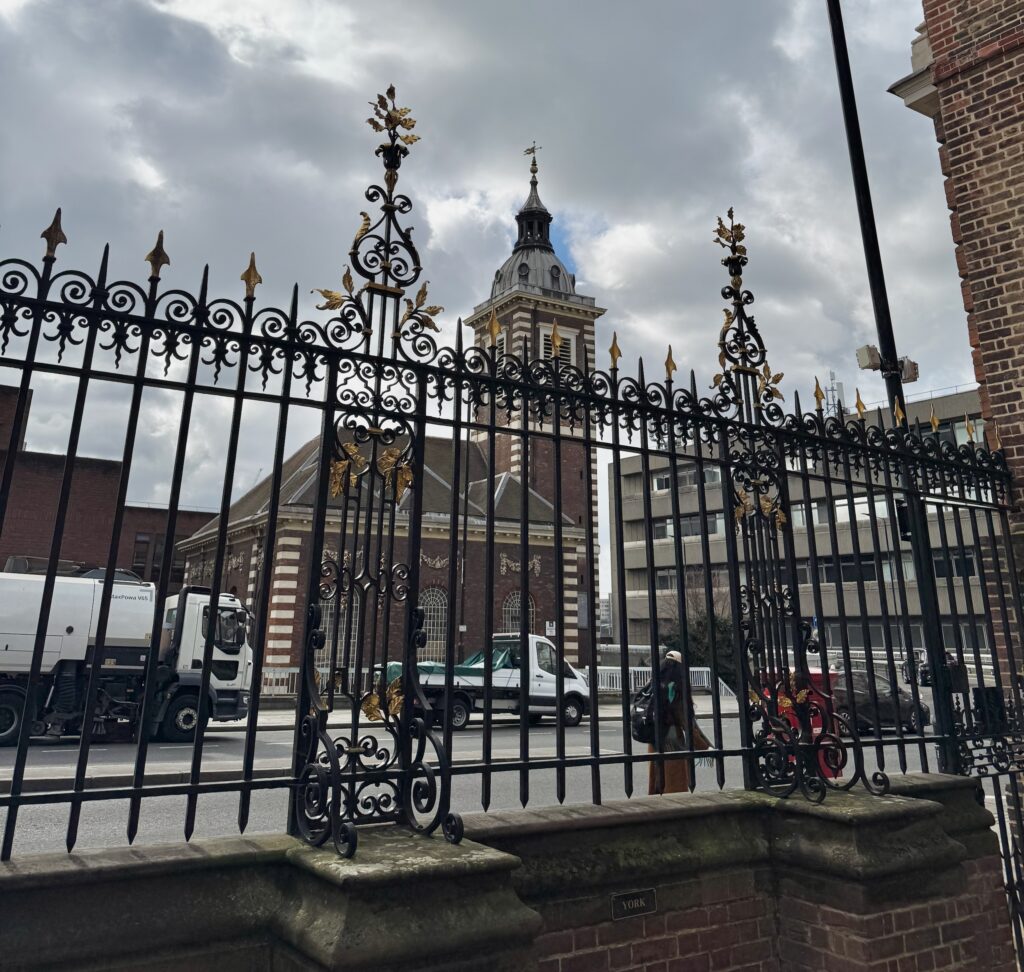
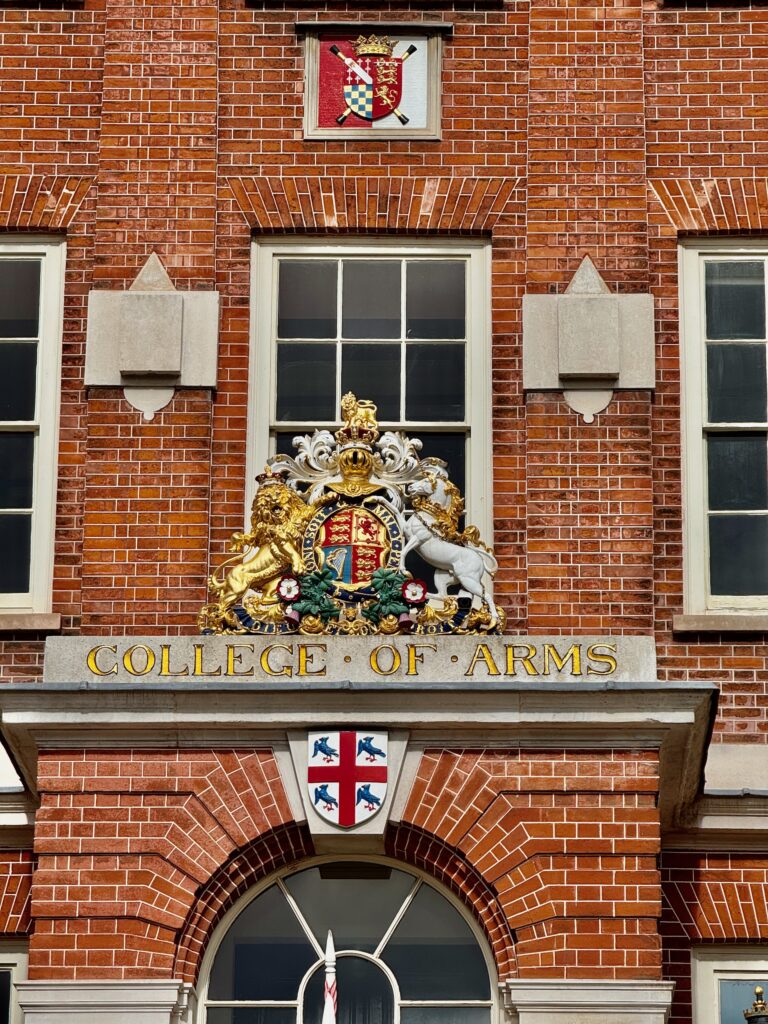
At least 25 Officers of Arms have been buried in the church …
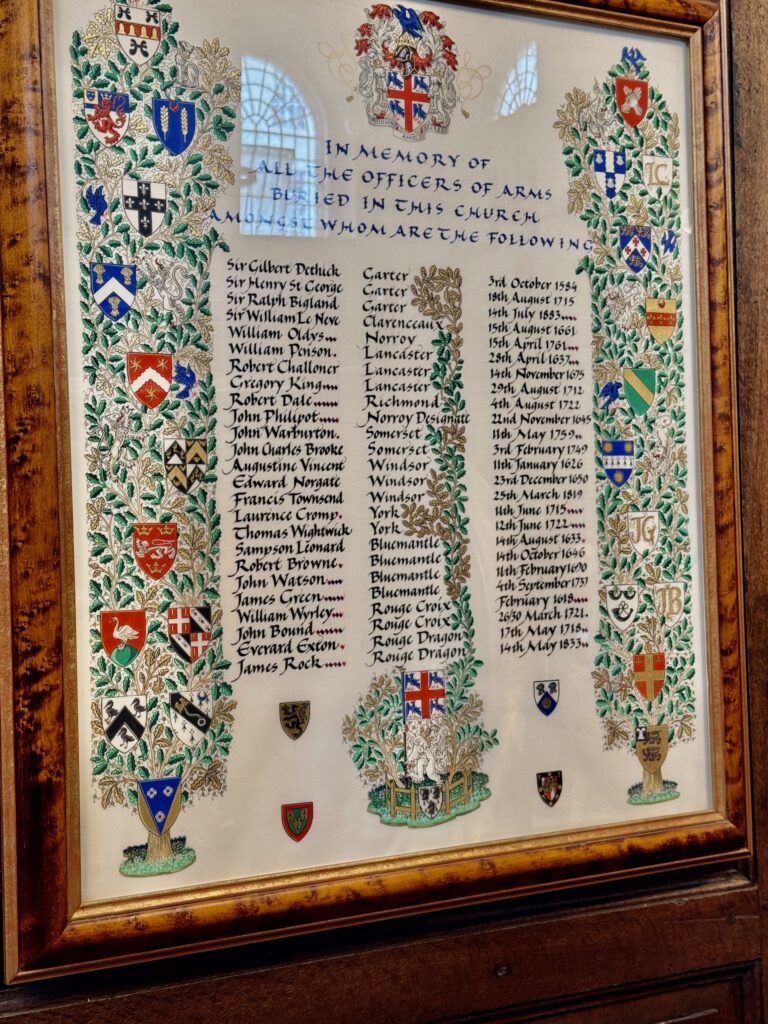
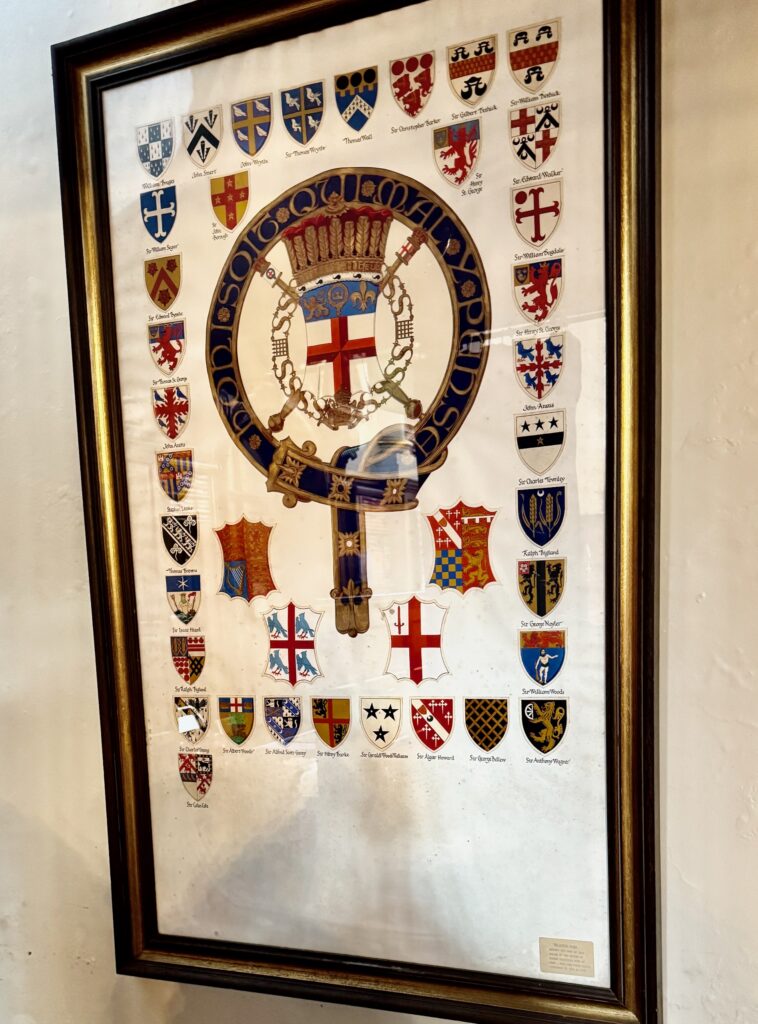
Coats of arms of College officers …
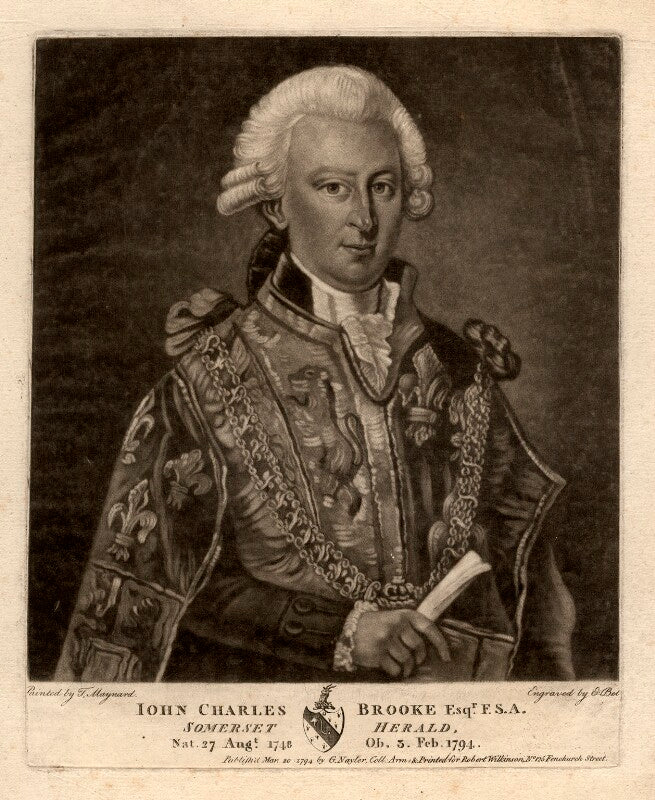
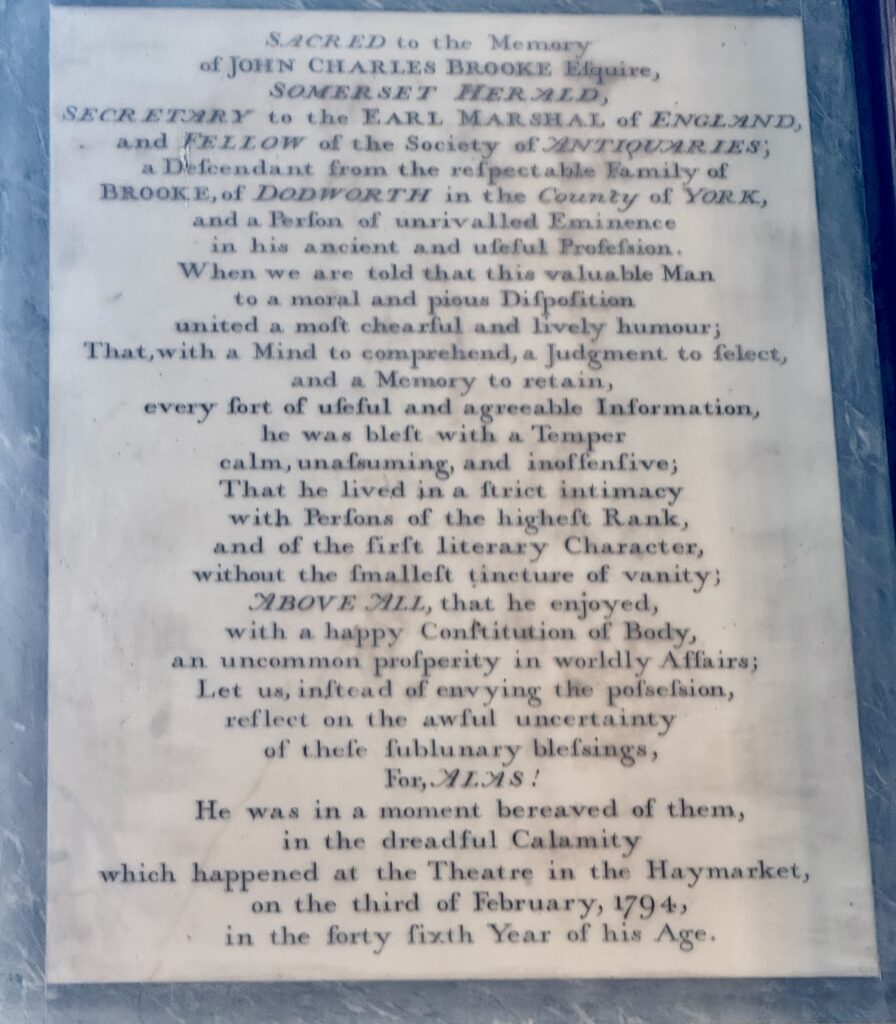
There is a memorial in the church to John Charles Brooke …
It refers to a ‘dreadful calamity’ at the Haymarket Theatre on 3 February 1794 which resulted in Brooke losing his life …
On that date, George III and Queen Charlotte were attending the Haymarket Theatre for the first time that season, and the royal command performance attracted vast numbers of people. The crowds were so huge that when the door was opened, those in the front of the queue were pushed down the stairs leading to the pit. More than 70 people fell and at least 20 were fatally crushed to death or suffocated. You can read more about the ‘Haymarket Tramplings’ here.
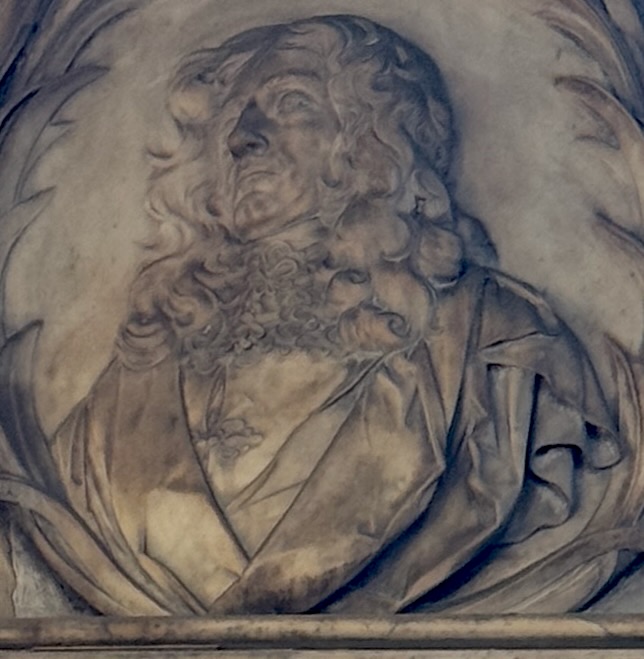
There is a splendid white marble bust of Sir Robert Wyseman (d. 1684). Sir Robert was Dean of the Court of Arches, the Archbishop of Canterbury’s chief ecclesiastical court, once held at St Mary-le-Bow …
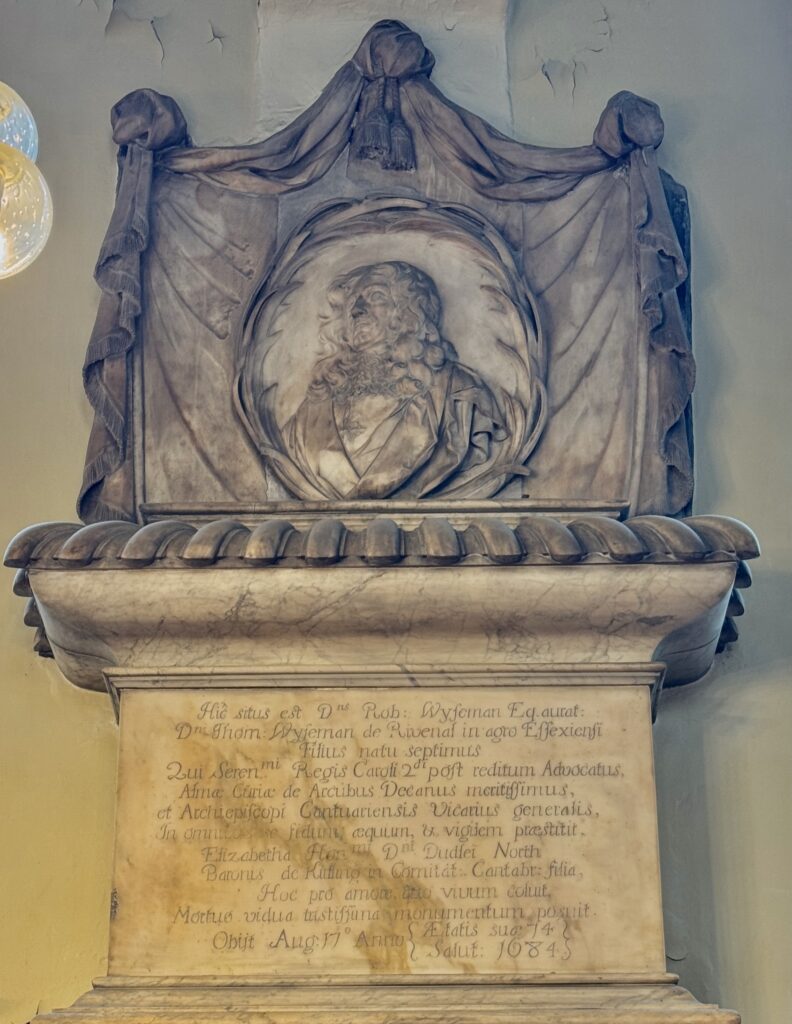
When looking for great descriptions of monuments I always return to Bob Speel’s website.
Here’s what he says about Wyseman: ‘The portrait is also excellent – a rather solid-faced man, given a look of pride and dignity, a stern man, with flowing locks of hair or wig, his throat covered by an ornate carved high collar, his chest within a heavy robe. Pevsner, the architectural historian, notes that the monument has been attributed to Grinling Gibbons and the bust to Arnold Quellin’.
Here’s a closer look …
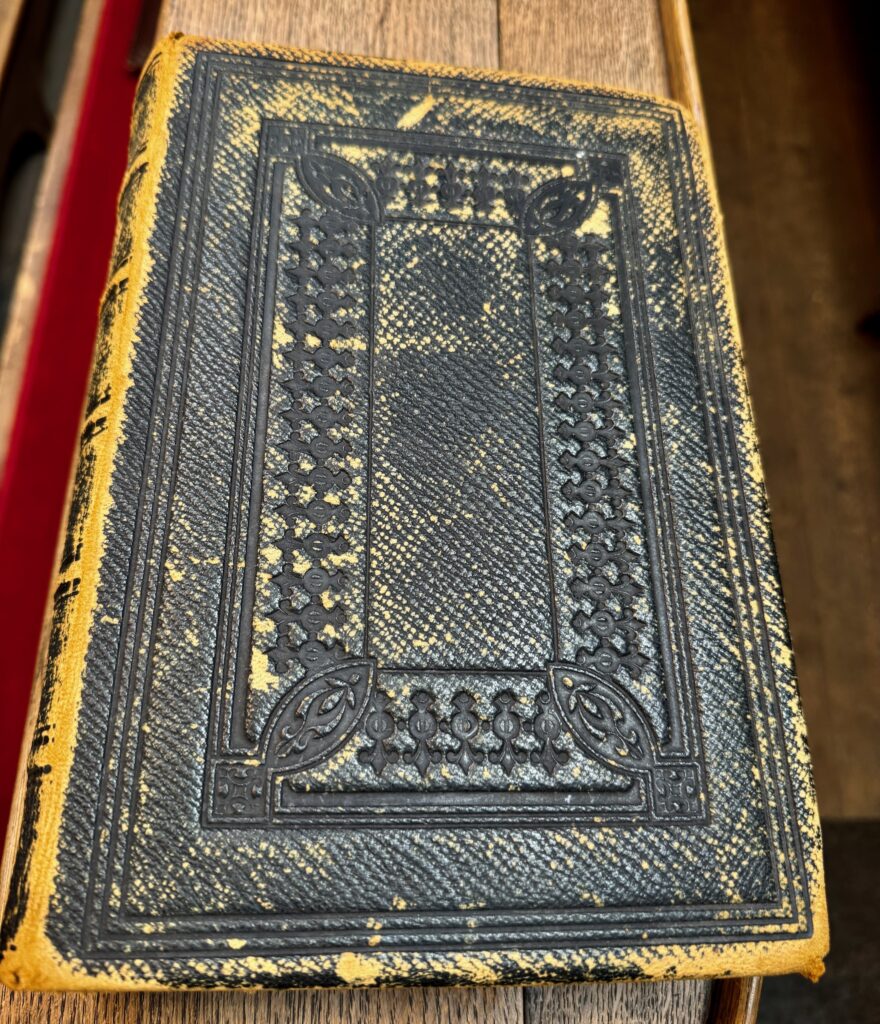
My eyes were drawn to this old bible resting in a pew beside the altar …
Being nosey, I looked to see if there was anything of interest written in the flyleaves. And there was! It was a gift ‘Presented to Sir John Puleston by the aged Welsh poor of the East End on their 25th Annual Treat, January 21st 1896 as a small token of their Love and Esteem’. It’s signed (and presumably written) on their behalf by ‘R H Williams Missionary’. Isn’t that wonderful …
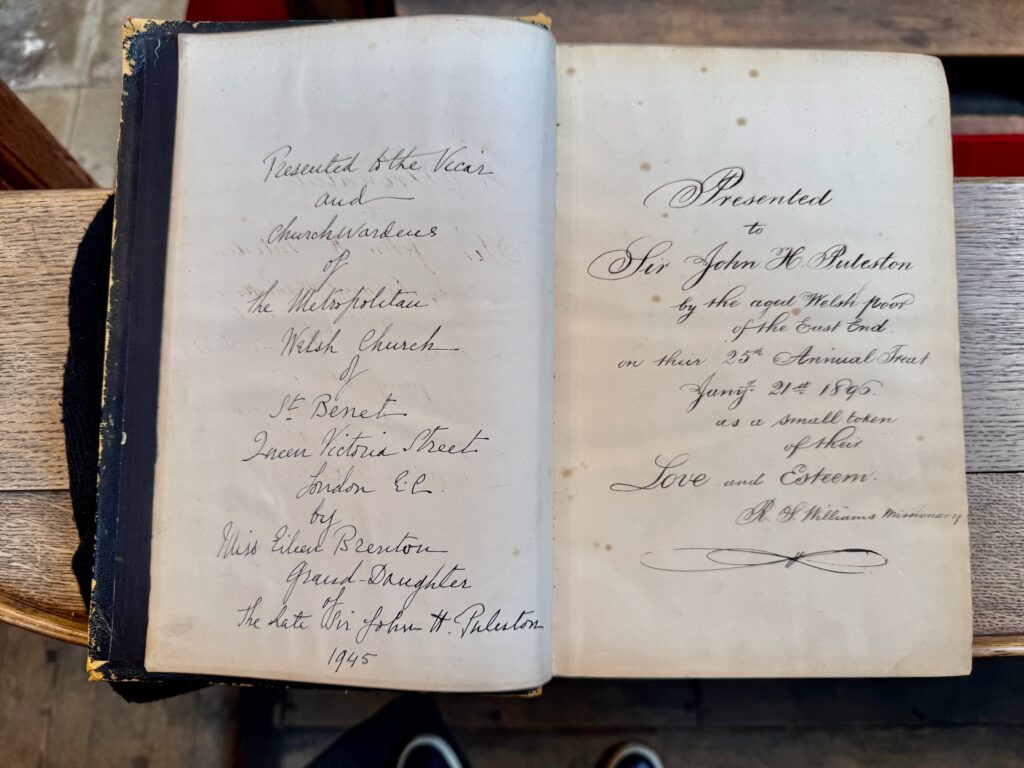
The left hand page explains how it has found its way to St Benet – a gift in 1945 from Sir John’s grand daughter.
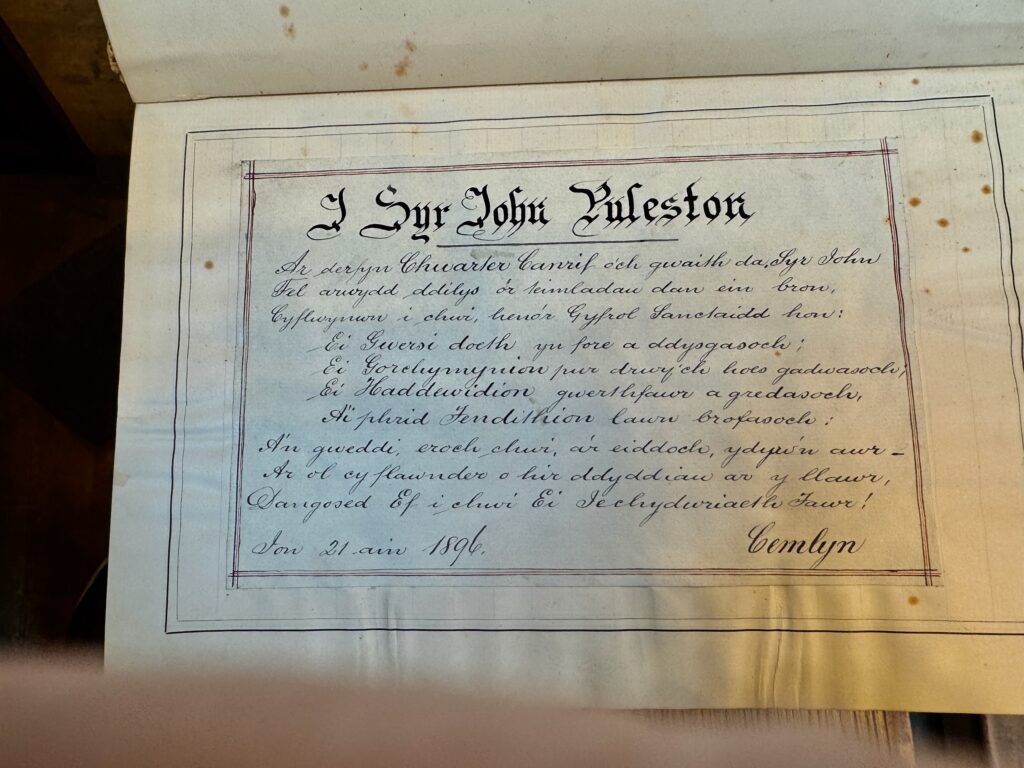
It is, of course, a Welsh Bible, with this inscription inside …
Sir John’s life is so remarkable I can’t even begin to describe it here so have provided some links. To whet your appetite, here he is in Washington DC holding the rank of Colonel ..
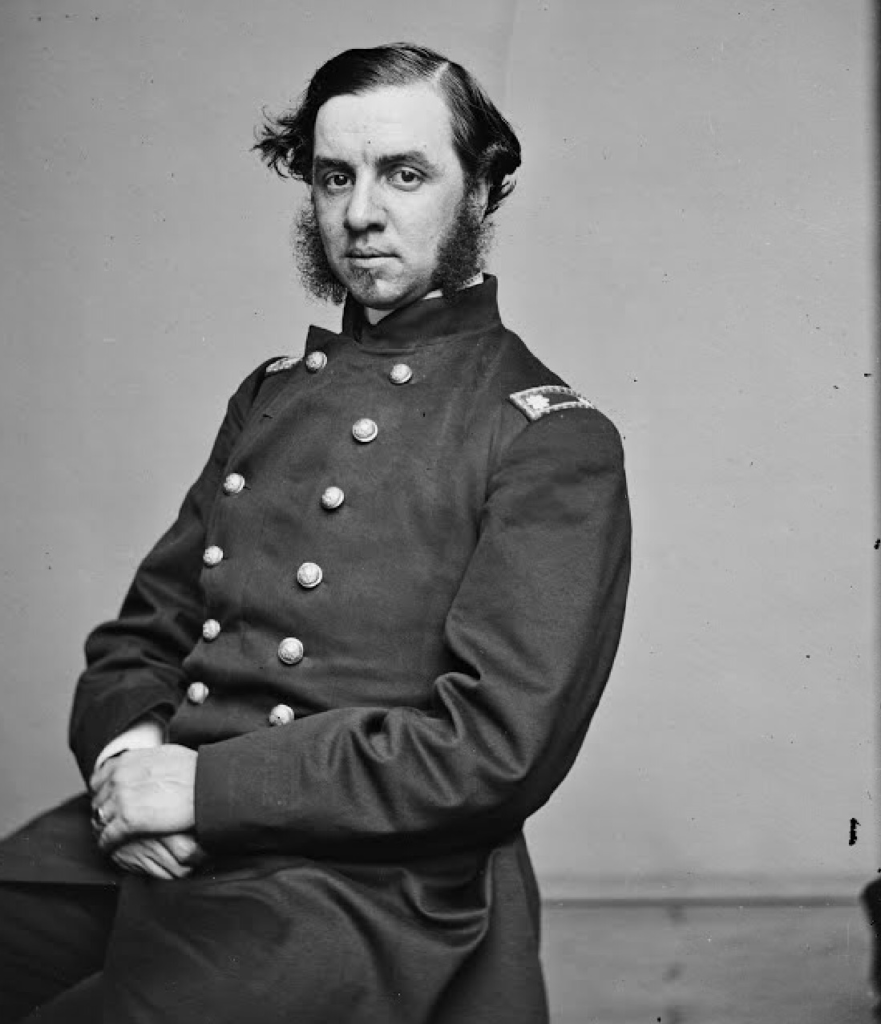
On 19 October he 1908 he passed away at his home at 2 Whitehall Court, London. Every pilot ship around Britain’s coast flew its flag at half mast. After a memorial service in London, he was buried in the family vault at Llanfair Dyffryn Clwyd, a village and community in Denbeighshire, Wales. He died bankrupt.
Two links for you to follow if you want to know more about him – in Wikipedia and in a fascinating ancestry site.
In the aisle is the tombstone of an extraordinary woman …
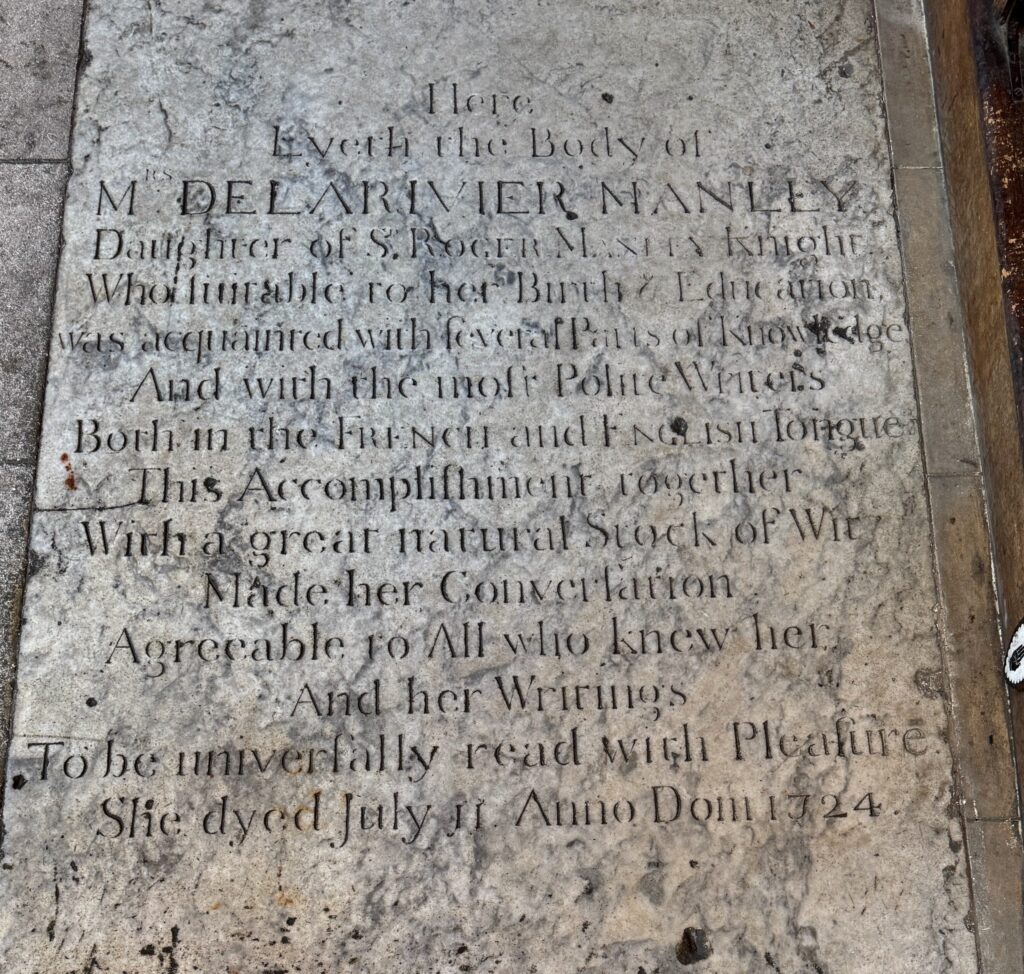
The inscription reads as follows:
Here lieth the body of Mrs. DELARIVIER MANLEY, Daughter of Sir Roger Manley, Knight, Who, suitable to her birth and education, was acquainted with several Parts of Knowledge And with the most Polite Writers, both in the FRENCH and ENGLISH tongue. This Accomplishment, Together with a greater natural Stock of Wit, made her Conversation Agreeable to All who knew Her and her Writings to be universally read with Pleasure. She dyed July 11 Anno Domini 1724.
A little more about her from a review of an autobiography: ‘A Tory pamphleteer, playwright, and satirical historian, Manley was regarded by her contemporaries Jonathan Swift and Robert Harley as a key member of the Tory propaganda team. Her best-selling political scandal chronicle The New Atlantis (1709) helped to bring down the Whig ministry in 1710. Her reputation was tarnished, however, in subsequent generations and twentieth-century scholars often misread her works as under-developed novels rather than as complex works of political satire’.
Sadly no picture of her exists but you can read more about her here.
For a great guide to the many other interesting monuments and memorials in the church, have a look at Bob Speel’s website.
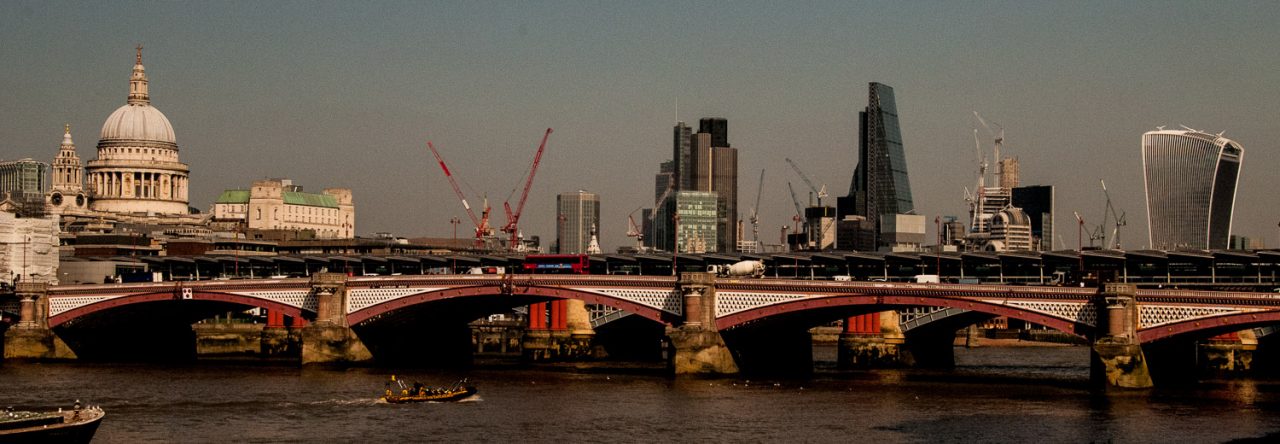
Located as it is, on the south side of the busy Queen Victoria Street below the level of the road, St Benet looks rather inaccessible, but this is misleading. To visit, just cross at the pedestrian crossing leading to the Millennium Bridge, turn right, walk down the steps and you’re at the church in less than five minutes.
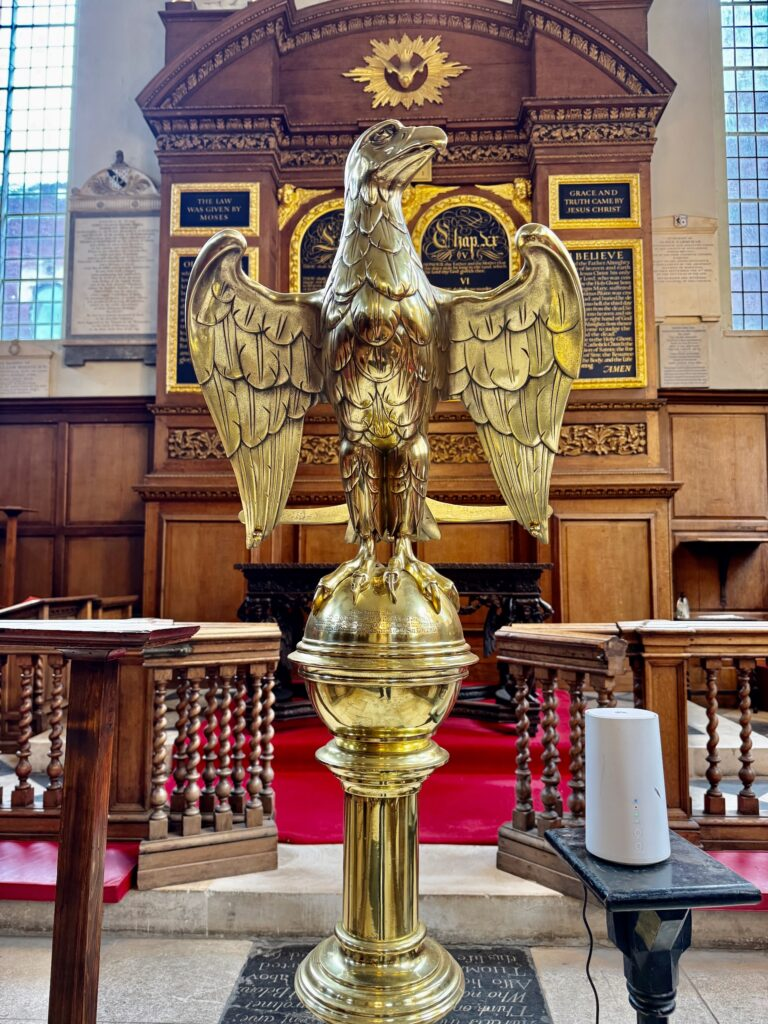
A magnificent eagle lectern …
Times to visit are restricted to when the Friends of City Churches are available to welcome visitors and at the moment this is on Thursdays between 11:00am and 3:00pm. They do a super job keeping churches open for visitors and the members who were on duty when I visited last Thursday were splendid company and very informative guides. There is a service there every Sunday. It’s primarily in Welsh since, by an Order in Council in 1879, St Benet became the Metropolitan Welsh Church after Queen Victoria was petitioned to prevent its demolition.
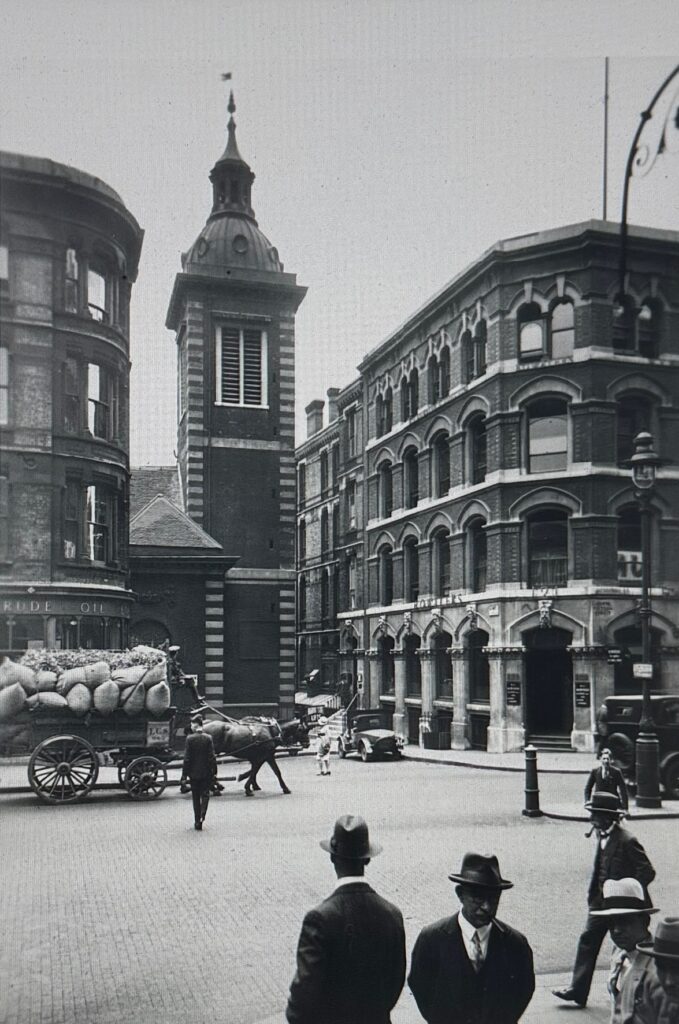
It is difficult now to imagine now what the area looked like before post-war development but this photograph, probably taken in the 1920s from the north across Queen Victoria Street, gives some idea (© The London Museum) …
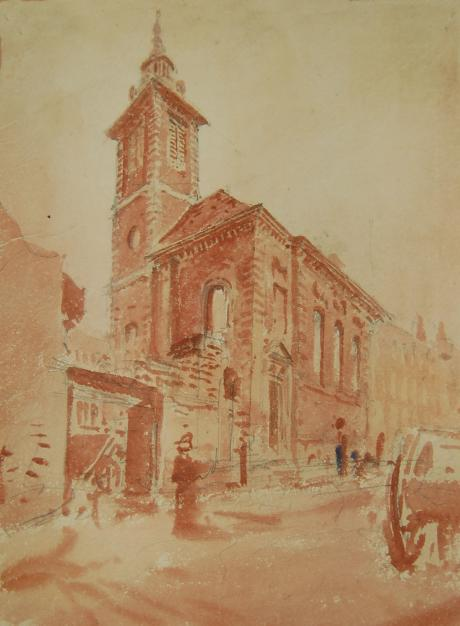
A painting by Rev John Louis Petit (1801 – 1868). He records it as having been made at mid-day, 22 June 1856 …
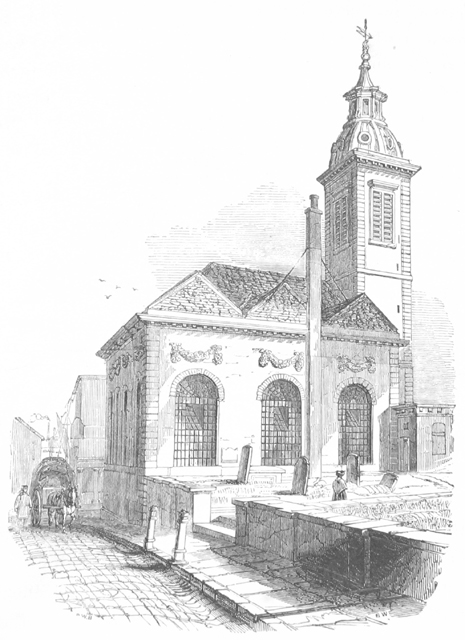
An engraving of St Benet’s Paul’s Wharf (c1rca 1838) reproduced from Godwin, ‘The Churches of London’ Vol I, 1838 …
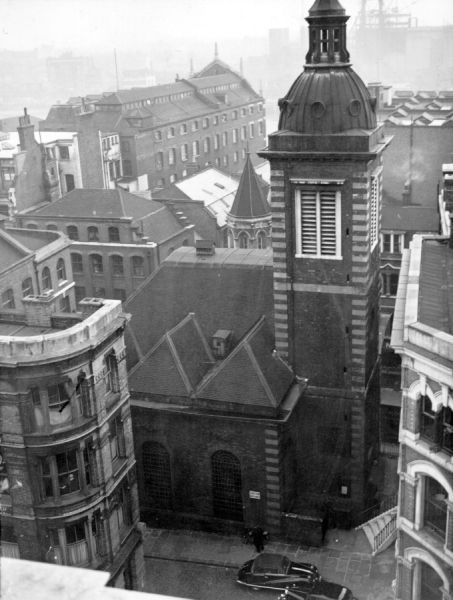
In August 1952 …
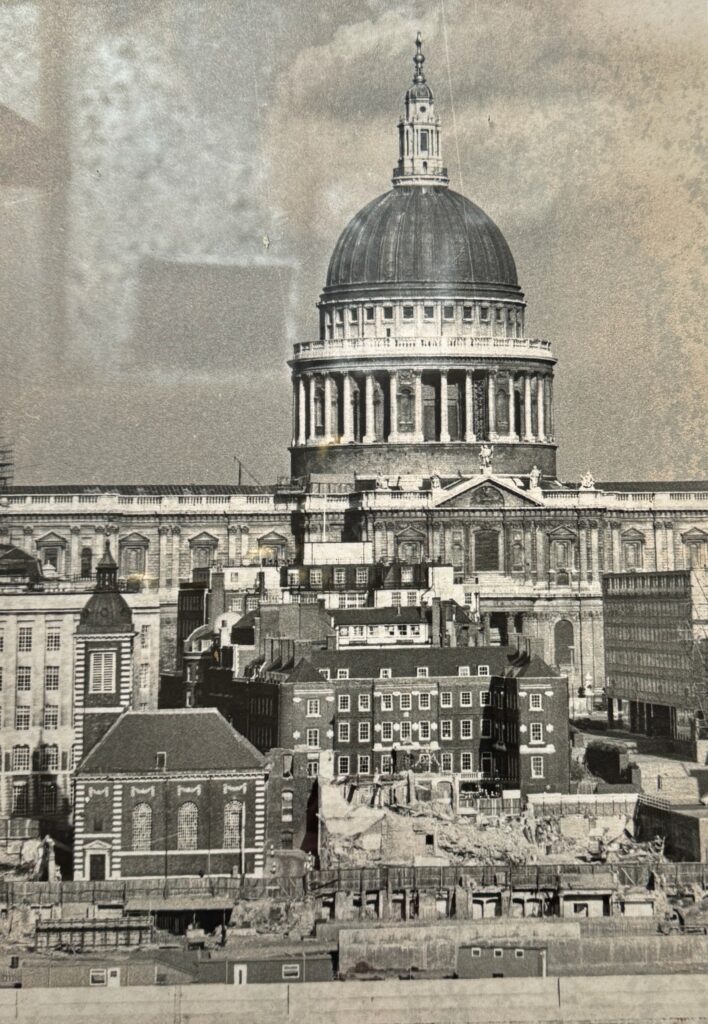
The church amidst 1960s redevelopment …
For even more information, visit the excellent London Inheritance blog entitled The Lost Wharfs of Upper Thames Street and St. Benet’s Welsh Church.
If you would like to follow me on Instagram here is the link …