Symbols & Secrets

Walking the City of London

City animals 3

A neat little book called City of London Safari by Helen Long was recommended to me by my friend Annetta and reading it inspired me to go out again and take more pictures of the many animals that inhabit the City.

My most pleasing discovery in the book was this little Scottish terrier called Chippy. He rests now in All Hallows by the Tower at the feet of his master the Reverend ‘Tubby’ Clayton CH MC who became vicar of the Church in 1922 and remained there until 1963.  He is best known for his work initially as an army chaplain during the First World War and in particular the establishment of Talbot House, a unique place of rest and sanctuary for British troops. After the war the spirit and intent of Talbot House became expressed through the Toc H movement.
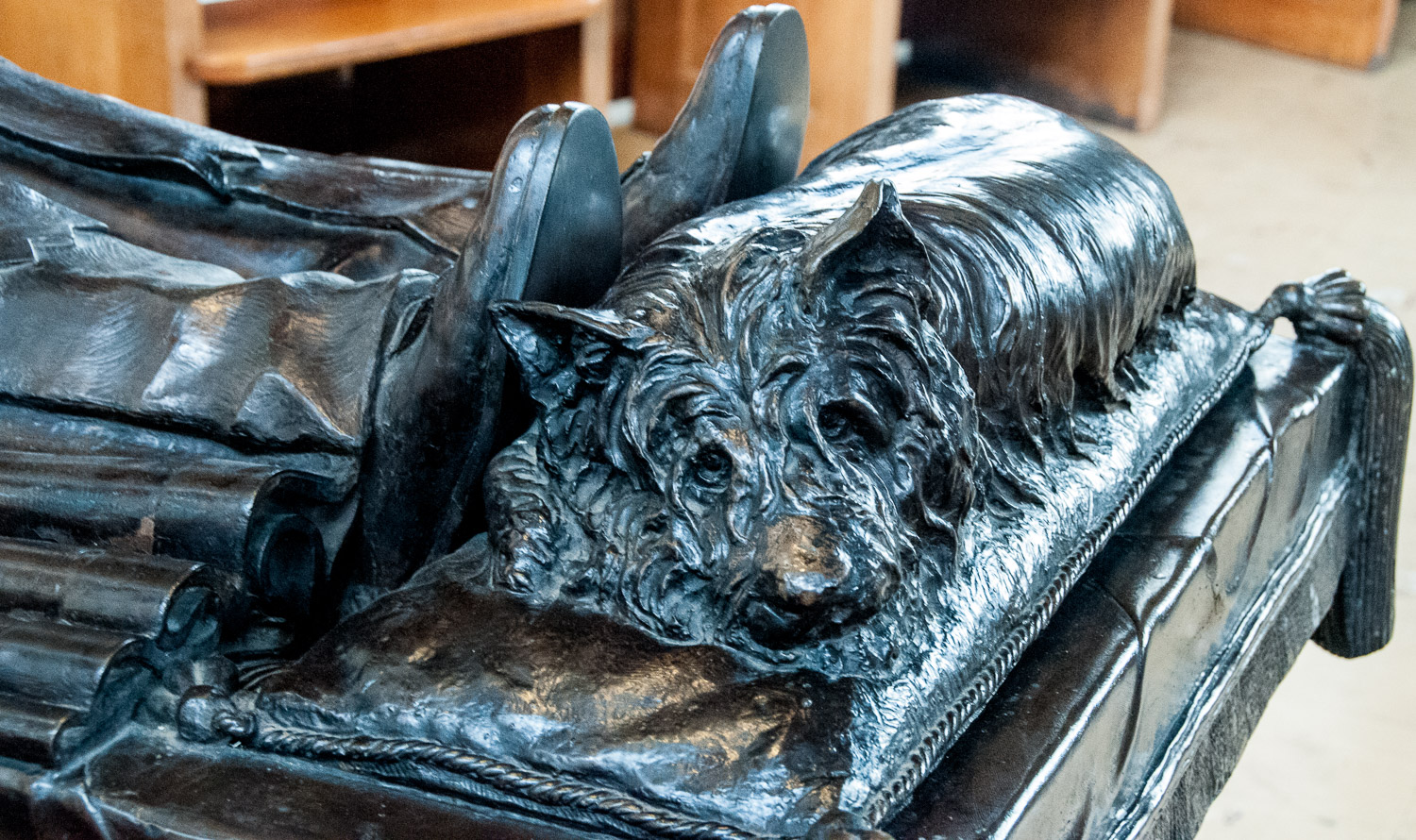
All Clayton’s Scottish Terriers were called Chippy

These one and a half times life-size bronzes are outside the headquarters of the London Underwriting Centre in Mincing Lane and the sculptor was Althea Wynne, who sadly died in 2012. She was a keen rider and her love of horses shows through clearly along with influences from classical art, especially Etruscan. There is also a deliberate reference to the classical horses in front of St Mark’s in Venice, whose wealth was also almost entirely built on trade.

Each horse stands 10ft high, weighs 4.5 tonnes and is shown pawing the ground. They are intended ‘to exemplify the dynamism and power of new City buildings …’
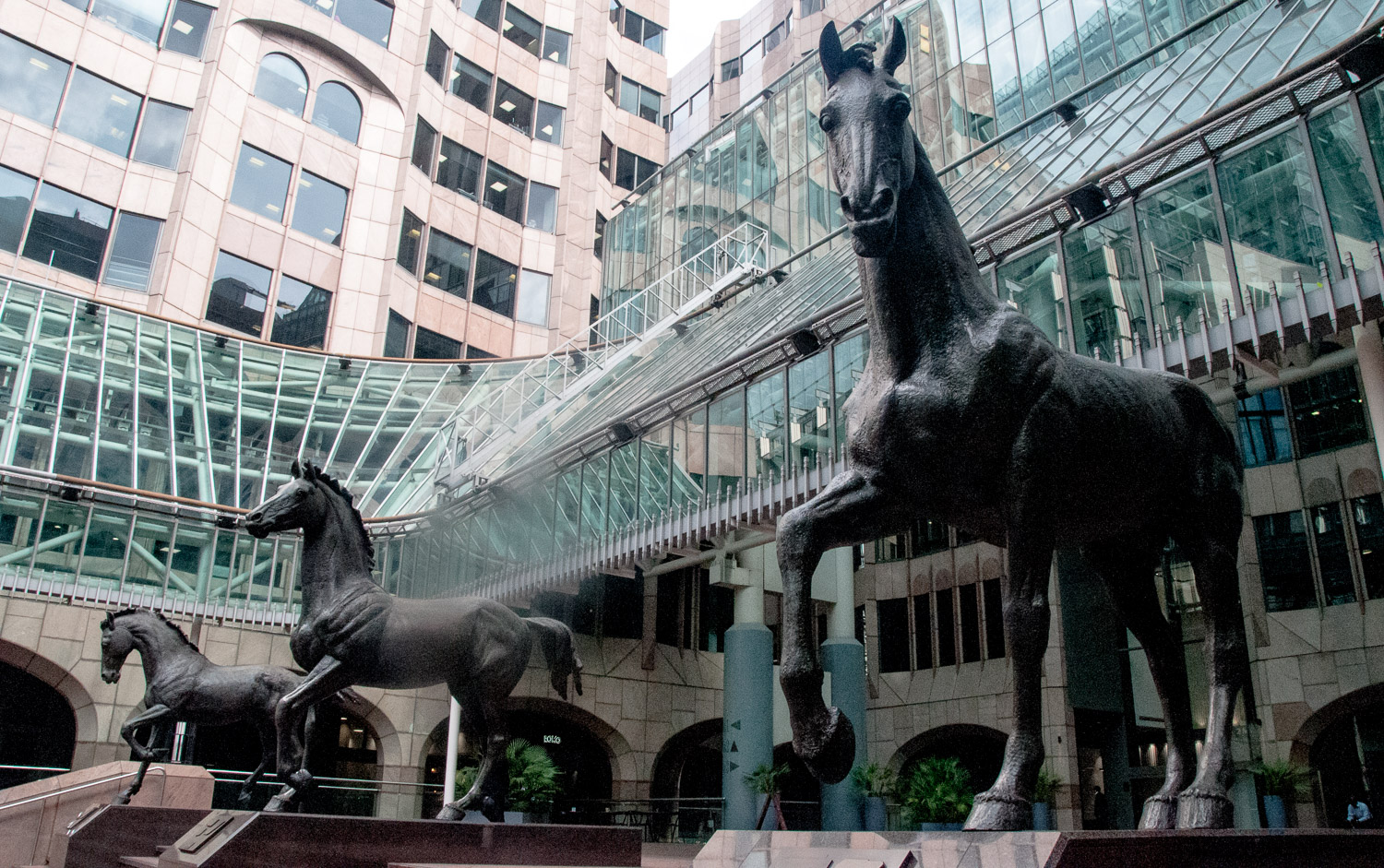
In typical City fashion they were swiftly nicknamed Sterling, Dollar and Yen

A ram stands proudly on the crest of the Clothworkers’ Company on the entrance to Dunster Court, Mincing Lane.
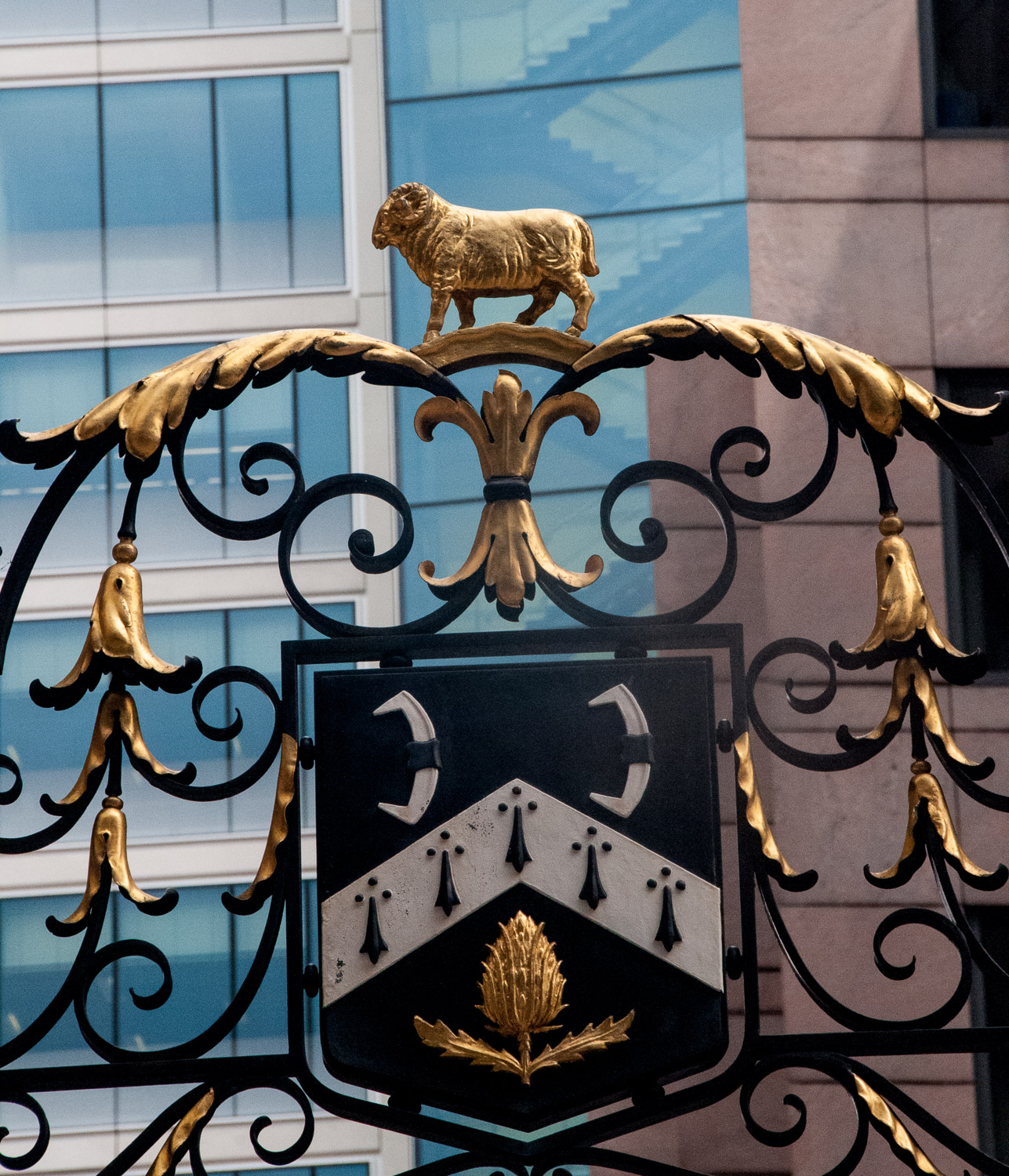
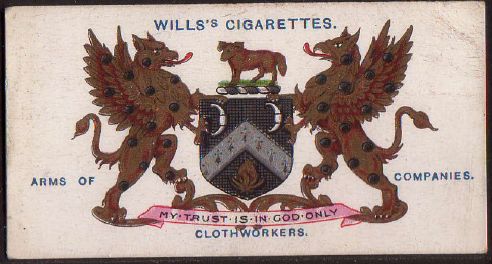
Once upon a time you could learn more about the City Livery Companies if you smoked Wills’s cigarettes!

Founded by Royal Charter in 1528, the original purpose of The Clothworkers’ Company was to protect its members and promote the craft of cloth-finishing within the City of London. Although few of their present members are involved in the textile industry in any direct way, the Company continues to support textiles, principally through educational grants, fostering the development of technical textiles and colour science, and support for the nation’s textile heritage.

As you approach the Bank junction from Cheapside look up and you will see two young boys at either end of the grand building that was once the City headquarters of Midland Bank (1935). The are both struggling with a rather angry looking Goose.
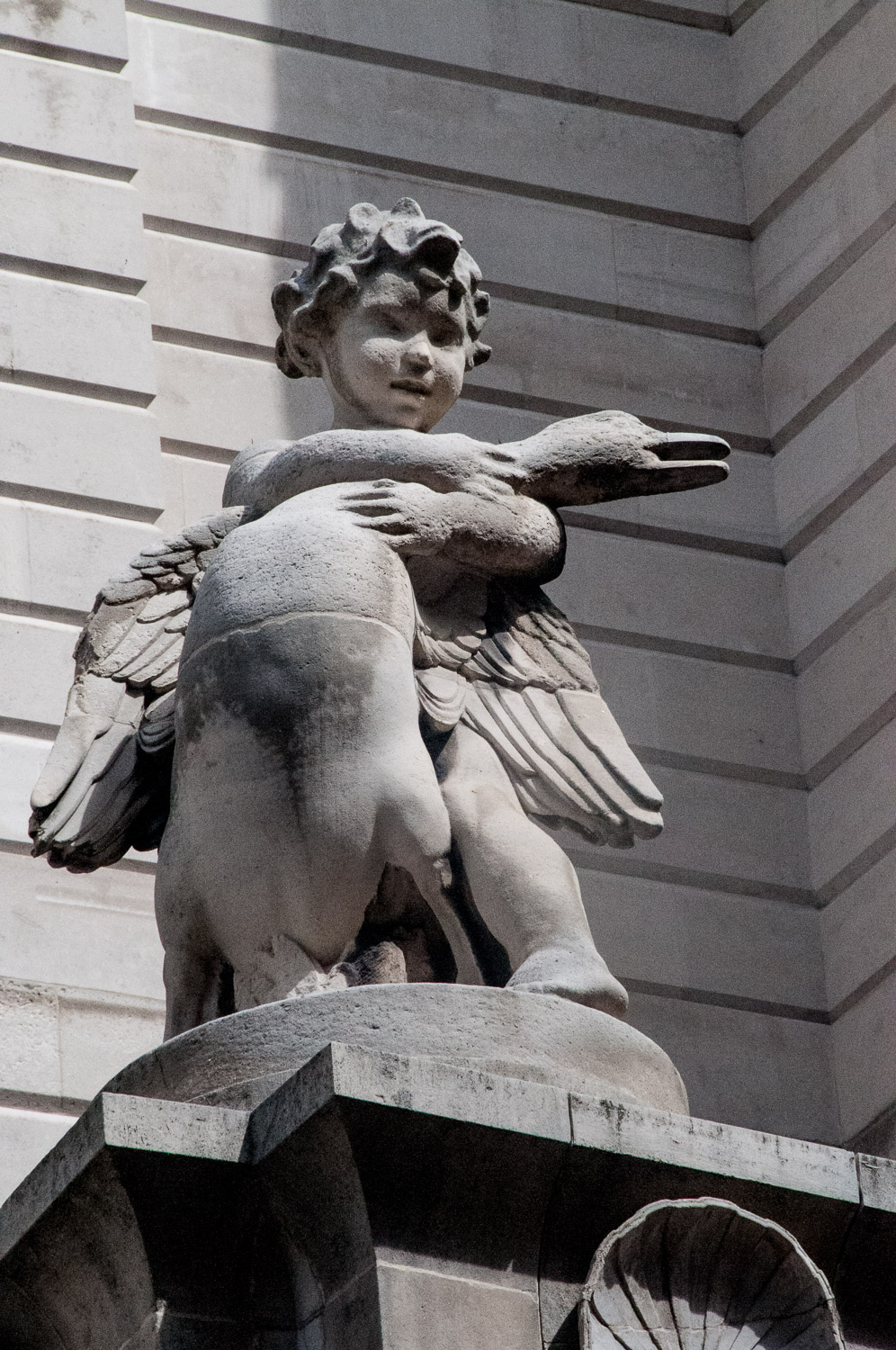
The sculptor was William Reid Dick

Why a goose? A clue is the ancient name of the street and the goose was a suggestion by the architect Sir Edwin Lutyens to commemorate its original market function. The building is now a private club and restaurant, called The Ned in Sir Edwin’s honour.
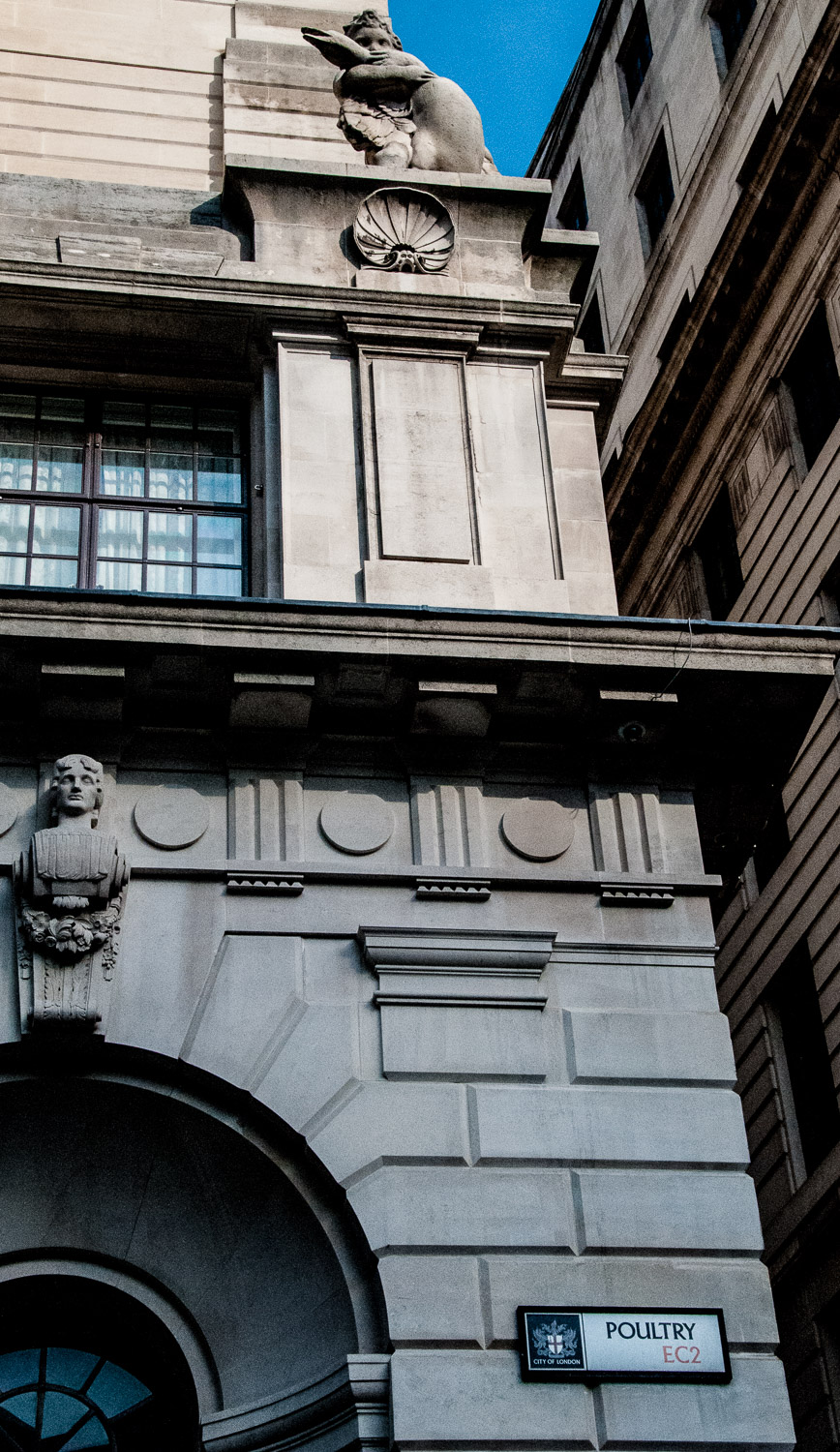
The name of the street is a clue

The Church of St Katherine Cree in Leadenhall Street, one of the few to almost totally survive the Great Fire and the Blitz, has a rooster on its weathervane.
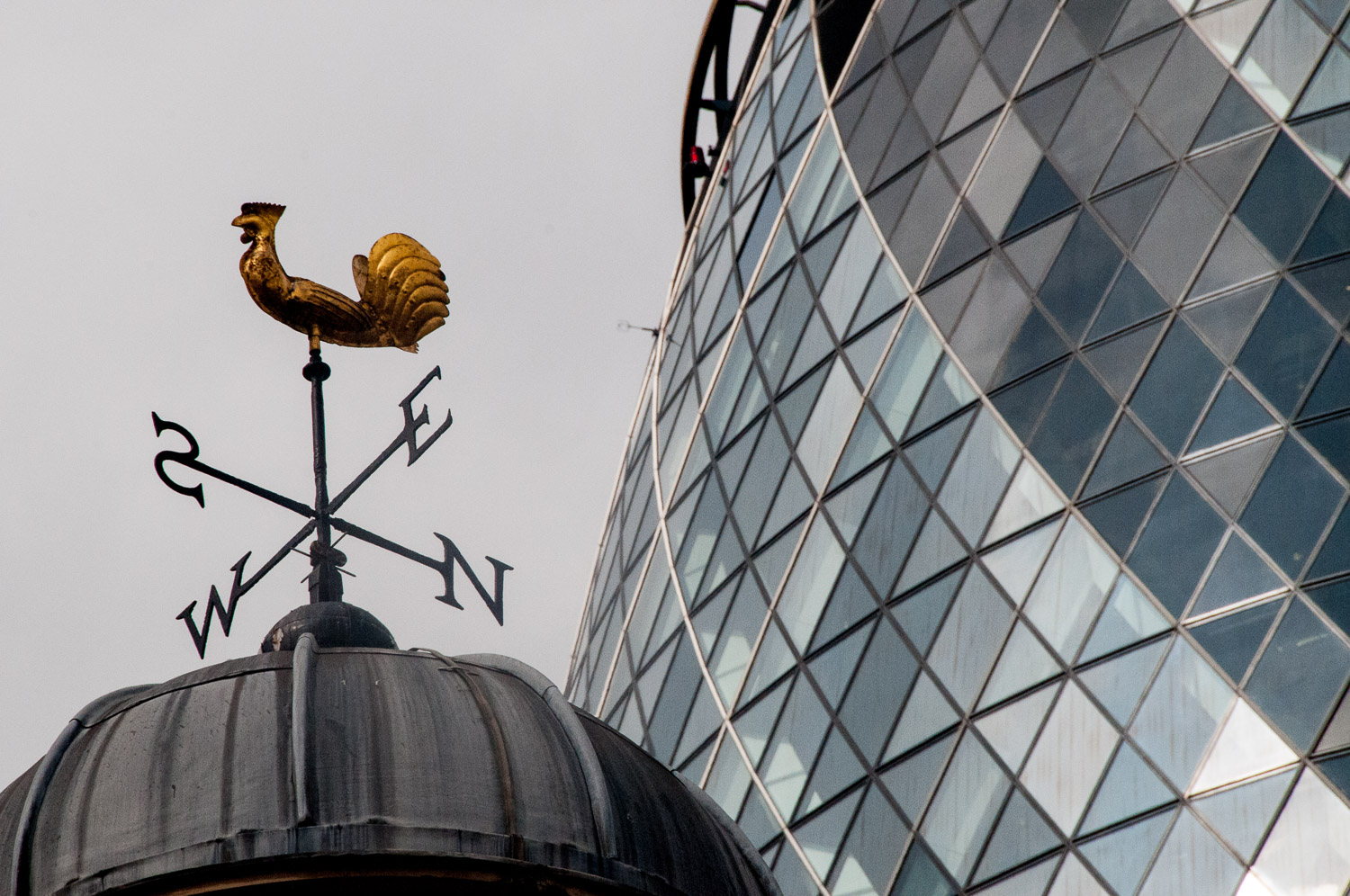
The St Katherine Cree weathercock with The Gherkin in the background

The Bible tells the story of St Peter denying Christ three times ‘before the cock crowed’. In the late 6th Century Pope Gregory I declared the rooster to be the emblem of St Peter and also of Christianity generally. Later, in the 9th Century, Pope Nicholas decreed that all churches should display it and, although the practice gradually faded away, the tradition of rooster weathervanes survived in may places.

The Agnus Dei, or Lamb of God, is the adopted emblem of the Middle Temple and can be seen in many places around the Inn.
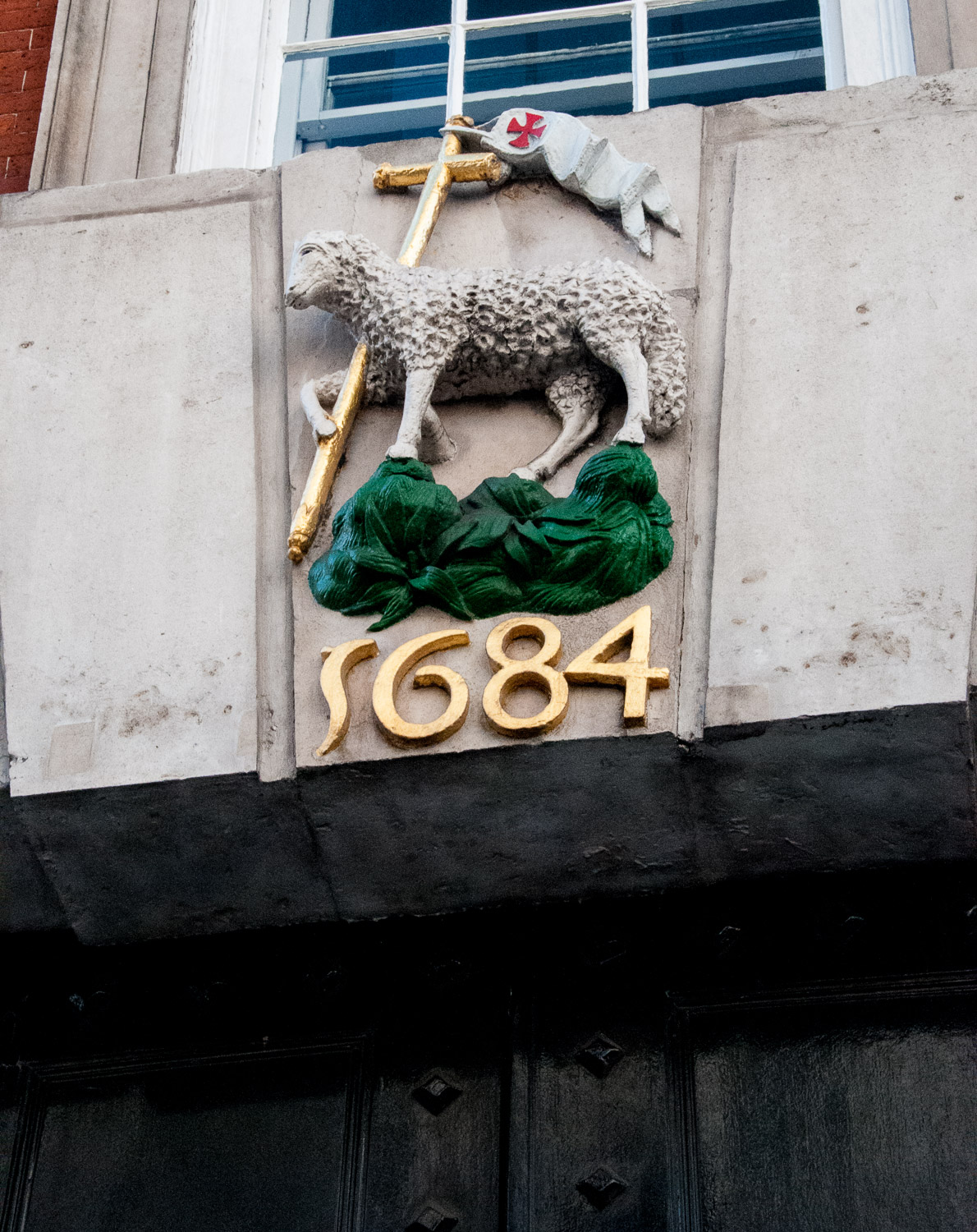
Lamb and Flag keystone, Fleet Street entrance to the Middle Temple (notwithstanding the date, the precision suggests it has been substantially recut over time)

There is a theory that the holy lamb was chosen as the emblem because it had originally been used by the Knights Templar whose arms were two knights mounted on one horse with a trotting Agnus Dei.
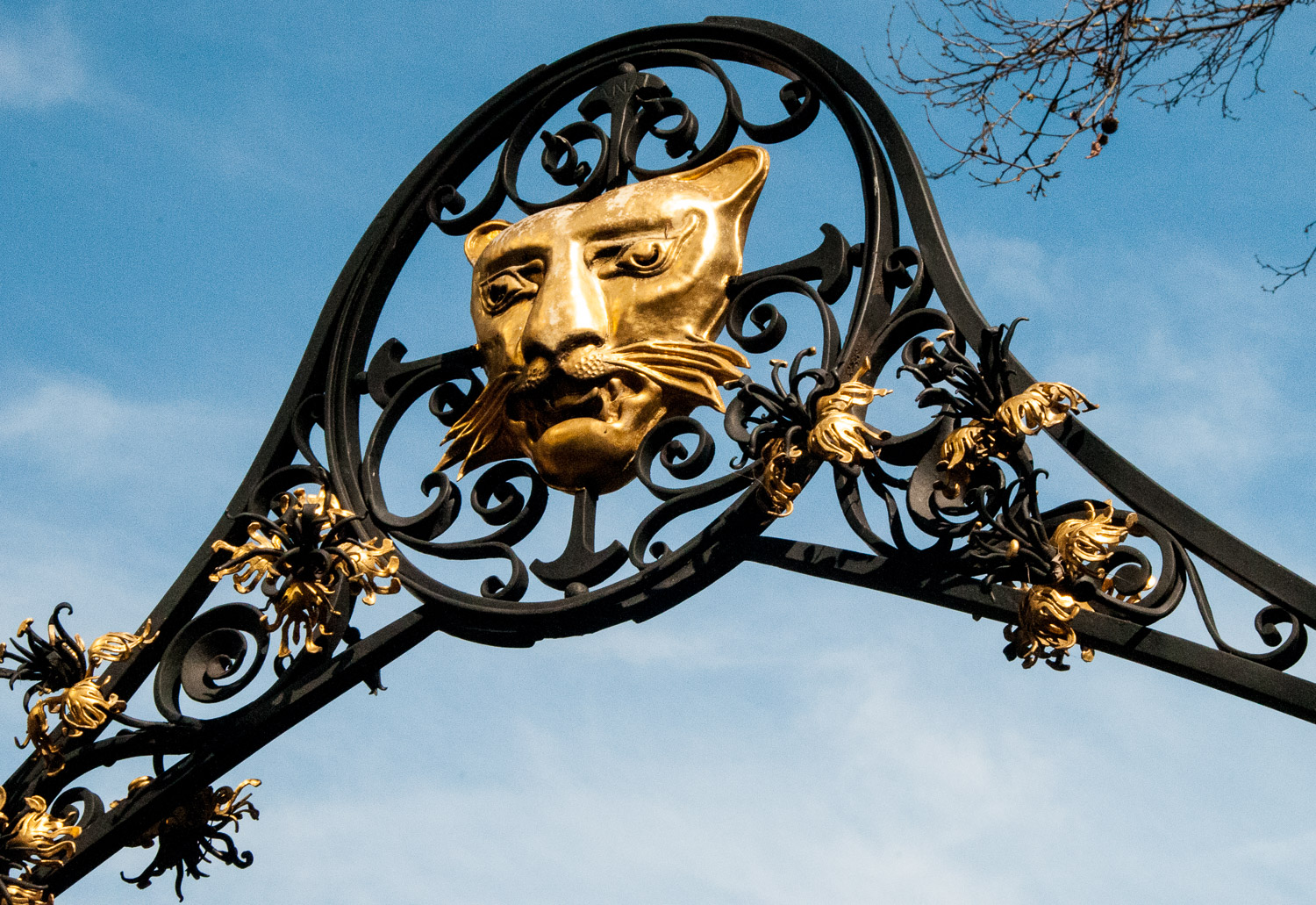
A Goldsmith’s Company symbolic leopard head over the entrance to the old churchyard of St John Zachary

The St John Zachary garden is on the site of the former churchyard and church of St John Zachary, which was partly destroyed in the Great Fire. In 1339 the Worshipful Company of Goldsmiths had acquired land here and built the earliest recorded livery hall on this site. The present multi-level garden includes mature trees, benches, lawn and a fountain.

A wise owl gazes at the commuters as they trek over London Bridge from his perch on the House of Fraser store opposite the north entrance to the bridge.
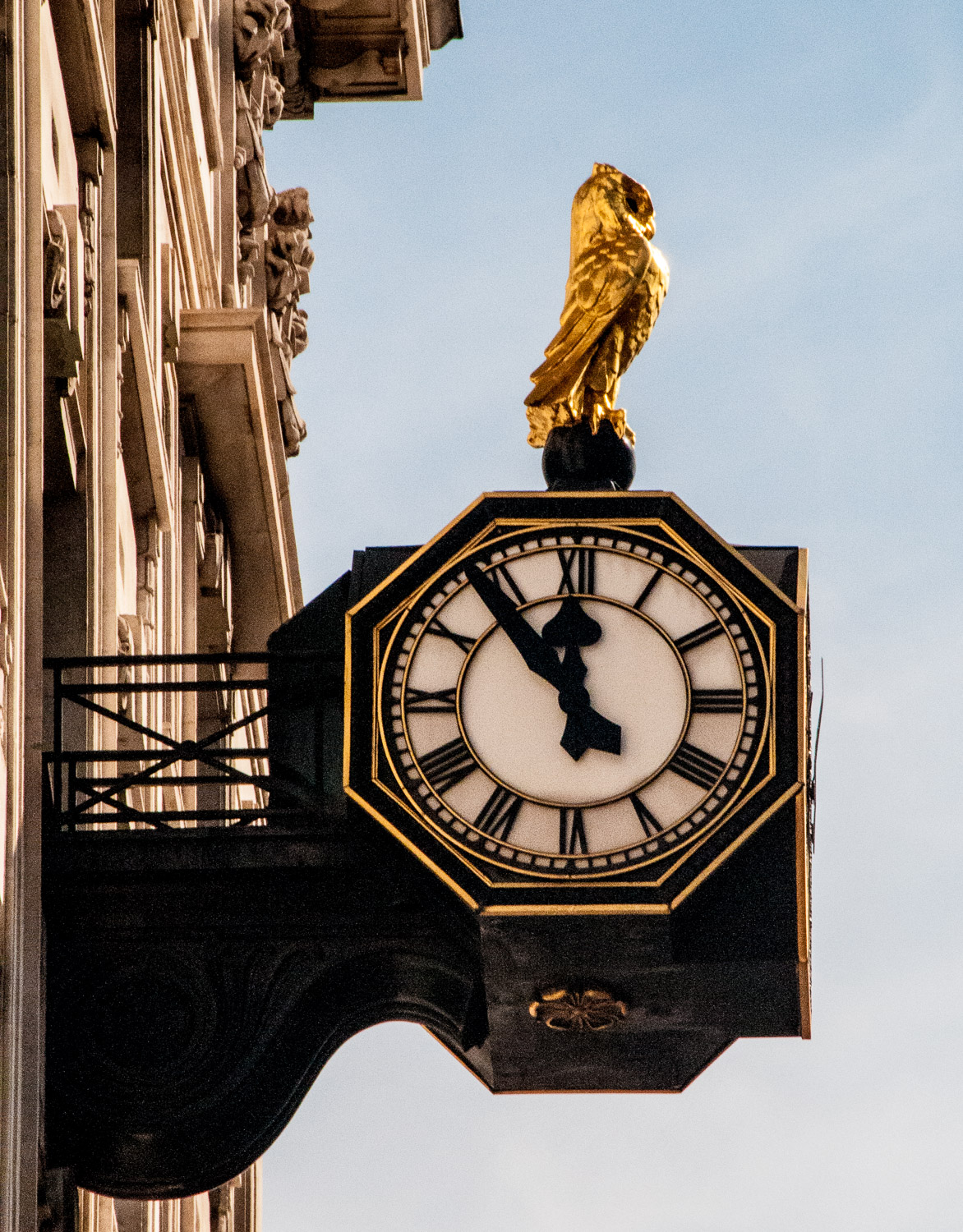
The building used to be the offices of the Guardian Royal Exchange Insurance Company

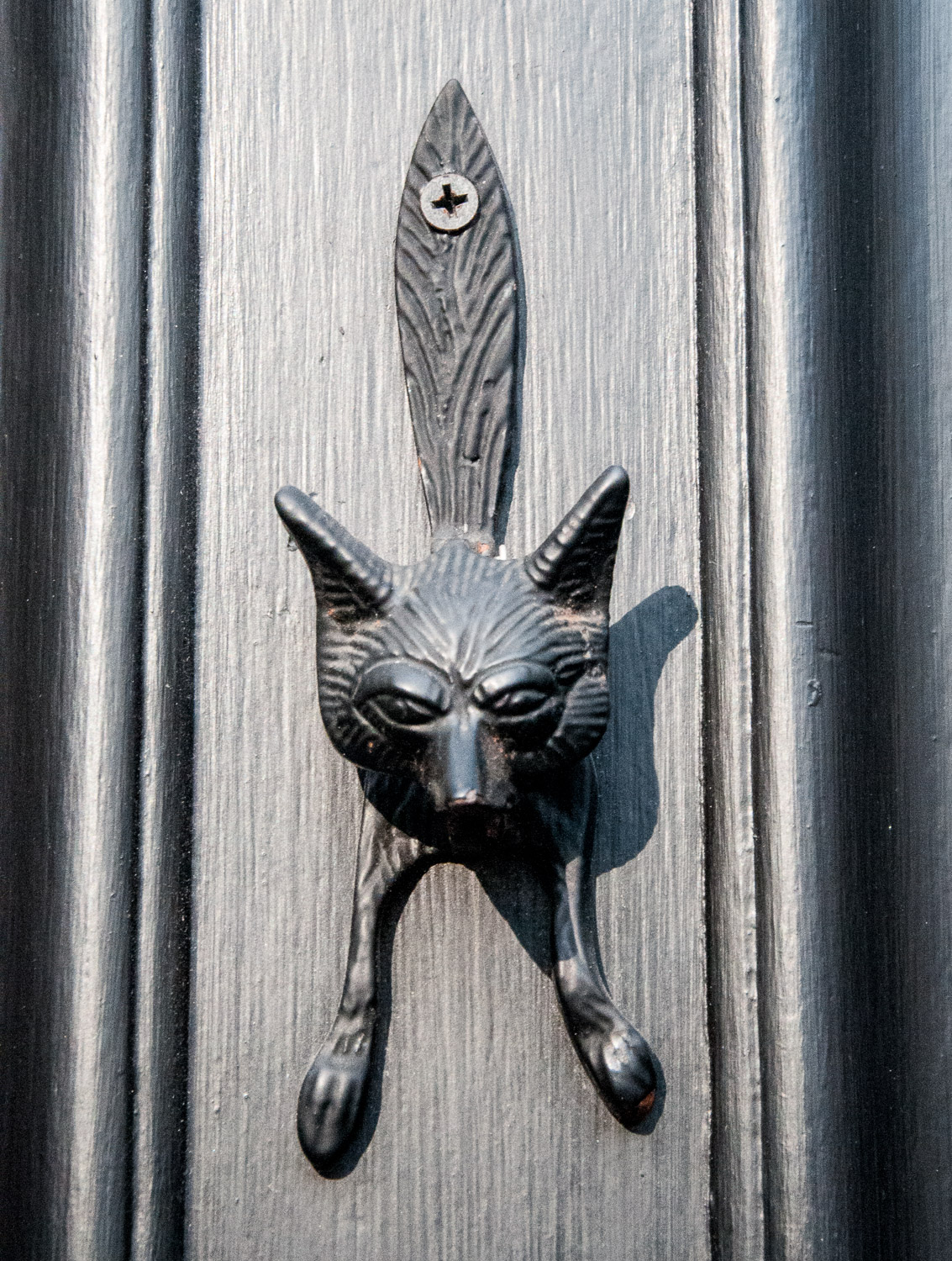
And finally, a wily fox decorates the door of the old Fox’s umbrella shop on London Wall.
 

City Angels (and a few devils)

Having had a lot of fun seeking out cherubs for an earlier blog I decided to go in search of angels.

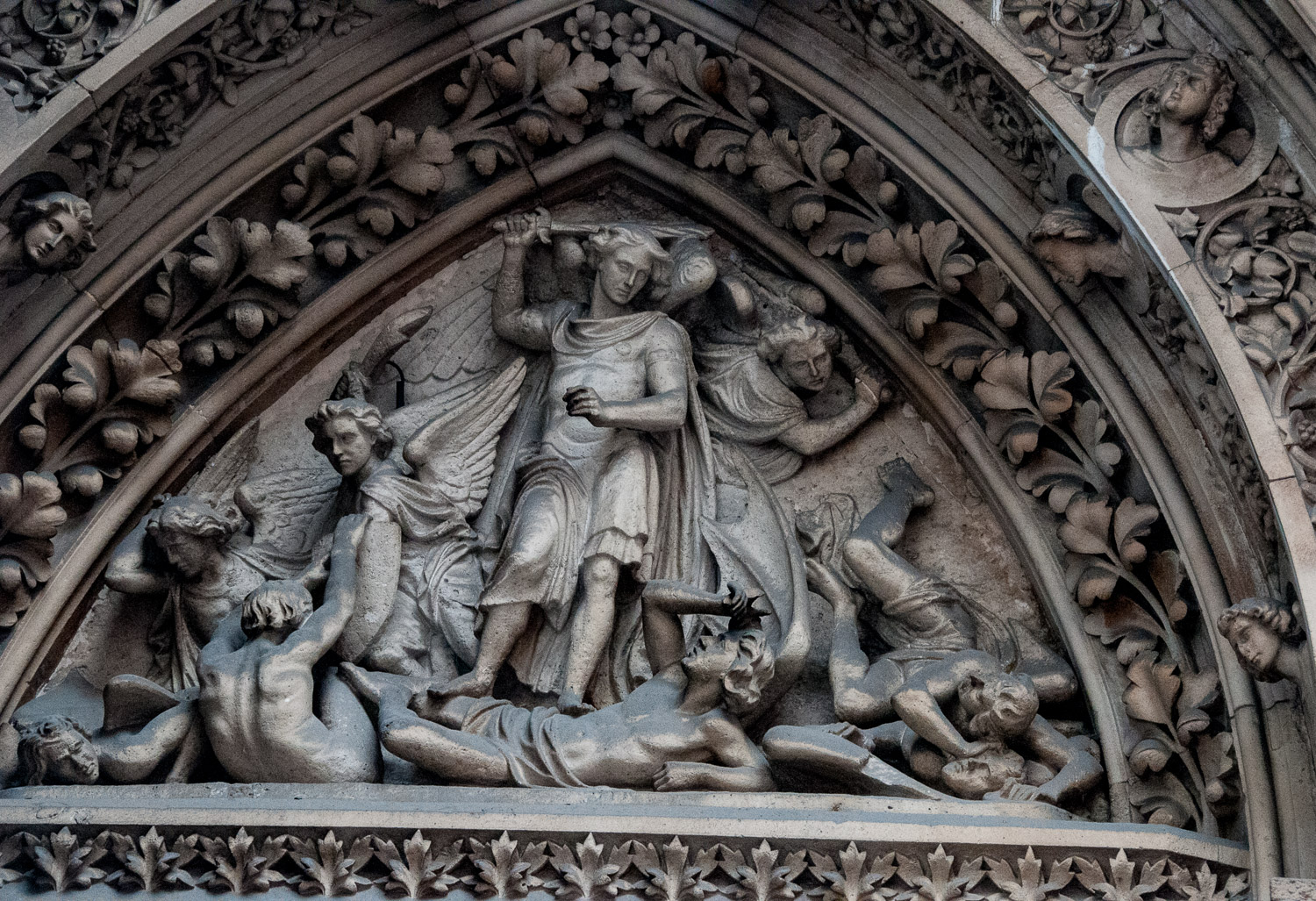
Above the door of St Michael Cornhill is the warrior Archangel Michael ‘disputing with Satan’. It was carved by John Birnie Philip when the church was remodelled in 1858-1860.

No question as to who is winning this battle

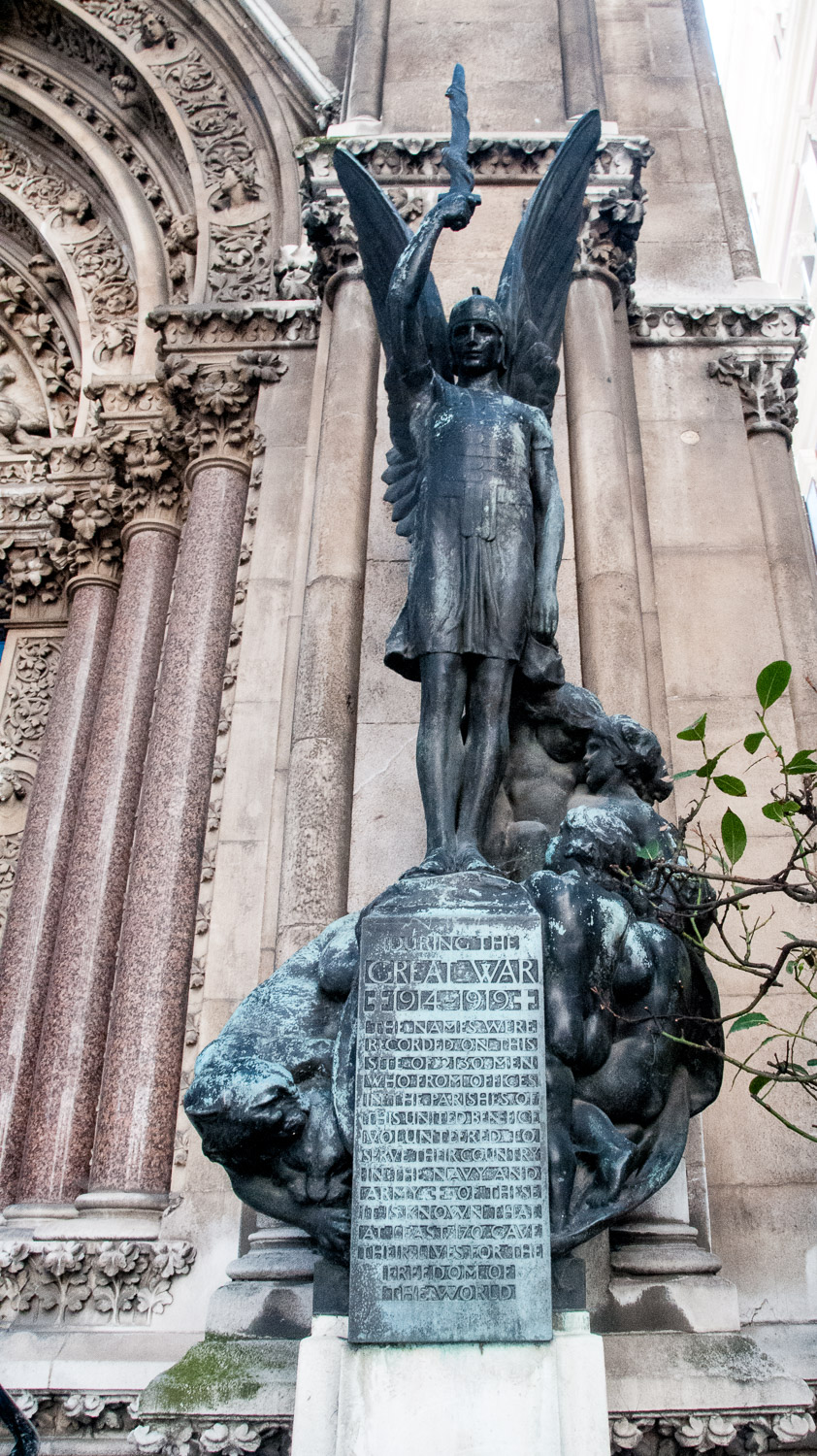
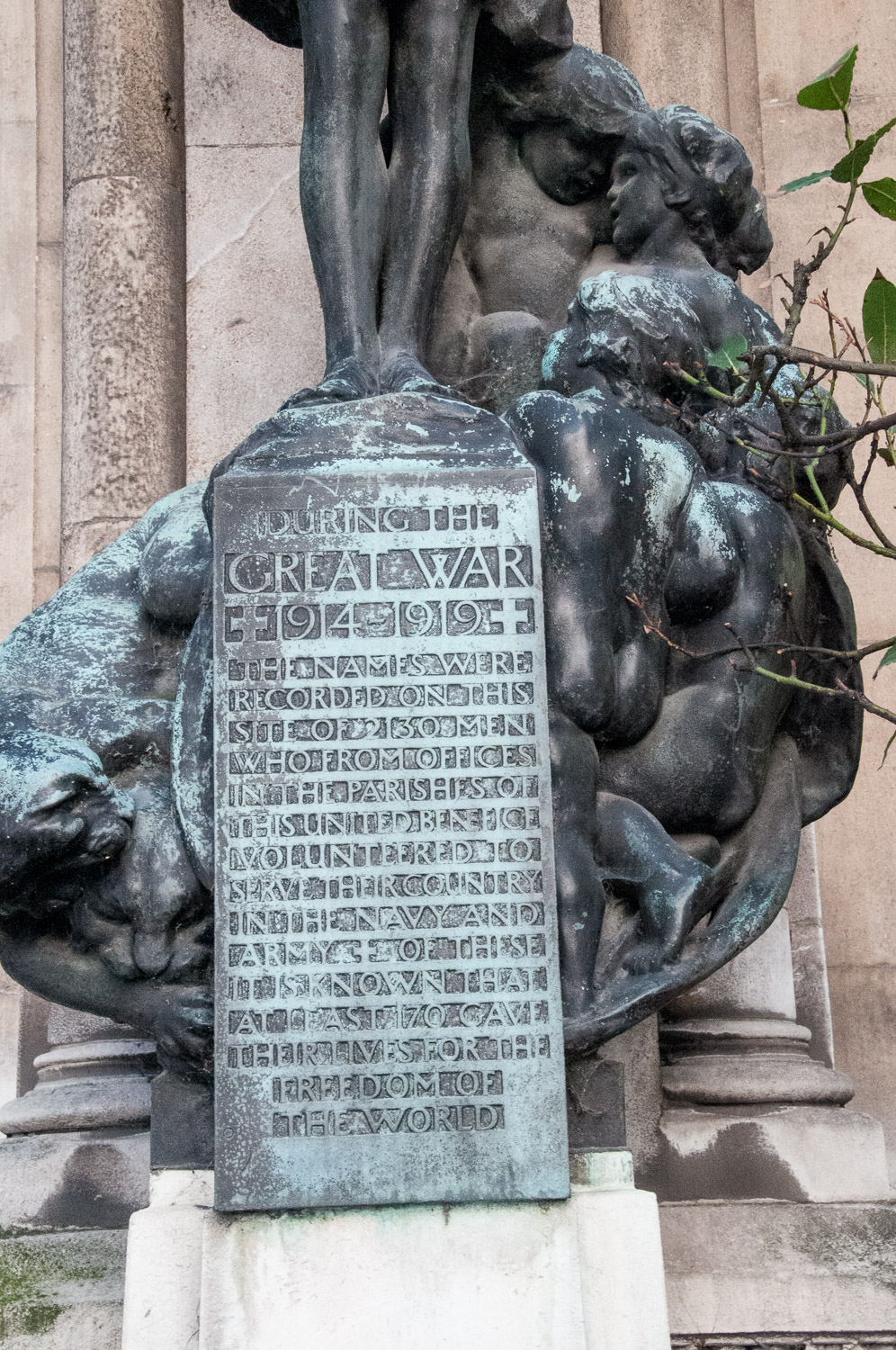
Outside the church is another sculpture of Michael brandishing a flaming sword. It is a bronze memorial to the 170 out of the 2,130 men of this parish who enrolled for military service in the First World War and died as a result.


A close-up of the inscription

The sculpture (by R R Goulden) was described in the Builder magazine as follows

St Michael with the flaming sword stands steadfast above the quarreling beasts which typify war, and are sliding slowly, but surely, from their previous paramount position. Life, in the shape of young children, rises with increasing confidence under the protection of the champion of right.


Do go into the church, it’s a serene place to visit with very attractive pews and stained glass.

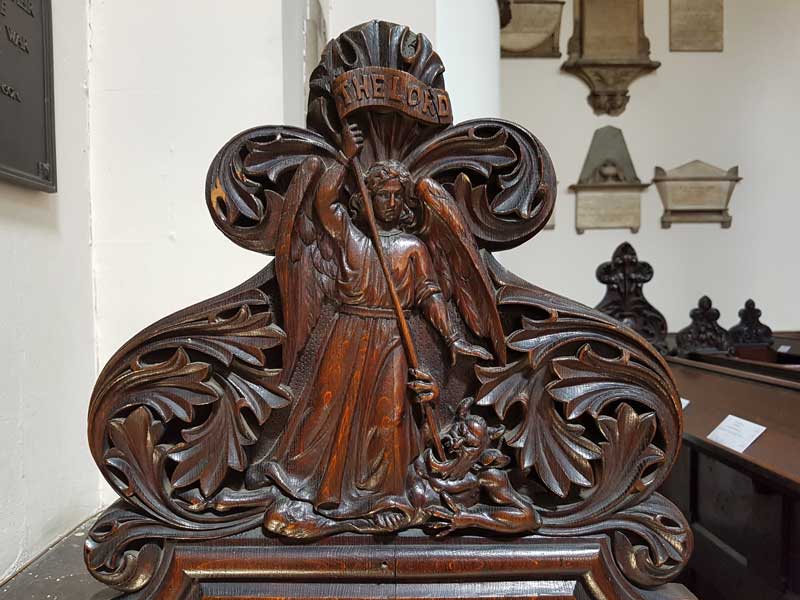
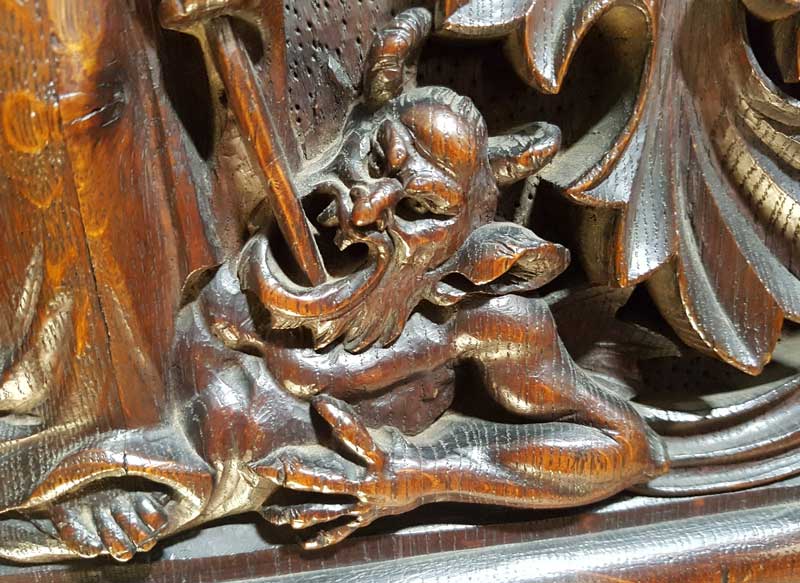
Of particular note on the left is the Churchwarden’s pew which shows St Michael thrusting a lance into the mouth of a truly evil-looking devil. It’s a work by the eminent wood carver William Gibbs Rogers (1792-1875).

The carving on the church wardens pew showing St Michael driving a spear into the devil’s mouth..


A close-up of the devil’s face on the churchwarden’s pew.

When you come out of the church turn right and you will find that Cornhill is seriously infested with devils.

It’s a blogger’s dilemma when one encounters what seems to be an apocryphal explanation for something one is researching. I have taken the decision that it’s OK to publish if, firstly, I make the nature of the story clear and, secondly, if it could just about be true, and thirdly if it’s a great story!

What follows seems to me to meet all the criteria.

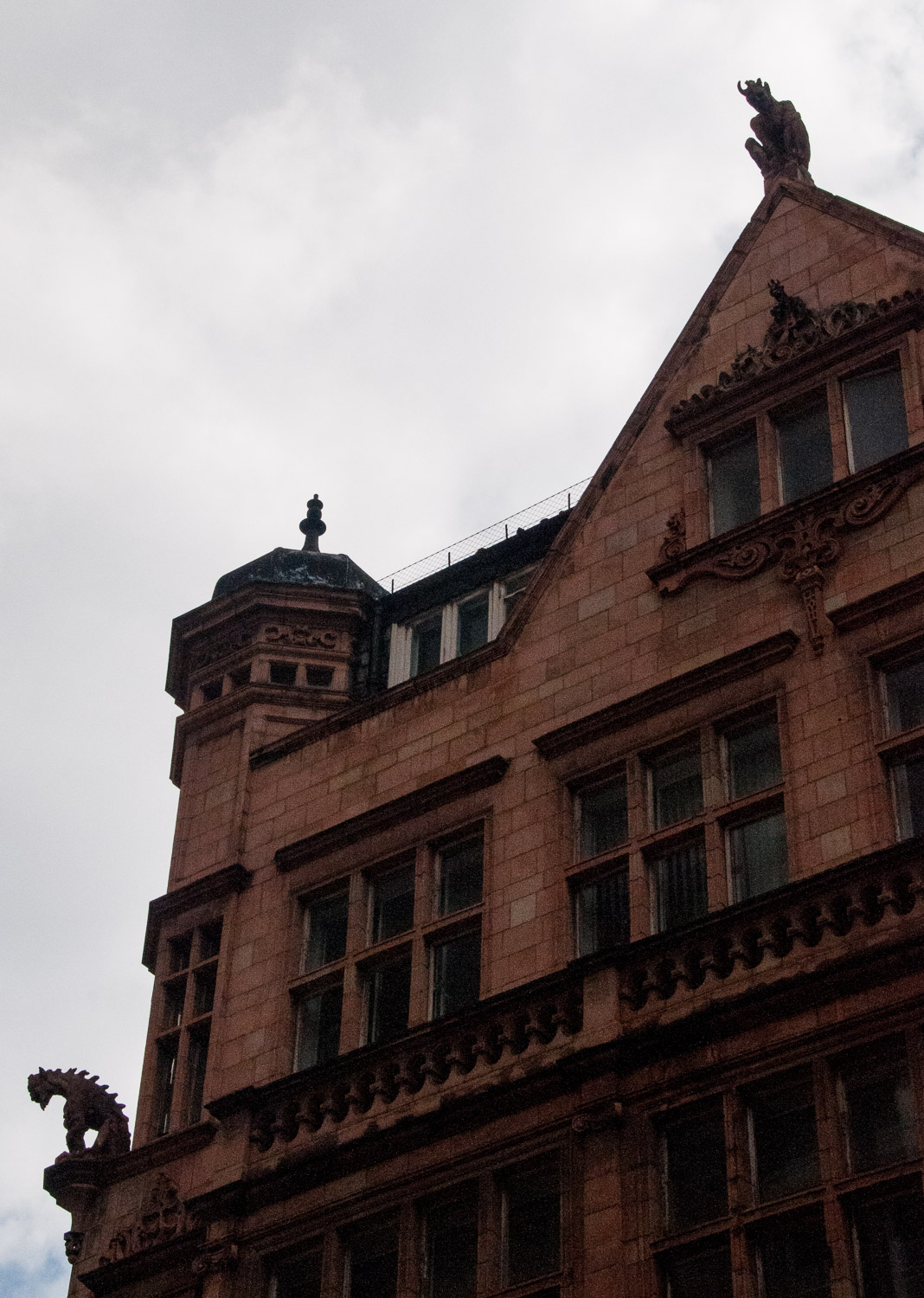
As I walked along Cornhill one day I glanced up and saw these rather sinister figures silhouetted against the sky…

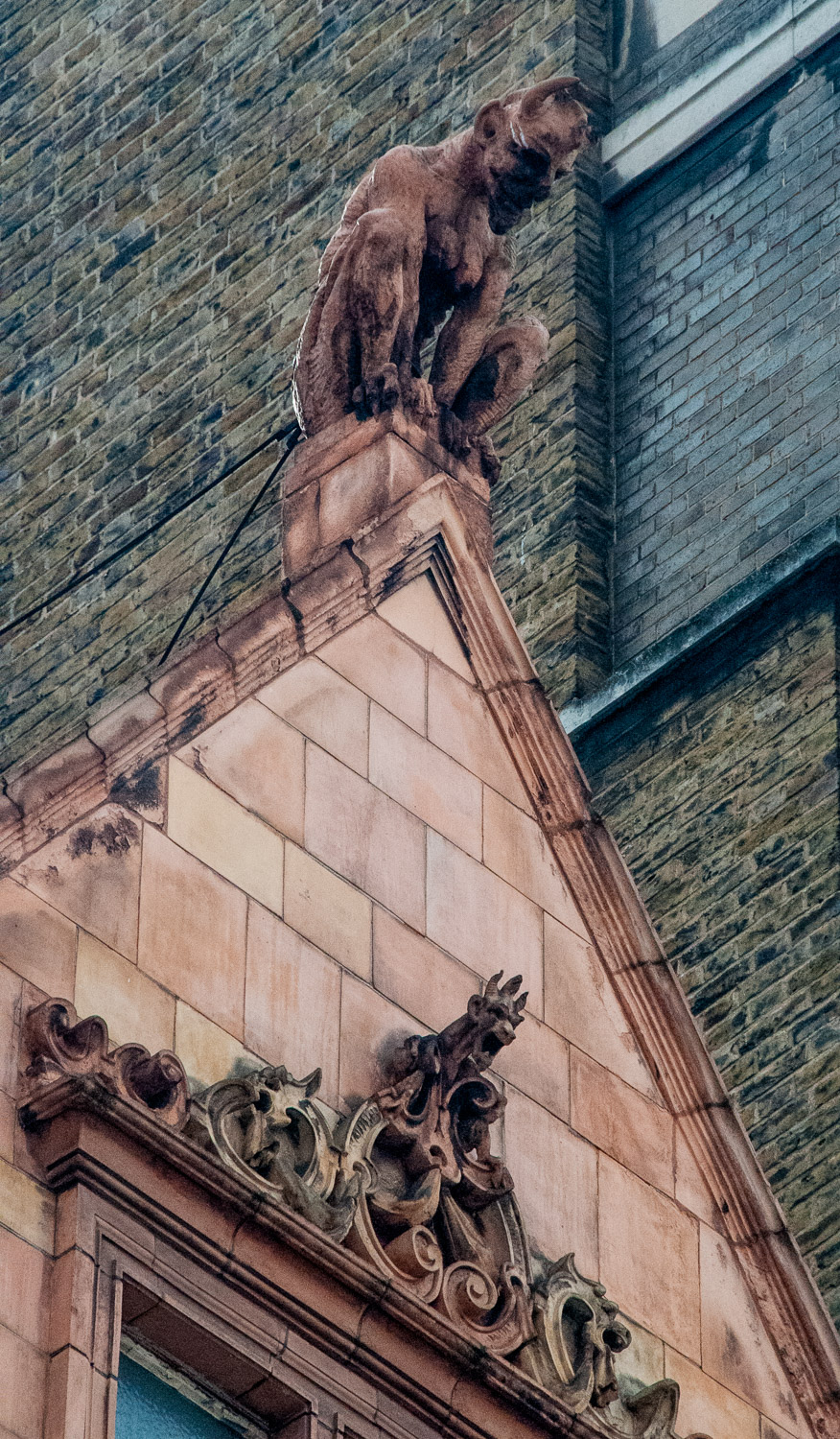
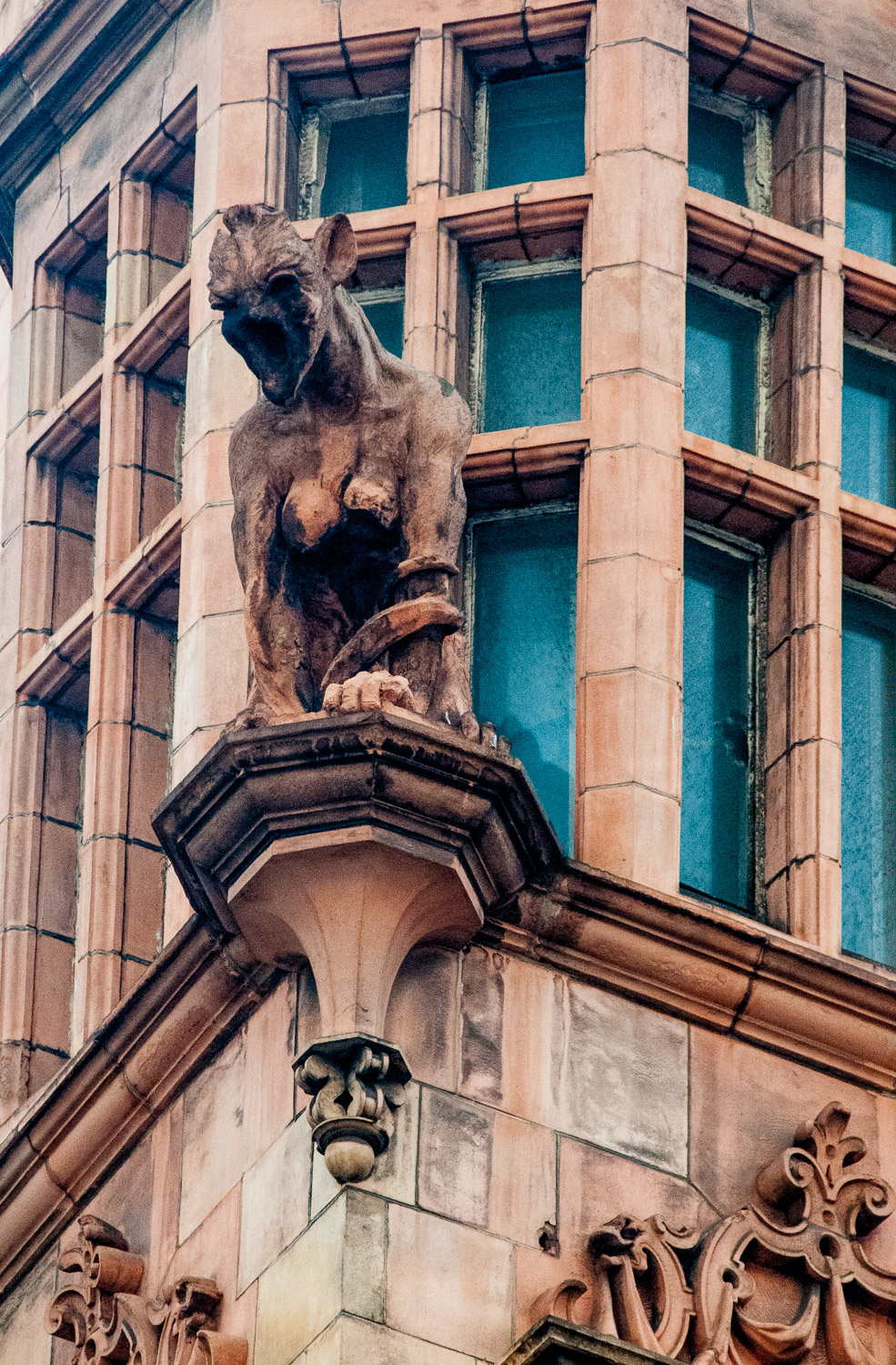
Closer inspection shows them to be devils, and rather angry and malevolent ones too …

They look down on St Peter upon Cornhill and are known as the Cornhill Devils. The story goes that, when plans were submitted for the late Victorian building next to the church, the rector noticed that they impinged slightly on church land and lodged a strong objection. Everything had to literally go back to the drawing board at great inconvenience and expense. The terracotta devils looking down on the entrance to the church are said to be the architect’s revenge with the lowest devil bearing some resemblance to the cleric himself.

If this resembles the rector he must have been a pretty ugly guy!

Onward now towards the Tower of London via Hart Street.

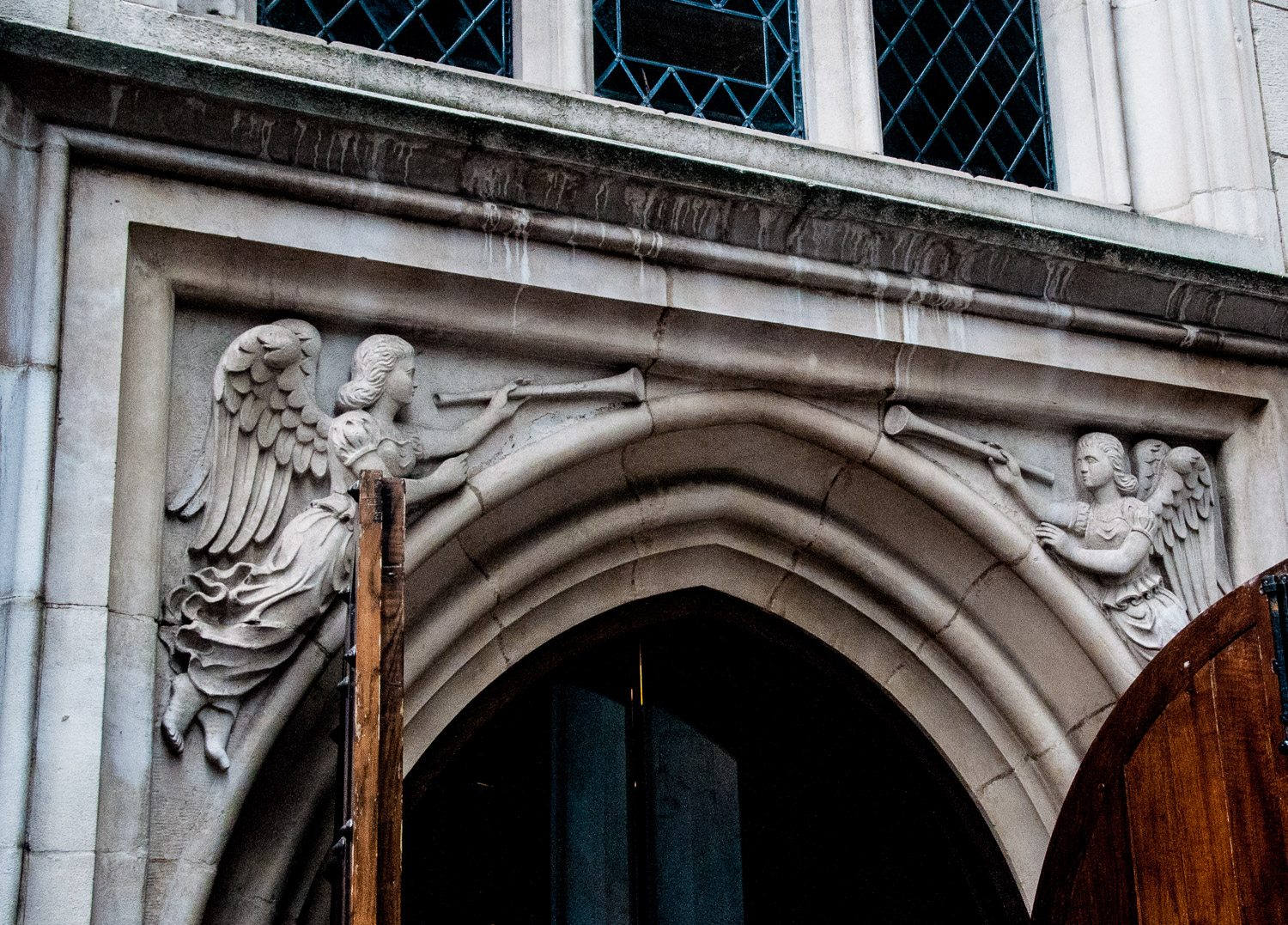
Two trumpeting spandrel angels face one another over the doors of St Olave, Hart Street.

North door, St Olave

You can read more about this historic church in my earlier blog Samuel Pepys and his ‘own church’.

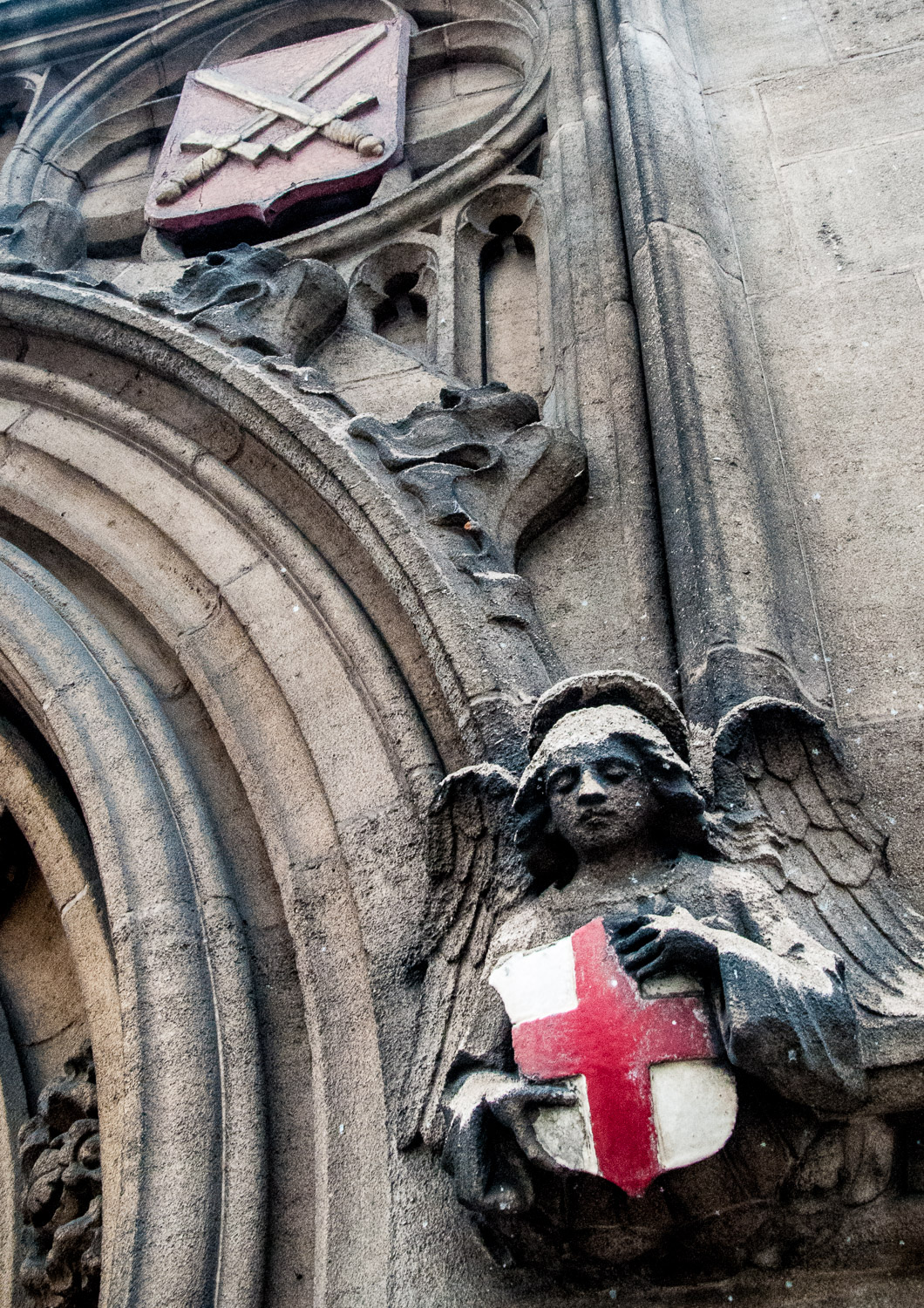
This angel by the door of All Hallows by the Tower holds a shield bearing the cross of St Andrew. Above is the crossed sword emblem of the Diocese of London.

All Hallows by the Tower, north door

Fleet street is always great to visit given the vast range of subjects to explore.

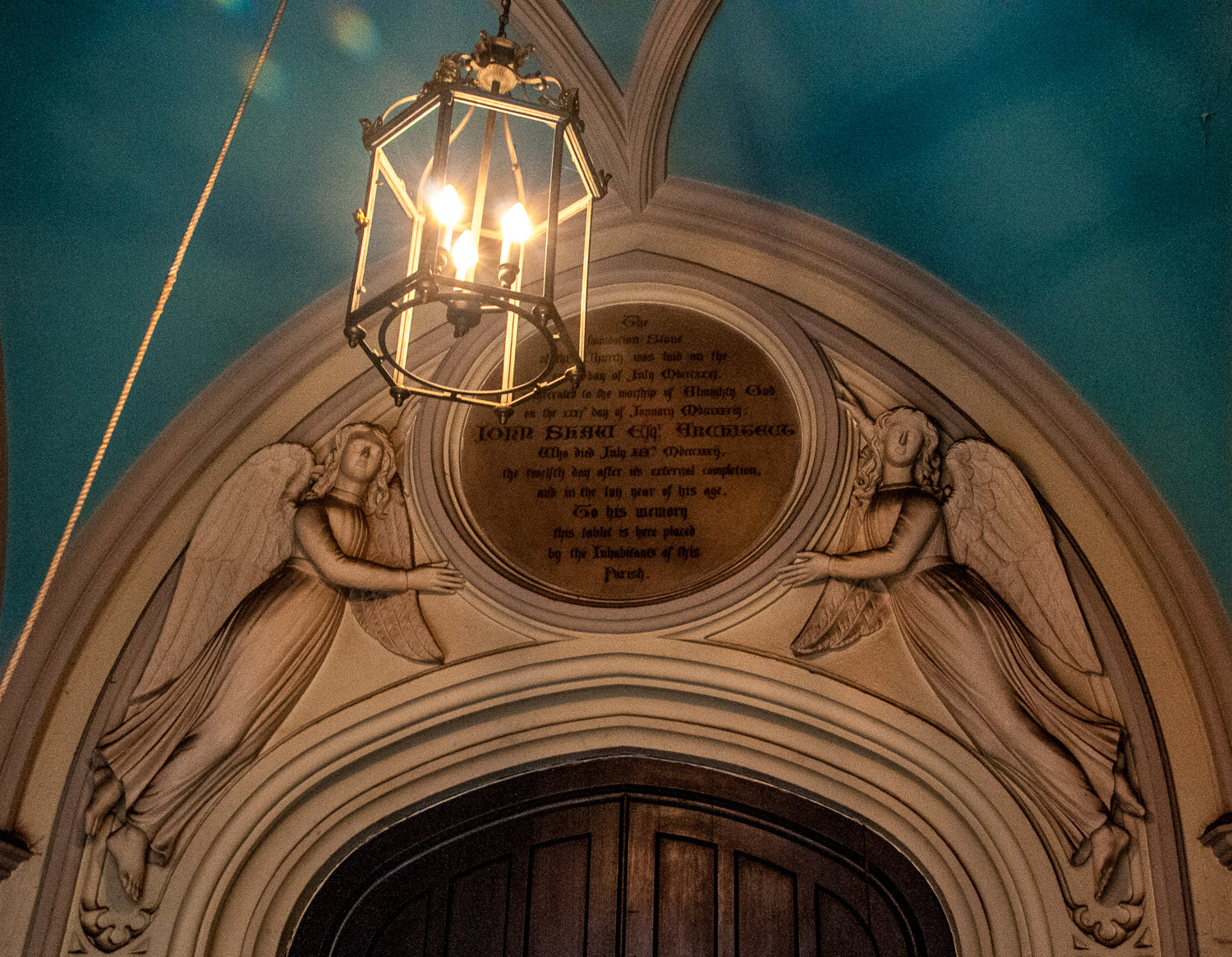
Inside the door of St Dunstan in the West, Fleet Street…

Angels holding a commemorative plaque to the original architect (1830-1832) John Shaw. On his death the work was continued by his son, also John

The plaque reads:

The foundation stone of this Church was laid on the 27th day of July 1831 and consecrated to the worship of Almighty God on the 31st day of January 1833: John Shaw, Architect who died July 30th 1832, the 12th day after its external completion, and in the 57th year of his age. To his memory this tablet is here placed by the Inhabitants of this Parish.

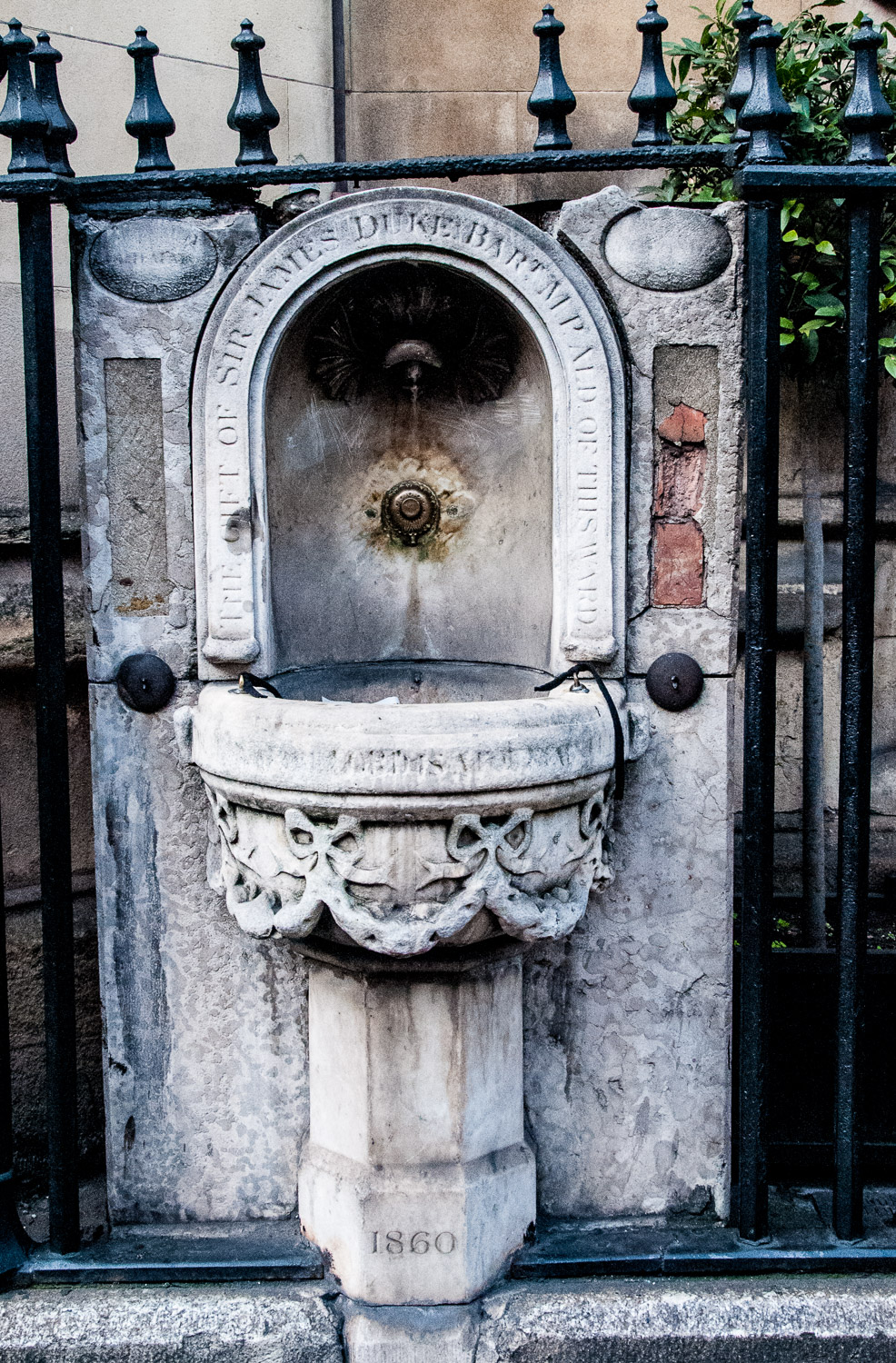
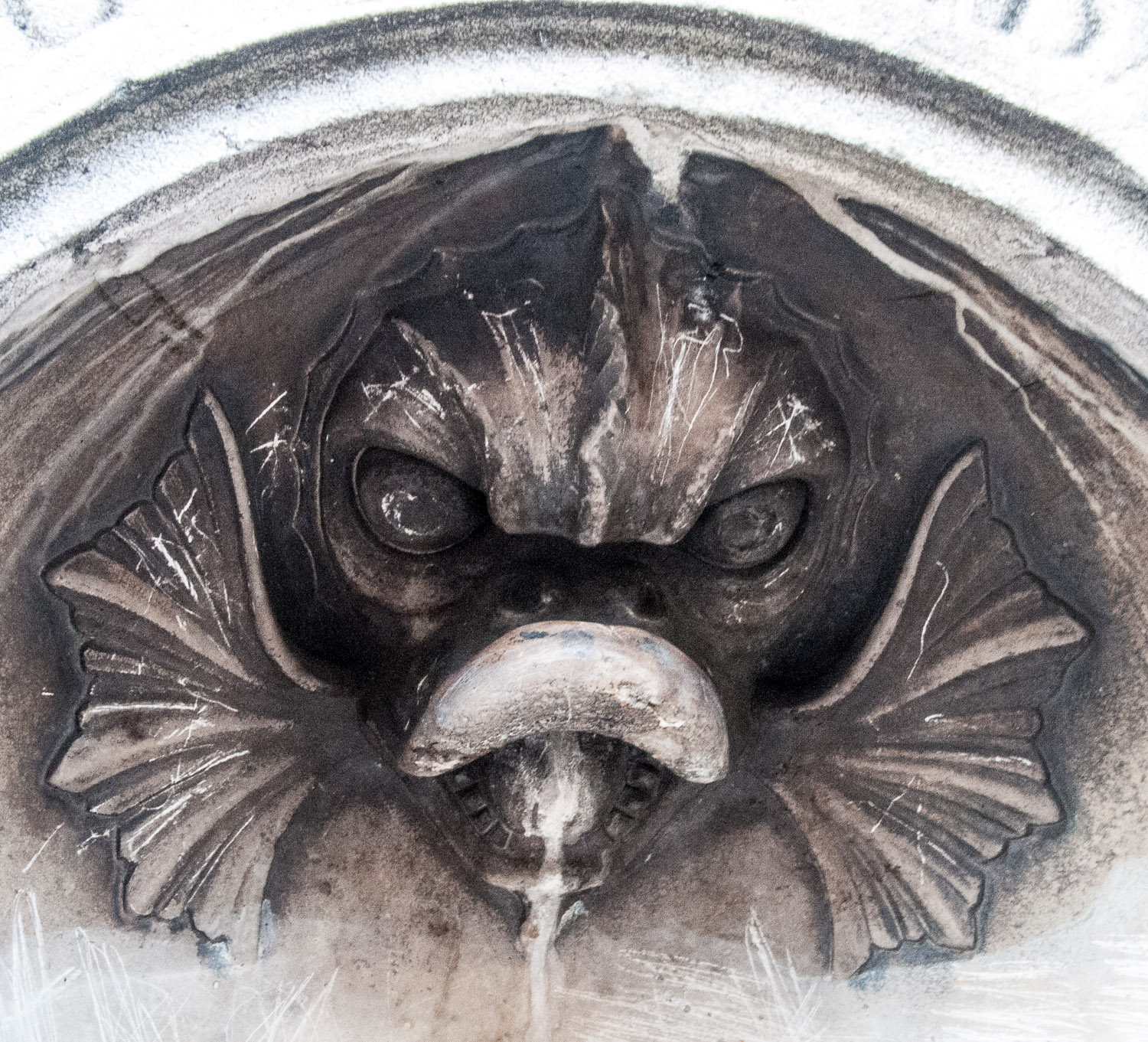
Ever since one of my earliest blogs, Philanthropic Fountains, I have a bit of  a ‘thing’ about drinking fountains so I shall digress from angels momentarily.

Just outside St Dunstan’s is this pretty but sadly timeworn fountain designed by John Shaw junior. The inscription is really hard to read but I believe it says …

The gift of Sir James Duke Bart MP ald. of this ward

The fear of the Lord is the fountain of life

Elected Lord Mayor 1848

MP London 1849

Fountain detail

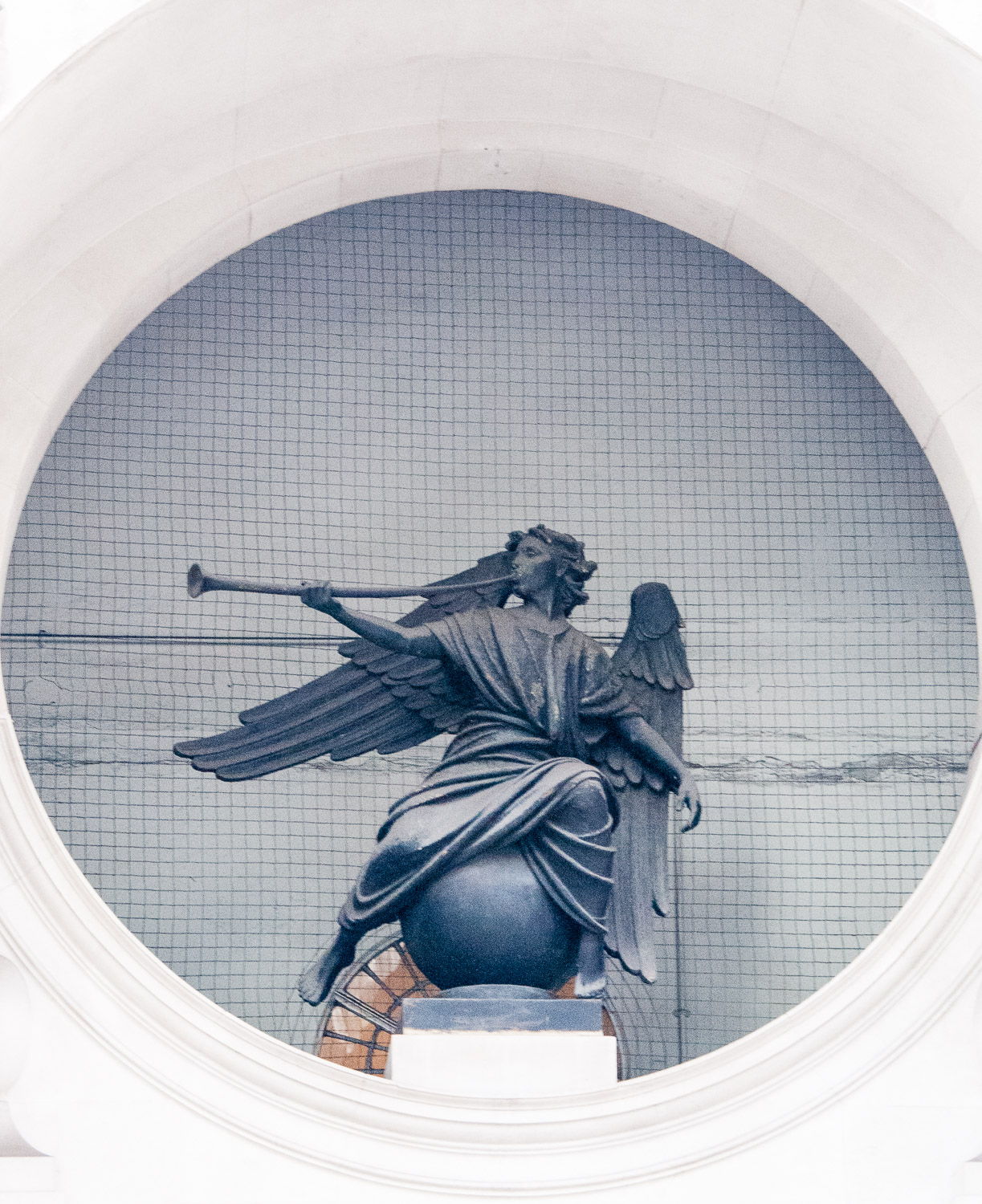
An Art Deco trumpeting angel called The Herald graces 85 Fleet Street. The sculpture is by William Reid Dick and was unveiled by Sir Edwin Lutyens himself on 10 July 1939. The Times stated that The Herald was

Sending forth through her trumpet the news gathered from all corners of the Earth …

The Herald

And finally to St Bartholomew the Great via St Paul’s Cathedral.

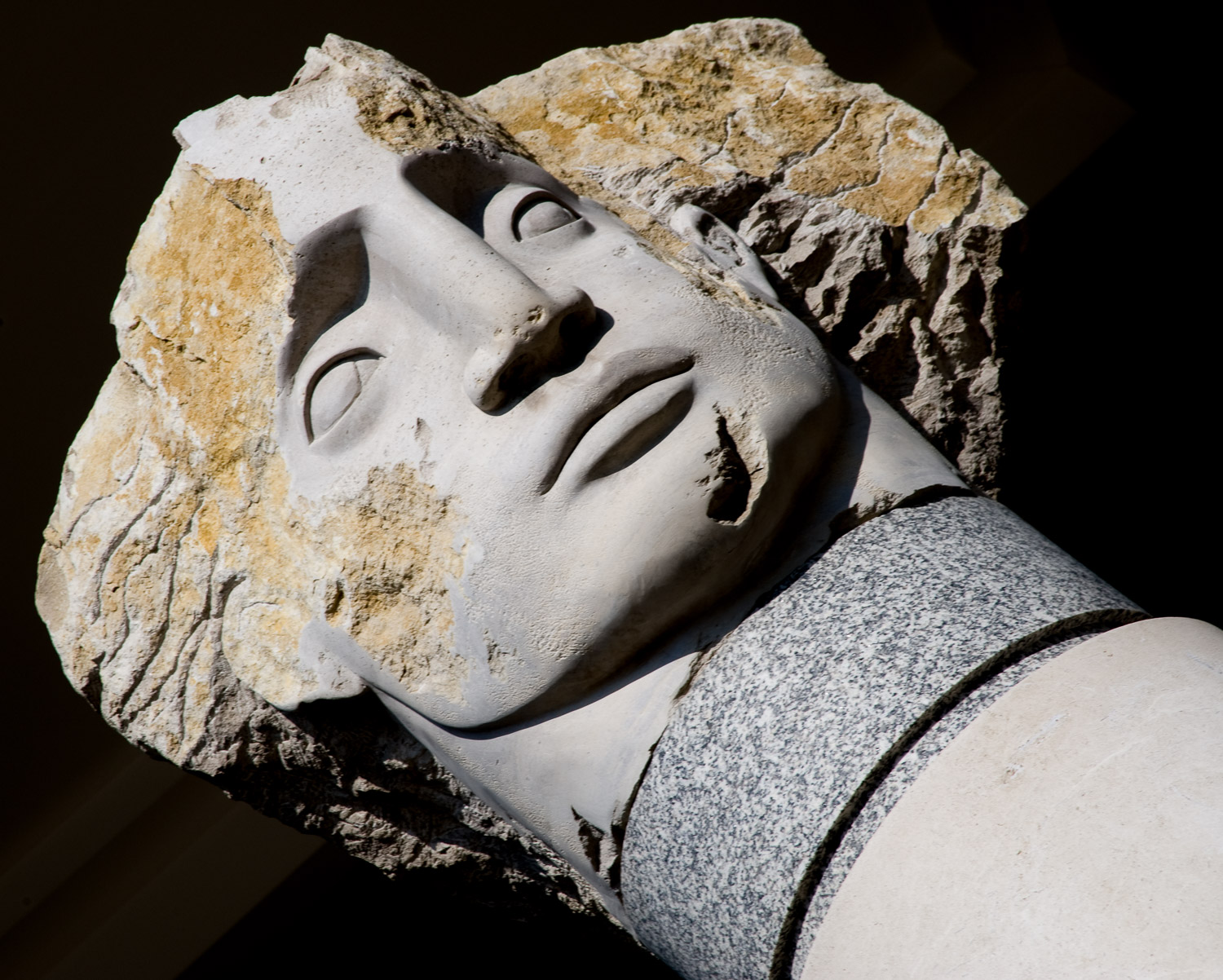
Emily Young FRBS is one of the country’s foremost stone sculptors and you can enjoy her work in the form of Angels I to V in the courtyard beside St Paul’s Cathedral. I never tire of looking at them.


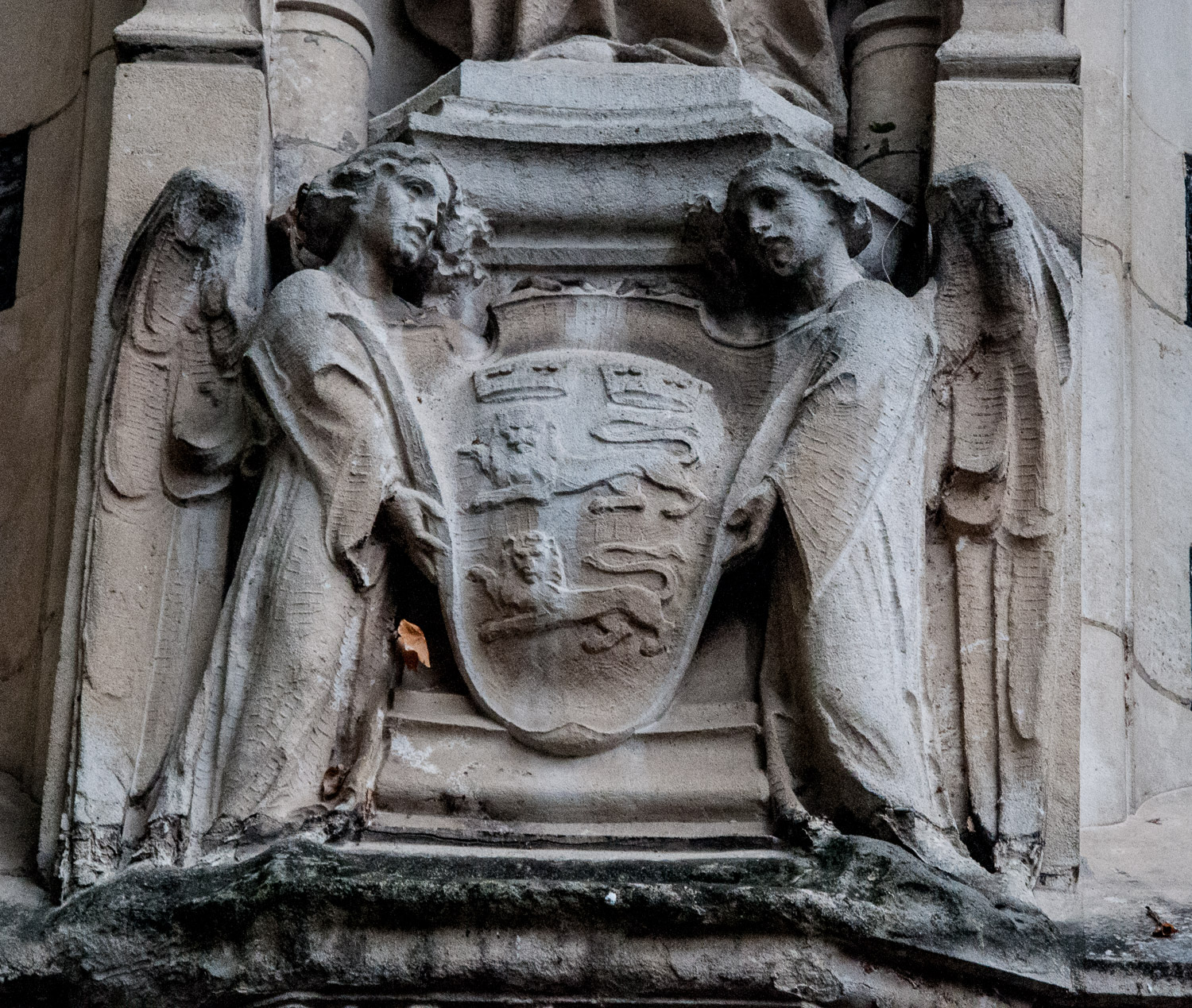
And finally some more classical angels at the church of St Bartholomew the Great …

They support the coat of arms of the founding patron King Henry I (reigned 1100-1135)


The Medieval City Monasteries

It is difficult to grasp nowadays just how much Medieval London was dominated by the Church, but its traces are still very evident today in, for example, the names of streets and surviving districts. Before the Dissolution more than thirty monasteries, convents, priories and hospitals squeezed into the City’s ‘square mile’ or huddled outside against the still-surviving Roman wall. Today I am going to write about two of them, the Dominicans and the Carmelites. I will write about the Franciscans and the Augustines in a subsequent blog.

The friars tended to be teaching orders, and accordingly their churches were built to accommodate a large congregation in a fashion that meant the preacher could be seen and heard by everyone. The buildings and land they owned became extensive and were obviously an incredibly valuable acquisition for Henry VIII when their Dissolution started in 1536 under the diligent management of Thomas Cromwell.

St Dominic 1170-1221

Dominican friars had arrived in England in 1221 and became known as the Black Friars on account of the colour of their robes. They found great favour and patronage under Edward I and construction of their London monastery was completed in 1276. It was here that this king deposited the heart of his beloved queen Eleanor, although her body was placed in Westminster Abbey

So prestigious and important was the monastery that it was chosen as the location for various parliaments and privy councils. Ironically, however, given what was to happen later, it was also the venue of the divorce hearing between Henry and his queen Catharine of Aragon. As you walk around the area now known as Blackfriars imagine the scene on 21 June 1529 when Henry and his first wife Catharine appeared before Cardinal Wolsey and the papal legate Cardinal Campeggio, who were there to hear testimonies as to the validity of the King’s marriage.

Henry and Catharine – together again at the National Portrait Gallery in 2013. Henry is in his 30s before he became grossly overweight.

Henry, already infatuated with Anne Boleyn and desperate for a male heir, was hoping for annulment on the ground that Catharine was his brother’s widow and that the subsequent marriage to Henry was against biblical teaching. But things did not go according to plan. An incredibly eloquent speech by Catherine brought enormous sympathy from onlookers who had already cheered her entrance (you can read her speech online, it is still very moving). Henry was defeated and the subsequent refusal of an annulment by Pope Clement VII would set the King on the road to the dissolution of the monasteries, priories and convents and the appropriation of their income and lands.

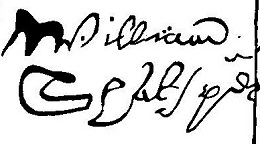
Shakespeare’s signature on the deed of sale of a house in Blackfriars, London (1613)

After the priory was dissolved in 1538, the hall where the hearing was held served as the Blackfriars Theatre, hence the present name of Playhouse Yard. Shakespeare’s plays were performed here, and the dramatist himself had property close by in Ireland Yard. There is a deed of conveyance dated 1613, bearing one of the few extant Shakespeare autographs (see below), and the quirky Cockpit Pub claims it stands on the property’s site.


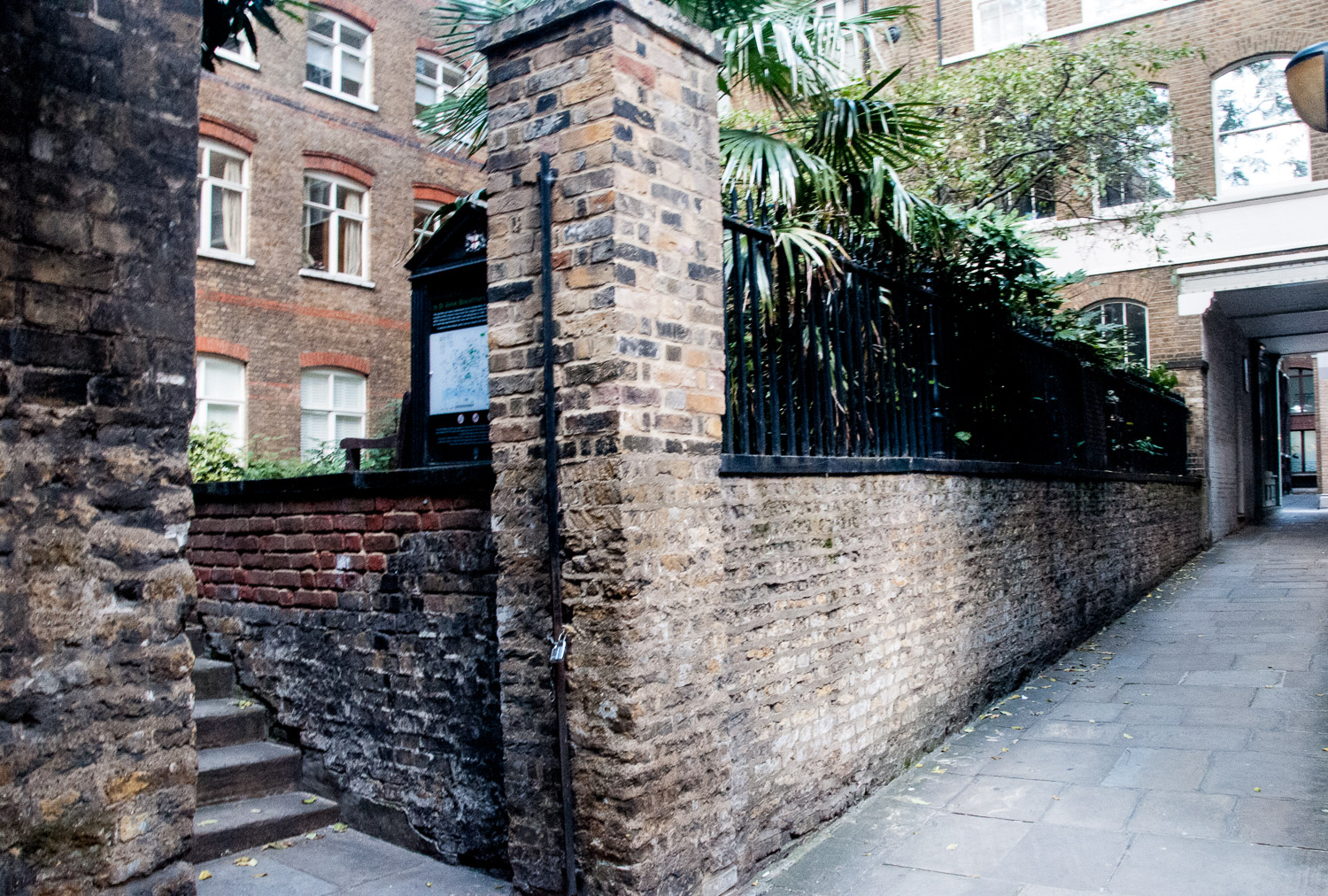
Remains in the former churchyard of St Anne Blackfriars, Ireland Yard

It’s rather sad, isn’t it, that these few bits of stone tucked away in an old churchyard are seemingly all that remain of the great Blackfriars monastery.

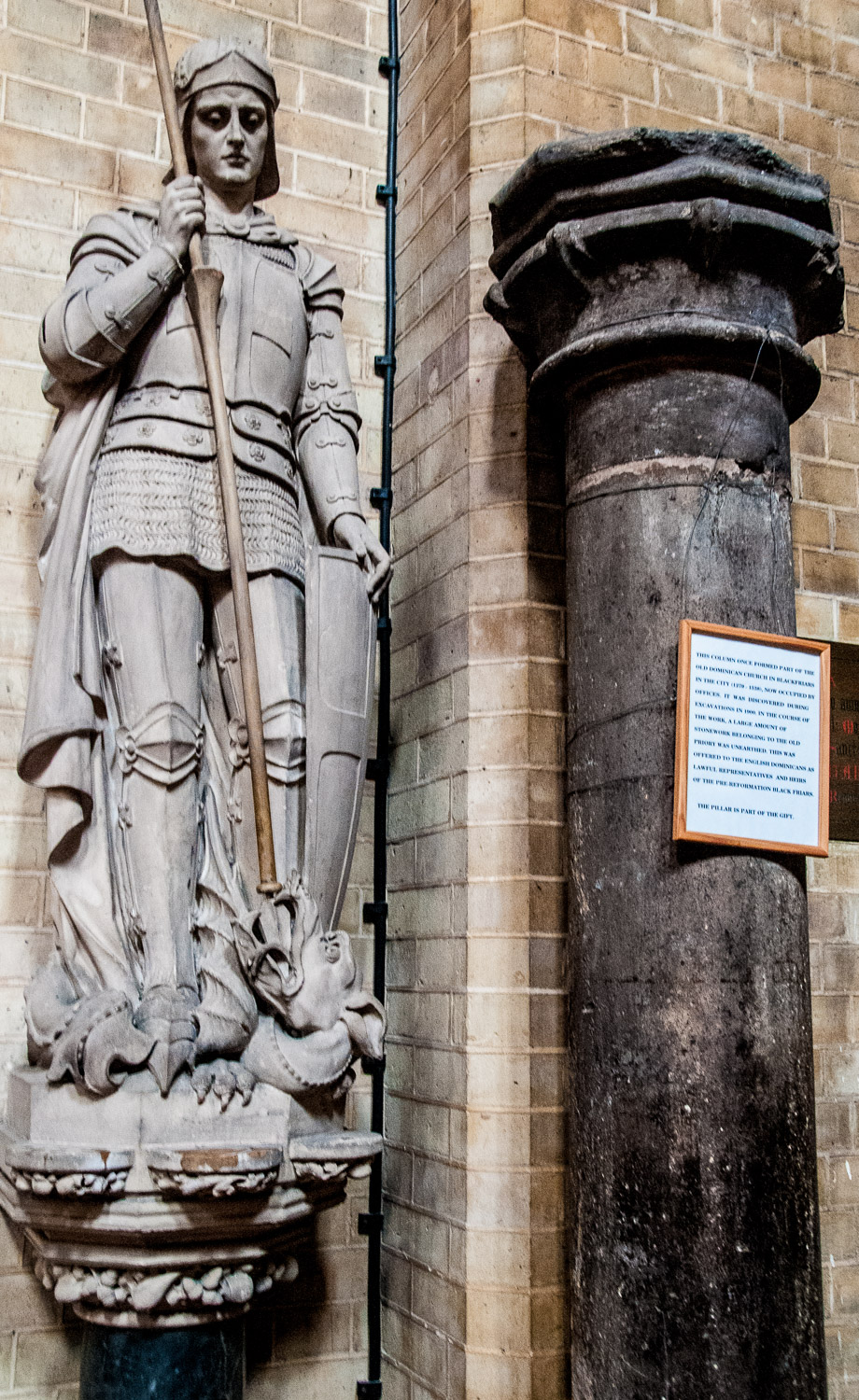
However, if you feel bold enough to venture out of the City, do visit St Dominic’s Priory Church in Belsize Park, one of the largest Catholic churches in England. Tucked away in the north west corner of the nave you will find this pillar next to a representation of George and the Dragon …

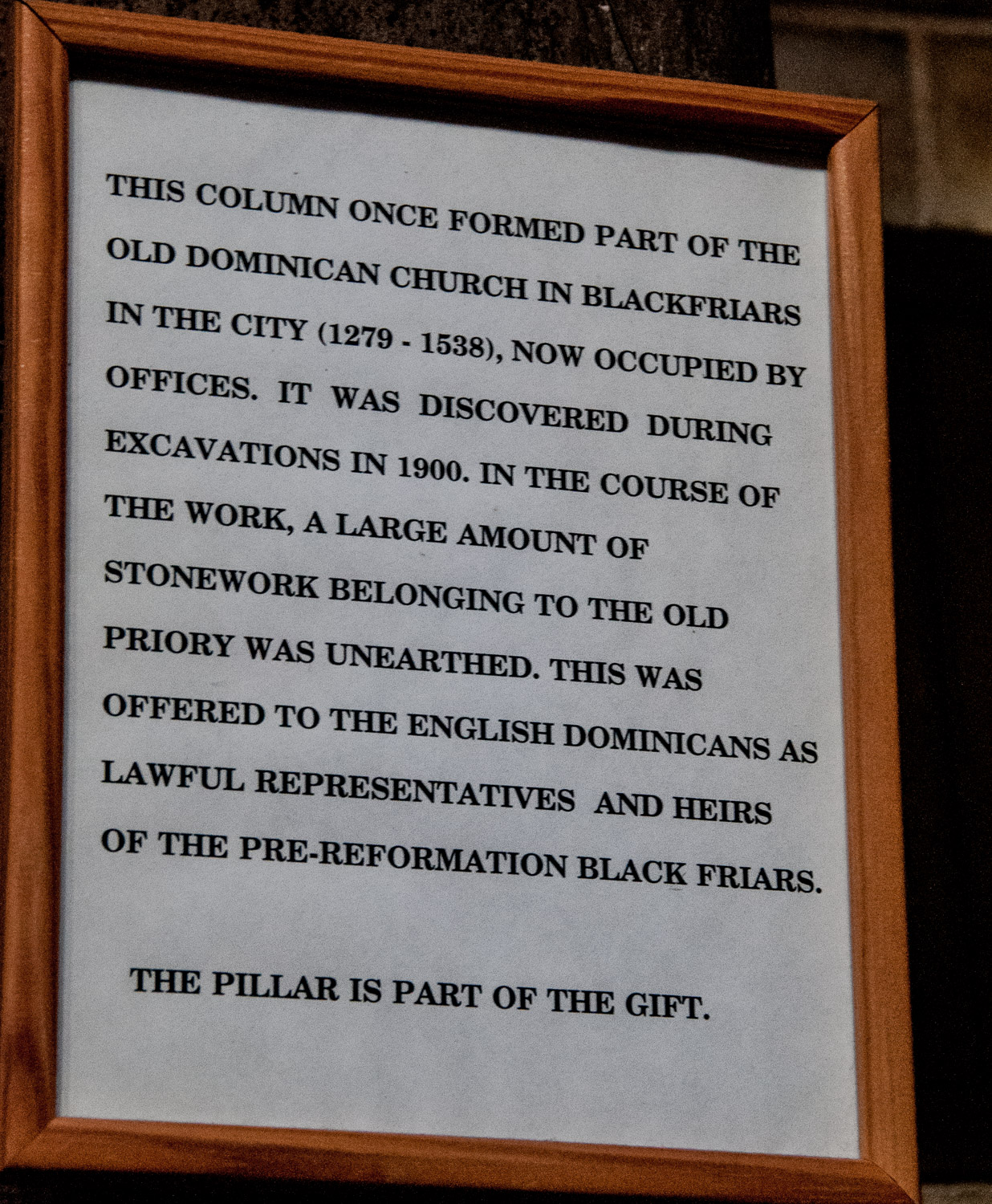
The notice attached to it tells its story …

Back in the City, you might like to walk just around the corner from the old monastery stones to the little passage known as Church Entry. Here you will be following the approximate line north-south between the monastery church nave and the chancel. After the Dissolution, it was used as a churchyard for the parish of St Ann Blackfriar.

Church Entry

The Carmelite monastery was founded in the 1240s on land just south of Fleet Street. Originally hermits living on the slopes of Mount Carmel, they fled on the Saracen reconquest of the Holy Land and those arriving in London ceased to be hermits and became more visible in the community. They were known as Whitefriars after the colour of the mantle worn over their brown robes.

Click on the picture to read more about the Carmelites today

Theirs was a typical group of friary buildings including a church, cloister and chapter house and their library was said to be particularly notable.

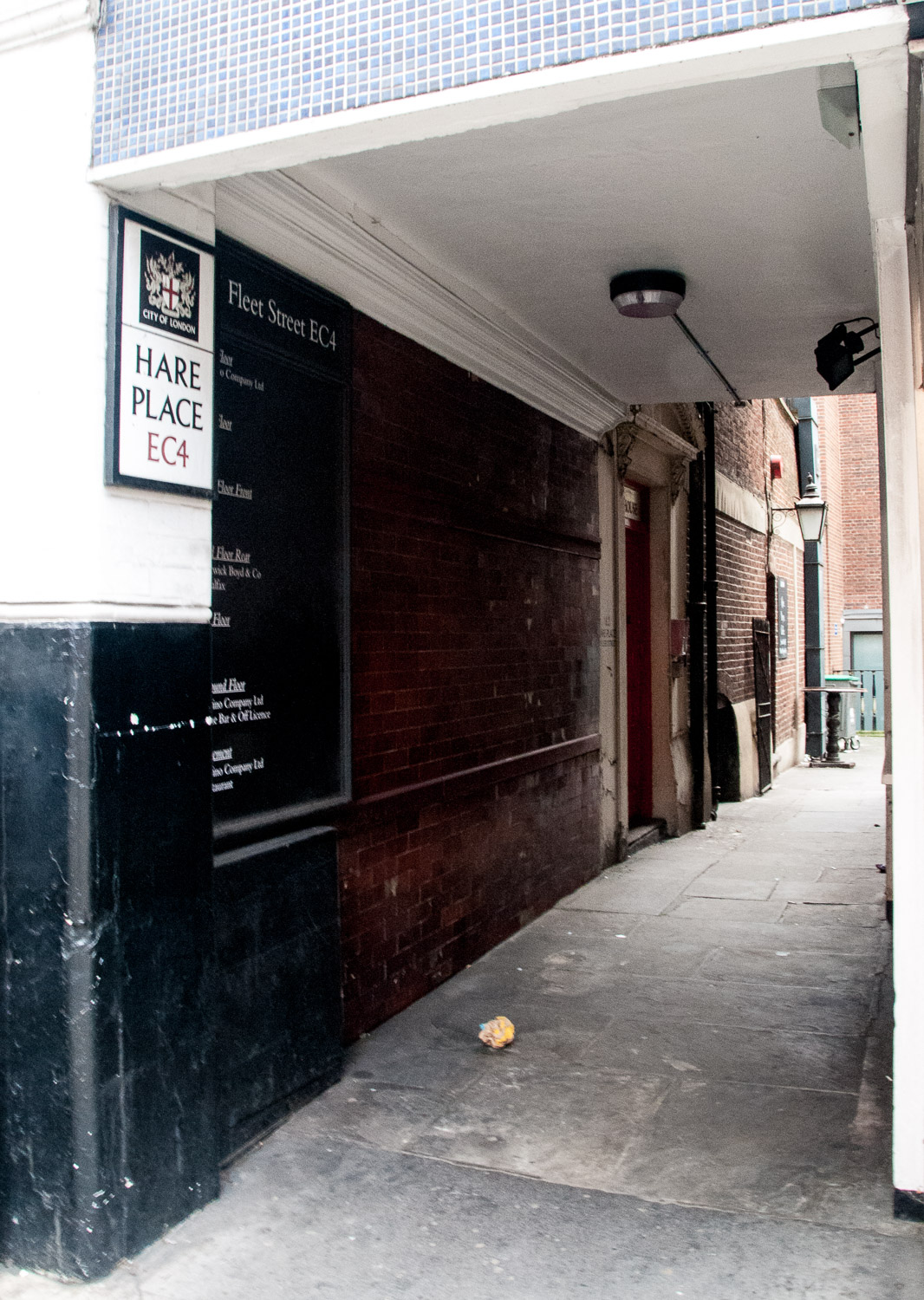
After the priory was dissolved in November 1538  the land was sold to individuals who subdivided their plots and built tenements on them. However, this precinct had long possessed the privileges of Sanctuary, which were confirmed by a charter of James I in 1608. From about this time the area was known as ‘Alsatia’ (after the disputed continental territory of Alsace), and its entrance was in Ram Alley, now known as Hare place.

The old Ram Alley, one time gateway to Alsatia

It became the ‘asylum of characterless debtors, cheats and gamblers here protected from arrest’. One Edwardian historian spoke of …

Its reeking dens, its bawds and its occupants’ disgusting habits. Every house was a resort of ill-fame, and therein harboured women, and still worse, men, lost to every instinct of humanity

The privilege of Sanctuary was finally abolished in 1687.

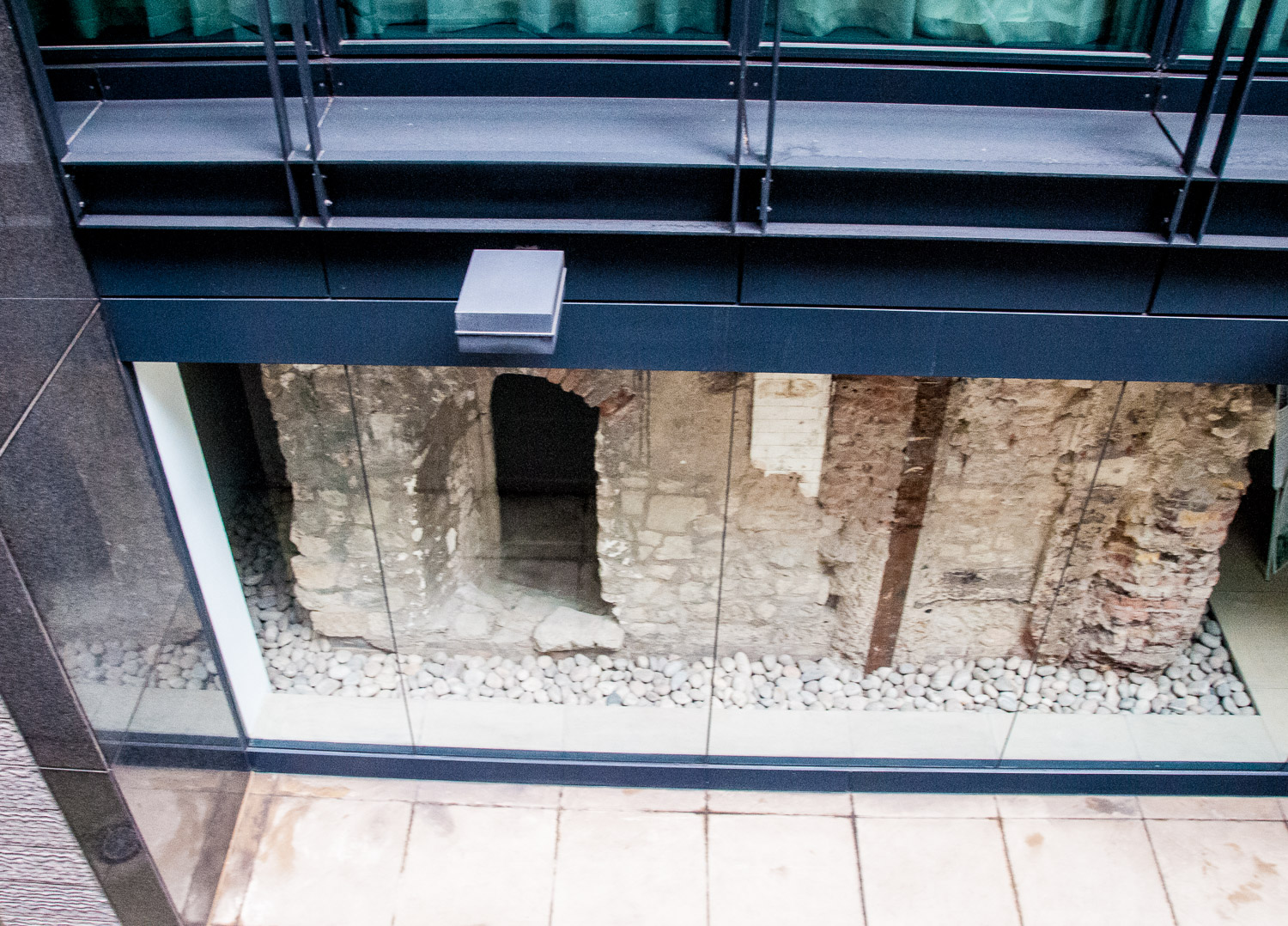
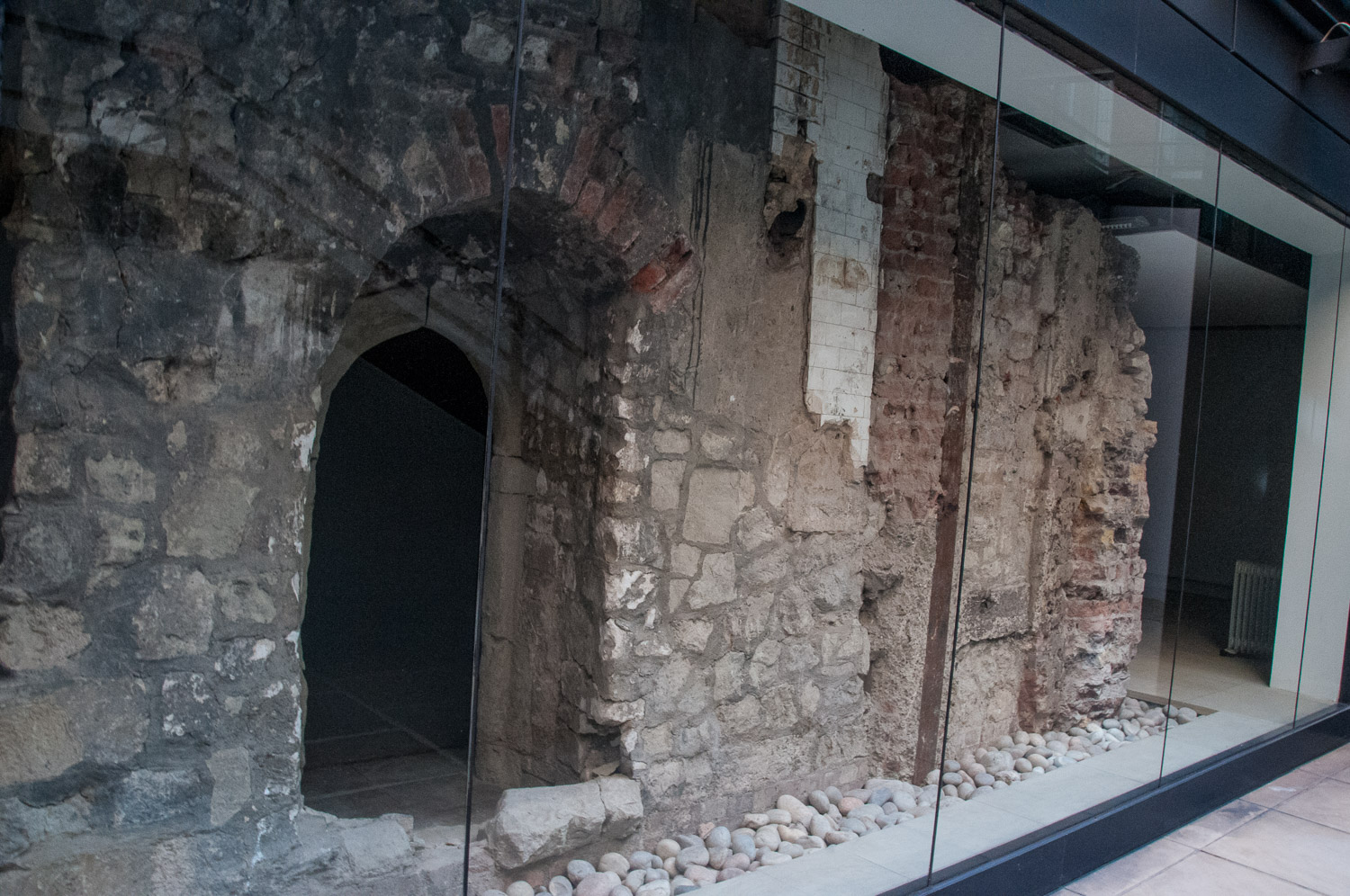
I am really pleased to say that you can still see the crypt of the old Carmelite Priory.

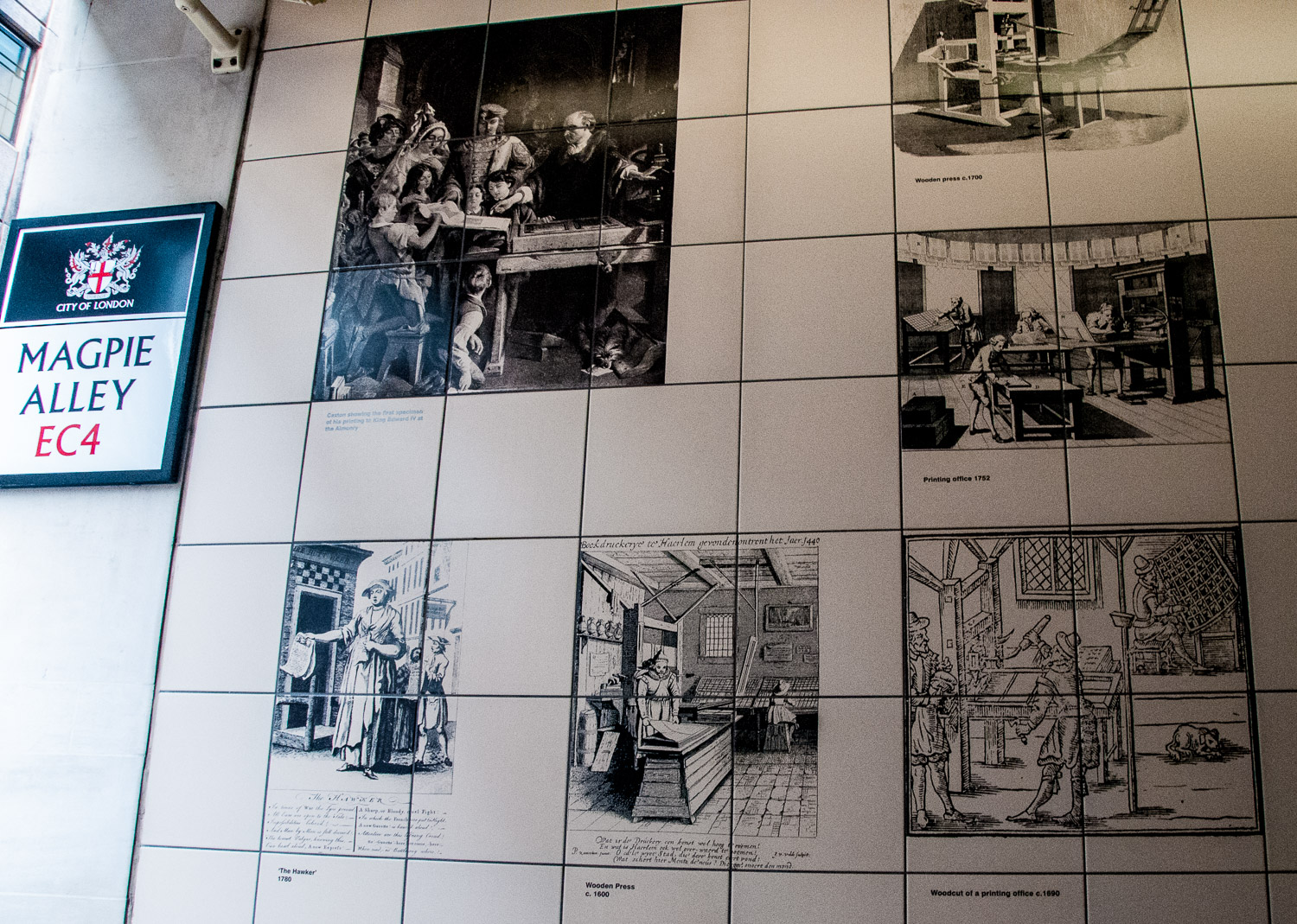
Walk down Bouverie Street and turn left into Magpie Alley where tiles illustrate the historical connection between this area and the print industry.

At the end of the alley you can descend a short flight of stairs and gaze at the remains of the crypt. They were discovered in 1895 and were moved here on a concrete raft from the west side of the road during building development in the 1980s.

The old Whitefriars crypt


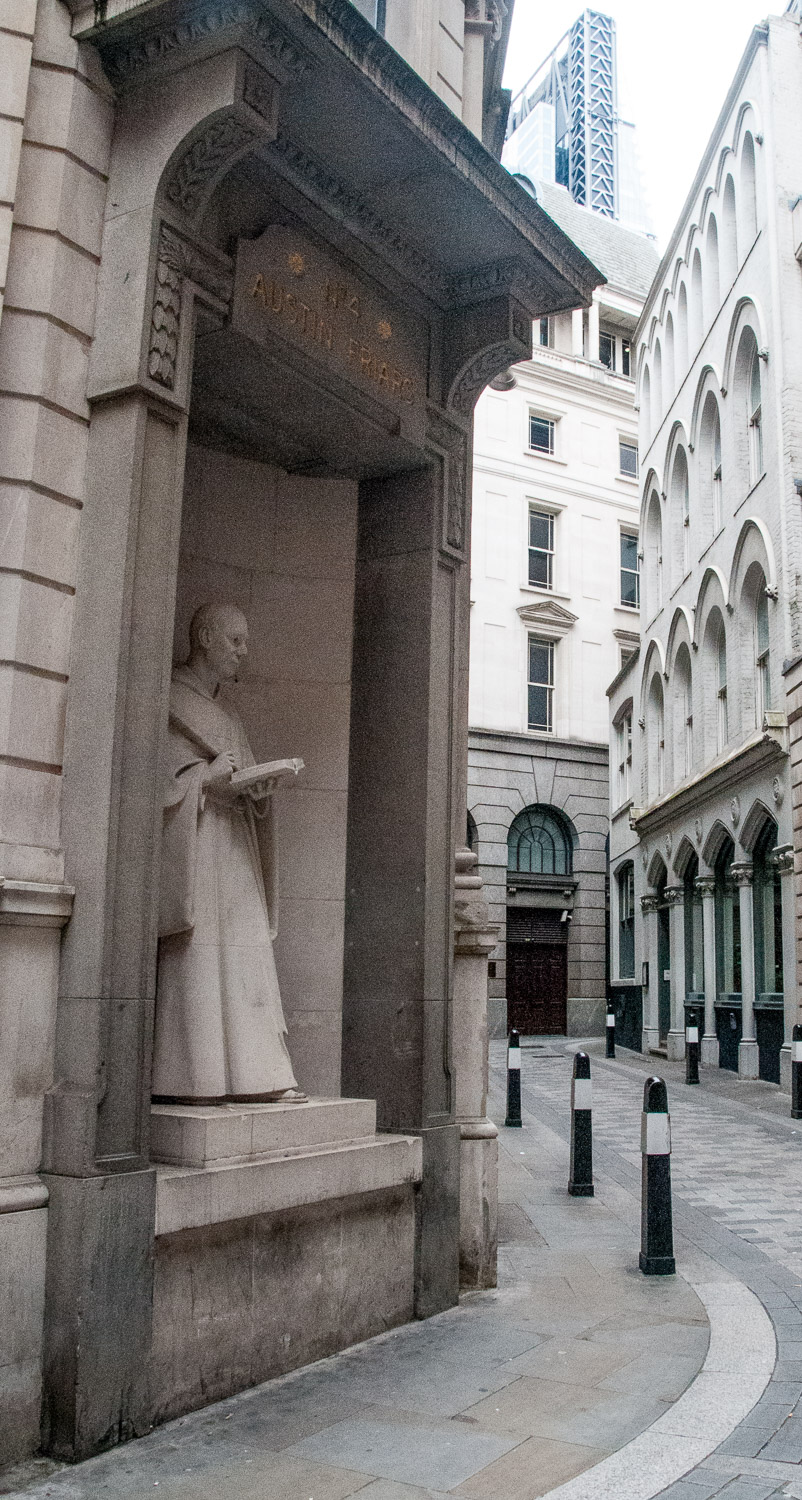
Coming soon – The Augustines of Austin Friars …


Page 146 of 151

Powered by WordPress & Theme by Anders Norén

Symbols & Secrets
Privacy Overview

This website uses cookies so that we can provide you with the best user experience possible. Cookie information is stored in your browser and performs functions such as recognising you when you return to our website and helping our team to understand which sections of the website you find most interesting and useful.