Symbols & Secrets

Walking the City of London

Dick Whittington, Hipster! City stained glass, I hope you will be pleasantly surprised …

To me, one of the greatest pleasures in visiting any church is to look at the stained glass windows and, in some cases where the church is very old, imagine the awe they must have inspired in congregations for whom even crude plain glass was an unimaginable luxury. Sadly, the City churches suffered terrible damage in the Blitz and much glass was lost through blast as well as direct bomb damage. However, this destruction had two positive outcomes. Firstly, if plain glass replaced the coloured, the churches’ interiors were bathed in light and in some cases appeared more like Christopher Wren and his associates intended. Secondly, of course, they gave the opportunity to a whole new generation of artists and glass makers to display their skills, and this is where I hope you will be pleasantly surprised and perhaps inspired to visit their work.

I want to start with the great man himself, and here he is, portrayed in very lifelike manner in a window at St Lawrence Jewry in Guildhall Yard. This was his most expensive parish church project and it reopened for worship in 1677…
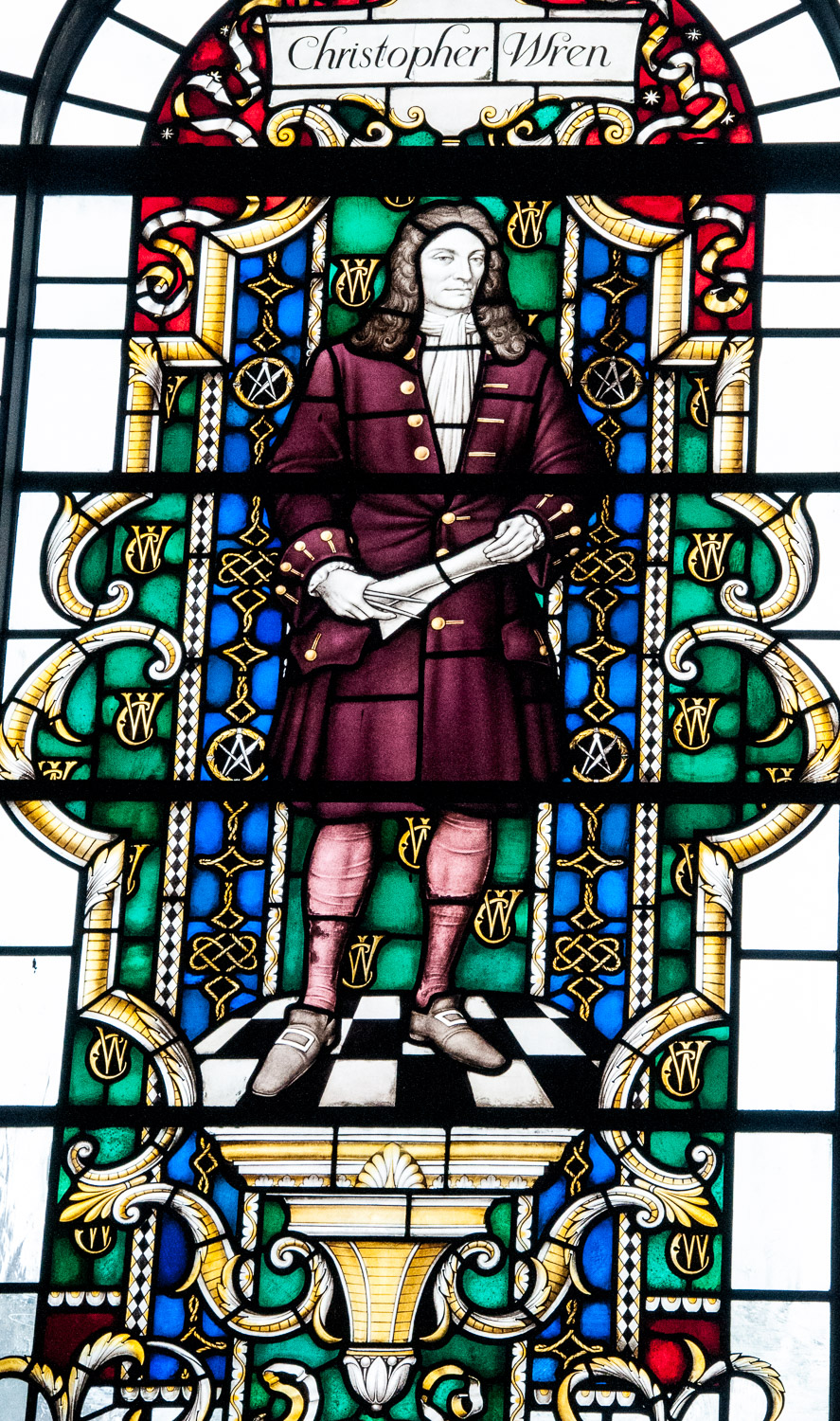
Wren enjoyed a close relationship of mutual respect with his craftsmen and it was typical of him to arrange for the foundation stones of St Paul’s Cathedral to be laid, not by himself, but by Master Mason Thomas Strong and Master Carpenter John Langland. Another Strong, Edward, pictured below, set the final stone in place at the top of the lantern on 26th October 1708, thirty three years after building commenced. Edward had succeeded his brother Thomas as Master Mason on the latter’s death in 1681.
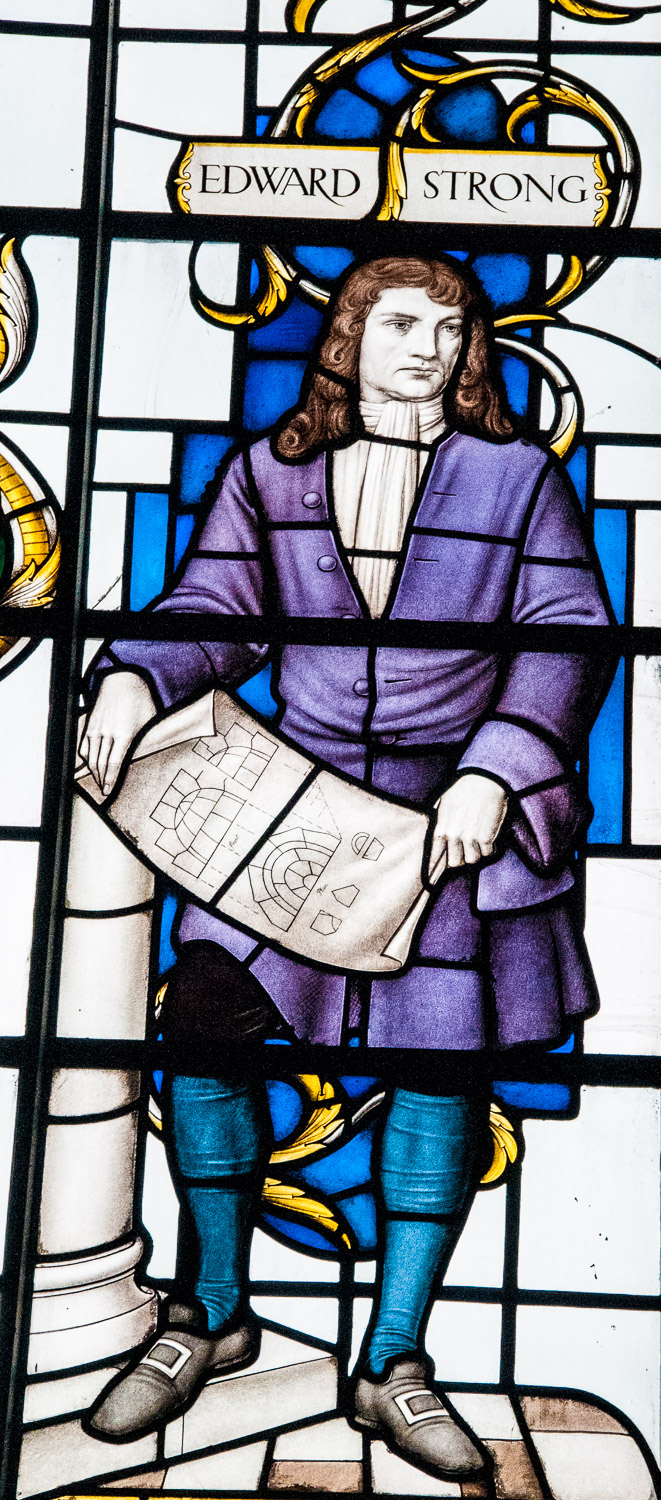
Wren’s Master Mason, Edward Strong. What a perfect name for a man who created beauty and order out of stone.

Gibbons was the greatest of decorative woodcarvers and a favourite of Wren, who also employed him on some of his country house commissions …
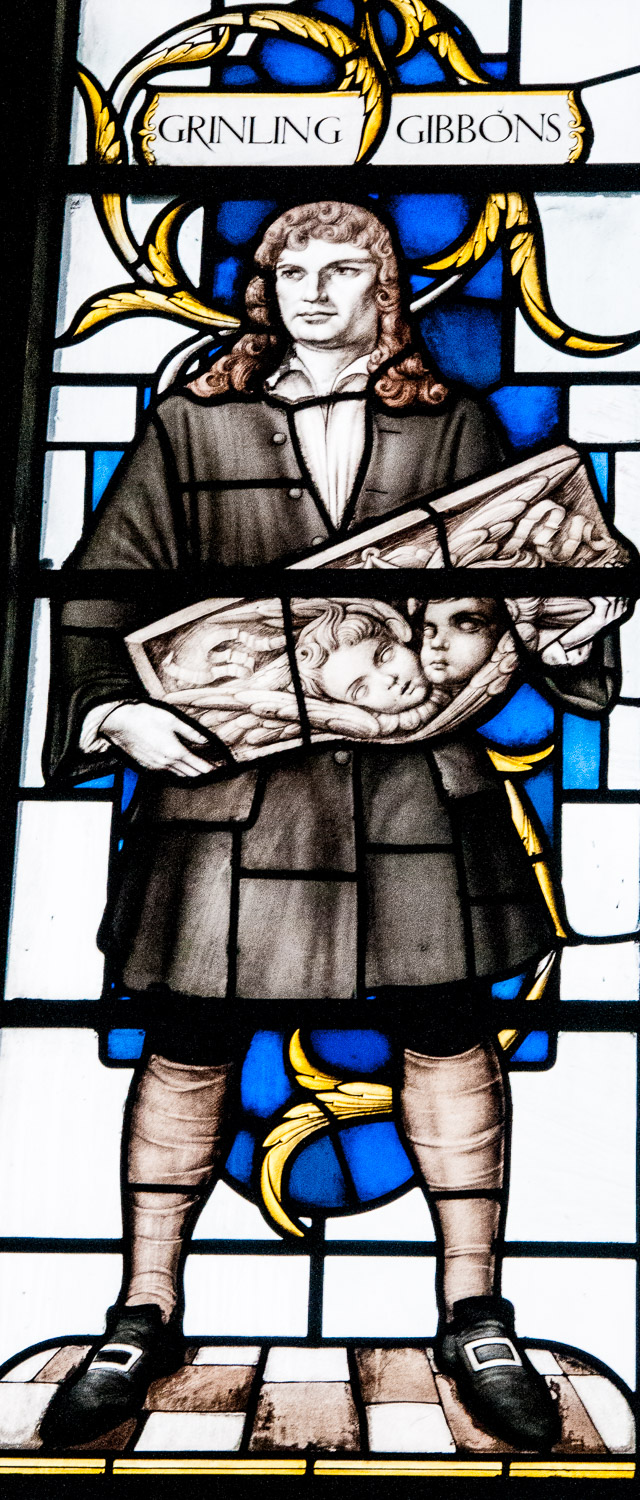
Gibbons was born in Rotterdam in 1648, arriving in England in 1670 or 1671 and evolving a distinct style that was all his own. Working mostly in limewood, Gibbons’ trademark was the cascade of fruit, leaves, flowers, foliage, fish, and birds. He was obviously also a dab hand at cherubs.

The window incorporating the three men is known as ‘The Wren Window’ …
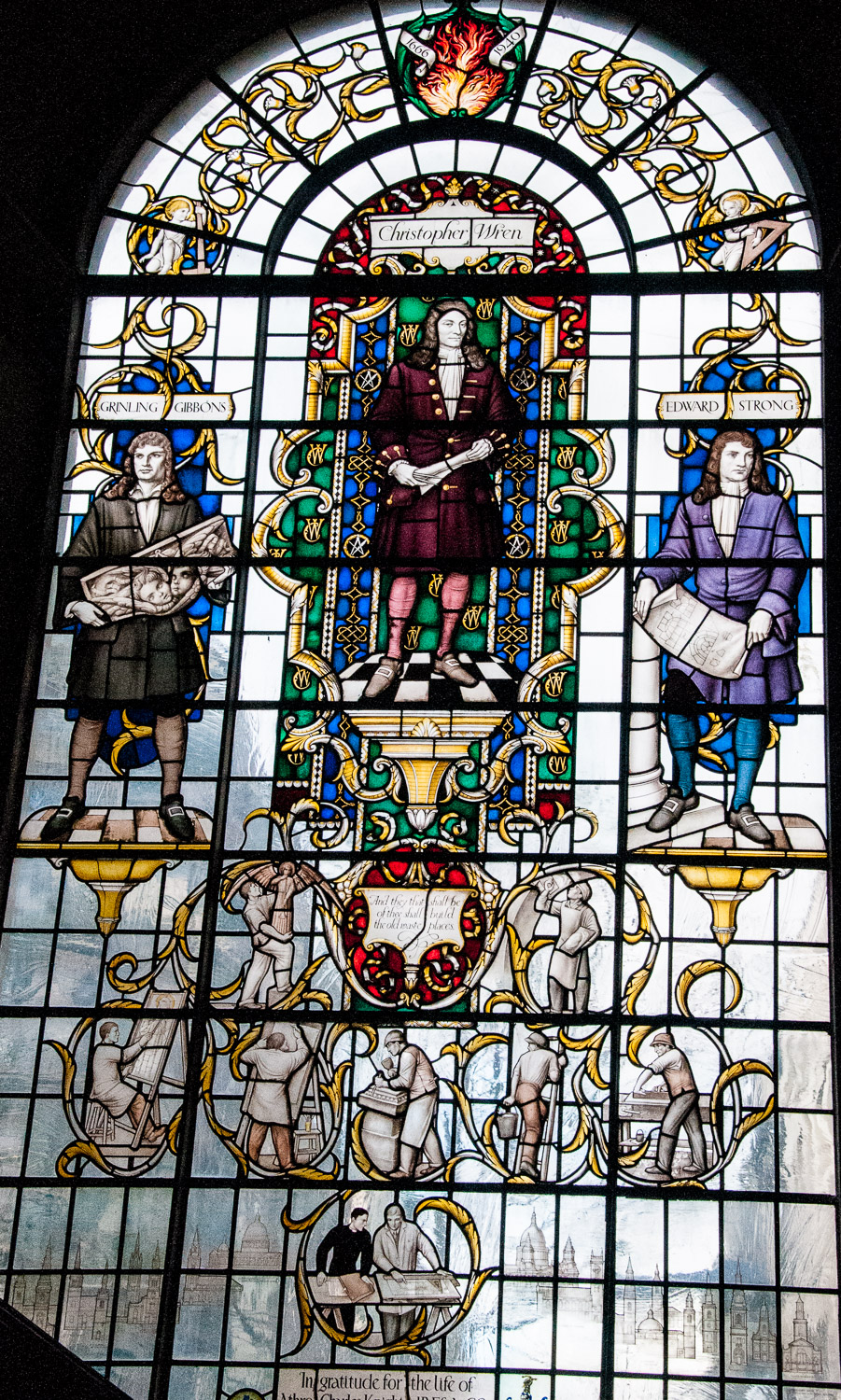
The Wren Window by Christopher Webb (1957)

Below the three major figures the window shows various craftsmen at work – bricklayers, carpenters, plasterers, stonemasons and two of his own stained glass artists.

And below them are two more modern figures …
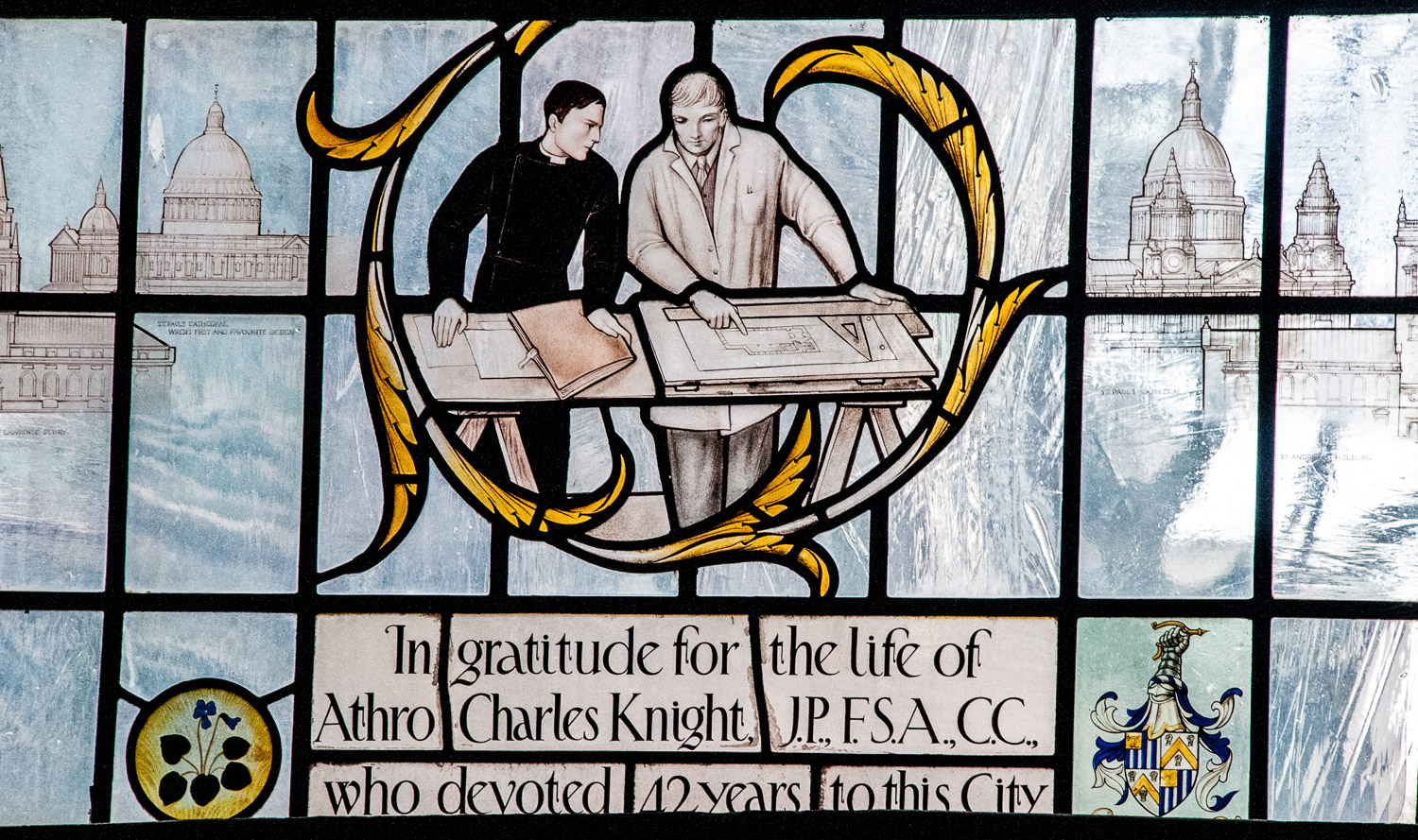
Cecil Brown and Reverend Frank Trimingham study the church plan, with the outline of the footprint of the church in front of them. On each side are the beautifully etched towers of many of the Churches Wren built, along with two different views of St Paul’s Cathedral.

The flames remind us of two terrible years of destruction …
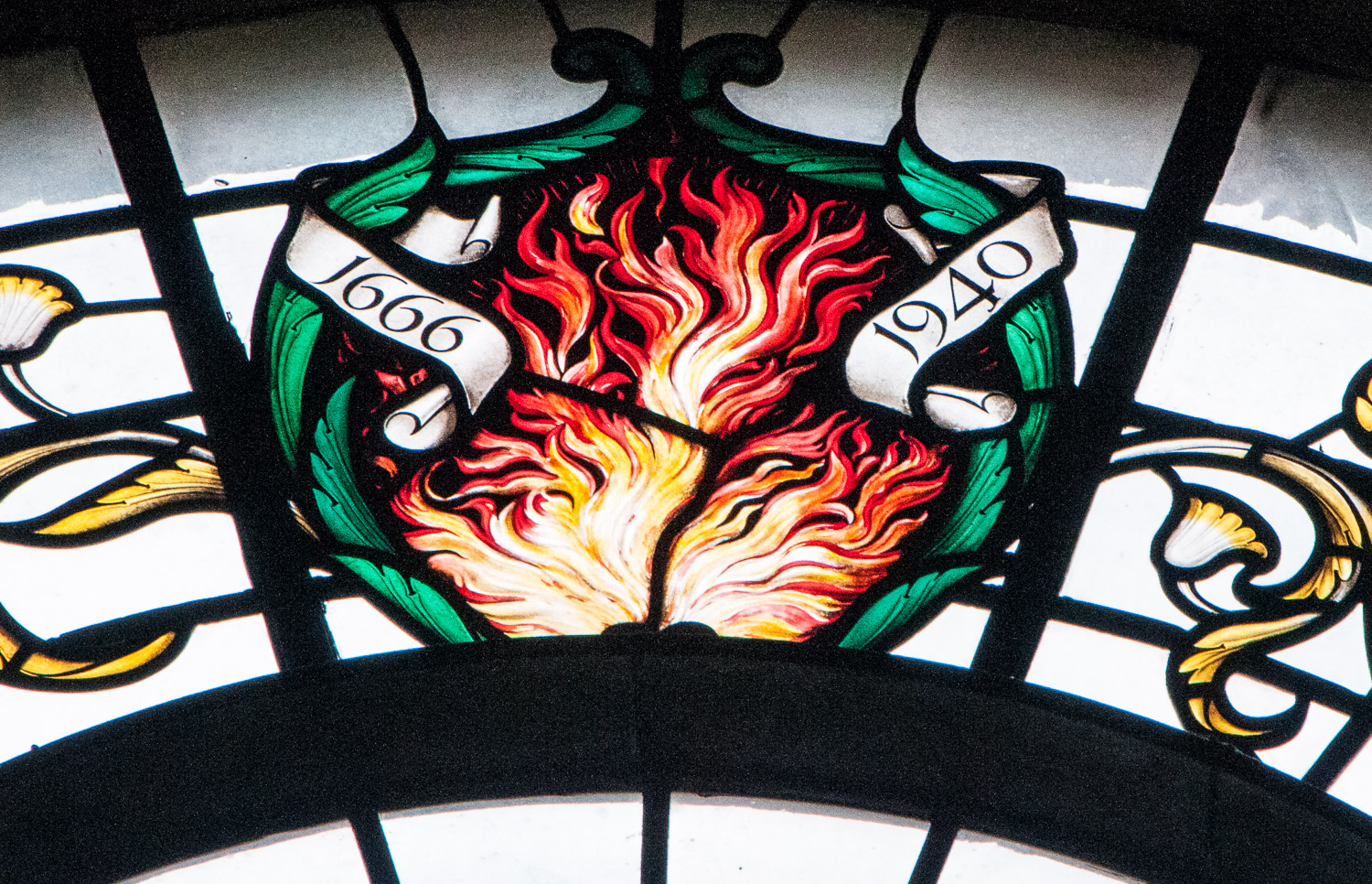
After the fire bomb raid of 29 December 1940 nothing but the tower and part of the walls remained. The present church was built in 1954-57 to the design of Cecil Brown who worked closely with Christopher Webb on the designs of the windows.
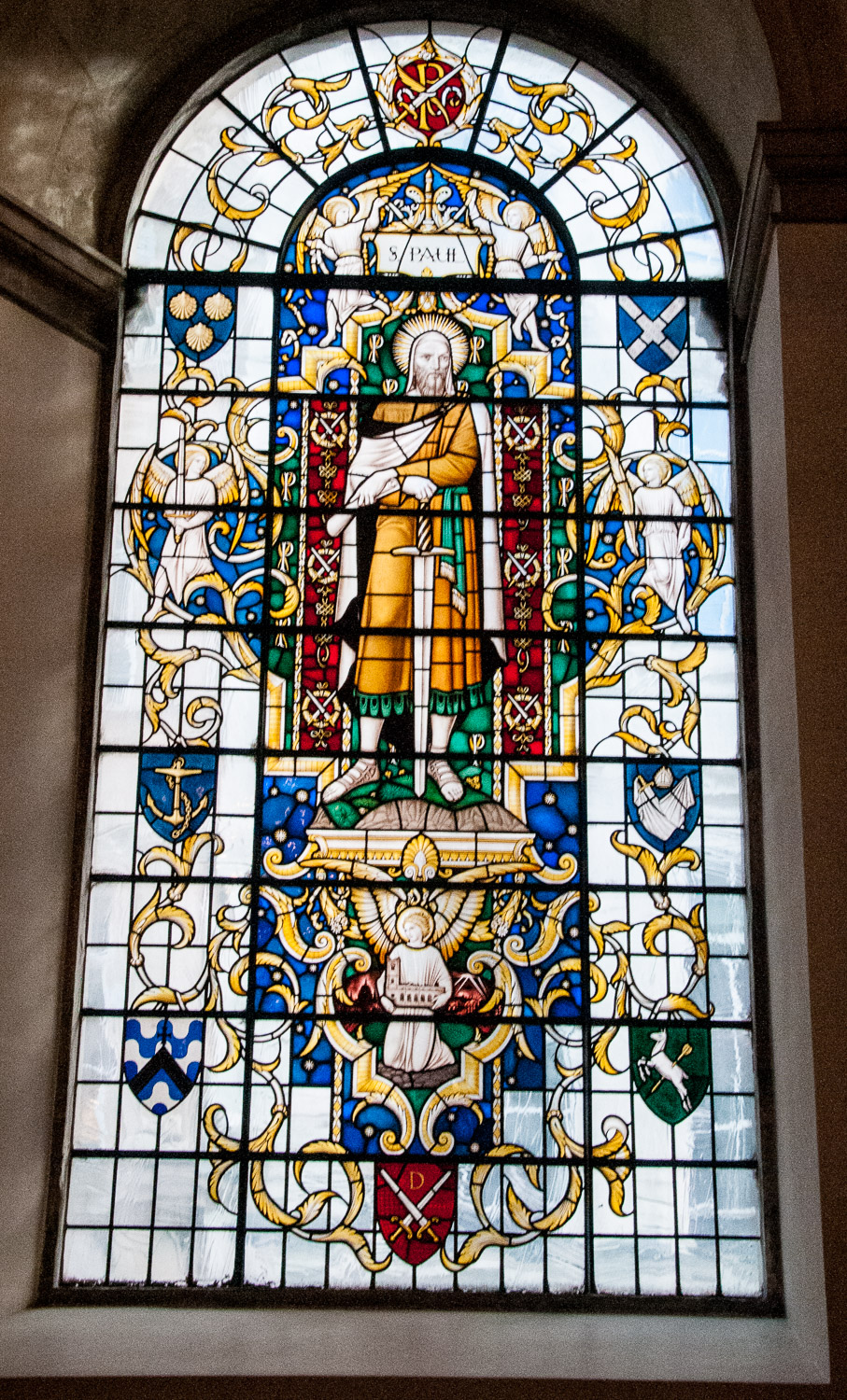
St Paul is represented here because the Dean and Chapter of St Paul’s were joint patrons from 1677 to 1954.

Note the angel at the base of the window …
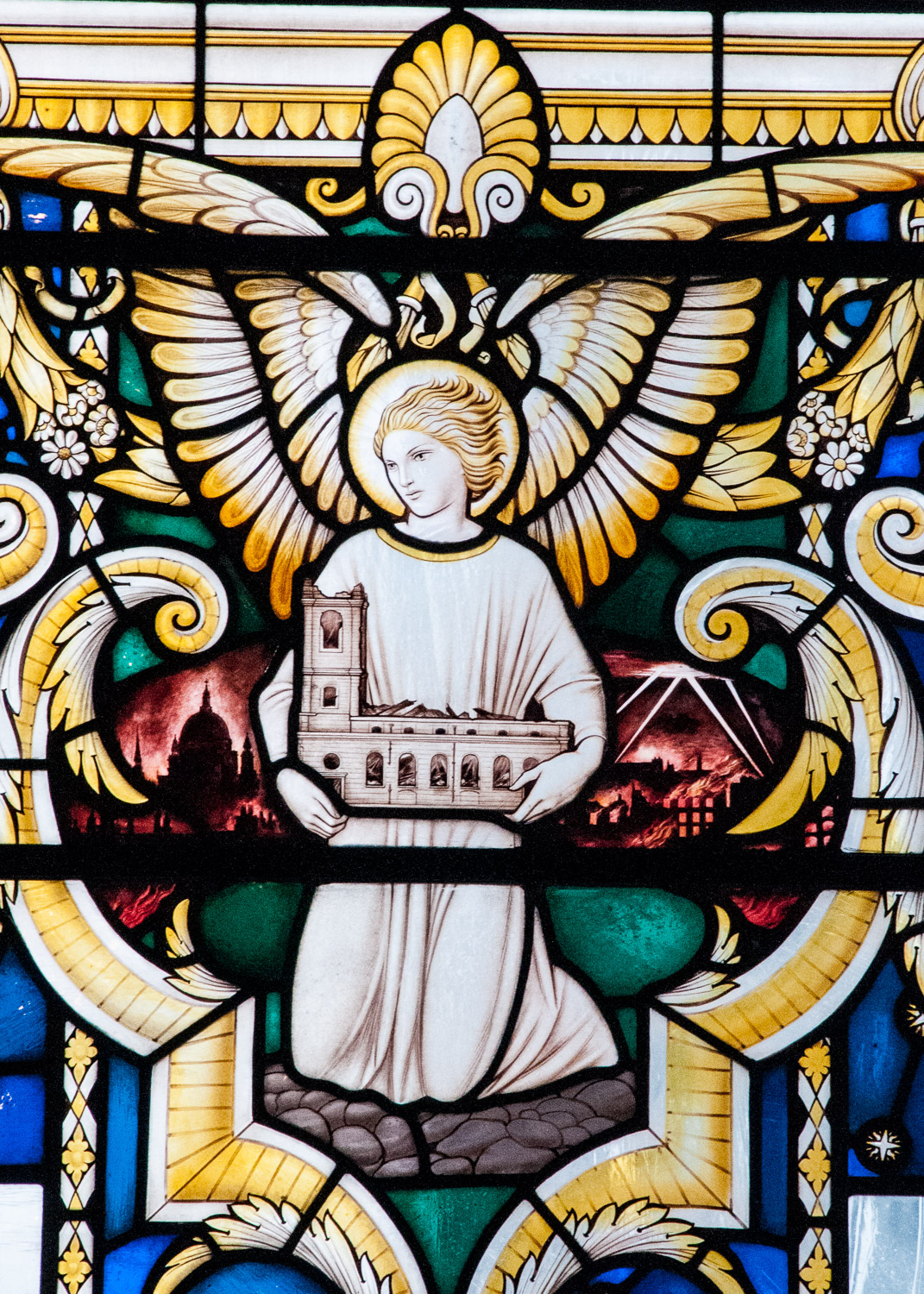
The angel is holding the shell of the destroyed church, roof and windows gone and what is left of the building filled with rubble. St Paul’s in the background is silhouetted by fire and the buildings on the right are ablaze as searchlights pierce the sky.
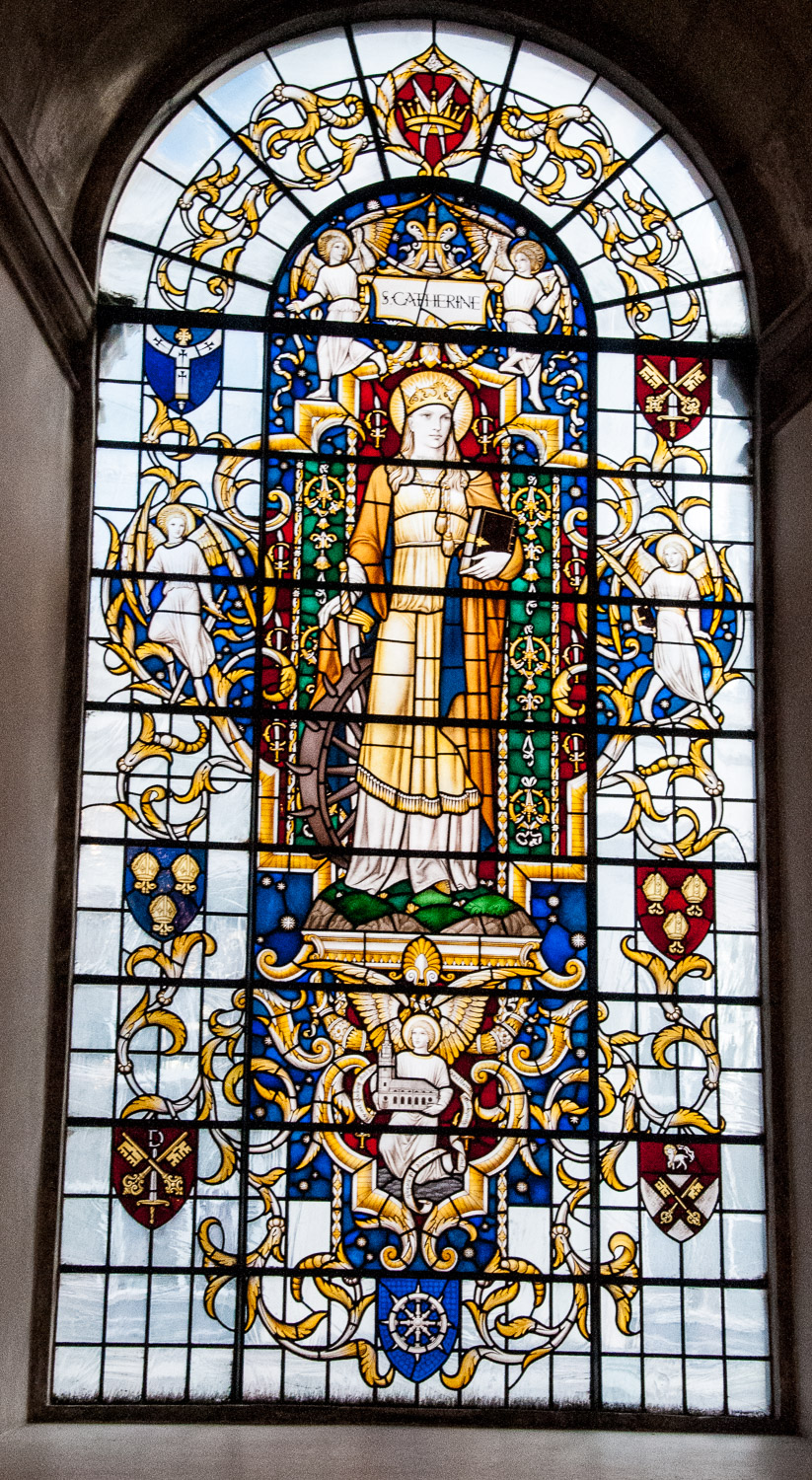
St Catharine is the patron saint of Baliol College Oxford which has had a close connection with the church since the 13th century

She is pictured with the spiked wheel on which she was tortured.

But look at the angel, again at the base of the window …
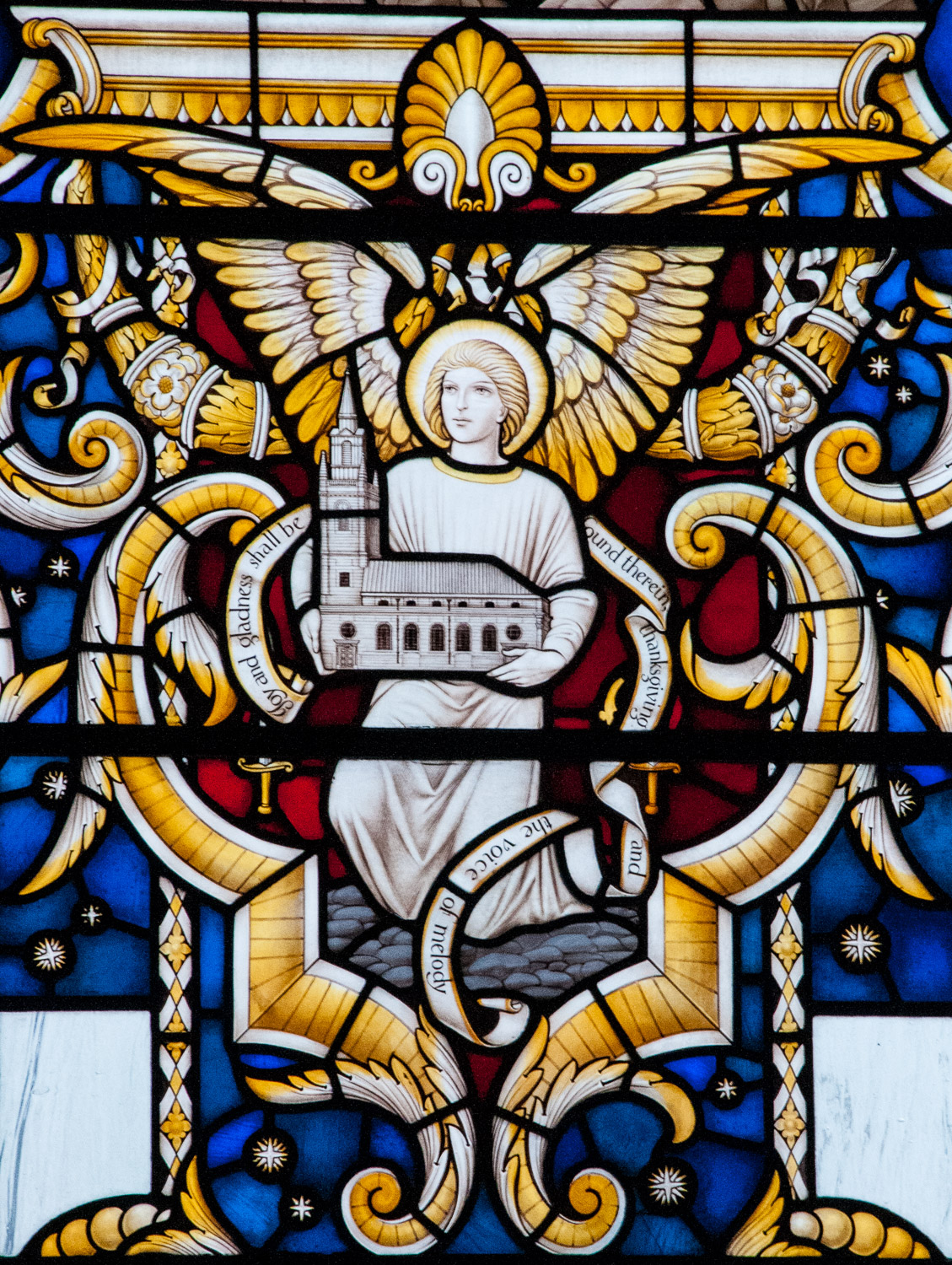
The angel is holding the restored church.

Naturally, there is a window commemorating the church’s patron saint, St Lawrence, who suffered martyrdom in 258 AD …
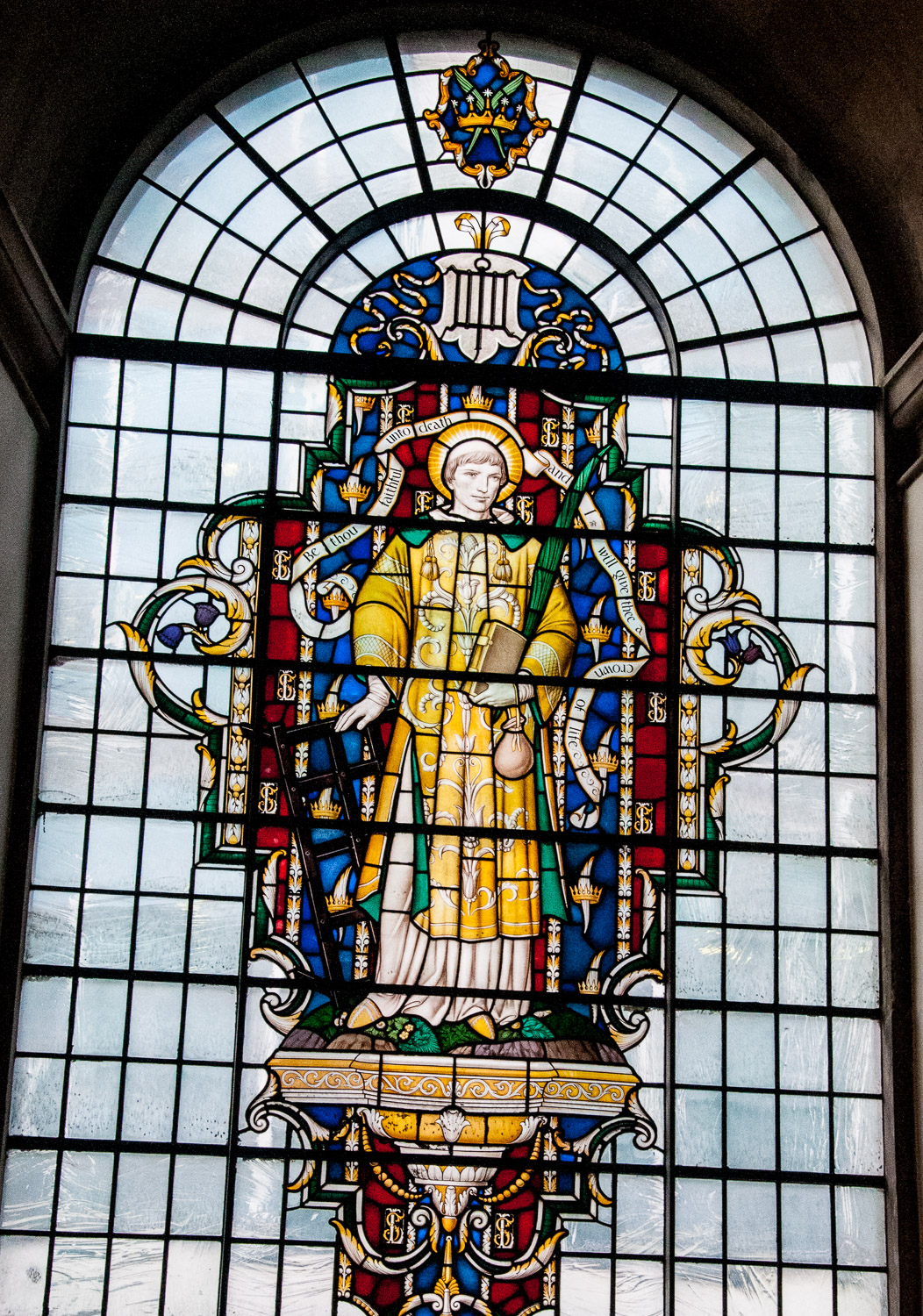
For refusing to give up the treasures of the church, represented by the purse he is carrying, he was flayed and roasted alive on a gridiron.
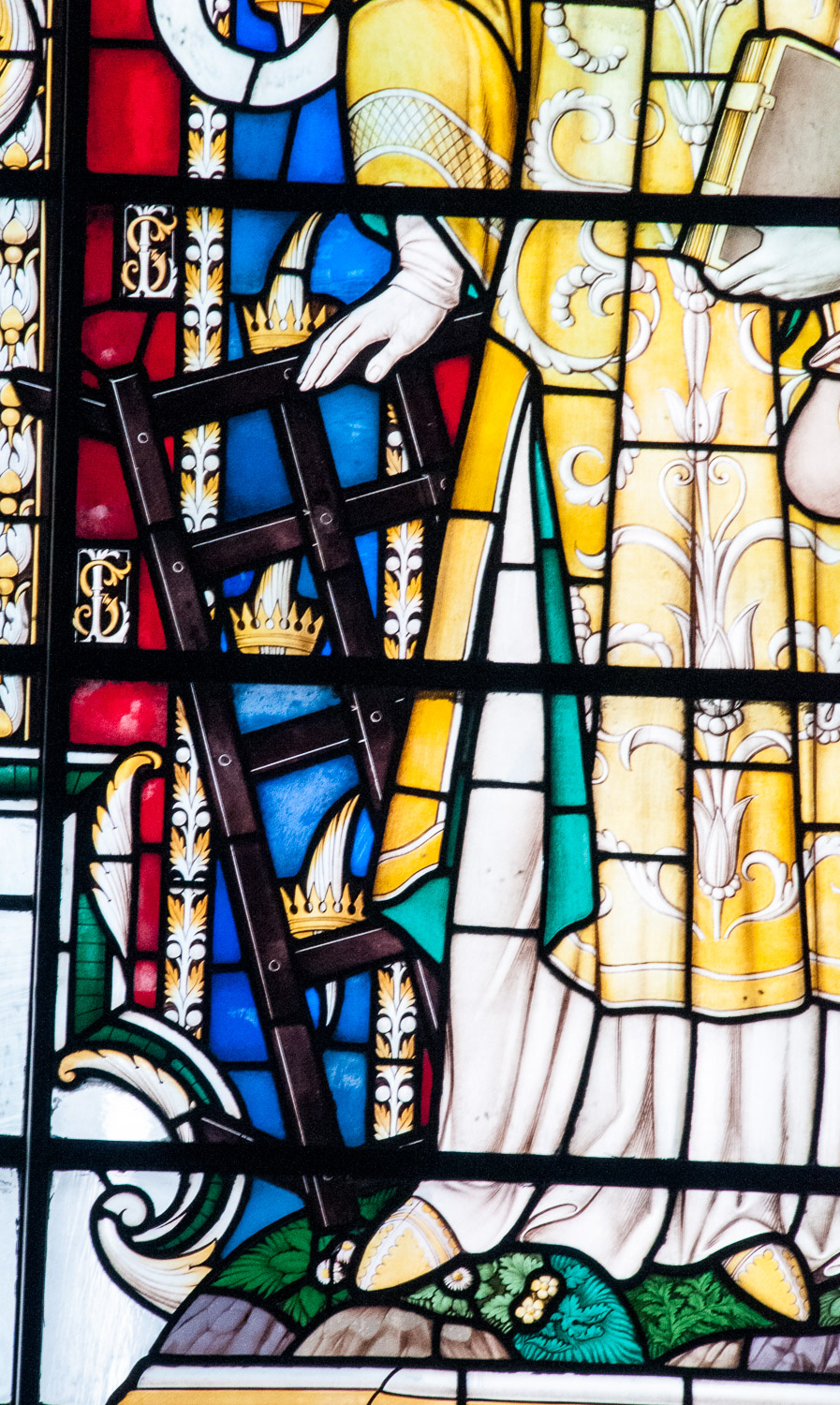
The gridiron became his symbol and appears throughout the church and on the steeple weathervane

As regular readers of this blog will know, I am very fond of St Vedast-alias-Foster in Foster Lane – I love its secluded fountain courtyard and cloister. Today, however, I am commenting on the interior, which also had to be rebuilt after the same raid that destroyed St Lawrence.
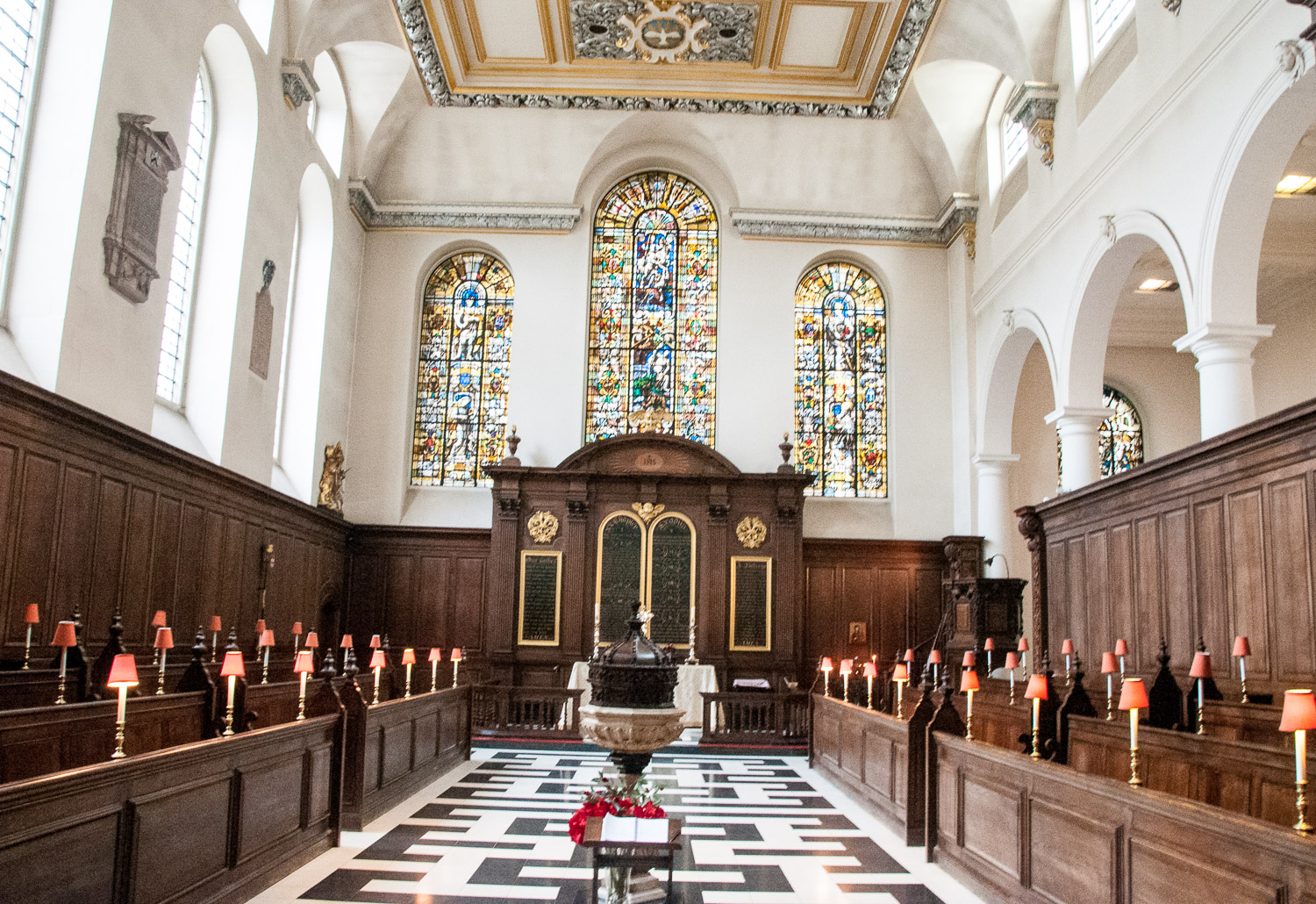
Looking towards the east end of the church

Above the reredos is the ‘Vedast Window’, with stained glass depicting scenes from the life of the saint …
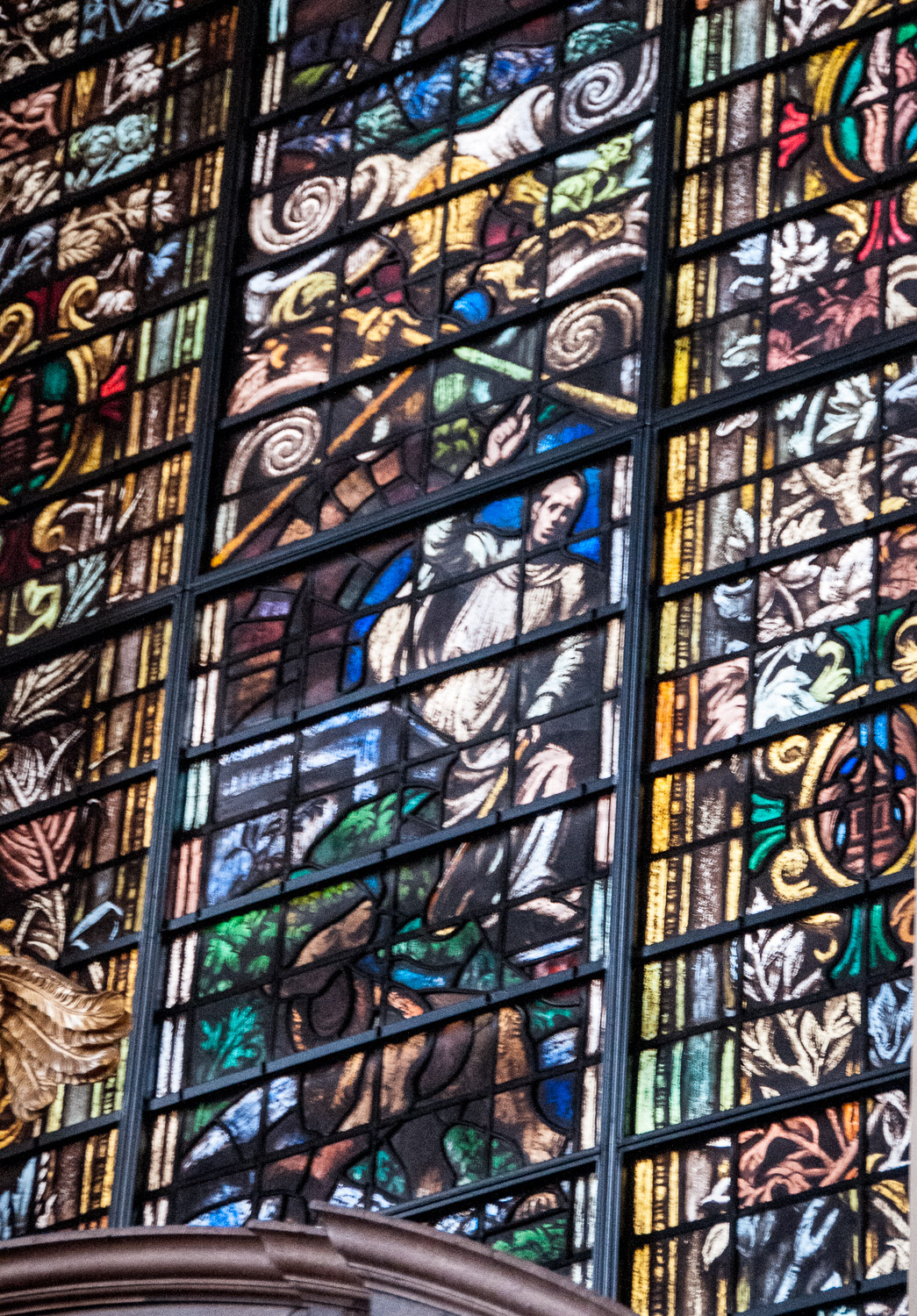
Look for the saint chasing a bear from its cave (er, no, I don’t know why either).

The glass below, in the east window of the chapel, was the only window saved after the 1940 bombing. It gives us some idea of the terrible losses incurred on that night …
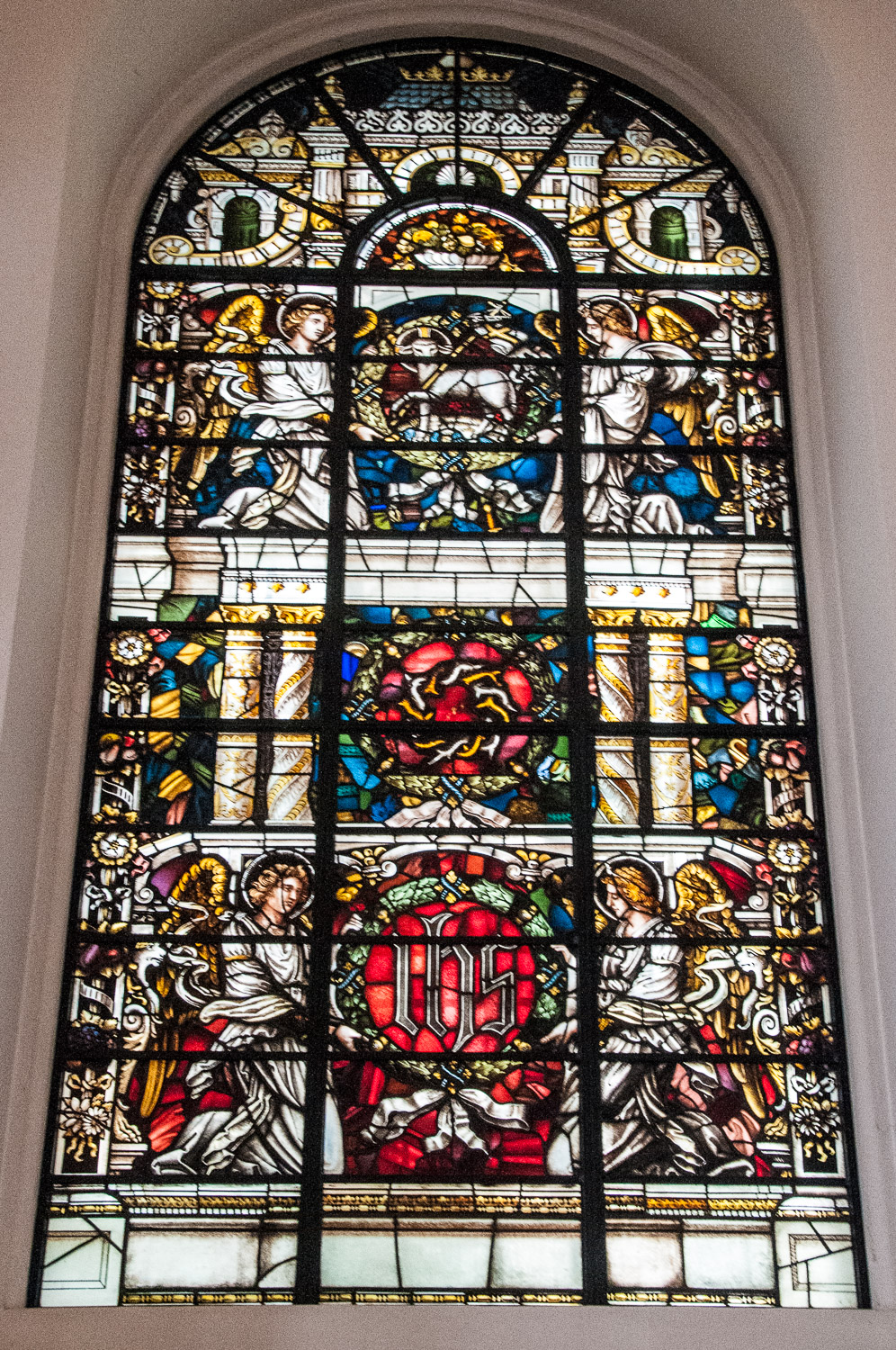
The glass is by the firm of Clayton & Bell which was founded in 1855 and continued until as recently as 1993.

When I visited the church last Friday (February 2nd) there was a magnificent display of church silver …
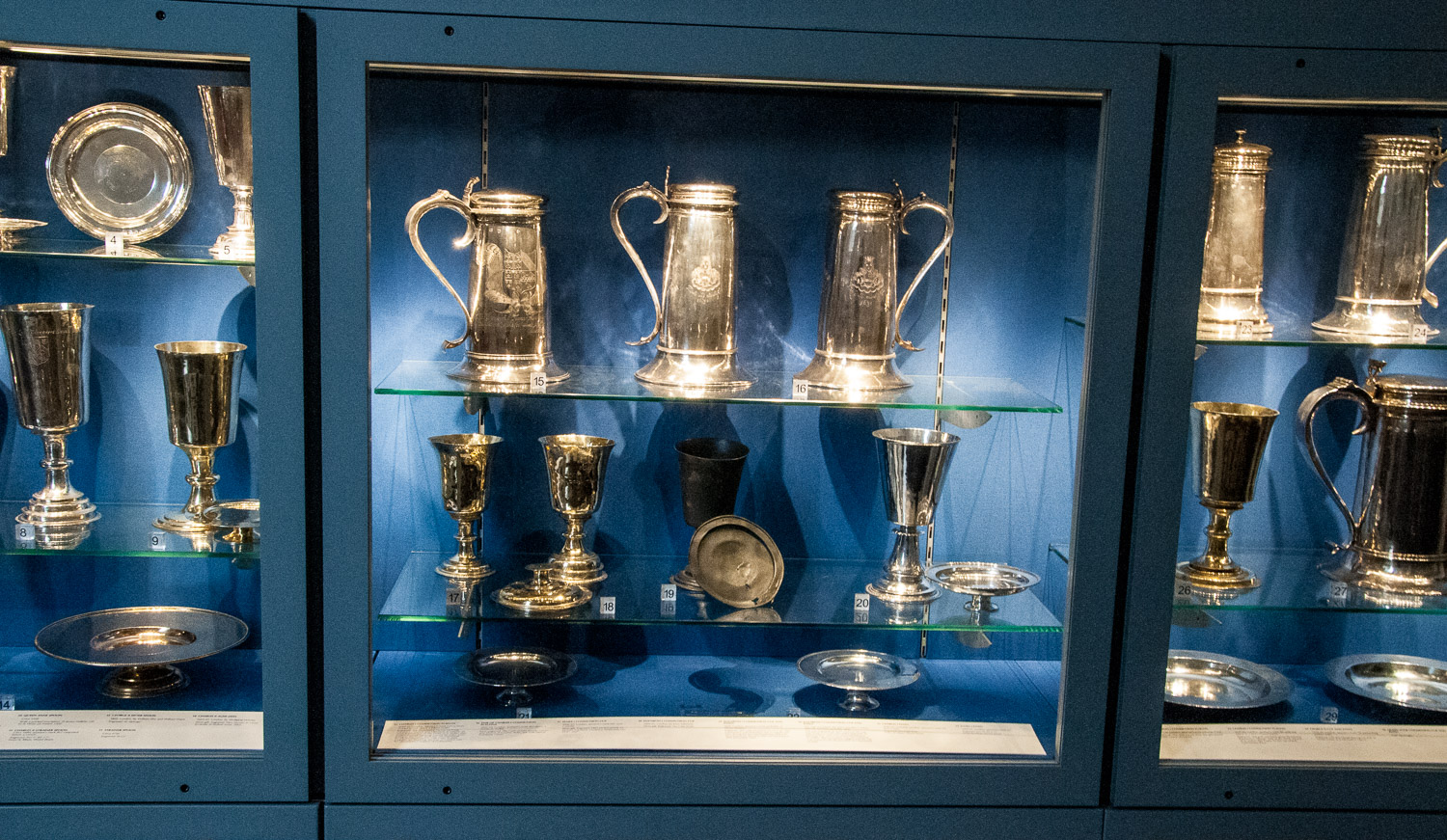
The church’s collection of silver plate dating back to the 16th century.

St Vedast is unusual among City churches in that it is open seven days a week, so you can pop in between 8:00 am and 5:30 pm on weekdays. Full details are on the website.

And now some examples of the stunning widows designed by the artist and glass maker John David Hayward, the first being in St Michael Paternoster Royal on College Hill EC4, where Dick Whittington was buried in 1423.

I’m sure everyone knows the Whittington legend. He had given up on making his fortune in London but, as he headed home with his faithful cat, he heard the bells of St Mary-le-Bow ring out the words:

Turn again Whittington, thrice Lord Mayor of London

Well, the bit about him being Lord Mayor is true, and it was four times rather than three, but two of the terms were consecutive.

Here Hayward shows that critical moment on Highgate Hill …
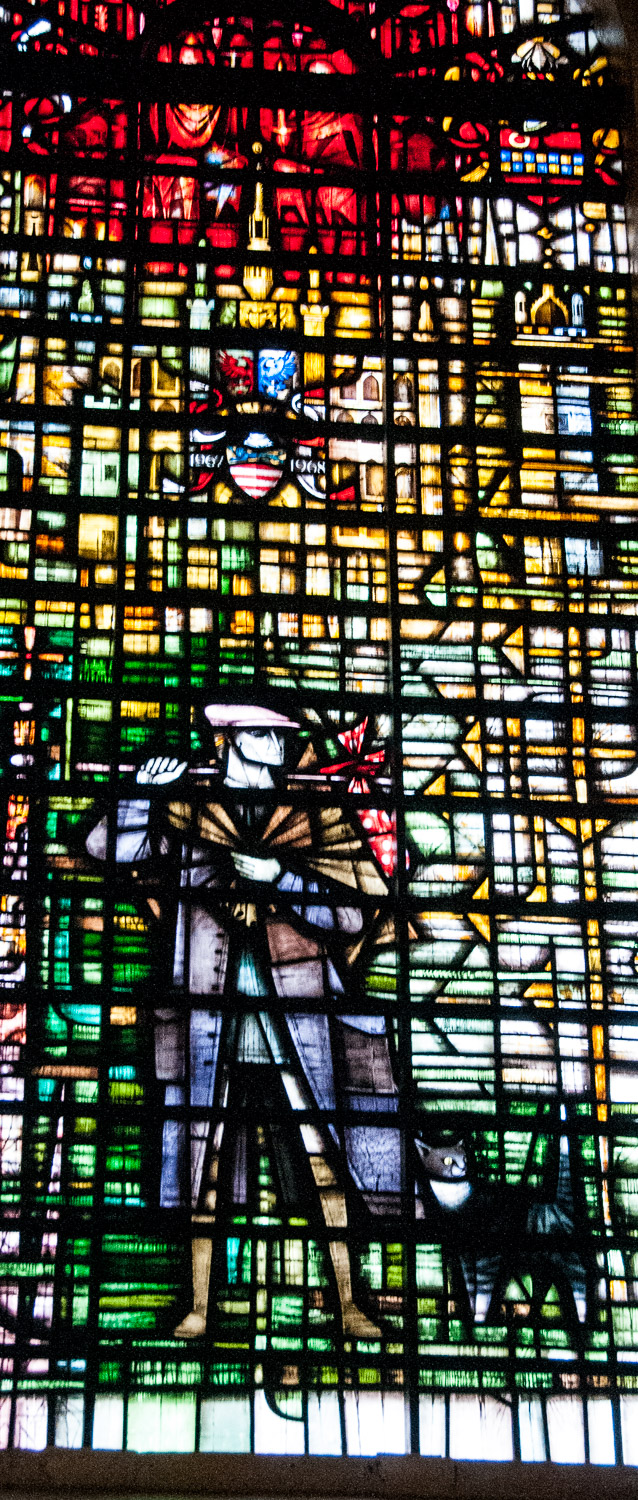
The church bells of St Mary-le-Bow ring out behind him
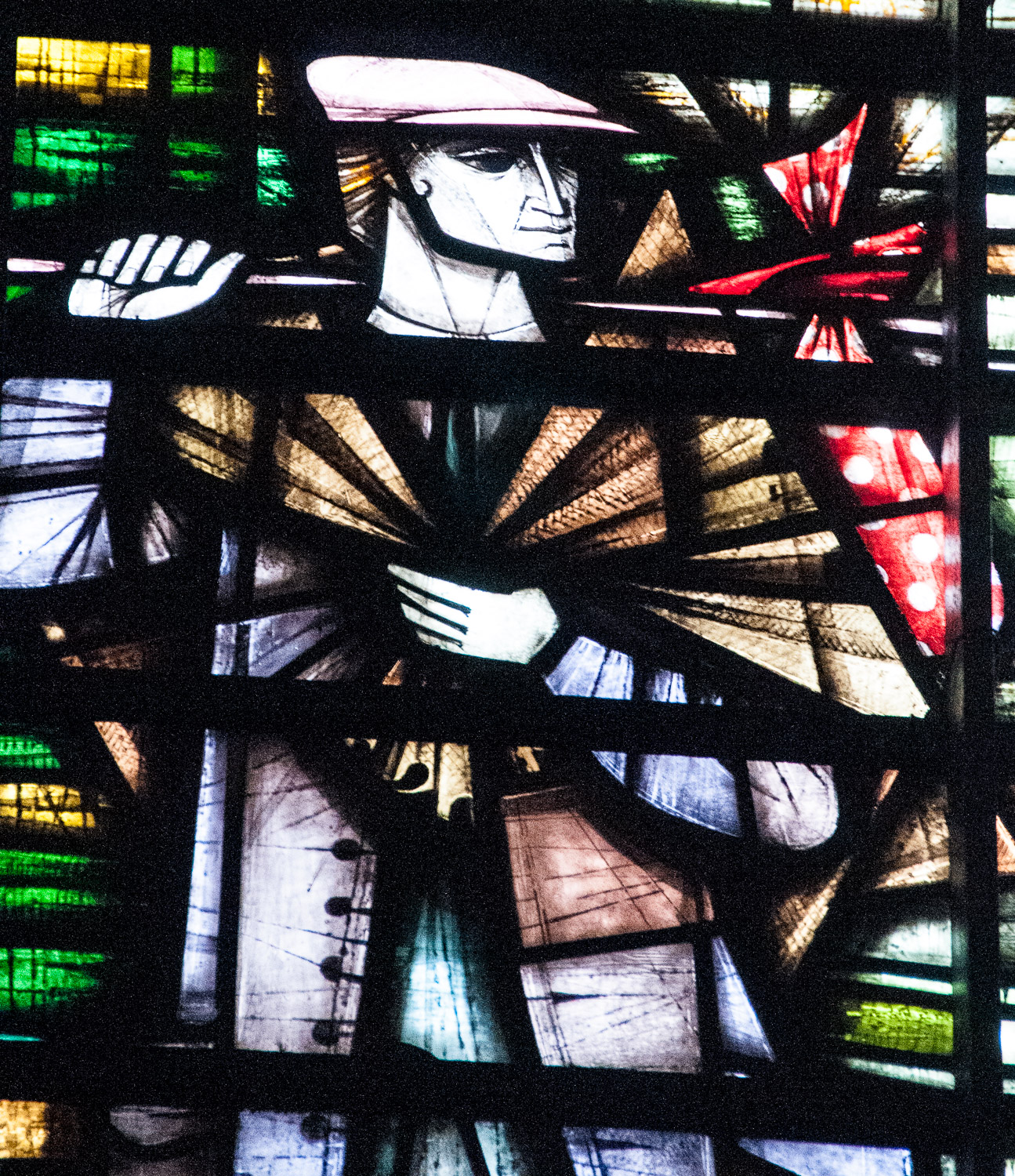
I think he rather resembles a flat-capped Hoxton Hipster – maybe there is an iPad in that bag.
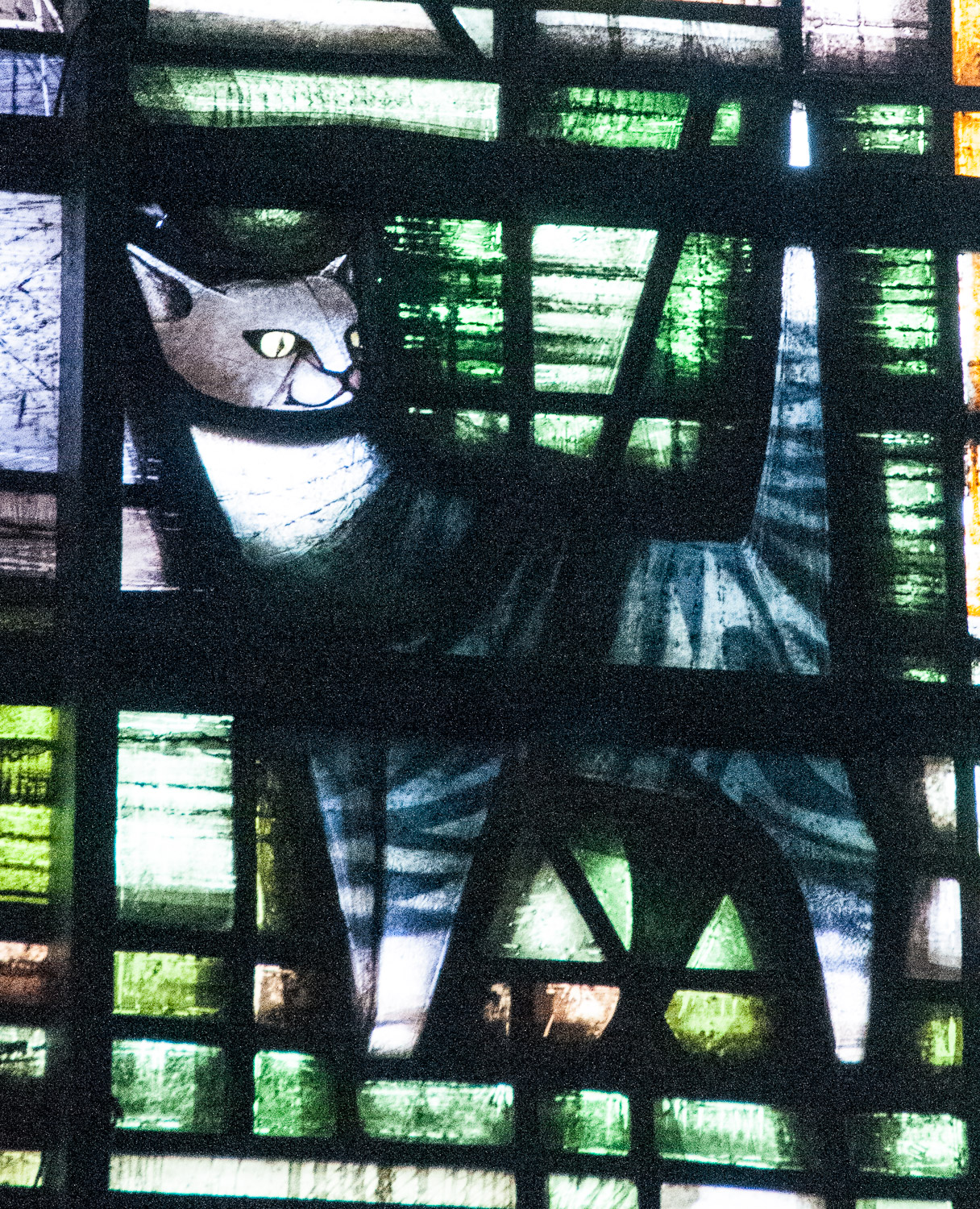
I love the expression on the cat’s face. Perhaps he has seen a mouse.

You can read more about the legend at the wonderful Purr ‘n’ Fur website, ‘Fabled Felines. Cats in Fables, Fairytales and Festivals’.

In another window St Michael slaughters the serpent …
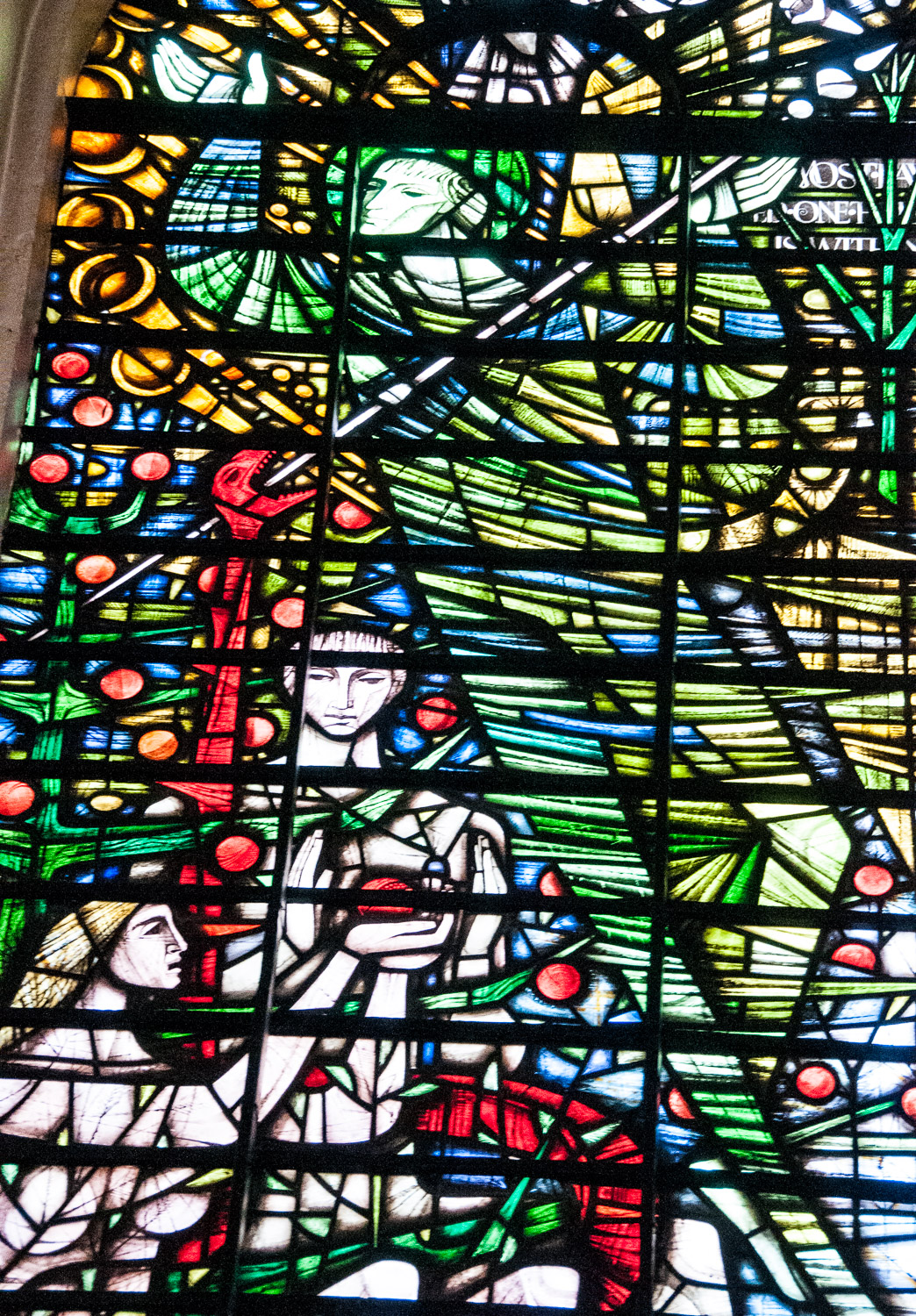
… but too late, Eve has already presented Adam with the apple.

And so now to the church whose bells summoned Whittington back to the City, St Mary-le-Bow in Cheapside, Hayward’s first major commission. Look out for livery company coats of arms …
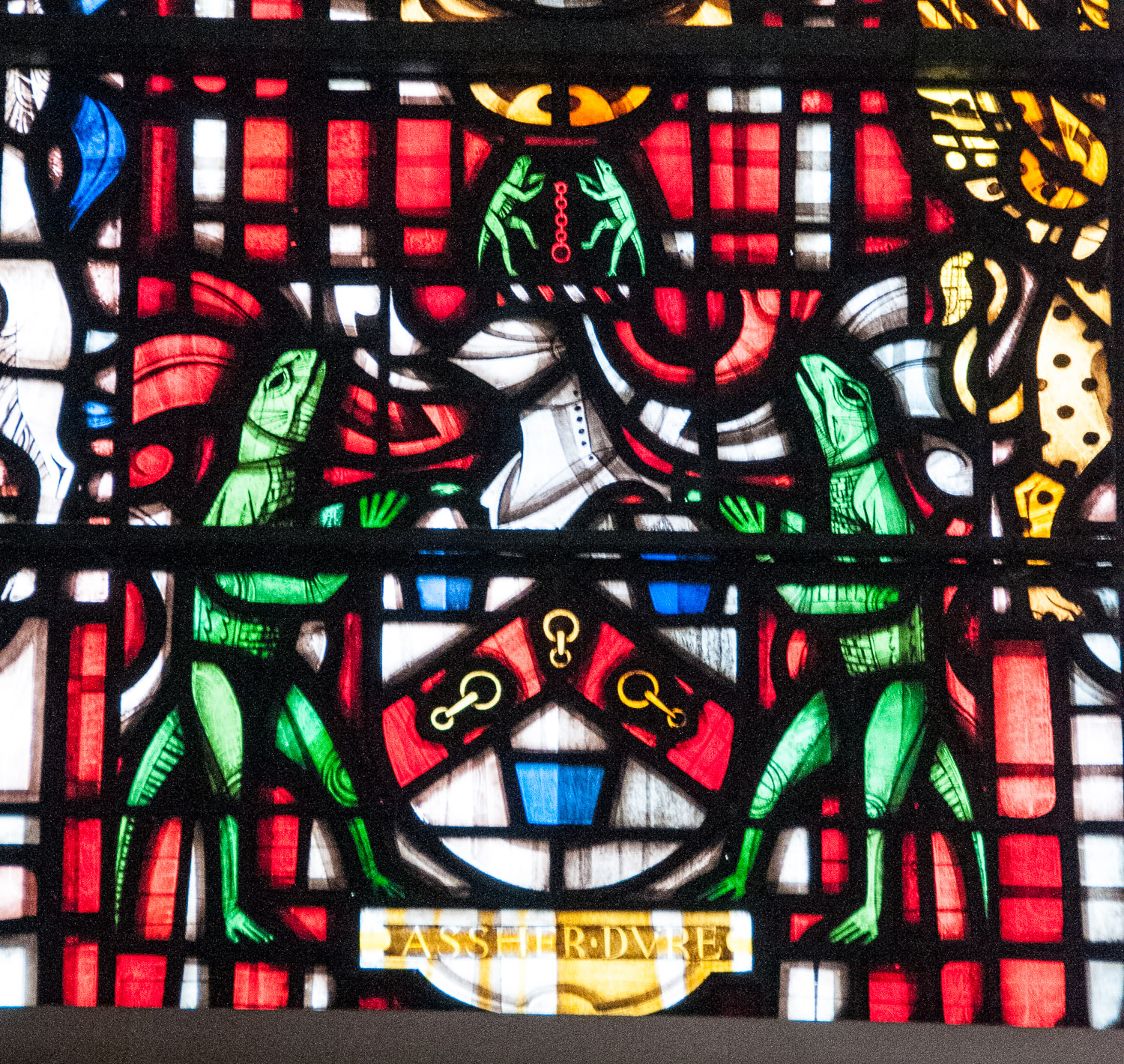
The salamanders of the Worshipful Company of Ironmongers – reputedly able to survive fire

In the window pictured below St Paul, patron of the City, is surrounded by the Wren churches that survived World War II with St Paul’s Cathedral in the top right hand corner …
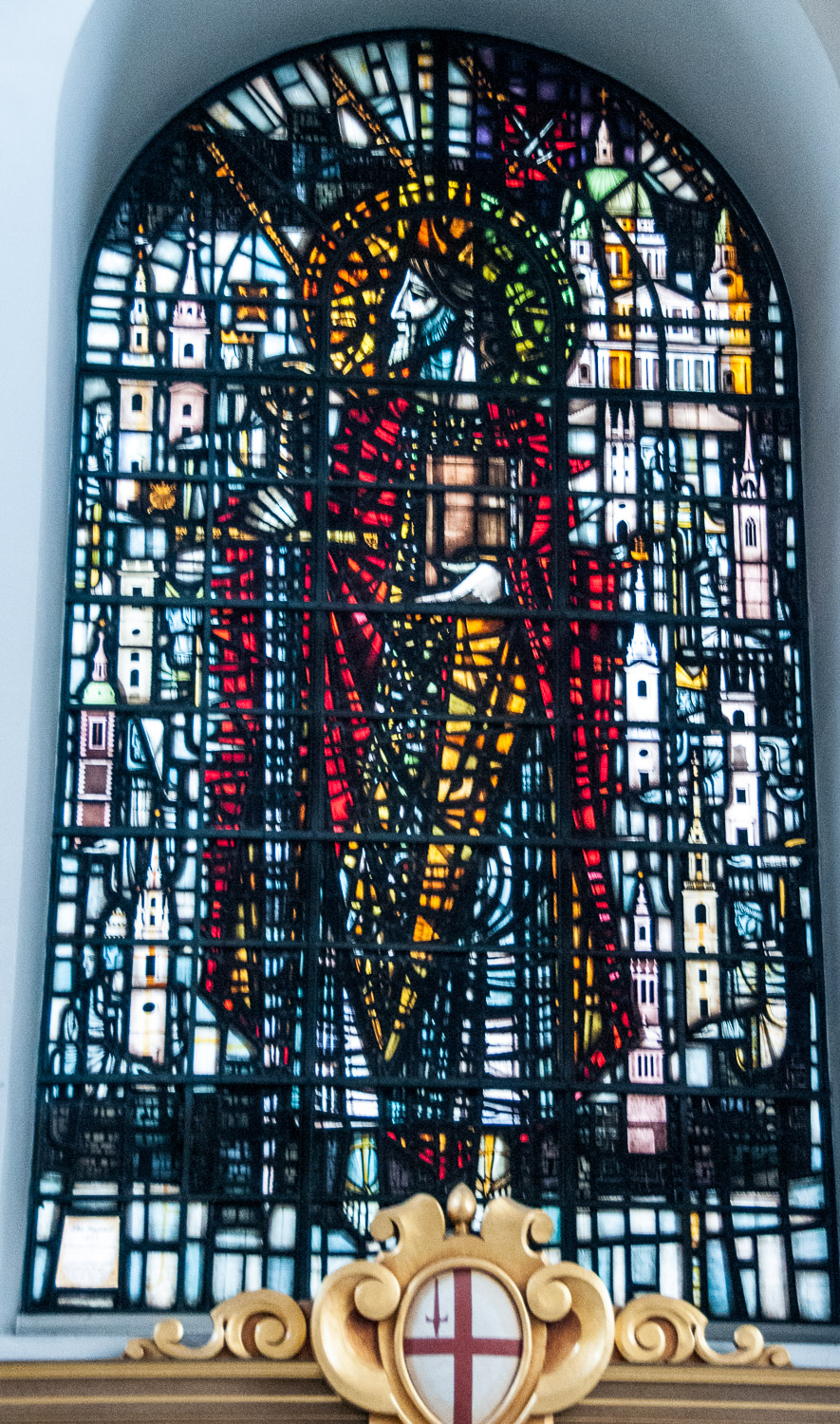
Here the Virgin Mary cradles the church named after her as if it were a child, also surrounded by church spires that survived the Blitz …
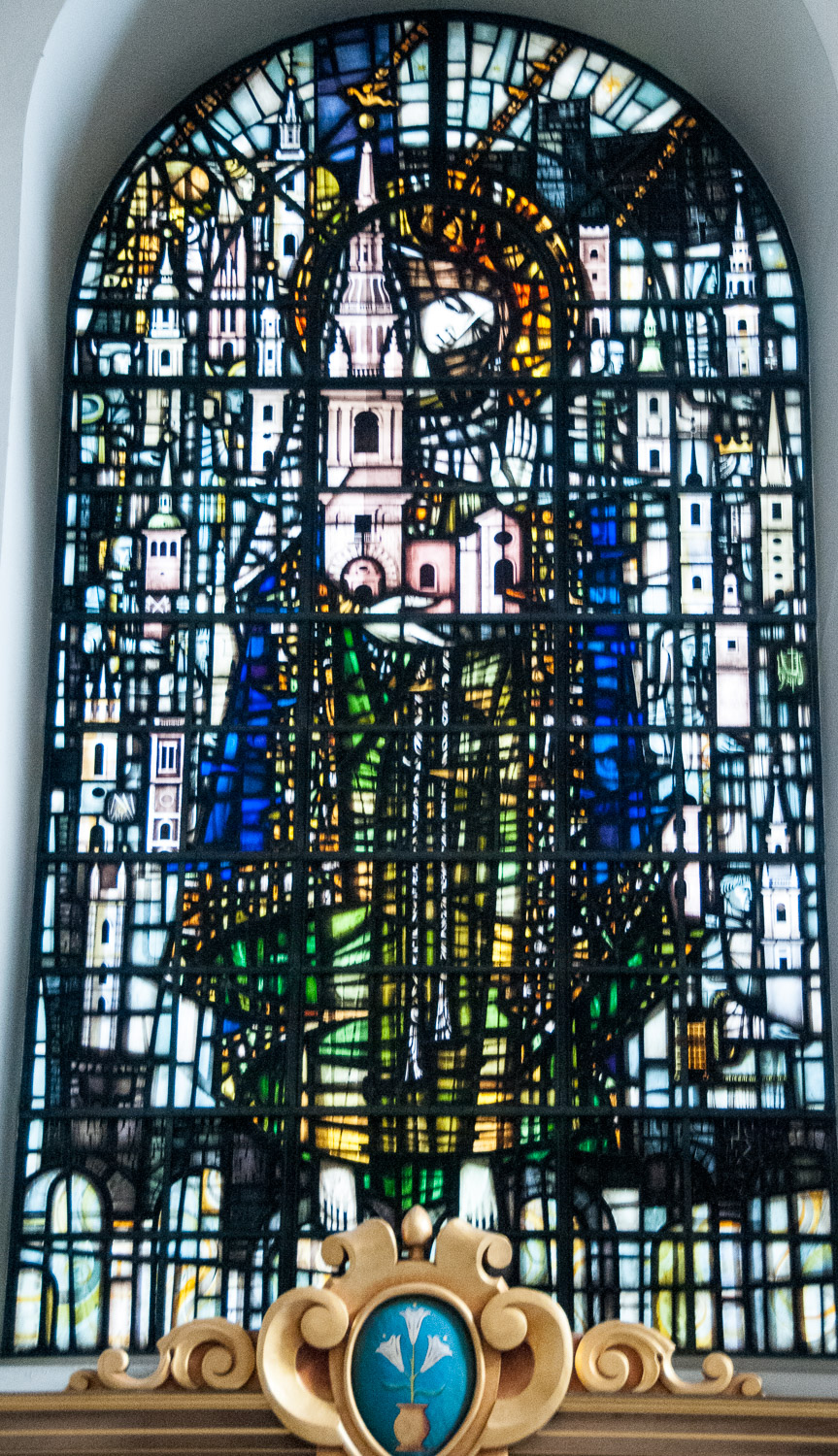
She is standing on the bow-shaped arches on which are based the church’s suffix ‘le Bow’.

Christopher Webb died in 1966 and John David Hayward in 2007, both leaving a beautiful legacy. I hope you will at some point enjoy visiting their work as much as I have.

I shall end today’s blog with a quote by Marc Chagall …

For me a stained glass window is a transparent partition between my heart and the heart of the world
 

City Churches and Churchyards – more tales of the unexpected

City churches and their churchyards have so much to offer, and after all these years I am still discovering new quirky items and treasures to write about in my blog. Two church interiors and two churchyards will feature today. I know many of my readers are immensely knowledgeable in this area but I hope there will be something new here even for them.

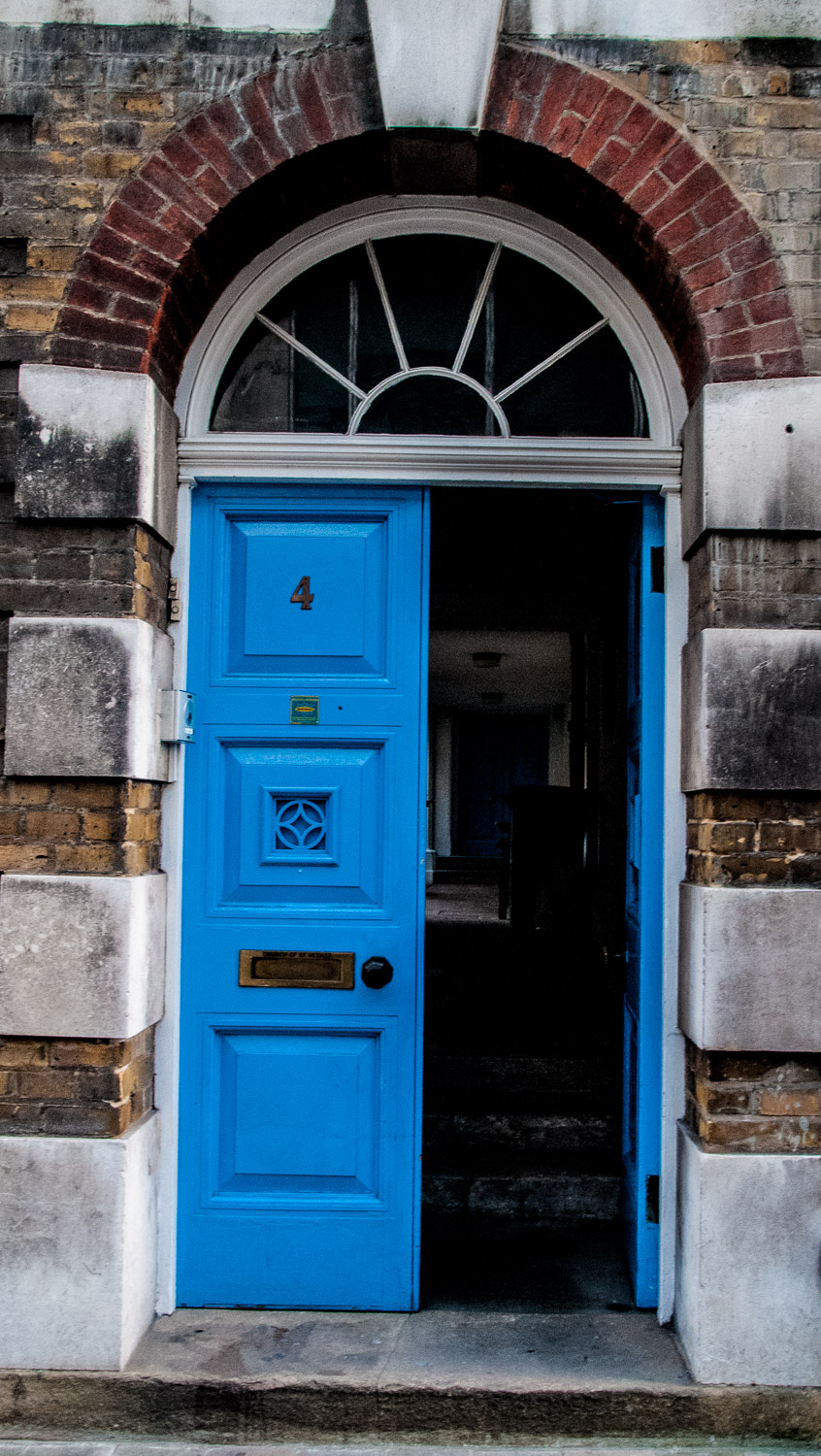
Once again I suggest you pass through the blue doors at 4 Foster Lane …

Entrance to St Vedast Fountain Courtyard and Cloister

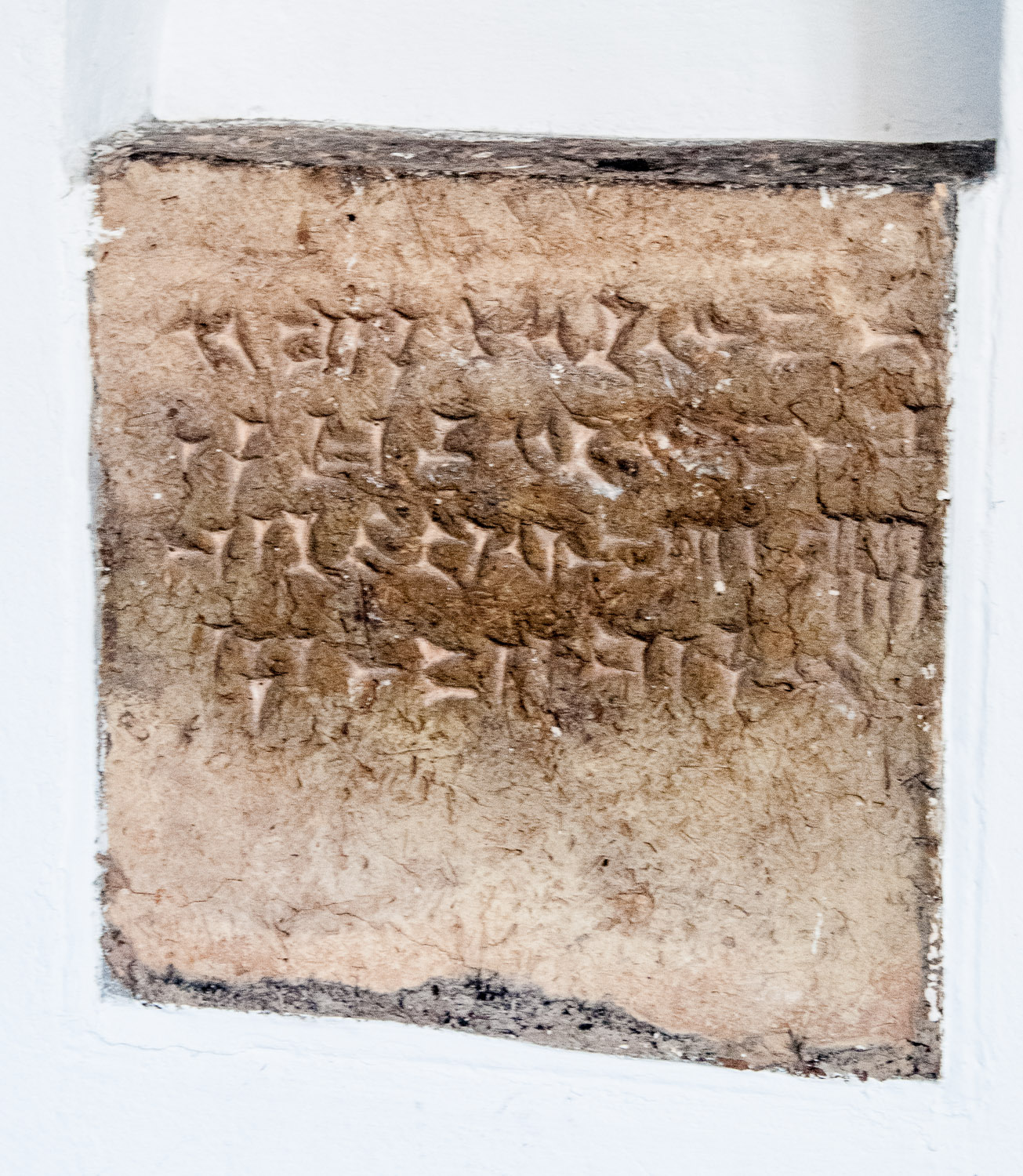
Near the piece of Roman pavement I discussed in an earlier blog (The Romans in London and Two Roman Ladies) you will see displayed in a niche a tablet with cuneiform writing.

It comes from a 9 BC Iraqi Ziggurat and was given to the Rector, Canon Mortlock, by Agatha Christie’s husband, the archaeologist Sir Max Mallowan. He discovered the brick during a 1950-65 dig and apparently it includes the name of Shalmaneser who ruled from 858 to 834 BC.

Just down the road from Pudding Lane, the source of the Great Fire, St Magnus the Martyr on Lower Thames Street was the second church to be destroyed in 1666. It was rebuilt by Wren circa 1671-84 and, despite being damaged in the Blitz, it has a great atmosphere – especially on a Sunday when lots of incense has been deployed.

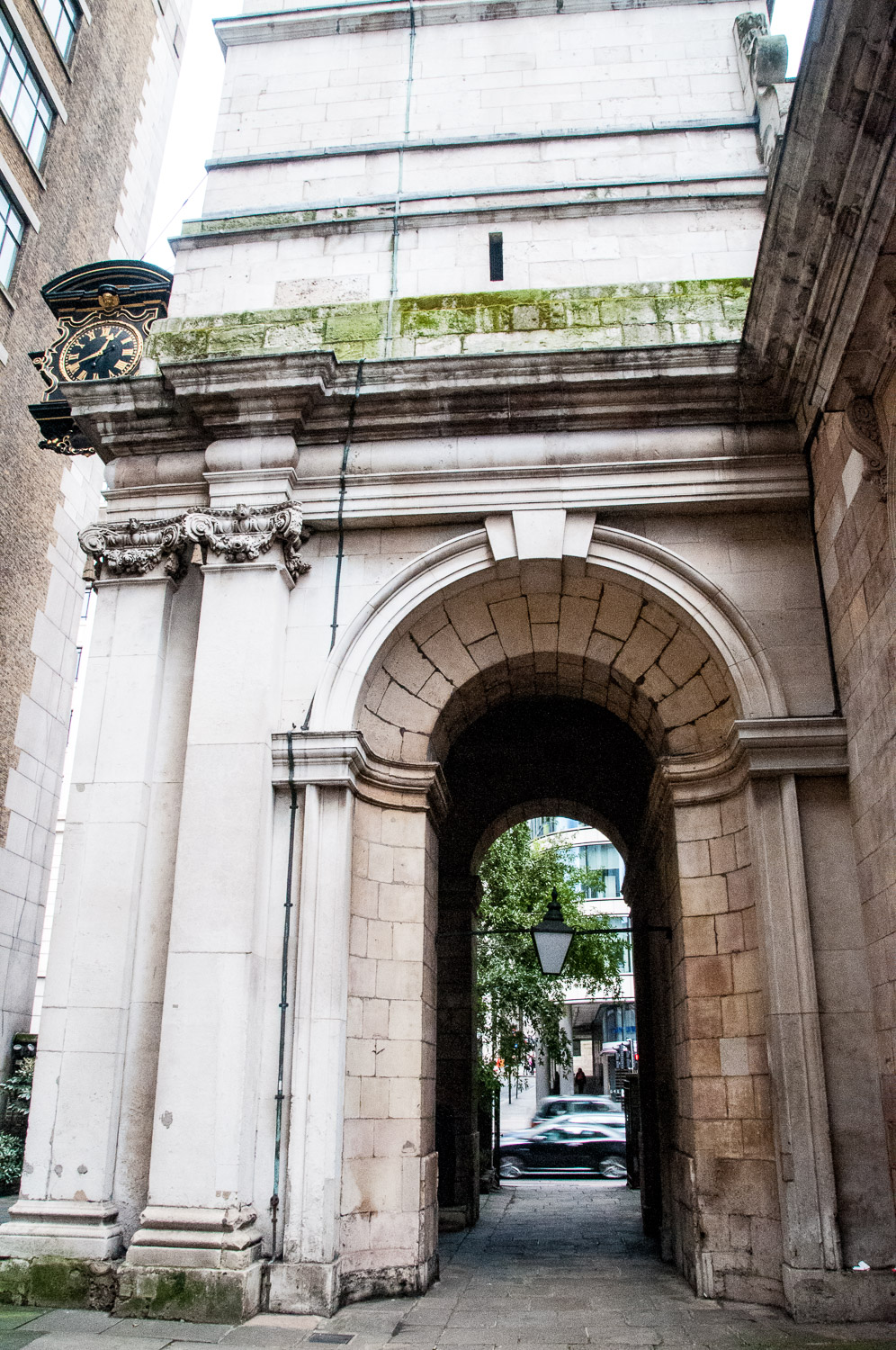
It is worthy of an entire blog all to itself, but for today I will be writing about just a few of its fascinating features. First of all there is the portico you walk through to enter the church …

The view towards Lower Thames Street

Between 1176 and 1831 the churchyard formed part of the roadway approach to Old London Bridge. I found it easy to imagine the tens of thousands who passed through here, since it was the only bridge across the Thames until Westminster Bridge was opened in 1750. Despite the heavy passing traffic, and the lavatorial white tiles on the nearby buildings, this is an atmospheric place and I paused there thinking of all those forgotten souls who had walked these flagstones before me.

The clock (top left in the picture) was presented in 1709 by Sir Charles Duncombe when he was Lord Mayor. One legend tells us that, as a poor saddler’s apprentice living south of the river, he was often severely reprimanded by his master for being late because he had no way of telling the time. Now immensely wealthy, he gifted the clock for the benefit of other folk who could not afford a timepiece.

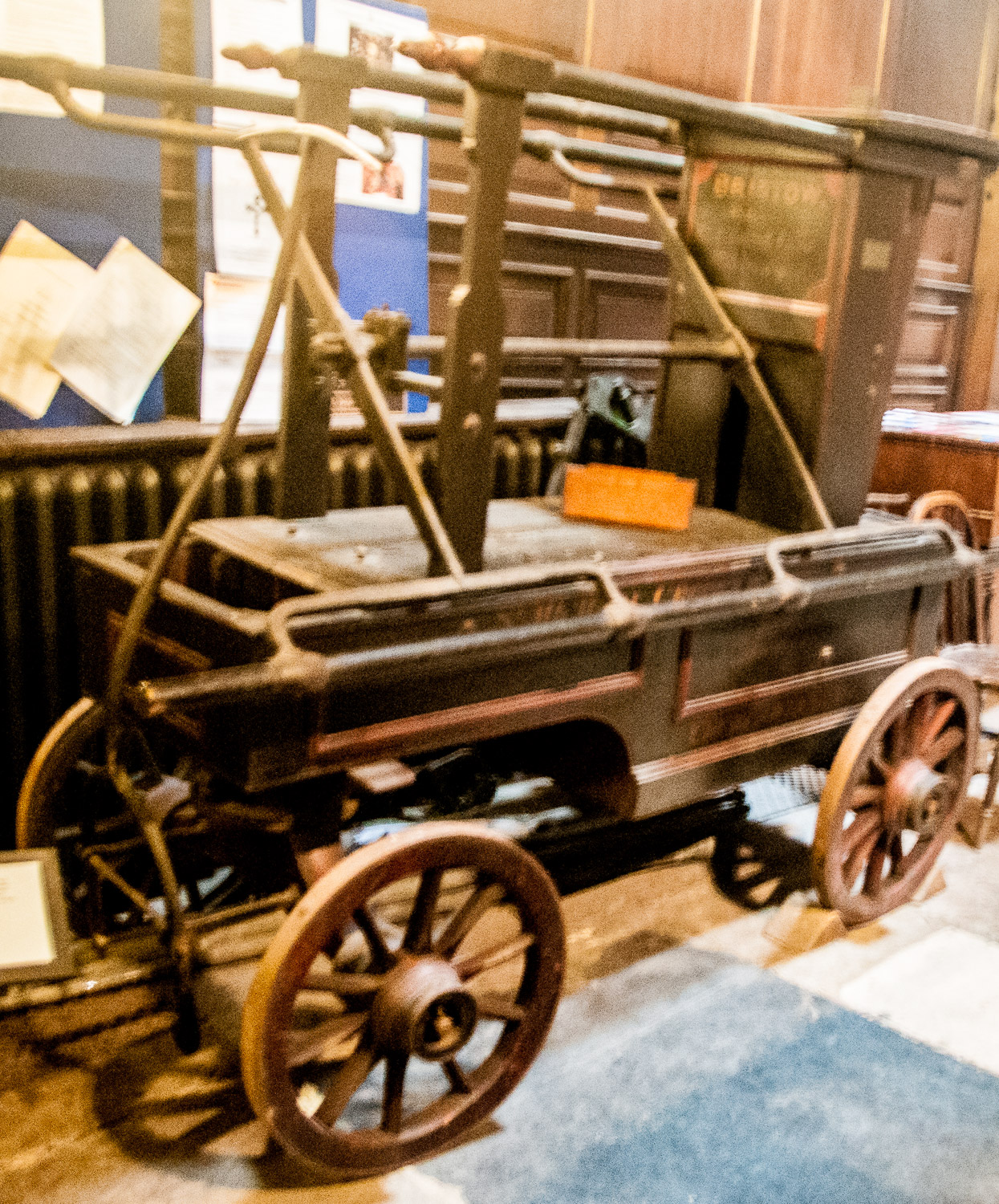
Right inside the door is a lovely surprise – a 17th century fire engine …

It once belonged to St Michael Crooked Lane. It has only recently been displayed in the narthex having been in store with the Museum of London since 1945.

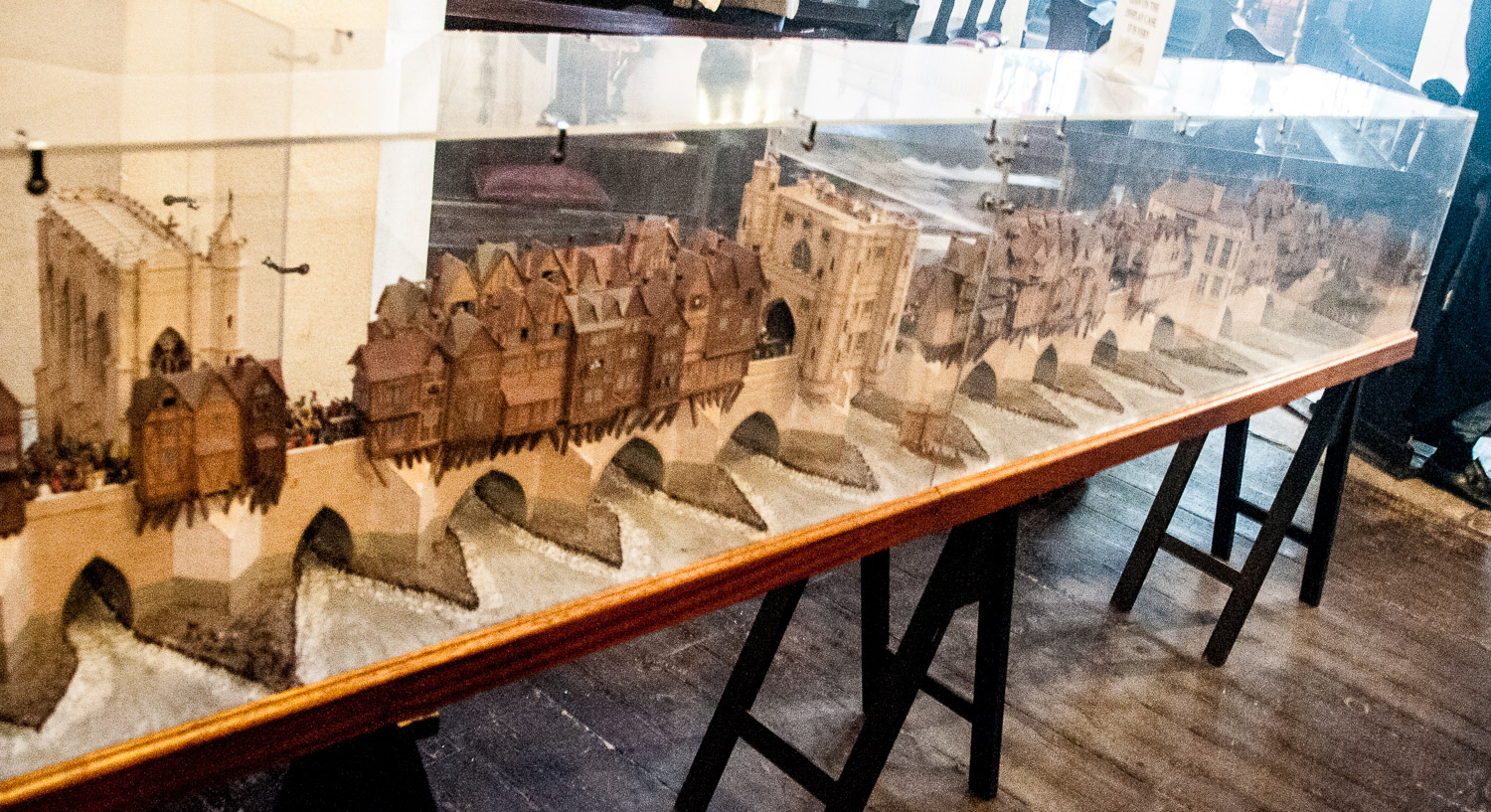
And if the fire engine wasn’t enough to prompt a visit, what about this extraordinary model of the Old London Bridge …

My picture really does not do it justice – it is four metres long and portrays the bridge at the start of the 15th century

It was created in 1987 by David T Aggett, a liveryman of the Worshipful Company of Plumbers. The detail is superb, from the individual tiles on the lead roofing, to the countless  individuals crushing into the roadway or hanging out of windows. Over nine hundred tiny people are crammed onto the bridge, amongst them a miniature King Henry V, who can be seen processing towards the City of London from the Southwark side of the bridge. No wonder it is estimated that the bridge usually took more than an hour to cross.

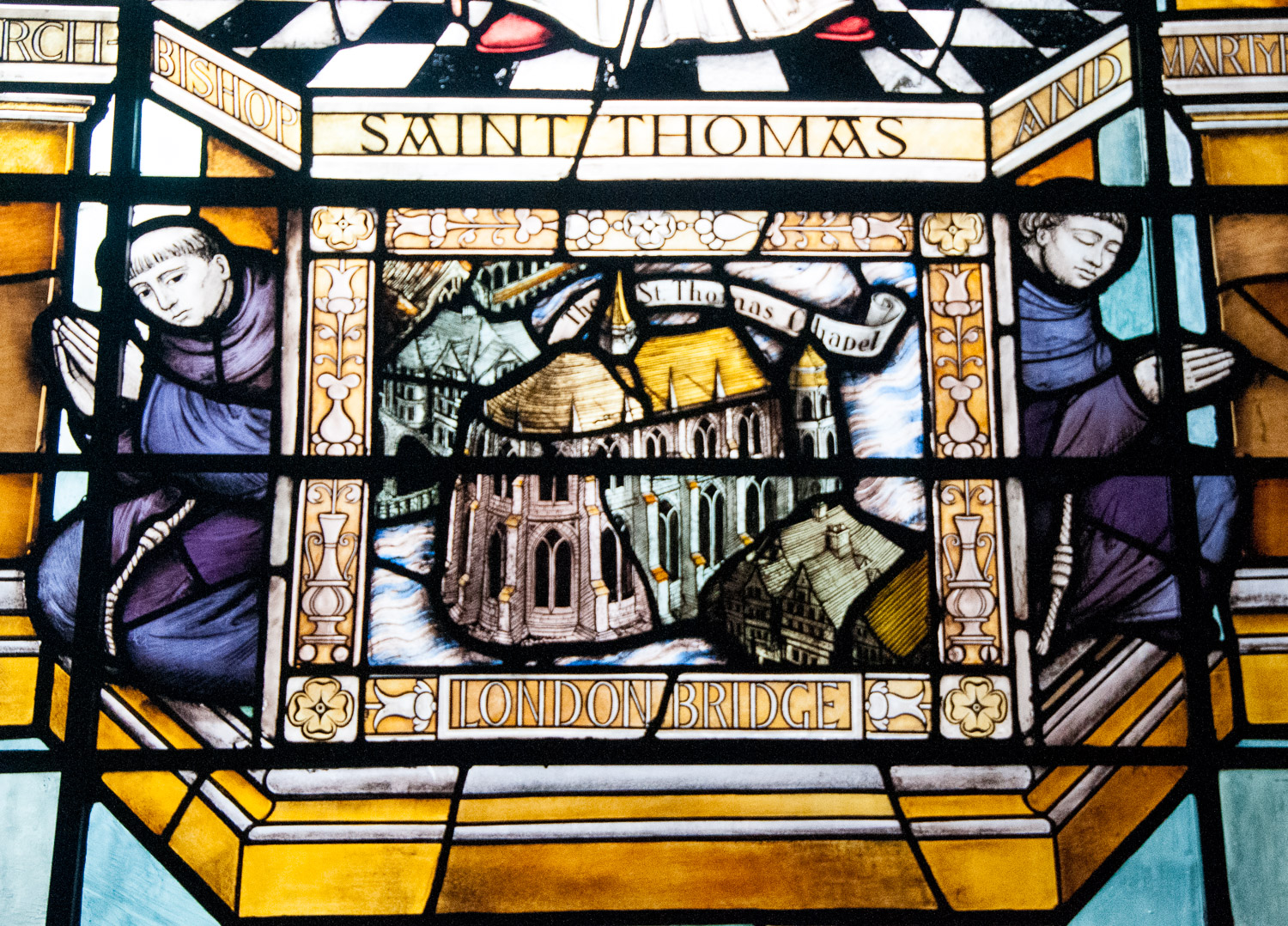
This window on the south side remembers the St Thomas a Becket chapel which was situated near the centre of the bridge …

See if you can find the Chapel on the model

The chapel paid a levy to St Magnus from the fees received from travellers crossing the river.

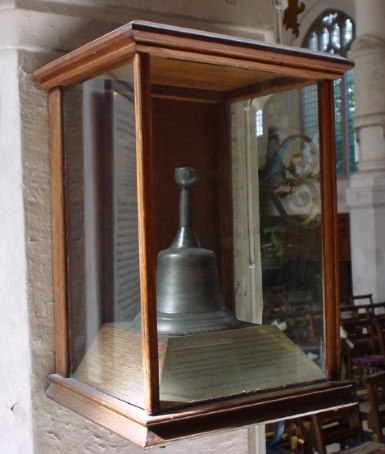
I paid another visit to St Sepulchre-without-Newgate at the junction of Holborn Viaduct and Snow Hill. Housed there, in a glass case, is a macabre relic – the Newgate Execution Bell

Photo by Lonpicman

Between the 17th and 19th centuries, the clerk of St Sepulchre’s was responsible for ringing a handbell outside the condemned person’s cell in Newgate Prison, just across the road where the Old Bailey court is now. A tunnel linked the church to the prison and at midnight, on the night before their execution, the bell would be rung twelve times and the following ‘wholesome advice’ delivered …

“All you that in the condemned hole do lie,
Prepare you, for tomorrow you shall die.
Watch all, and pray, the hour is drawing near,
That you before Almighty God will appear.
Examine well yourselves, in time repent,
That you not to eternal flames be sent,
And when St Sepulcher’s bell tomorrow tolls,
The Lord above have mercy on your souls.”

The tradition of ringing the bell apparently dates from 1605 and has its origins in a bequest of £50 made by one Robert Dow(e), a prominent member of the Worshipful Company of Merchant Taylors. Dow had apparently wanted a clergyman to be the one to ring the bell but £50 was insufficient to cover the extra cost.

On the day of execution, the condemned were ‘carted away’ and ‘went west’ from Newgate to the Tyburn gallows (near today’s Marble Arch), the death cart pausing outside St Sepulchre’s for the prisoners to be presented with a nosegay. The distance between Newgate and Tyburn was approximately three miles, but due to streets often being crowded with onlookers, the journey could last up to three hours. A usual stop of the cart was at the Bowl Inn in St Giles where the condemned were allowed to drink ‘strong liquors or wine’.

The tremendous disruption caused by the thousands who came to watch eventually became too much for the authorities and the last execution at Tyburn took place on Friday the 7th of November 1783 when John Austin was hanged for highway robbery. Public executions continued outside Newgate Gaol until 1868 and still attracted vast crowds, the last person dispatched being the Fenian Michael Barrett on the 28th May that year.

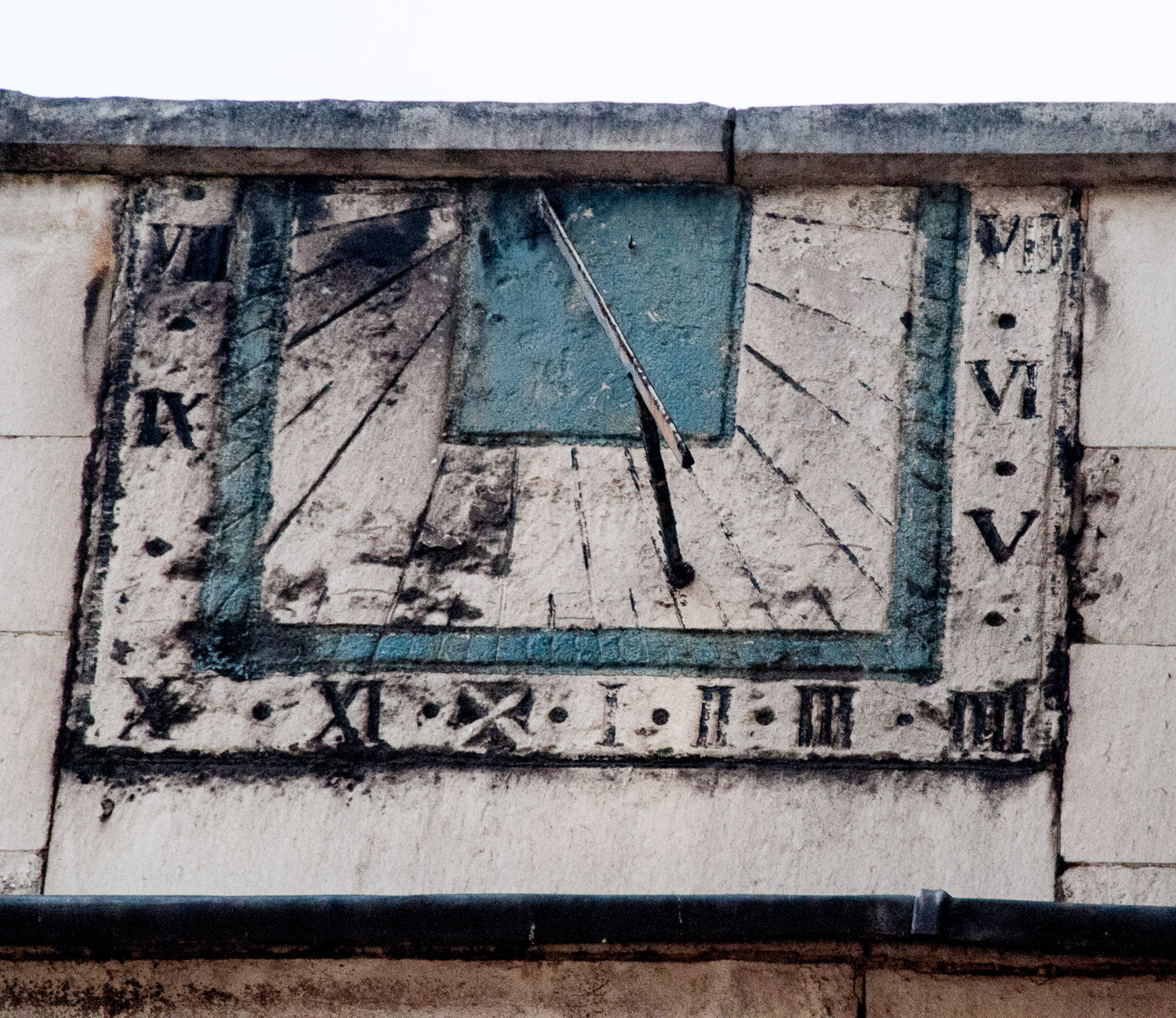
Looking down from St Sepulchre’s is this sundial. Dating from 1681 it will have witnessed many of the sad events associated with the old prison. You can read more about it, and other dials, in my blog We are but shadows – City Sundials.

The dial is made of stone painted blue and white with noon marked by an engraved ‘X’ and dots marking the half hours.


The Romans in London – Mithras, Walbrook and The Games

My two Roman London blogs this month are in celebration of the opening of the London Mithraeum in Bloomberg Space, Walbrook, which I enjoyed tremendously when I visited last week.

If you want to immerse yourself more completely in the Mithras Temple story, you might like to call in to the Museum of London beforehand and view the treasures there from the Walbrook excavation. I have put together a small selection.

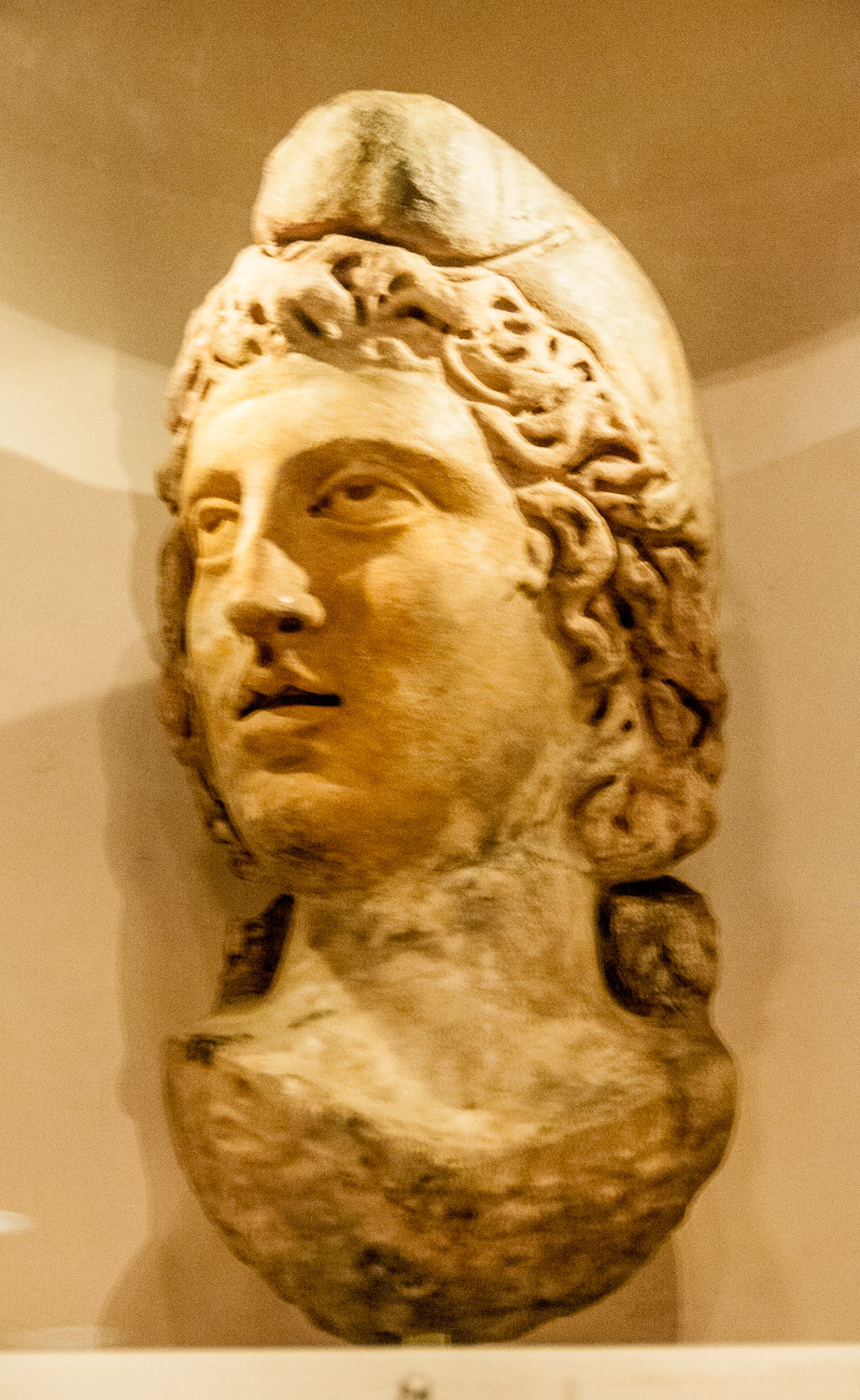
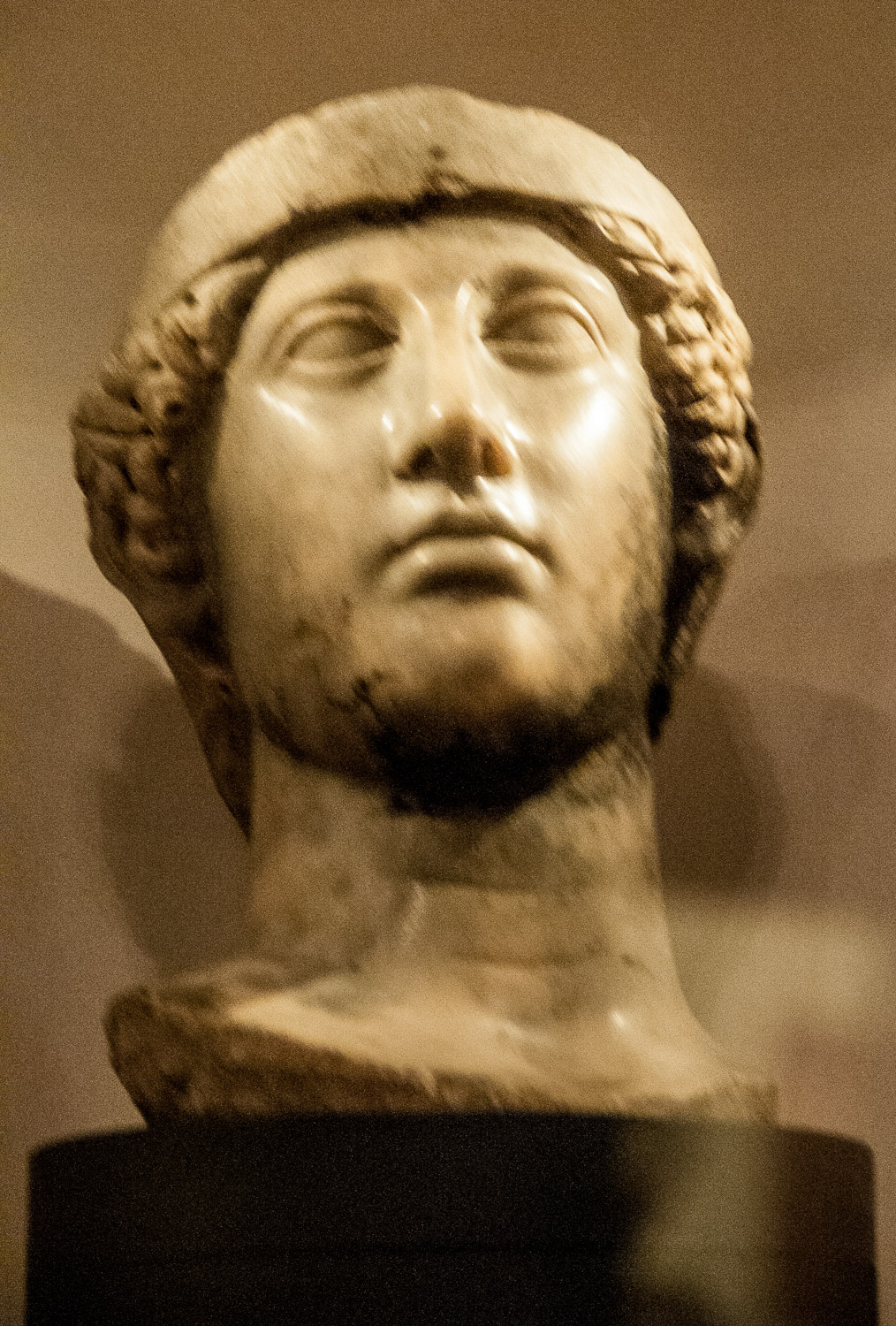
There is this head of Mithras …

Head of Mithras, marble, late 2nd century

He is shown as a handsome youth, the head probaly part of a large sculpture forming a focal point at the apse end of the Temple.

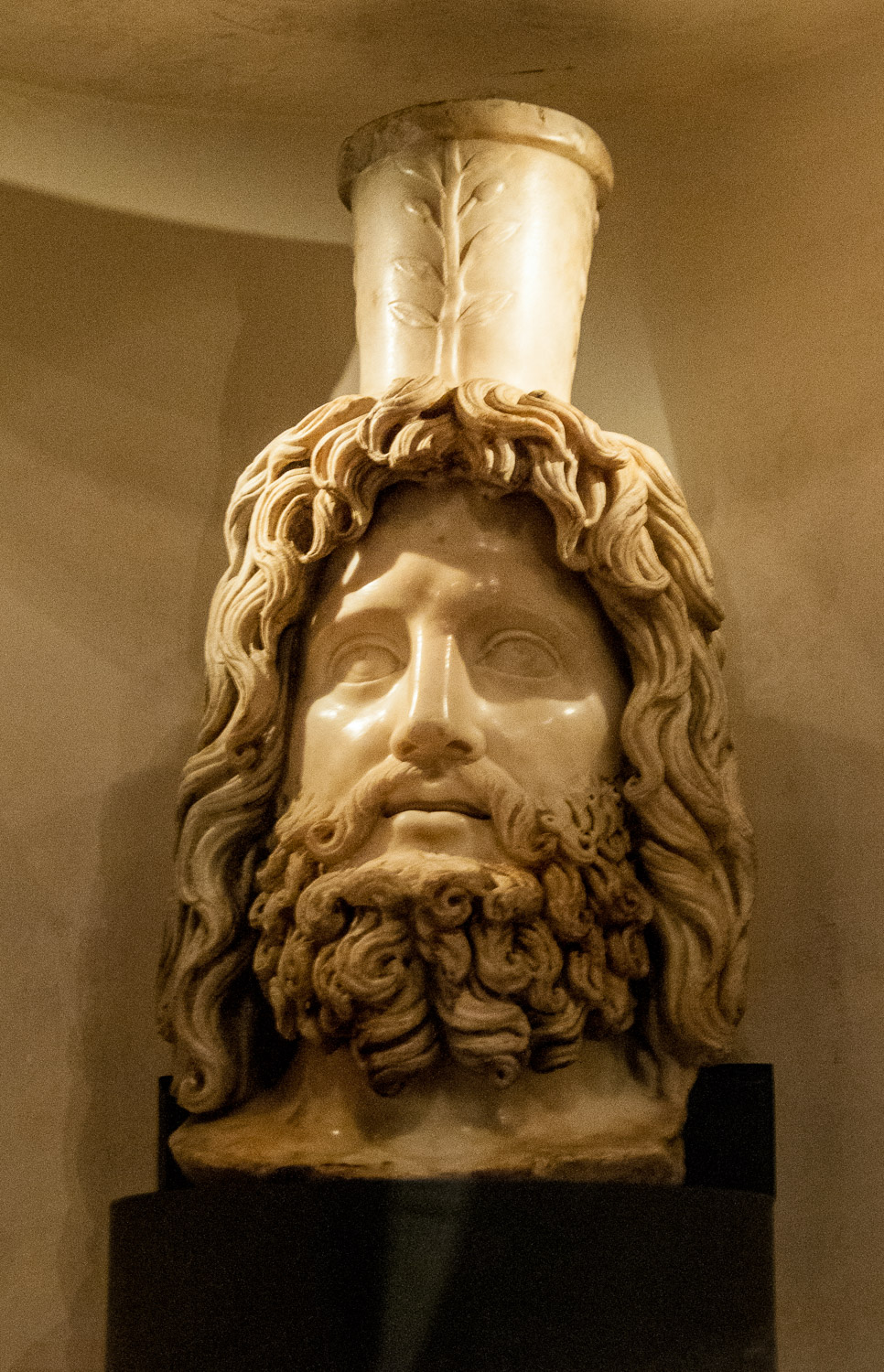
Serapis, the Egyptian God of the Underworld, was also represented …

Head of Serapis, marble, late 2nd – early 3rd century

He carries a corn measure on his head symbolising the wealth and fertility of the earth.

And Minerva, the Roman Goddess of Wisdom …

Head of Minerva, marble, early 2nd century, possibly AD 130

Again, the head was probably originally part of a larger statue.

So now on to the Mithraeum itself at 12 Walbrook. Entry is free but you must book a time slot in advance using the website.

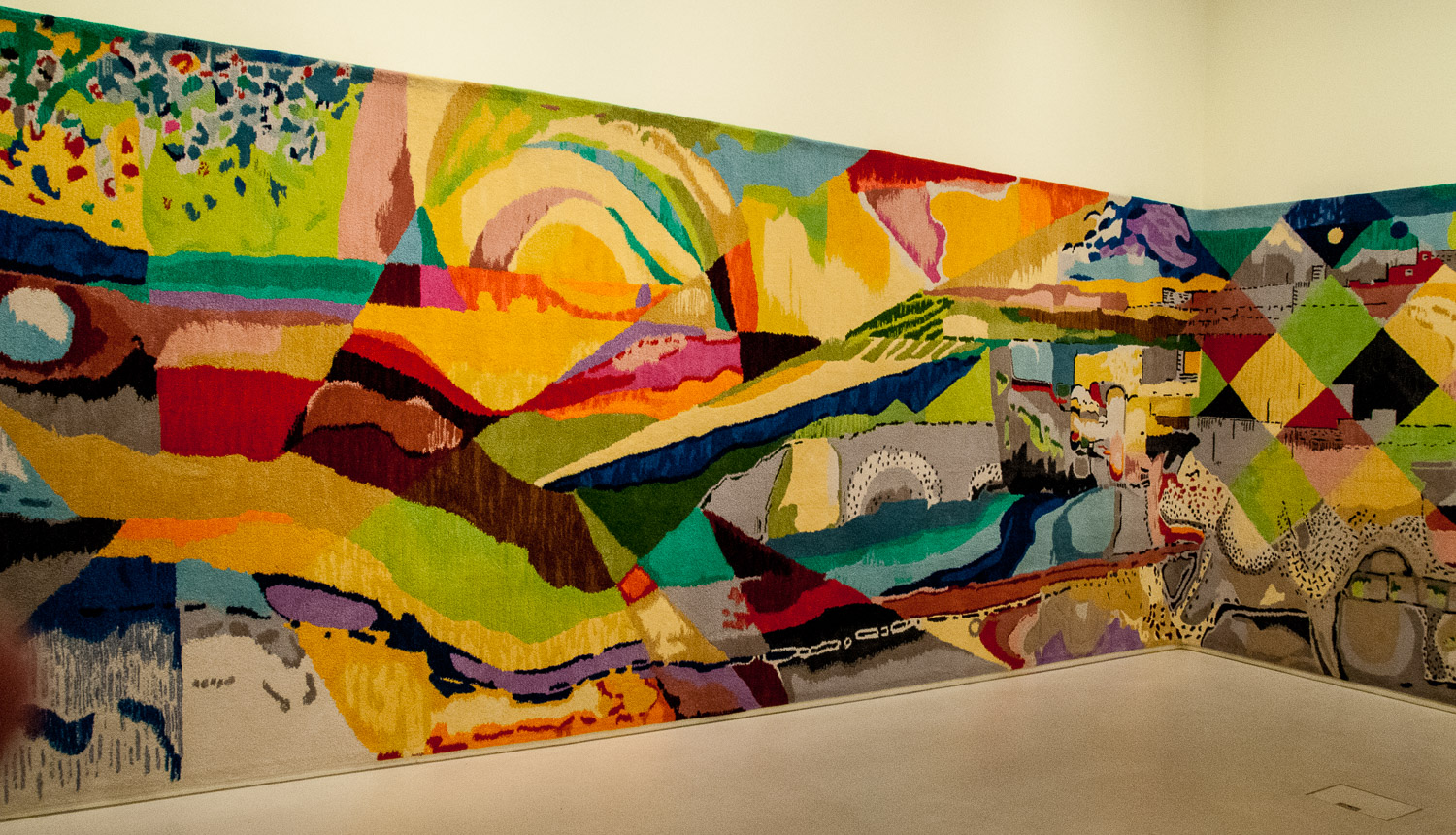
The first thing you see is this stunning tapestry by Isabel Nolan …

Another View from Nowhen, 2017

There are helpful guides ready, and very willing, to introduce you to the Mithraeum, explain the tapestry and an accompanying sculpture, and hand you an excellent printed guide. There is a well organised display of Roman artefacts which can be explored using your own mobile device, a tablet that they provide, or just by reading the labels. Unfortunately I couldn’t get a good enough photograph of these for the blog – please take my word for it that they are fascinating.

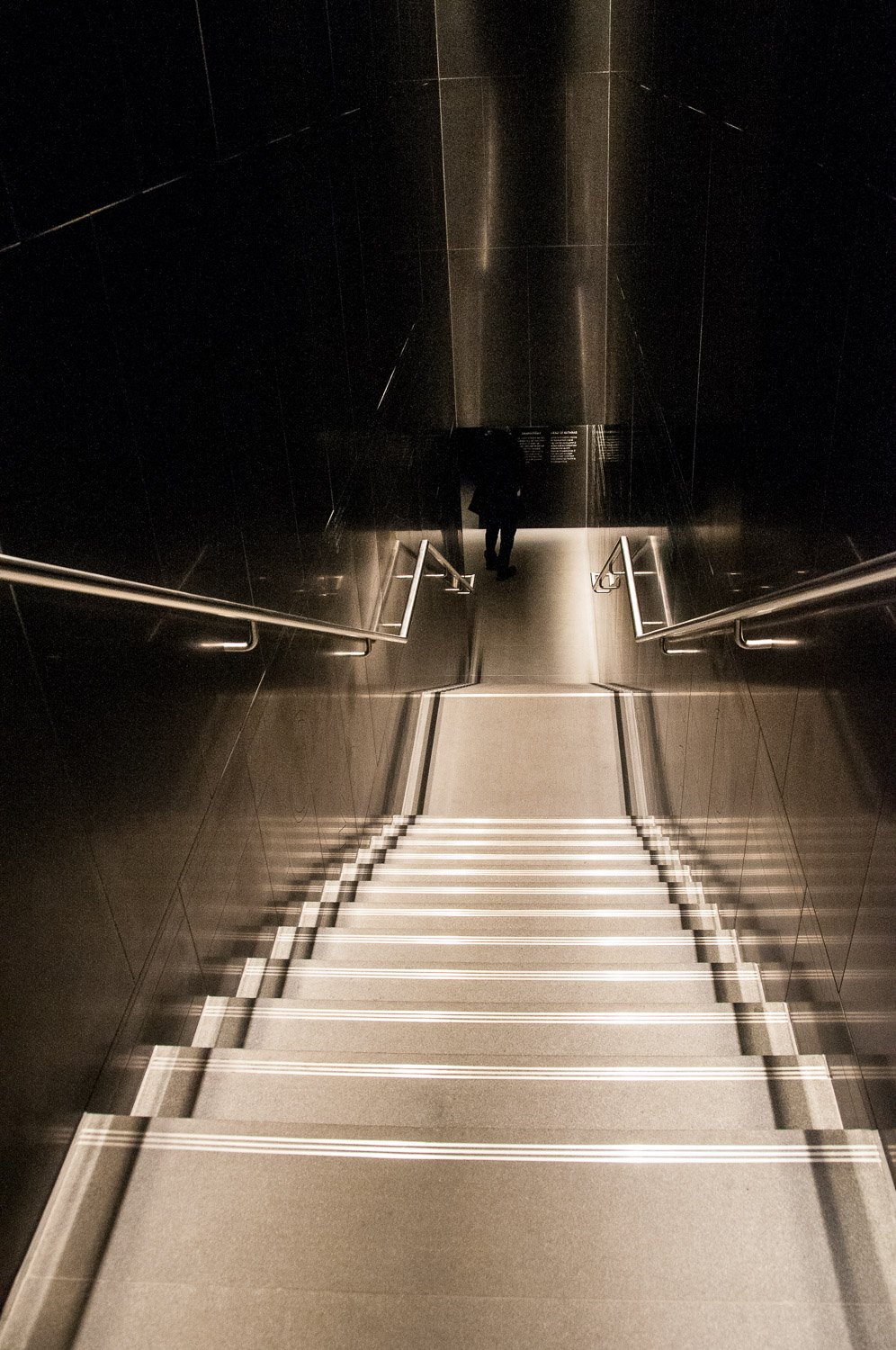
Then you are ready to descend through time, seven metres or so, from modern London to the very last days of the Romans in Britain, about AD 410.

Various levels of history are inscribed on the wall as you descend – there is also step-free access

At mezzanine level there is a further exhibition consisting of a reproduction of artefacts from the site including, of course, the head of Mithras, and a helpful commentary.

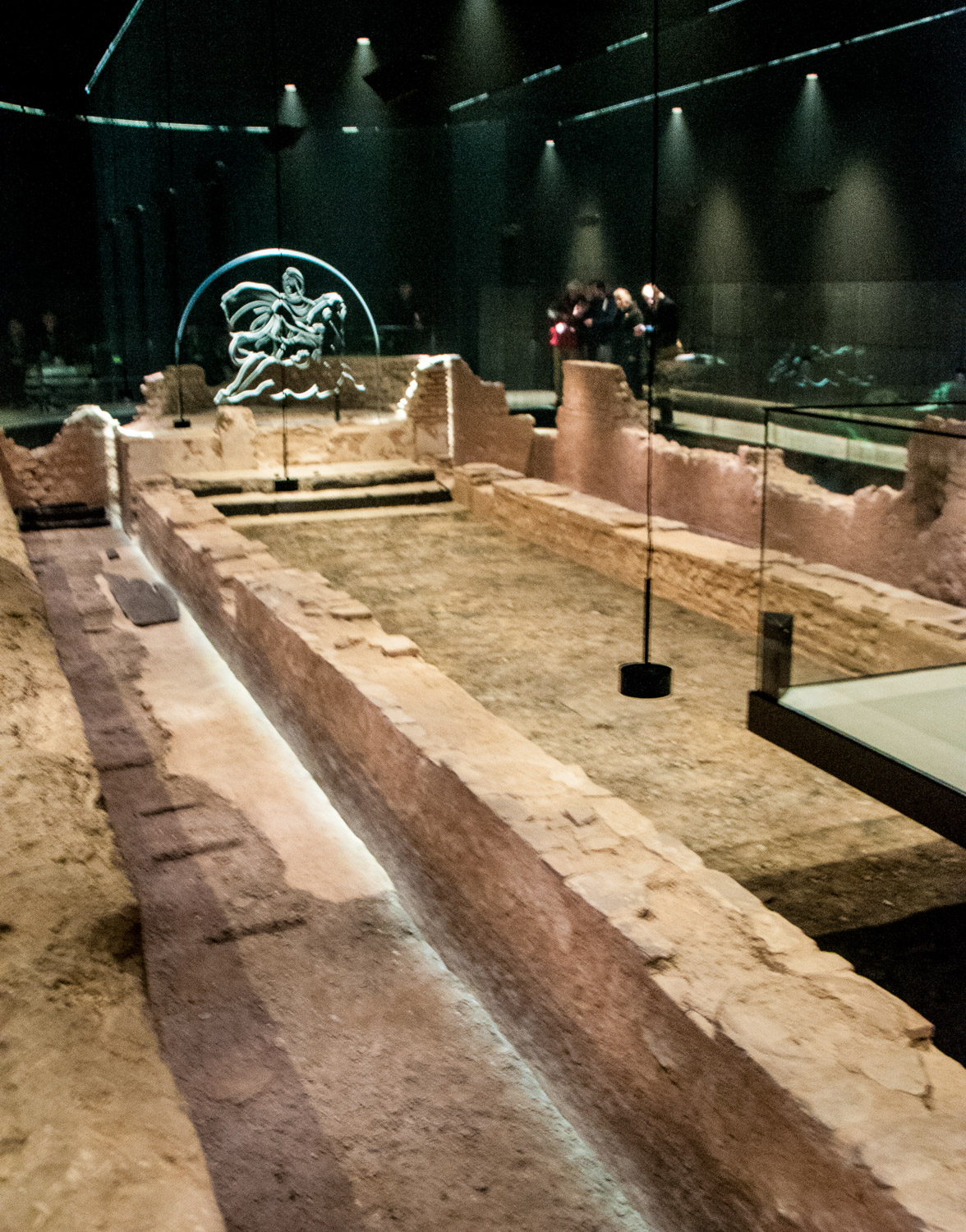
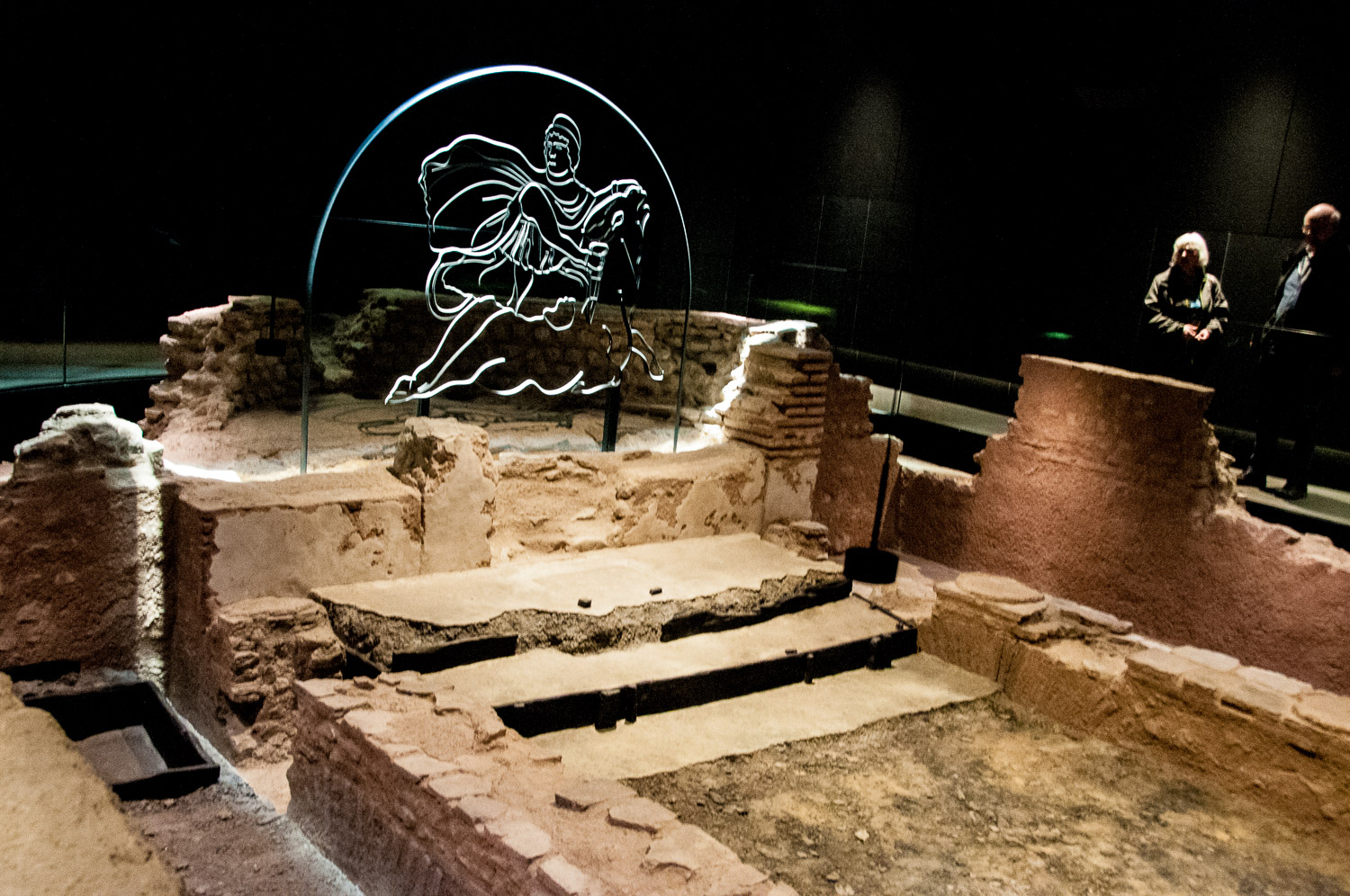
You then descend further to see the Temple itself. Initially it is dark and shrouded in mist but, as this gradually clears to the sound of evocative chants, you will see an accurate reconstruction of the ruin as it was on the last day of excavation in October 1954.

All the stone that you see and most of the bricks are from the original structure

The central icon of the cult is Mithras killing a bull

All I can say is ‘well done Bloomberg’.

The Walbrook stream played a very important part in the establishment of Roman London. Originating in what is now Finsbury Park, it carried fresh water in to the walled City and carried waste away to the River Thames. As the City developed it became imprisoned underground.

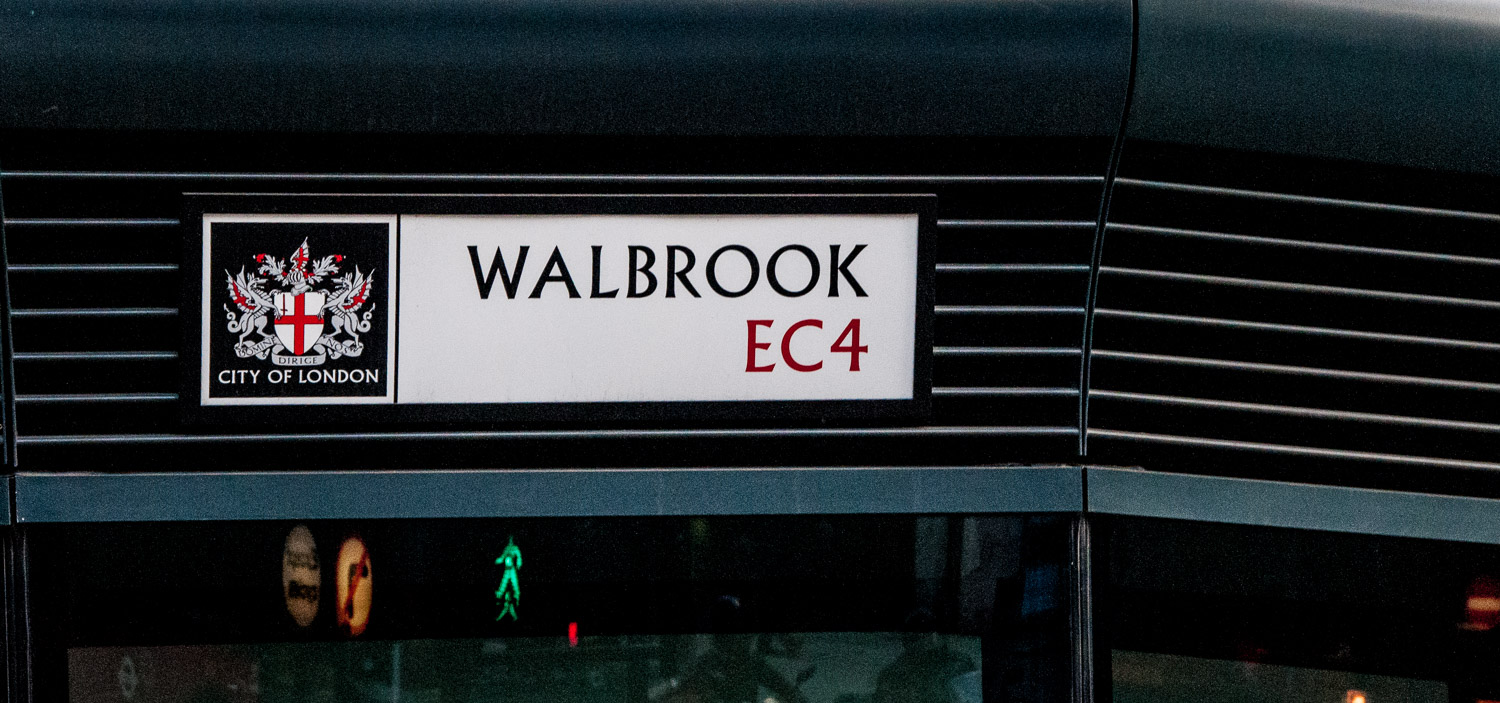
The stream lives on in the name of the street

The area has been difficult to access lately because of construction work, but is now a new open space and I took the opportunity to explore.

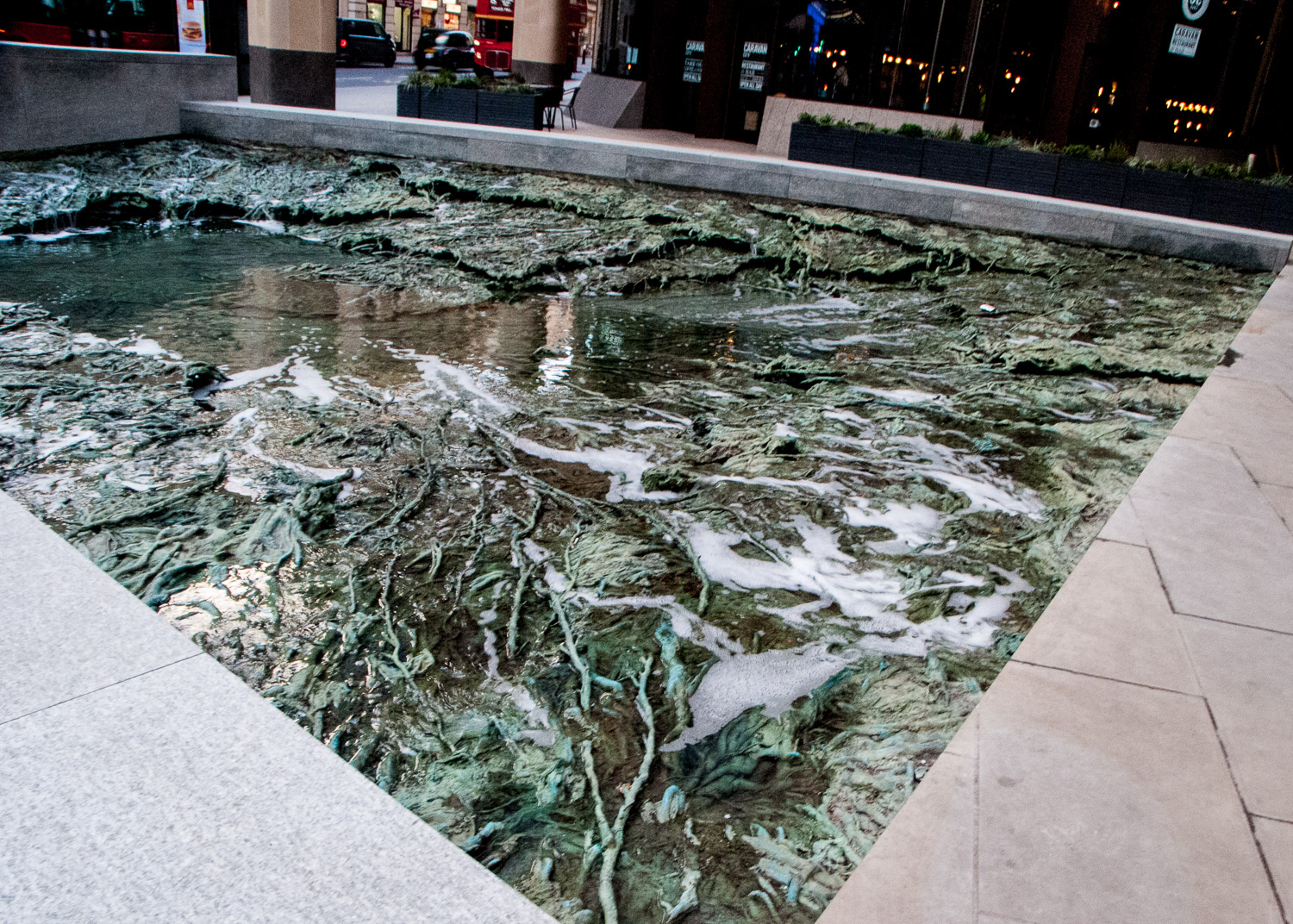
What a wonderful surprise! It looks like the Walbrook is flowing again above ground through the City…

Alongside Cannon Street

Parallel to Queen Victoria Street

Entitled Forgotten Streams, and cast in bronze, the Spanish artist Cristina Iglesias took as her inspiration the ancient Walbrook itself. It looks very authentic and quite beautiful.

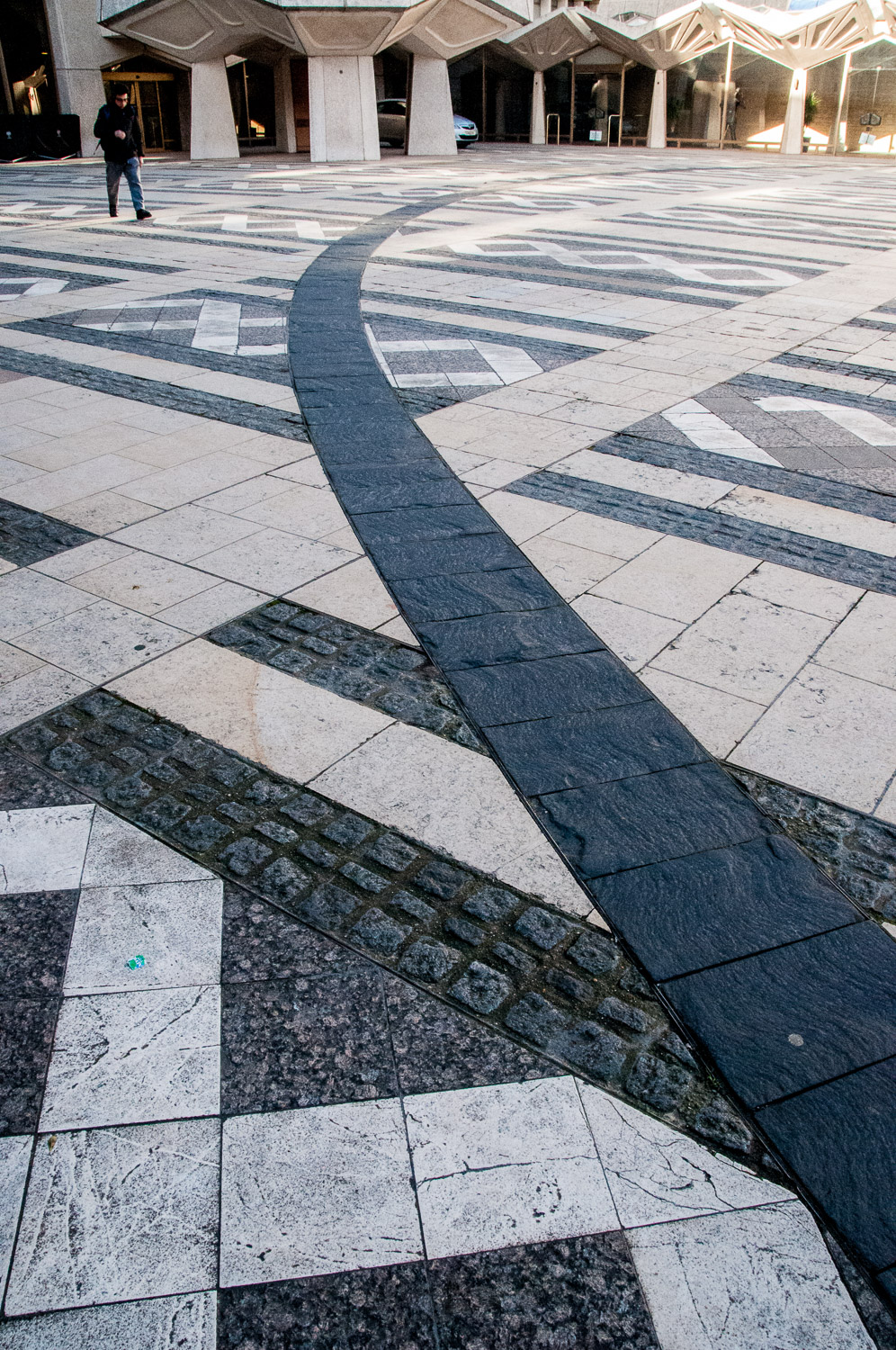
And finally, to complete a Roman London experience, you might want to visit the Guildhall Art Gallery, in the lower level of which you will find Roman London’s Amphitheatre. An 80 metre wide curve of dark stone in Guildhall Yard marks out the area of the Amphitheatre, the site of the famous Roman ‘Games’ …

An outline of what existed about 8 metres below

The site of the Amphitheatre

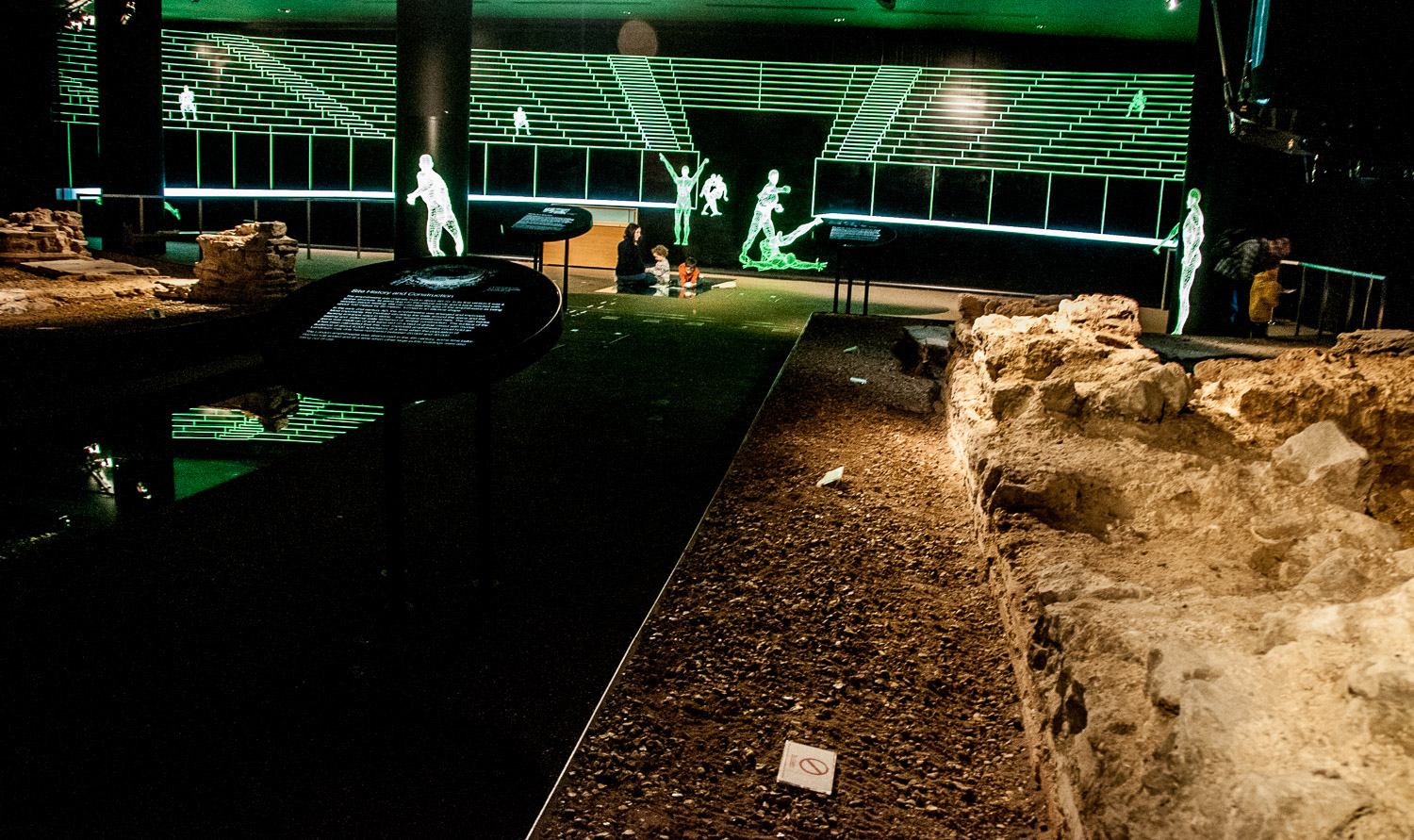
Once inside you will see the remains of the original walls, the drainage system, and a rather impressive digital projection that fills in the gaps in the ruins.


Page 142 of 151

Powered by WordPress & Theme by Anders Norén

Symbols & Secrets
Privacy Overview

This website uses cookies so that we can provide you with the best user experience possible. Cookie information is stored in your browser and performs functions such as recognising you when you return to our website and helping our team to understand which sections of the website you find most interesting and useful.