Symbols & Secrets

Walking the City of London

The Mysterious Panyer Boy – and other curiosities

Here he sits in Panyer Alley, just beside an entrance to St Paul’s Underground Station, a naked little boy astride what looks like a basket, and a strange inscription precisely dated ‘August the 27 1688’. What is going on?

Sadly the little chap has become very eroded and damaged over the years, and it is pretty surprising that he has survived at all. After a bit of searching I have found a drawing of him, possibly from the 18th or 19th century, which may give us a better idea of what he used to look like …
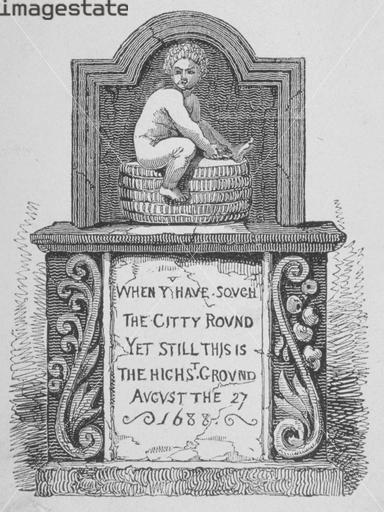
The pedestal and scrollwork have now disappeared.

I have also found this old photograph, probably early 20th century …
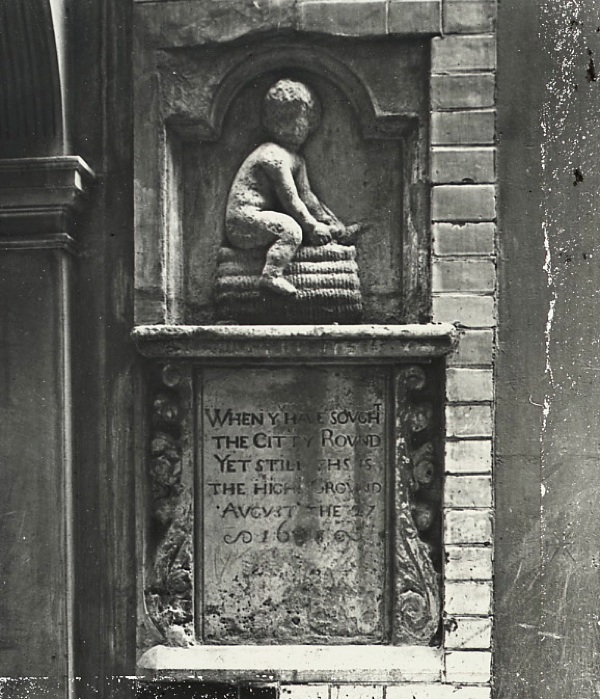
For this picture and other really interesting photos, visit the ‘Spitalfields Life’ website and search for ‘Signs of Old London’.

As with all mysteries, there are many theories, but all are agreed that the sign really does date from the 17th century since this is acknowledged in trusted sources such as Thomas Pennant’s Of London (1790). What the boy is doing and what he represents are the areas where there is much dispute, for example:

‘Is he: sitting on a pannier (basket), or a coil of rope, or a woolsack, or a barrel?’

‘Is he holding: a bunch of grapes, or a loaf of bread, or his foot (perhaps pulling out a thorn – apparently the carving was once known locally as ‘pick my toe’)?’

‘Does he represent: the bread market that was here in medieval times, and at nearby St Martin’s Le Grand, or the sign of a brewhouse (brewery)? There was a Panyer brewhouse recorded nearby as long ago as 1426.’

‘Does he have any connection whatsoever to the claim to the highest ground?’.

I don’t know the answer to these questions, but one thing that is certain is that this is not the ‘highest ground’ in the City, that description nowadays belongs to Cornhill.

Nearby on the north west corner of Warwick Lane is a small bas-relief of Guy, Earl of Warwick. It is believed that the lane was so named since it was the location of the Warwick Inn owned, not surprisingly, by the Earls of Warwick.

The knight represented is the 10th Earl (c.1272-1315) and the British Museum archives hold a picture of the carving as it was illustrated in Antiquities of London (1791) …
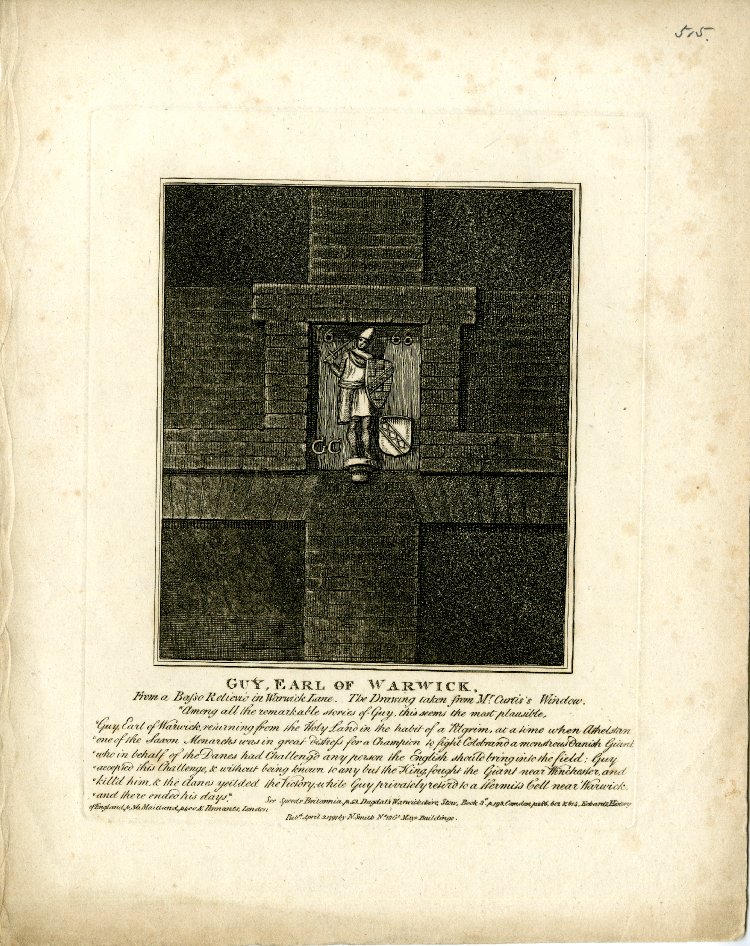
Copyright : British Museum

And here is how it looks now …
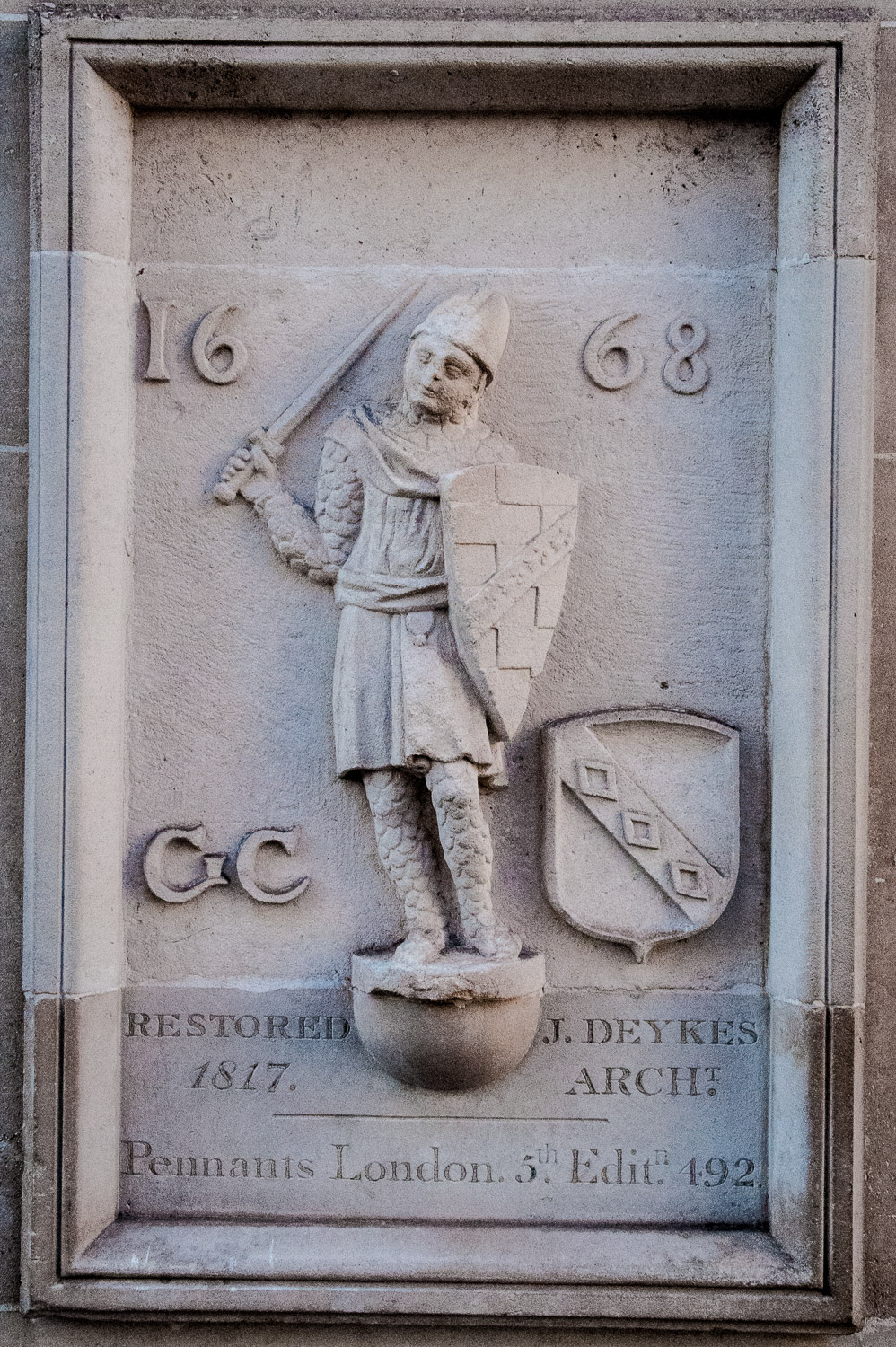
You can see that the top and bottom sections of the present-day relief were added later, most likely at the time of a restoration in 1817 by John Deykes (an architect and surveyor). Pennants London is a book published in 1805 and its 5th edition (1815) gets a mention on the relief, right down to the page number where  the carving is discussed (492). Maybe the publisher paid for the restoration in return for this smart piece of advertising?

Incidentally, whilst researching the Warwicks I came across this reference to the Warwick Inn. Neville, the 16th Earl …

At a meeting of the great estates of the realm in 1547 … lodged himself  (there) with 600 men where, says Stowe, ‘there were oftentimes six oxen eaten at … breakfast, and every tavern was full of his meat; for he that had any acquaintance in that house, might have there so much of sodden [boiled] and roast meat, as he could prick and carry upon a long dagger.’

Now that’s what I call a buffet.

On the north west side of nearby Ludgate Circus is this memorial plaque. Wallace sold newspapers on this corner when he was eleven years old …
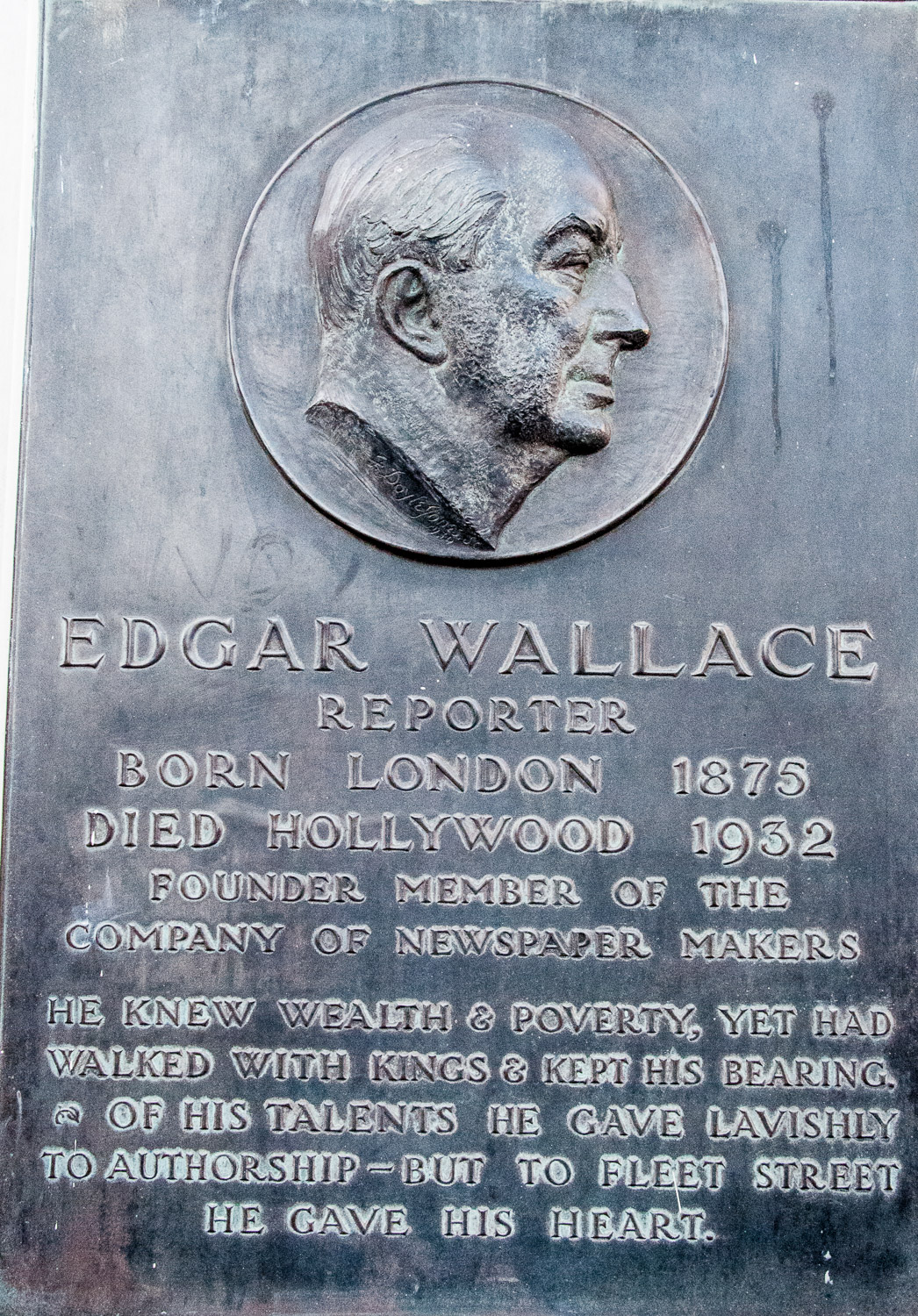
The memorial is by F.W. Doyle-Jones (1934)

Born out of wedlock in Greenwich in 1875, and with both of his parents itinerant actors, he was adopted by a kindly Billingsgate fish porter and his wife. Asked by a journalist years later to contribute to a celebrity feature entitled ‘What I Owe My Parents’, Wallace replied on a postcard:

‘Sorry, cock, I’m a bastard’.

Despite such a challenging start to life (or perhaps because of it) his story is extraordinary. As well as journalism, Wallace wrote screen plays, poetry, historical non-fiction, 18 stage plays, 957 short stories, and over 170 novels, By 1926, he was knocking out 18 novels a year and by 1929, he was up to 34, and it was claimed that a quarter of all books read in English were by him.

When he turned to writing fiction in 1905 he told his wife he would give his readers :

 ‘Crime and blood and three murders to the chapter; such is the insanity of the age that I do not doubt for one moment the success of my venture.’

More than 160 films have been made of Wallace’s work and he sold over 50 million copies of his combined works in various editions, The Economist describing him as ‘one of the most prolific thriller writers of [the 20th] century’.

So why is he hardly known at all now compared to his overlapping contemporaries Arthur Conan Doyle and Agatha Christie? His biographer, Neil Clark, sees him as a victim of literary snobbery, being one of the first crime writer to come from a working-class background. Another factor may be that the characters of his investigators, JG Reeder and the gloomy Inspector Elk, were not as seductive as Holmes, Poirot or Maigret. For example, Elk was introduced in The Fellowship of the Frog as ‘tall and thin, a slight stoop accentuated his weediness.’

Wallace’s last piece of work was on one of the most famous movies of all time …
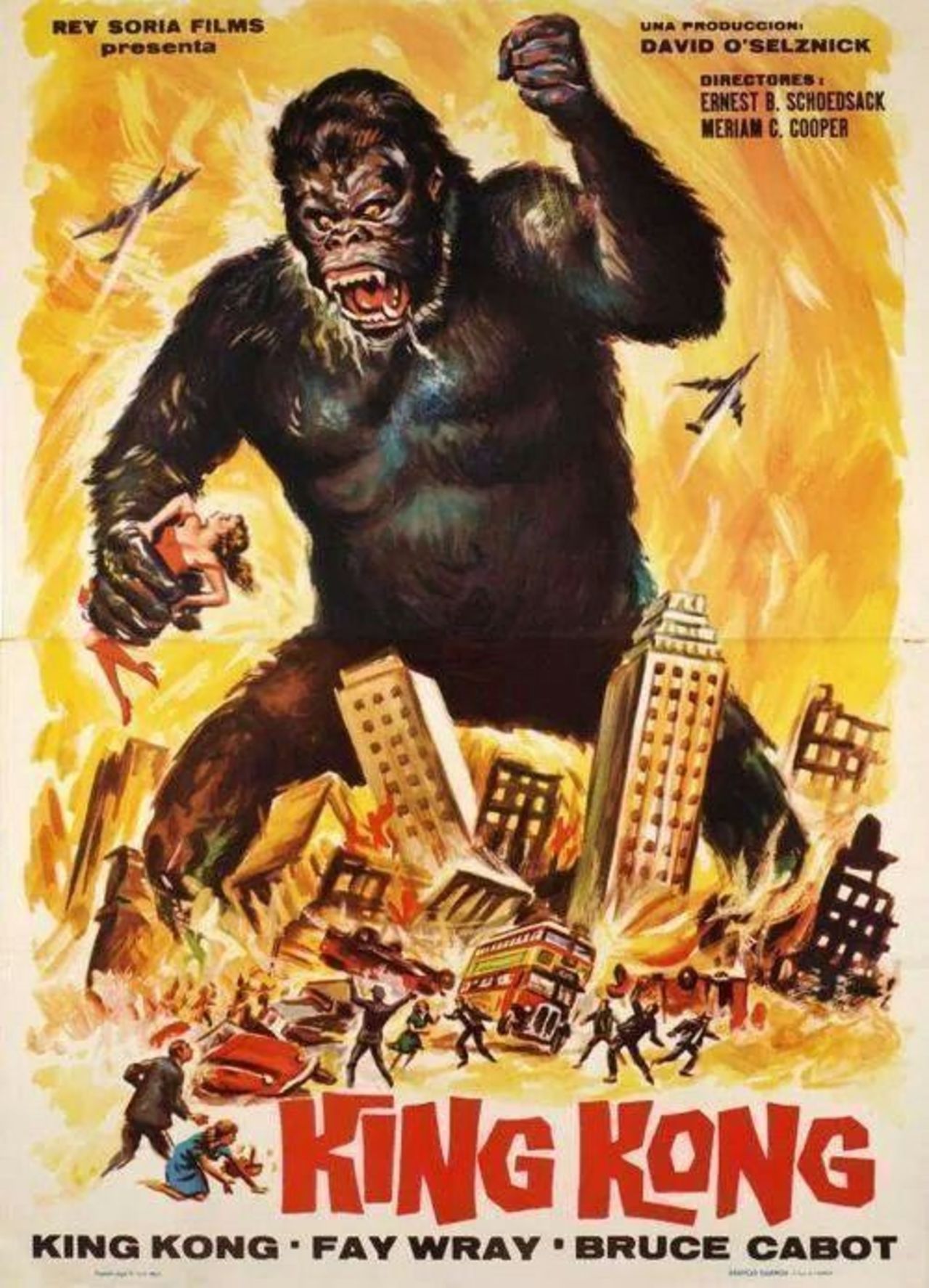
In 1931 RKO invited him to Hollywood to work on an idea that Wallace would generously credit to the director, Merian C. Cooper. However, as Neil Clark makes clear in his biography, the Bodleian’s existing script shows that Wallace conceived the ‘beauty and the beast’ motif himself, the climb up the Empire State building and the aeroplane attack.

He also created the final scene …


‘Kong opens his eyes, picks the girl up, holds her to his breast like a doll, closes his eyes and drops his head,’

Wallace died in Hollywood on 10th February 1932 after falling into a diabetic coma, compounded by double pneumonia, from which he never recovered.

And finally, would you like a close look at a piece of work by the pioneering modern sculptor Jacob Epstein?

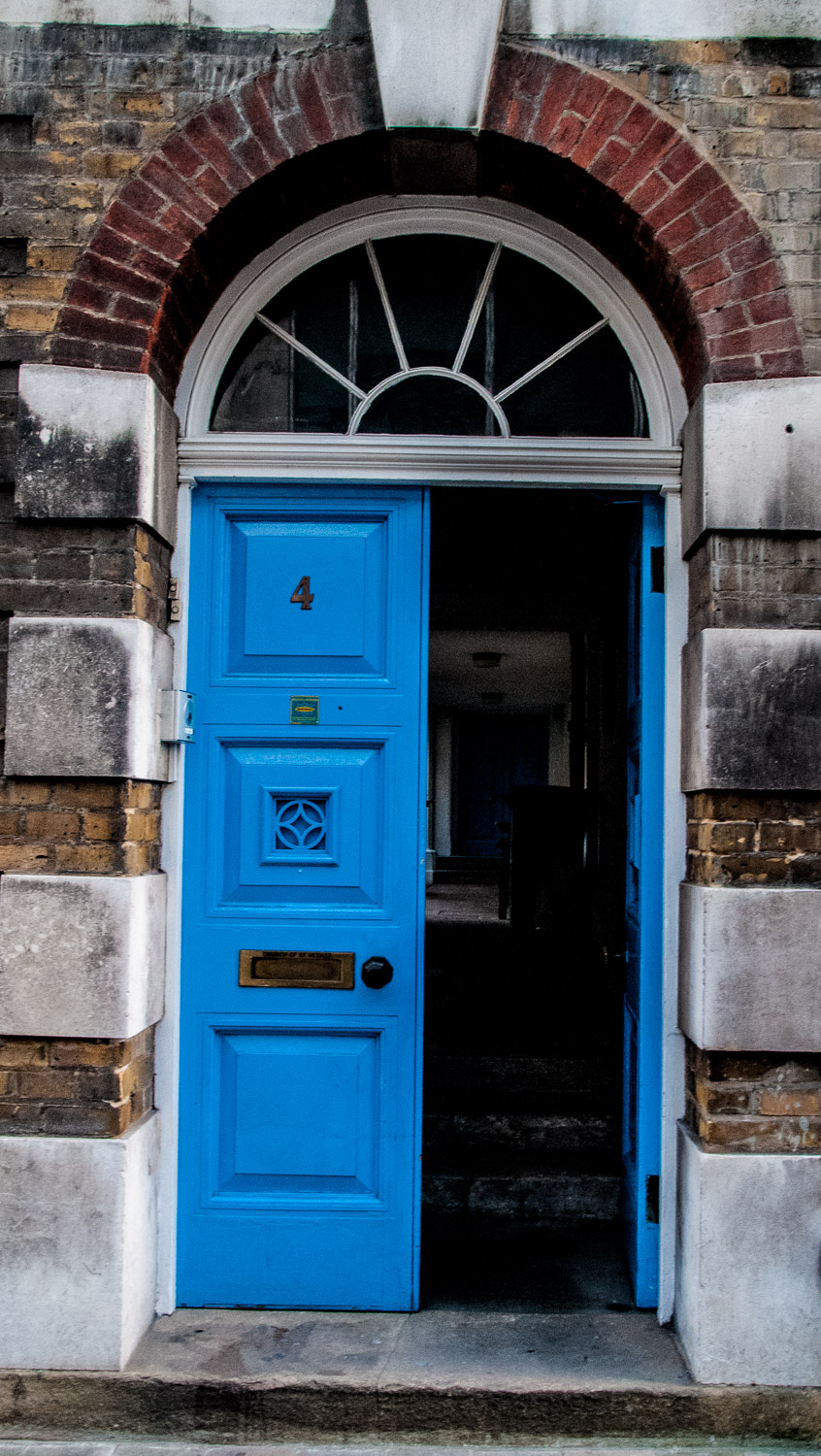
Once again, as in previous blogs, I invite you to pass through the blue doors in Foster Lane to the lovely tranquil garden of St Vedast-alias-Foster  …
In the corner you will find Epstein’s Head and Shoulders of Canon Mortlock (1936)…
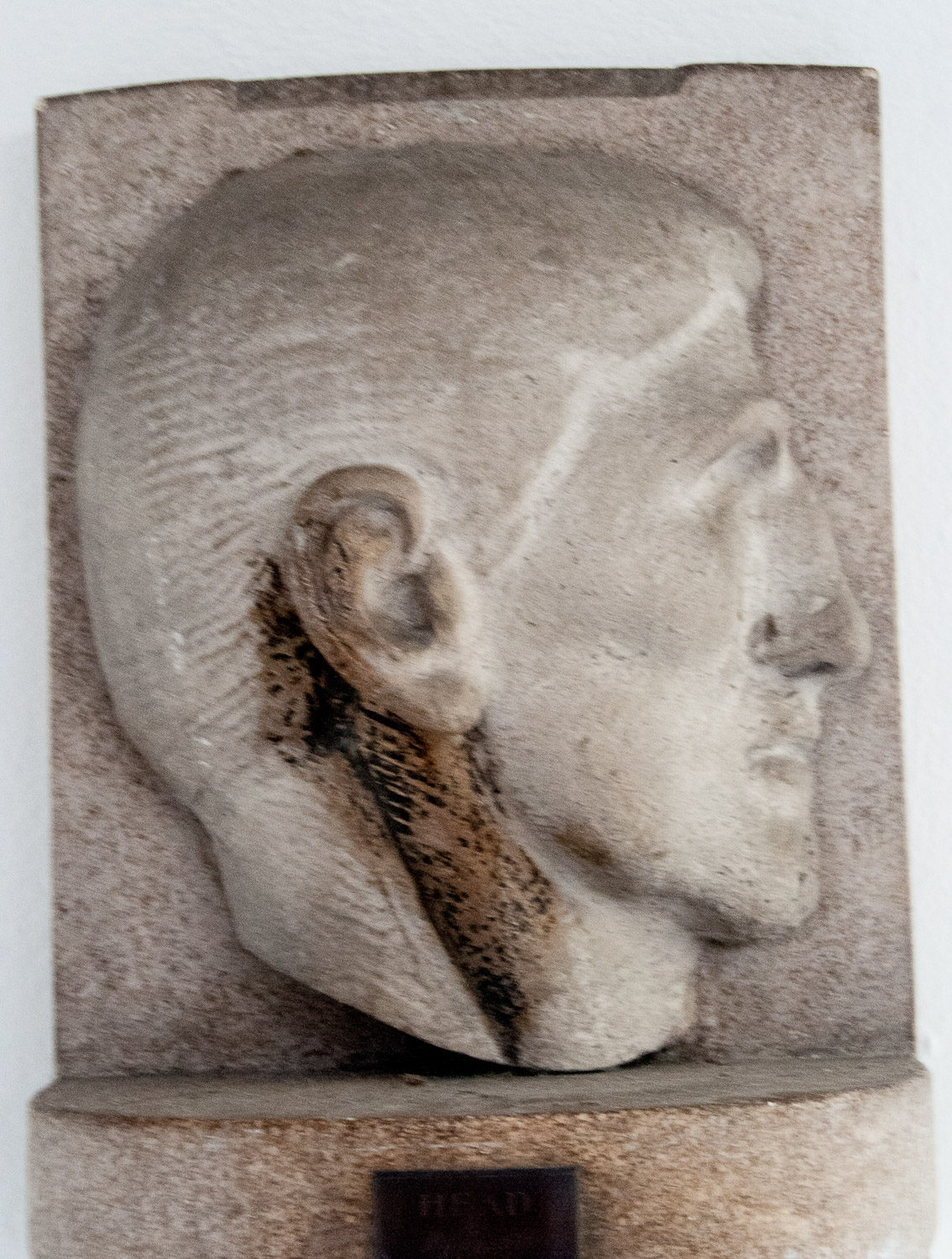
Mortlock was a personal friend of Epstein’s and also of Max Mallowan (Agatha Christie’s husband) who gave him the cuneiform marked tablet also displayed in the churchyard – see my blog City Churches and Churchyards – more Tales of the Unexpected.
 

Fleet Street Legends

Today I am writing about two people who changed the world of newspaper reporting forever, and both have commemorative busts in Fleet Street.

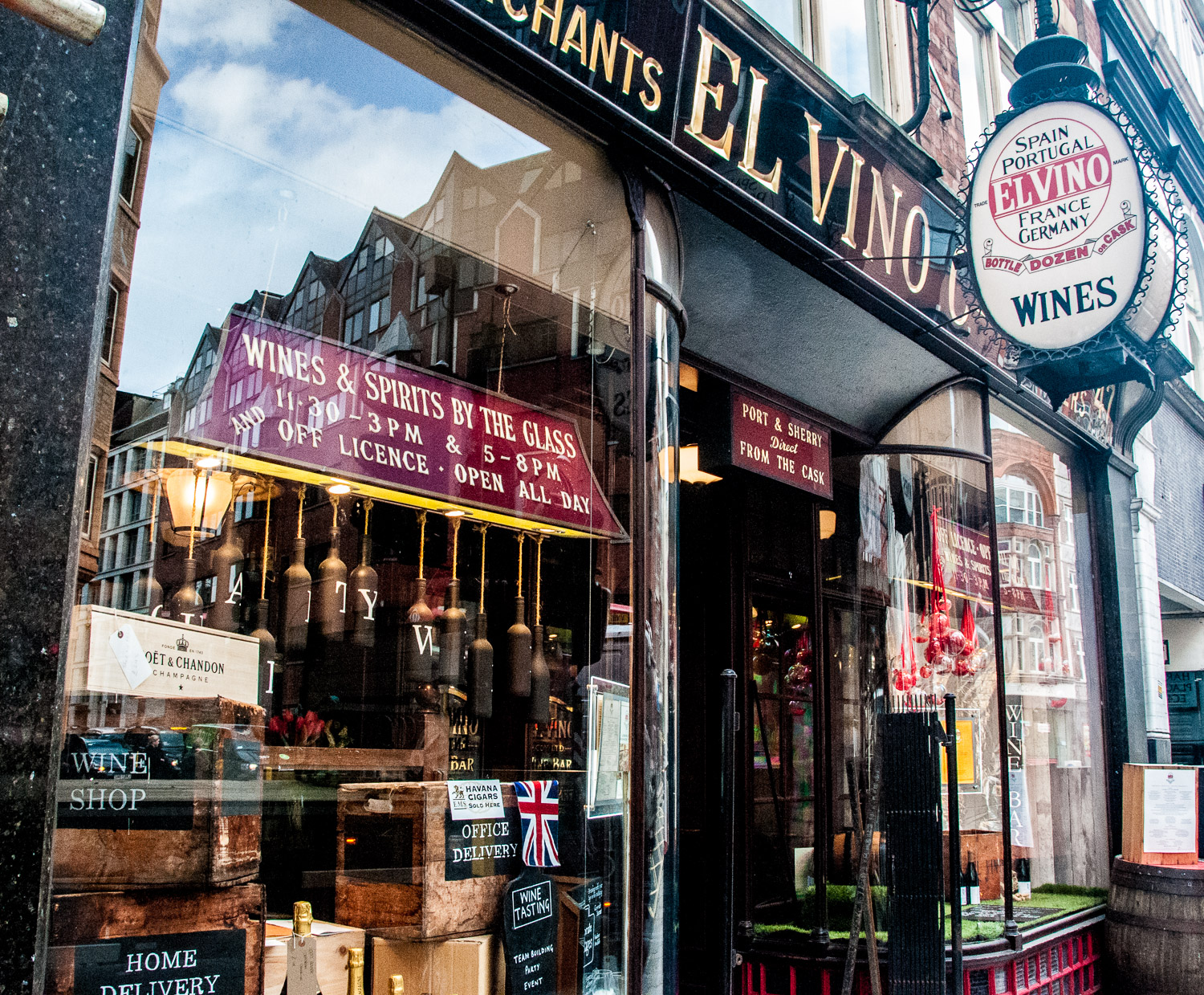
They come from the great days of newspaper publishing, when Fleet Street throbbed with sound of the press machinery and journalists and barristers gossiped at the bar in El Vino. ‘They used to say that the way to tell them apart was to ask if anyone had a pen’, says Michael McCarthy, a former reporter, ‘the journalists would be the ones who didn’t have one.’

El Vino is still there at 47 Fleet Street, but the family that had owned it since 1879 sold up in 2015

Ladies were forced to sit in the back room until Anna Coote, a journalist who was banished in this way, took the owners to court.  In 1982, three Appeal Court judges, all of whom admitted to being patrons, ordered that the ban be lifted on the grounds that the exclusion could harm women’s careers if they could not ‘pick up the gossip of the day’. The manager at the time called it ‘a very sad day’ for El Vino, ‘a place where old-fashioned ideals of chivalry still flourish’.

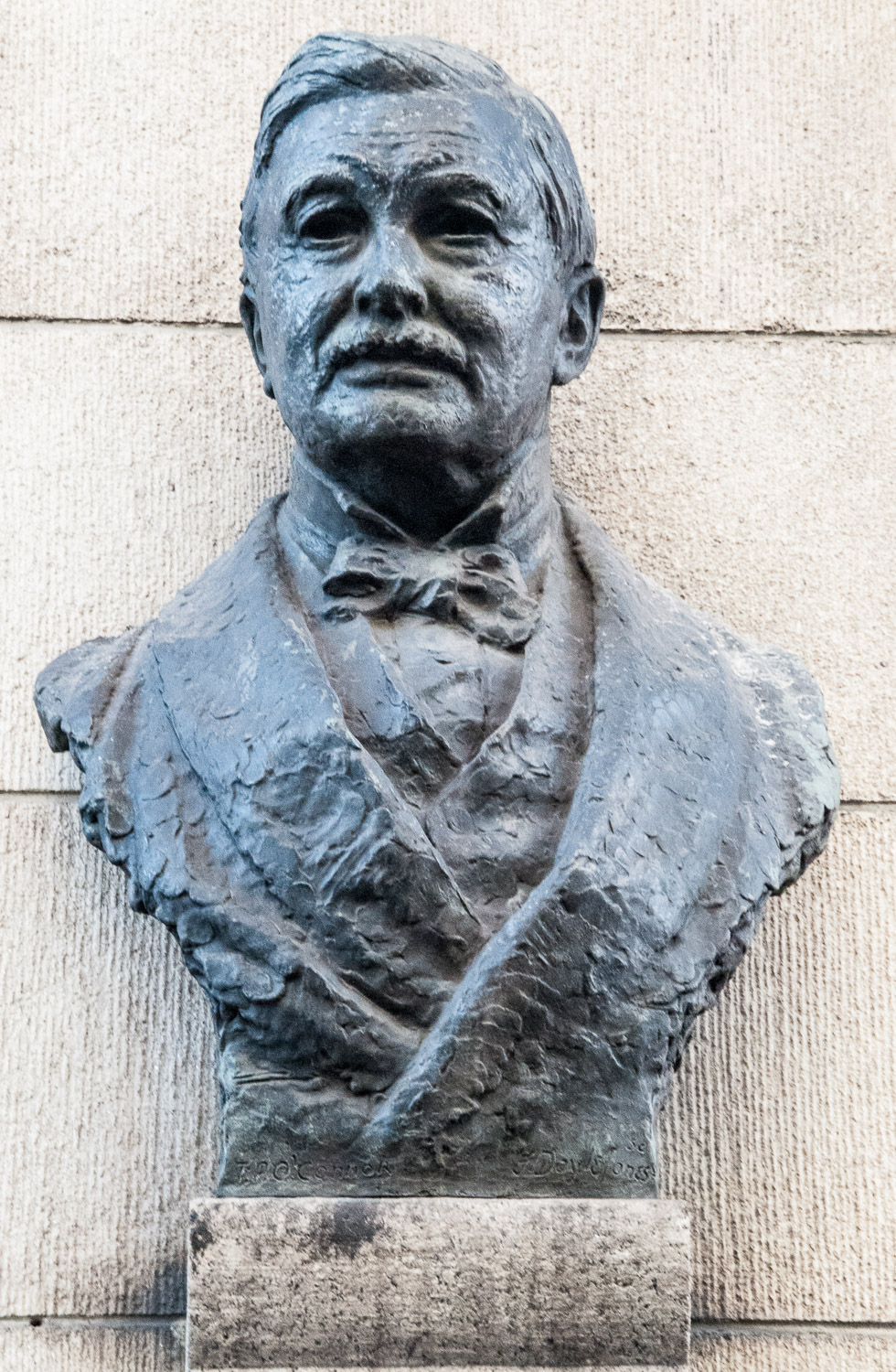
At number 78 Fleet Street is this bust, erected in 1936, with a stirring inscription on a plaque below that reads …

T. P. O’Connor, journalist & parliamentarian, 1848 – 1929.
His pen could lay bare the bones of a book or the soul of a statesman in a few vivid lines.

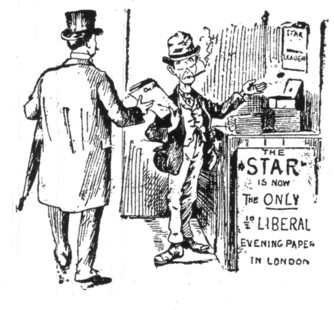
As well as being a journalist, Thomas Power O’Connor (often referred to as ‘Tay Pay’, people mimicking the way he pronounced his initials) was also an Irish nationalist and House of Commons MP for almost 50 years. One biographer has claimed that ‘there is hardly one significant paper circulating in the English speaking world that does not owe something of its style to T.P.’s original Star‘. He ‘made newspapers both clean and readable’ and therefore ‘popular’.

He founded the Star in 1880. Its editorial policy pulled no punches and declared …

The rich, the privileged, the prosperous need no guardian or advocate; the poor, the weak, the beaten require the work and word of every humane man and woman to stand between them and the world.

It was a radical evening paper published six days a week, fighting valiantly against social injustice and for the rights of the poor as well as workers involved in trade union disputes. So popular was it that by 1888 it had achieved an average circulation of some 125,000 copies a day at a price of one halfpenny.

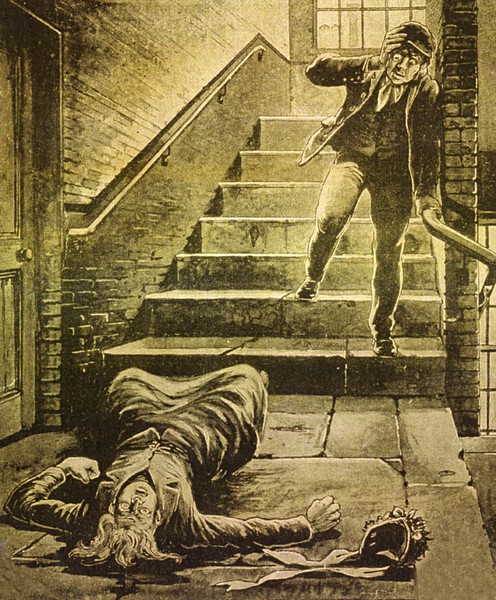
O’Connor also understood that sensational crimes sold newspapers and the ‘Whitechapel murders’ gave plenty of scope – graphic details being often accompanied by lurid illustrations, for example …

‘Finding the body of Martha Tabram’

Reporting on what would later be described as the Jack the Ripper murders pushed circulation up to over 400,000, and reports were accompanied by harsh criticism of the police and the Commissioner Charles Warren in particular.

The Star finally ceased publication in 1960, absorbed by its long-time rival the Evening News which became the Evening News and Star, reverting back to just the Evening News in 1968.

The T.P. tradition was followed by others. When, in 1896, Alfred Harmsworth, later lord Northcliffe, launched his new journal the Daily Mail he was said to have instructed his journalists :

Find me a murder every day!

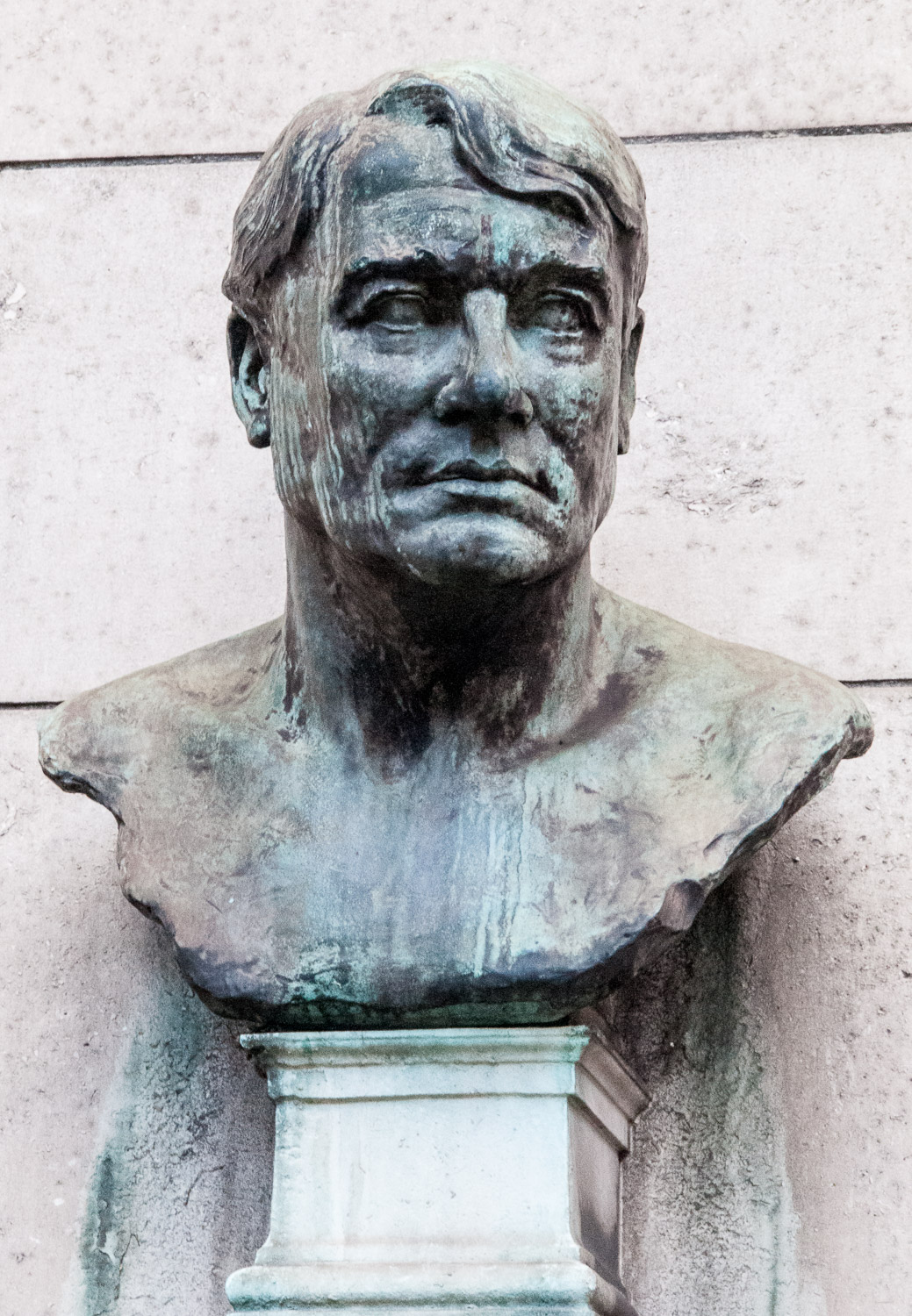
He now looks down at us from the wall of St Dunstan’s-in-the-West at 186 Fleet Street …

The bust is by Kathleen Scott, Baroness Kennet. An inscription below reads: ‘Northcliffe MDCCCLXV-MCMXXII’ (1865-1922)

The Daily Mail was immensely popular – two of its taglines were:

‘The busy man’s daily journal’ and ‘The penny newspaper for one halfpenny’

Prime Minister Robert Cecil, Lord Salisbury, was less flattering, describing it as …

Produced by office boys for office boys

The original plan was to sell 100,000 copies but the print run on the first day was 397,215 and additional printing facilities had to be acquired to sustain a circulation which rose to 500,000 in 1899. By 1902, at the end of the Boer Wars, circulation was over a million, making it the largest in the world.

The paper devised numerous ways to keep their readership engaged. For example, in 1906, the paper offered £1,000 for the first flight across the English Channel and £10,000 for the first flight from London to Manchester.  Punch magazine thought the idea preposterous and offered £10,000 for the first flight to Mars, but by 1910 both the Mail‘s prizes had been won.

Along with his other newspapers (including the Observer, Evening News, Times and Daily Mirror) by 1914 Northcliffe controlled 40 per cent of the morning newspaper circulation in Britain, 45 per cent of the evening and 15 per cent of the Sunday circulation. All his papers were fiercely imperialistic and anti-German and in the run up to the war, the Star thundered in criticism …

Next to the Kaiser, Lord Northcliffe has done more than any living man to bring about the war

Such was Northcliffe’s influence on anti-German propaganda that, on 14th February 1917, a German warship shelled his house, Elmwood, in Broadstairs in an attempt to assassinate him. He escaped injury, but the shells killed the gardener’s wife and small child.

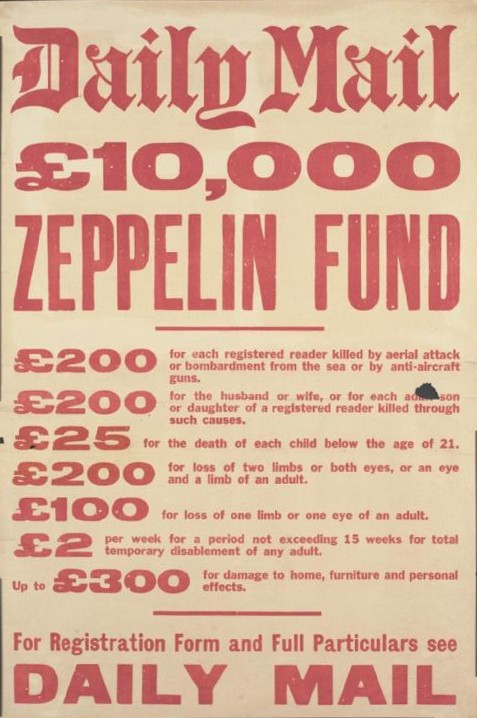
Incidentally, direct selling insurance off the page is nothing new. During the First World War the paper sold insurance against Zeppelin attacks …

Harmsworth’s marriage to Mary Elizabeth Milner in 1888 produced no children but he had four acknowledged children by two different women. The first, Alfred Benjamin Smith, was born when he was seventeen, the mother being a sixteen-year-old maidservant in his parents’ house. Smith died in 1930, allegedly in a mental home. By 1900, Harmsworth had acquired a new mistress, an Irishwoman named Kathleen Wrohan, about whom little is known but her name. She bore him two further sons and a daughter, and died in 1923.

When he himself died in 1922 he left three months’ pay to each of his six thousand employees.

The Daily Mail’s print circulation in January this year was 1,343,142, second only to the Sun at 1,545,594, but Mail Online is claimed to be the most widely read English newspaper in the world. Its slogan is ‘Seriously Popular’ – I think both O’Connor and Northcliffe would have approved of that aspiration at least (not sure what they would have made of the content though!).


Some interesting faces – from a handsome poet to the ‘ugliest man in England’

Over the last few weeks I have been exploring the City looking at how people have been portrayed in busts, statues and other varieties of portraits. There are a remarkable number of them, particularly if you venture into the churches, so I have just picked some of the ones that I found most interesting.

I will start on a rather sombre note.

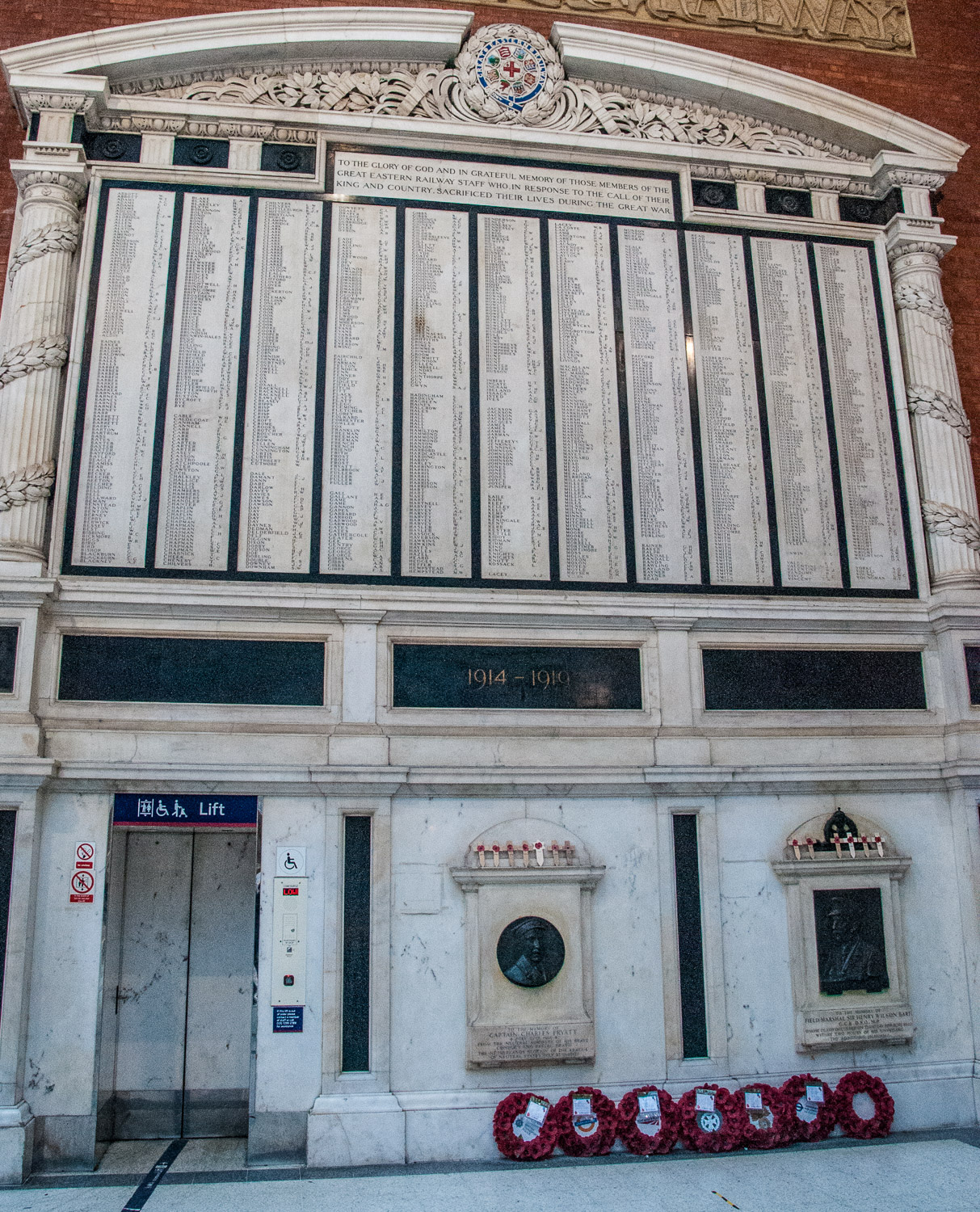
This is the beautiful marble war memorial above the concourse at Liverpool Street Station. It contains 1,108 names in alphabetical order and the panel at the top reads as follows:

To the glory of God and in grateful memory of those members of the Great Eastern Railway staff who, in response to the call of their King and Country, sacrificed their lives during the Great War.

If you look beneath it, you will see two individual memorials containing bronze portraits.

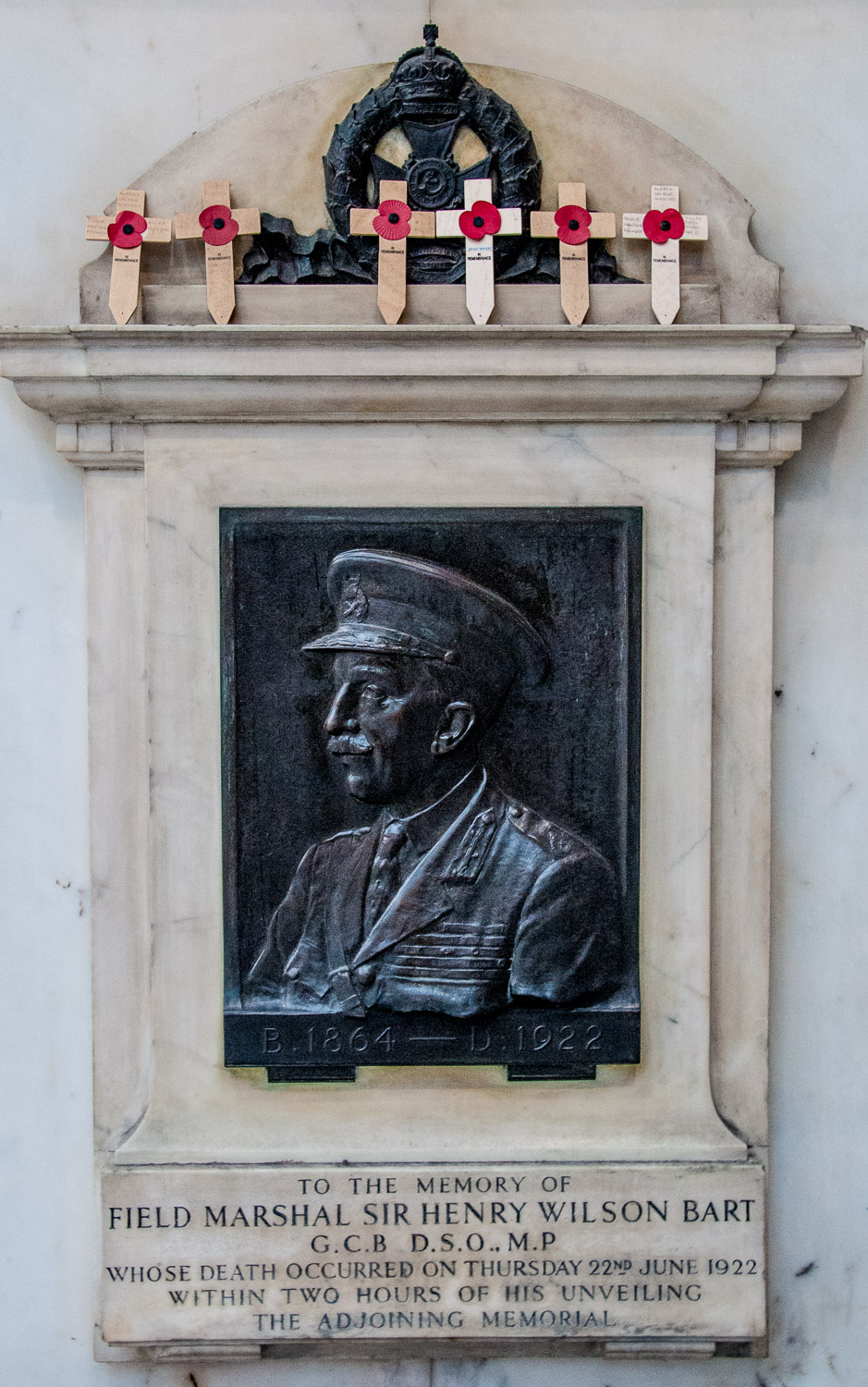
This is the one on the right …

Wilson was assassinated outside his house in Eaton Place at about 2:20 pm. Still in full uniform, he was shot six times, two bullets in the chest proving fatal. The two perpetrators, IRA volunteers Reginald Dunne and Joseph O’Sullivan, shot two police officers and a chauffeur as they attempted to escape but were surrounded by a hostile crowd and arrested after a struggle. Interestingly both were former British army officers and O’Sullivan had lost a leg at Ypres, his subsequent disability hindering their escape. After a trial lasting just three hours they were convicted of murder and hanged at Wandsworth gaol on 10 August that year – justice was certainly delivered swiftly in those days. No organisation claimed responsibility for Wilson’s murder.

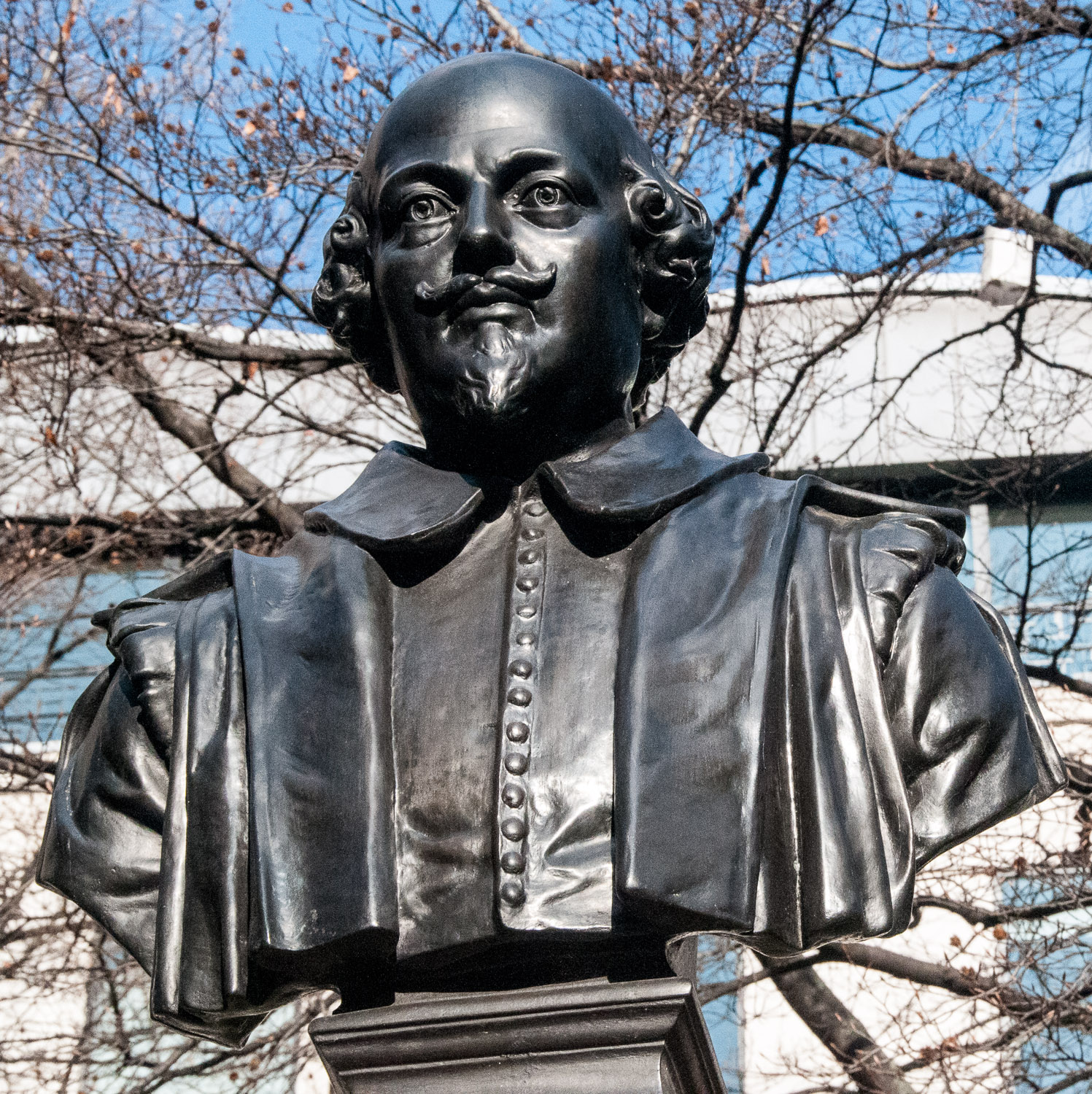
This magnificent bust of William Shakespeare is in St Mary Aldermanbury Garden, Love Lane EC2 …

Designed by Charles Clement Walker and sculpted in 1896 by Charles John Allen.

A Wren church gutted in the Blitz, the remains of St Mary Aldermanbury were shipped to Fulton, Missouri, USA in 1966. The restored church now is now a memorial to Winston Churchill’s ‘Iron Curtain’ speech made at Westminster College, Fulton, in 1946.

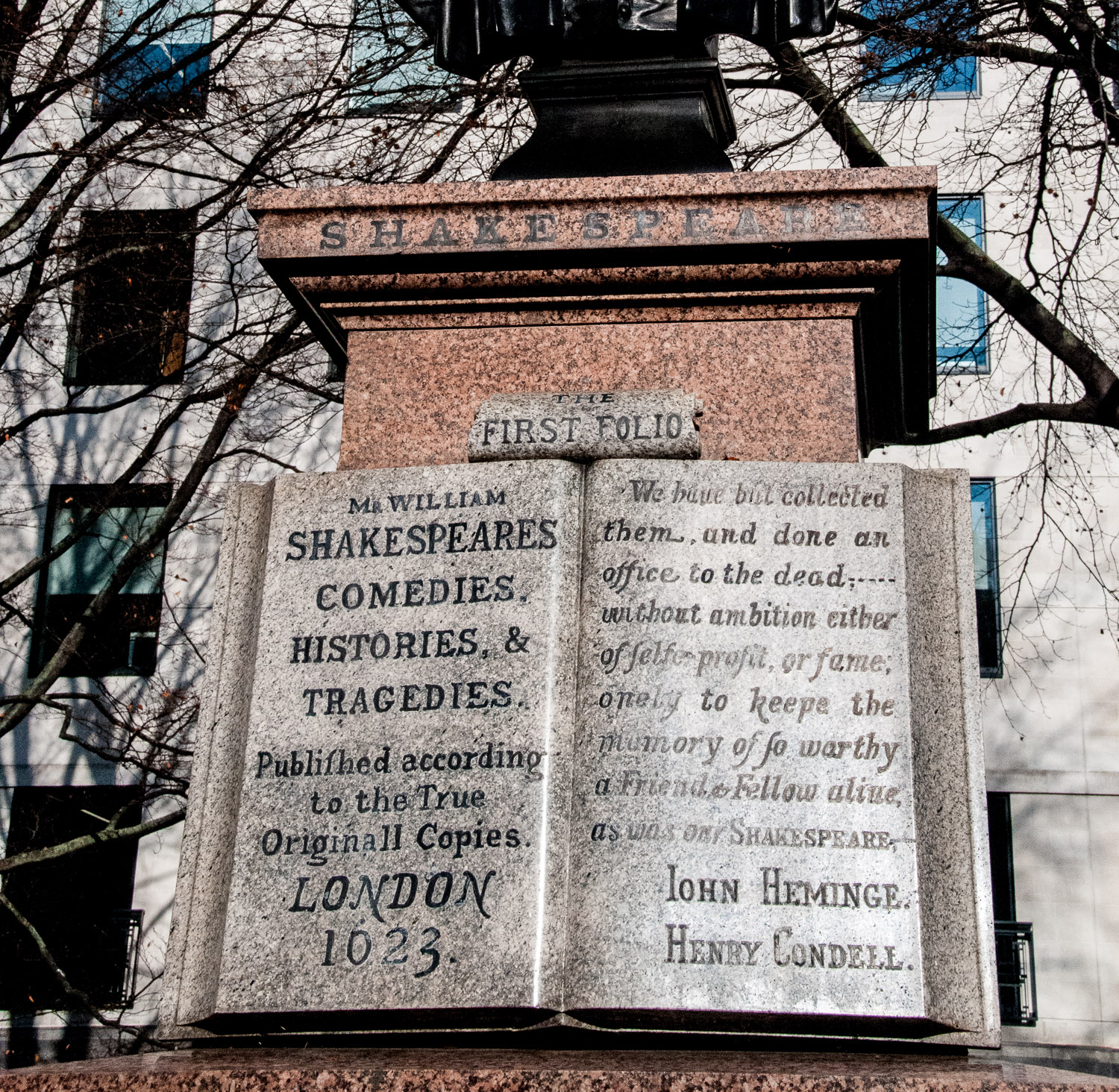
The Shakespeare bust in the garden stands as a memorial to his fellow actors Henry Condell and John Heminge who were key figures in the printing of the playwright’s First Folio of works seven years after his death. There are almost twenty plays by Shakespeare, including The Tempest, Julius Caesar, Macbeth and Antony and Cleopatra, which we would not have at all if it were not for their efforts. Both of them were buried at St Mary’s.

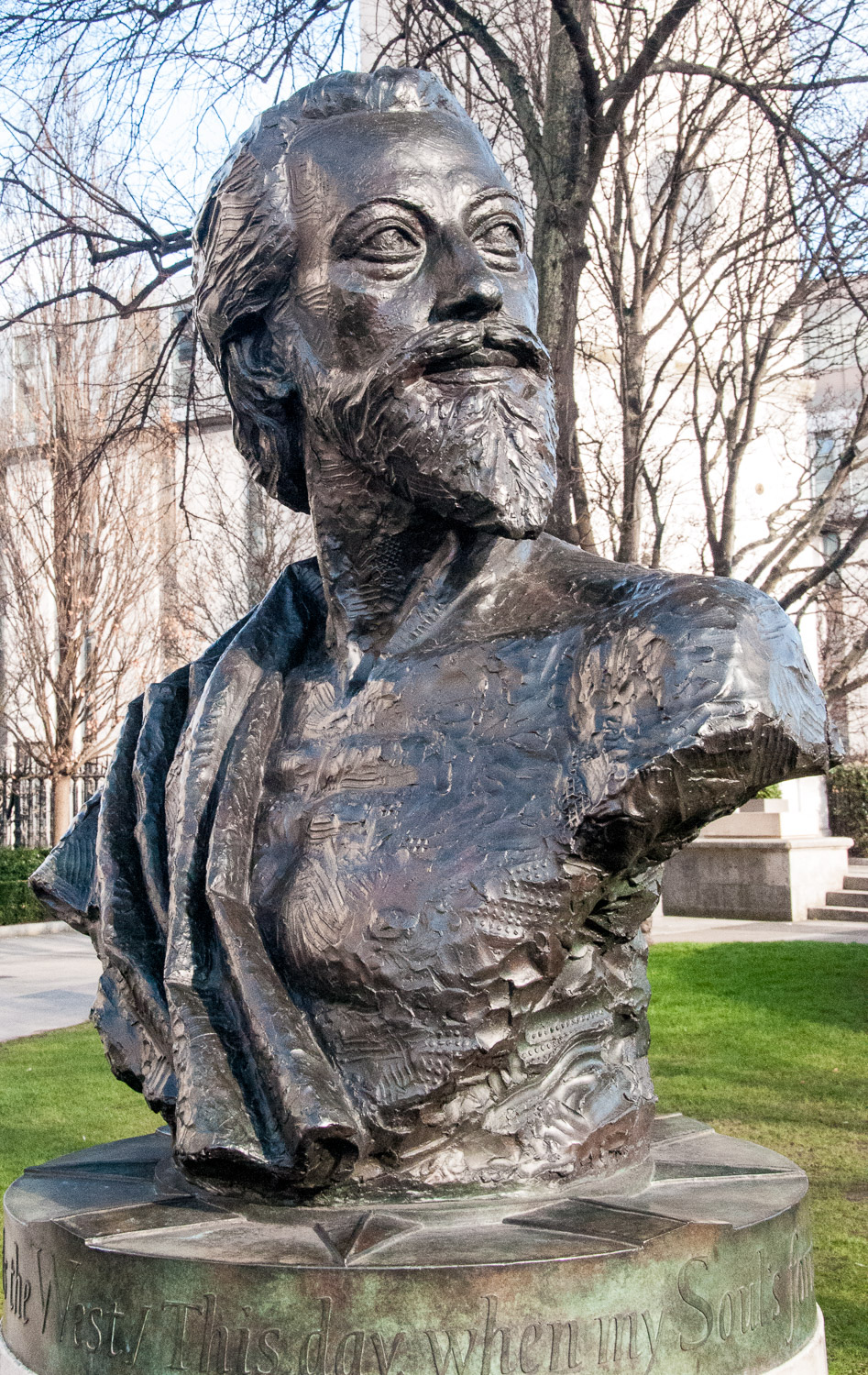
Outside the south side of St Paul’s Cathedral is this rather handsome bearded gentleman …

John Donne 1572-1631 by Nigel Boonham (2012).

In 1617, two years after his ordination, Donne’s wife died at age 33 after giving birth to a stillborn child, their twelfth. Grief-stricken at having lost his emotional anchor, Donne vowed never to marry again, even though he was left with the task of raising his ten surviving children in modest financial circumstances. His bereavement turned him fully to his vocation as an Anglican divine and, on November 22, 1621, Donne was installed as Dean of St. Paul’s Cathedral. The power and eloquence of his sermons soon secured for him a reputation as the foremost preacher in the England of his day, and he became a favourite of both Kings James I and Charles I.

His bust points almost due west but shows him turning to the east towards his birthplace on Bread Street. The directions of the compass were important to Donne in his metaphysical work: east is the Rising Sun, the Holy Land and Christ, while west is the place of decline and death. Underneath the bust are inscribed words from his poem Good Friday – Riding Westward :

Hence is’t that I am carried towards the west, This day when my soul’s form bends to the east

The most familiar quotation from Donne comes from his Meditation XVII – Devotions upon Emergent Occasions published in 1624:

‘No man is an island, entire of itself; every man is a piece of the continent, a part of the main … and therefore never send to know for whom the bell tolls, it tolls for thee.’

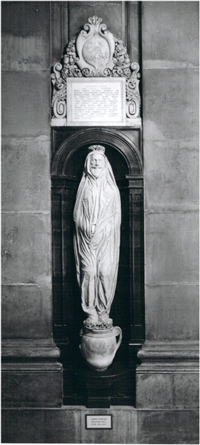
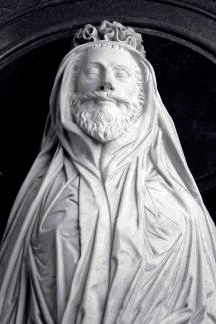
Donne is also famous for the fact that his effigy in St Paul’s Cathedral was the only one to survive the Great Fire of 1666 almost intact (you can still see scorch marks on the urn).  You have to enter the cathedral to see it.

The effigy by Nicholas Stone

Dr Philip Cottrell of University College Dublin describes it as follows:

Donne is shown standing, perched on a funerary urn, and enveloped in a body-hugging burial shroud which has been gathered into two decorative ruffs at the head and feet … The clean, moist appearance of the drapery and the softly-nuanced modelling of the features testify to Stone’s position as the finest sculptor of the English Baroque.

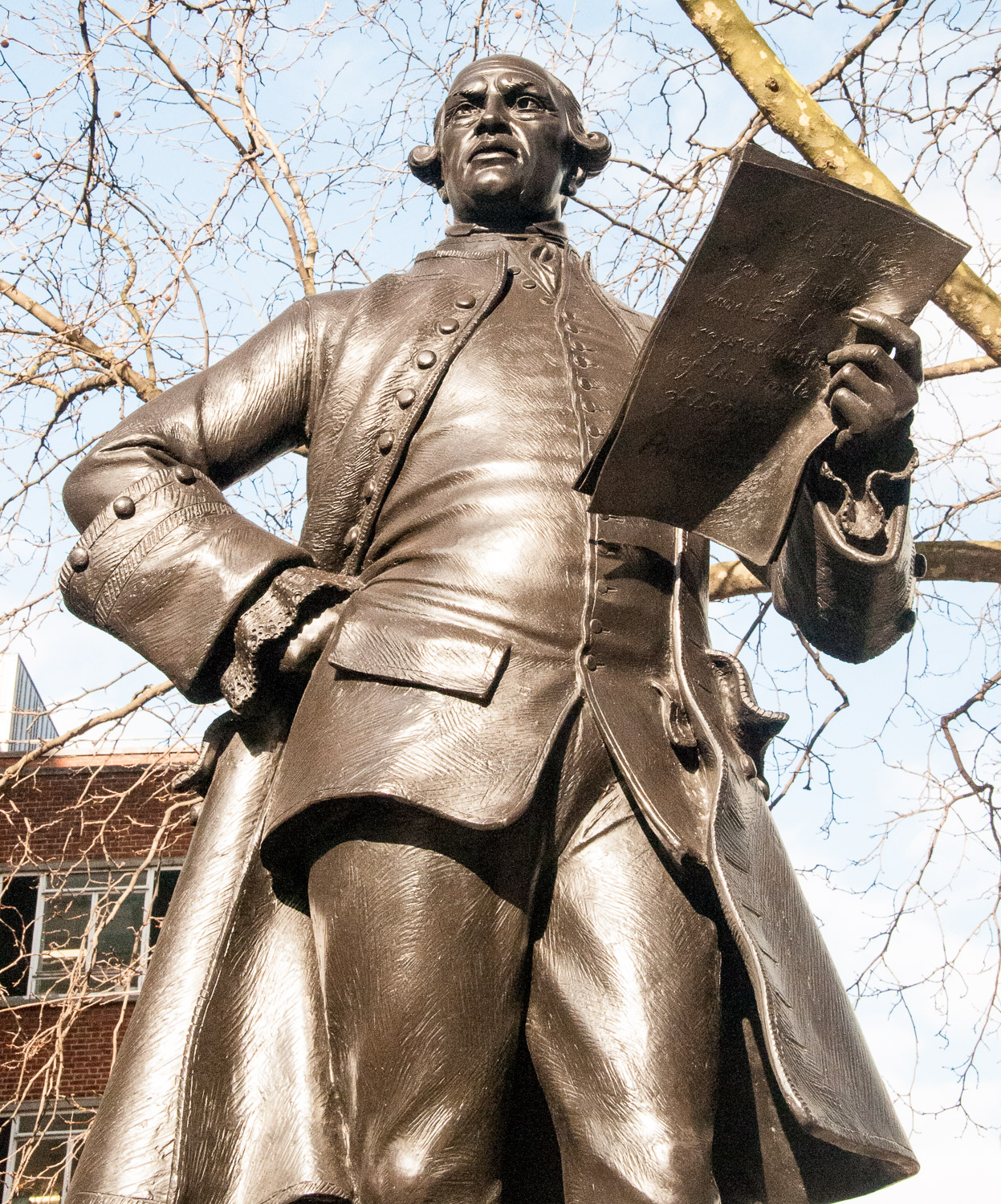
The inscription on this statue of John Wilkes in Fetter Lane EC4 reads as follows:

A champion of English freedom, John Wilkes 1727-1797, Member of Parliament, Lord Mayor.

The inscription on the back of the document he is holding reads ‘A bill for a just and equal representation of the people of England in Parliament’.

English History Online writes of him:

In 1774 that clever rascal, John Wilkes, ascended the civic throne … Young Wilkes grew up a man of pleasure, squandered his wife’s fortune in gambling and other fashionable vices, and became a notorious member of the Hell Fire Club

Wilkes’ career is so extraordinary that I gave up trying to devise edited highlights – please forgive me for cheating and quoting this summary from The Geograph website …

The remarkable Mr Wilkes was a radical, politician, wit, rake, journalist, Lord Mayor of London, prankster and member of The Hellfire Club.

He was repeatedly expelled from The House of Commons and even once declared an outlaw. He is described on the plinth as a “Champion of English freedom” though he was disparagingly known as “the ugliest man in England” by some …. ‘he could woo any woman in competition with any man, provided he was given a month’s start on account of his ugliness.’

Reputedly, John Montagu, the 4th Earl of Sandwich said to Wilkes “Sir, I do not know whether you will die on the gallows or of the pox,” Wilkes replied, “That depends, my lord, on whether I embrace your lordship’s principles or your mistress.”

Wilkes’ famous squint has been honestly represented by the sculptor, James Butler RA

Although hated by some, Wilkes has also been described as …

The father of the political system we have today and a major influence on that adopted by America: he established freedom of the press as we know it, argued for yearly elections and the abolition of rotten boroughs, and was the first MP to propose universal suffrage in the Commons.

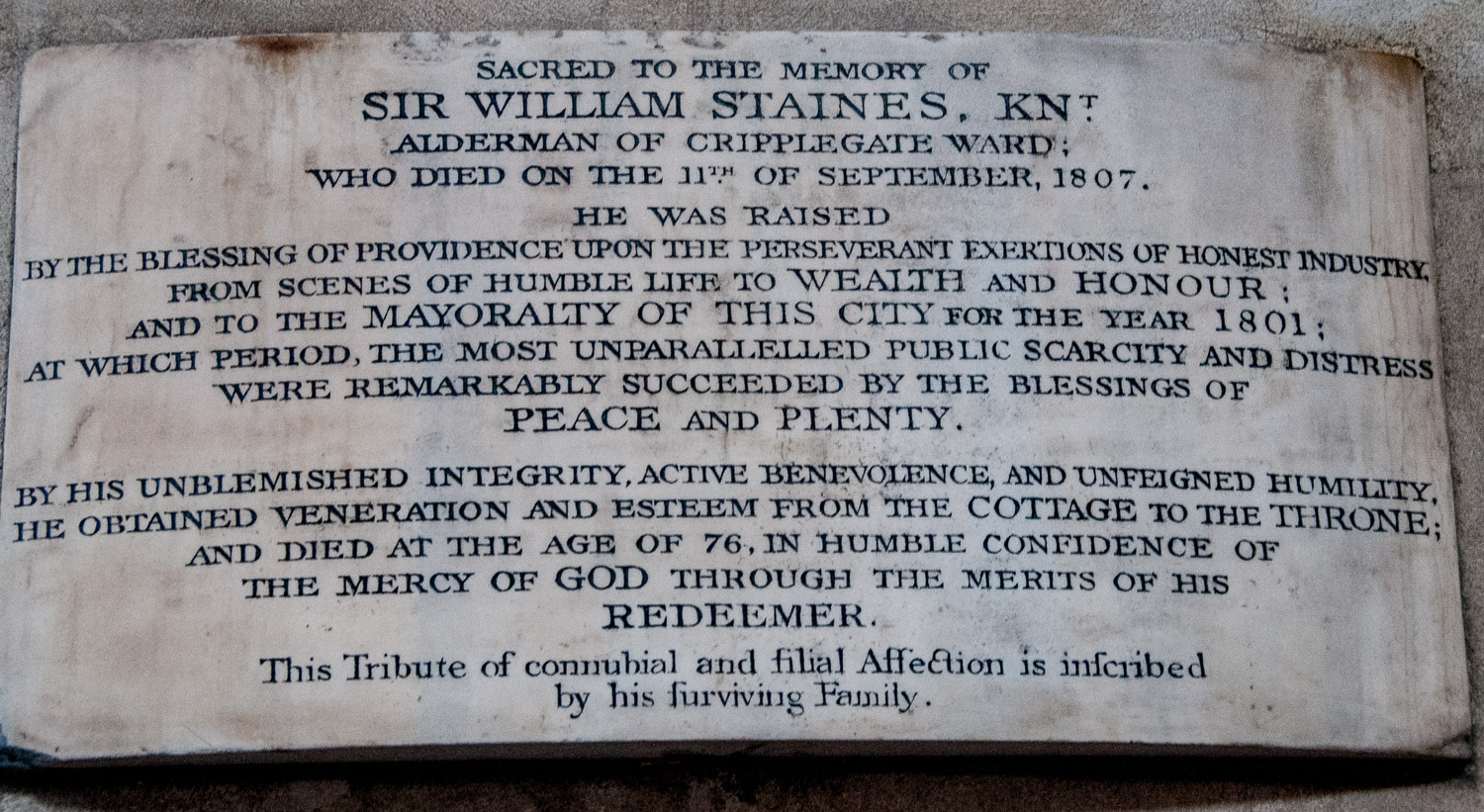
And finally, in my local church, St Giles-without-Cripplegate, there is this touching memorial to Sir William Staines …

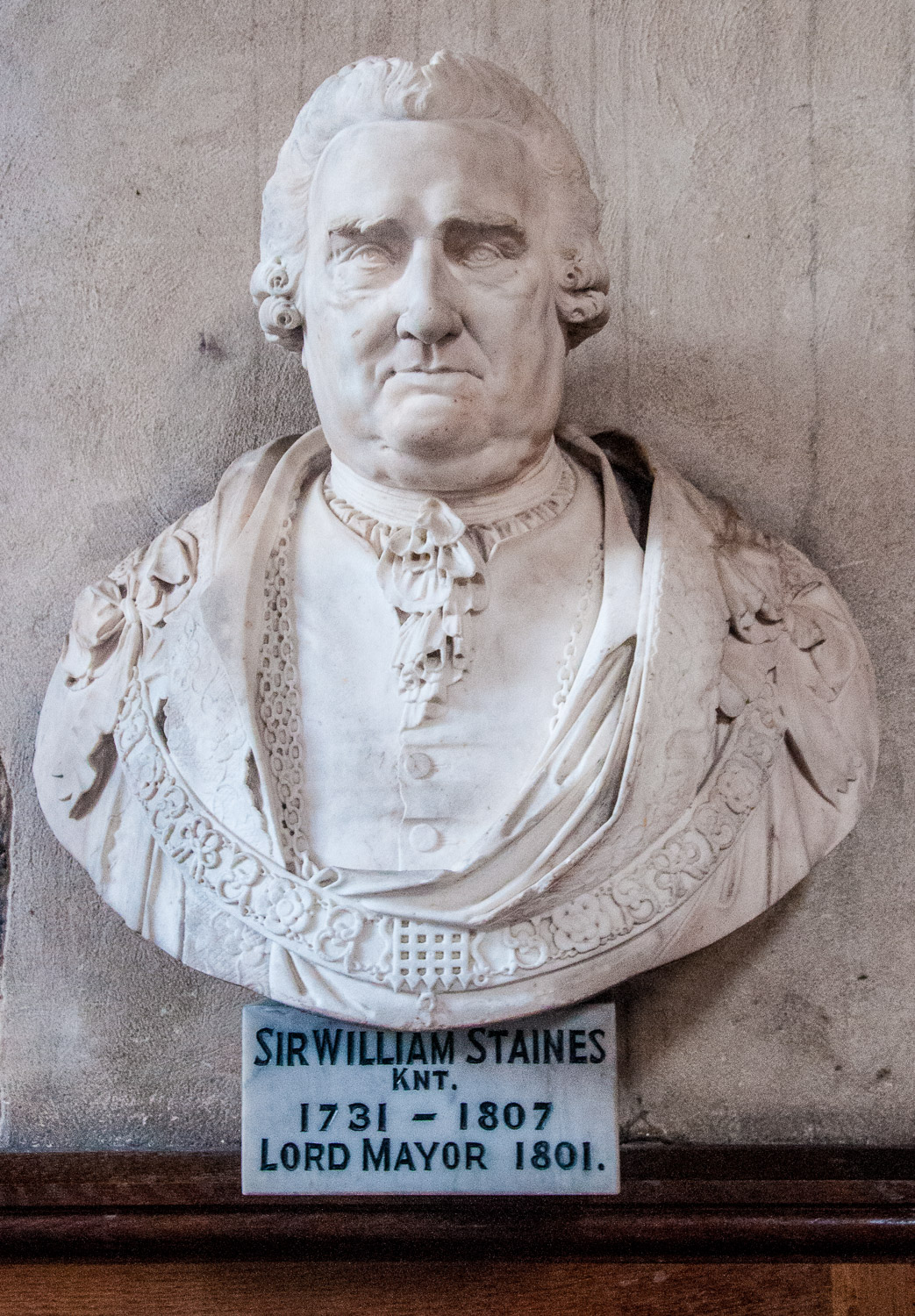
And here is the man himself …

Staines had extremely humble beginnings working as a bricklayer’s labourer, but eventually accumulated a large fortune which he generously used for philanthropic purposes. He seemed to recall his own earlier penury when he ensured that the houses he built for ‘aged and indigent’ folk would have ‘nothing to distinguish them from the other dwelling-houses … to denote the poverty of the inhabitant’.

British History Online records an encounter he had with the notorious Wilkes who referred rather rudely to Staines’ original occupation …

The alderman was an illiterate man, and was a sort of butt amongst his brethren. At one of the Old Bailey dinners, after a sumptuous repast of turtle and venison, Sir William was eating a great quantity of butter with his cheese. “Why, brother,” said Wilkes, “you lay it on with a trowel!”


Page 141 of 151

Powered by WordPress & Theme by Anders Norén

Symbols & Secrets
Privacy Overview

This website uses cookies so that we can provide you with the best user experience possible. Cookie information is stored in your browser and performs functions such as recognising you when you return to our website and helping our team to understand which sections of the website you find most interesting and useful.