Walking the City of London

Category: Symbols Page 4 of 7

Horses, mermaids and memorials – more City Ladies

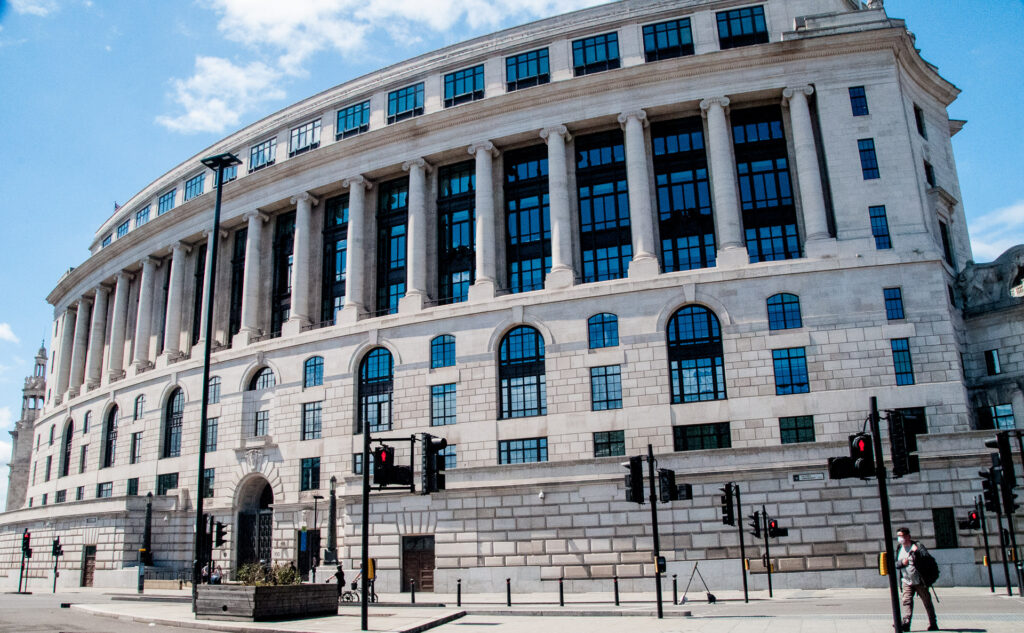
My first stop was Unilever House where a lady, her head bowed, strains hard to control a gigantic horse (EC4Y 0DY) …
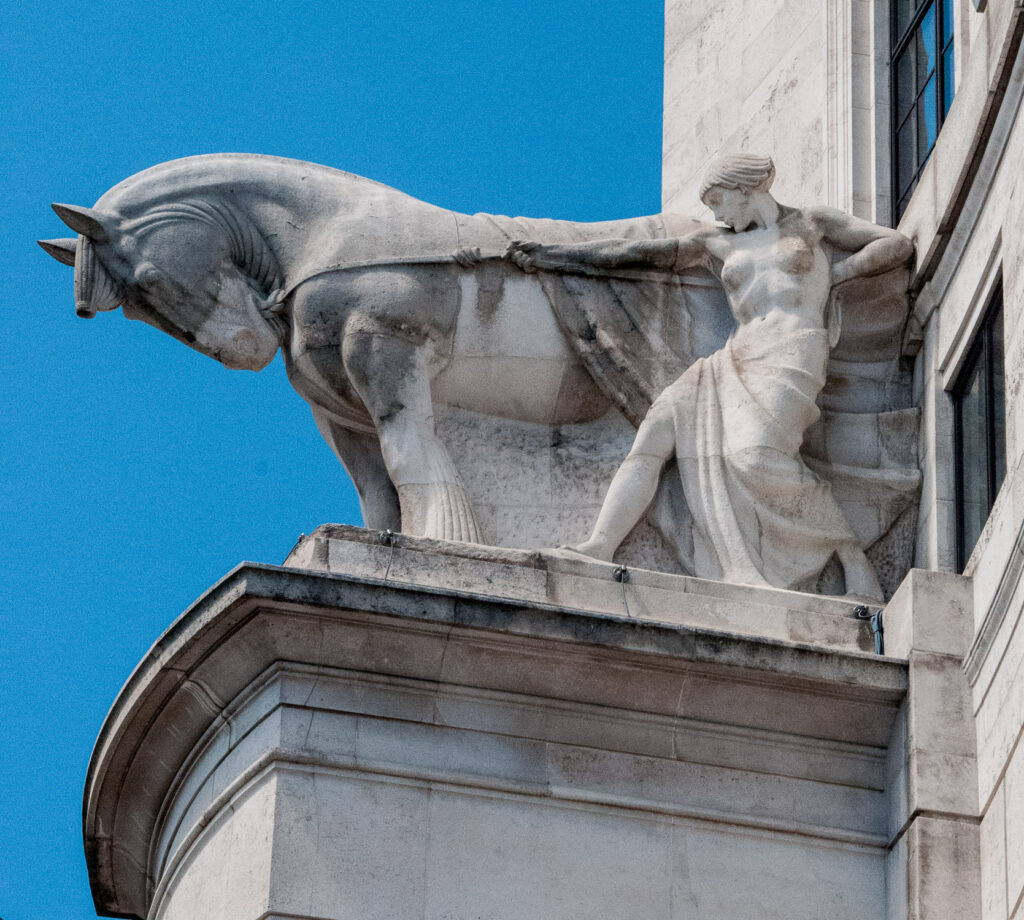
The sculpture, called Controlled Energy, dates from 1932 and the sculptor, William Reid Dick, had a real horse model for him. Dr Philip Ward-Jackson, in his book Public Sculpture of the City of London, tells us …

This was no ordinary horse. A light bay gelding called Victor, it was a little over 18 hands high and, when shown at Olympia, had been described as ‘the biggest horse in the world’. The sculptor later told a reporter ‘I am sorry to say it died shortly after I finished with it’.

There is a similar male figure at the other end of the building and, when asked why he had included female figures as well as male ones, this was the sculptor’s interesting reply …

These days women are controlling affairs nearly, if not quite, as much as men. They begin to take control in some respects … as soon as they are out of their cradles, and the idea would have been incompletely carried out if only men had been used.

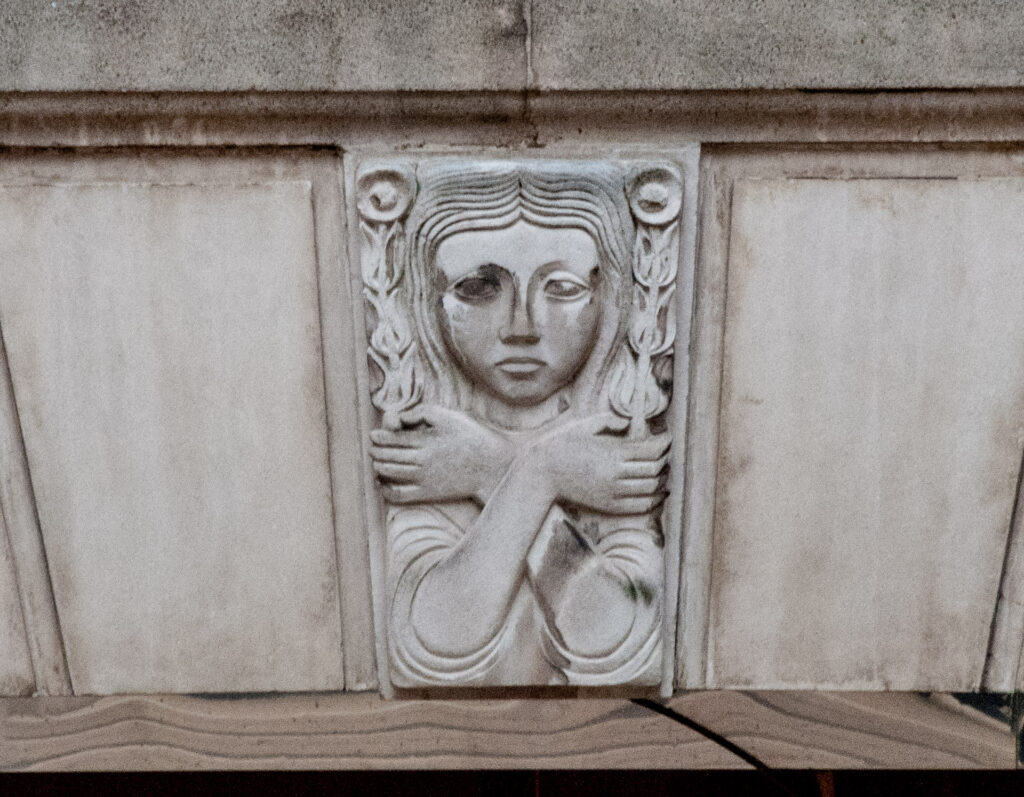
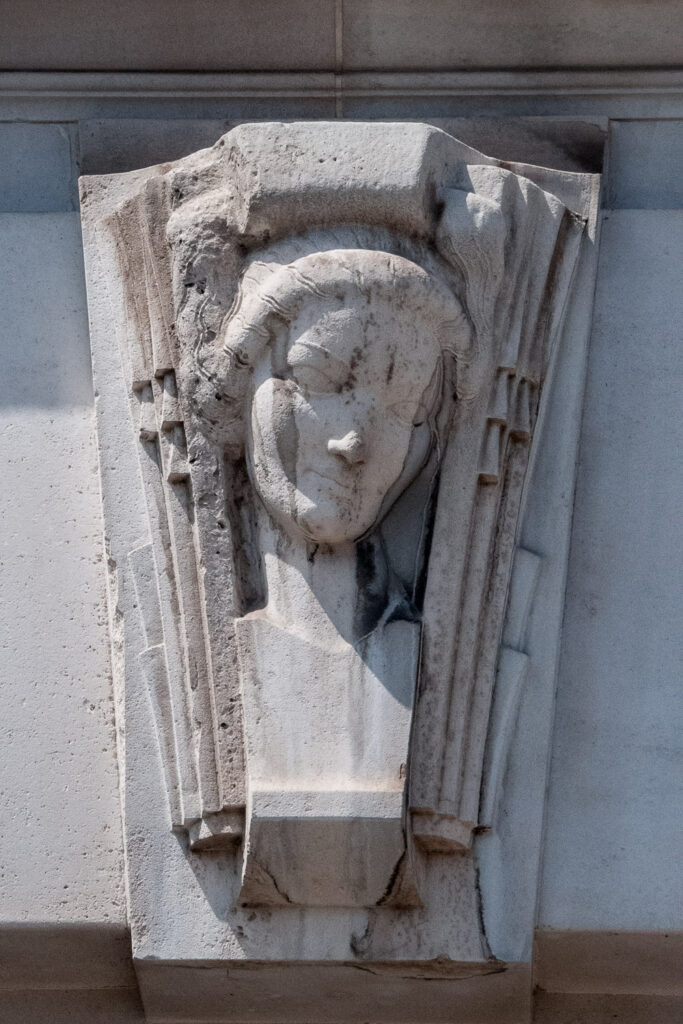
There are a number of female head keystones …
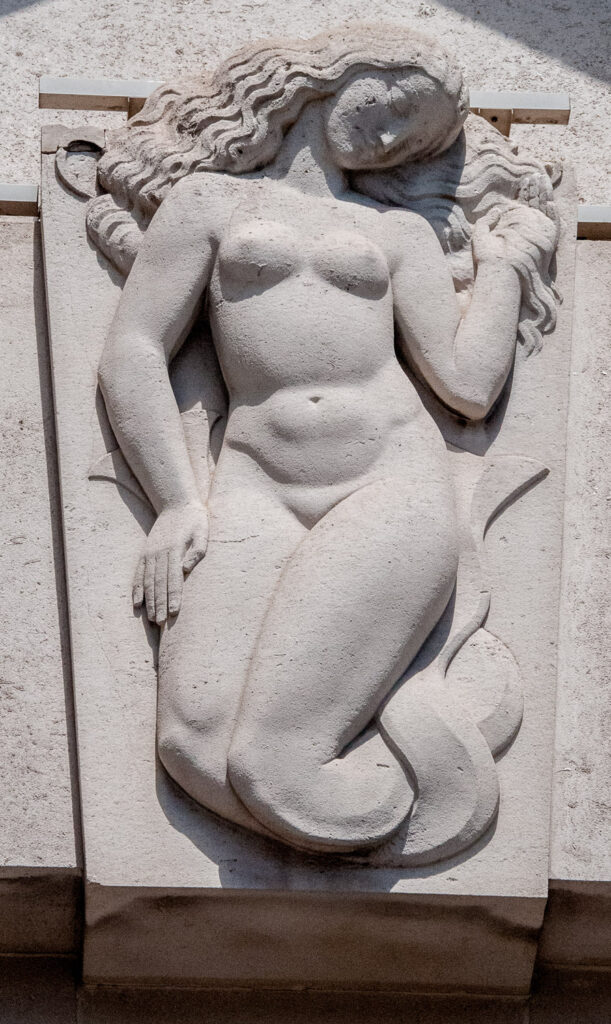
… and a pretty mermaid sculpted by Gilbert Ledward …
Just in case you are not familiar with the building here it is, opposite Blackfriars Station …
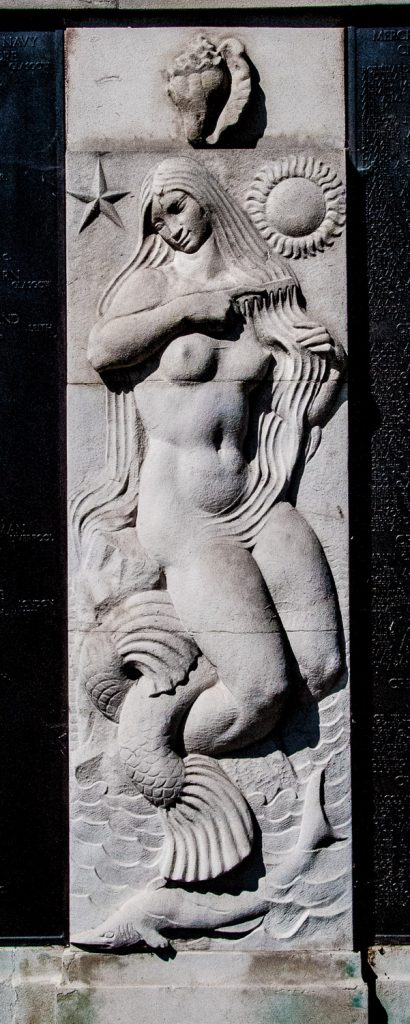
Ledward’s sculpture reminded me of the mermaid combing her hair at the Merchant Navy Memorial on Tower Hill …
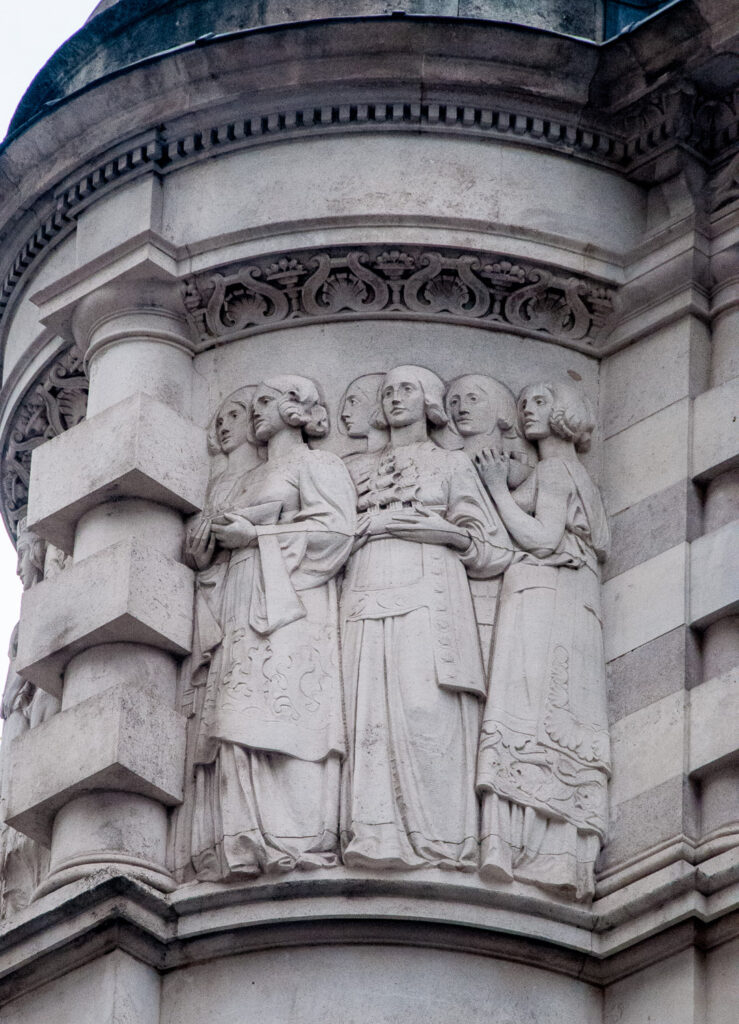
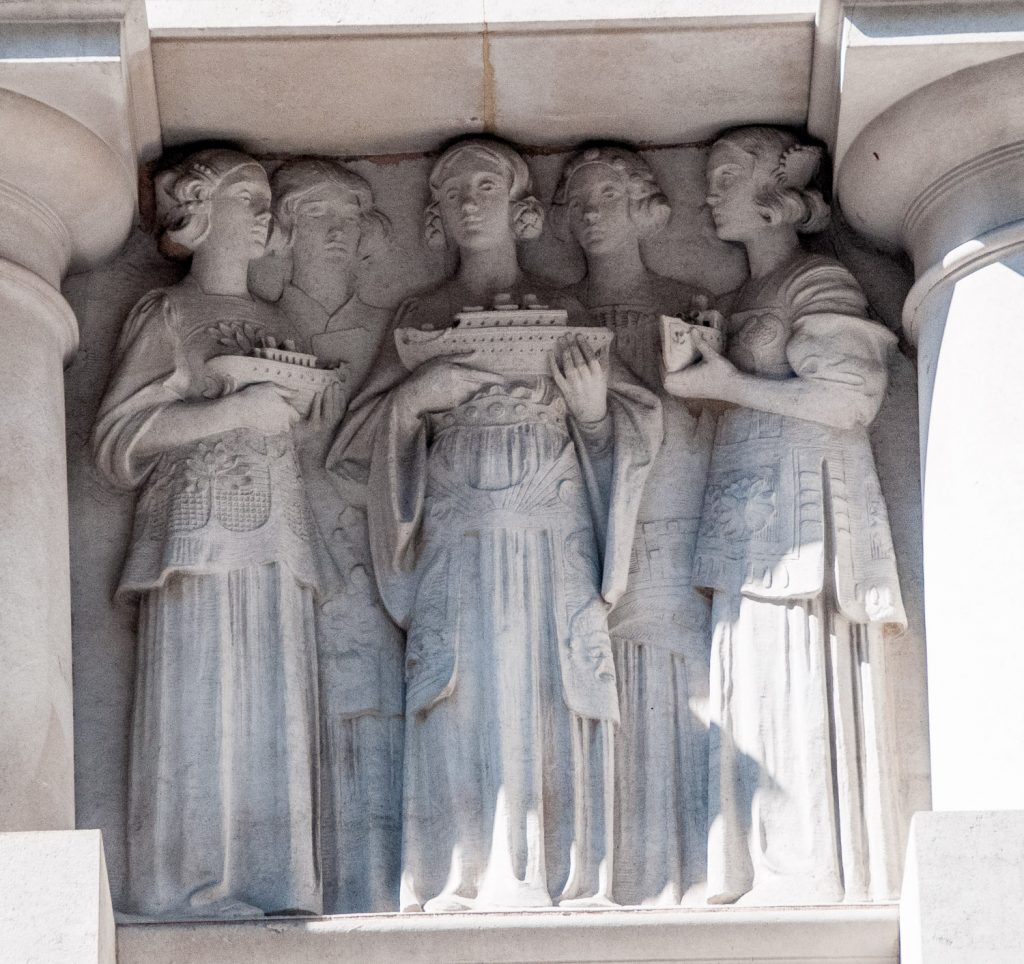
In last week’s blog I wrote about the numerous female figures decorating the Lloyd’s Register of Shipping’s offices in Fenchurch Street. Here a group of maidens hold models of ships …
In my 2nd April blog, Moorgate and the Goddess of Electricity, I wrote about the impressive building called Electra House. I didn’t, however, venture into the entrance hall. If I had I would have seen two allegorical panels by F.W. Pomeroy who did much work on the Central Criminal Court, including the statue of Lady Justice. Again, there is more in last week’s blog.

The panel to the left has a seated figure, which may be Britannia, holding a rudder in one hand and a loop of cable in the other …
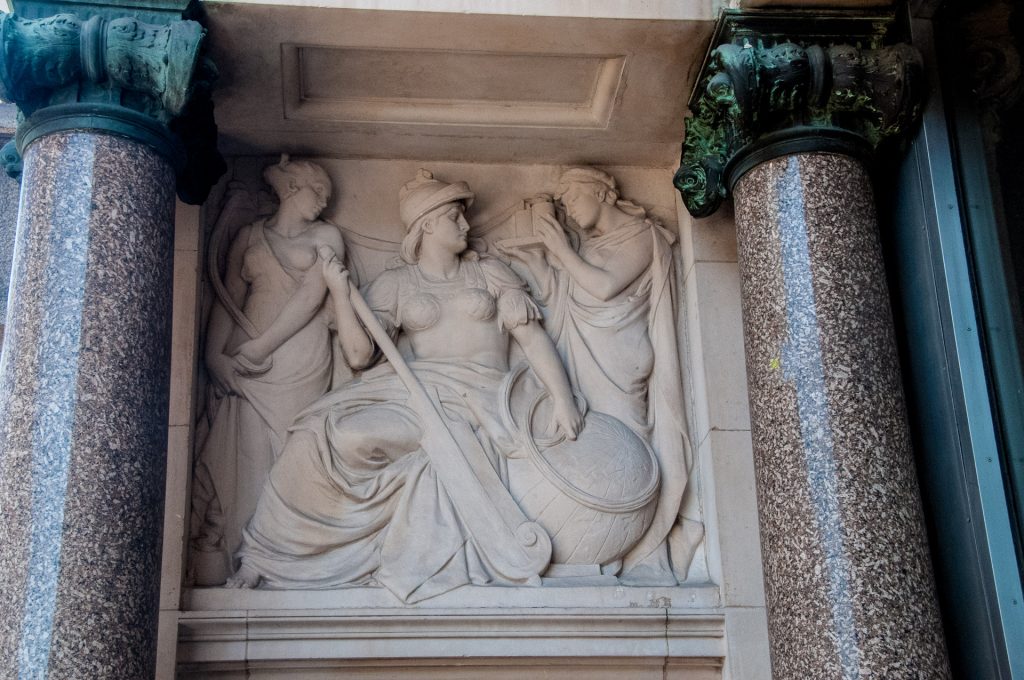
The cable encircles a globe and the figure to the right holds up two batteries on a tray.

This is the panel opposite …
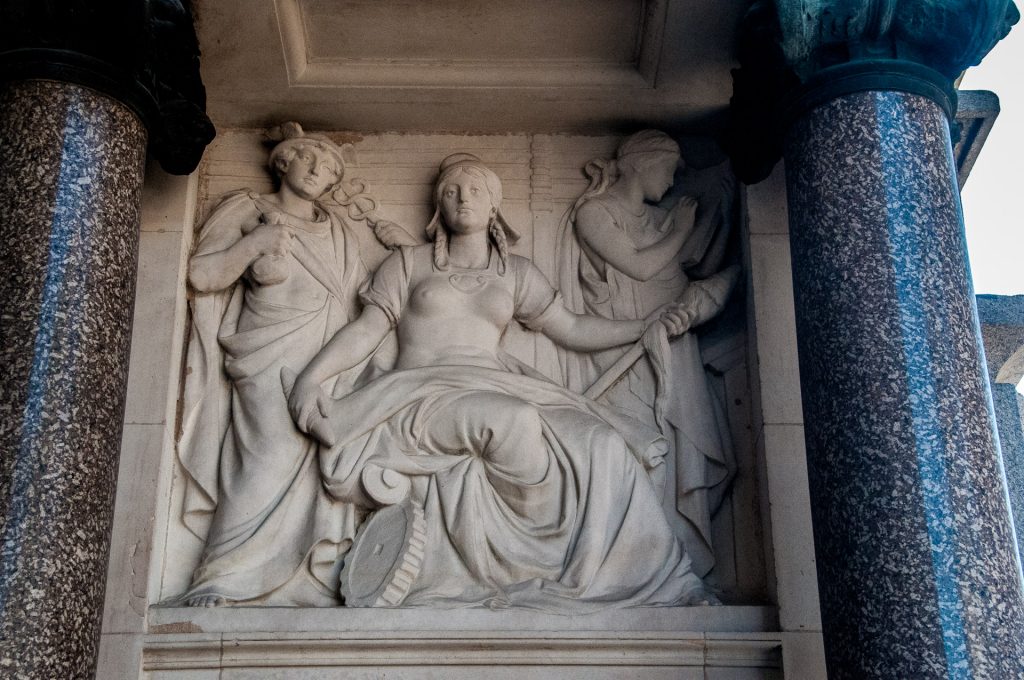
The female figure holds a distaff in one hand and a weaving shuttle in the other. Standing to her left is Mercury, holding his caduceus and a bag of money. The lady on the right writes in a ledger whilst in the background is a telegraph pole. The panel probably represents the advantages to trade and industry of the telegraph.

And now south, to Number 1 Moorgate which was once the Banco di Napoli. Created in the 1980s, the bronze doors portray two ladies in peasant costume …
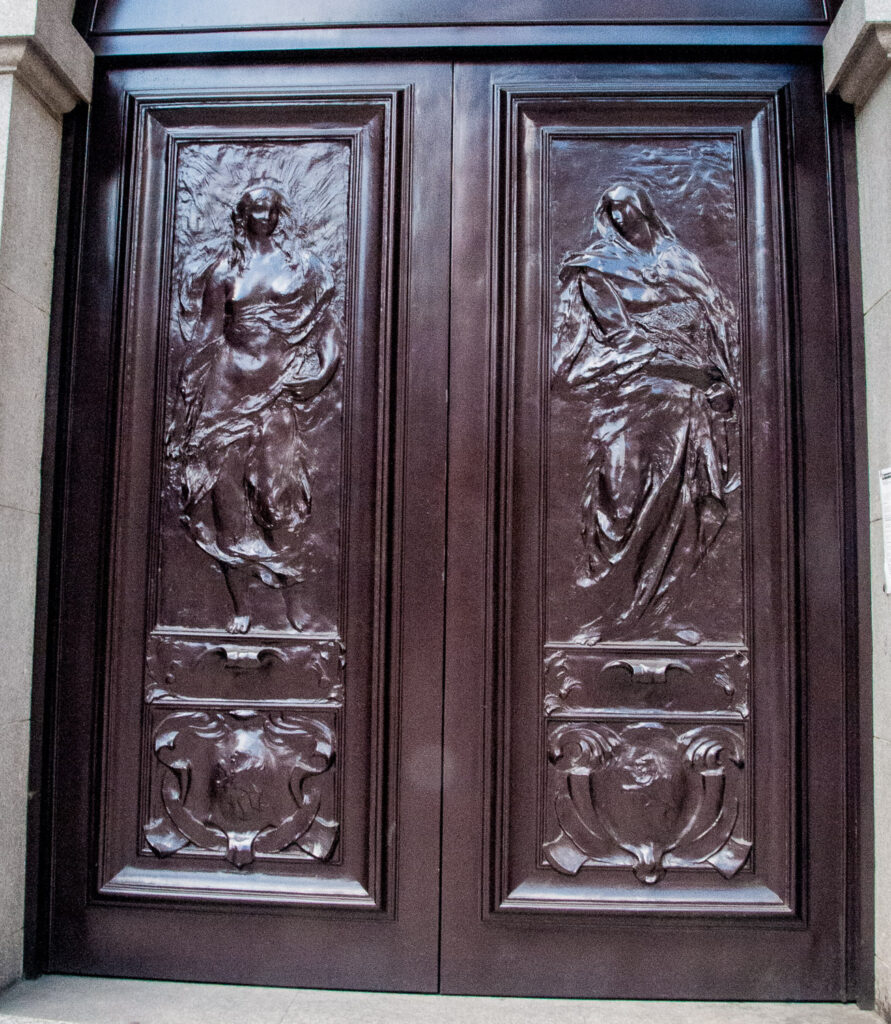
The woman on the left is sowing seeds and the one on the right holds a sickle and a sheaf of cut corn.

Just off Aldermanbury and to the north of the Guildhall is this 1972 bronze by Karin Jonzen called Beyond Tomorrow

A young couple look expectantly towards the future.

During the Second World War almost a thousand firefighters sacrificed their tomorrows trying to save property and lives during the intense bombing. On Sermon Lane opposite St Paul’s Cathedral can be found The National Firefighters’ Memorial (1991). On the north side is this representation of the women members of the National Fire Service and a list of those killed whilst on duty …
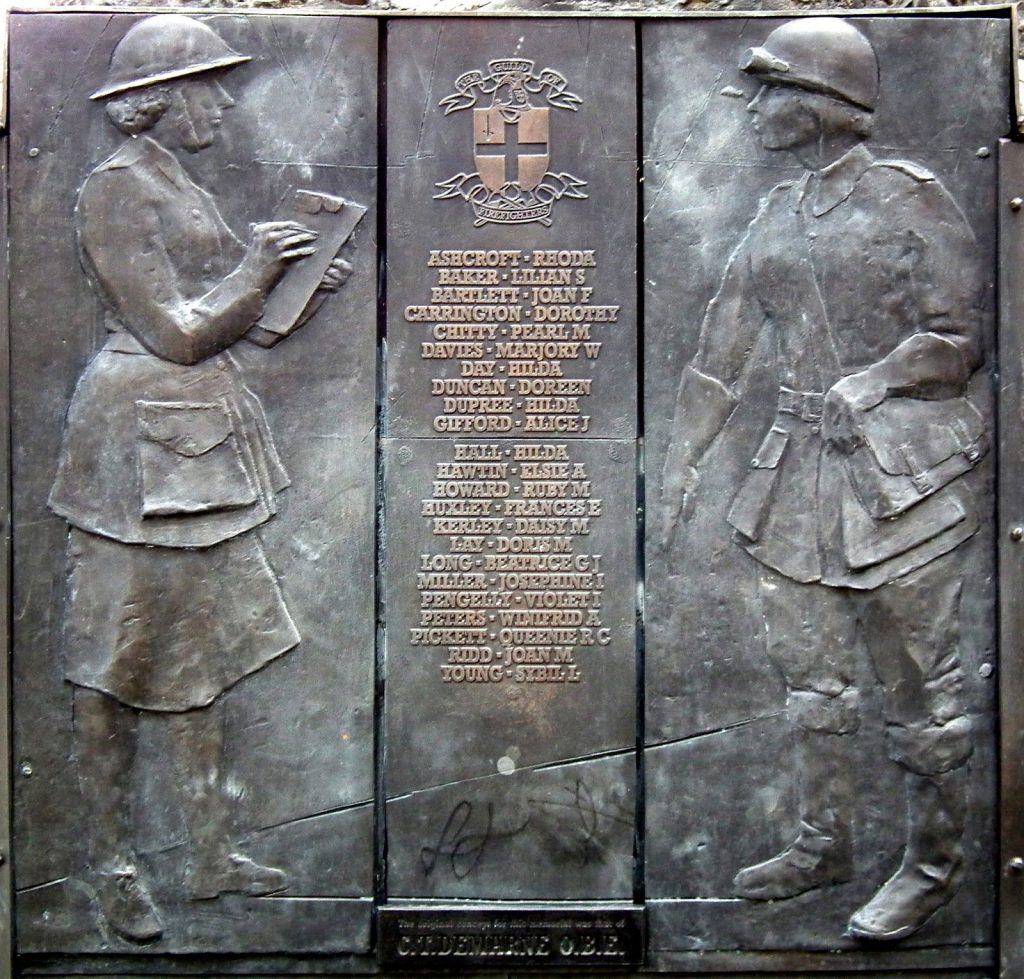
The lady on the right is a Dispatch Rider and the one on the left an Incident Recorder. Although not meant to actually fight fires, a former wartime firefighter declared …

The reality … was that firewomen were more widely involved in active work than is generally acknowledged, and they could often be found in the midst of things during the blitz, whether helping out on the pumps, in control rooms close to the centre of the severest raids or delivering supplies to firefighters.

Twenty-one-year-old Gillian Tanner was awarded the George Medal for bravery when she delivered petrol to fire pumps around Bermondsey while the docks were being bombed during the height of the Blitz.

Their pay was set at two thirds of that of the men, the Home Office having turned down their union’s request for equal pay in 1943.

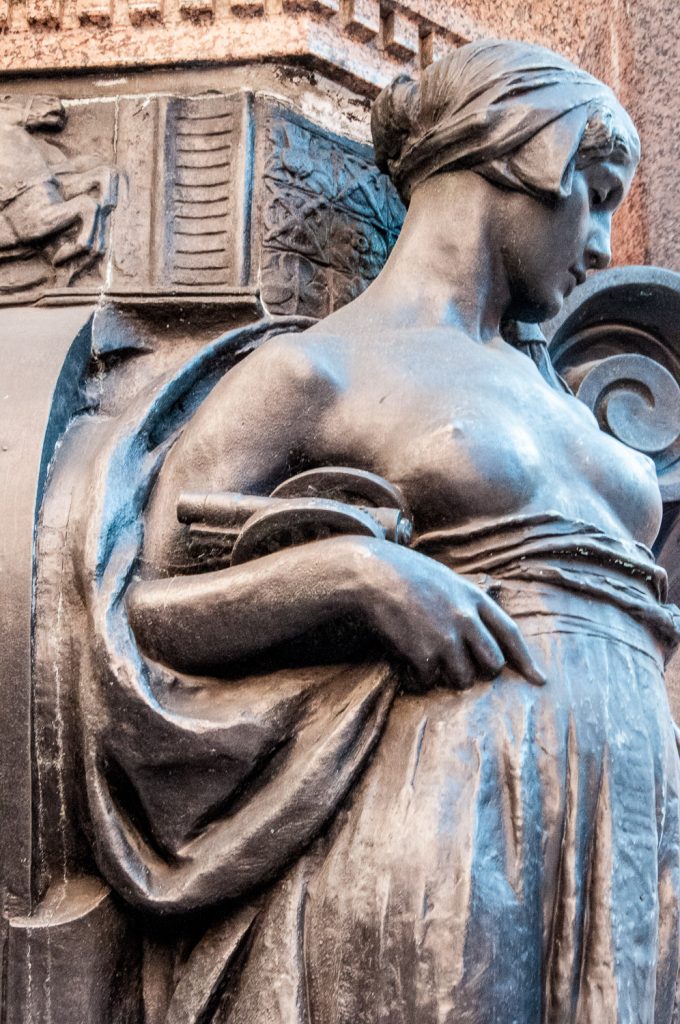
Four ladies adorn the memorial to the 786 employees of the Prudential Assurance Company who gave their lives in the First World War. It can be found in the courtyard outside their old headquarters in Holborn and you can read more about it here.

This lady holds a seagoing vessel, representing the Navy …
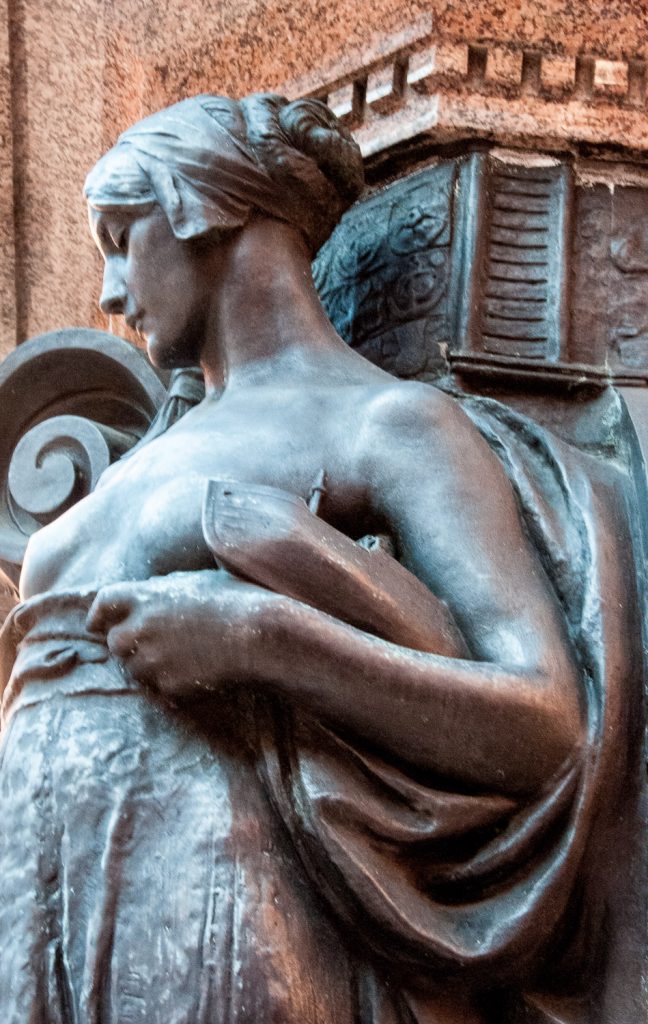
At the back is a figure holding a shell representing National Service …
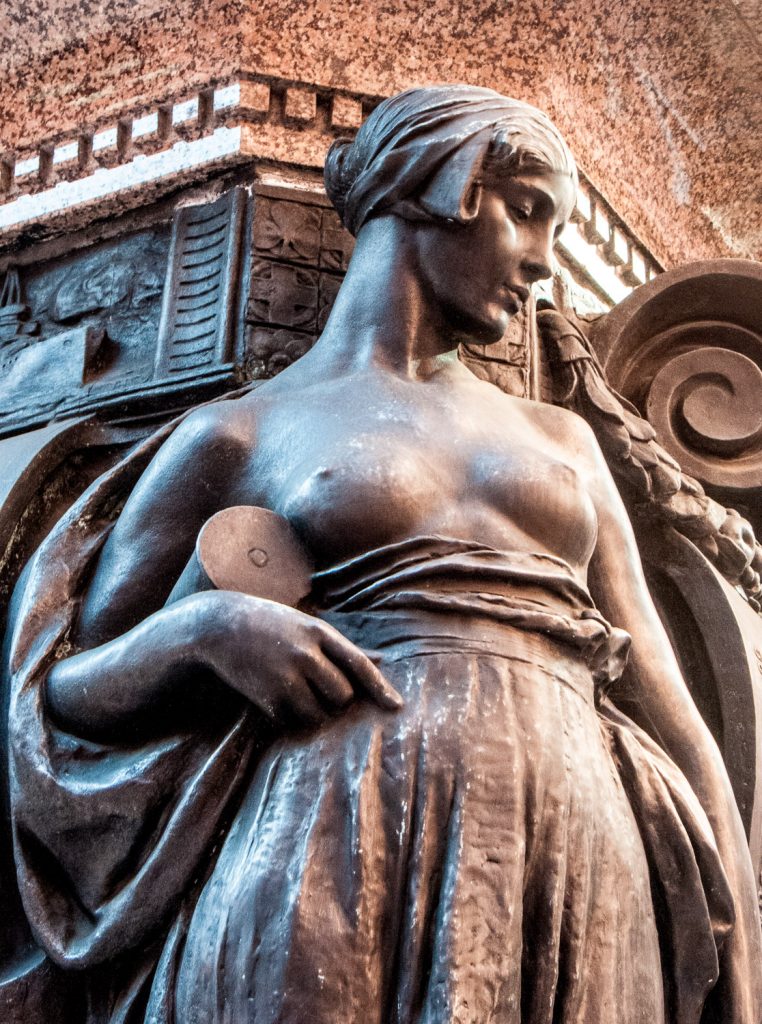
The bi-plane represents the Air Force …
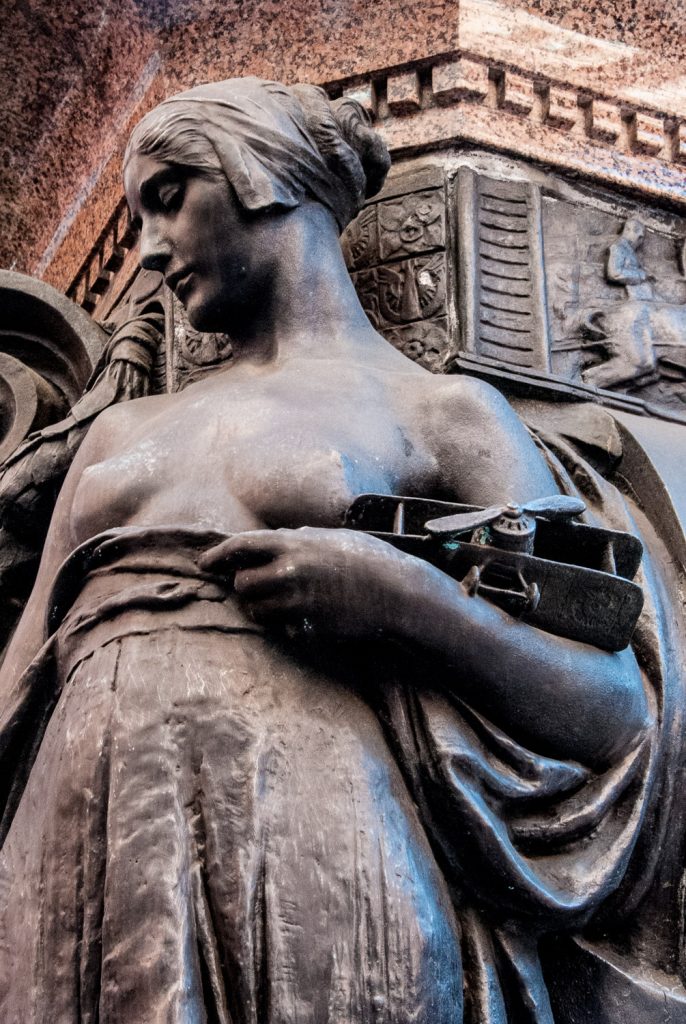
And this one holds a field gun and represents the Army …
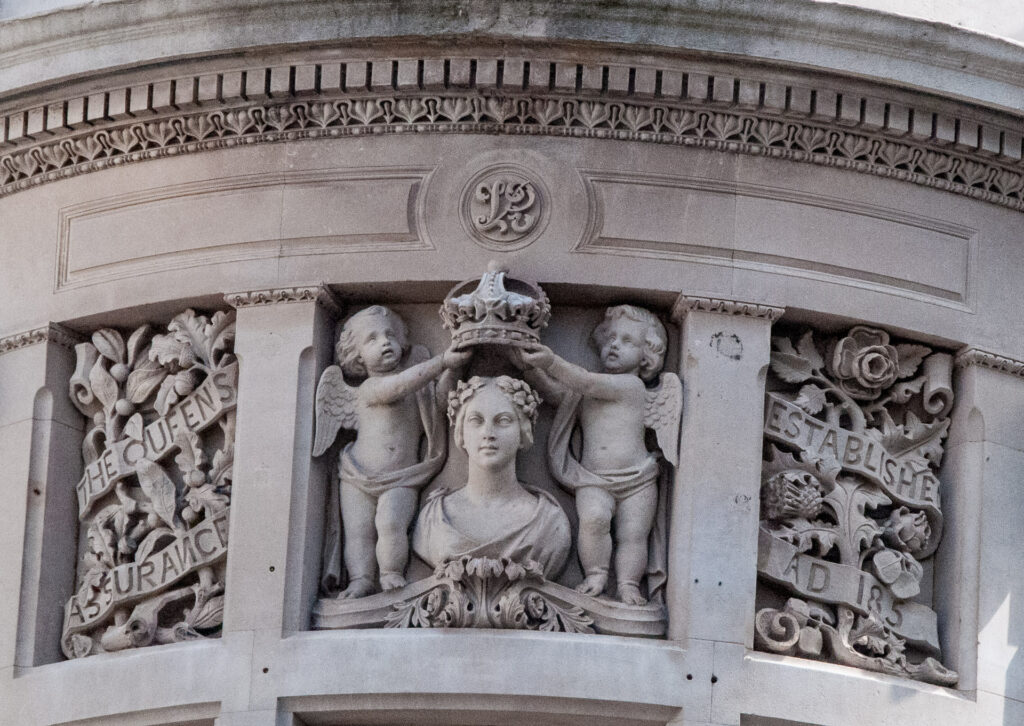
I like the Queen’s Assurance sign from 1852 at 42-44 Gresham Street …
And finally, she may be the oldest City Lady I have found but she still looks beautiful and serene …
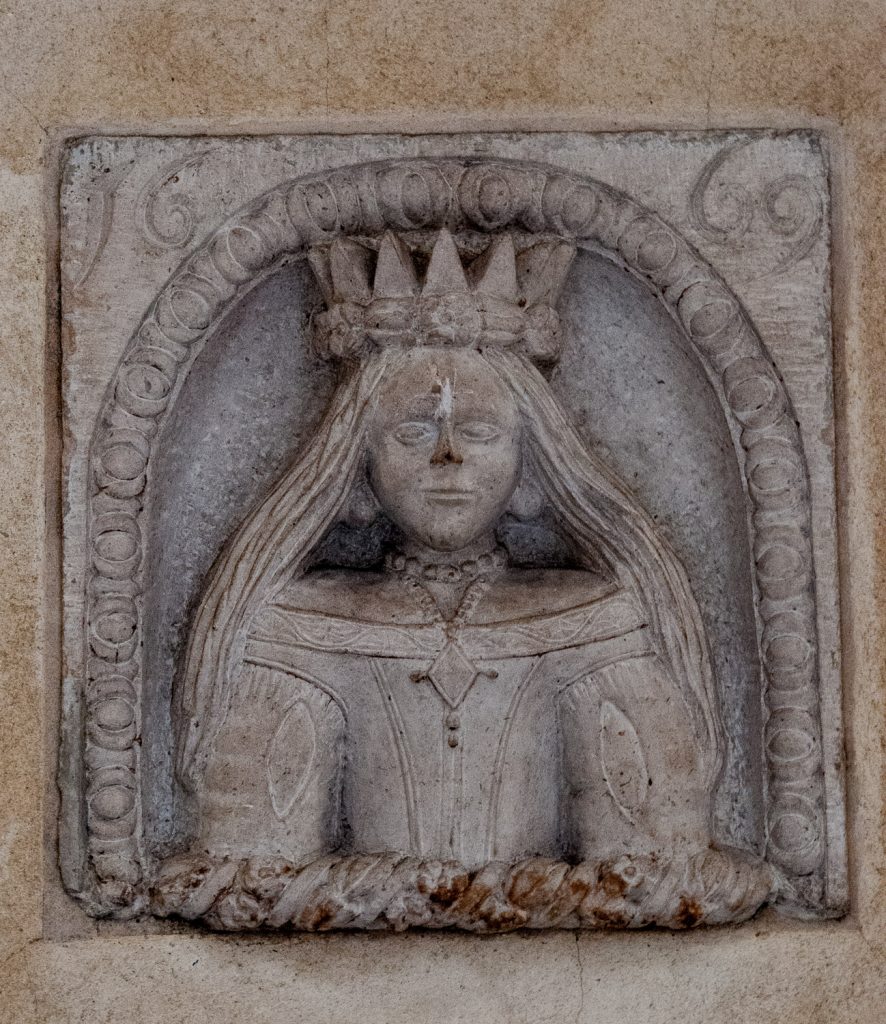
Dated 1669, she must have witnessed much of the rebuilding of the City after the great fire of 1666. She now resides in a sheltered spot in Corbet Court (EC3V 0AT). I have written about Mercer Maidens like her in an earlier blog entitled Dragons and Maidens.

Remember you can follow me on Instagram :
https://www.instagram.com/london_city_gent/

From a girl dressed as a pageboy to the Recording Angel – City Ladies in stone

Having written about City Children a few weeks ago I though it was time to look at some of the ladies portrayed in sculpture around the City. I found enough for several blogs so this is the first instalment!

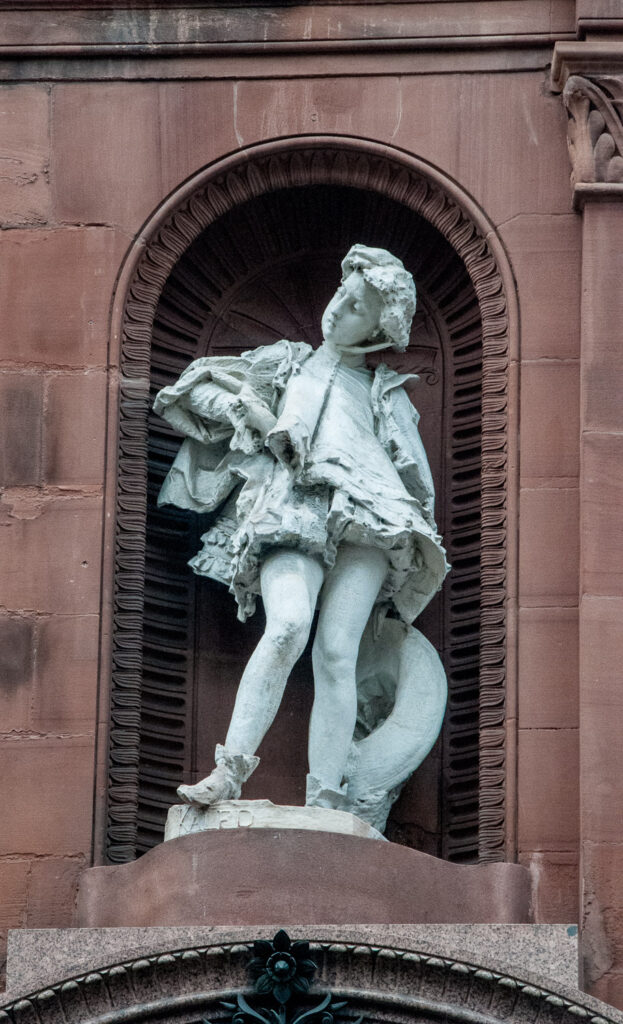
Let’s start with this extraordinary statue at 193 Fleet Street now, sadly, somewhat weathered …

I always thought that it resembled a rather effeminate youth but it is in fact a woman disguised as a pageboy, her name, Kaled, appears just under her right foot.

It is by Giuseppe Grandi, and dates from 1872. The shop owner, George Attenborough, had a niche created specially for it over the front door. Kaled is the page of Count Lara in Bryon’s poetic story of a nobleman who returns to his ancestral lands to restore justice. He antagonises the neighbouring chieftains who attack and kill him. Kaled stays with his master and lover to the end, when it is revealed he is in fact a woman. She goes mad from grief and dies.

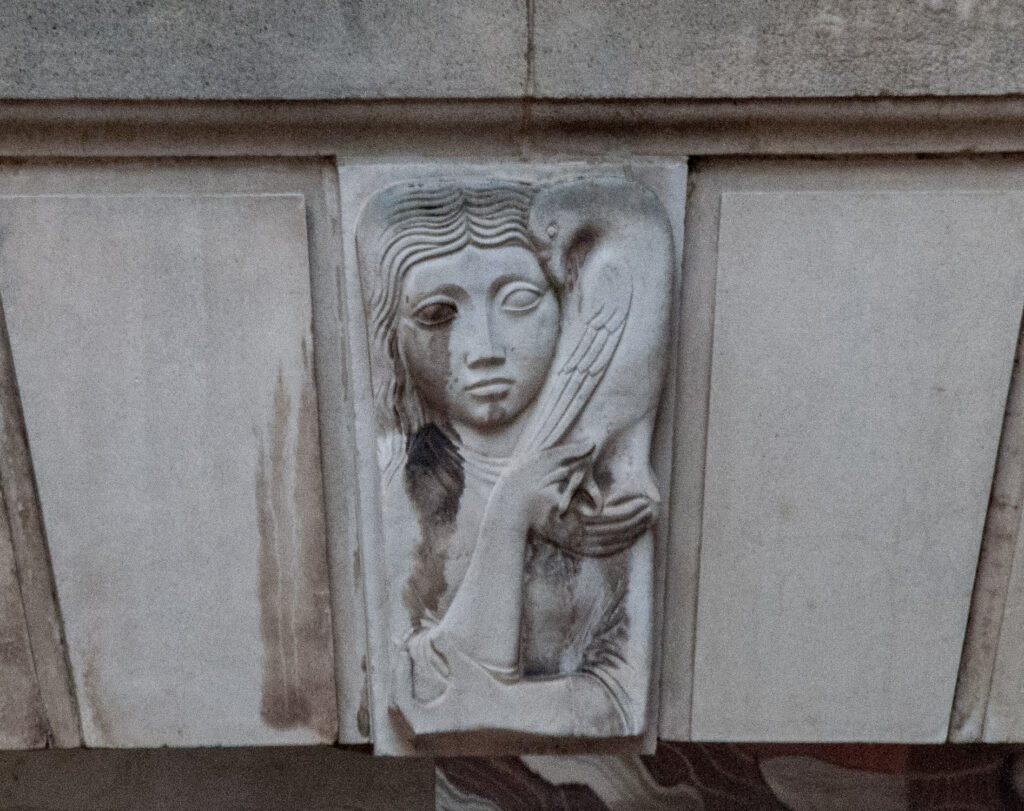
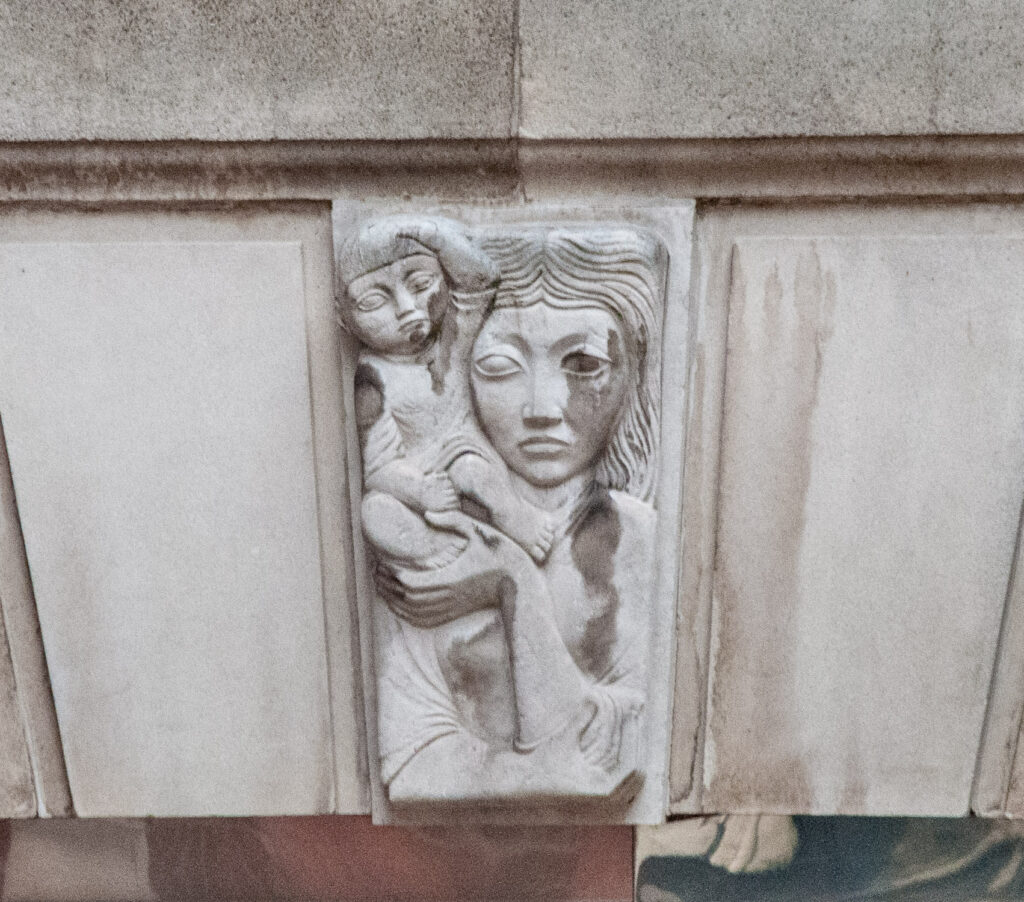
Walking further eastwards along the south side of Fleet Street you come across Serjeants’ Inn and these interesting keystones depicting a woman holding a baby, flowers and a bird (EC4Y 1AE) …

They date from 1958 and although the architects are known, Devereaux & Davis, the name of the sculptor is not (or, at least, I couldn’t discover it).

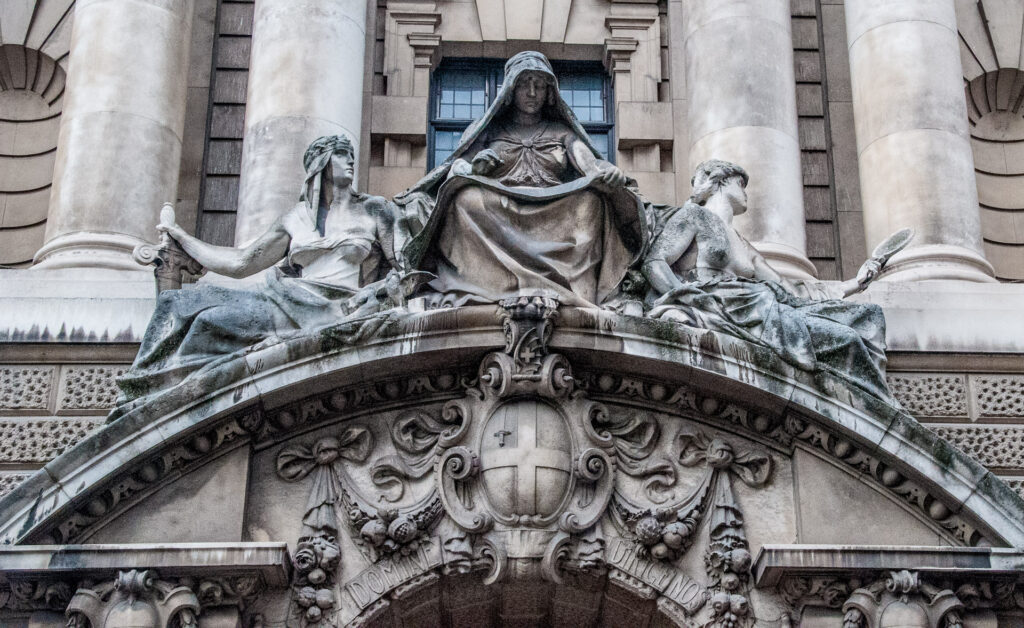
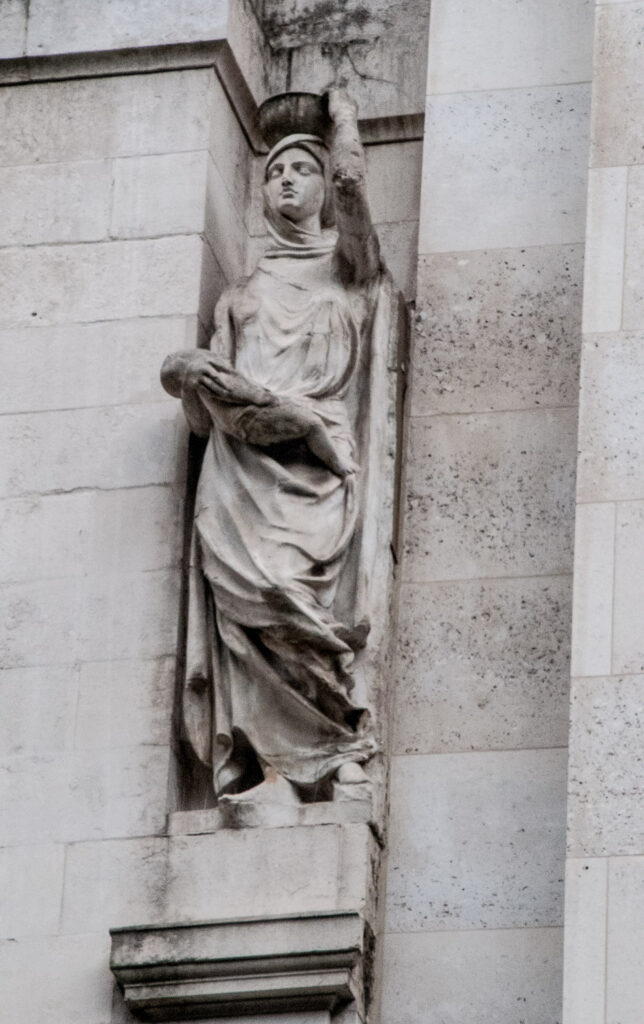
Over the original main door to the Old Bailey (EC4M 7EH) is a sinister figure, her face overshadowed by an ample hood. She is the Recording Angel, busy writing down all our deeds for God’s future reference …

To the left sits Fortitude, a female figure holding a massive and elaborate sword, and on the right Truth gazing into her mirror.

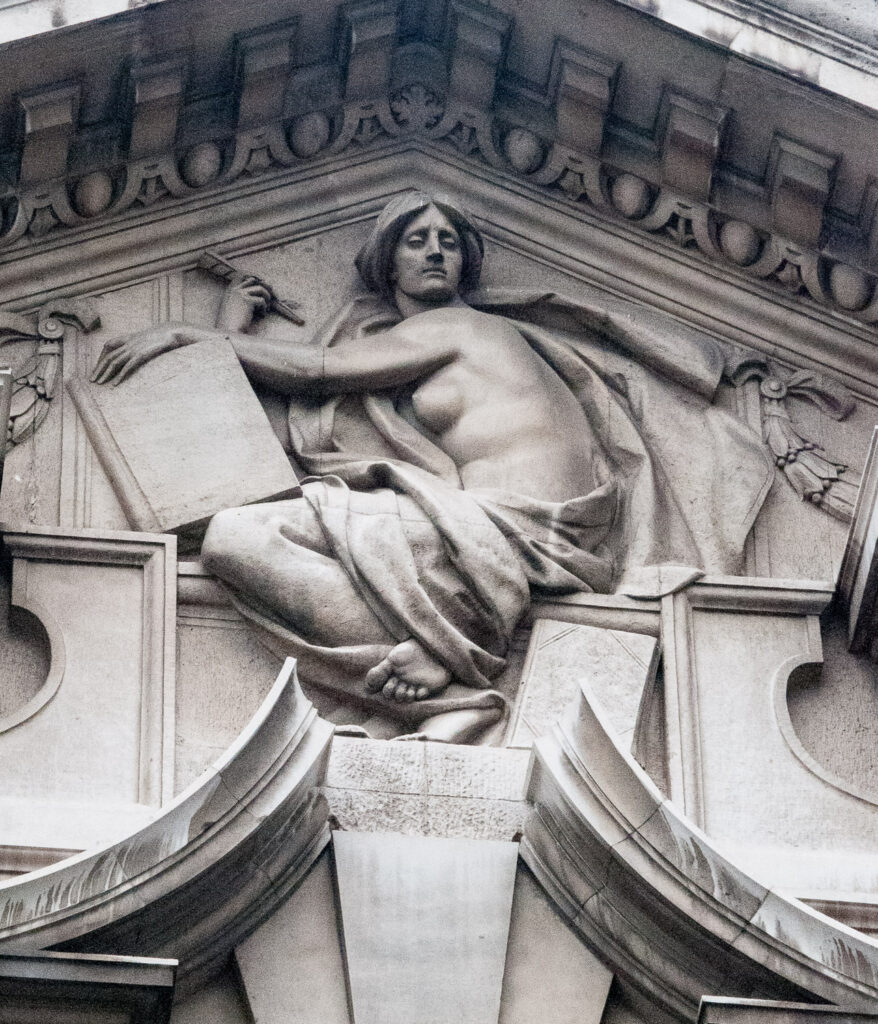
On the south pediment another woman holds a quill in one hand and in the other a closed book …

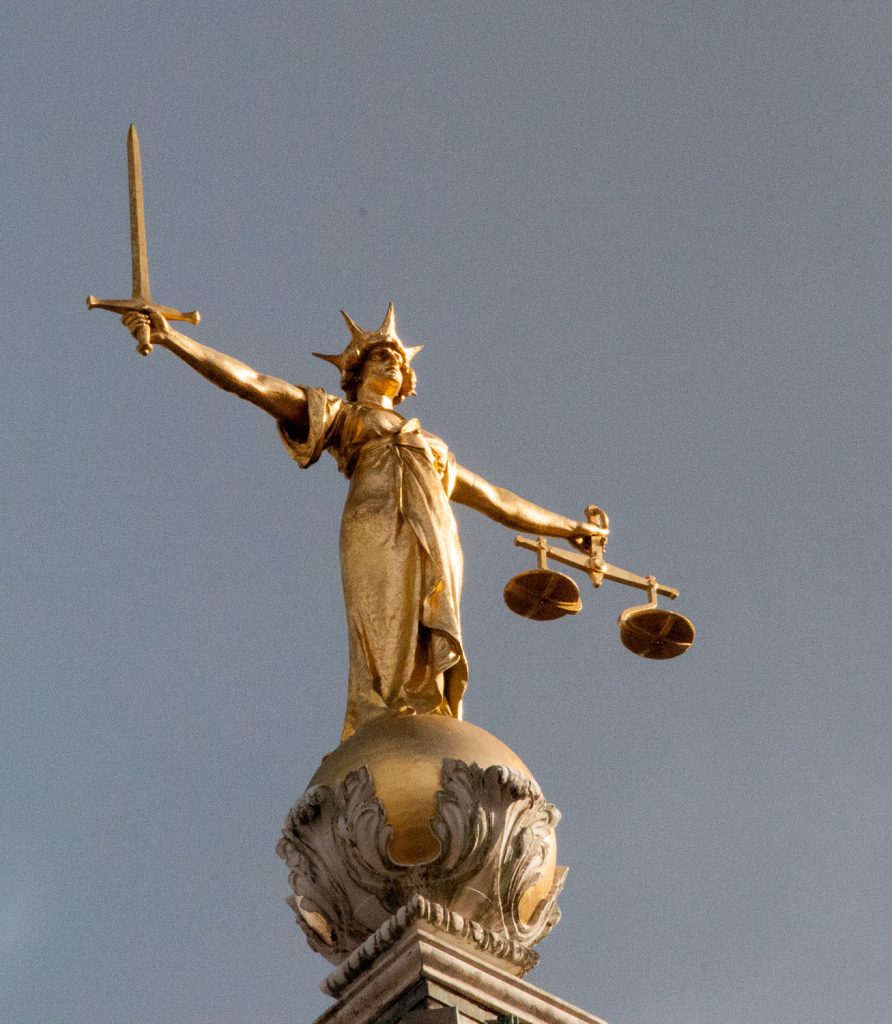
Both date from 1906 and are by the sculptor Frederick William Pomeroy as is Justice holding her symbolic sword and scales. She stands upon a globe because Justice straddles the world and although she is made of bronze not stone I couldn’t resist including her …

You may be surprised to see that she is not wearing a blindfold. I have written about her and the many other places she can be found in the City (often blindfolded) in an earlier blog entitled Lady Justice.

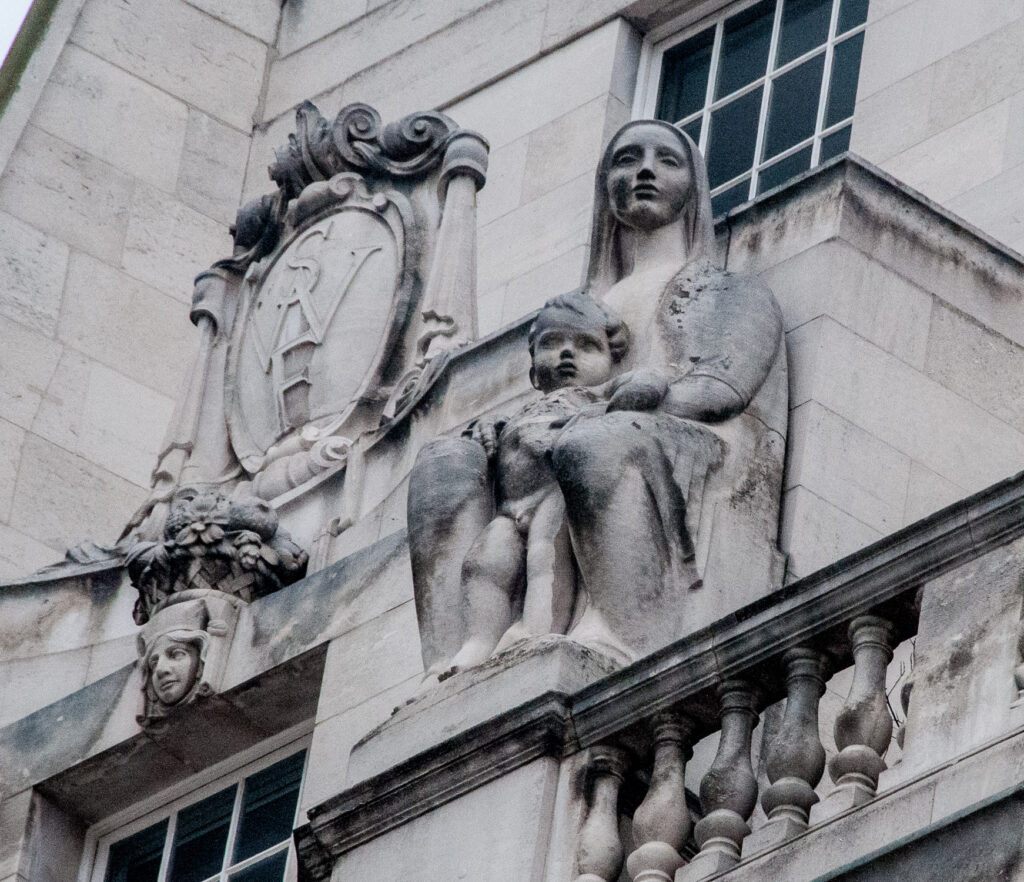
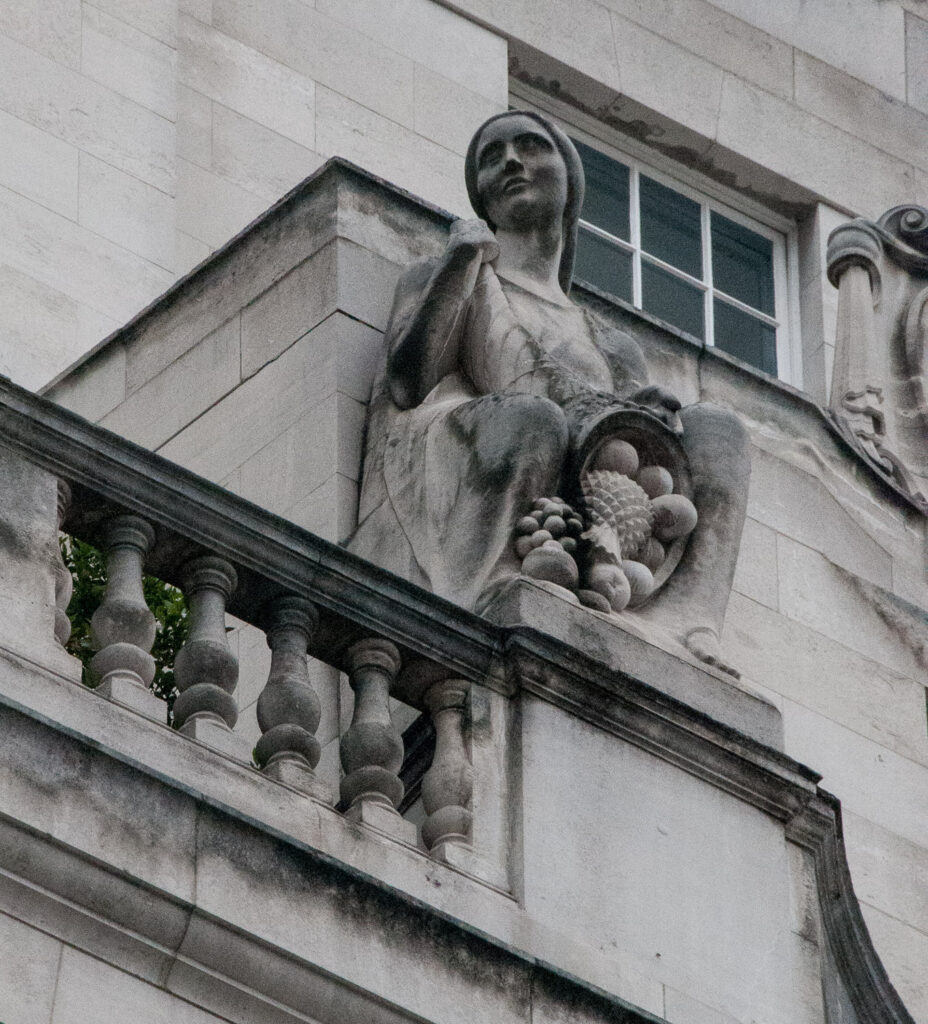
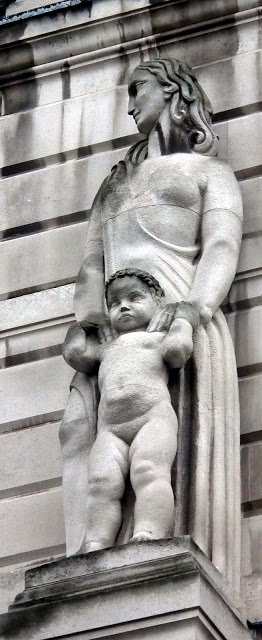
At 28-30 Cornhill can be found the old offices of the Scottish Widows Insurance Company (EC3V 3ND). High up the building, which dates from 1935, are two figures sculpted by William McMillan.

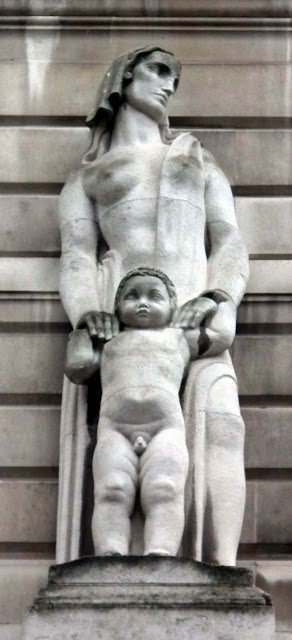
The one on the left holds a naked child between her knees …

… the other pours fruit and flowers from a cornucopia …

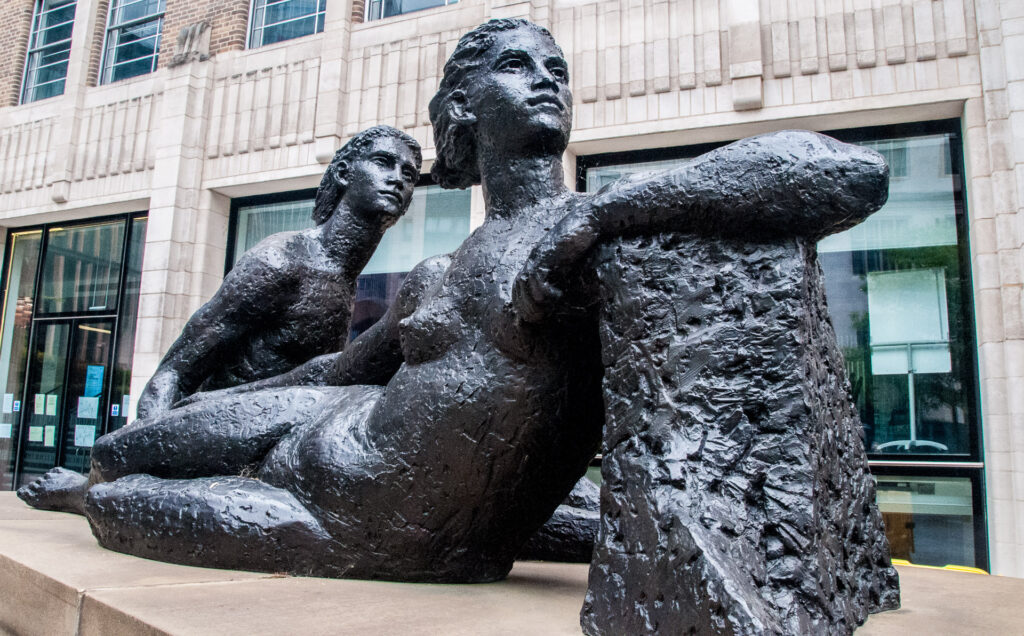
Dr Philip Ward-Jackson points out in his book Public Sculpture of the City of London that there is a striking resemblance both in iconography and style between these two figures and the so-called Lothbury Ladies. Charles Wheeler was sculpting them at the same time for the Lothbury front of the Bank of England. Here are two of them …

The children represent ‘the hope of the future of the renewed Bank and its ideals’.

The Lloyd’s Register of Shipping at 71 Fenchurch Street is worth a visit in its own right. I counted over two dozen female figures incorporated into the building’s design and here are just a few of them …

I can’t really do the sculptors justice in this blog so I will return at a later date.

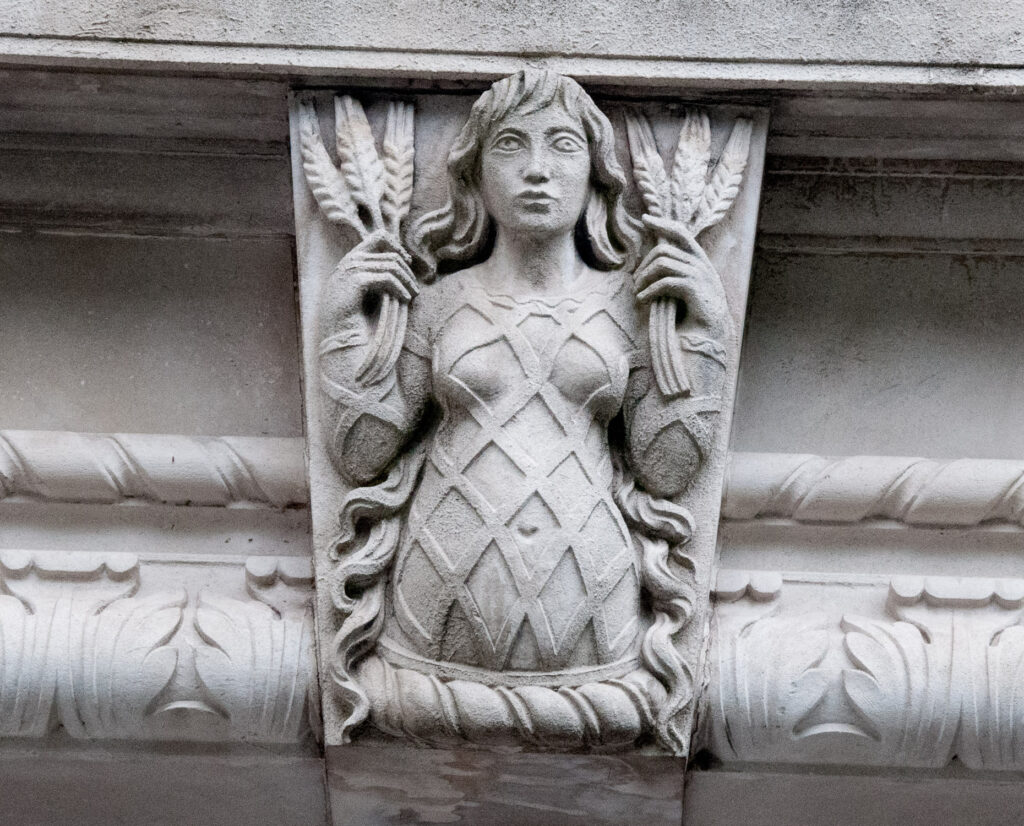
Brewers’ Hall in Aldermanbury Square boasts a maiden keystone over its entrance (EC2V 7HR) …

She holds in either hand three ears of barley and forms the crest of the Brewers’ Company coat of arms. This is another work by Charles Wheeler and dates from 1960.

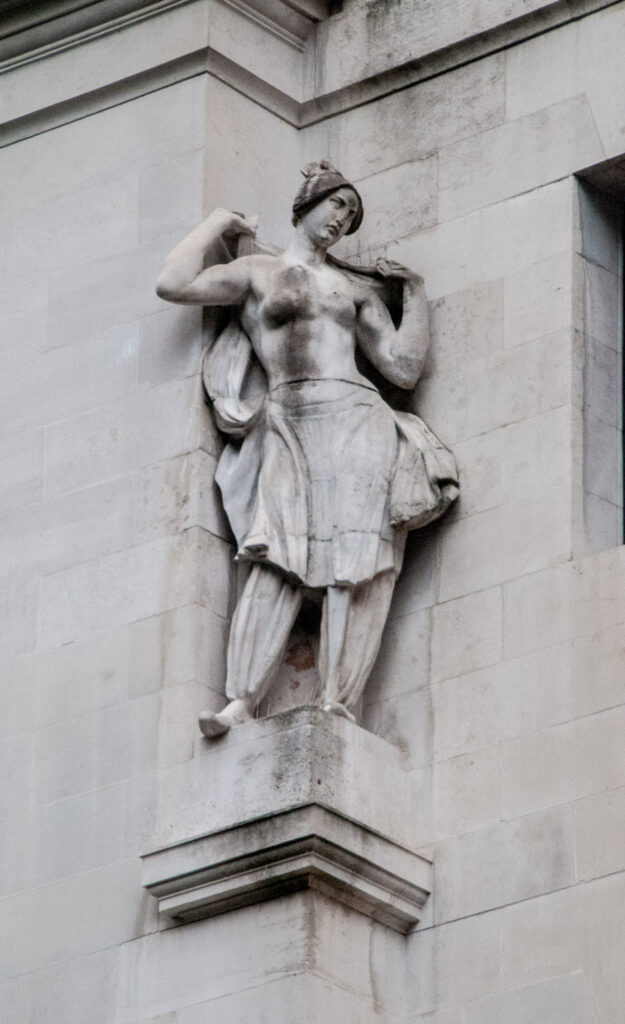
Walking around Finsbury Circus I looked up and saw this lady on the Lutyens designed Britannic House (EC2M 7EB). The building was originally the headquarters of the Anglo-Persian Oil Company …

Sculpted by Francis Derwent Wood in 1925, she’s a Persian Scarf Dancer.

Nearby is another work by him entitled Woman and Baby or Spring

My walk around the City looking for ladies in sculpture was really enlightening and I’ll return to the subject in a later blog.

Remember you can follow me on Instagram :
https://www.instagram.com/london_city_gent/

London Law – A walk around The Temple

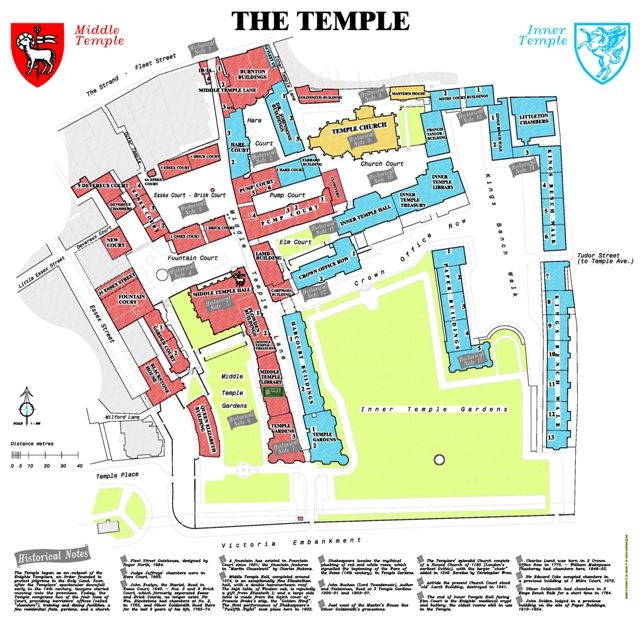
The west end of Fleet Street belongs to the lawyers. You can leave the noise and bustle of the main roads and enjoy the tranquility of the Inns of Court, where you can still glimpse through the windows book-stuffed rooms and ribbon-bound briefs. I am going to write about The Temple, the area in the vicinity of Temple Church which consists of two of the four Inns of Court – the Inner Temple and Middle Temple. There is map at the end of the blog to help you navigate.

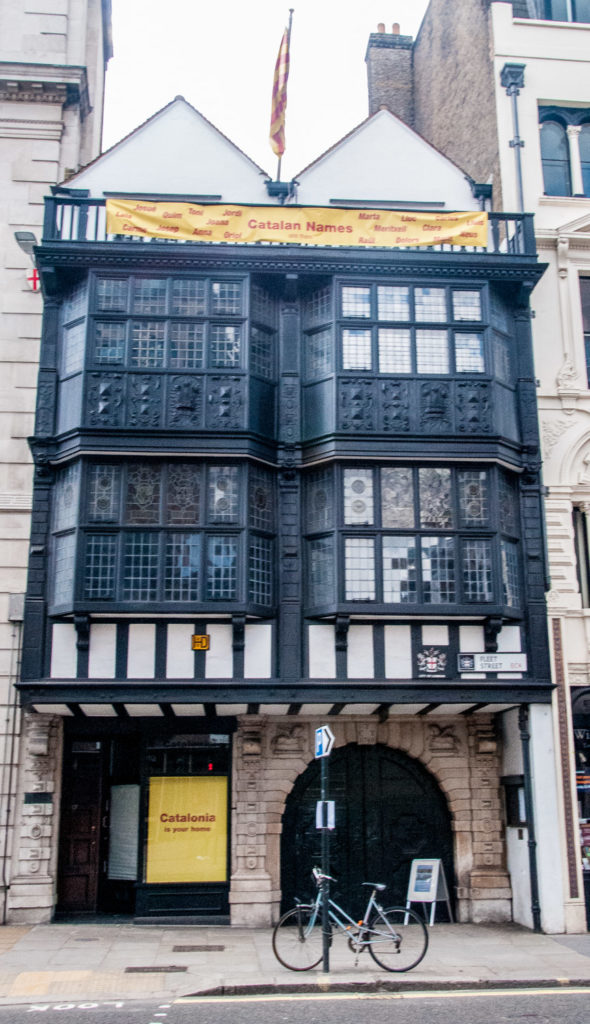
I entered the Middle Temple from Fleet Street through the archway beneath Prince Henry’s Room at number 17, one of the few buildings still around today that survived the Great Fire of 1666 …

Prince Henry’s room above the entrance to the Middle Temple (the doors are closed in this photograph)

Once called the Fountain Tavern, Samuel Pepys visited it on 28 November 1661 and wrote in his diary …


To the Fountain tavern and there stayed till 12 at night, drinking and singing, Mr. Symons and one Mr. Agar singing very well. Then Mr. Gauden, being almost drunk, had the wit to be gone; and so I took leave too.

Sadly you can’t drink or sing there now since it is not open to the public.

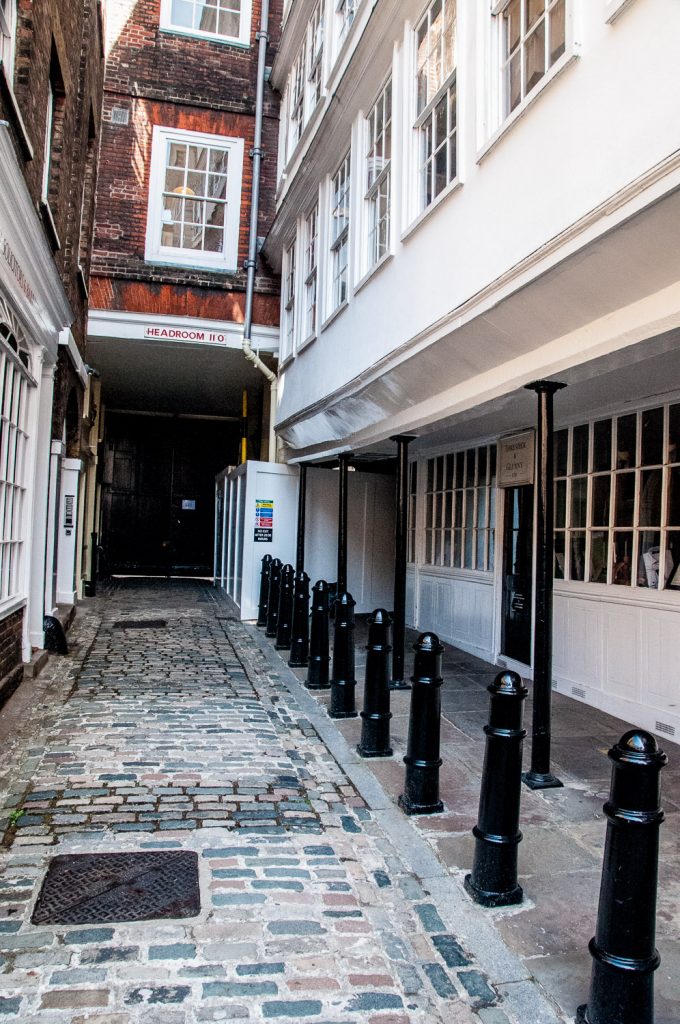
As you walk down Middle Temple Lane, look back and you can see the posts that support the 17th century buildings above. I read somewhere that Dr Johnson used to enjoy swinging around these when in an exuberant mood …

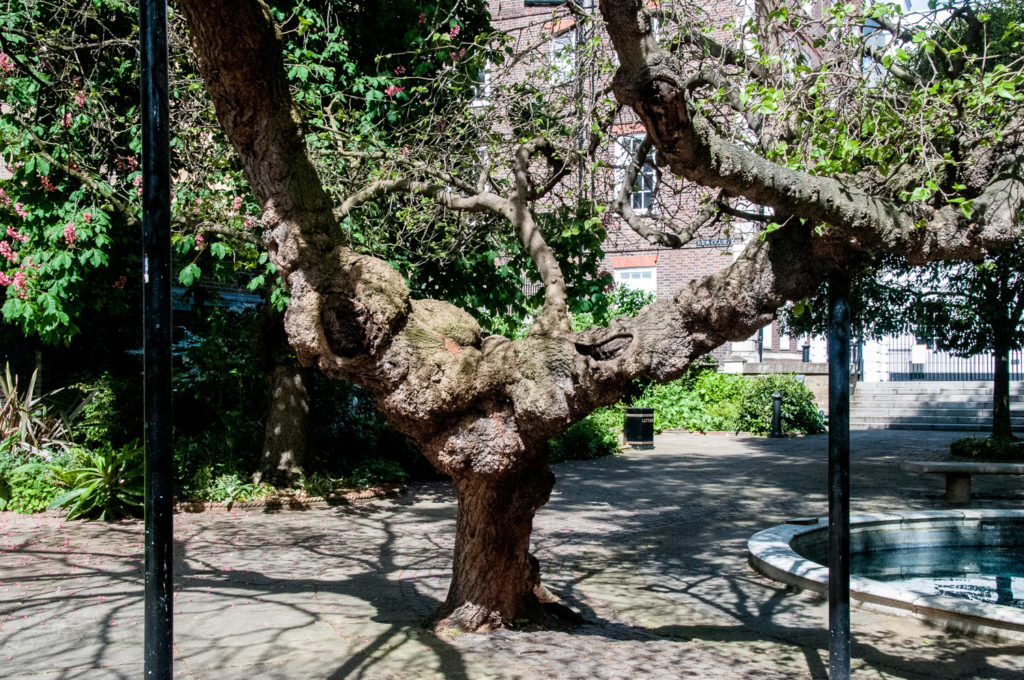
On your right as you walk down the Lane is Fountain Court where there is a Mulberry tree planted in 1887 to celebrate Queen Victoria’s Jubilee …

Nearby is the 16th Century Middle Temple Hall where Shakespeare’s company first performed Twelfth Night in February 1602.

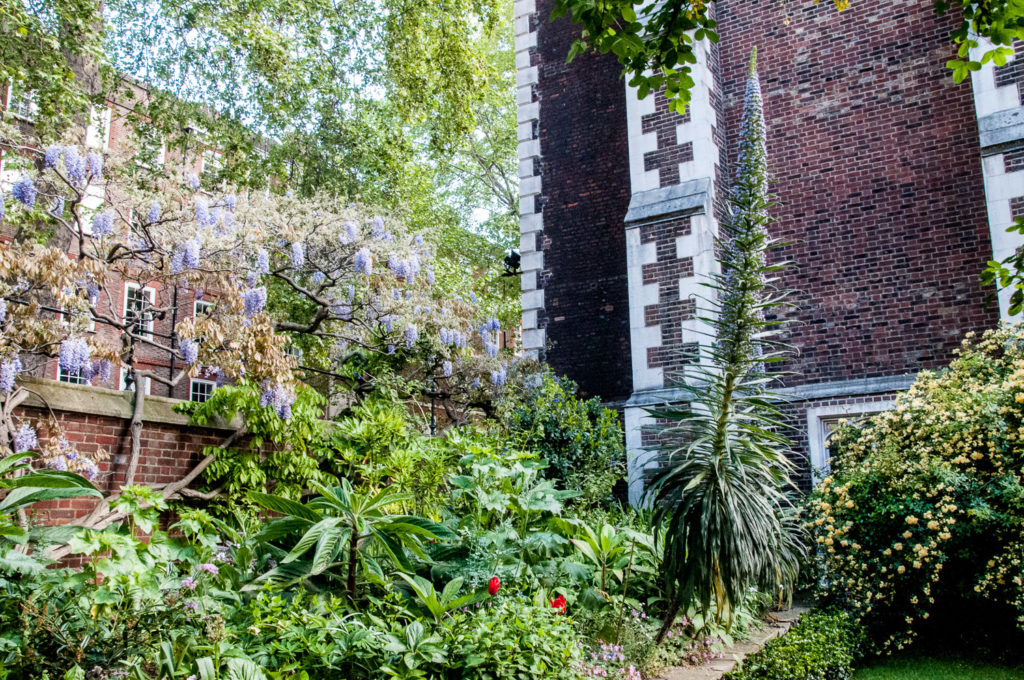
Go down the steps to the left of the fountain and you can walk alongside Middle Temple Gardens. The giant Triffid-like plant on the right is an Echium

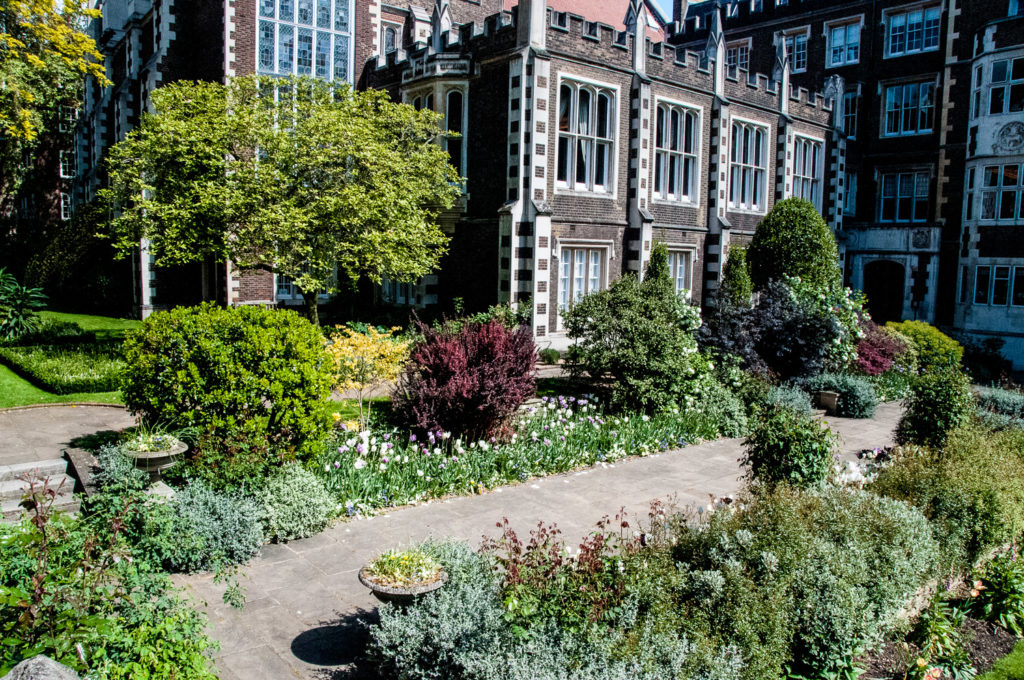
The Middle Temple has kept a garden, in various forms, for centuries – indeed Shakespeare’s Henry VI, Part I, refers to the ‘Temple Garden’ as the location for an argument between York and Lancaster, complete with the plucking of red and white roses, which led to the War of the Roses. There doesn’t seem to be any contemporary evidence for this, however.

The gardens spread out as you walk towards the River Thames and once stretched all the way to the water’s edge before the building of the Embankment in 1870

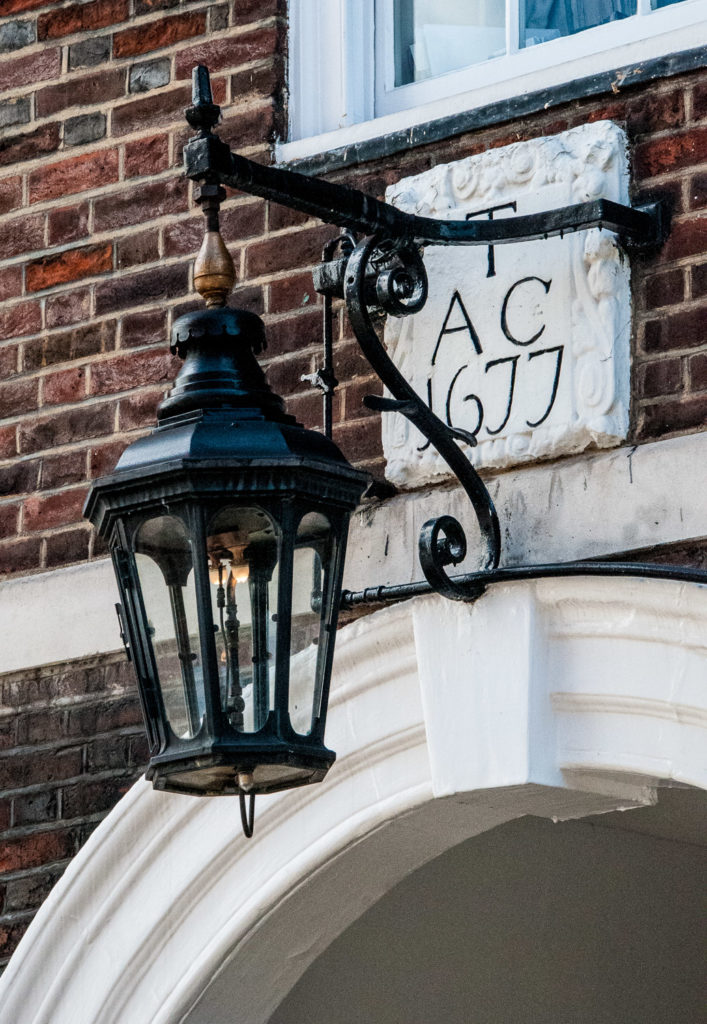
Retrace your steps and walk through Pump Court to Church Court pausing in Essex Court to admire this old gas lamp …

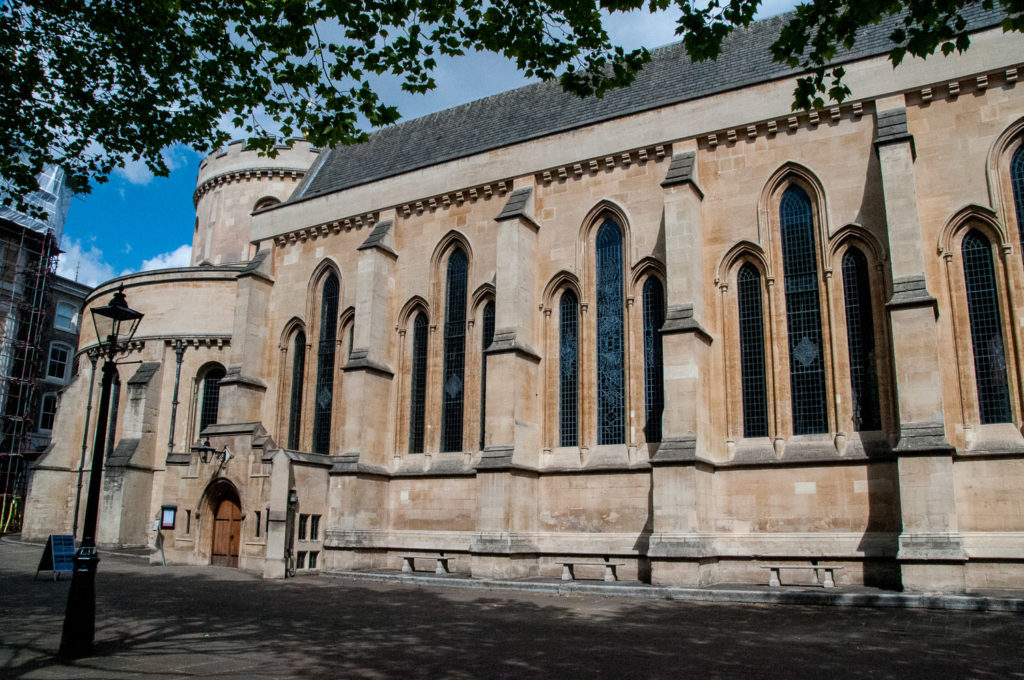
Not surprisingly, in Church Court you will find the Temple Church after which the area is named. Originally built by the Knights Templar as their English headquarters, it was consecrated on 10th February 1185 by Heraclius, the Patriarch of Jerusalem. It was built in the round to remind worshippers of the Jerusalem Church of the Holy Sepulchre …

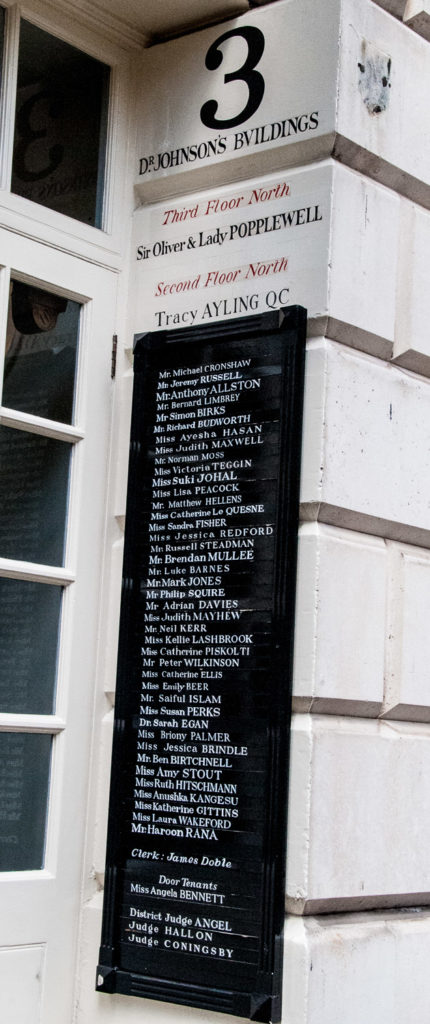
Outside the door of each Chambers is a list of the barristers who practise there or are ‘door tenants’ who do not but who have a connection with the Chambers …

Some have accommodation in Chambers – the author John Mortimer practised as a barrister and had rooms here in Dr Johnson’s Buildings.

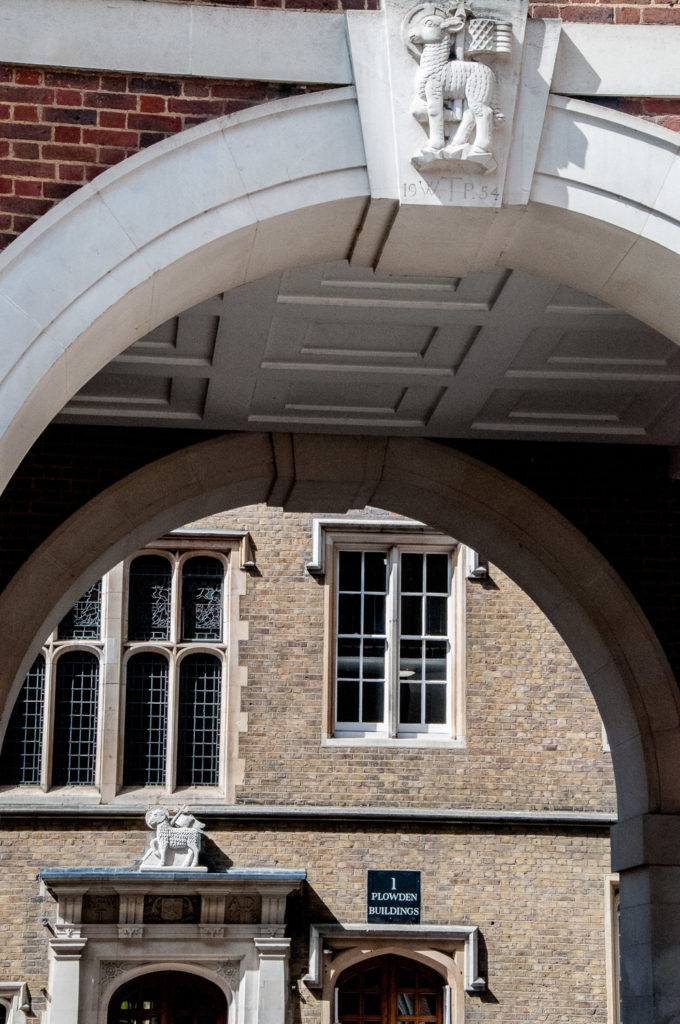
You will see frequent representations of the symbol of Middle Temple, the Lamb and Flag or Agnus Dei. These two are in different styles, an older one on Plowden Buildings in the distance and a post war 1954 version in the foreground …

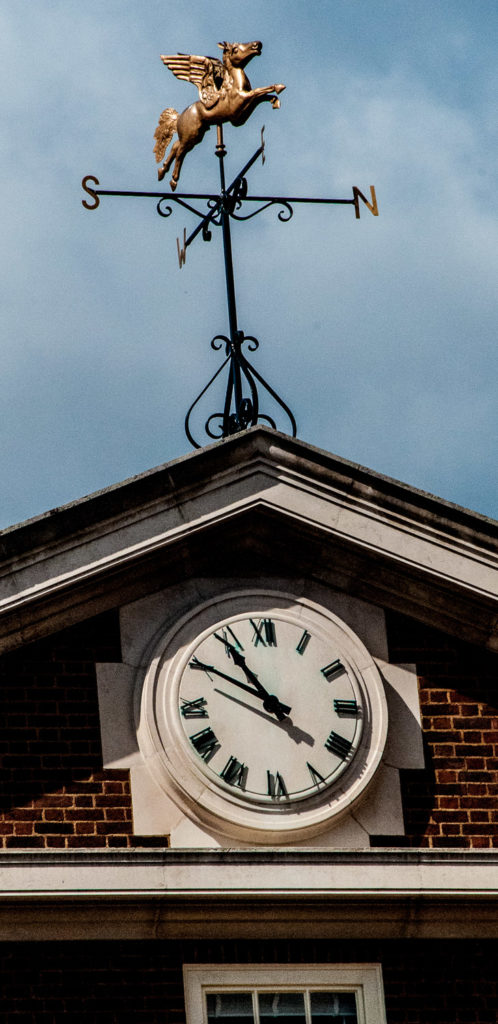
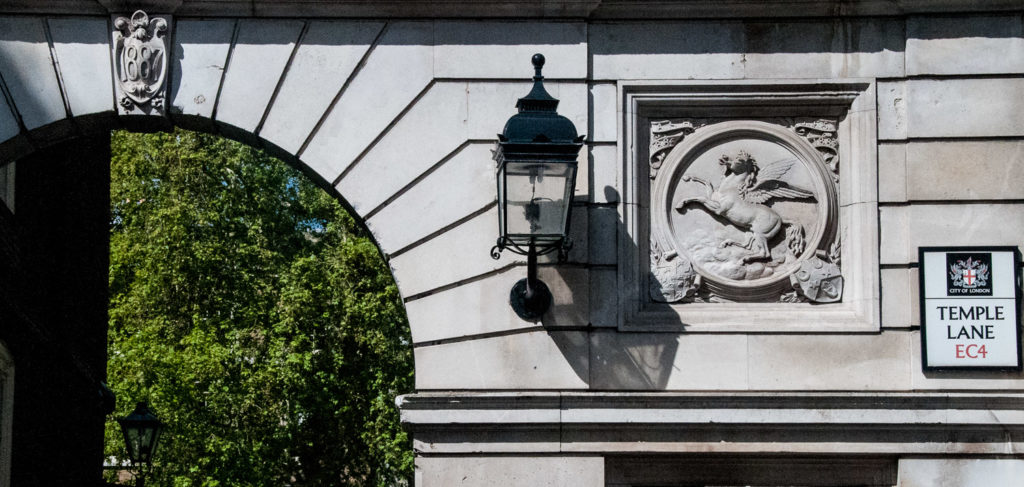
Pegasus, the winged horse, is the emblem of the Middle Temple …

If you leave by the Tudor Street Gate and look back you can admire the gate design and see another winged horse …

Page 4 of 7

Powered by WordPress & Theme by Anders Norén