Walking the City of London

Category: Stained Glass Page 3 of 9

Holy Sepulchre Church – music, war, justice and a marriage that produced 23 children.

I have been a bit unlucky in the past when, walking towards Holborn Viaduct, I have found this church closed. Last weekend, however, my luck was in and I ventured inside. I am delighted I did.

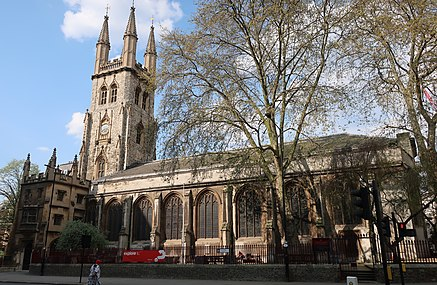
The porch, tower and outer walls date from the mid-15th century …

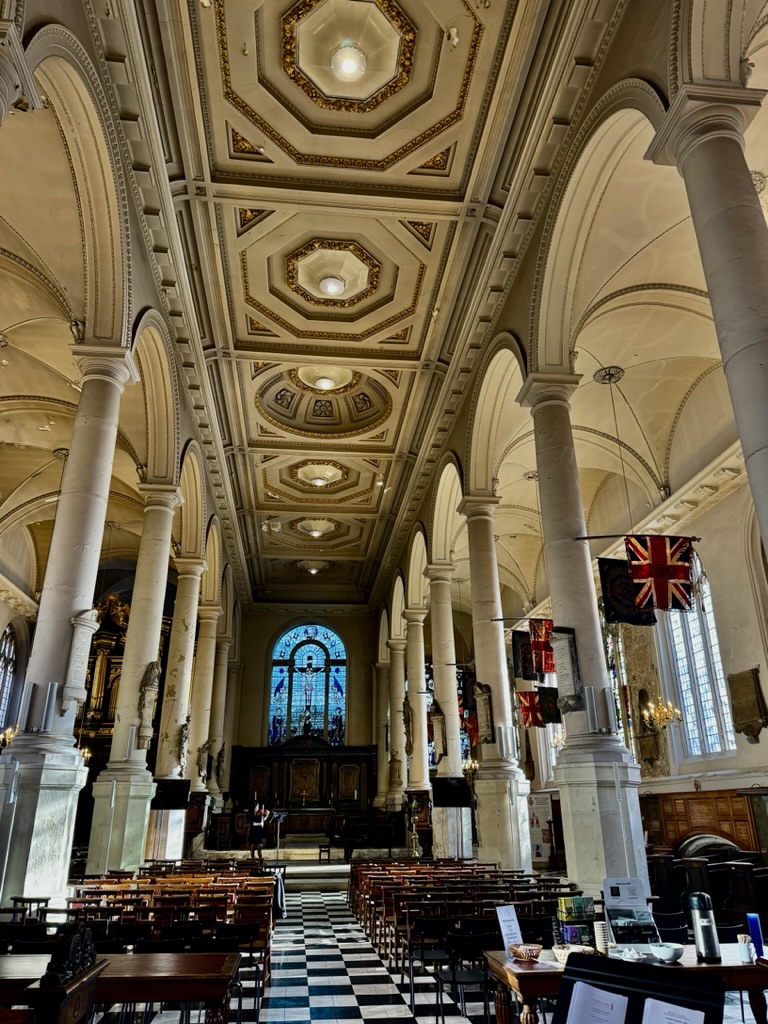
The interior is a bit of a mixture of late 17th century to mid-Victorian …

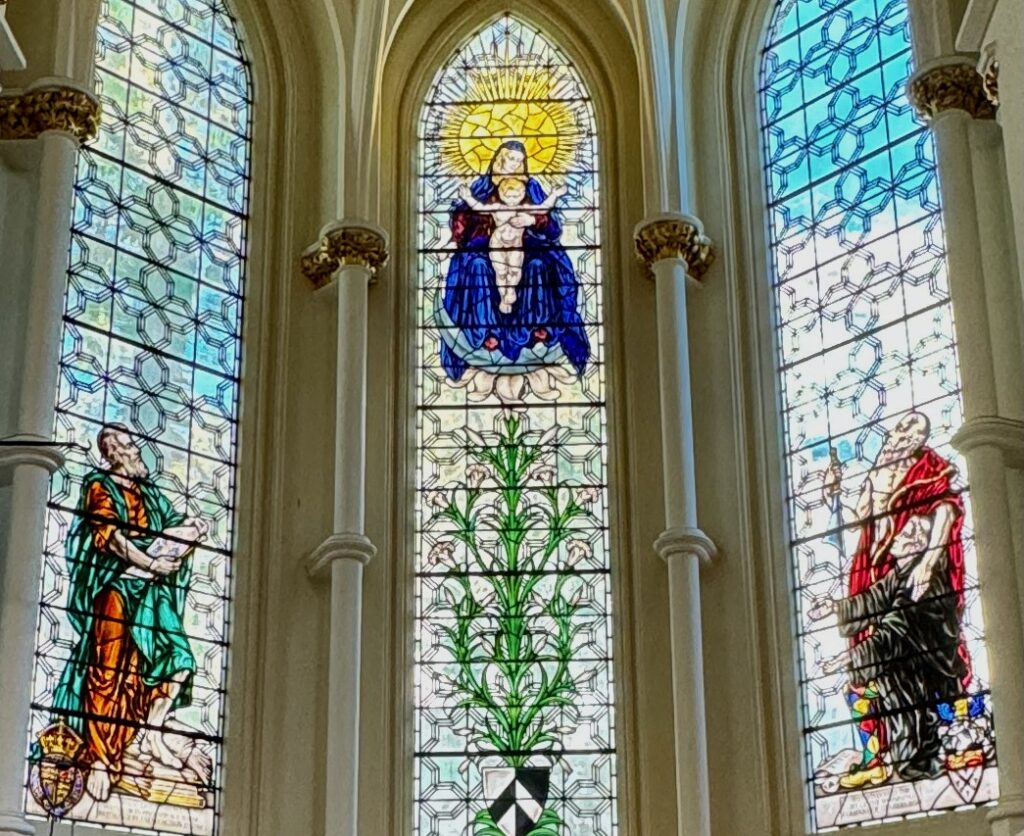
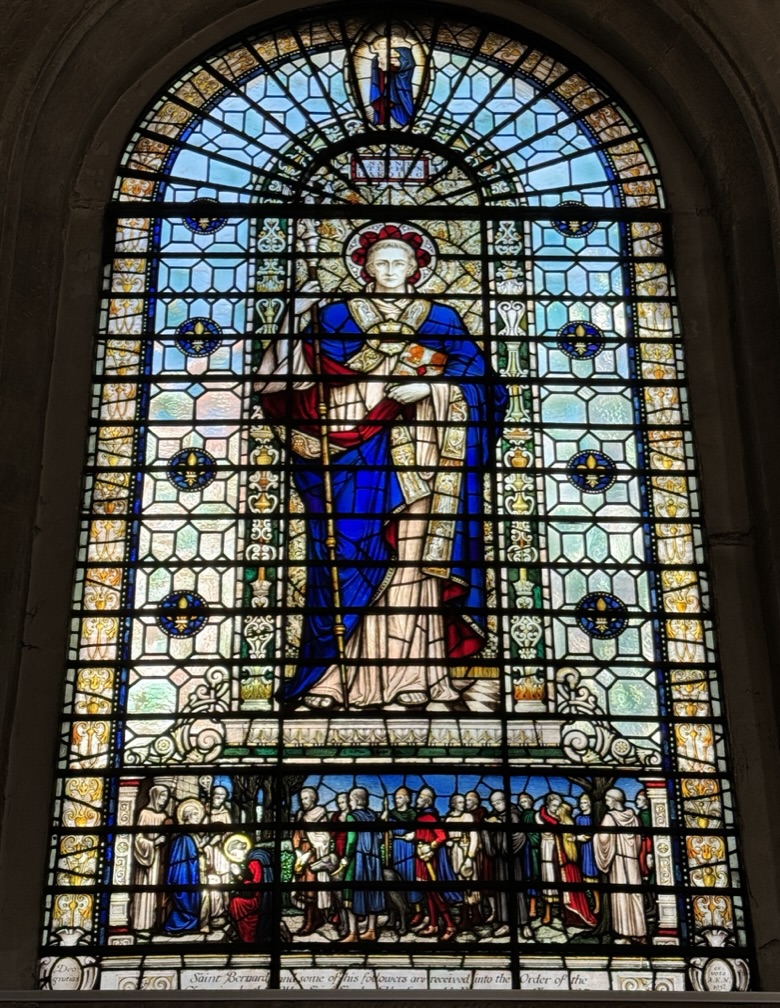
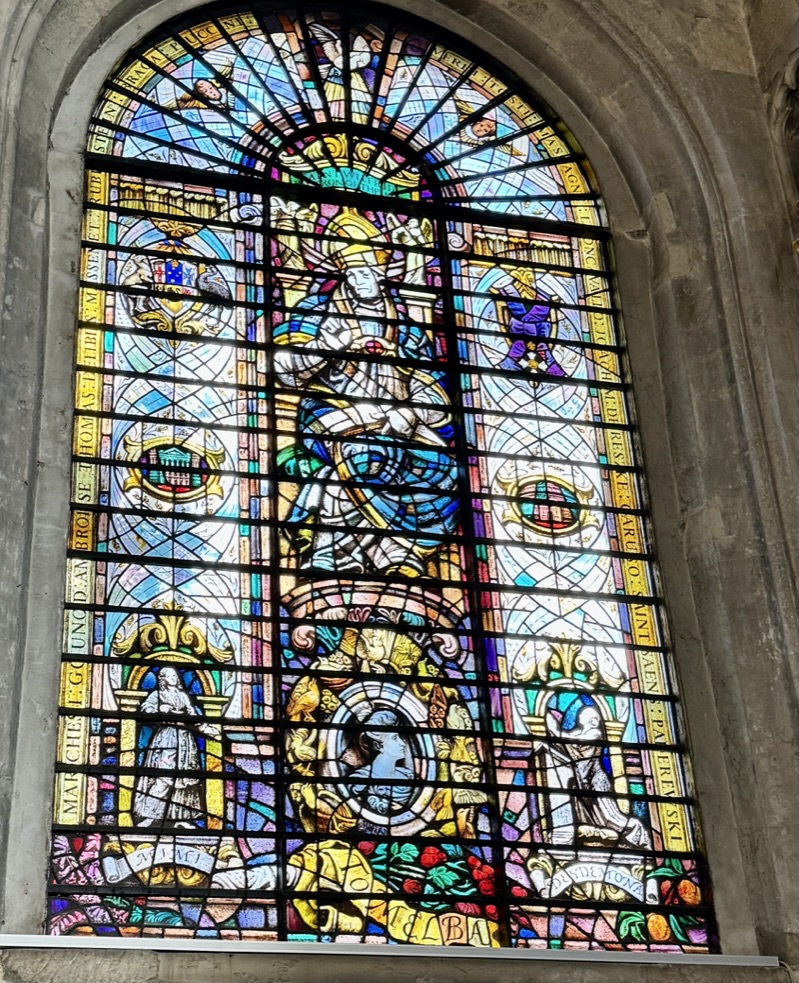
The first thing that struck me was the quality of the stained glass.

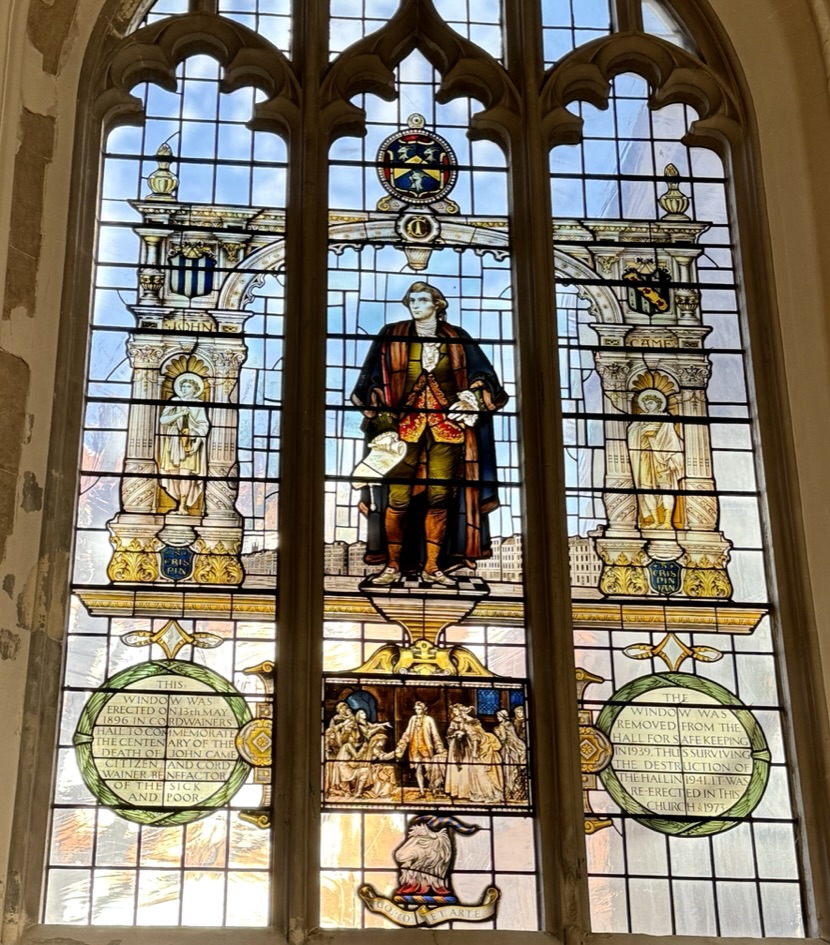
A window removed for safe keeping during the War …

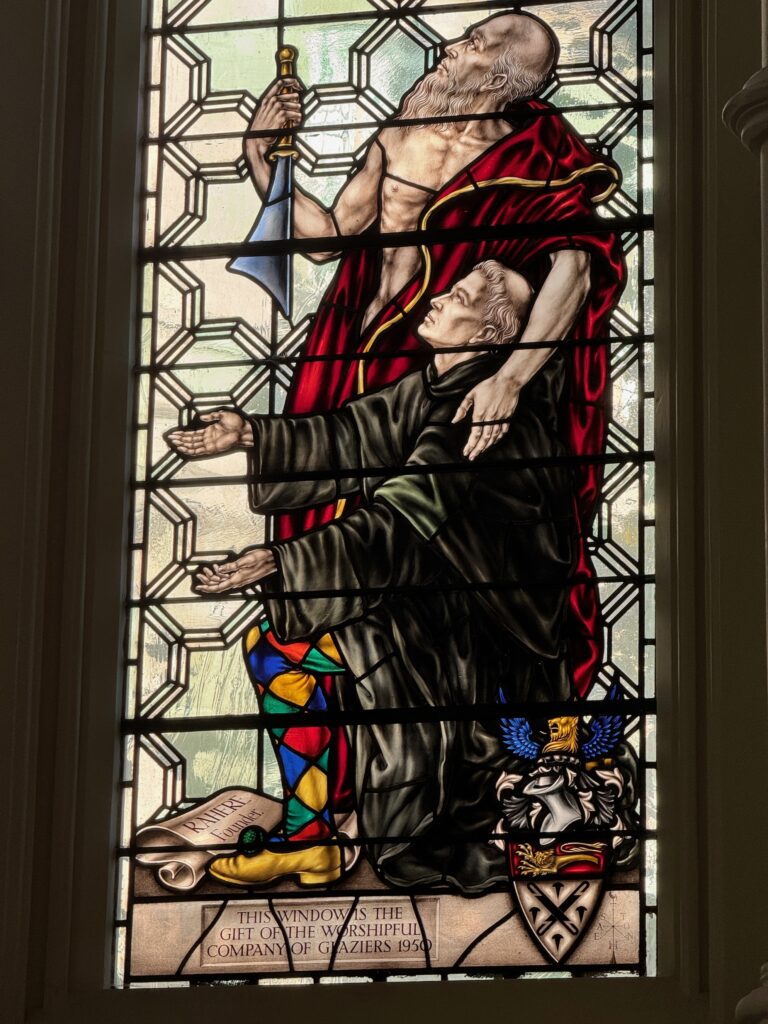
St Bernard with some of his followers …

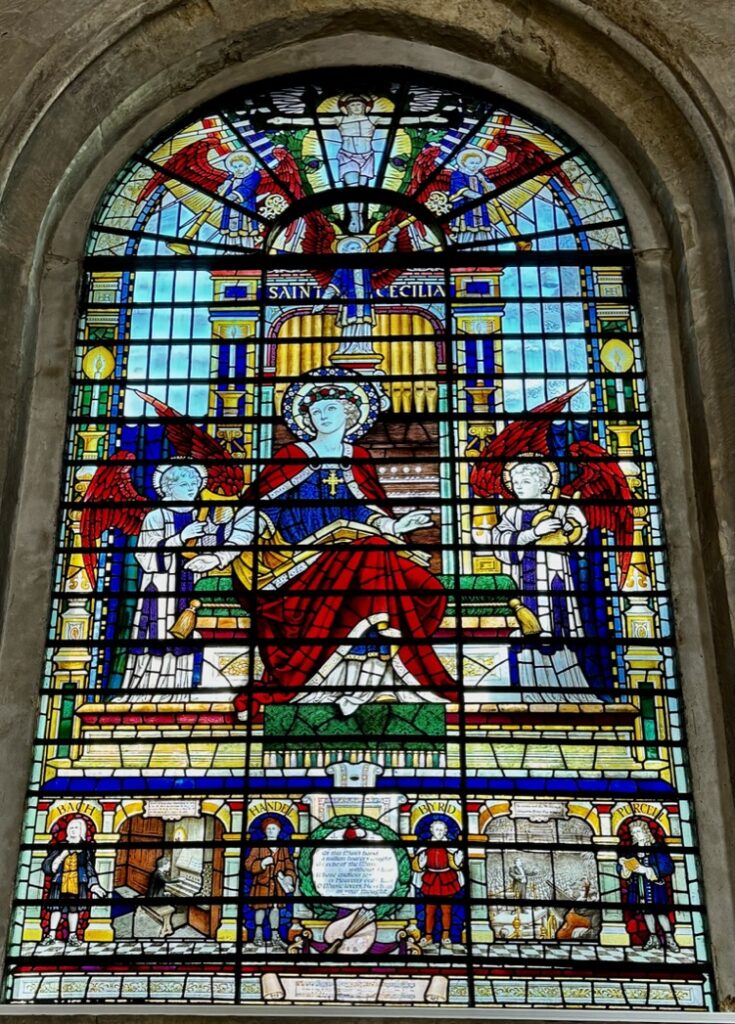
I stopped to admire the glass in the Musicians’ Chapel.

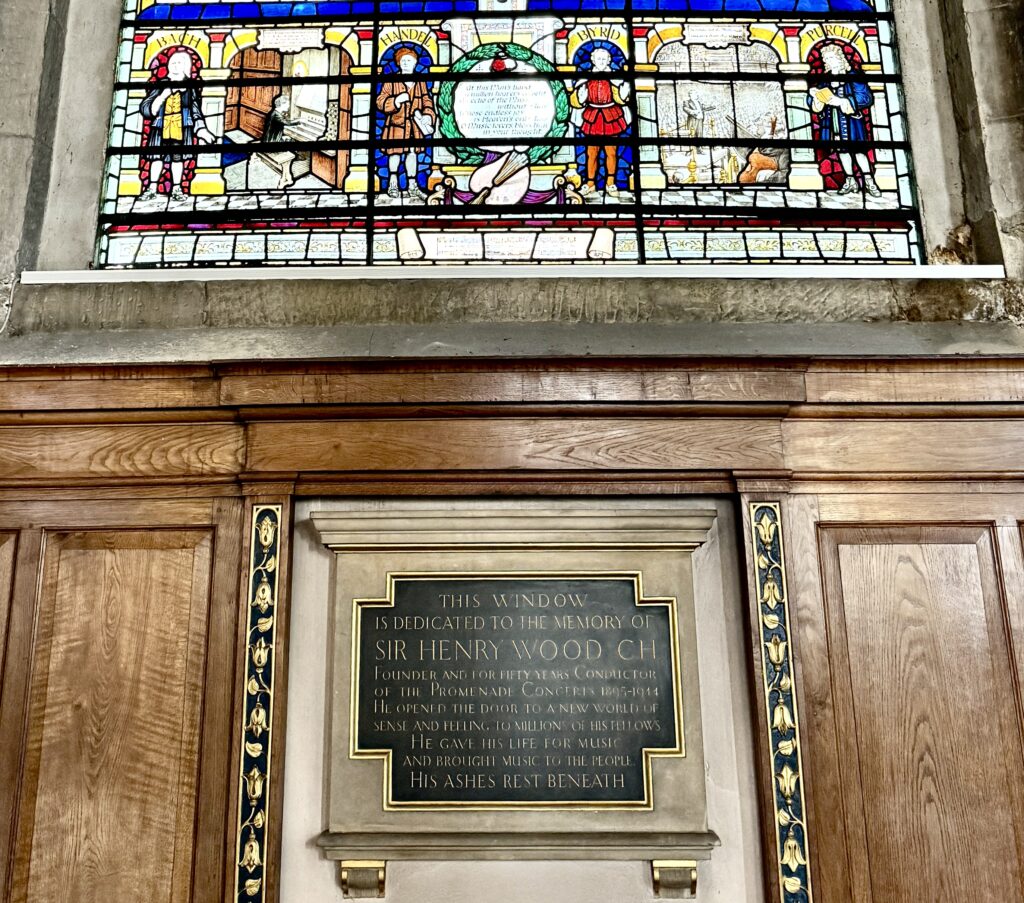
This is the burial place of Sir Henry Wood, founder and conductor of the Proms for nearly 50 years, in memory of whom there is a window and a memorial plaque …

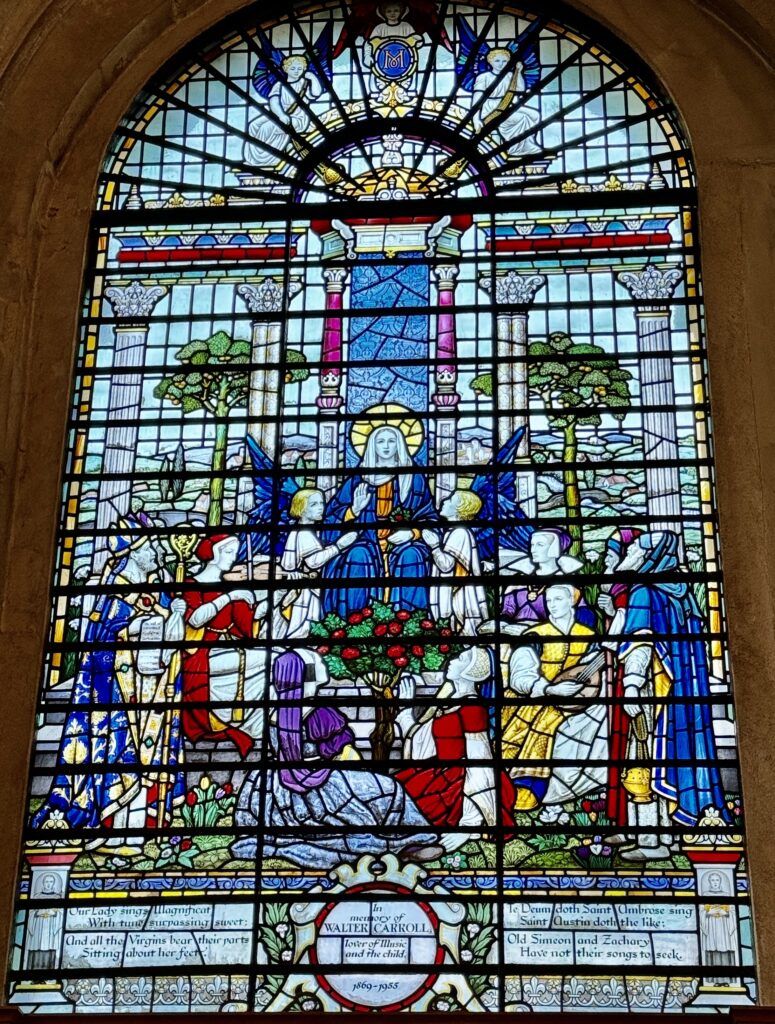
There is a window to Walter Carroll who lived from 1869 till 1955 in Manchester. He was a composer and a music teacher, especially known for his music for children, which he wrote for his two daughters Ida and Elsa …

Dame Nellie Melba, an Australian operatic lyric coloratura soprano, also has a commemorative window. She became one of the most famous singers of the late Victorian era and the early 20th century and was the first Australian to achieve international recognition as a classical musician …

For centuries, the church had a close association with the notorious Newgate Prison which stood across the road where the Old Bailey is now.

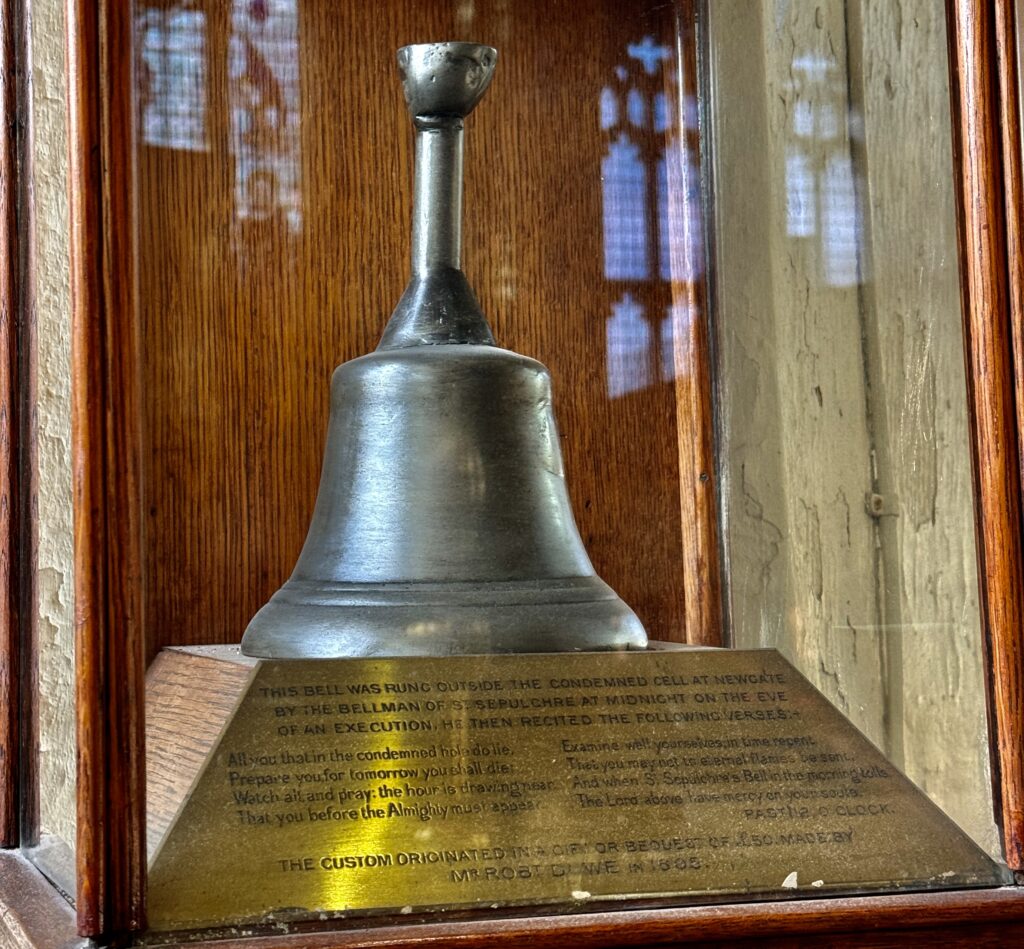
Carts carrying the condemned on their way to Tyburn would pause briefly at the church where prisoners would be presented with a nosegay. However, they would already have had an encounter with someone from the church the night before. In 1605, a wealthy merchant called Robert Dow made a bequest of £50 for a bellman from the church to stand outside the cells of the condemned at midnight, ring the bell, and chant as follows:

All you that in the condemned hole do lie, Prepare you, for tomorrow you shall die; Watch all and pray, the hour is drawing near, That you before the Almighty must appear; Examine well yourselves, in time repent, That you may not to eternal flames be sent: And when St. Sepulchre’s bell tomorrow tolls, The Lord above have mercy on your souls.

And you can still see the bell today, displayed in a glass case in the church …

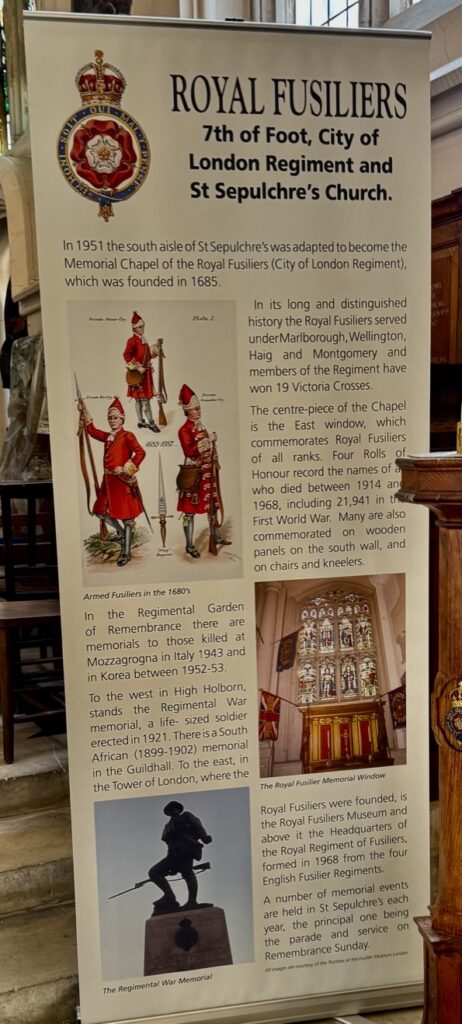
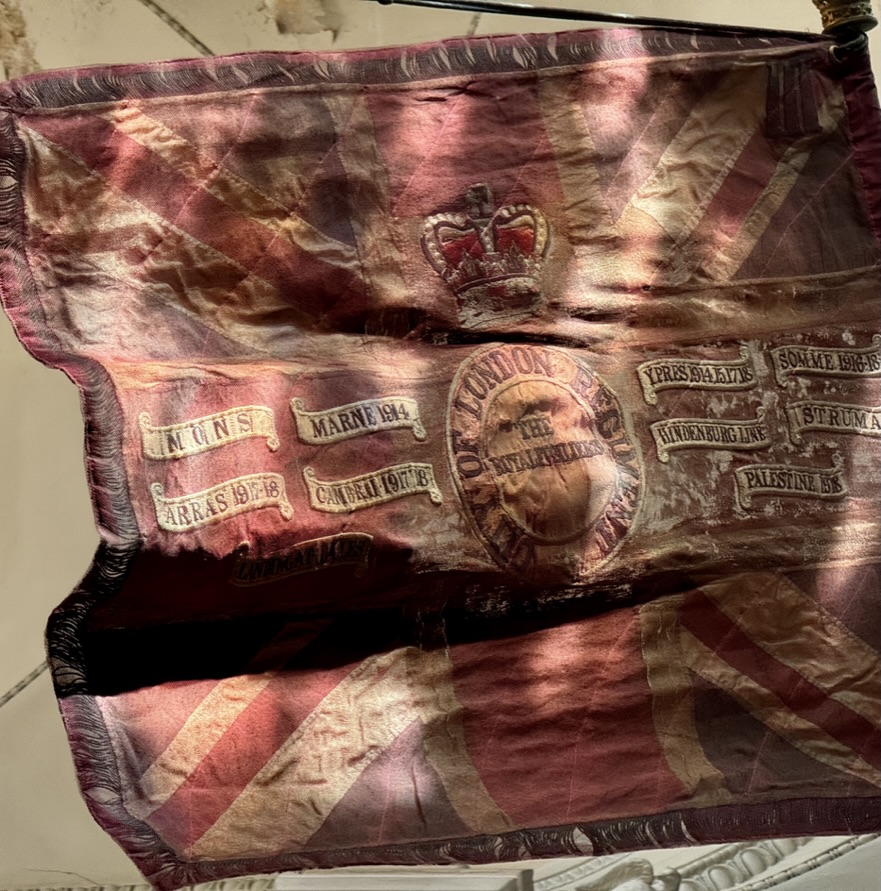
The south chapel is dedicated to the City of London Regiment of the Royal Fusiliers …

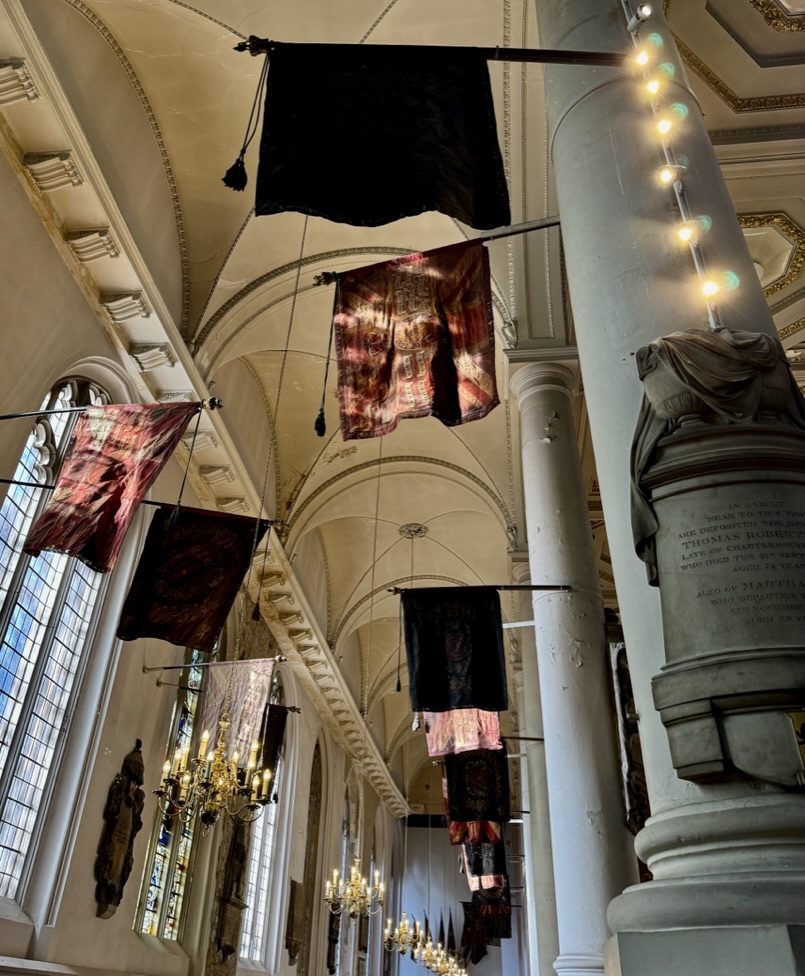
Regimental colours dating back to the 19th century are on display …

The terrible carnage of the First World War is recalled by some of the battle honours recorded here …

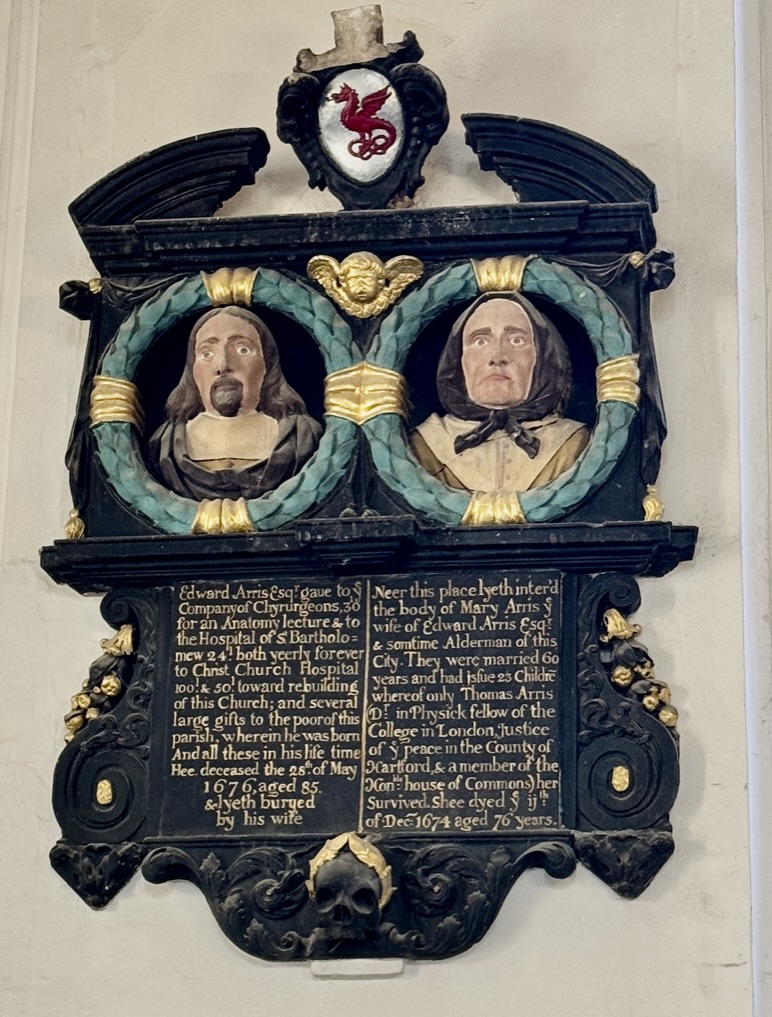
I am so delighted that I looked up and noticed this memorial …

I quote here from the Worshipful Company of Barbers’ website:

Edward Arris was a distinguished surgeon and Master of the Barbers’ Company. He died in 1651, two years after his wife Mary. Their marriage had lasted 60 years and produced 23 children, only one of whom (Thomas) survived their mother.

The inscription reads: ‘Edward Arris Esq gave to ye company of Chyrurgeons 30l for an anatomy lecture & to the Hospital of St Bartholomew 24l both yearly forever to Christ Church Hospital 100l & 50l towards rebuilding of this church; and several large gifts to the poor of this parish, wherein he was born. And all these in his life time. Hee deceased the 28 May 1676 aged 85 and lyeth buryed by his wife.

The money Arris provided to the Company in 1645 – a benefaction he attempted to keep secret – founded six lectures and a dissection in the Inigo Jones Anatomy Theatre annually. His name (along with that of another Master of the Company) and these lectures live on today as the Arris and Gale Lecture at the Royal College of Surgeons.

Besides providing grooming services, barber-surgeons regularly performed dental extractions, bloodletting, minor surgeries and sometimes amputations. The association between barbers and surgeons goes back to the early Middle Ages, hence the blood and bandages sign outside barber shops today.

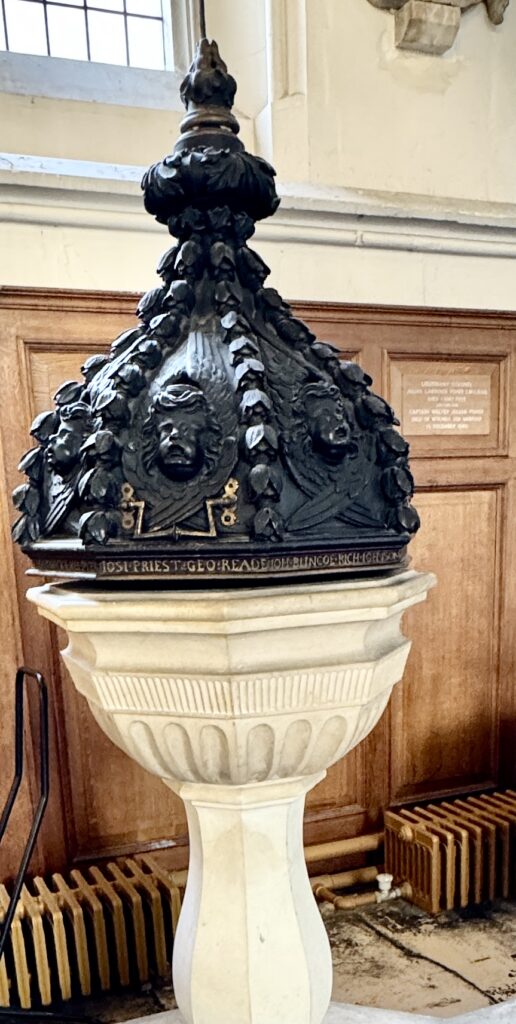
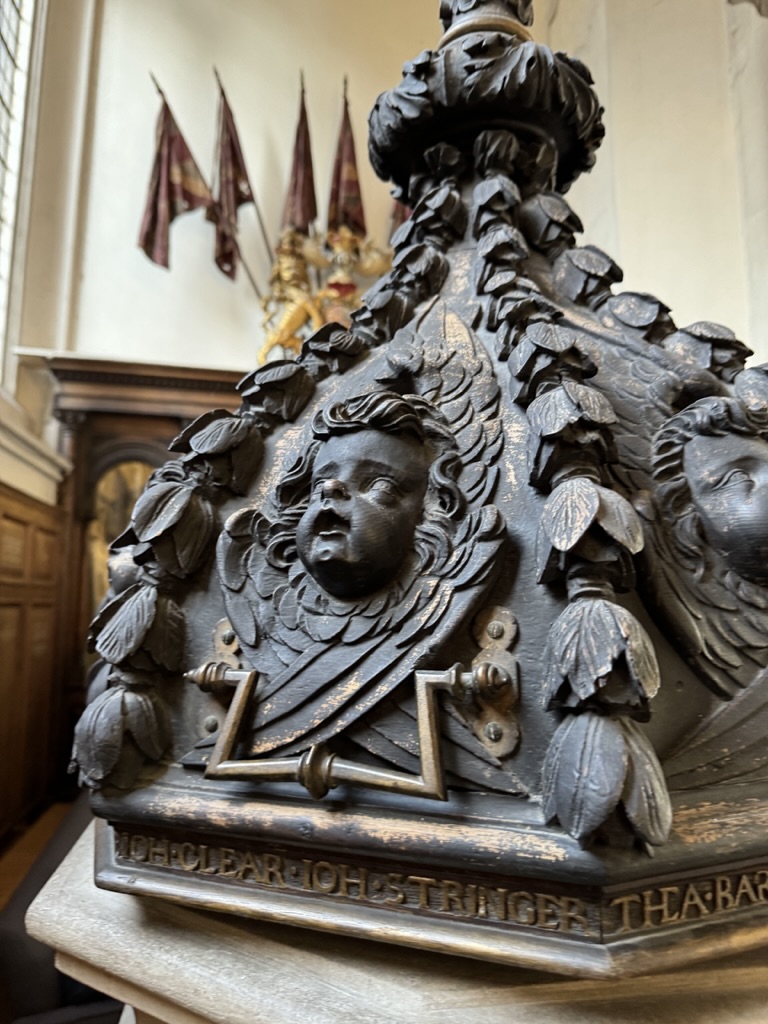
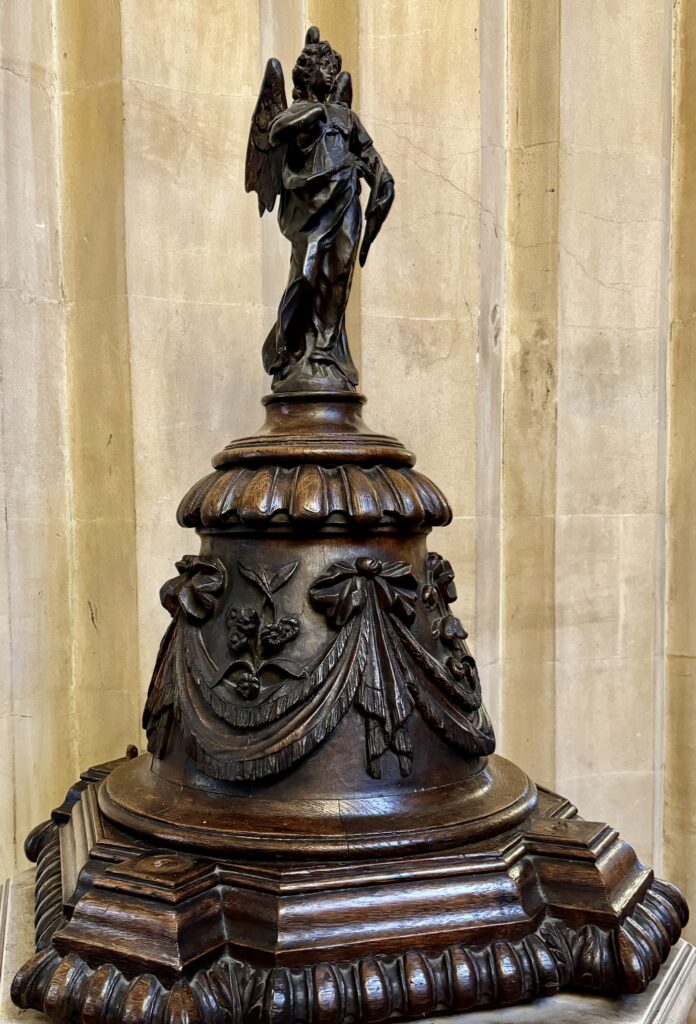
This beautiful font cover was donated by a parishoner in 1670 …

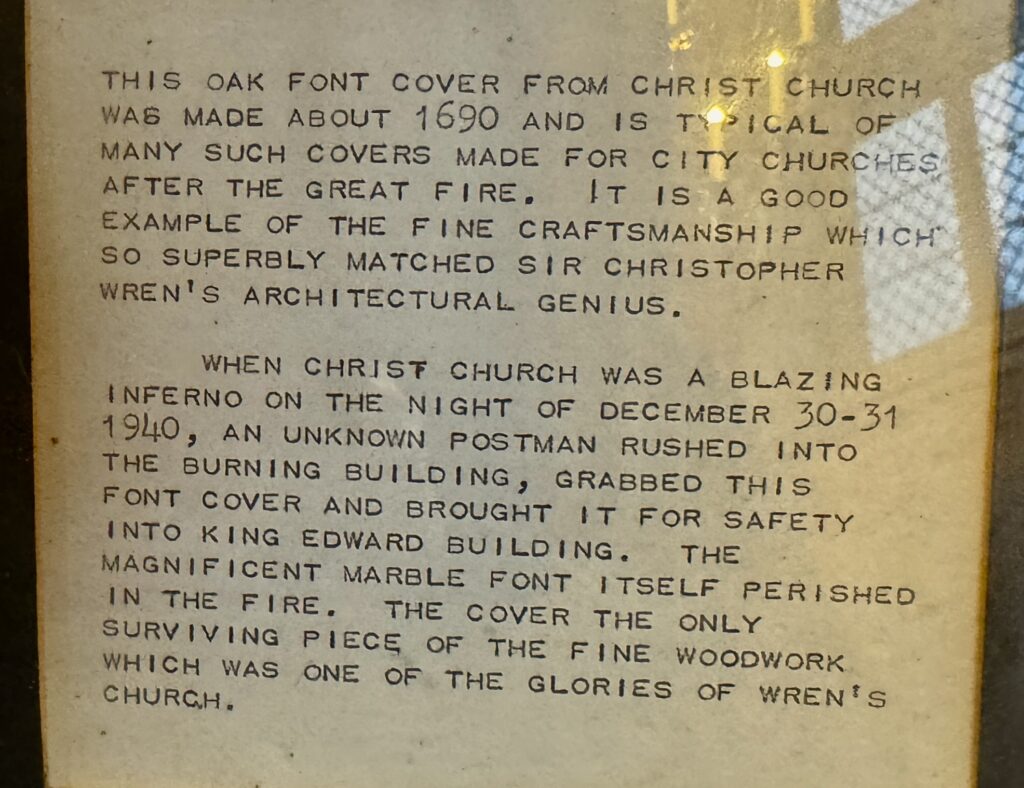
There is another font cover nearby with a thrilling back story …

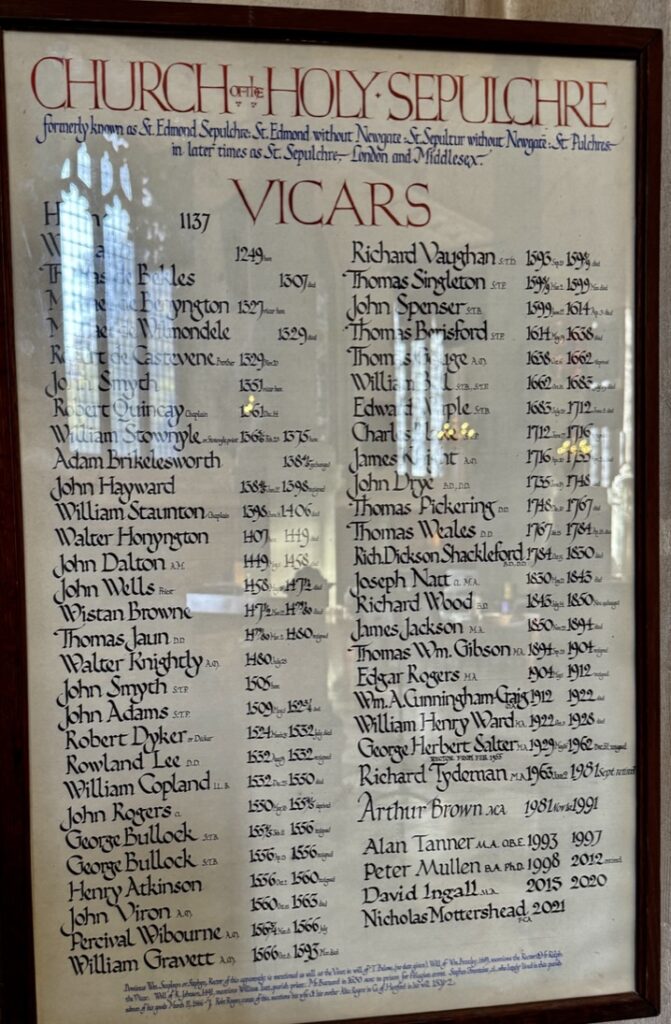
Vicars going back to the 12th century …

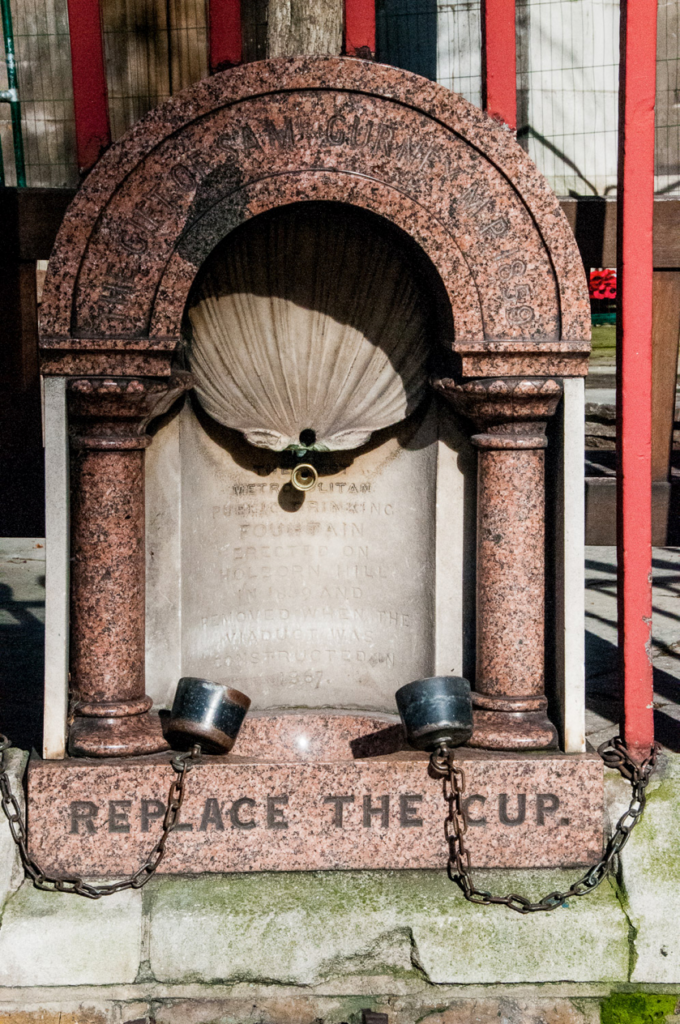
When you leave the church there is one other thing to look out for – the first ever public drinking fountain installed in London …

You can read all about it in my earlier blog entitled Philanthropic Fountains.

If you would like to follow me on Instagram here is the link …

https://www.instagram.com/london_city_gent/

‘Tommy’s’ – my visits to St Thomas’ Hospital.

I was a hospital in-patient recently and fortunately ended up at one of the best hospitals in the world, St Thomas’ in Lambeth (or ‘Tommy’s’ as us alumni call it) where the standard of care was outstanding. I’m pleased to say I’m fine now, thank you for asking.

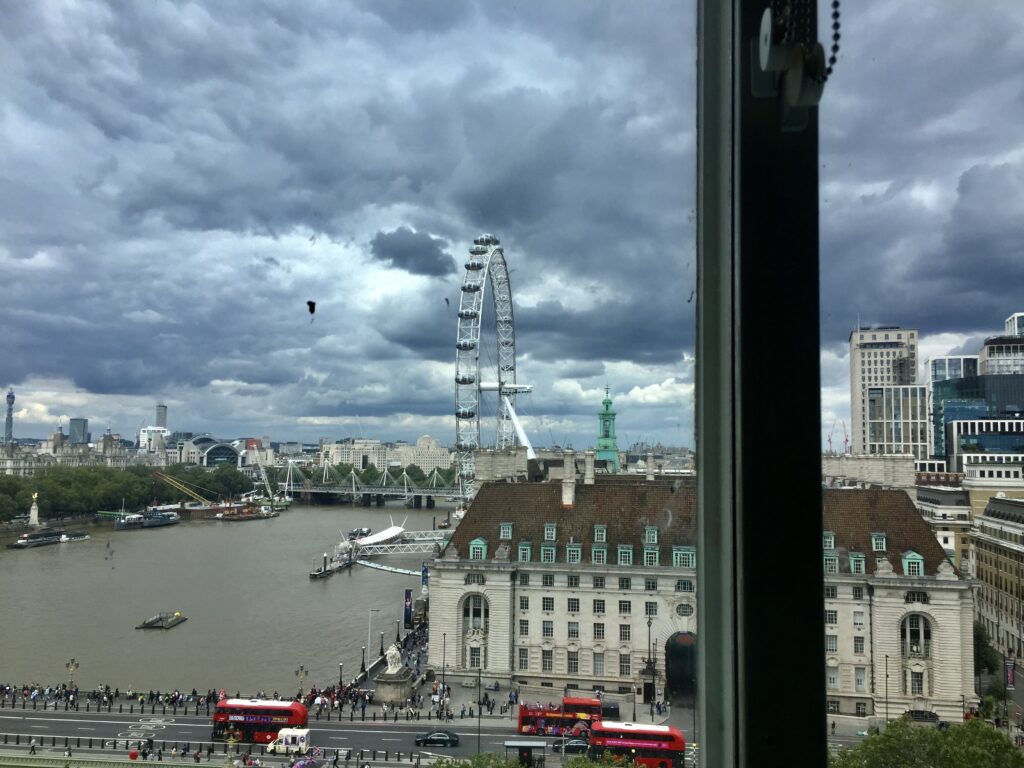
One of the most extraordinary features of the place is the view from some of the wards. Here’s what I could see if I just stepped out of bed …

When I went back last week for a follow-up appointment I did a bit of exploration and was astonished and delighted at what I found.

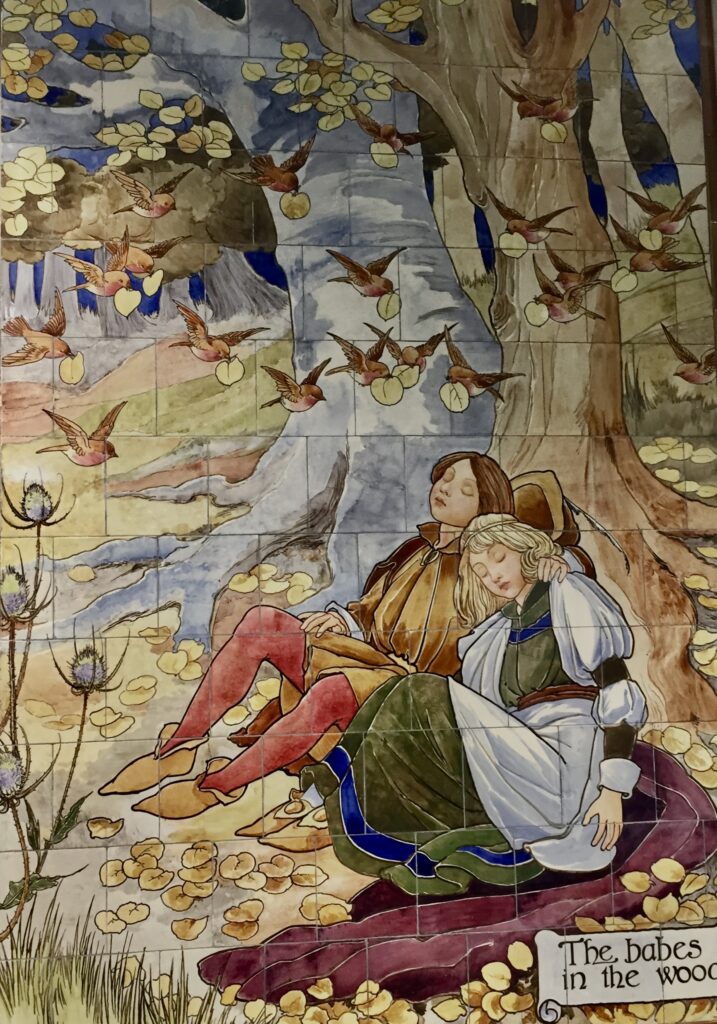
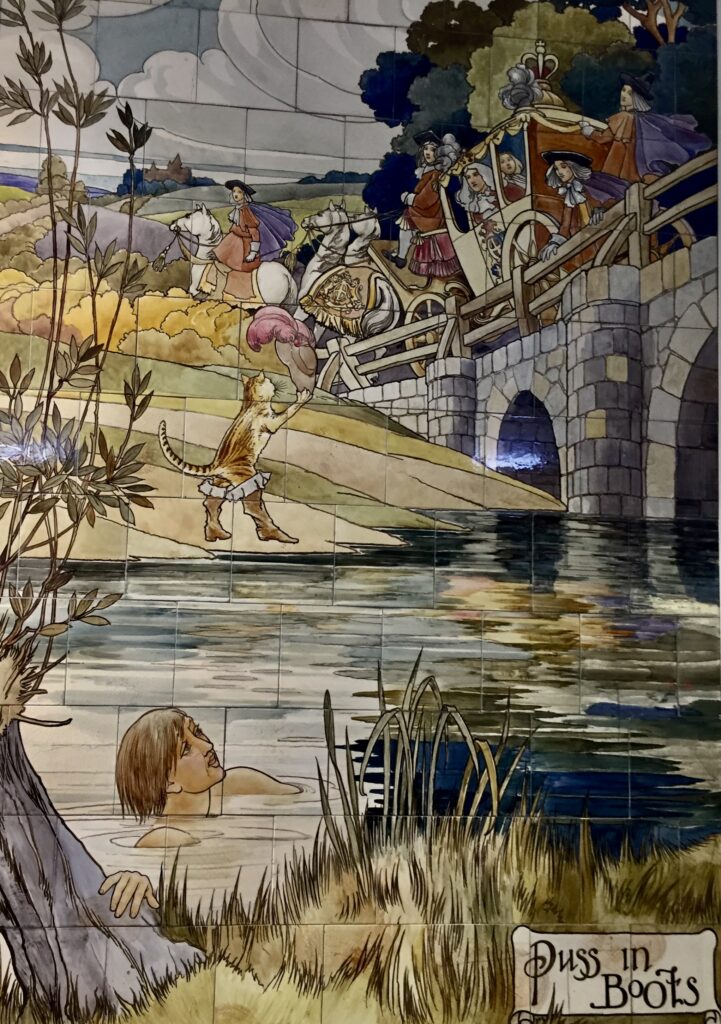
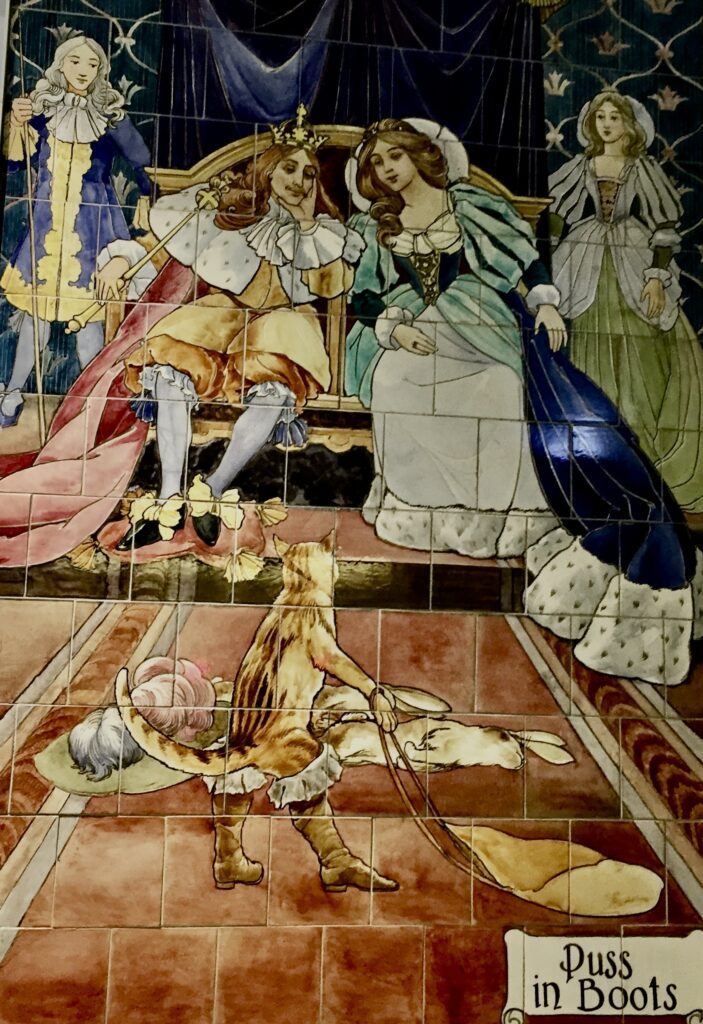
I headed for the oldest part of the hospital and on my way, in the South Wing corridor, I came across these lovely tiles …

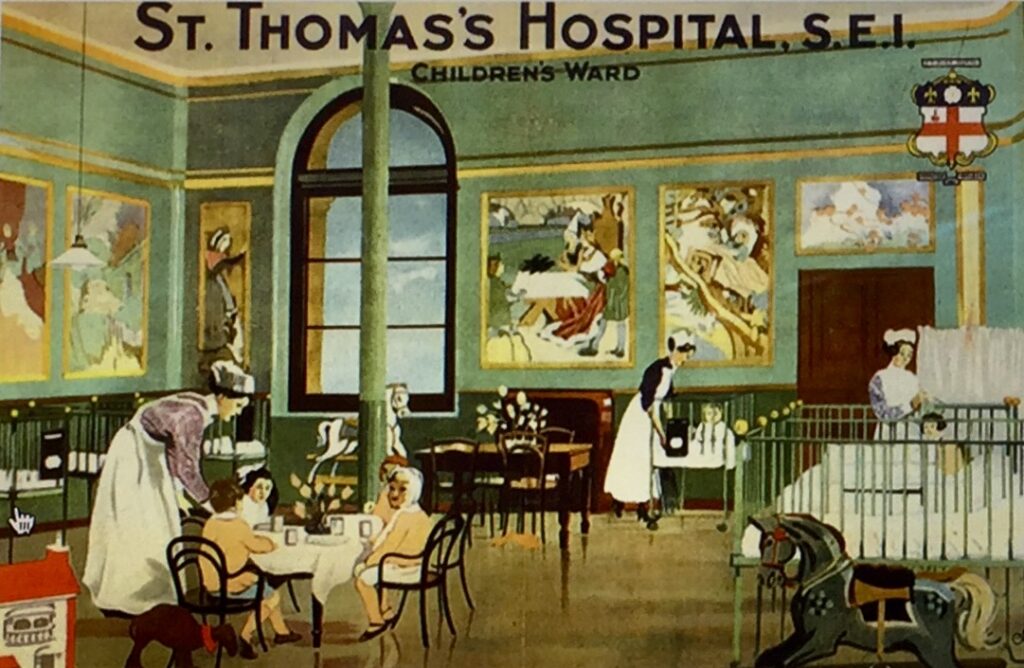
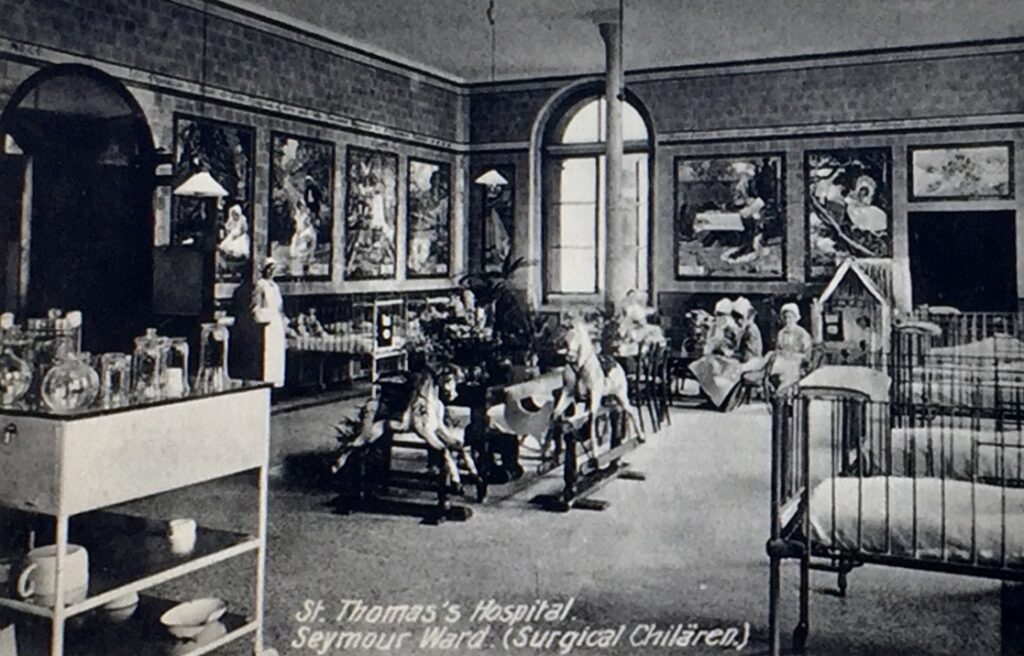
Created by the Royal Doulton Lambeth factory, they and others originally covered the walls of two of St Thomas’ childrens wards, Lilian and Seymour, which were opened in 1901 and 1903 respectively. Hygiene was a factor in the tiling decision but also, of course, the aim to give pleasure and amusement to the young patients. Here they are illustrated on two postcards …

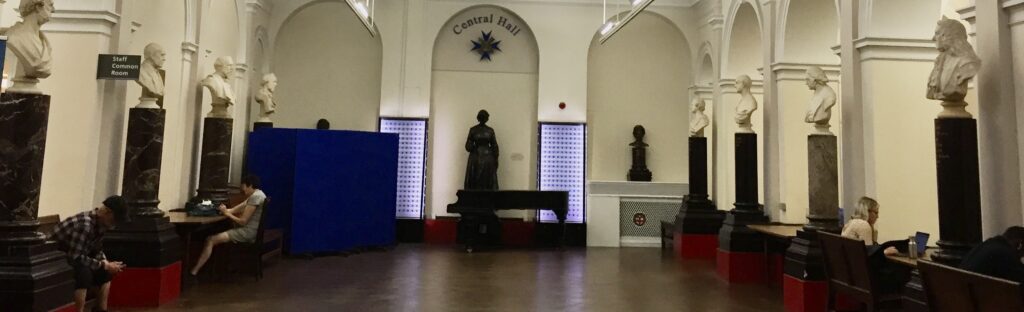
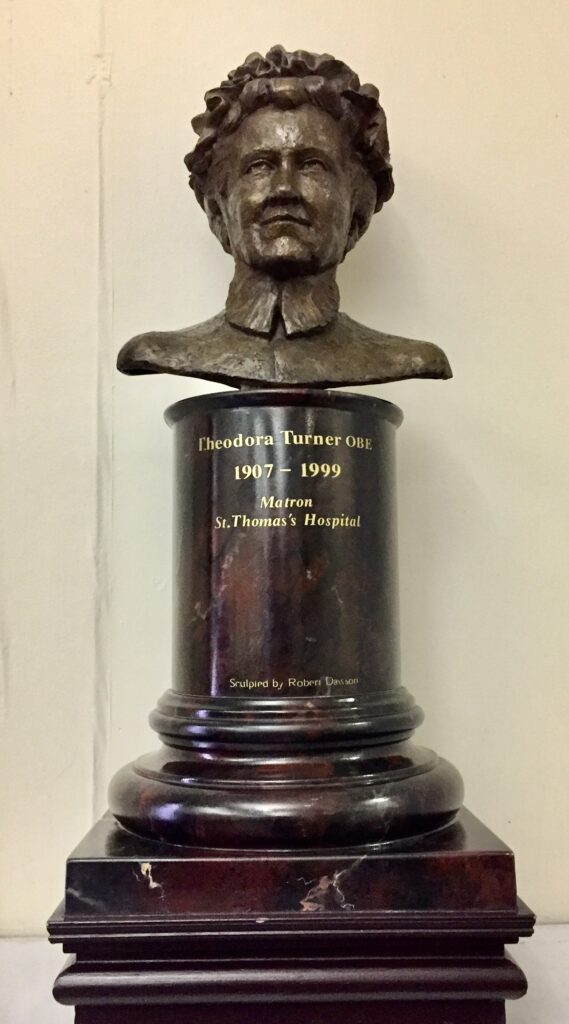
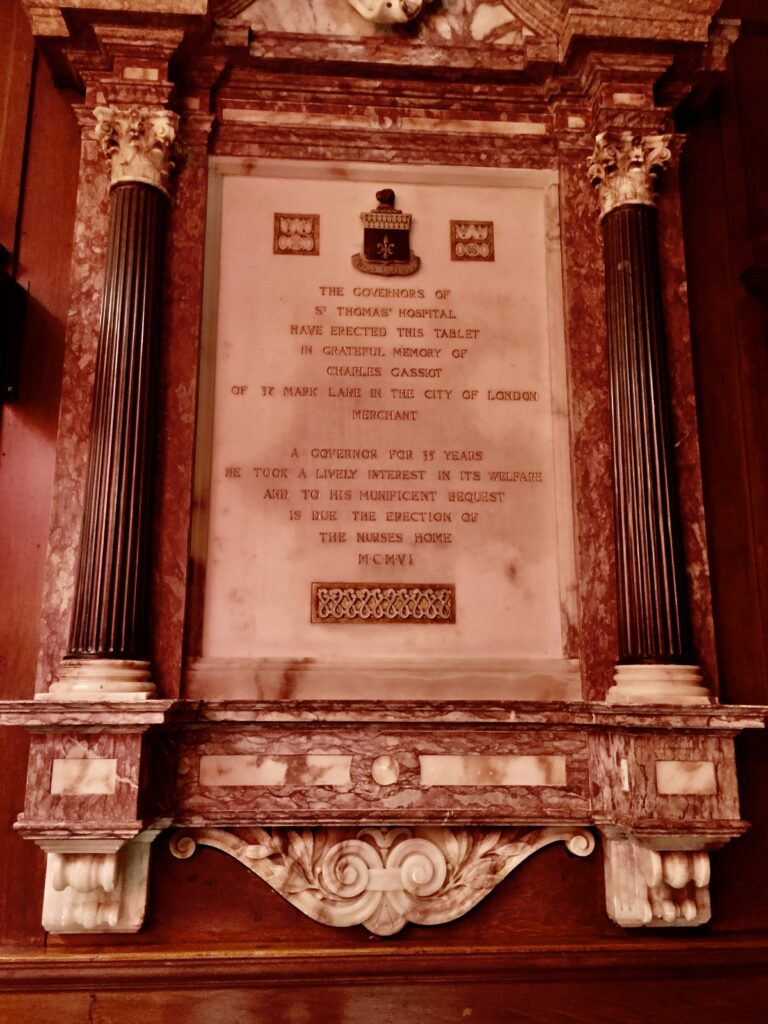
In the Great Hall are commemorated important people who had a connection with the hospital …

And they’re not all men …

From her Guardian obituary :

She saw her 10 years as matron of St Thomas’s and superintendent of the Nightingale training school from 1955-65 as a time of great social change and was eager to relax the strict rules which she believed had governed nurses’ lives for too long. Encounters with Theodora Turner were seldom forgotten … Former students and nursing colleagues remember her sense of duty and discipline, her kindness and humour. The latter is, perhaps, most neatly encapsulated in her belief that her pet mynah bird, presented to her by sailors when working at Liverpool Royal Infirmary, was a foolproof burglar alarm because of its ability to mimic her laugh.

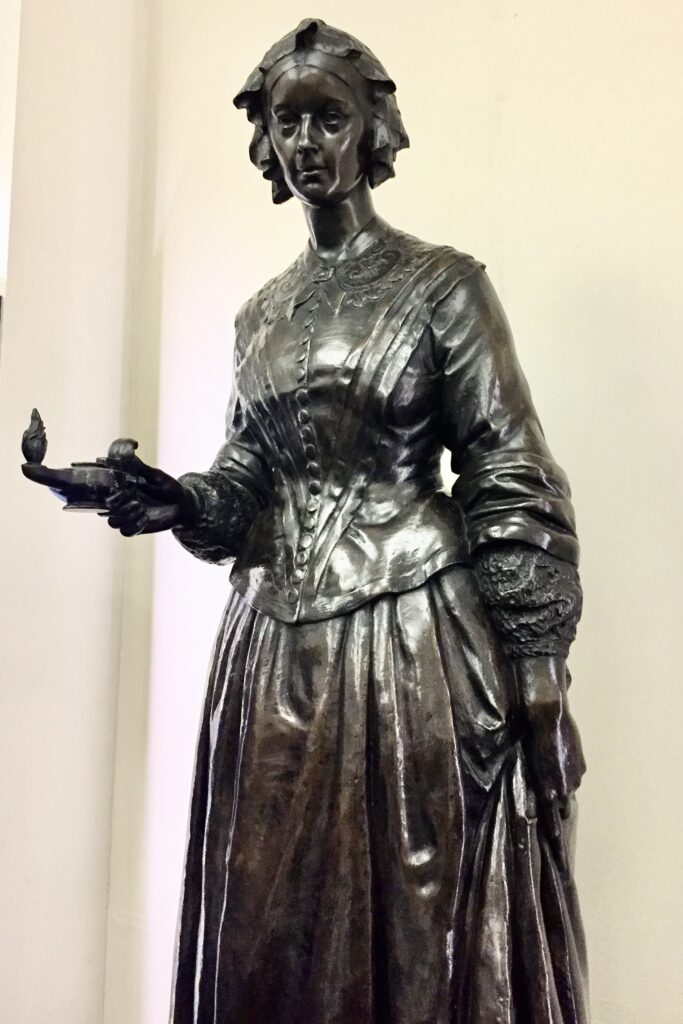
No prizes for guessing who this lady is …

Florence Nightingale greatly influenced the design of the new 1872 St Thomas’ Hospital with its innovative ‘pavilion style’ of seven large separate buildings connected by walkways. She recognized the importance of design for improving hygiene and health, and made careful calculations regarding dimensions and efficient use of space in hospitals. Nightingale proposed full-height windows at specified intervals in the wards, with the beds set between to encourage ventilation and allow air to circulate without creating drafts. She stipulated that clean and dirty areas should be separate so food and clean linen were stored at the ward entry with washing and sanitary facilities at the other end.

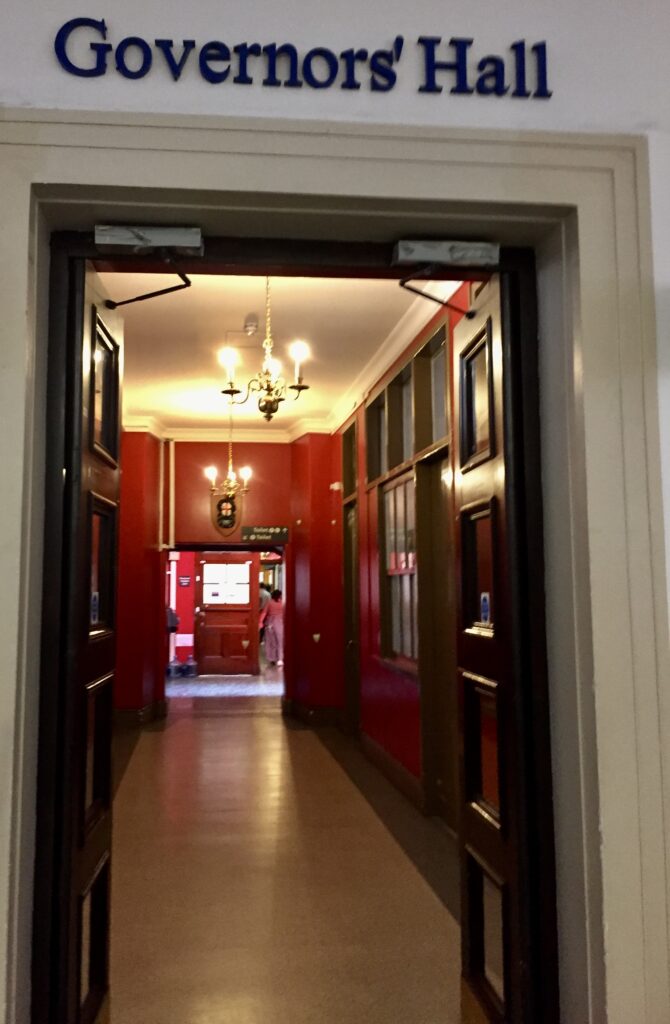
I saw this entrance and had to go and nose around …

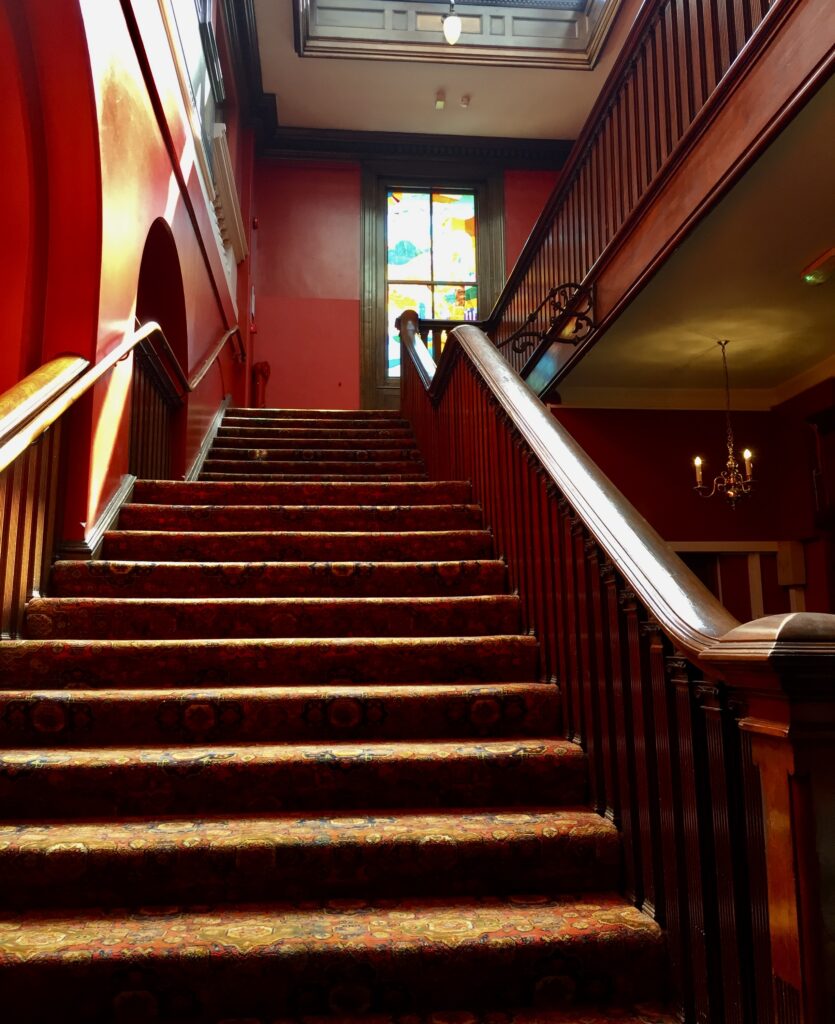
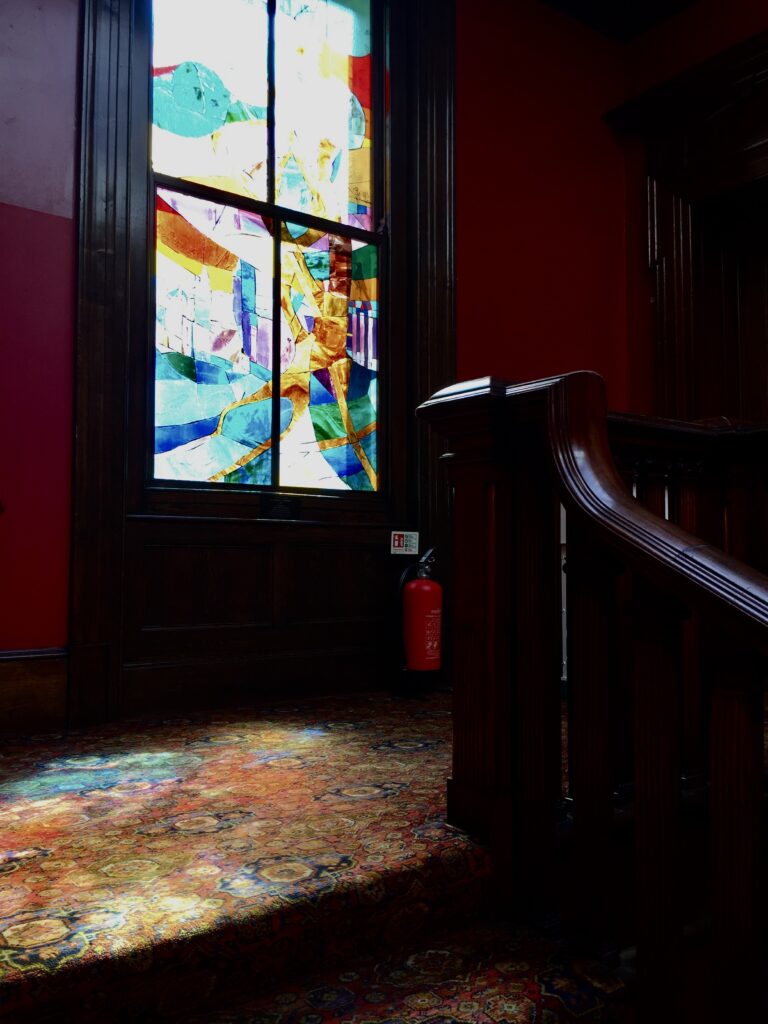
Up the impressive staircase, which I presume dates from the 1870s …

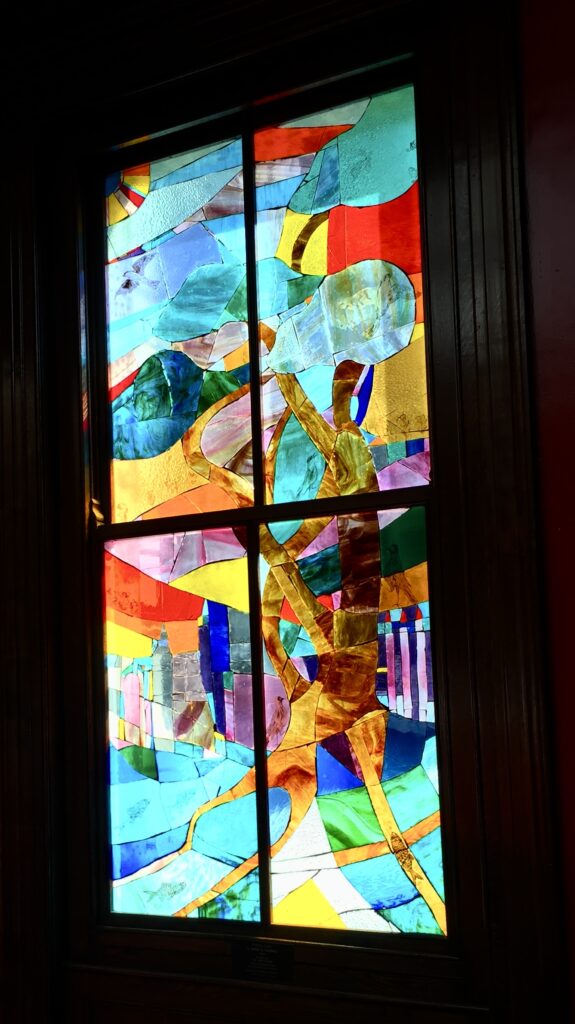
A modern stained glass treat at the top …

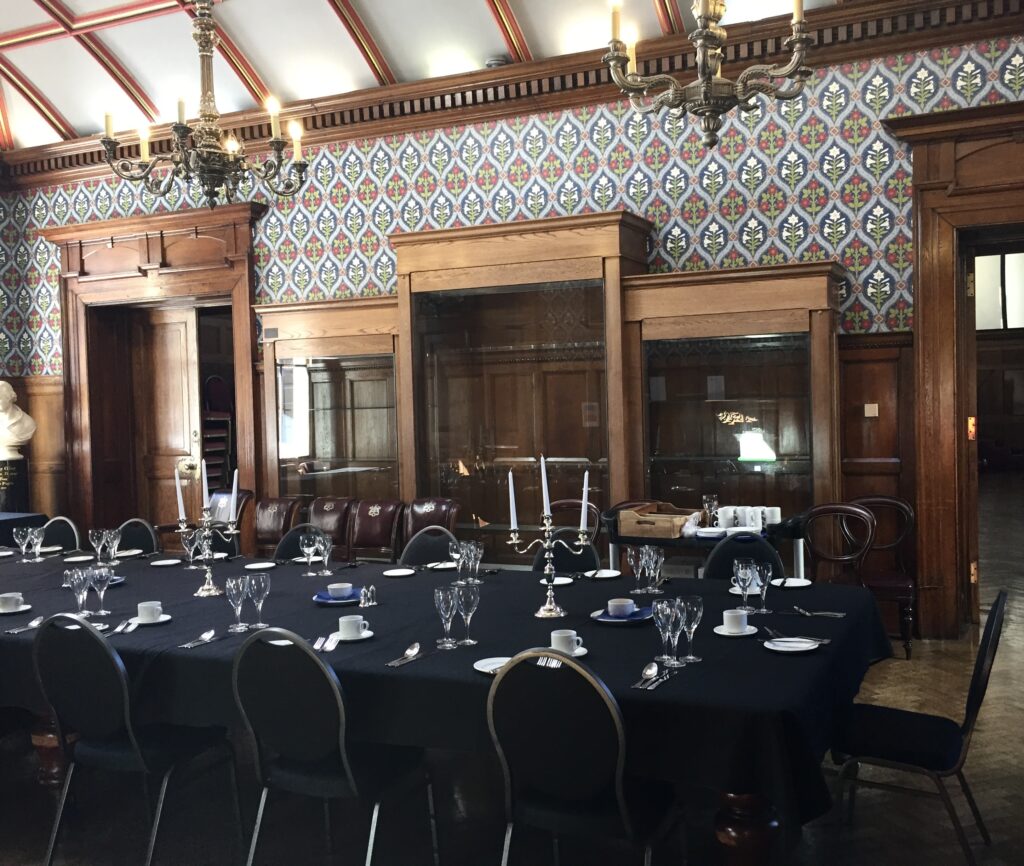
I peeped into the dining room …
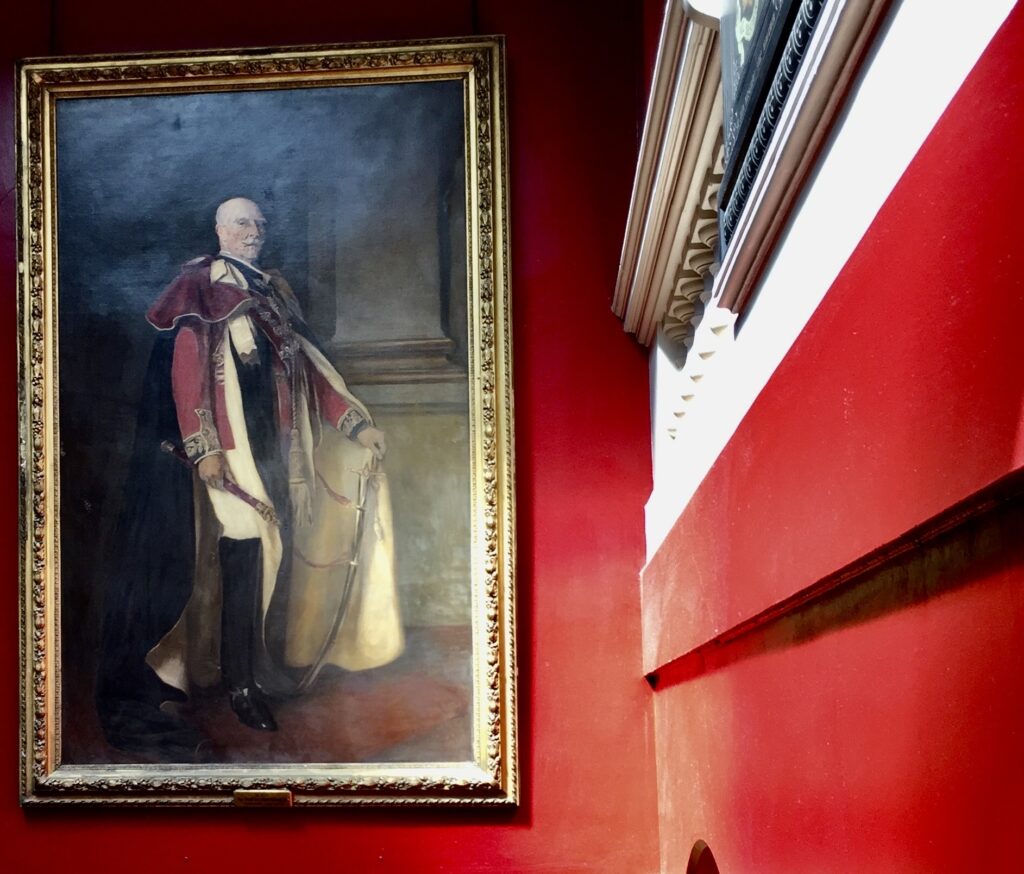
Above the staircase …
The Duke of Connaught (1850-1942) …
He was president from 1882 to 1932.

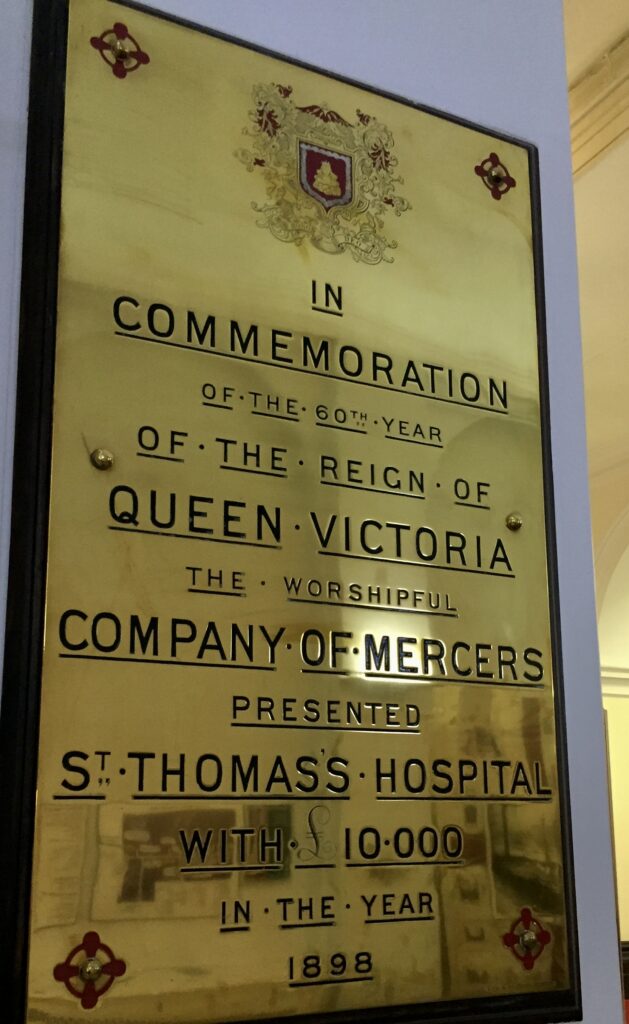
Back on the ground floor …

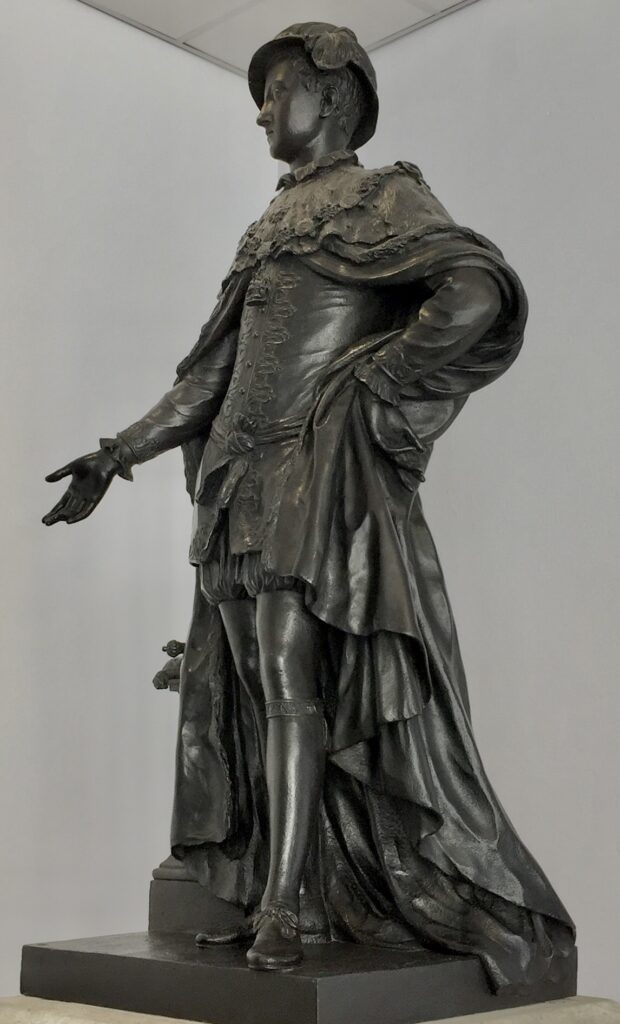
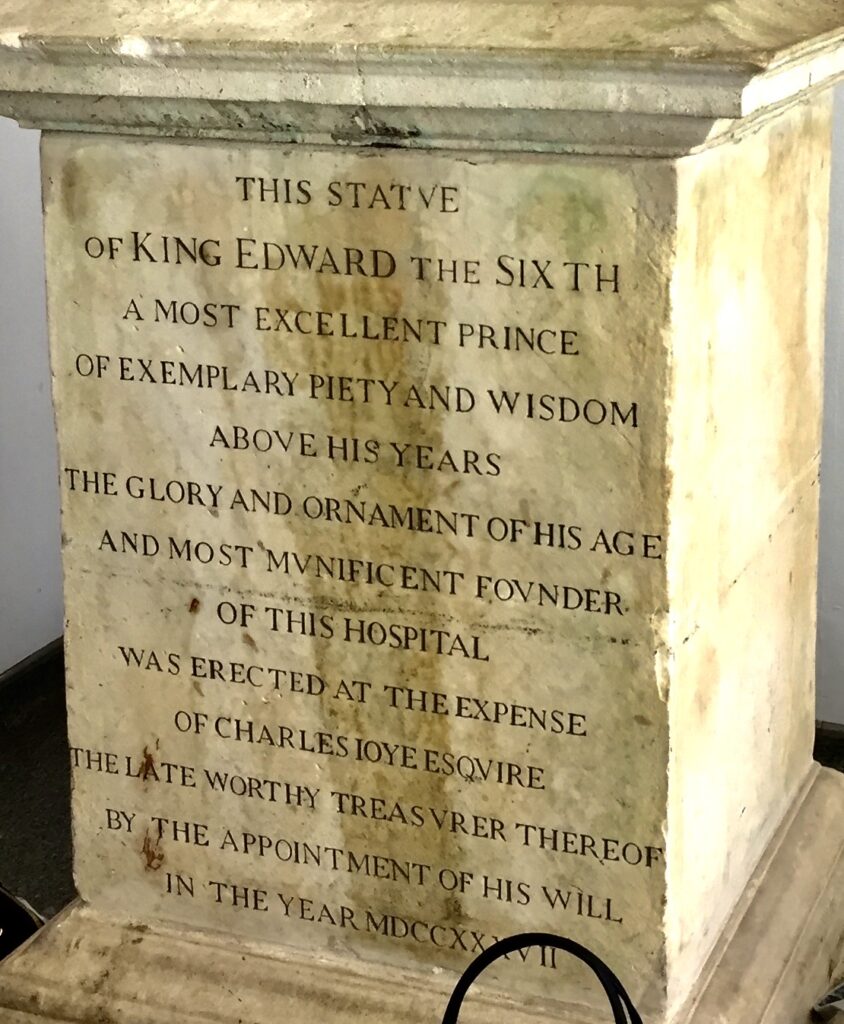
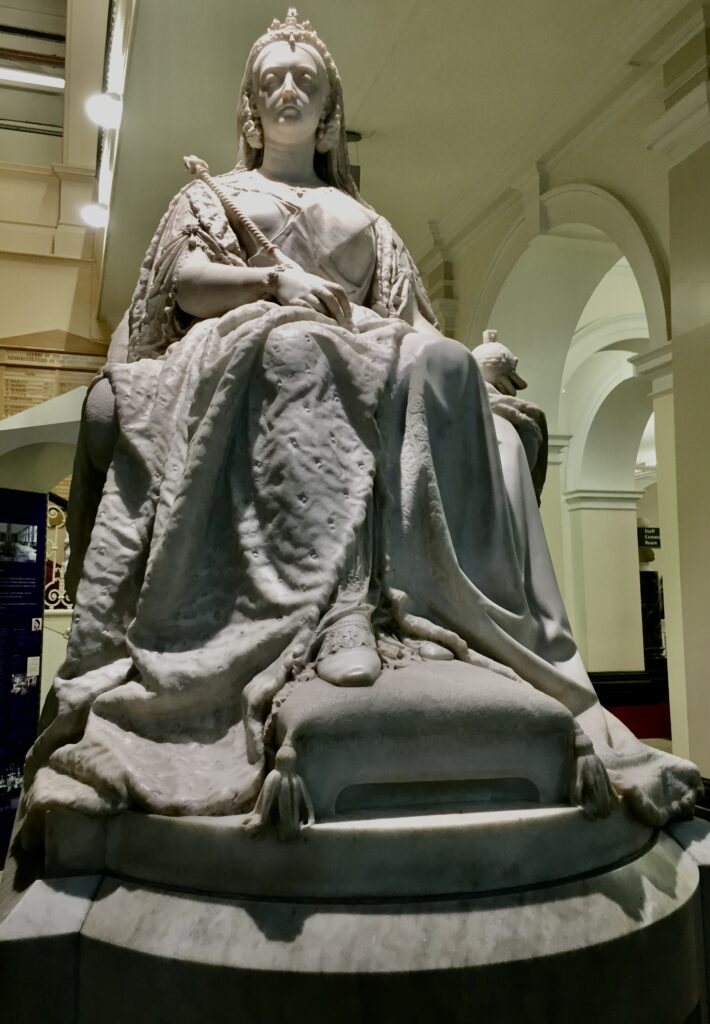
Truly Imperial (and maybe a bit imperious) …

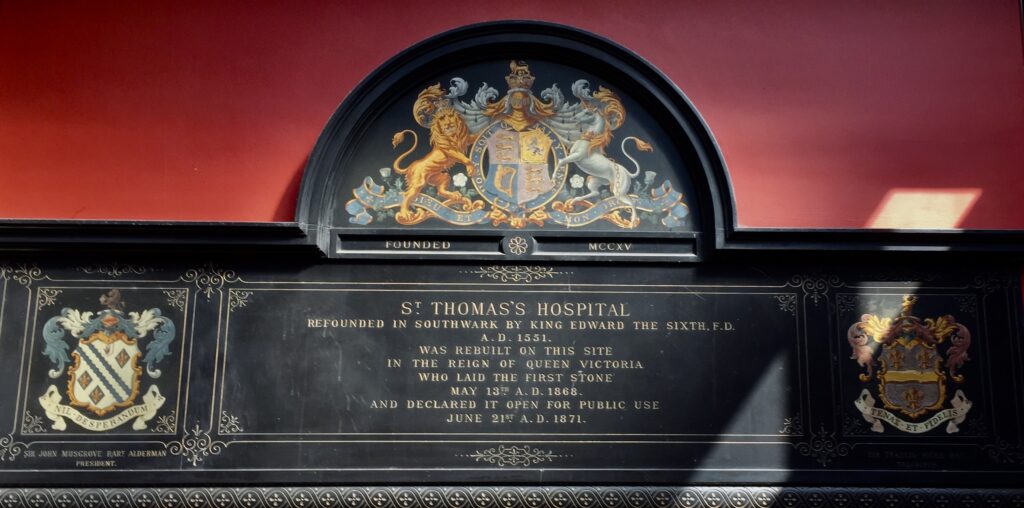
Edward VI was the son of Henry VIII and his third queen, Jane Seymour. Born on 12 October 1537, he succeed his father at the age of nine in 1547 but never attained his majority, dying aged 15 in 1553. During the Reformation St Thomas’, as a religious foundation, was deprived of its revenues and estates and was closed in 1540. In 1551, Edward granted a charter for the hospital’s refounding which is why he’s commemorated here …

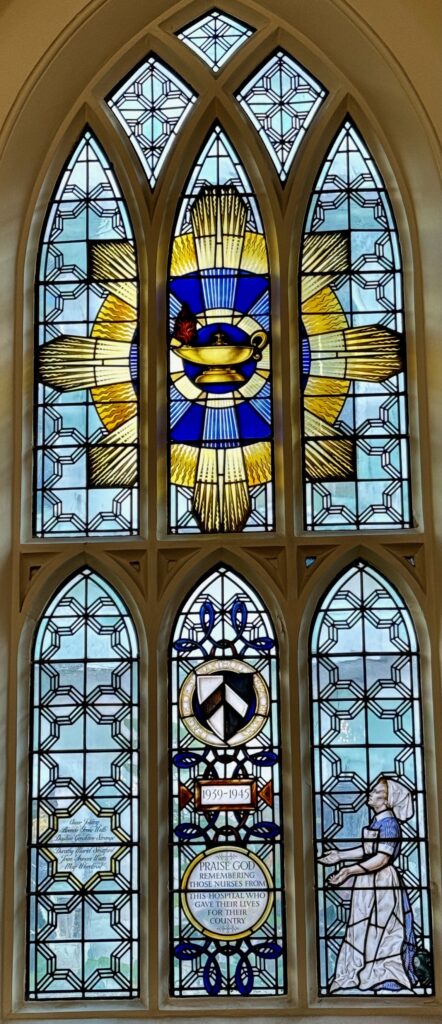
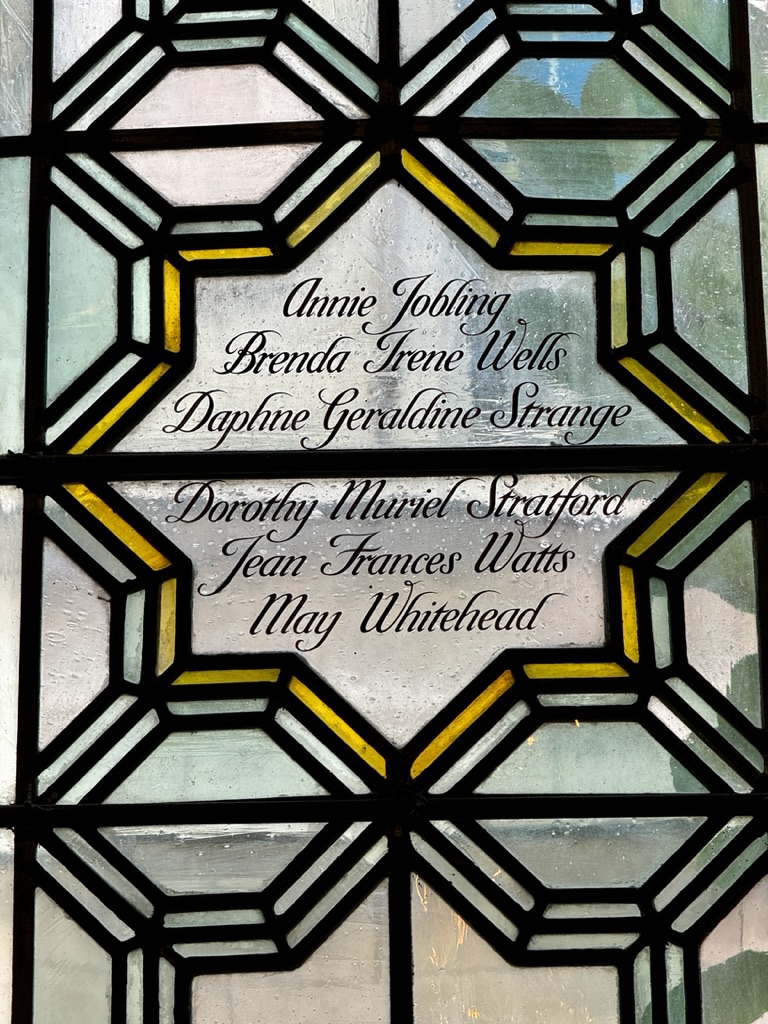
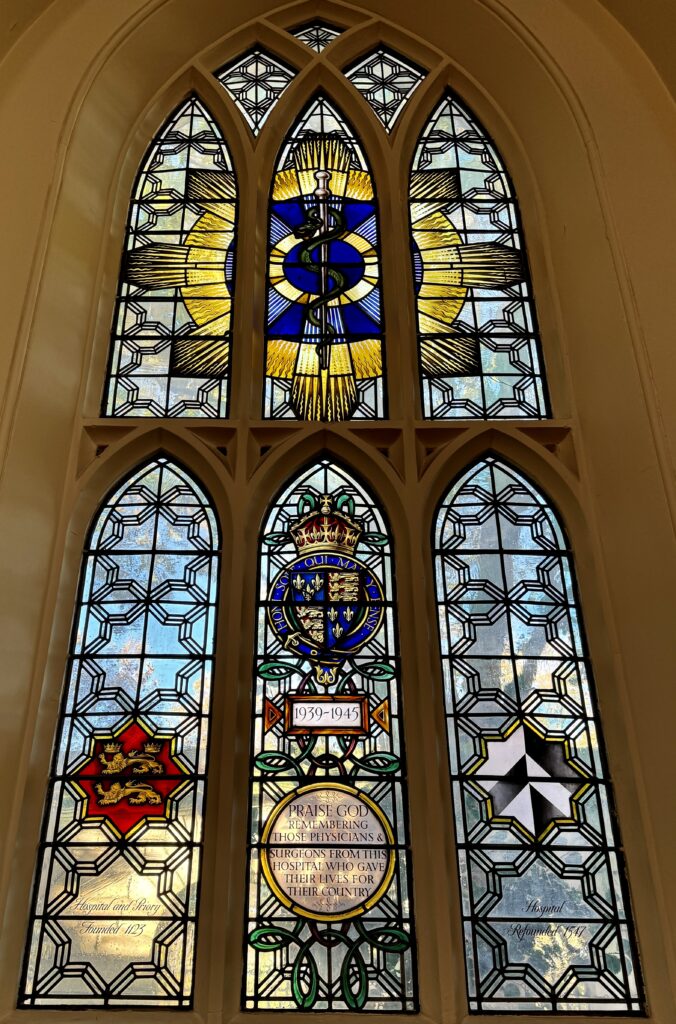
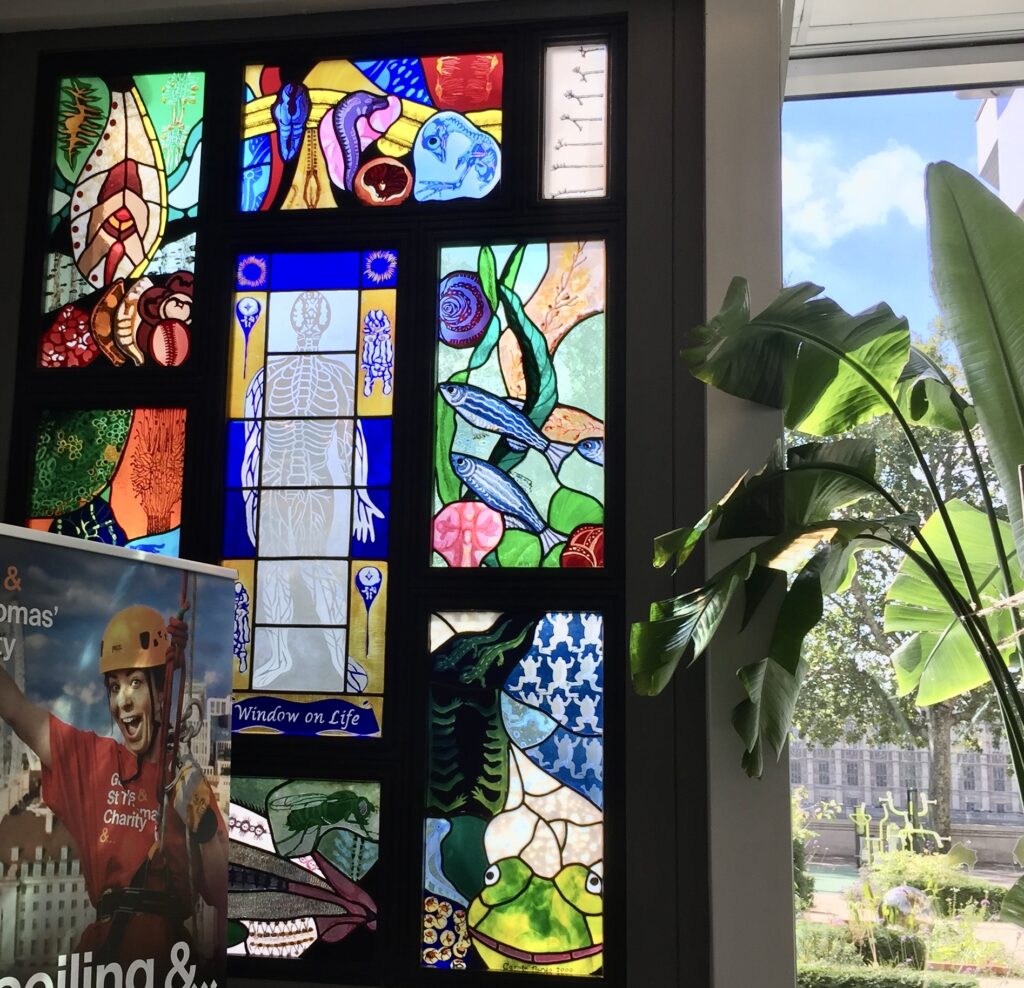
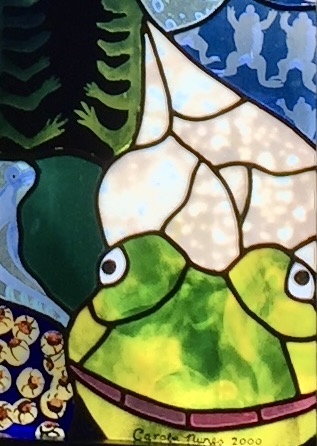
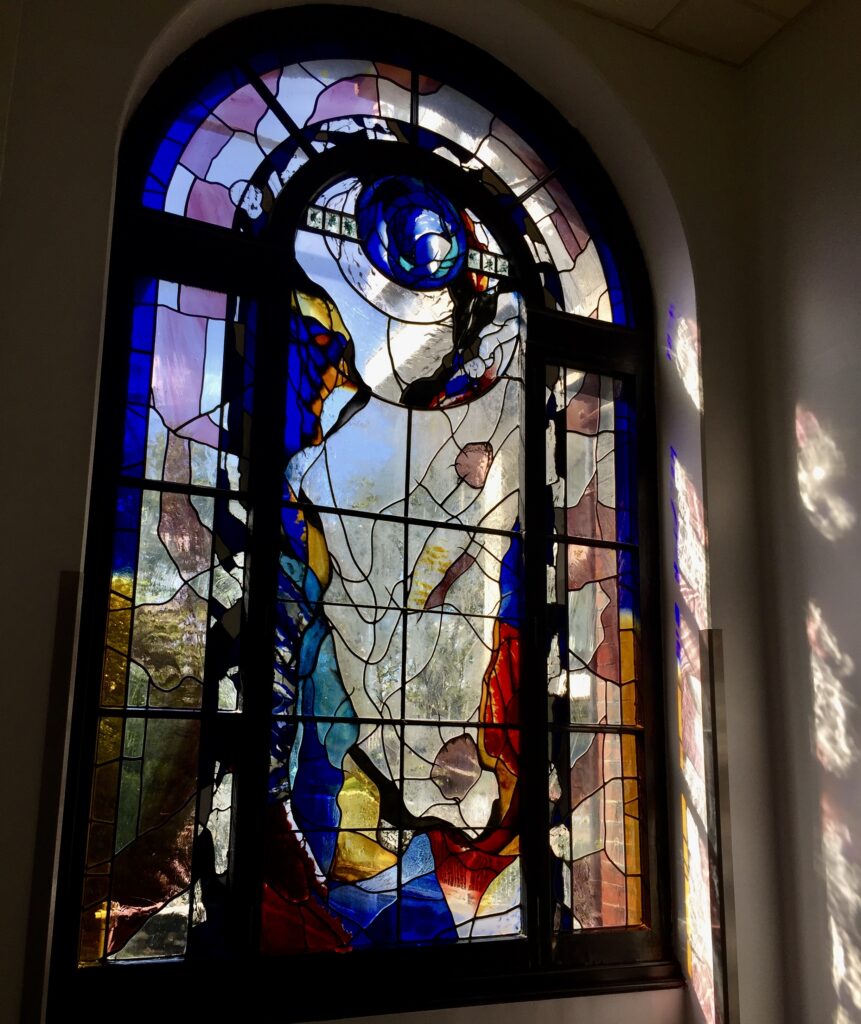
More beautiful stained glass on the way out …

I love the frog …

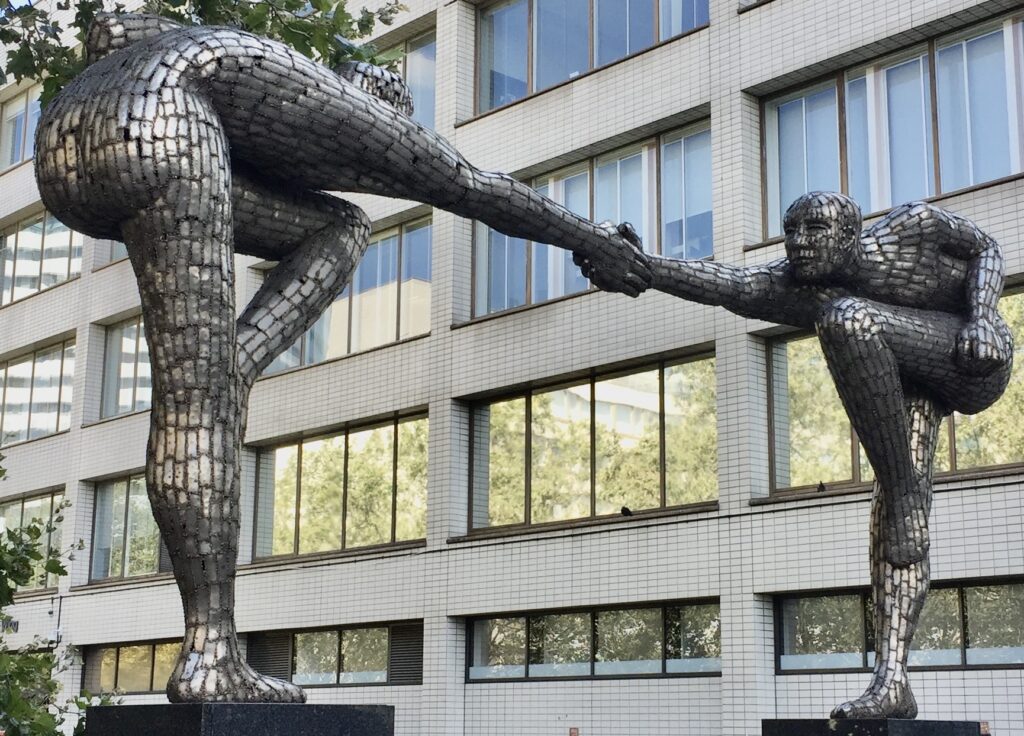
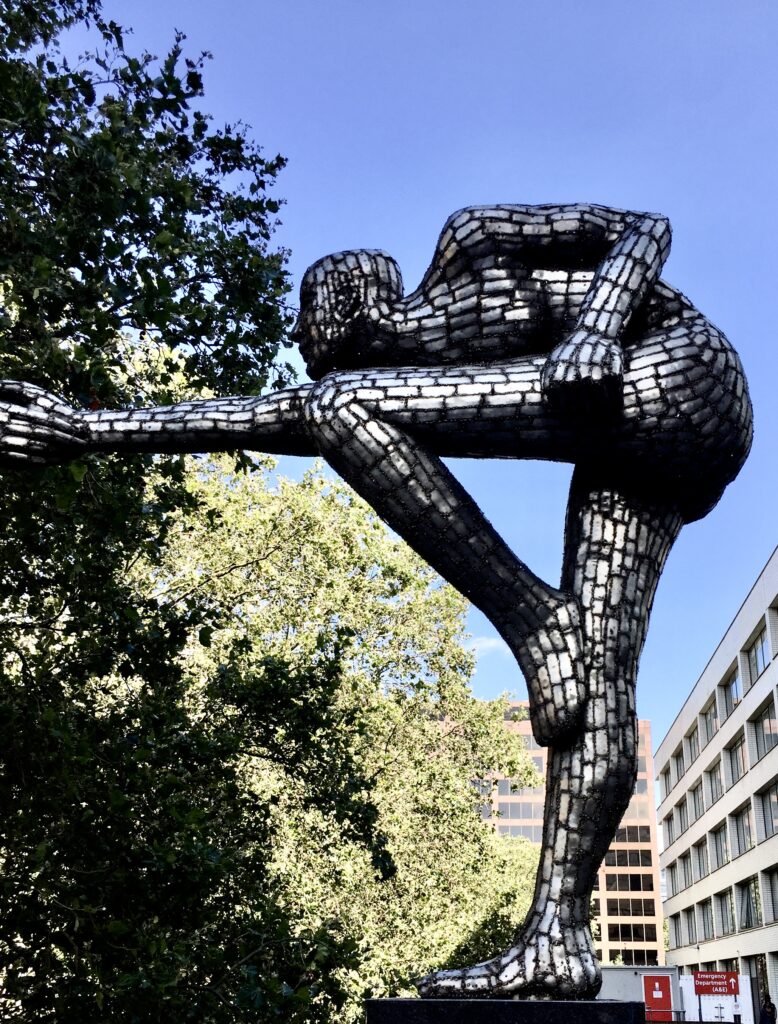
Outside the main entrance you’ll find this sculpture Cross the Divide by Rick Kirby (2000) …

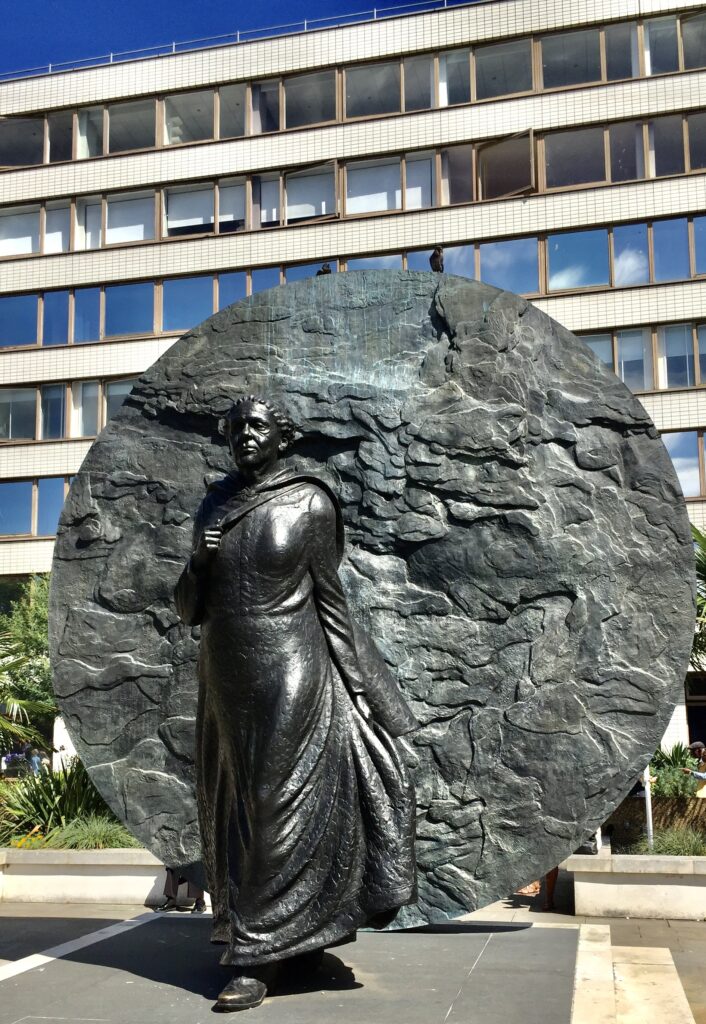
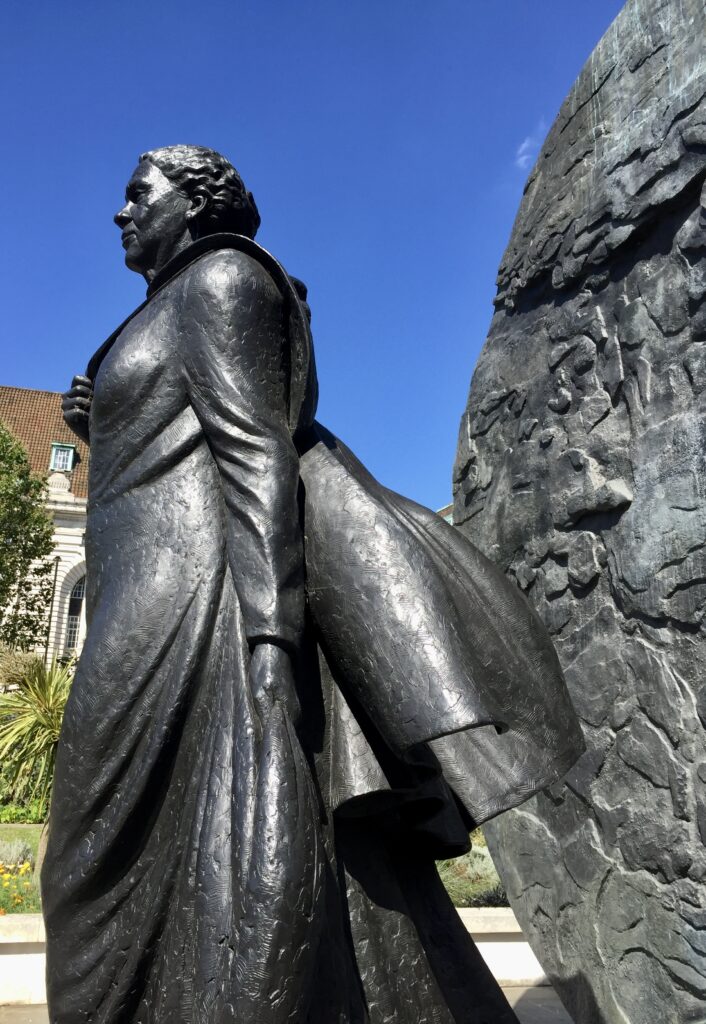
There’s also this striking sculpture of Mary Seacole …

Read more about her extraordinary life here.

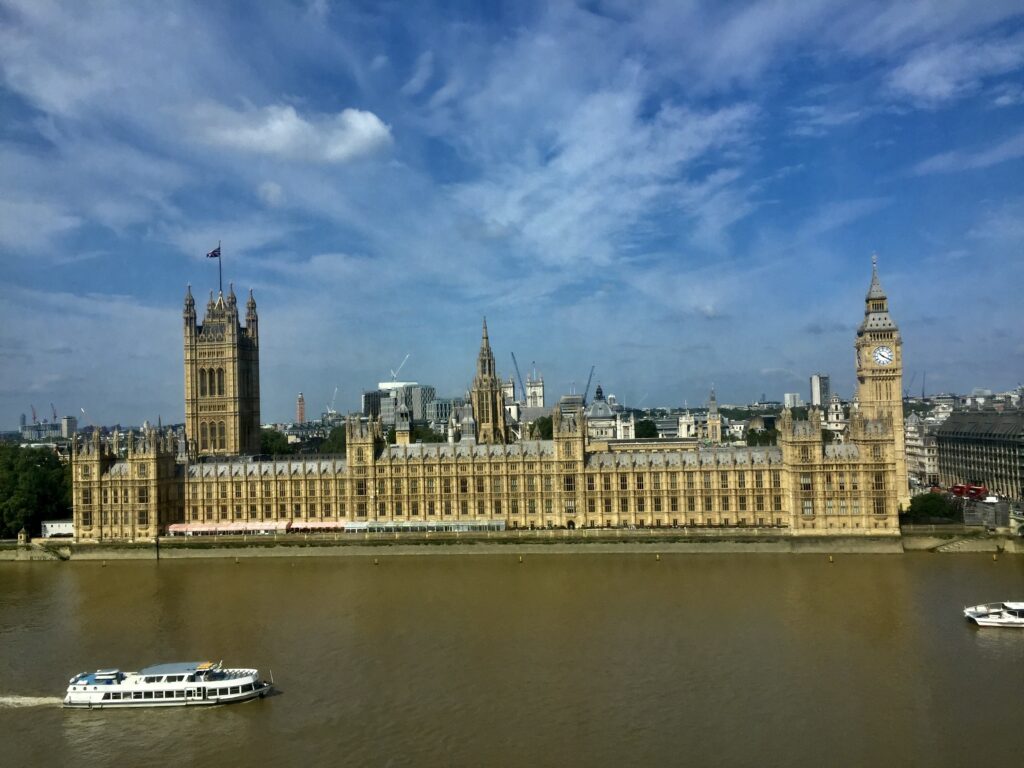
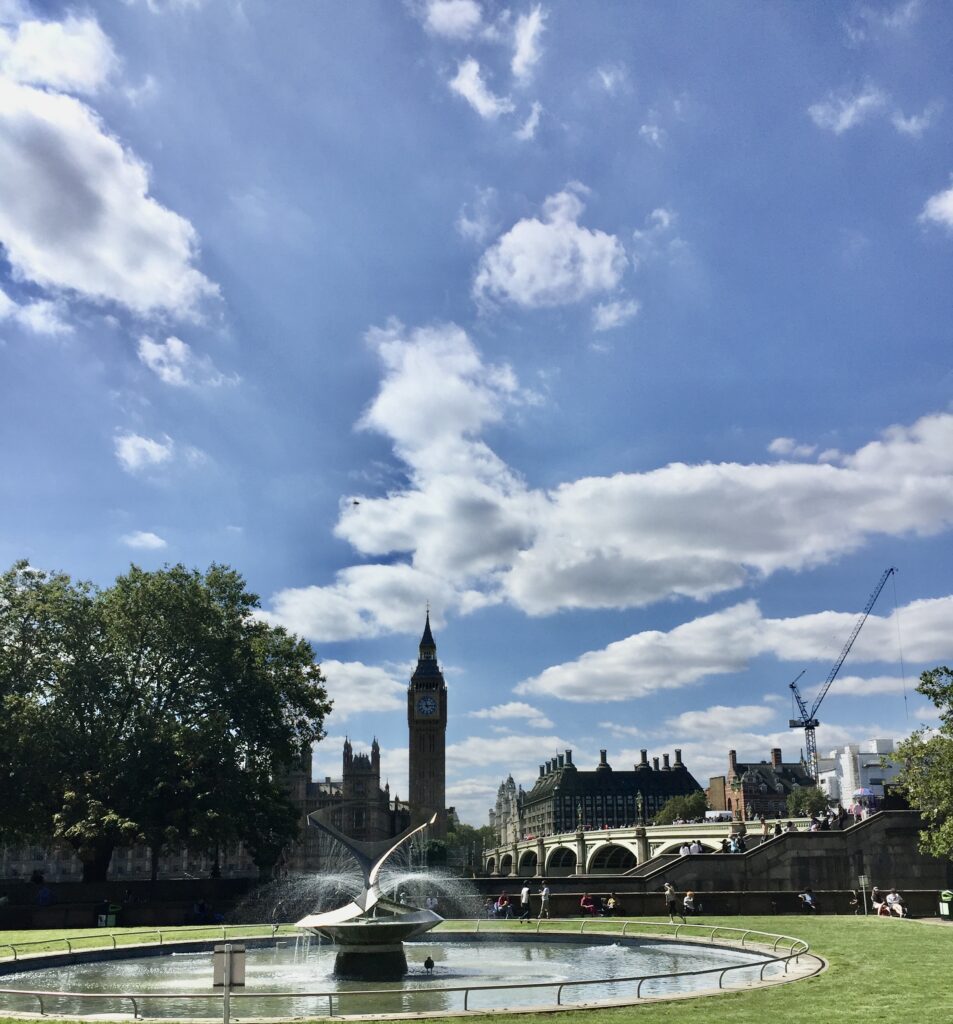
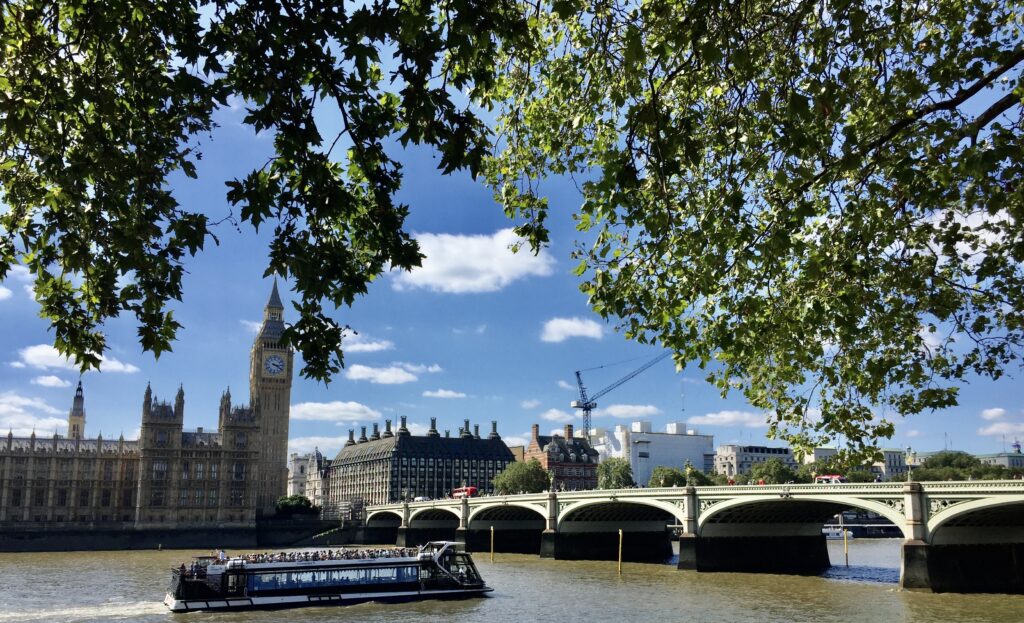
There are also nice views north towards the Houses of Parliament …

If you would like to follow me on Instagram here is the link …

https://www.instagram.com/london_city_gent/

An exhumed poet, a proud Mayor and a very modest attorney. Stories from St Giles.

From where I live I have a nice view of my local church, St Giles Without Cripplegate. This image gives a good impression of where this wonderful old church is located within the strikingly modern Barbican Estate …

I am always pleased to come across old images of the area, particularly those taken in the three decades after the Second World War. I am indebted to the author of the splendid London Inheritance blog for this view from 1947 showing the devastated landscape …

The building on the left is the Red Cross Street Fire Station.

Another image showing nearby destruction …

The following photo taken in the days following the raid on the 29th December 1940 shows the damage to the interior of the church …

St Giles Cripplegate

Image credit: London Metropolitan Archives, City of London: catalogue ref: m0017971cl

Since the walls and tower survived a service was possible with the parishioners able to look straight up to the sky …

The inside of the church today. I was fortunate enough to visit when a lady (on the left in the picture) was practising beautifully on the organ …

Here’s an aerial view from the 1960s and the church now has a roof. The more modern looking building on the right is Roman House which has recently been converted into apartments …

In this 21st century aerial image you can just make out the church’s green roof …

Some monuments remain from the old pre-Blitz building.

There is this touching memorial to a favourite character of mine, Sir William Staines …

And here is the man himself …

Staines had extremely humble beginnings working as a bricklayer’s labourer, but eventually accumulated a large fortune which he generously used for philanthropic purposes. He seemed to recall his own earlier penury when he ensured that the houses he built for ‘aged and indigent’ folk would have ‘nothing to distinguish them from the other dwelling-houses … to denote the poverty of the inhabitant’.

British History Online records an encounter he had with the notorious John Wilkes who referred rather rudely to Staines’ original occupation …

The alderman was an illiterate man, and was a sort of butt amongst his brethren. At one of the Old Bailey dinners, after a sumptuous repast of turtle and venison, Sir William was eating a great quantity of butter with his cheese. “Why, brother,” said Wilkes, “you lay it on with a trowel!”

Incidentally, Wilkes is also commemorated in the the City in Fetter Lane where a striking statue of him honestly portrays his famous squint …

John Milton (1608-1674), the poet and republican, is perhaps the most famous former parishioner of St Giles and his statue stands by the south wall of the church …

It’s made of metal, which means it is one of the few memorials in the church that survived the bombing in the Second World War. It is the work of the sculptor Horace Montford (c1840-1919) and is based on a bust made in about 1654.

He used to be outside and was blasted off his plinth during the bombing …

There is also this commemorative plaque …

And a bust which clearly indicates his later-life blindness …

Milton was buried in the church next to his father, however he was not allowed to rest in peace.

British History Online reports the shocking event as follows …

‘A sacrilegious desecration of his remains, we regret to record, took place in 1790 … The disinterment had been agreed upon after a merry meeting at the house of Mr. Fountain, overseer, in Beech Lane, the night before, Mr. Cole, another overseer, and the journeyman of Mr. Ascough, the parish clerk, who was a coffin-maker, assisting’.

Having identified where they thought Milton’s grave was, they dug down almost six feet, found a coffin, and removed the lid. The report goes on …

‘Upon first view of the body, it appeared perfect, and completely enveloped in the shroud, which was of many folds, the ribs standing up regularly. When they disturbed the shroud the ribs fell. Mr. Fountain confessed that he pulled hard at the teeth, which resisted, until some one hit them a knock with a stone, when they easily came out. There were but five in the upper jaw, which were all perfectly sound and white, and all taken by Mr. Fountain. He gave one of them to Mr. Laming. Mr. Laming also took one from the lower jaw; and Mr. Taylor took two from it. Mr. Laming said that he had at one time a mind to bring away the whole under-jaw with the teeth in it; he had it in his hand, but tossed it back again’.

As if that wasn’t undignified enough,’Elizabeth Grant, the gravedigger … now took possession of the coffin; and, as its situation under the common councilmen’s pew would not admit of its being seen without the help of a candle, she kept a tinder-box in the excavation, and, when any persons came, struck a light, and conducted them under the pew; where, by reversing the part of the lid which had been cut, she exhibited the body, at first for sixpence and afterwards for threepence and twopence each person’.

The body was reburied but rumours spread that it wasn’t Milton in the coffin, but a woman. So Milton was dug up a second time and the surgeon in attendance examined the bones — what were left of them — and pronounced them to be masculine. Only then was Milton, at last, allowed to rest only to be permanently obliterated in the bombing.

Notwithstanding the generous memorials to the great and the good, I was captivated by this modest plaque on the south wall …

An attorney at law who obviously believed in brevity. No Latin exhortation of his virtues, no figures of a grieving widow and children, only the important facts and the bald, concluding statement ‘That is all’.

There is a lot more to see at St Giles such as modern stained glass …

And intriguing inscriptions, both inside …

And outside …

But for the moment ‘that is all!’

If you would like to follow me on Instagram here is the link …

https://www.instagram.com/london_city_gent/

Page 3 of 9

Powered by WordPress & Theme by Anders Norén