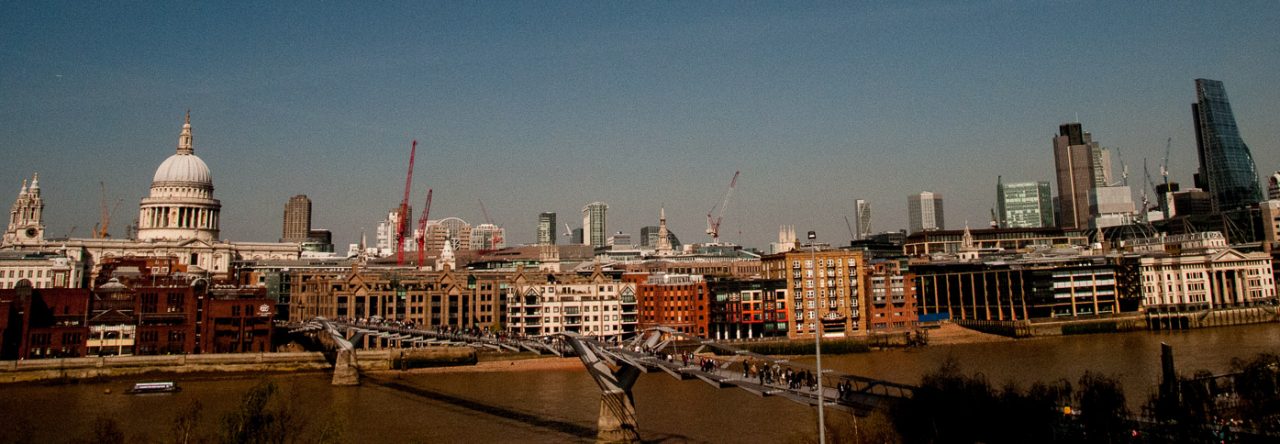
Walking the City of London

Category: Special Exhibitions Page 19 of 23

Tower Bridge and the extraordinary Sir Horace Jones. Plus a gathering of equerries and bedchamber ladies!

I thought I was familiar with the names of all the archiects associated with the City but somehow one of the most eminent seemed to have slipped my mind – although I must have read about him on numerous occasions. Some of his greatest works will be well known to all my readers – for example the original market buildings at Smithfield, Billingsgate and Leadenhall. His greatest surviving achievement however, in my view at least, is the structure that represents London itself to many people throughout the world – Tower Bridge.

Jones was a brilliant artist as can be seen from this pen-and-ink drawing by him from his 1884 design …
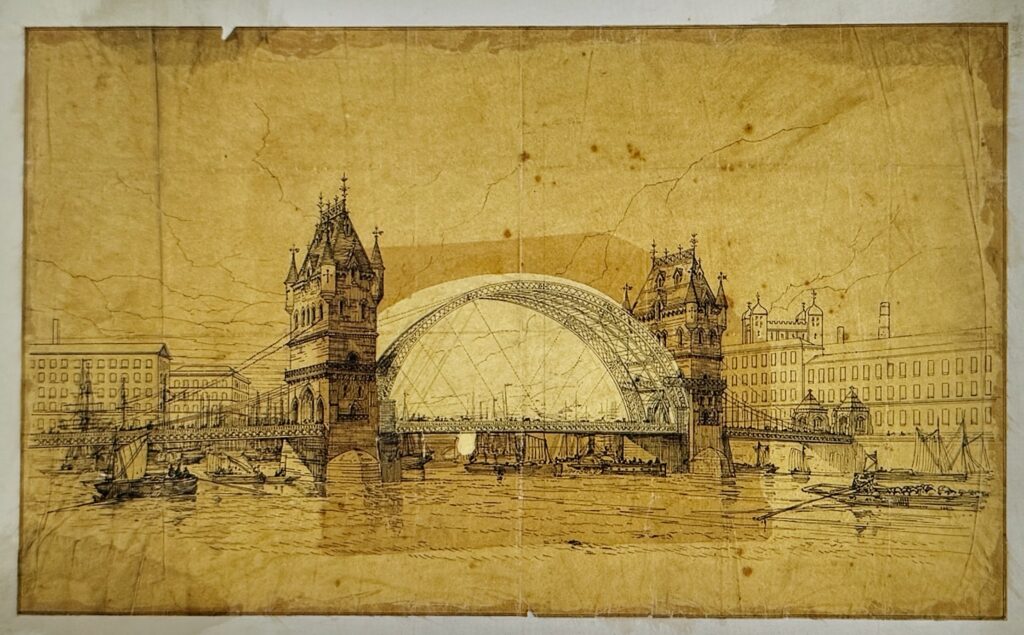
© London Metropolitan Archives, City of London (ref COL/SVD/PL/03/0293)

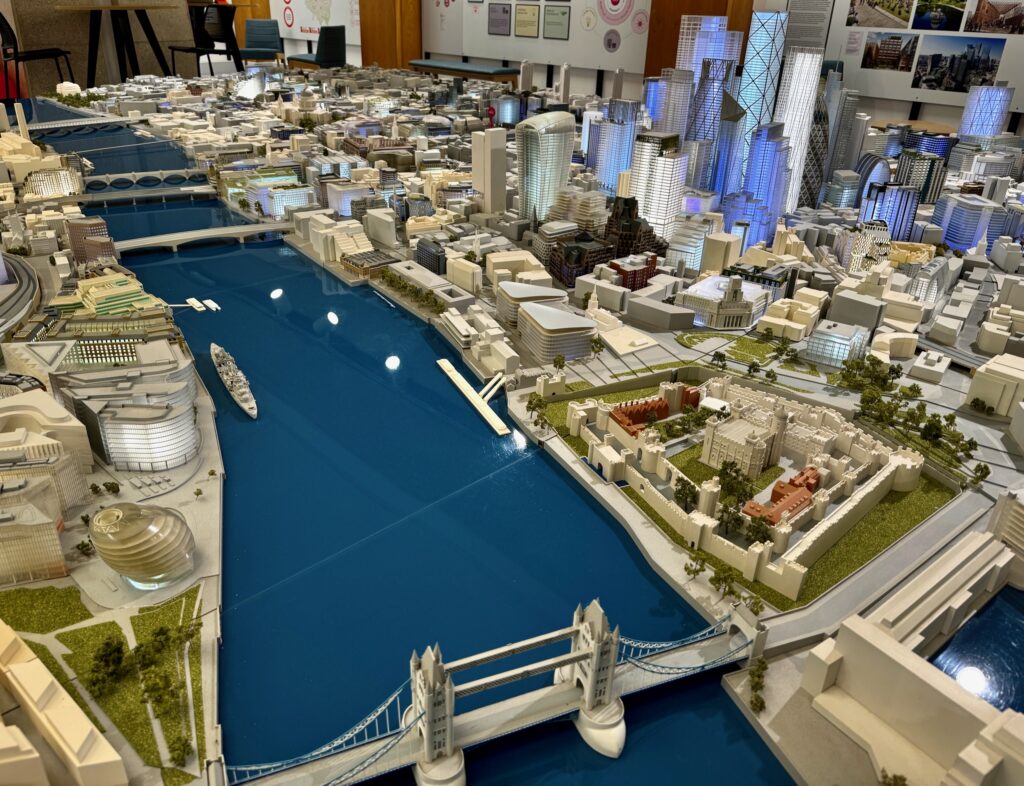
This model at The London Centre gives some perspective as to its location …
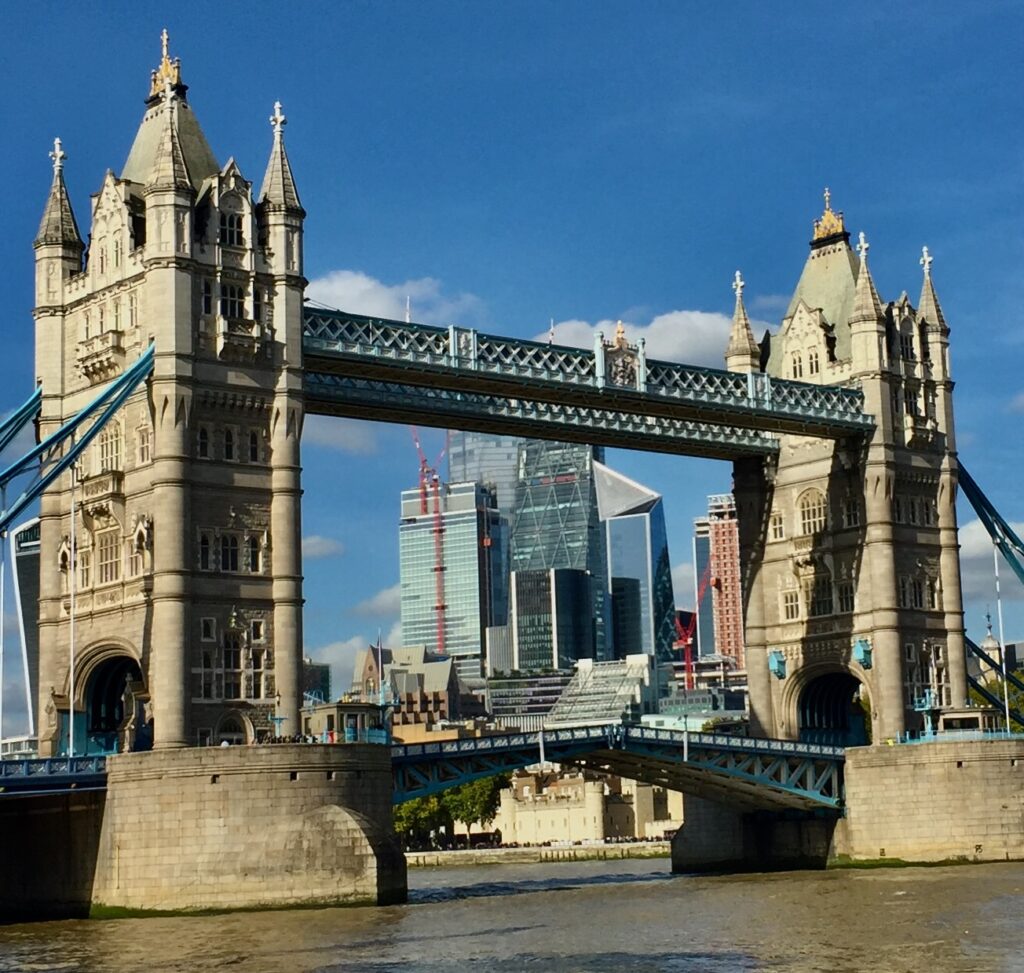
The modern City framed by the Bridge …
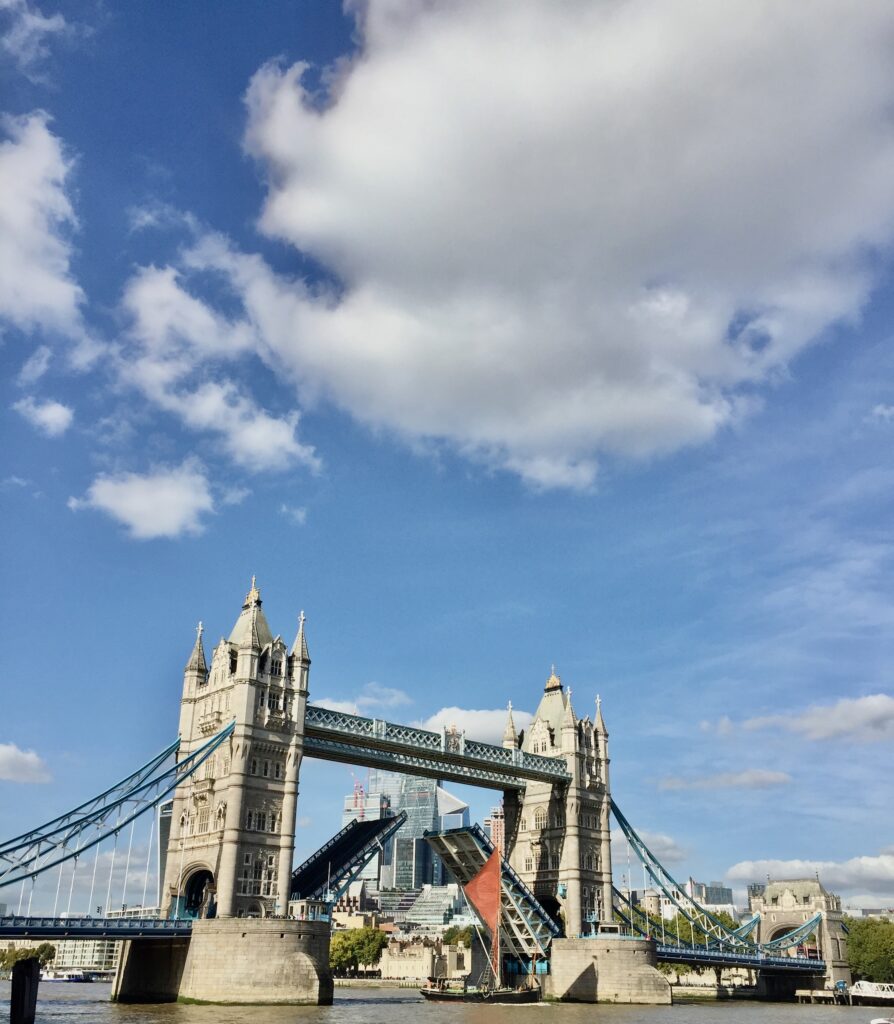
In action …
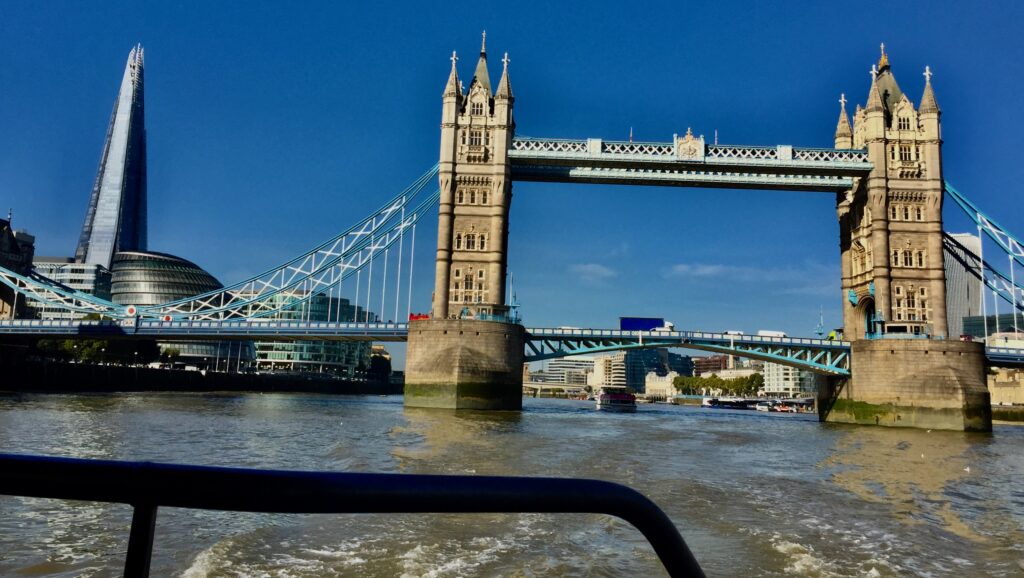
From the River Thames heading east …
Serious engineering …
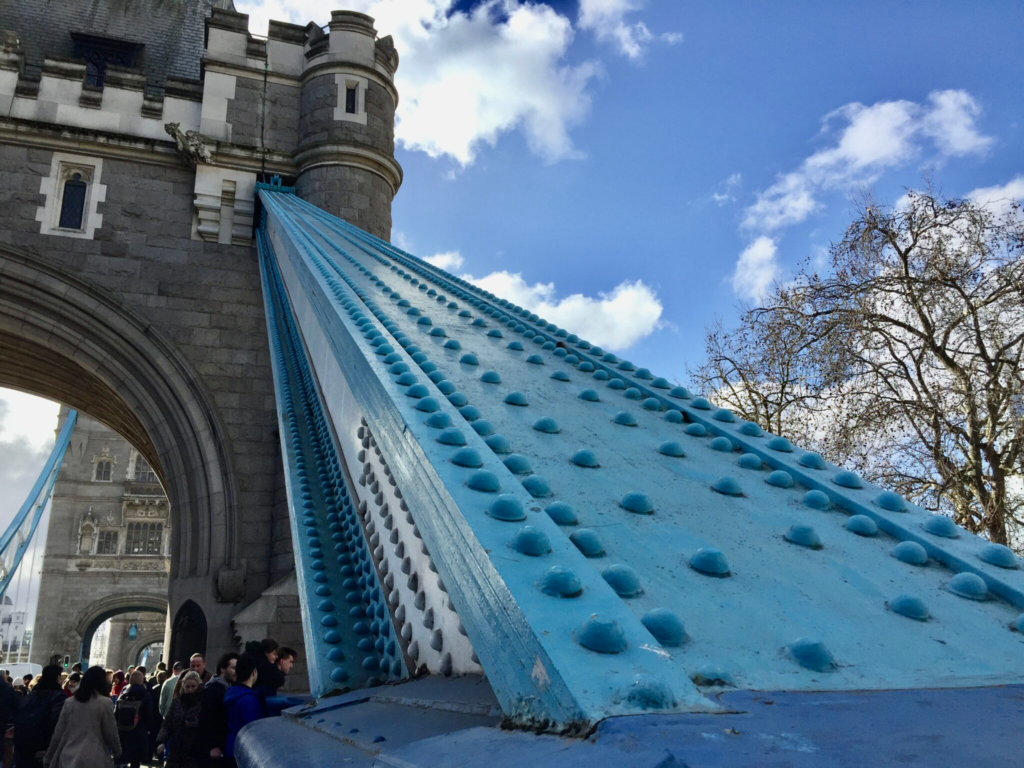
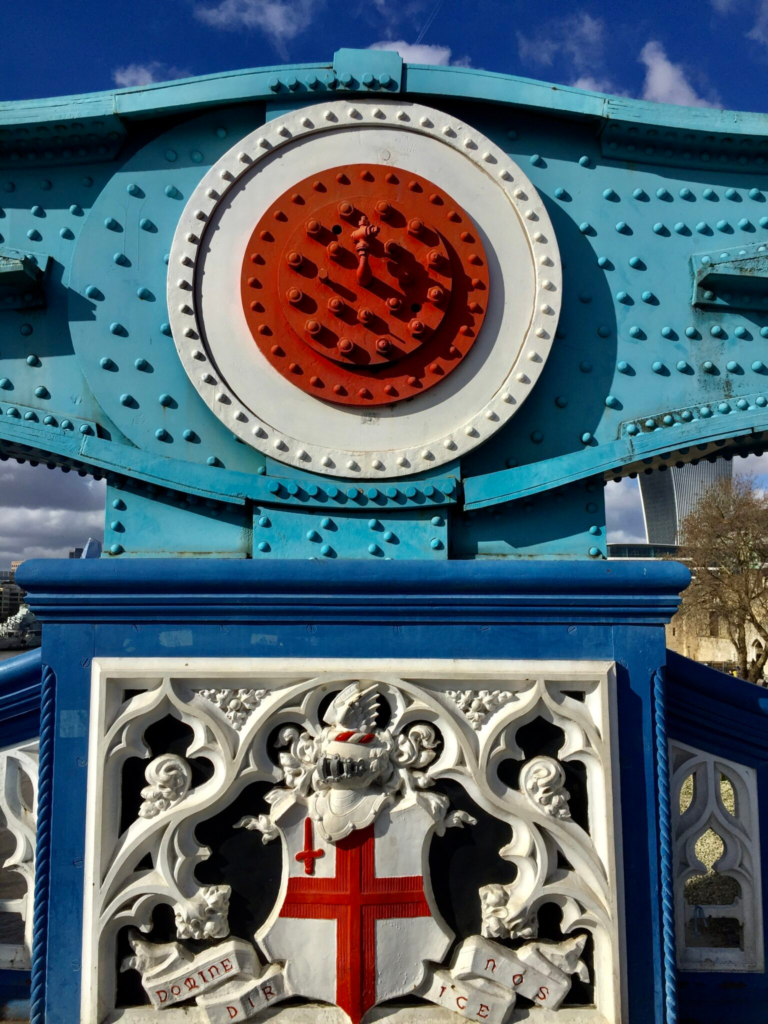
You can read about my tour of the bridge in March last year here.

My further interest in it was spiked, as it often is, by the current exhibition featuring Tower Bridge at the Guildhall Gallery …
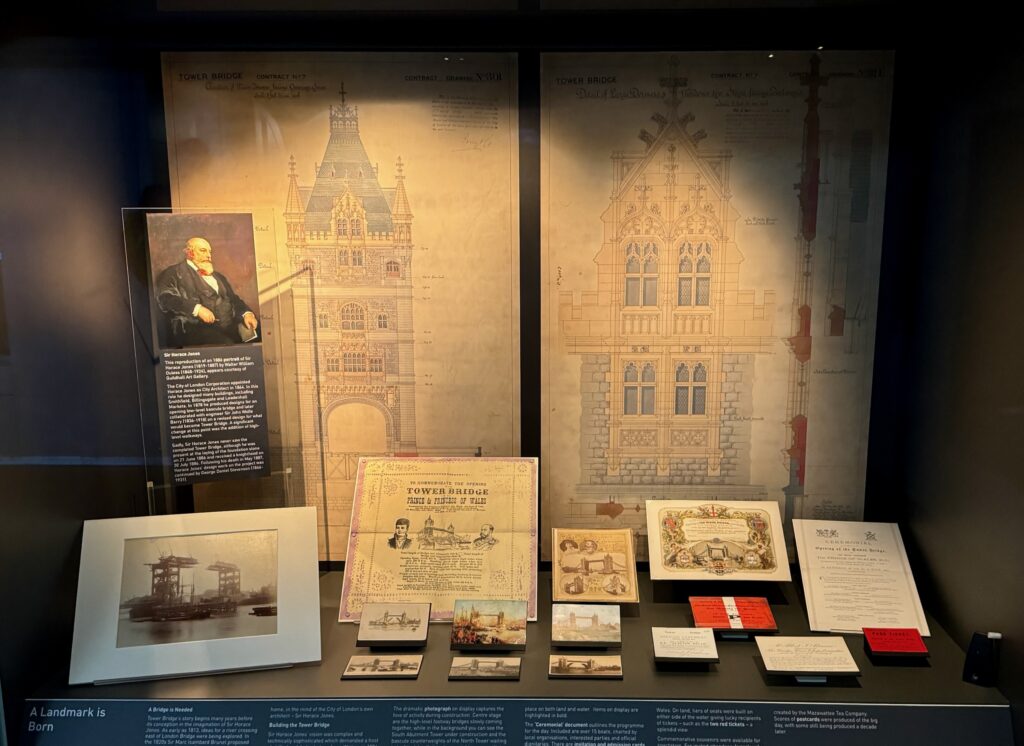
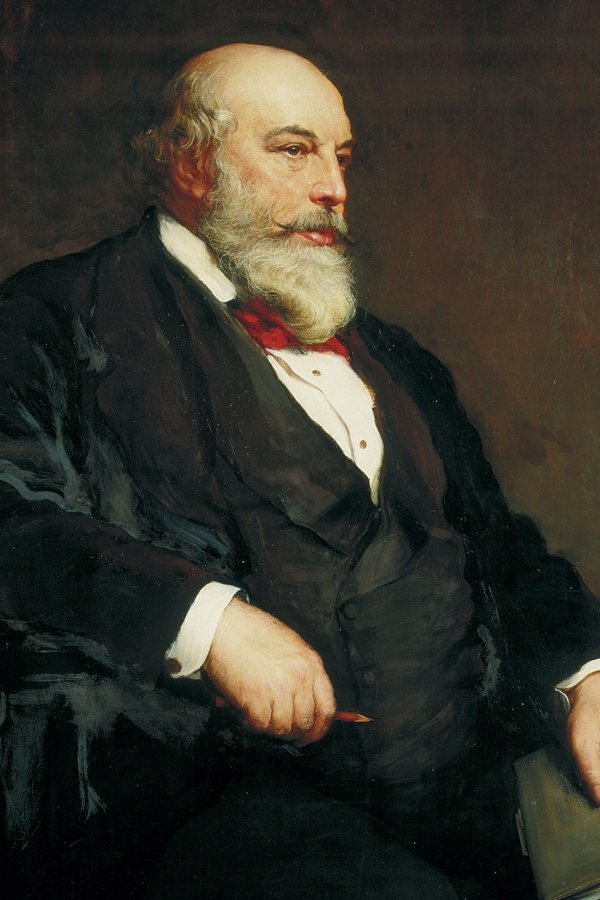
The great man himself. Horace Jones 1819-1887 painted in the year before his death by Walter William Ouless …
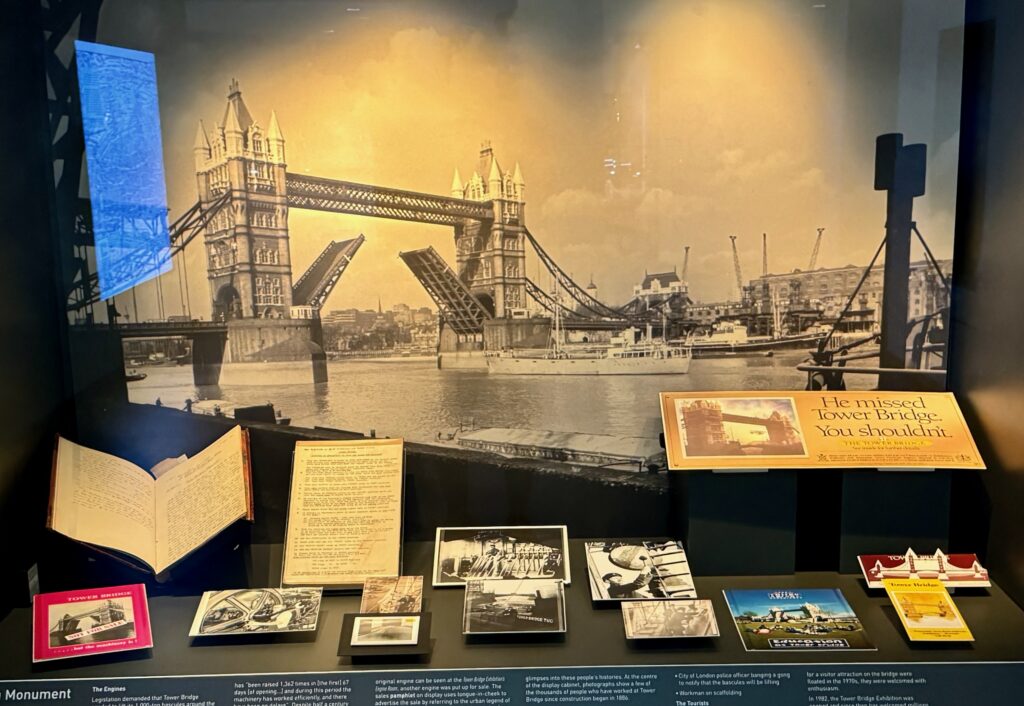
Some of the fascinating items on display in the exhibition.

This dramatic photograph captures the hive of activity during construction …
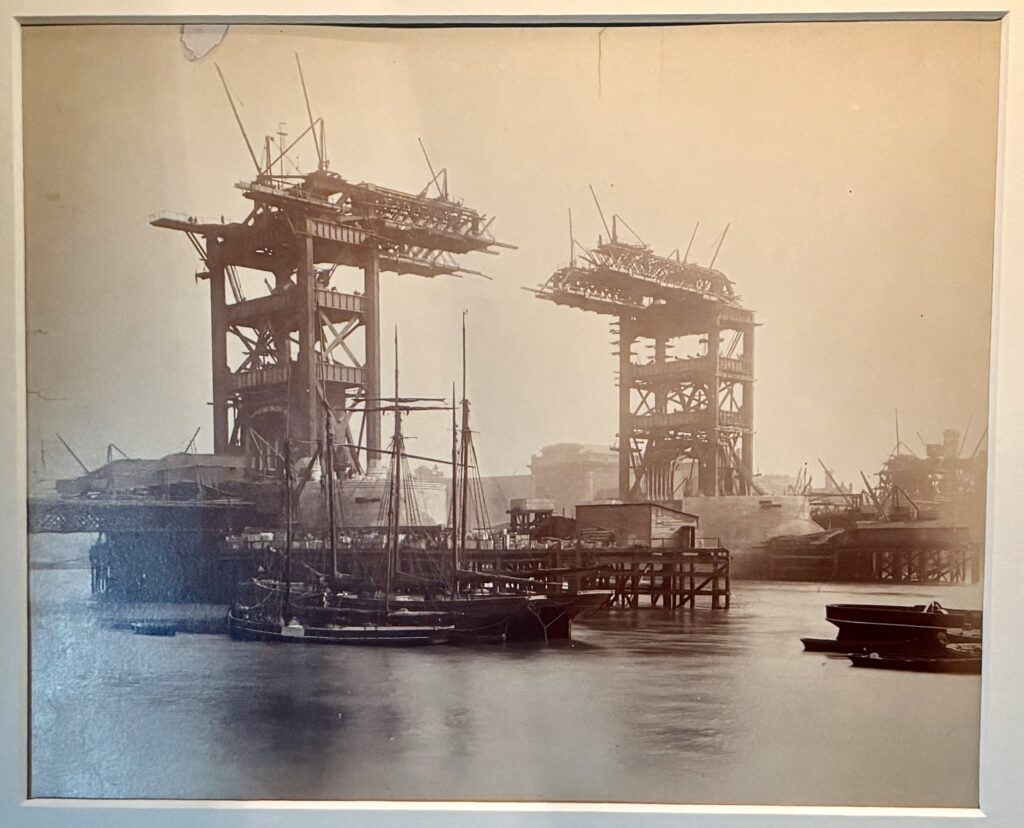
Centre stage are the high-level footway bridges slowly coming together while in the background you can see the South Abutment Tower under construction. Work on the bridge had started in 1886 and work was completed in 1894 (seven years after Horace’s death).

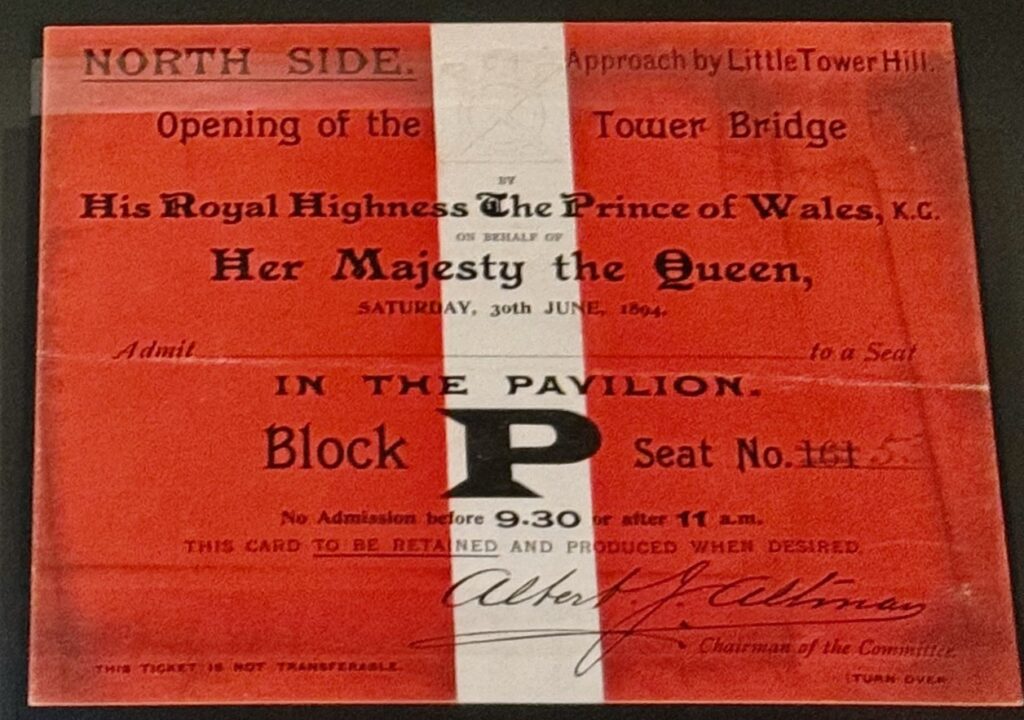
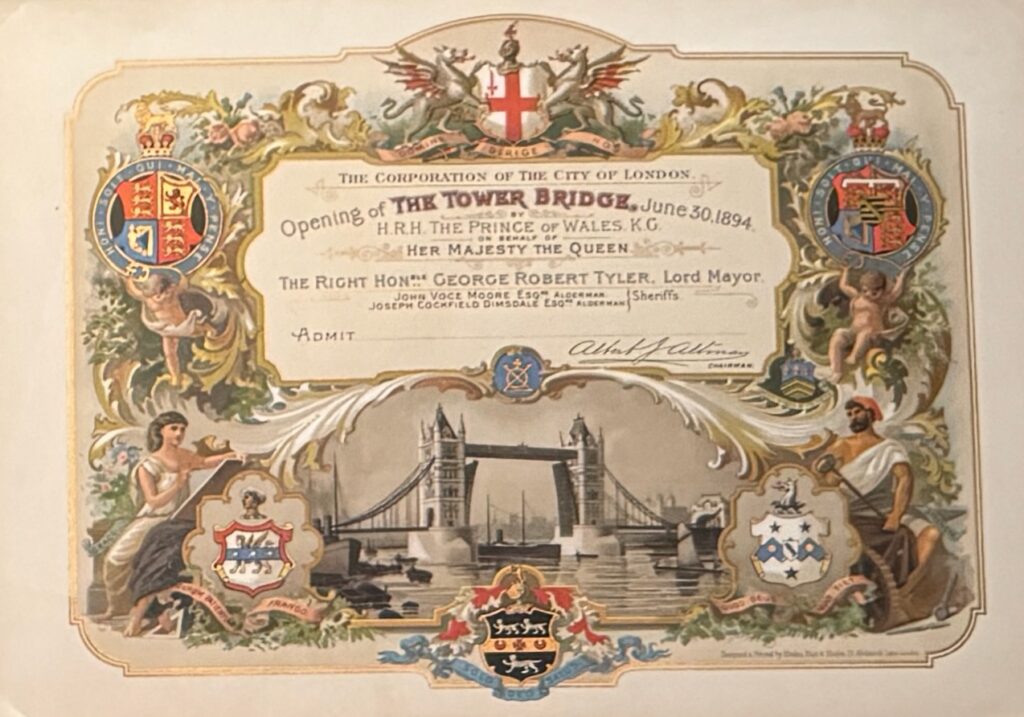
Hot tickets …
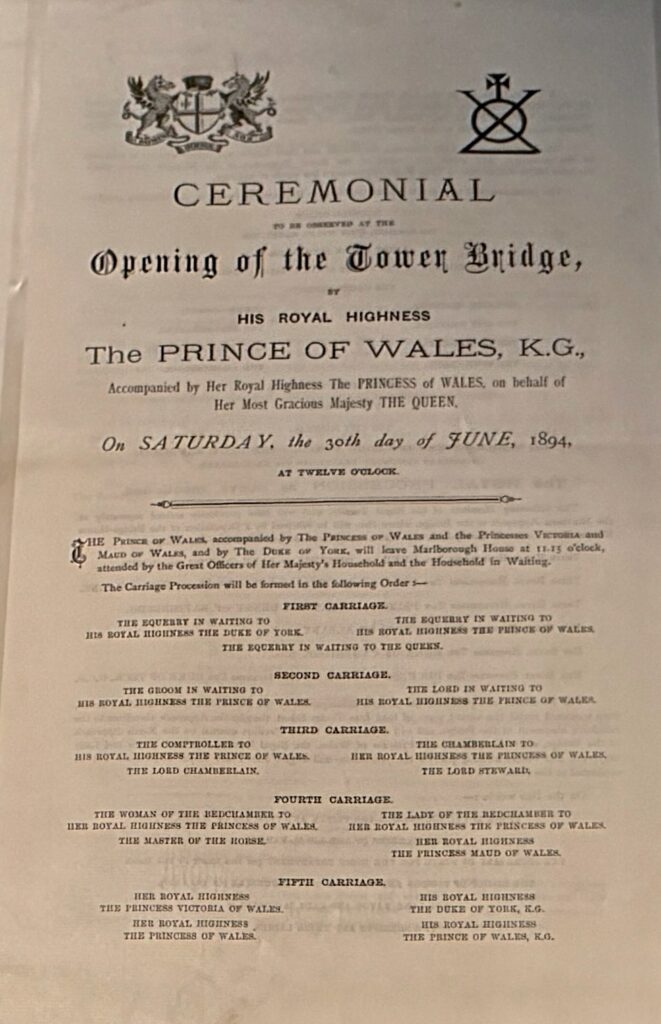
The ‘Ceremonial’ document outlining the programme. I was intrigued by the occupants of the carriages. What’s the difference between a ‘woman of the bedchamber’ and a ‘lady of the bedchamber’? And there are examples of chaps who are ‘in waiting’. Two equerries, a groom and a lord to be precise. No doubt a precise pecking order has been established over the centuries!
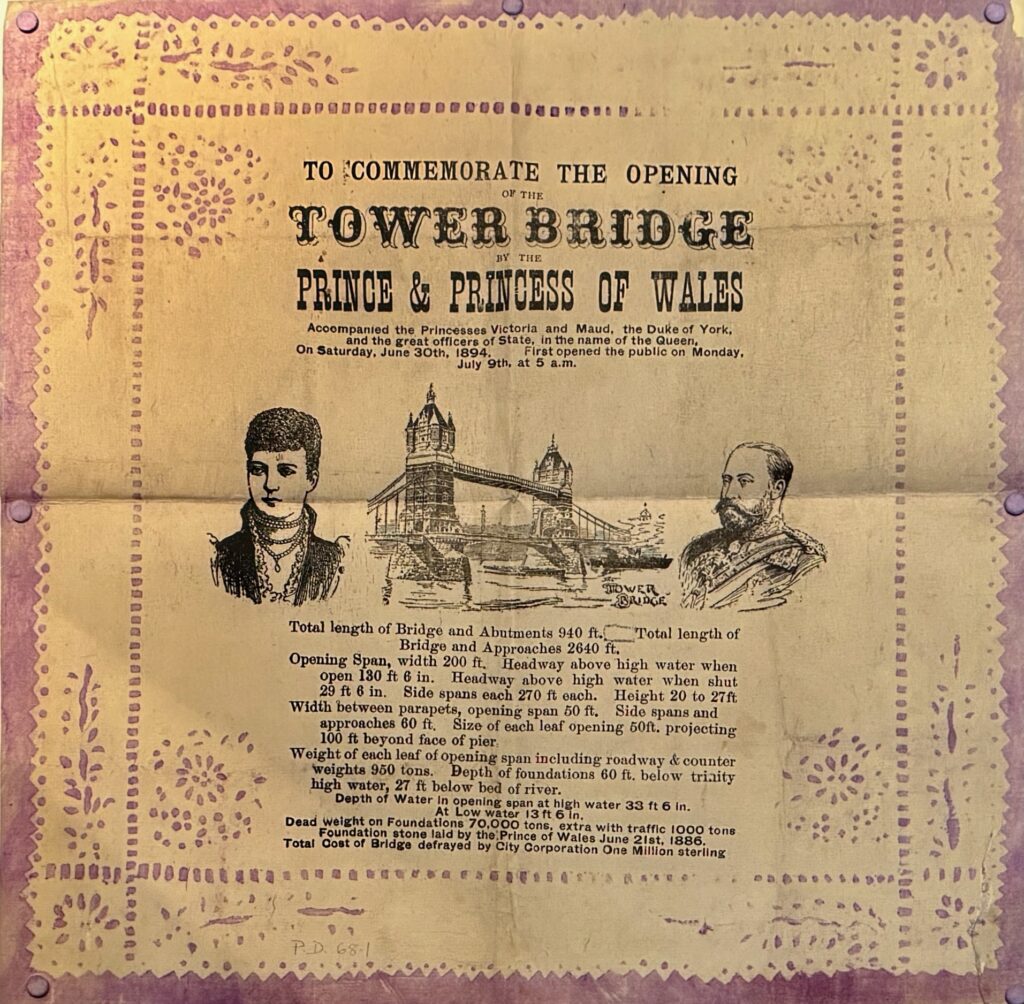
A napkin from the opening Celebration Dinner …
A great selection …
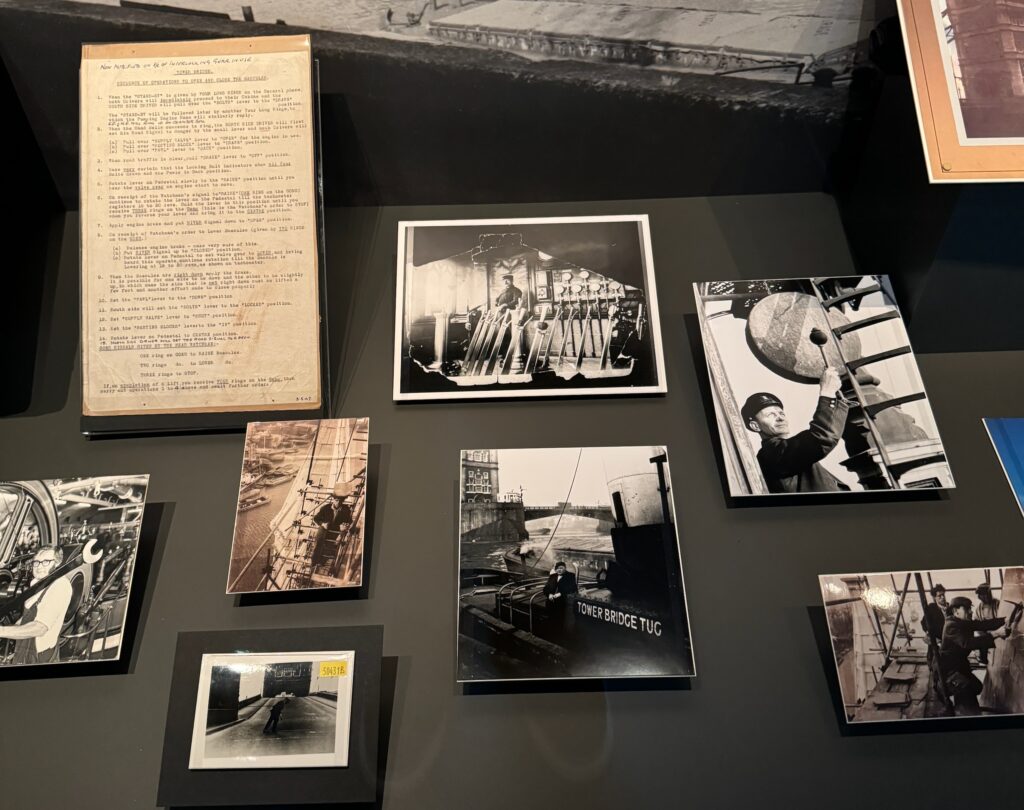
Instructions on how to operate the raising mechanism, an engineer with a super king size spanner, a workman doing masonry repairs, a police officer pulling a rope across the road to close it to traffic, the Tower Bridge tug and the Bridge Driver in the control cabin.

For the people of London during the First World War the bridge was more than a metaphorical symbol of resistance. Perched atop the upper walkway sat an anti-aircraft gun, its height and tactical position aligning it perfectly to defend against German raids. Its presence brought comfort to Londoners in the area and this poster captures the sentiment …
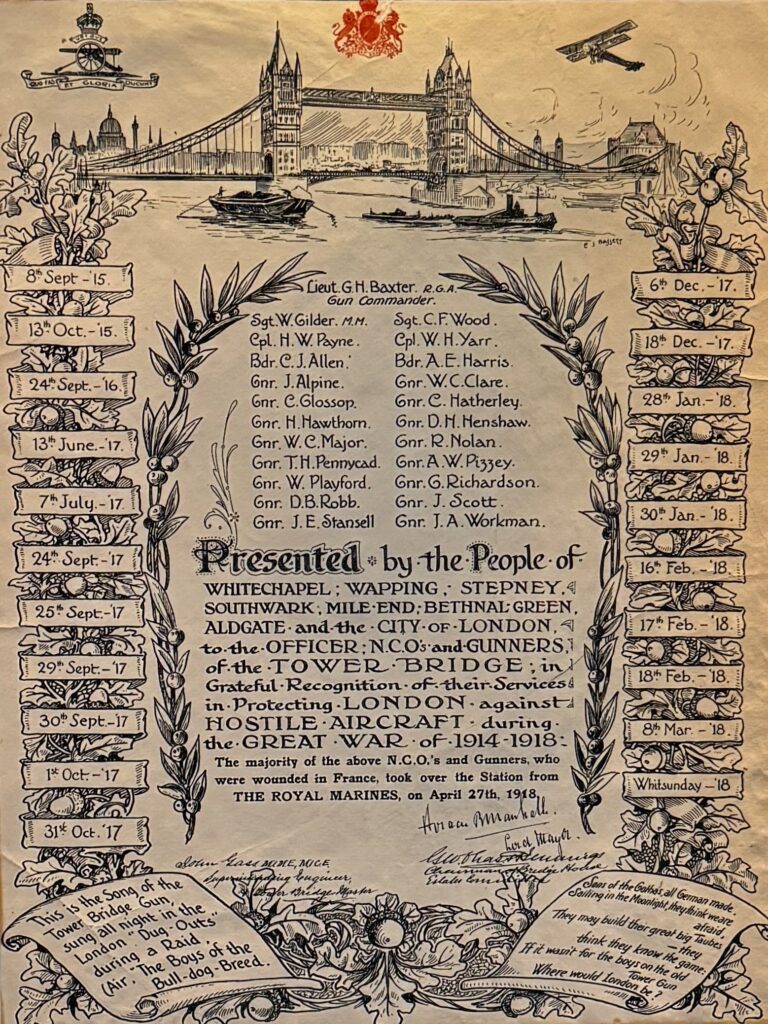
Each of the men listed in the centre of the poster were presented with a print as ‘grateful recognition of their services in protecting London against hostile aircraft during the Great War of 1914-1918’.

Whilst I was visiting I treated myself to this book. It’s a great read …
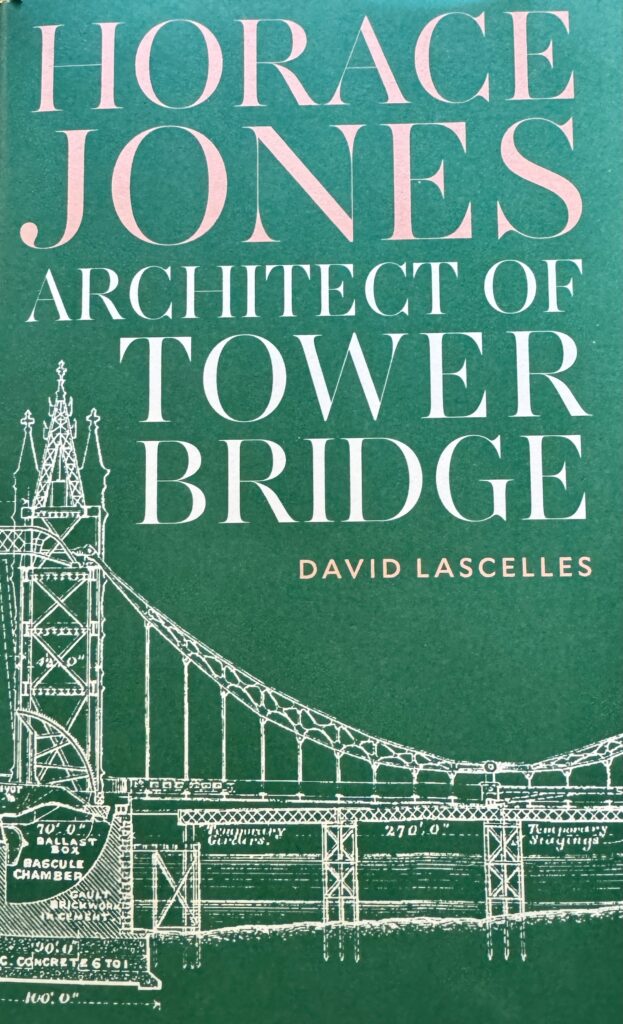
It explains in interesting detail why, despite a knighthood and elevation to the Presidency of the Royal Institute of British Architects, Horace never really received the full recognition he deserved and this remains the case today. For example, the Guildhall Gallery now owns the Ouless painting above but it is not on display. I’m pleased to say, however, that there is an excellent bust of Horace that you can go and see. It really gives a hint of the powerful presence and personality that clearly upset some of his contemporaries …
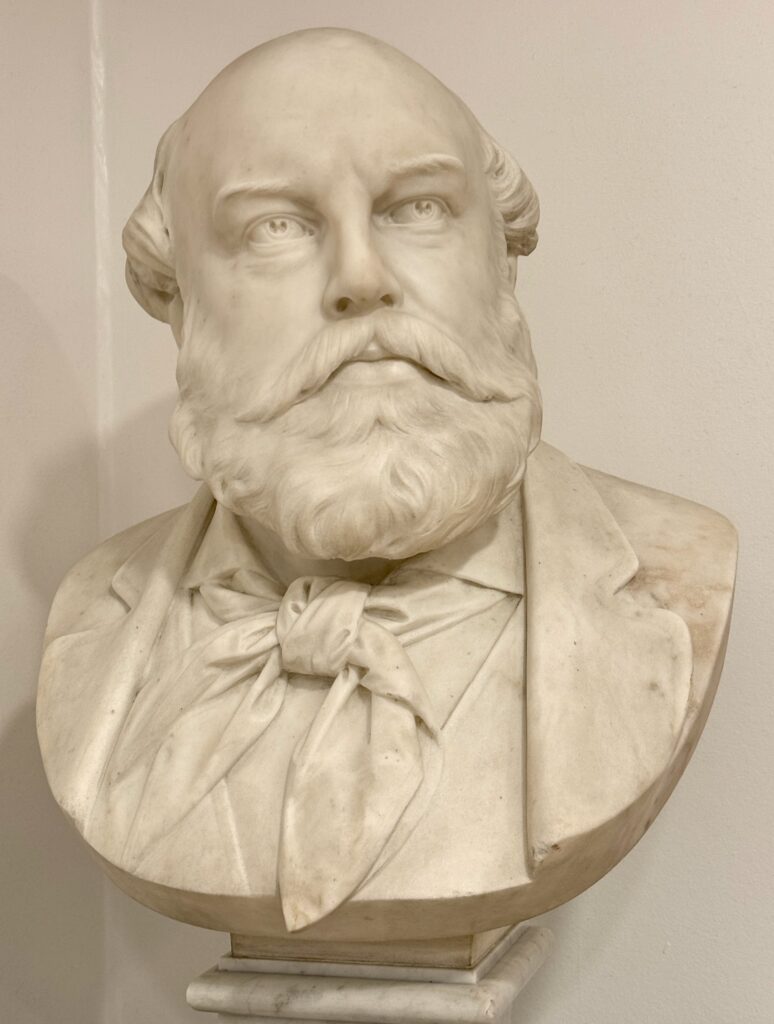
Unfortunately, I’m sad to say that it is tucked away at the back of the cloakroom! You’ll find it by turning right as you leave the special exhibition.

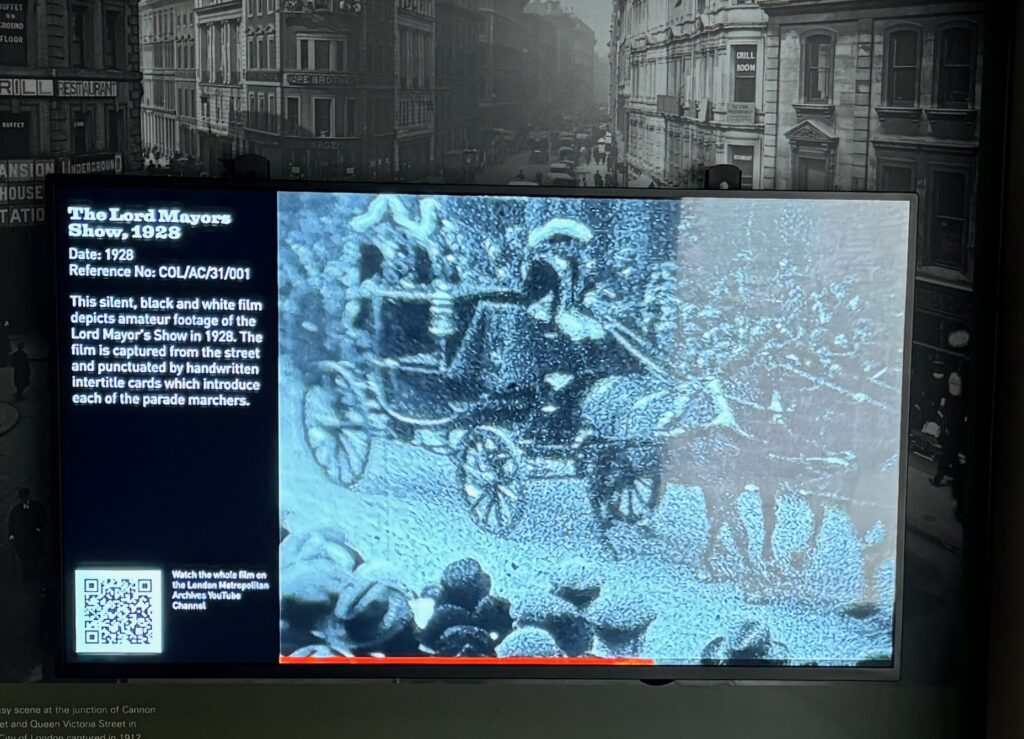
It’s on until 19 September and is located in the Heritage Gallery. During your visit you can enjoy watching films from the London Metropolitan Archive. This one is of the 1928 Lord Mayors Show …
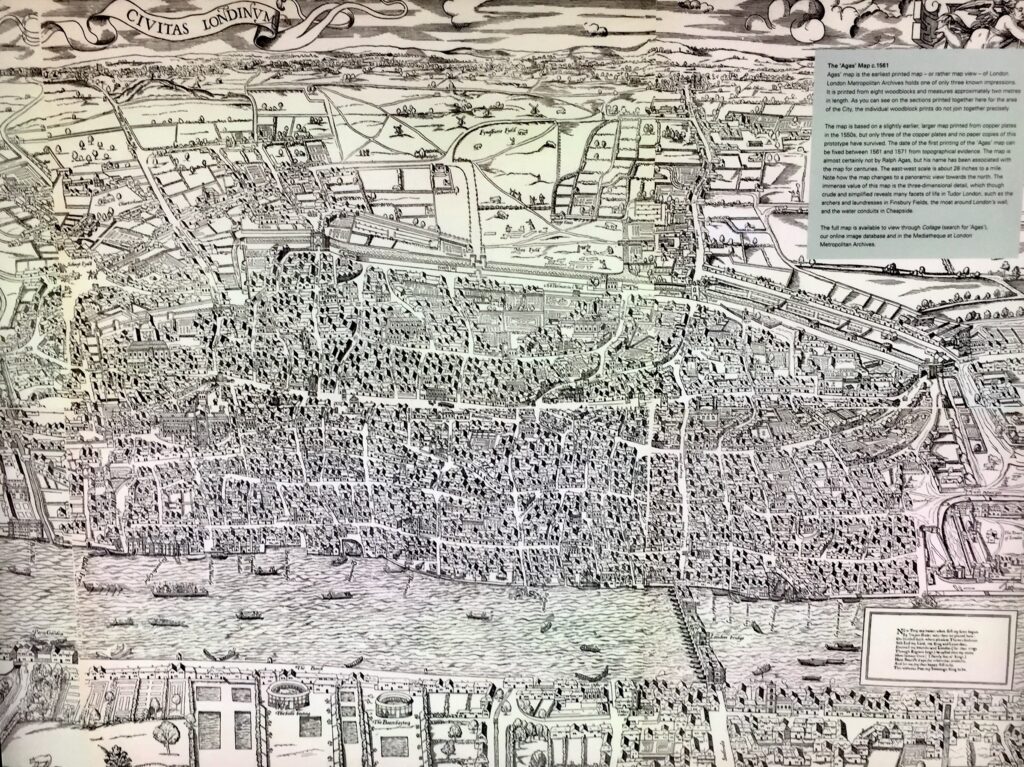
You can also inspect a superb back-lit copy of the ‘Agas’ map of circa 1561 …
Remember you can follow me on Instagram …
https://www.instagram.com/london_city_gent

Kaleidoscope!

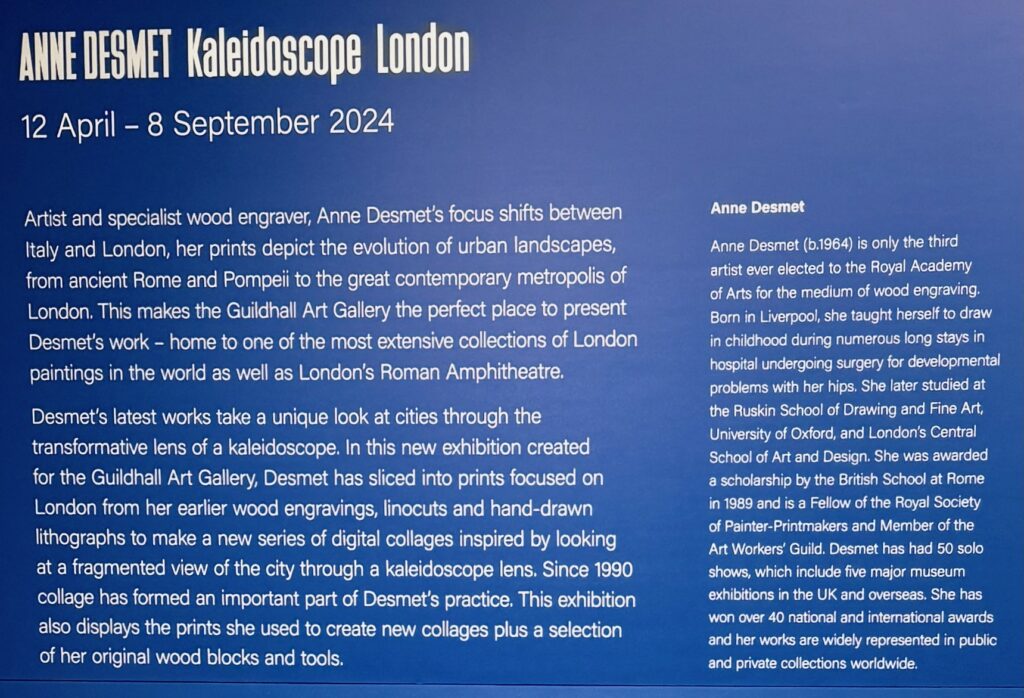
I visited the Guildhall Gallery last week for this extrordinary exhibition …

With over 150 pieces, this is a major retrospective which features series of works from as far back as 1990 right up to the present day, including 41 London-themed kaleidoscopic prints created exclusively for this new exhibition.

So this blog can only give you a brief taste of what’s in store if you visit – and I have kept it a manageble size by just including my favourites! You can read a very comprehensive review of the exhibition (including a video of the artist at work) on the Books & Boots website. I strongly recommend you read it before visiting the gallery.

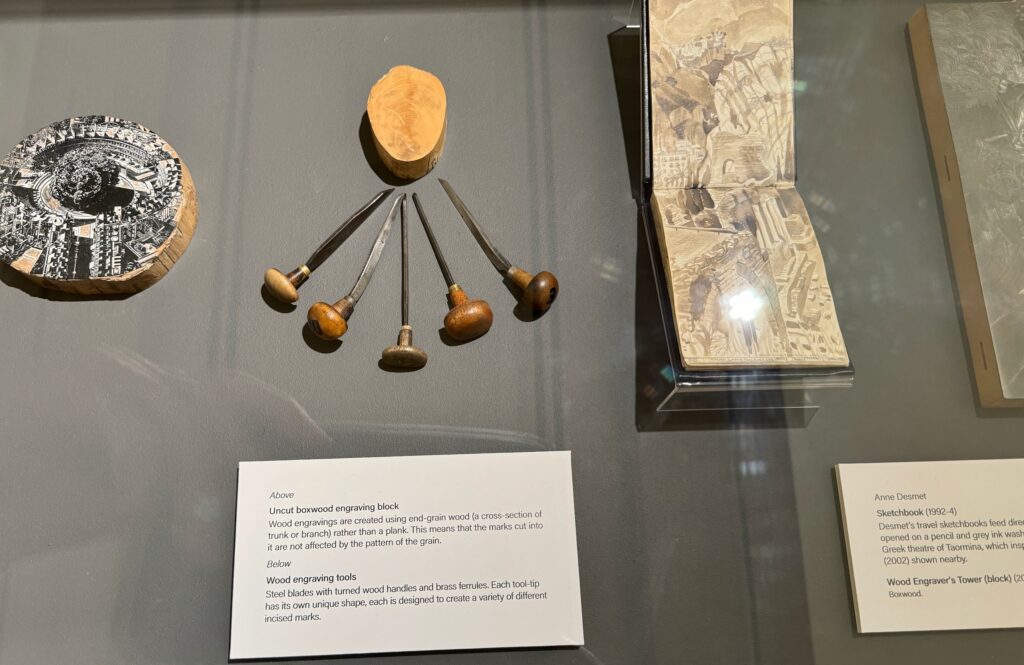
I started by looking at the tools Anne uses in her wood engraving work – fascinating …

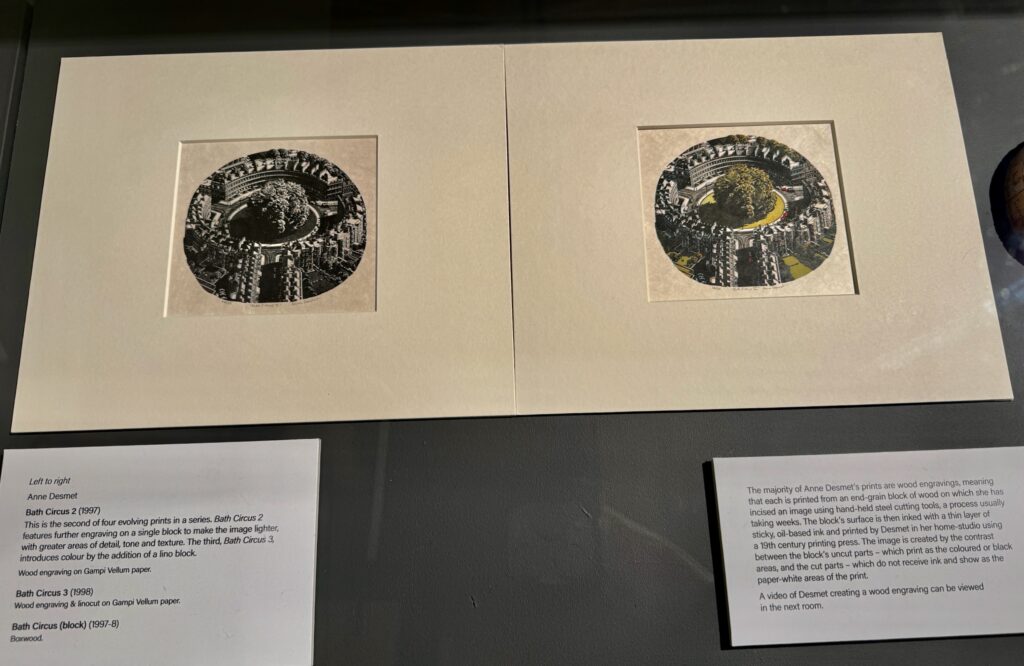
In addition to the woodcarving and linocuts she also creates mixed media collages.

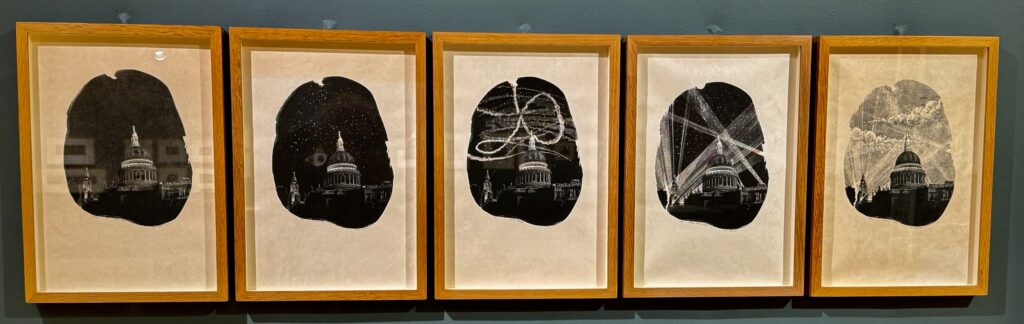
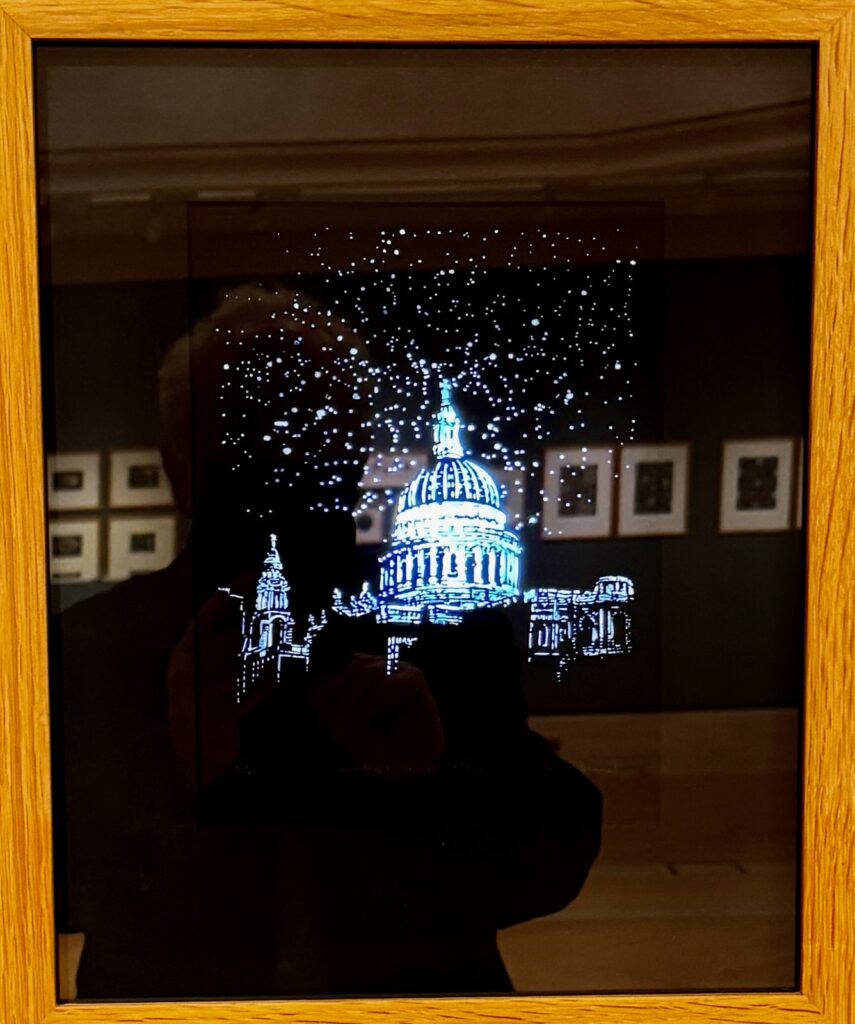
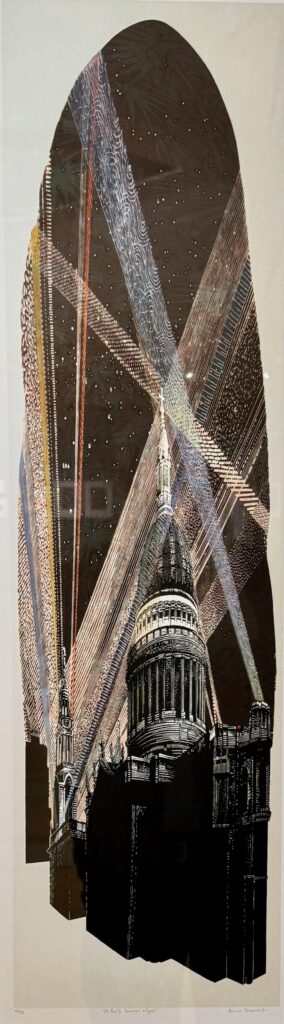
I’m delighted to say that St Paul’s Cathedral features strongly.

Wartime searchlights pierce the sky …

This is followed by five sequential wood engravings reflecting on the 75th anniversary of the Battle of Britain in 2015 …

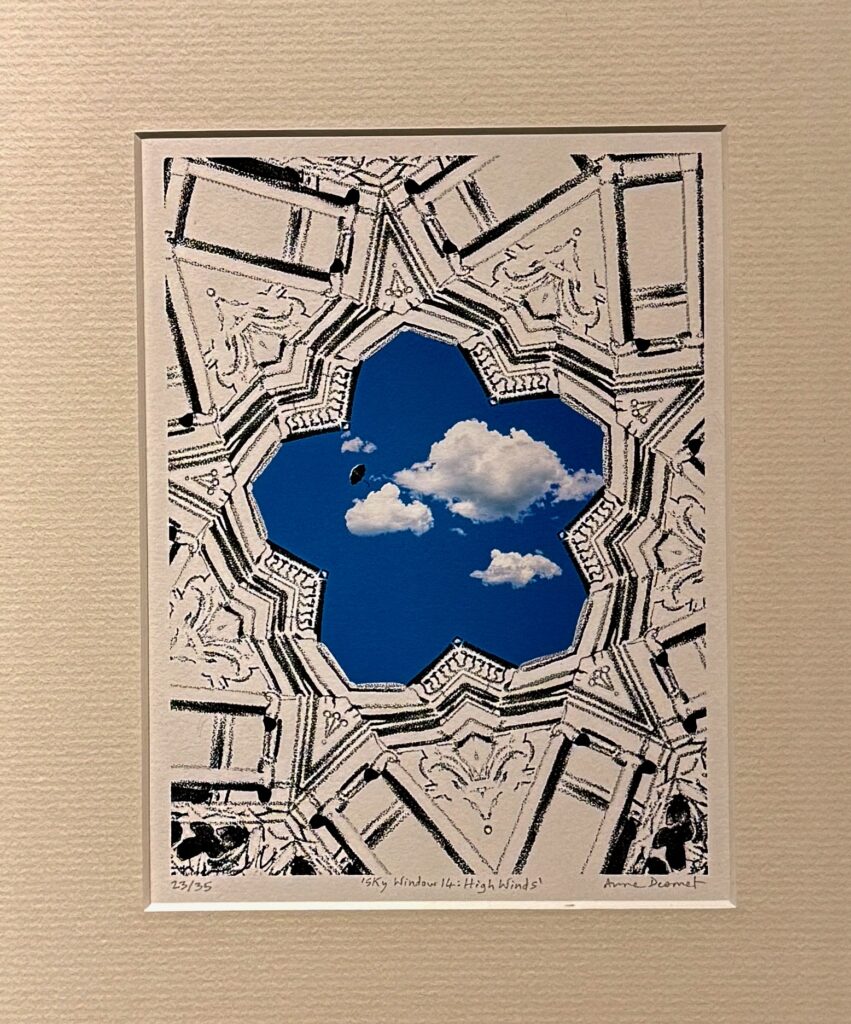
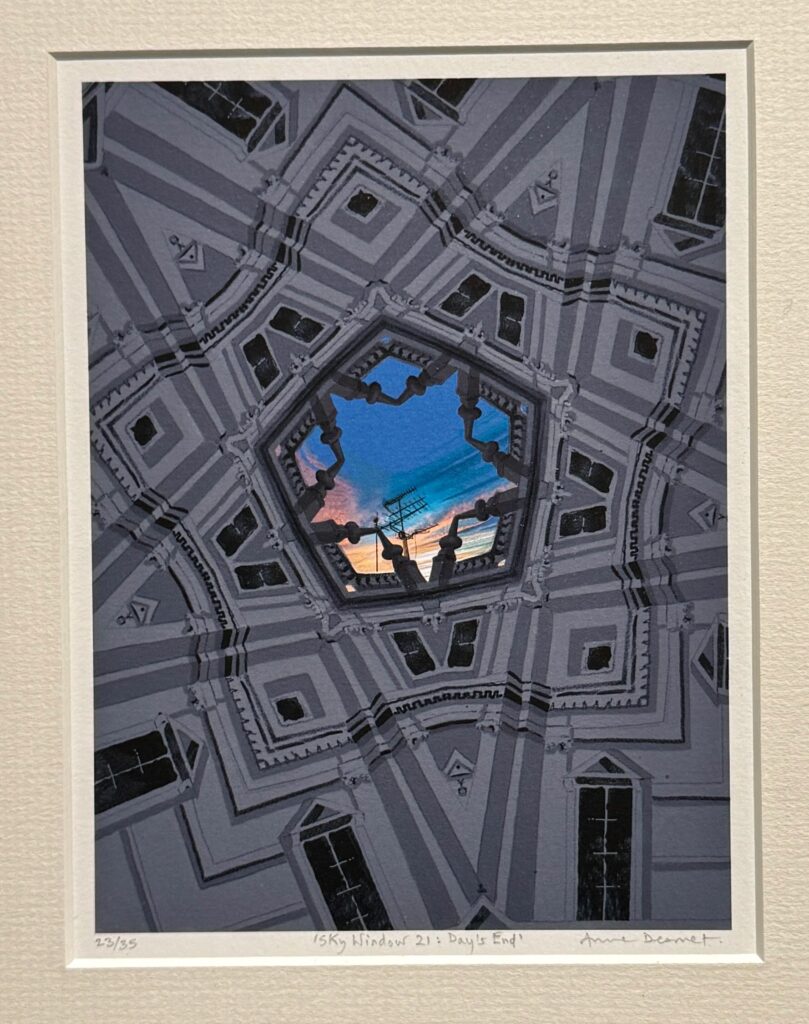
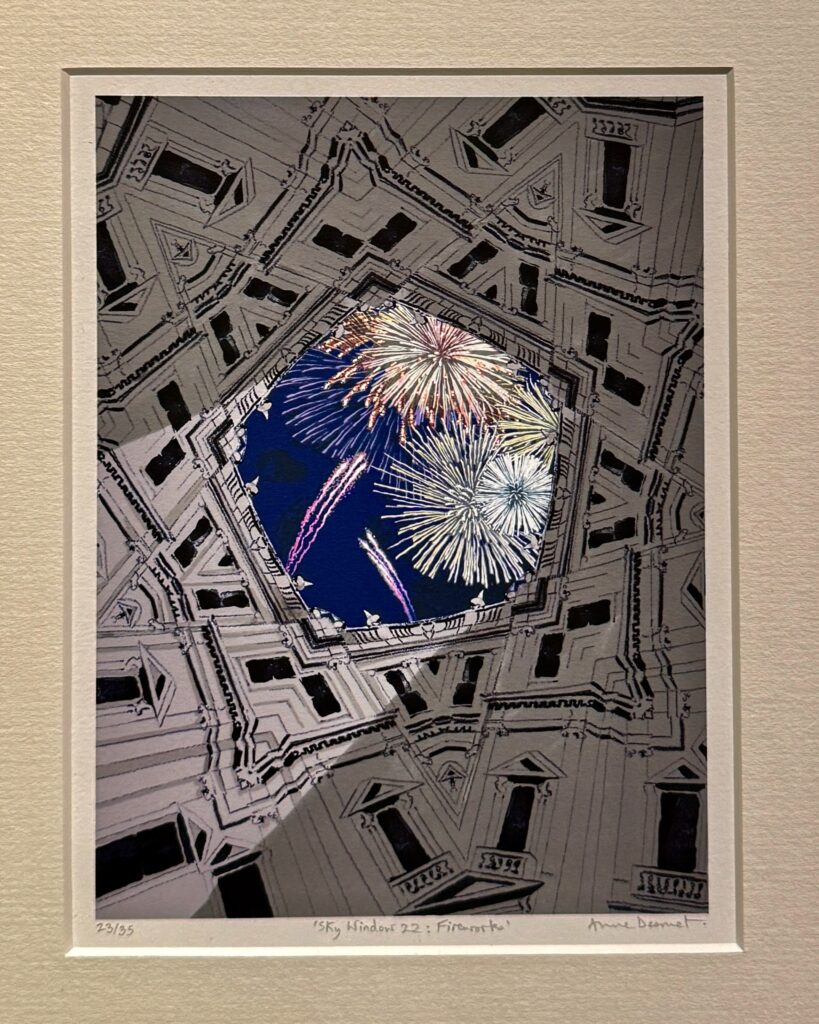
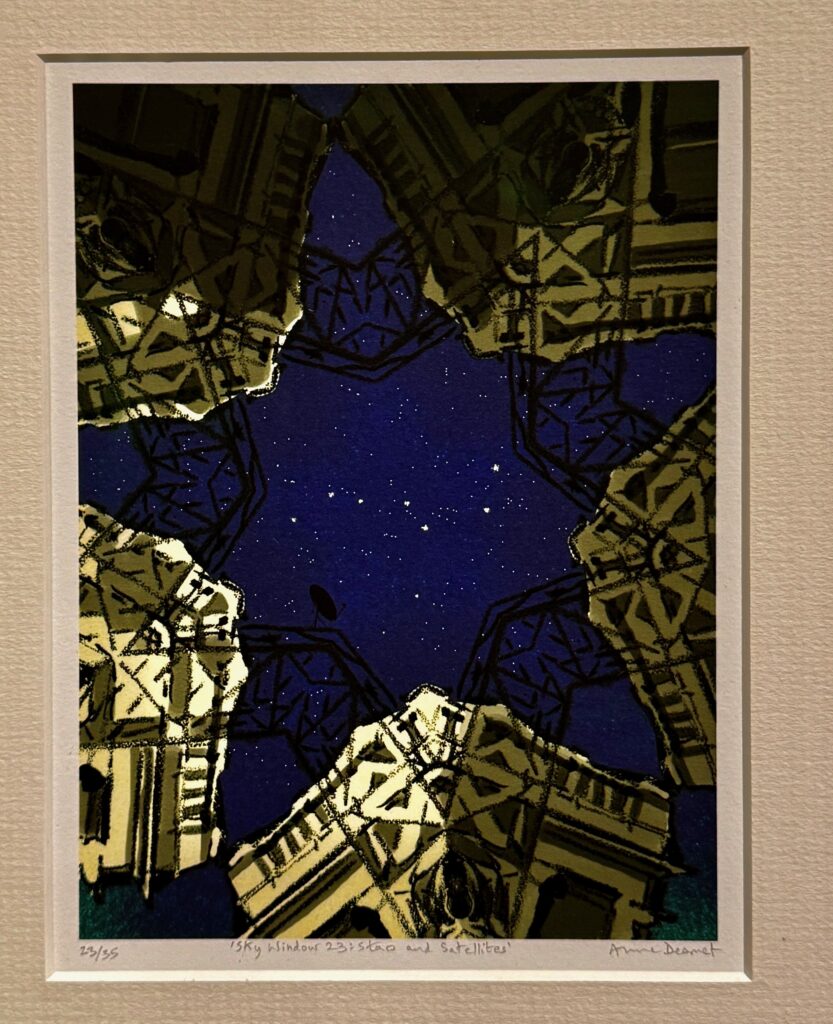
I really like this series of four entitled Sky Window …

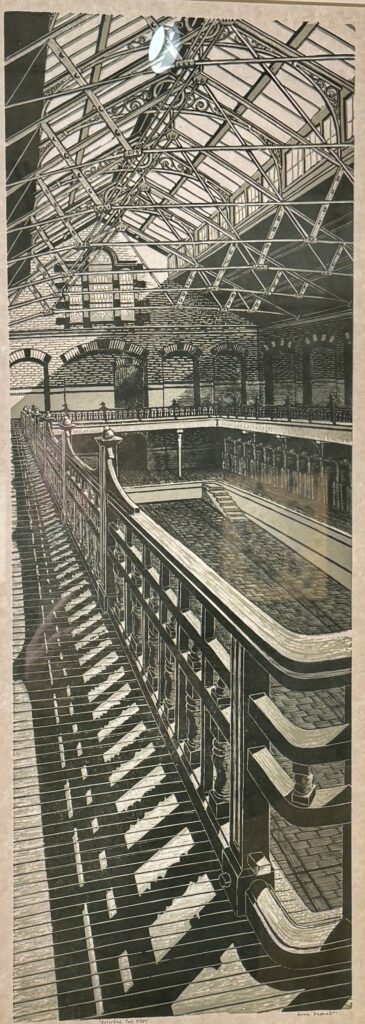
Deserted Pool …

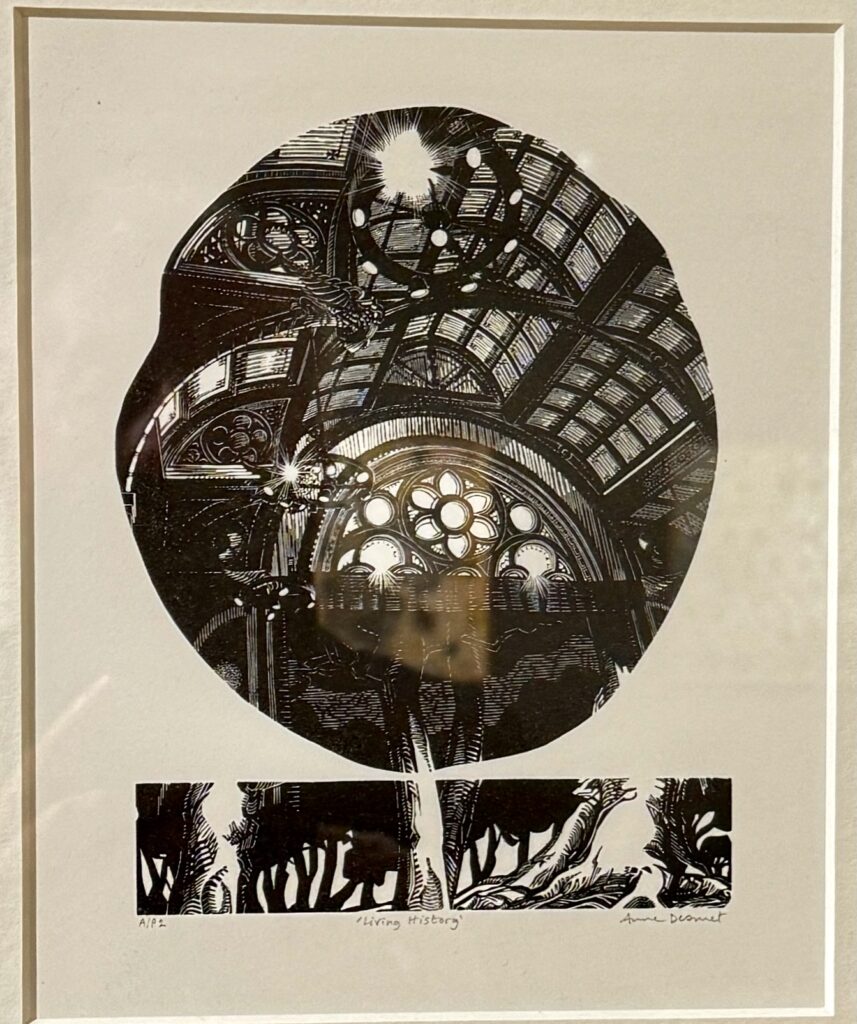
Living History …

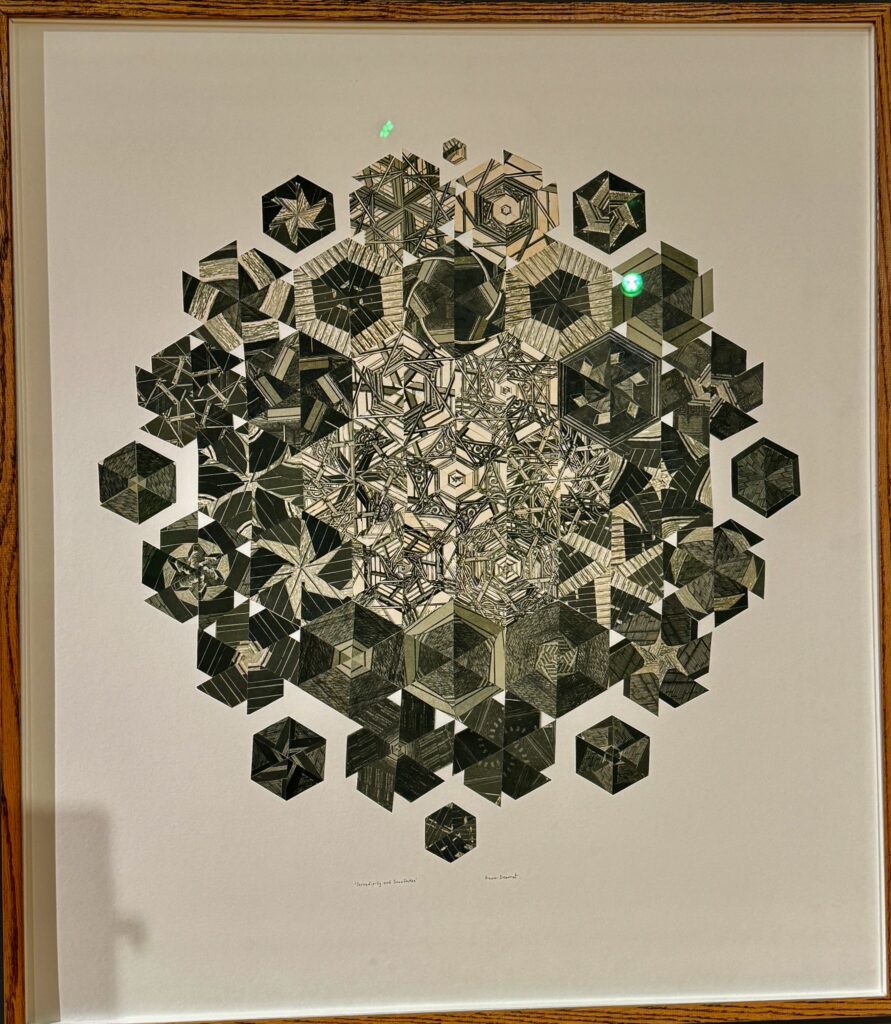
Between Order and Chaos …

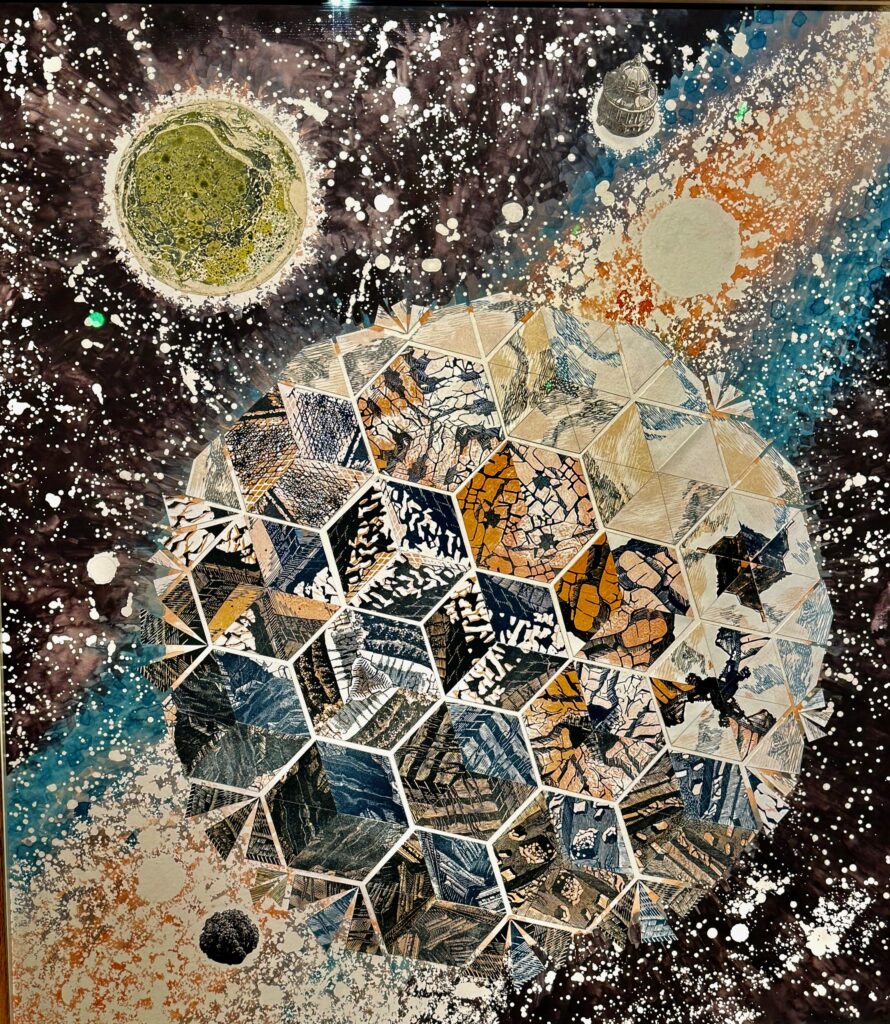
Out of this World …

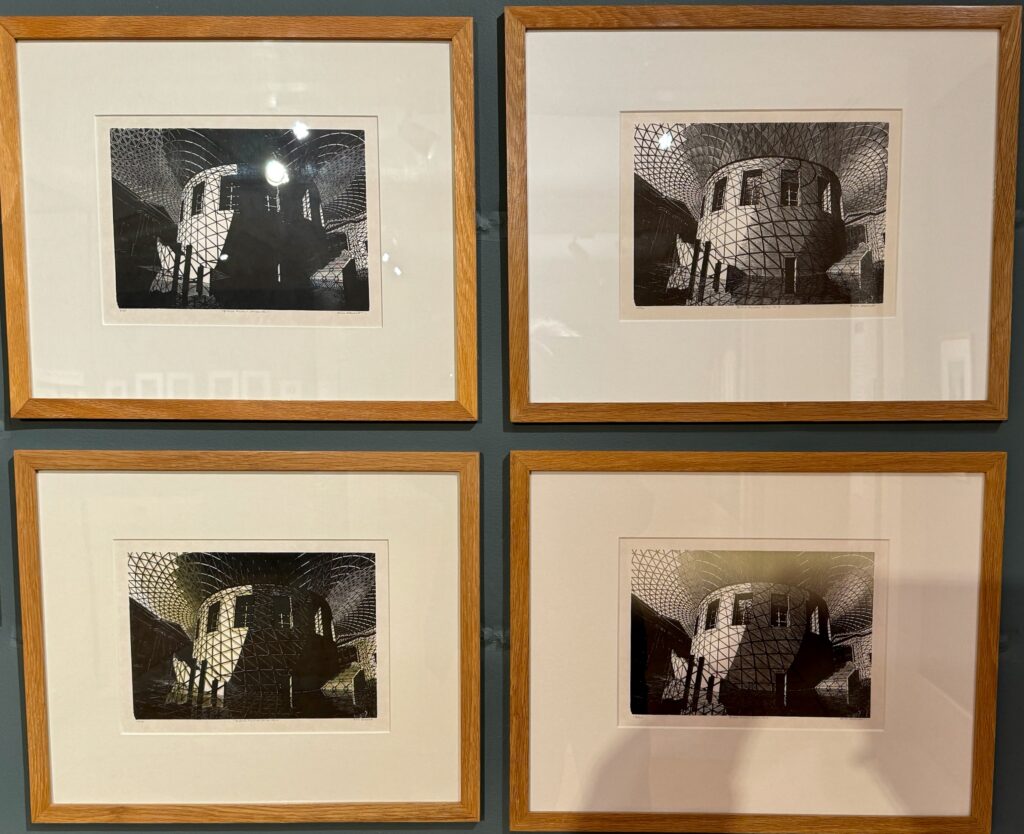
British Museum Diagonals …

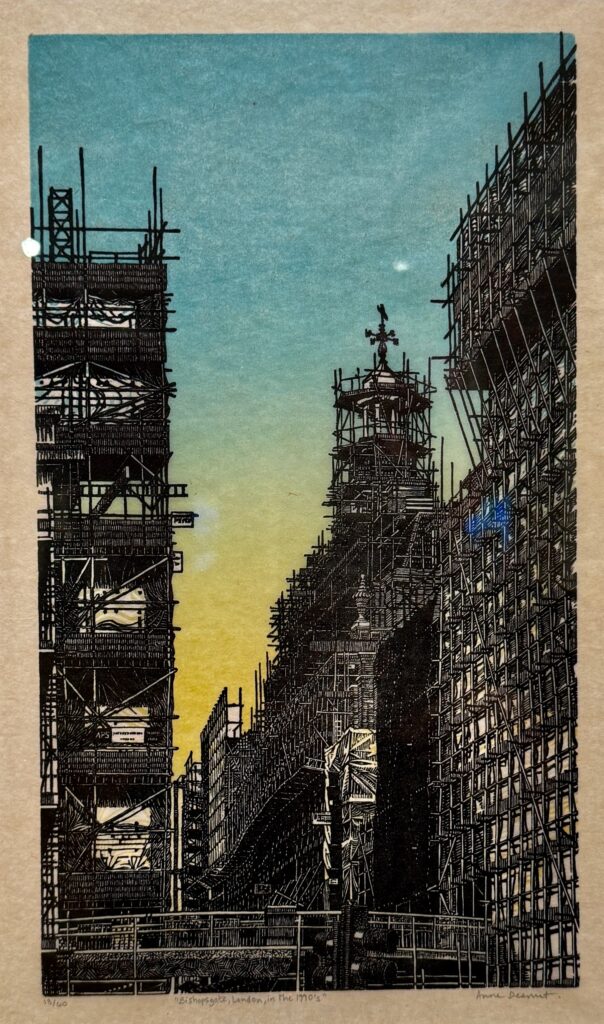
Under construction – Bishopsgate London in the 1990s …

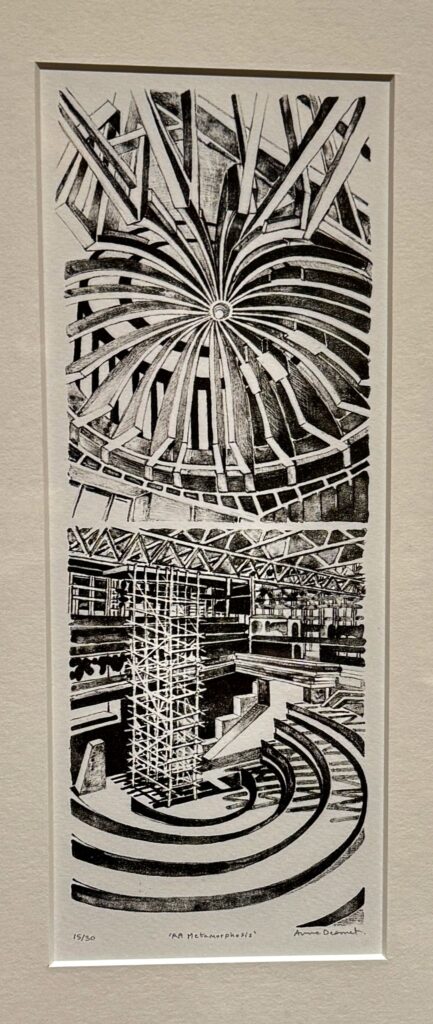
Royal Academy – RA Metamorphosis …

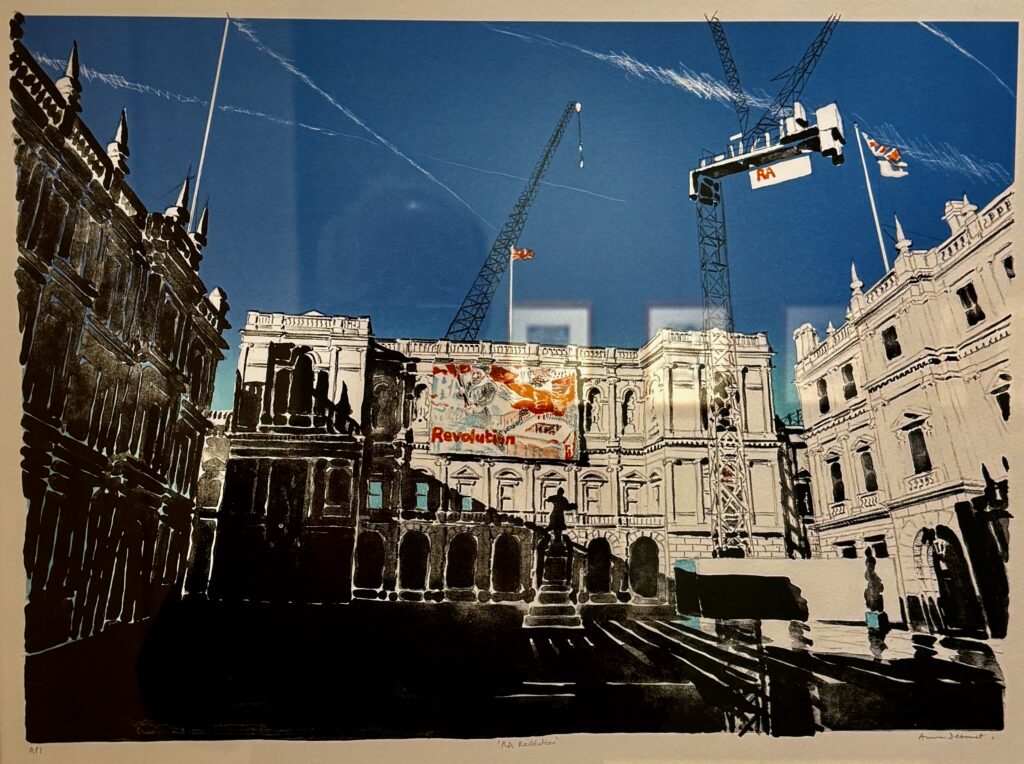
Royal Academy – RA Revolution …

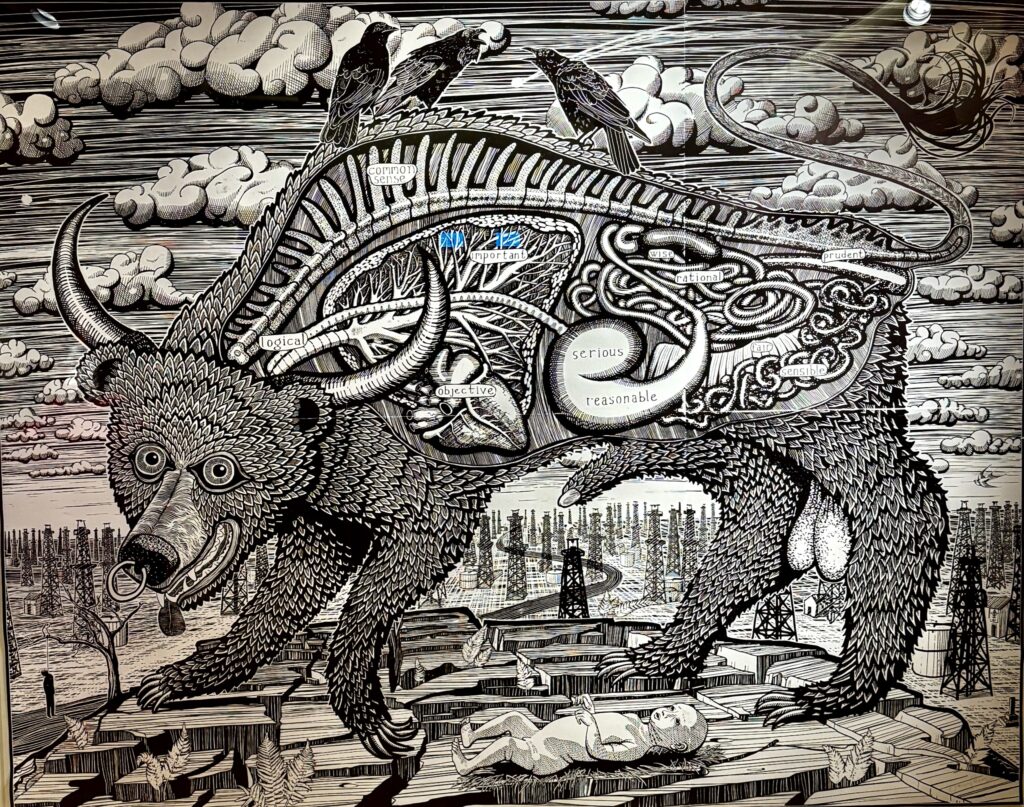
On my way out I paused for a good look at Grayson Perry’s 2016 woodcut Animal Spirit …

Inspired by London’s financial sector, you can read more about it here.

Remember you can follow me on Instagram …
https://www.instagram.com/london_city_gent

Shakespeare at the Guildhall Library.

Drawing on Guildhall Library’s remarkable Shakespeare collections, this exhibition examines the history of the printing of William Shakespeare’s plays, from the small ‘Quartos’ of the late 16th century and the Folios of the 17th century, to the reworking of the text in the 18th century and the rediscovery of the original texts in the 19th century …

Just inside the door you are greeted with an image of the funerary monument of William Shakespeare in Holy Trinity Church, Stratford-upon-Avon circa 1616-1622 …

There are a series of excellent, informative panels …

They range over subjucts such as the difference between a Folio and a Quarto …

… printing technology …

…and how the works were viewed and appreciated over the centuries …

The books, of course, are the stars of the show (and they do not all relate solely to Shakespeare).

It was not until some years after his death that the majority of his plays were gathered together, edited to create a definitive version of the text, and published 400 years ago in the now iconic First Folio, 1632.

And here it is in facsimile …

The engraved portriat by Martin Droeshout is one of the few likenesses with any claim to authenticity.

A facsimile of the Second Folio, also published in 1632 …

An original Third Folio, 1664 …

And the Fourth, 1685 …

The Library Shakespeare – An example of the late 19th century emergence of ‘gift books’, nicely bound with coloured illustrations …

There are other delights on display.

The Knight of the Burning Pestle by Francis Beaumont, printed in 1613 …

An 1853 spoof comic version of Macbeth Macbeth Travestie. Macbeth somewhat removed from the text of Shakespear: in two acts …

There are almost thirty items in the exhibition …

… and there is a splendid free guide …

There is also an interesting photowall showing some of the Guildhall Library’s other treasures …

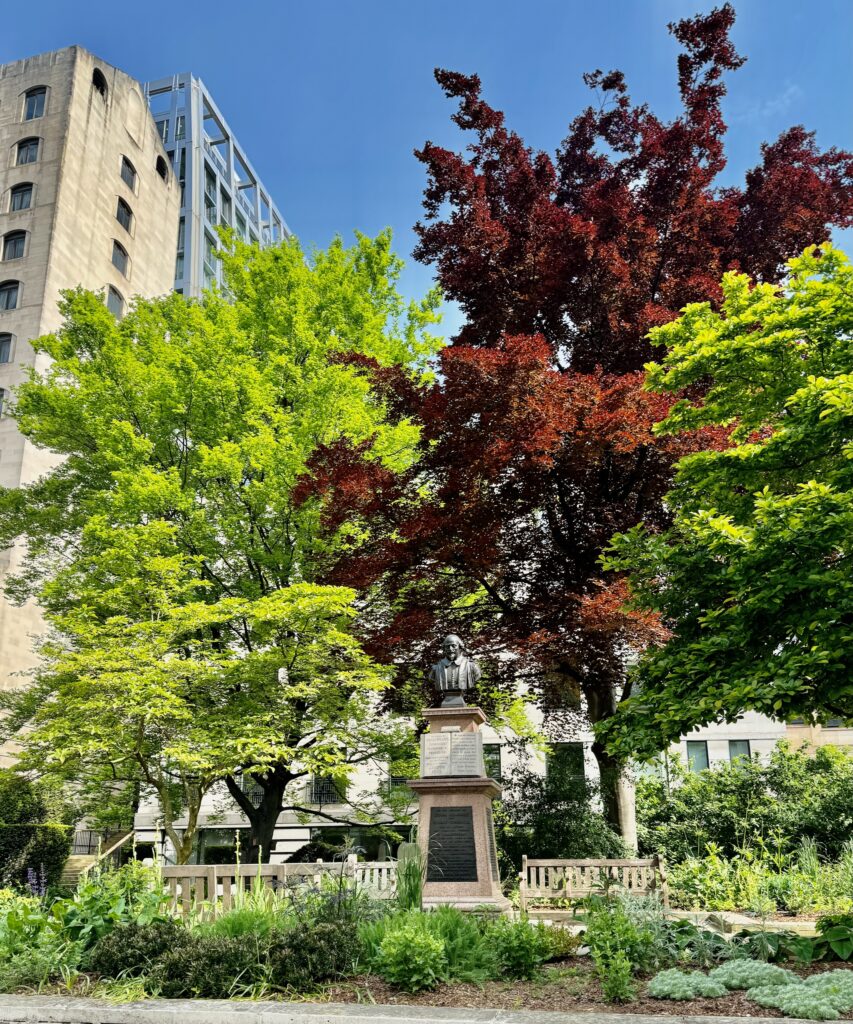
After you leave the building, walk across the road to the little green space on the corner of Aldermanbury and Love Lane …

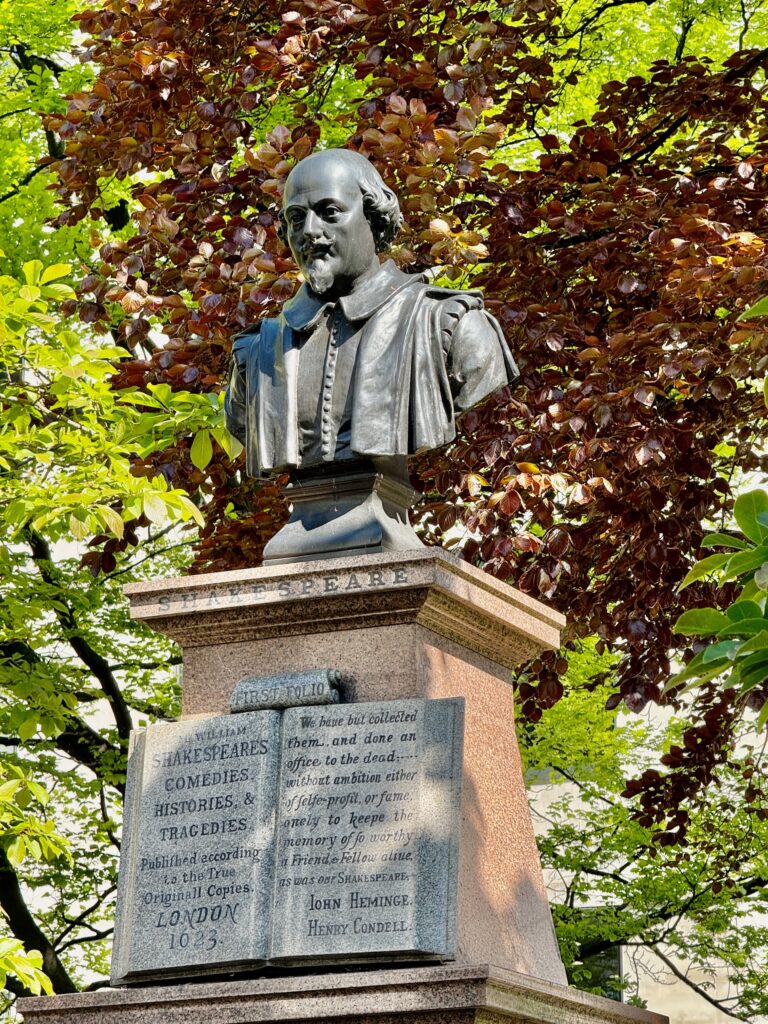
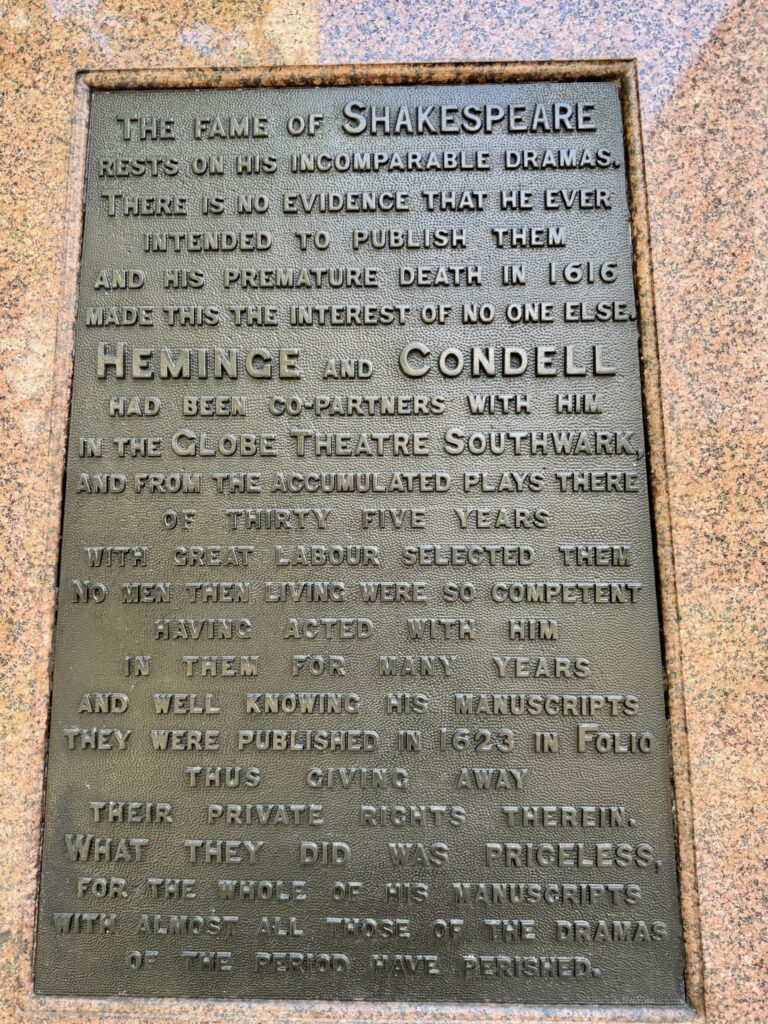
Constructed in 1896, this pink granite monument stands within the former churchyard of St Mary Aldermanbury. Its primary purpose is to honour the First Folio of Shakespeare’s plays, but it also serves as a tribute to Henry Condell and John Heminge, two associates of the Bard who worked with him at the Globe …

They played a cucial role in compiling and printing the First Folio after his death in 1616 …

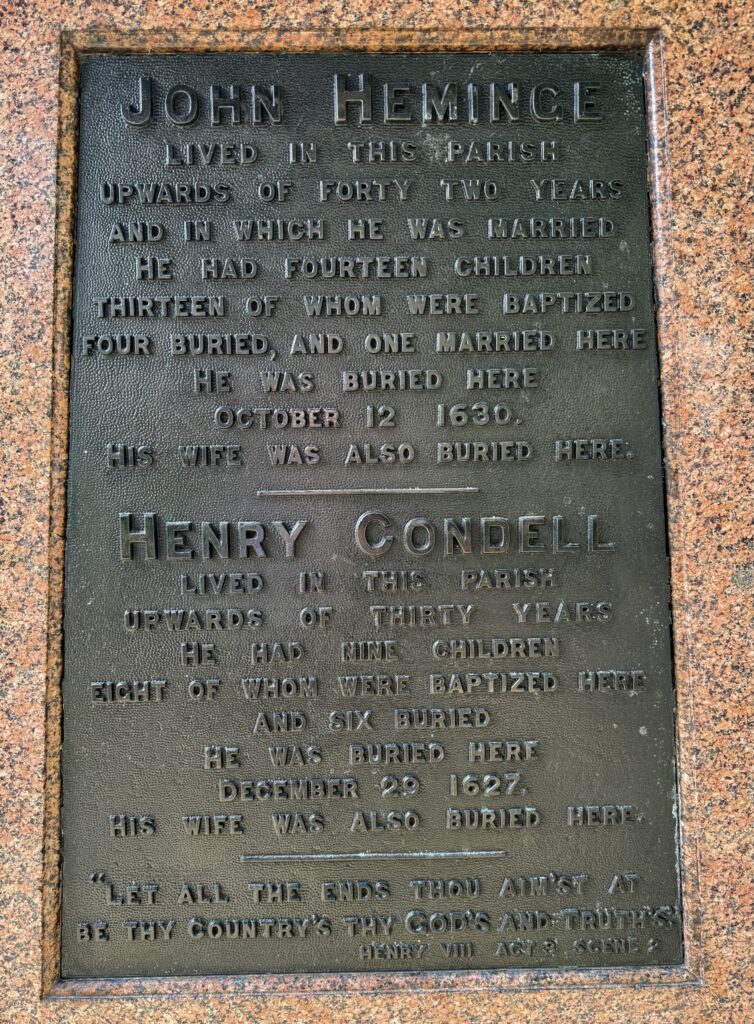
Both lived nearby and were buried in this churchyard …

The church was gutted in the Blitz with only the walls remaining standing. The stones were subsequently transported to Fulton, Missouri in 1966 and rebuilt in the grounds of Westminster College as a memorial to Winston Churchill who had made his Sinews of Peace, “Iron Curtain” speech in the College gymnasium in 1946.

Remember you can follow me on Instagram …
https://www.instagram.com/london_city_gent

Page 19 of 23

Powered by WordPress & Theme by Anders Norén

Symbols & Secrets
Privacy Overview

This website uses cookies so that we can provide you with the best user experience possible. Cookie information is stored in your browser and performs functions such as recognising you when you return to our website and helping our team to understand which sections of the website you find most interesting and useful.