Whenever I’m stuck for something to write about the Guildhall Gallery often comes to my rescue.
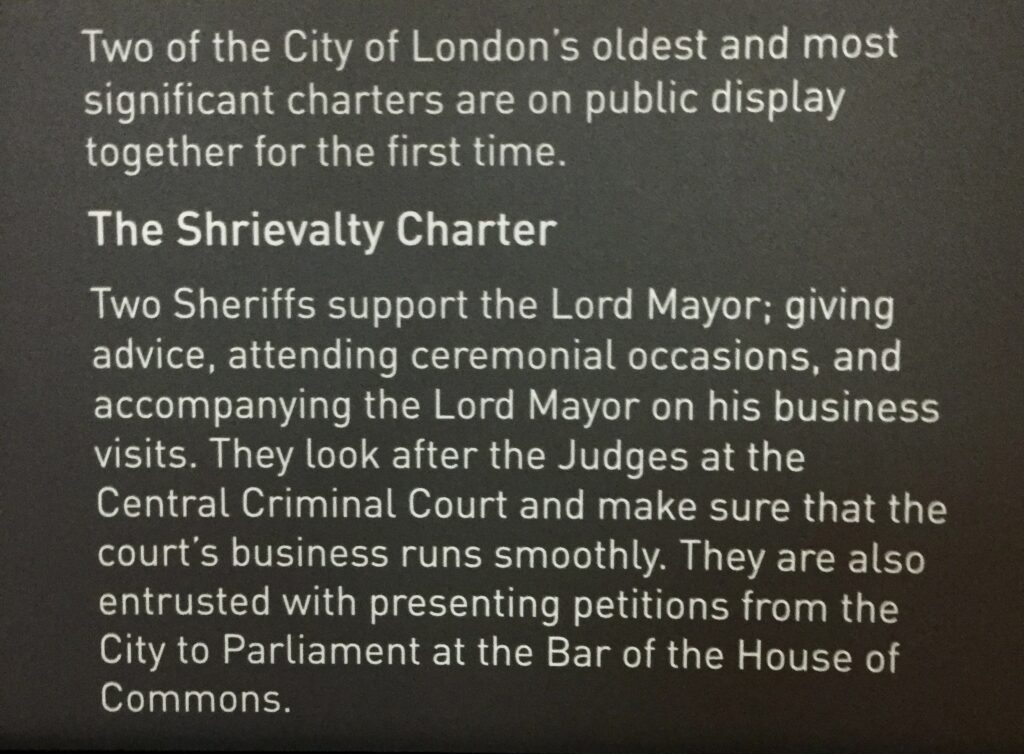
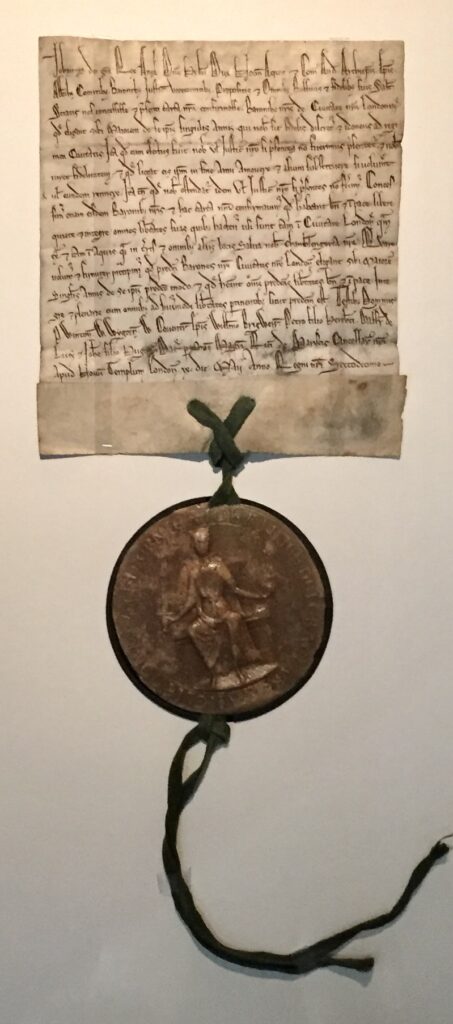
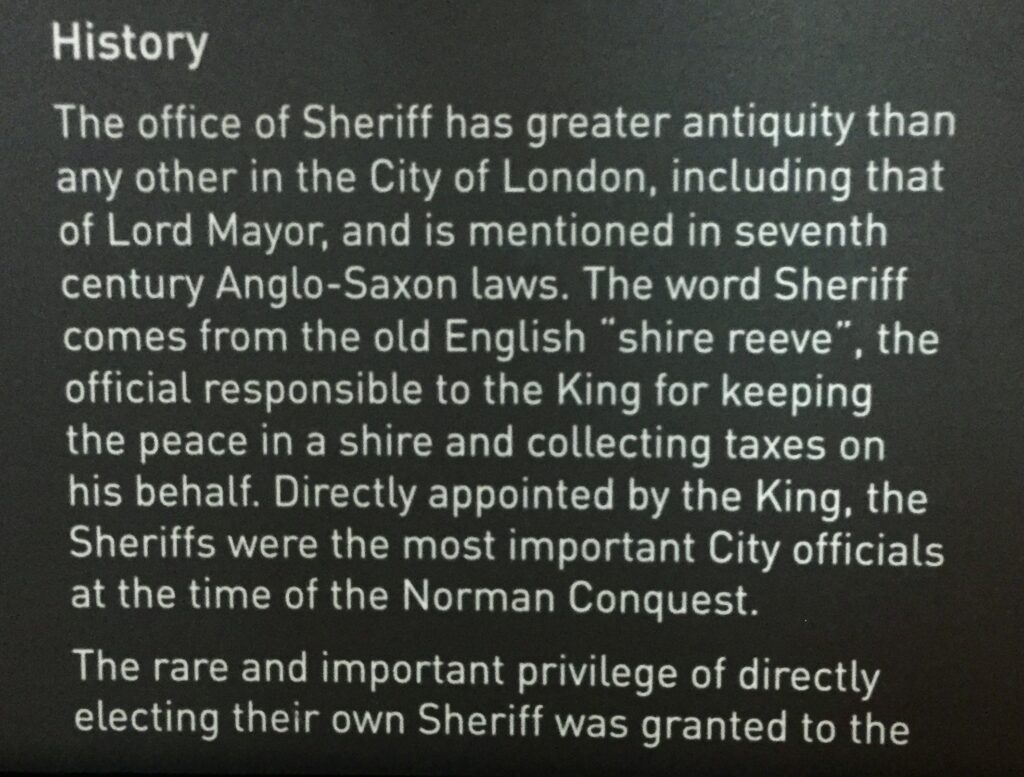
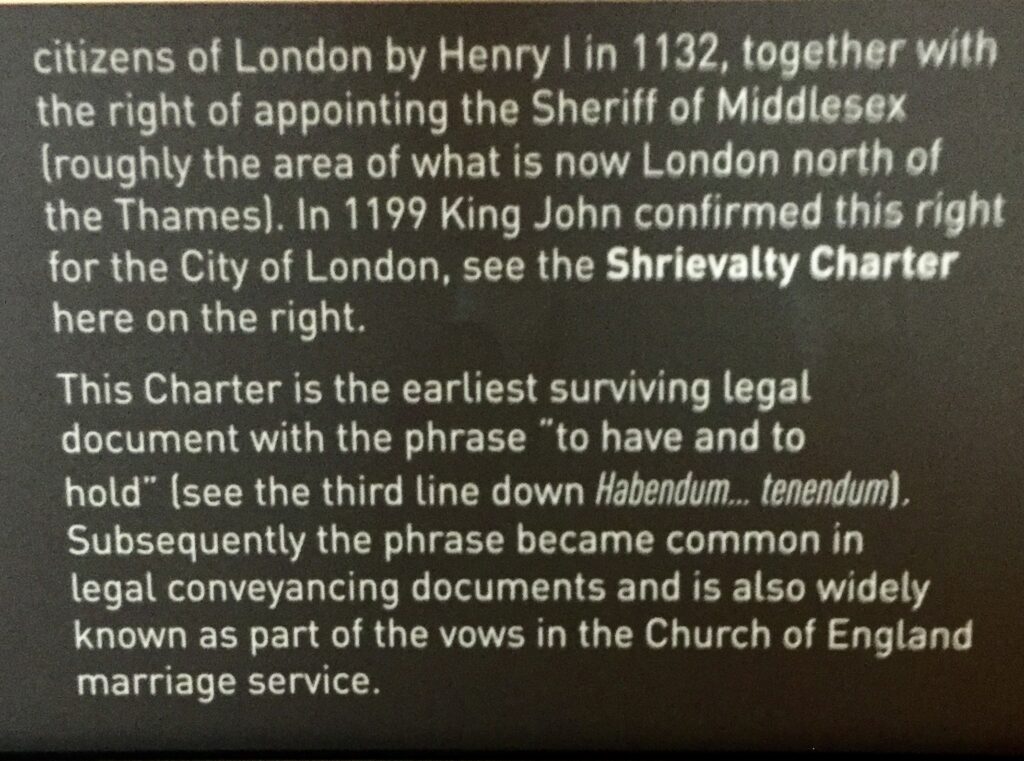
I visited the little Heritage Gallery on Monday and what I found was very interesting. Rather than rewrite all the information on the plaques I hope you won’t mind if I simply reproduce them below.
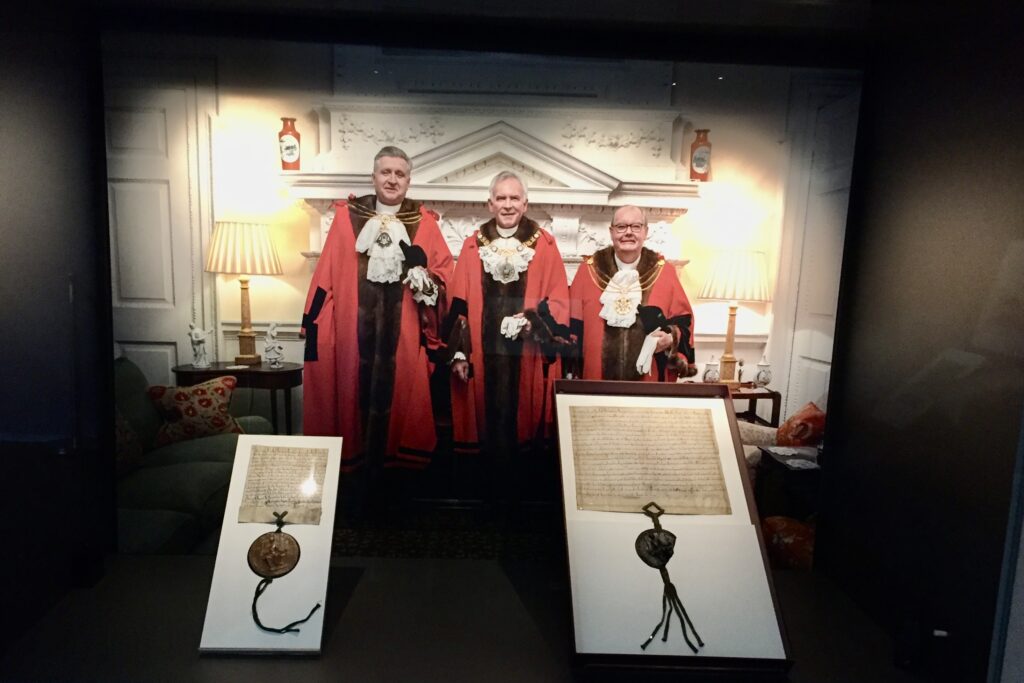
Look at these fine fellows …
The Right Honourable the Lord Mayor of the City of London, Nicholas Lyons, and the Sheriffs, Alderman Alastair King and Andrew Marsden for the period 2022-2023.
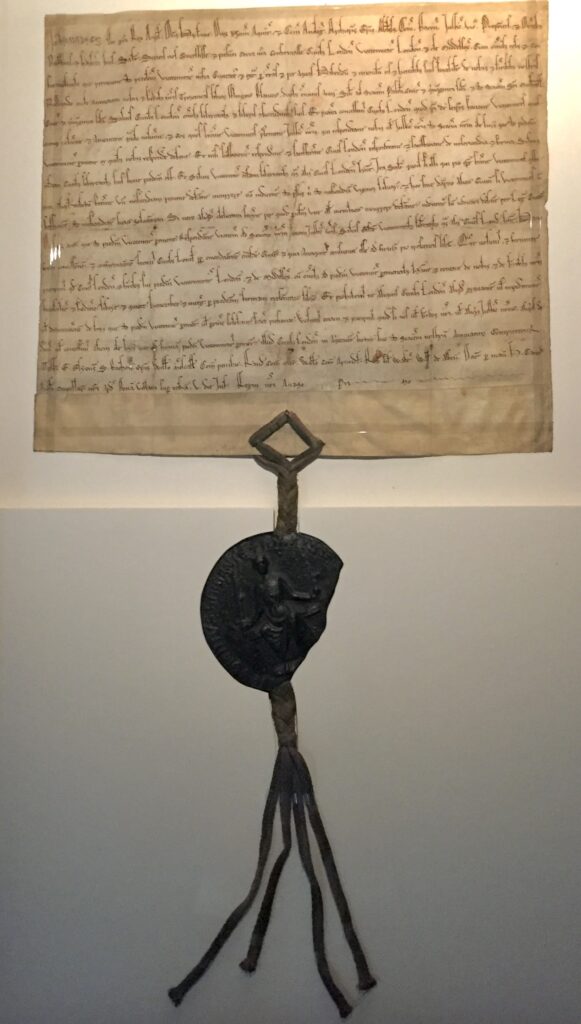
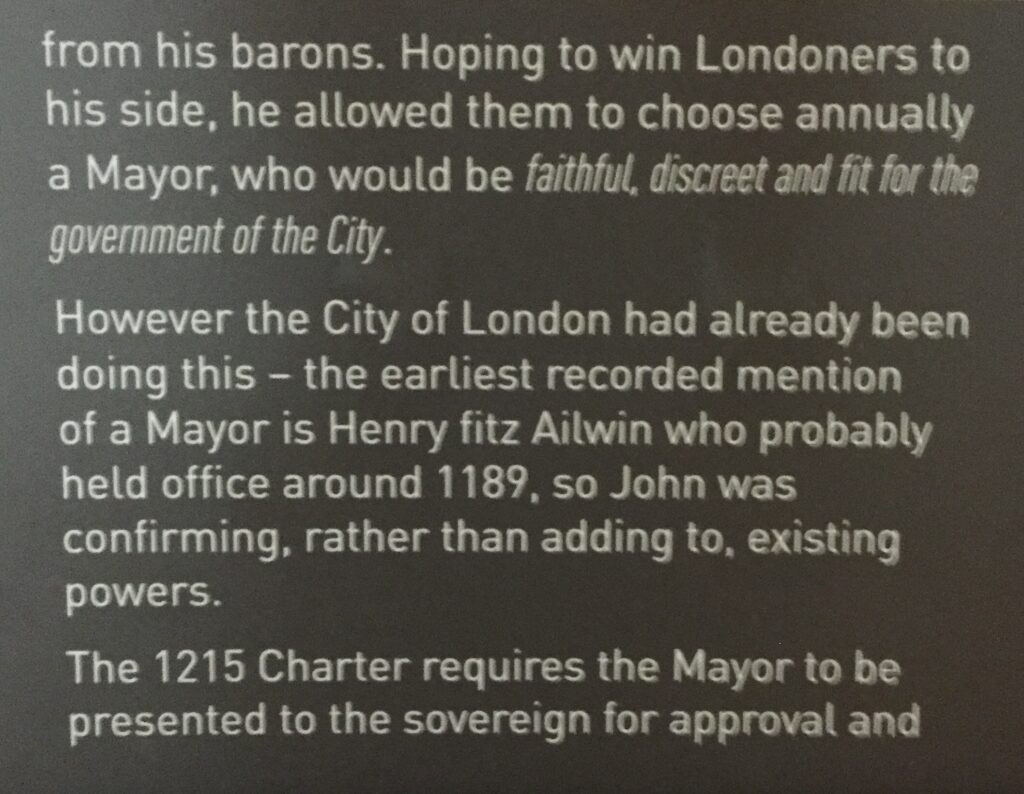
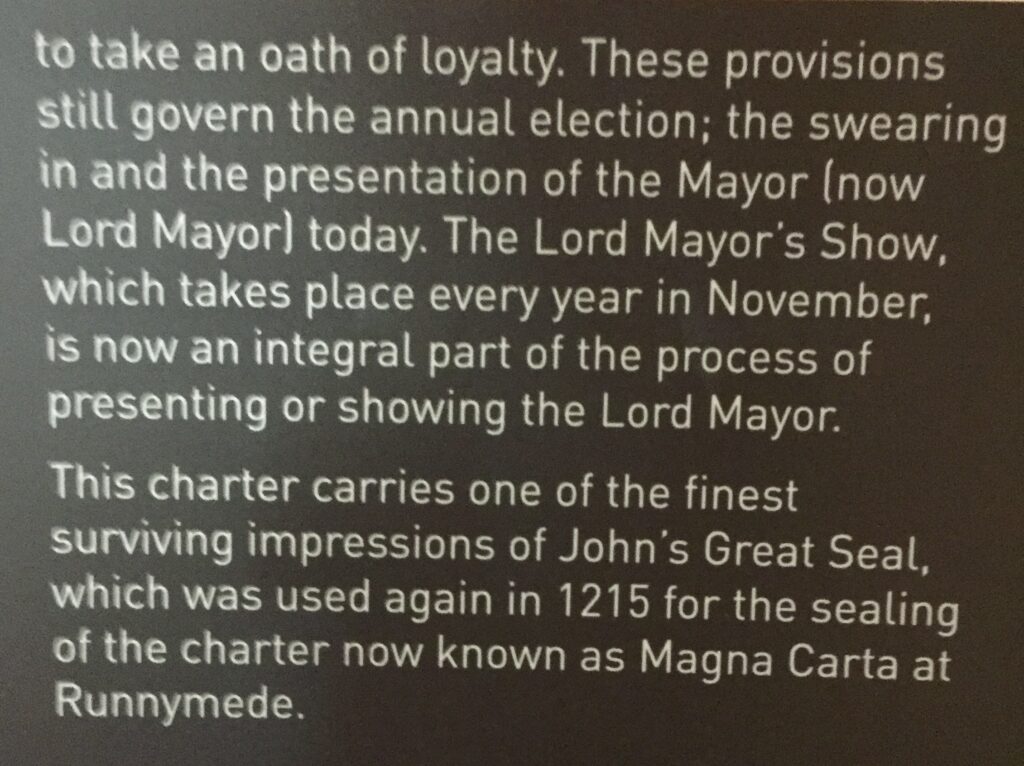
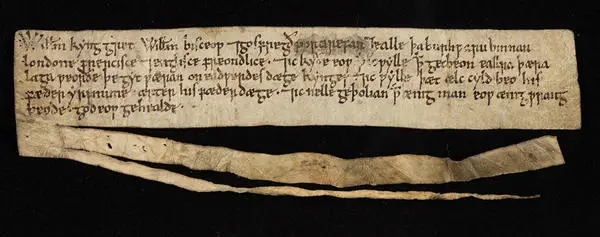
The Mayoralty Charter …
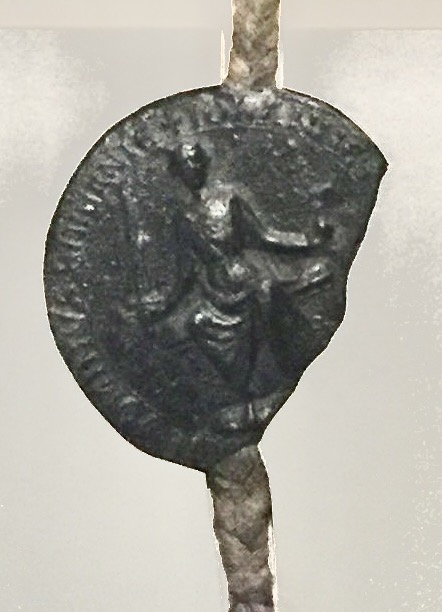
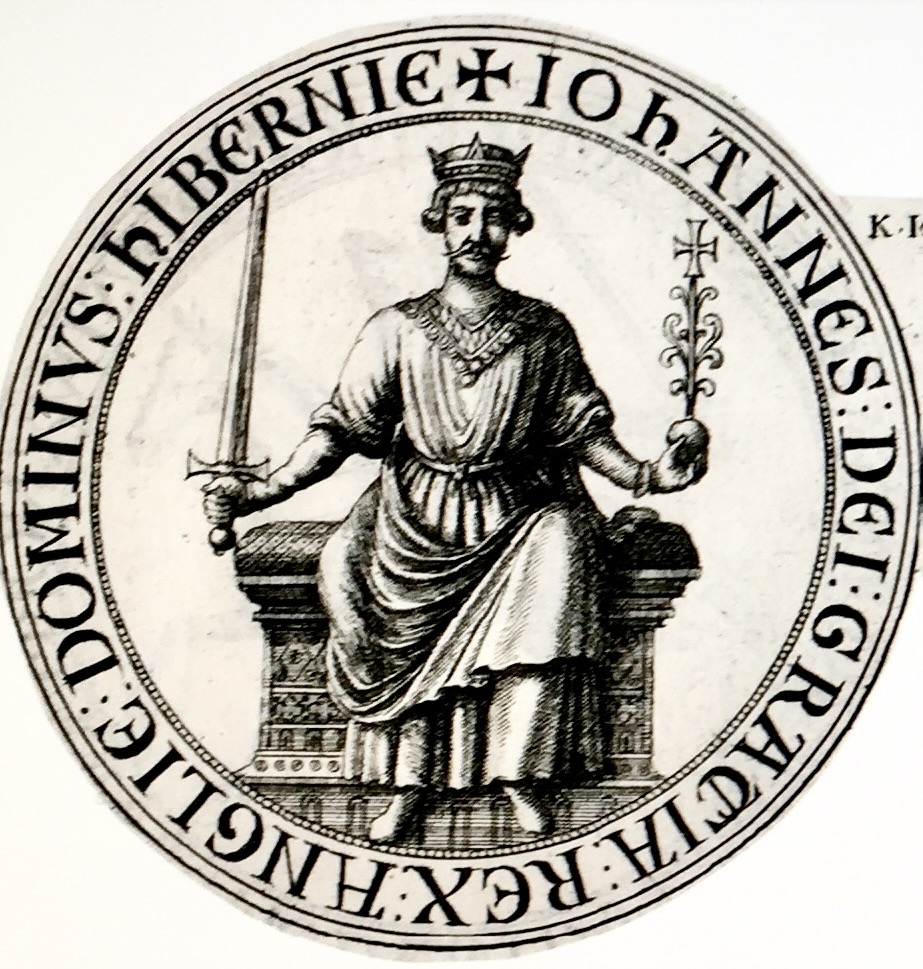
In 1215 King John was faced with a major rebellion …
An etching of the Magna Carta seal which I found on the Internet …
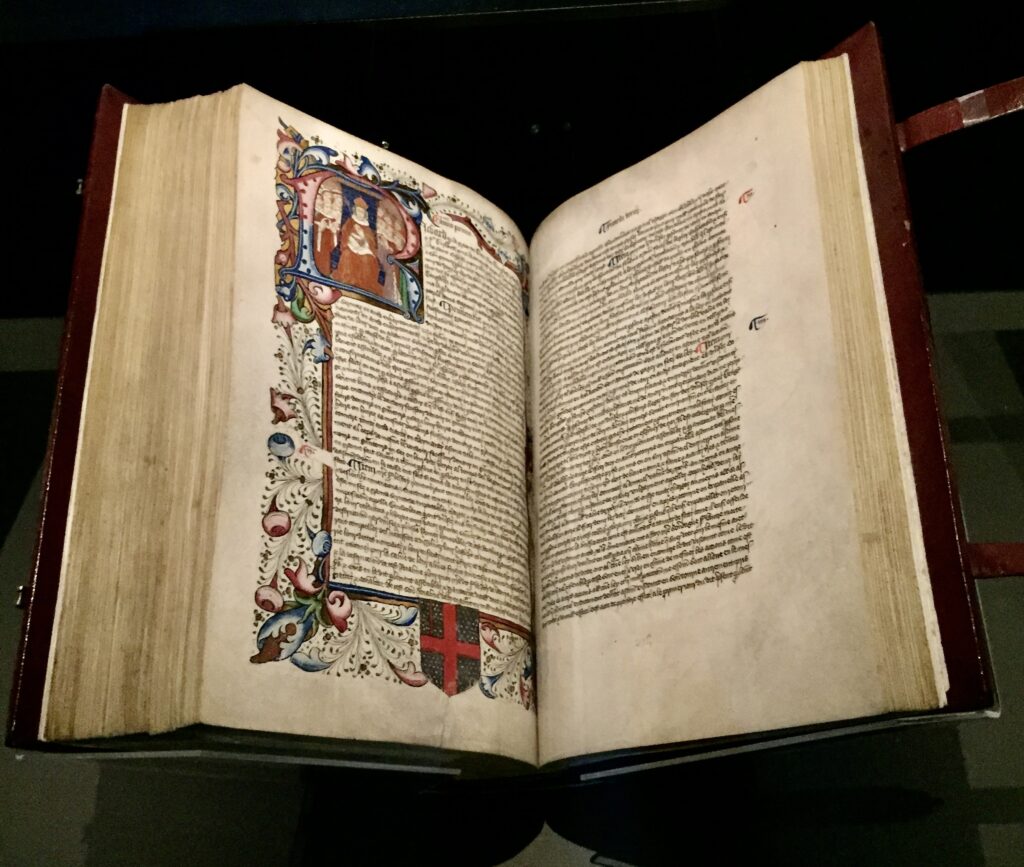
Also on view is the Cartae Antiquae …
Dating from the 1400s, this beautifully illustrated book records charters and statutes covering laws enacted from the reign of Edward III (1327 onwards) to the accession of Henry VII in 1485. City officials used this book as an essential reference tool as they scrutinised statute and safeguarded the rights of the medieval City. There is a portrait of each king on the first page of the statutes for his reign; the page open shows the portrait of Richard III, one of the best known medieval monarchs.
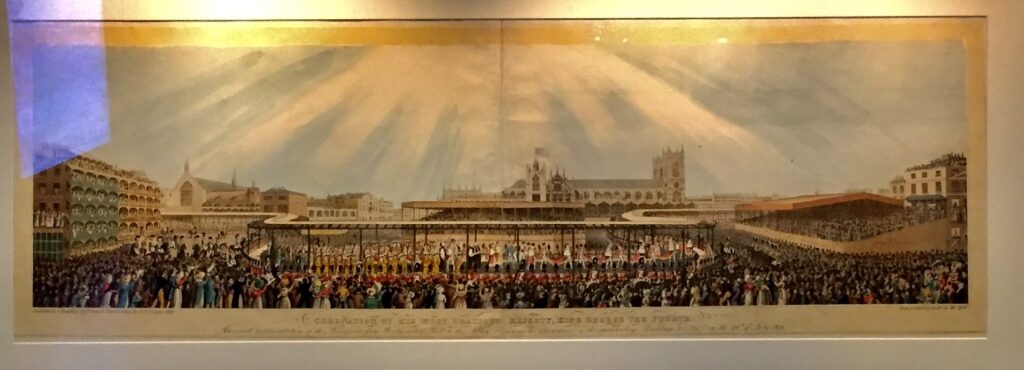
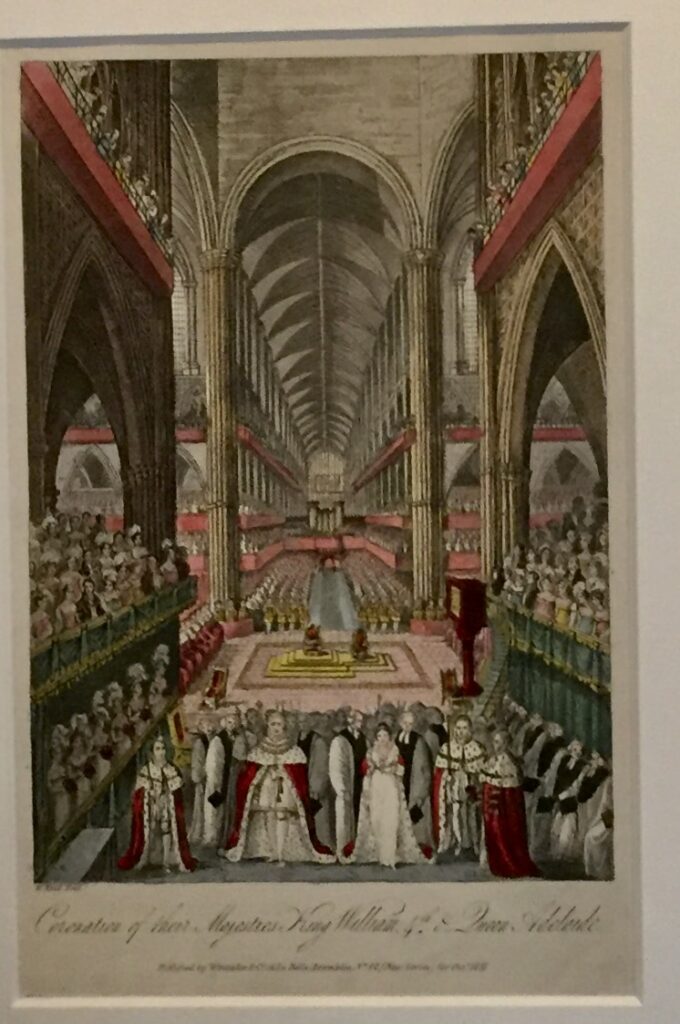
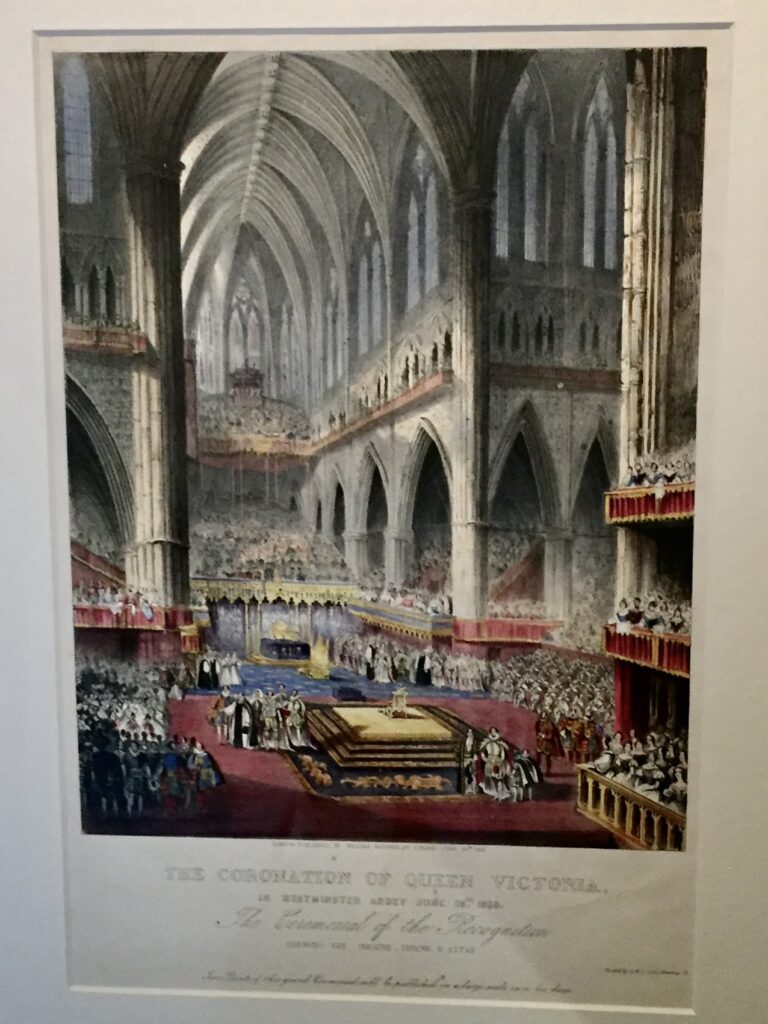
In a nearby display case are prints of Coronations in the 19th century.
George IV on 19 July 1821 …
William IV on 8 September 1831 …
And finally Queen Victoria on 28 June 1838 …
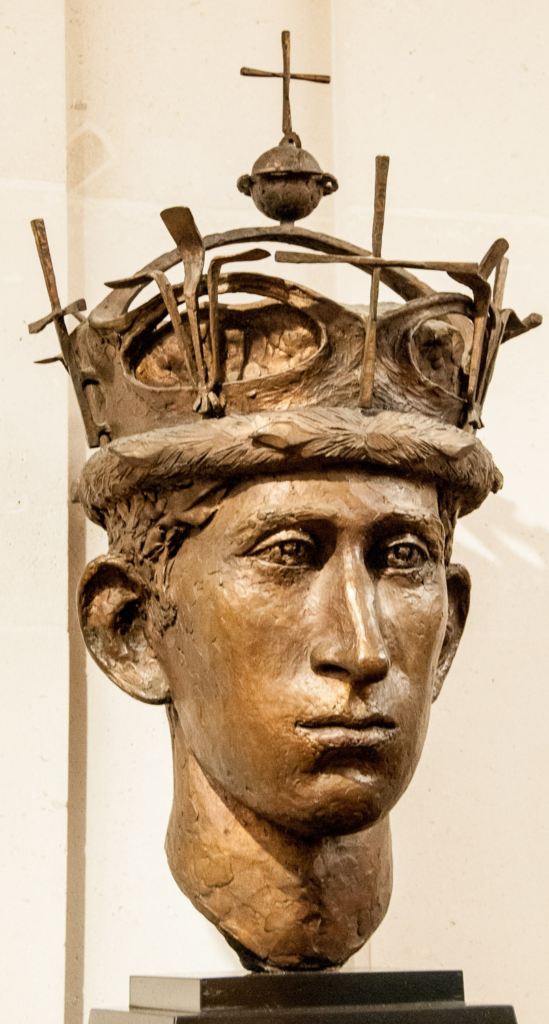
As you leave the exhibition space and head for the exit, take a moment to inspect the David Wynne sculpture of Prince Charles as he then was …
He just doesn’t look happy, does he? Maybe he wasn’t too keen on the rather spiky modern version of a coronet that he is wearing here at his 1969 Investiture as Prince of Wales. It was designed by a committee chaired by his auntie Princess Margaret’s husband, Antony Armstrong-Jones (later Lord Snowdon). The globe and cross at the top was originally intended to be solid gold but the committee concluded that this would be far too heavy. The solution was to use a gold plated ping-pong ball – which is why I always smile at this portrayal of the Prince (and possibly why he doesn’t appear to have ever worn the item again).
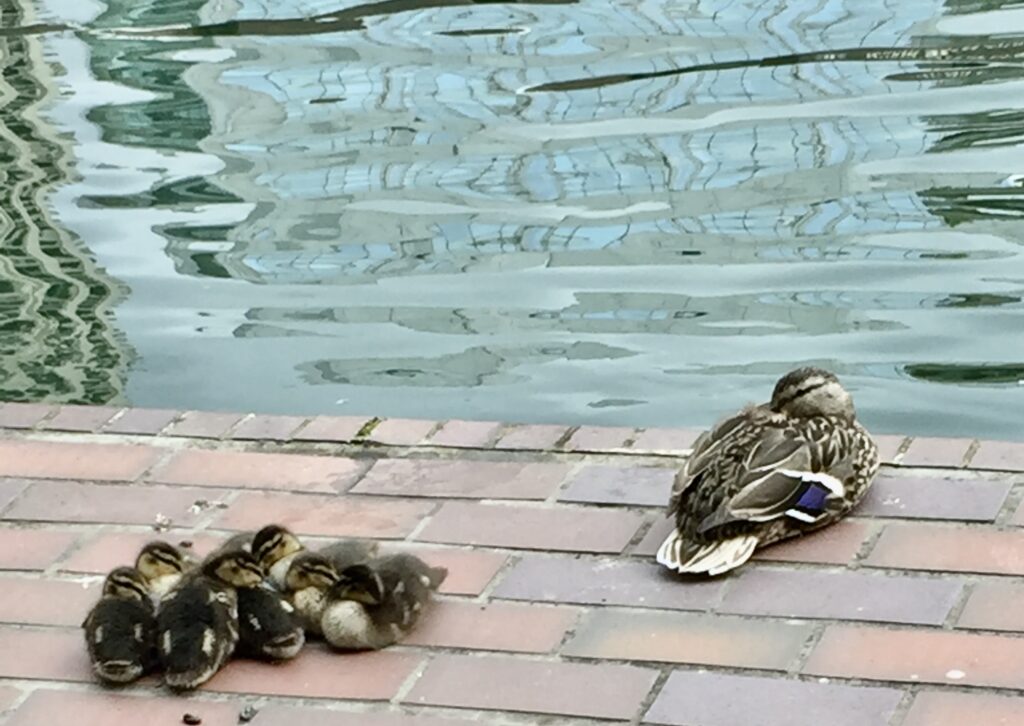
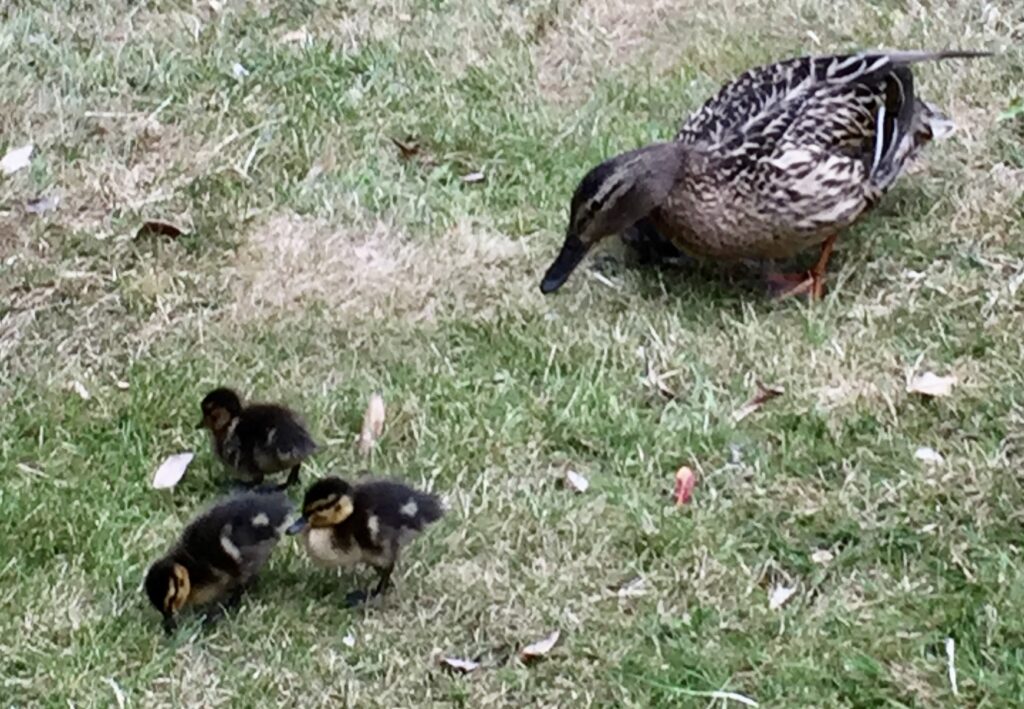
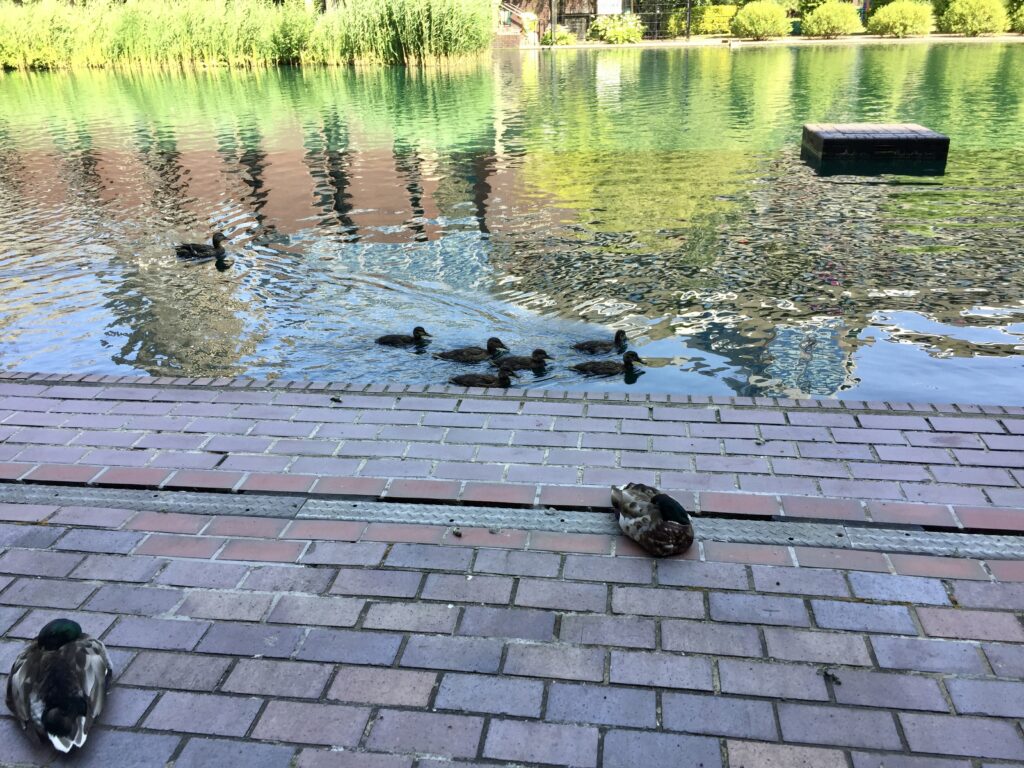
In other news, the Barbican duckling population seems to have thrived this year. I haven’t seen the heron lately – could that be the reason?
If you would like to follow me on Instagram here is the link …
Last week I set off without any particular purpose, seeking shapes, patterns and views that might look interesting as images.
It’s often just as fascinating to keep looking down as well as up and here are some of the curiosities I came across in Spitalfields.
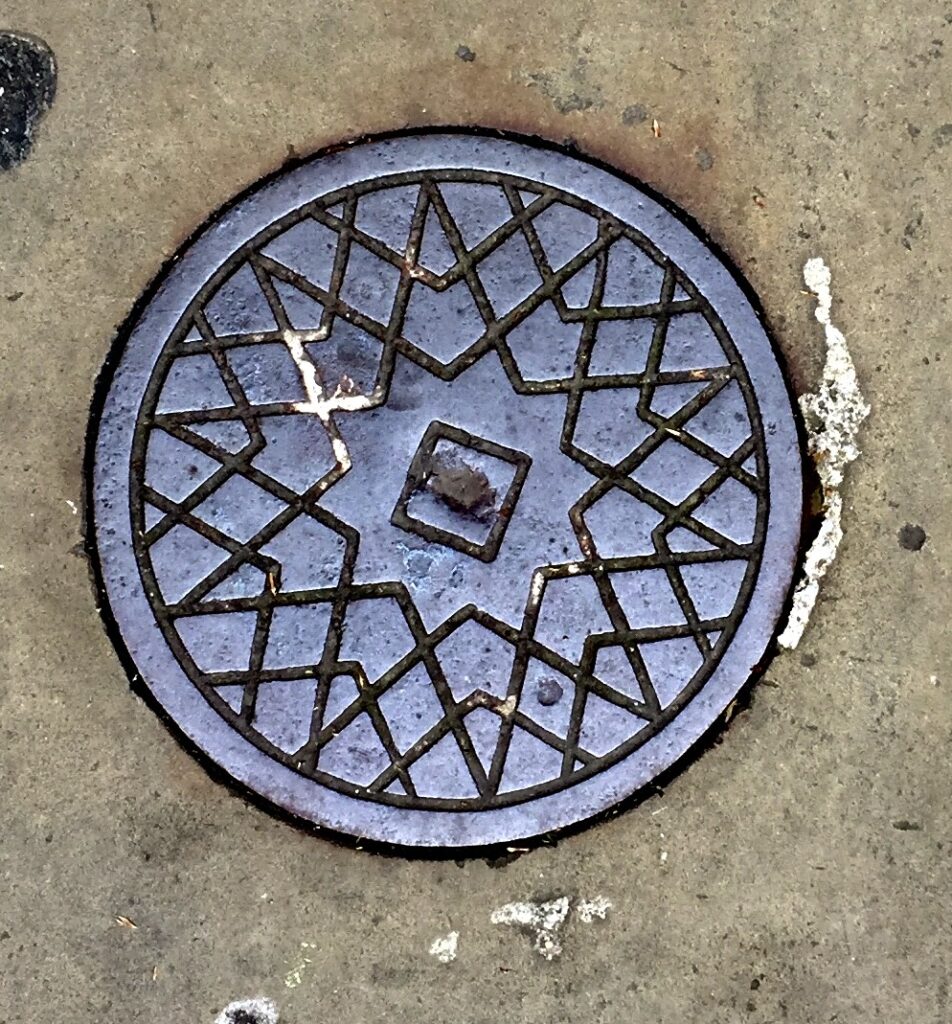
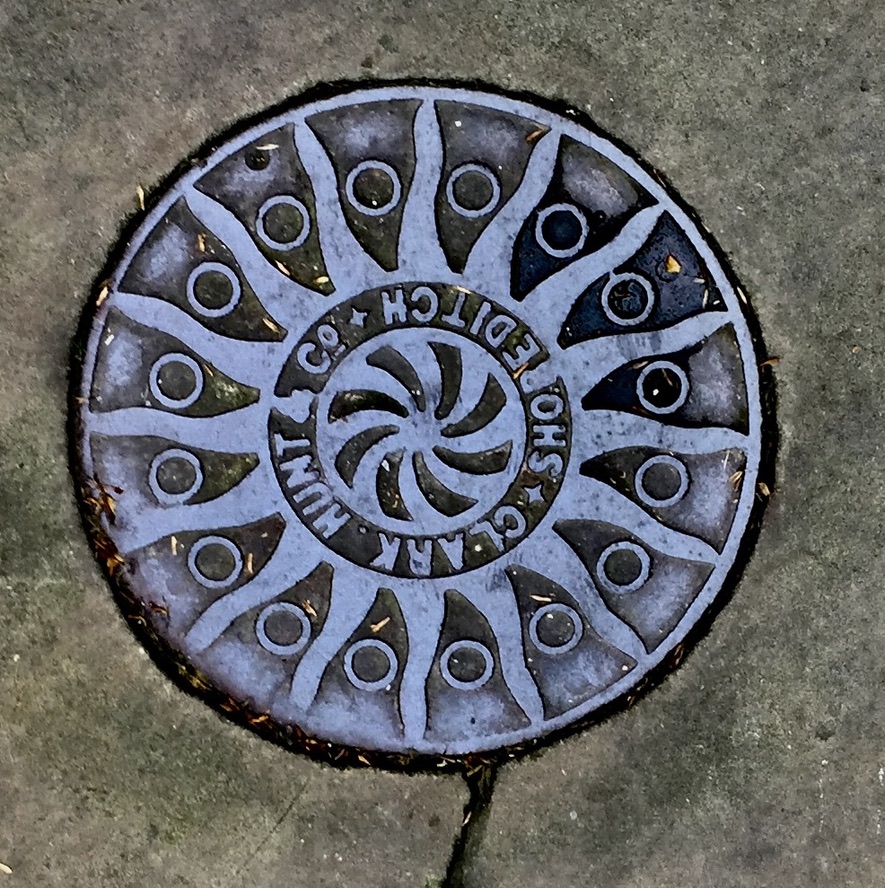
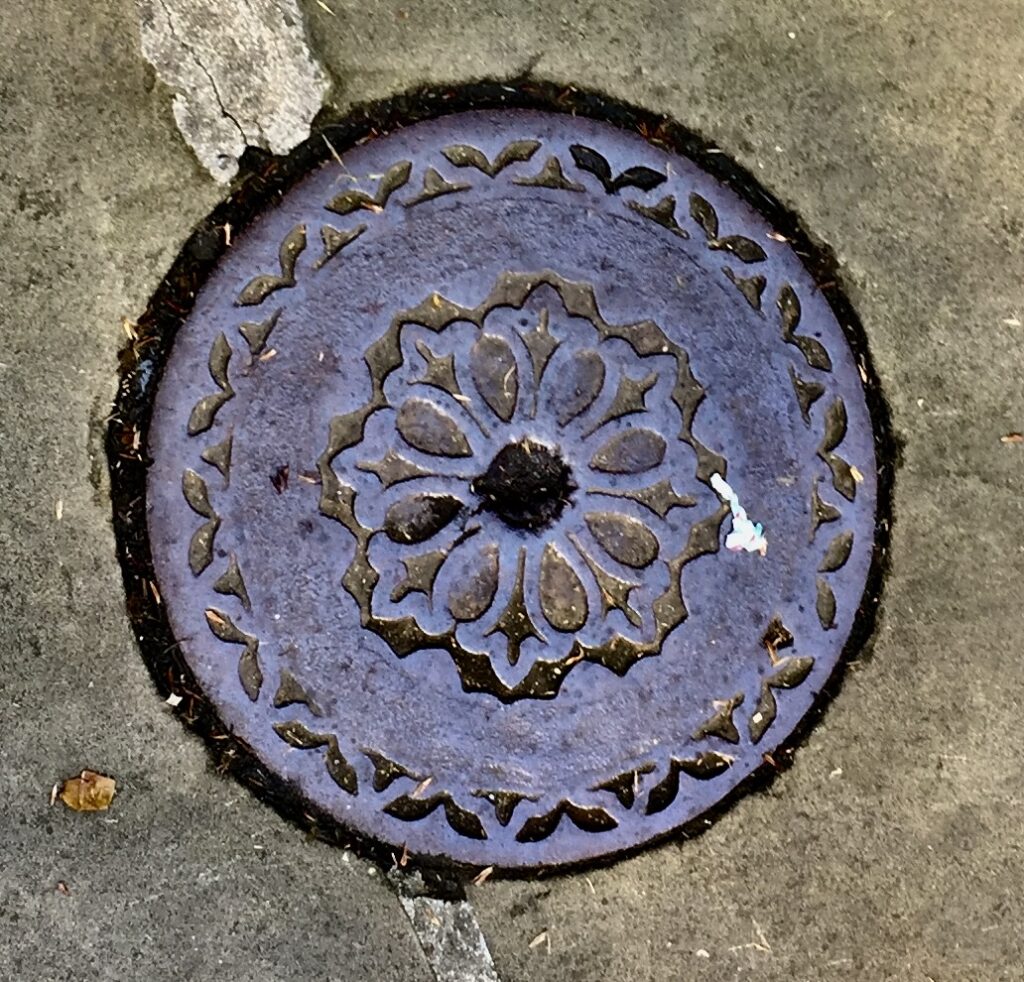
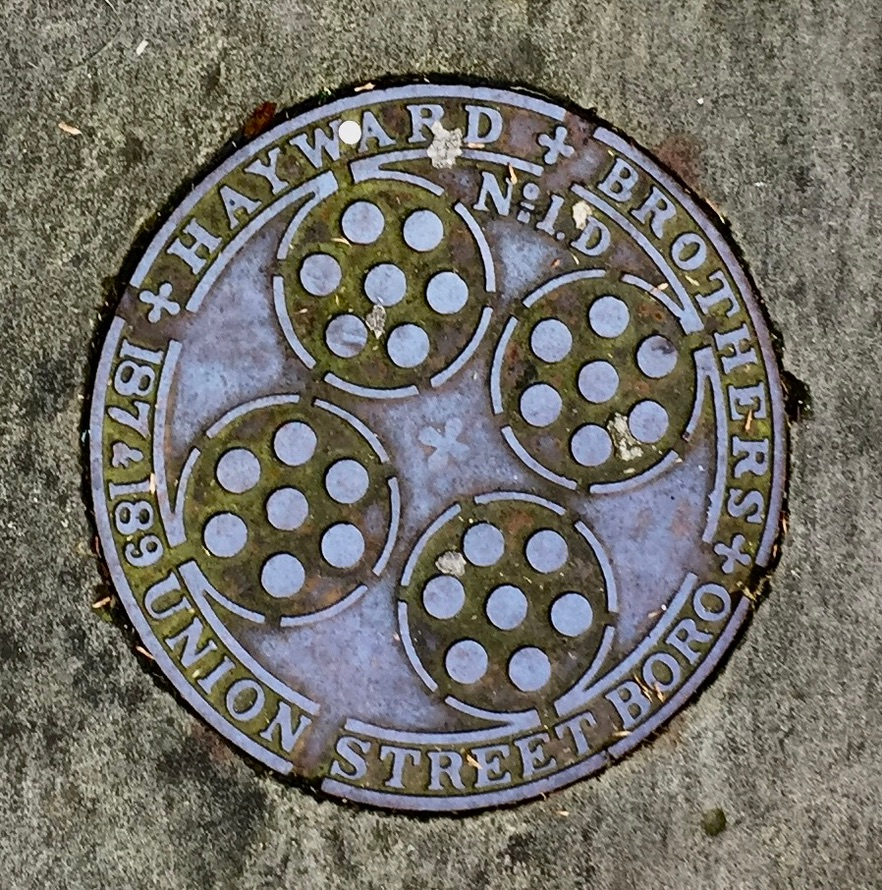
Some intricately designed coal hole covers that have survived road works and redevelopment …
The above is a typical Hayward Brothers plate. One of their greatest services to Victorian society was saving pedestrians from nasty and embarassing injuries or even death-by-coalhole. Falling down coalholes through an unfastened plate was a regular occurrence in those times and the Hayward Brothers ‘safety plate’ using a ‘twist and lock’ mechanism was supposed to cure the problem.
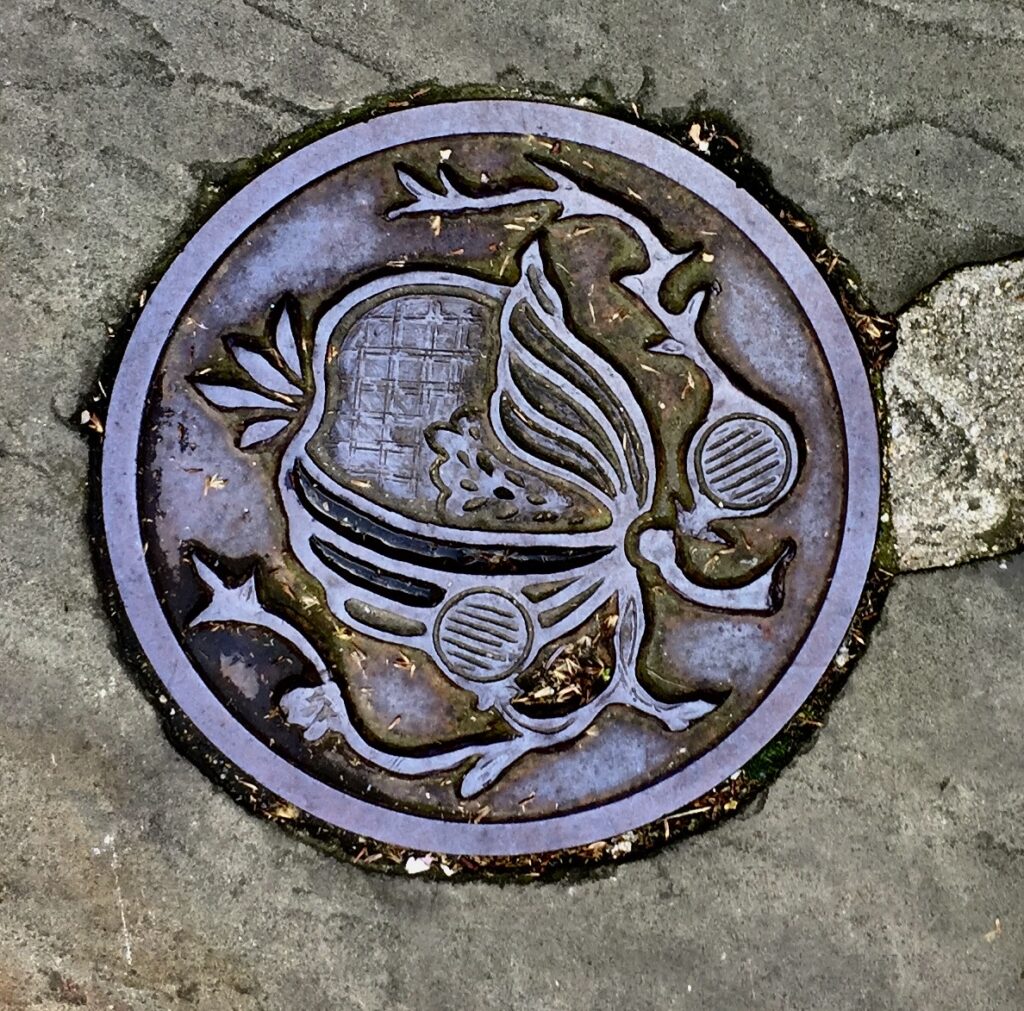
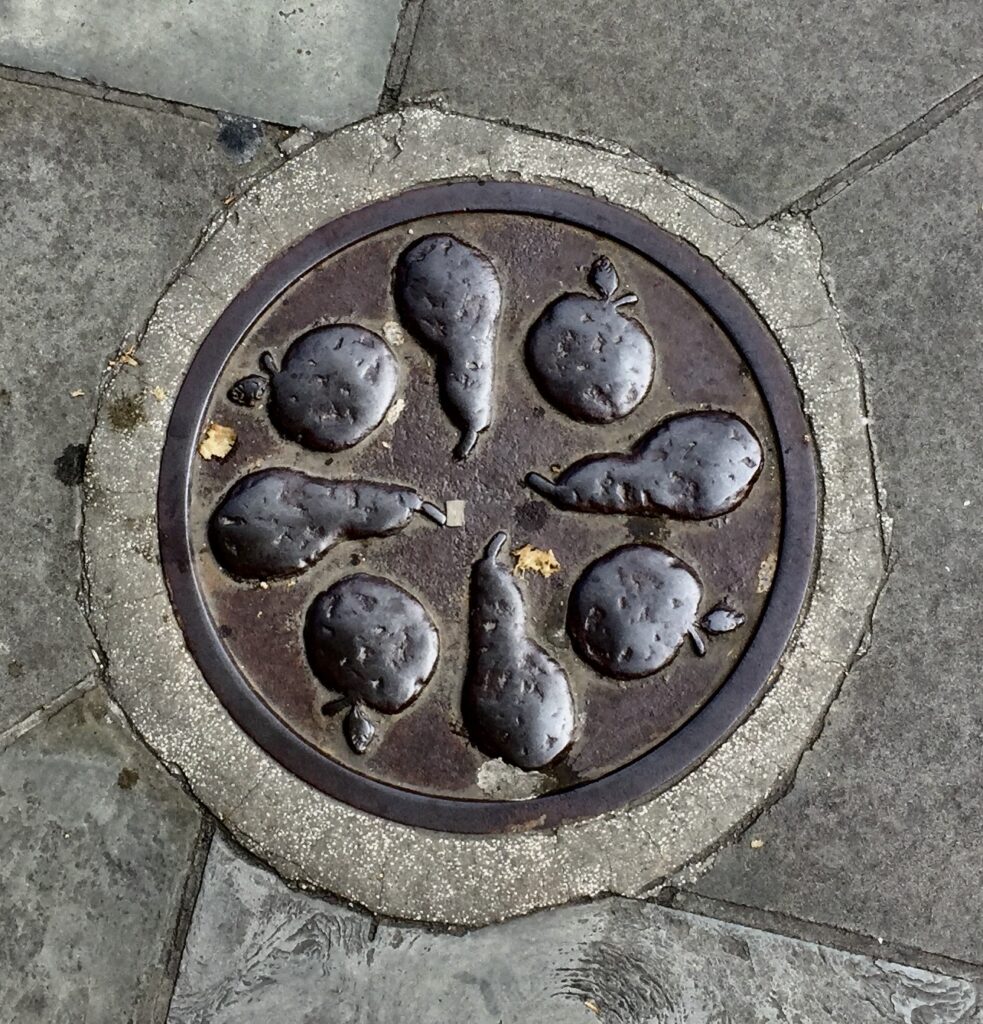
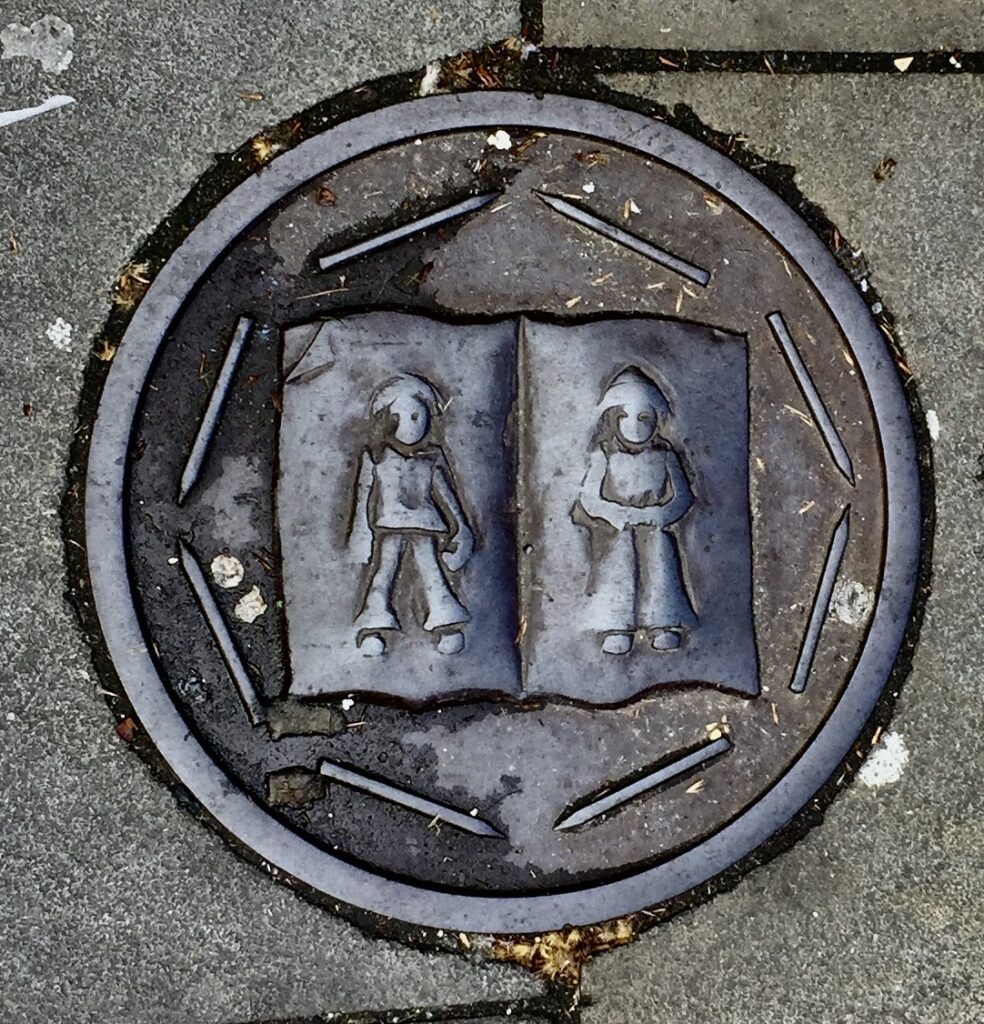
As well as the coal hole covers, the pavements of Spitalfields are also the home of a number of circular metal plates set into the pavement and known as roundels. They are the result of a commission by the 1995 Bethnal Green Challenge and are intended to be emblems reflecting the diverse culture and history of Spitalfields. They were designed by Keith Bowler and you can read more about them in two blogs, one by The Gentle Author and one by Katie Wignall. Here are images of the three I came across.
One of the prettiest is the one on Fournier Street, taken from floral fabric designs by Anna Maria Garthwaite (1688-1763), the textile designer whose official blue plaque is on 4 Princelet Street …
At the corner of Brushfield Street and Commercial street are some apples and pears. A nod to the original fruit and vegetable Spitalfields market with a flourish of cockney rhyming slang thrown in …
And finally this very cute one outside the local primary school on Brick Lane. A boy and girl in a book surrounded by pencils …
There were 25 originally but it’s believed there are only a dozen left.
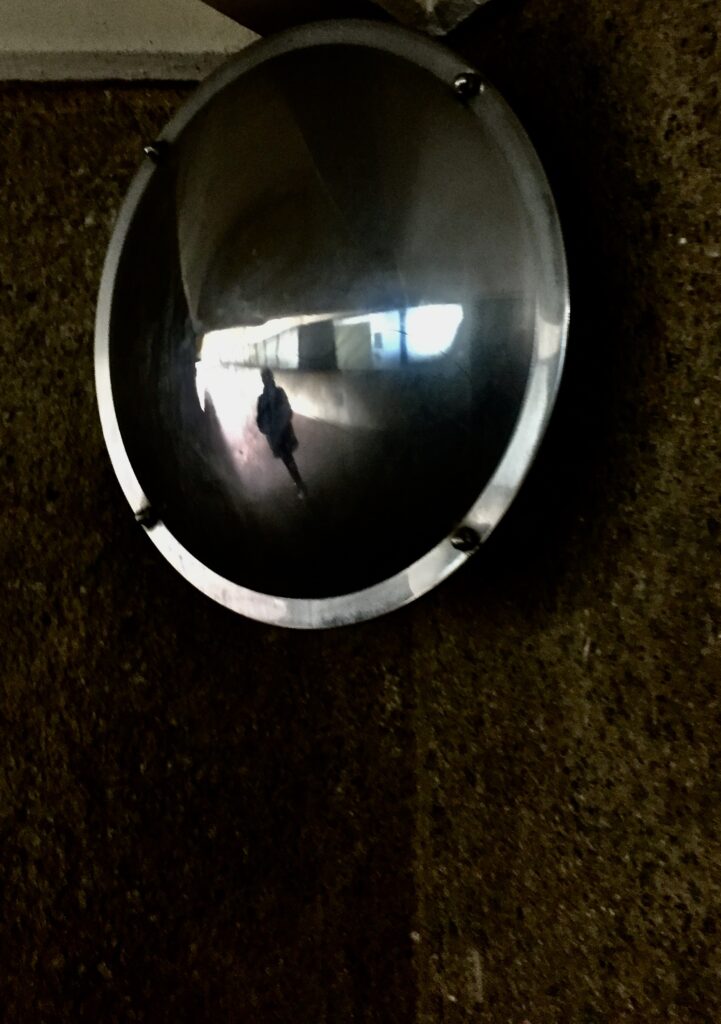
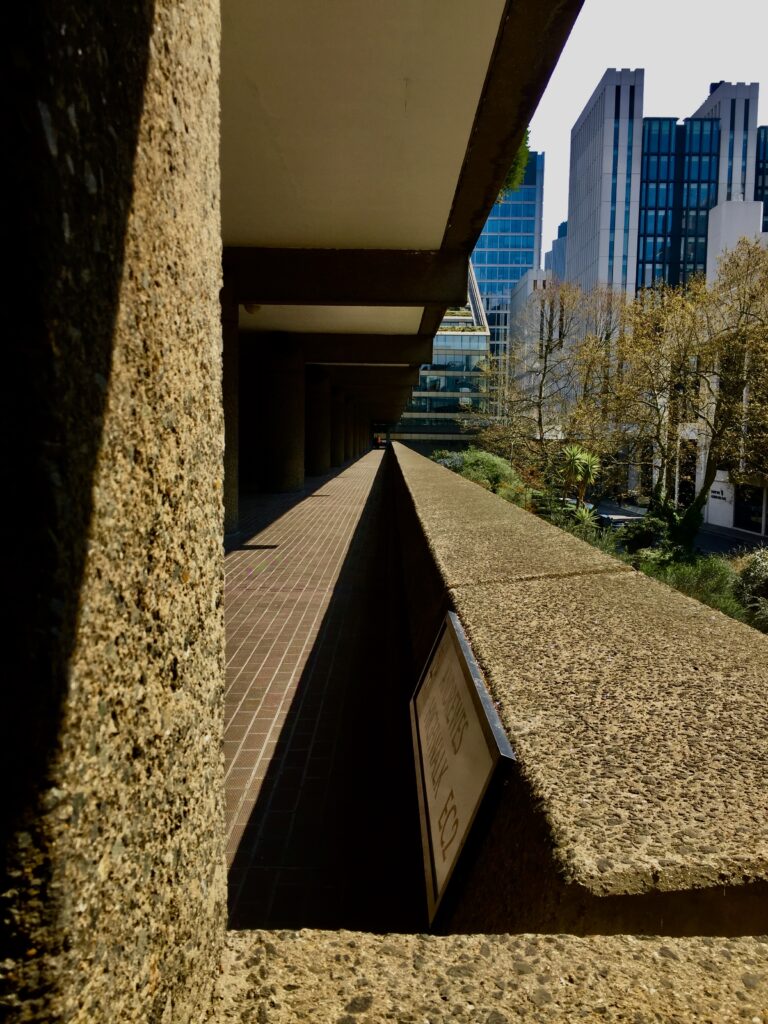
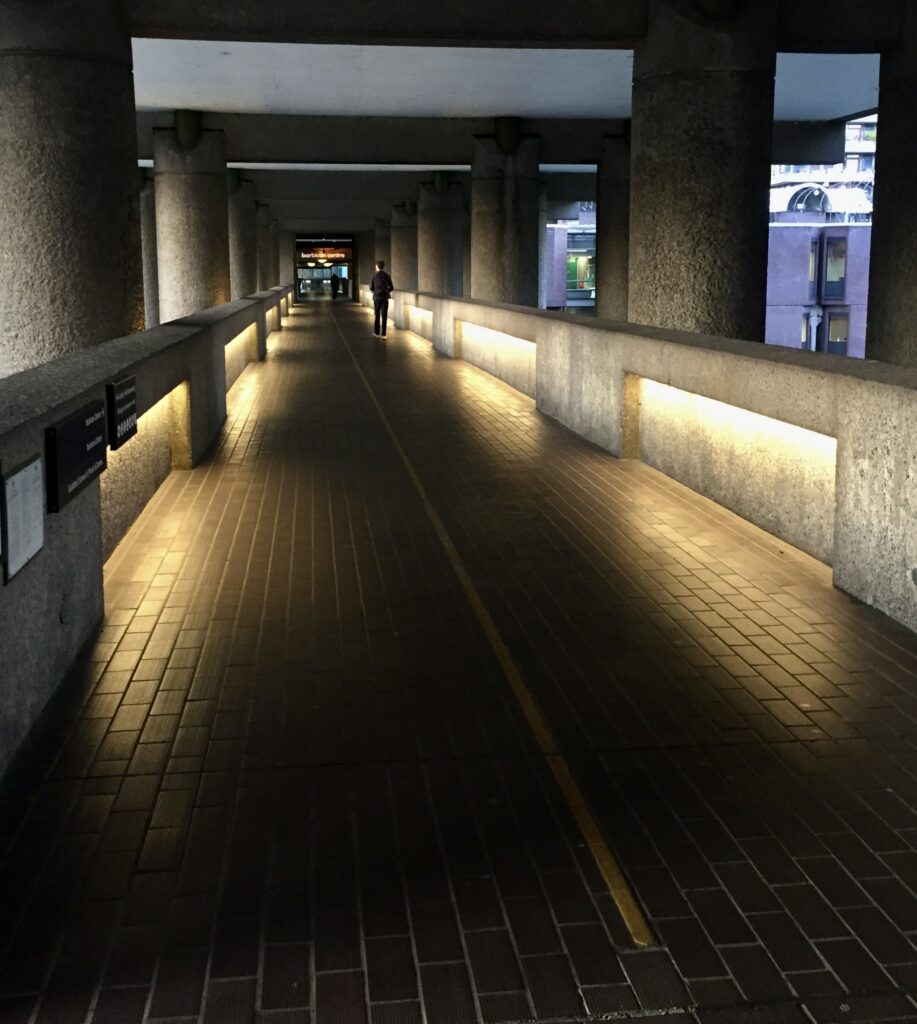
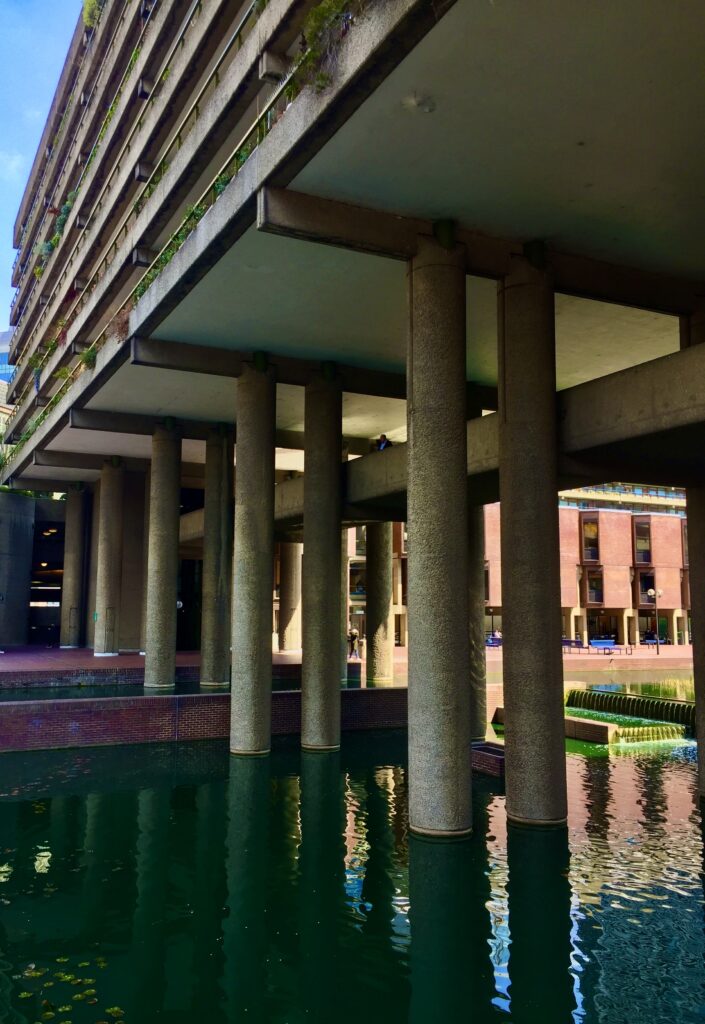
I wandered around the Barbican looking for angles, shadows and reflections …
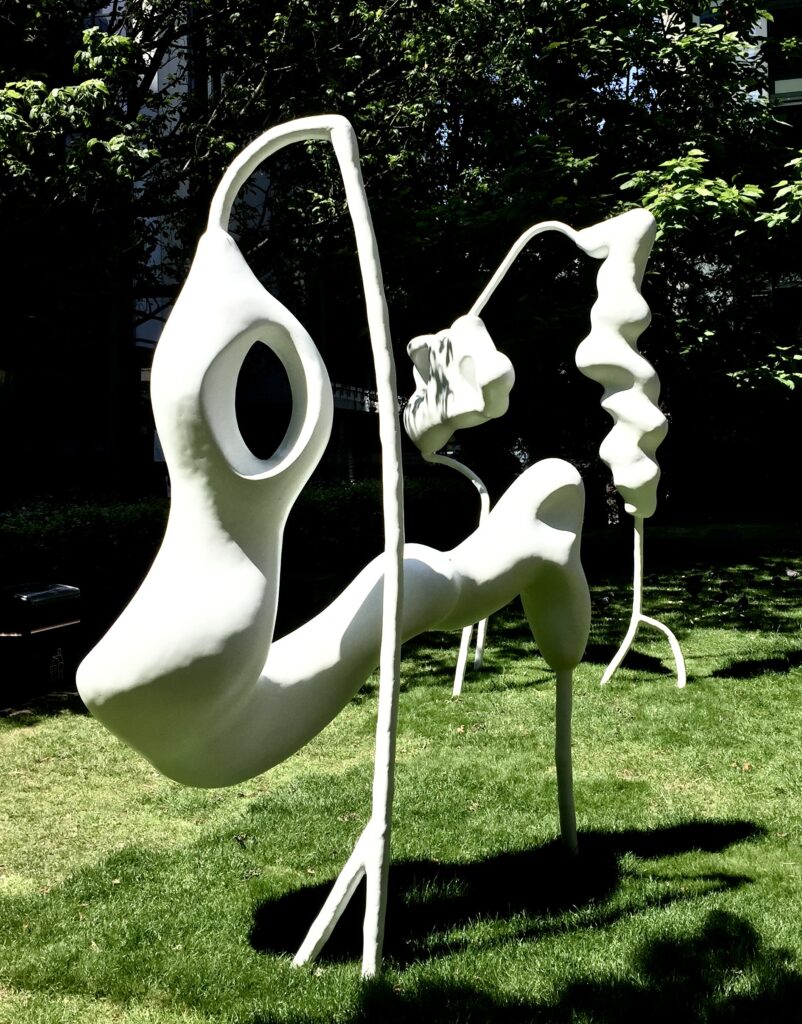
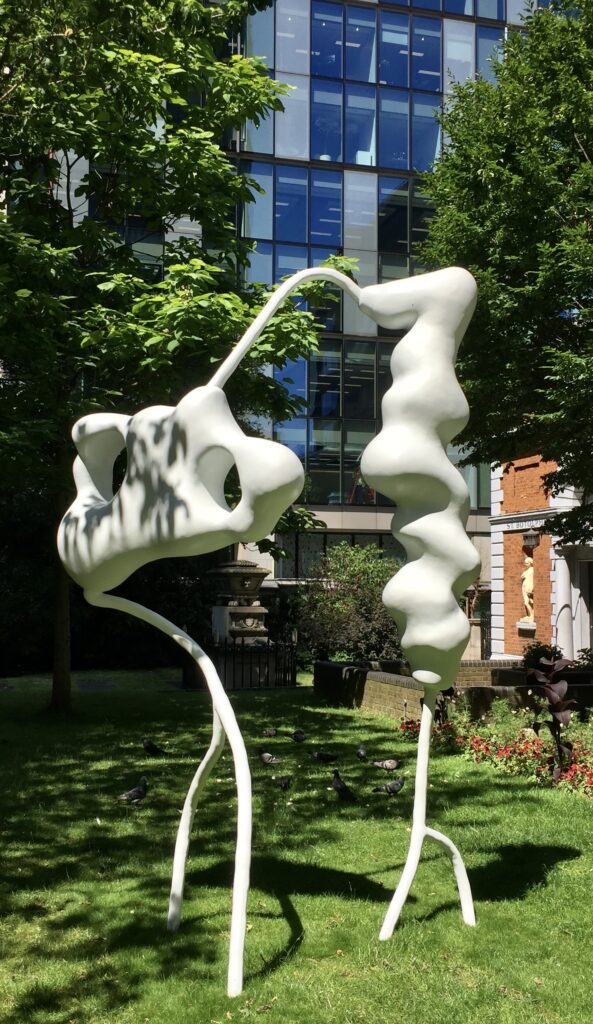
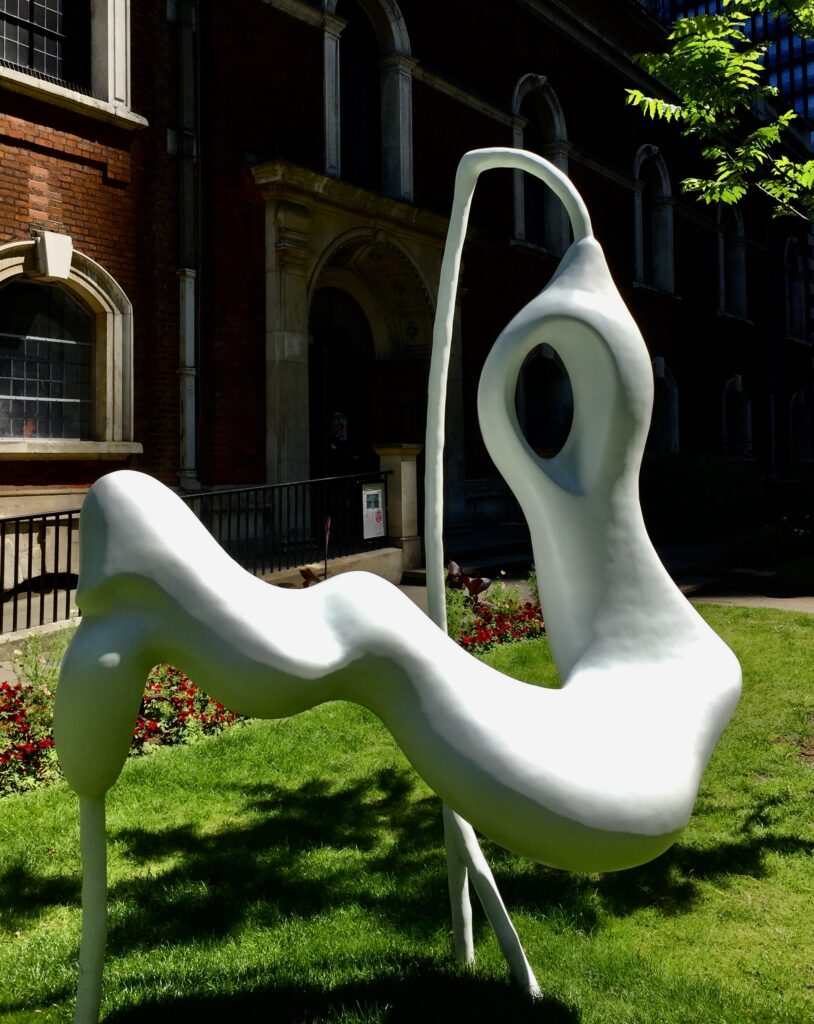
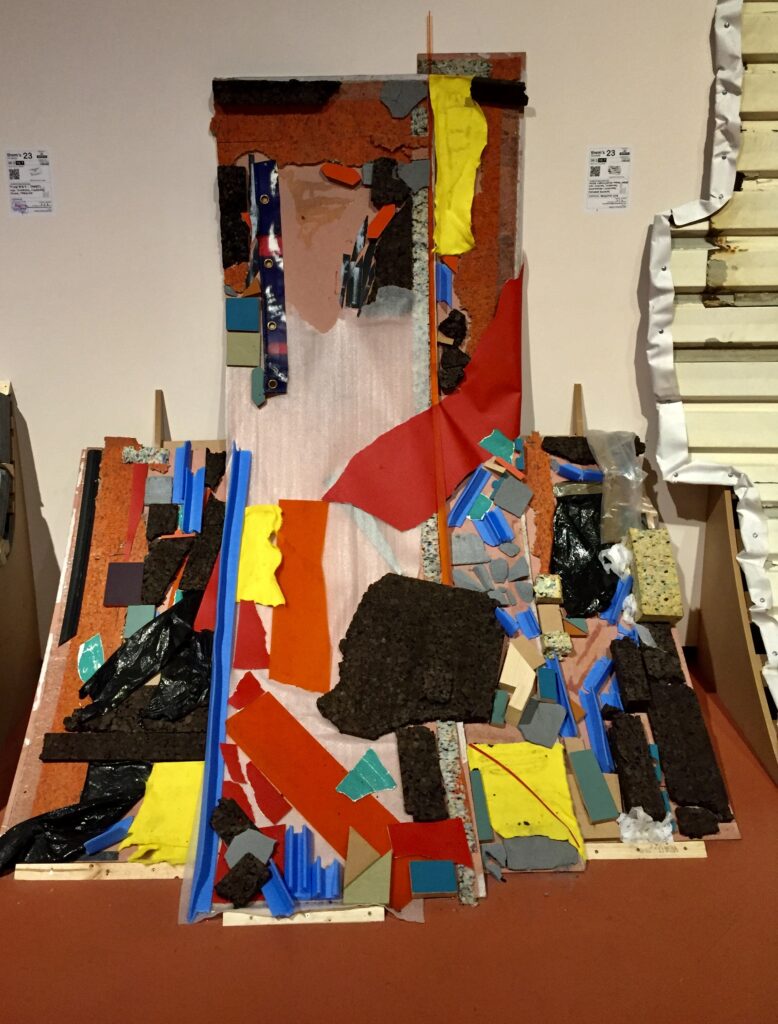
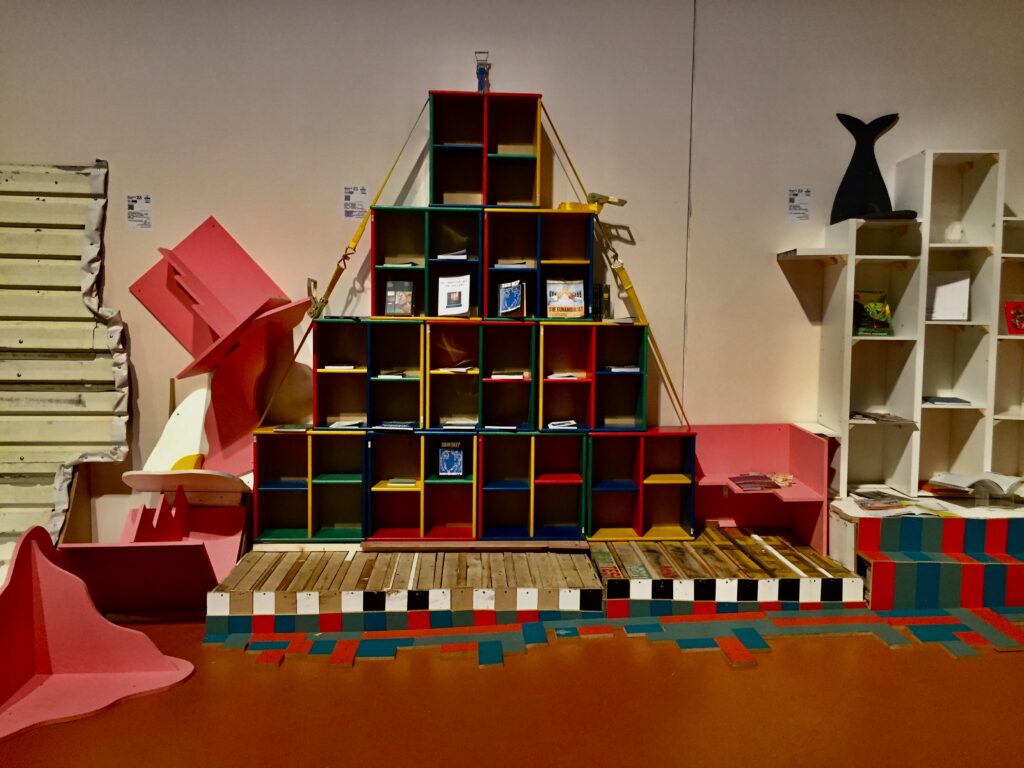
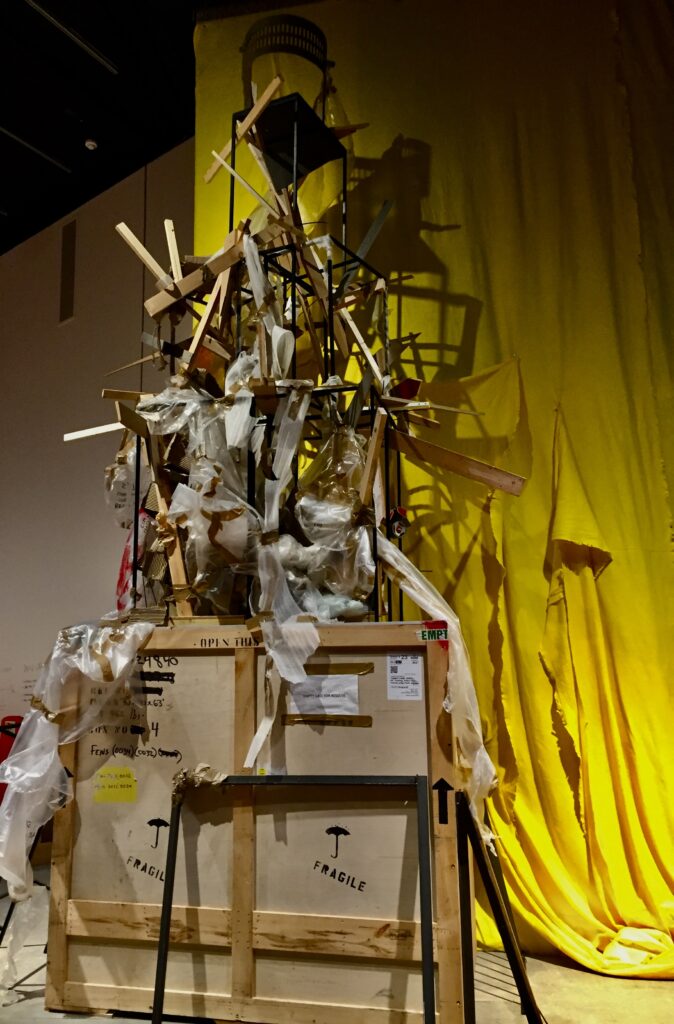
Here are some colours and shapes from ‘Them’s the breaks’by the RESOLVE Collective at The Curve Gallery …
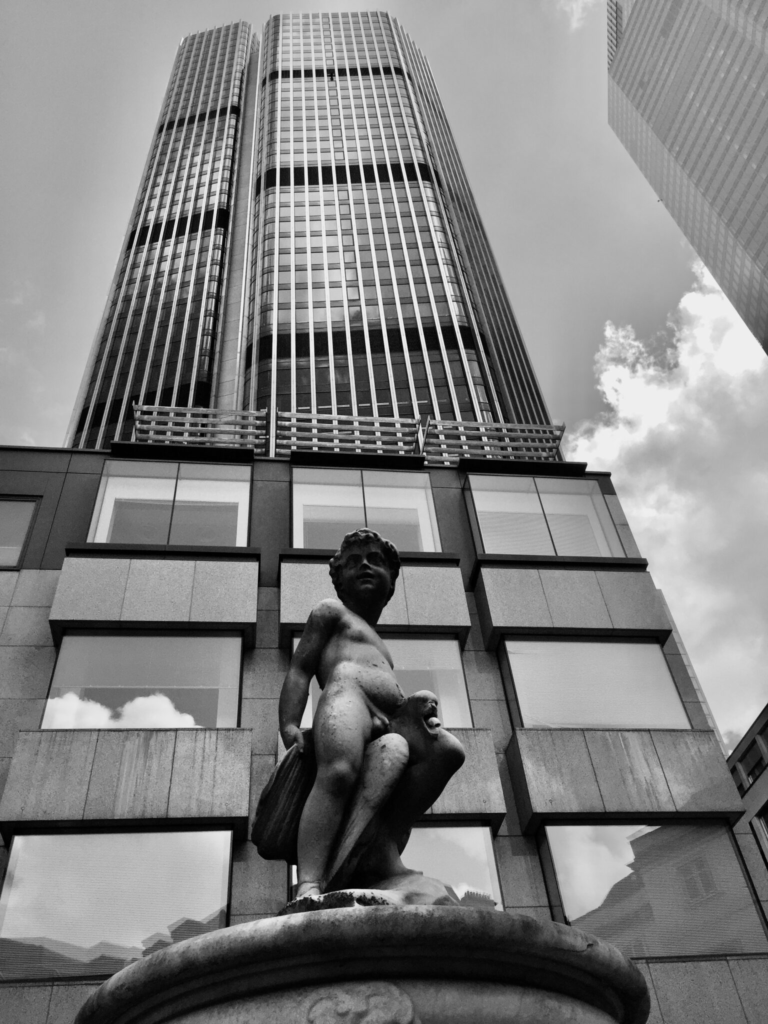
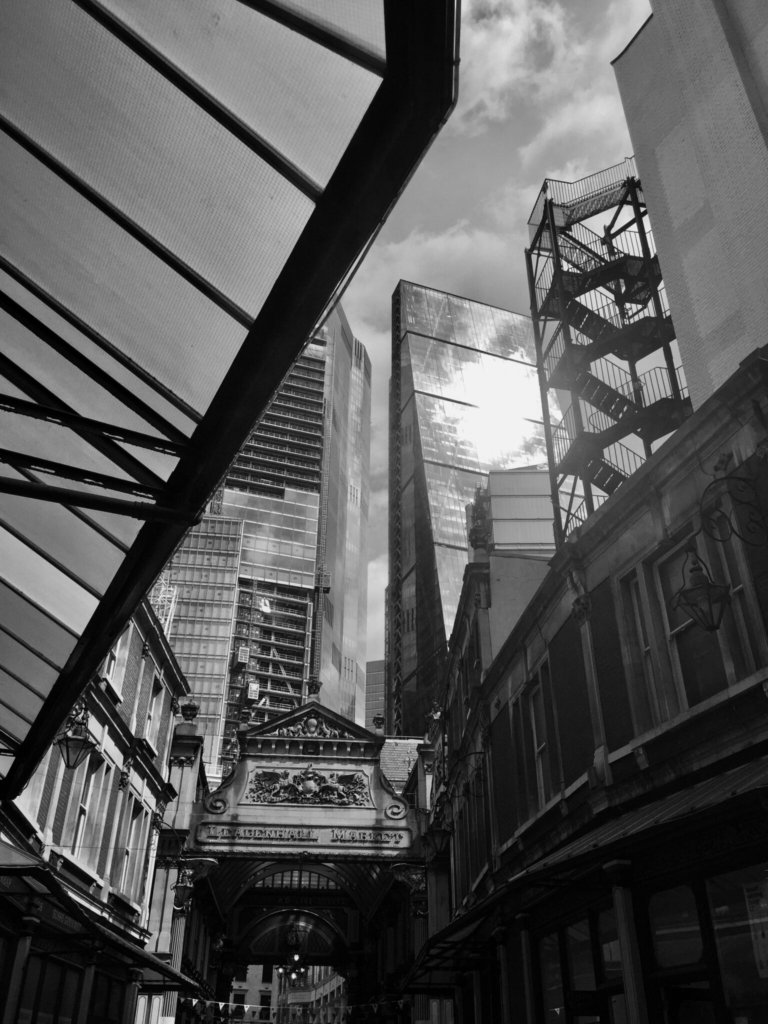
I’d also like to include a few favourites from a previous blog where I experimented with black and white images.
Tower 42 …
Plus Leadenhall Market …
Here are some of the more unusual things I came across during my walk.
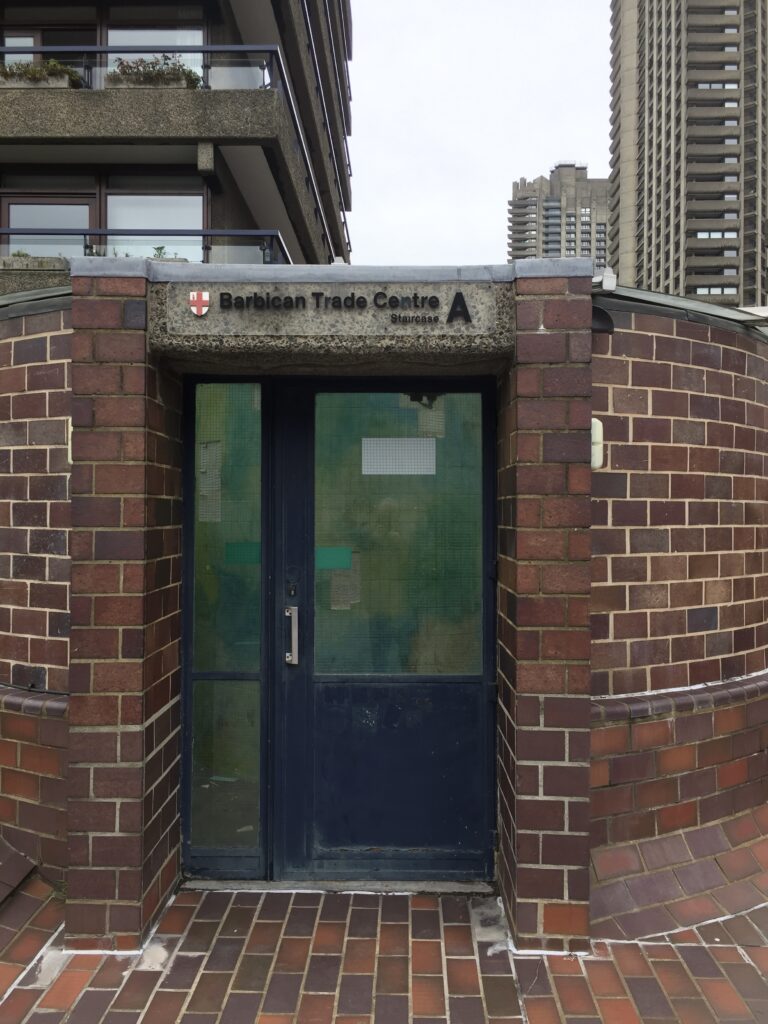
I have entered the Barbican Highwalk from the Barbican Station footbridge on dozens of occasions and never paid any attention to this doorway which is obviously no longer in use …
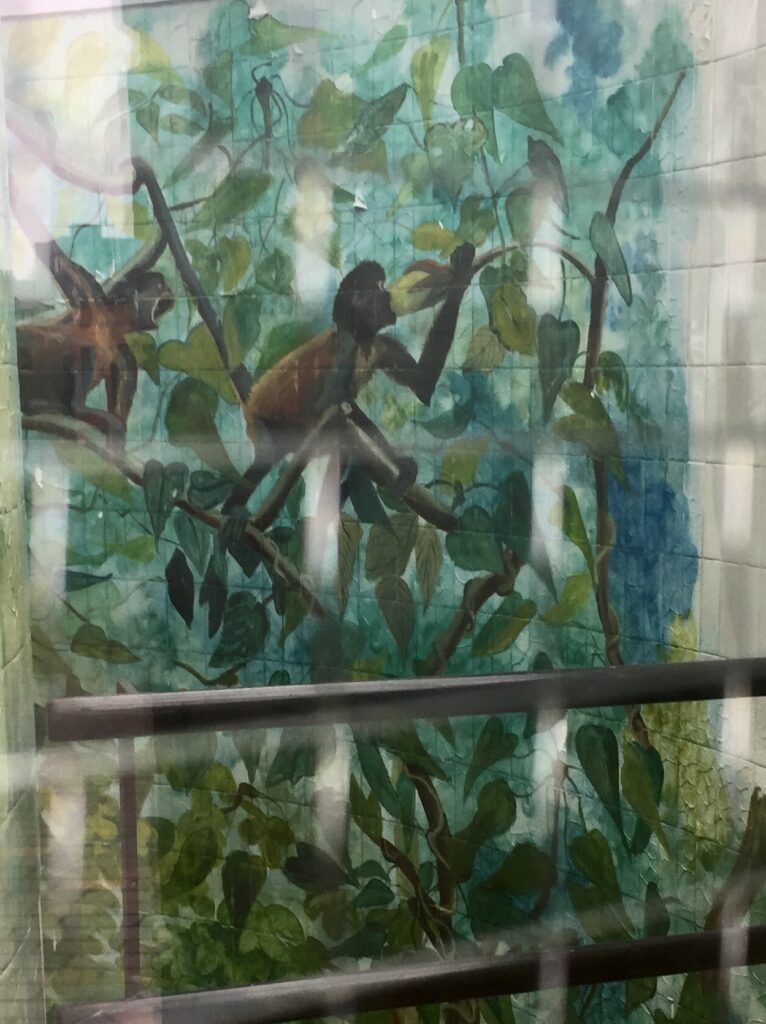
Last week I peered through the grubby glass and was astonished to see this lively jungle scene …
I’m trying to find out more about it.
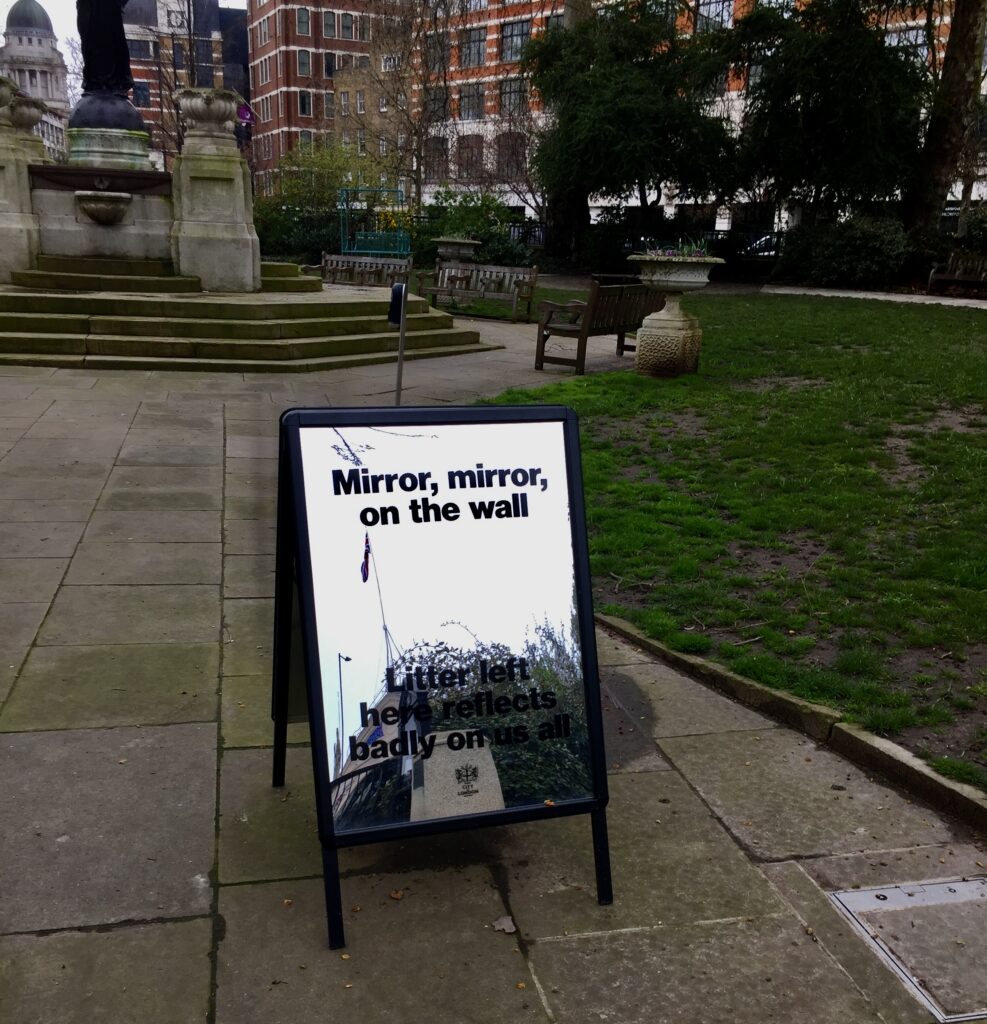
In the Smithfield Rotunda Garden there is a reflection with a poetic message …
‘Mirror, mirror, on the wall … Litter left here reflects badly on us all’.
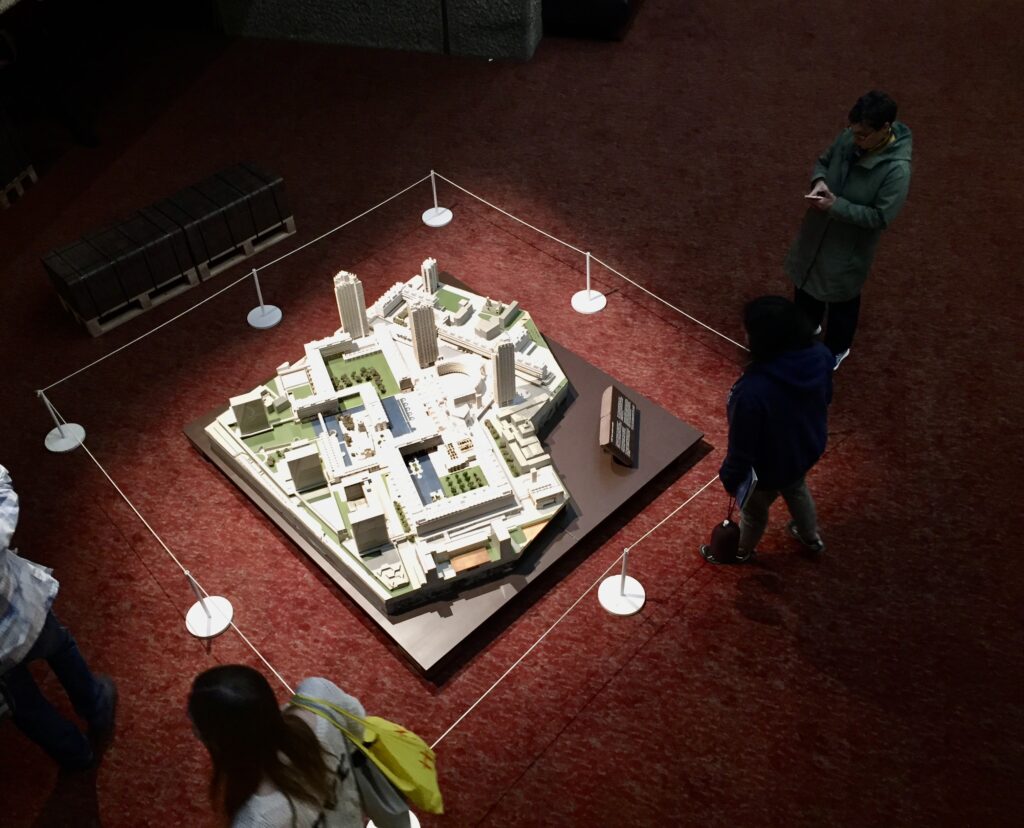
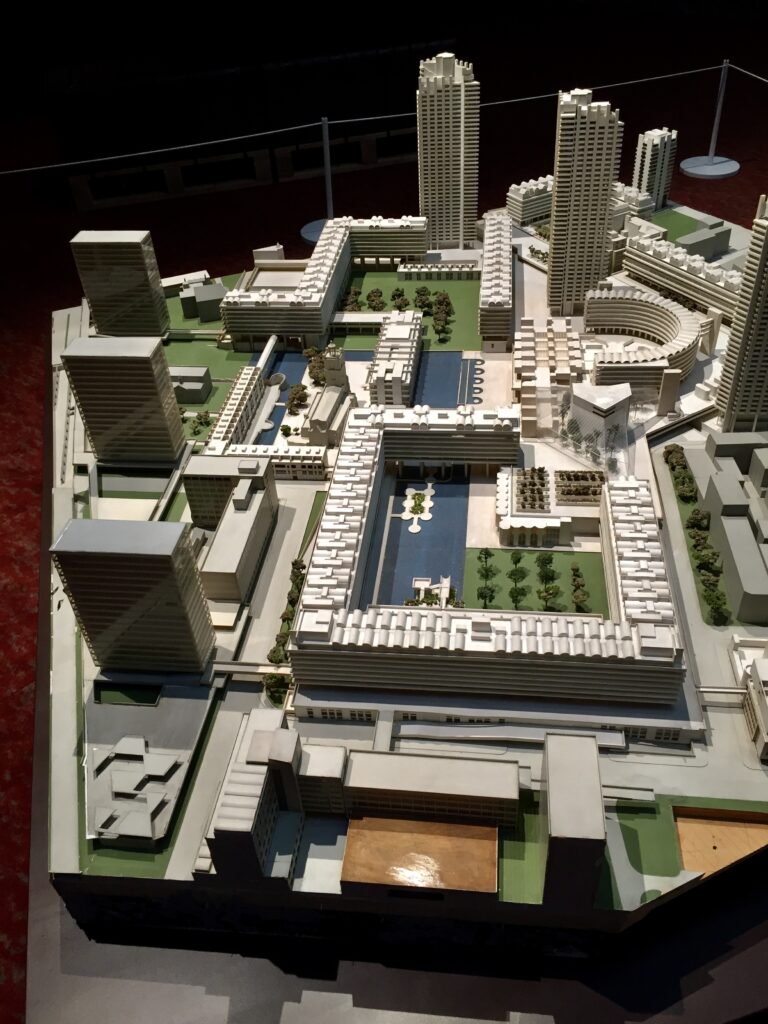
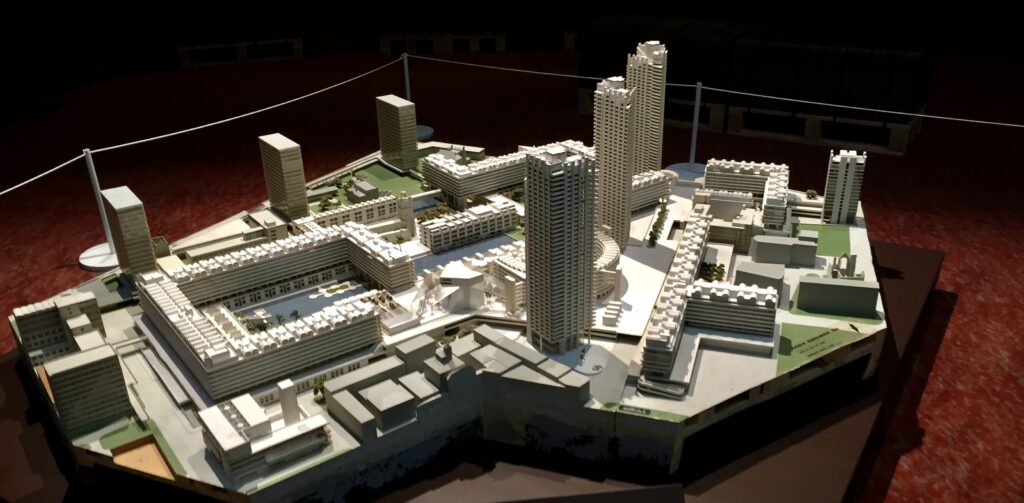
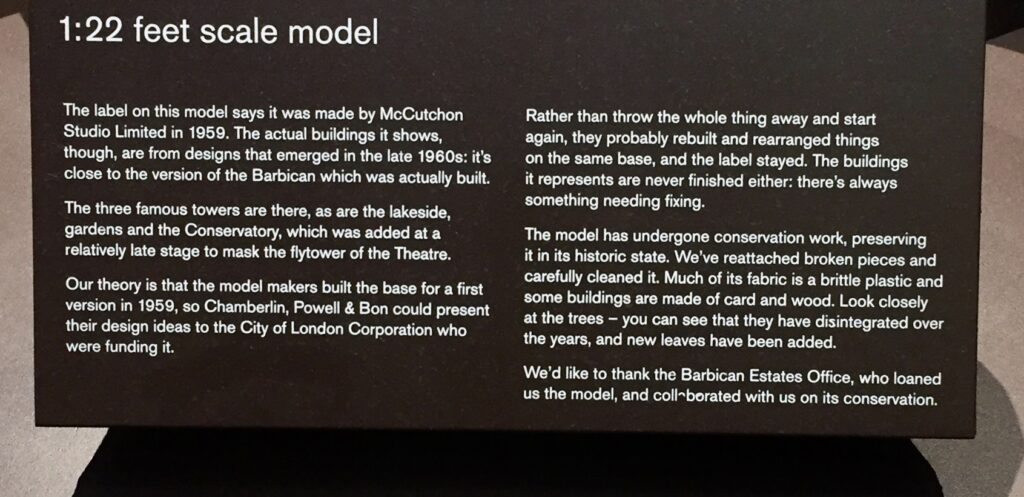
On display in the Barbican Centre is this stunnng architectural model of the Estate …
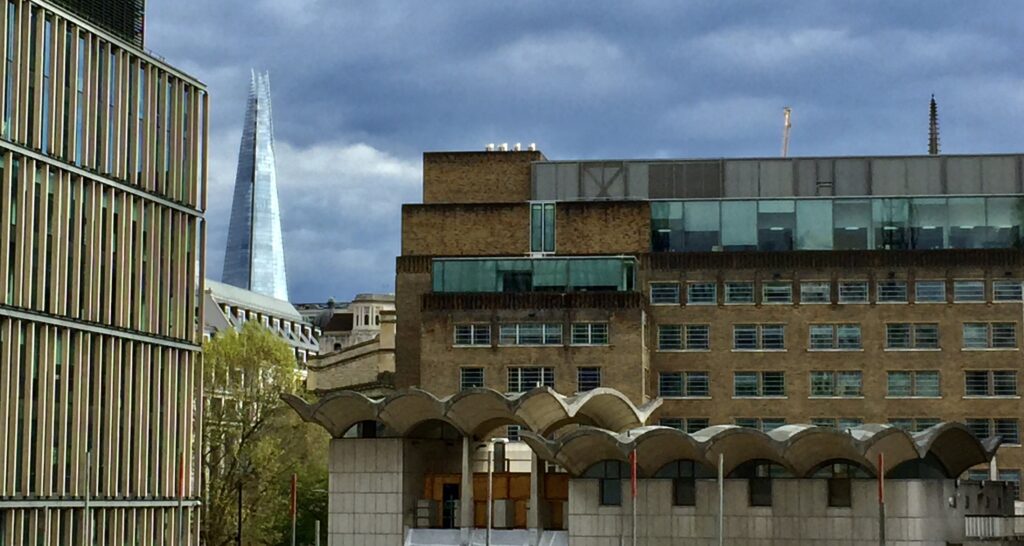
The City is still full of new developments despite changes in working patterns and in many cases this means the demolition of existing buildings. A new view has now temporarily opened up looking south from the St Alphage Highwalk showing the north side of the Guildhall with the Shard in the distance …
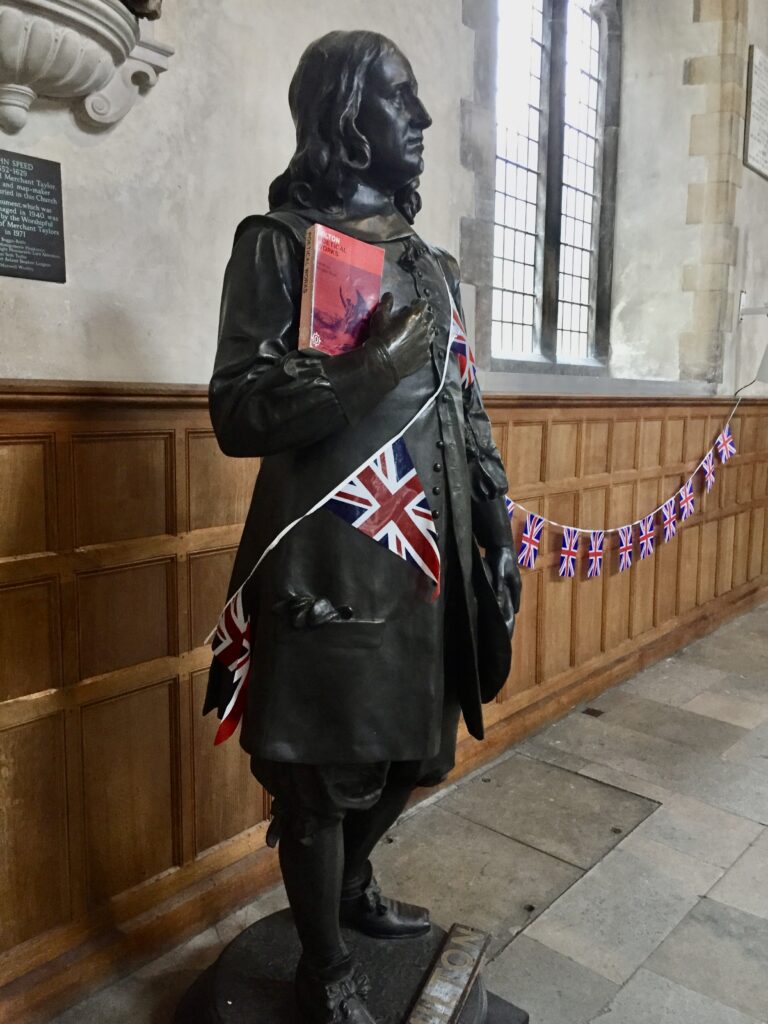
Finally, I laughed out loud when I popped in to St Giles church and noticed two acknowledgements of the Coronation. Milton was surrounded by flags as he clutched a volume of his works …
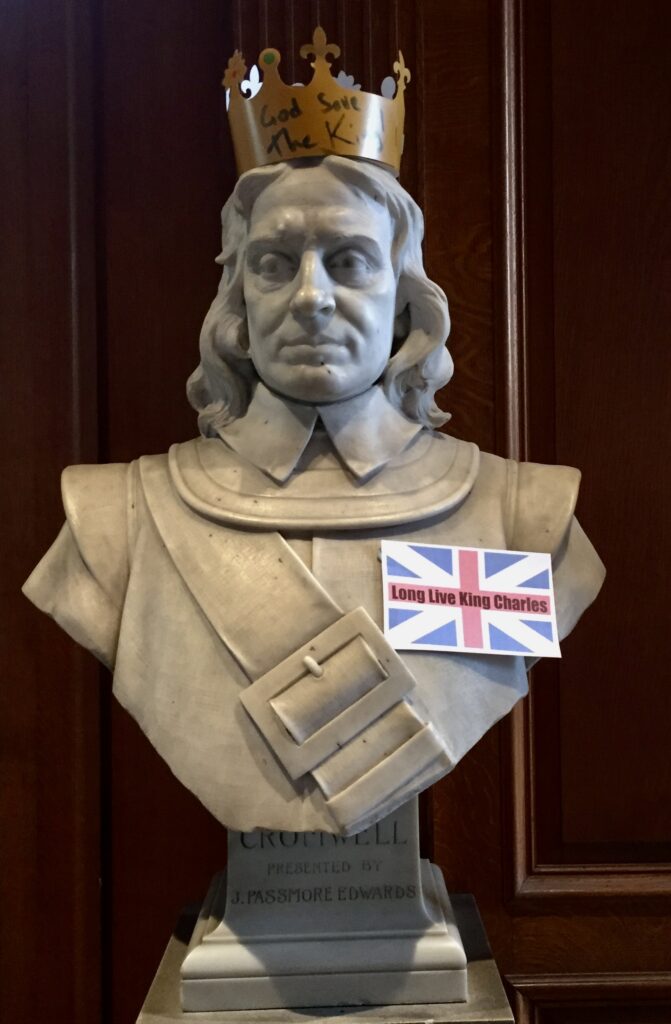
But by far the most witty gesture was kitting out the famous parliamentarian and regicide Oliver Cromwell with a golden crown and a ‘Long Live King Charles’ postcard …
If you would like to follow me on Instagram here is the link …