Walking the City of London

Category: Religion Page 15 of 20

A famed swordsman, a tragic drowning and an honest lawyer – exploring St Dunstan-in-the-West

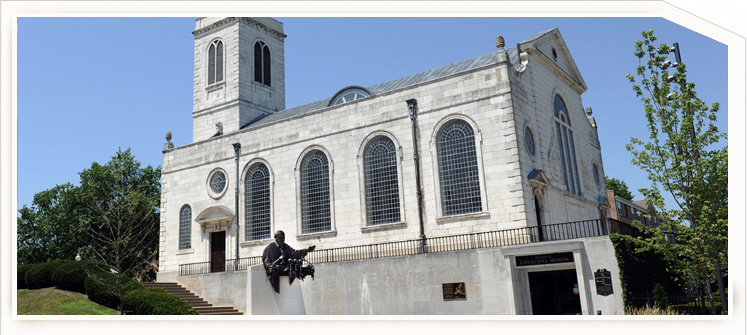
I had a great stroke of luck last Friday when I wandered into St Dunstan’s and met by chance two of the lady administrators who kindly took the trouble to show me around. The church is on Fleet Street (EC4A 2HR).

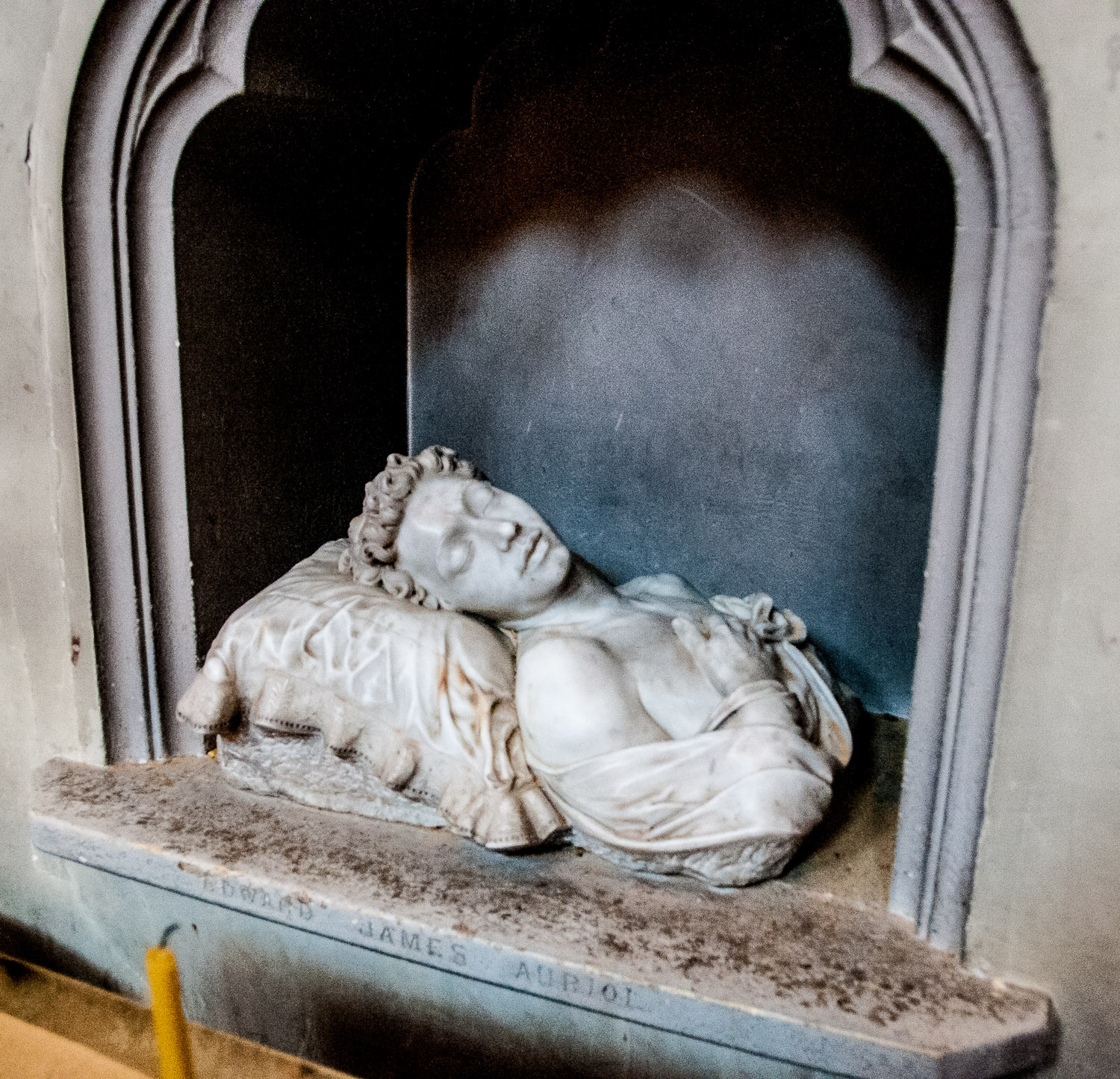
In a niche in one of the side chapels is a marble bust of a youth with fine features, Edward James Auriol lying on a pillow, hand on heart, as if asleep …

In fact, he died tragically at the age of 17 when he drowned in the Rhône river in Geneva one bright morning on 19th August 1847. A student at King’s College London, he was the ‘tenderly beloved and only child’ of the Rector of St Dunstan’s Edward Auriol and his wife Georgiana.

Nearby is this fascinating memorial to ‘ye fam’d swordsman’ Alexander Layton who died in 1679 and who rests ‘not far from this place’ …

Erected by a grateful scholar of Layton’s, ‘John Brewer of Grays Inn Road’, at the foot of the tablet are the following words suggesting Layton’s final opponent was death itself …

His thrusts like lightning flew, more skilful Death

Parried ’em all, and beat him out of breath.

There was nothing the ‘Master of Defence’ could do.

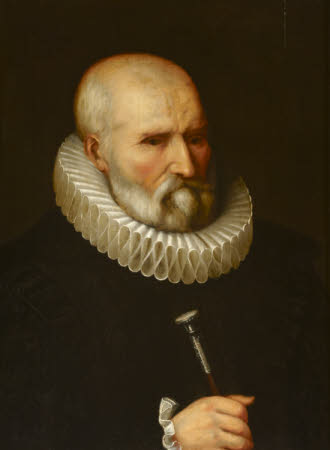
There’s a memorial bust to Cuthbert Fetherstone (1537-1615) …

He served as the Gentleman Usher to Queen Elizabeth I, and as such was her trusted friend. Cuthbert and his wife Katharine lived in London but the housing conditions in the city were poor and they eventually left their home in Chancery Lane. They purchased Hassingbrook Hall, an ancient manor near the banks of Hassinbrook at Stanford-le-Hope, twenty-five miles downstream from London. After Elizabeth’s death he became Usher and Crier to King James I.

Here he is, painted in oils around 1598 …

Copyright: National Trust Uppark House and Garden, West Sussex

The earliest monuments in the church are these two brass kneeling figures …

The plaque reads as follows …

Here lyeth buryed the body of Henry Dacres, Cetezen and Marchant Taylor and Sumtyme Alderman of London, and Elizabeth his Wyffe, the whych Henry decessed the … day of … the yere of our Lord God – and the said Elizabeth decessed the xxii day of Apryll the yere of our Lord God MD and XXX.

Elizabeth died in 1530 and Henry nine years later. His will tells us that the brass was already made before he died and ‘made at myn owne costes to the honour of almighty god and the blessed sacrament’. He also left 20 shillings to be used for the annual purchase of coal for the benefit of poor parishoners.

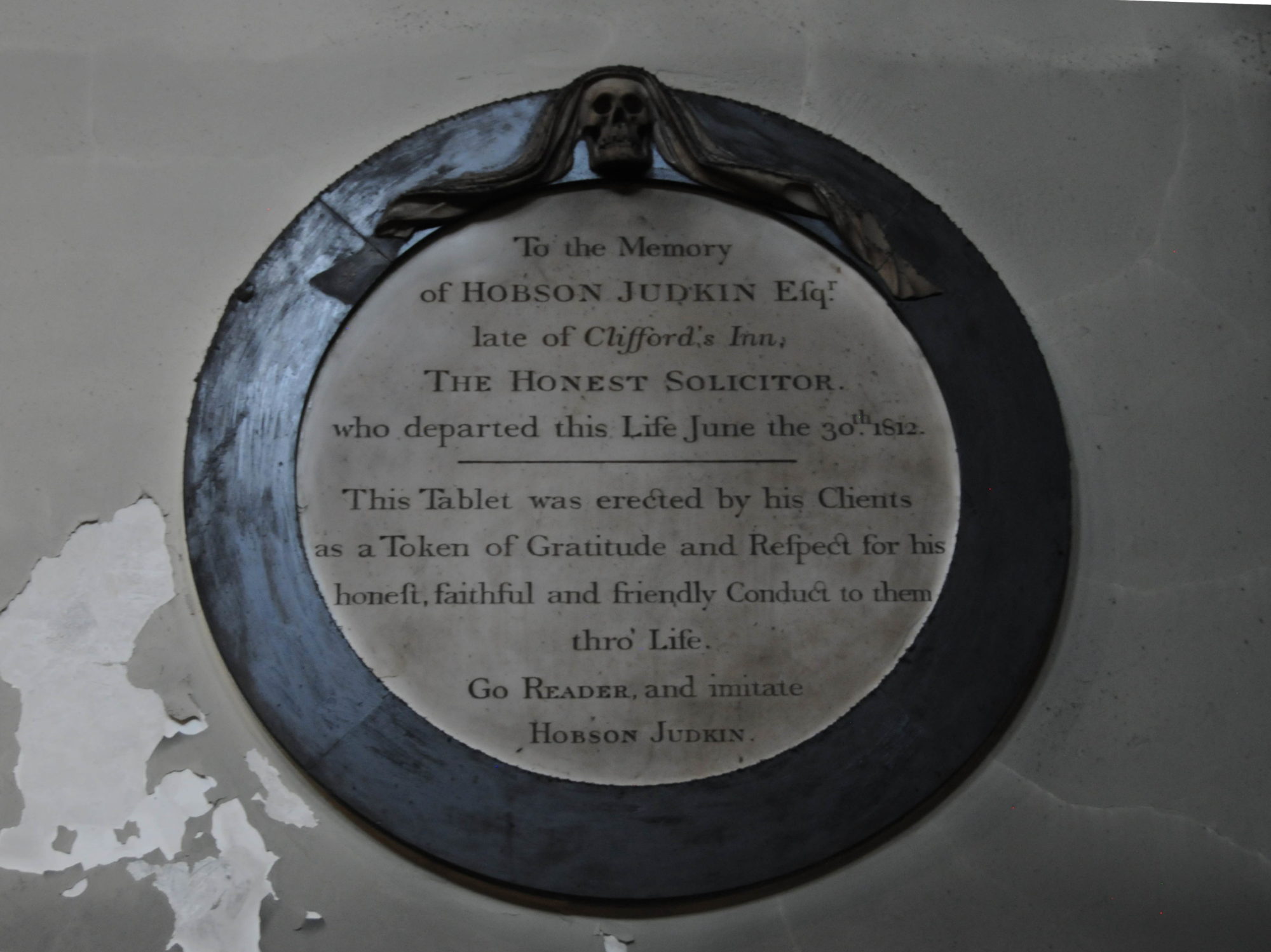
I am sure there are very few dishonest solicitors nowadays, but there seems to have been a time when an honest one was rather unusual, and this virtue was so exceptional that his clients paid for a memorial plaque saying so. It reads ‘Hobson Judkin, late of Clifford’s Inn, THE HONEST SOLICITOR who departed this life June 30th 1812’.

‘Go reader’ we are commanded ‘and imitate Hobson Judkin’.

The kneeling figure next to the war memorial is said to represent Sir Roger North (1577-1651) …

This plaque celebrates the virtues and generosity of James Chambers, a ‘Citizen and Goldsmith … Eminent Banker … A man courteous to his neighbours … a Loving Husband, a Tender Father and a Sincere Friend’ …

He was also incredibly generous, being …

Very benificent to his Relations to whom he parted with upwards of £20,000 in his lifetime.

That would be getting on for two million pounds in today’s money.

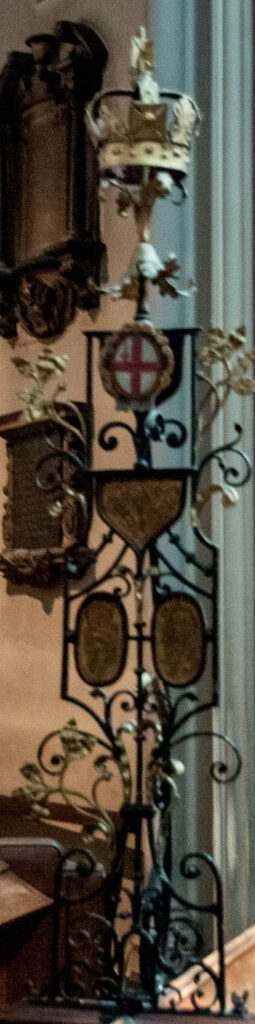
The front right-hand pew has a seat reserved for the Lord Mayor, dramatically marked by an iron sword rest, dating from 1745, and commemorating the English victory over the Jacobite Young Pretender, Bonnie Prince Charlie, at Culloden. My photograph doesn’t really do it justice …

Sword rests, or sword stands, were originally installed in City churches to hold the Lord Mayor’s sword of state when he visited different churches every Sunday, a practice which ceased in 1883.

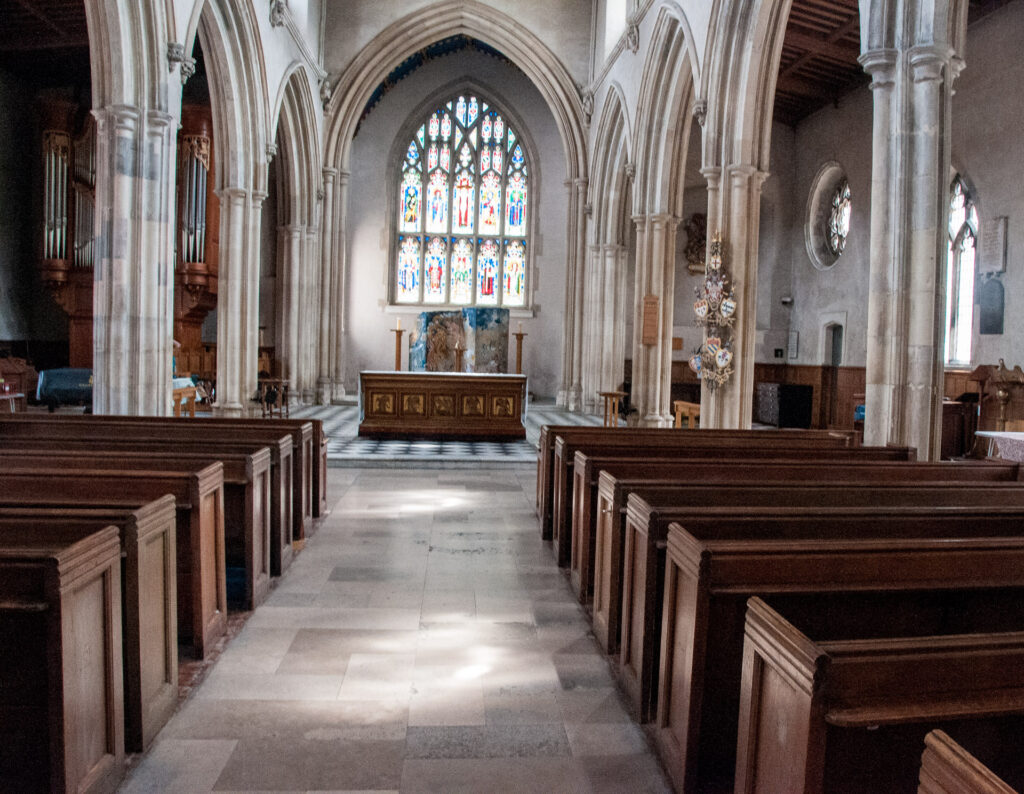
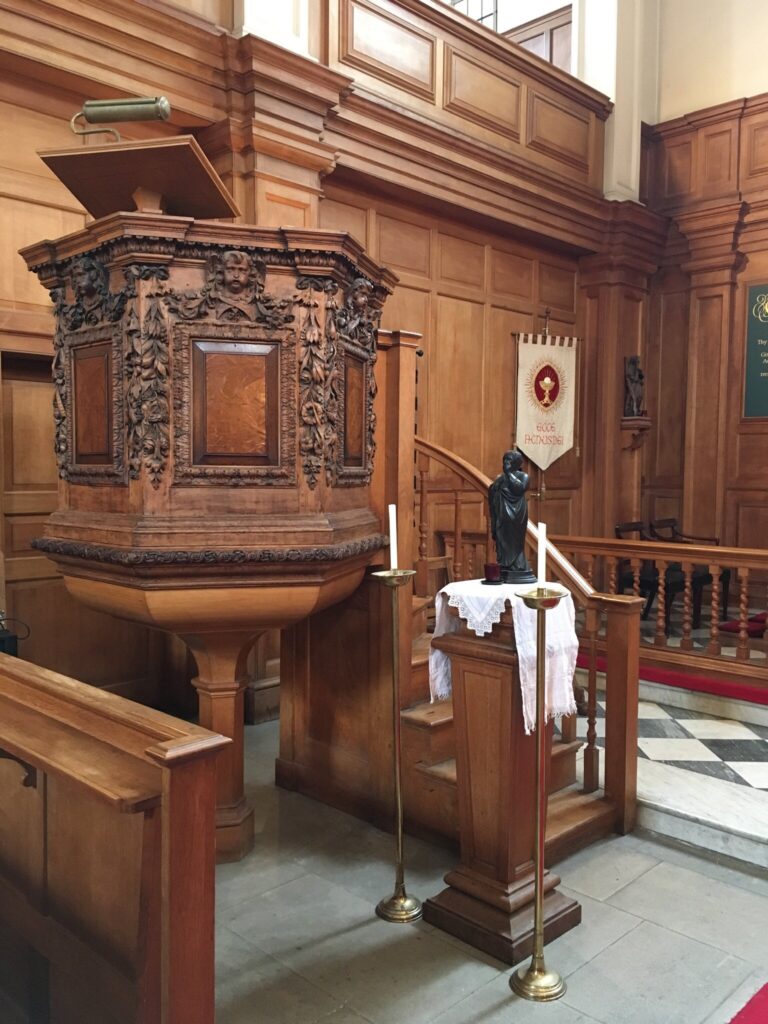
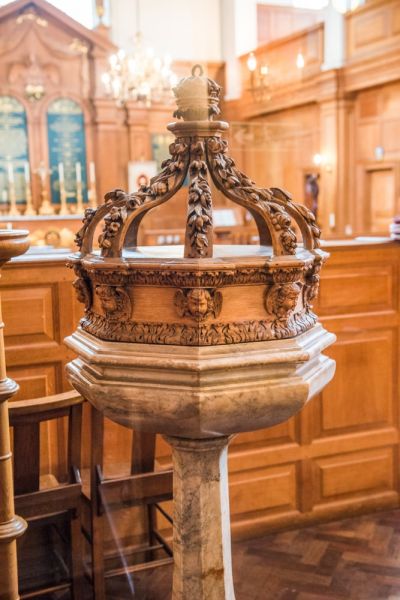
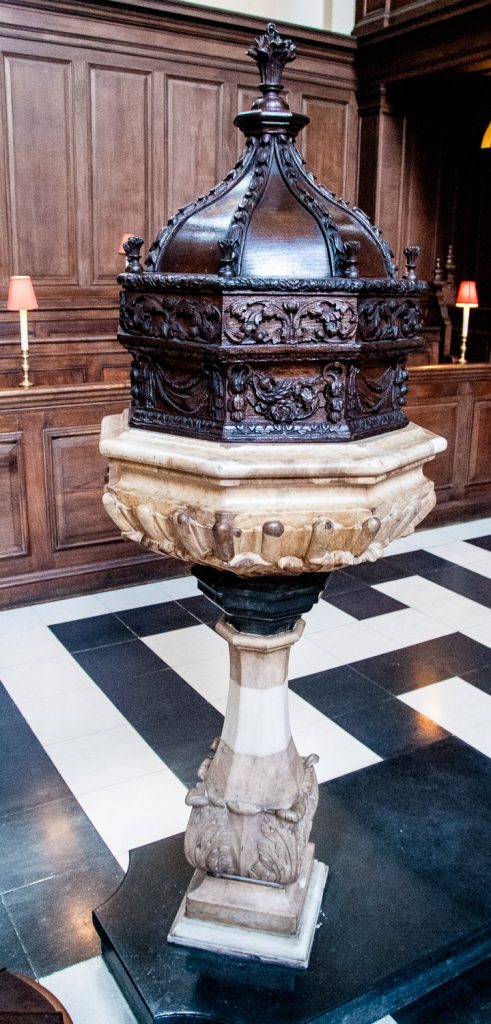
Dedicated to a Saxon Archbishop of Canterbury and Benedictine monk, St Dunstan’s survived the Great Fire but was demolished and rebuilt between 1830 and 1833. The octagonal interior is wonderfully atmospheric …

I took a close look at the remarkable Christian Orthodox screen (or iconostasis) which came from Romania in 1966 …

The screen is over 100 years old and was originally created for the Monastery of Antim in Bucharest. I also spotted various individual icons …

These and the screen are clues to the fact that, although this is a Church of England church, it also hosts Romanian Orthodox Church services.

There is more to see in St Dunstan’s and I intend to return. If you are interested in churches, this is definitely one to visit. It has just reopened for private prayer and you can find opening times on the website.

Remember you can follow me on Instagram :
https://www.instagram.com/london_city_gent/

Aimless wandering!

I think the lockdown is finally getting to me. I usually don’t have much trouble thinking of a theme for the blog but this week I have failed. So instead, I just wandered around a still quiet City with my camera waiting to see what caught my eye. These are the results – I hope you find some of them interesting.

Now the pavements are deserted, it’s easier to look upwards as you walk and see what you might have missed on previous occasions.

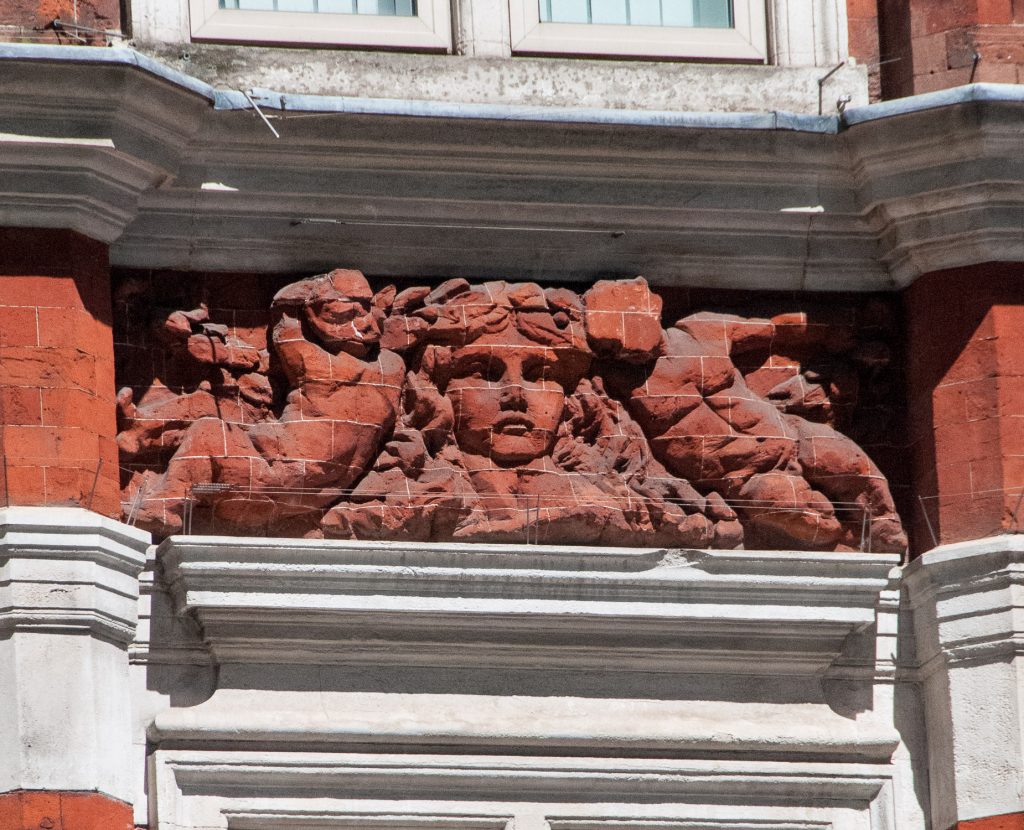
The Victorians paid a lot of attention to decorative detail and I really liked these two faces, carved into bricks, looking out over London Wall. I’ve nicknamed them Beauty …

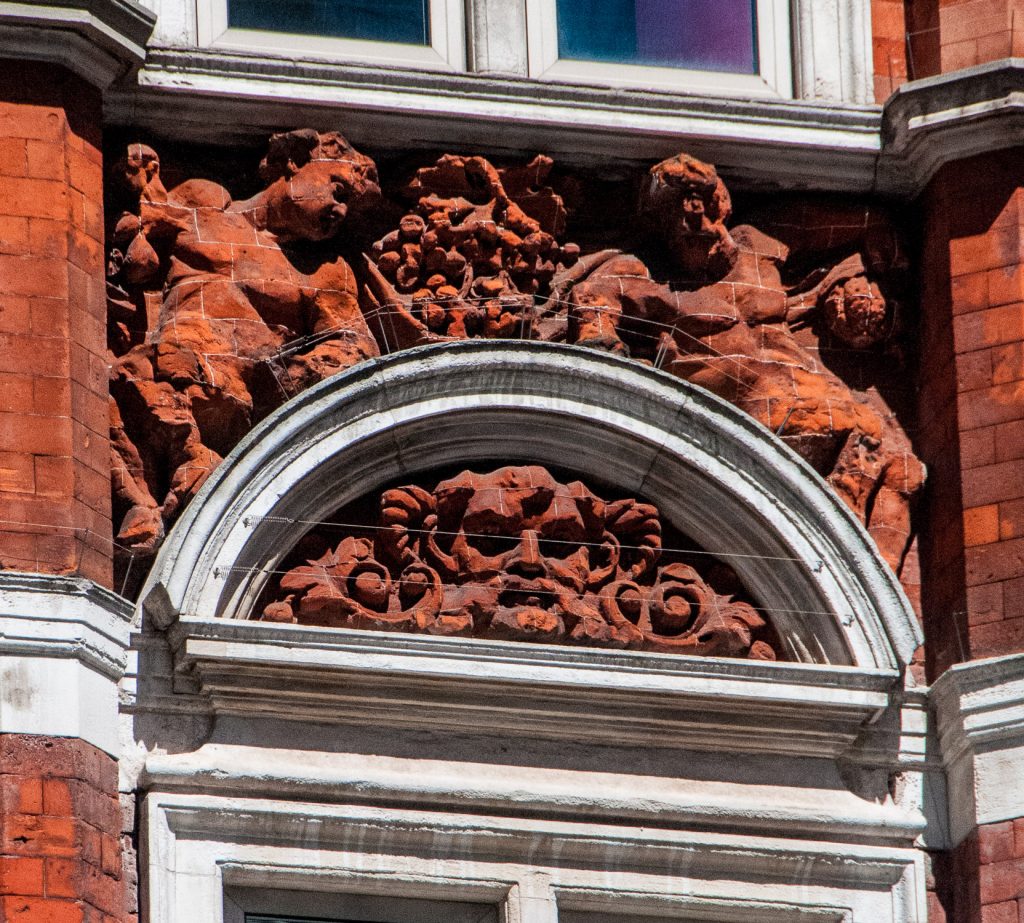
… and the beast …

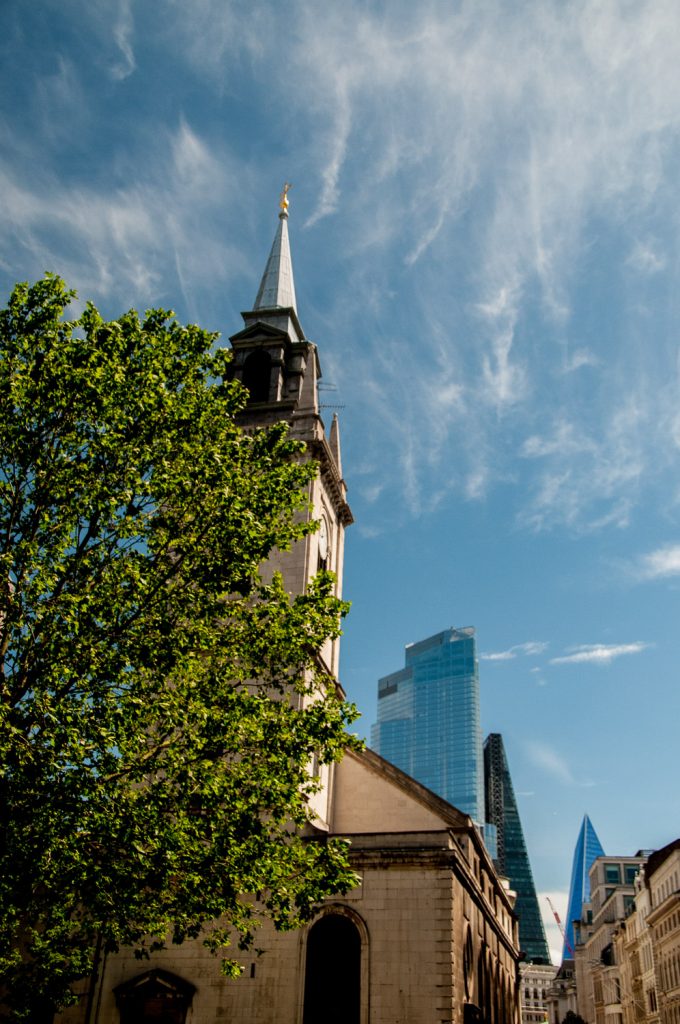
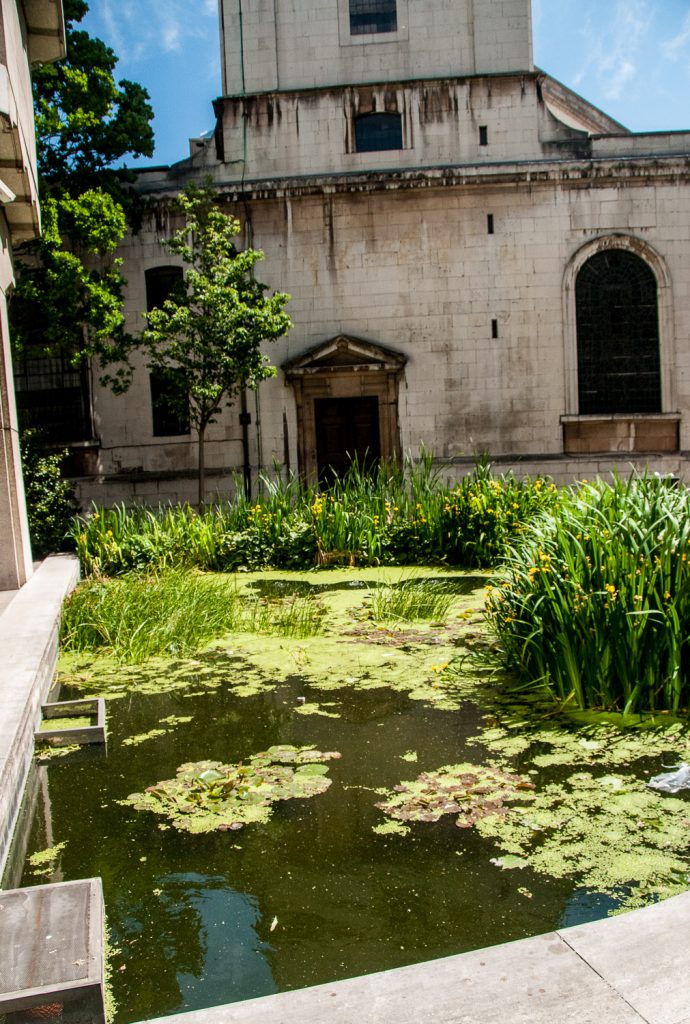
And while on the subject of beauties and beasts, take a look at this view from Gresham Street …

The church is St Lawrence Jewry and behind it some modern buildings that I like, the Cheesegrater and the Scalpel, and one I don’t, a characterless glass monster growing on Bishopsgate.

There’s a nice little pond in front of the church …

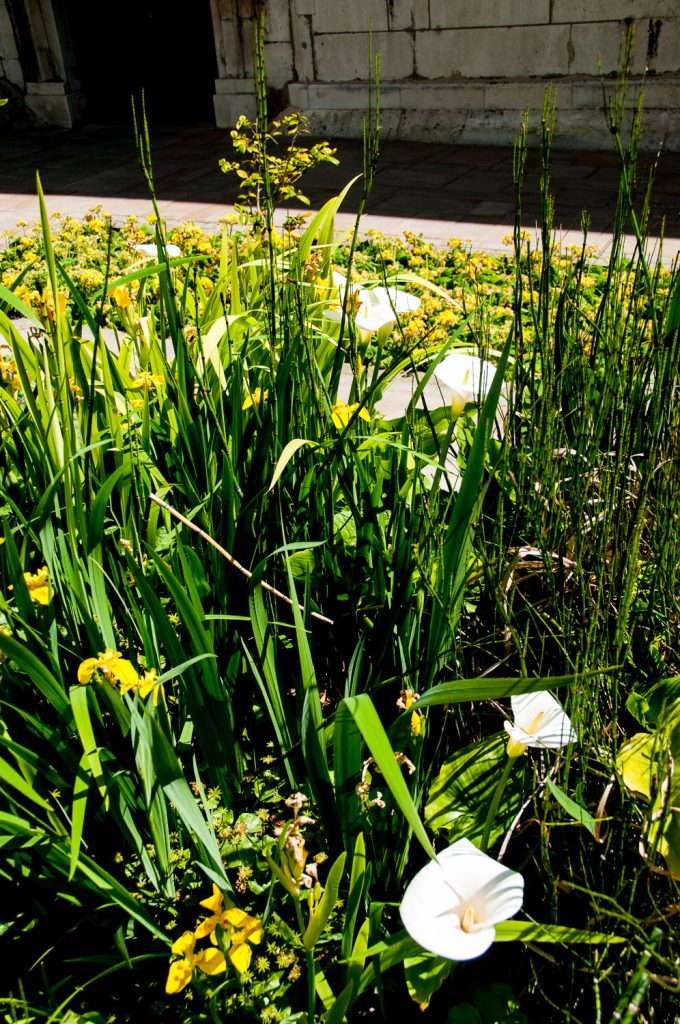
It’s home to these Arum Lilies and Irises …

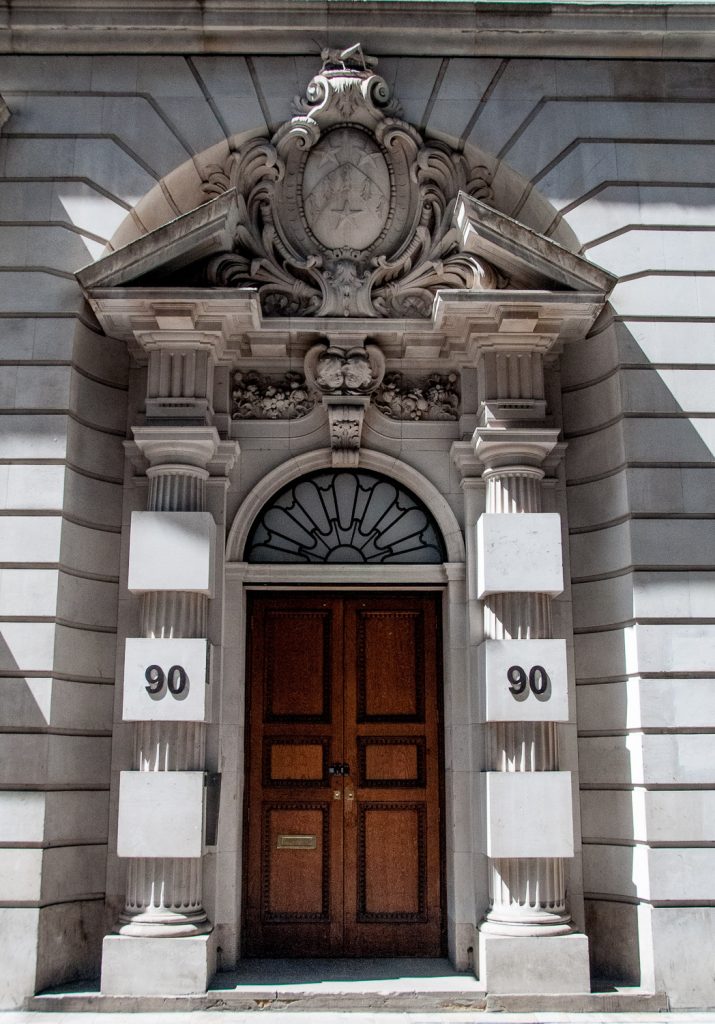
I have written before about Thomas Gresham and the college he founded was once based here at 90 Basinghall Street until 1991 (EC2V 5AY) …

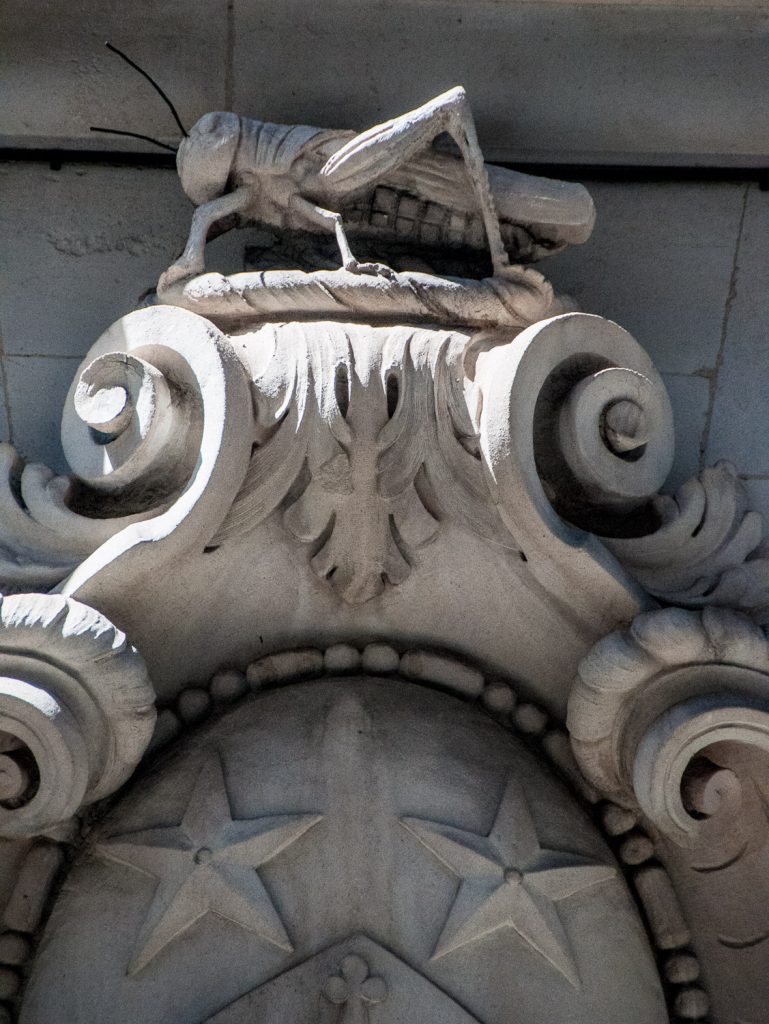
Above the coat of arms rests the symbolic Gresham grasshopper …

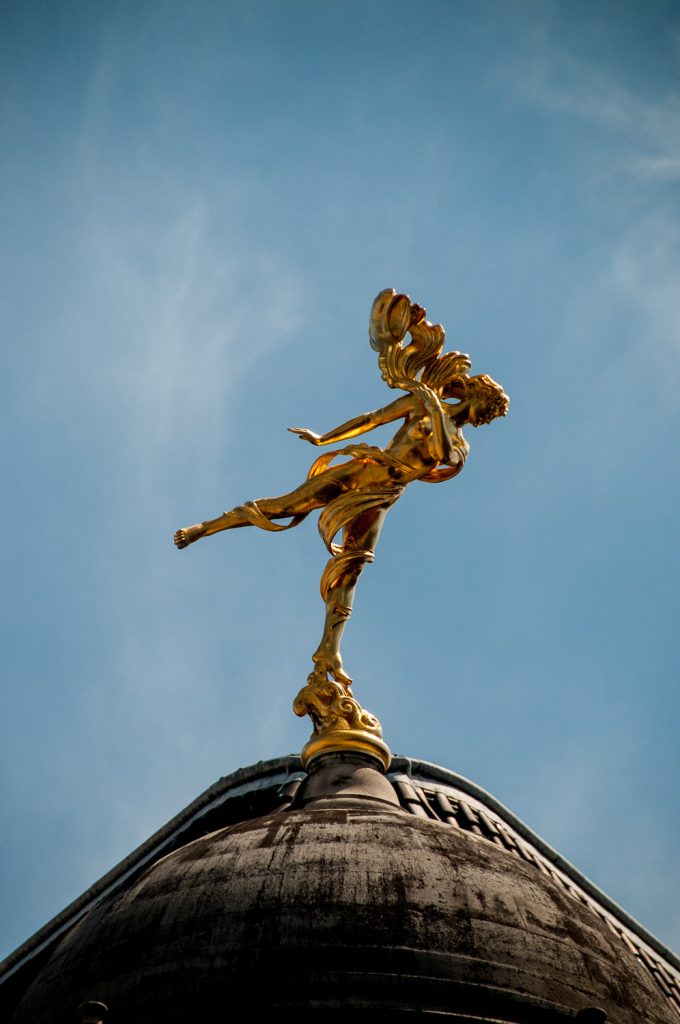
The sun was perfectly placed to illuminate Ariel or The Spirit of the Winds by Charles Wheeler. She’s positioned on a cupola above the Bank of England on Tivoli Corner …

When she was unveiled in 1937 the Bank’s magazine stated …

It is the symbol of the dynamic spirit of the Bank which carries Credit and Trust over the wide world.

Ariel was, of course, the Spirit of the Air in Shakespeare’s Tempest, who by Prospero’s magic could ‘put a girdle around the world in forty minutes’.

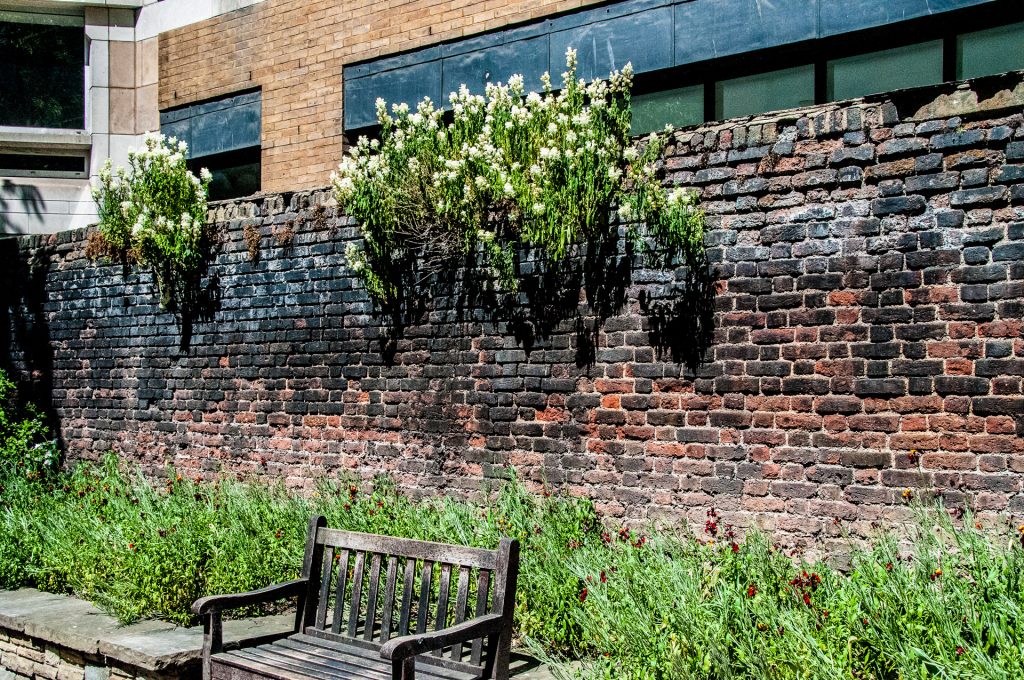
I’m fascinated by this old Wall on London Wall. I can’t find out more about it but it looks Medieval to me (EC2M 5ND) …

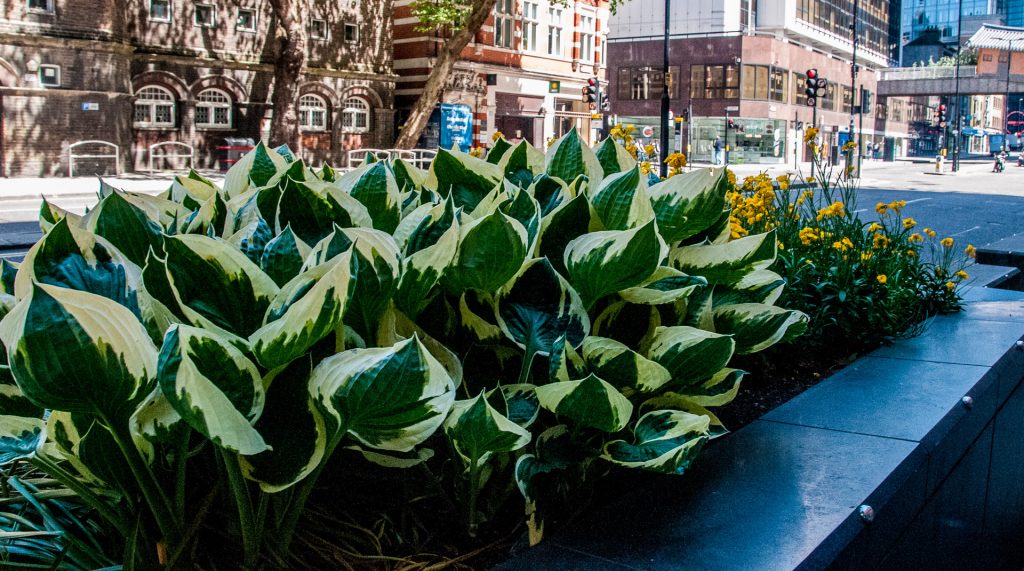
London Wall has lots of examples of the wonderful work the small team of City gardeners do to keep beds and parks looking good all year round …

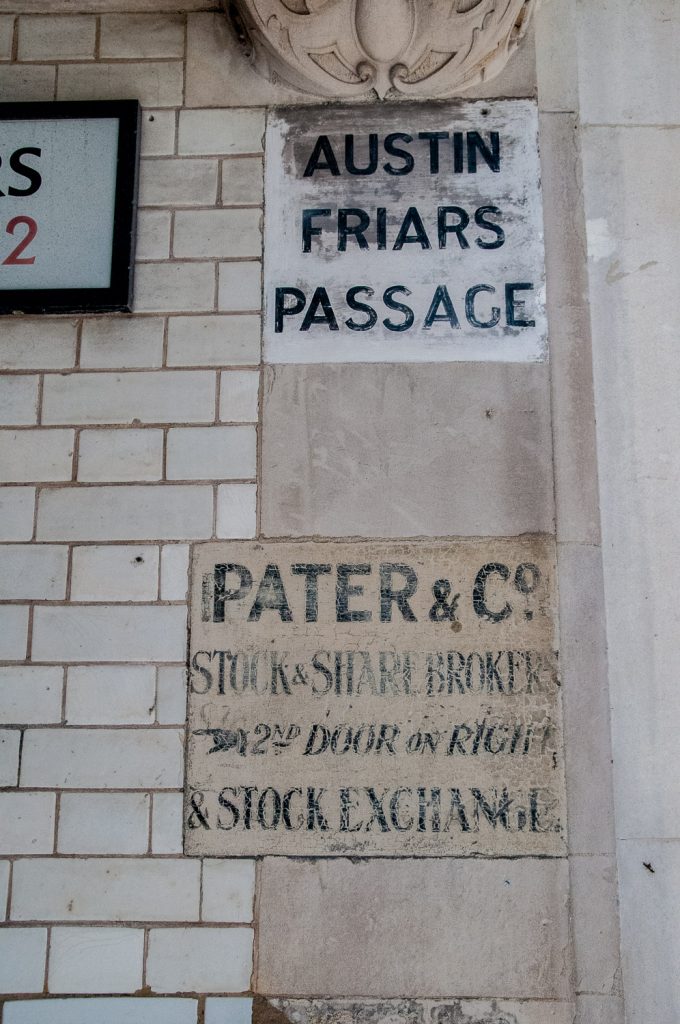
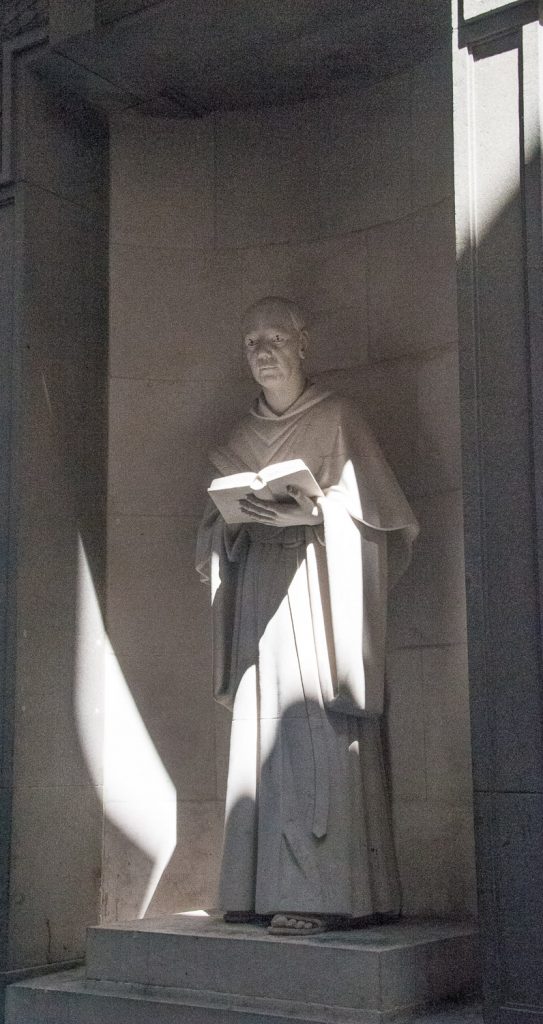
Austin Friars (off Old Broad street) was once the location of an Augustinian Friary until its dissolution in 1538. Walk in through an atmospheric doorway with its charming ghost signs …

When I visited the sun was in exactly the right place to illuminate the slightly spooky friar who reminds us of the area’s original purpose …

He resides at 4 Austin Friars, was sculpted by T Metcalfe and dates from 1989 (EC2N 2HA).

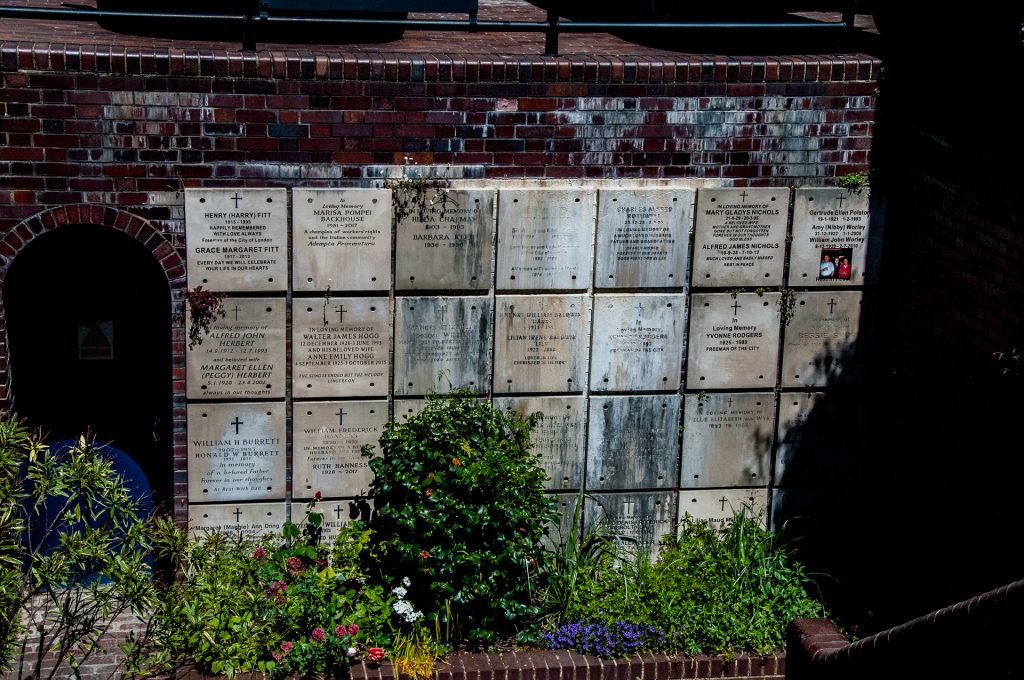
Near St Giles Cripplegate, the Columbarium is known as ‘one of London’s secret gardens.’ It lies to the east of the church down a flight of stairs. There are some niches on an outside wall and others are in a covered area enclosed by a gate …

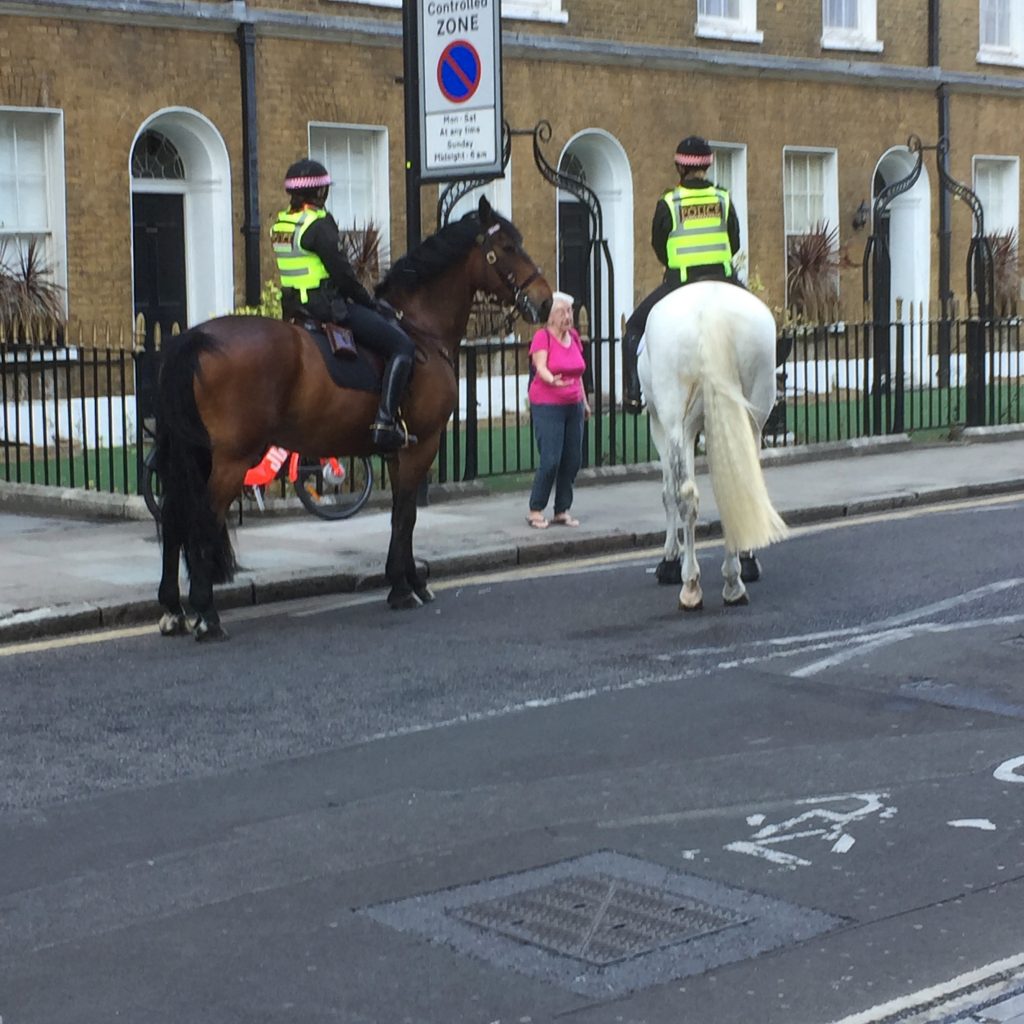
And finally, two of the City of London Police’s finest …

… and their riders.

I really enjoyed my little walk and I hope you enjoyed reading about it.

Remember you can follow me on Instagram :

https://www.instagram.com/london_city_gent/

St Sepulchre’s Church and Newgate Gaol

For centuries there was a close connection between the church and the notorious prison just across the road from it (EC1A 2DQ).

Demolished in 19o2 and standing where the Old Bailey is now, there had been a prison on the site since the 12th century. Over time the building had been consistently altered physically, but what did not change was its reputation for brutality, filth, sickness and death.

Newgate Gaol shortly before demolition.

The gallows loomed over the justice system. The first permanent version was set up at Tyburn in 1571 (roughly where Marble Arch is today) and prisoners were taken there through the streets from Newgate attracting vast crowds of spectators. The journey could take up to three hours with the carts stopping at taverns on the way where popular convicts were treated to drinks – sometimes the condemned men shouted ‘ I’ll buy you a pint on the way back’.

Getting ready for Tyburn ‘customers’. The Tyburn Tree by Wayne Haag from the Hyde Park Barracks Mural Project, Sydney, Australia.

After execution, which was often more like slow strangulation, fights frequently broke out over ownership of the body with relatives and friends fighting surgeons who were promised ten bodies a year for dissection.

While researching I came across this poem by John Taylor (1578-1653) …

I Have heard sundry men oft times dispute
Of trees, that in one year will twice bear fruit.
But if a man note Tyburn, ‘will appear,
That that’s a tree that bears twelve times a year.
I muse it should so fruitful be, for why
I understand the root of it is dry,
It bears no leaf, no bloom, or no bud,
The rain that makes it fructify is blood.
I further note, the fruit which it produces,
Doth seldom serve for profitable uses:
Except the skillful Surgeons industry
Do make Dissection of Anatomy.

To stamp out disorders, the Tyburn gallows was demolished in 1783 and executions moved to a spot outside Newgate itself …

A hanging outside Newgate in the early 1800s – Wikipedia.

Remarkably, a part of the old prison wall can still be seen at the end of the beautifully named Amen Corner, off the equally prettily named Ave Maria Lane (EC4M 7AQ) …

Amen Corner is now private property so this picture comes from the Internet.

Also, one of the doors condemned prisoners walked through to their execution is kept at the Museum of London …

Picture copyright Museum of London.

St Sepulchre’s Church today …

Look out for the sundial …

It is on the parapet above south wall of the nave and is believed to date from 1681. It is made of stone painted blue and white with noon marked by an engraved ‘X’ and dots marking the half hours. I wondered if the Newgate executioner might have taken the time from this dial to help him decide when to start the journey west to the gallows.

Incidentally, I have written about City Sundials before in a blog entitled We are but shadows. Also, on the corner of the churchyard, there is a famous drinking fountain which you can read about here.

Carts carrying the condemned on their way to Tyburn would pause briefly at the church where prisoners would be presented with a nosegay. However, they would already have had an encounter with someone from the church the night before. In 1605, a wealthy merchant called Robert Dow made a bequest of £50 for a bellman from the church to stand outside the cells of the condemned at midnight, ring the bell, and chant as follows:

All you that in the condemned hole do lie, Prepare you, for tomorrow you shall die; Watch all and pray, the hour is drawing near, That you before the Almighty must appear; Examine well yourselves, in time repent, That you may not to eternal flames be sent: And when St. Sepulchre’s bell tomorrow tolls, The Lord above have mercy on your souls.

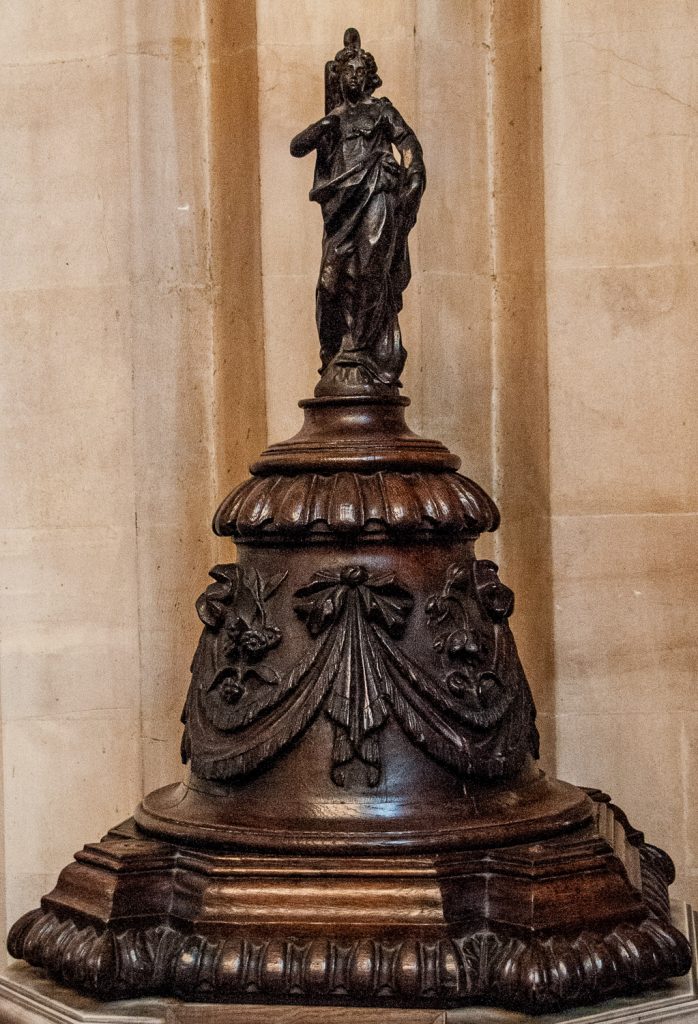
And you can still see the bell today, displayed in a glass case in the church …

Includes my reflection … whoops!

Adjacent to the bell is this helpful notice …

The last public hanging in England took place outside Newgate on 26 May 1868, the condemned man being the Fenian Michael Barrett who had been convicted of mass murder.

St Sepulchre-without-Newgate, to give it it’s full name, has other fascinating features which I shall write about in a future blog.

Remember you can follow me on Instagram :

https://www.instagram.com/london_city_gent/

Page 15 of 20

Powered by WordPress & Theme by Anders Norén

Symbols & Secrets
Privacy Overview

This website uses cookies so that we can provide you with the best user experience possible. Cookie information is stored in your browser and performs functions such as recognising you when you return to our website and helping our team to understand which sections of the website you find most interesting and useful.