Walking the City of London

Category: Quizzes Page 2 of 3

The Christmas Quiz!

Hello, friends, Happy Christmas!

It’s time again for the Christmas Quiz based on my blogs from 2022. I trust you are all OK in these difficult times and send you my very best wishes for 2023. I am sure that, like me, you hope that it will bring happier times for everyone than the year gone by.

Here are this year’s questions.

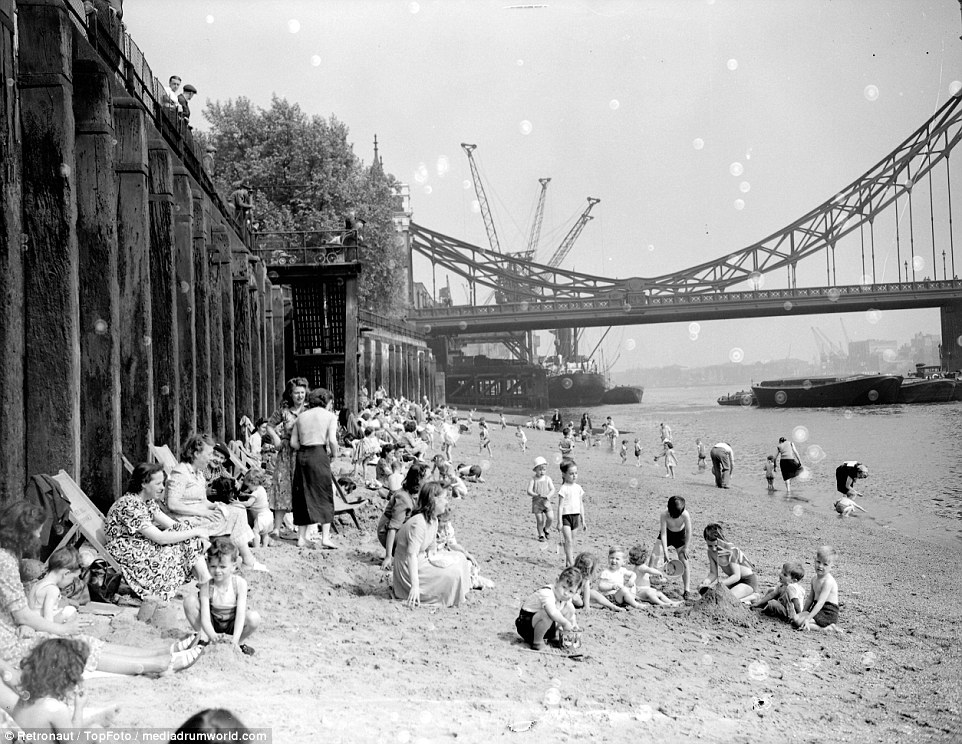
1. These families enjoying the pleasures of a sandy beach are not at the seaside. Where are they?
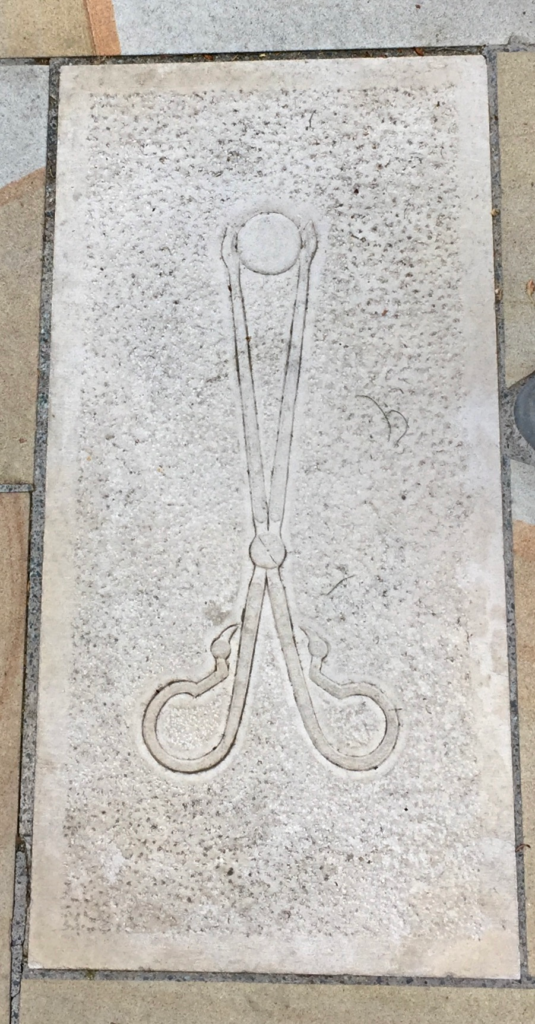
2. In the Seething Lane Garden a paving stone has a carving showing a pair of forceps and a bladder stone. Whose surgical operation is represemted?
3. Where will you find the extraordinary tomb of Dame Mary Page?
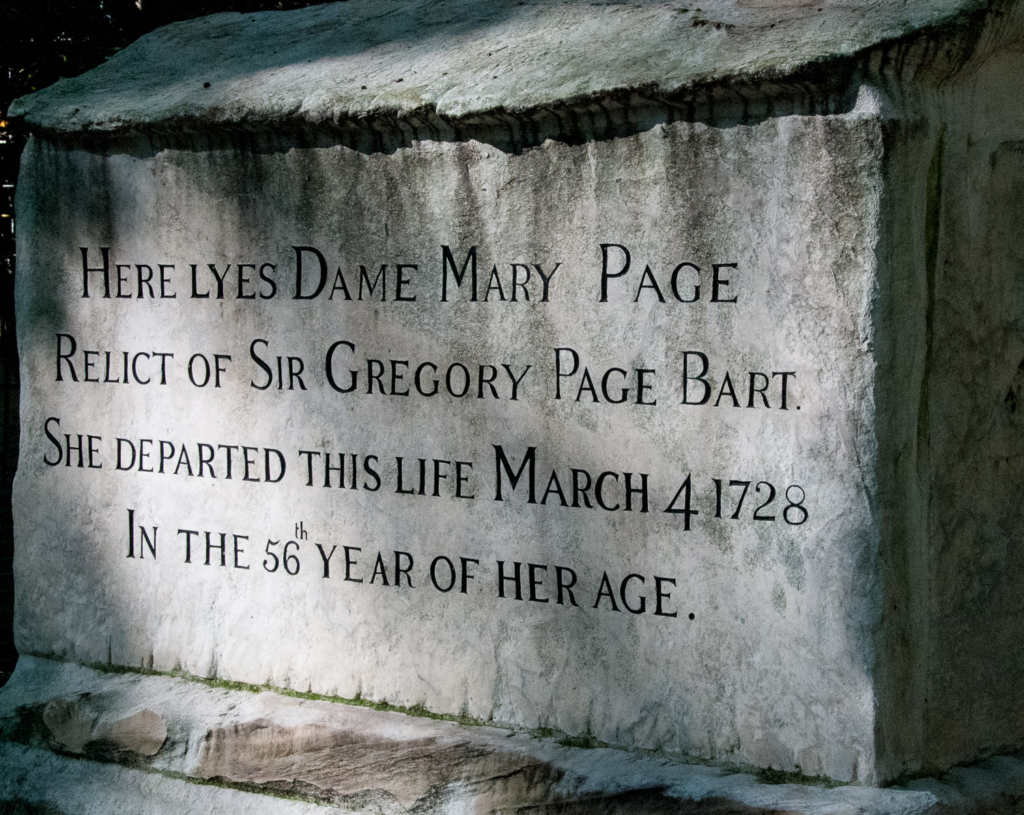
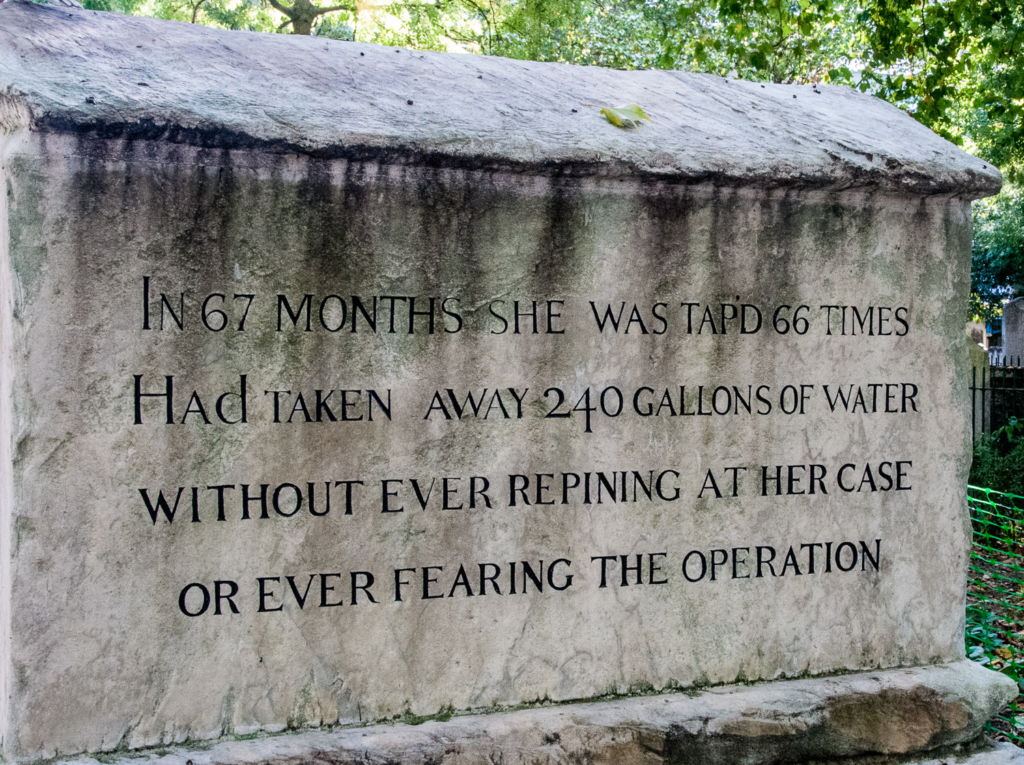
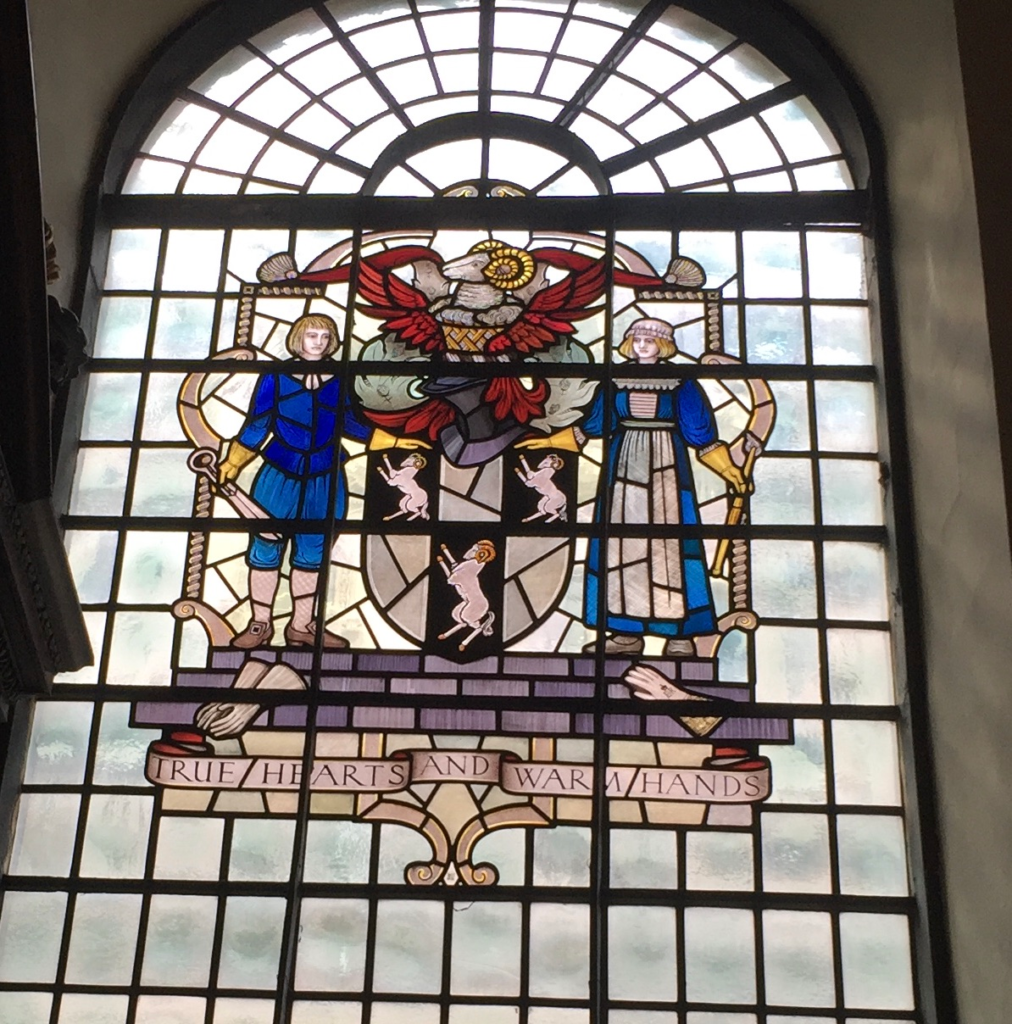
4. In St Margaret Lothbury you’ll find this lovely stained glass window showing the motto of one of the City Livery Companies – True Hearts and Warm Hands. What Livery Company is it?
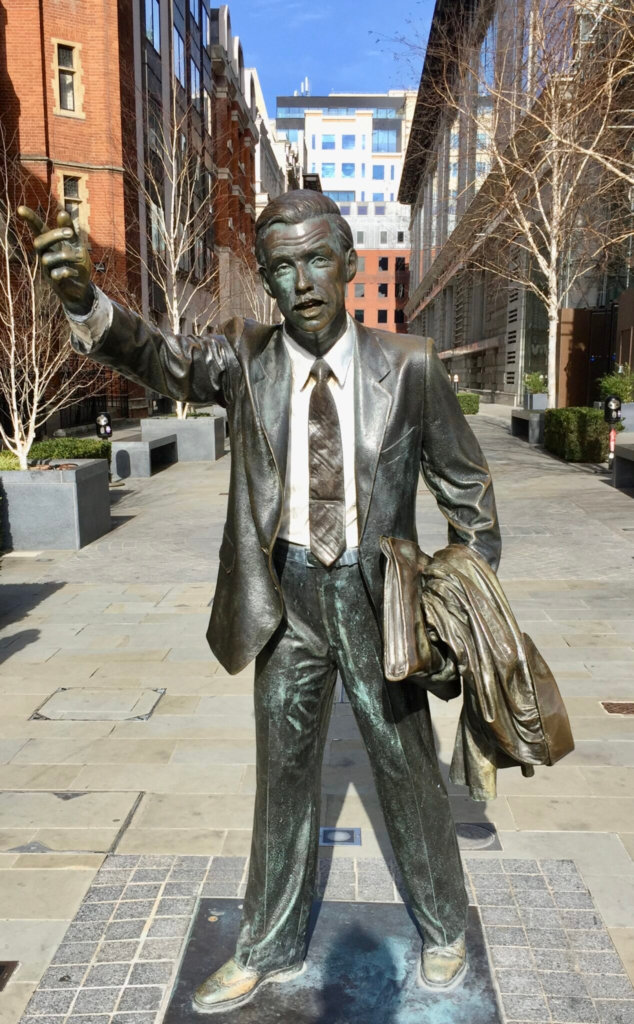
5. What is this chap up to and where is he?
6. In 1818 a coffin was patented that would be extremely difficult to open. It was made of iron with spring clips on the lid and an example is on display in St Bride’s Church Fleet Street …
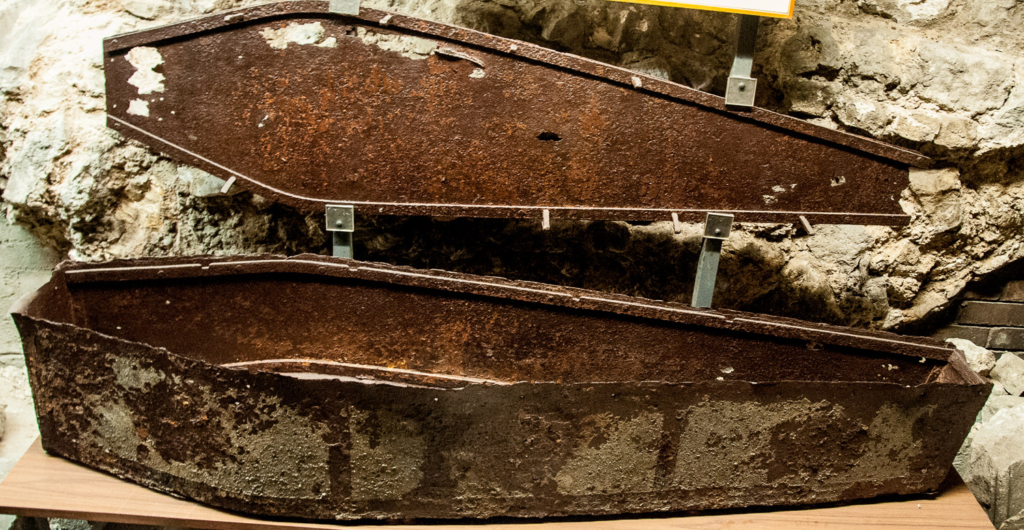
Why did people believe such an invention was needed?

7. A couple got married here in Wesley’s Chapel on 13 December 1951 and one of them went on to become Prime Minister, later donating this communion rail in 1993 …
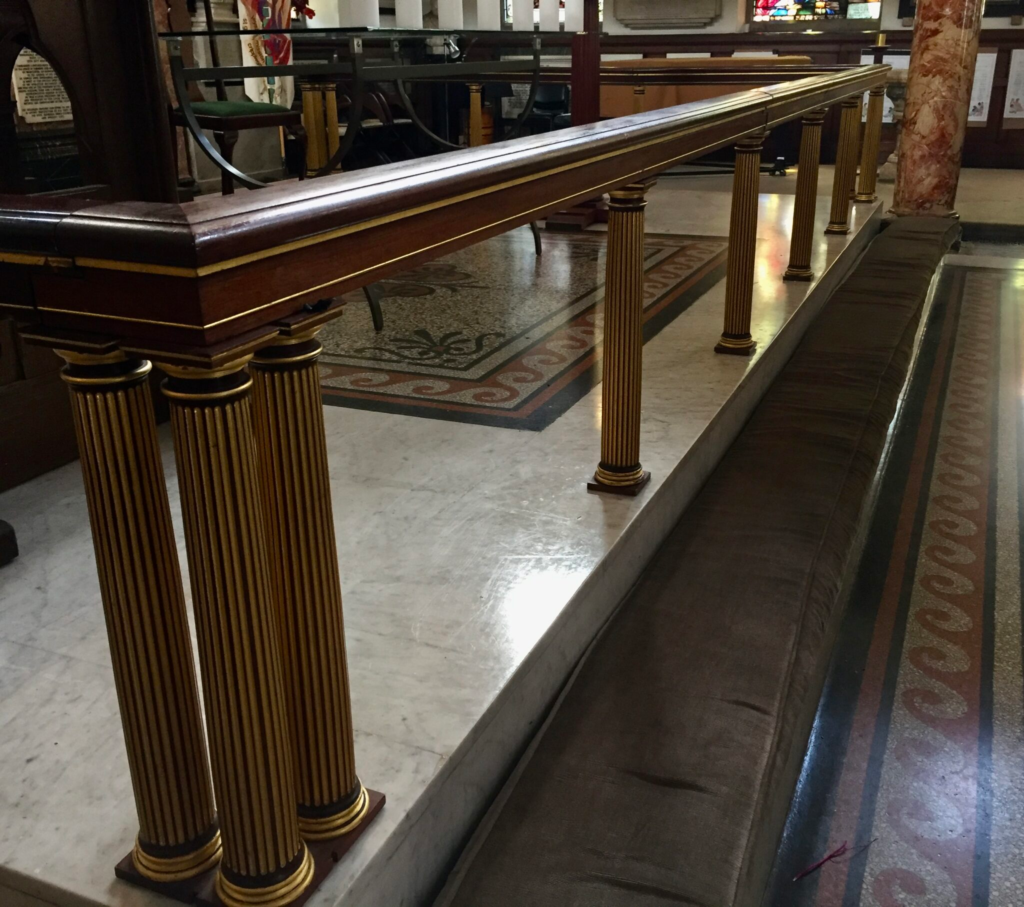
What were the names of the couple?

9. Outside the Guildhall, this sculpture shows a man pausing on Highgate Hill having just heard the bells of St Mary-le-Bow ring out a message. He’s giving it some serious thought as his cat curls around his legs (note the tear in his leggings indicating that he has experienced hard times) …
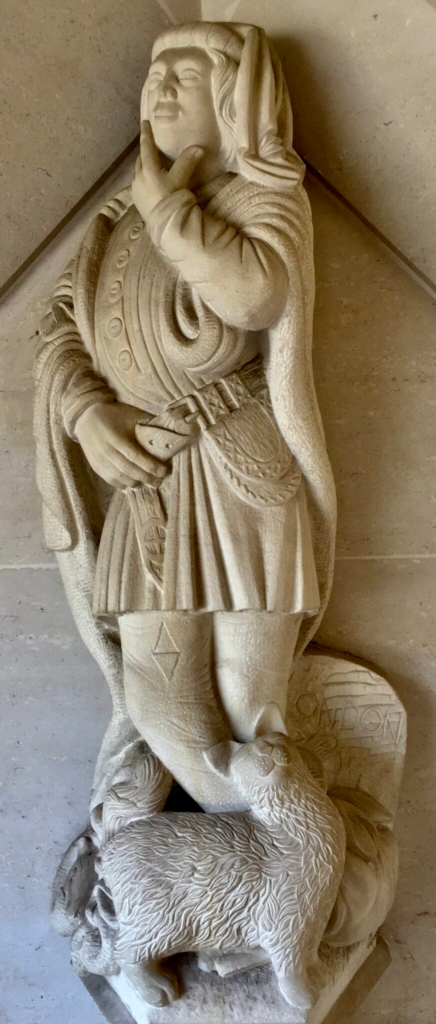
Who is he? And what was the message he heard?

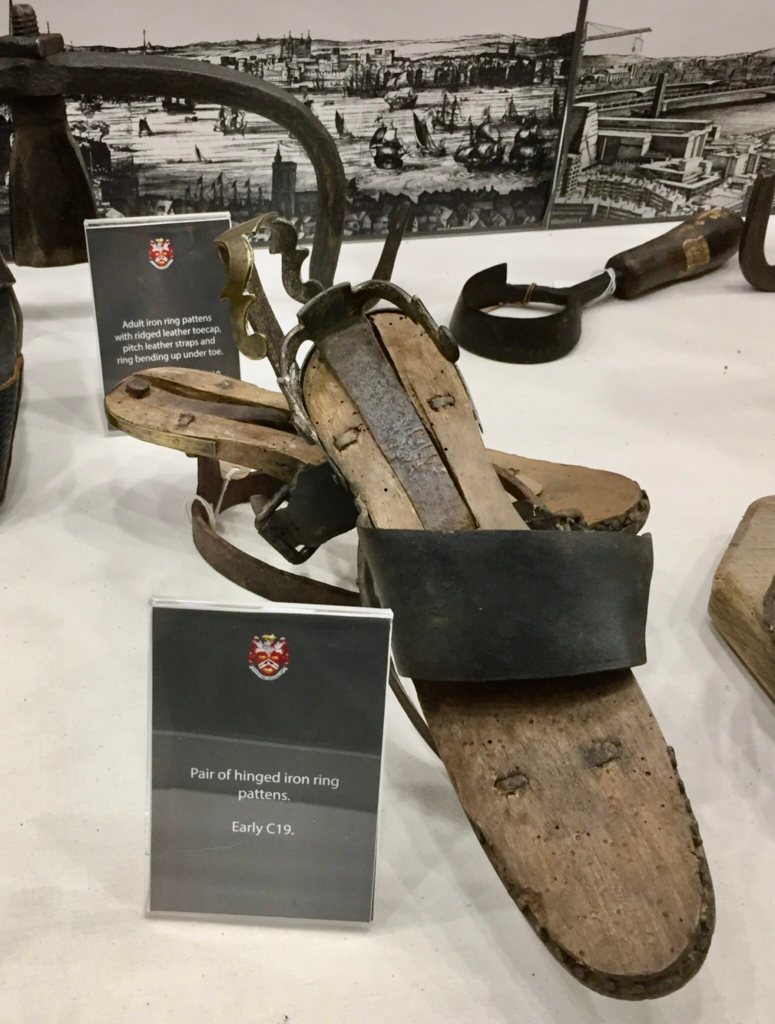
10. What were these items of footwear for and what City church hosts this little exhibition?
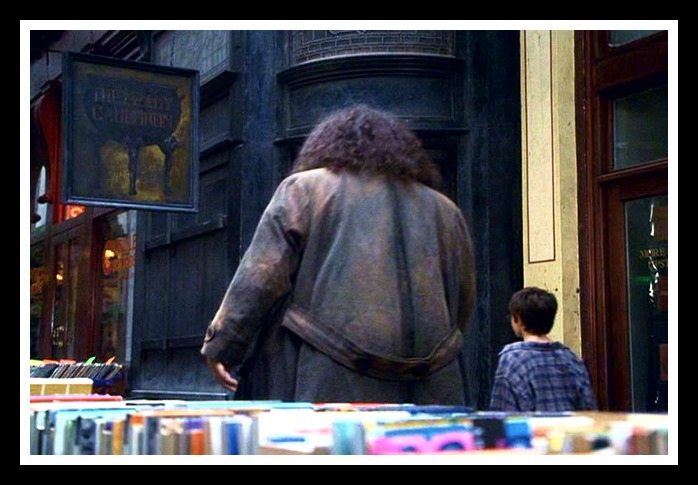
11. This door in Leadenhall Market at 42 Bull’s Head Passage is featured in a Harry Potter film. What part did it play?
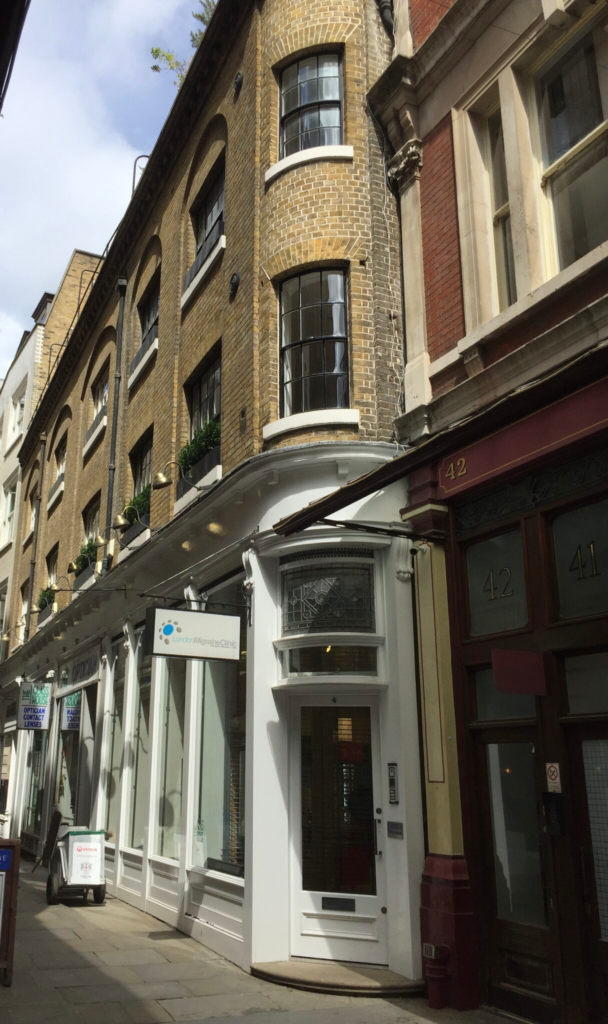
12. Looking down onto the Thames River bed one can often see red tiles, bits of chalk and oyster shells. How did they get there?

13. What busy London railway terminus was home to the London Necropolis Company whose trains carried coffins containing deceased Londoners out of the capital to the new cemetery at Brookwood?
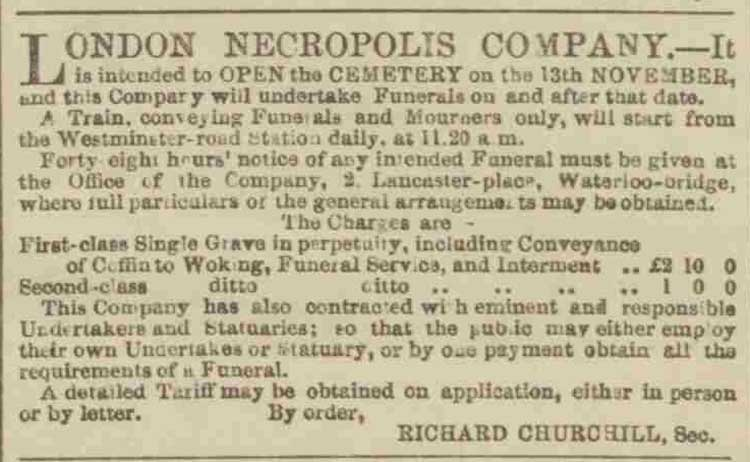
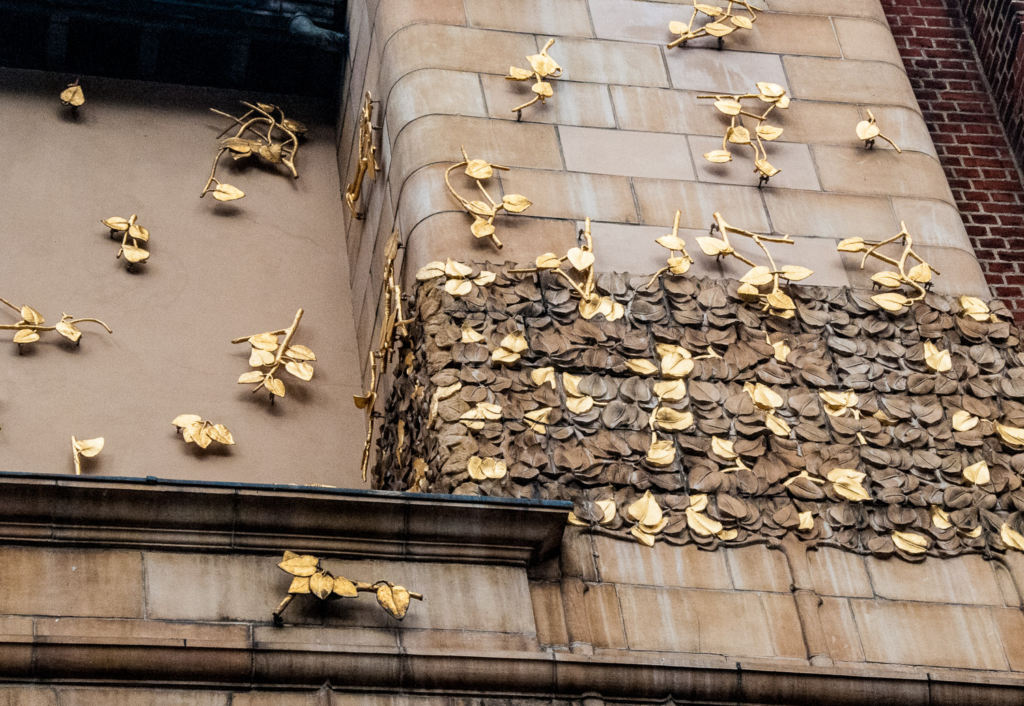
14. What East End Gallery boasts these beautiful leaves covered in gold leaf by the artist Rachel Whiteread?
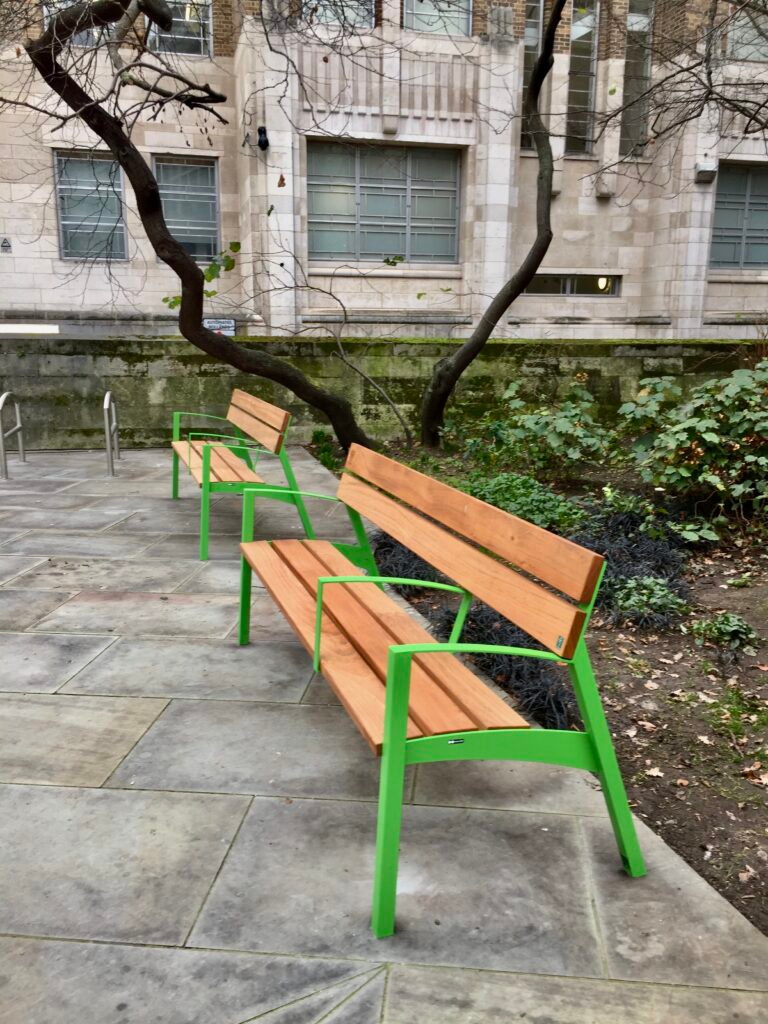
15. The tree in the background is Cercis siliquastrum, but what is its more sinister nickname?
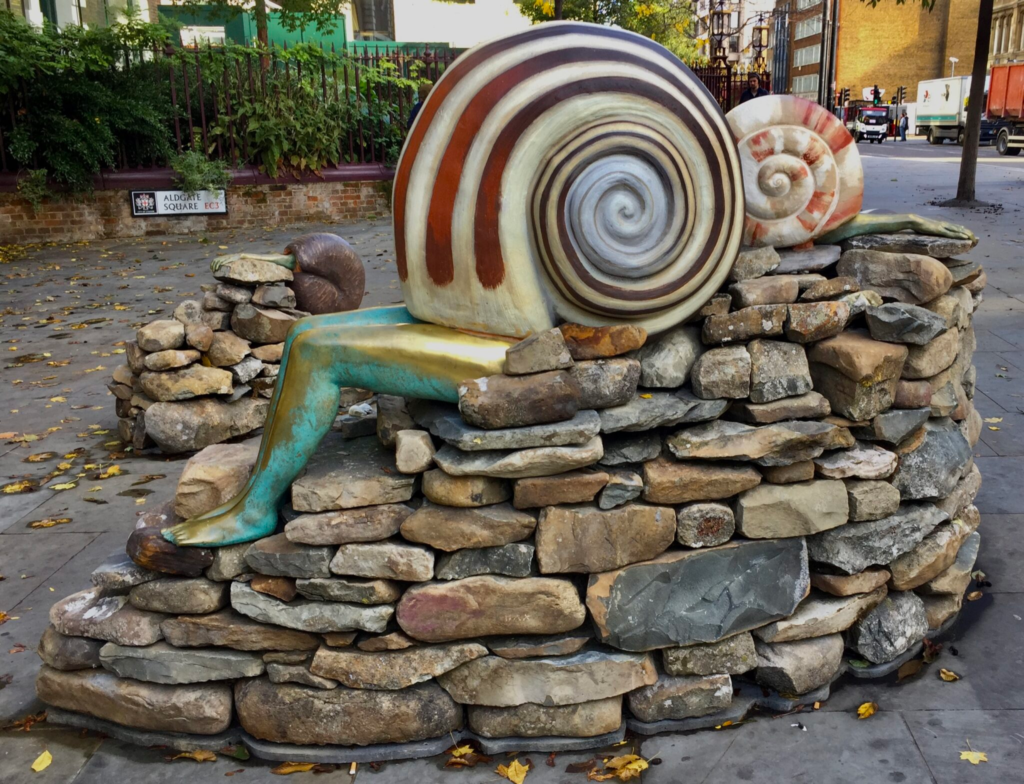
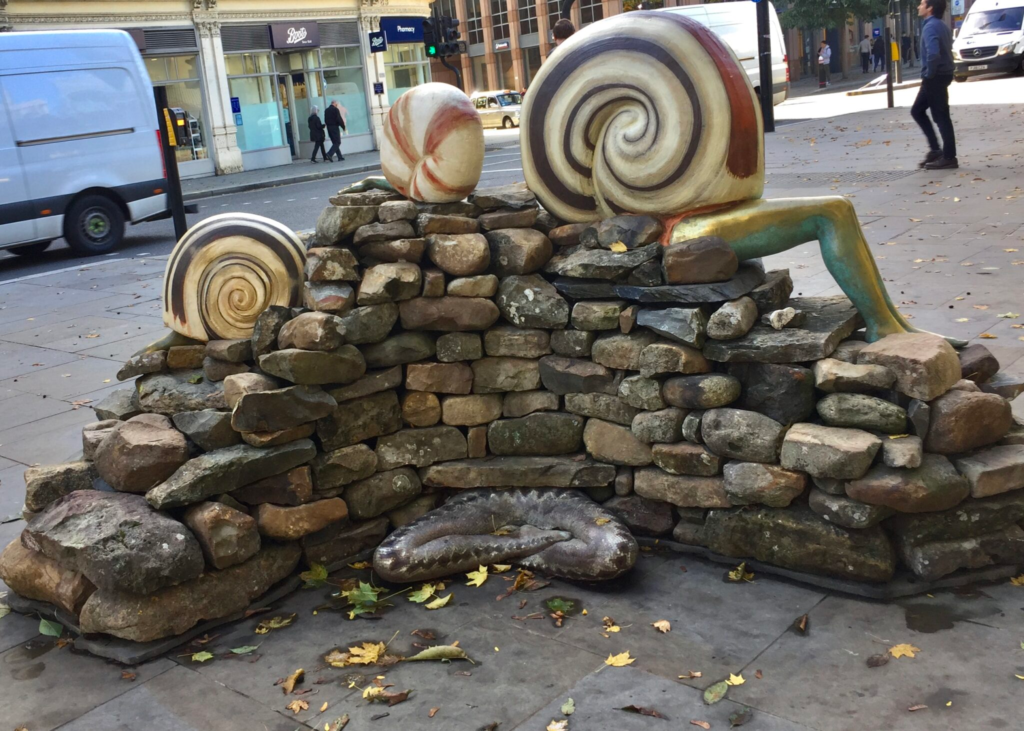
16. This sculpture is part of the 2022 Sculpture in the City project. Where can it be found?
17. This is the face of a young woman found drowned in the River Seine in Paris in the late 1880s. No one could identify the body, but the pathologist reportedly became fascinated with her serene expression and commissioned a death mask. Soon multiple reproductions were on sale throughout Paris …
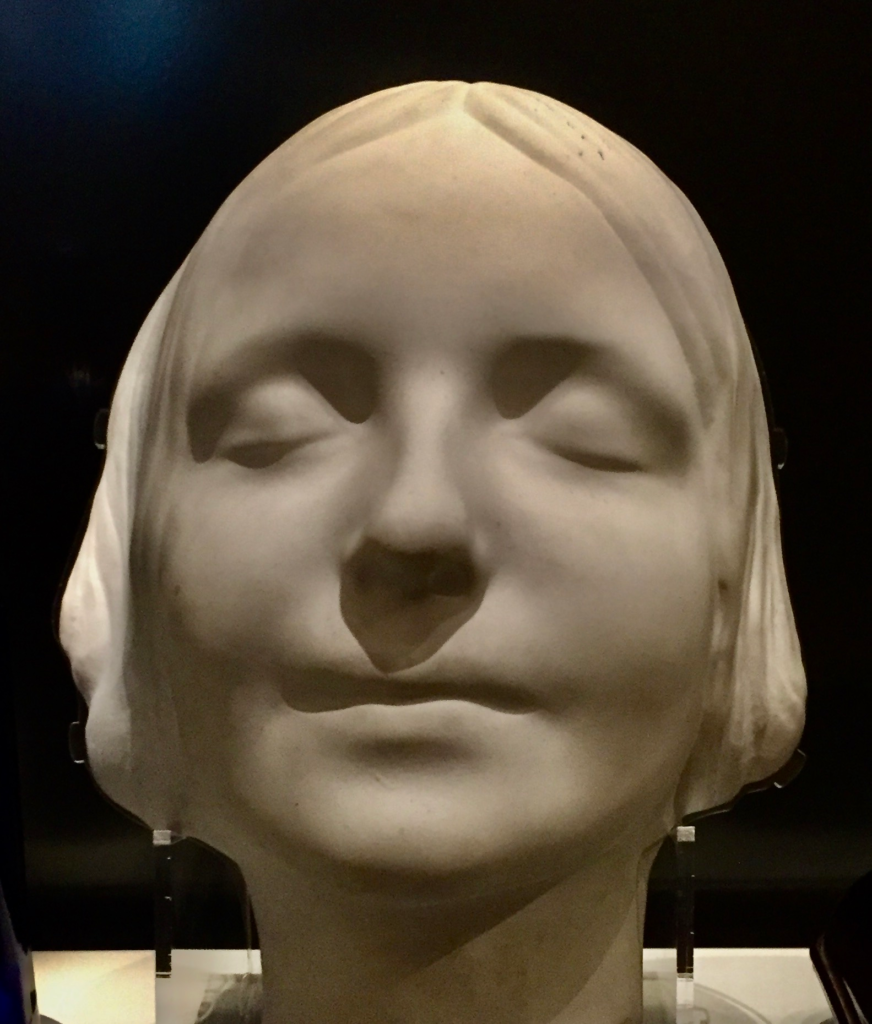
However, she later became very well known for another reason. What was it?

18. Described as ‘the most outstanding English poet before Shakespeare’ here he is in the Guildhall Art Gallery …
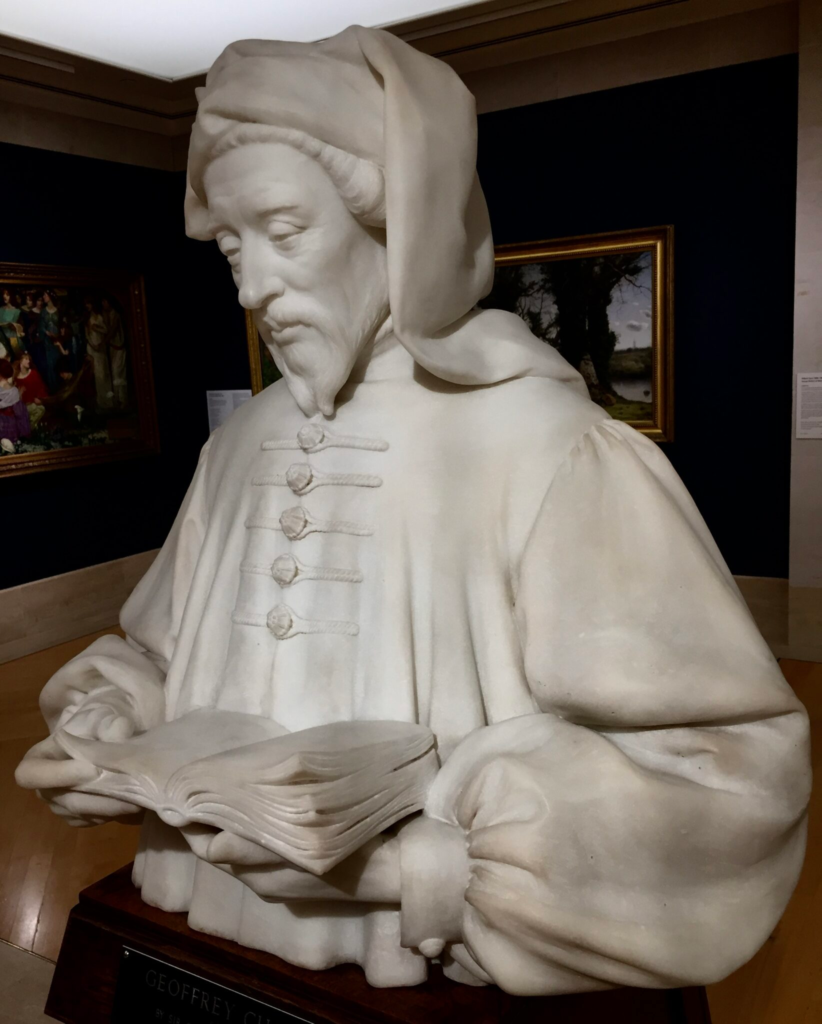
Who was he and what is his most famous work?

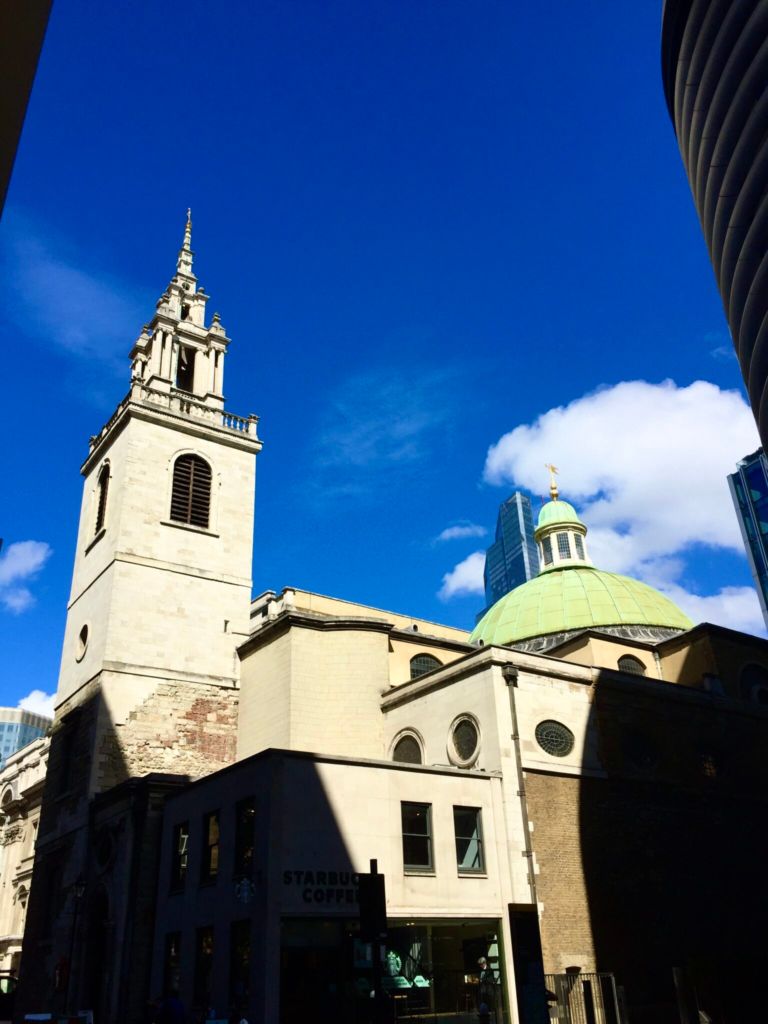
19. This church’s dome, dating from 1672, was Christopher Wren’s prototype for the dome of St Paul’s Cathedral. It was the first classical dome to be built in England at the time. What’s the name of the church?
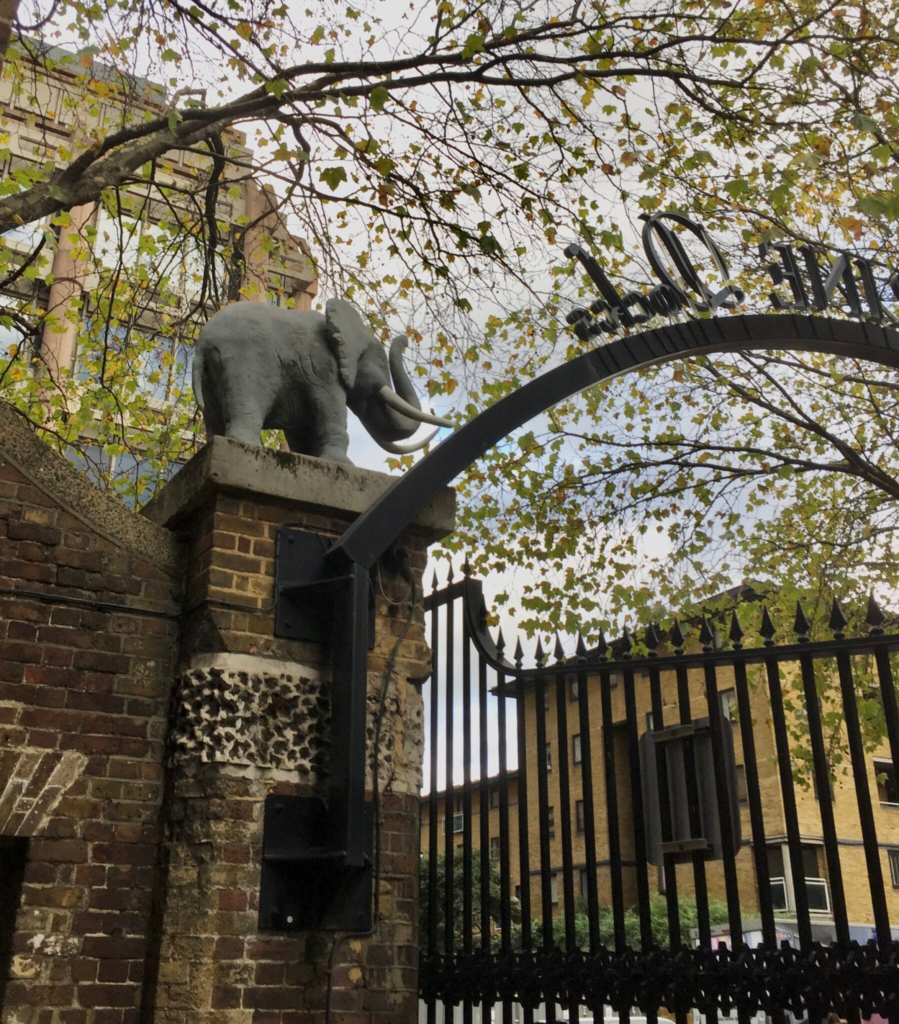
20. This is the entrance to what was once one of the most heavily guarded areas areound St Katharine Docks. Can you guess what was stored there?
Answers to the quiz along with links to previous blogs and sources :

1. People had walked on the Thames foreshore for thousands of years but Tower Beach, as it was known, was created in 1934 by bringing 1,500 barge loads of sand to the site alongside the Tower of London. When it was officially opened, King George V decreed that the beach was to be used by the children of London, and that they should be given ‘free access forever’. Read all about it here along with some great images.

2. Samuel Pepys – at the age of 25 he survived an operation to remove a bladder stone ‘the size of a tennis ball’. You’ll find my blog about the garden here.

3. In the Bunhill Burial Ground. It appears that Mary Page suffered from what is now known as Meigs’ Syndrome and her body had to be ‘tap’d’ to relieve the pressure. She had to undergo this treatment for over five years and was so justifiably proud of her bravery and endurance she left instructions in her will that her tombstone should tell her story.

4. It’s The Worshipful Company of Glovers of London. Here’s the link to the blog about this window and other fascinating aspects of the church.

5. Taxi! by the American Sculptor J Seward Johnson is cast bronze and is now interestingly weathered. If you think the baggy trousers, moustache and side parting are erring on the retro, that’s because this particular office worker was transferred from New York in 2014. It was sculpted in 1983 and originally stood on Park Avenue and 47th Street. It’s now on the north side of Queen Victoria Street. Read more about what’s in the fairly close vicinity here.

7. Until well into the 18th century the only source of corpses for medical research was the public hangman and supply was never enough to satisfy demand. As a result, a market arose to satisfy the needs of medical students and doctors and this was filled by the activities of the so-called ‘resurrection men’ or ‘body snatchers’. Some churches built watchtowers for guards to protect the churchyard, but these were by no means always effective – earning between £8 and £14 a body, the snatchers had plenty of cash available for bribery purposes.

One answer was a coffin that would be extremely difficult to open and such an invention was patented by one Edward Bridgman of Goswell Road in 1818. Read more about the St Bride’s Museum where it’s on display here.

8. Margaret Thatcher (then Margaret Roberts) married Denis Thatcher here on 13 December 1951 and both their children were christened here. Read more about the Chapel here.

9. Dick Whittington is on Highgate Hill and the message from the bells of St Mary-le-Bow declares ‘Turn again Whittington, thrice Lord Mayor of London’. Well, the bit about him being Lord Mayor is true, and it was four times rather than three, but two of the terms were consecutive. Unlike the pantomime story, the historical Richard Whittington (1358-1423) was the youngest son of Sir William Whittington, a wealthy Gloucestershire Squire. By his early thirties, he was a successful London mercer and extremely weathy in his own right (and there is no record of him ever owning a cat). You can read more about him here.

10. Pattens were under-shoes slipped on to protect the wearer’s shoes or clothing – not least from the filth on the streets in the Middle Ages. The church hosting the lttle display is St Margaret Pattens and has long had an association with the Pattenmakers’ Guild.

11. It plays the door of The Leaky Cauldron, a popular wizarding pub. Here Hadrig leads Harry through the ‘pub door’ …
12. The picture, taken at Queenhithe Dock, shows a collection of medieval (and possibly Roman) roof tiles. Oysters were once a common food for the population (even poor folk) and large chalk beds were once laid down to provide a soft settling place for barges at low tide.

13. It was Waterloo Station. Read more about the Necropolis company’s fascinating history here.

14. It’s the Whitechapel Gallery – read more about it and see more images here.

15. It is also known as the ‘Judas tree’. This comes from the legend that Judas Iscariot, full of shame after his betrayal of Jesus, hanged himself from one of its branches. You’ll find the relevant blog here.

16. Aldgate Square – if you look closely you can just read the street sign. Here’s a link to this and other works.

17. In the 1950s a Norwegian toymaker, Asmund Laerdal, was commissioned to produce a mannequin in which people could practise mouth-to-mouth and cardiopulmonary resuscitation (CPR). Seeking a non-threatening model, he chose LInconnue (as she was known) and when his mannequin was mass-produced she became world-famous for a second time, known to this day as ‘Resusci Anne’. The death mask pictured here is held in the fascinating Museum of the Order of St John.

18. This is Geoffrey Chaucer and the most famous of his works was The Canterbury Tales.

19. It’s St Stephen Walbrook. Read about a visit I made there four years ago here.

20. Ivory, of course, in a specially designed building. Read all about it and other fascinating sights around St Katharine Docks here.

I hope you enjoyed doing the Quiz and found it fun – my very best wishes for Christmas and the New Year.

If you would like to follow me on Instagram here is the link …
https://www.instagram.com/london_city_gent/

The Christmas Quiz!

Hello, friends, Happy Christmas!

It’s time again for the Christmas Quiz based on my blogs from 2021. I trust you are all OK in these difficult times and send you my very best wishes for 2022. I am sure that, like me, you hope that it will bring happier times for everyone than the year gone by.

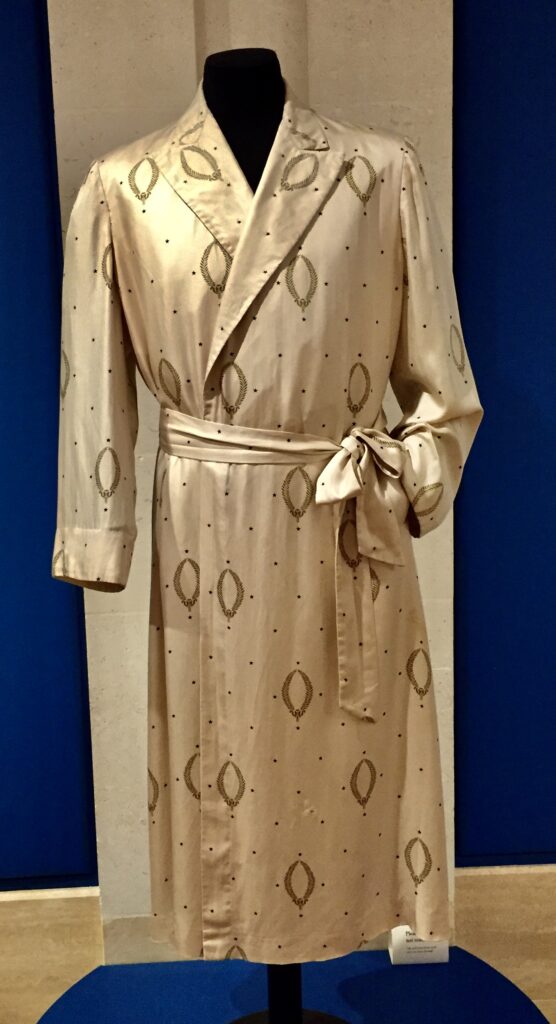
1, Whose dressing gown is this? He wore it when he met Frank Sinatra in Las Vegas in 1955 …

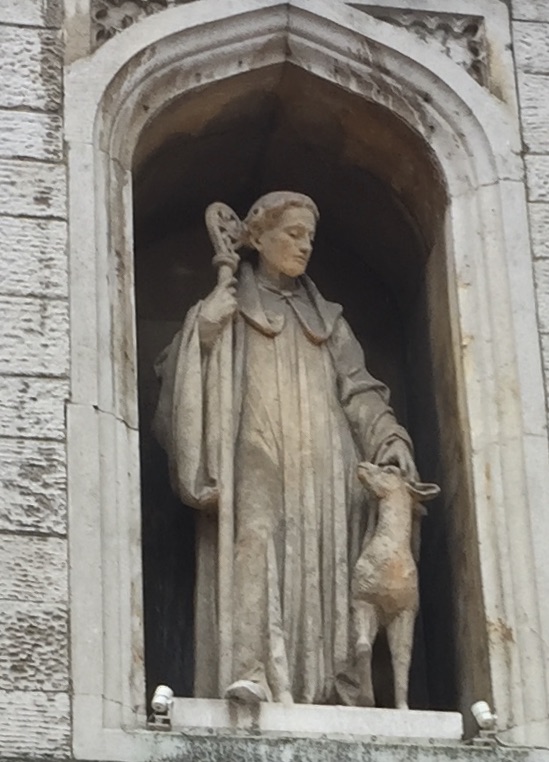
2. Who is this, holding a protective arm over a hind?

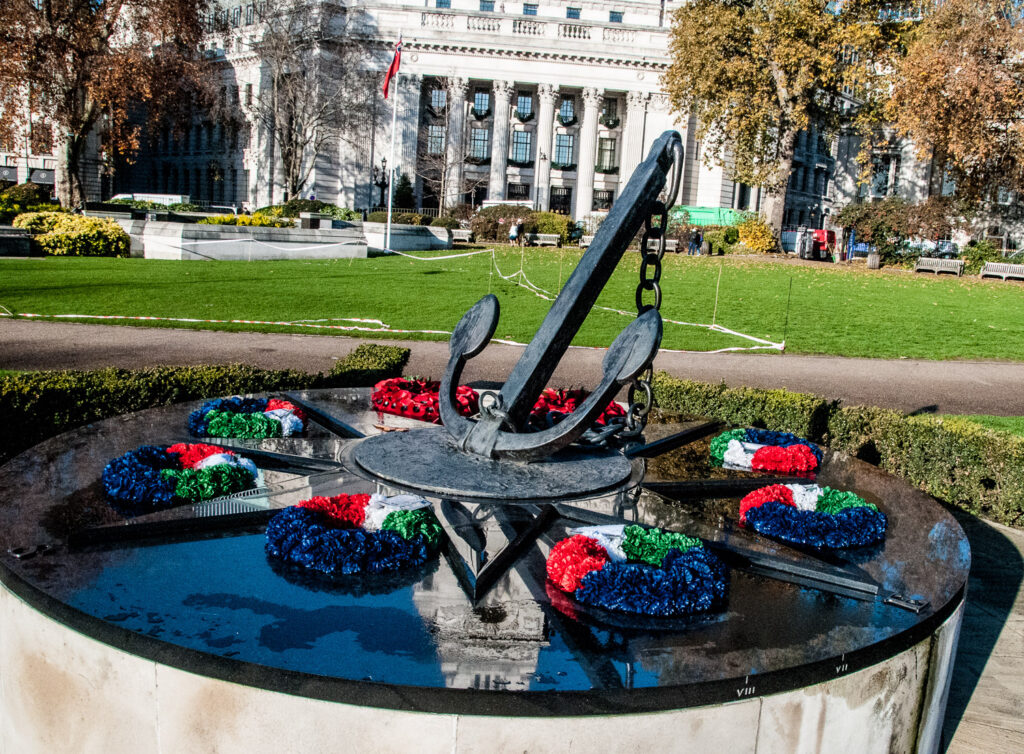
3. What conflict does this memorial on Tower Hill commemorate?

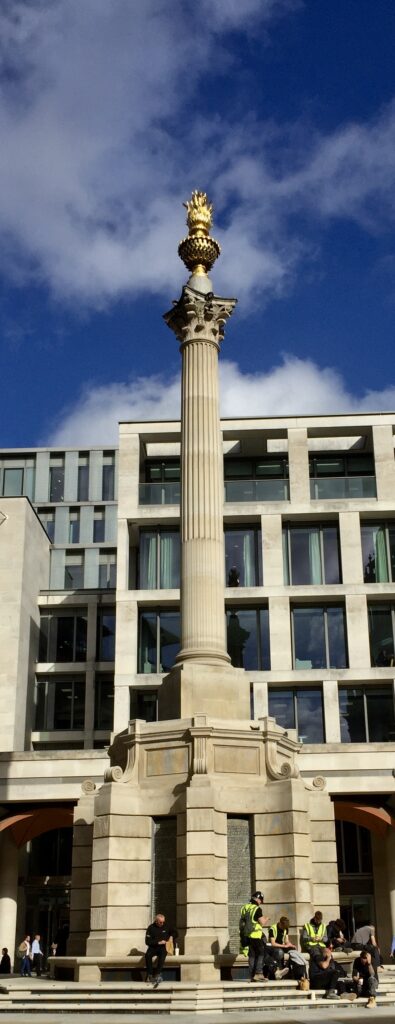
4. This elegant column in Paternoster Square also has a practical purpose. What is it?

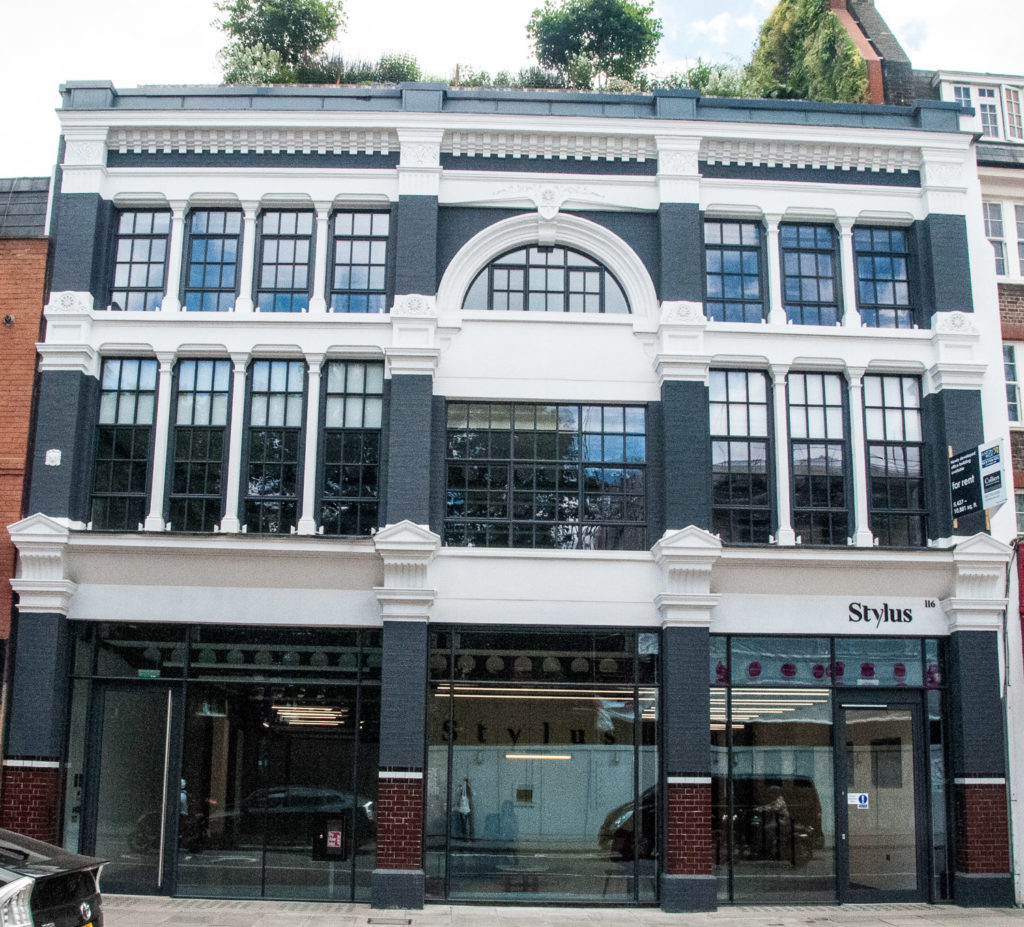
5. Number 116 Old Street used to be the Margolin Gramophone Company factory. They manufactured a record player that was very famous right through from the 1950s to the early 1970s. What was it called?

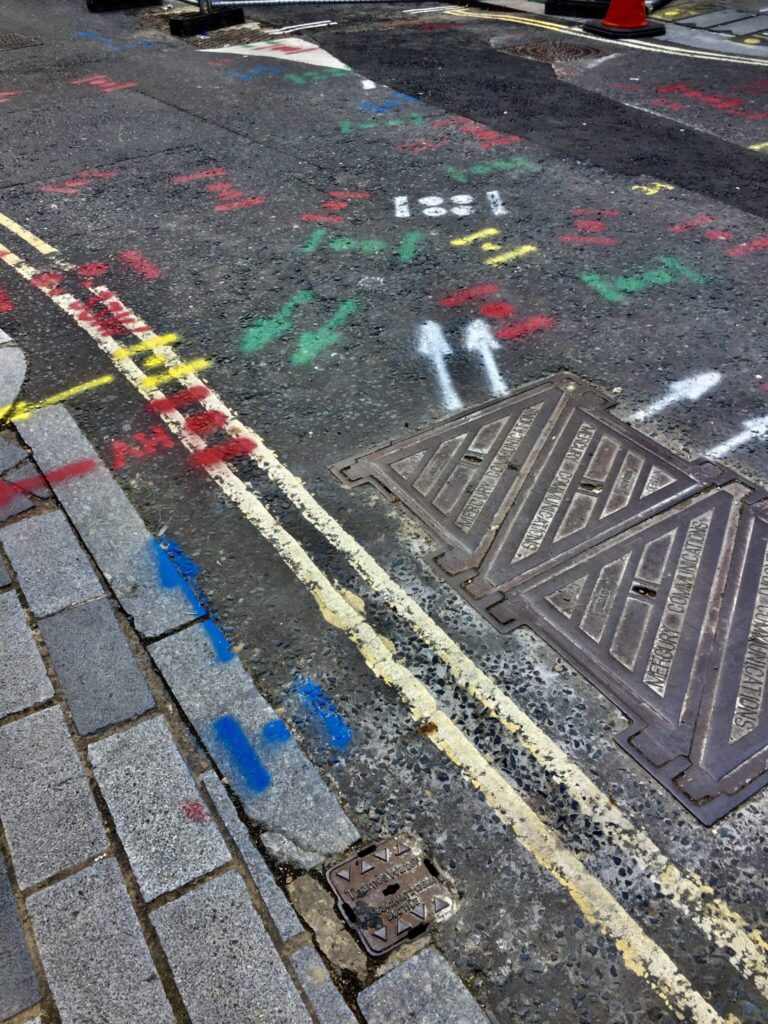
6. Coloured lines painted on the roads and pavements carry messages for workers who may have to dig there. What do red lines signify?

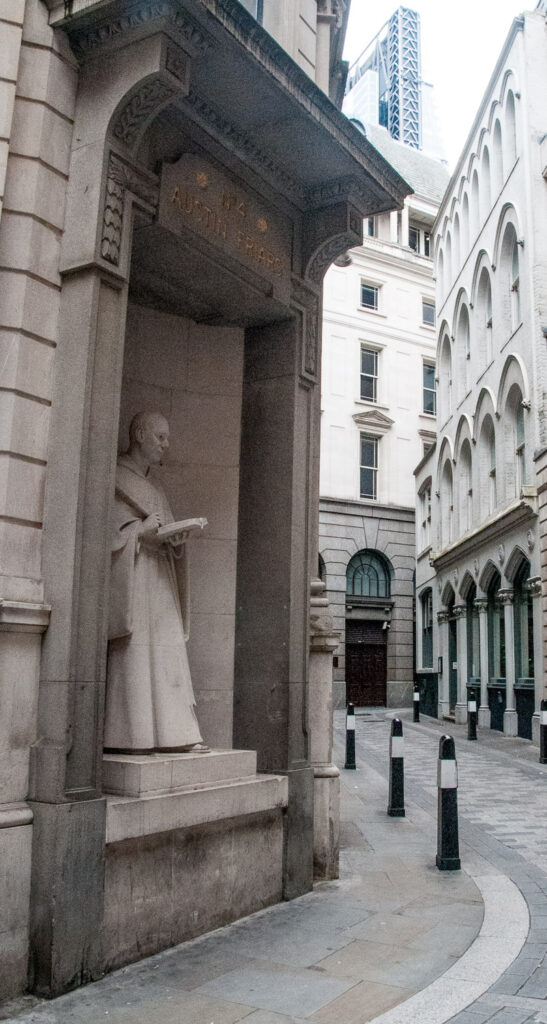
7. This studious monk looks down at his missal in Austin Friars. What order of monks had their monastery here before the dissolution?

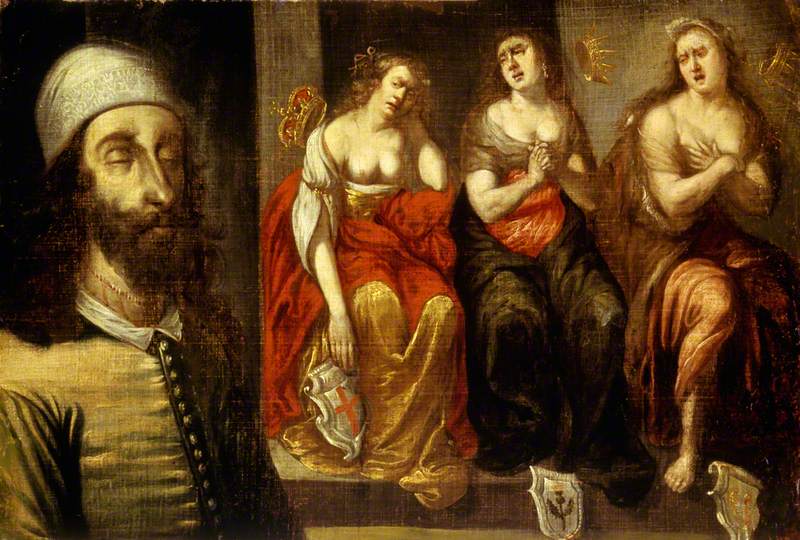
8. Who is this with their post-execution head stitched back on?

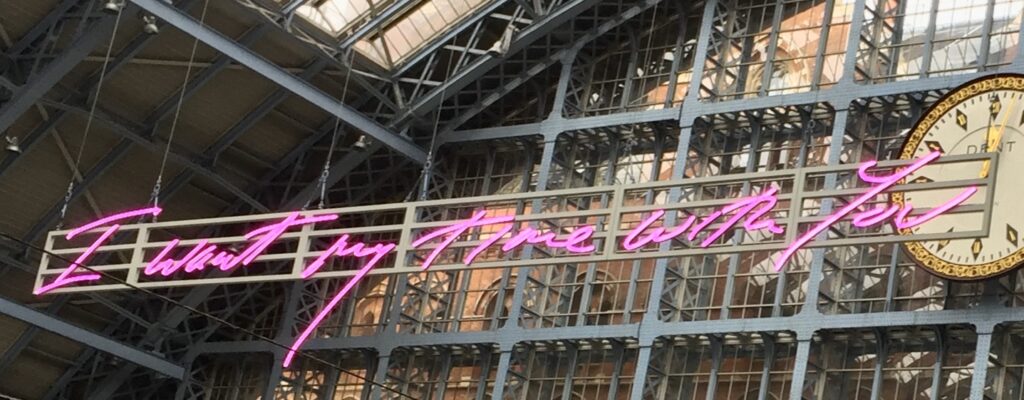
9. What lady wants her time with you when you meet at St Pancras International?

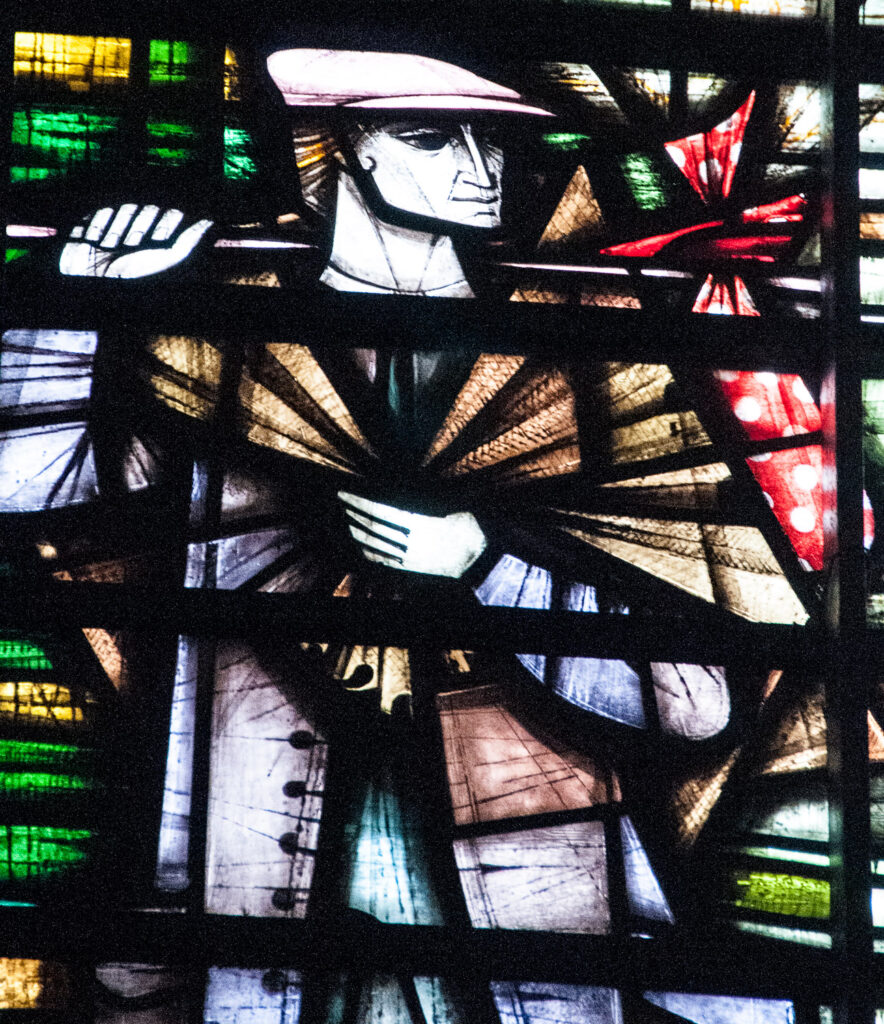
10. This famous Londoner is represented in stained glass at the church of St Michael Paternoster Royal. Someone once said he looked like a Hoxton Hipster. Who is he?

11. This sign, located in the Museum of London rotunda, was once affixed to a famous coaching inn. What was it called?

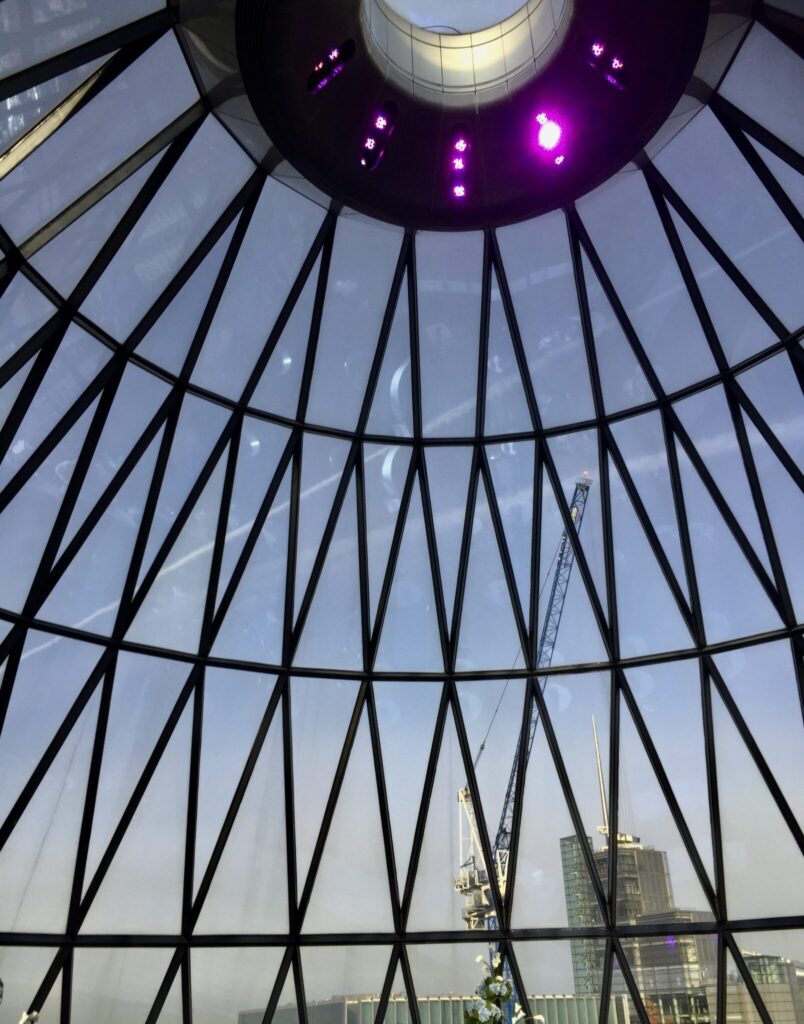
12. This is the view from the rooftop restaurant of famous City landmark building. Which building is it?

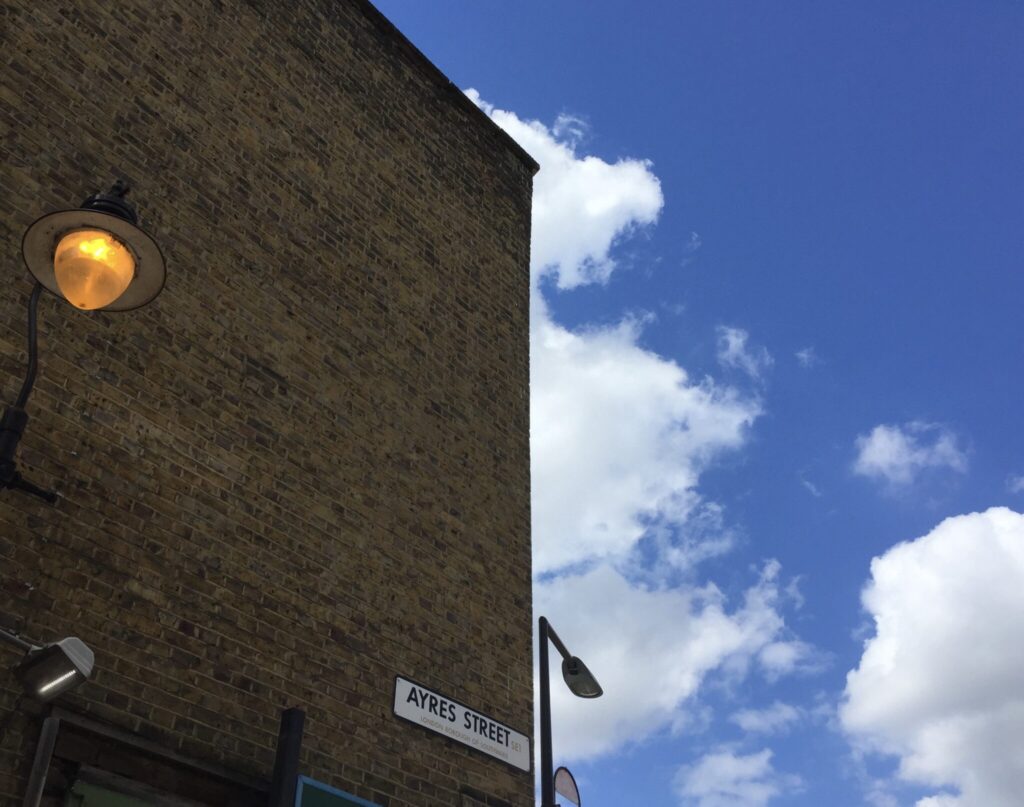
13. This street name commemorates the action of a brave young lady called Alice Ayres. She also has a plaque on the Watts Memorial. What brave act is she remembered for?

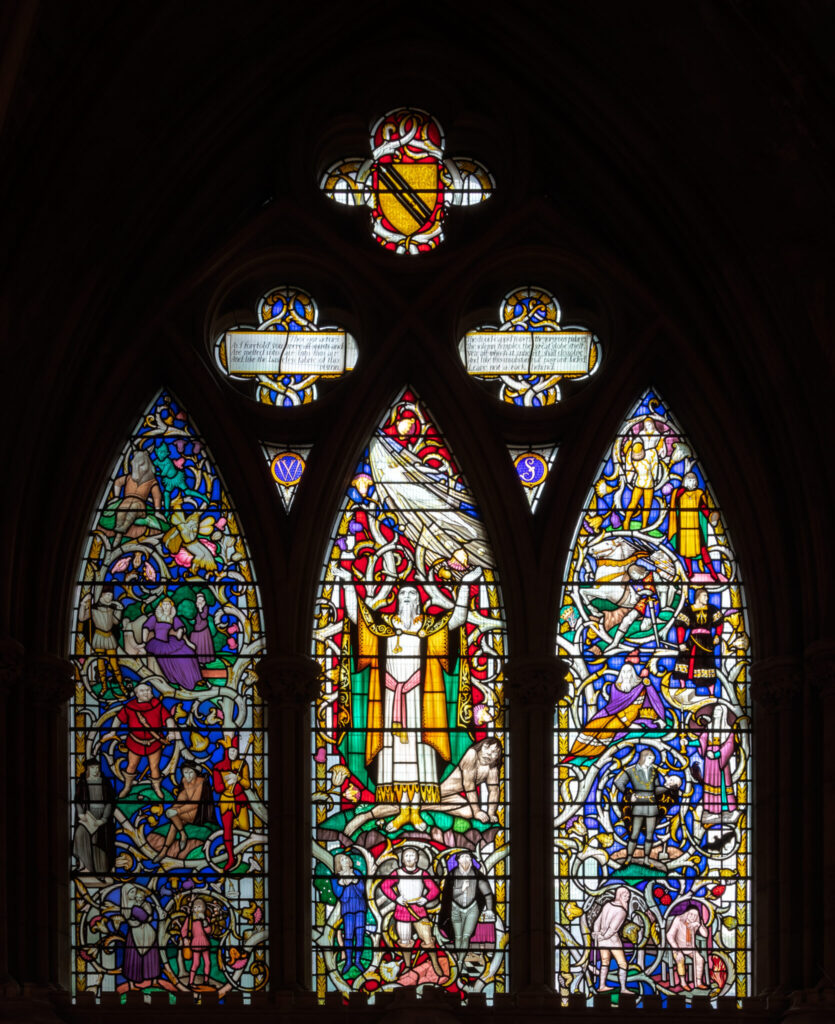
14. This magnificent Shakespeare Memorial Window was created in 1954 to replace another destroyed in enemy action. It shows characters from the Bard’s plays. Where is it?

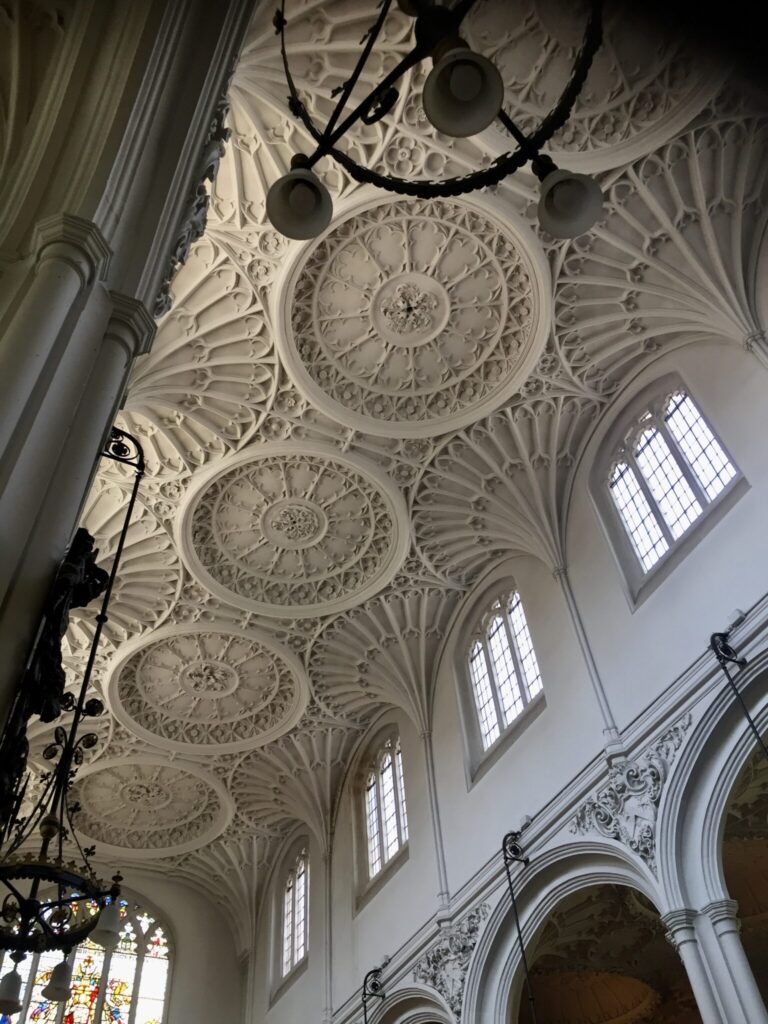
15. This image was taken in the only surviving late 17th century Gothic church in the City of London and is especially notable for its unique plaster vaulting. What church is it?

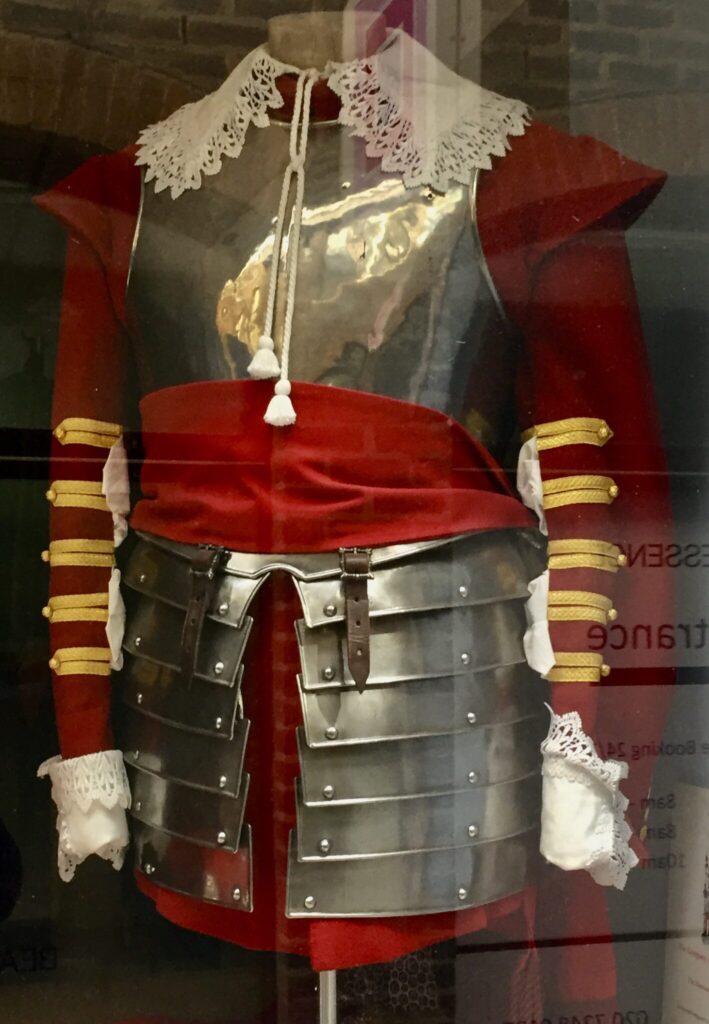
16. In what great City pageant is this uniform worn?

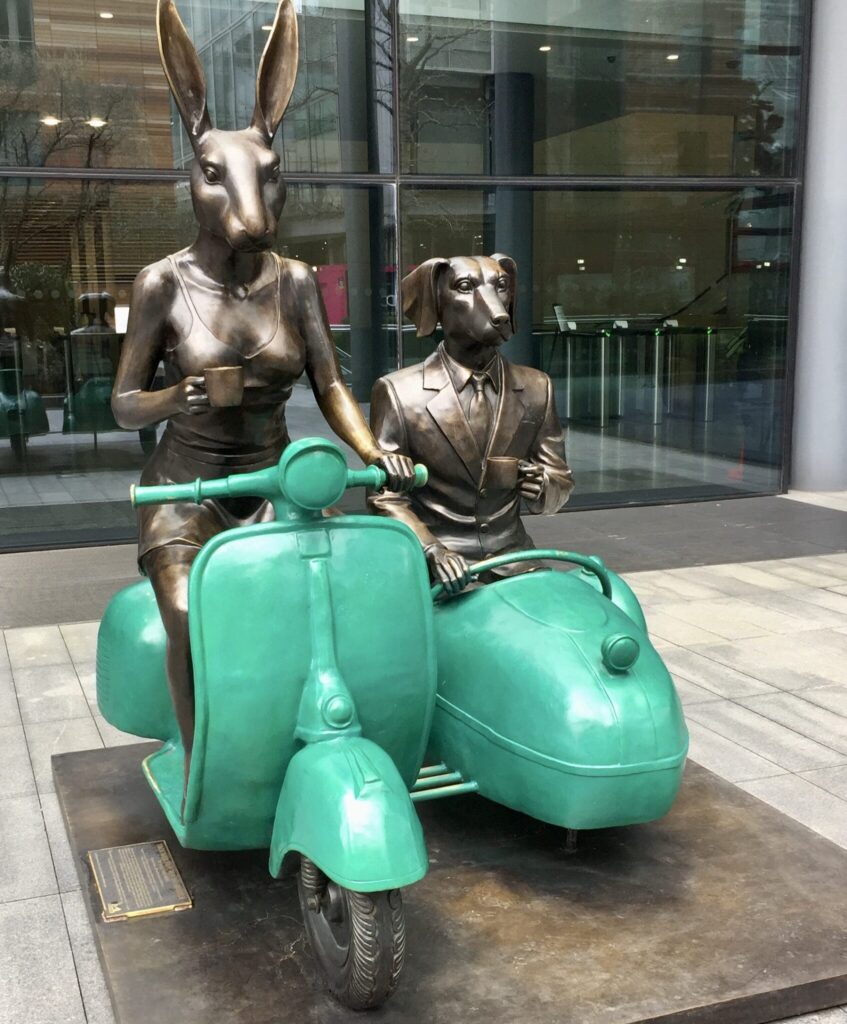
17. In what ancient market would you find these extraordinary characters?

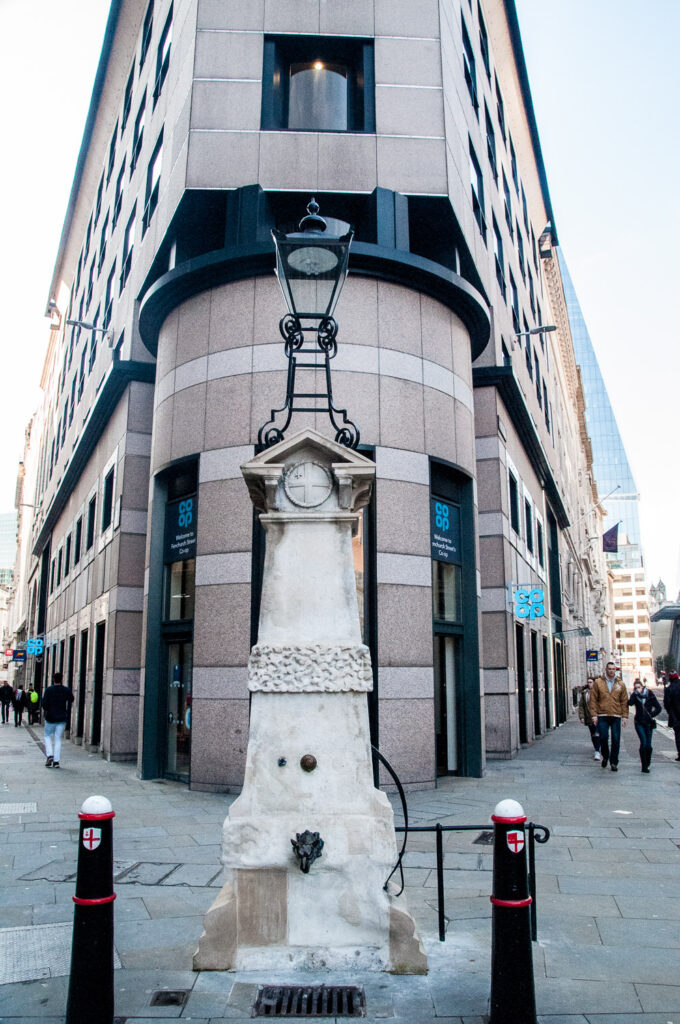
18. This pump was once described as ‘the pump of death’. Where is it and why did it get that name?

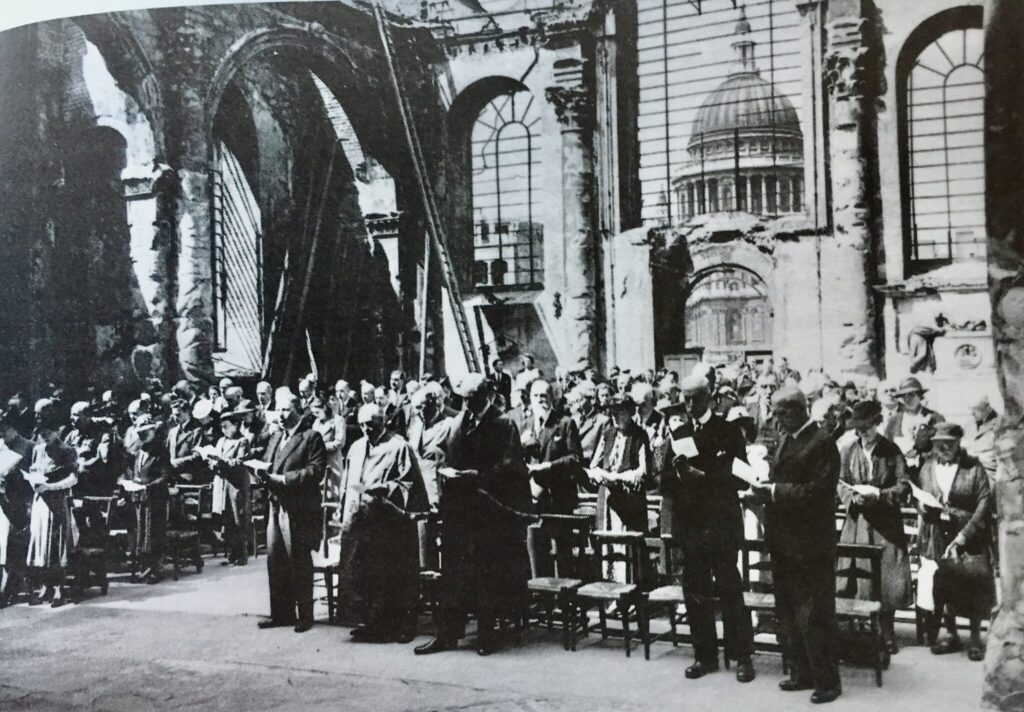
19. This service is taking place in the bombed-out, roofless ruins of a famous church. What is its name?

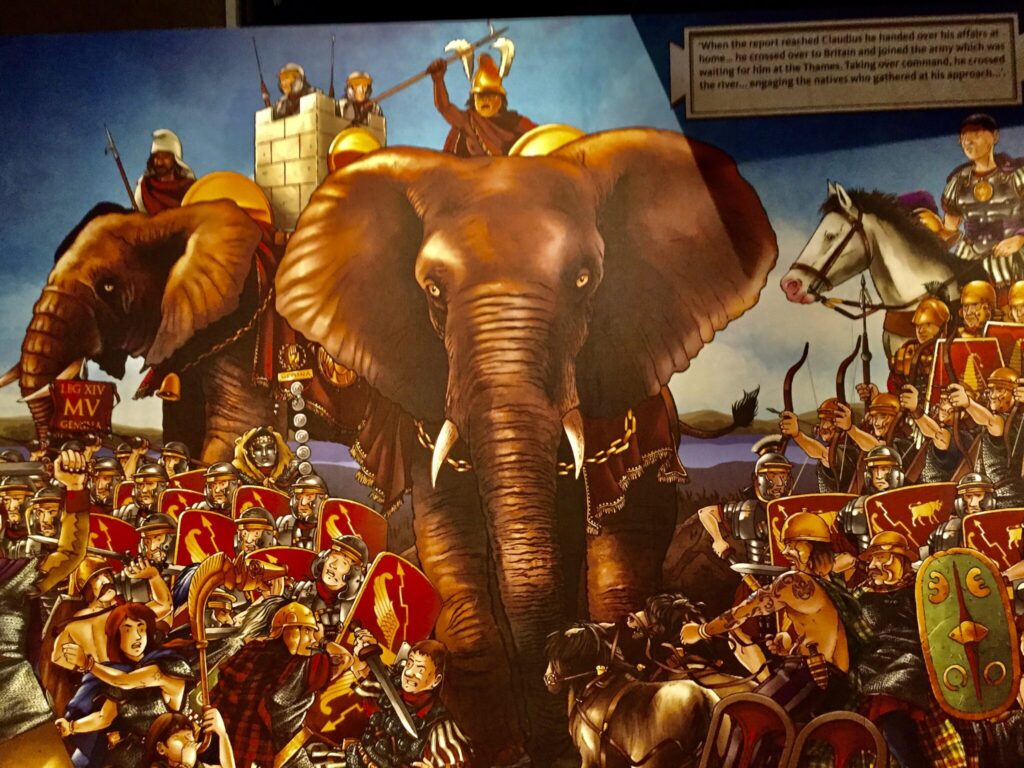
20. Where can you find this mural showing elephants helping the emperor Claudius invade Britain in AD 43?

Answers to the quiz along with links to previous blogs and sources :

  1. Noël Coward – see my blog on the recent exhibition at the Guildhall Art Gallery.

2. St Giles – read all about him here.

3. The Falklands War. Read more about this and other City memorials here.

4. It’s a ventilation shaft for the underground car park. Read about more interesting sculptures here.

5. The Dansette. See my walk along Old Street.

6. Red means ‘danger – electricity’. See what different colours mean in this blog.

7. It was the Augustinians.

8. Charles the First. See his and more faces at the Museum of London.

9. Tracey Emin. Read more about her and John Betjeman at St Pancras station here.

10. Dick Whittington. Read more about City of London stained glass here.

11. The Bull and Mouth.

12. It’s The Gherkin.

13. She bravely rescued three children from a fire but lost her own life in the process. Read more here in my visit to Southwark.

14. The window is in Southwark Cathedral. Read more about my visits to this wonderful place here and here.

15. It’s St Mary Aldermary.

16. This uniform is worn by Pikemen in the Lord Mayor’s Show. See more pictures here.

17. You’ll find them (along with other interesting public art) in Spitalfields Market.

18. At the junction of Fenchurch Street and Leadenhall Street you’ll find this, the Aldgate pump. It came to be known as the Pump of Death when, in the 1870s, it was discovered that the water was poisoning people. During its passage underground from north London it had passed through and under numerous new graveyards thereby picking up the bacteria, germs and calcium from the decaying bodies.

19. St Mary-le-Bow.

20. On a wall inside the Museum of London.

I hope you enjoyed this year’s Quiz.

My very best wishes for Christmas and the New Year!

If you would like to follow me on Instagram here is the link …
https://www.instagram.com/london_city_gent/

The Christmas Quiz!

Hello, friends, Happy Christmas!

It’s time again for the Christmas Quiz based on my blogs from 2020. I trust you are all OK in these difficult times and send you my very best wishes for 2021. I am sure that, like me, you hope that it will bring happier times for everyone than the year gone by.

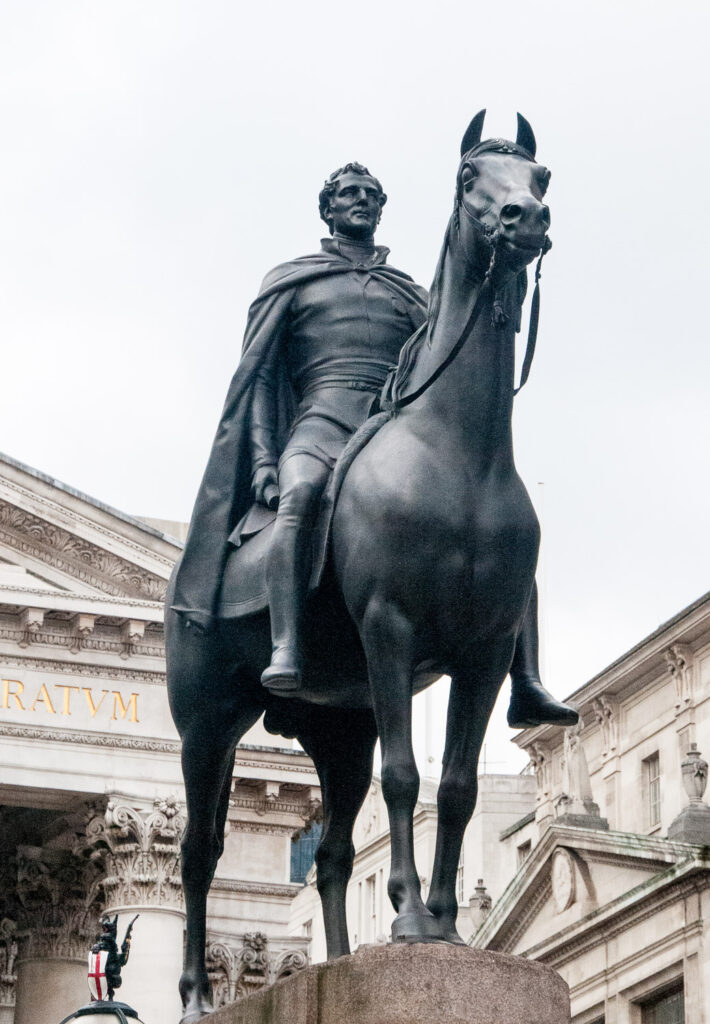
  1. This magnificent statue of the Duke of Wellington stands outside the Royal Exchange. What is it made from?

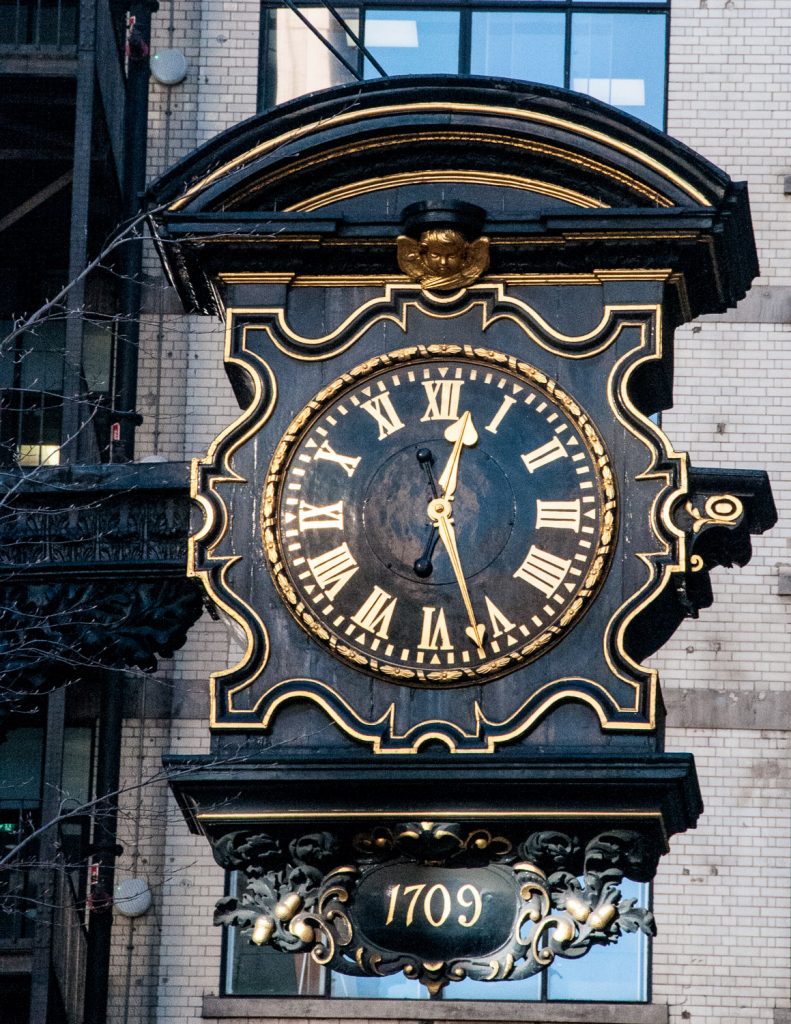
2. This beautiful clock is sited alongside the church of St Magnus the Martyr and dates from a time when the church was clearly visible from the ‘old’ London Bridge. It was the gift of a Lord Mayor, Sir Charles Duncombe. What’s the story behind his generosity?

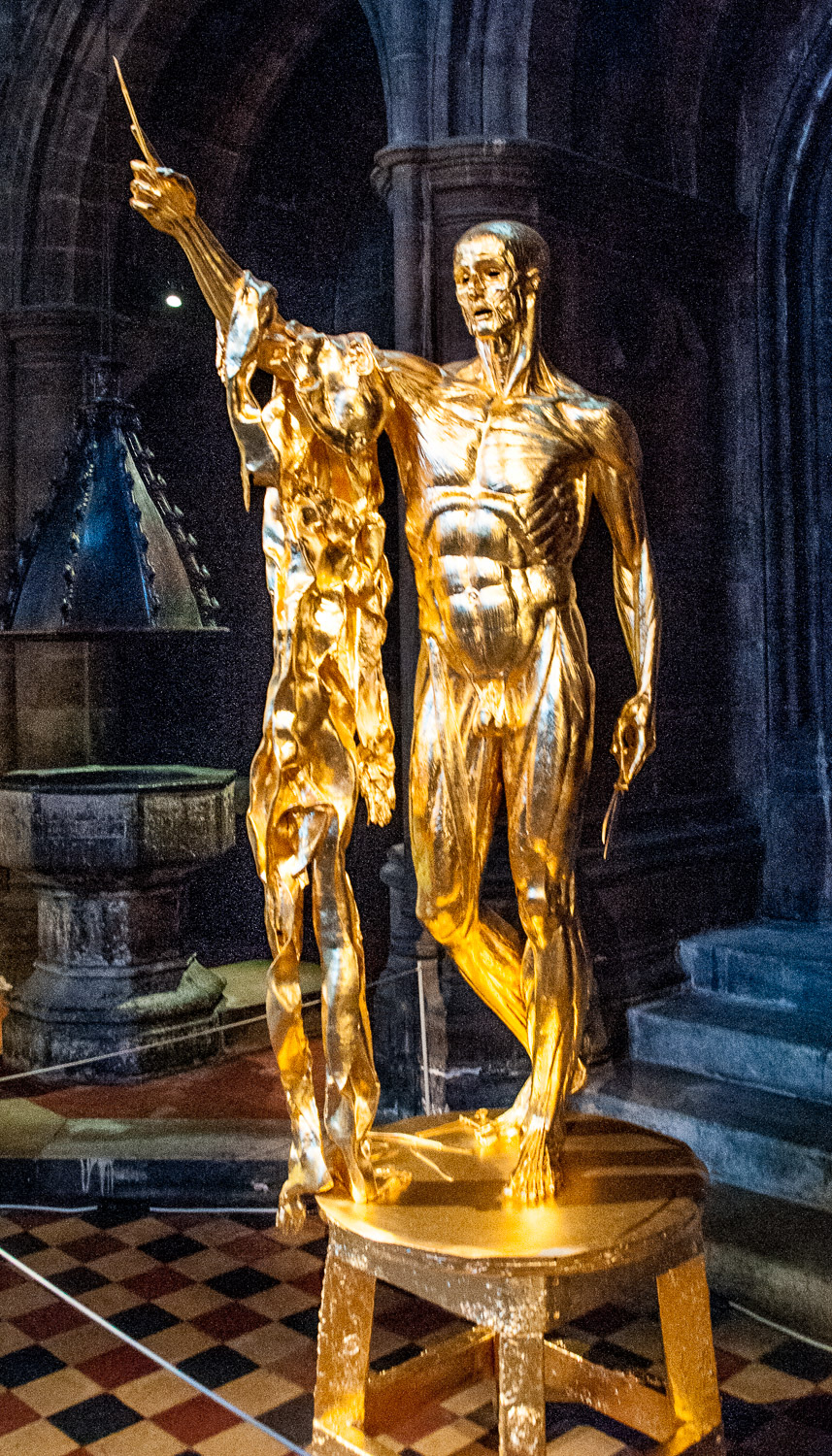
3. This extraordinary sculpture of St Bartholomew is, appropriately, on display in the church of St Bartholomew the Great in Smithfield. Entitled Exquisite Pain, as well as his skin the saint also holds a scalpel in one hand and a pair of scissors in the other. Who was the sculptor?

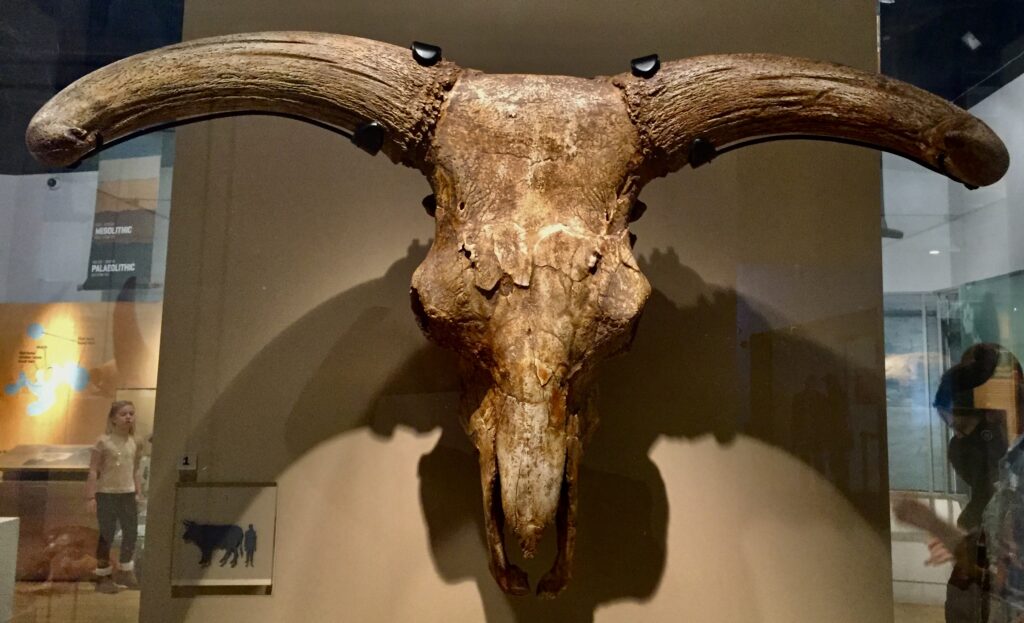
4. The Auroch is a beast that’s been extinct for nearly 400 years. This particular skull dates from the Neolithic period (4,000 -2,200 BC) and was discovered in Ilford, East London, where herds of this creature once roamed.

Where must you go to see it?

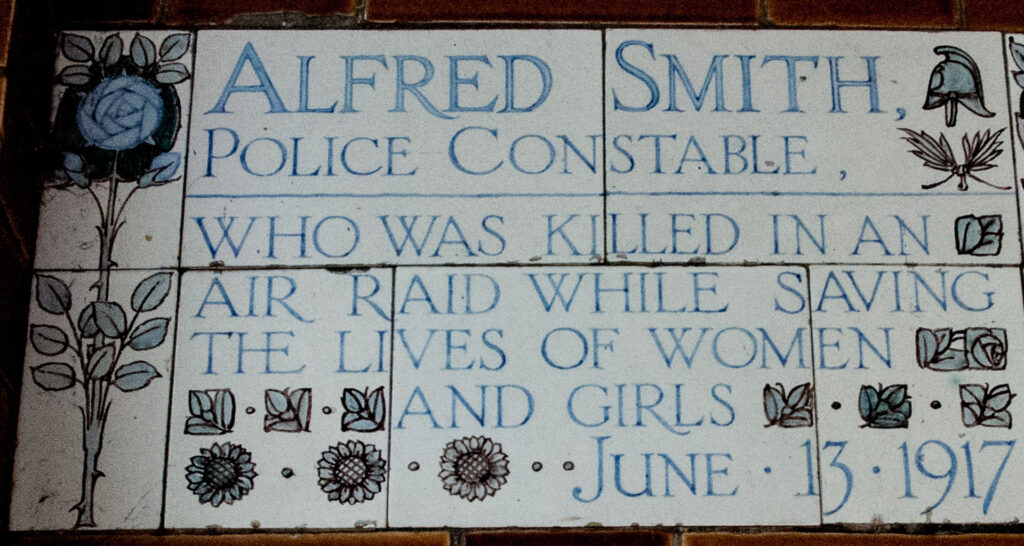
5. This brave policeman sacrificed his life saving warehouse workers from a First World War bombing raid. Where can you find this memorial to him?

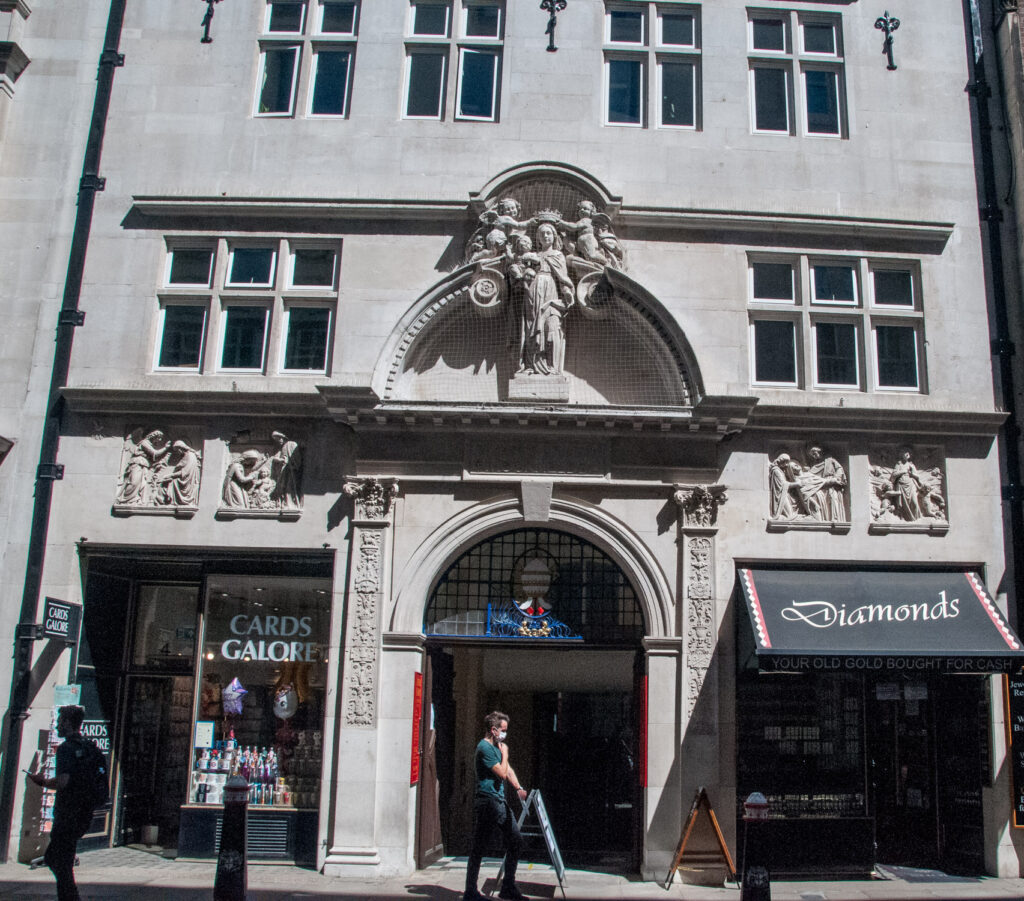
6. In what way is this church in Eldon Street unique? It’s called St Mary Moorfields.

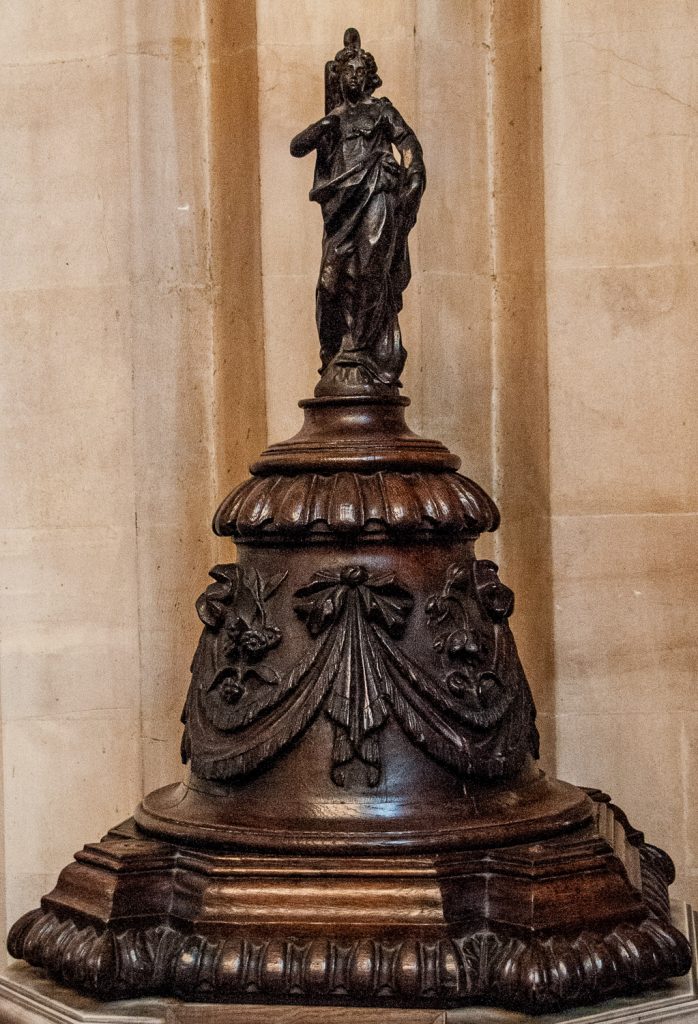
7. If you visit St Sepulchre-without-Newgate you can admire this font cover with its beautiful craftmanship. Made of oak, it was created about 1690 and is typical of many such covers made for City churches after the Great Fire of 1666. Until 1940 it belonged in Christchurch Newgate Street, so how did it come to reside in St Sepulchre’s?

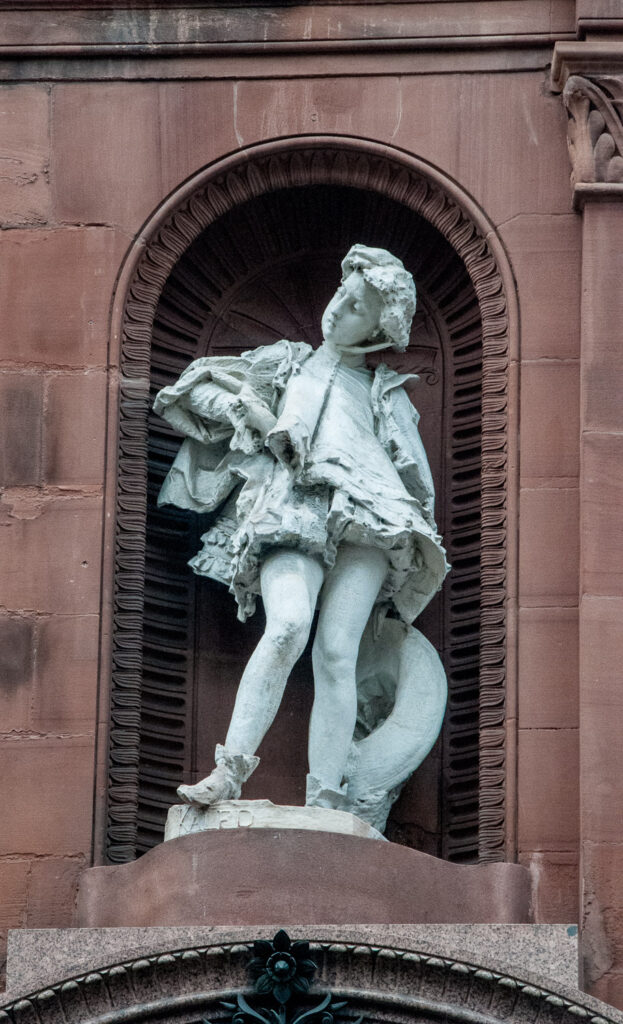
8. Look at this extraordinary statue at 193 Fleet Street now, sadly, somewhat weathered. Is it a man dressed as a woman or a woman dressed as a man?

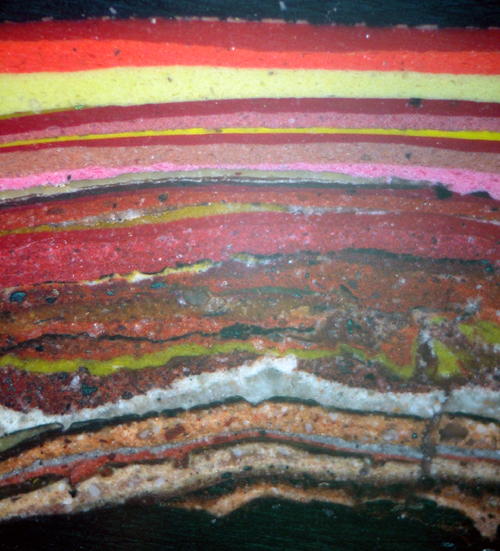
9. This cross-section shows the layers of paint from a lamp standard on a famous City landmark. What landmark is it?

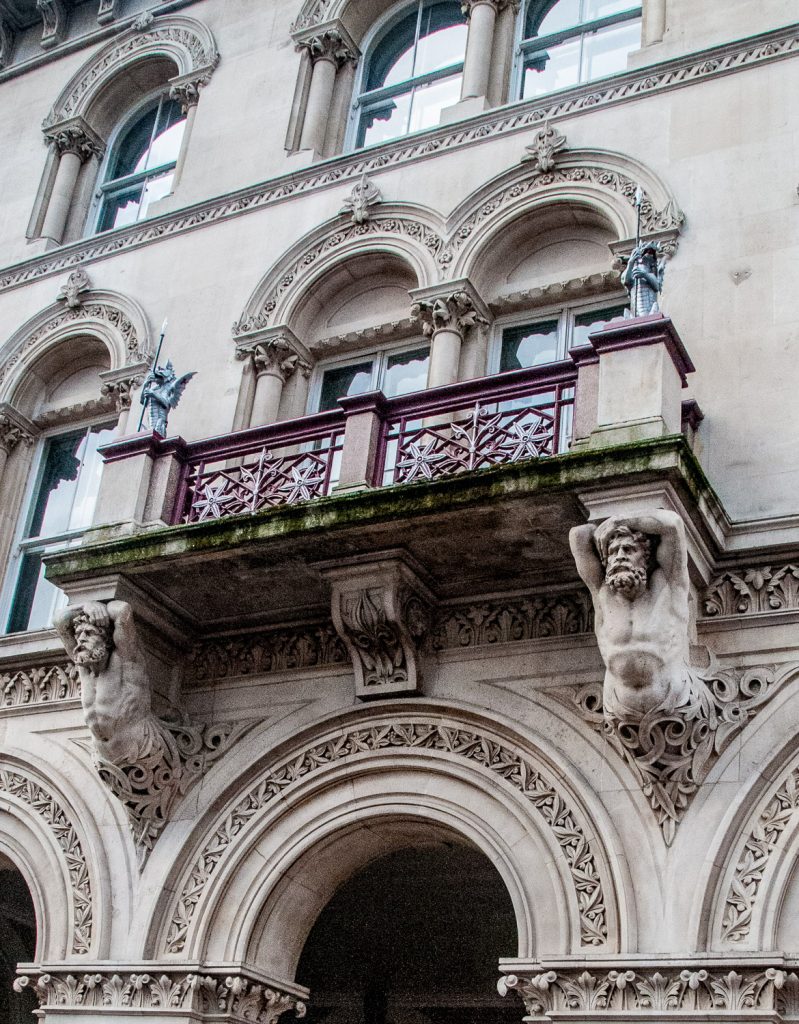
10. These figures, called Atlantes, support a balcony overlooking Farringdon Street. Do they date from 1814, 1914 or 2014?

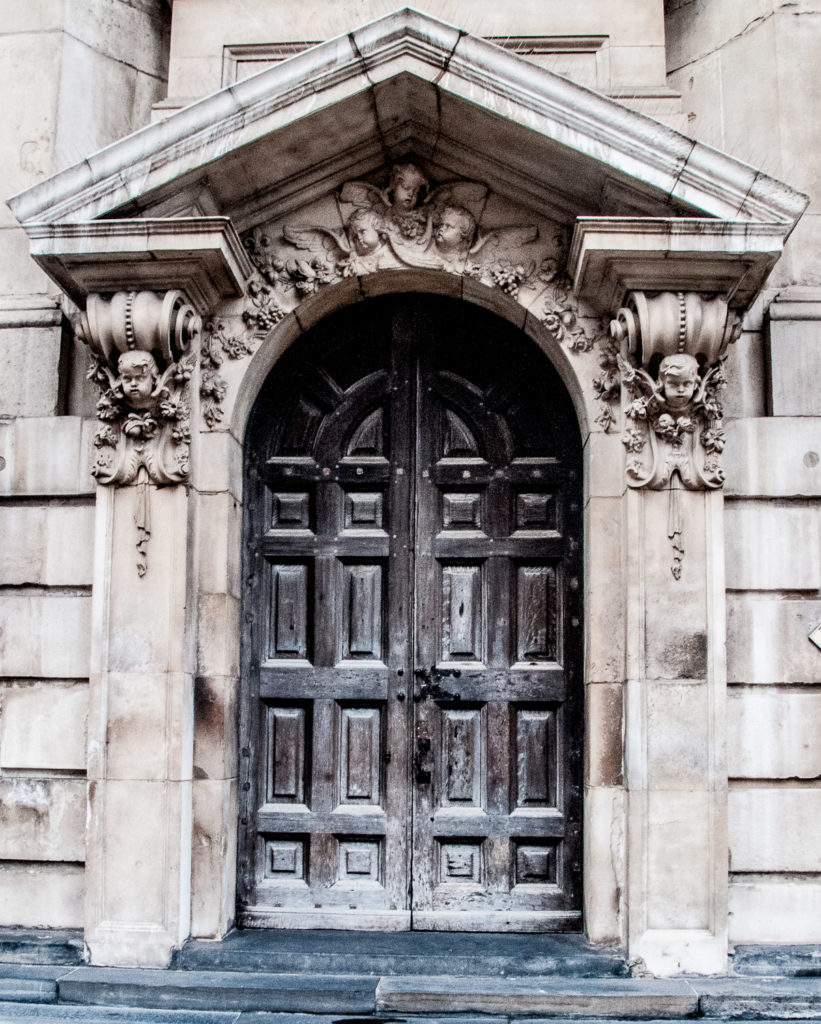
11. This is known as The Dean’s Door and the carver was stonemason and architect Christopher Kempster (1627-1715), one of Wren’s favourite craftsmen. His work on the cherubs’ heads and foliage was considered so good Wren awarded him an extra £20 for ‘the extraordinary diligence and care used in the said carving and his good performance of the same’. Where is The Dean’s Door?

12. This churchyard survives from the 17th century, its banked-up top surface a reminder that it is still bloated with the bodies of victims of the Great Plague of 1665. Three hundred and sixty five were buried there including Mary Ramsay, who was widely blamed for bringing the disease to London. What is the name of the church and what famous civil servant and diarist lived nearby and frequently worshipped there?

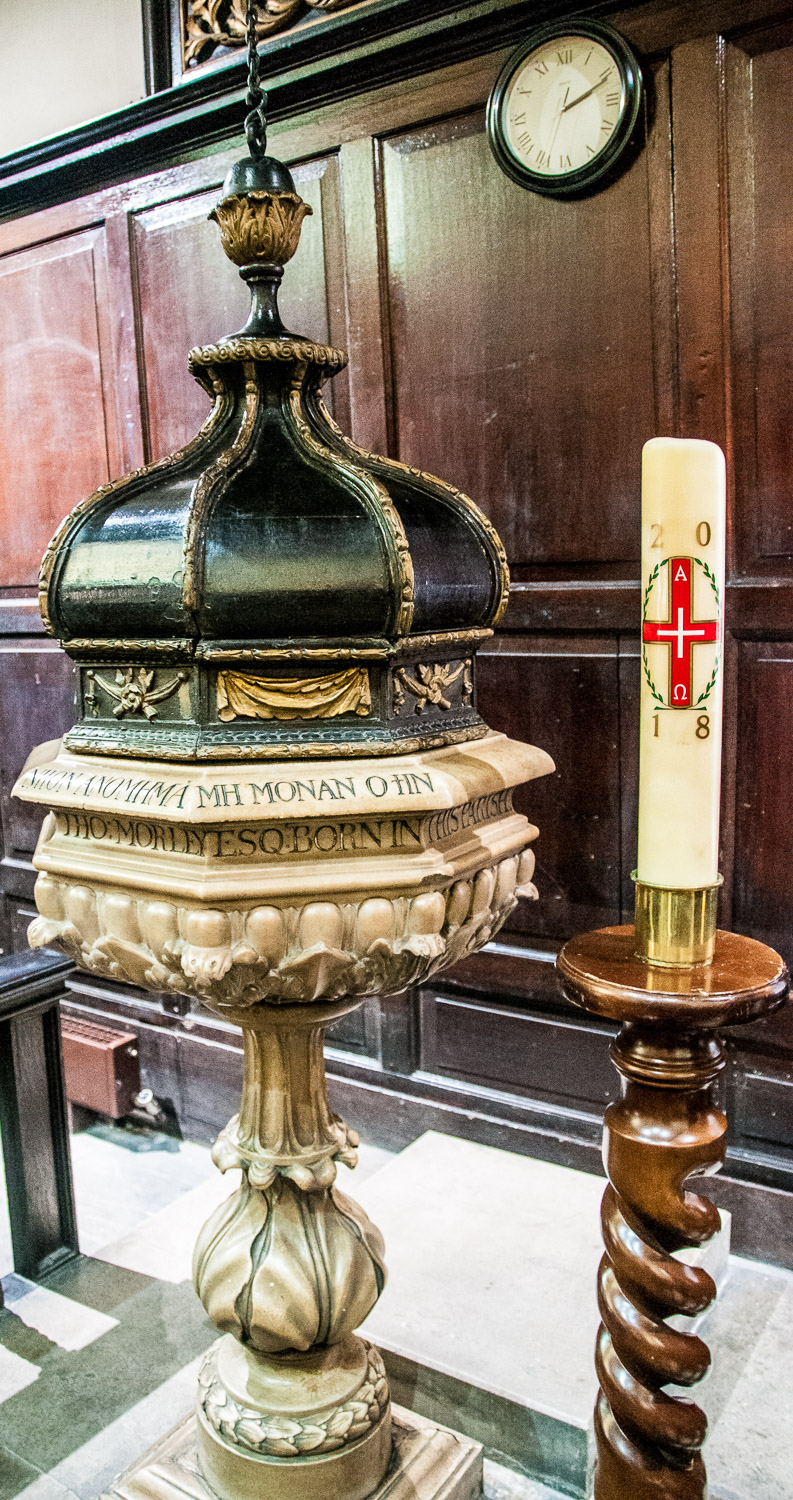
13. At the church of St Martin within Ludgate on Ludgate Hill rests this very unusual font. The bowl is white marble and the wooden supporting plinth is painted to look like stone. It dates from 1673, predating the church, and was previously located in a ‘tabernacle’ used by the congregation during the rebuilding. The inscription on it reads Niyon anomhma mh monan oyin (which translates as ‘Cleanse my sin and not my face only’). There is something unusual about the Greek wording – can you tell what it is?

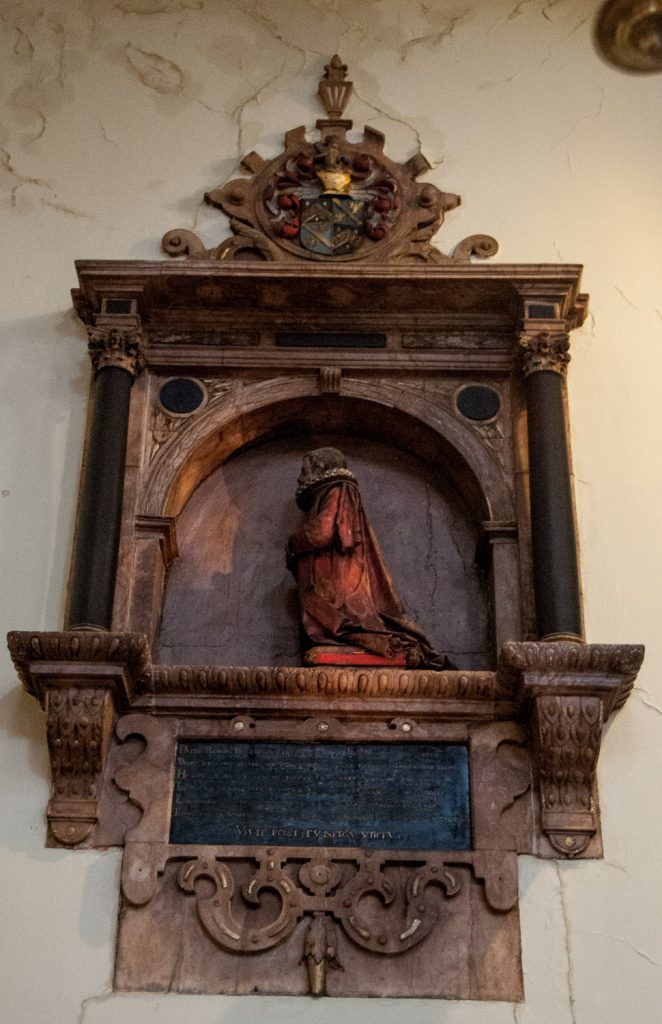
14. In St Bartholomew the Less, high up on the south wall, is the memorial to Robert Balthrope, Sergeant Surgeon to Queen Elizabeth I …

The inscription reads …

Here Robert Balthrope Lyes intombed,
to Elizabeth Our Queene
Who Sergeant of the Surgeons Sworne,
Neere Thirtye Yeeres Hathe Beene
He Died at Sixtye Nine of Yeeres,
Decembers Ninthe The Daye
The Yeere of Grace Eight Hundred Twice

Deductinge Nine A waye.
Let Here His Rotten Bones Repose
Till Angells Trompet Sounde
To Warne The Worlde of Present Chaunge
And Raise the Deade From Grounde.

Can you do the maths and calculate the year he died?

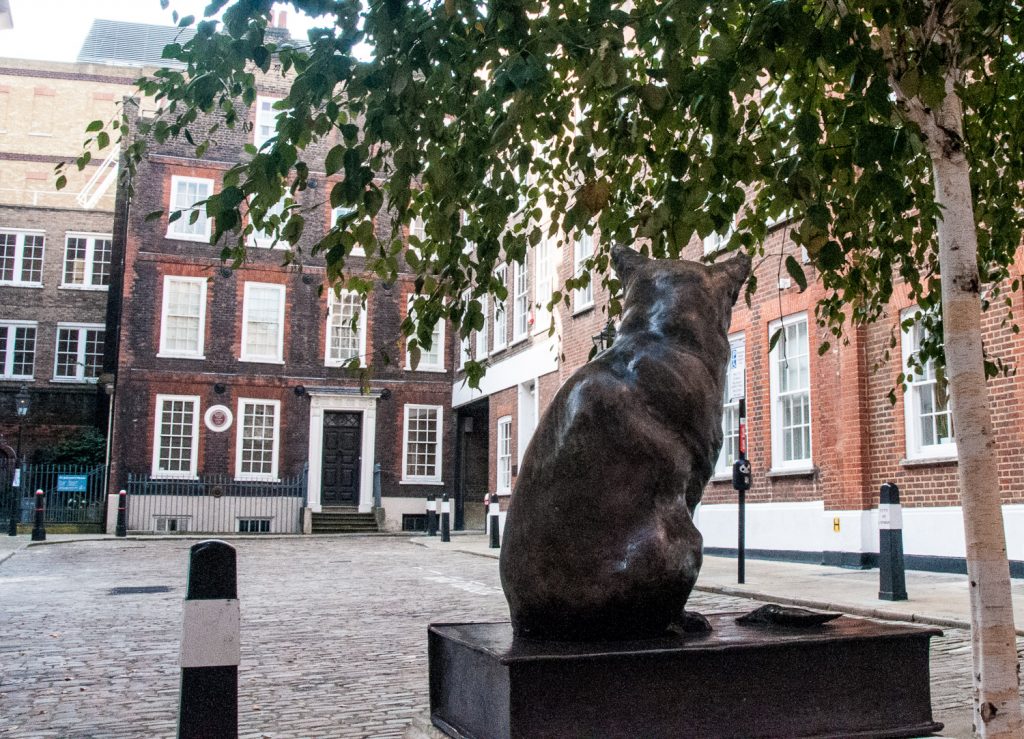
15. What famous cat is this and who lived for a time in the house he is staring at?

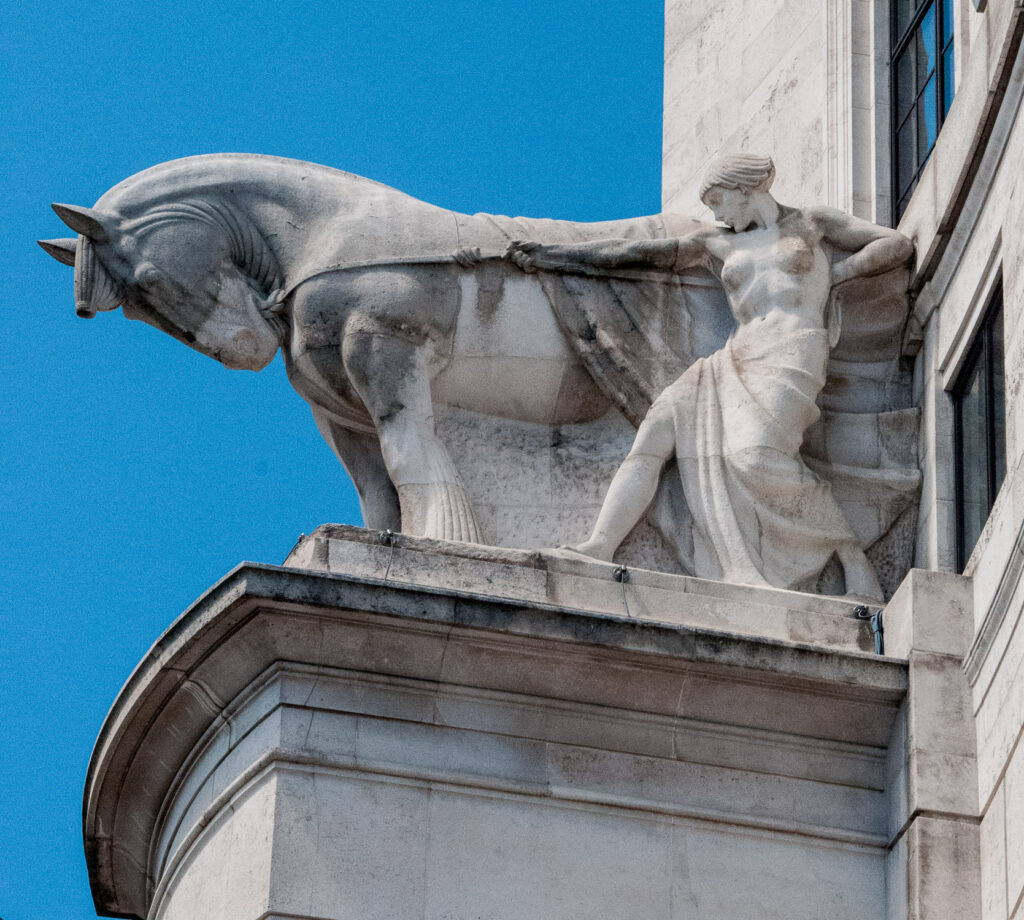
16. Here a lady, her head bowed, strains hard to control a gigantic horse (and there is a similar male figure at the other end of the building). The sculpture, called Controlled Energy, dates from 1932 and the sculptor, William Reid Dick, was asked why he included female figures in the work.

This was the sculptor’s interesting reply: ‘These days women are controlling affairs nearly, if not quite, as much as men. They begin to take control in some respects … as soon as they are out of their cradles, and the idea would have been incompletely carried out if only men had been used’.

What building was he working on?

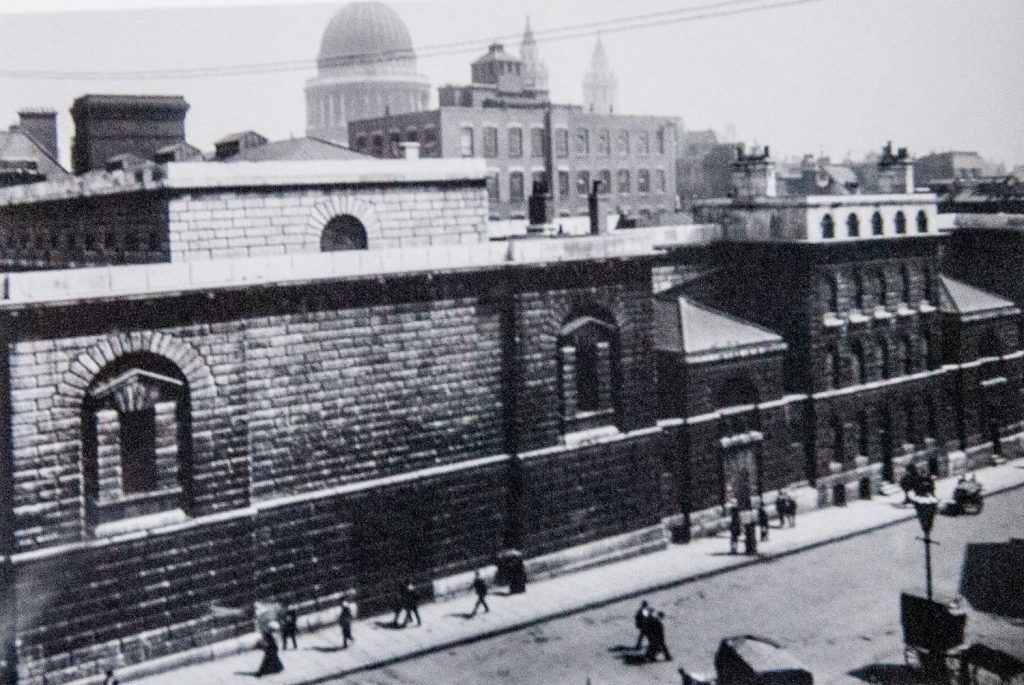
17. What notorious prison is this? Now demolished, where it once stood is now the site of the Central Criminal Court or Old Bailey.

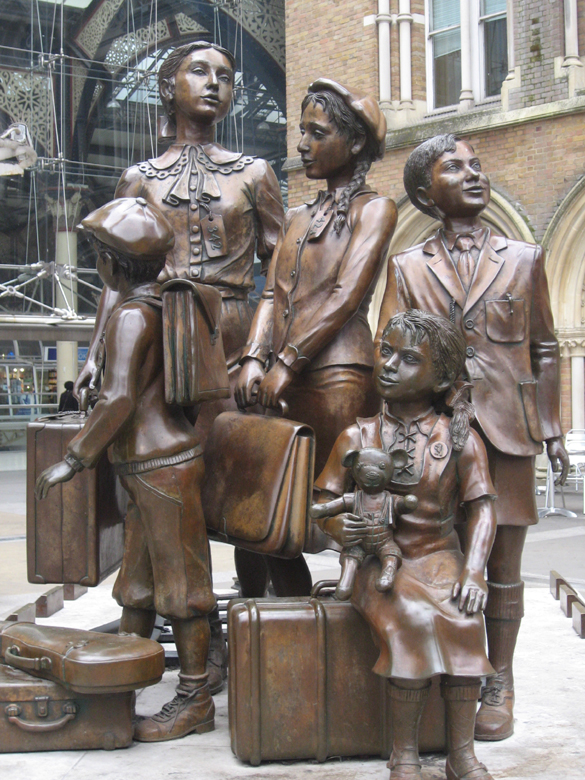
18. What children are represented in this sculpture outside Liverpool Street Station?

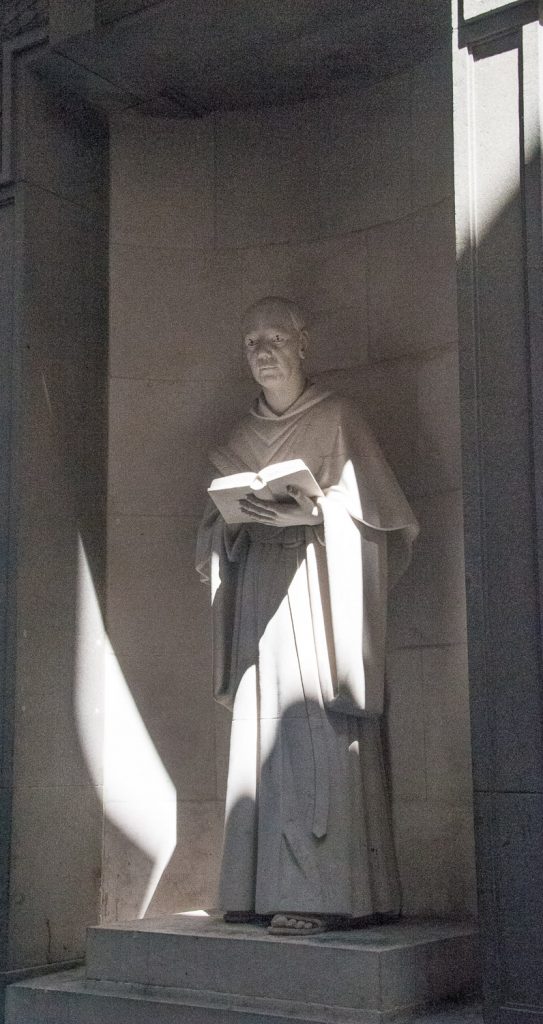
19. A friar carrying his missal stands in an alcove in an area named after an order of monks that were finally expelled in 1538 as a result of the dissolution of the monasteries. What is the area called?


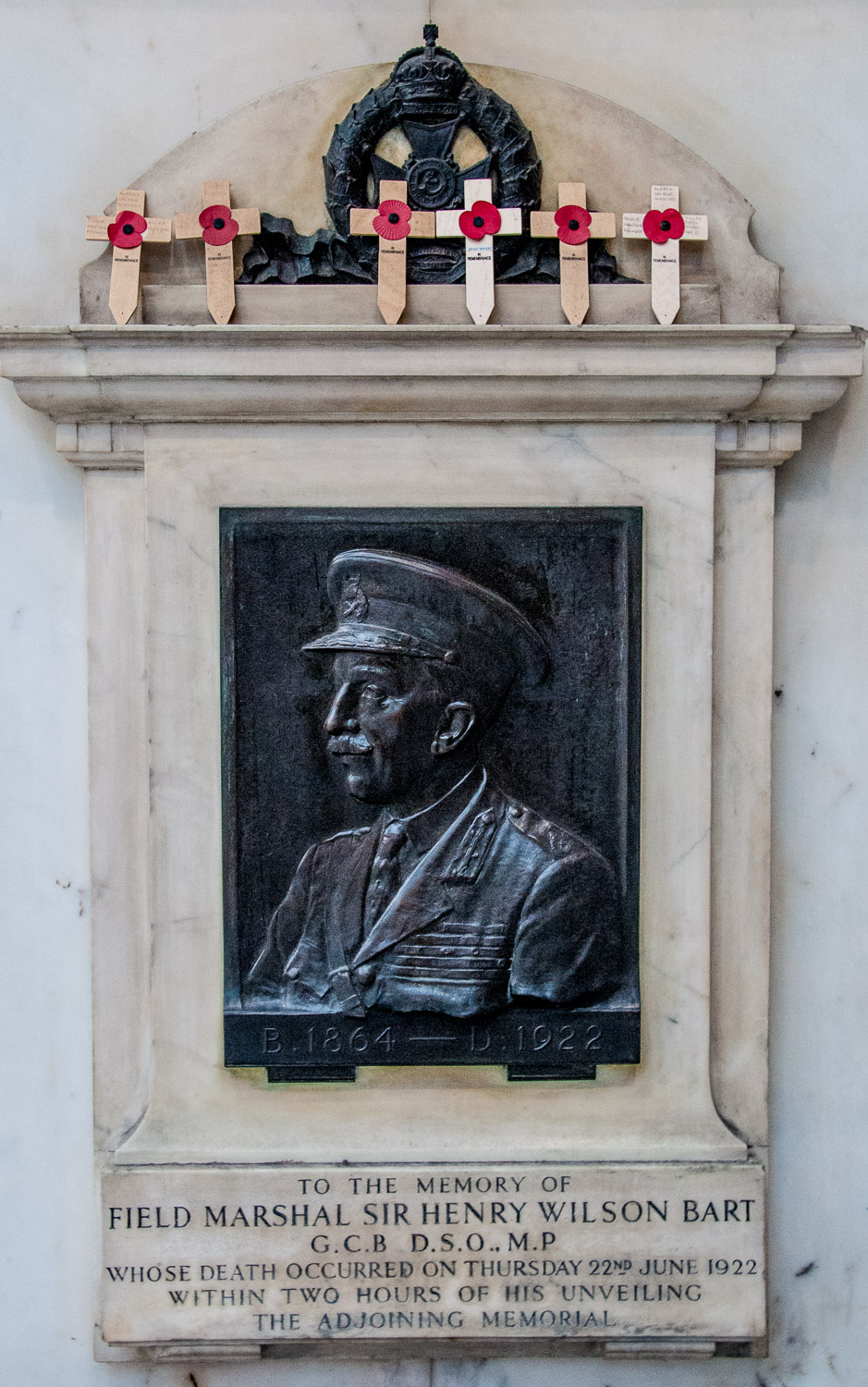
20. Tucked away in a corner at Liverpool Street railway station is this plaque directly underneath the main memorial to the First World War dead. Within two hours of unveiling the memorial Sir Henry Wilson was dead. What happened to him?

Answers to the Quiz:

  1. The statue is made of bronze from captured enemy cannon melted down after the Battle of Waterloo. You can read more here.
  2. The story goes that when he was a young apprentice, and rather poor, he missed an important meeting with his master on London Bridge because he had no way of telling the time. He vowed that, if ever he became rich, he would erect a clock in the vicinity and this magnificent example of the clockmakers’ art was the result. Read more here.
  3. It’s by Damien Hirst. Read more about my visit to the church here.
  4. The Museum of London.
  5. He is commemorated on the Watts Memorial in Postman’s Park. Read about him and three other brave policemen here.
  6. It’s the only Catholic church in the City of London. You can read more about its history here.
  7. When Christchurch was a blazing inferno as a result of the Blitz a postman ran into the building and rescued the font cover. Read more about this and other rescued artifacts here.
  8. It’s a woman dressed as a man, by Giuseppe Grandi, and dates from 1872. The shop owner, George Attenborough, had a niche created specially for it over the front door. Kaled is the page of Count Lara in Bryon’s poetic story of a nobleman who returns to his ancestral lands to restore justice. He antagonises the neighbouring chieftains who attack and kill him. Kaled stays with his master and lover to the end, when it is revealed he is in fact a woman. (Spoiler alert) She goes mad from grief and dies.
  9. It comes from a lamp standard on Holborn Viaduct. Read more about it here.
  10. 2014, when the staircase to the north east pavilion of Holborn Viaduct was rebuilt in Victorian style. Read more about the history of the viaduct and its statues here.
  11. It is situated on the south side of St Paul’s Cathedral.
  12. The church is St Olave Hart Street and the famous civil servant and diarist Samuel Pepys. Read more about him and the terrible plague of 1665 here.
  13. The Greek words are a palindrome copied from the Cathedral of St Sophia in Constantinople. Read more about unusual church artifacts here.
  14. Here is the inscription again and the answer to the maths:

Here Robert Balthrope Lyes intombed,
to Elizabeth Our Queene
Who Sergeant of the Surgeons Sworne,
Neere Thirtye Yeeres Hathe Beene
He Died at Sixtye Nine of Yeeres,
Decembers Ninthe The Daye
The Yeere of Grace Eight Hundred Twice

Deductinge Nine A waye.
Let Here His Rotten Bones Repose
Till Angells Trompet Sounde
To Warne The Worlde of Present Chaunge
And Raise the Deade From Grounde.

He died in 1591, but the poet who devised this eulogy presumably had a problem getting 1591 to rhyme with anything. So he chose the frankly odd solution of asking the reader to do some mental arithmetic – ‘The Yeere of Grace Eight Hundred Twice’ (i.e. 800 x 2 = 1600) Deductinge Nine A waye (1600 – 9 = 1591).

15. The famous cat, Hodge, is remembered by this attractive bronze by John Bickley which was unveiled by the Lord Mayor, no less, in 1997. Hodge belonged to Dr Johnson, who lived for a while in the house opposite. Hodge sits atop a copy Johnson’s famous dictionary and alongside a pair of empty oyster shells. Read more here.

16. Unilever house at Blackfriars. You can read more here.

17. It was Newgate Gaol. Read more about it here along with its connection to St Sepulchre’s church including the bell that was rung outside the cells of condemned prisoners the night before their execution.

18. It is the Kindertransport commemorative statue. In 1938 and 1939, nearly ten thousand unaccompanied Jewish children were transported to Britain to escape persecution in their hometowns in Germany, Czechoslovakia and Austria. These children arrived at Liverpool Street station to be taken in by British families and foster homes. Often they were the only members of their families to survive the Holocaust.

19. Austin Friars (off Old Broad street), once the location of an Augustinian Friary. Read more here.

20 Wilson was assassinated outside his house in Eaton Place at about 2:20 pm. Still in full uniform, he was shot six times, two bullets in the chest proving fatal. The two perpetrators, IRA volunteers Reginald Dunne and Joseph O’Sullivan, shot two police officers and a chauffeur as they attempted to escape but were surrounded by a hostile crowd and arrested after a struggle. Interestingly both were former British army officers and O’Sullivan had lost a leg at Ypres, his subsequent disability hindering their escape. After a trial lasting just three hours they were convicted of murder and hanged at Wandsworth gaol on 10 August that year – justice was certainly delivered swiftly in those days. No organisation claimed responsibility for Wilson’s murder. Read more and view other interesting memorials here.

If you would like to follow me on Instagram here is the link …
https://www.instagram.com/london_city_gent/

Page 2 of 3

Powered by WordPress & Theme by Anders Norén

Symbols & Secrets
Privacy Overview

This website uses cookies so that we can provide you with the best user experience possible. Cookie information is stored in your browser and performs functions such as recognising you when you return to our website and helping our team to understand which sections of the website you find most interesting and useful.