Walking the City of London

Category: Philanthropy Page 2 of 4

Heroes, Hops and Housing. A short wander around Southwark.

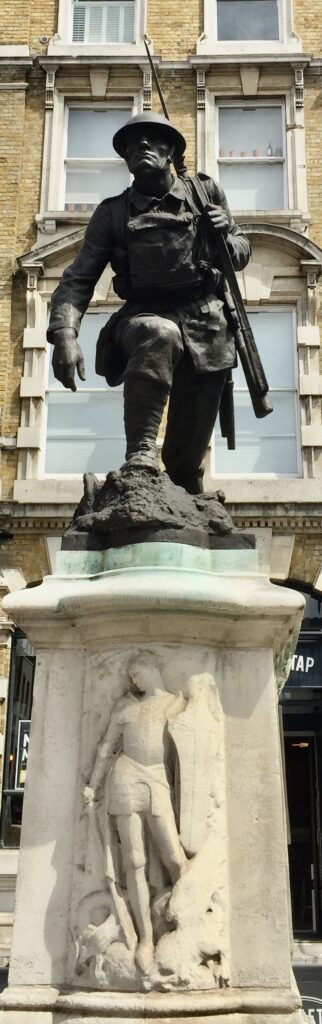
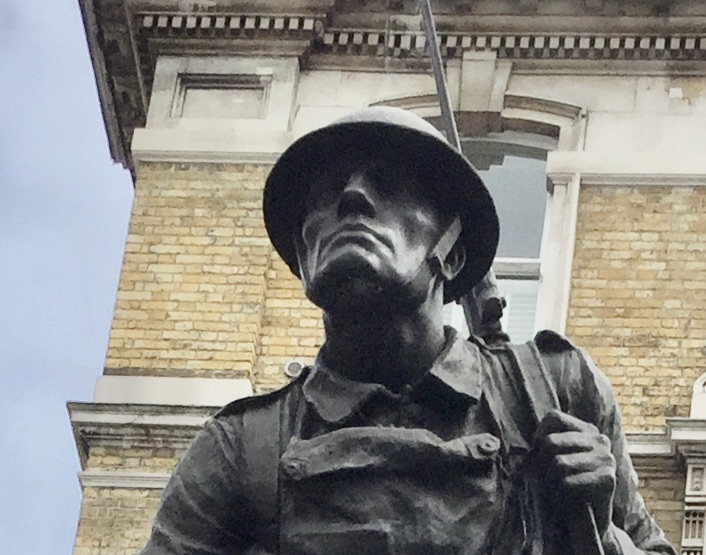
For an expression of grim determination, it would be hard to beat the look on this man’s face …

This is the St Saviour’s War Memorial on Borough High Street, in the former parish of Southwark St Saviour (SE1 1NL). St Saviour’s Church became Southwark Cathedral in 1905 …

An infantryman in battledress advances resolutely through thick mud. He carries a rifle with bayonet attached slung over his shoulder …

Beneath his feet is a Portland Stone pedestal depicting St George doing battle with a dragon.

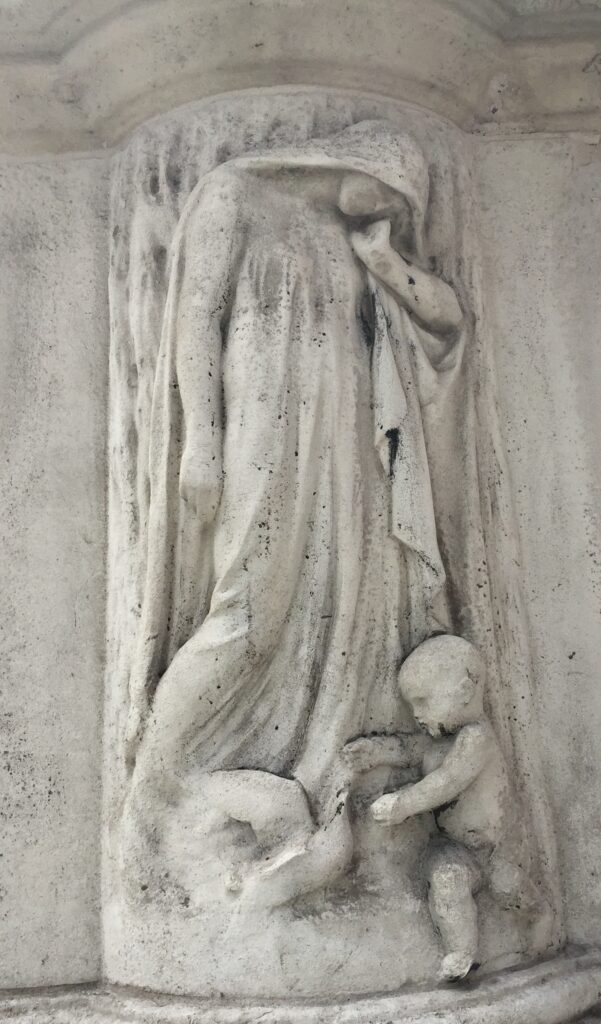
On the opposite side there is a carving of a mourning woman. Her child is reaching out to a dove …

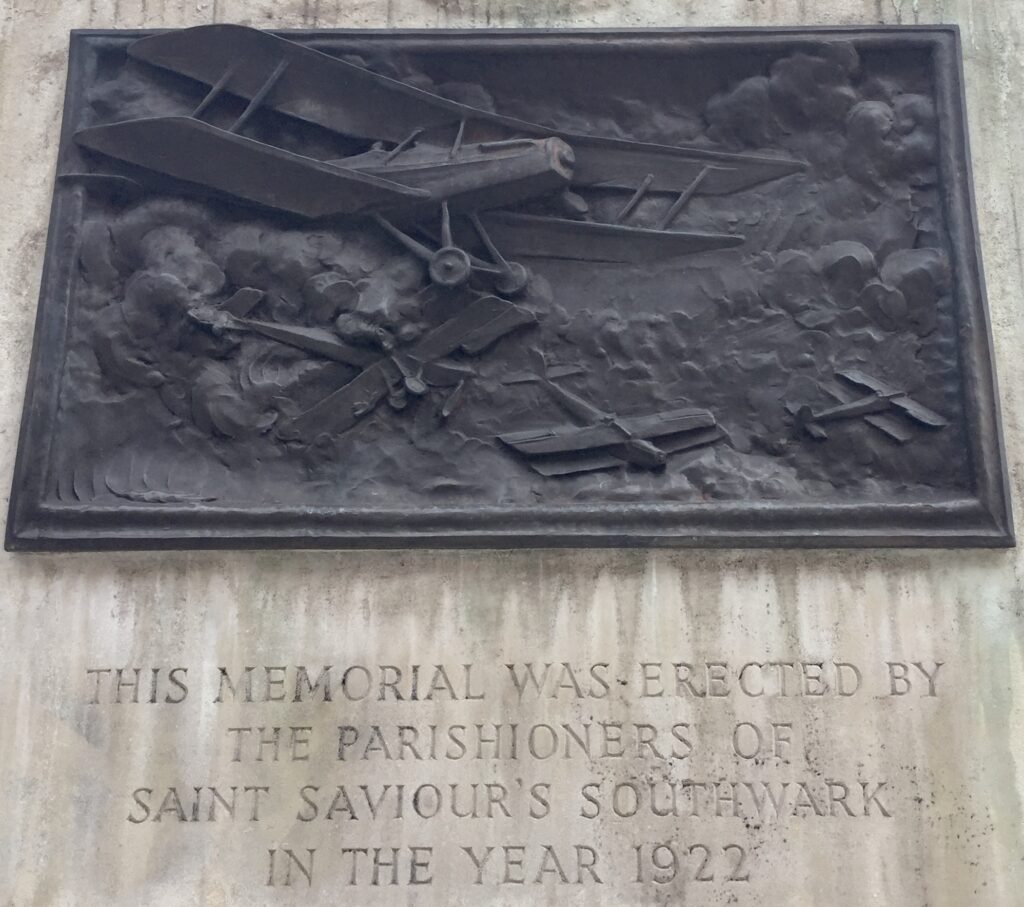
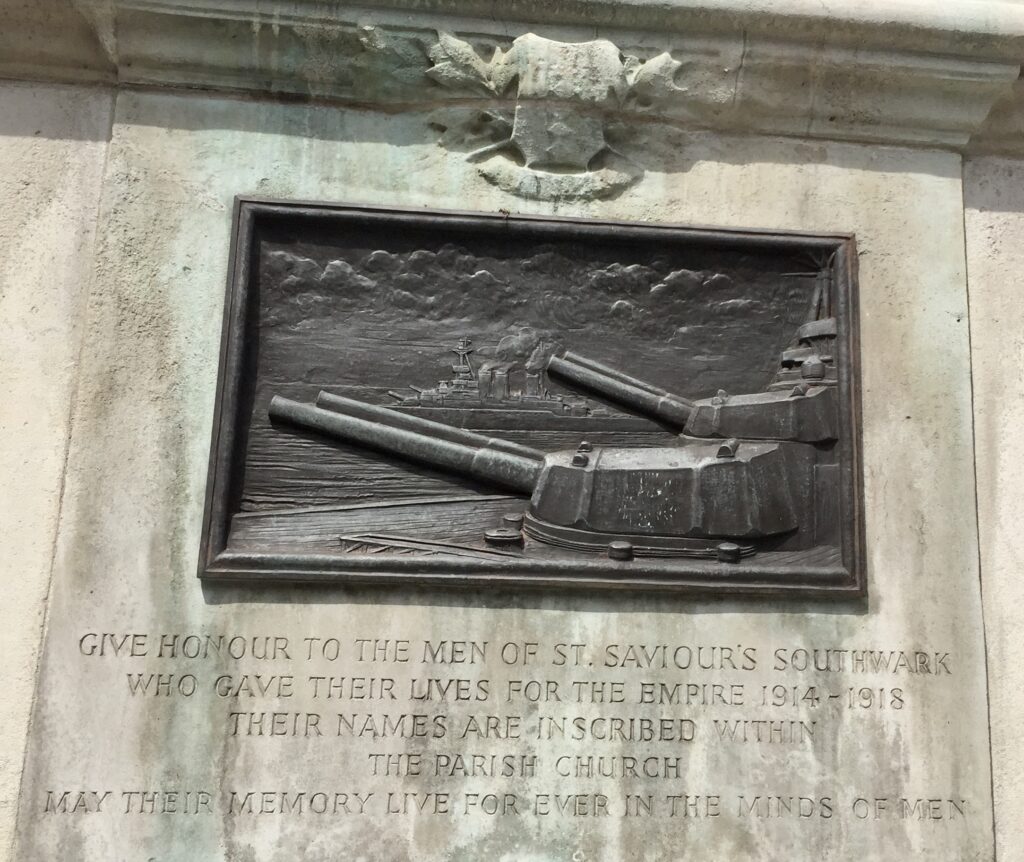
On the pedestal’s long sides are bronze reliefs.

One with biplanes, to the west …

… and another with battleships, to the east.

The memorial’s sculptor was Philip Lindsey Clark (1889-1977). Having joined up with the Artists’ Rifles in 1914, he had distinguished himself in the First World War having been awarded the Distinguished Service Order (DSO) for ‘ … conspicuous gallantry and devotion to duty when in command of the left flank of the Company of the Battalion’. Despite being severely wounded, he had fought on until relieved two days later. In 1926 he created the Bakers of Widegate Street, details of which can be found in my blog On the Tiles again.

The story of the Artists’ Rifles is a fascinating one, it came as a surprise to me that they had one of the highest casualty rates of the First World War. Click here to read a short History of the Regiment (and watch the last scene from Blackadder – ‘Good luck everyone‘).

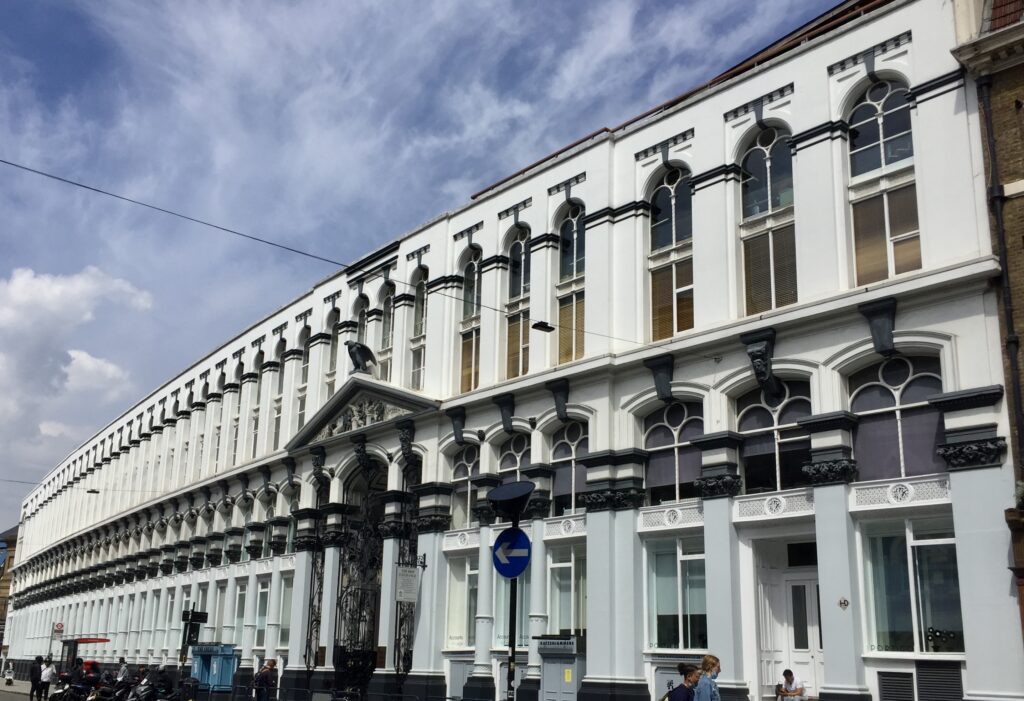
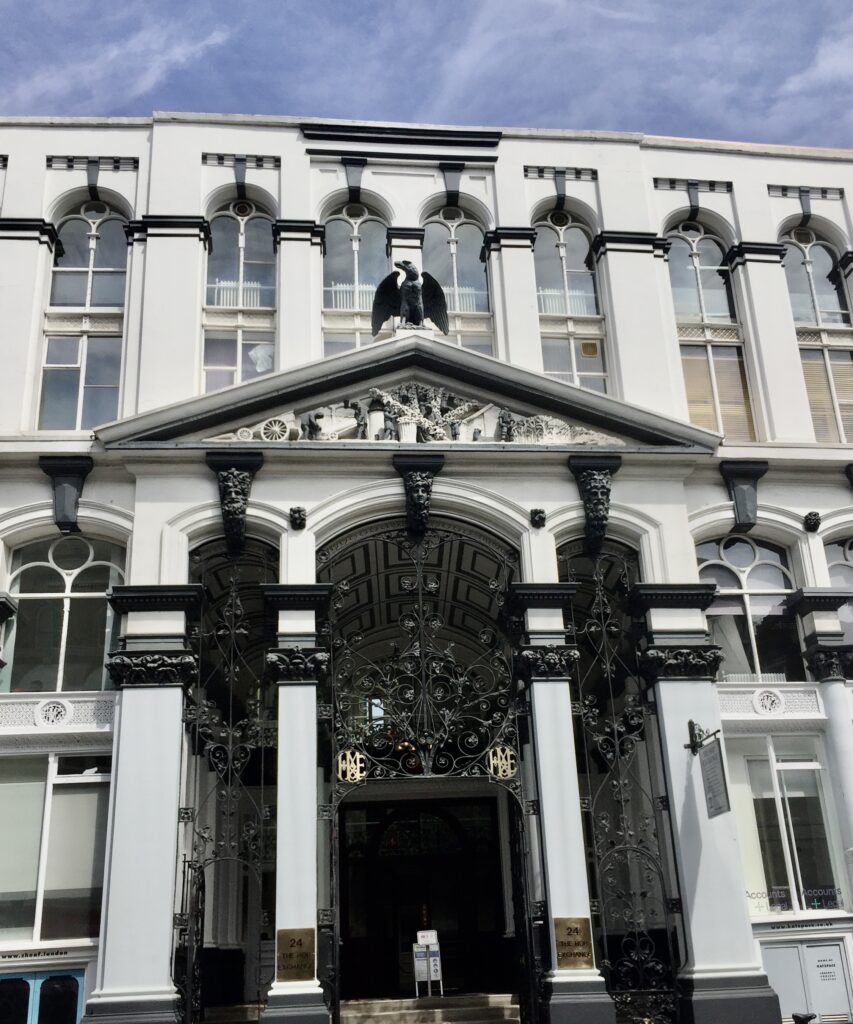
Walking along Southwark Street, I came across this magnificent, gently curving building called The Hop Exchange (SE1 1TY) …

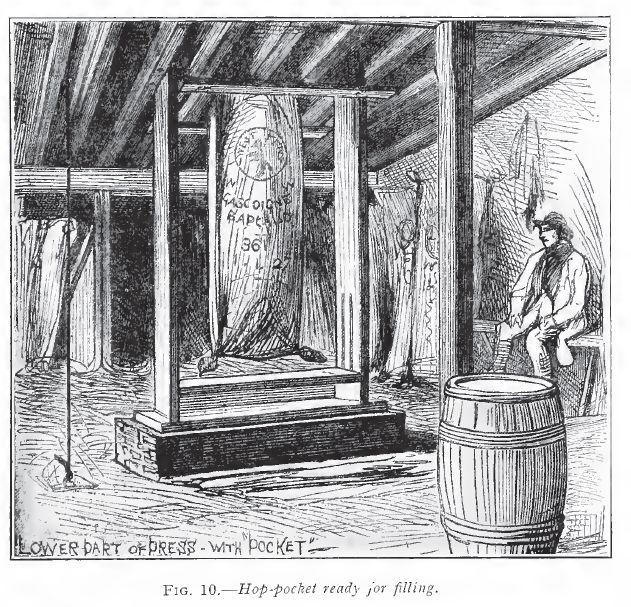
This area in Southwark was where the hops from the southern counties, and especially from Kent, were brought to after the autumn picking. After picking, the hops were dried in the oast houses and then packed into large compressed sacks of 6 by 2 feet, called ‘pockets’. These pockets were then transported to Southwark, first by horse and cart, but later by train …

The Hop Exchange was built in 1867 …

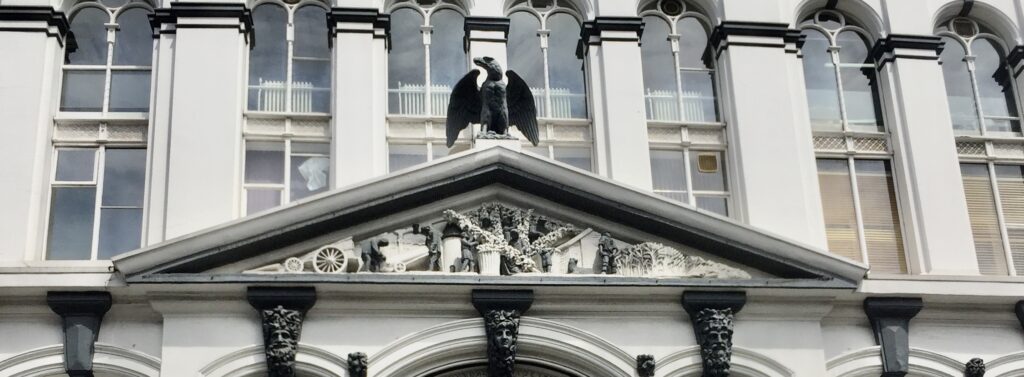
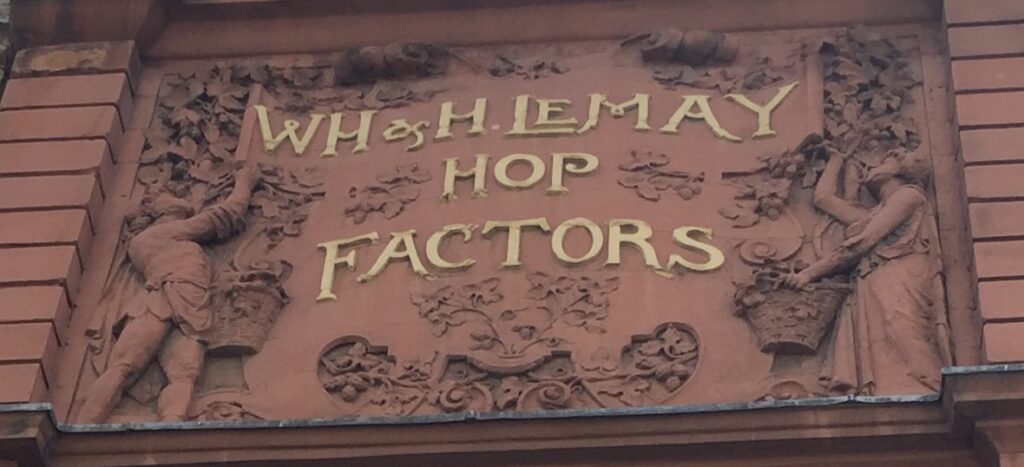
You can see the hop pickers at work in the carving contained in the pediment …

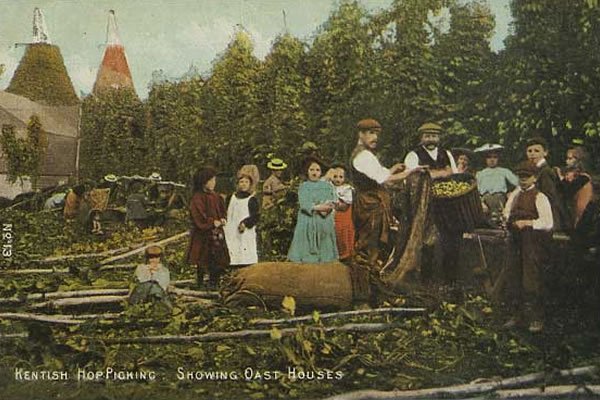
Up to the 1960s, many of the poorer London families went to the hop gardens each September for a working-holiday. Not just for the fresh air, but to supplement their all too meagre income …

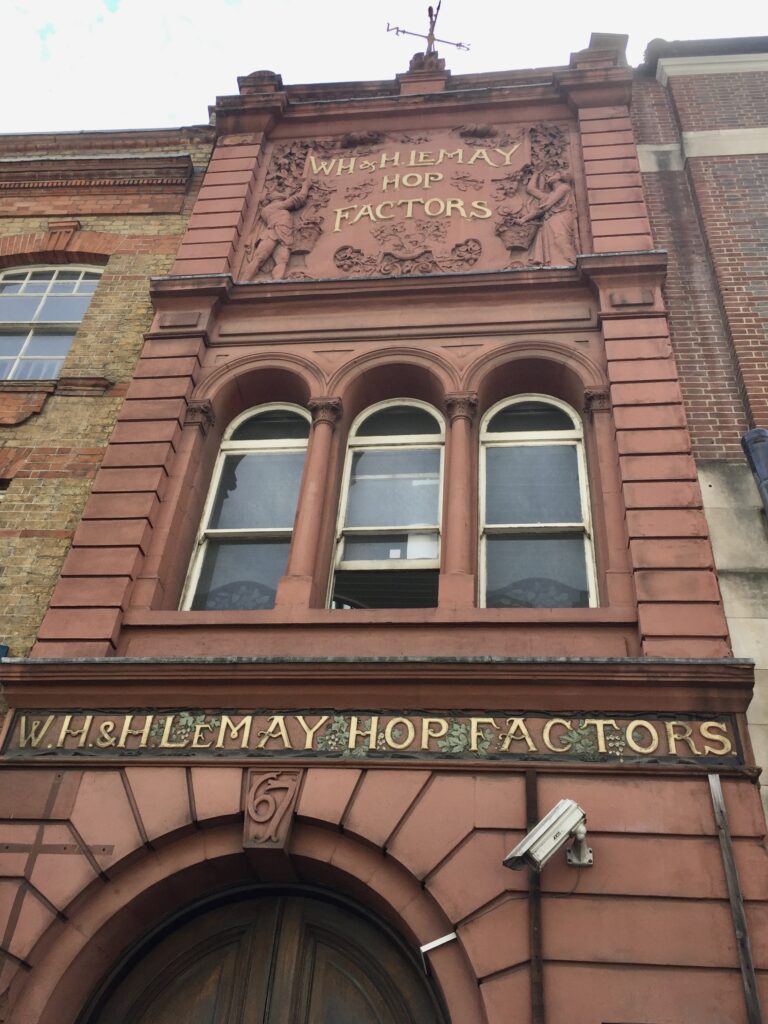
At 67 Borough High Street you can find the former offices of the hop merchants, or factors as they were usually called, W.H. and H. Le May (SE1 1NF). It is a Grade II listed building with a spectacular frieze on the front depicting hop gatherers and proudly displaying the firm’s name. One may easily assume that the building is constructed of red sandstone, but according to the description on the British Listed Buildings site, it is ‘just’ coloured stucco …

A rather romanticized view of picking …

I am indebted to the London Details blog for much of my research. You can read two of the posts here and here.

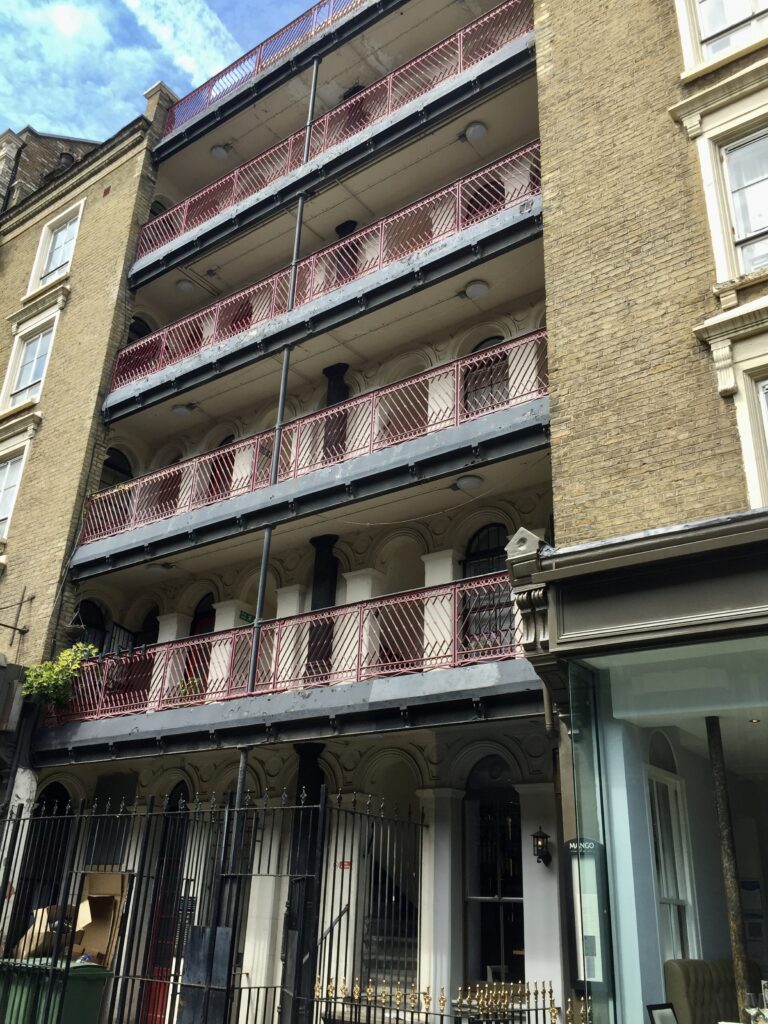
These flats, Cromwell Buildings in Redcross Street (SE1 9HR), were constructed in 1864 by Sir Sydney Waterlow, founder of the Improved Industrial Dwellings Company, and were modelled after a pair of houses designed by the Prince Regent for the Great Exhibition of 1851. Waterlow set the company up in 1863 with capital of £50,000 and by 1900 it was said to be housing some 30,000 London people …

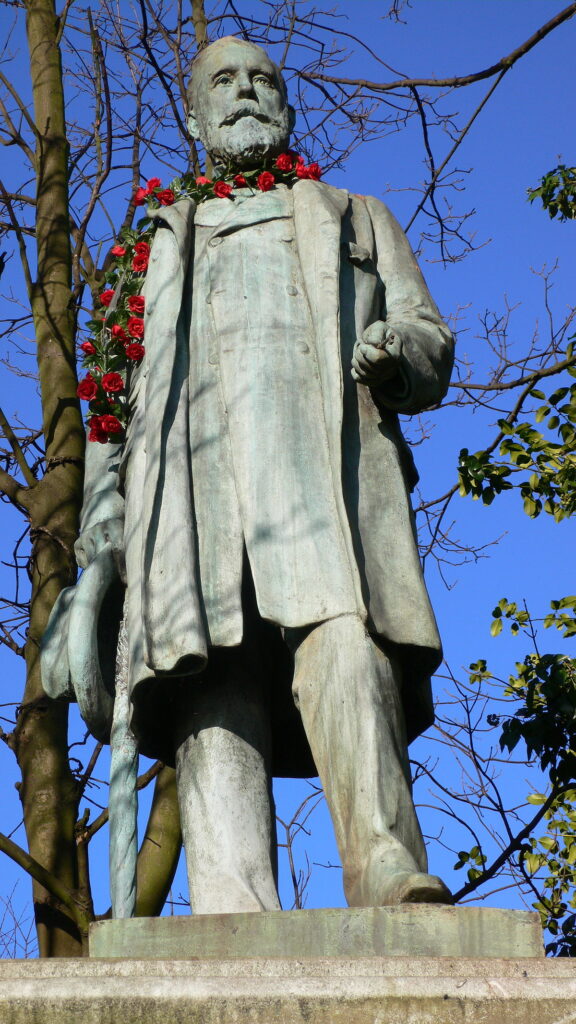
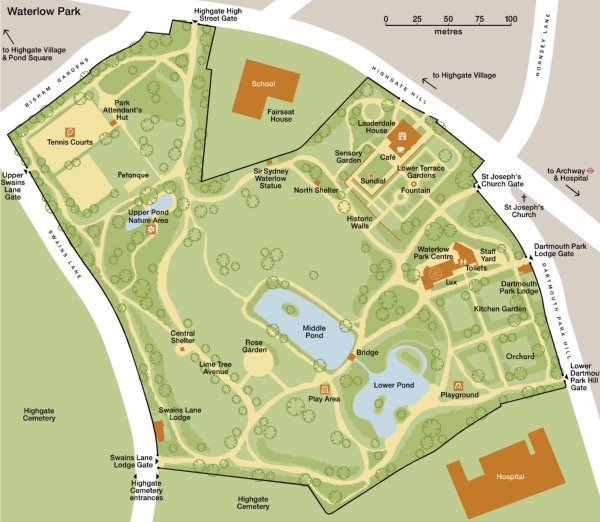
If you ever find yourself in Highgate, do visit the beautiful Waterlow Park (N6 5HD). It covers 26 acres and was given to the public by Sir Sydney as ‘a garden for the gardenless’ in 1889. Seek out this statue of the great man – it’s the only statue I have ever come across of a man carrying an umbrella. In his left hand you will see he is handing over the key to the garden gates …

The Friends of Waterlow Park have produced this useful map. If you have time, I strongly recommend a visit to the nearby Highgate Cemetery

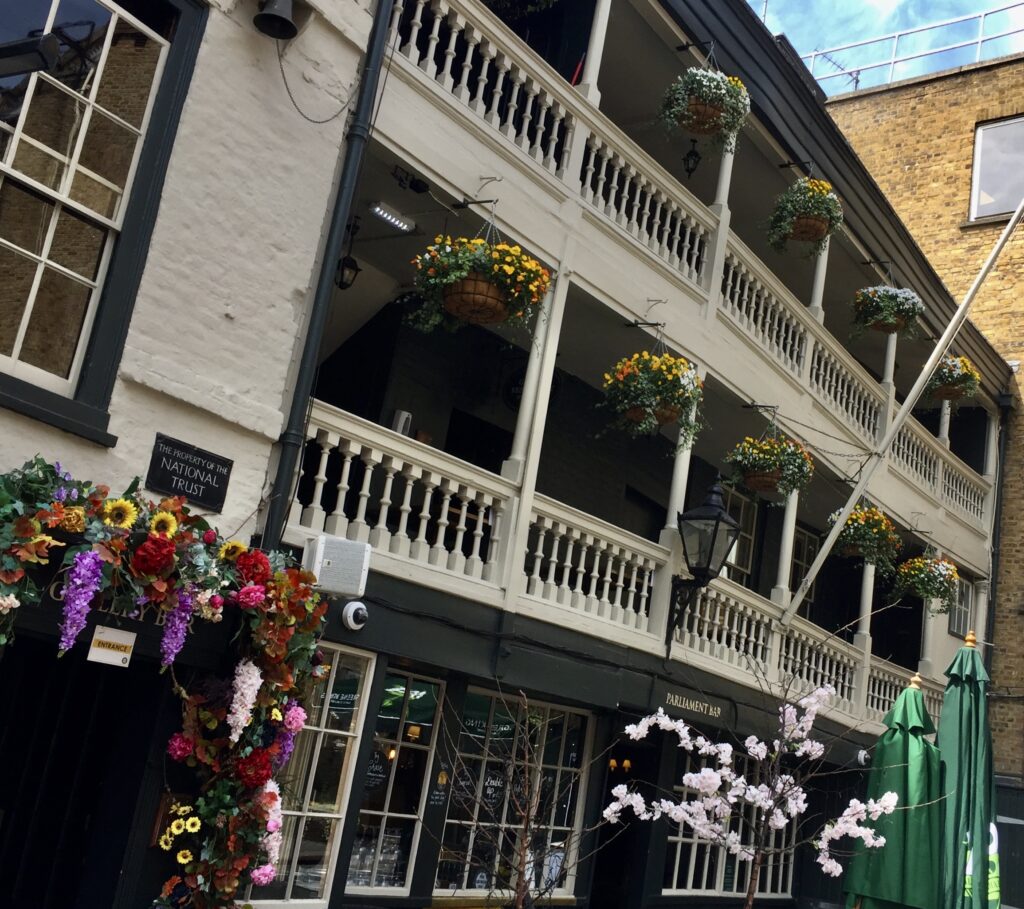
Back in Southwark, if you’re feeling thirsty and a bit peckish treat yourself with a visit to the George Inn, the only surviving galleried coaching inn in London (SE1 1NH) …

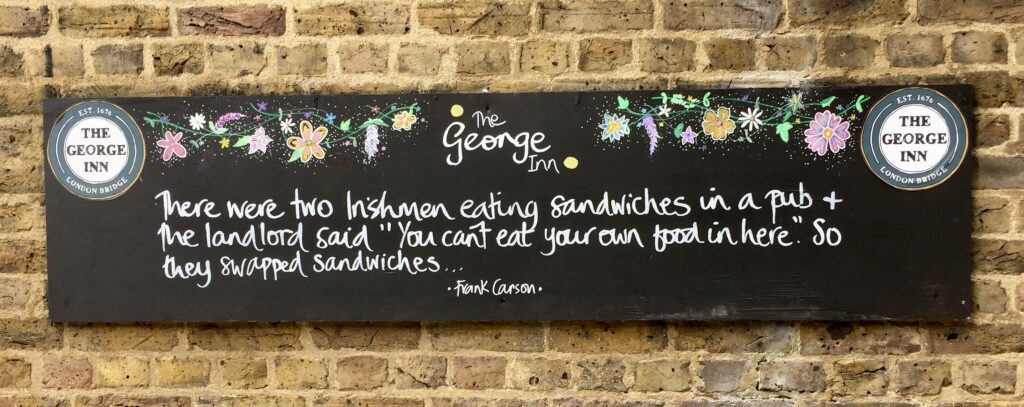
When I popped in to take a photo this made me smile …

I’ll visit Southwark again when I also go back to the Cathedral.

If you would like to follow me on Instagram here is the link …
https://www.instagram.com/london_city_gent/

At the Charterhouse

Doing photography for my blog isn’t an essential journey, so I hope you won’t mind if I republish an earlier edition, the one reporting on my visit to the Charterhouse. The buildings are in Charterhouse Square (EC1M 6AN) just opposite Florin Court, the flats used as ‘Whitehaven Mansions’ in the Poirot TV series.

A Carthusian monastery had existed on this site since 1371, but catastrophe came in 1535 when the monks were asked to sign an oath acknowledging the King – Henry VIII – as the supreme head of the Church of England. Many refused, and on 4th May that year the Prior, John Houghton, a monk and a lay brother, were hanged, drawn and quartered at Tyburn. Houghton’s right arm was chopped off and hung over the Charterhouse entrance gate – a symbol of what happened to those refusing to acknowledge the King’s authority.

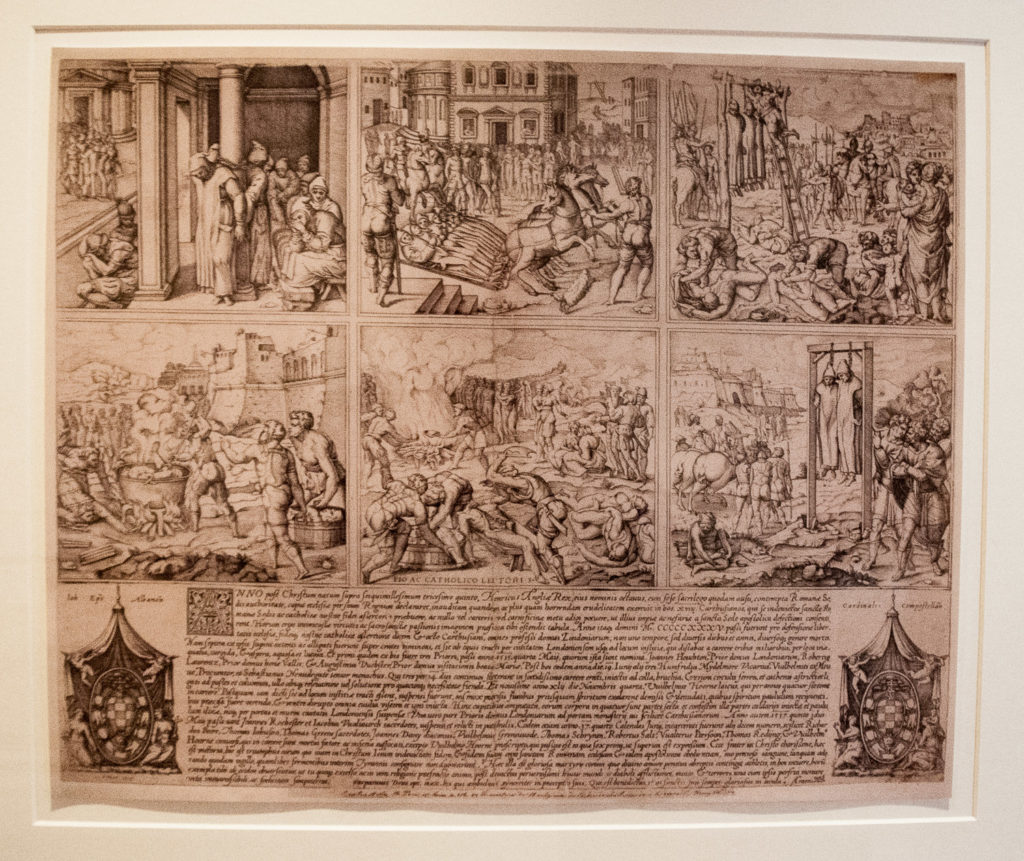
One of the many fascinating things to see on a modern-day tour is this engraving …

Probably by Nicolas Beatrizet (1540-1560)

The print was produced in Rome about 20 years later. Five of the scenes show the monks imprisoned, dragged through the streets and then being executed. The final scene shows two Carthusian monks being executed in York.

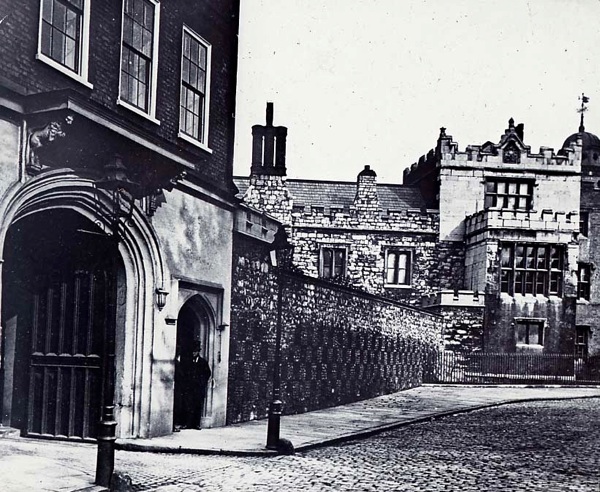
The gatehouse in the 1930s

Charterhouse has passed through many incarnations over the centuries and evidence of this abounds to this day.

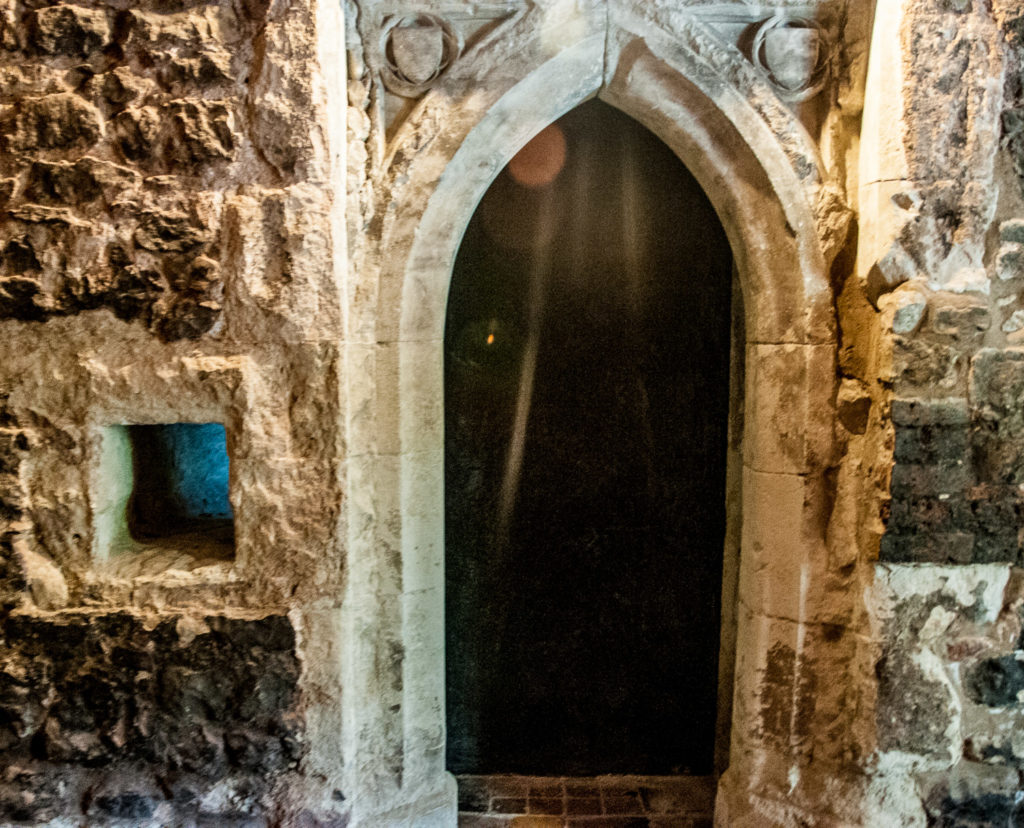
We can still see the entrance to one of the two-up two-down cells the monks occupied …

Food was passed in to the cell through the portal on the left to avoid disturbing the monk’s solitude

Each monk lived as a hermit, spending their time in prayer, contemplation and scholarly work. They seldom spoke, usually only meeting together for Sunday lunch.

Sir Edward North (later Baron North) bought the ransacked property in 1545 and turned it into a mansion. To describe North (1496-1564) as a ‘survivor’ in this tumultuous period would be an understatement – somehow remaining in favour with both Queen Mary and later Queen Elizabeth I. In fact three other owners of Charterhouse (John Dudley, Thomas Howard and Philip Howard) were all executed for treason.

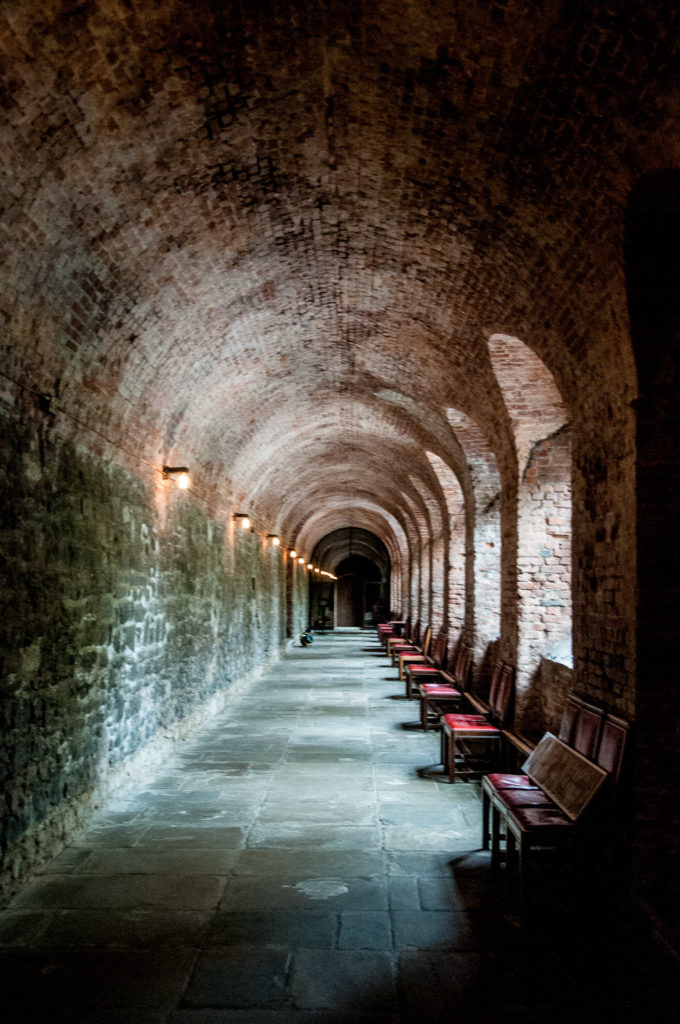
Thomas Howard, the Fourth Duke of Norfolk, bought the buildings in 1564. He rebuilt what is now called the Norfolk Cloister, from the ruins of the monks’ original Great Cloister …

The boys from Charterhouse school played football here, its narrow dimensions creating the need for the offside rule

It was in King James’s reign in 1611 that a former ‘Master of the Ordnance in the Northern Parts’, Thomas Sutton, said to be England’s wealthiest commoner, bought the property and established a founda­tion to maintain a school and almshouses. The school, for 40 boys, was the beginning of Charterhouse School. Later, John Wesley and William Makepeace Thackeray were pupils. In 1872, the school moved to Godalming, taking the young Robert Baden-Powell to complete his schooling in Surrey.

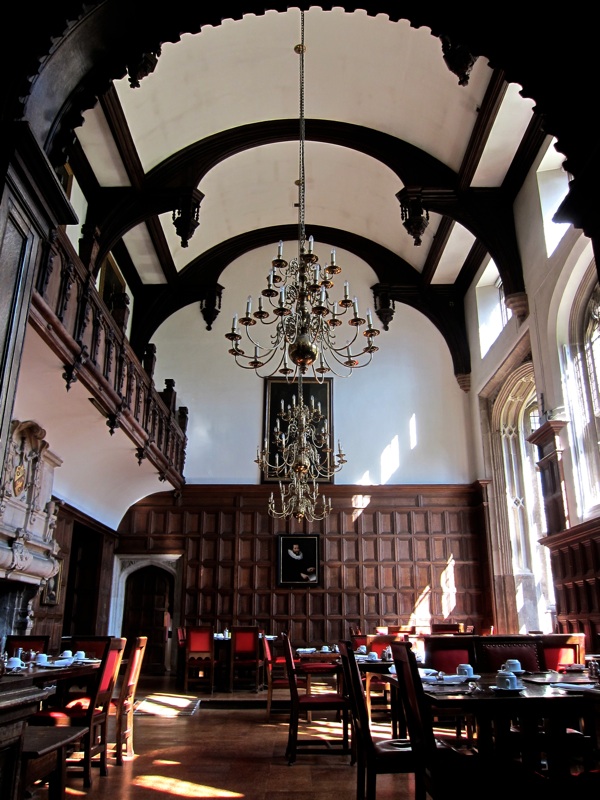
The Great Hall (1571) where the Brothers dine today

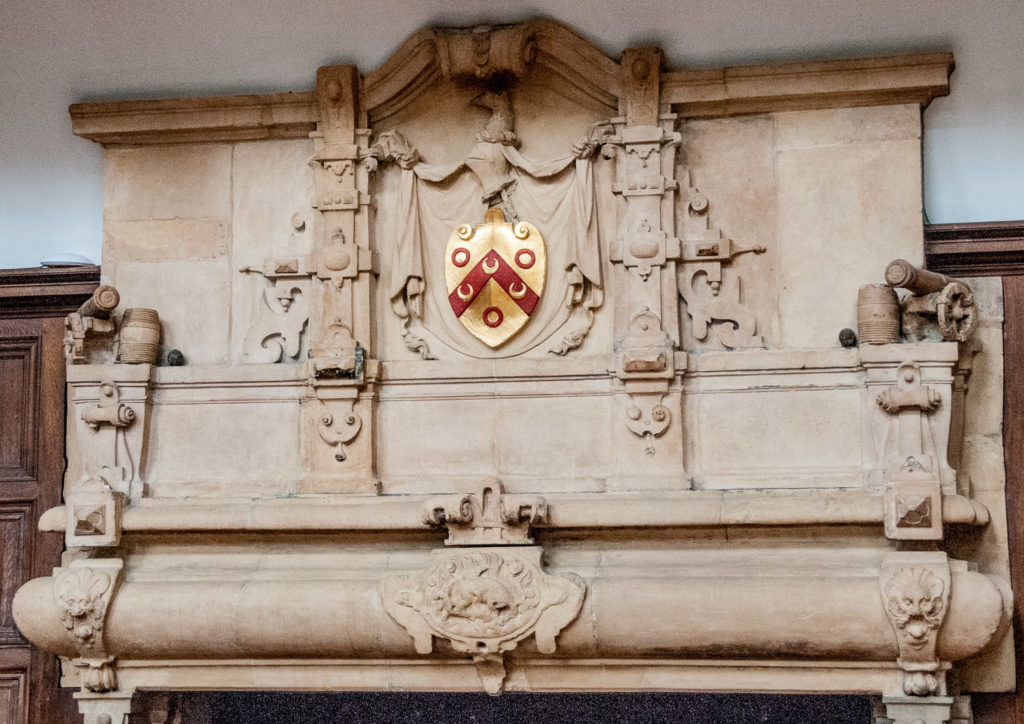
In the Hall, Sutton’s coat of arms can be seen above this magnificent Caen stone chimneypiece, the cannon and gunpowder barrels at the sides referencing his connection with The Ordnance …

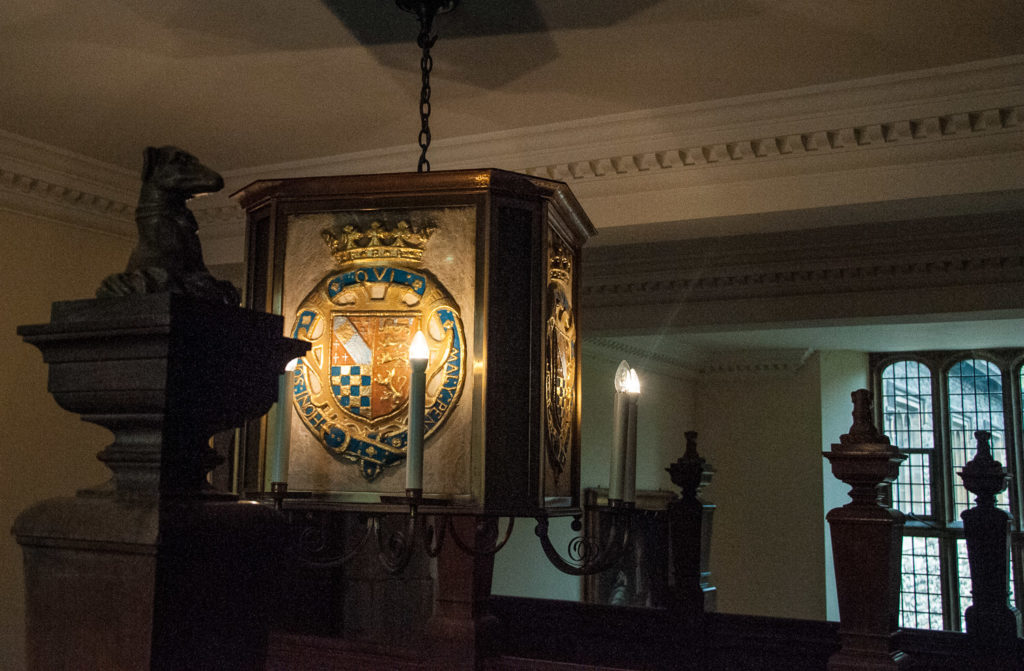
The arms include the head of a hunting dog, a Talbot, now extinct. It’s a motif that can be found throughout the building …

A carved Talbot dog on the stairs along with the arms of the fourth Duke of Norfolk


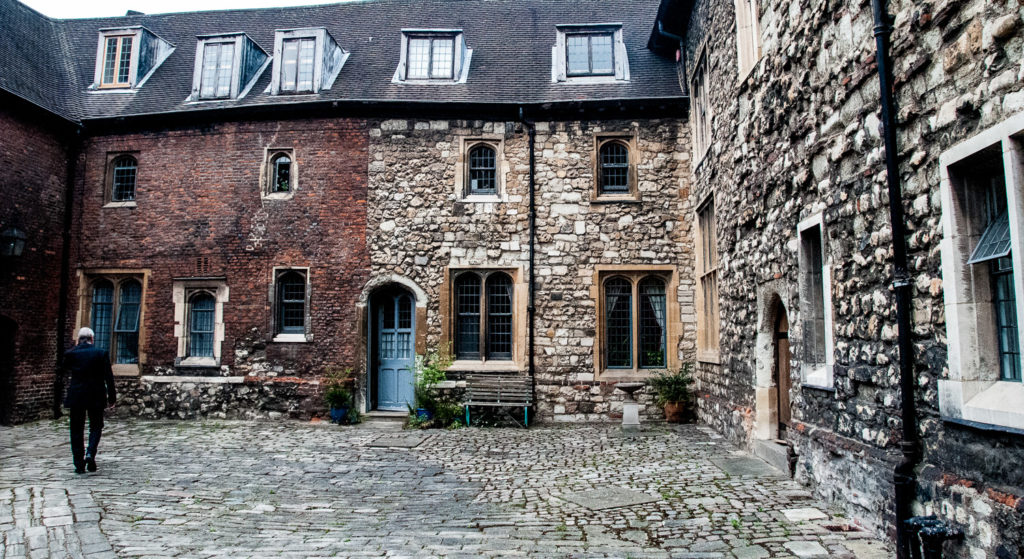
In Wash House Court, Tudor bricks meet Monastery stone …

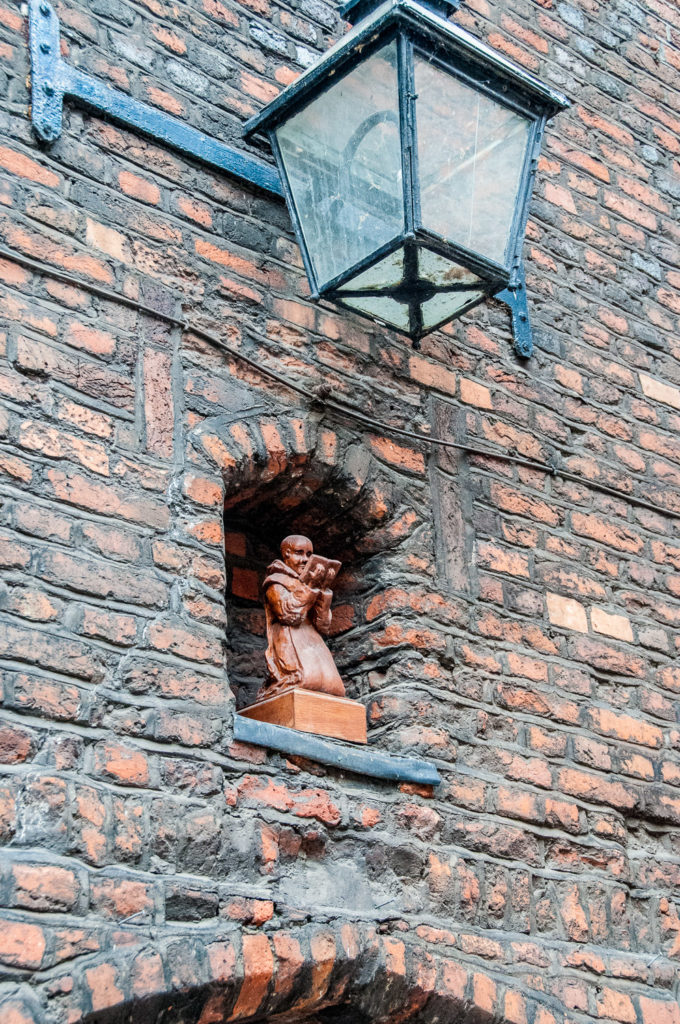
Above the entrance to the passageway to the Court, a tiny monk has found a quiet place to study his Bible …

The buildings were severely damaged by incendiary bombs during the Second World War …

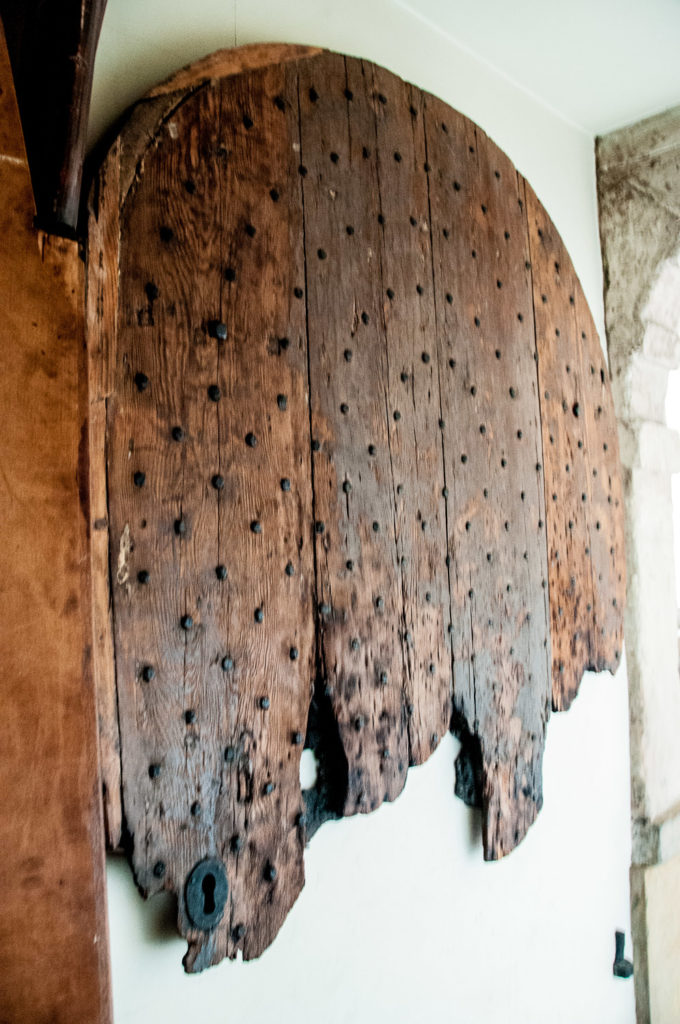
The medieval door to the Chapel damaged in the Blitz

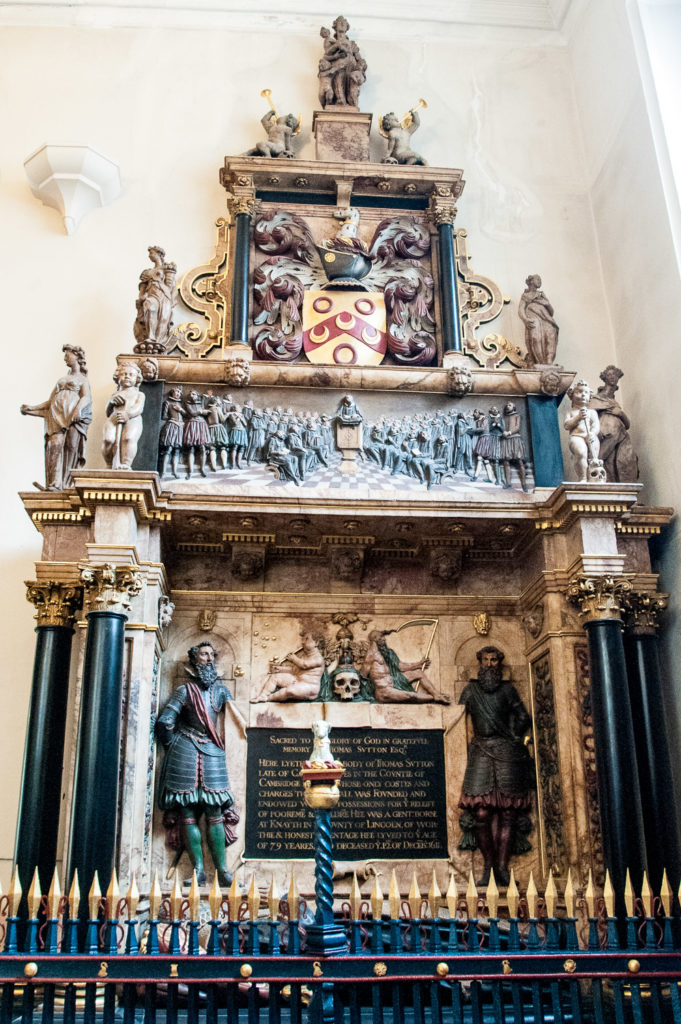
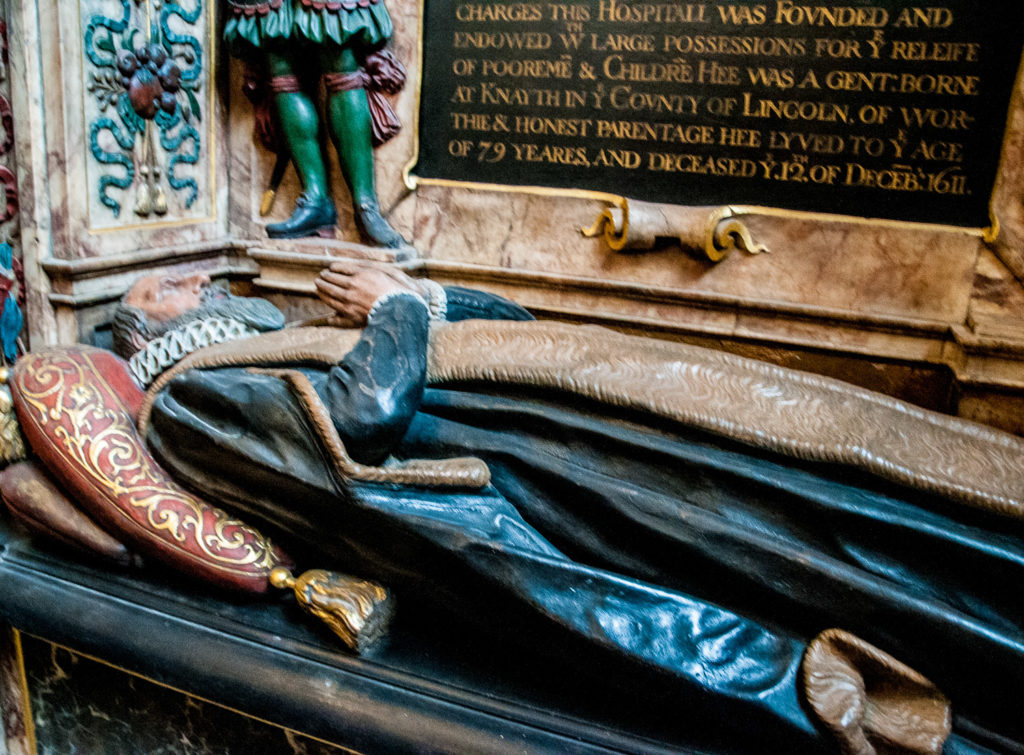
The Chapel contains Thomas Sutton’s spectacular monument …

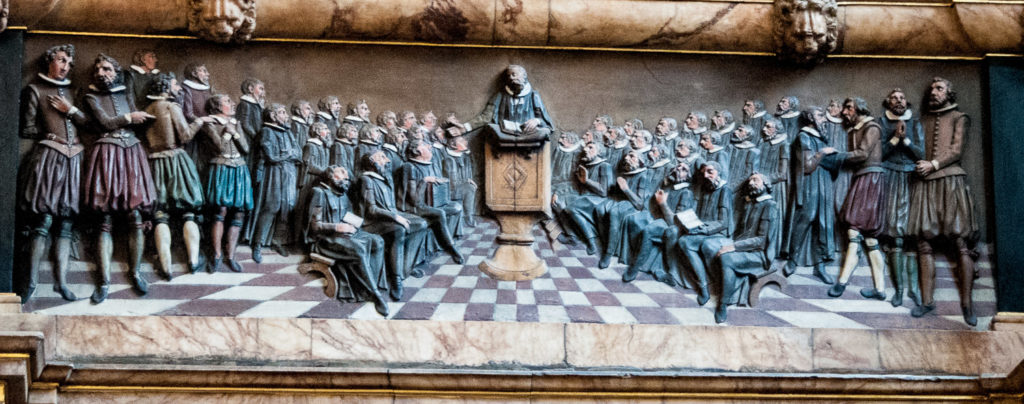
A relief panel shows the Poor Brothers in their gowns and a body of pious men and boys (perhaps scholars) listening to a sermon …

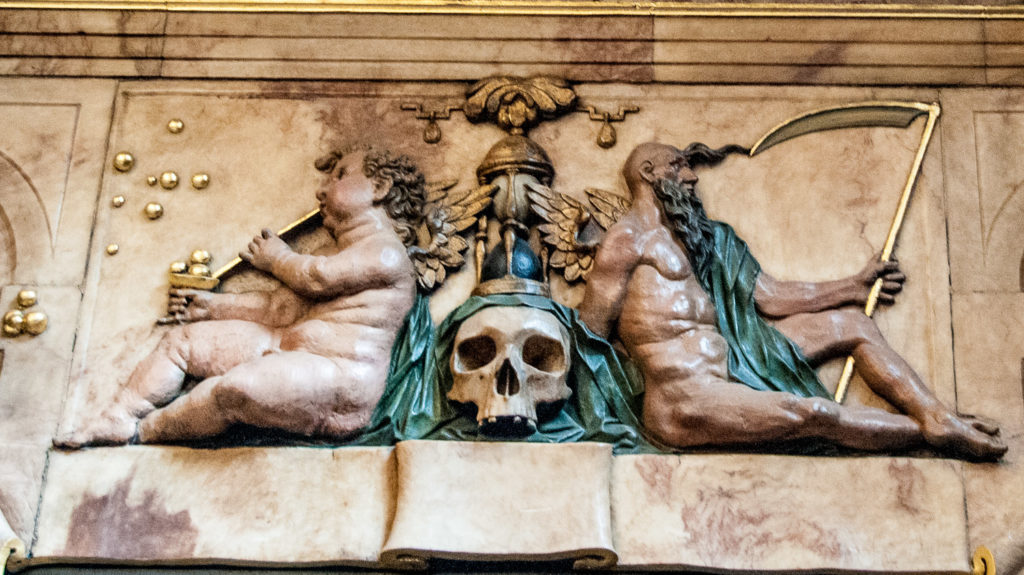
I love the figure, Vanitas, blowing bubbles and representing the ephemeral quality of worldly pleasure. The figure with the scythe is Time

The man himself …

His body rests in a vault beneath the monument

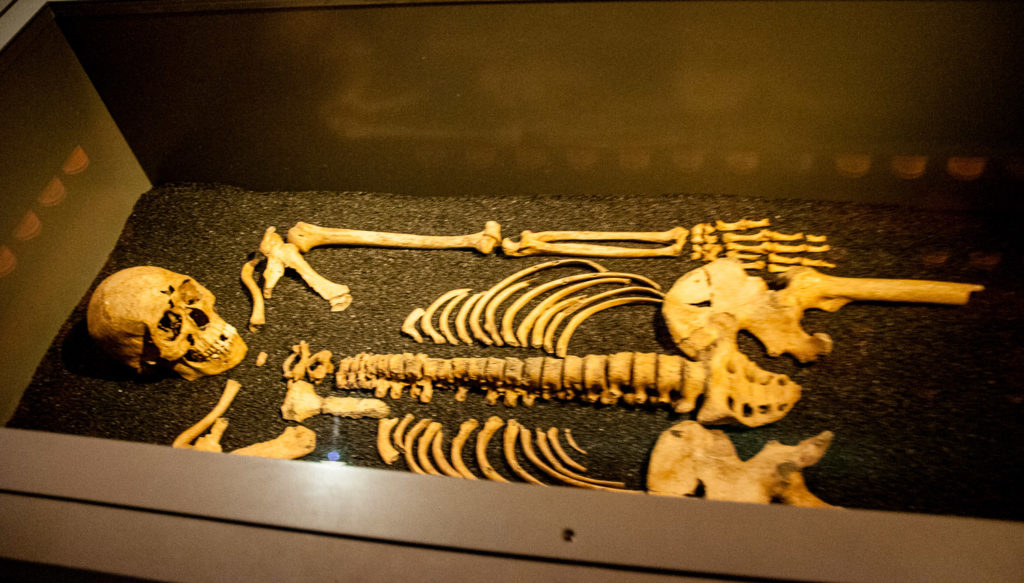
By way of contrast we can also see, in a darkened room lit by candles, this poor soul. Uncovered during the Crossrail tunneling, archeologists found it belonged to a man in the prime of his life, in his mid-twenties, when he was struck down by the Black Death. It’s believed he died at some point between 1348 and 1349, at the height of the pandemic …

Thomas Sutton’s will provided for up to 80 residents (called Brothers): ‘either decrepit or old captaynes either at sea or at land, maimed or disabled soldiers, merchants fallen on hard times, those ruined by shipwreck or other calamity’.

A community of some 40 Brothers (as of 2016, women are not excluded by this term) still live in the Charterhouse today.

This blog only covers a tiny example of what you will discover at the Charterhouse. I highly recommend the tours that are conducted every day except Monday. Some are led by one of the resident Brothers and are given from the perspective of each individual Brother, therefore no two tours are the same. Click here for details.

Remember you can follow me on Instagram :

https://www.instagram.com/london_city_gent/

The Pump of Death and a walk towards St Botolph’s

At the junction of Fenchurch Street and Leadenhall Street people usually hurry past this old water pump without a second glance, not knowing anything about some gruesome aspects of its history …

There was a well here for centuries and one appears to be shown on the Agas map of 1561 …

Look under the ‘A’ of Aldegate

After a pump was installed in the sixteenth century the water gained a reputation for being ‘bright, sparkling, and cool, and of an agreeable taste’. In the early 1870s, however, people started noticing the taste deteriorate and become foul. Then people who had drank the water started dying in great numbers in a tragedy that became known as the Aldgate Pump Epidemic.

It was known that Thames water was dangerous as illustrated by this 1850s drawing entitled The Silent Highwayman

But Aldgate water originated in the healthy springs of Hampstead and Highgate and flowed underground – so it should have been safe.

The bad news broke publicly in April 1876 …

An investigation by the Medical Officer of Health for the City revealed the terrible truth. During its passage underground from north London it had passed through and under numerous new graveyards thereby picking up the bacteria, germs and calcium from the decaying bodies. The pump was immediately closed and eventually reconnected to the safer New River Company’s supply later in 1876. You will find a fascinating history of the New River Company if you access the splendid London Inheritance blog.

The epidemic was obviously a distant memory by the nineteen twenties when Whittard’s tea merchants used to

… always get the kettles filled at the Aldgate Pump so that only the purest water was used for tea tasting.

I have discovered a few old pictures …

The pump in 1874- picture from the Wellcome Collection.

And in August 1908 a little East End boy refreshes himself using the cup attached to the pump by a chain …

The full picture …

The wolf’s head spout is said to reference the last wolf killed in the City of London …

Nice that it has survived intact into the 21st century.

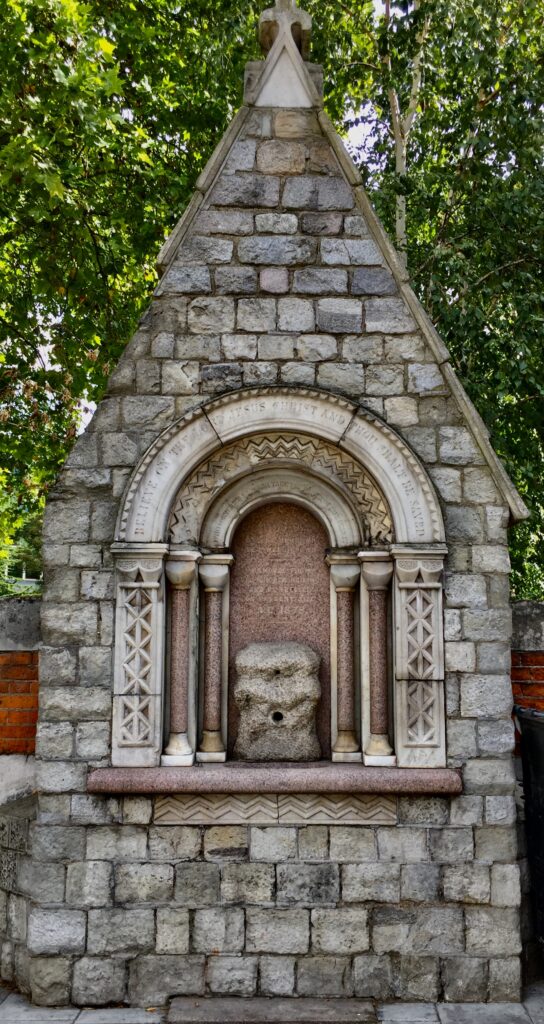
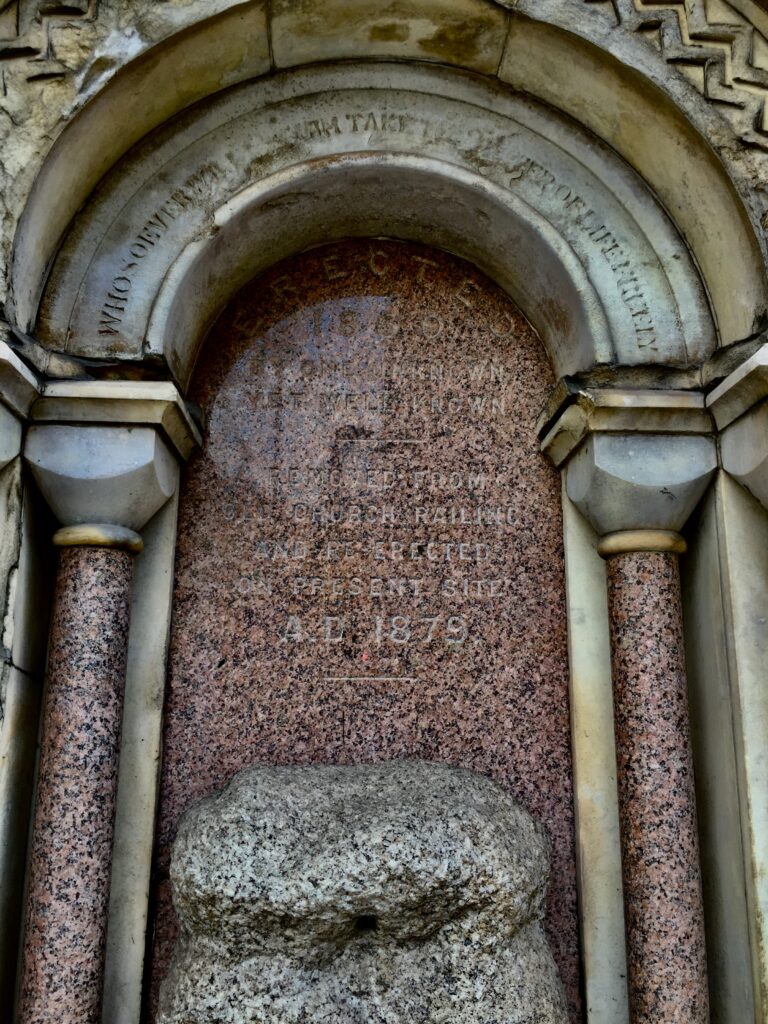
Walking towards St Botolph’s church I saw on the left this magnificent drinking fountain ‘Erected by permission of the vicar and churchwardens’. It has a connection with the Metropolitan Drinking Fountain Association which I have written extensively about in my blog Philanthropic Fountains

It’s dedicated to the memory of Frederic David Mocatta …

A wealthy bullion broker, after he had retired from the business in 1874 he devoted himself to works of public and private benevolence, especially in the deprived East End of London. It was people from that area who raised the money for this memorial and you can read more about him here.

A little bit further on is this 1950s police call box …

This is the third one I have discovered in the City and you can read more about the others here.

As you walk up the steps to visit St Botolph’s, turn around and look across the road. There are some old late Victorian buildings that have survived redevelopment and I was struck by how much care had gone into the decoration at roof height, even though very few people would be looking up to see it …

Next week I enter St Botolph’s and will write about some of the best and most interesting monuments and memorials in the City.

Don’t forget you can follow me on Instagram:

https://www.instagram.com/london_city_gent/

Page 2 of 4

Powered by WordPress & Theme by Anders Norén

Symbols & Secrets
Privacy Overview

This website uses cookies so that we can provide you with the best user experience possible. Cookie information is stored in your browser and performs functions such as recognising you when you return to our website and helping our team to understand which sections of the website you find most interesting and useful.