Walking the City of London

Category: Memorials Page 27 of 36

Five tiny City churchyards (and a chatty lady)

Did you realise that, just off Cannon Street, is the final resting place of Catrin Glyndwr, daughter of Welsh hero Owain Glyndwr? She was captured in 1409 and taken with her children and mother to the Tower of London during her father’s failed fight for the freedom of Wales. A memorial to her, and the suffering of all women and children in war, was erected in the former churchyard of St Swithen where she was buried. It survives as a raised public garden and here is the pretty entrance gate on Oxford Court (EC4N 8AL) …

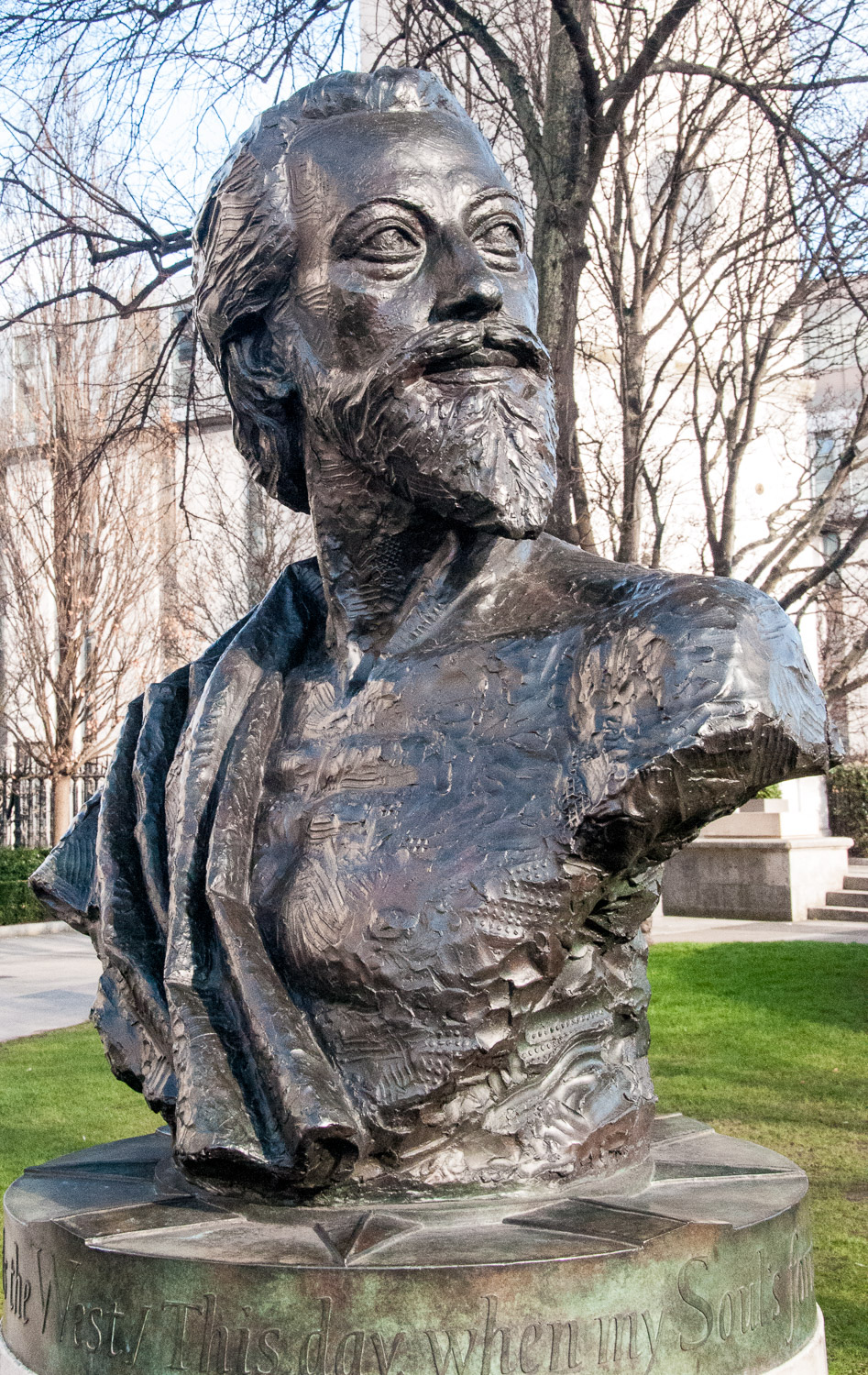
And this is the memorial …

Unveiled in 2001, it was designed by Nic Stradlyn-John and sculpted by Richard Renshaw

With its inscription …

The garden is a cosy, secluded space with seating where you can enjoy a break from the City hustle and bustle …

The Church itself was demolished as a result of World War II bombing.

St Clement’s Eastcheap isn’t on Eastcheap, for reasons I will go into in a future blog. It’s in the appropriately named St Clement’s Lane (EC4N 7AE). As you look down the Lane from King William Street it’s tucked away on the right …

Just past the church is St Clement’s Court, the narrow alley leading to the churchyard. There is an intriguing plaque on the wall of the adjacent building …

Obradović was a Serbian writer, philosopher, dramatist, librettist, translator, linguist, traveler, polyglot and as the plaque says, the first minister of education of Serbia. Here is a link to his Wikipedia entry. He was honoured in 2007 by a special Serbian stamp …

You enter the churchyard via three steps. City churchyards are frequently higher than street level, evidence of how may bodies were crammed in until graveyards were closed to new burials in the middle of the 19th century …

The churchyard was reduced in size in the 19th century by an extension that was added to the church and all that remains now are a couple of gravestones and two chest tombs …

The inscription on one is just about legible, it reads …

In memory of Mr JOHN POYNDER late of this Parish who departed this life on 11th April 1800 aged 48 years. Also four of his children who died in their infancy.

The narrow alleyway can be traced back to 1520 and St Clement’s Lane is also an old thoroughfare. Here it is on Roques map of 1746 leading then, as it does now, to Lombard Street directly opposite the Church of St Edmund King and Martyr …

The alley was then called Church Court

Here’s another view from King William Street, you can see St Edmund’s in the distance …

The church dates from 1674 having been rebuilt by Wren after the Great Fire (although the design was probably by his able assistant Robert Hooke). In 2001 it became the London Centre for Spirituality …

It was a lovely, warm sunny day and, looking at the church architecture, for a moment I had the overwhelming feeling that I was in Italy!

To find the churchyard, now a private garden, head down George Yard adjacent to the church (EC4V 9EA). It closed for burials in 1853 …

One tomb is visible from the street …

It has a fascinating inscription …

Sir HENRY TULSE was a benefactor of the Church of St Dionis Backchurch (formerly adjoining). He was also Grocer, Alderman & Lord Mayor of the City. In his memory this tombstone was restored in 1937 by THE ANCIENT SOCIETY OF COLLEGE YOUTHS during the 300th year of the Society’s foundation. He was also Master of the Society during his Mayoralty 1684.

St Dionis Backchurch was demolished in 1878 and the proceeds of the land sale used to resurrect it as a new church of the same name in Parsons Green. The Ancient Society of College Youths is the premier change ringing society in the City of London, with a national and international membership that promotes excellence in ringing around the world. Sir Henry owned significant estates in South London – you’ll be remembering him as your train trundles through Tulse Hill Station.

St Gabriel Fenchurch was destroyed in the Great Fire and not rebuilt but its churchyard remains – now called Fen Court (EC3M 6BA) it’s just off Fenchurch Street. If you are feeling stressed, or just need to take time out, you can use the labyrinth there to walk, meditate and practise mindfulness. It was the idea of The London Centre for Spiritual Direction and you can read more about it here.

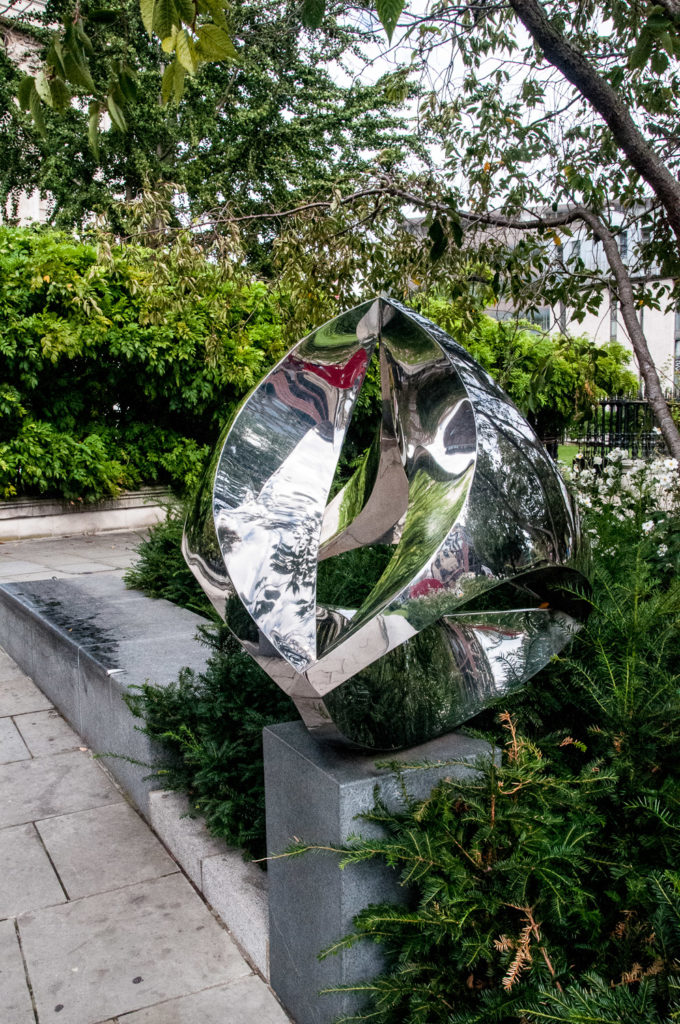
The Fen Court labyrinth

Three chest tombs are evidence of it’s earlier burial ground function …

This vault was built in the year 1762 by MRS ANNE COTTESWORTH for a burying place for Herself she being born in this Parish And her nearest relations being buryed in the next Vault

Her family coat of arms is quite sheltered and has survived City pollution well

Also there is the striking Gilt of Cain monument, unveiled by Archbishop Desmond Tutu in 2008, which commemorates the abolition of the transatlantic slave trade in 1807. Fen Court is now in the Parish of St Edmund the King and St Mary Woolnoth, Lombard St, the latter having a strong historical connection with the abolitionist movement of the 18th and 19th centuries. The Rev John Newton, a slave-trader turned preacher and abolitionist, was rector of St Mary Woolnoth from 1780 to 1807 and I have written about him in an earlier blog St Mary Woolnoth – a lucky survivor.

The granite sculpture is composed of a group of columns surrounding a podium. The podium calls to mind an ecclesiastical pulpit or slave auctioneer’s stance, whilst the columns evoke stems of sugar cane and are positioned to suggest an anonymous crowd. This could be a congregation gathered to listen to a speaker or slaves waiting to be auctioned.

The artwork is the result of a collaboration between sculptor Michael Visocchi and poet Lemn Sissay. Extracts from Lemn Sissay’s poem, Gilt of Cain, are engraved into the granite. The poem skilfully weaves the coded language of the City’s stock exchange trading floor with biblical Old Testament references.

And finally here is another meditation labyrinth …

It’s in one of my favourite places, St Olave Hart Street churchyard in Seething Lane (EC3R 7NB) …

You walk in through the gateway topped with gruesome skulls, two of which are impaled on spikes …

Charles Dickens nicknamed it ‘St Ghastly Grim’

It leads to the secluded, tranquil garden …

The labyrinth is in the corner on the left

This was Samuel Pepys’s local church. He is a hero of mine and I have devoted an earlier blog to him and this church : Samuel Pepys and his ‘own church‘.

In 1655 when he was 22 he had married Elizabeth Michel shortly before her fifteenth birthday. Although he had many affairs (scrupulously recorded in his coded diary) he was left distraught by her death from typhoid fever at the age of 29 in November 1669.

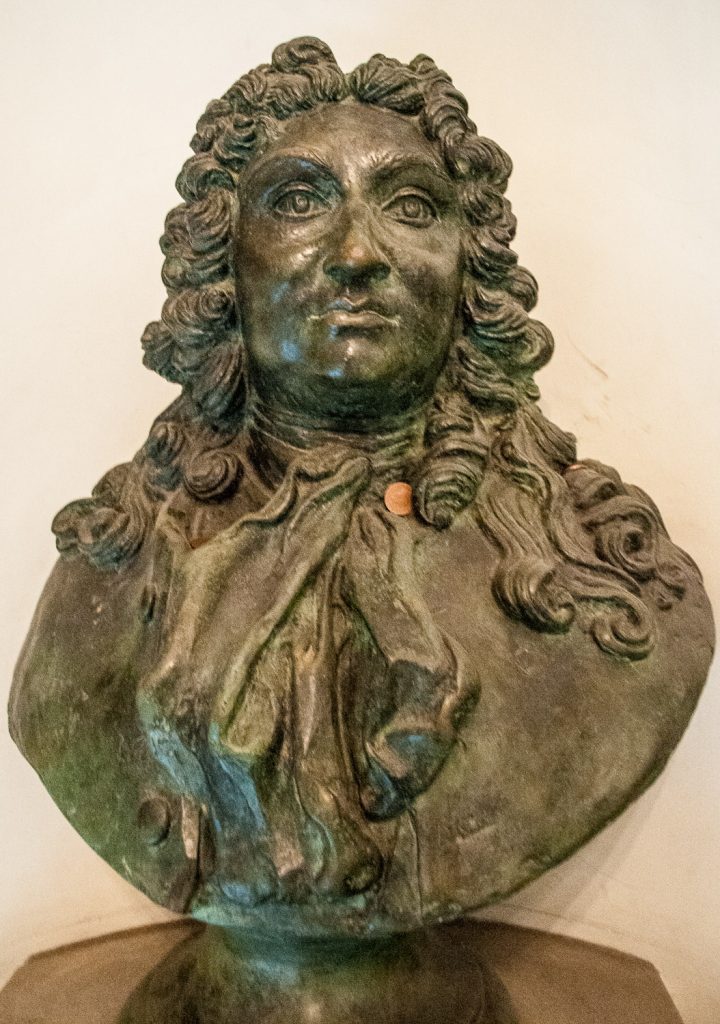
Do go into the church and find the lovely marble monument Pepys commissioned in her memory. High up on the North wall, she gazes directly at Pepys’ memorial portrait bust, their eyes meeting eternally across the nave where they are both buried. When he died in 1703, despite other long-term relationships, his express wish was to be buried next to her.

Take a close look at her sculpture – I am sure it is intended to look like she is animatedly in the middle of a conversation …

As you leave the church, notice how much higher the churchyard ground level is …

It’s a reminder that it is still bloated with the bodies of plague victims, and gardeners still turn up bone fragments. Three hundred and sixty five were buried there including Mary Ramsay, who was widely blamed for bringing the disease to London. We know the number because their names were marked with a ‘p’ in the parish register.

Sorry not to end on a more cheerful note! I have written before about City churchyards and you can find the blog here.

Resurrection! More tales from City Lanes, Courts and Alleys

Lovat Lane, which runs between Eastcheap and Lower Thames Street, reminds one of the old City with its cobbled surface and narrow winding shape …

St Mary-At-Hill EC3R 8EE

If you pop into St Mary-At-Hill church you will immediately encounter on your left this extraordinary representation of Resurrection on the Day of Judgment …

Christ holding a banner stands amidst clouds. Satan, a figure with large claws, is being trampled under his feet

It’s a very unusual example of late 17th century English religious carving and most likely dates from the 1670s. Its carver is unknown, but it is known that the prominent City mason Joshua Marshall was responsible for the rebuilding of the church in 1670-74 and his workshop may have produced the relief.  Exactly where it was originally positioned is uncertain; most likely it stood over the entrance to the parish burial ground and was brought inside in more recent times.

You can see open coffins among the chaos
The winged Archangel Michael helps people rise again

If you visit the little churchyard you will see evidence of another form of resurrection …

A plaque on the wall informs us that ‘the burial ground of the parish church of St. Mary-At-Hill has been closed by order of the respective vestries of the united parishes of St. Mary-At-Hill and Saint Andrew Hubbard with the consent of the rector and that no further interments are allowed therein – Dated this 21st day of June 1846’. Following closure, all human remains from the churchyard, vaults and crypts were removed and reburied in West Norwood cemetery. You can read more on the excellent London Inheritance blog.

I spotted this splendid winged lion outside number 31 – placed their by the owners of the Salotti 31 restaurant …

The St Mark Lion is the symbol of Venice, where the restaurant owners come from

And there are some nice ghost signs …

Walking along Old Jewry last week I noticed this little courtyard …

26 Old Jewry EC2R 8DQ

Tucked away behind locked gates is what was once the City of London Police Headquarters (the Old Jewry address gave the force its former radio call sign of ‘OJ’). They originally moved there in 1842 but this building, in neo-Georgian style, was constructed between 1926 and 1930. The police moved out, to Wood Street, in 2001.

There are two alleys off Bishopsgate that are quite easy to miss but reward investigation. The first I explored was Swedeland Court (EC2M 4NR) …

I can’t find out why it’s called Swedeland Court (or why it’s a ‘court’ and not an ‘alley’). At the end is the interesting Boisdale Restaurant. It’s worth walking to the end and looking back towards the street as there are some charming old lamps and it’s very atmospheric …

Nearby is the rather uninviting looking Catherine Wheel Alley which will eventually lead you to Middlesex Street …

I entered with some trepidation

Looking back you get the true canyon effect …

The Catherine Wheel pub stood here for 300 years until it burned down in 1895. It’s said that the name was changed at one point to the Cat and Wheel in order to placate the Puritans who objected to its association with the 9th century saint. It’s also claimed that the highwayman Dick Turpin drank here, but if he drank in every pub that has since claimed a connection he would never have been sober enough to ride a horse.

When I worked near here in the 1970s it was always a pleasure to walk through this covered passage since the enclosed area was redolent with the aroma of spices, once stored here in the heyday of London Docks. It had the nickname ‘Spice Alley’ …

The pathway from Fenchurch Street (just beside the East India Arms EC3M 4BR) leads to Crutched Friars and by the time of Rocque’s map of 1746 it had acquired the name French Ordinary Court …

John Rocque’s map of 1746

The lane itself dates from the 15th century and perhaps even earlier. It was further enclosed in the 19th century as Fenchurch Street railway station was constructed above, transforming it into a cavernous passage.

Looking towards Crutched Friars

When you emerge, cross the road and look back …

The Court was named for the fact that, in the 17th century, Huguenots were allowed by the French Ambassador, who had his residence at number 42 next door, to sell coffee and pastries there. They also served fixed price meals and in those days such a meal was called an ‘ordinary’.

Star Alley (EC3M 4AJ) links Mark Lane with Fenchurch Street and you can also find it on Rocque’s map …

The view from Mark Lane

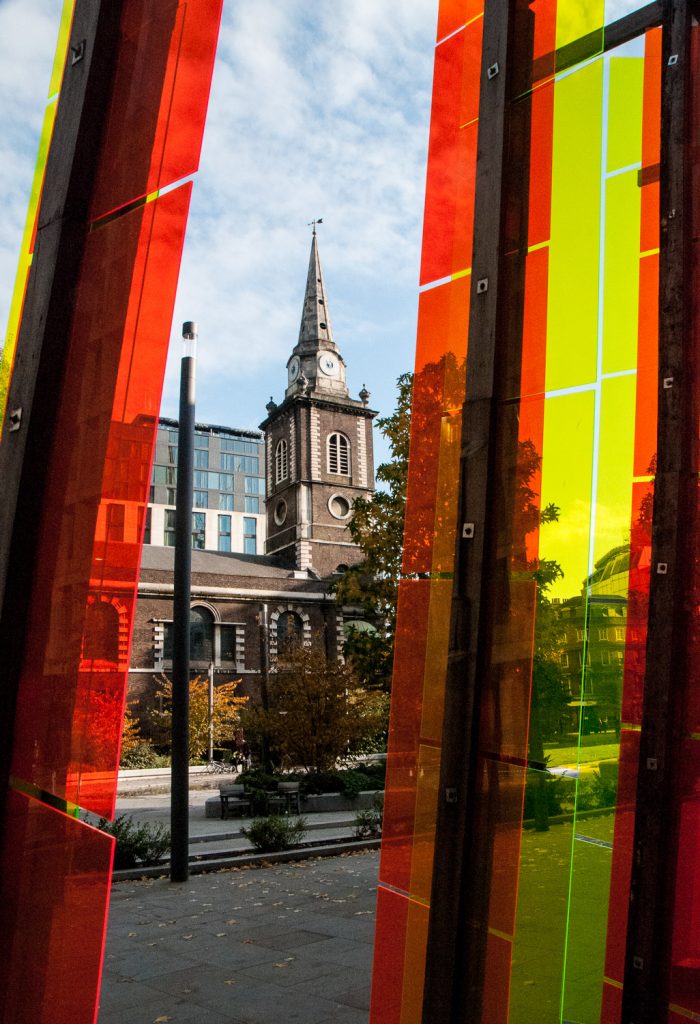
On the left is the tower of All Hallows Staining …

First mentioned in the late 12th century, ‘staining’ meant it was made of stone unlike other City churches which were made of wood. It was rebuilt in 1674 after collapsing four years earlier (possibly because of too many burials near the building). You can read more about it here in the London Inheritance blog.

I found a few odd things here. These mysterious tiles, which look quite modern, have what I think are construction workers in the foreground and a tower crane in the background …

They are nowhere near number 48 or 43


And this spooky little alien character …

There is one grave left in the graveyard …

The marker for the grave of John Barker (d 179?), his wife (d 1831) and their son Robert (date of death illegible)

Unfortunately I have not been able to find out more about the family.

As you look towards Fenchurch Street, you can see the date of the post-war building inscribed above the entrance …

The wooden facade of the restaurant makes it look much older

Finally, there is also an edition of Spitalfields Life dealing with City Alleys – you can access it here. This is my favourite picture from it …

‘Hello, hello, hello …’

St Mary Woolnoth – a lucky survivor

The church of St Mary Woolnoth has been lucky twice.

A masterpiece by Wren’s brilliant protégé Nicholas Hawksmoor, it was built between 1716 and 1727 in the English Baroque style. Amazingly, it was scheduled for demolition in 1898 in order to facilitate the construction of Bank Underground Station. A public outcry put a stop to that and a compromise was reached. The crypt was cleared and the extended area under the church became the Underground ticket office – the church authorities collected a whopping £170,000 in compensation.

It was lucky a second time around during the Second World War which it survived unscathed …

Bank Underground Station, January 11th 1941 – a near miss for the church

First recorded in 1191, it has an unusual name. The founder may have been a Saxon noble, Wulfnoth, or alternatively, the name may be connected with the wool trade. Certainly this was true of the nearby church of St Mary Woolchurch Haw, destroyed in the Great Fire of 1666 (its parish then united with that of St Mary Woolnoth).

The most celebrated priest associated with the church was John Newton (1725-1807)…

Born the son of a master mariner in Wapping, he spent the early part of his career as a slave trader. From 1745-1754 he worked on slave ships, serving as captain on three voyages. He was involved in every aspect of the slaver’s trade, and his log books record the torture of rebellious slaves. Following his conversion to devout Christianity in 1748 he eventually became rector here in 1780. In the church is his memorial tablet, which he wrote himself beginning …

John Newton, Clerk, once an infidel and libertine, a servant of slaves in Africa …

In 1785, he became a friend and counsellor to William Wilberforce and was very influential himself in the abolition of slavery. He lived just long enough to see the Abolition Act passed into law. Think of him also when you hear the hymn Amazing Grace, which he co-wrote with the poet William Cowper in 1773.

The outside of the church is very unusual and it has a fine position on the corner of King William Street and Lombard Street, just off the major Bank road junction (EC3V 9AN). The clock is mentioned in a famous poem which I shall refer to later …

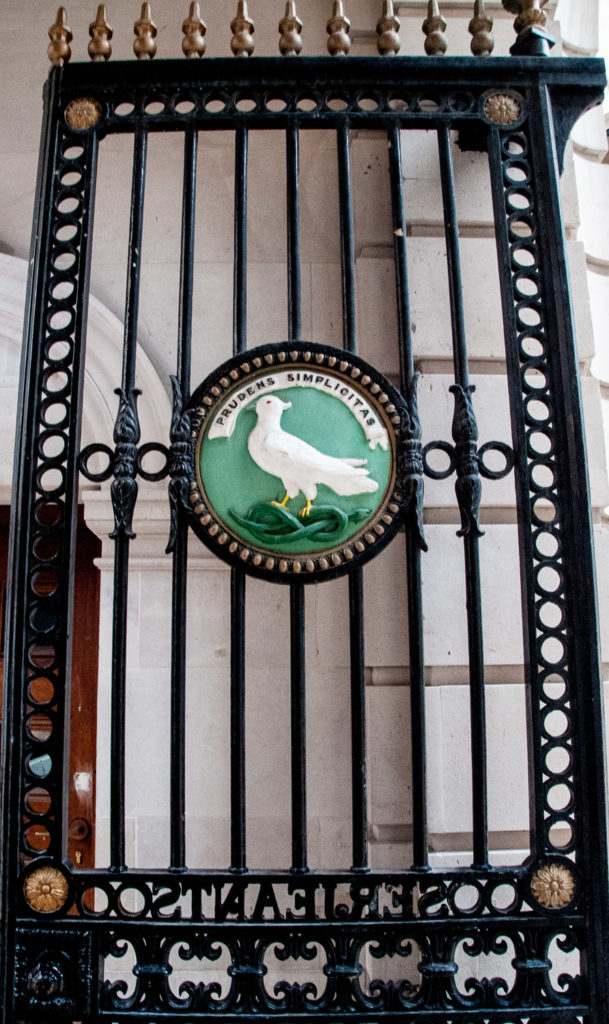
The gate to the church bears the coat of arms of the Diocese of London …

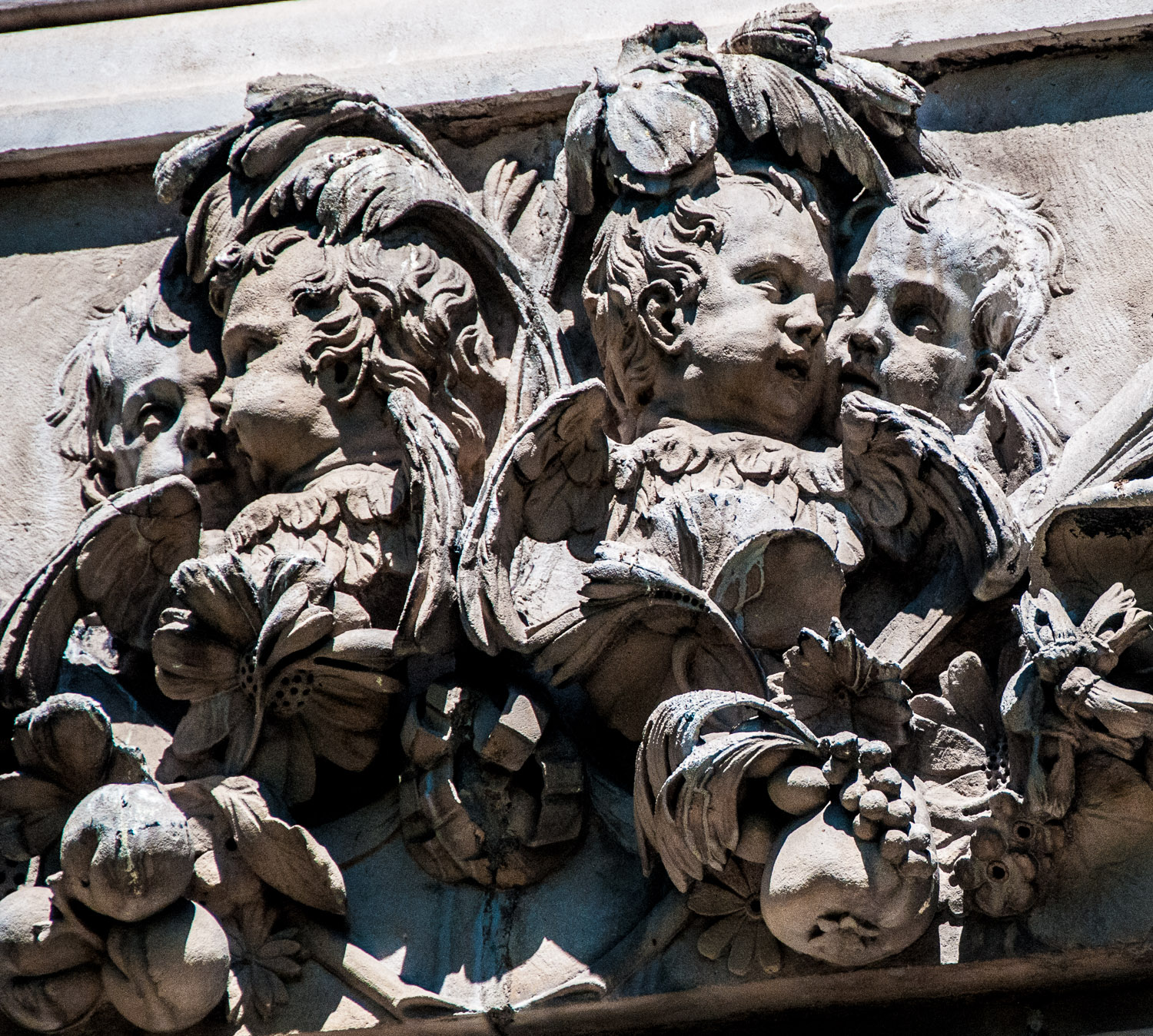
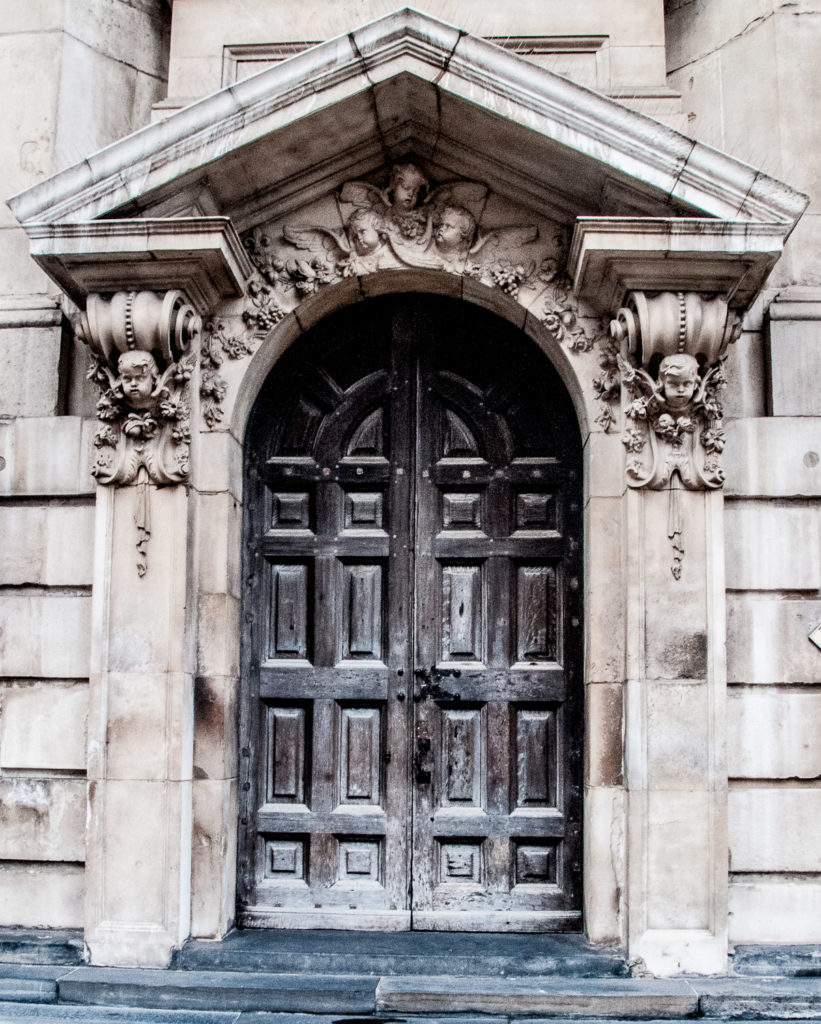
These cherubs once used to gaze at me as, when I worked nearby, I went down the steps to the station on my way home …

The small, square, tranquil interior was regarded by Simon Jenkins as the ‘most remarkable in the City, the majesty it conjures from a limited space’ ..

At each corner are a group of three great Corinthian columns …

Monuments other than the one to Newton include this one to William Kentish …

The plaque, in the shape of the end of a chest tomb, incorporates a bright coat of arms with the motto ‘Survive and thrive’. William’s grandson was buried in Highgate Cemetery and the plaque describes where to find his resting place. Beneath is a note of the will of Thomas Kentish of St Albans (died 1712) which arranges for the education etc. of four boys, ideally named Kentish.

This panel was erected in memory of Thomas Lloyd, the man who started the famous coffee house, which eventually led to the Corporation of Lloyd’s …

The miniature coat of arms at the top is held by two tiny lions and, although it was placed here only in 1931, to me it does look appropriately 18th century.

The stunning, bulging pulpit dates from Hawksmoor’s time and Newton delivered his sermons from it. It was made by Thomas Darby and Gervaise Smith …

The inlaid sunburst marquetry by Appleby is sublime …

In the corner sits this clock mechanism surrounded by a cover on which is etched an extract from T.S. Elliott’s poem The Wasteland

Elliott worked nearby and, having watched the commuters trudge over London Bridge, wrote …

A crowd flowed over London Bridge, so many,
I had not thought death had undone so many.
Sighs, short and infrequent, were exhaled,
And each man fixed his eyes before his feet.
Flowed up the hill and down King William Street,
To where Saint Mary Woolnoth kept the hours
With a dead sound on the final stroke of nine.

No doubt if you were not at the office by the ‘final stroke of nine’ you were going to be late.

And finally, have you noticed these figures around the corner from the church in King William Street?

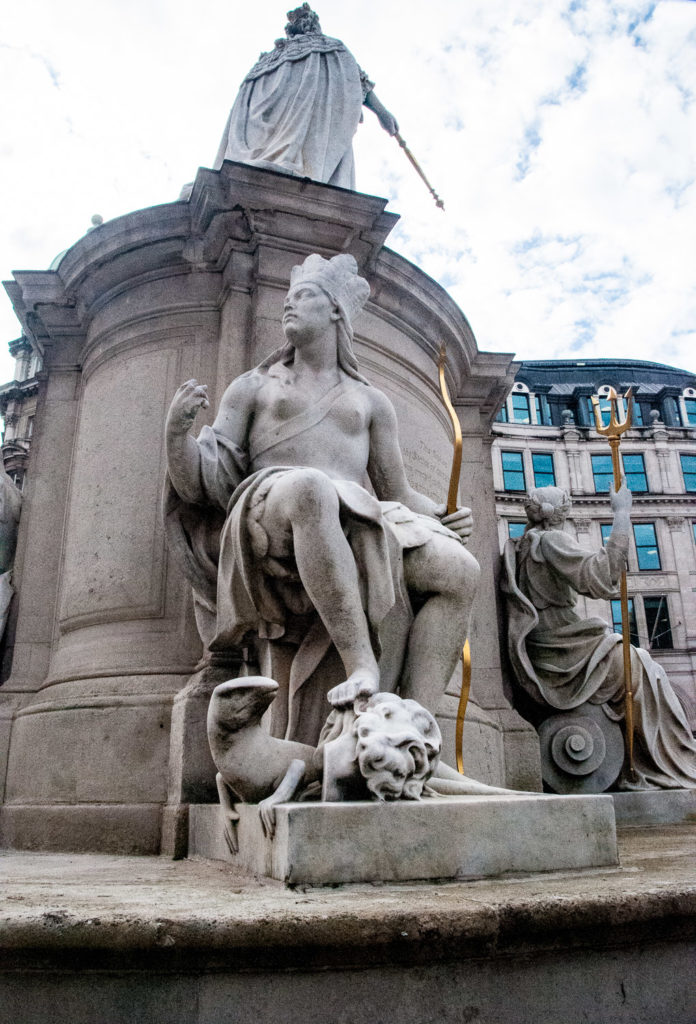
I used to think they were connected to the church but I was mistaken. They were, in fact, created in 1899 to enhance the entrance to the Underground Station. Bank was the terminus of the City and South London Railway – the first deep level ‘tube’ in London and, indeed, the world and the first to use electric locomotives.

Appropriately, the lady on the left represents electricity …

She wears a spiked crown, is surrounded by thunder clouds and shoots lightning bolts from her extended finger.

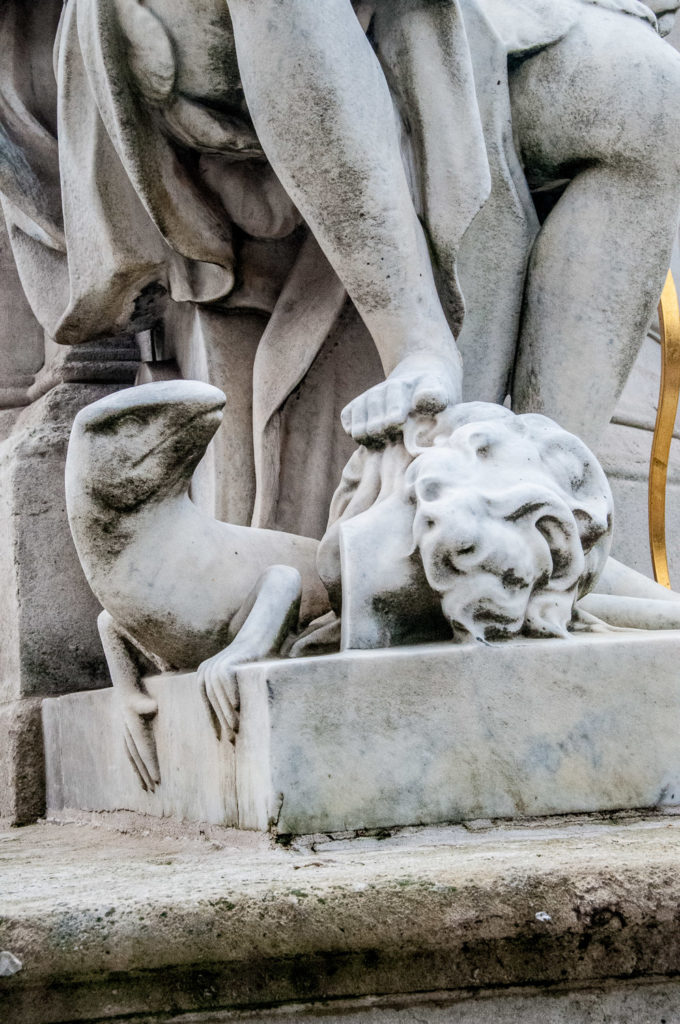
Mercury reclines on the right …

He represents Speed. He is wearing his winged hat and sandals and holding a caduceus. The architect was Sydney Smith who designed the Tate Gallery at Millbank and the sculptor Oliver Wheatley.

By the way, if you travel to the church by Underground, as you climb the stairs to the street take a moment to admire these fearsome dragons by Gerald Laing …

… and if you think the Tube is claustrophobic now, the original City & South London railway carriages had no windows because ‘there was nothing to see’. Here is a drawing from an 1890 edition of the Illustrated London News …


Page 27 of 36

Powered by WordPress & Theme by Anders Norén

Symbols & Secrets
Privacy Overview

This website uses cookies so that we can provide you with the best user experience possible. Cookie information is stored in your browser and performs functions such as recognising you when you return to our website and helping our team to understand which sections of the website you find most interesting and useful.