Walking the City of London

Category: Maps Page 4 of 5

Secret & Sacred Rivers

I’m always intrigued by Londoners’ capacity to ignore odd behaviour. For example, I spent a good ten minutes bending over this grating, some of it virtually on my knees, and no one showed the slightest curiosity …
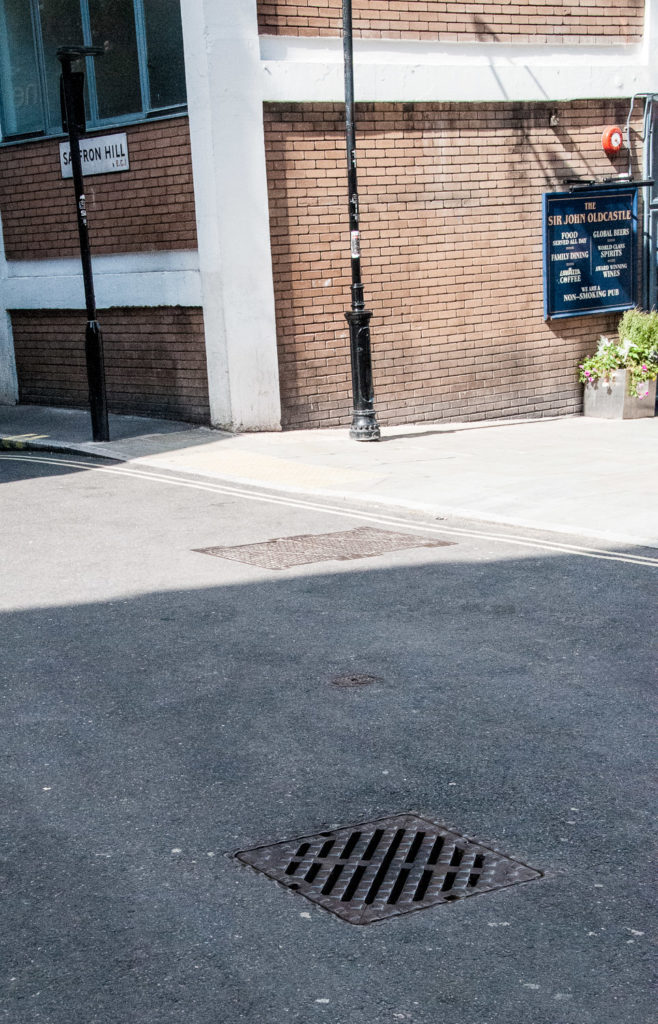
Junction of Greville Street and Saffron Hill (EC1M 3JF)

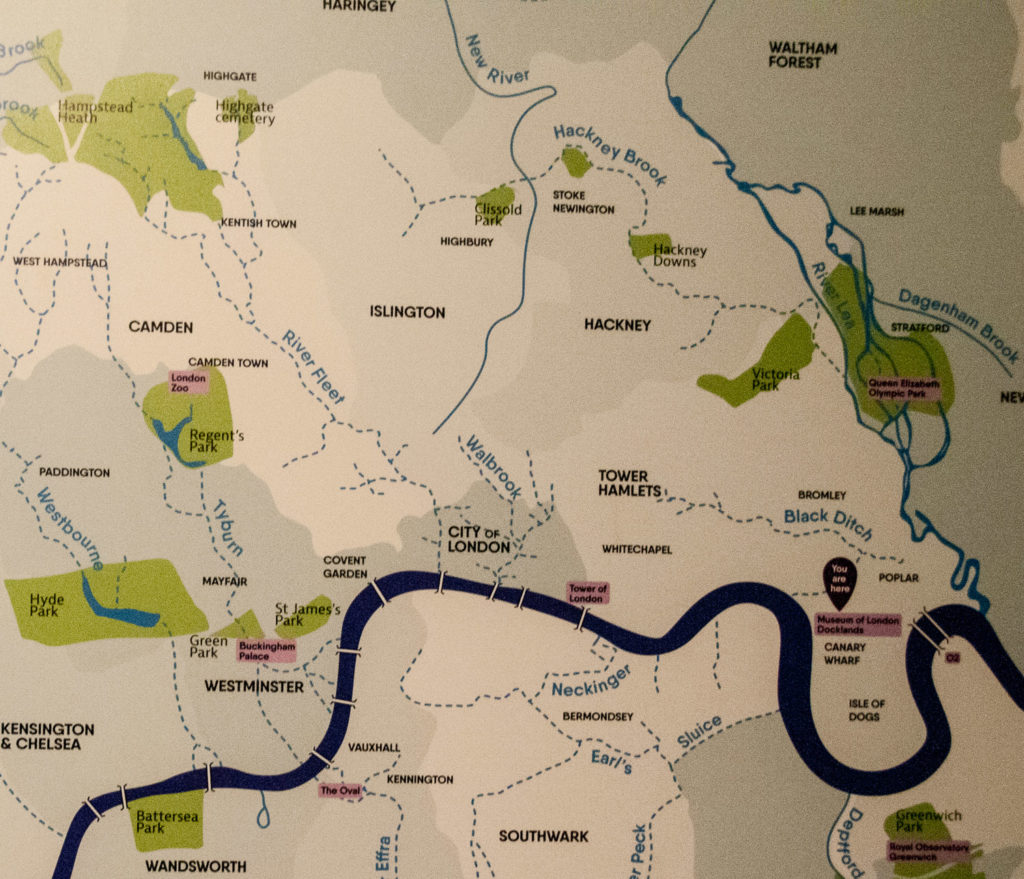
I was, of course, trying to hear the sound of running water since, directly underneath, runs probably the most famous of London’s ‘lost’ subterranean rivers, the Fleet. Its headwaters are two streams on Hampstead Heath, each of which was dammed into a series of ponds in the 18th century. At the southern edge of the Heath these descend underground as sewers which join in Camden Town. The waters flow four miles from the ponds to the River Thames, just underneath Blackfriars Bridge. Incidentally, it didn’t run down Fleet Street, it merely ran past its eastern, lower end.

This map, showing the route of the Fleet and various other waterways, is on display at the excellent Secret Rivers exhibition at the Museum of London Docklands …
Because of its later reputation, I always had a view that the Fleet where it joined the Thames would be a deeply unpleasant place, so this picture rather surprised me …
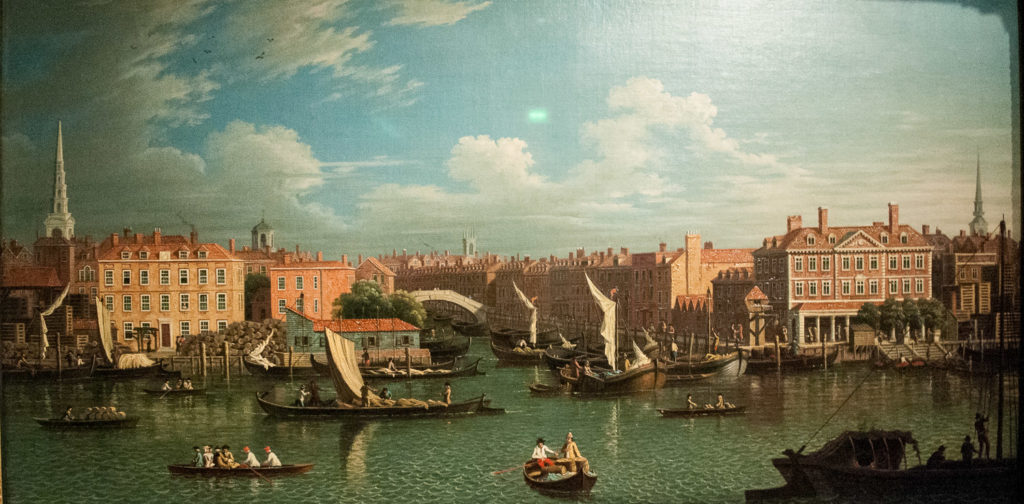
This painting (by a follower of Samuel Scott) was obviously influenced by Canaletto, who was based in England until 1755. Looking north across the Thames, it shows the entrance to the Fleet circa 1750 with Bridewell Foot Bridge, the City Wharf and Dock, and Blackfriars Stairs. The Fleet was developed into a canal up to Holborn, lending this view a Venetian appearance. This grand aspect, however, did not last long as the wharves proved unprofitable and Londoners continued to dump their rubbish in the river.

Originally a green river valley, the Fleet River had been gradually transformed into the Fleet Ditch, infamous for being a source of filth, corruption and disease. Observing a flood during a storm in 1710 Jonathan Swift penned the following lines …

Sweepings from Butchers Stalls, Dung, Guts and Blood,
Drown’d Puppies, stinking Sprats, all drench’d in Mud,
Dead Cats and Turnip-Tops come tumbling down the Flood.

Pope made this small literary contribution in 1728 …

To where Fleet Ditch, with disemboguing streams, rolls the large tribute of dead dogs to the Thames.

On display at the exhibition is sad little exhibit. Found during excavations of the old river bed, it’s a dog’s collar with the inscription ‘Tom at Ye Greyhound Bucklersbury’. Poor Tom.

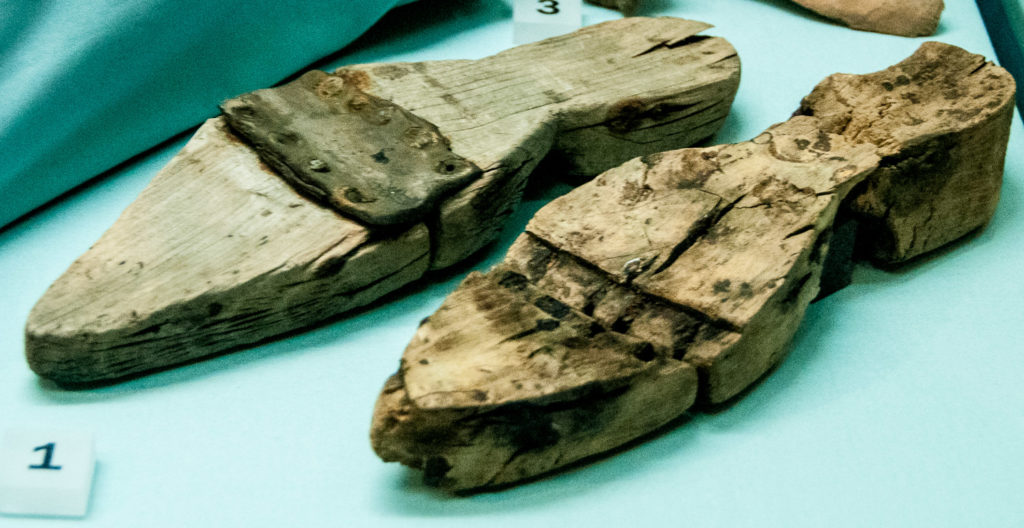
There is a reminder in the exhibition of how muddy and dirty the City’s streets were. This pair of wooden pattens date from the 15th century and were used to protect shoes and raise the wearer above the mud. They have a leather hinge to aid walking …
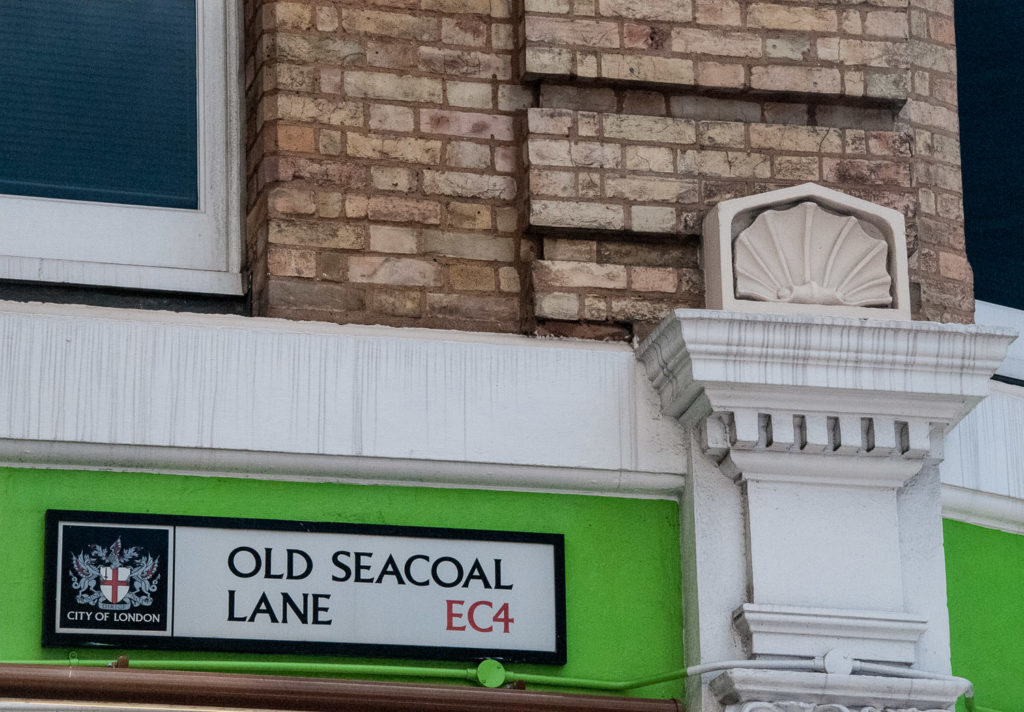
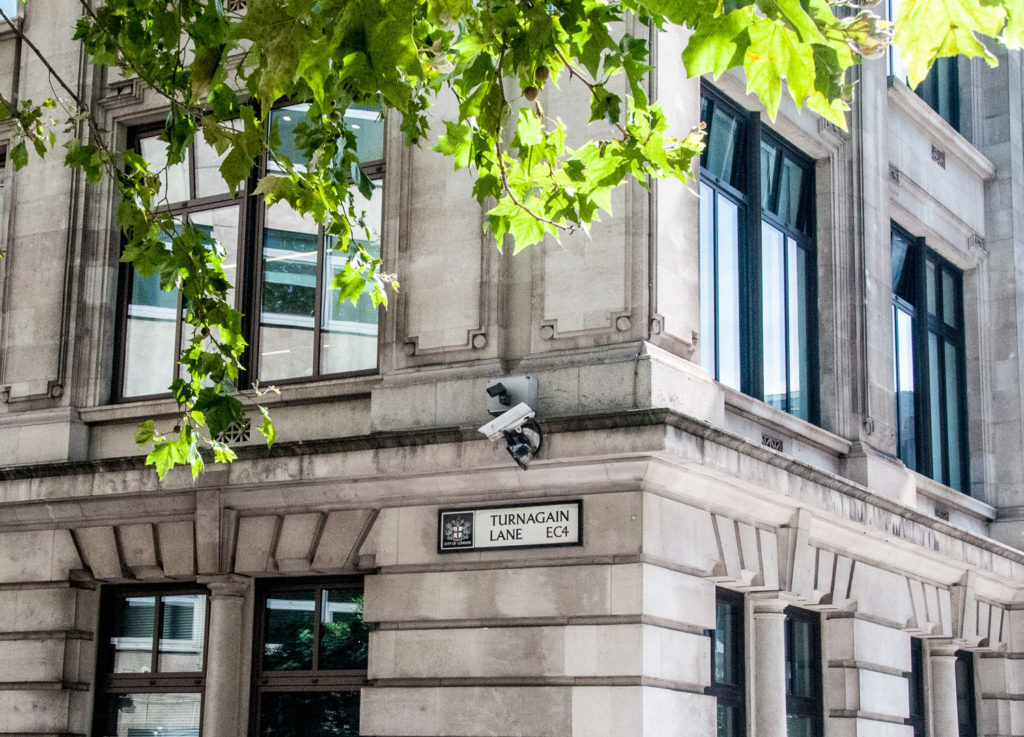
London’s population grew rapidly through the seventeenth century from about 200,000 to about half a million which resulted in a significant rise in the need for coal. This was brought from the north east of the country in barges which offloaded at wharves in the tidal Fleet. Street names that survive today remind us of this …
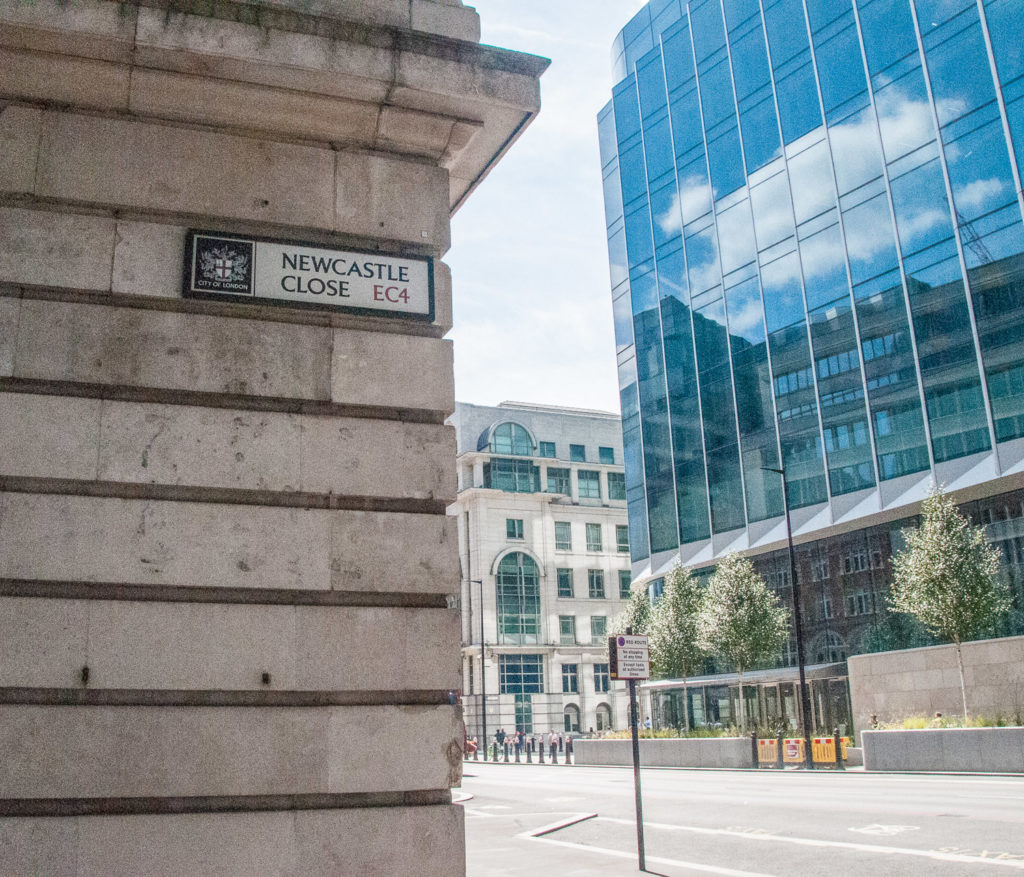
And the thoroughfare that ended at the canal, so you couldn’t go any further …
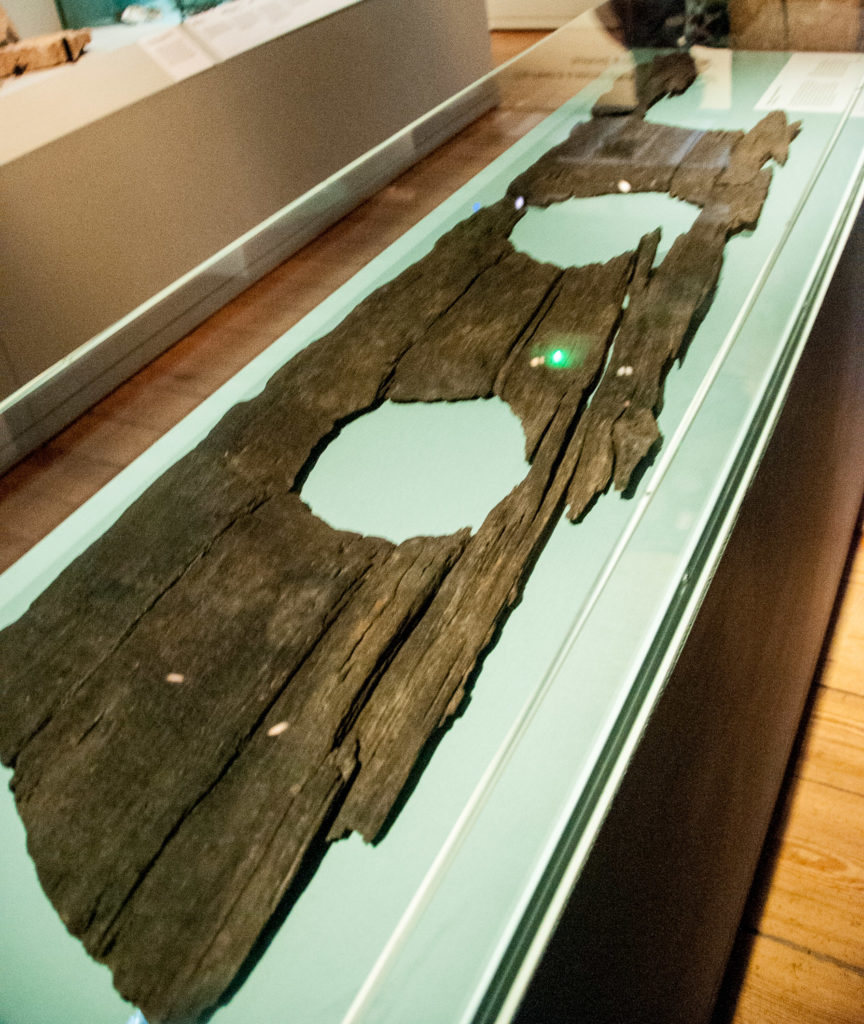
The Fleet Valley from Clerkenwell to the Thames housed many of London’s prisons and all manner of vice was practised in the dingy, stinking claustrophobic rookeries (slums). Nor was there much privacy if you had to go to the loo. This medieval oak three-seater toilet seat was found over cesspit in a yard behind buildings that faced on to modern day Ludgate Hill …
This picture tells a story. It’s an 1841 drawing by Antony Crosby of the Fleet River at Holborn Bridge – note the wooden latrine projecting over the ditch on the left …

Holborn Viaduct was built between 1863 and 1869 in order to span the Fleet and provide level access from east to west – a great improvement in an era of horse-drawn traffic. You can see it reaches over a deep valley …
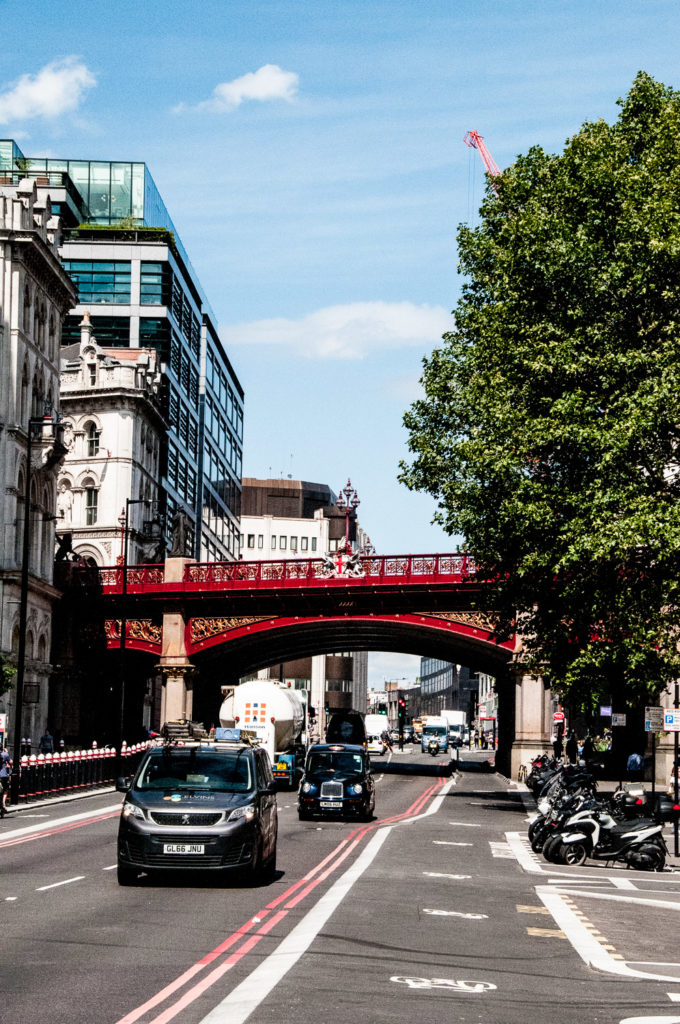
Looking north whilst standing on what was the bank of the old Fleet canal.

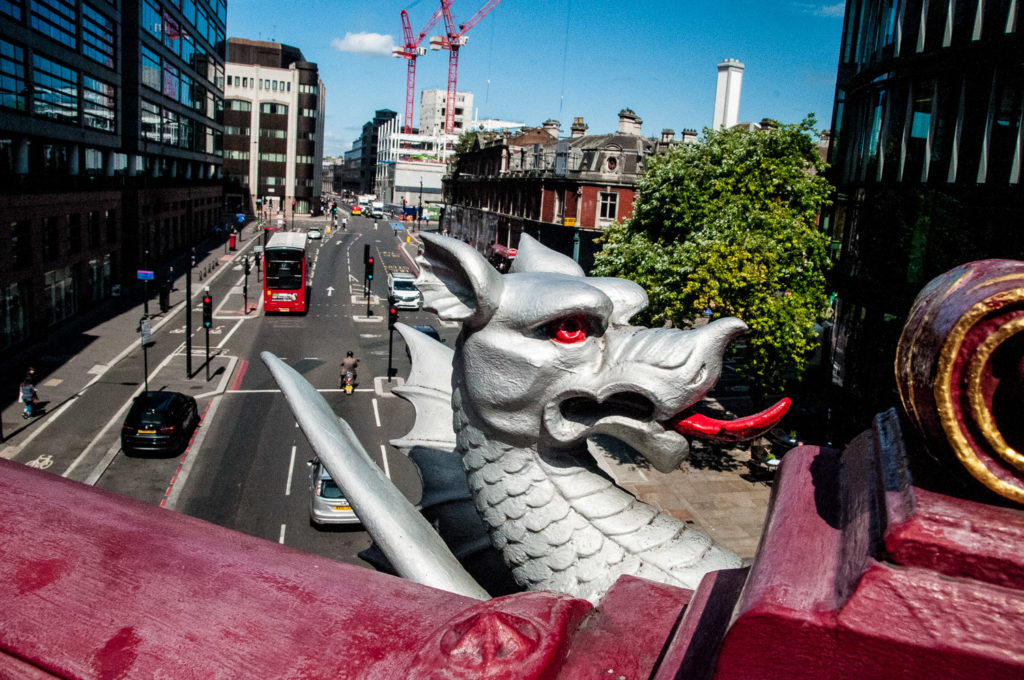
When I climbed the stairs to take a picture from above a curious City dragon popped his head up to see what I was doing …
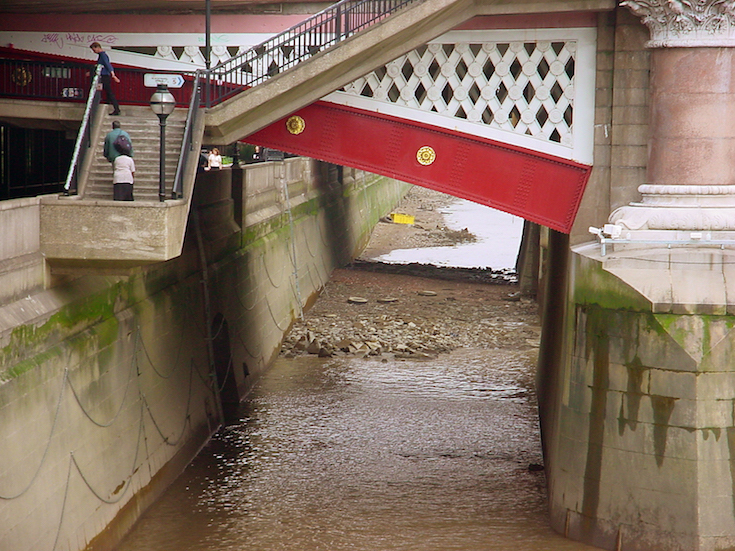
Gradually the entire river was enclosed in Victorian sewer tunnels and it now flows into the Thames under Blackfriars Bridge (just below where the banker Roberto Calvi was found hanged in 1982) …
Rivers, such as the Thames and the Walbrook, influenced where the Romans founded Londinium and the Museum of London exhibition also illustrates the fact that our connection to water goes beyond the practical, reaching into the spiritual. While most objects found in London’s rivers are lost items, rubbish or remnants of river-related activities, some cannot be explained so easily. These bear witness to the spiritual importance of rivers.

On display, for example, is this first or second century AD small representation of a river god, possible Neptune, apparently cast or placed into the Walbrook …
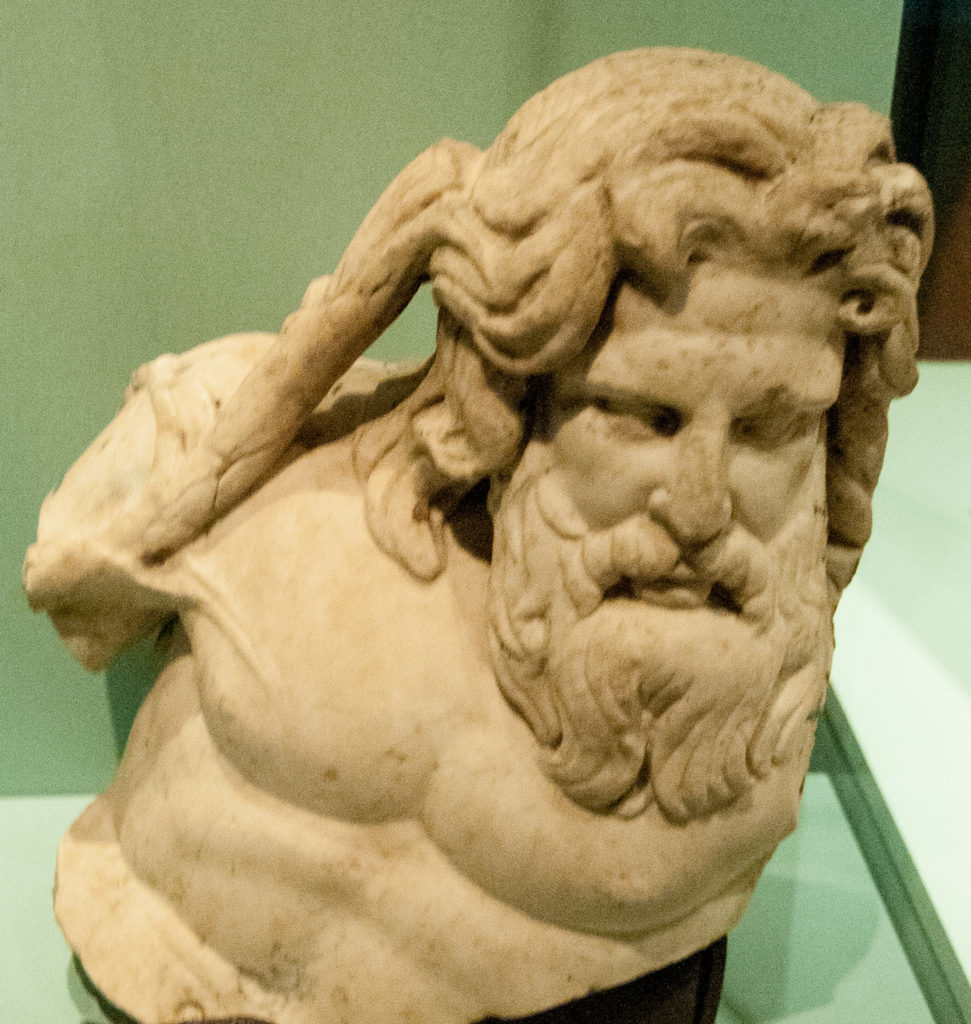
And this piece of a marble offering is particularly fascinating …
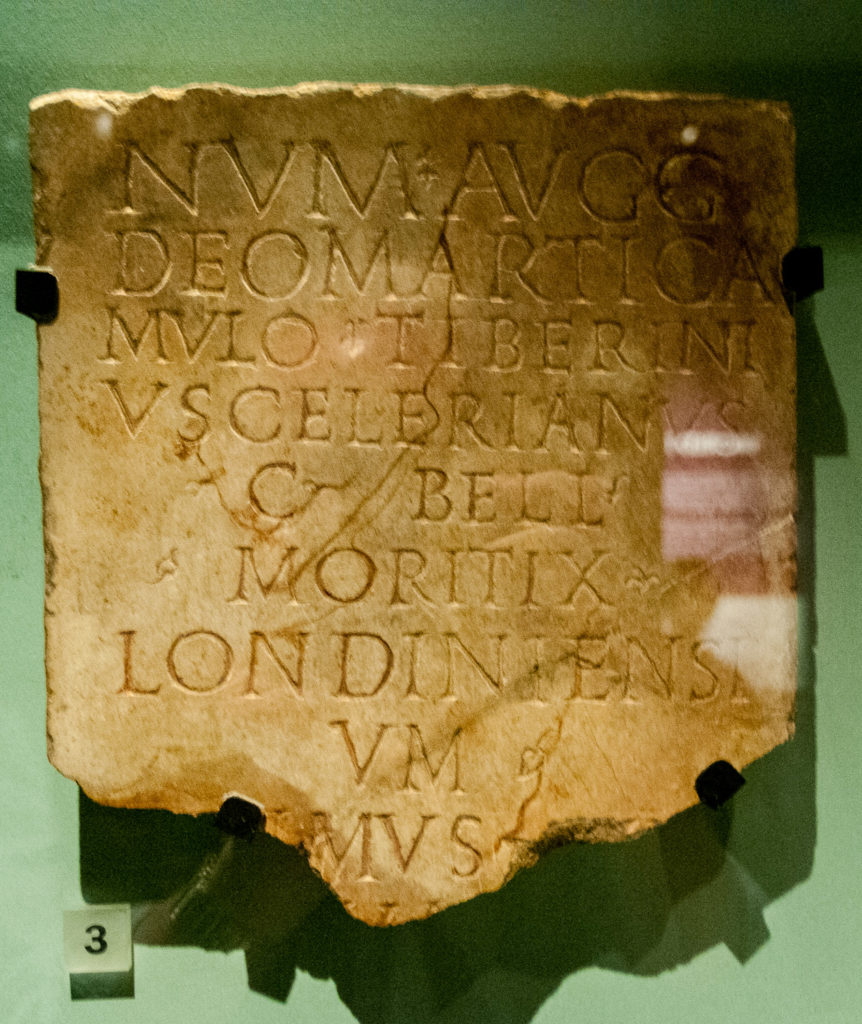
The inscription has been translated thus:

To the Divinities of the Emperors (and) to the god Mars Camulus. Tiberinius Celerianus, a citizen of the Bellovaci, moritix, of Londoners the first …

It is the first example from the capital to use the word Londiniensi or ‘Londoners’. The language suggests a man who hailed from northern France and probably traded or travelled regularly within that region but whose home seems to have become London.

If you want to read more about Roman London I have written three earlier blogs on the subject: The Romans in London – Mithras, Walbrook and the Games, The Romans in London … and two Roman ladies and The Roman Wall revisited.

The Museum of London Docklands exhibition runs until 27th October this year. I highly recommend it.
Down by the River – wharves, beaches and desperate immigrants

Once upon a time, access by foot to the River Thames was absolutely essential since it was London’s main highway. These ‘Watermen’s Stairs’ were also of great benefit if you were unfortunate enough to fall into the river. A Waterman would usually be nearby plying for hire and might be inclined to rescue you (and the stairs were often adjacent to a public house, where such accidents could be more likely to happen!).

Although wharves and later rudimentary docks began to be used to offload goods, most ships simply moored in lines in the middle of the river and their cargo was rowed to shore and carried up shoreline stairs.

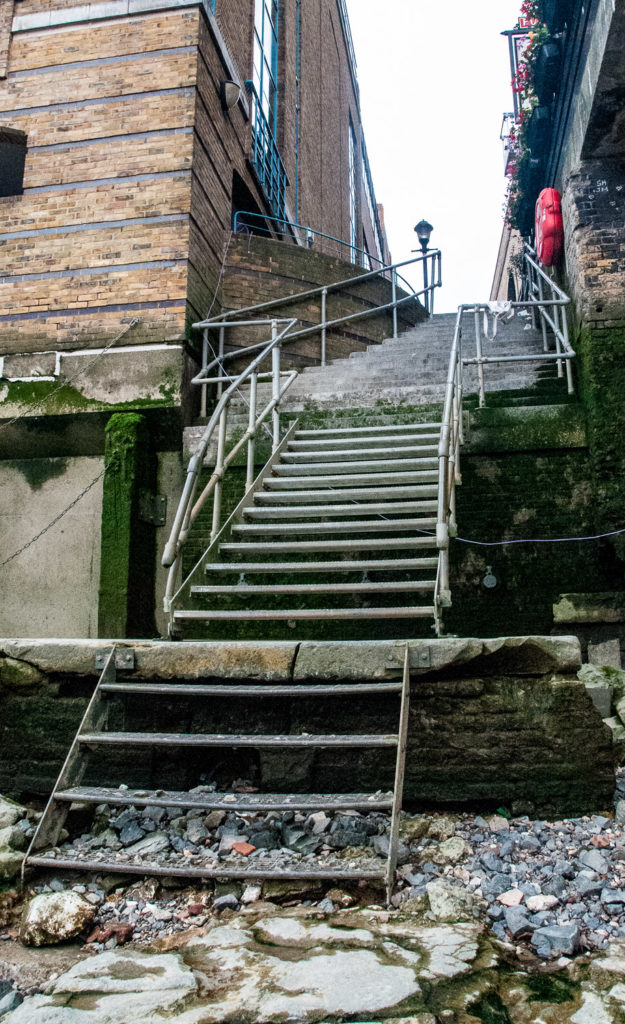
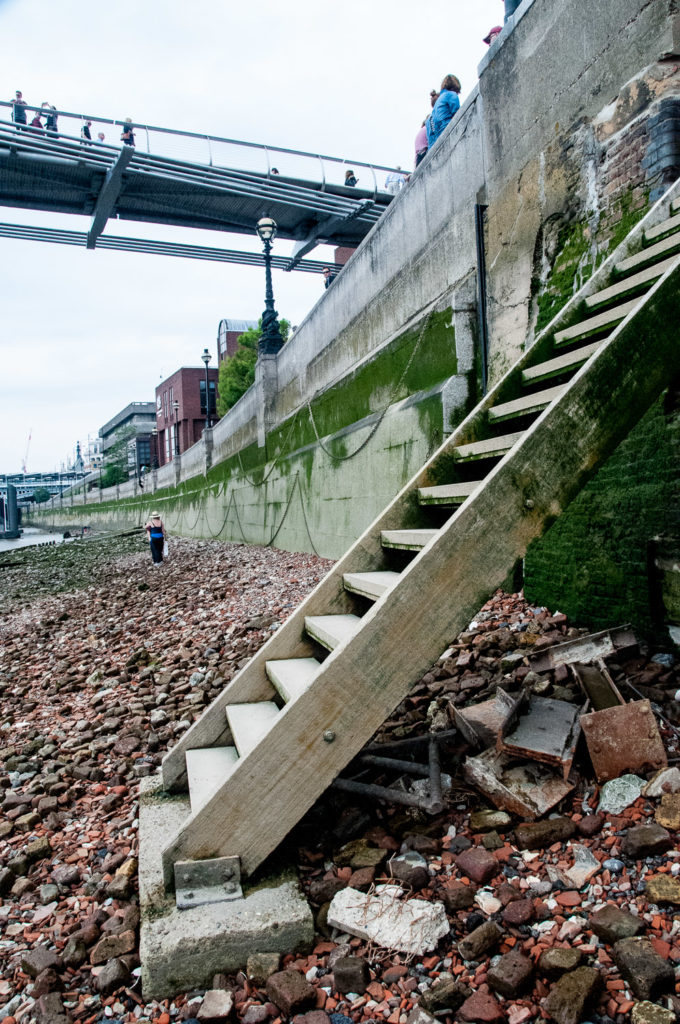
John Rocque’s London Map of 1756 showed literally dozens of such access points and last Sunday I decided to go in search of what was left of them, starting at the east side of the Millennium Bridge. These are the steps leading to the foreshore …

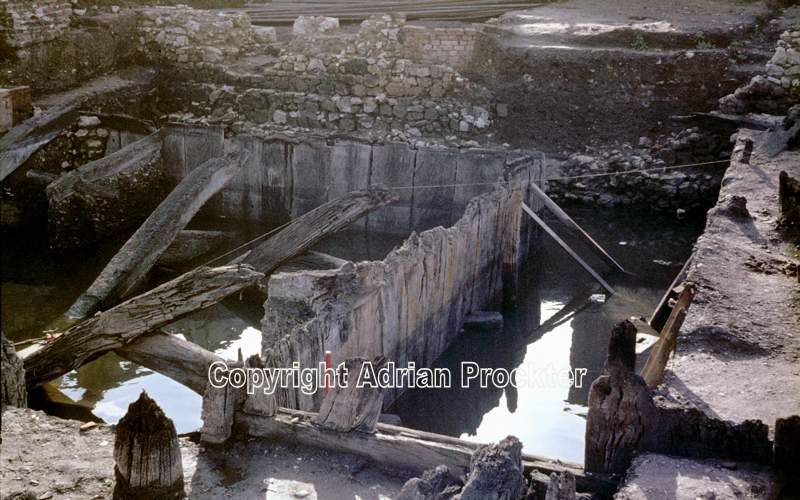
This is the exact spot where the ancient Trig Lane access to the River was located and back in the 1970s redevelopment work revealed a 14th century wharf. Here is a picture of some of the site taken in 1974, now totally covered by riverside office development …

Read more on Adrian Procter’s blog

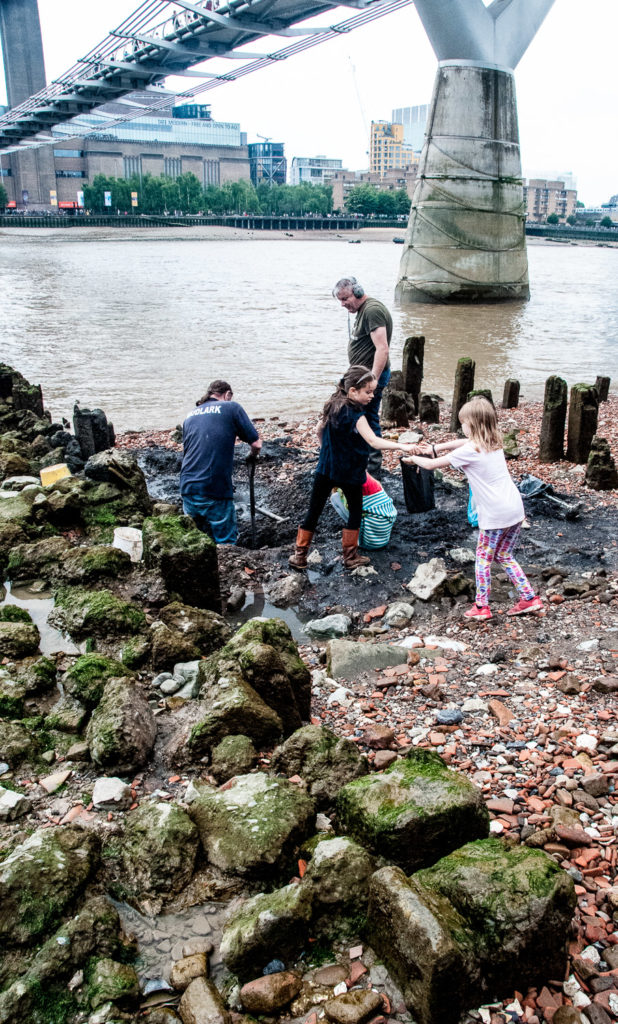
There was some amateur excavation taking place when I visited …

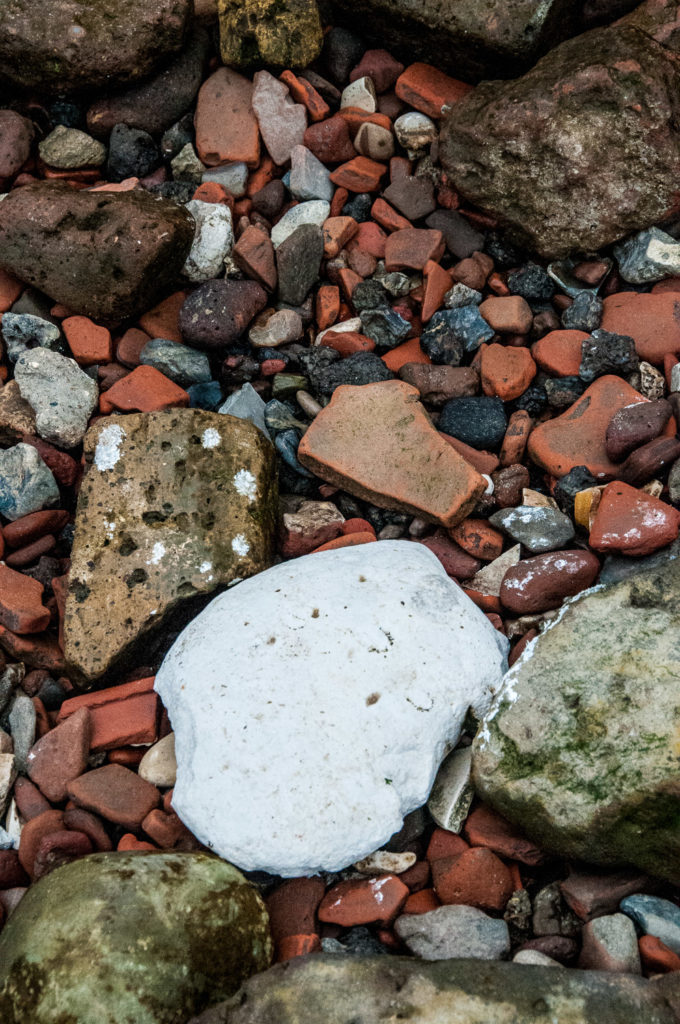
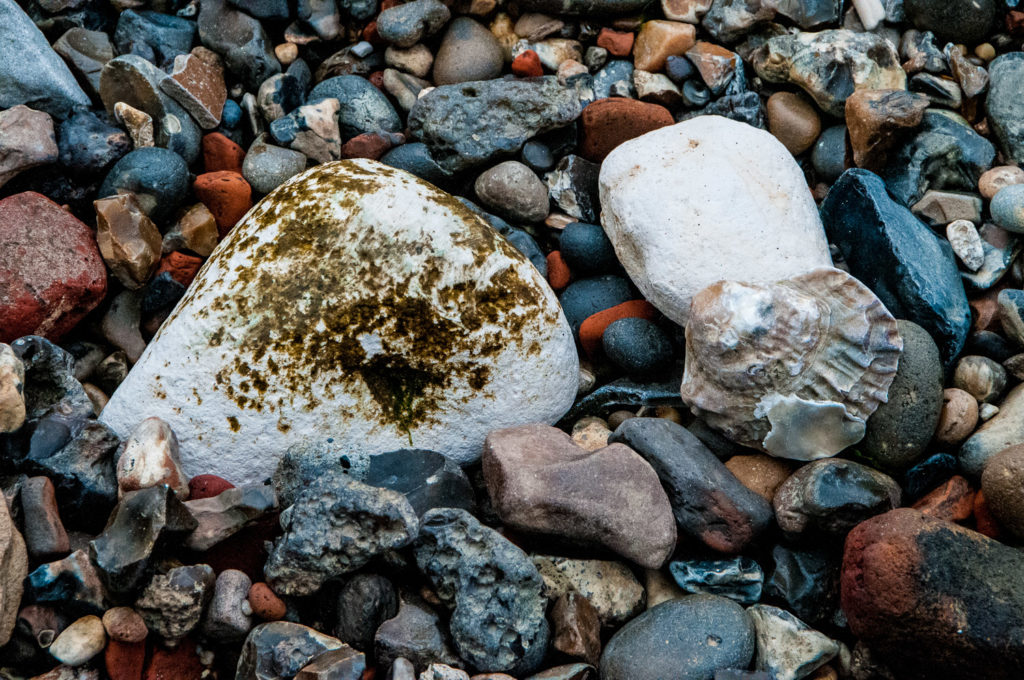
Looking all around you see lots of pieces of pottery, tiles and bricks along with lumps of chalk …

Large chalk beds were once laid down to provide a soft settling place for barges at low tide.

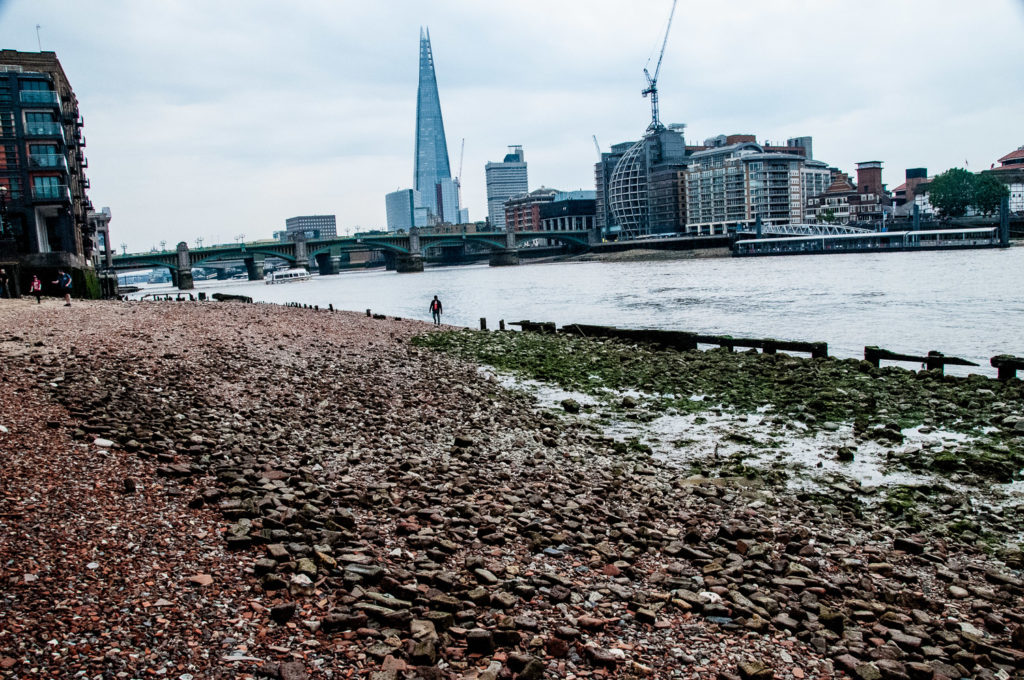
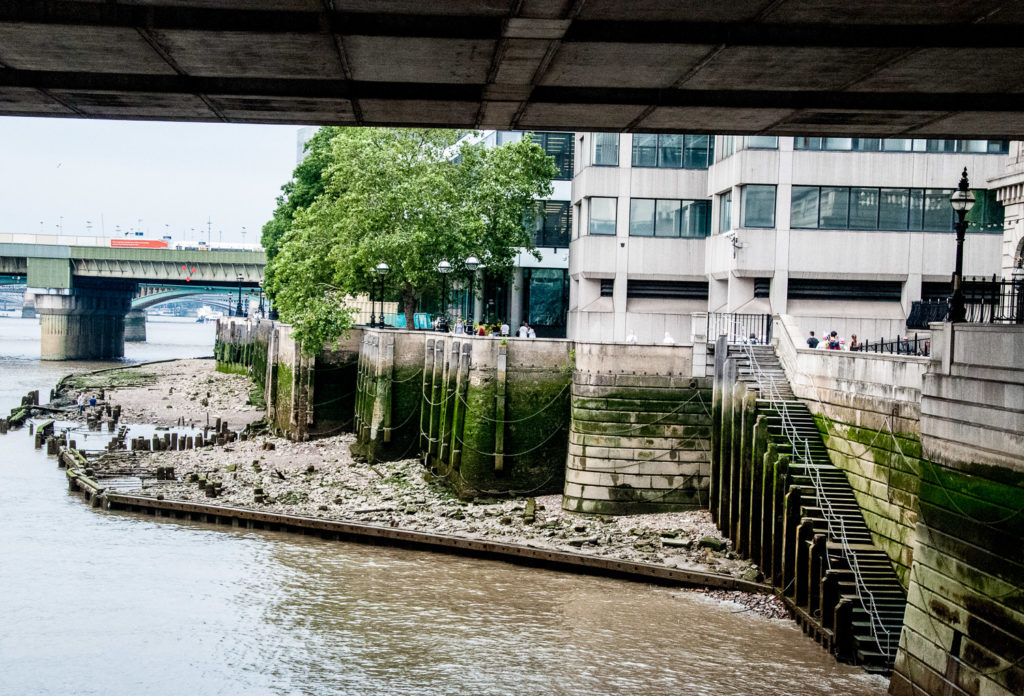
It’s rather a strange feeling standing on the river bed and gazing along the foreshore …

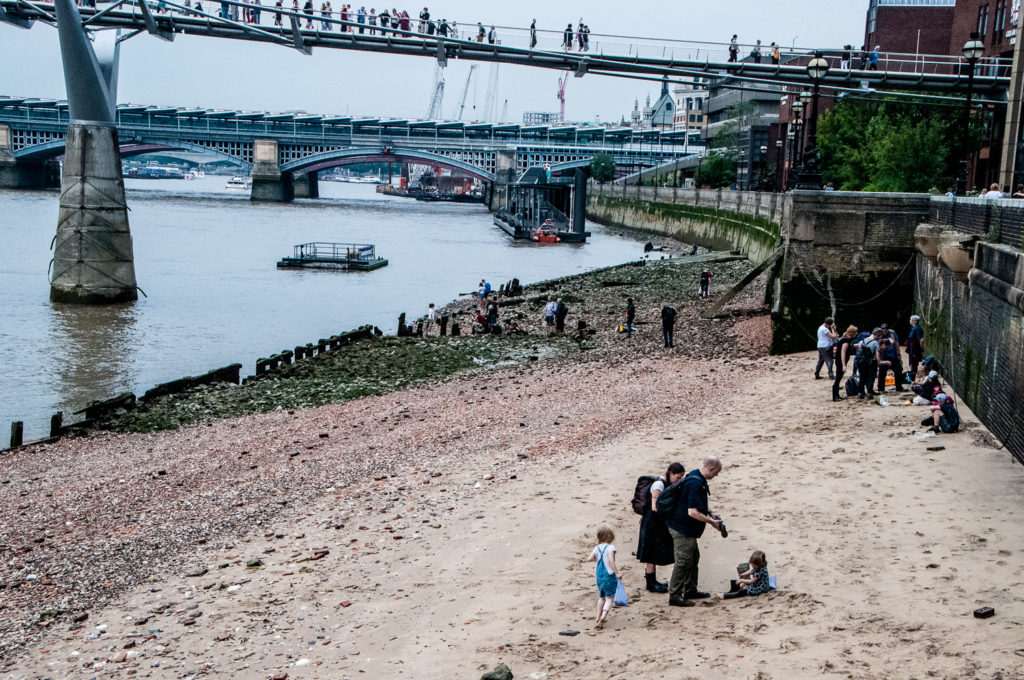
As I walked east I looked back and spotted a sandy beach. You can see the Trig Steps in the distance …

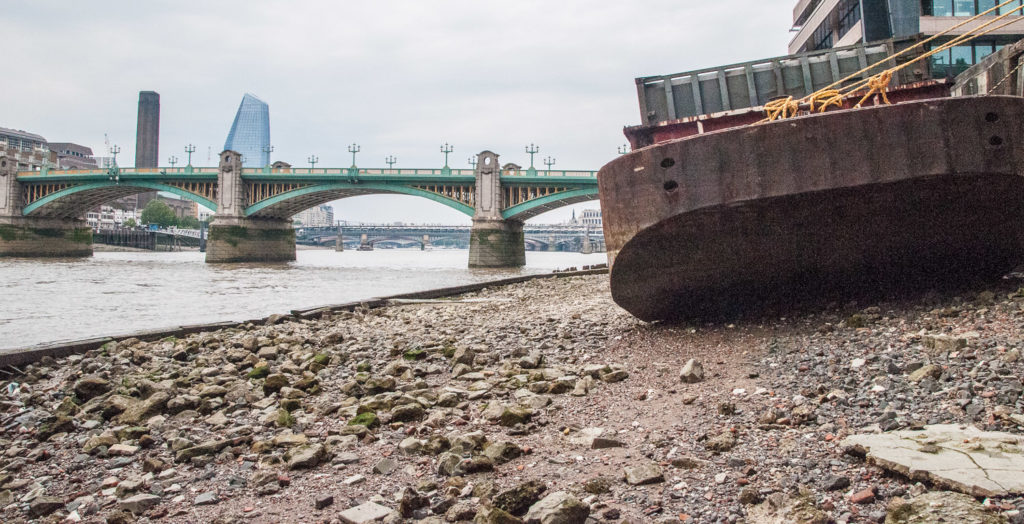
My next stop was the Cousin Lane steps next to Cannon Street railway station …

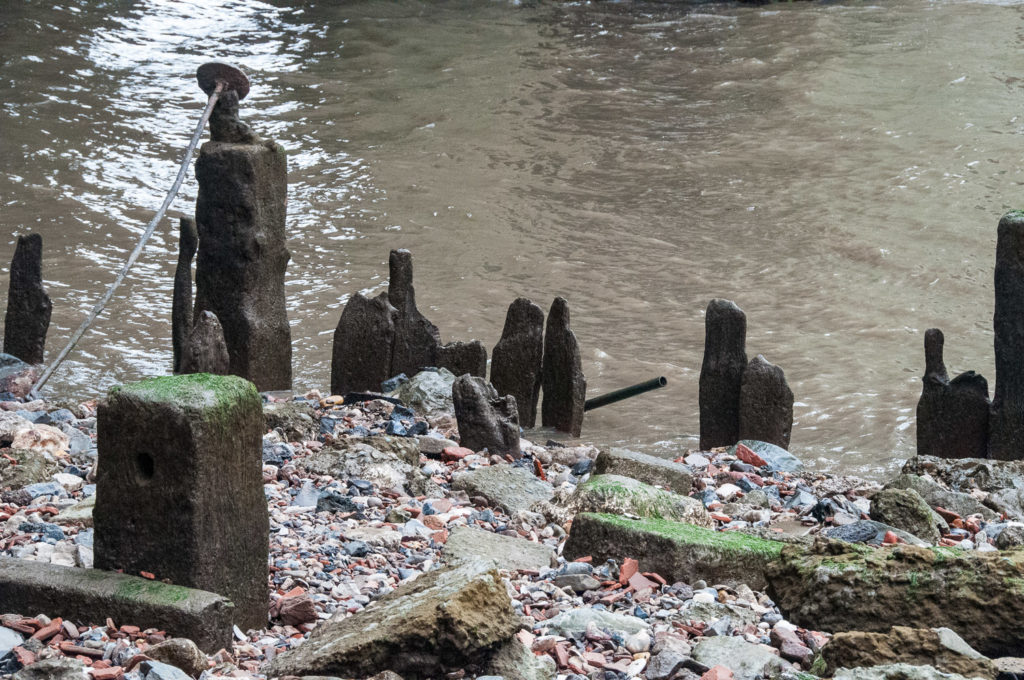
As is common along the River, you can see the remains of old wharves …

And a barge resting nearby …

I got a distinct feeling that I was trespassing.

These steps at London Bridge are no longer open to the public. Again the remains of old wharves are visible at low tide …

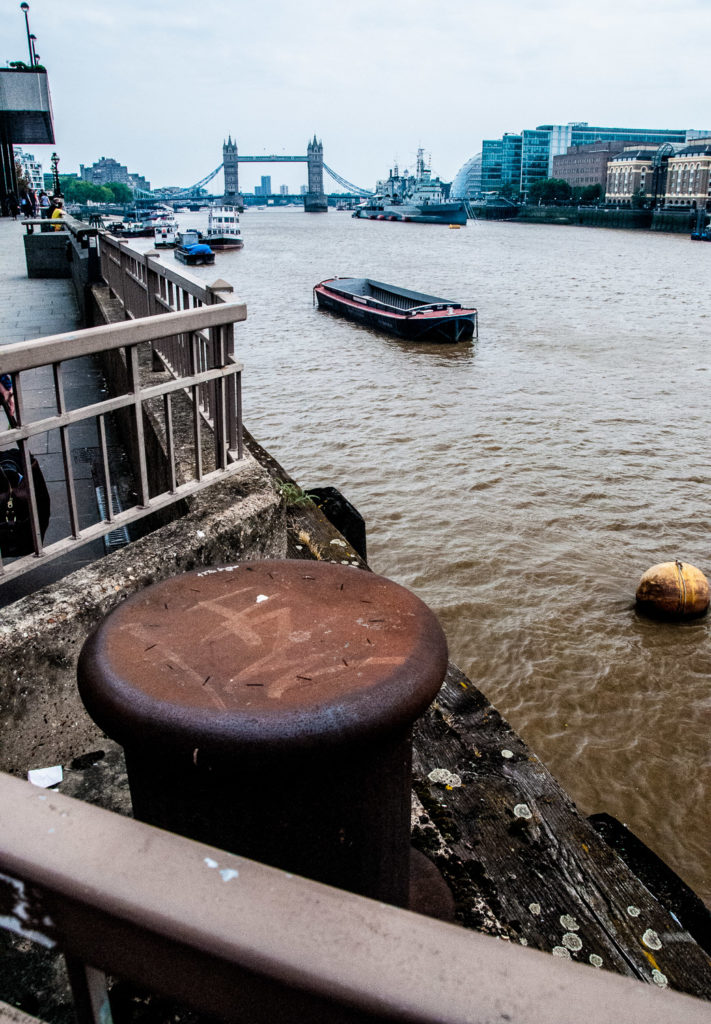
Further along the Thames Walk a capstan reminds us of the days when this part of the river was a major commercial shipping hub …

Looking over the riverside wall, lots more lumps of chalk are clearly visible …

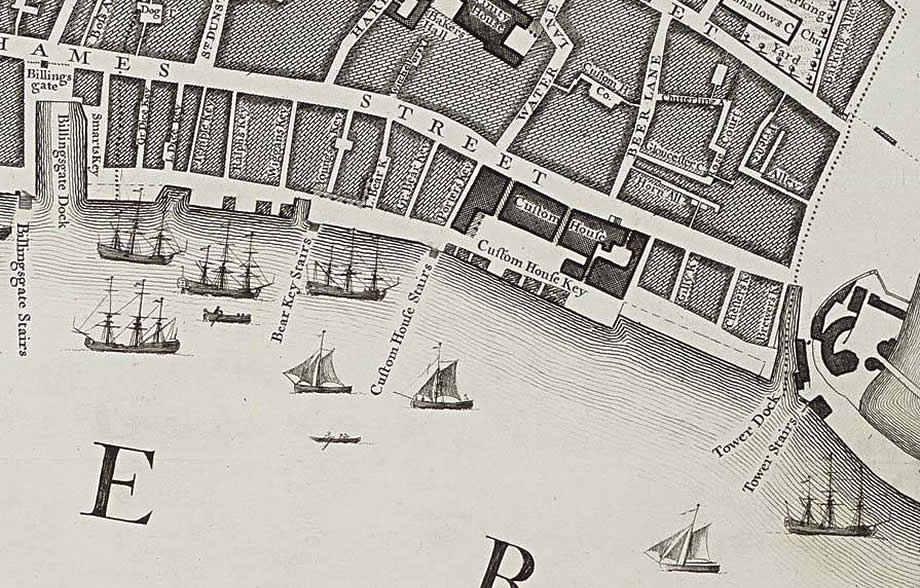
Next on my list was Custom House Stairs – here is how they appear in Roque’s Map of 1746 …

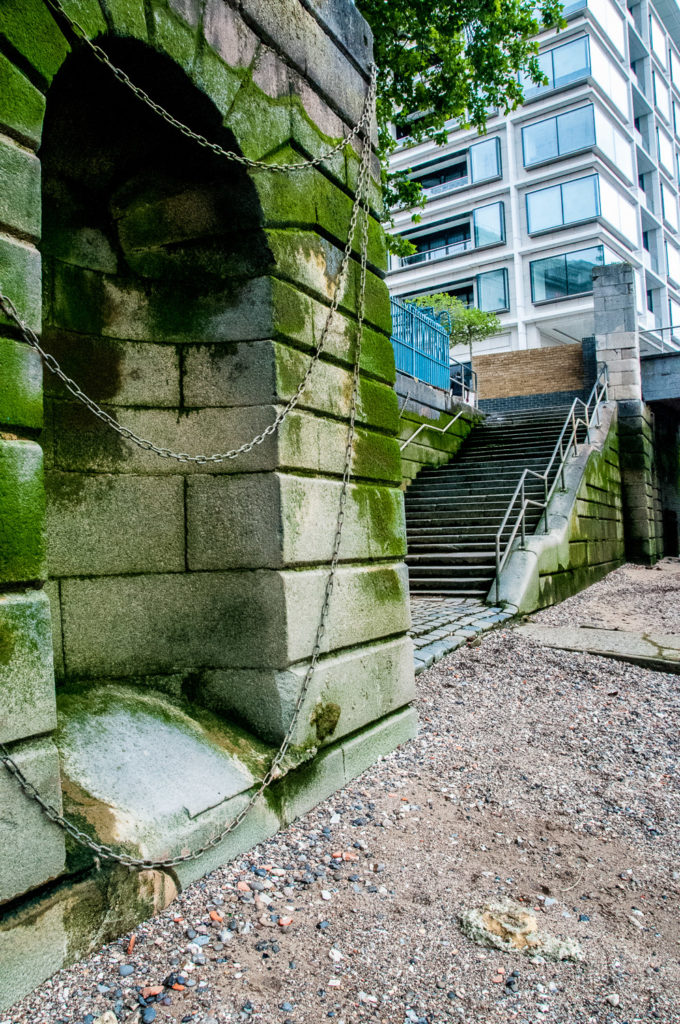
And here they are today …

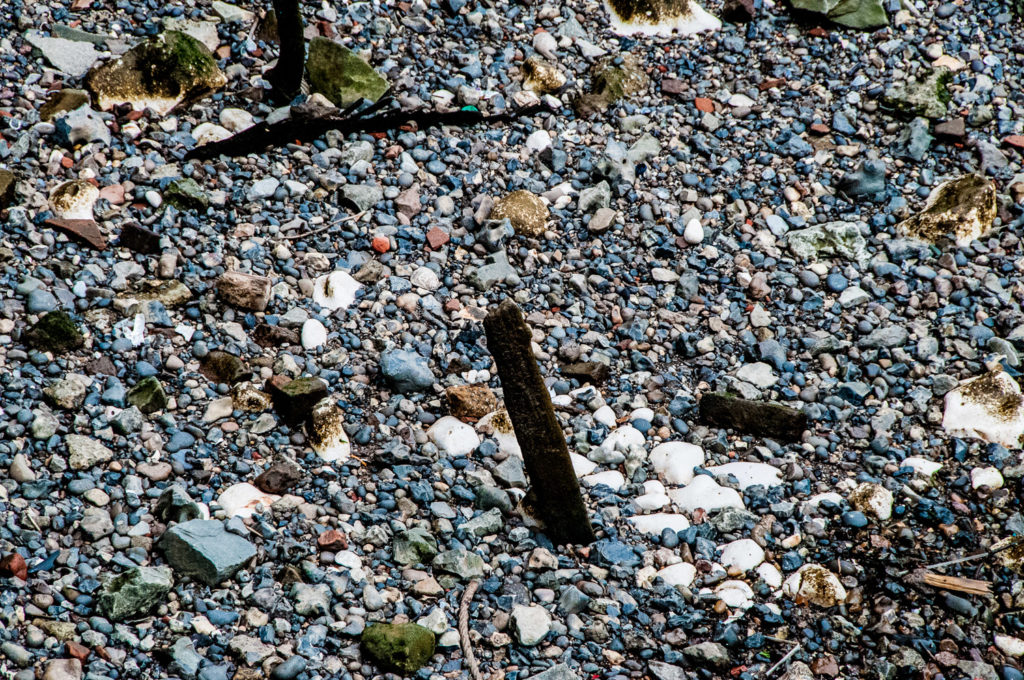
I encountered lots of oyster shells on my walk, once a very cheap source of food for Londoners …

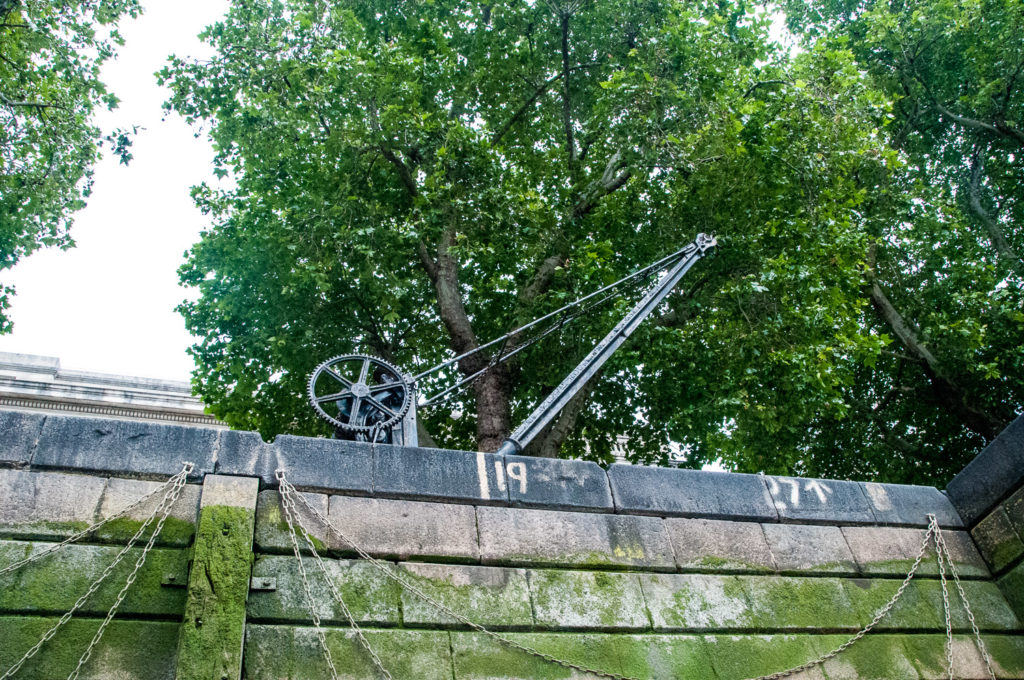
An old winch still decorates the pedestrian walkway …

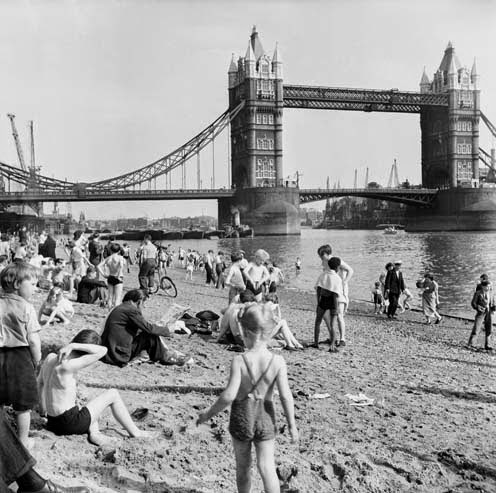
As I walked past the Tower I was reminded of pictures I had seen of the beach there that was opened up in July 1934 for the use of people who couldn’t afford to go to the seaside. Apparently 1,500 bargeloads of sand were used to create it …

It was finally closed in 1971 due to river pollution. There is a nice blog about it here.

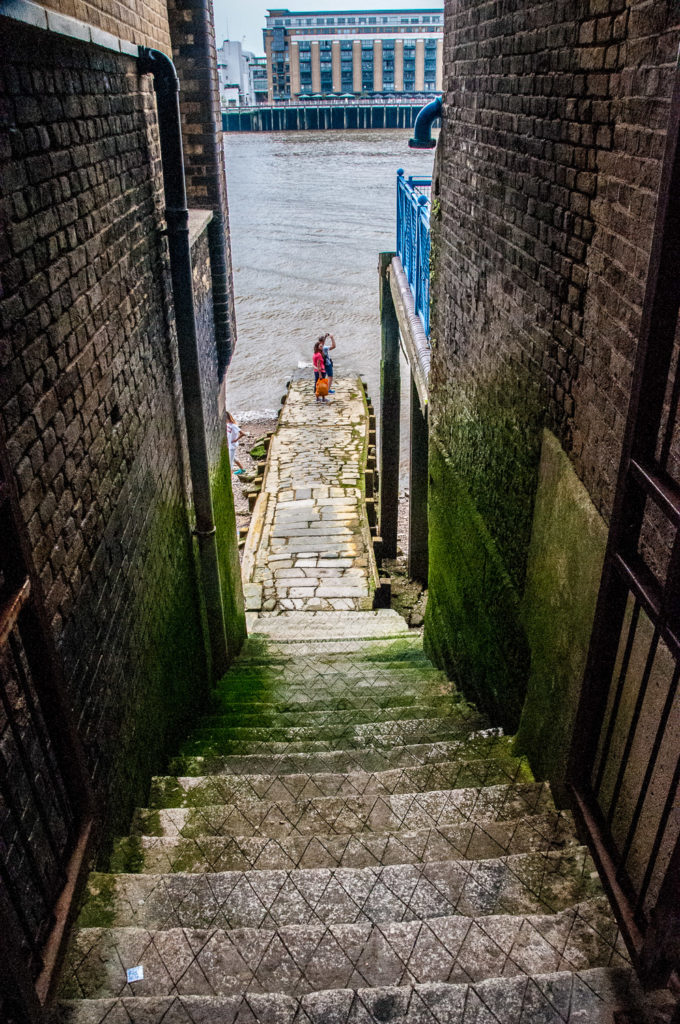
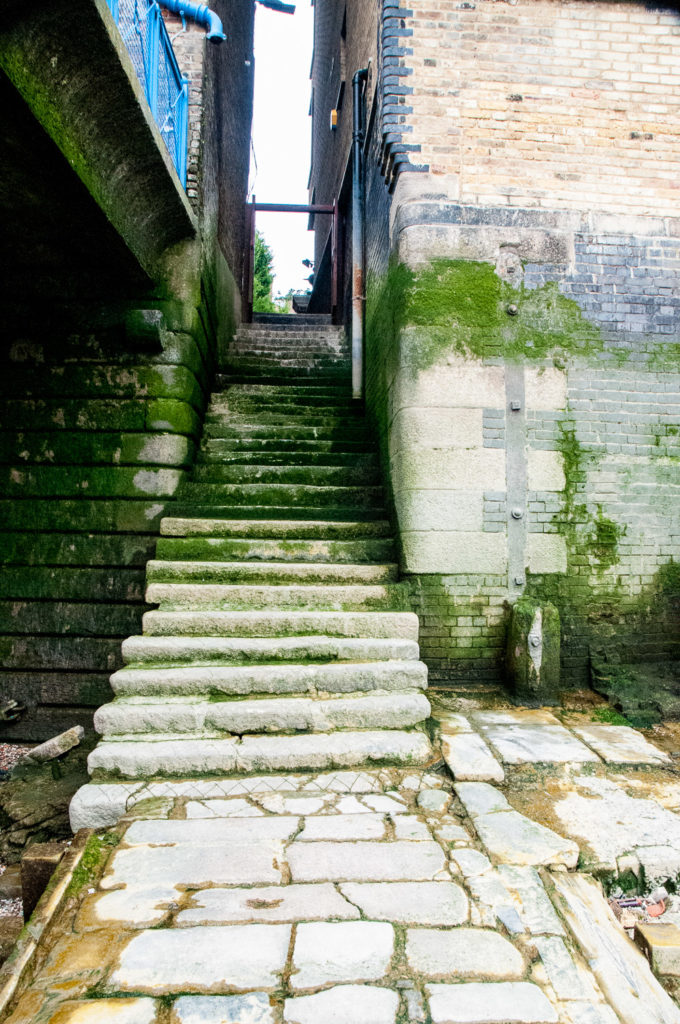
My final set of stairs were located just past St Katharine Dock along St Katharine’s Way. The entrance is easy to miss since the signage is quite high up …

Here I hesitated …

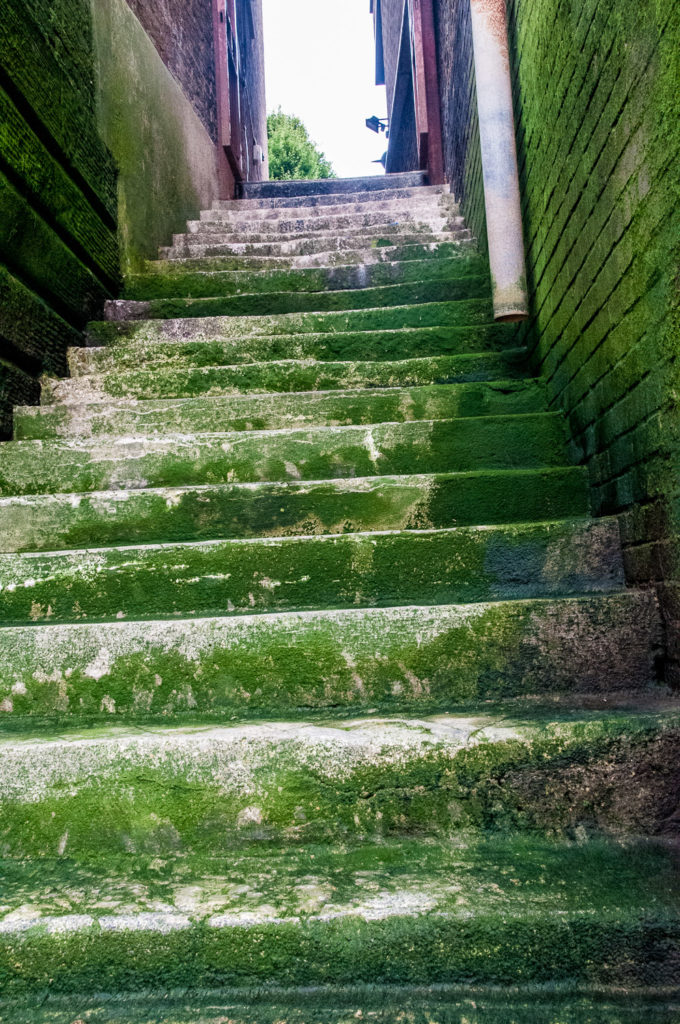
It’s all a bit slimy and slippery …

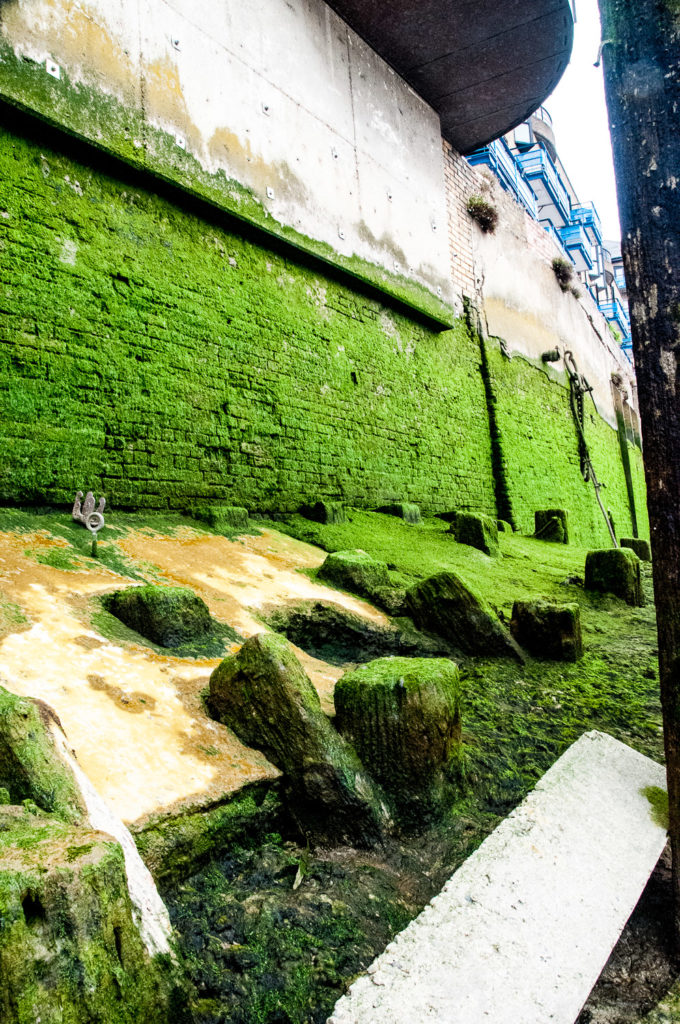
When you reach the bottom it’s clear you are definitely below the level of high tide …

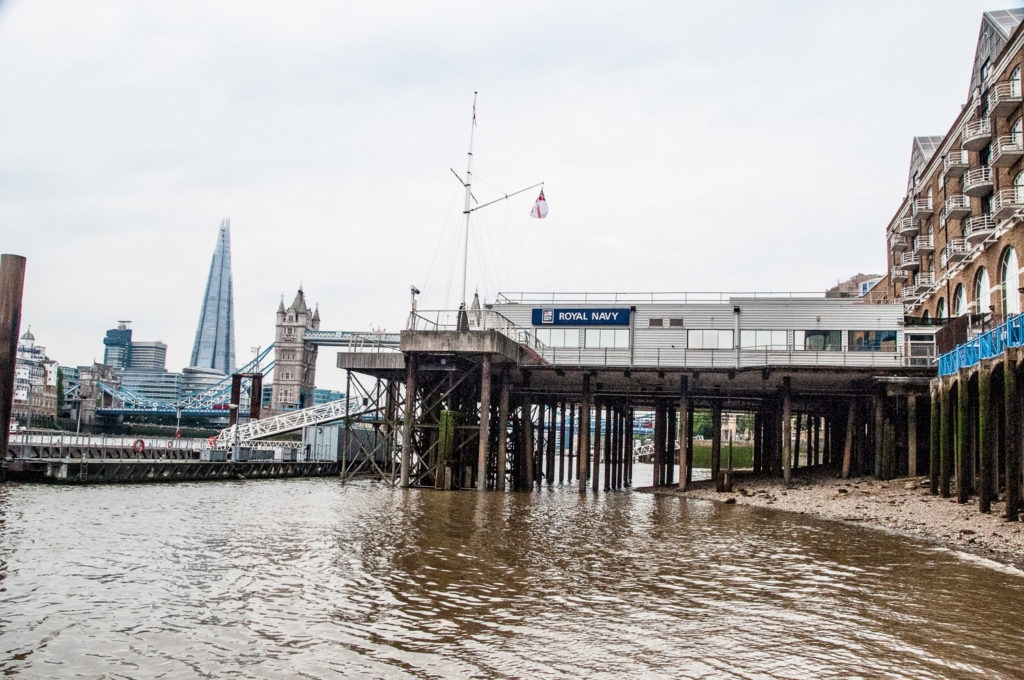
The view looking west …

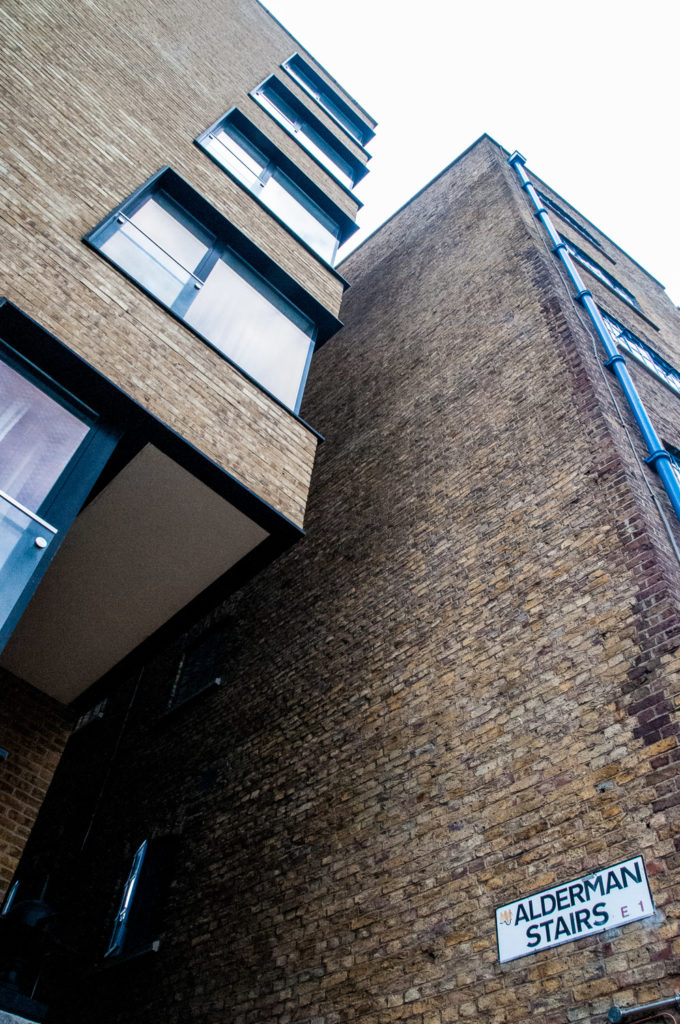
As I looked back up the steps I was reminded of a story in the London Inheritance blog.

On the 24th April 1847, the Illustrated London News reported on arrivals at Alderman’s Stairs …

IRISH IMMIGRATION INTO LONDON – The importation of Irish paupers, so much complained of in Liverpool and Glasgow, begins to wear a threatening aspect in London. On Sunday, the Prussian Eagle, from Cork, and the Limerick, from Dublin, landed 1200 Irish Paupers at Alderman’s Stairs, Lower East Smithfield. The new comers, who were in the most wretched state of distress, were forthwith distributed over the eastern part of the metropolis. The same vessels landed 1200 Irish paupers on Sunday week.

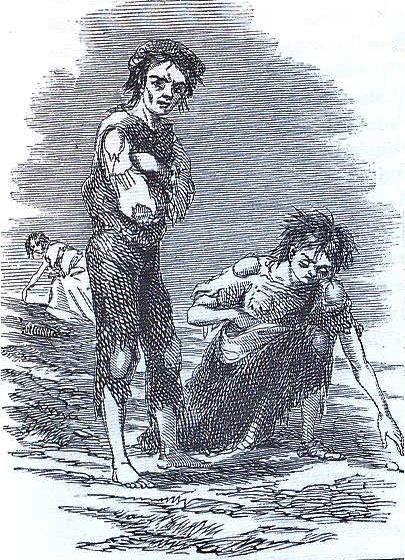
I hope these steps led to a better life for some of those poor souls, many surely victims of the Great Irish Famine of 1845 to 1849.

The scene at Skibbereen during the Great Famine, by Cork artist James Mahony (1810–1879), commissioned by The Illustrated London News.

Fun and Miscellany – my 100th blog!

Thank you so much for subscribing to my little publication – especially those of you who have been with me since the very beginning almost two years ago.

For the first anniversary I included things that I had come across that had made me smile and I want to do that again this week. I want as well, however, to include a few items that I thought were interesting but didn’t fit under any broad heading.

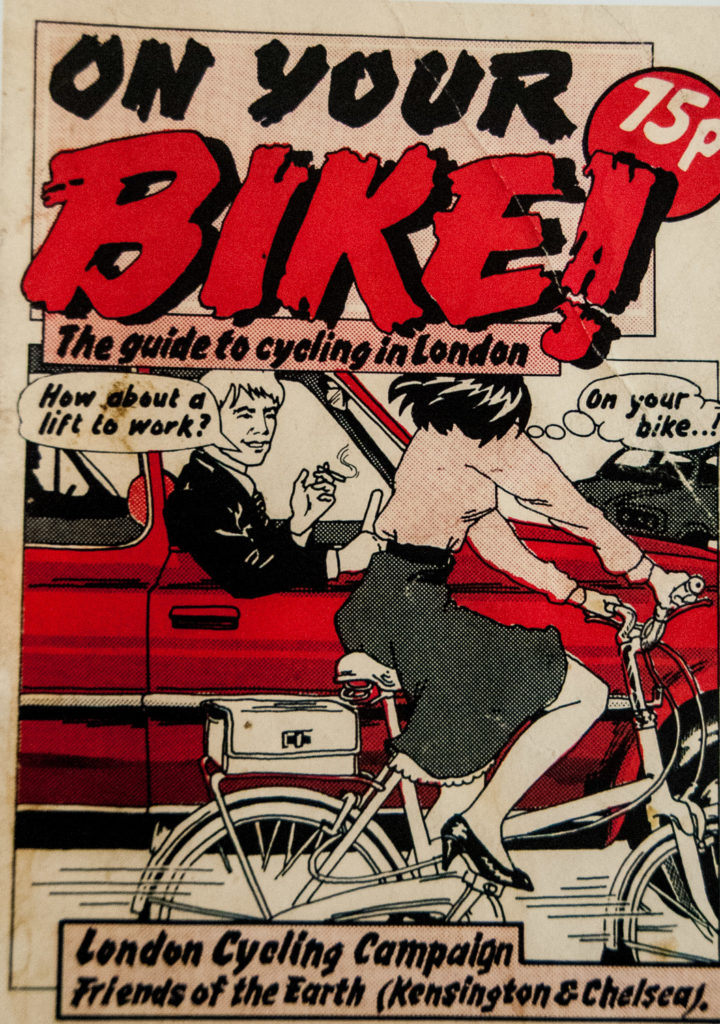
One of the great pleasures of doing research is the occasional joy of serendipity. I recently discovered that encouraging people to cycle to work is nothing new and magazines were being published almost 40 years ago which included maps to help cyclists navigate.

I came across this persuasive cover of On your bike! magazine from 1982 …

And now something a bit more surreal, a piece of art that was on display at the Guildhall art Gallery until a few weeks ago …

Marcello Pecchioli’s eye-catching stained glass Alien Priest was part of the Gallery’s ‘Visionary Artists’ exhibition. I like the flying saucers in the background.

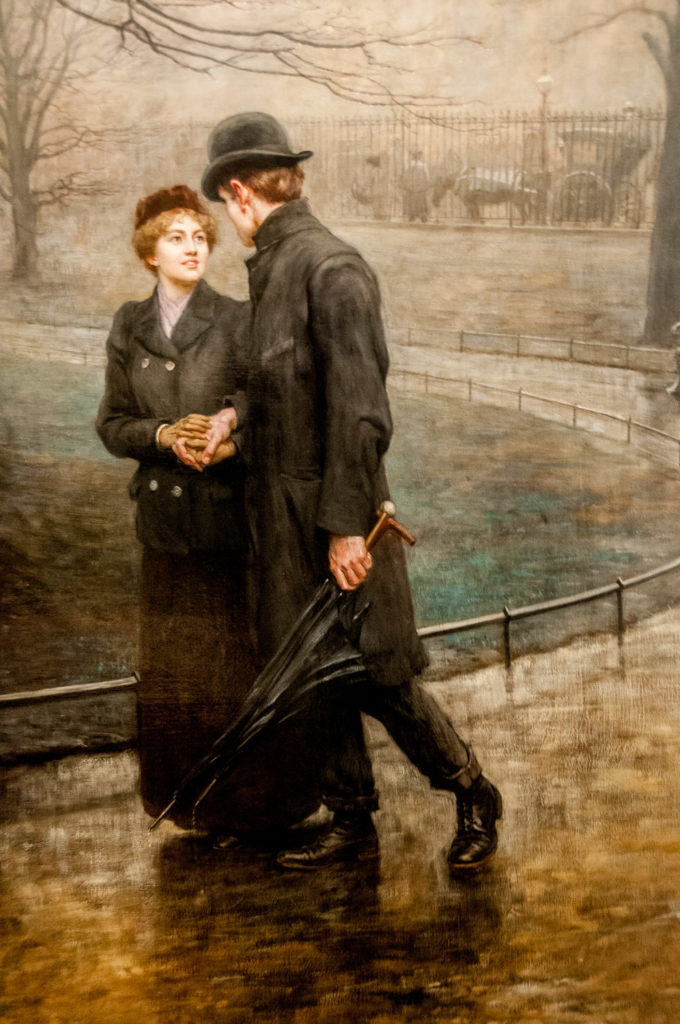
Next up is this picture in the Gallery entitled Garden of Eden by Hugh Goldwin Riviere (1860-1956). Painted in 1901, it depicts a young man and girl walking in a misty, wet park with a horse-drawn cab rank in the background.

I like it because to me it’s one of those pictures that immediately gets you making up a back story to the characters. Surely this is an assignation – a secret lovers meeting, he clasping her hand and she gazing lovingly into his face. Then it struck me: Garden of Eden! A place of dangerous temptation and banishment!

Apparently guides point out that this picture is actually about a mismatch between a wealthy woman who has fallen for a man much below her station: note his clumpy shoes, lack of gloves and his rolled up trouser bottoms. Also the way he’s carrying not one but two umbrellas, intertwined like the two lovers. There are tiny raindrops hanging from the black branches. Surely they represent tears to come? Or am I getting completely carried away? Another commentator has said that she is simply a smartly dressed maidservant on her day off, out walking with her beau.

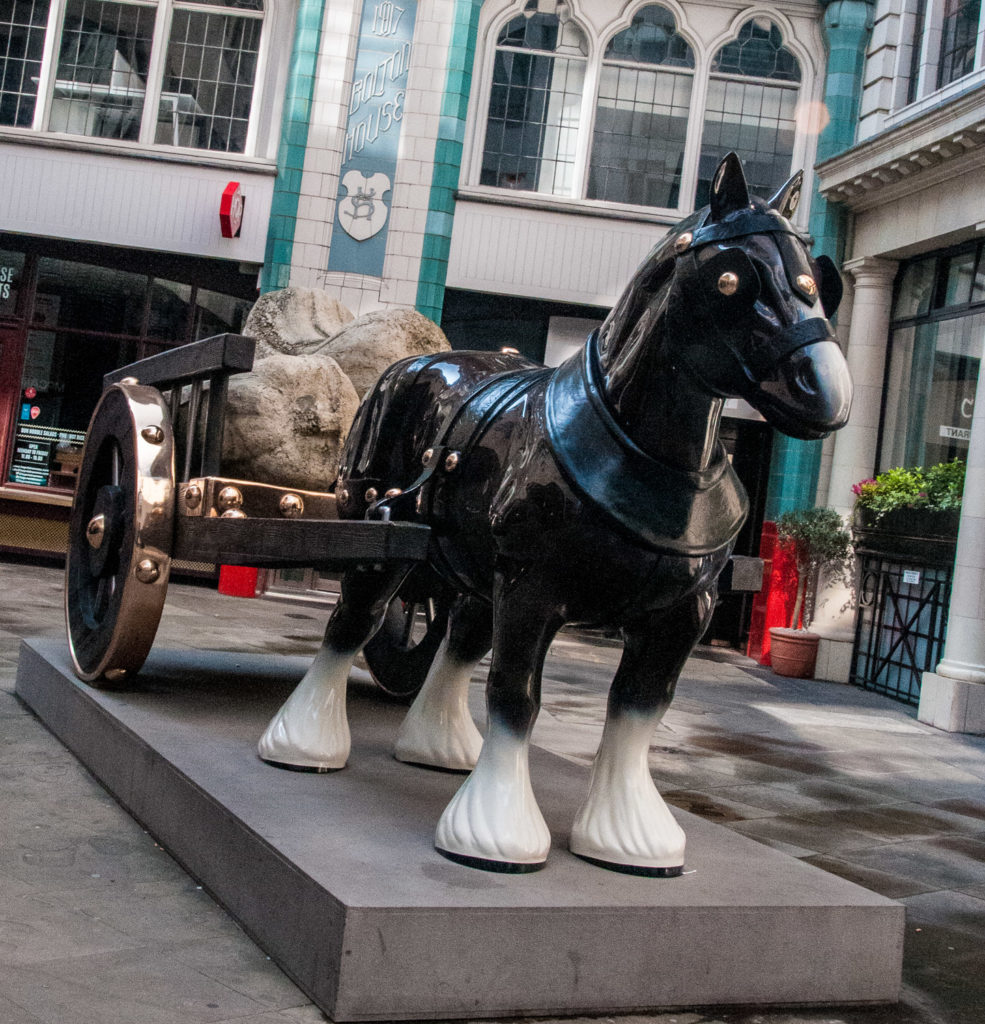
In Cullum Street I was stopped in my tracks by this stunning sculpture by Sarah Lucas entitled Perceval

Part of the ‘Sculpture in the City’ initiative – EC3M 7JJ

It’s a large-scale replica of a traditional china ornament of the kind that took pride of place on many British mantelpieces forty years ago. Perceval was a knight of the Round Table and apparently there is fertility symbolism in the giant concrete marrows on the cart. You can read more about this work here.

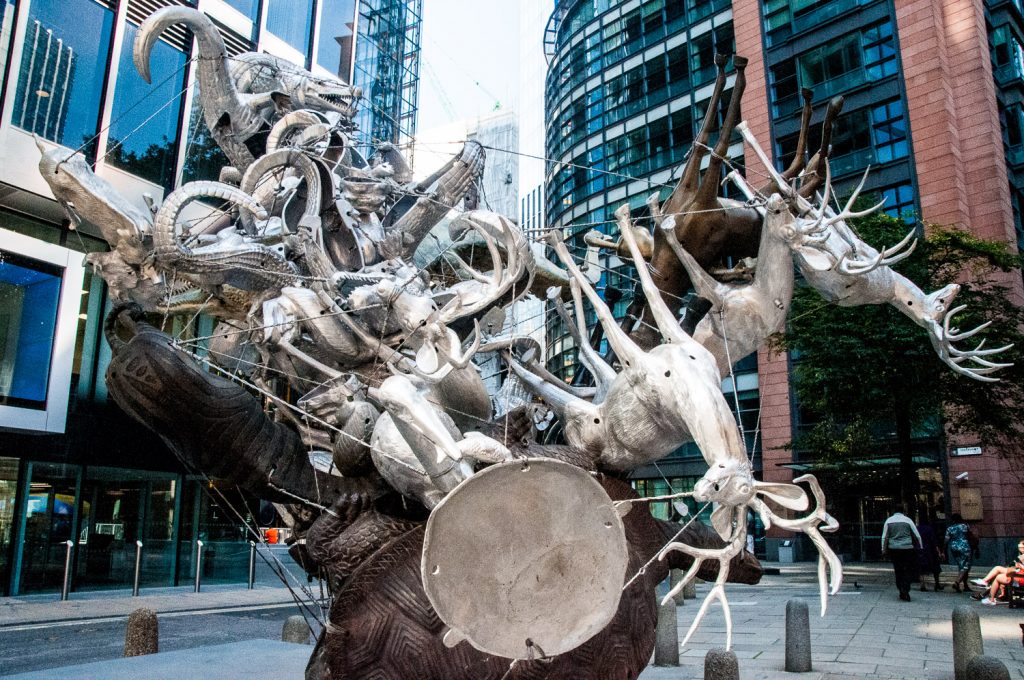
Also for us to admire as part of the Sculpture in the City project is this example entitled Crocodylius Philodendrus by Nancy Rubins at 1 Undershaft (EC3A 6HX). I love it because it’s completely bonkers …

See how many animals you can spot

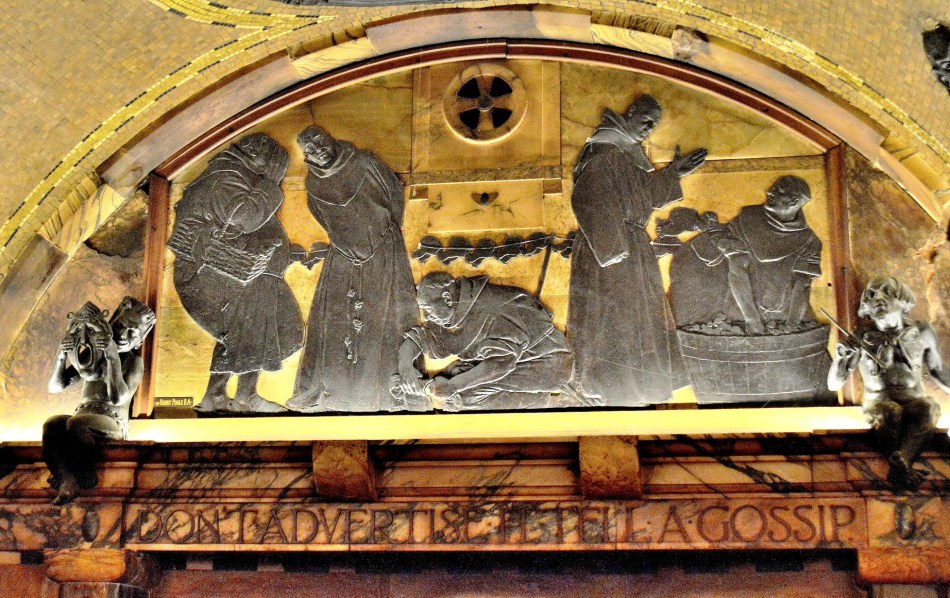
I keep meaning to spend some time in the Blackfriar pub on Queen Victoria Street recording the brilliant brasses there (EC4V 4EG) but I still haven’t got around to it. So in the meantime, here is the advice on one of them …
‘Don‘t advertise – tell a gossip

Don’t forget to look down when crossing the Millennium (‘Wobbly’) Bridge and see if you can spot some of the witty work by the artist Ben Wilson. He has painstakingly painted literally dozens of pieces of discarded chewing gum …

I have written more about him in my earlier blog Tales from City Bridges.

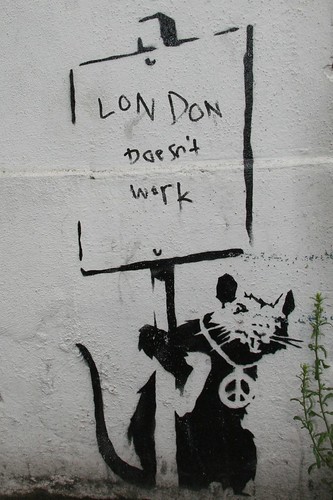
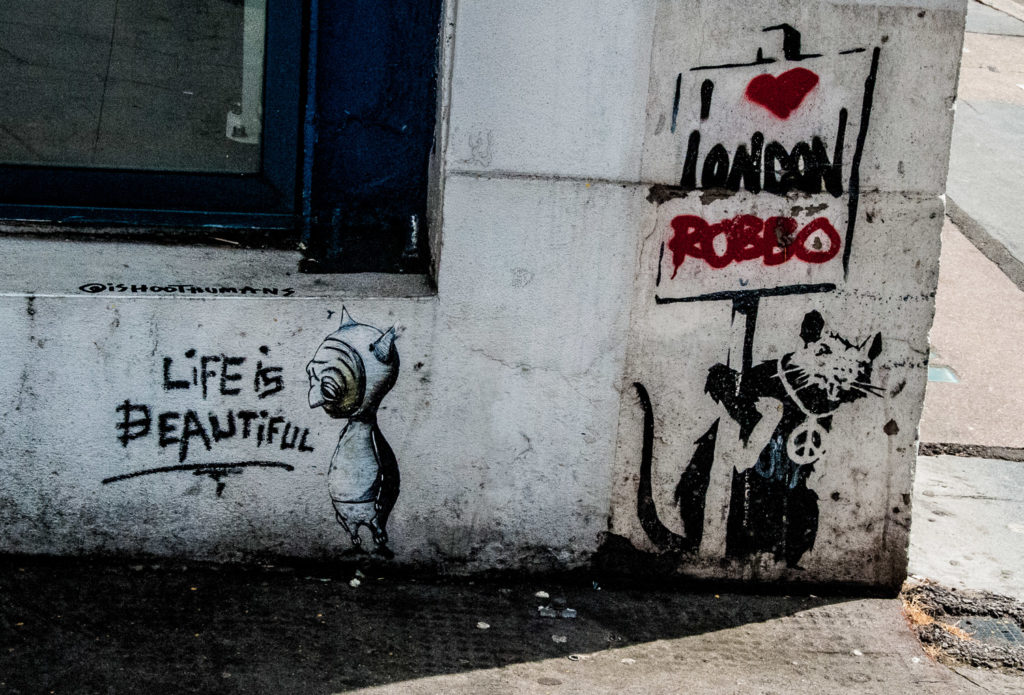
There is a Banksy rat painting in Chiswell Street that has been altered by another artist. Banksy’s piece originally depicted a stencilled ghetto rat holding a placard which read ‘London doesn’t work’ …

Photograph taken by ‘Noodlefish’ 26 August 2006

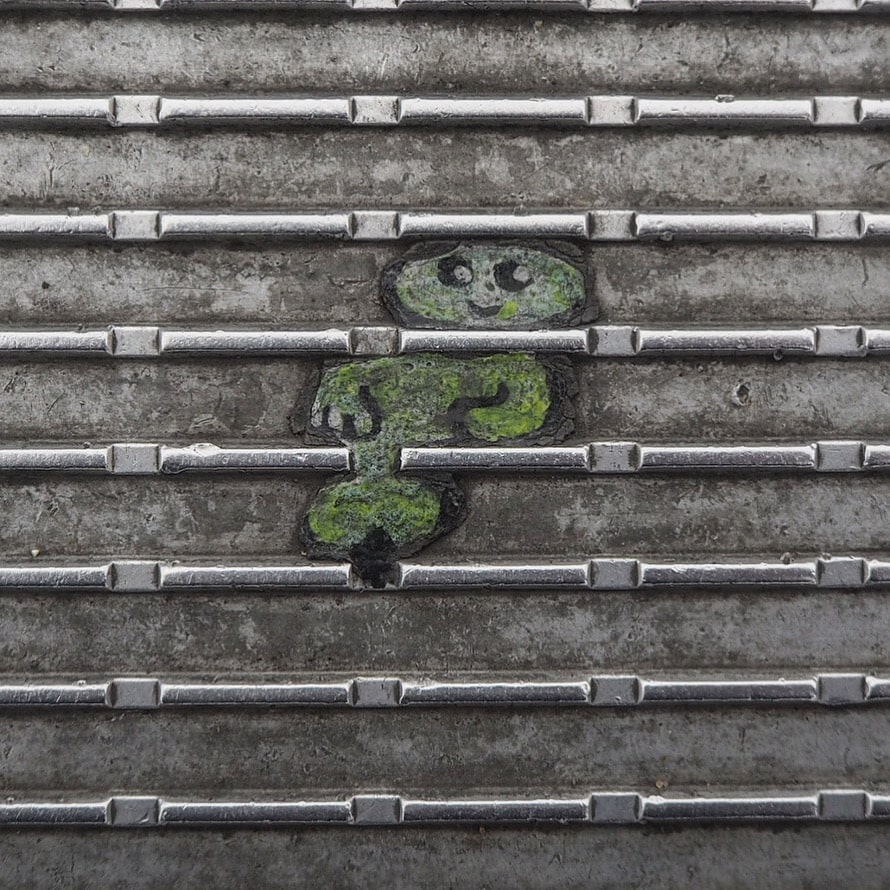
However, Robbo, Banksy’s rival graffiti artist, reworked the placard by adding his name in red letters. Robbo was known for leaving his mark on many Banksy pieces but I read in the interesting Londonist blog that Robbo died in 2014, bringing the rivalry to an end.

I haven’t been able to find out more about the strange ‘Life is beautiful’ figure next to it.
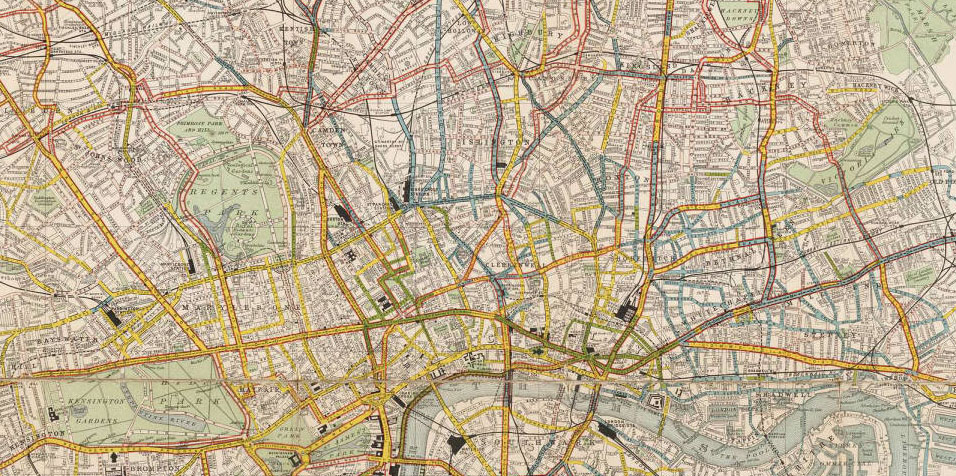
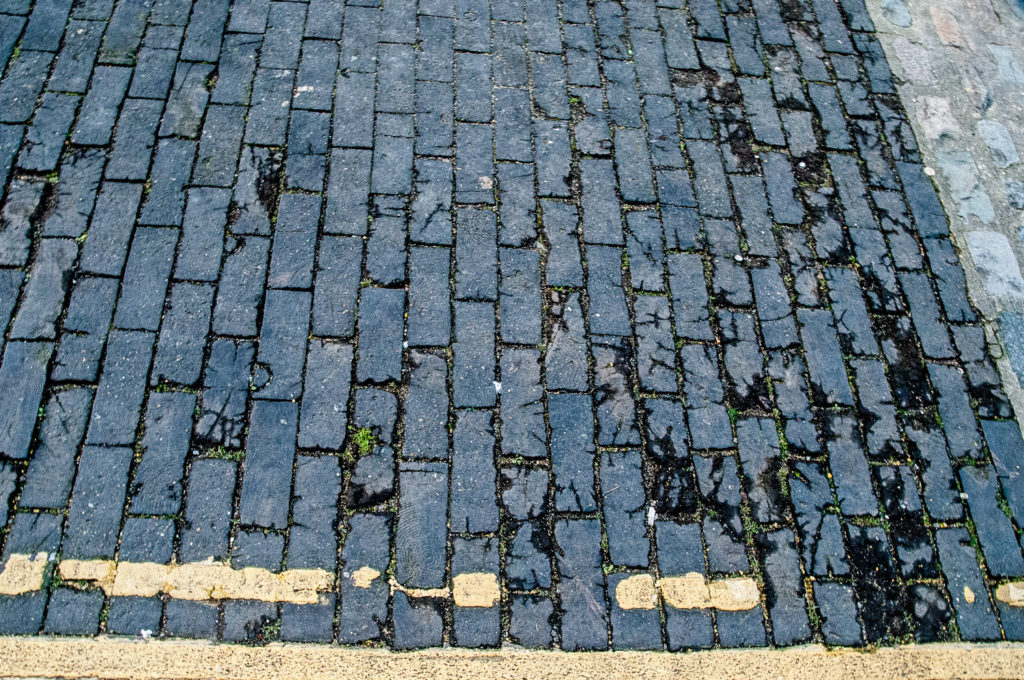
It is hard to imagine now but many of London’s roads were once paved with wood. However a map of London by Bartholomew’s in 1928 shows clearly the expansive reach of the wooden block road paving method. In the map excerpt below, the yellow roads are all paved with wooden blocks …

Read more in the excellent blog ‘Ian Visits’

Many were destroyed in wartime bombing and many also dug up by local residents for burning as heating. Since they were impregnated with tar they burnt furiously and, of course, made a major contribution to London’s filthy air.

For some people this was an entrepreneurial opportunity. This is Alan Sugar being interviewed for the Daily Express in 2010 about when he noticed old blocks being uncovered when roads were being resurfaced …

The workers showed me the blocks, which were impregnated with tar, and they chucked a couple onto the fire – they burned like a rocket. Bingo! It occurred to me that these discarded wooden blocks could be made into fire-lighting sticks. I could cut them up into bundles of sticks and flog them.
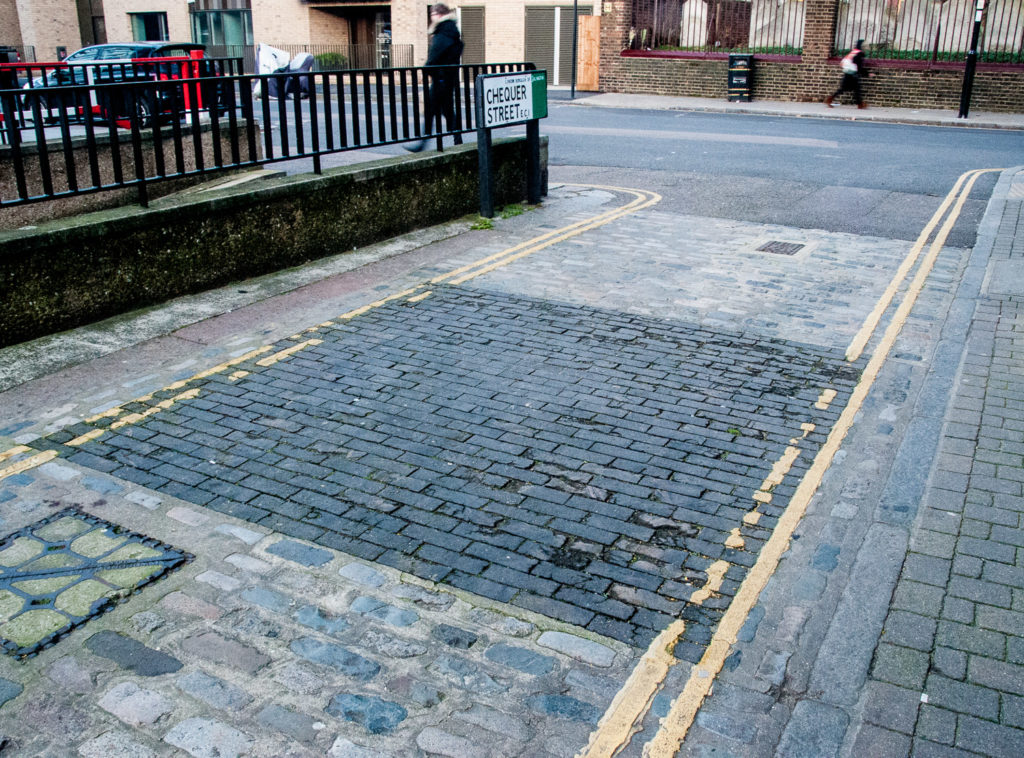
And you can still see a section of wooden road today at the junction of Chequer Street and Bunhill Row EC1 …

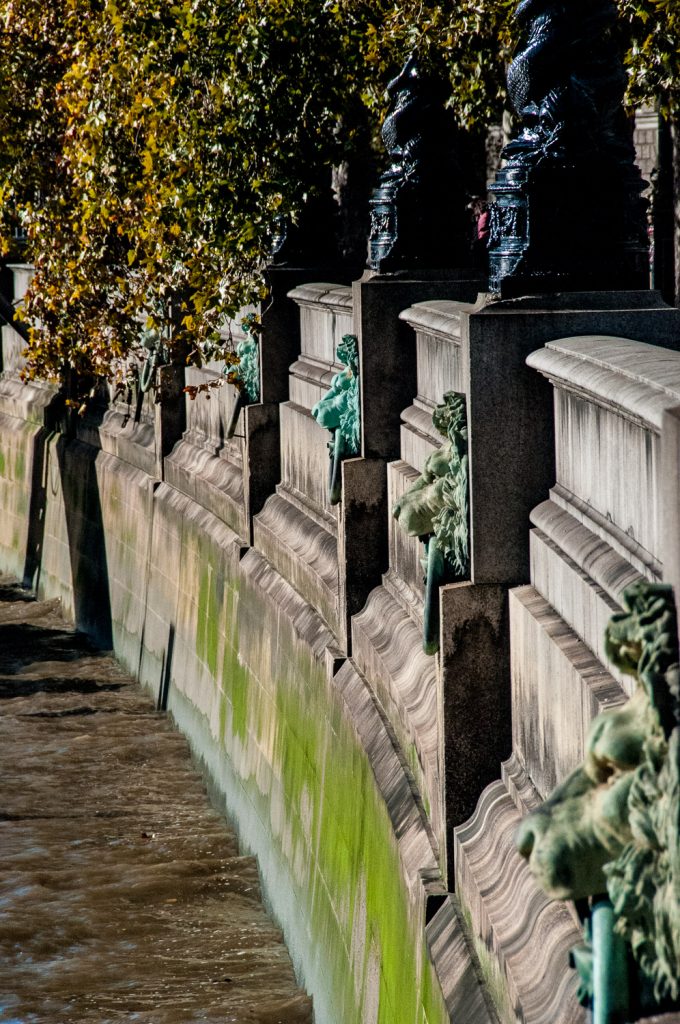
Looking over the wall on the Embankment one day I noticed these lions heads with mooring rings …

They were sculpted by Timothy Butler for Bazalgette’s great sewage works in 1868-70 and it is said that, if the lions drink, London will flood.

And to end with, two more items with watery themes that make me smile.

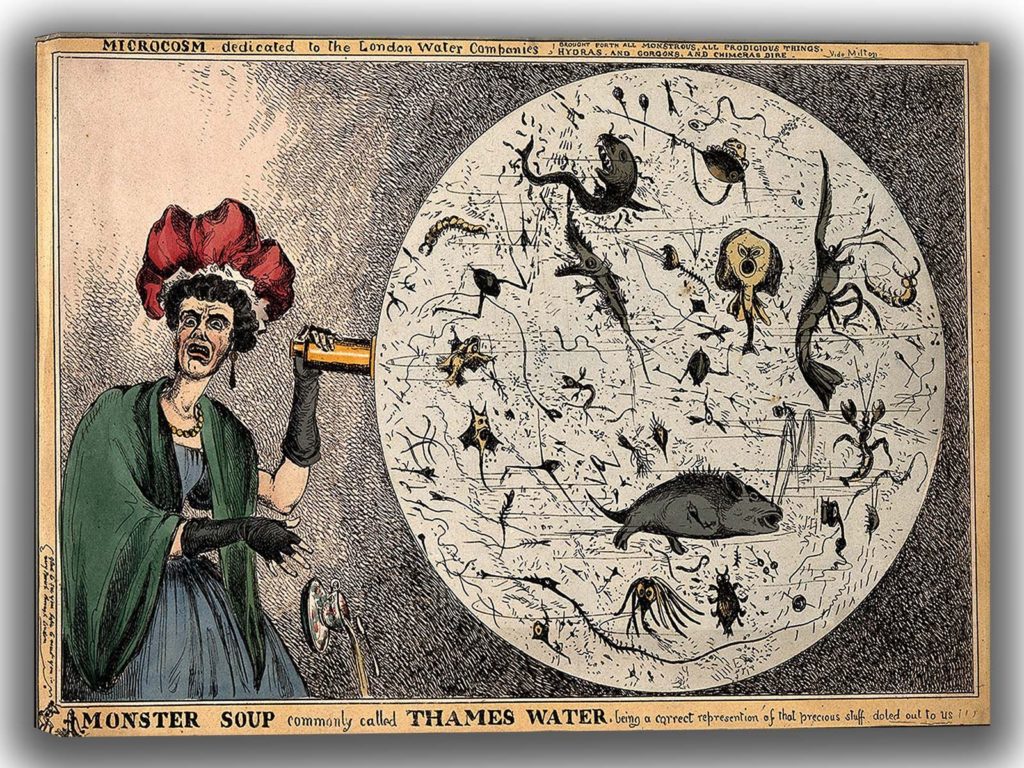
Firstly, a famous satire on the quality of the Metropolitan water supply in 1828. An elderly lady displays her horror and shock on looking at a speck of Thames water through a microscope …

Copyright: British museum

It’s by the artist and caricaturist William Heath (1795-1840) and is entitled Monster Soup commonly called Thames Water being a correct representation of that precious stuff doled out to us! You can read more about the efforts made to get fresh water to Londoners in my blog Philanthropic Fountains.

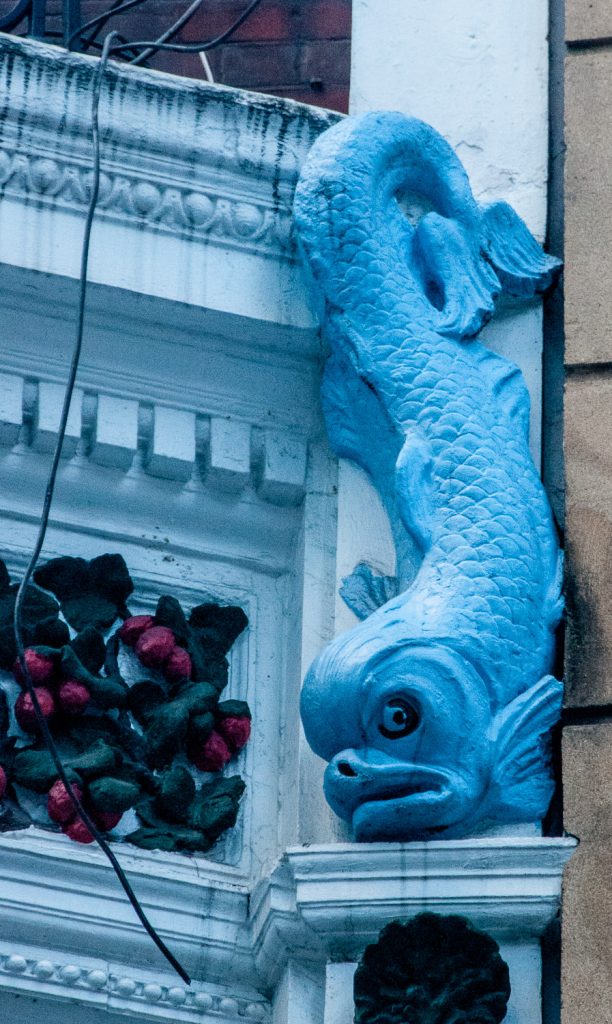
And finally I always say hello to this miserable dolphin on The Ship pub in Hart Street (EC3R 7NB). I also tell him to cheer up – the pub is a listed building and therefore so is he …

Thanks again for subscribing!

Page 4 of 5

Powered by WordPress & Theme by Anders Norén

Symbols & Secrets
Privacy Overview

This website uses cookies so that we can provide you with the best user experience possible. Cookie information is stored in your browser and performs functions such as recognising you when you return to our website and helping our team to understand which sections of the website you find most interesting and useful.