Walking the City of London

Category: Maps Page 2 of 5

A walk down Queen Victoria Street (and another cute pigeon)

Queen Victoria Street was created in 1871 as an extension to the then new Victoria Embankment and led directly to the Mansion House. The new street was incredibly expensive to build since, obviously, the properties standing in its path had to be purchased before demolition. The cost, over £2,000,000, equates to more than two billion pounds in equivalent value today.

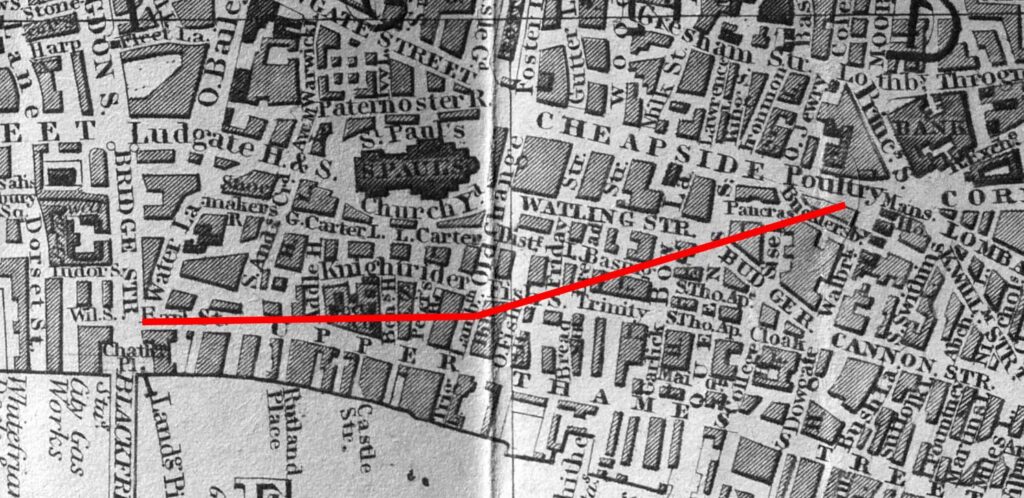
On this extract from the 1847 Reynolds’s Splendid New Map of London a red line has been drawn to show how Queen Victoria Street sliced its way across the City …
This picture gives an idea of the extent of the demolition …
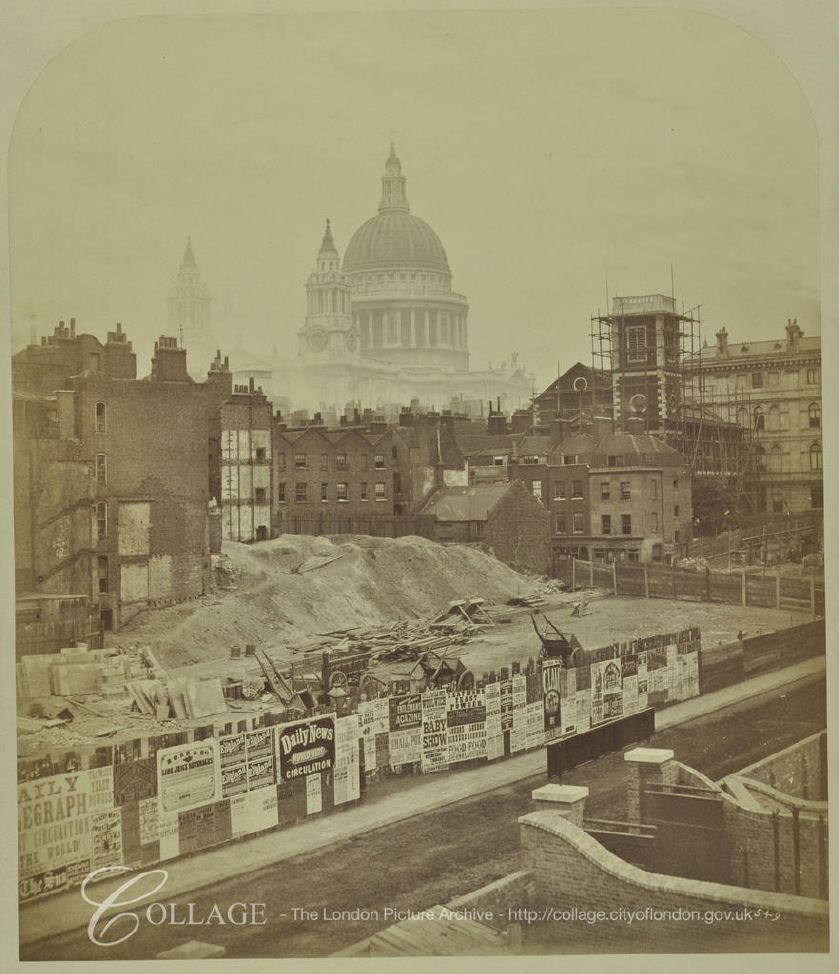
Image credit: London Metropolitan Archives, City of London: catalogue ref: SC_PZ_CT_02_1067

I wanted to try to stand as closely as possible where this picture was taken and, pausing in the street, I looked up and this is what I saw (EC4V 4BQ) …
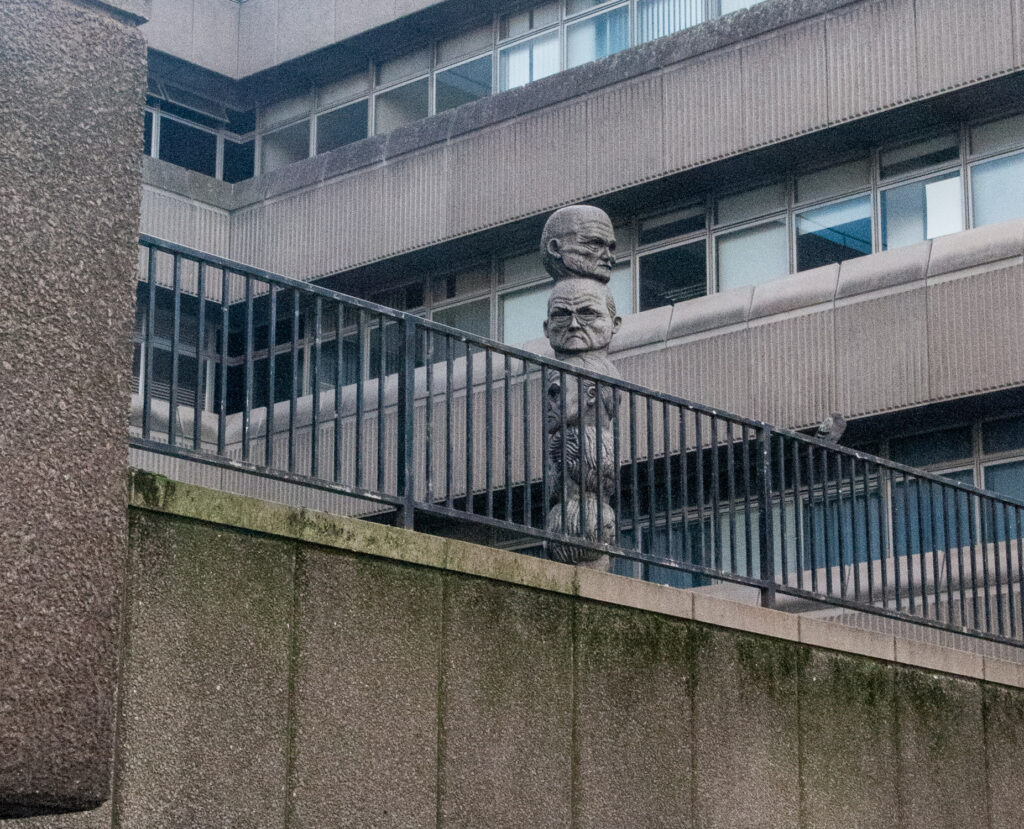
I climbed some steps and in a grim courtyard outside the gruesome Baynard House is a quite extraordinary sculpture, The Seven Ages of Man by Richard Kindersley (1980) …
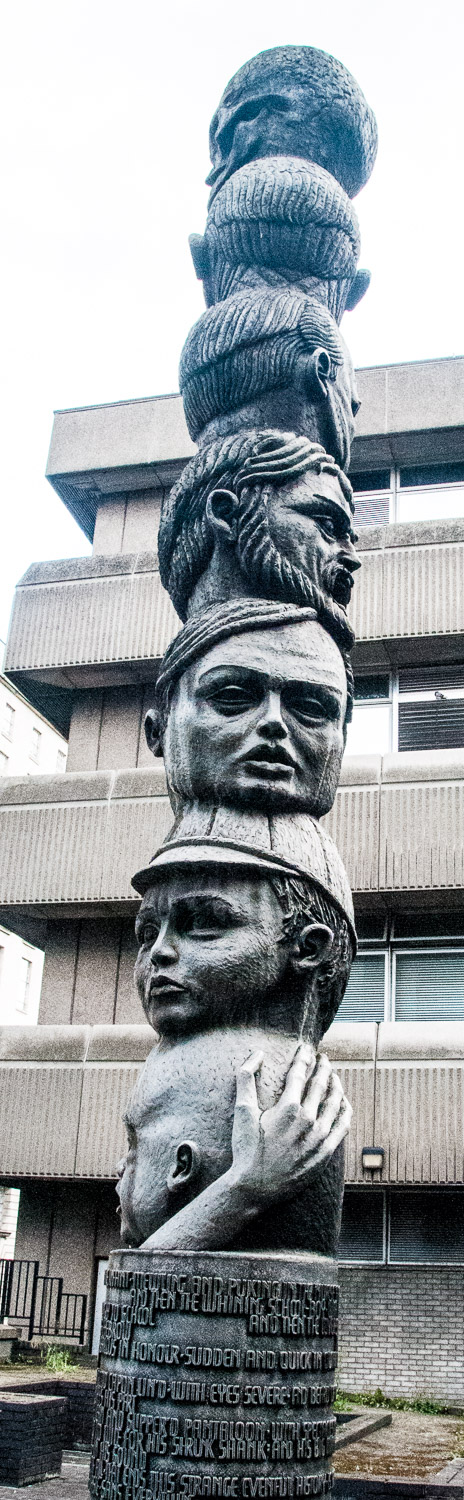
At first the infant – mewing and puking in the nurse’s arms …then the whining schoolboy creeping like a snail unwillingly to school … then the lover … then a soldier full of strange oaths …
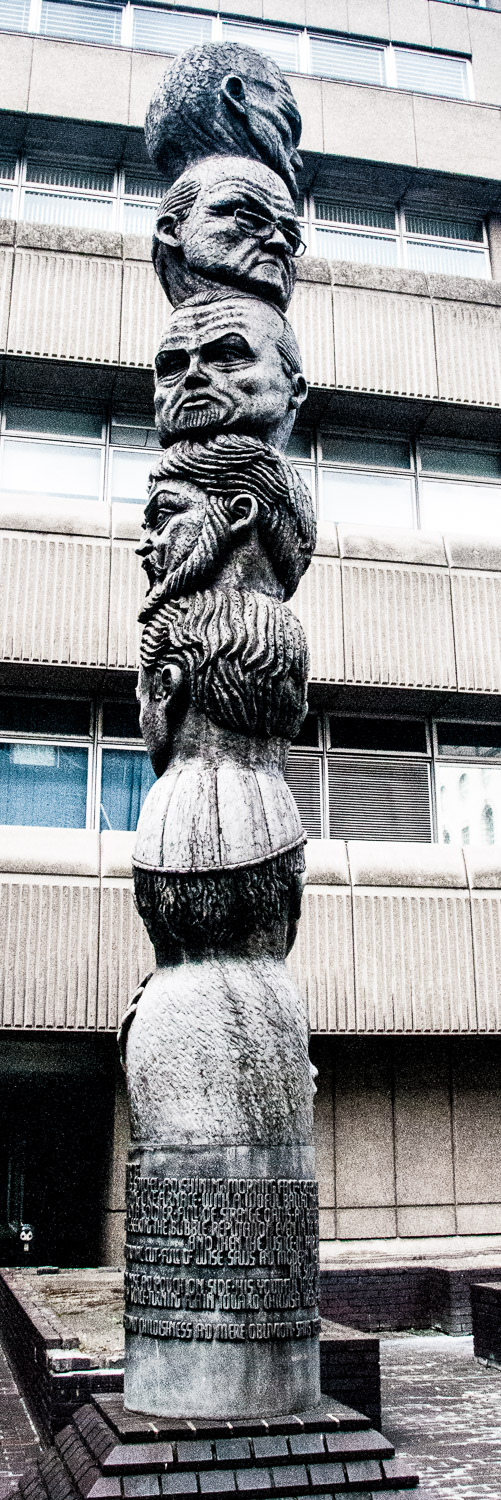
… and then the justice full of wise saws … then the sixth age …the big manly voice turning again toward childish treble, pipes and whistles in his sound … then second childishness and mere oblivion, sans eyes, sans taste, sans everything.

(Jacques in Shakespeare’s As You Like It Act II Scene vii)

Here is the view from the terrace taken from approximately the same spot as the demolition picture above …
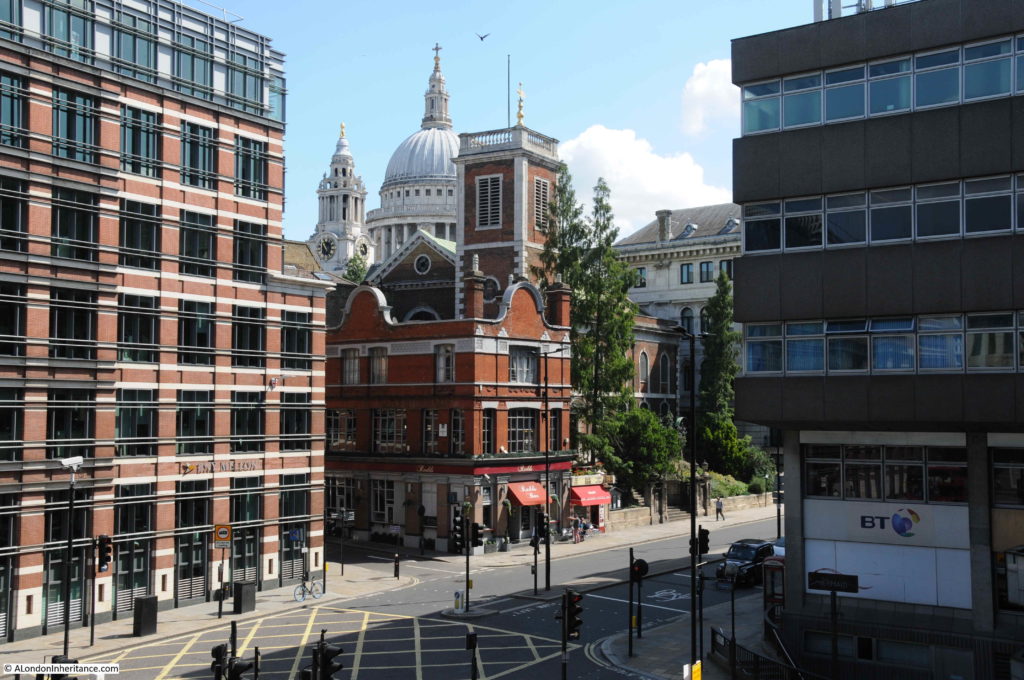
This image and several of the illustrations in today’s blog have been taken from the excellent blog A London Inheritance which I wholeheartedly recommend.

By the way, the terrace leads to Blackfriars Station and it’s worth popping in to see this example of the station’s past importance.

The station was badly damaged during the Second World War but the wall displaying a selection of the locations you could catch a train to survived and you can see it today in the ticket hall. It was part of the original façade of the 1886 station (originally known as St Paul’s) and features the names of 54 destinations – each painstakingly carved into separate sandstone blocks …
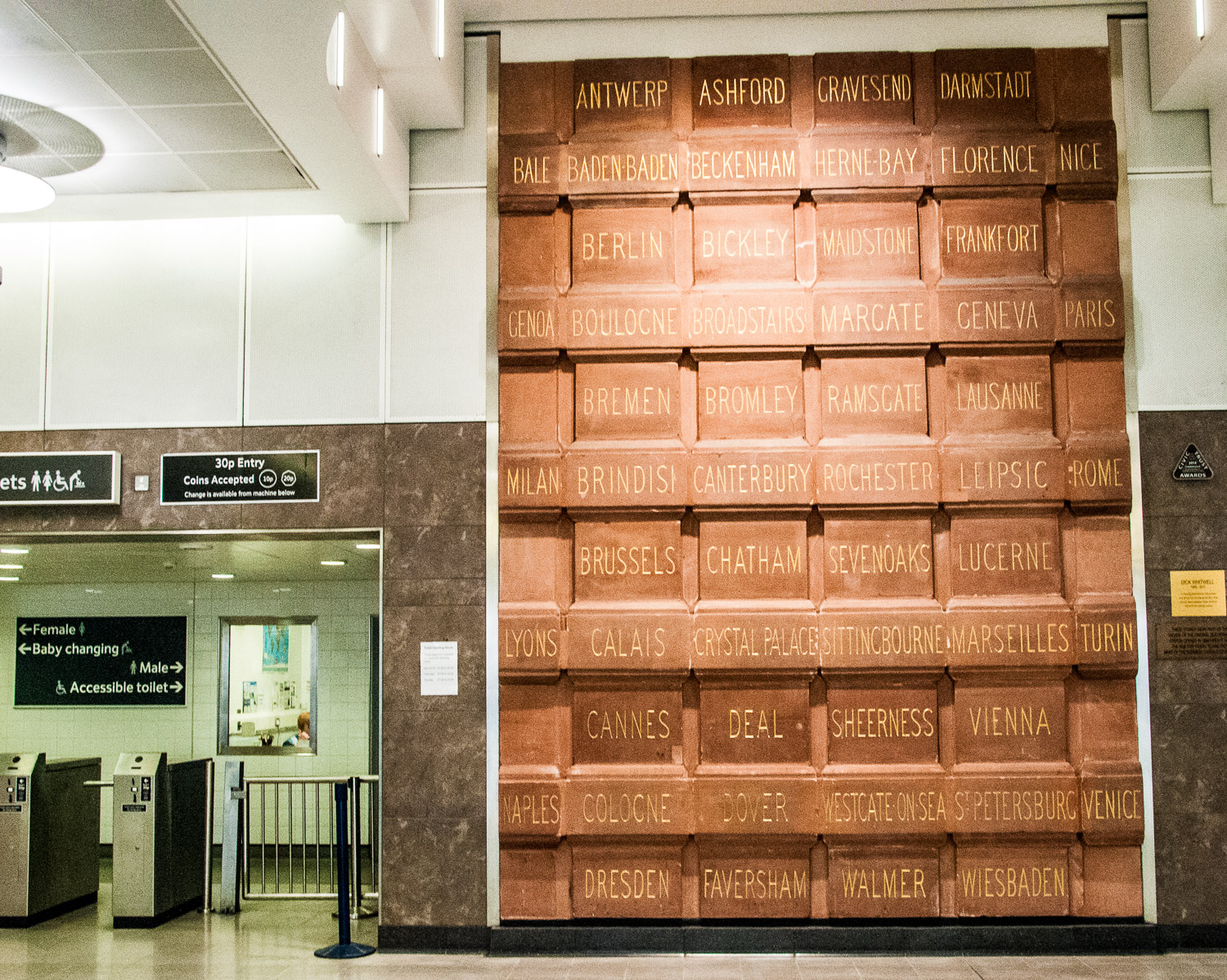
The letters are gilded in 24 carat gold leaf …
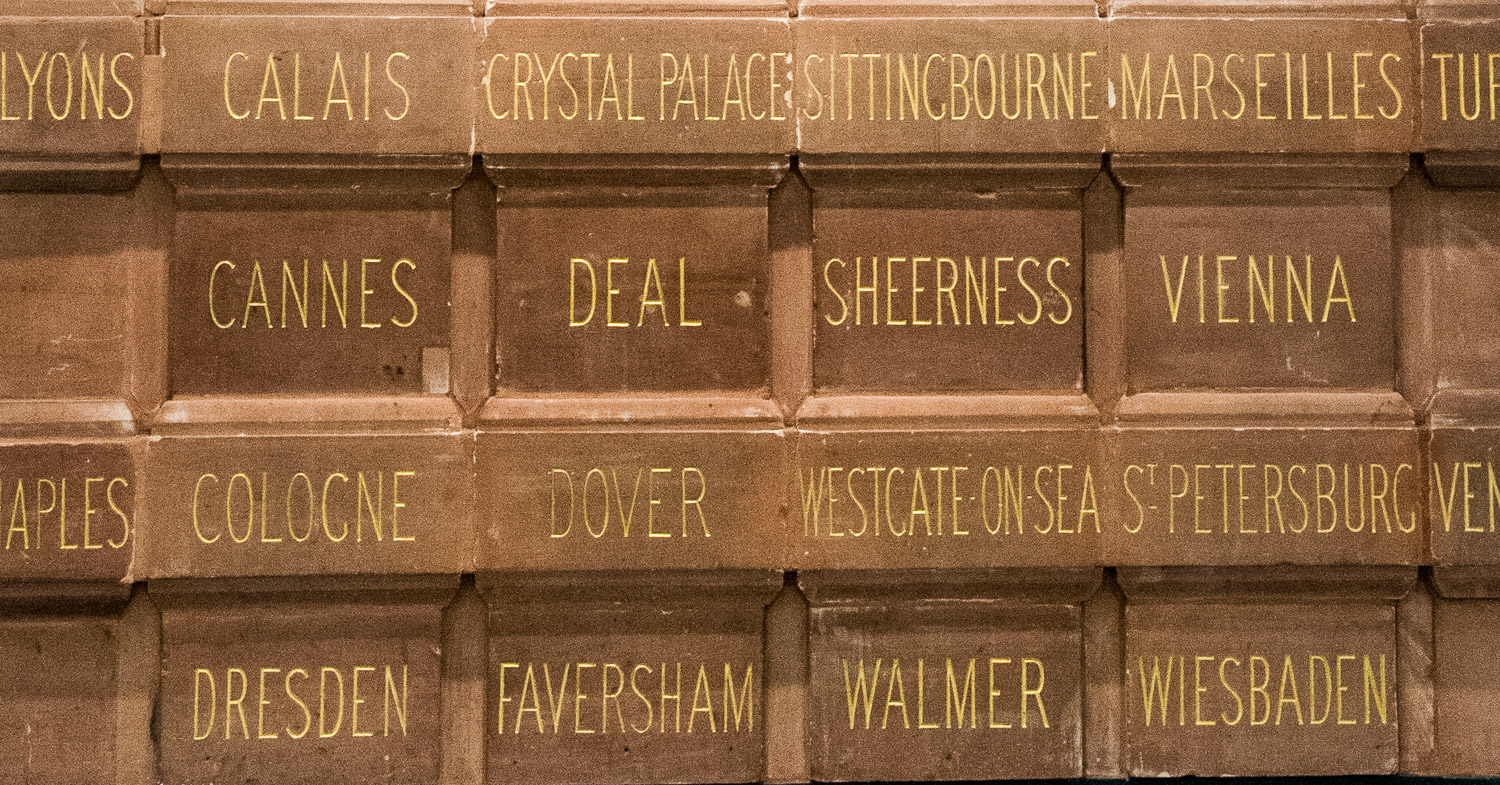
Where shall we buy a ticket to today? Crystal Palace or Marseilles? Westgate-on-Sea or St Petersburg? Tough choices!

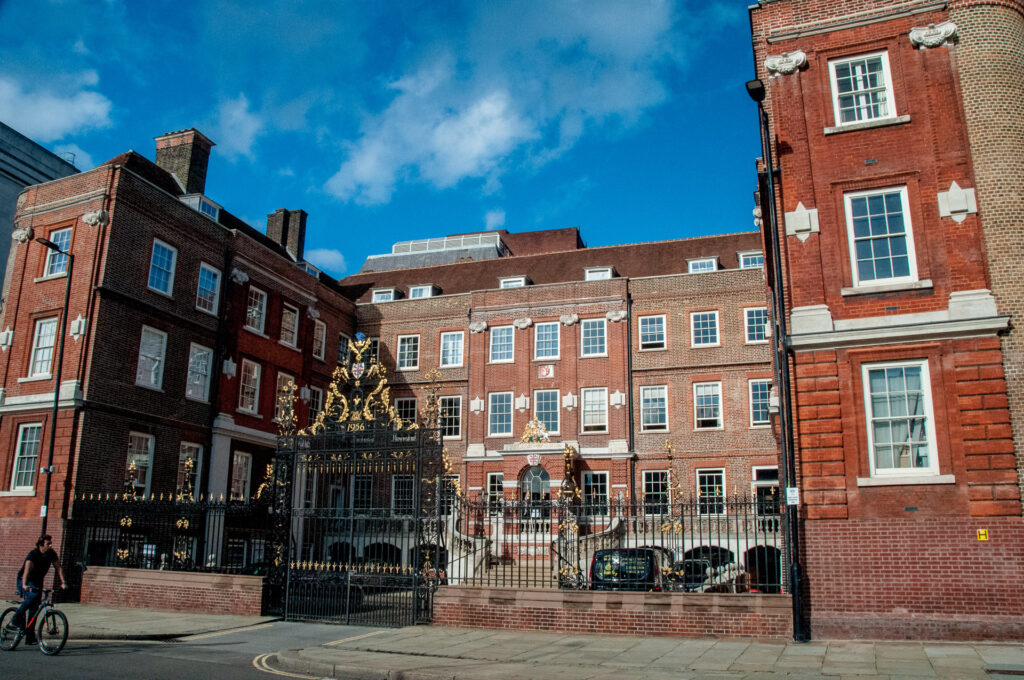
Moving westward on the north side of Queen Victoria Street you will find the College of Arms (EC4V 4BT). Founded in 1484, this is where you go to get your family coat of arms designed and granted. As well as this function, the College maintains registers of arms, pedigrees, genealogies, Royal Licences, changes of name, and flags. The officers who run the College have some splendid titles such as Clarenceaux King of Arms, Rouge Dragon Persuivant and various Heralds and Heralds Extraordinary.

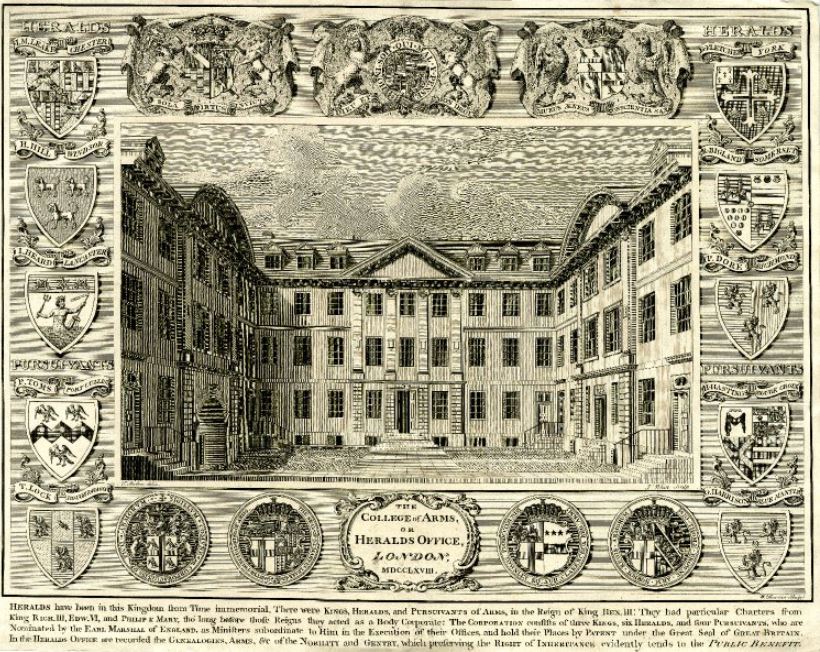
The original street plan included the complete demolition of their building but the Heralds objected strongly. As a result Queen Victoria Street merely sliced off the south east and south west wings, requiring remodelling of the two stumps. You can see how the colour of the new brickwork differs from the original in this picture …
This print from 1768 shows the building before the 1871 alterations …
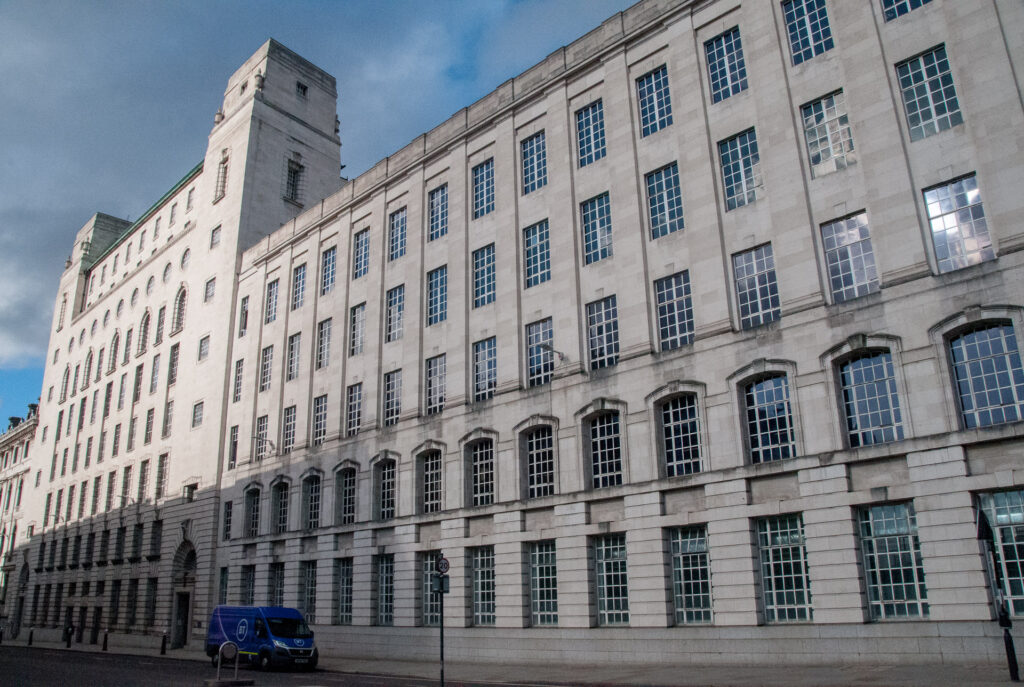
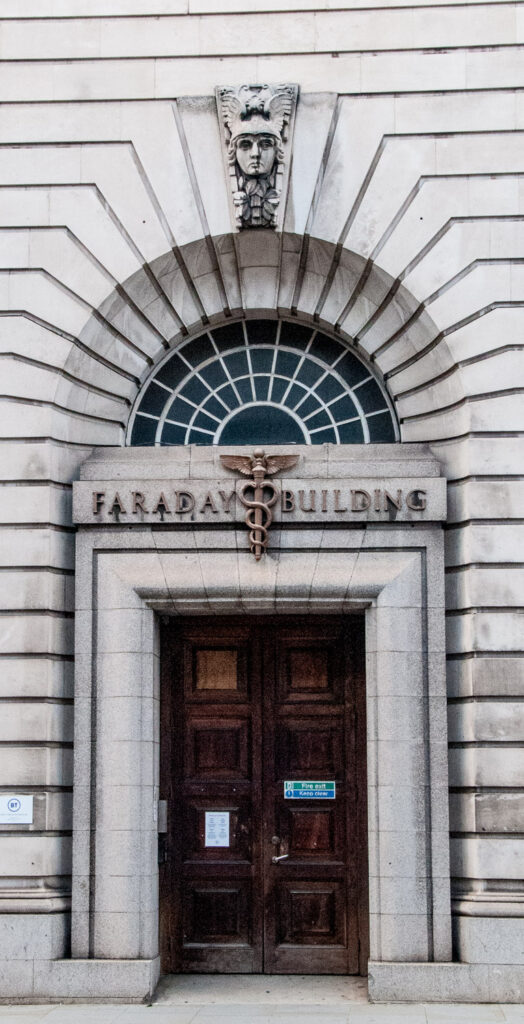
Also on the north side is the 1933 Faraday Building, once one of the major hubs for international and national telephone circuits and operator services (EC4V 4BT) …
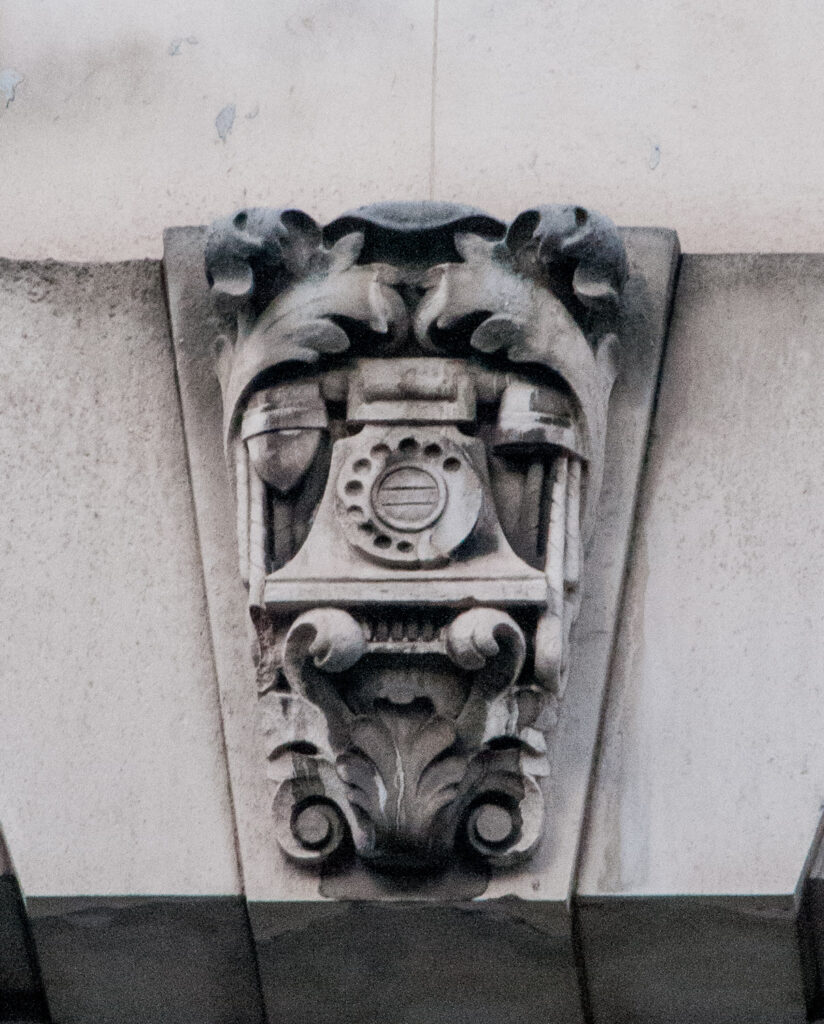
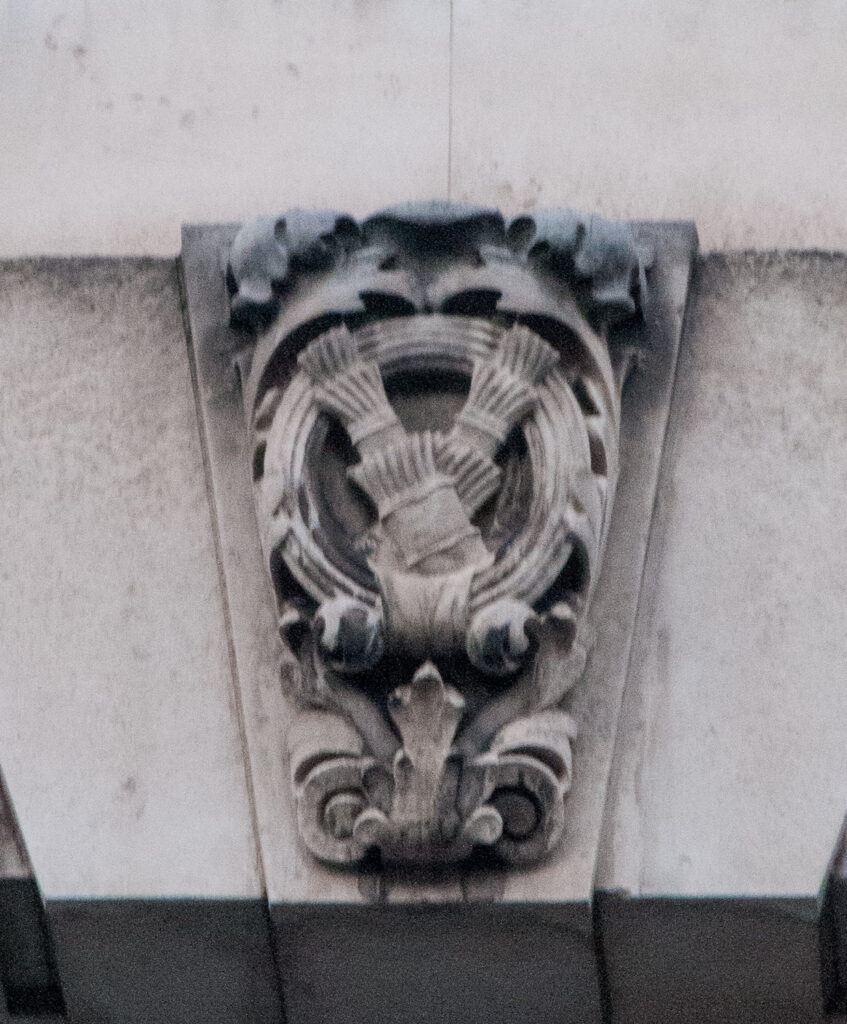
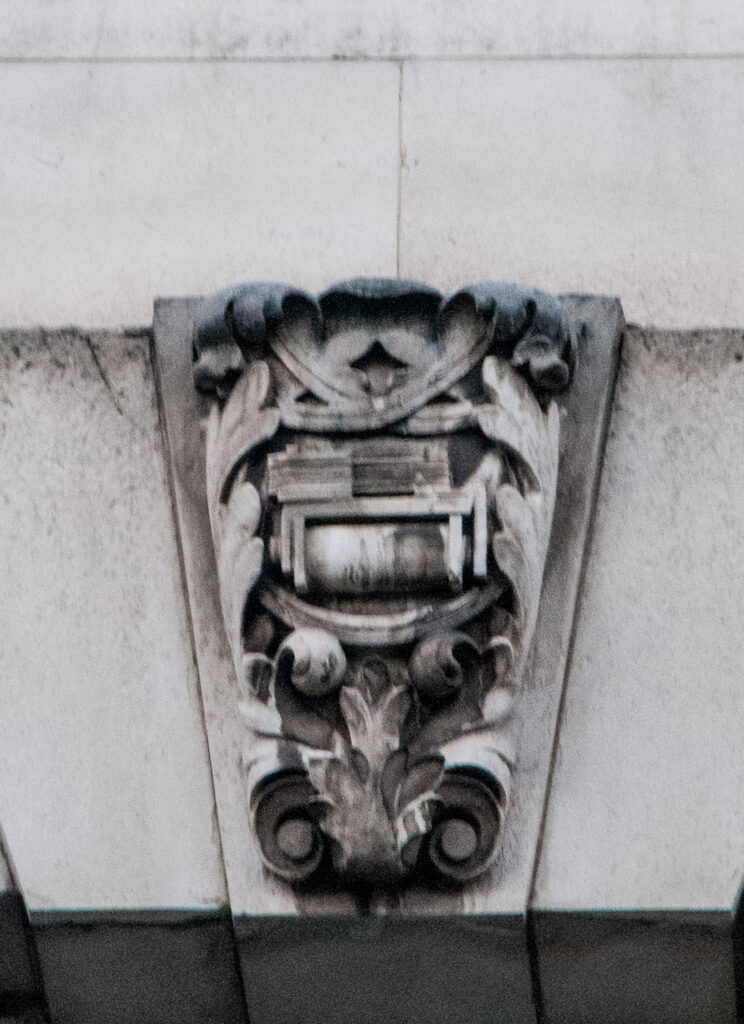
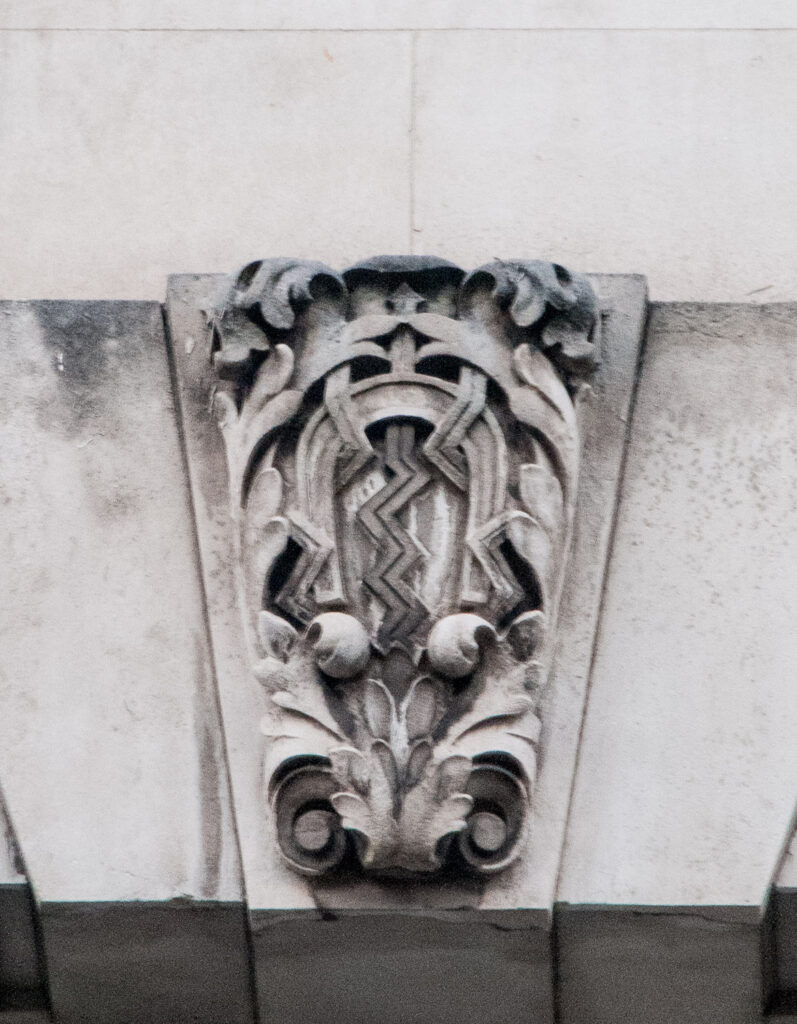
Look just above the line of the second set of windows and, in the position associated with a key stone, there are a series of carvings, one above each window, that tell the story of what was state of the art telecommunications at the time the building was constructed.

A bang up to date telephone …
Cables that carried the telephone signal …
An electromagnetic relay …
A Horse Shoe Magnet …
The imposing entrance doors are sadly defaced with signage …
There are two nice places to sit down and rest.

The first I would recommend is the Cleary Garden (EC4V 2AR) …
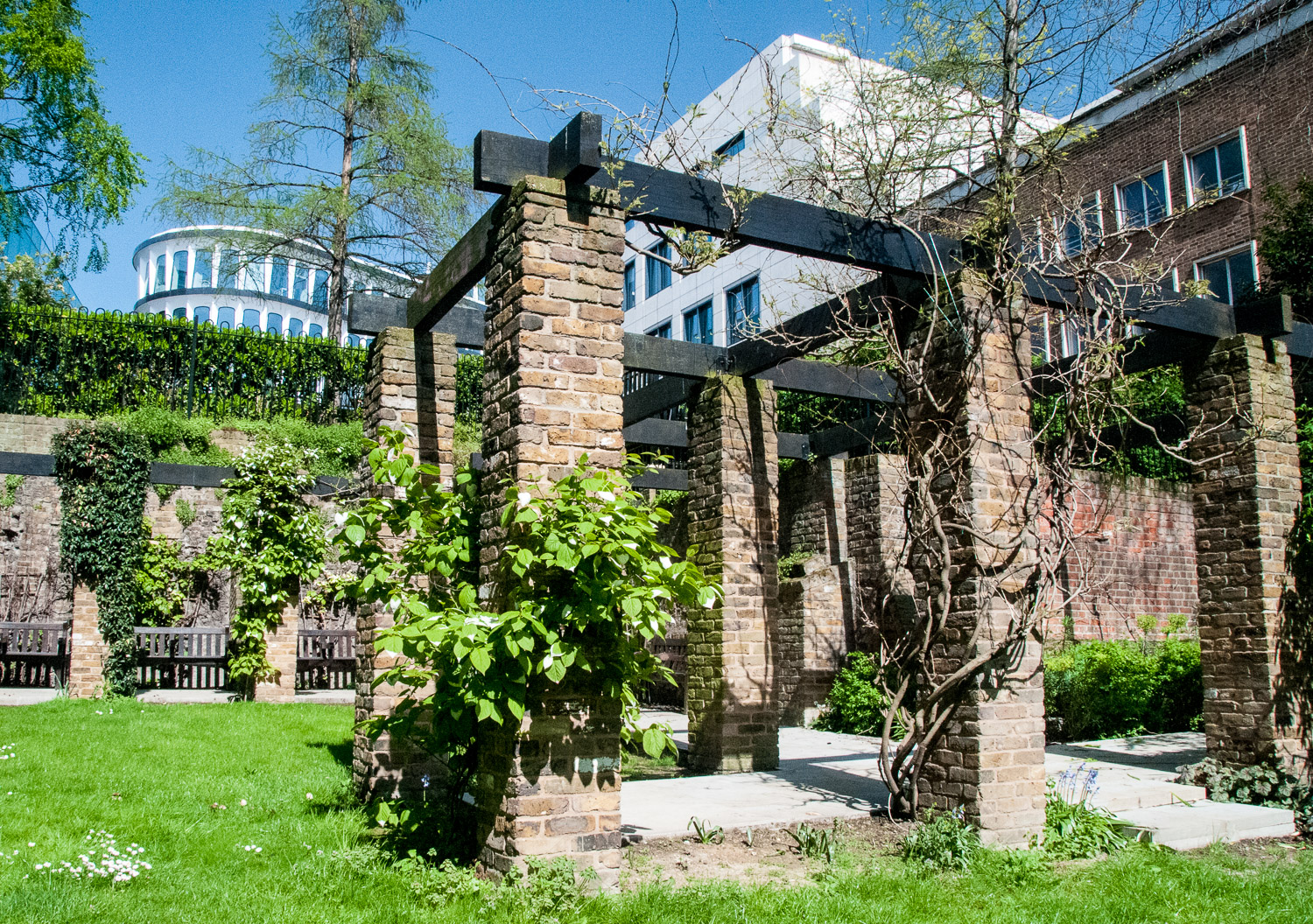
It is named after Fred Cleary who, during the 1970s, was instrumental in encouraging the planting of trees and the creation of new gardens throughout the square mile. During the blitz, the house which once stood here was destroyed exposing the cellars. A shoemaker called Joe Brandis decided that he would create a garden from the rubble, collecting mud from the river banks and transporting soil from his own garden in Walthamstow to the site. His success was such that on 29th July 1949 Queen Elizabeth the Queen Mother visited his handiwork.

My second recommendation, if you seek some refreshment in extraordinary surroundings, is the Black Friar pub (EC4V 4EG) …
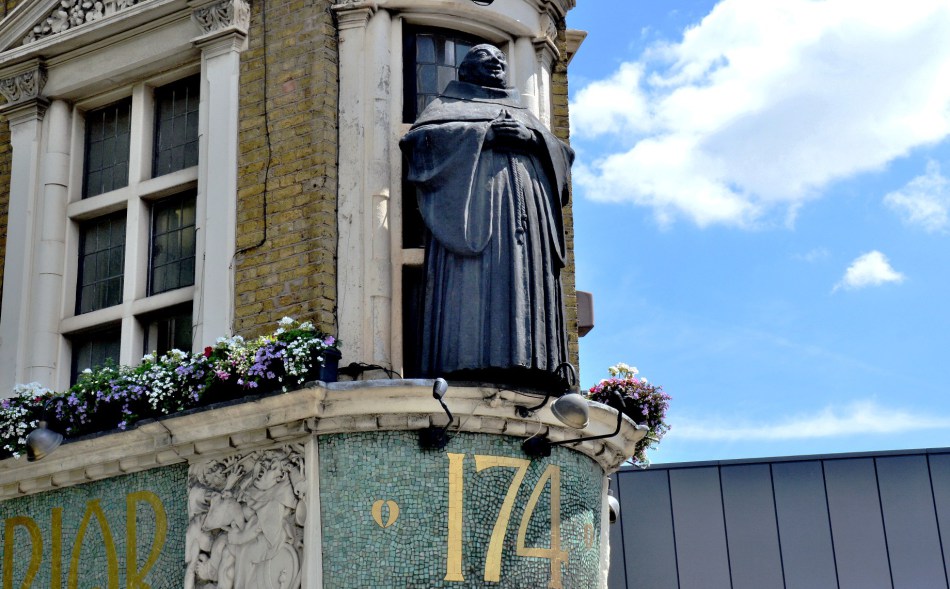
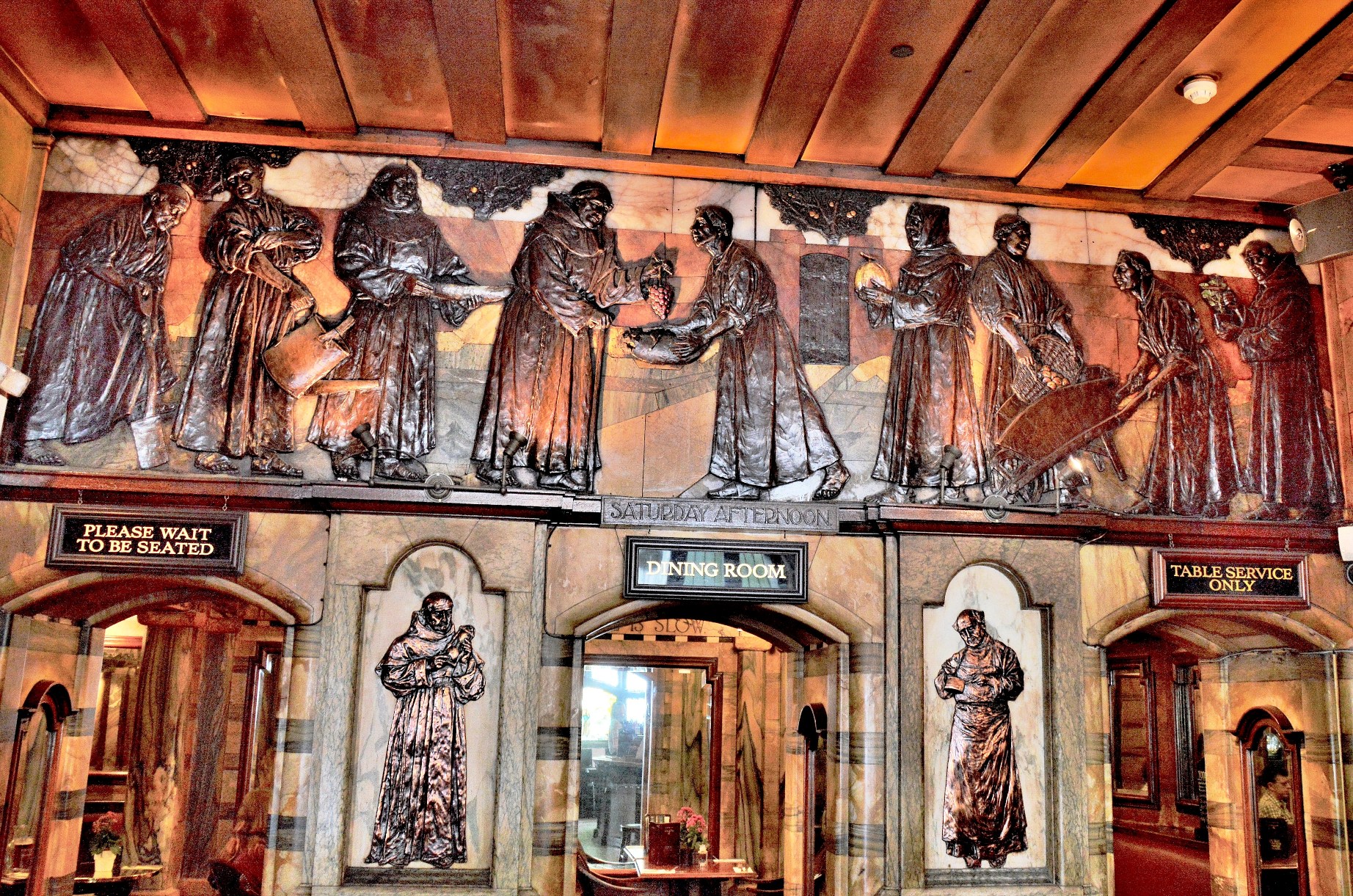
The interior is so amazing that I am going to write about it in more detail in a later blog dedicated to pubs. In the meantime, here are a few pictures to give you some idea of what to expect …
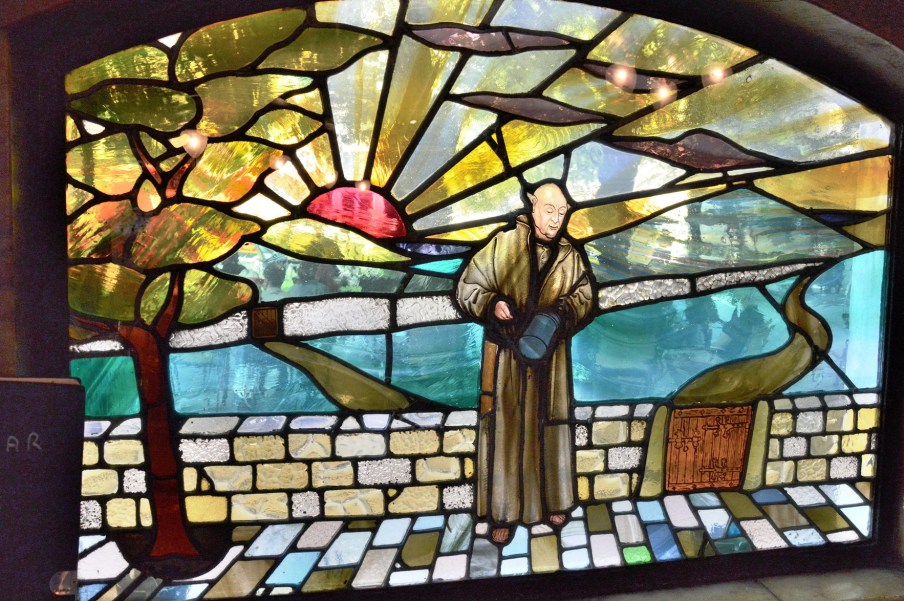
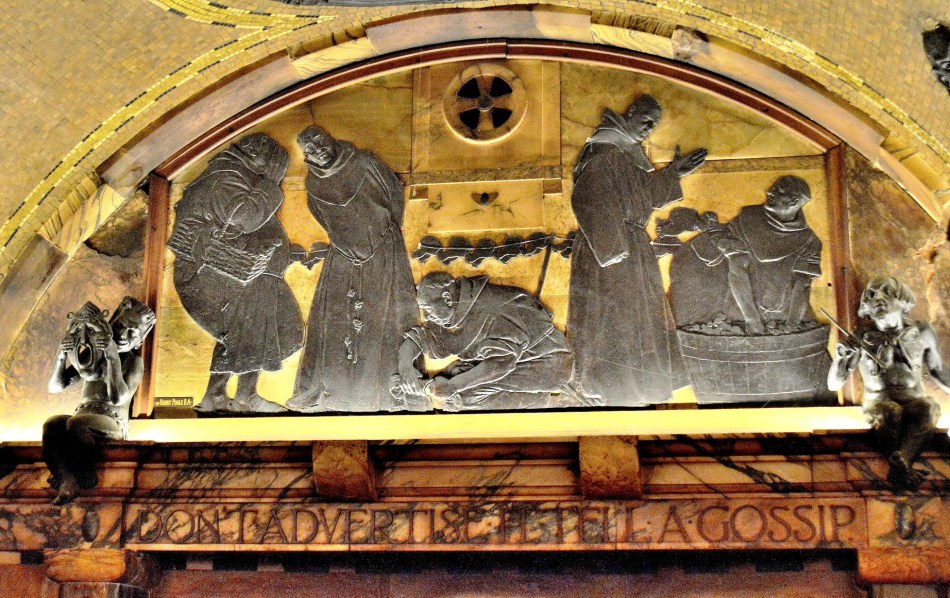
You can watch an interesting video about the pub and its history here.

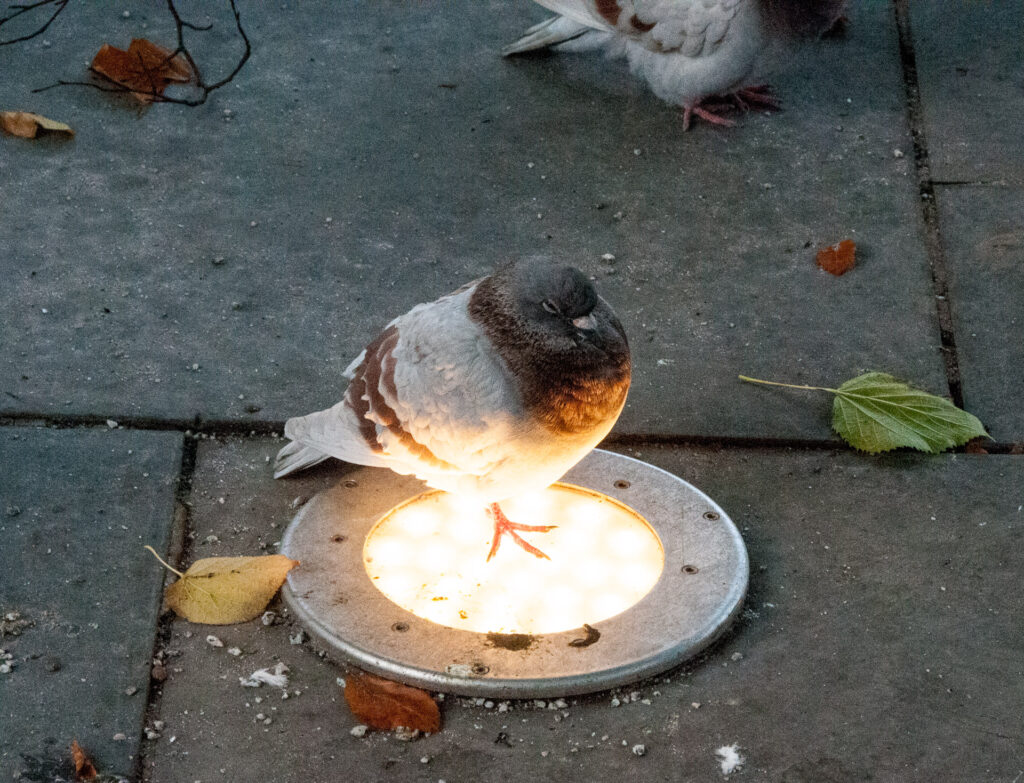
And finally, it’s cute pigeon time. I saw this one dozing off whilst using a spotlight to dry his feathers and warm his bottom. He’s also managing to do this whilst balanced on one leg …
If you would like to follow me on Instagram here is the link …

https://www.instagram.com/london_city_gent/

A more cheerful wander around Smithfield

Last week’s blog was largely concerned with the rather gruesome events that took place in this historic area so I’m aiming to be a bit more lighthearted this week.

Looking up as you walk can be very rewarding. Just opposite Smithfield Central Market on Charterhouse Street I spotted this frieze at the top of one of the buildings …

Here is a close up of the panel on the left …

And here’s the one on the right …

Aren’t they wonderful! I’m pretty sure that’s a bull in the foreground.

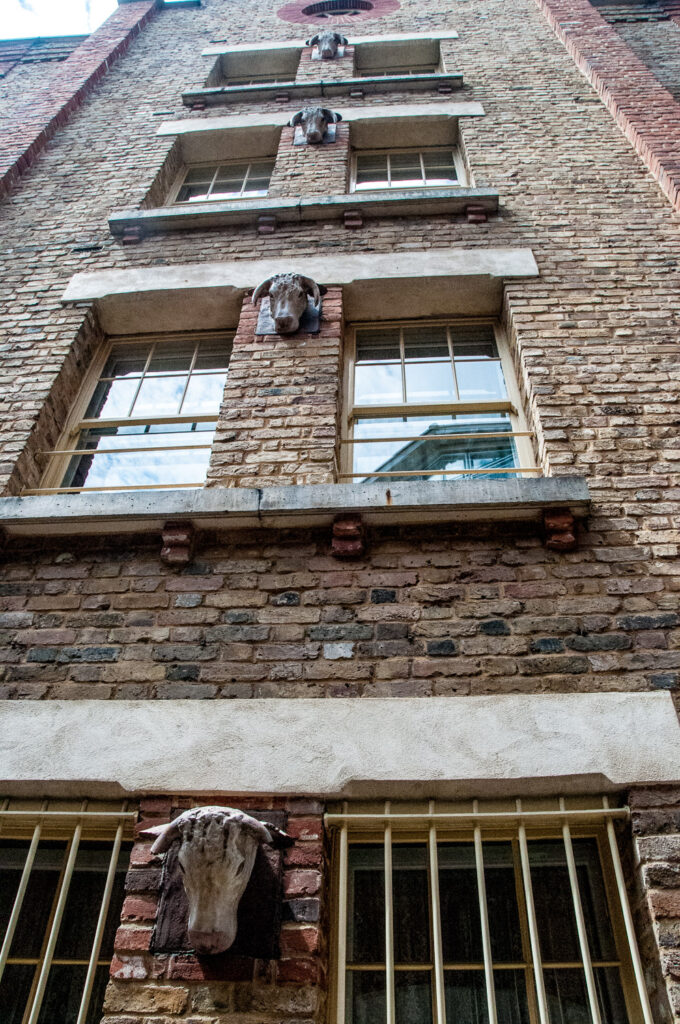
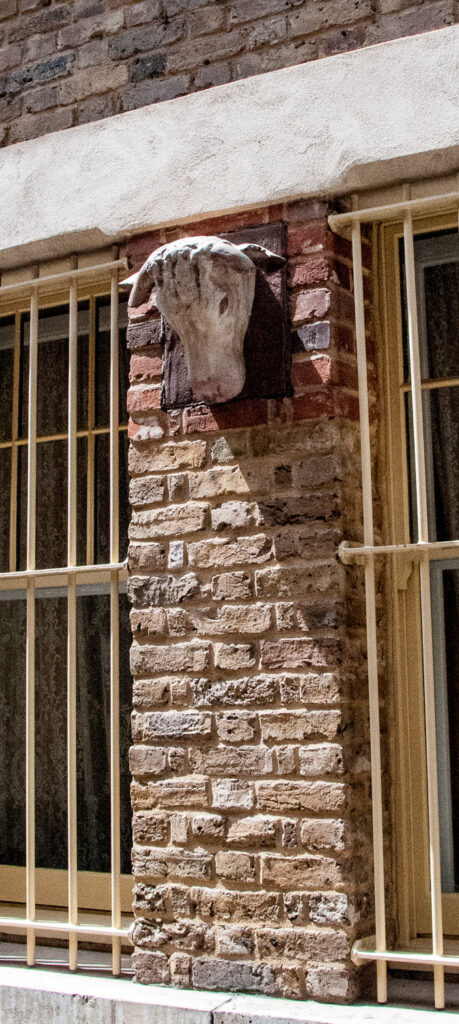
And, whilst in livestock mode, if you look just around the corner in Peter’s Lane you will encounter this sight (EC1M 6DS) …

Now look up …

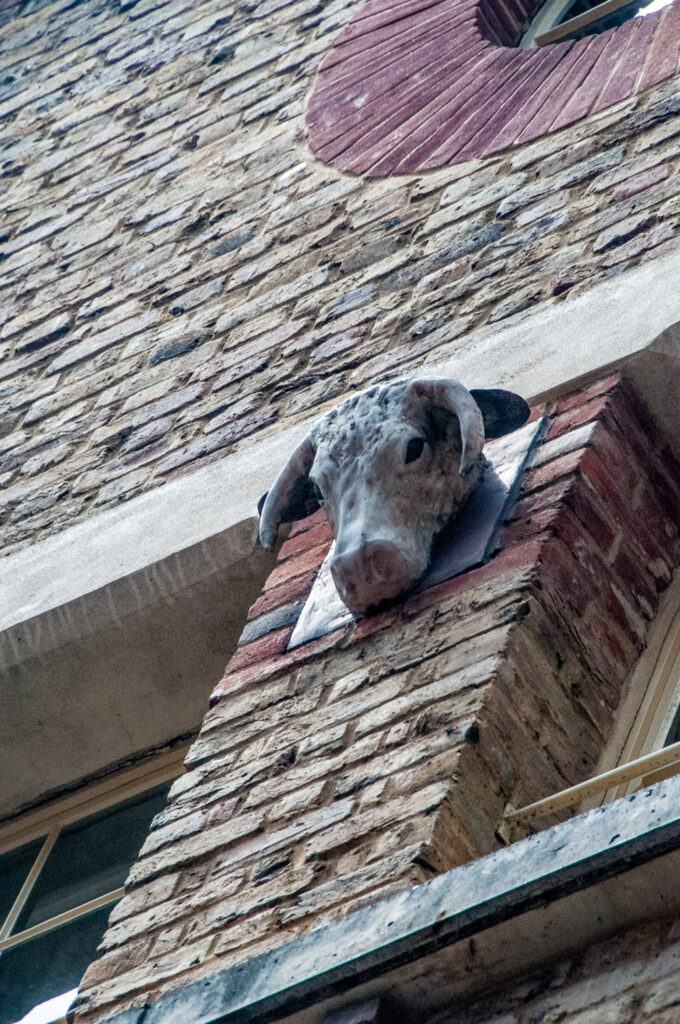
Here’s the bull at the very top …

Surprisingly, they only date from the mid-1990s and are made of glass reinforced resin. The bovine theme was used as a decorative motif because for centuries the appropriately named Cowcross Street was part of a route used by drovers to bring cows to be slaughtered. The tower forms part of The Rookery Hotel and also dates from the mid-1990s, although it looks much older due to the use of salvaged bricks.

I reckon this is a top class piece of sympathetic redevelopment by the architects Gus Alexander. Read all about how they approached the work here.

I’ll say a little about Smithfield’s history.

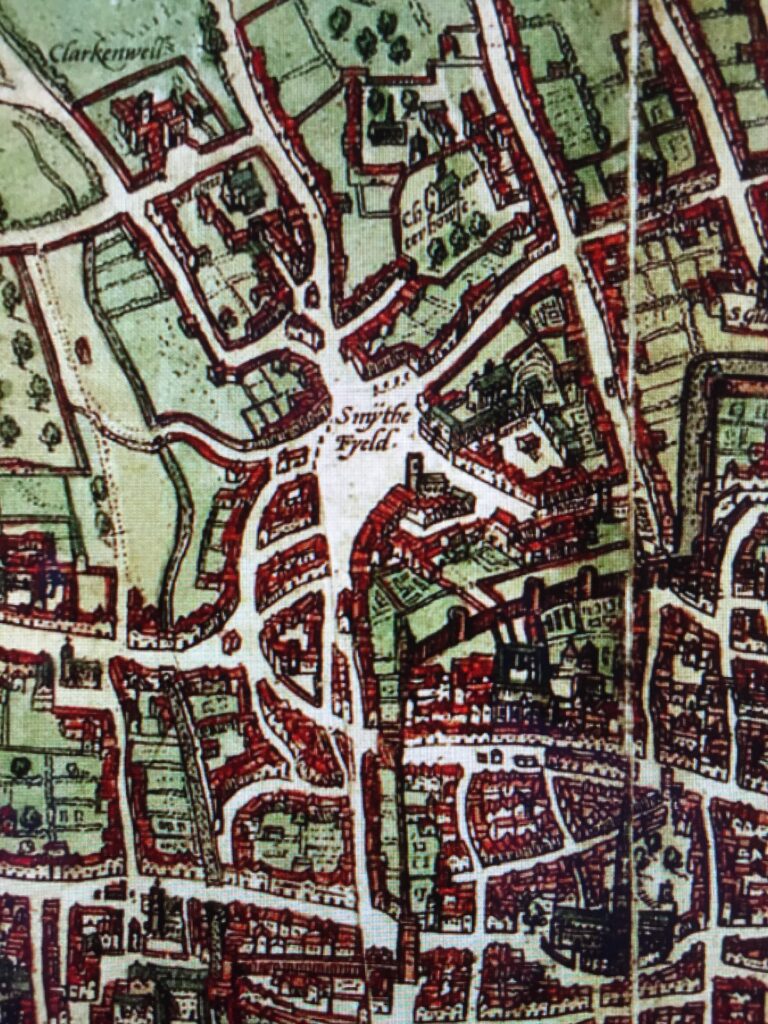
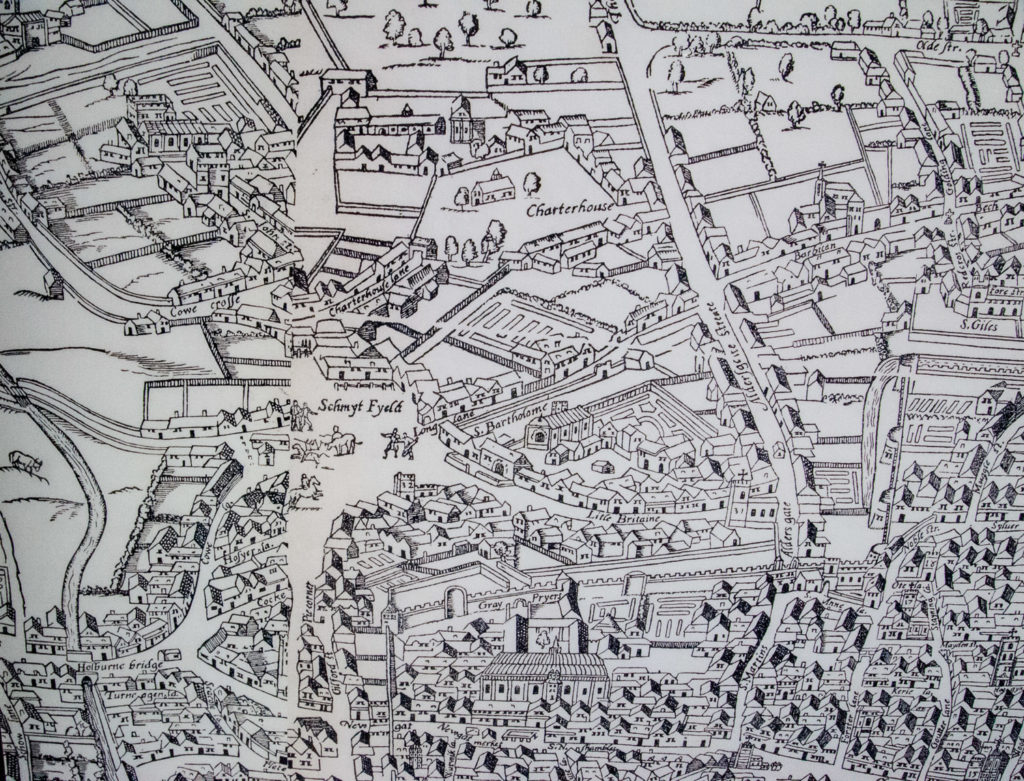
It appears on some old maps as Smooth Field …

In the Braun and Hogenberg map of 1560/72 it’s Smythe Fyeld …

In the Agas Map of 1633 it’s Schmyt Fyeld …

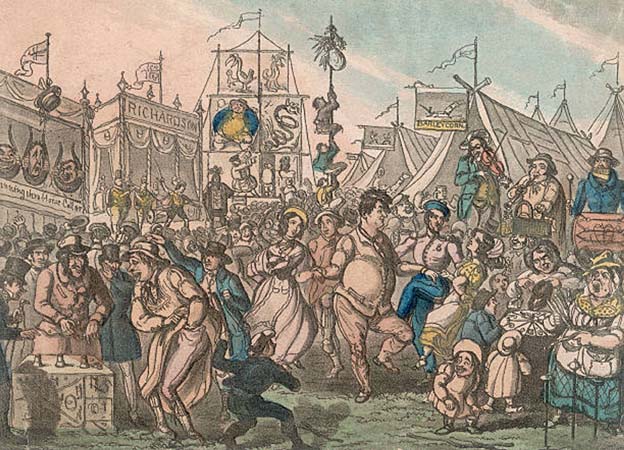
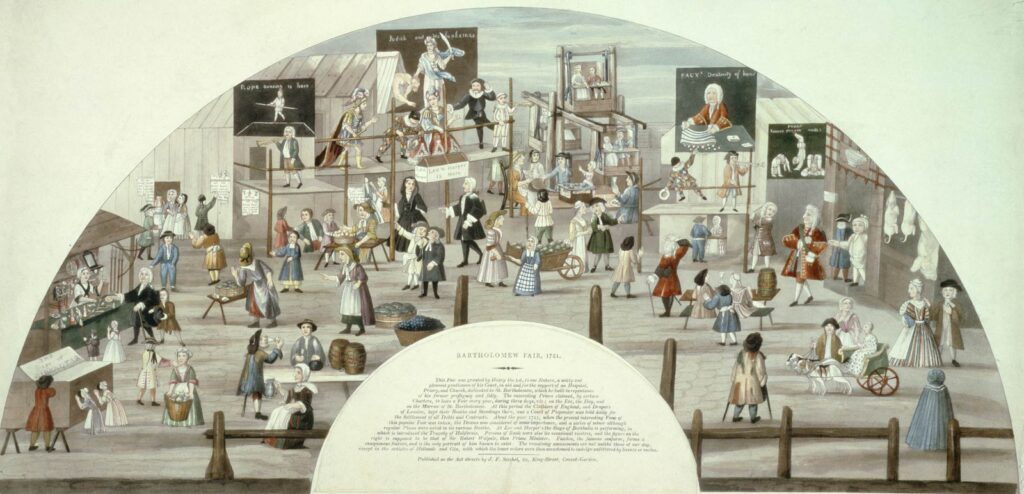
By the twelfth century, there was a fair held there on every Friday for the buying and selling of horses, and a growing market for oxen, cows and – by-and-by – sheep as well. An annual fair was held every August around St Bartholomew’s Day and was the most prominent and infamous London fair for centuries; and one of the most important in the country. Over the centuries it became a teeming, riotous, outpouring of popular culture, feared and despised like no other regular event by those in power… ‘a dangerous sink for all the vices of London’. This image gives a flavour of it …

In the foreground, a man digs deep into his pocket. It looks like he’s just about to place a bet on a ‘find the pea’ game – a notorious confidence trick being operated here by a distinctly dodgy looking character. In the background musicians play and people dance.

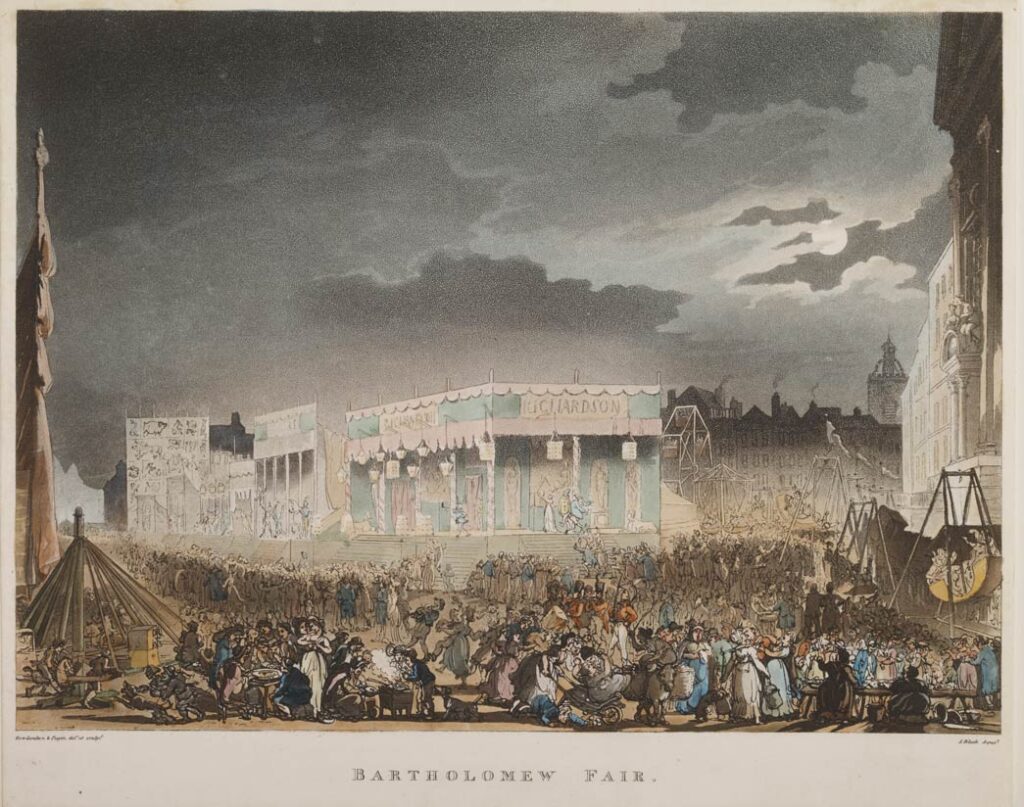
Here’s another view that captures the sheer exuberance of the event …

Bartholomew Fair by Augustus Pugin & Thomas Rowlandson, courtesy Bishopsgate Institute.

In this 1721 image the behaviour looks more sedate …

In 1815 Wordsworth visited the Fair and saw …

Albinos, Red Indians, ventriloquists, waxworks and a learned pig which blindfolded could tell the time to the minutes and pick out any specified card in a pack.

Alongside the entertainment of the Fair there was an undercurrent of trouble, violence and crime. In 1698 a visiting Frenchman, Monsieur Monsieur Sorbière, wrote …

I was at Bartholomew Fair… Knavery is here in perfection, dextrous cutpurses and pickpockets … I met a man that would have took off my hat, but I secured it, and was going to draw my sword, crying, ‘Begar! You rogue! Morbleu!’ &c., when on a sudden I had a hundred people about me crying, ‘Here, monsieur, see Jephthah’s Rash Vow.’ ‘Here, monsieur, see the Tall Dutchwoman’ …

After more than 700 years the Fair was finally banned in 1855 for being …

A great public nuisance, with its scenes of riot and obstruction in the very heart of the city.

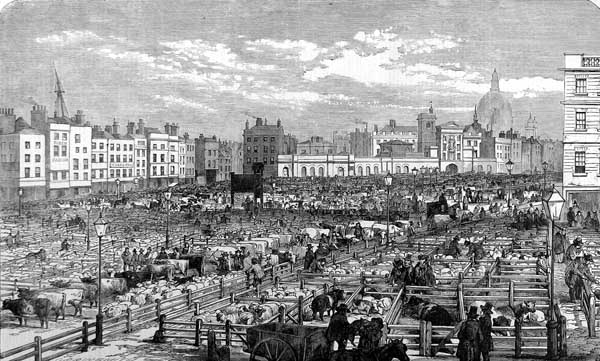
As far as livestock trading was concerned it had always been a place of open air slaughter. The historian Gillian Tindall writes: ‘Moo-ing, snorting and baa-ing herds were still driven on the hoof by men and dogs through busy streets towards Smithfield, sometimes from hundred of miles away. Similarly, geese and ducks were hustled along in great flocks, their delicate feet encased in cloth for protection. They were all going to their deaths, though they did not know it – till the stench of blood and the sounds of other animals inspired noisy fear in them’.

In Great Expectations, set in the 1820s, young Pip comes across the market and refers to it as ‘the shameful place, being all asmear with filth and fat and blood and foam [which] seemed to stick to me.

Eventually slaughtering was moved elsewhere and the open air market closed in 1855 …

Smithfield Market’s last day.

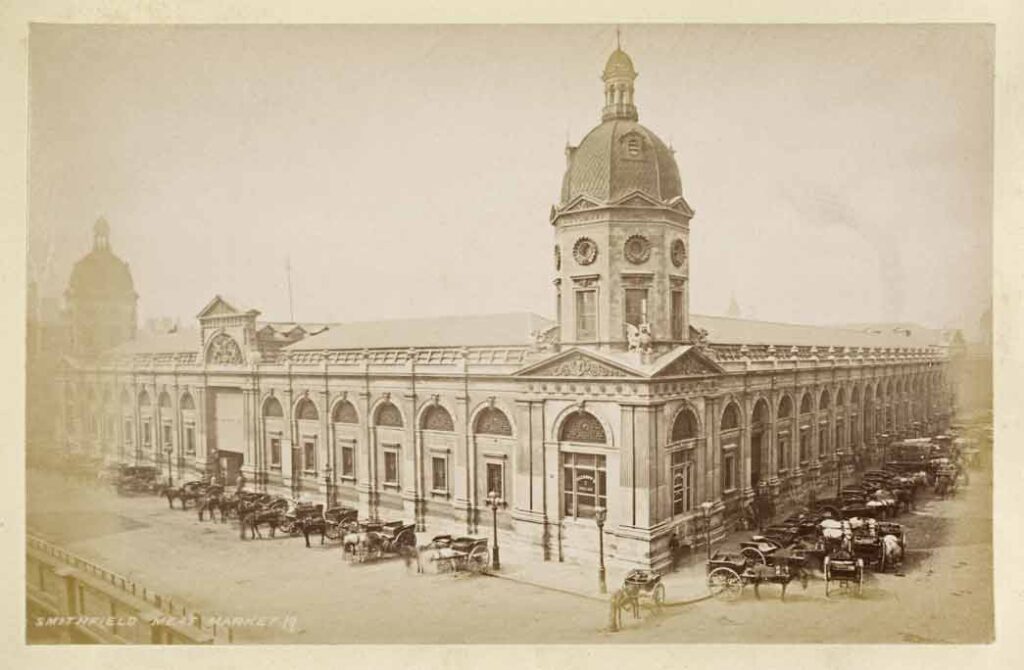
The present meat market on Charterhouse Street was established by an 1860 Act of Parliament and was designed by Sir Horace Jones who also designed Billingsgate and Leadenhall Markets. Work on Smithfield, inspired by Italian architecture, began in 1866 and was completed in November 1868. I think this picture was taken not long after construction …

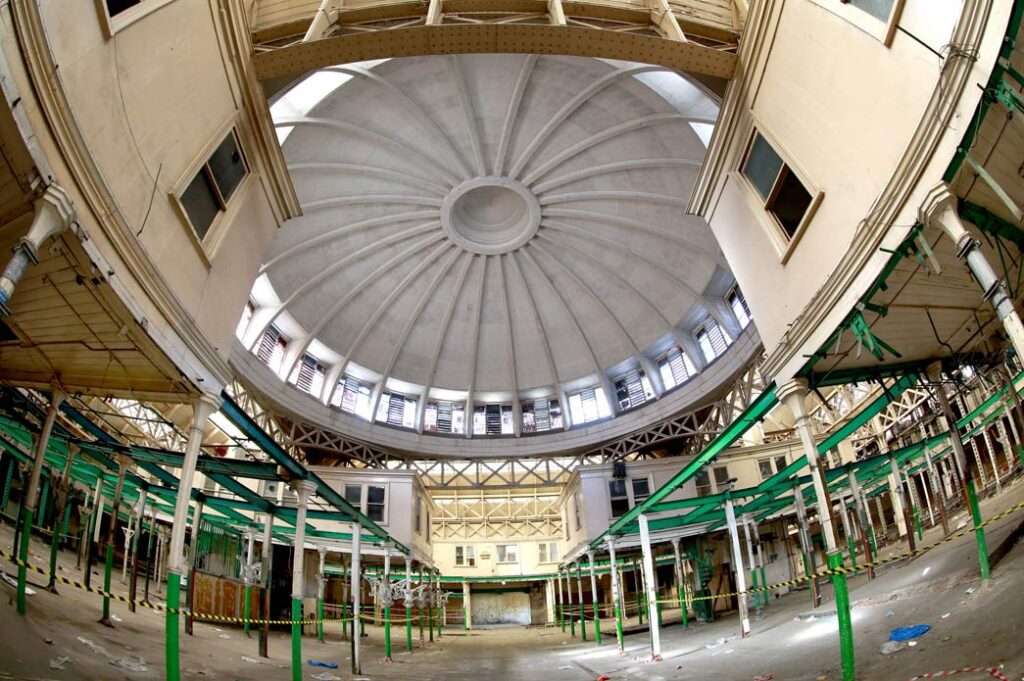
The buildings were a reflection of the modernity of Victorian city. Like many market buildings of the second half the nineteenth century, they owed a debt to Sir Joseph Paxton’s Crystal Palace in their creative use of glass, timber and iron …

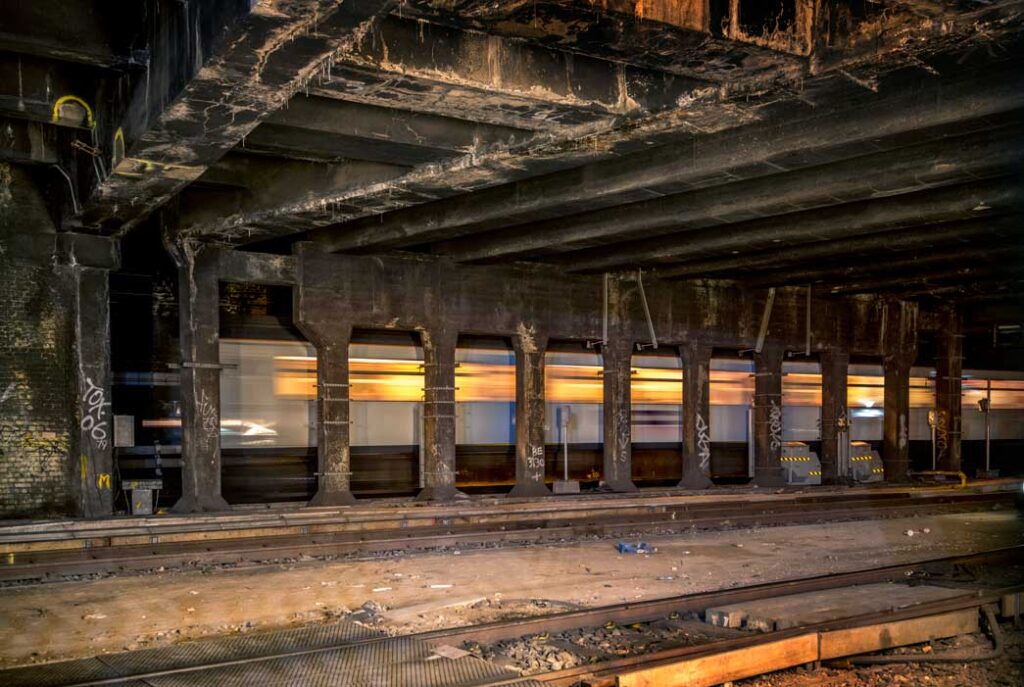
One aspect of the London Central Markets, as the Smithfield buildings were known, was particularly revolutionary, though largely hidden. All the buildings were constructed over railway goods yards. For the first time ever, meat was delivered by underground railway direct to a large wholesale market in the centre of a city. In this picture, an underground train whizzes past where the old tracks used to be …

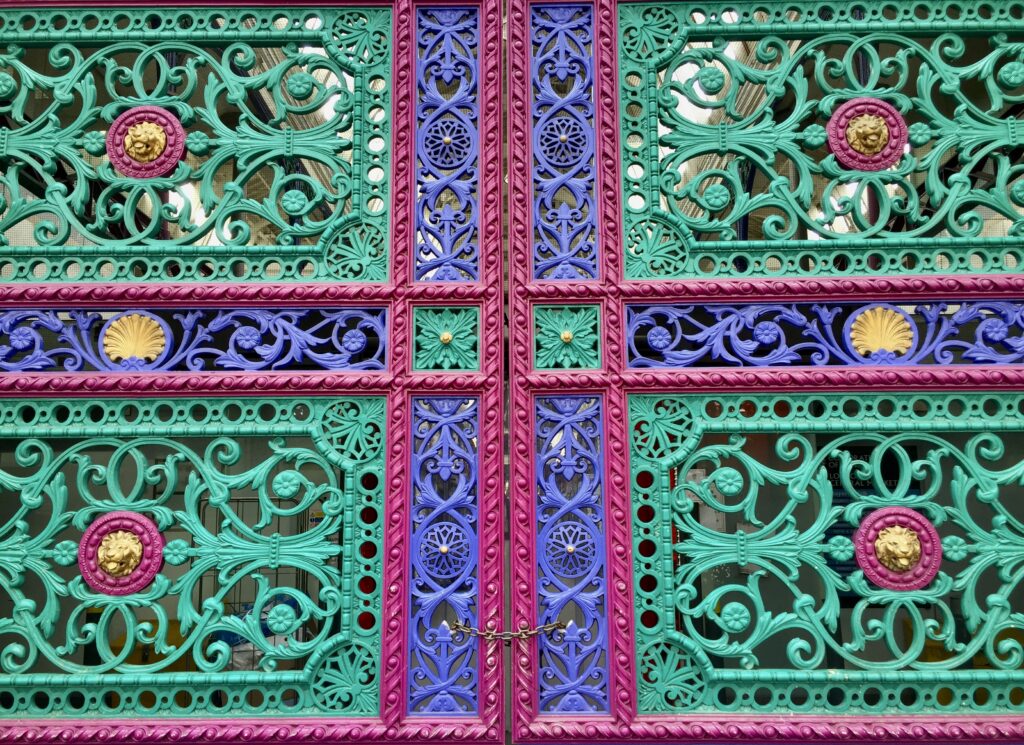
The spectacular colour scheme today replicates what it was when the market opened …

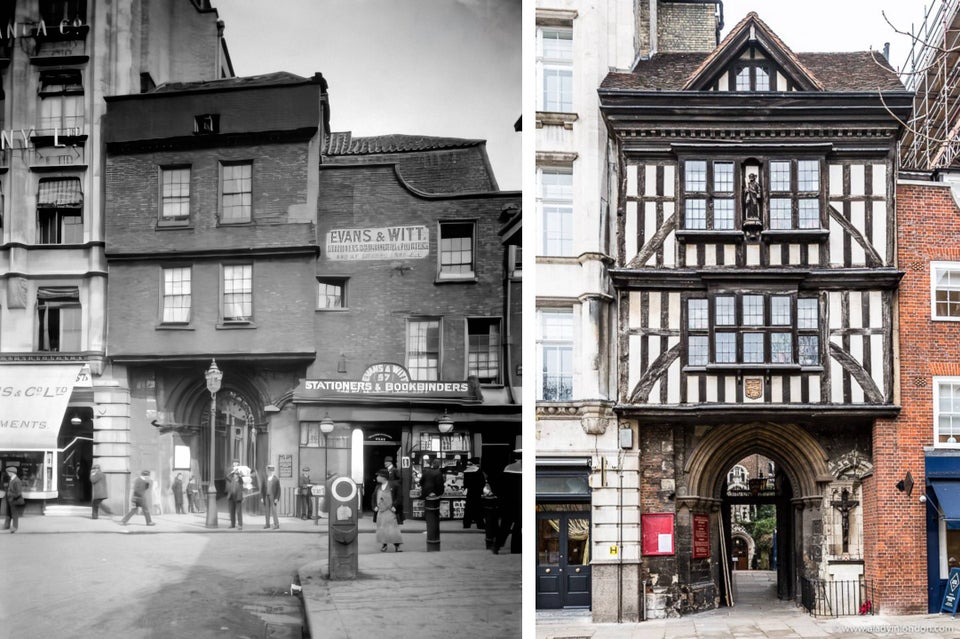
The church of St Bartholomew the Great is always worth a visit but today I’ll just mention the Gatehouse entrance. These pictures show the site before and after the first world war …

The Zeppelin bomb that fell nearby in 1916 partly demolished later buildings revealing the Tudor origins underneath and exposing more of the 13th century stonework from the original nave. By 1932 it was fully restored.

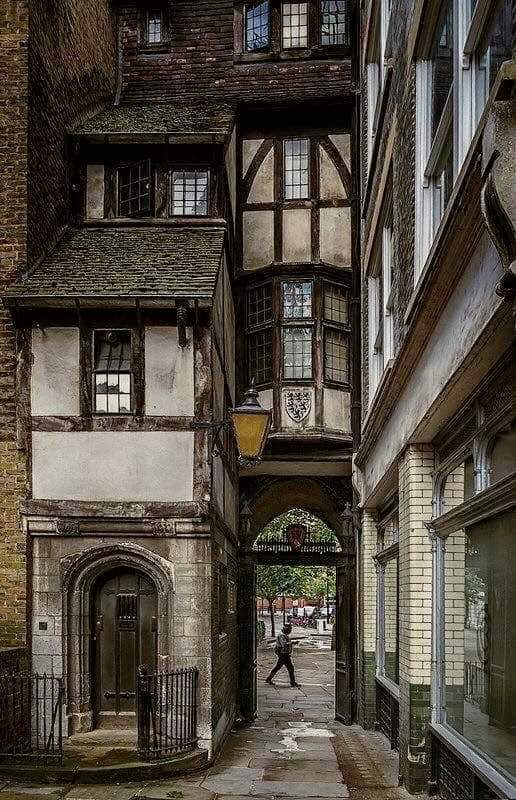
Looking out towards Smithfield you can see the 13th century arch topped by a Tudor building …

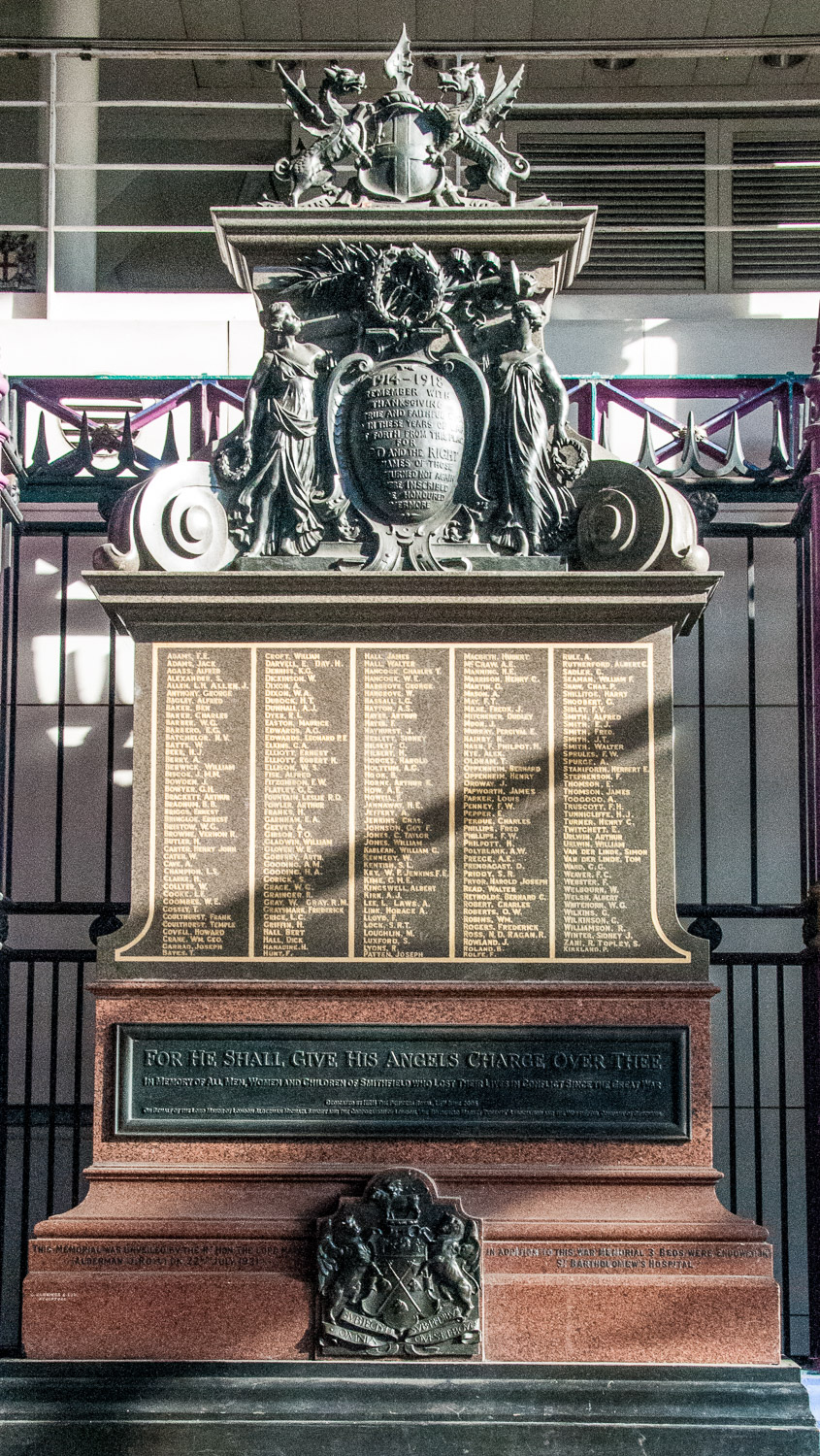
Finally, in the Great Avenue (EC1A 9PS), there is this monument commemorating men, women and children who perished both overseas and nearby …

The original memorial (above the red granite plinth) is by G Hawkings & Son and was unveiled on 22  July 1921. 212 names are listed.

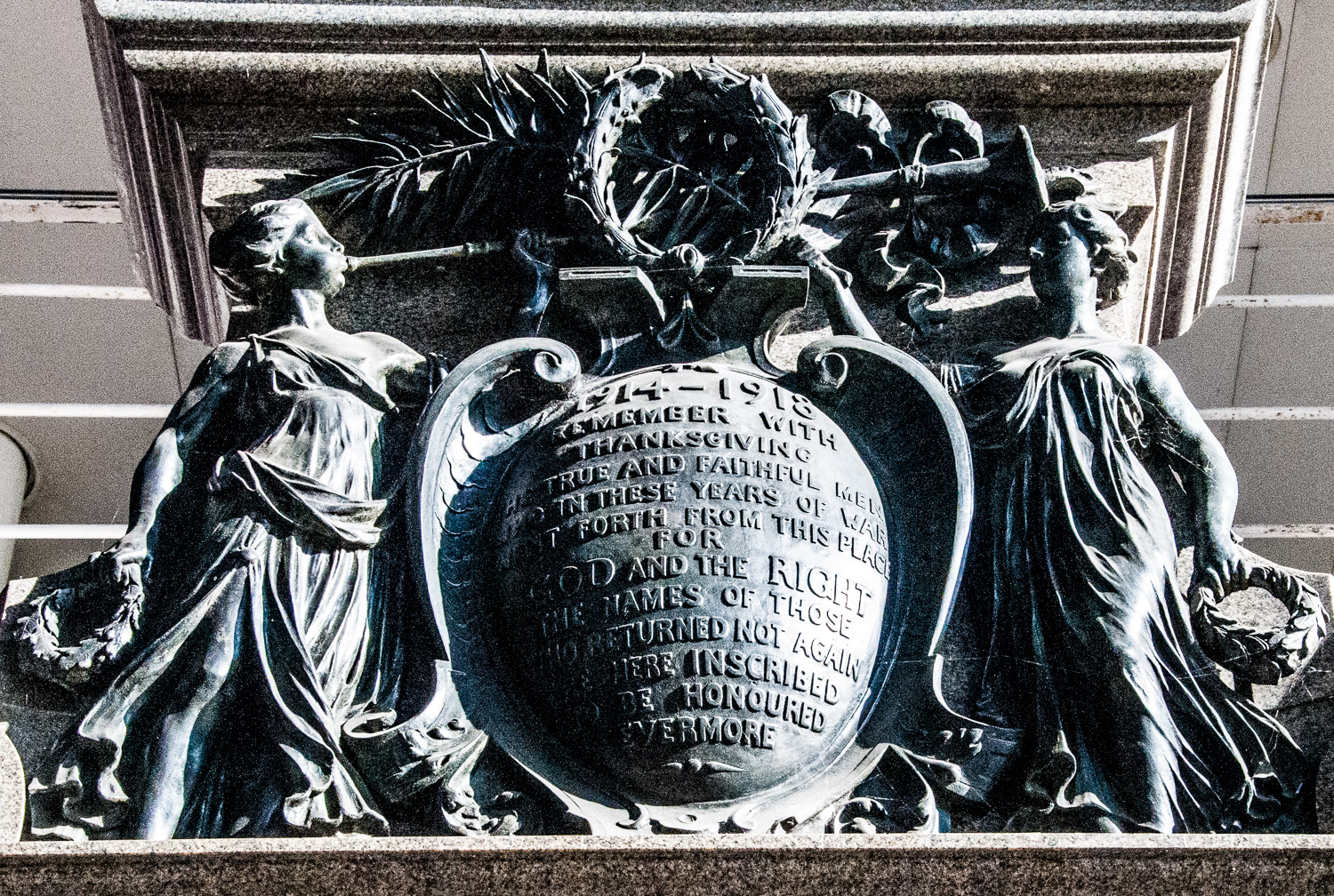
Between Fame and Victory holding laurel wreaths, the cartouche at the top reads …

1914-1918 Remember with thanksgiving the true and faithful men who in these years of war went forth from this place for God and the right. The names of those who returned not again are here inscribed to be honoured evermore.

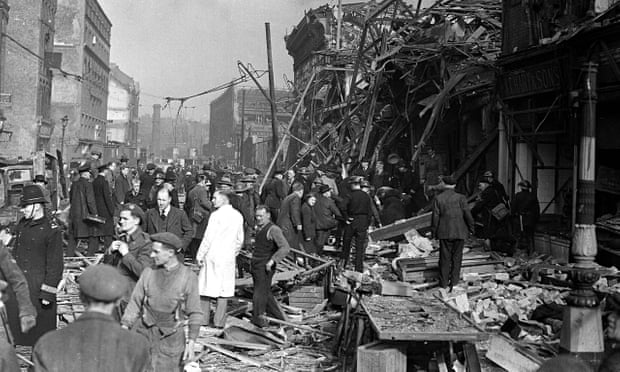
At 11:30 in the morning on 8th March 1945 the market was extremely busy, with long queues formed to buy from a consignment of rabbits that had just been delivered. Many in the queue were women and children. With an explosion that was heard all over London, a V2 rocket landed in a direct hit which also cast victims into railway tunnels beneath – 110 people died and many more were seriously injured. This picture shows some of the terrible aftermath …

The monument was refurbished in 2004/5 and unveiled on 15 June 2005 by the Princess Royal and Lord Mayor Savory. The red granite plinth had been added and refers to lives lost in ‘conflict since the Great War’. On it mention is made of the women and children although the V2 event is not specifically referred to.

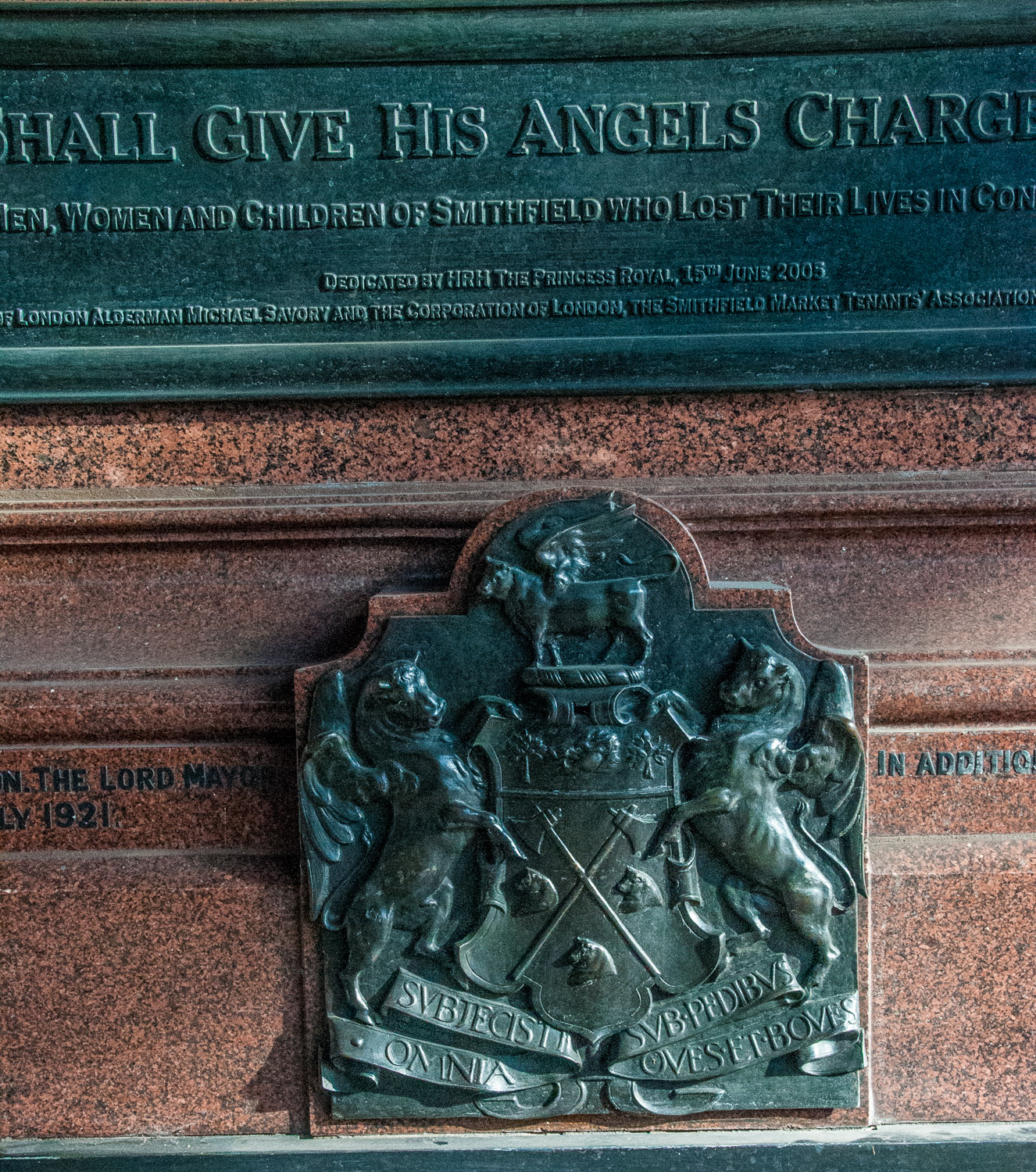
This is the coat of arms of the Worshipful Company of Butchers who helped to fund the refurbishment, along with the Corporation of London and the Smithfield Market Tenants’ Association.

The crest translates as : ‘Thou hast put all things under his feet, all Sheep and Oxen’.

Plans have been made for the market to be moved, along with Billingsgate and New Spitalfields markets, to Barking Reach power station, an abandoned industrial site at Dagenham Dock earmarked for redevelopment. The Museum of London will relocate to part of the old market site.

If you want to read more about Smithfield and its history, here is a link to some of my sources:

Smithfield’s Bloody Past by Gillian Tindall.

Today in London’s festive history – The opening of Batholomew’s Fair.

St Bartholomew’s Gatehouse | A rare survivor of 16th century London.

Underneath Smithfield Market – The Gentle Author.

If you would like to follow me on Instagram here is the link …

https://www.instagram.com/london_city_gent/

Debtors’ prisons -‘Mansions of Misery’

Yesterday I came face to face with the harsh reality of life in the 18th century.

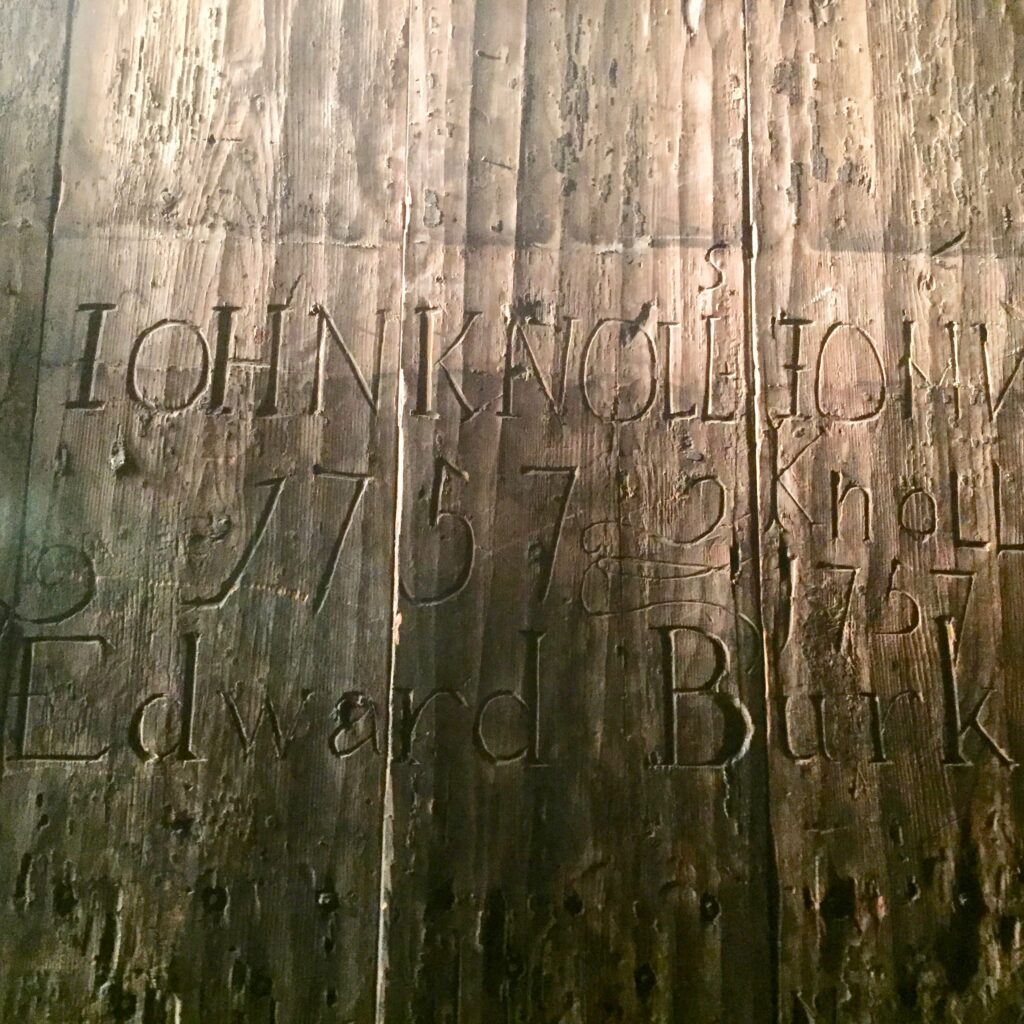
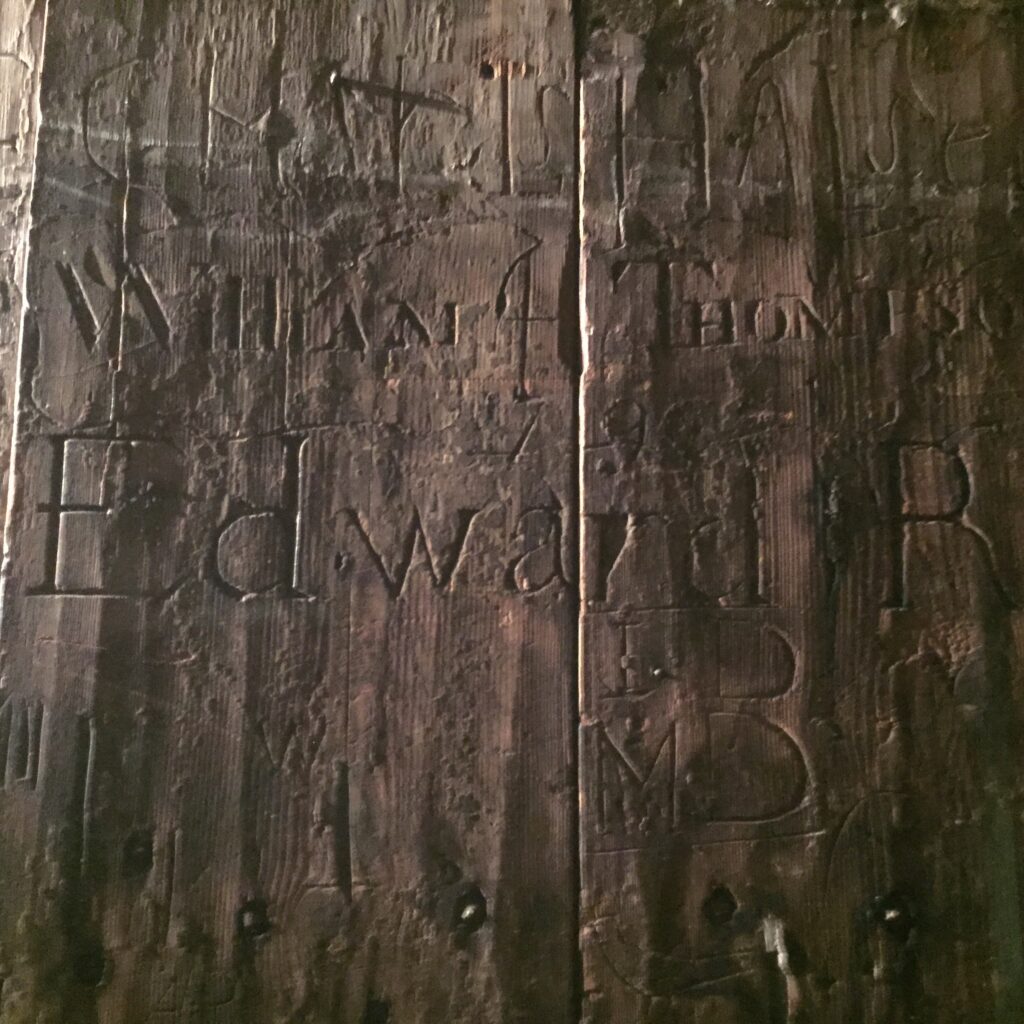
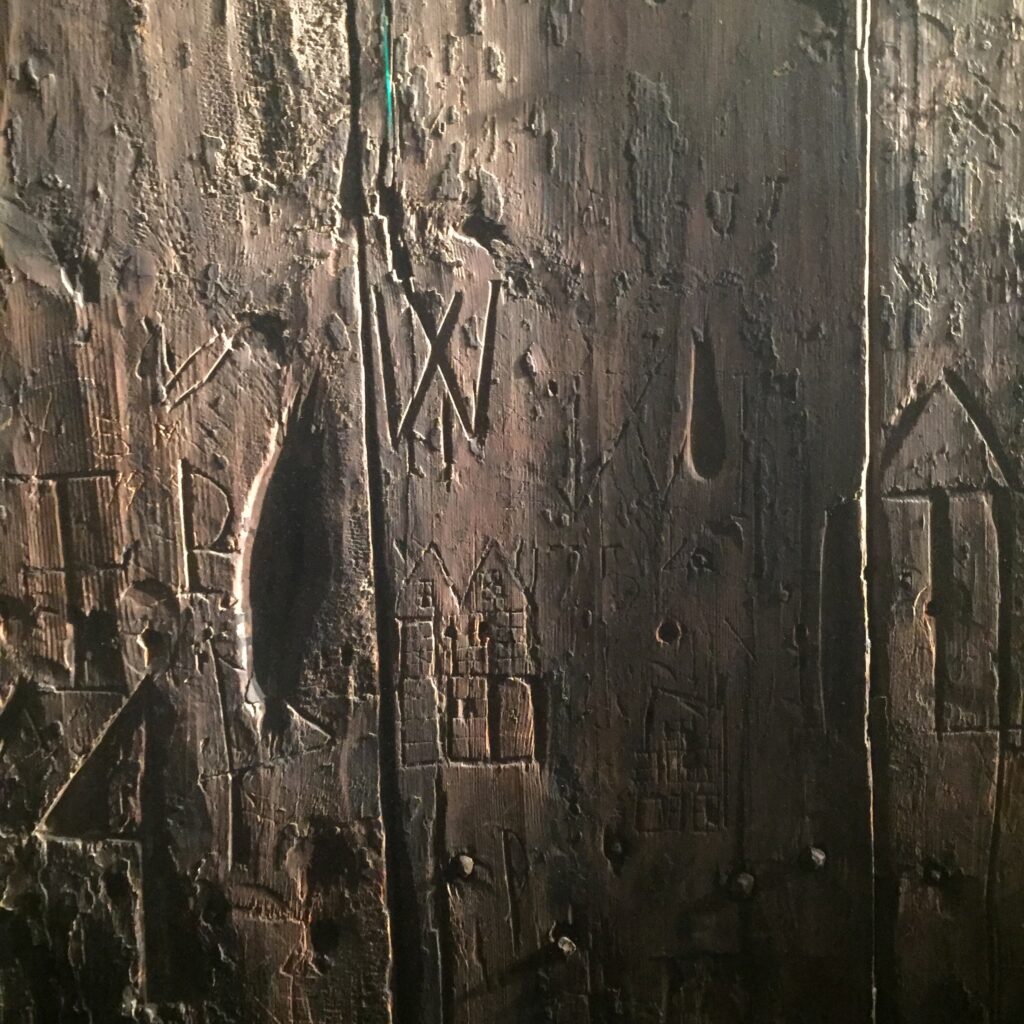
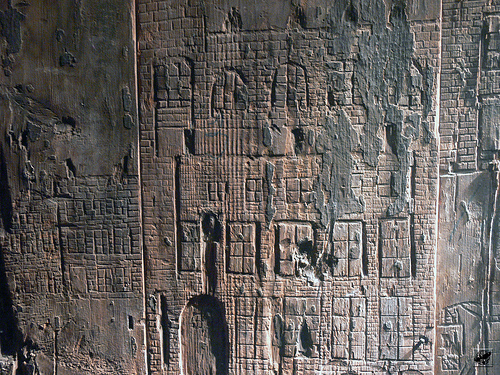
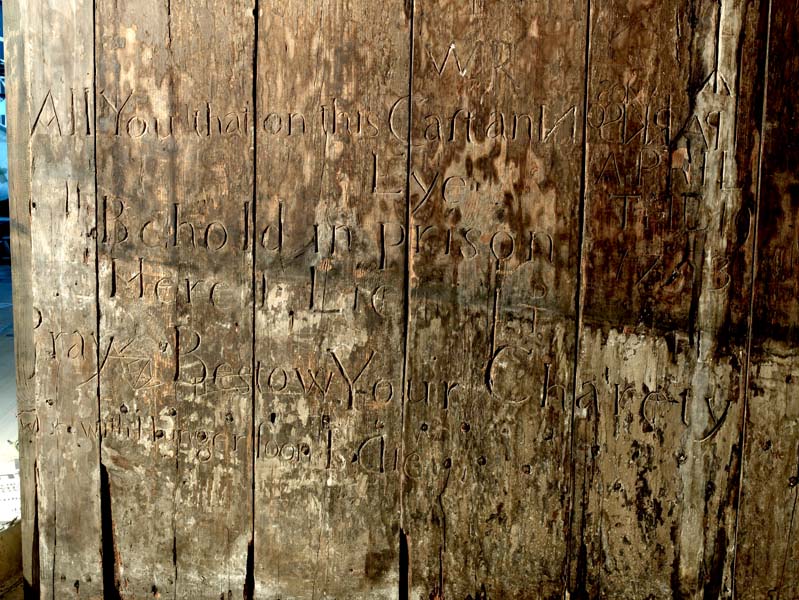
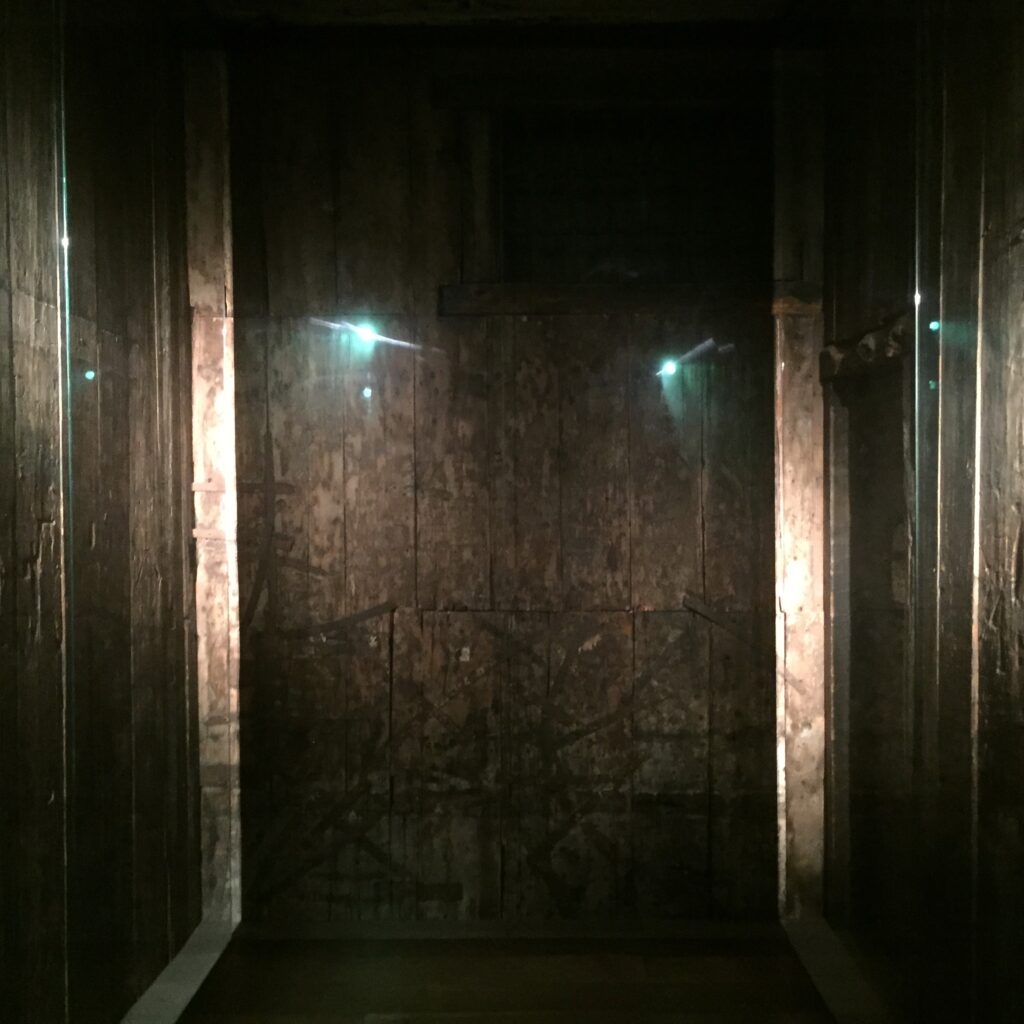
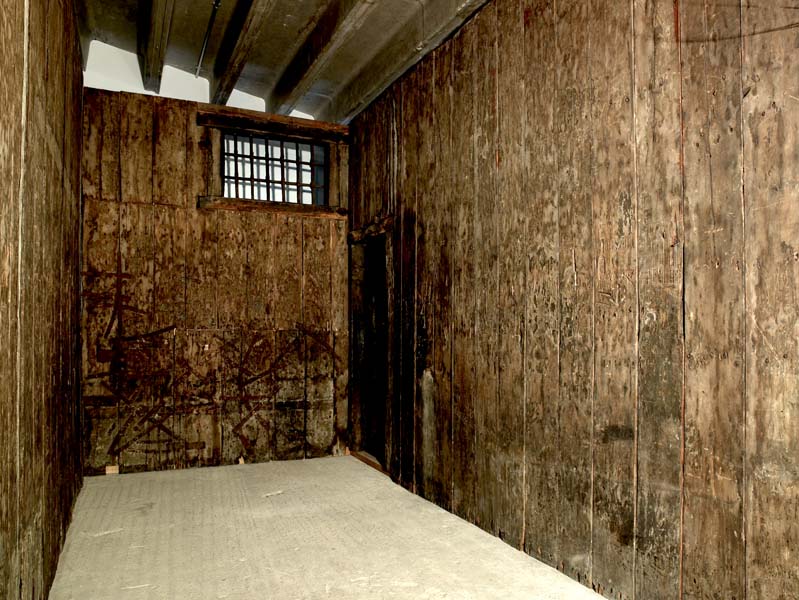
In the Museum of London I went and stood in a room constructed using cell walls from the old Wellclose Square debtors’ prison and looked in awe at the names and images inscribed by unfortunate inmates. Although we can read some names we will never know more about them which makes this an even more melancholy place.

For example, John Knolls and Edward Burk were there in 1757 …

And William Thompson in 1790 or 1798. Just above his name someone has scratched what looks like a gallows (sometimes people were held here on their way to be punished more severely at places like Newgate) …

Some just left their initials …

Others chose to carve elaborate representations of buildings …

And this person sent out a poetic plea …

All You That on This Cast an Eye, Behold in Prison Here I Lie, Bestow You in Charety, Or with hunger soon I die.

The lighting is set low to represent candlelight …

This is how it looked just after assembly …

The Gentle Author, in his empathic and beautifully written blog about this room, writes …

Shut away from life in an underground cell, they carved these intense bare images to evoke the whole world. Now they have gone, and everyone they loved has gone, and their entire world has gone generations ago, and we shall never know who they were, yet because of their graffiti we know that they were human and they lived.

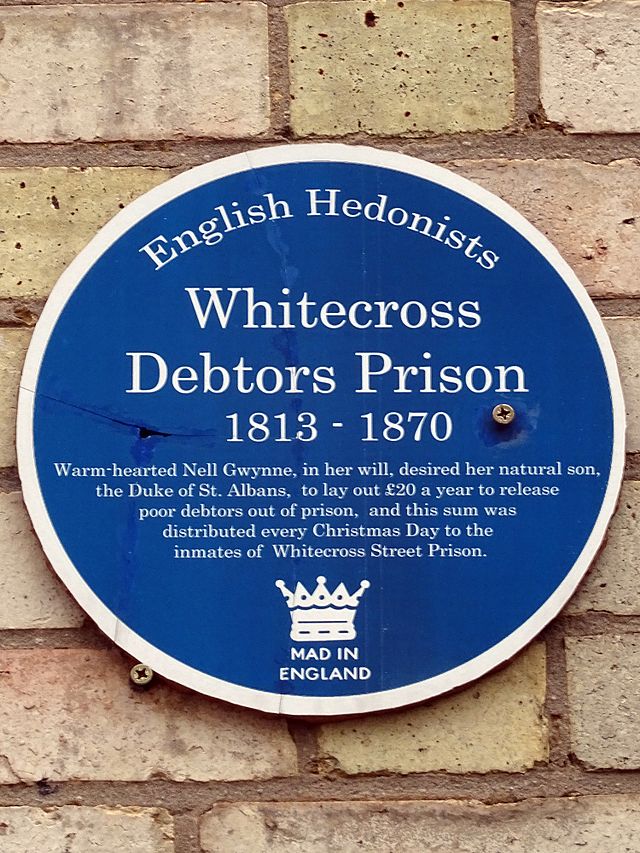
When walking along Whitecross Street one day I was intrigued by this spoof blue plaque on the wall of the Peabody Buildings …

British History Online confirms the Nell Gwynne story but I cannot find another source. It also tells us that …

A man may exist in the prison who has been accustomed to good living, though he cannot live well. All kinds of luxuries are prohibited, as are also spirituous drinks. Each man may have a pint of wine a day, but not more; and dice, cards, and all other instruments for gaming, are strictly vetoed.”

A pint of wine a day doesn’t sound too bad.

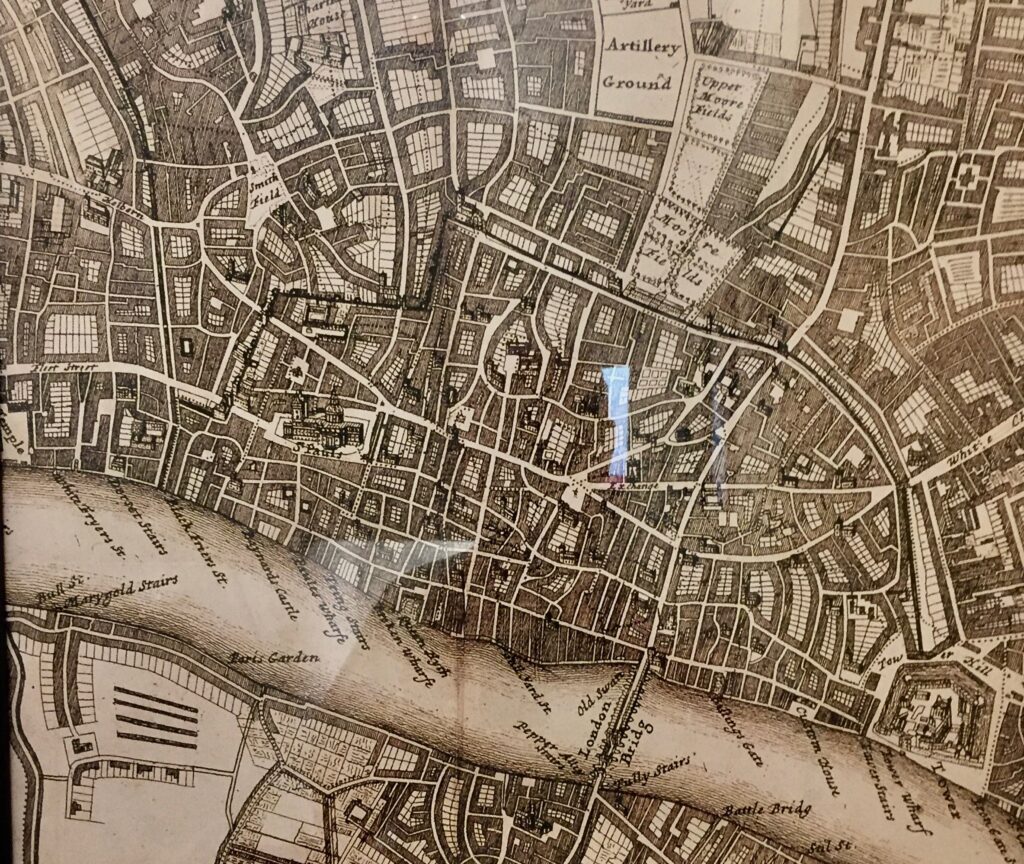
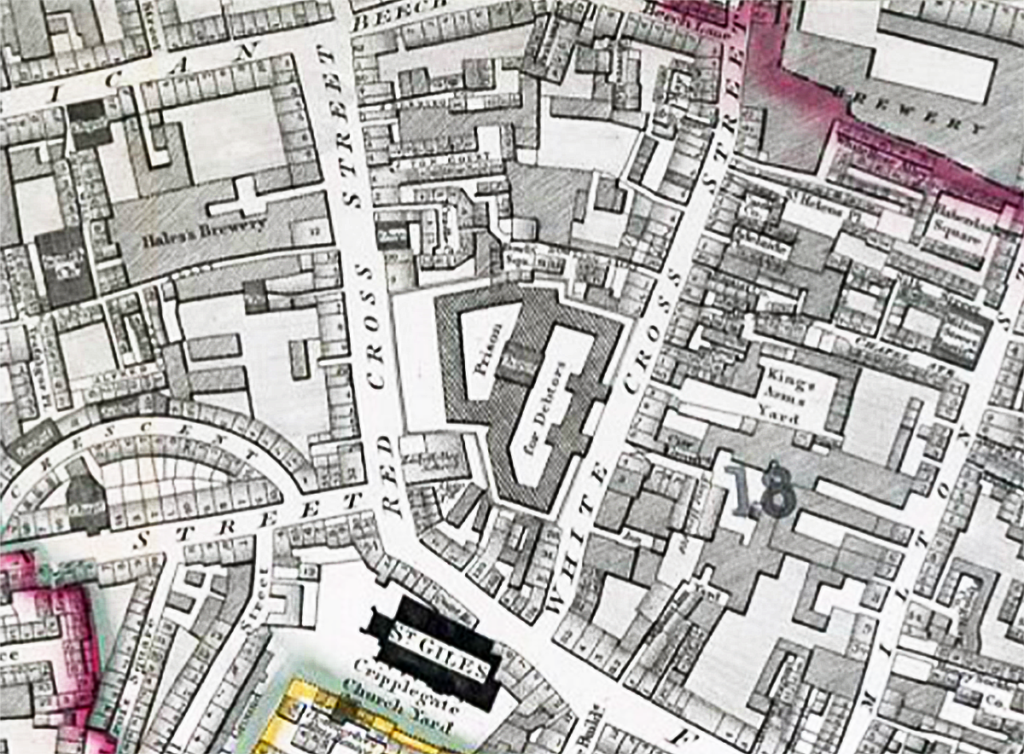
The prison was capable of holding up to 500 prisoners and Wyld’s map of London produced during the 1790s shows how extensive the premises were …

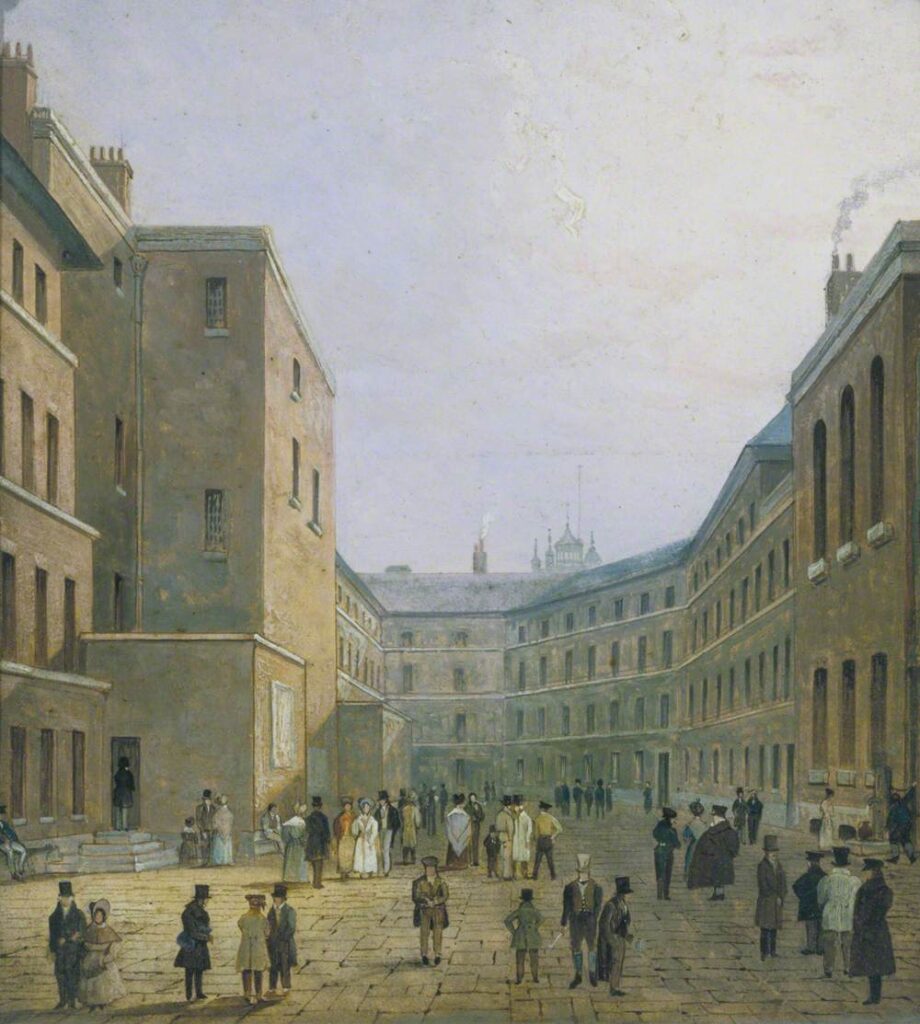
Prisoners would often take their families with them, which meant that entire communities sprang up inside the debtors’ jails, which were run as private enterprises. The community created its own economy, with jailers charging for room, food, drink and furniture, or selling concessions to others, and attorneys charging fees in fruitless efforts to get the debtors out. Prisoners’ families, including children, often had to find employment simply to cover the cost of the imprisonment. Here is a view of the inside of the Whitecross Street prison with probably more well off people meeting and promenading quite normally …

‘Inside the Debtors’ Prison, Whitecross Street, London’ by an unknown artist : City of London Corporation, Guildhall Art Gallery.

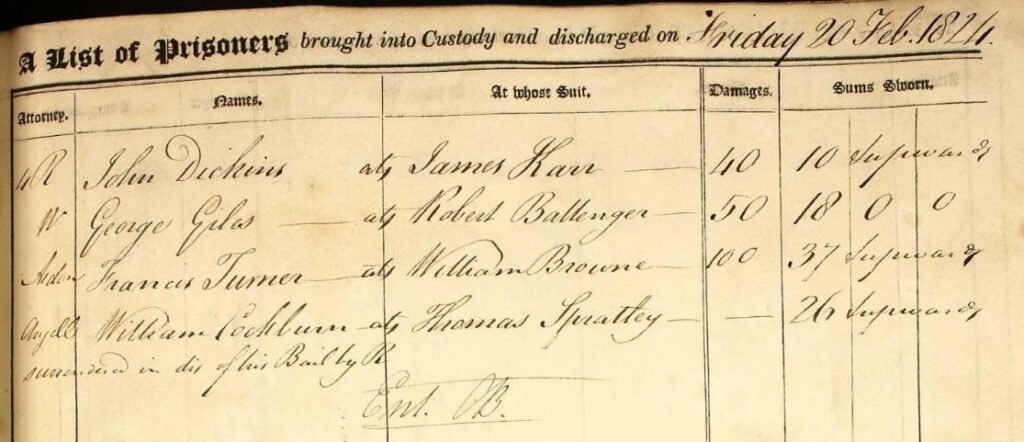
Creditors were able to imprison debtors without trial until they paid what they owed or died and in the 18th century debtors comprised over half the prison population. Prisoners were by no means all poor but often middle class people in small amounts of debt. One of the largest groups was made up of shopkeepers (about 20% of prisoners) though male and female prisoners came from across society with gentlemen, cheesemongers, lawyers, wigmakers and professors rubbing shoulders. For example, Charles Dickens’ father, John, spent a few months at the Marshalsea in 1824 because he owed a local baker £40 and 10 shillings (over £3,000 in today’s money). Here is his custody record dated 20th February 1824 …

Charles – then aged just 12 – had to work at a shoe-polish factory to help support his father and other members of his family who had joined John in prison. It was a humiliating episode from which the author later drew inspiration for his novel Little Dorrit. Many years later Dickens described his dad as ‘a jovial opportunist with no money sense’!

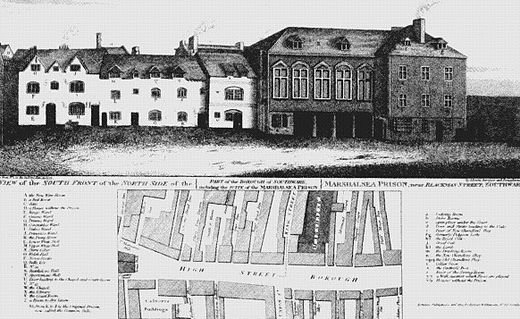
This was the notorious Marshalsea

It was located in Southwark, the historic location of theatres, bear-pits and whorehouses and in the mid-17th century it settled into being exclusively a debtors’ jail. Then it was full to bursting and people could be thrown in for owing as little as sixpence. In such a case, he or she was charged in “Execution”, which immediately increased the indebtedness to £1 5s 6d, making it much less likely that the prisoner could ever get out. ‘More unhappy people are to be found suffering under extreme misery, by the severity of their creditors,’ one commentator noted, ‘than in any other Nation in Europe’. Without money, you were crammed into one of nine small rooms with dozens of others. A parliamentary committee reported in 1729 that 300 inmates had starved to death within a three-month period, and that eight to ten prisoners were dying every twenty-four hours in the warmer weather.

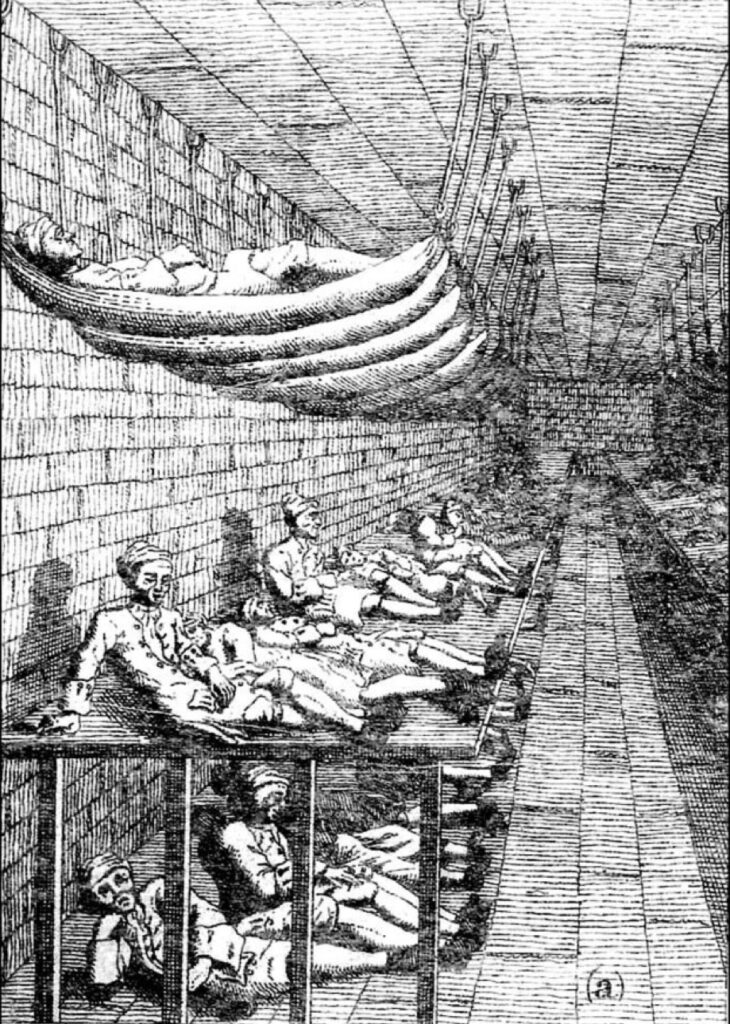
Not surprising when you look at this 18th-century engraving of the Marshalsea sick ward and the poor souls incarcerated there …

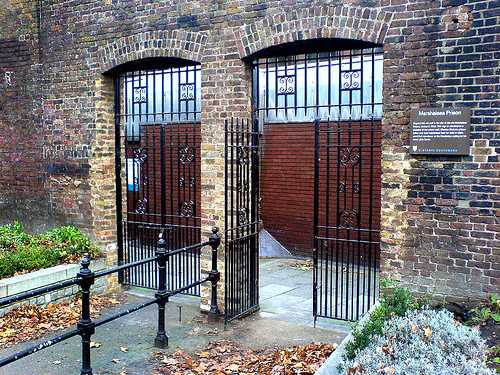
Part of the old prison wall is still there …

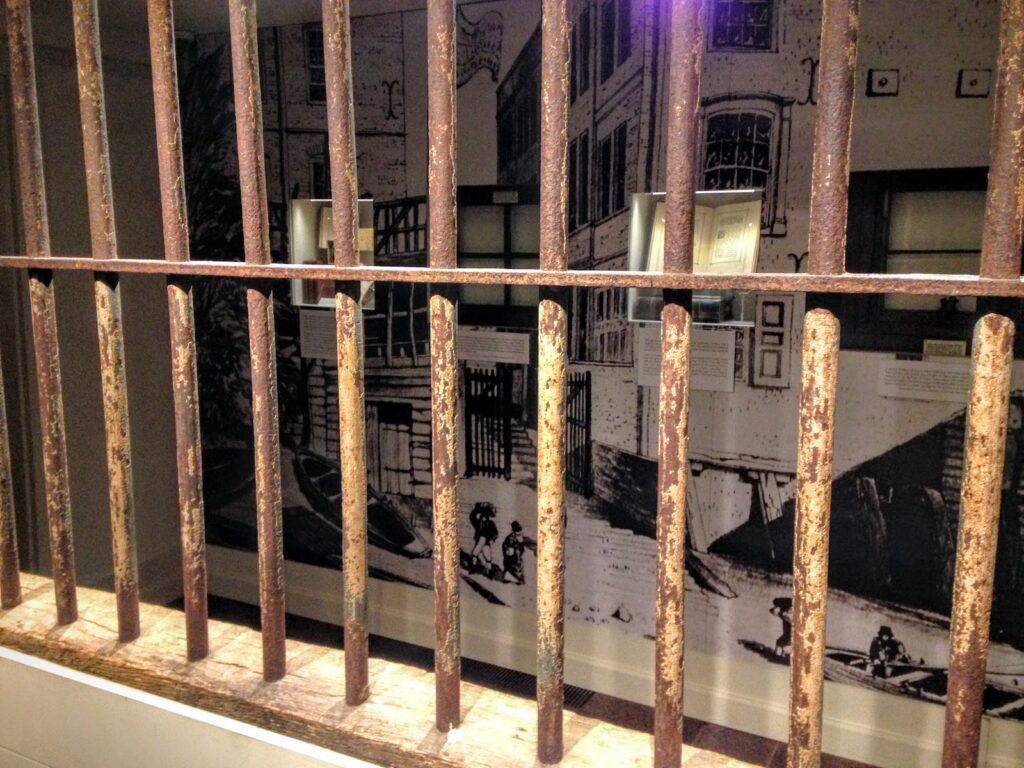
And appropriately an old grille from the prison is preserved in the Charles Dickens Museum

Imprisonment for debt was finally abolished in 1869, ending centuries of misery. I found this quite an addictive subject and if you are as interested as me in knowing more here are the major sources I used :

The Museum of London website.

An absolutely fascinating description of one man’s first 24 hours in Whitecross Street prison. Particularly interesting is the description of some of his fellow inmates and what the charges were for ‘extras’ like sheets on your bed or a piece of paper to write on. Ignore the fact that it is mistakenly illustrated with a picture of a hanging at Newgate Gaol.

In British History Online there is a description of the Whitecross Street establishment at the end of Chapter XXIX.

An article entitled DEBTORS’ PRISONS WORKED: Evidence from 18th century London.

An article entitled : In debt and incarcerated: the tyranny of debtors’ prisons.

The distinguished London historian Jerry White’s book specifically about the Marshalsea Debtors’ Prison : Mansions of Misery.

A presentation : The Real Little Dorrit: Charles Dickens and the debtorsprison.

Finally, if you would like to follow me on Instagram here is the link …
https://www.instagram.com/london_city_gent/

Page 2 of 5

Powered by WordPress & Theme by Anders Norén

Symbols & Secrets
Privacy Overview

This website uses cookies so that we can provide you with the best user experience possible. Cookie information is stored in your browser and performs functions such as recognising you when you return to our website and helping our team to understand which sections of the website you find most interesting and useful.