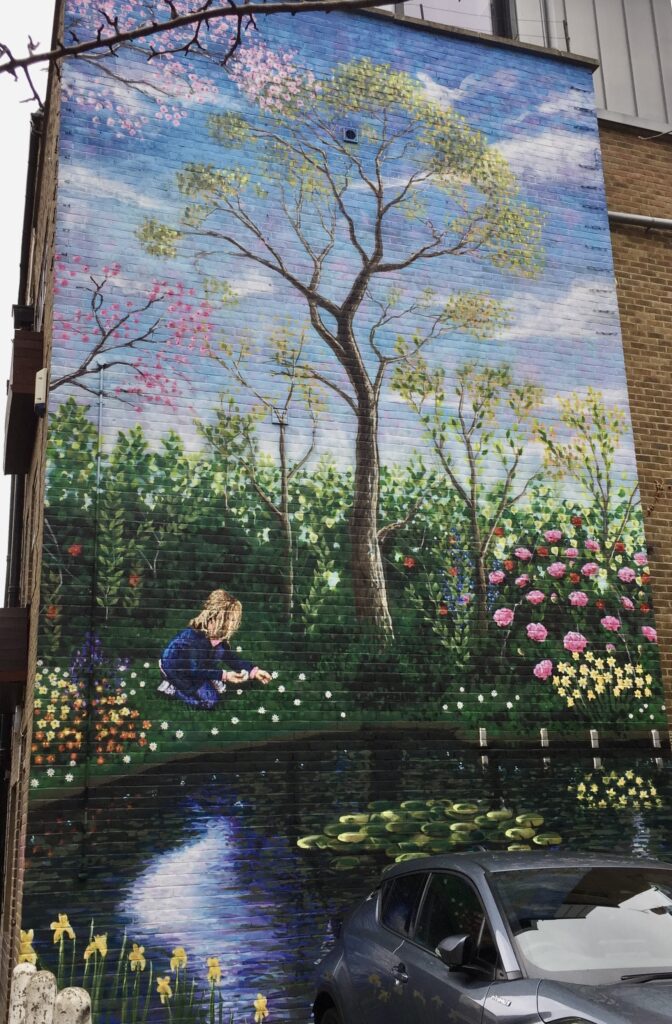
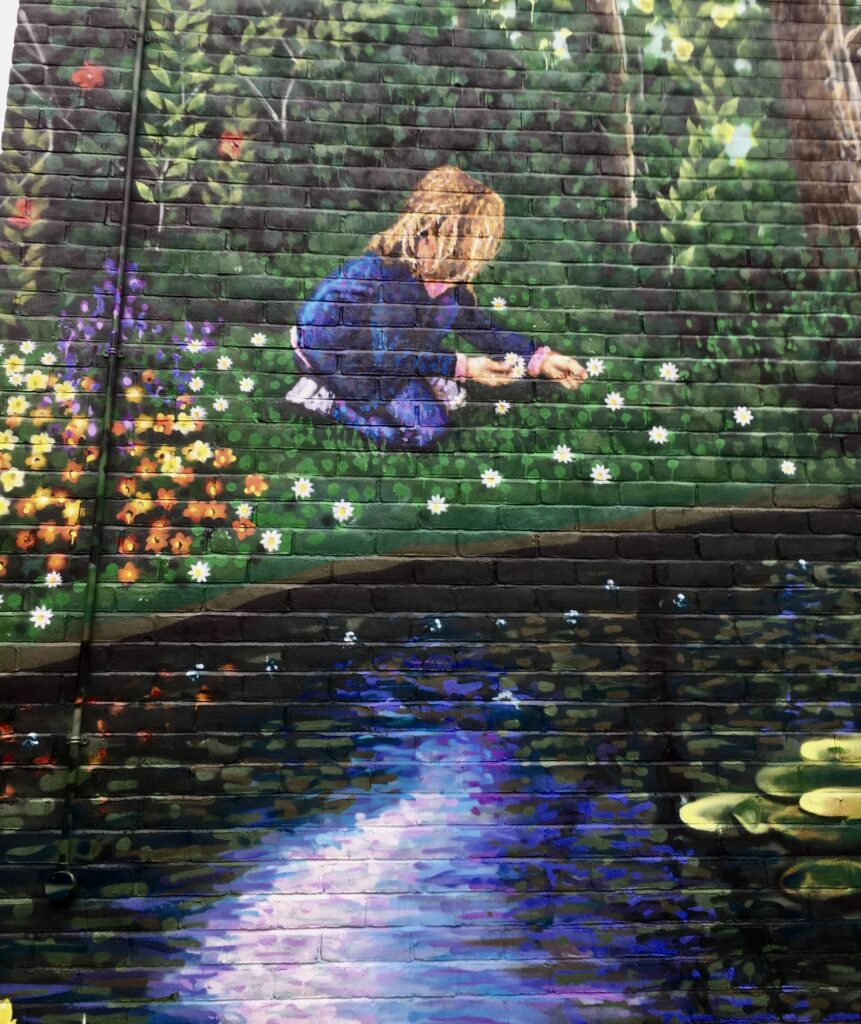
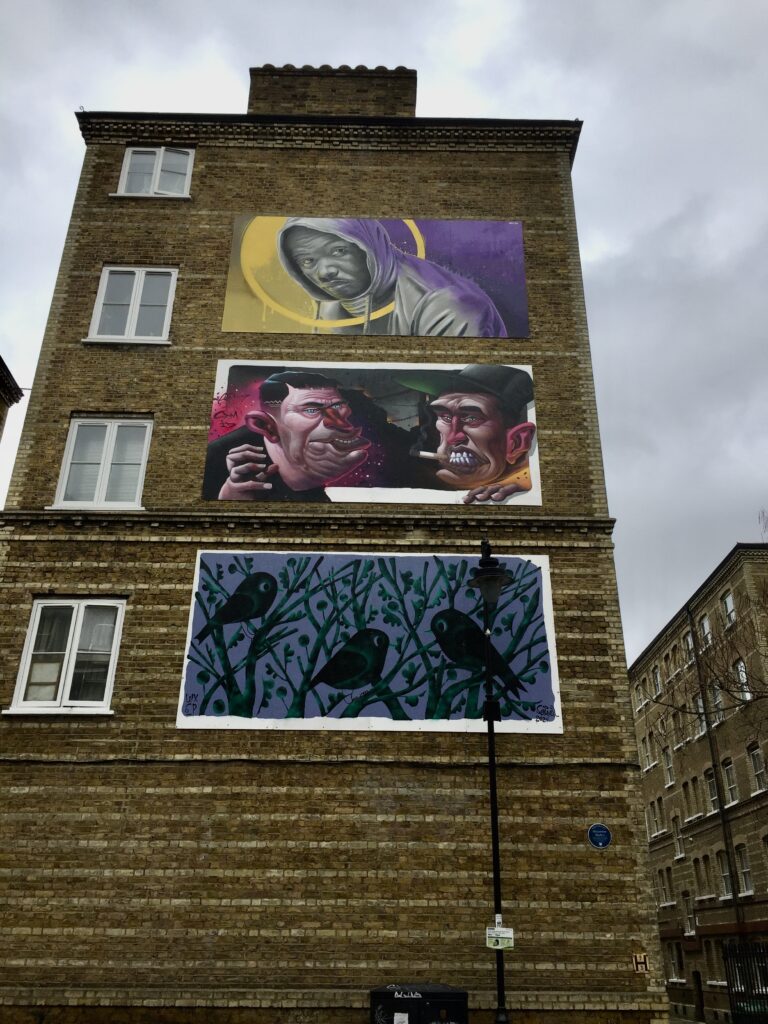
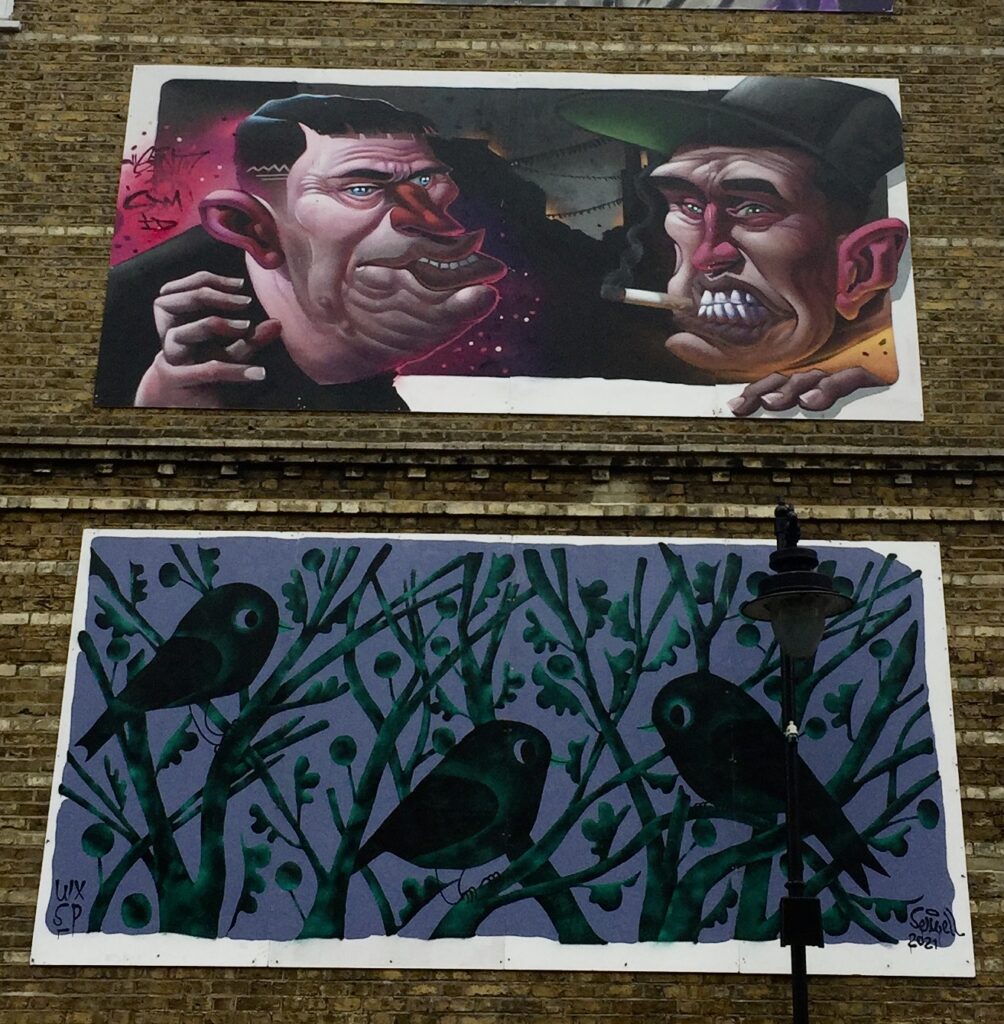
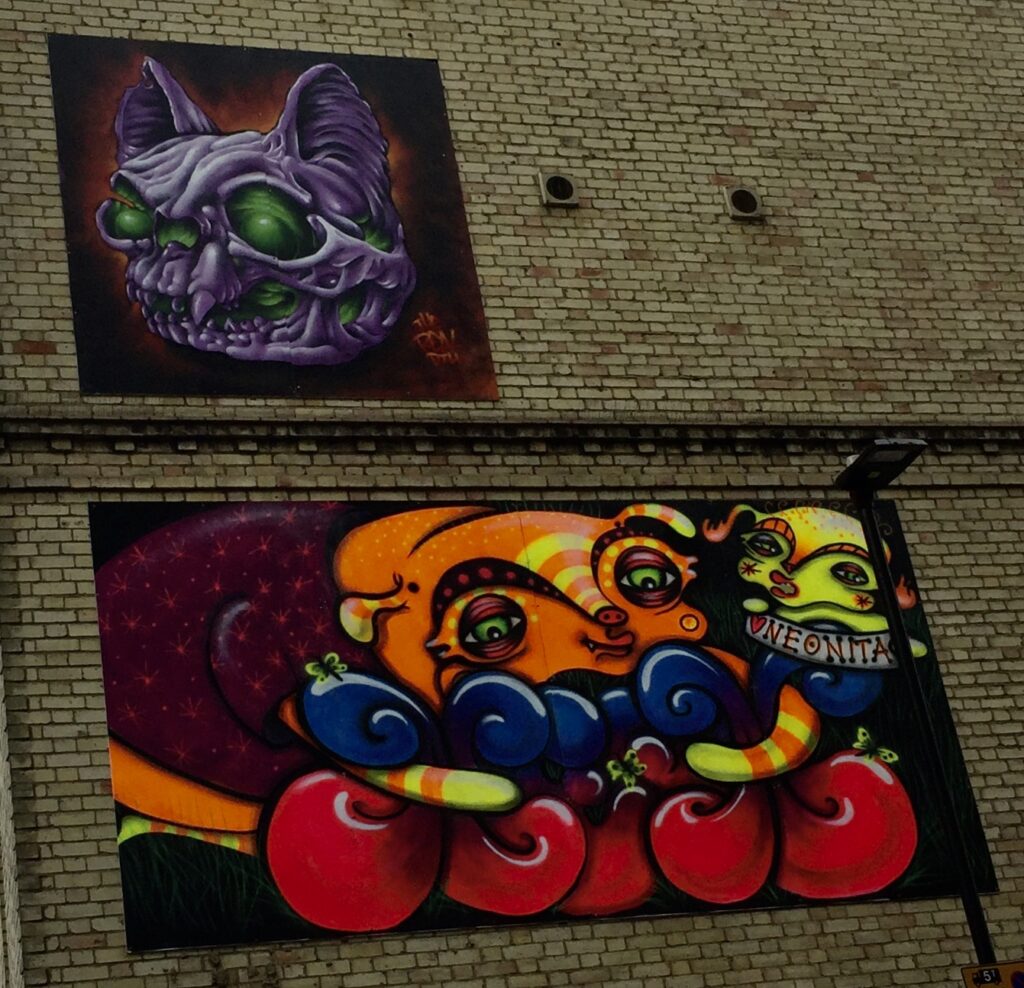
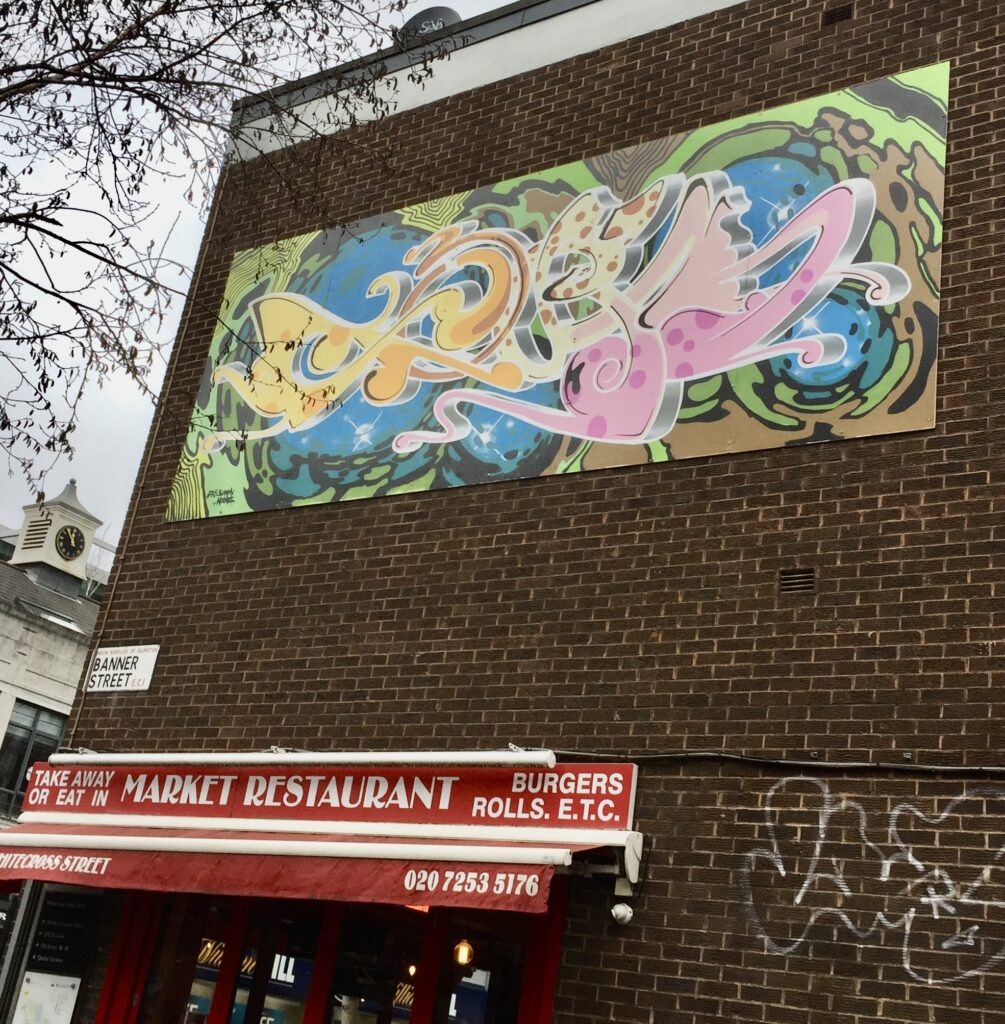
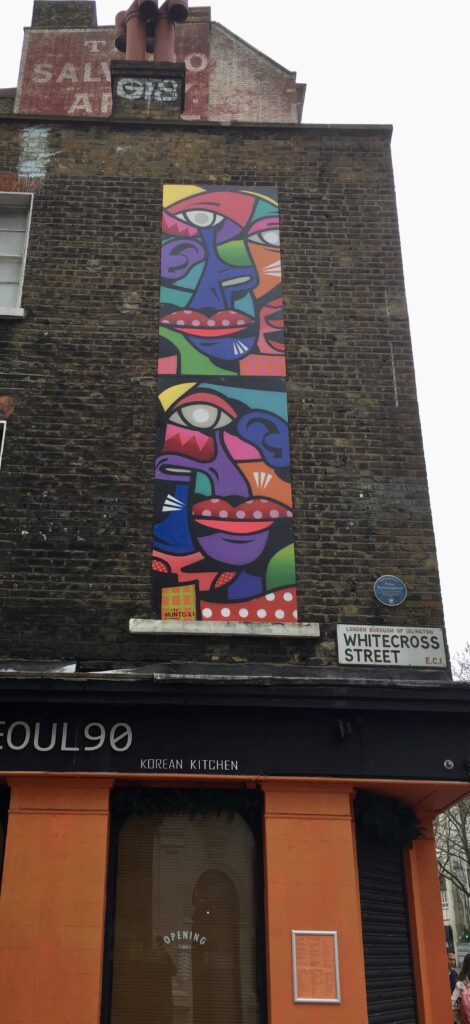
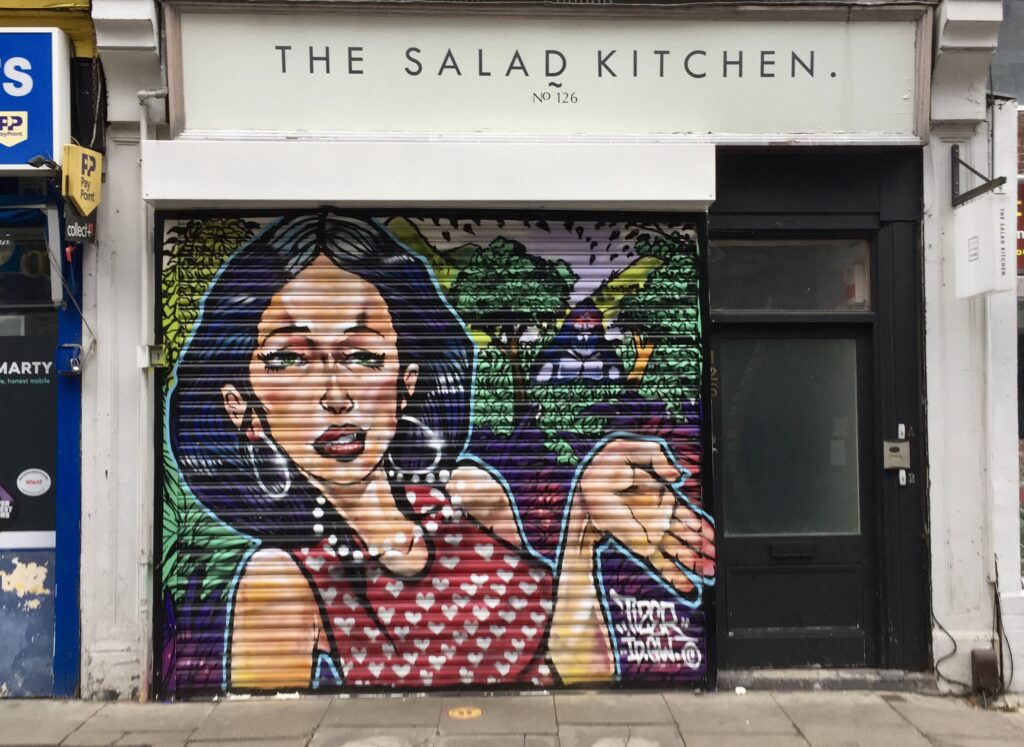
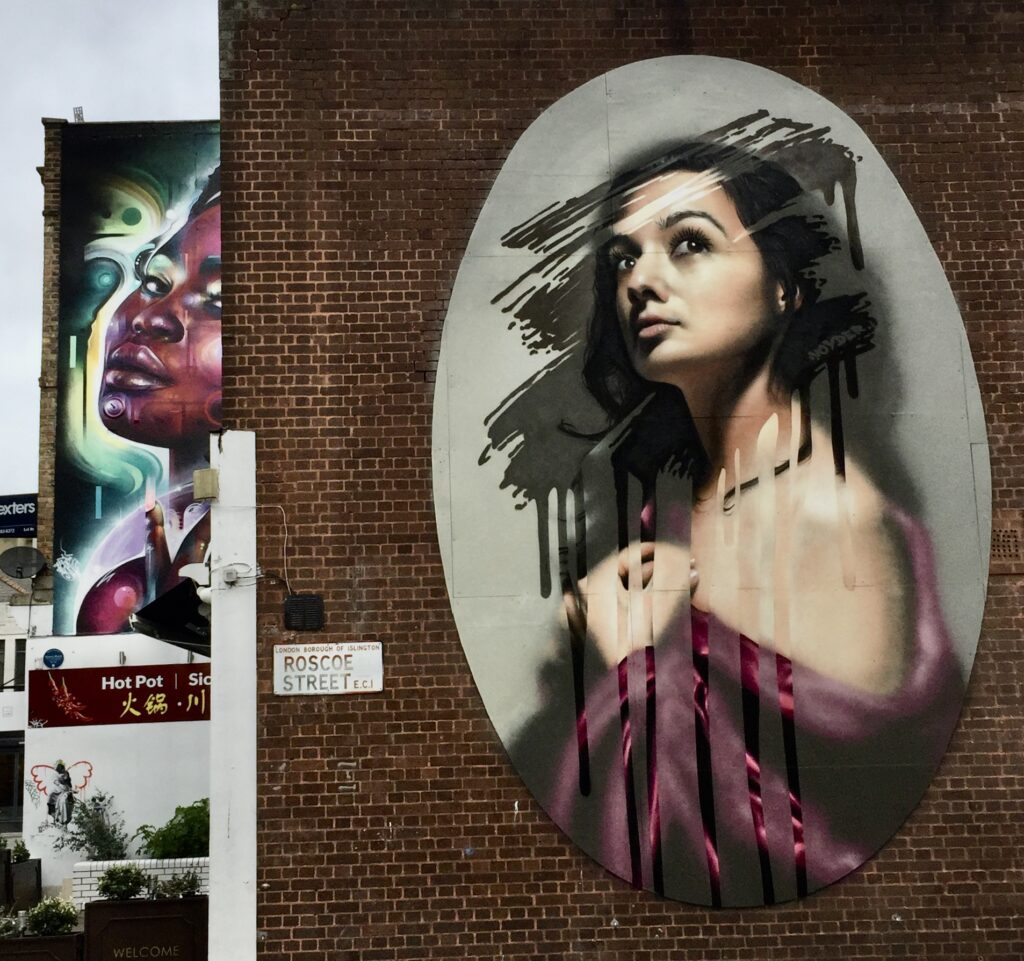
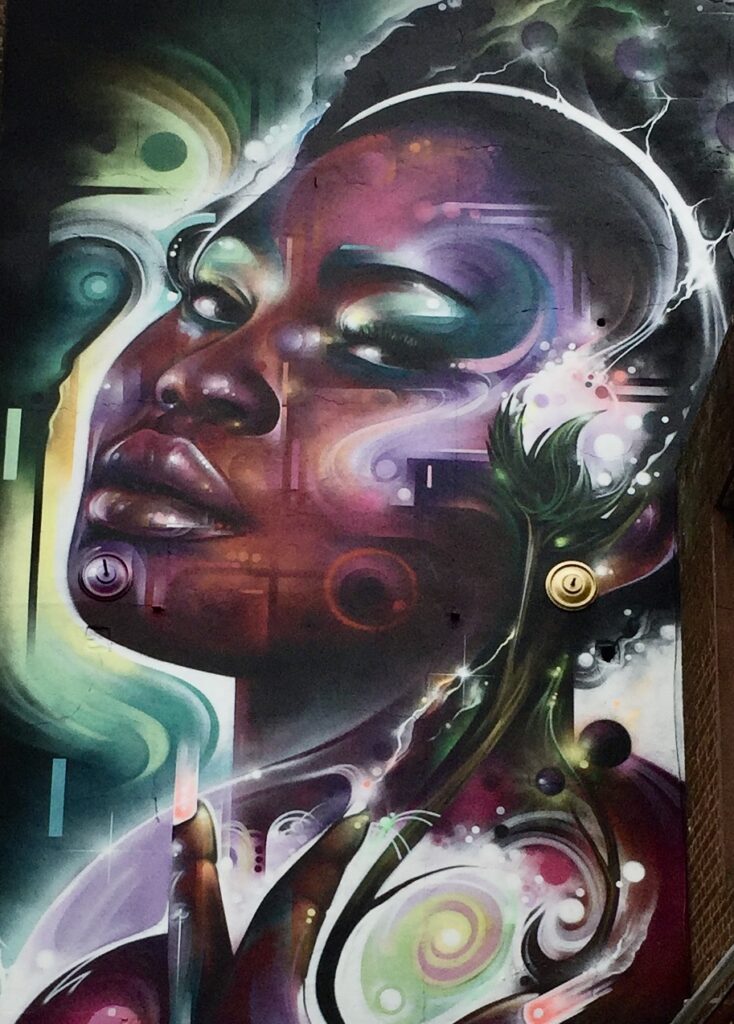
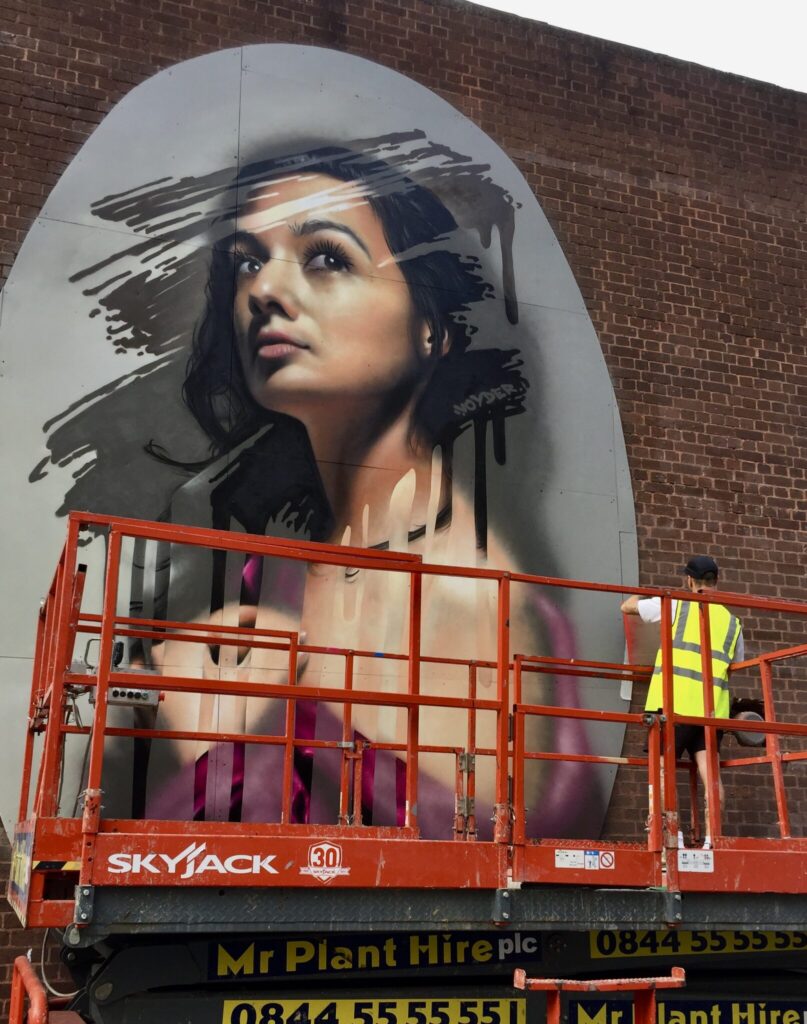
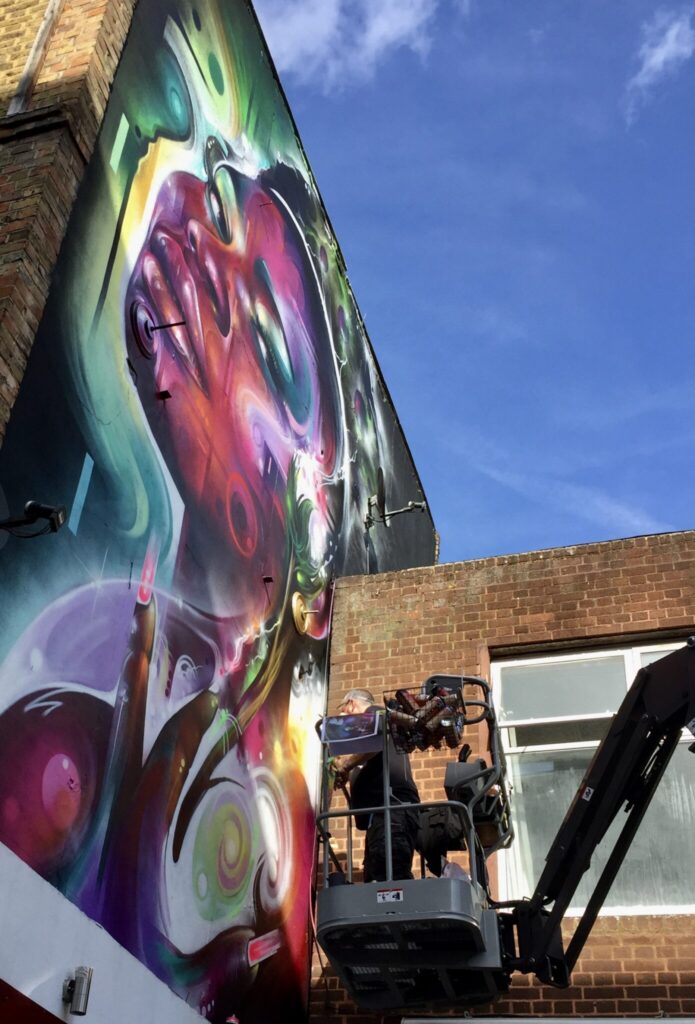
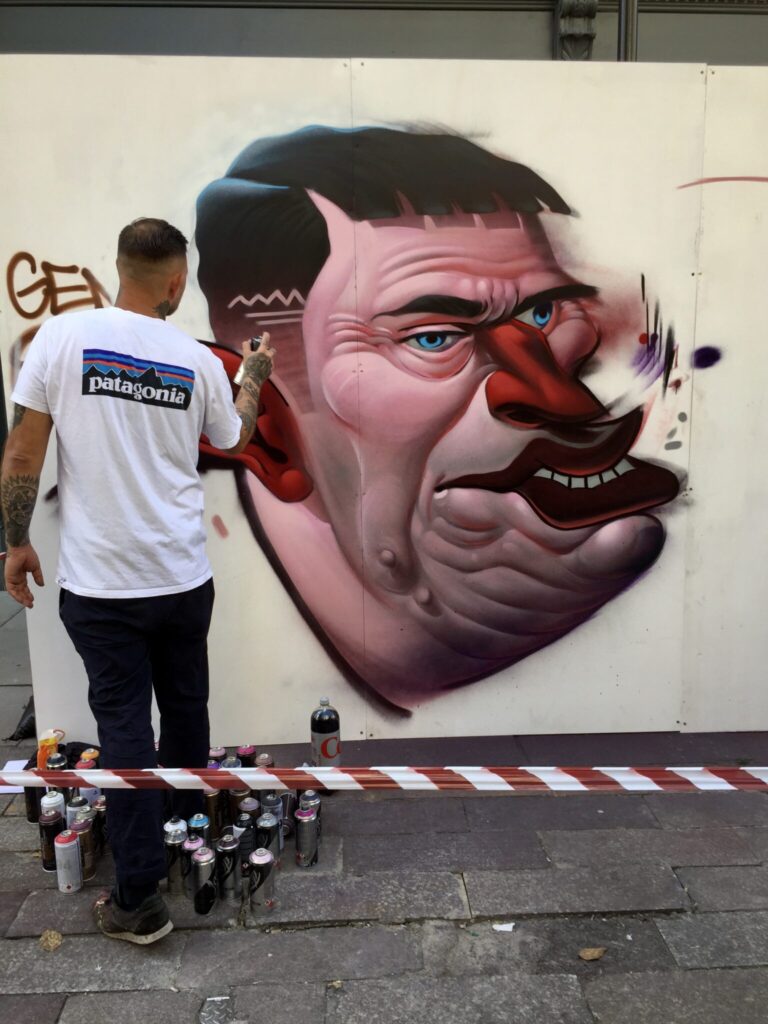
All today’s pictures were taken on Whitecross Street or very near it in adjacent roads.
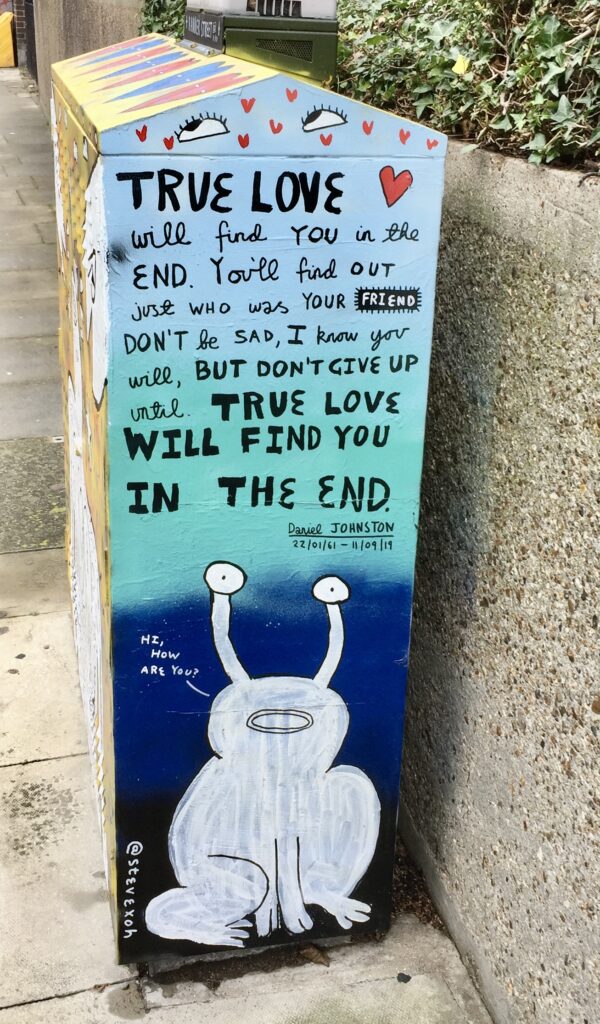
I’m sorry to say that I hadn’t heard of the singer-songwriter Daniel Johnston before and so I am very grateful to this piece of street art by Steve Chapman for bringing him to my attention …
You can listen to Johnston actually singing this song here. If the link doesn’t work you can Google it – it’s lovely.
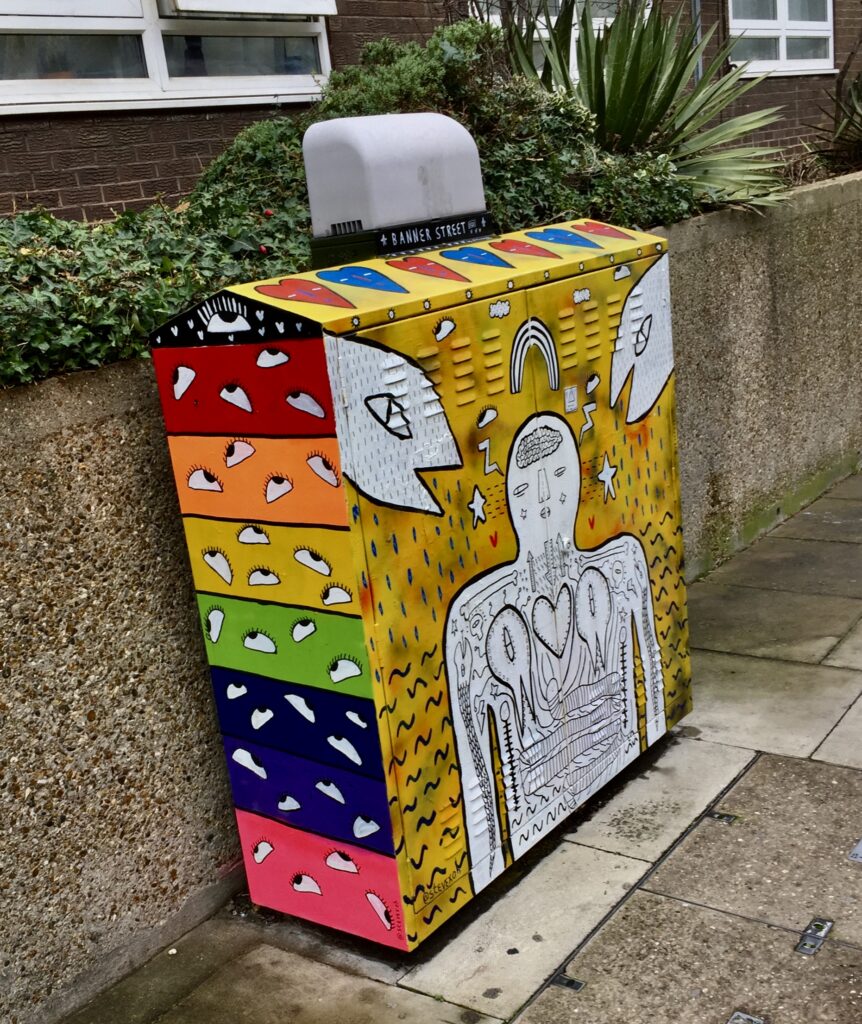
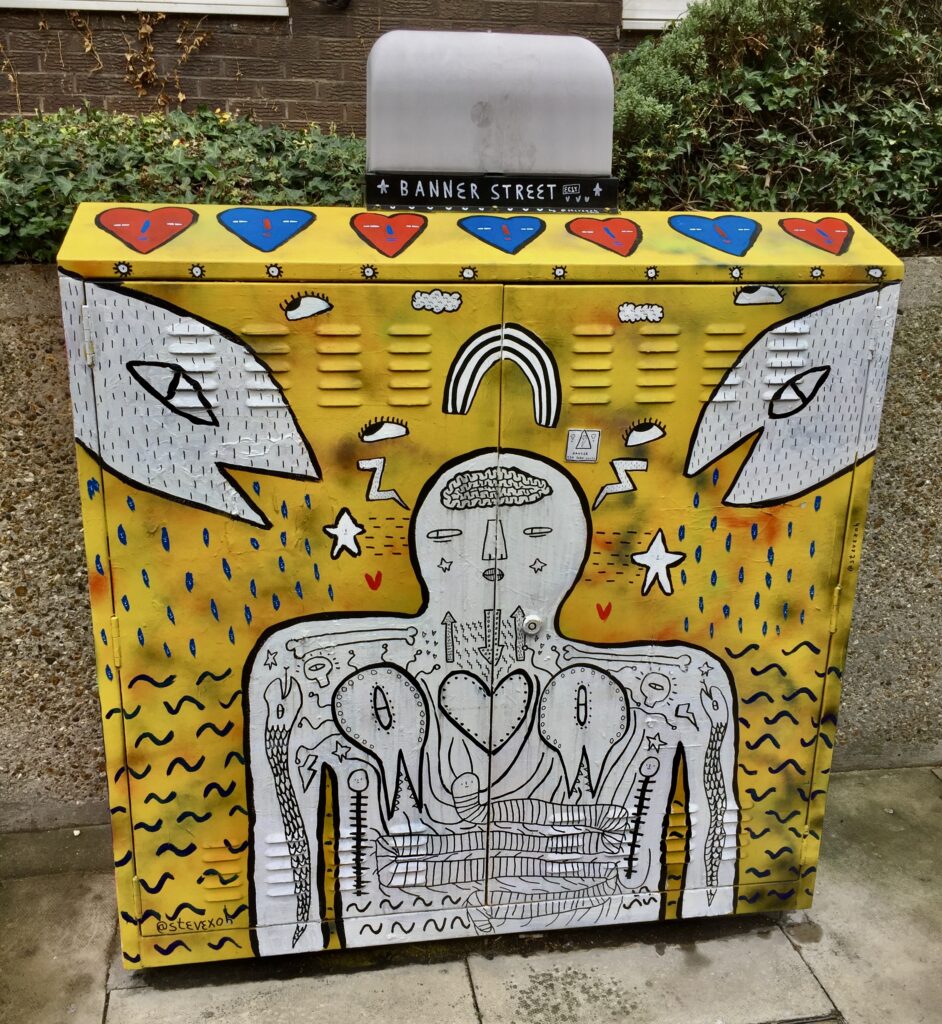
Here’s the rest of Chapman’s painting …
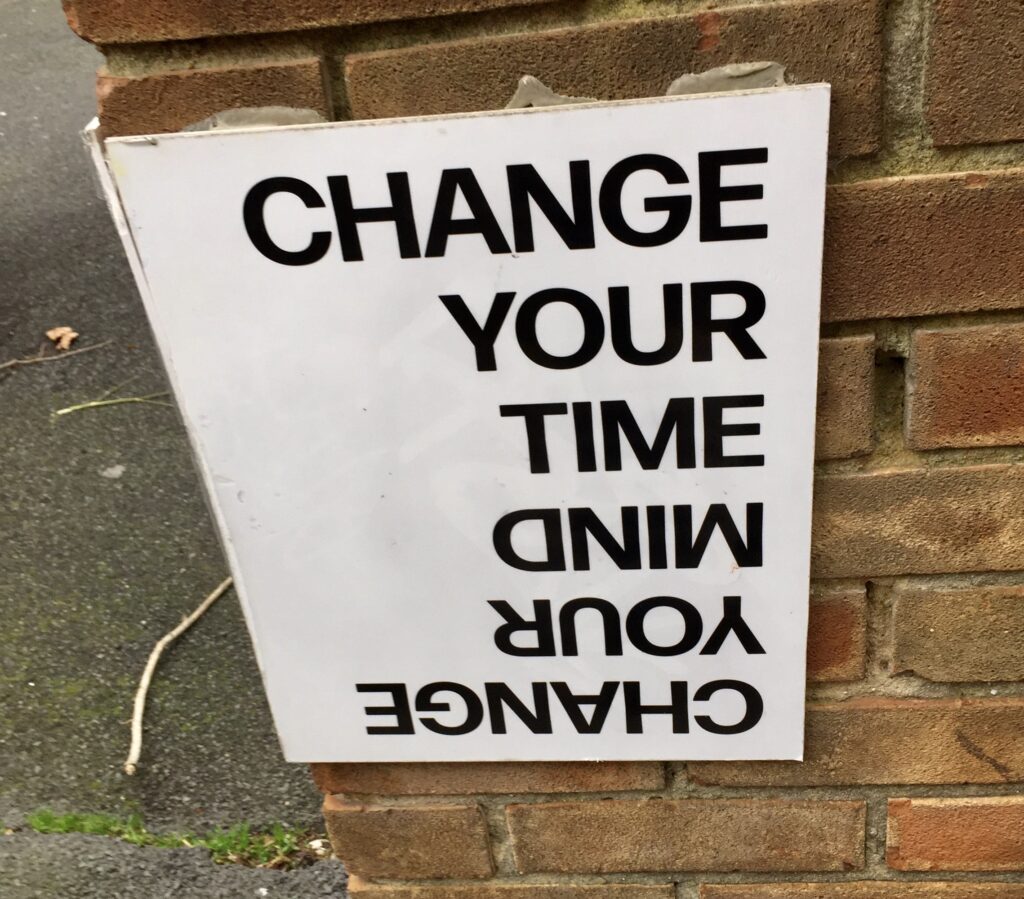
A quote by José Argüelles, (1939 – 2011), an American New-age author and artist …
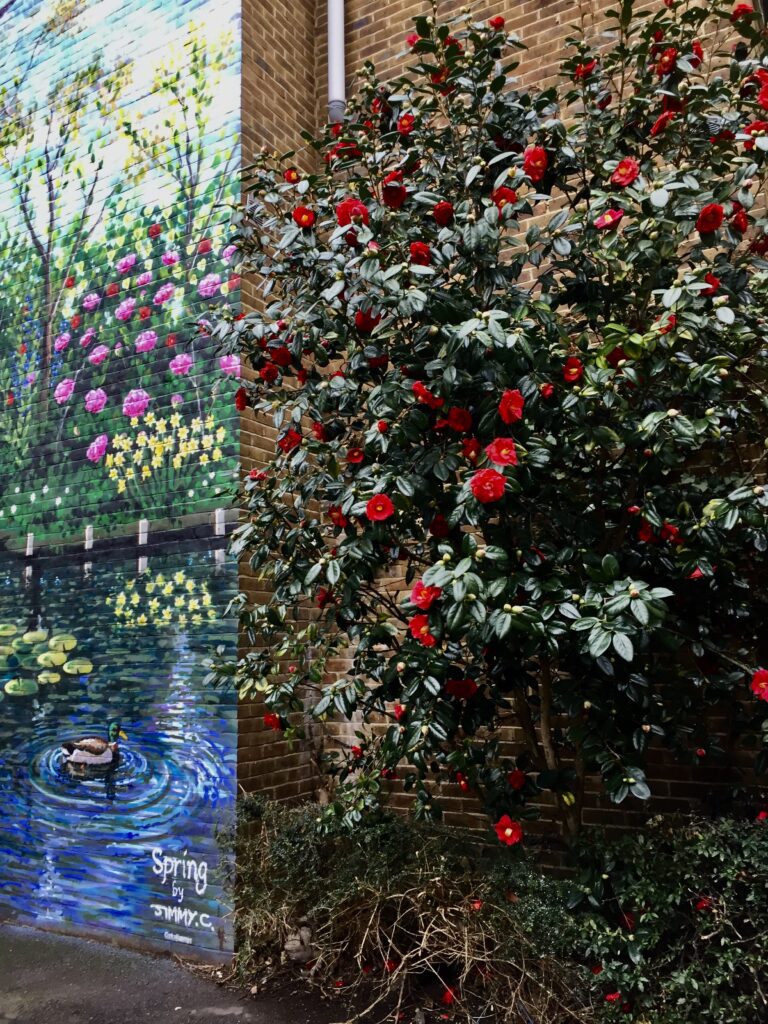
This magnificent Camellia is obviously very happy here in the car park …
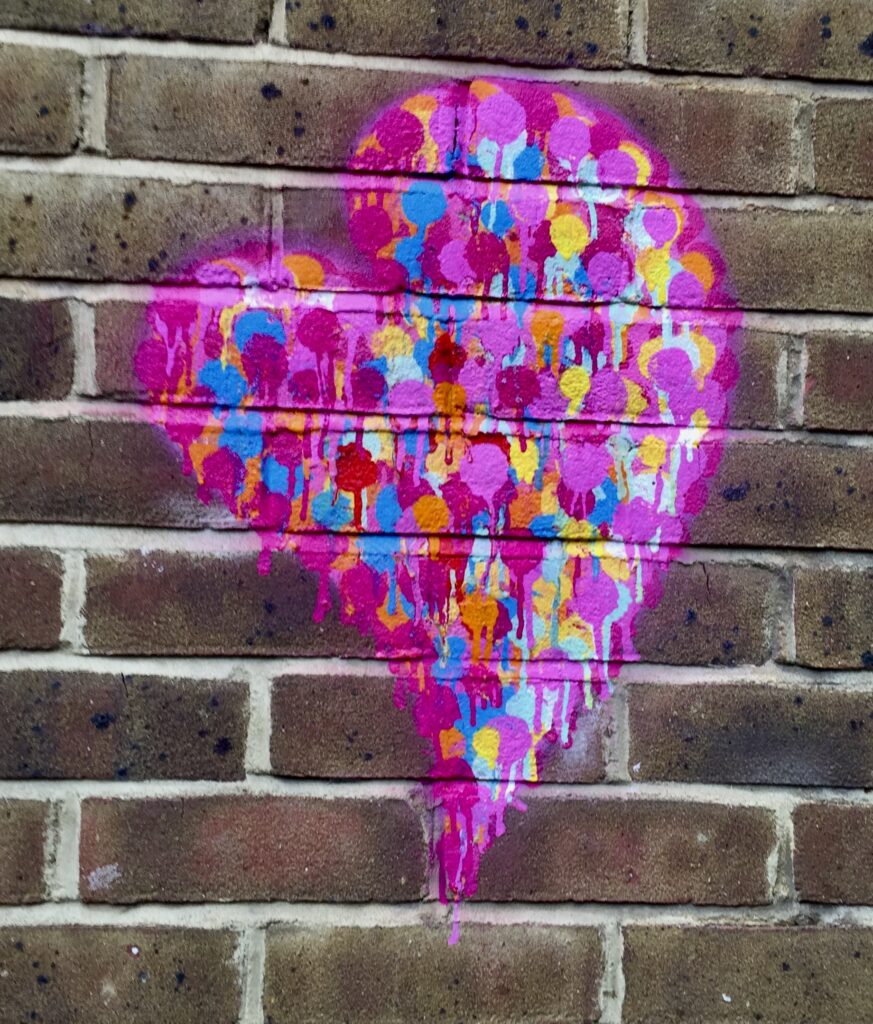
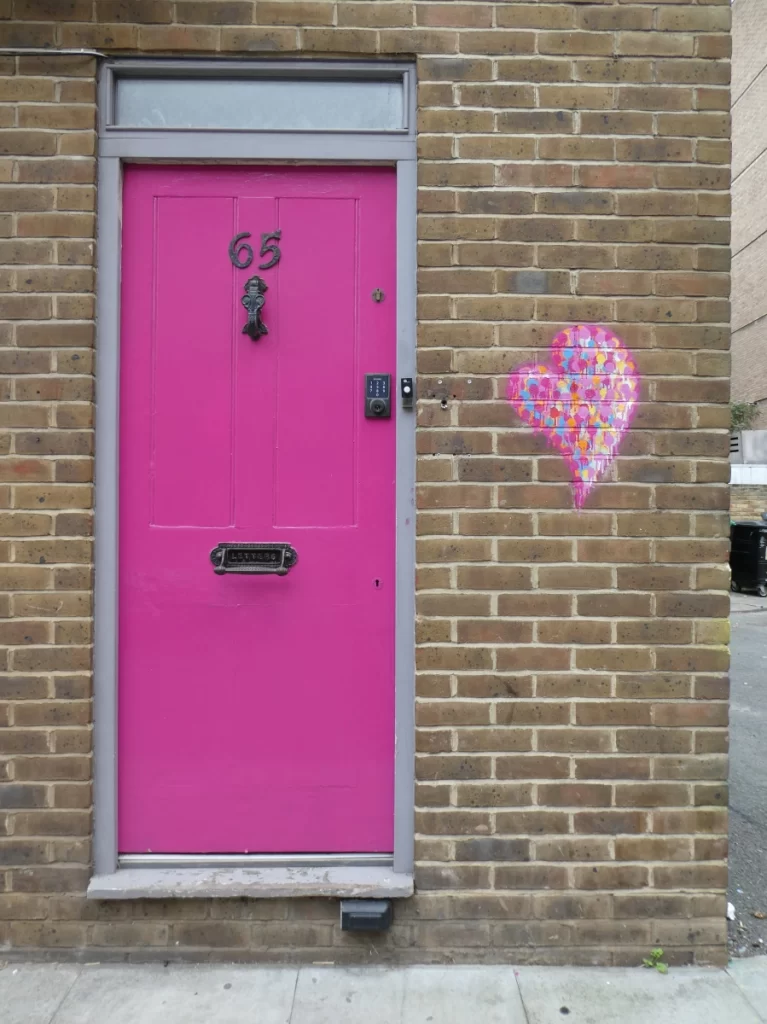
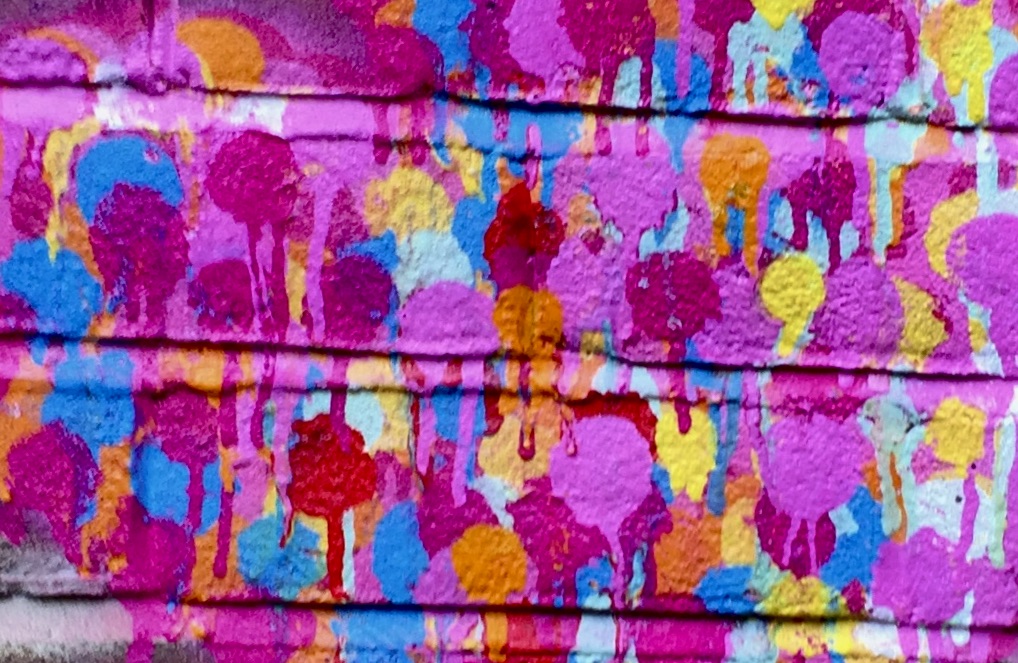
Jimmy also painted this sweet little heart …
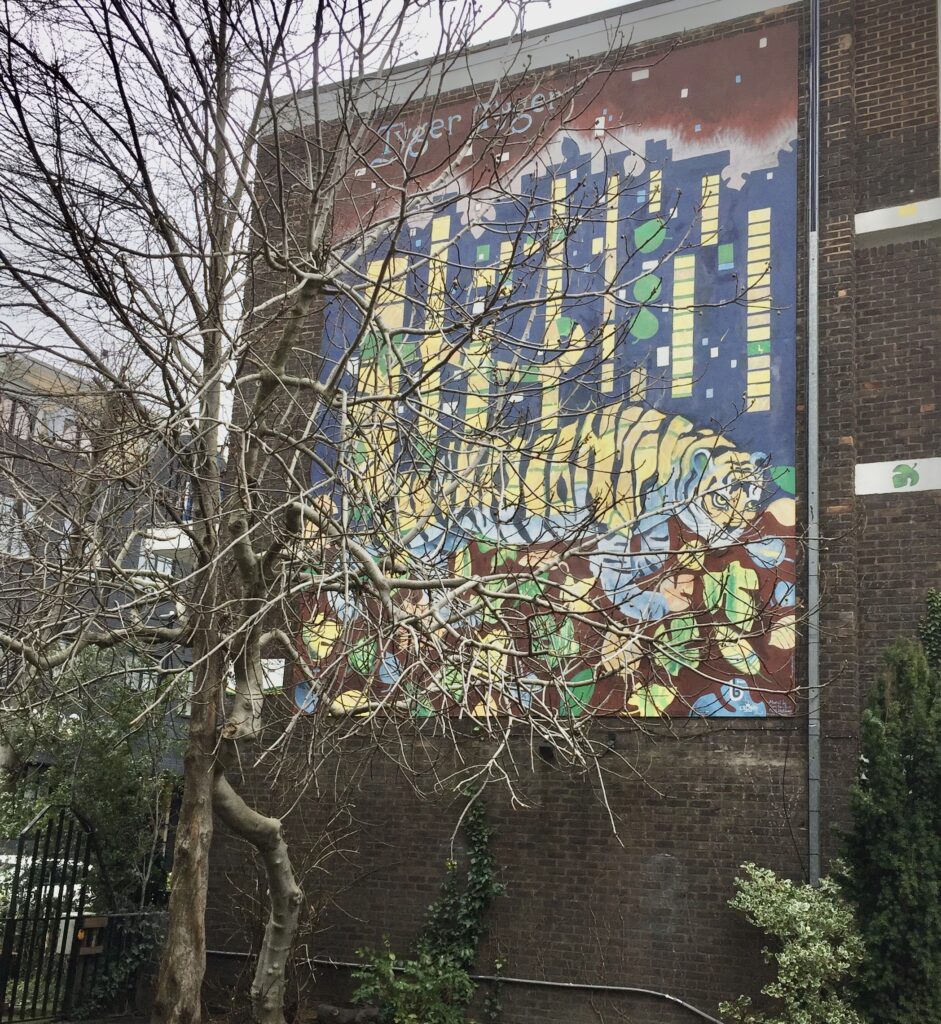
Tyger Tyger by mural artists Paul Skelding and Tim Sanders is usually largely hidden by the fig tree in front. You can read more about it (and other tigers) here in the Londonist blog …
On Peabody Buildings …
Nearby …
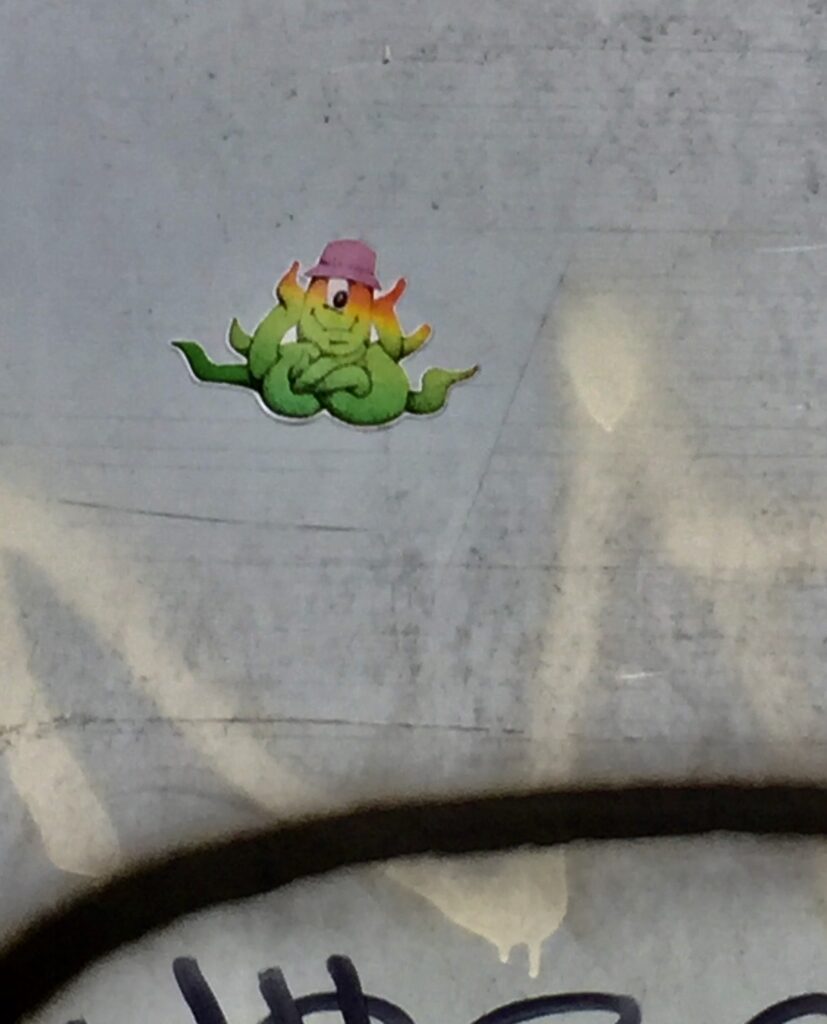
See if you can find this little chap …
During creation at the Whitecross Street Party in September last year …
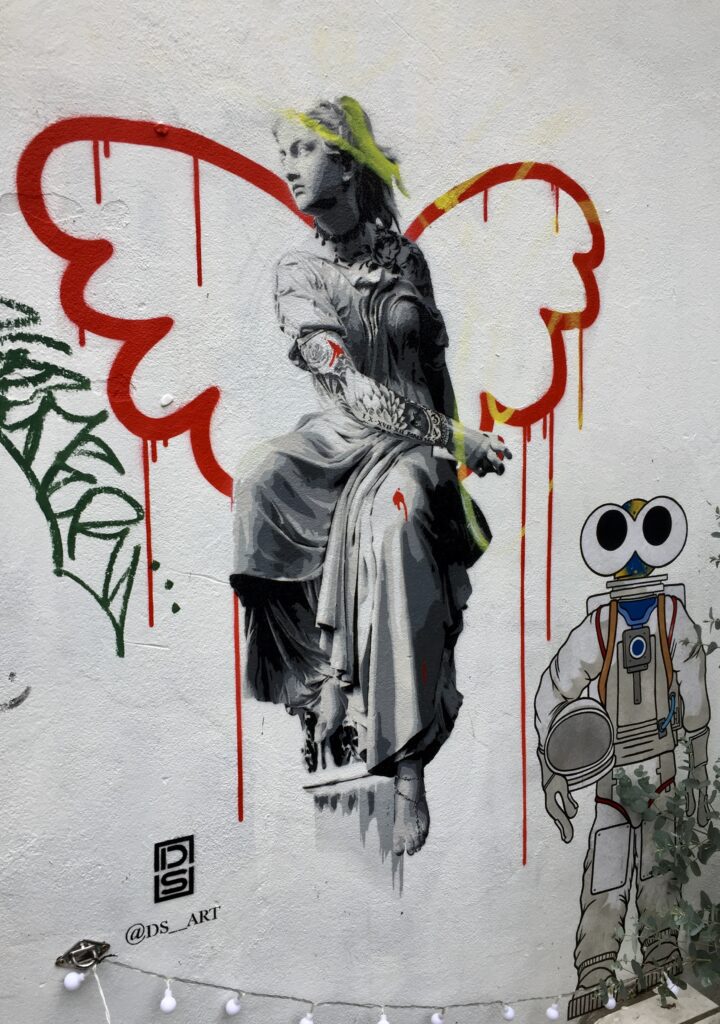
One of my favourites – the tattooed angel and her weird companion …
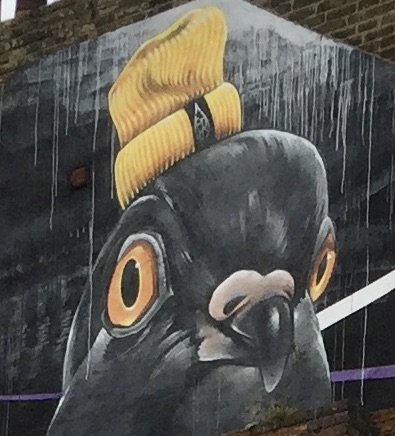
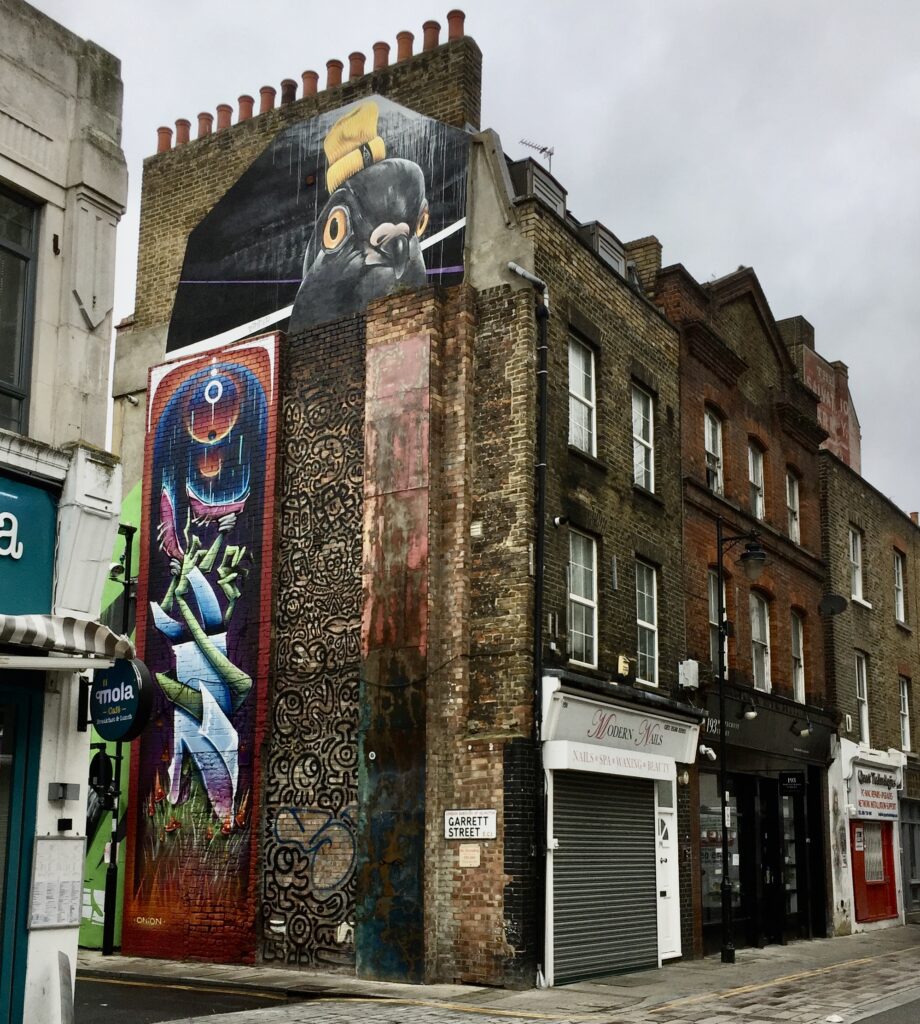
I like the pigeon …
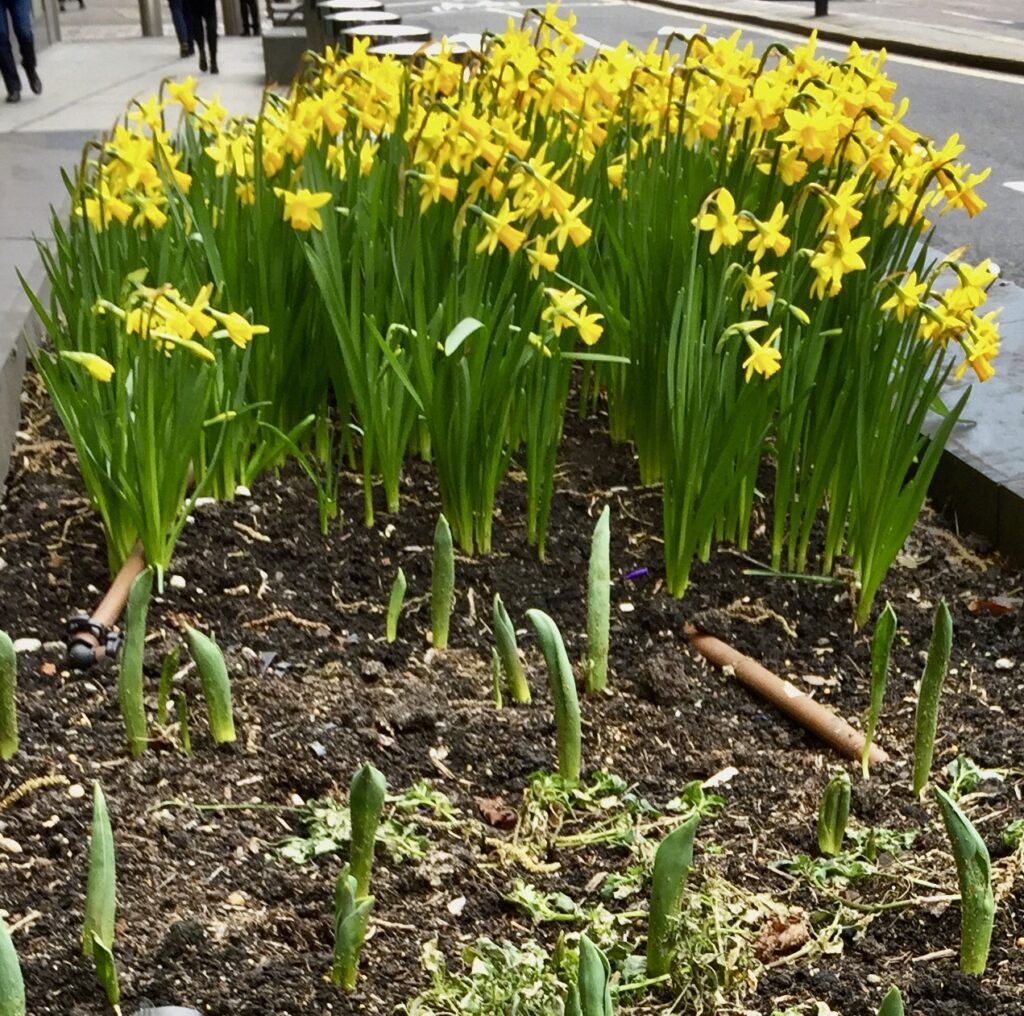
It was a dull day but these works really cheered me up as did these cheerful little daffodils popping up on London Wall. Thank you City of London Gardeners!
If you would like to follow me on Instagram here is the link …
After the Great Fire of London of 1666 St Margaret’s was rebuilt by Christopher Wren between 1683 and 1692. As some churches around St Margaret’s were demolished under the 1860 Union of Benefices Act, St Margaret’s benefited from acquiring some of the interior furnishings of these buildings. The church now houses an outstanding collection of seventeenth century fittings, many by the sculptor and wood carver Grinling Gibbons. It is one of the few Wren churches that sustained only minor damage during the Second World War.
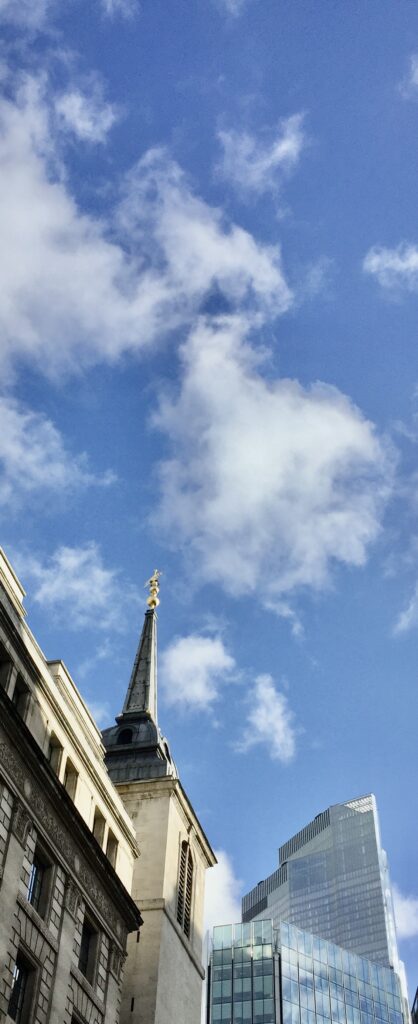
In 1698–9 the top stage of the tower with large belfry openings and all of the spire were added and this work was probably designed by Robert Hooke. Hooke was Surveyor to the City of London and chief assistant to Christopher Wren, in which capacity he helped Wren rebuild London after the Great Fire.
The church and tower (EC2R 7HH).
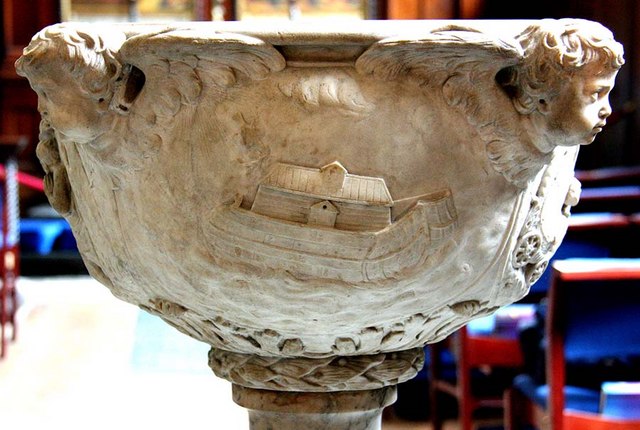
The baptismal font, believed to be by Grinling Gibbons (1648–1721), came from St Olave, Old Jewry, after that church was partially demolished in 1887. The font is a carved bowl with cherub heads at each corner and the sides are decorated with Adam and Eve, the dove returning to the ark, the baptism of Jesus and the baptism of the Ethiopian eunuch by Philip.
Of the subsequent additions to the church the most splendid is the choir screen, one of only two in a Wren church, erected originally in the Church of All Hallows the Great, Thames St. in 1683-84 …
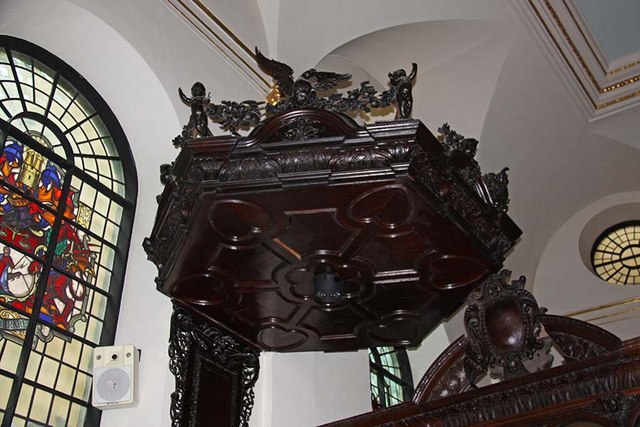
The screen, along with the tester above the pulpit, was moved to St Margaret’s in 1894 when the Church of All Hallows the Great was demolished, to allow widening of Thames Street and building of the City of London Brewery on the site.
The tester above the pulpit.
The Stuart royal arms are part of the screen which was originally donated by the German merchant Theodore Jacobson in c.1685. The eagle is supposed to refer to Herr Jacobson’s nationality …
The lovely stained glass windows celebrate St Margaret’s links with a number of City Livery Companies and Institutions. The windows were donated by either the Livery Companies or their Masters.
The Worshipful Company of Glovers of London – True hearts and warm hands …
The Worshipful Company of Tin Plate Workers alias Wire Workers’ motto is Amore Sitis Uniti, Latin for Be United in Love (rather sweet!) …
The Institute of Chartered Accountants in England and Wales. The phrase Recte Numerare means to reckon or number rightly in Latin …
The Worshipful Company of Tylers and Bricklayers : In God is all our trust,let us never be confounded. …
The Worshipful Company of Scientific Instrument Makers. The motto Sine Nobis Scientia Languet – Knowledge cannot flourish without us – reflects the fundamental role the craft has played in the achievement of science over the past centuries …
The Worshipful Company of Armourers and Brasiers. The Company’s present Coat of Arms was granted in 1709 and incorporates the former arms of the Armourers granted in 1556 with a new coat for the Brasiers. The two mottos are Make All Sure for the Armourers, and We are one for the joint Company. ‘Put on the whole armour of God’ …
There’s much more to see at St Margaret’s so I shall return.
Incidentally, if you are passing near the Royal Exchange check out Paparazzi Dogs …
If you would like to follow me on Instagram here is the link …
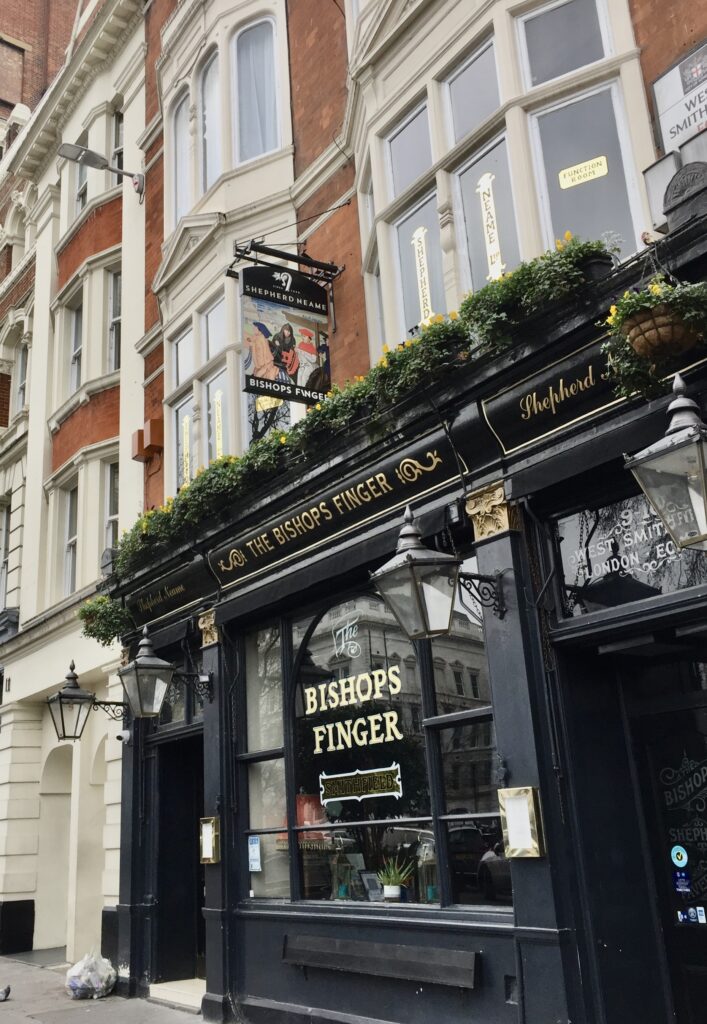
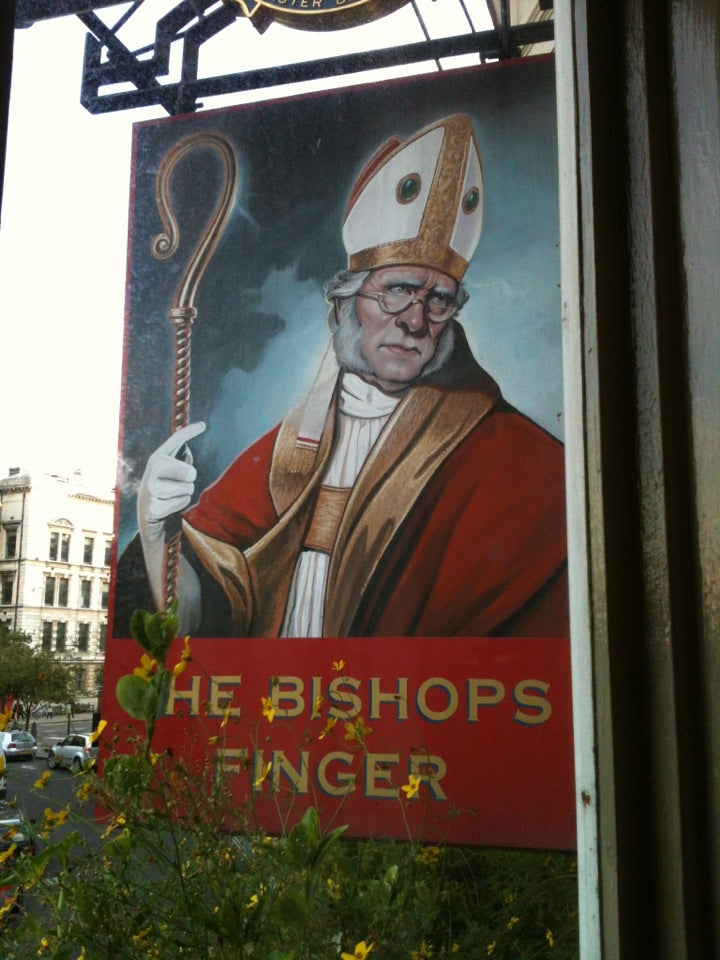
A few years ago I became intrigued by a particular pub name – the Bishops Finger …
For a while, this was the signage …
But, after a bit of research, I realised that this wasn’t a very good representation of what people used to call ‘a bishop’s finger’.
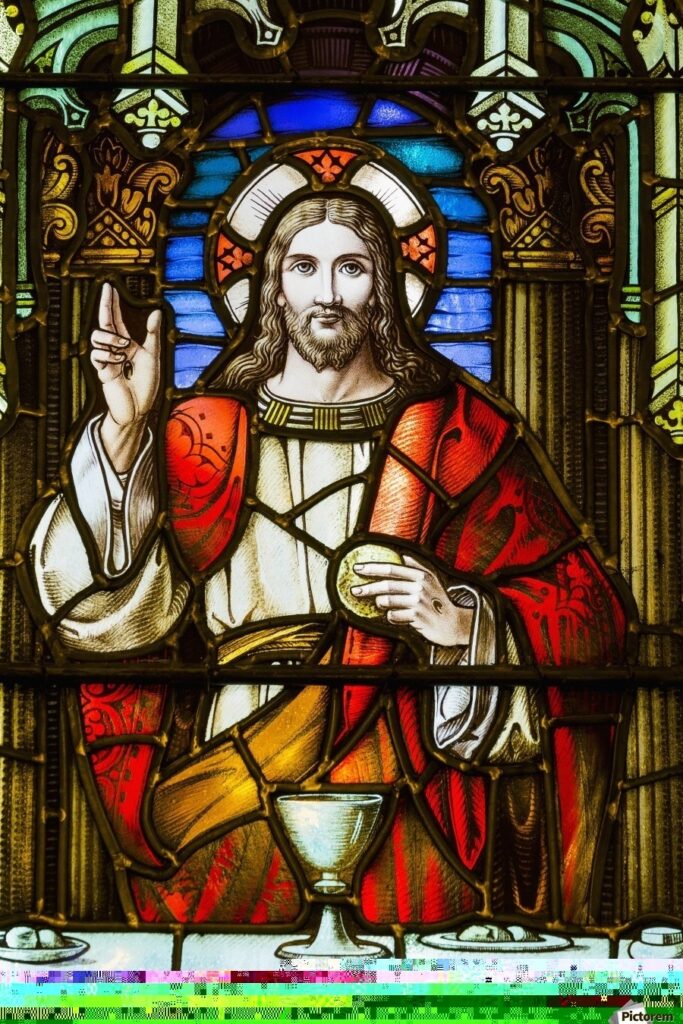
It actually referred to the shape of the hand when giving a blessing. Here is a stained glass representation of Jesus Christ giving the gesture …
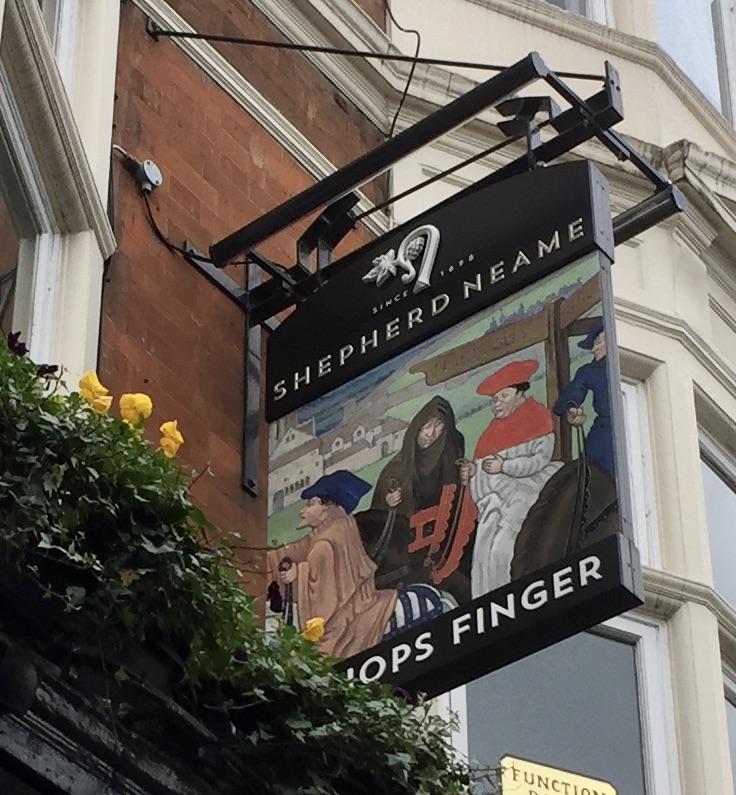
The present day sign gives the clue to its original slang meaning …
Yes, it’s a finger post indicating directions.
Not to be confused, of course, with the Vulcan Greeting …
‘Live long and prosper!’
Incidentally, the Bishops Finger name dates from 1981. The pub had been purchased by Shepherd Neame in the 1970s, and the change in name was to name the pub after one of their leading beers. The pub had originally been called the Rutland and had also been the Rutland Hotel.
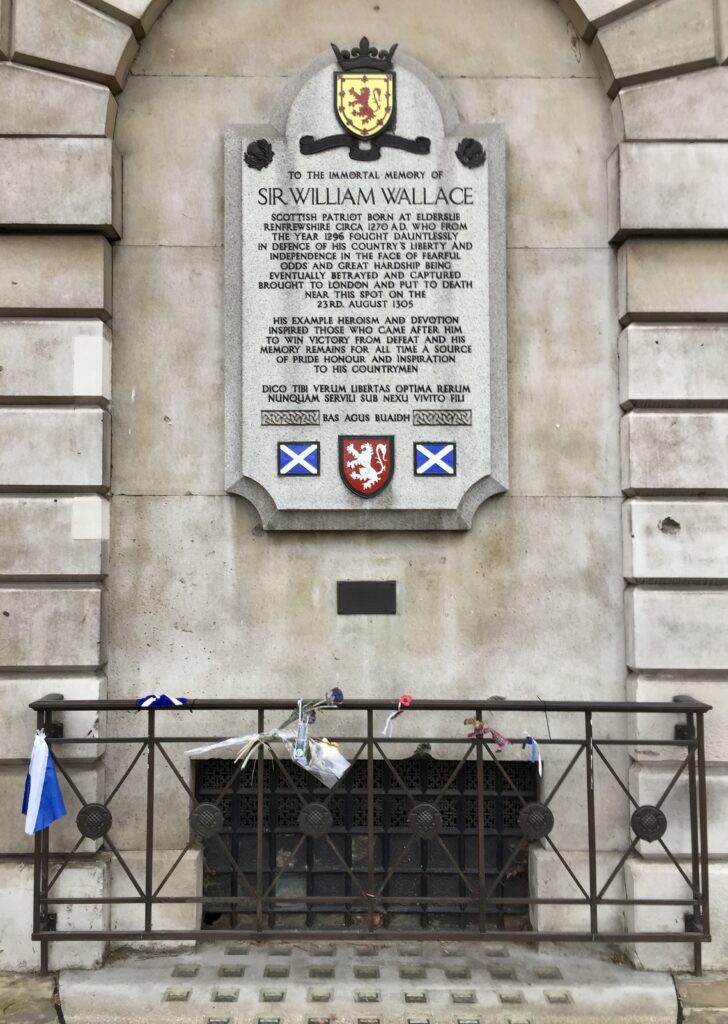
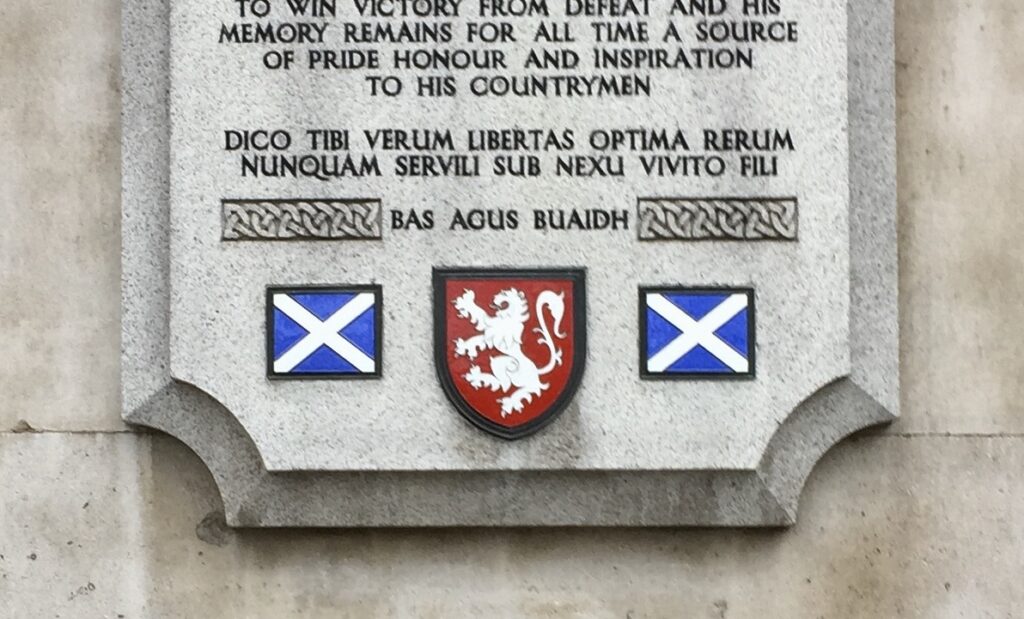
For centuries Smithfield (or smooth field) was a place of execution where many suffered terribly for their beliefs, one of the most famous being William Wallace, ‘Braveheart’ in the movie of that name. Two plaques commemorate him and his execution. This one is facing the street, its railings often adorned with flowers and Scottish flags …
Translations from the Latin: I tell you the truth. Freedom is what is best.Sons, never live life like slaves. And the Gaelic: Death and Victory, an old Scottish battle cry.
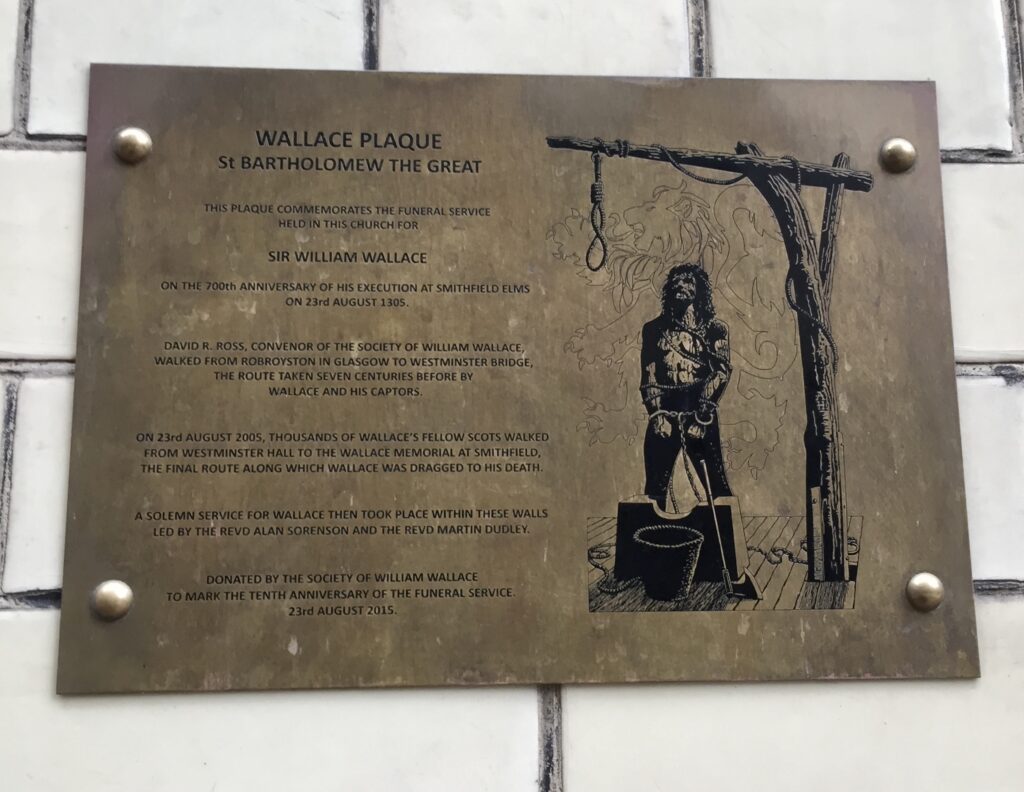
The other is quite discreet and you’ll find it on the wall just inside the entrance to the churchyard of St Bartholomew the Great …
Wallace, manacled, stands upright and proud awaiting what looks like decapitation with an axe, a basket ready to catch his head when the deed is done. The noose that he glances at, however, indicates a different fate and decapitation would have been decidedly merciful. The plaque is, therefore, a little misleading.
Having been sentenced to be hanged, drawn and quartered, Wallace was first dragged naked behind a horse from the Tower of London to Smithfield, being jeered and booed by onlookers the whole way. He was hanged but cut down before dead after which the rest of the gruesome sentence was carried out. There is no record of any last words. Parts of his body were sent to Newcastle, Berwick, Perth and Stirling for public display. Wallace’s head, meanwhile, was dipped in tar and set on a spike on London bridge, ‘a grisly reminder of King Edward’s justice’.
No contemporary image of how he looked exists but we do know how Mel Gibson portrayed him …
There’s a great article in The Scotsman newspaper about Wallace and the myths surrounding him and you can read it here.
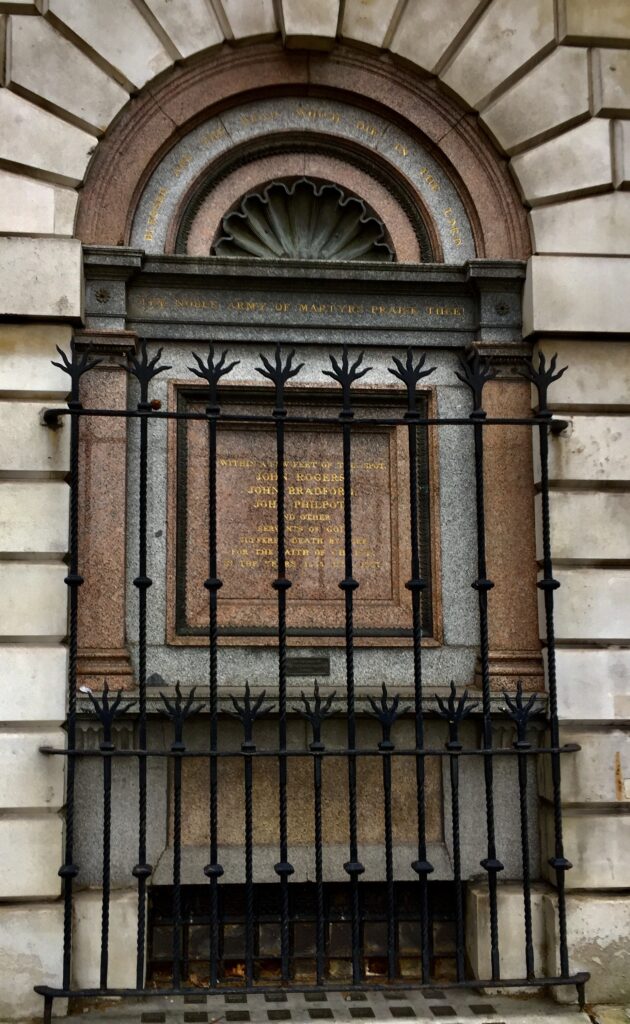
Almost adjacent to Wallace’s memorial is the one to Protestant martyrs, erected in 1870 by the Protestant Alliance London. …
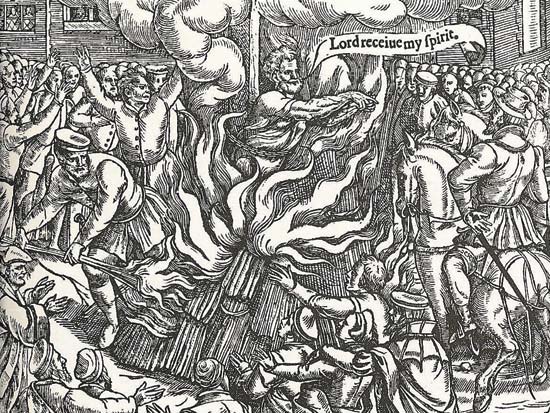
A few feet from this spot, more than 60 Protestants were burned at the stake, mainly in the reign of Queen Mary (1553-1558), hence they are known as the Marian Martyrs …
Through Mary’s short reign at least 277 persons were burnt, including five bishops, twenty one clergymen, eight gentlemen, eighty four tradesmen, one hundred husband-men and servants, fifty five women, and four children.
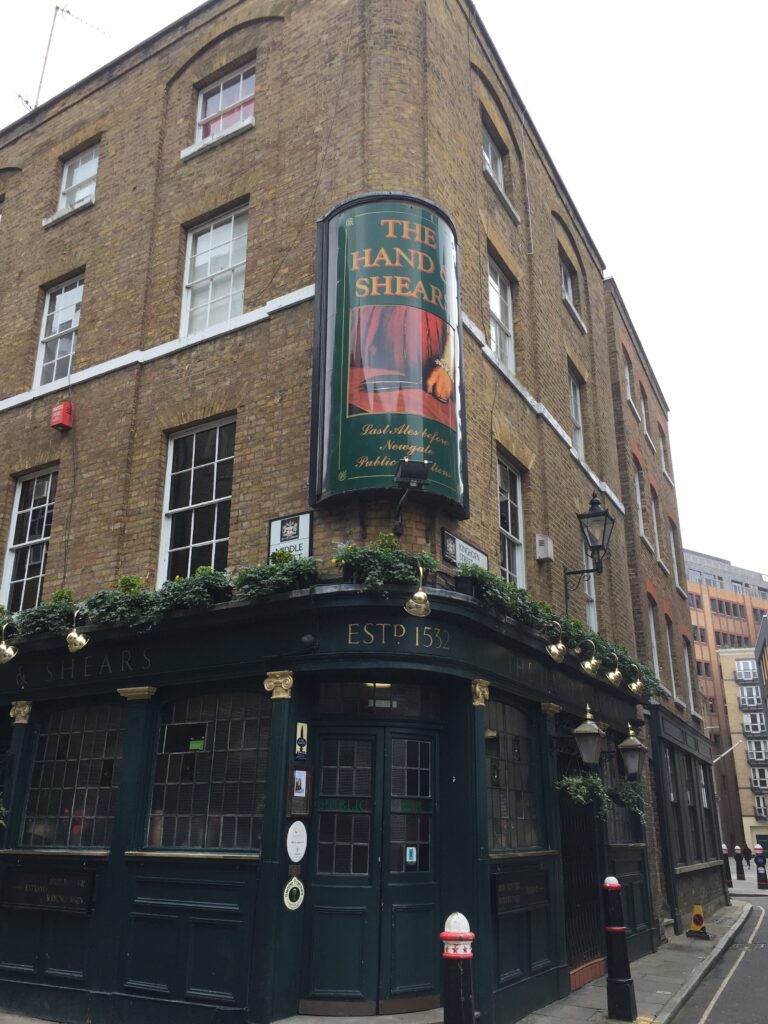
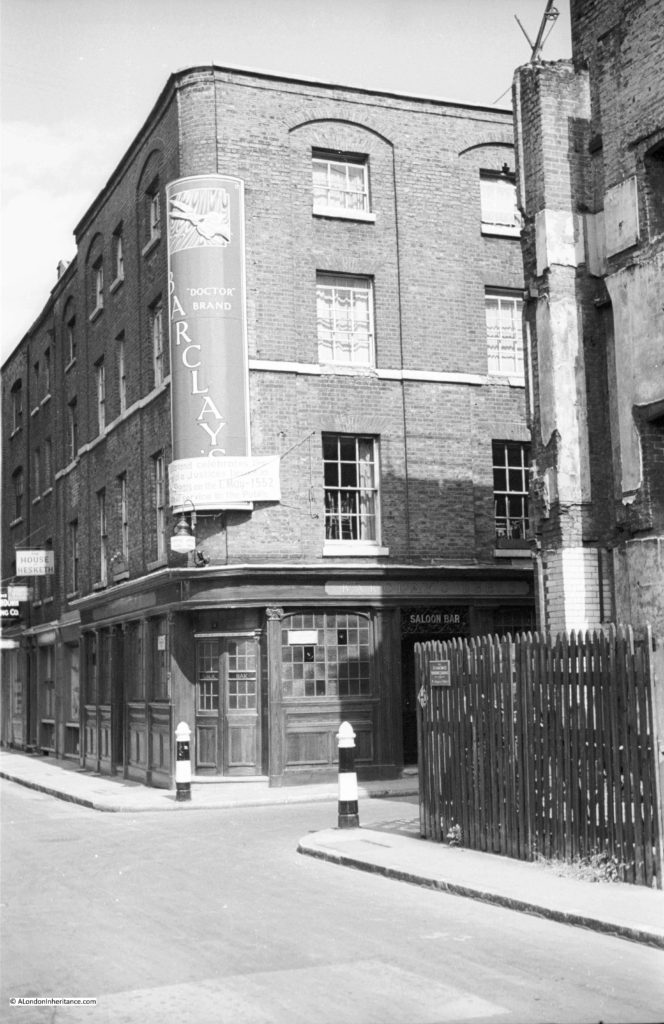
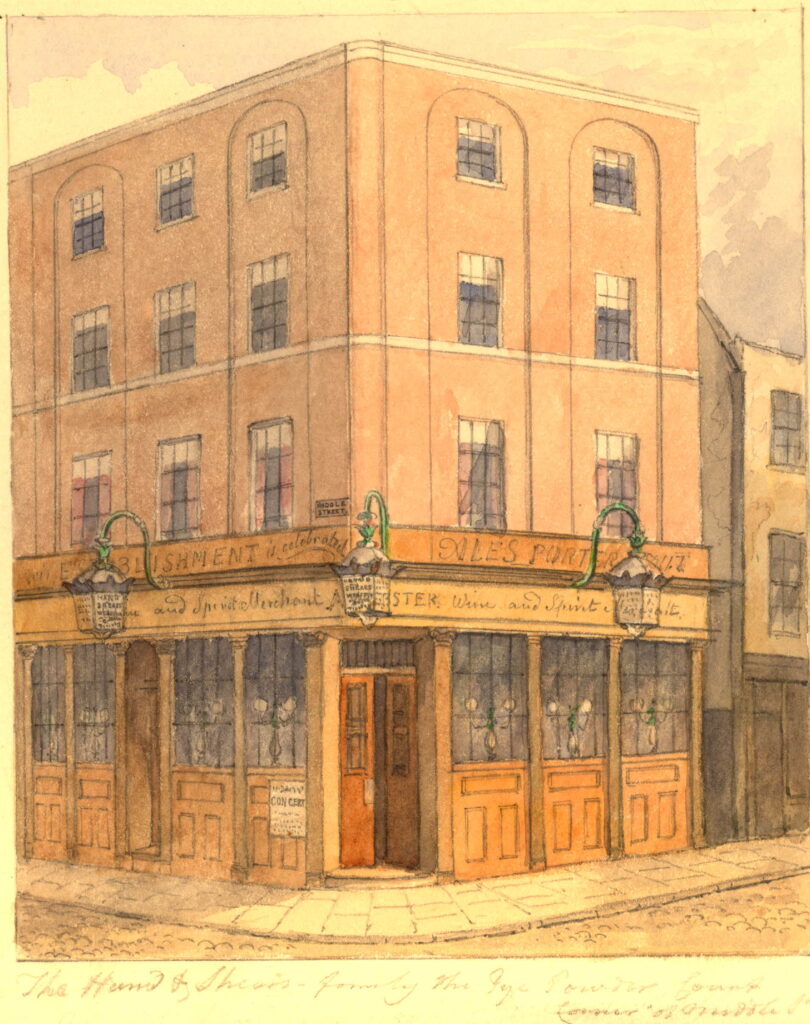
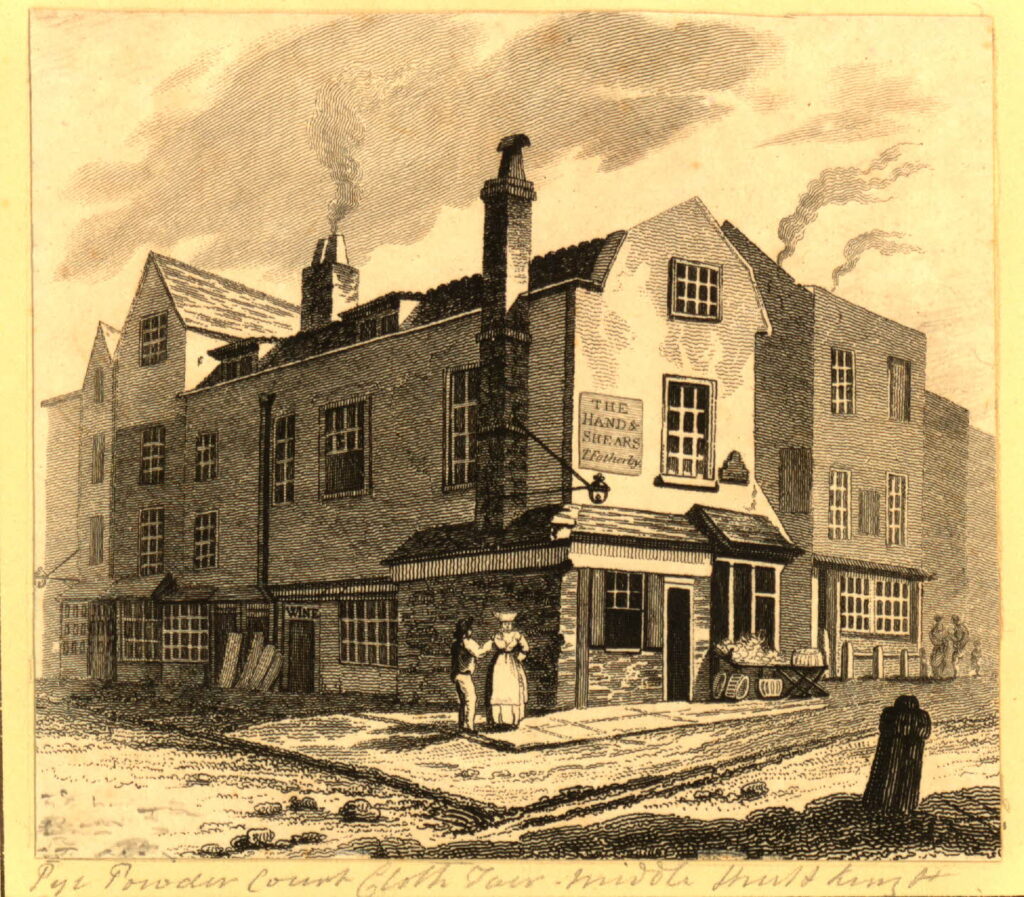
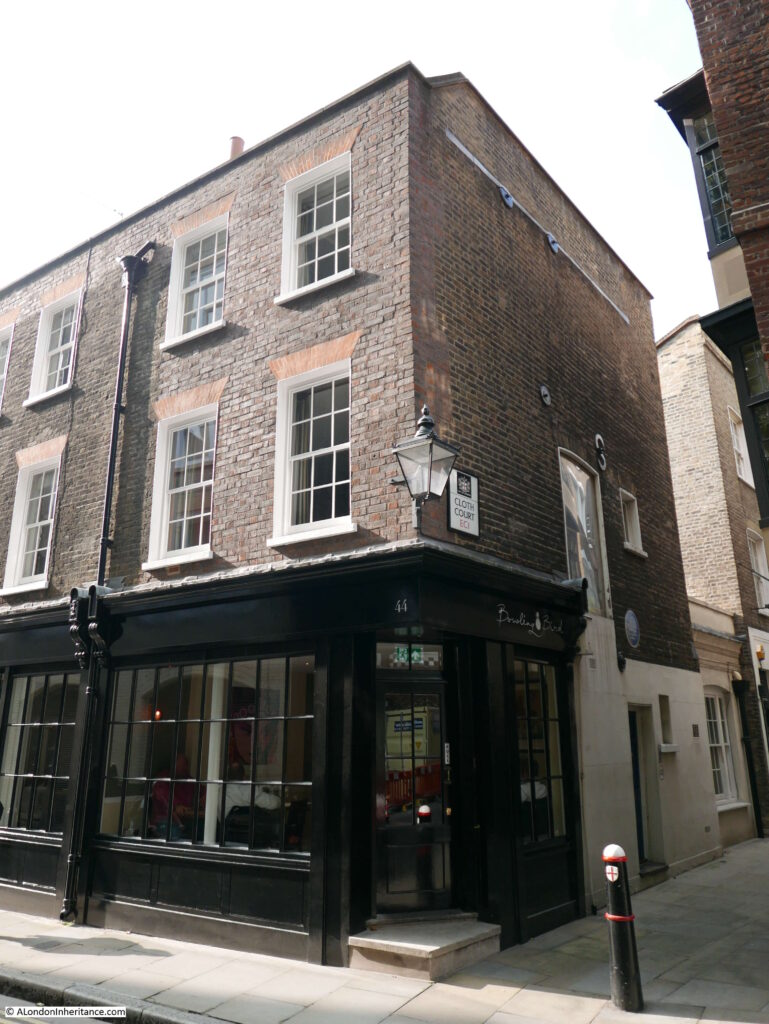
Nearby, the Hand and Shears Pub boasts of offering ‘Last Ales before Newgate Public Executions’. The pub’s name relates to the cloth workers who would gather here ahead of the ancient Bartholomew Fair …
Here it is in 1952 … …
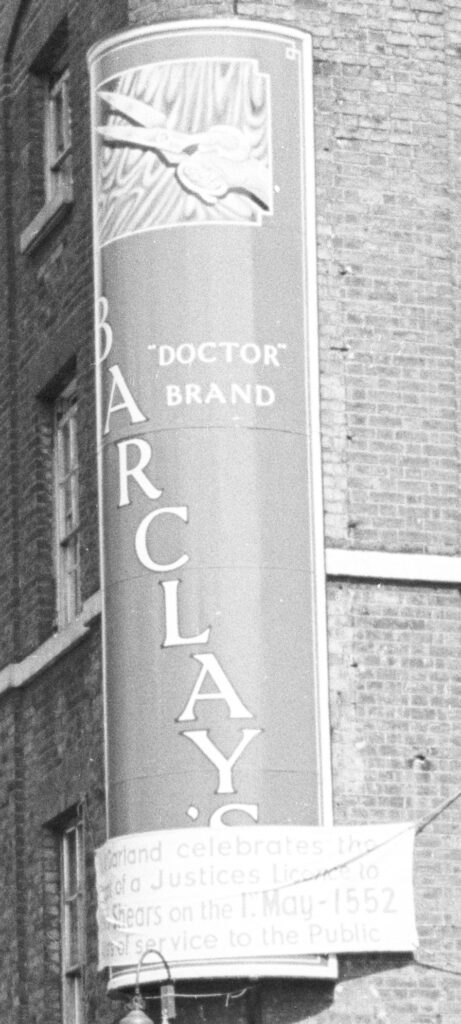
Here’s the signage in close up …
The Justices Licence refers to the Alehouse Act of 1552 which defined in law that it was illegal to sell beer or ale without the consent of the local Justices of the Peace. This was the first time that a licence was required to sell beer and ale and was an attempt to address the drunkenness and disorder that was being caused by the widespread availability of alcohol.
The Act required that each person granted a licence was responsible for maintaining good behavior at their premises and any problems could result in a fine or loss of licence. From the sign it appears that the Hand and Shears was granted a licence in 1552.
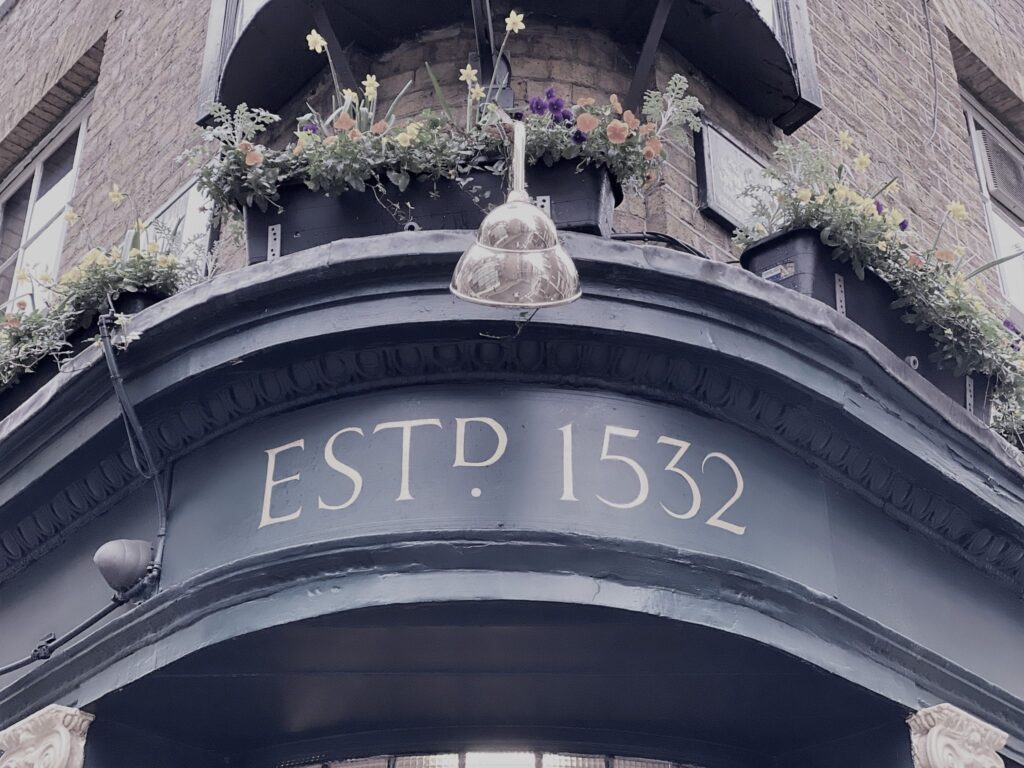
Here’s the pub in 1852, the year the present building dates from …
Its predecessor in 1811 …
As is often the case, you’ll find more fascinating detail about the pub and its history in the brilliant London Inheritance blog.
The lovely Sir John Betjeman lived nearby at 43 Cloth Fair …
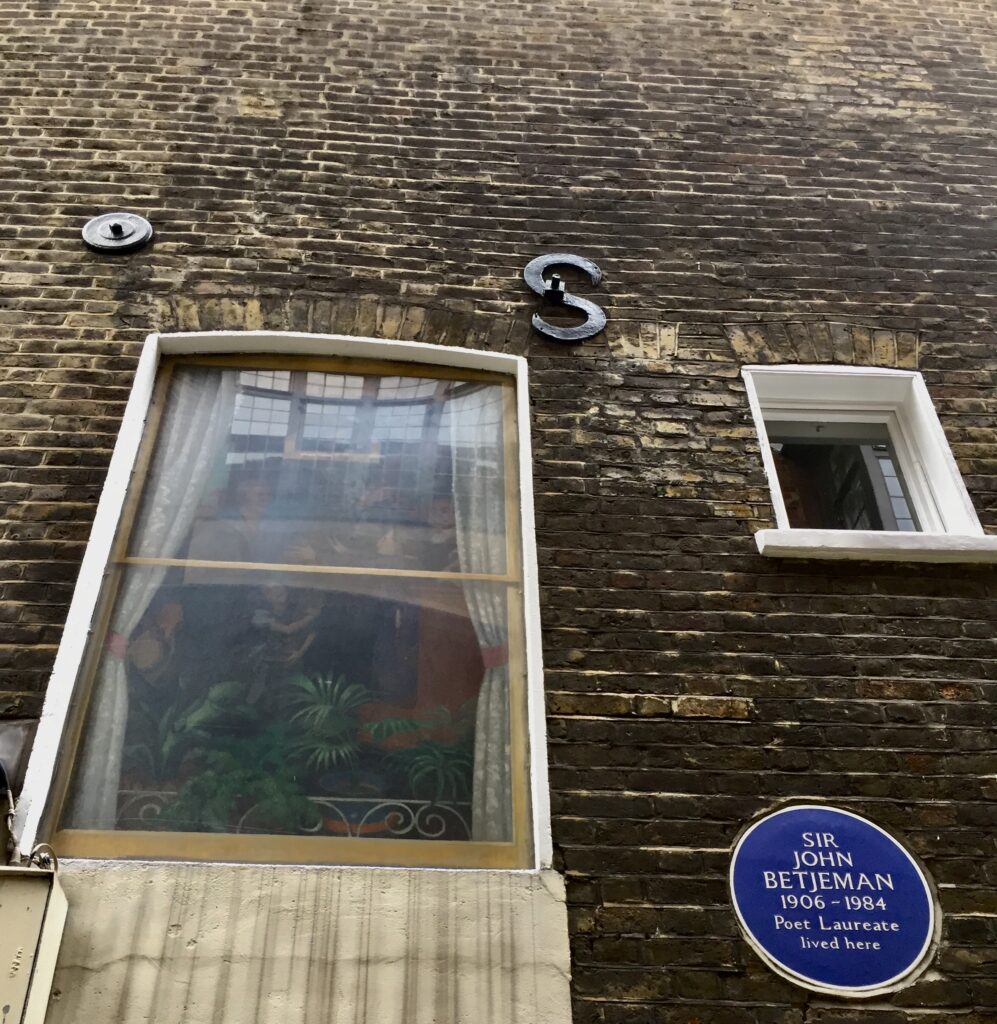
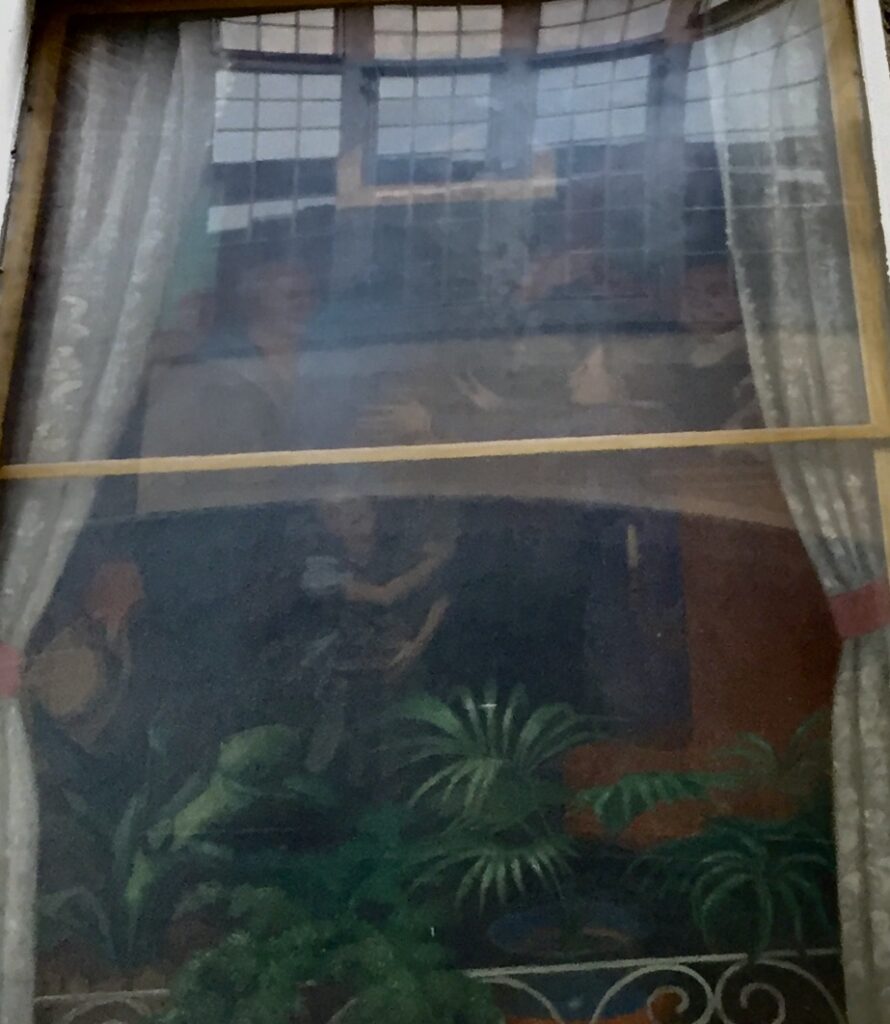
Walk into the adjacent Cloth Court and look up. Near Sir John’s blue plaque you’ll see a wonderful Trompe-l’œil painting TheSailor’s Home Coming …
When the next door neighbours bought Betjeman’s flat, intending to rent it out, they had this window bricked up to give themselves more privacy. However, they found they didn’t like staring at a wall. So they got the mural and stained glass artist Brian Thomas (some of whose work can still be seen in St Paul’s Cathedral) to create the Sailor’s Home Coming Window in order to give them something to look at …
Unfortunately it’s rather difficult to see from the street but it has been described as follows : A happy re-union in which a ruddy faced sailor, freshlyreturned from his travels, is welcomed back into the bosom of his family. His children hug him enthusiastically, whilst an exotic songbird, perhaps a souvenir of an earlier voyage to some far flung corner of the Globe, wobbles unsteadily over the whole harmonious scene.
Sir John’s old flat is available to rent. You can find more details here.
Live long and prosper!
If you would like to follow me on Instagram here is the link …