Walking the City of London

Category: Architecture Page 29 of 92

A wander around Whitecross Street and Old Street (plus my old record collection!)

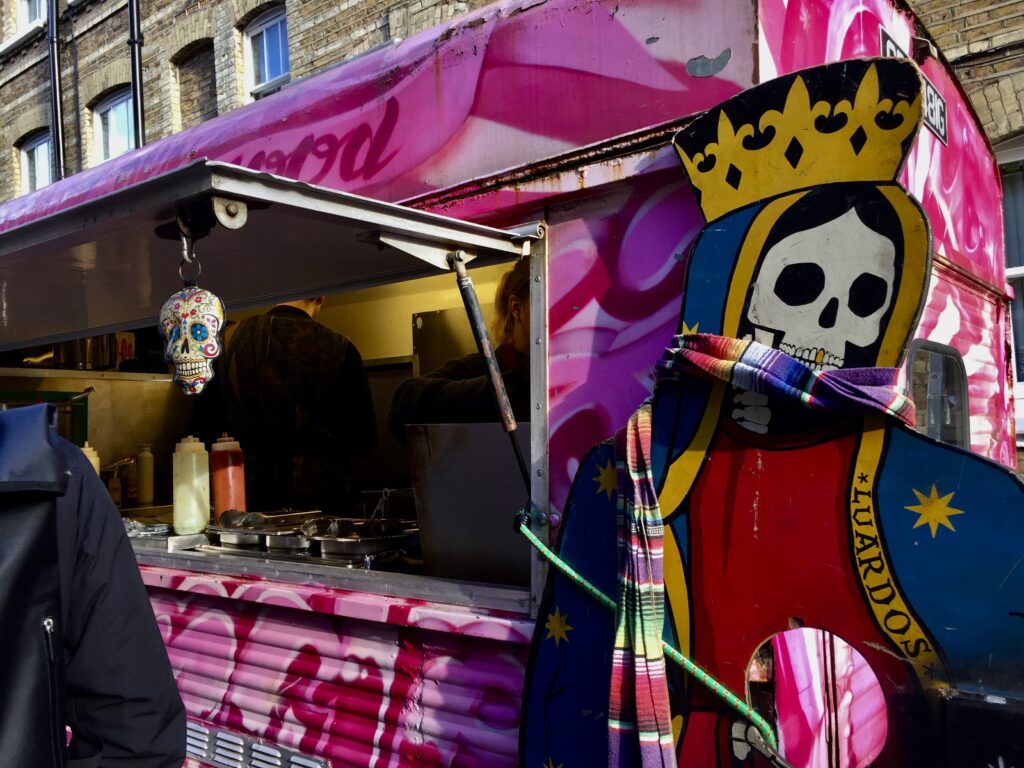
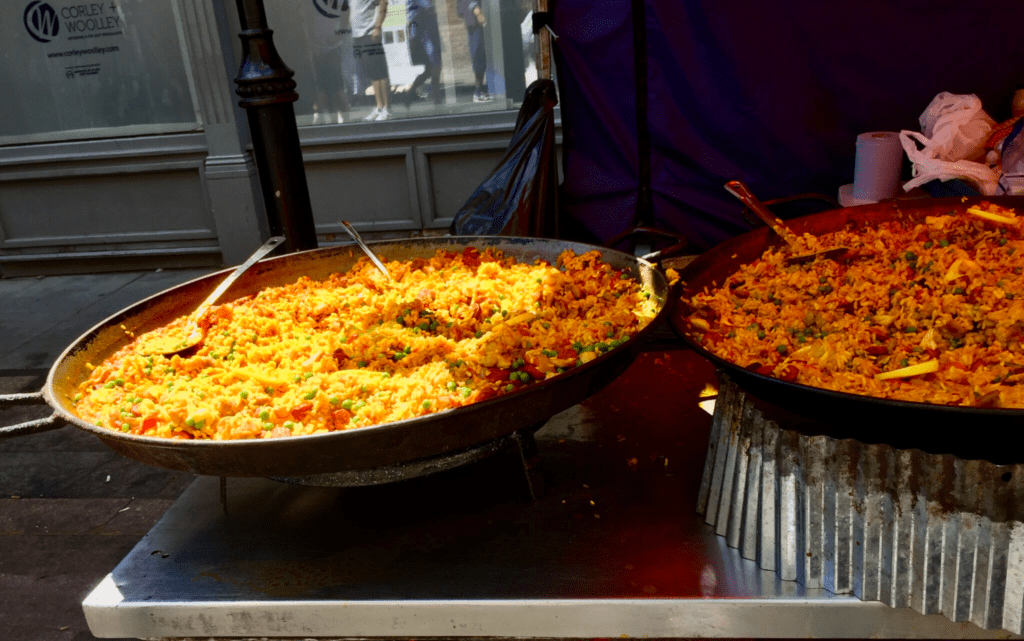
To start with I lingered among the street-food stalls that appear every weekday and seem to do a roaring trade now that City workers are back (even though many of them only come in Tuesdays to Thursdays).

My favourite stand …
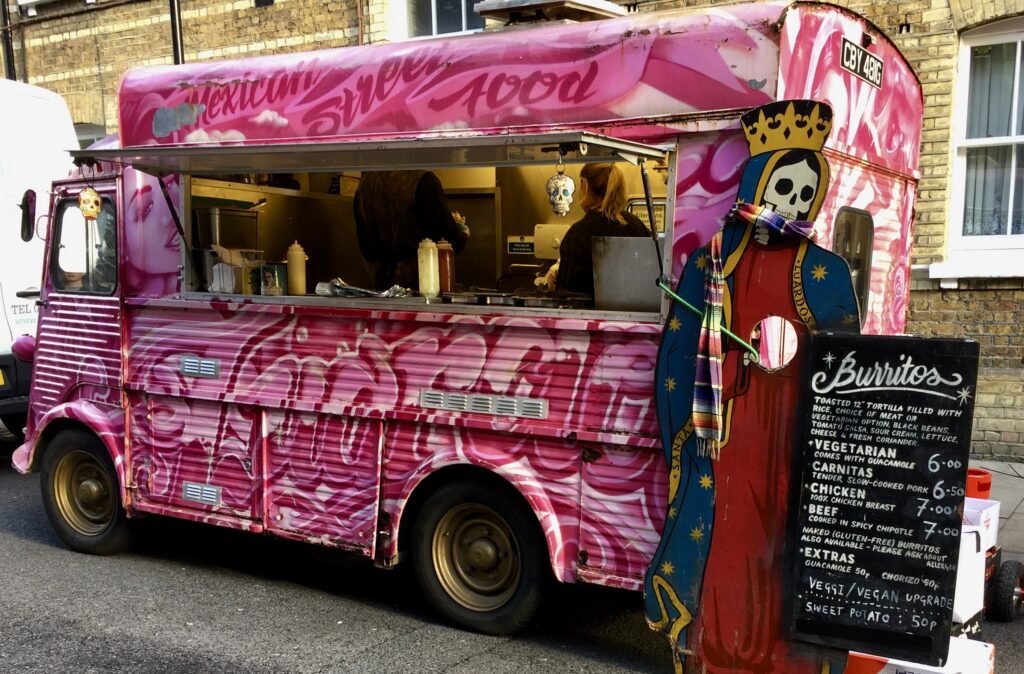
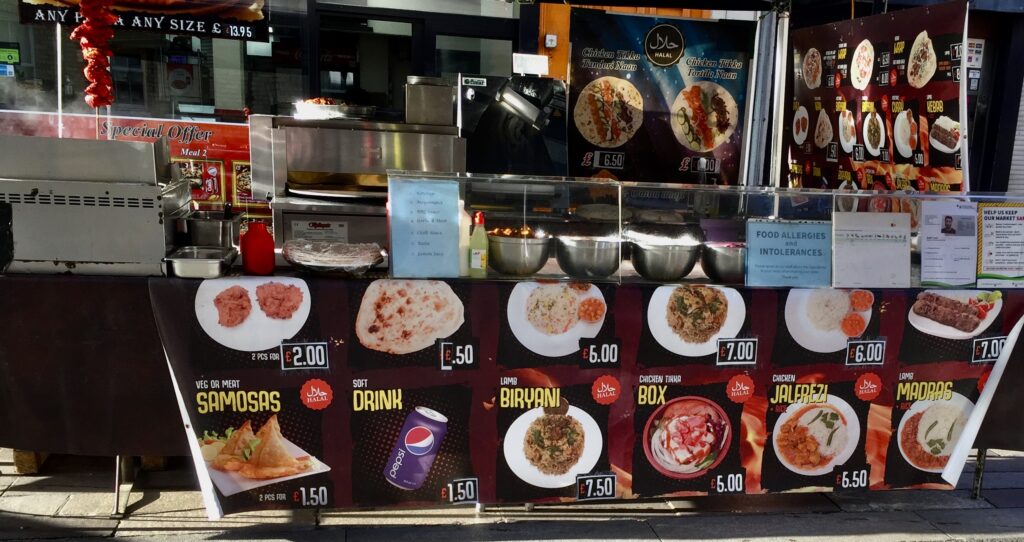
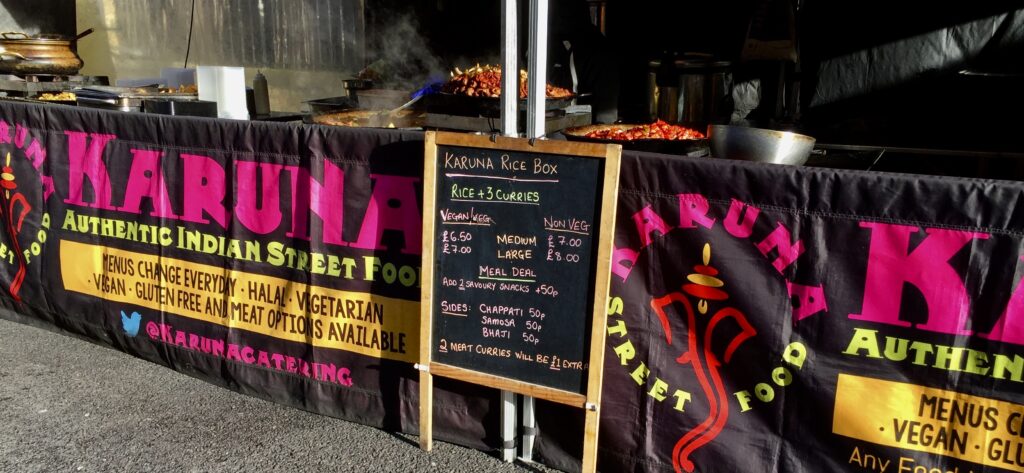
Lots more to choose from …
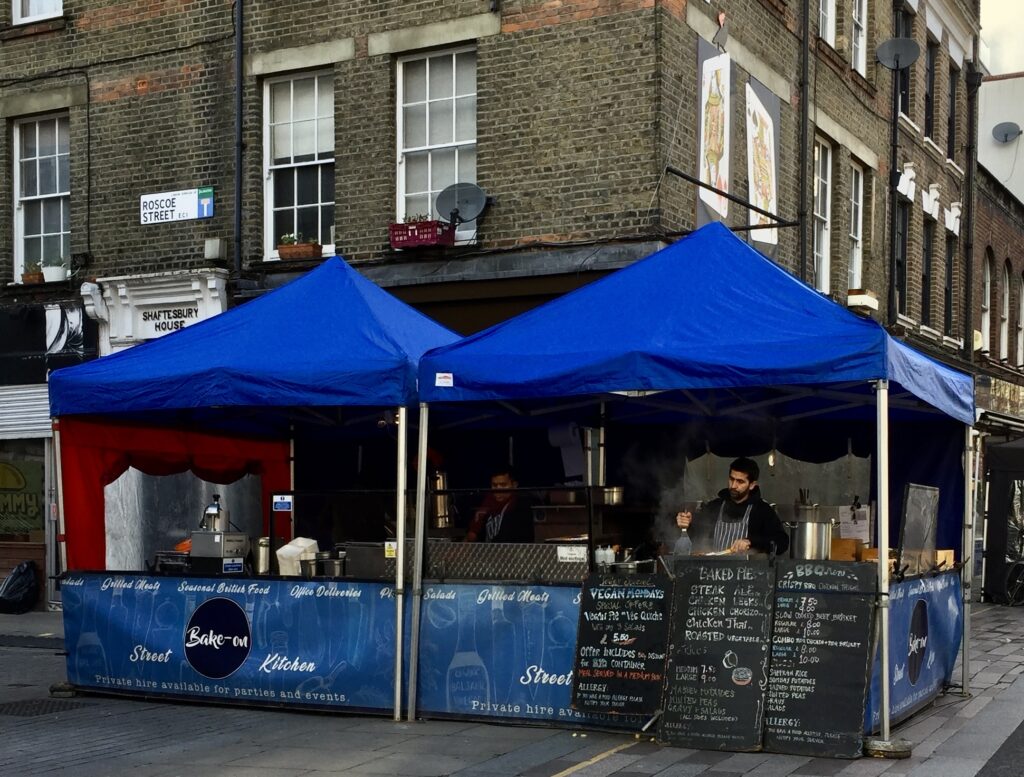
Some are award winners!

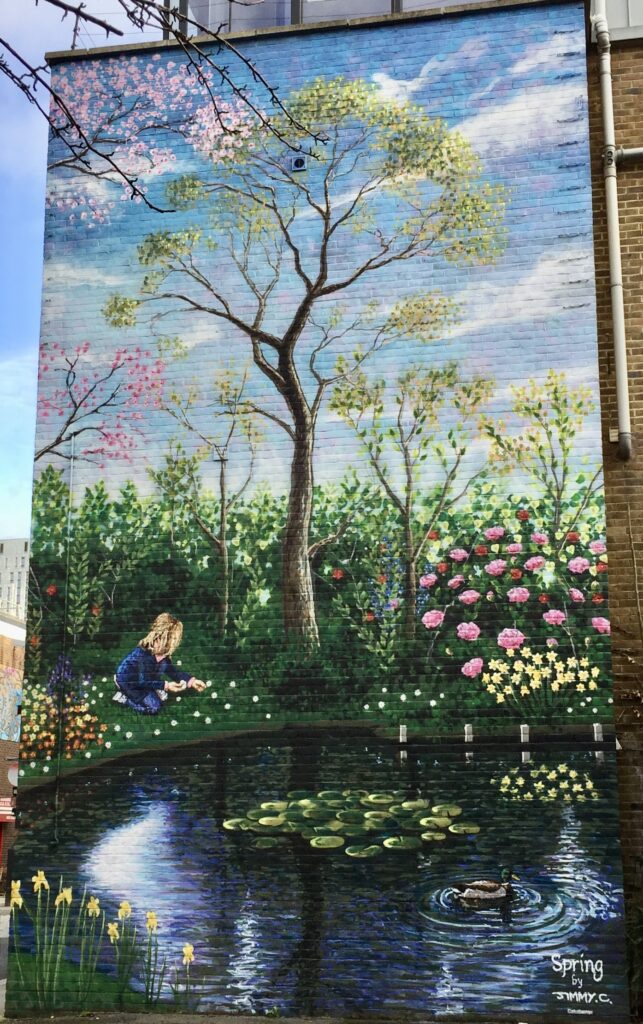
Spring by Jimmy C – nice to see this mural without cars parked in front of it …

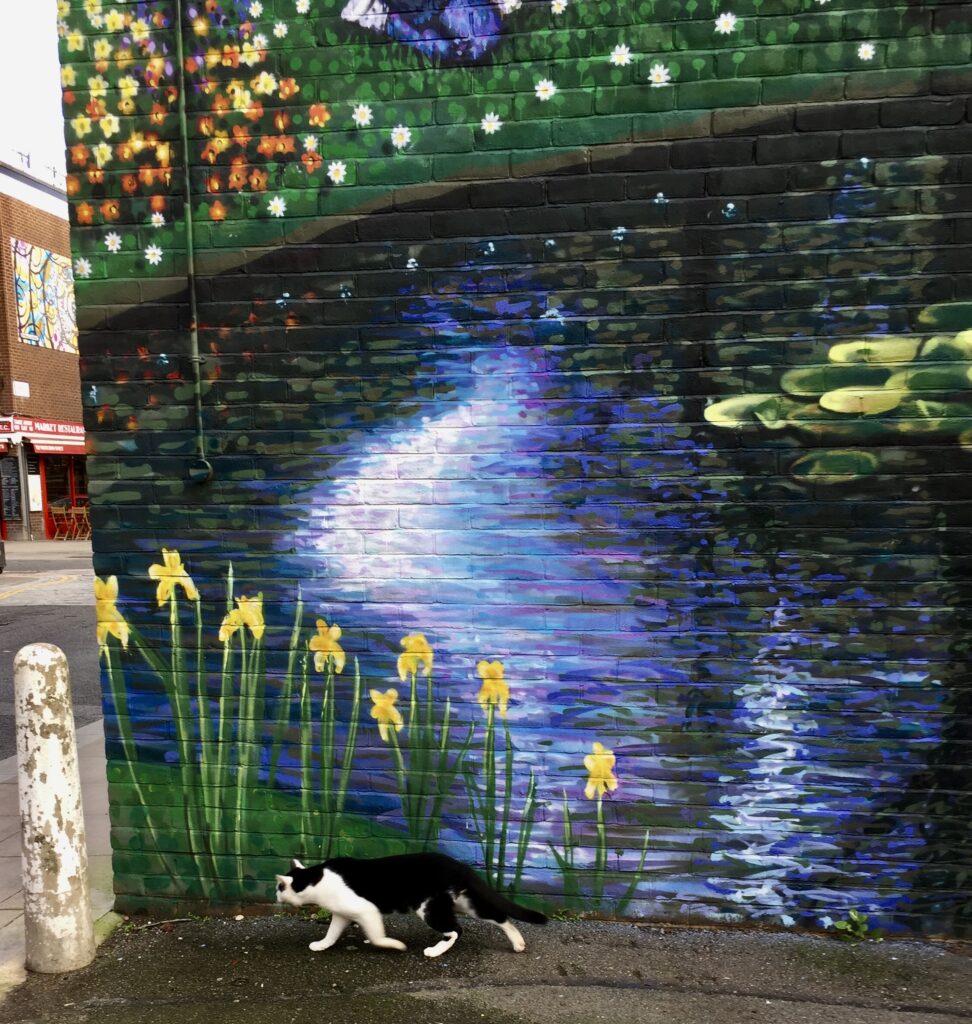
Miaow!
More street art …
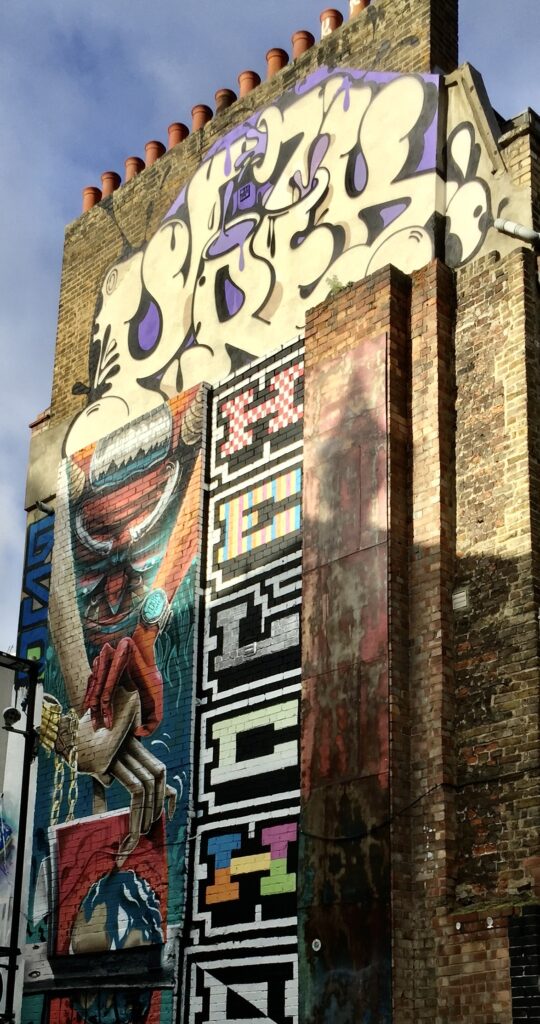
One of my favourites ..
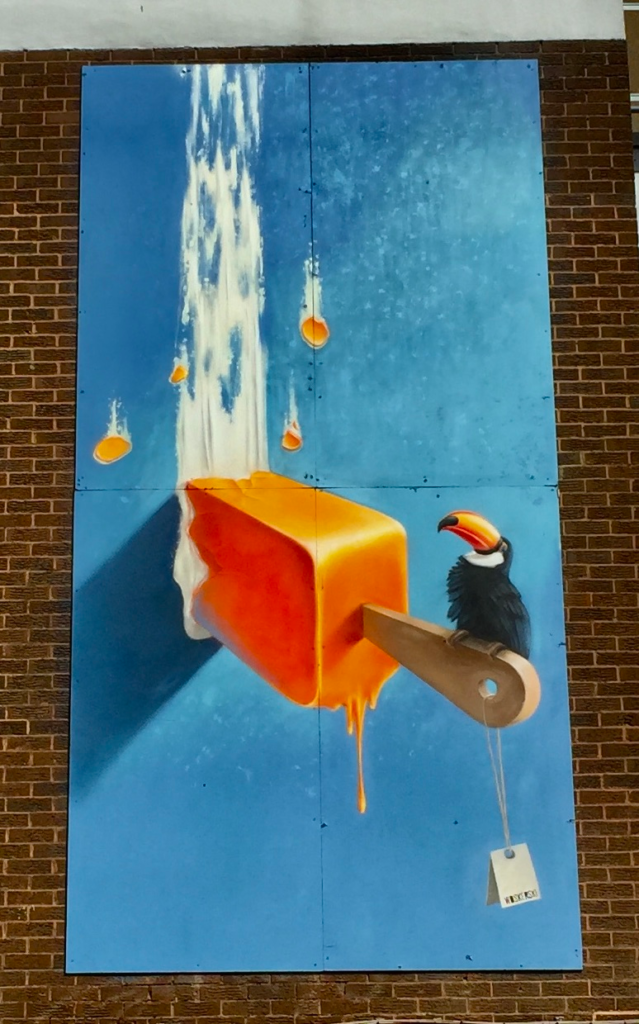
Made me smile …

The following words in italics come from the St Luke’s Conservation area document. The images are mine.

Central and pivotal to the conservation area St. Luke’s Church, dating from
1733, designed by John James and Nicholas Hawksmoor, is one of London’s
most important churches.
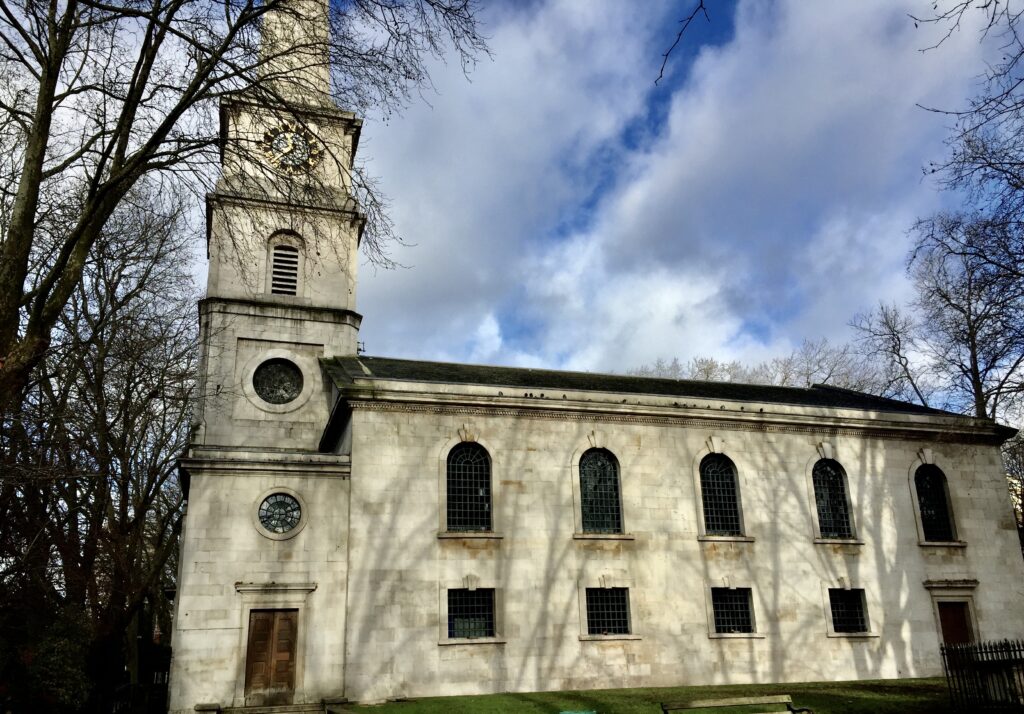
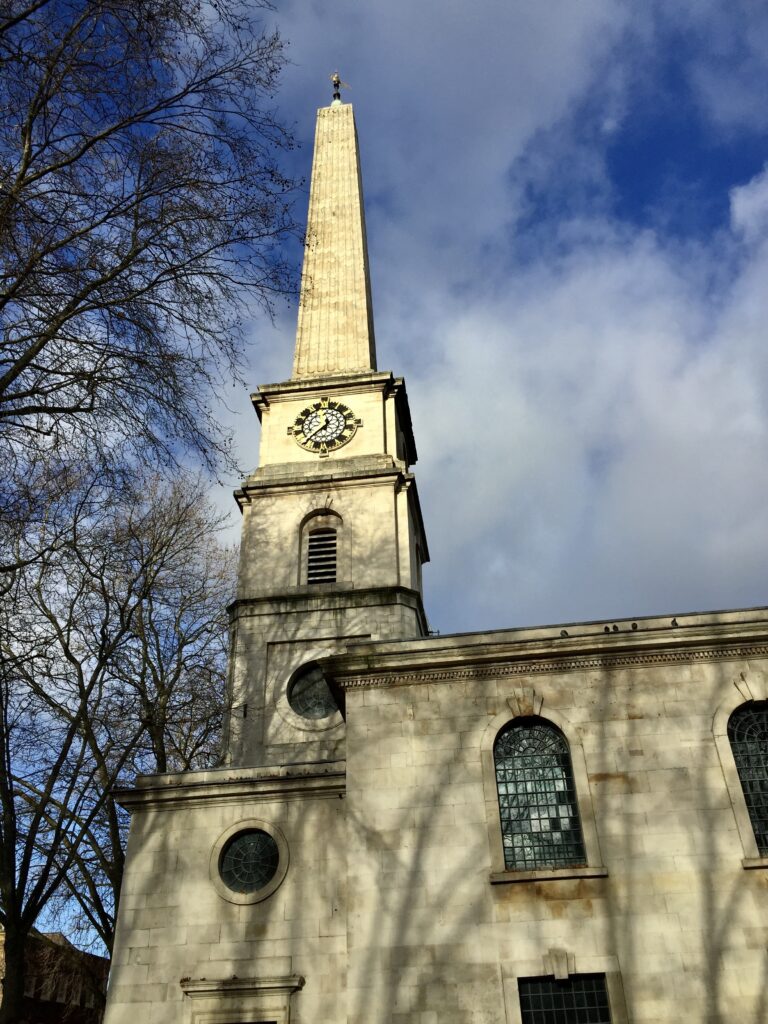
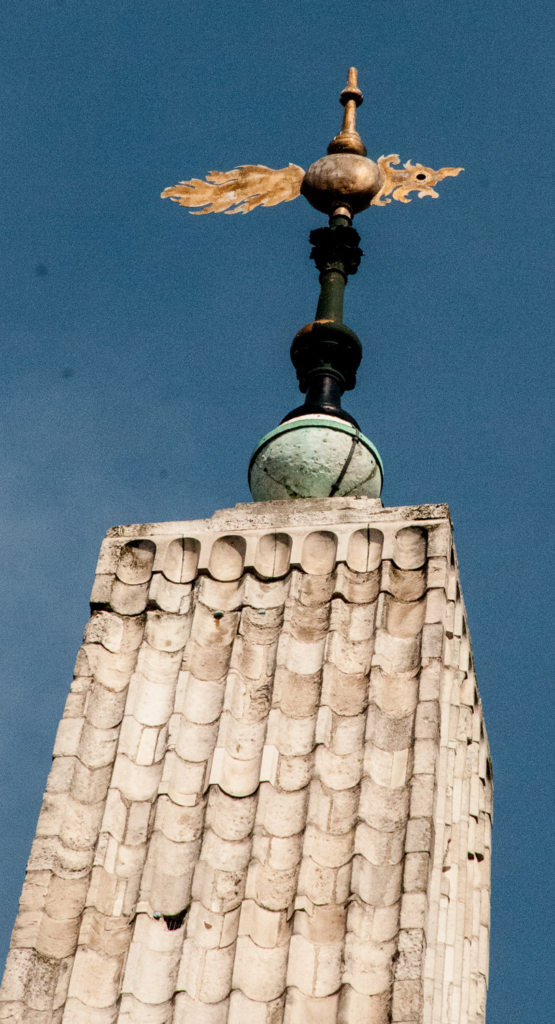
The church is now refurbished as a rehearsal,concert and education centre for the London Symphony Orchestra. The unusual obelisk spire is a major local landmark, with important views downWhitecross Street.
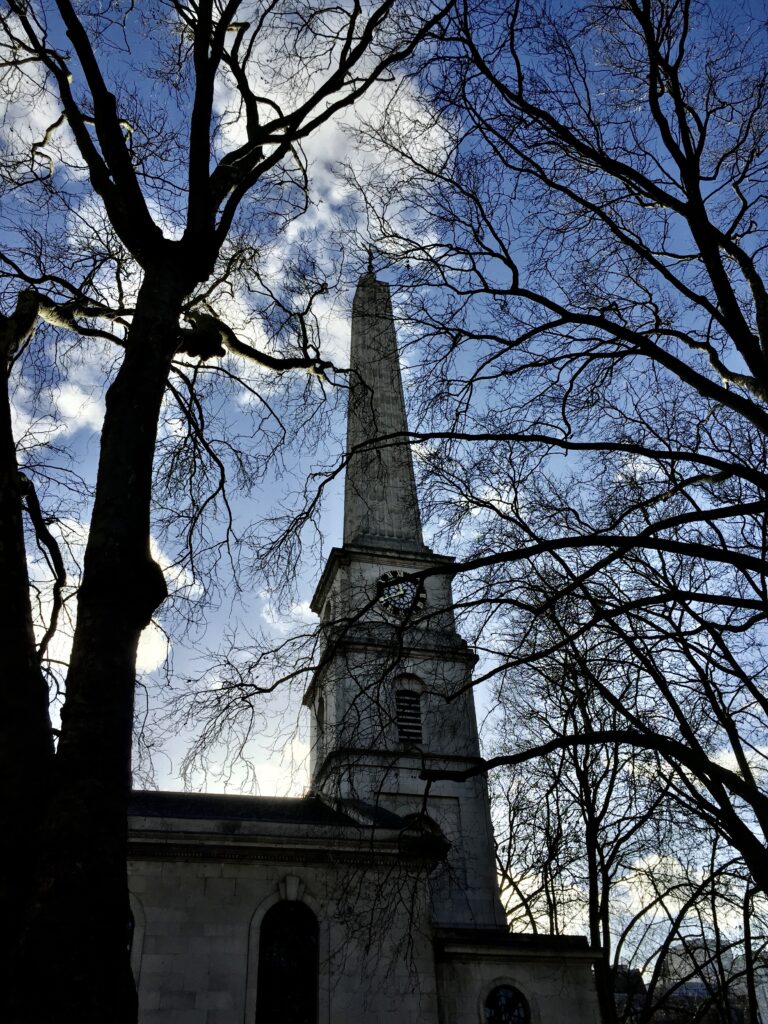
Surrounding the church is the churchyard and burial ground, now a public open space, with fine plane trees, railings and tombs.
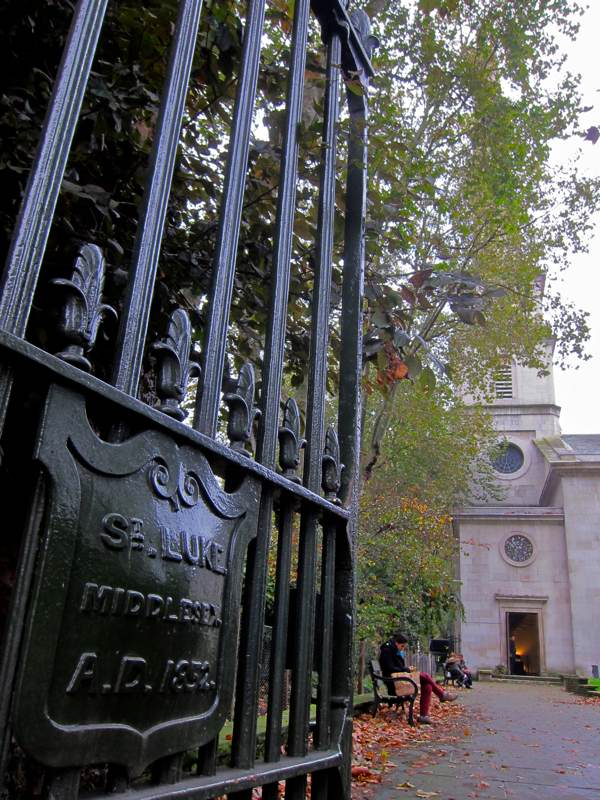
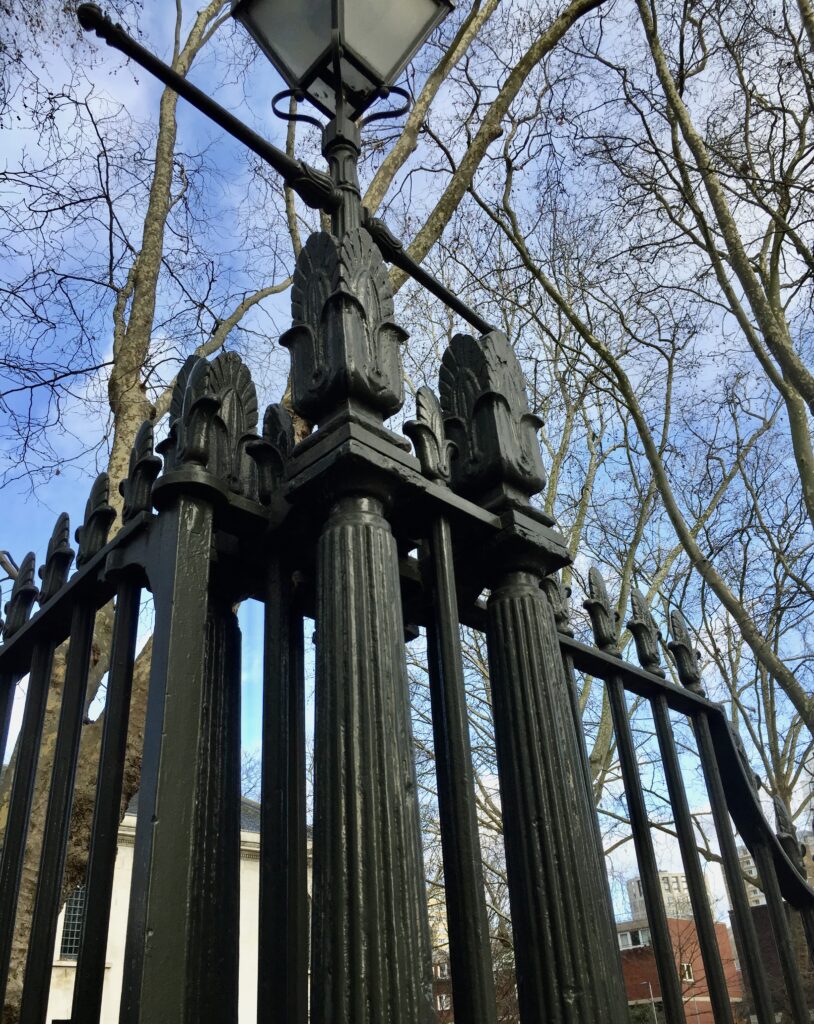
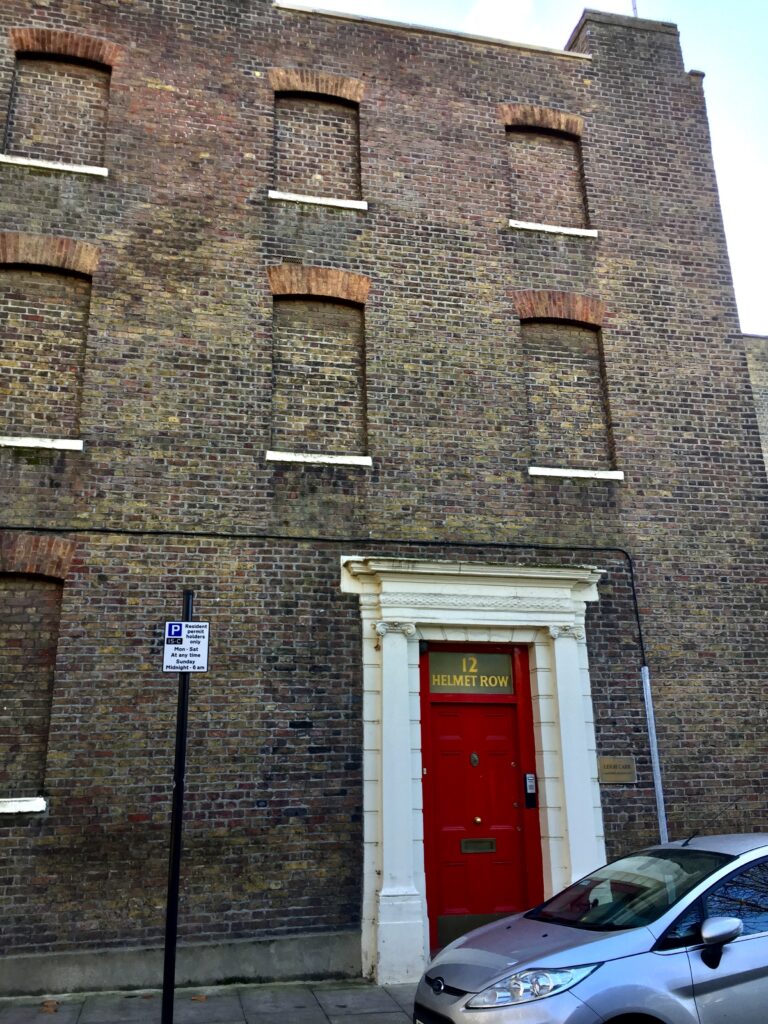
Fronting onto these spaces are several important groups of Georgian and Victorian buildings which are of architectural and historic interest and which contribute to the setting of the church.
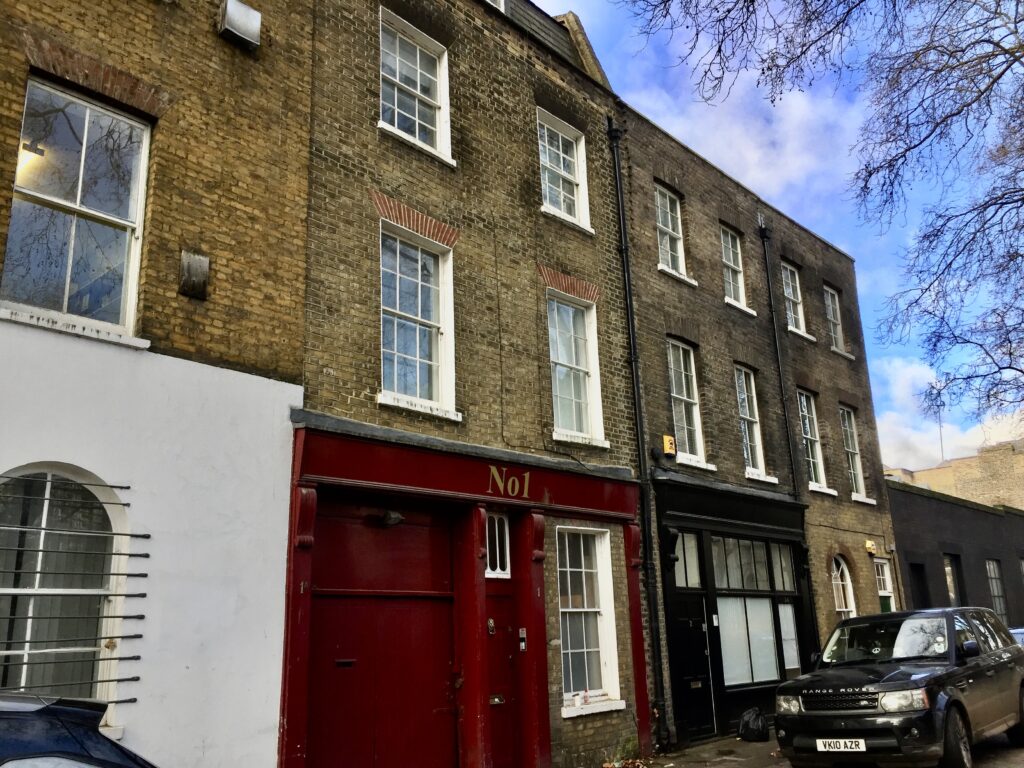
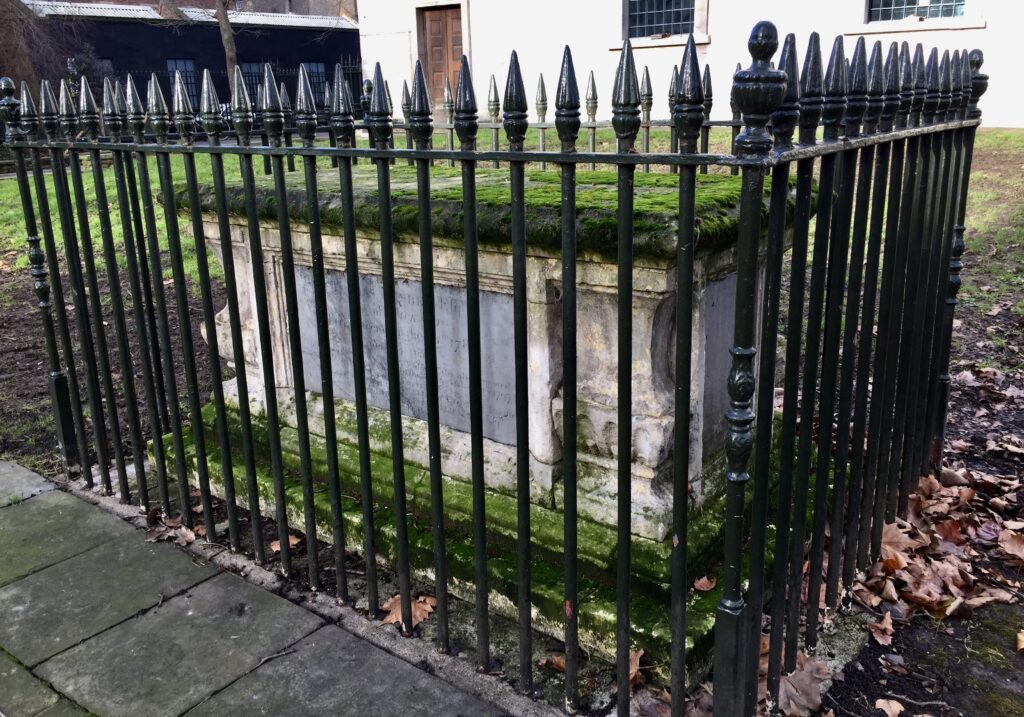
There is a tomb in the churchyard which is often described as the family tomb of William Caslon (1692-1766) …
He was the first major letter founder in London and, nearly three centuries later, remains the pre-eminent letter founder this country has produced. Before Caslon, there was little letter founding in Britain and most type was imported – even Shakespeare’s First Folio was printed with French type. But Caslon’s achievement was to realise designs and produce type which have been widely used ever since. And it all happened here, around the eastern fringes of the City of London. The Caslon family tomb stood just yards from where William Caslon started his first letter foundry in Helmet Row in 1727.

Here is a specimen of his typefaces from 1734 …
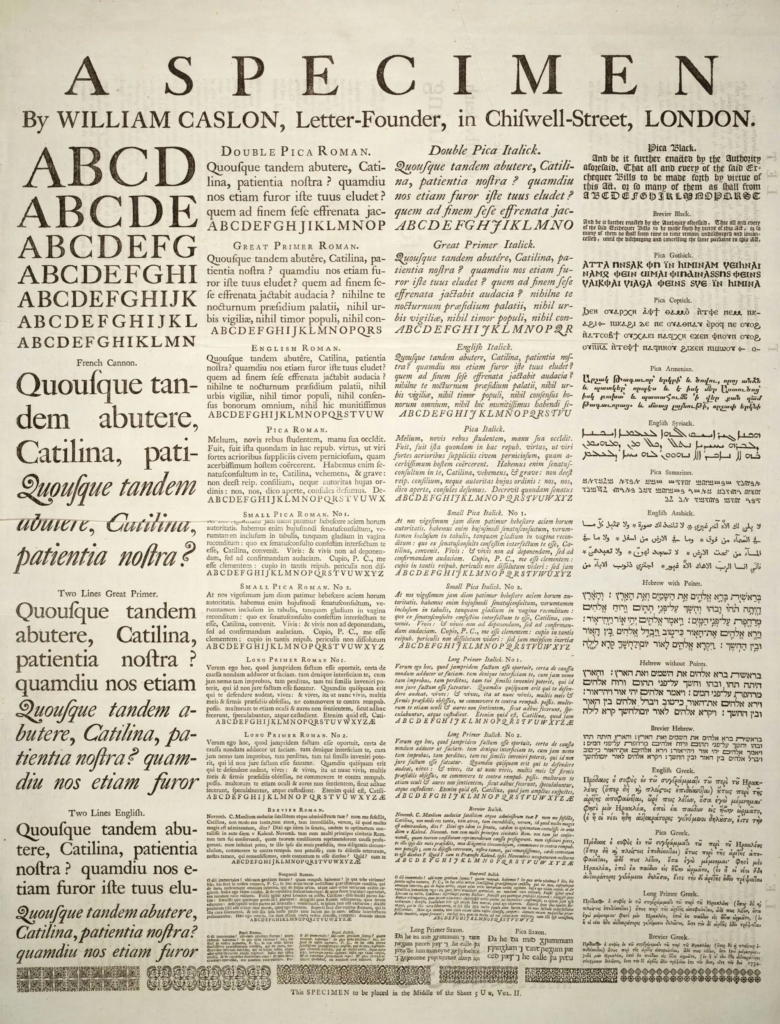
There is a special edition of the Spitalfields Life blog devoted just to him – William Caslon, Letter Founder.

However, when I looked more closely at the tomb inscription, the name I saw was Thomas Hanbey …
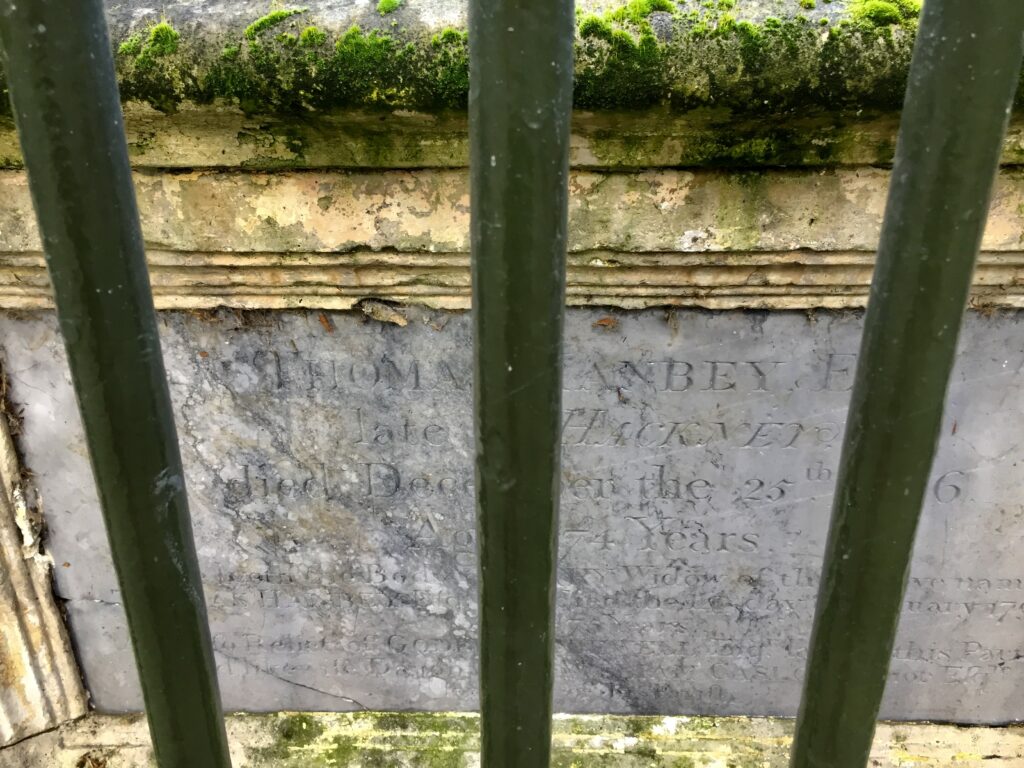
A mystery!

But here’s a quote from The Typefoundry blog of December 2007 (my emphasis) …

‘T. B. Reed … wrote that the Caslon tomb was kept in repair by a bequest from Mary Hanbey, daughter of William Caslon I, who died in January 1797. In fact it is clear from her will that the present tomb, which she paid for, replaced the original monument of the Caslon family, and was dedicated to her husband Thomas Hanbey, who had been born in Sheffield and died in 1786. He was a Liveryman of the Ironmongers’ Company and Master of the Company in 1775 …’

In any event, hopefully the remains of the remarkable Mr Caslon are still there somewhere, so I shall keep my tribute to him in this blog.

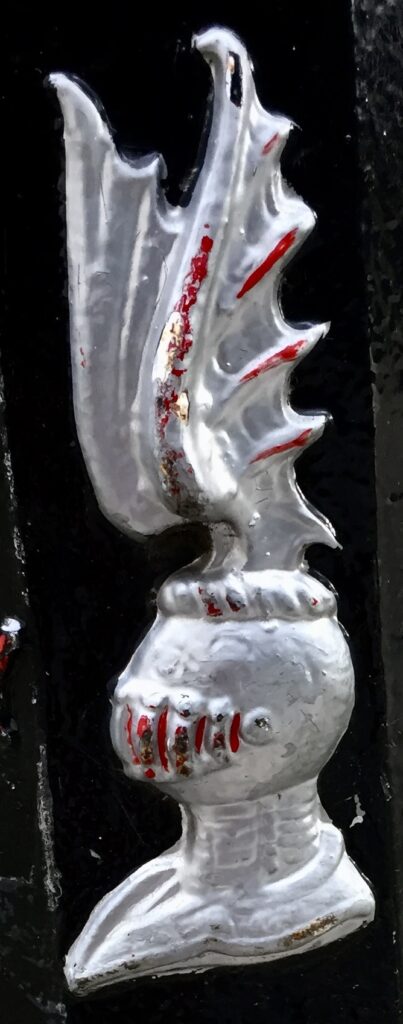
The church spire was topped by an unusual weather vane depicting the head of a dragon with a fiery comet-like tail. Apparently this was misinterpreted locally as a louse, and by the mid-20th century had gained the church the nickname ‘lousy St Luke’s’ …
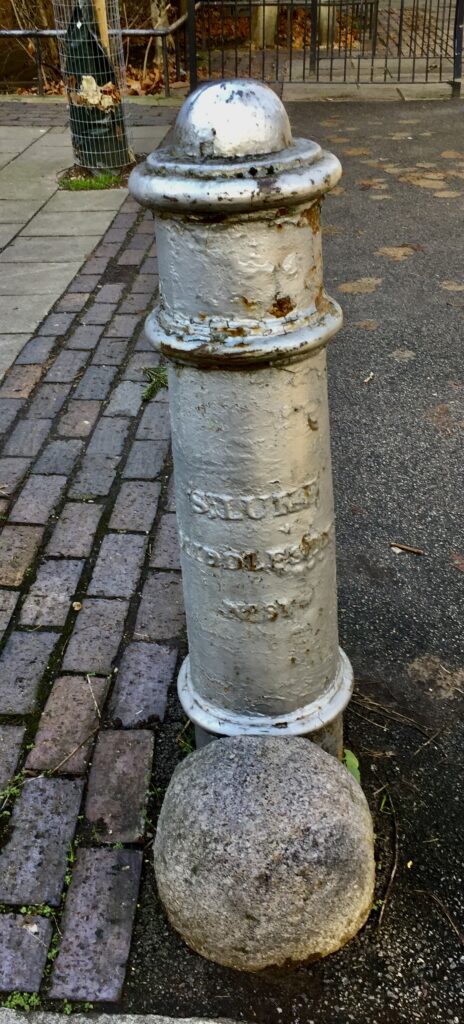
Parish Boundary bollard for ‘St Luke’s Middlesex’ …
Walking east along Old street, look up for the Salvation Army ghost sign …
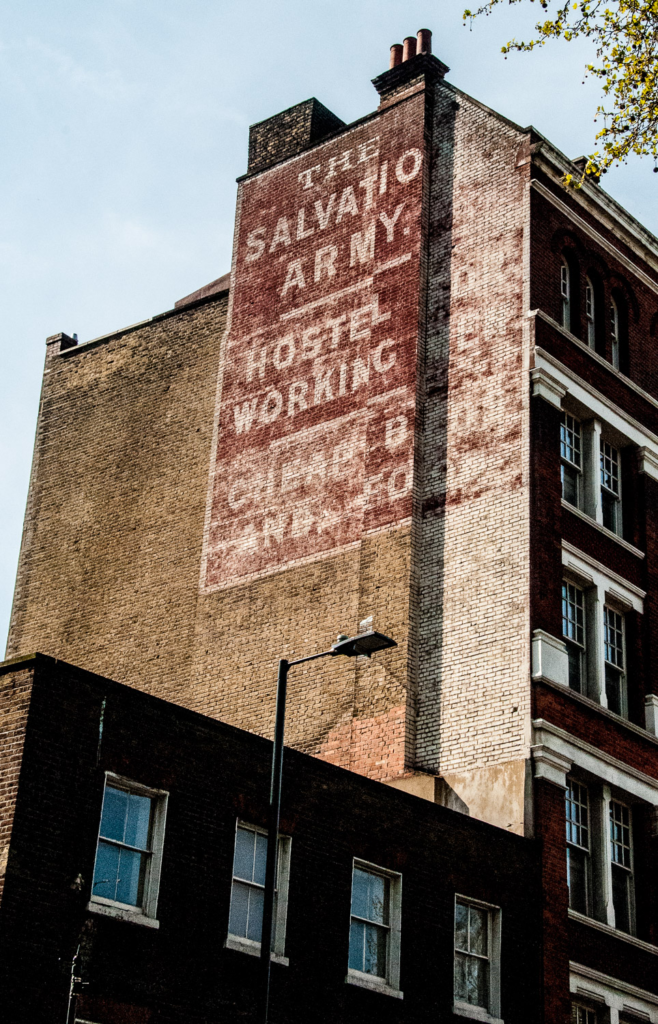
‘Hostel for working men. Cheap beds and food’.

And finally, number 116, now appropriately renamed Stylus, used to be the Margolin Gramophone Company factory …
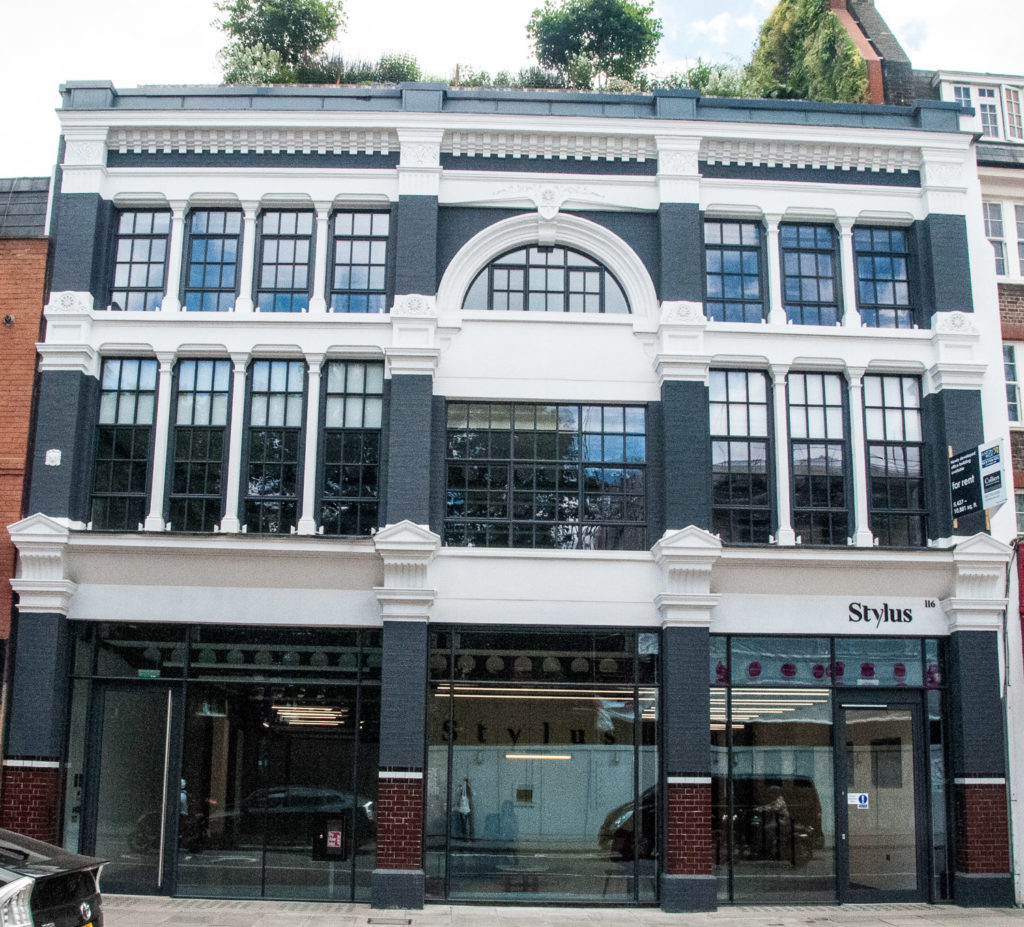
They manufactured the Dansette record player – a name very familiar to us baby-boomers …
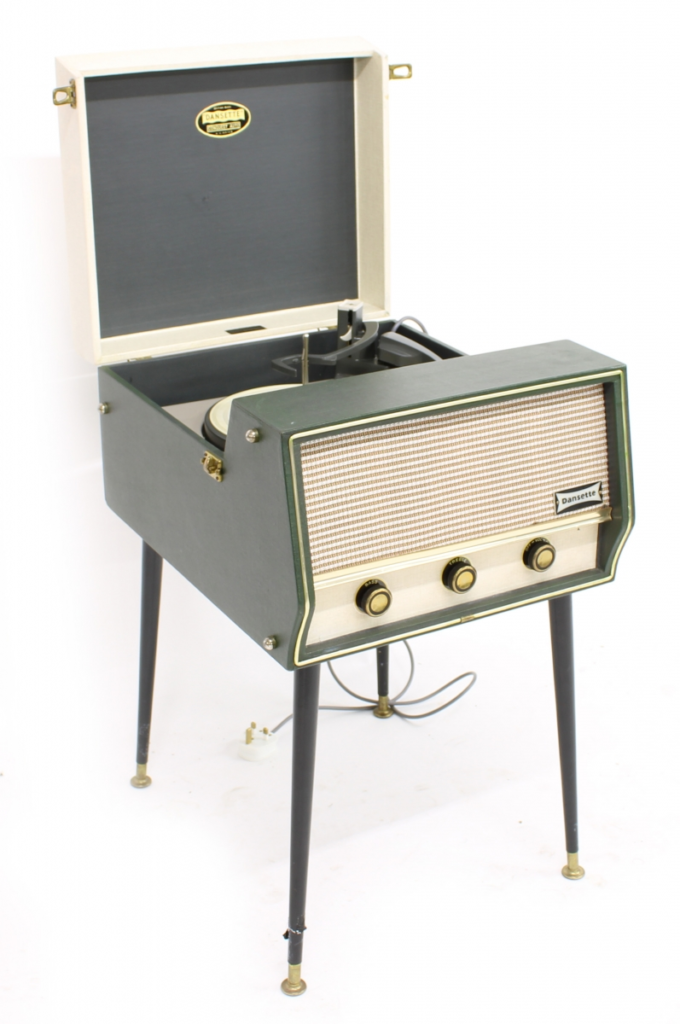
I had a portable one just like this …
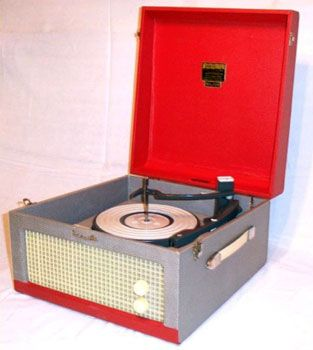
Cool!!!

In those days I could pop some of my vinyl collection into a handy little carrying case and take it when visiting friends. And, guess what, I still have it! …
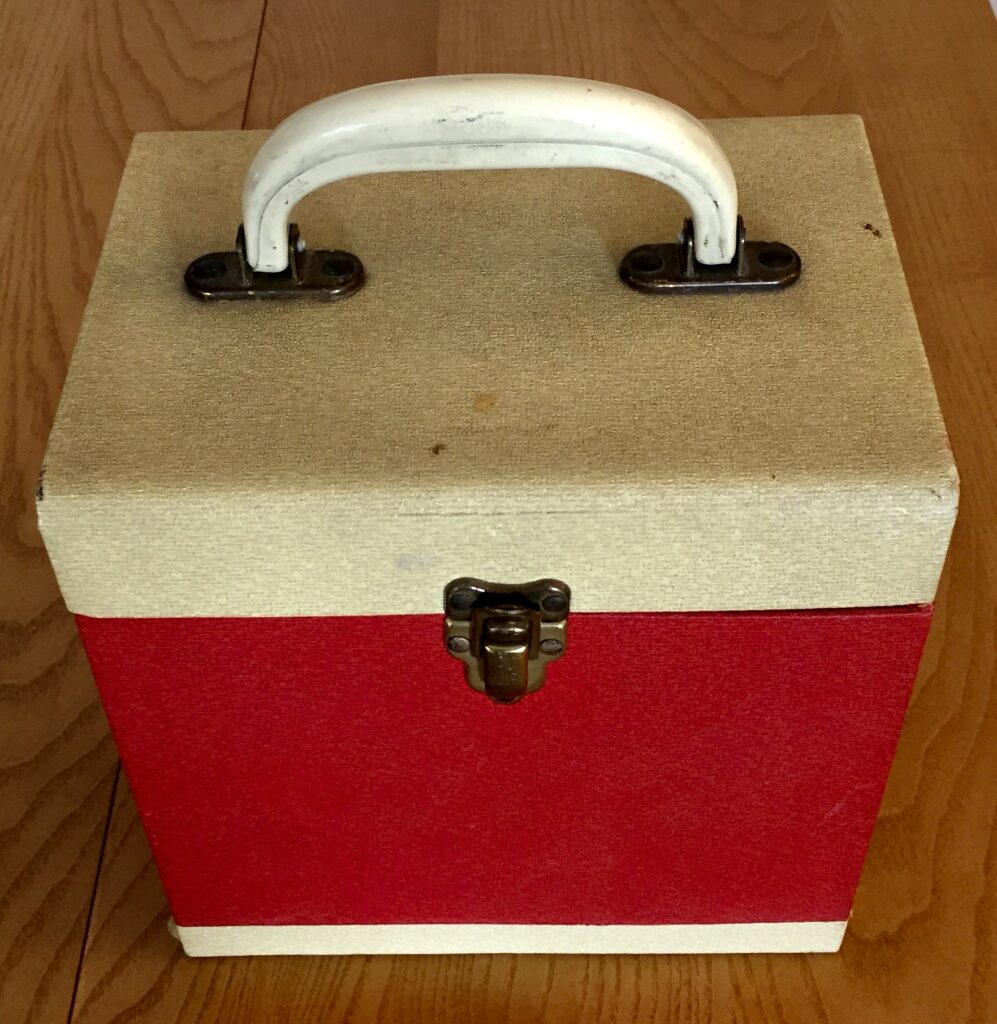
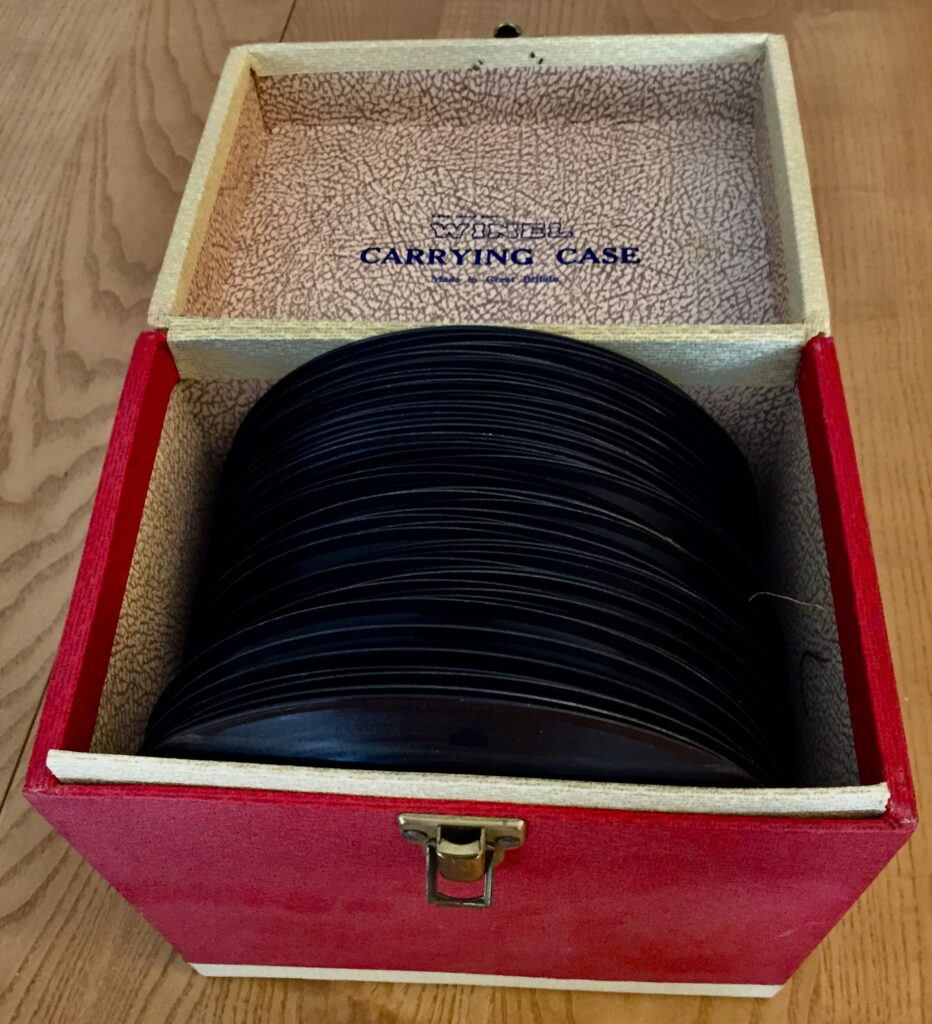
And there are still records in it …
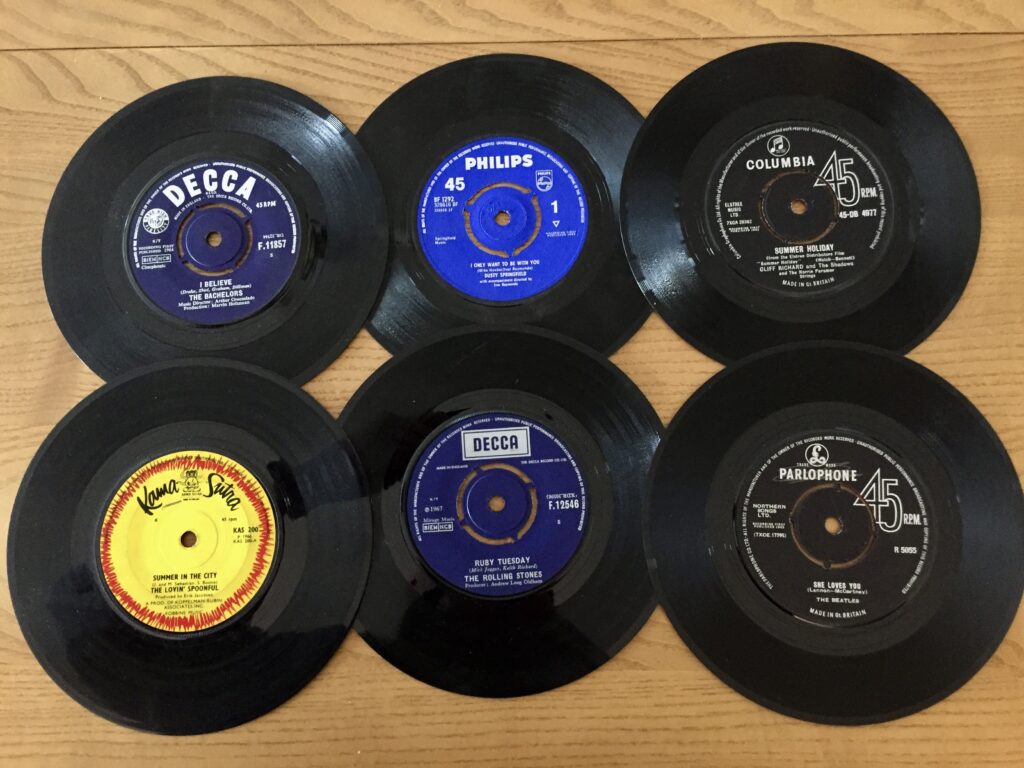
A small sample …
It was my mum who liked The Bachelors, honest.

This was a very controversial 1965 hit around the world …
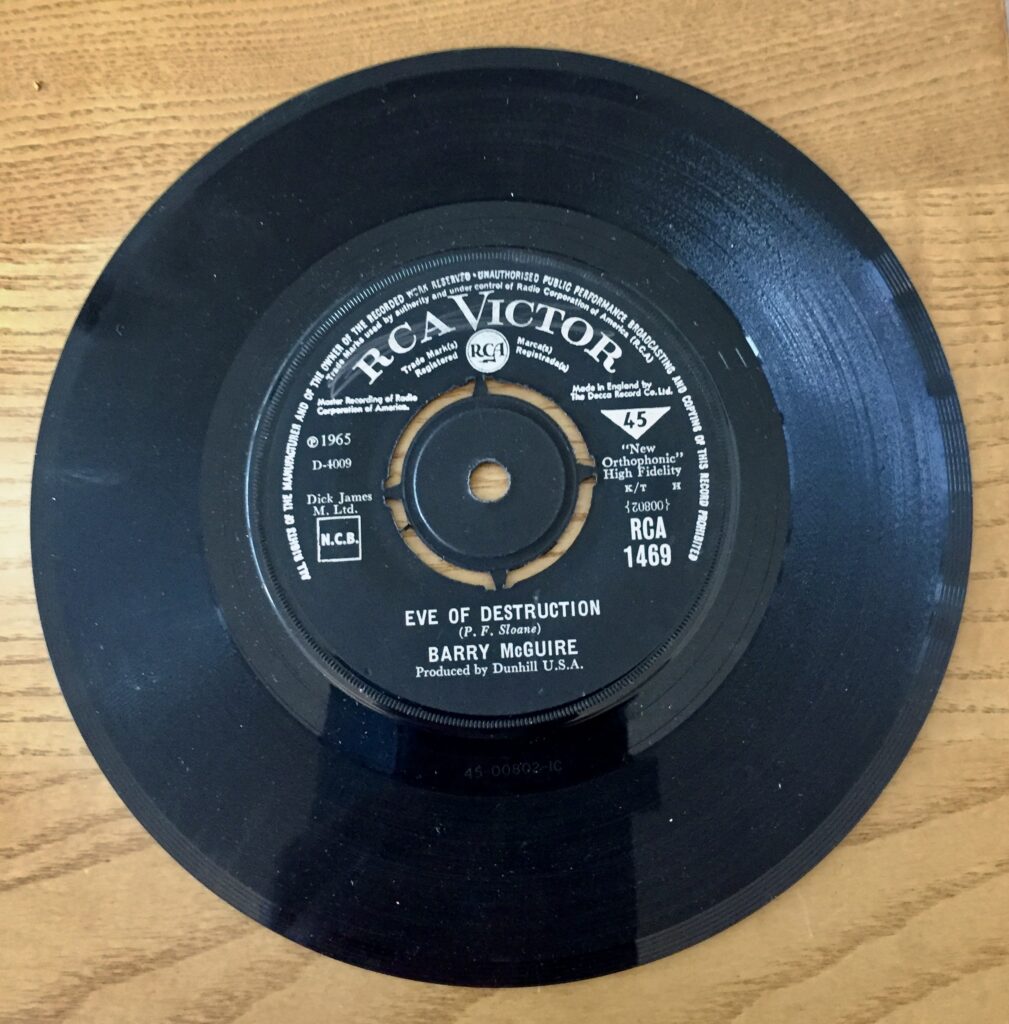
Listen to it and you will see why. It was the time of the Vietnam War and the year when Martin Luther King organised a march from Selma to Birmingham, Alabama, which began on 7 March 1965 with around 600 marchers taking part. When the marchers reached the outskirts of Selma they were attacked by state troopers and local police.

Here’s a link to the recording along with video footage.

The Wikipedia link about the song can be found here.

If you would like to follow me on Instagram here is the link …
https://www.instagram.com/london_city_gent/

Bollardology!

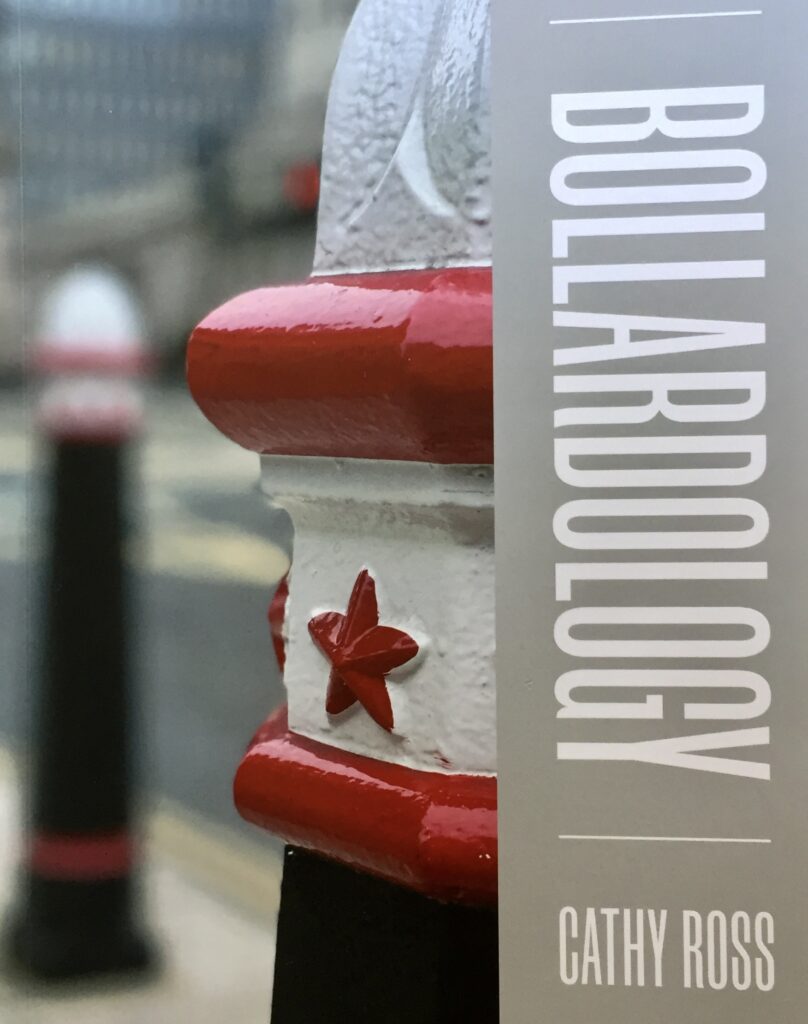
Oh, bliss, someone has written a book about the City of London bollards.

Odd as it may seem, I’ve always wanted to know more about them and now my curiosity has been satisfied by this wonderful book, Bollardology, by Dr Cathy Ross, the historian and former Director of Collections at the Museum of London.

To suggest that this is just a book about street furniture is not to do it justice. It’s a combination of a fascinating history of the City itself, beautifully written, along with what I can only describe as a bollard love affair. I promise that, if you read this book, you will never look at the humble bollard the same way again. For example, you’ll trace its development from the 18th century to the present day, from when it protected us from rampant coach and horse traffic to when it helps to protect us now from the actions of terrorists. To say I learnt a lot would be an understatement.

If you can, do what I did and pop in to the Guildhall Art Gallery and purchase it at their little shop, or buy it online here – they tell me it’s their current bestseller. It’s an absolute bargain at £12:99. I read it at one sitting and then set out with my camera to track down some examples.

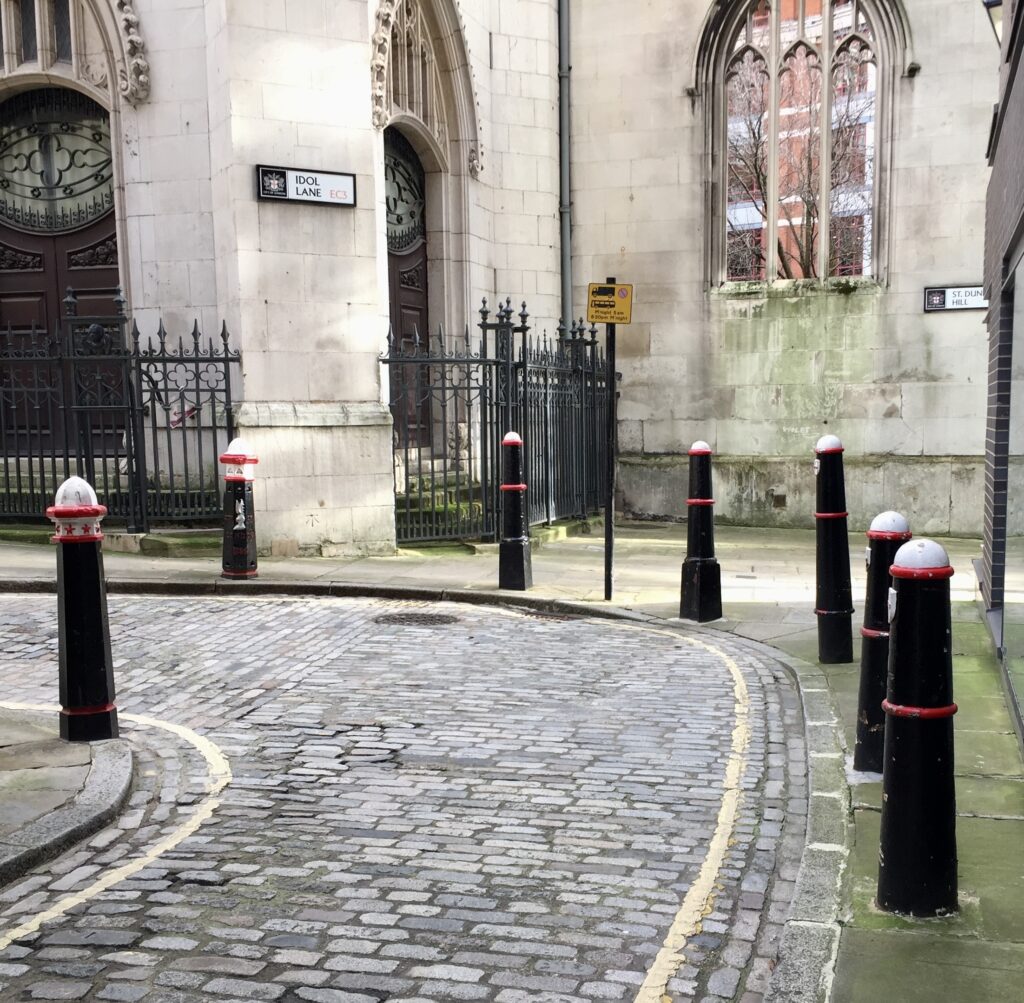
There is a little platoon of bollard soldiers gathered in Idol Lane alongside the beautiful ruined church and garden of St Dunstan in the East …

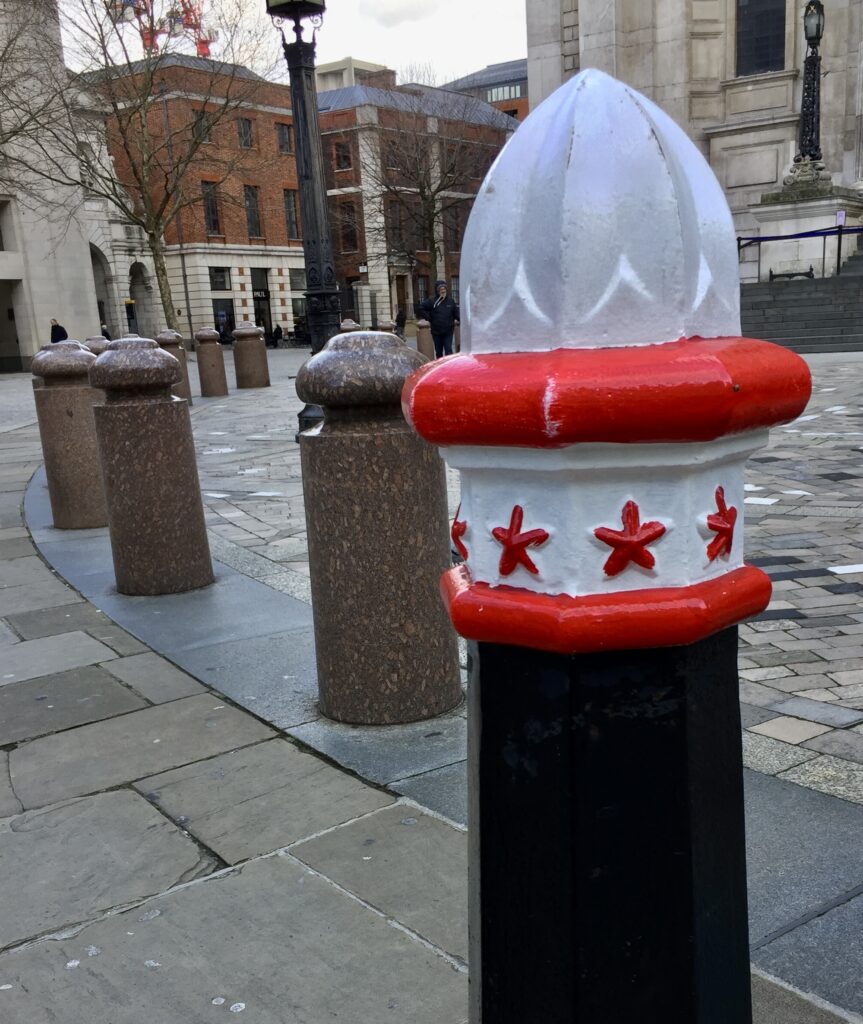
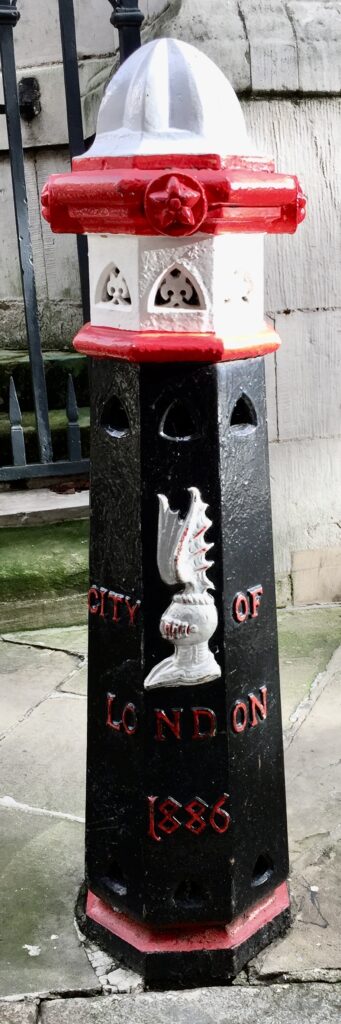
And surely this one is their commanding officer. Look at the striking City emblem and the 1886 date …

And, the most extraordinary feature of all, it’s hollow …

Here’s the story of this remarkable little artefact as told in Cathy Ross’s book along with extracts from the excellent Look up London blog by Katie Wignall.

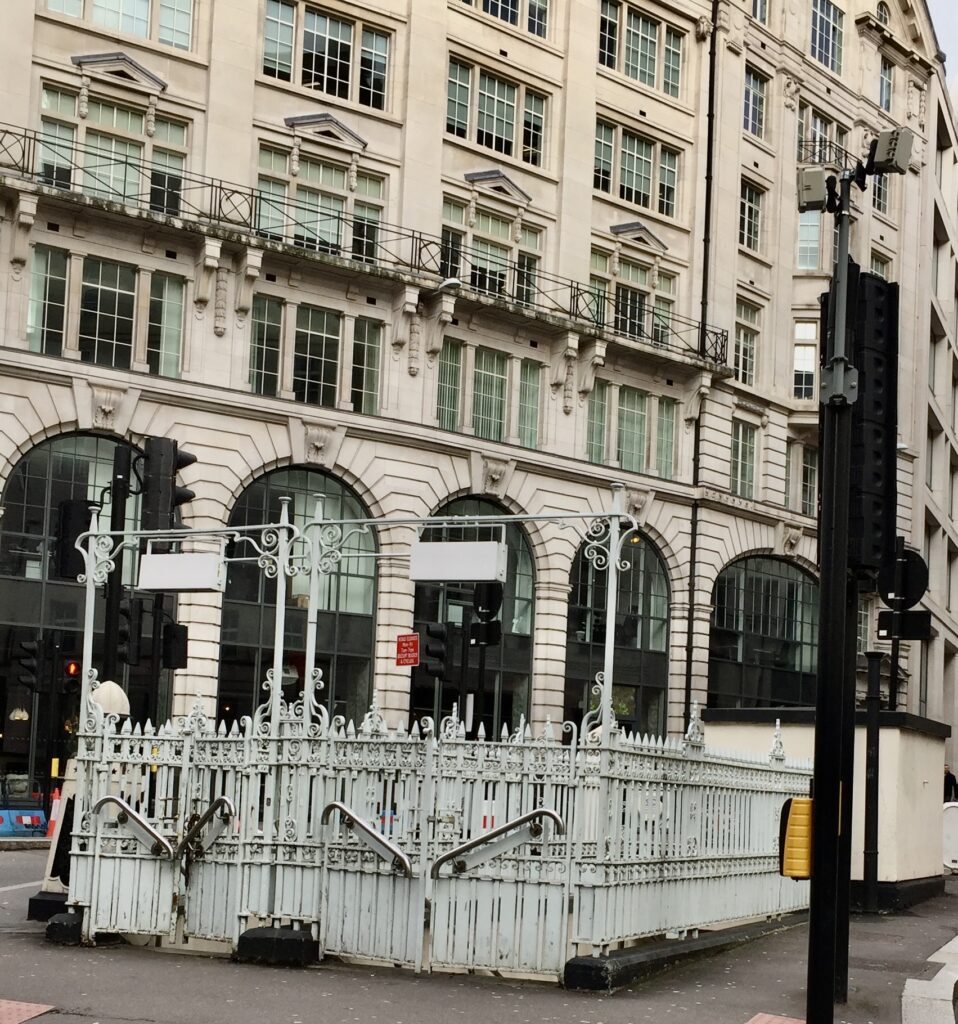
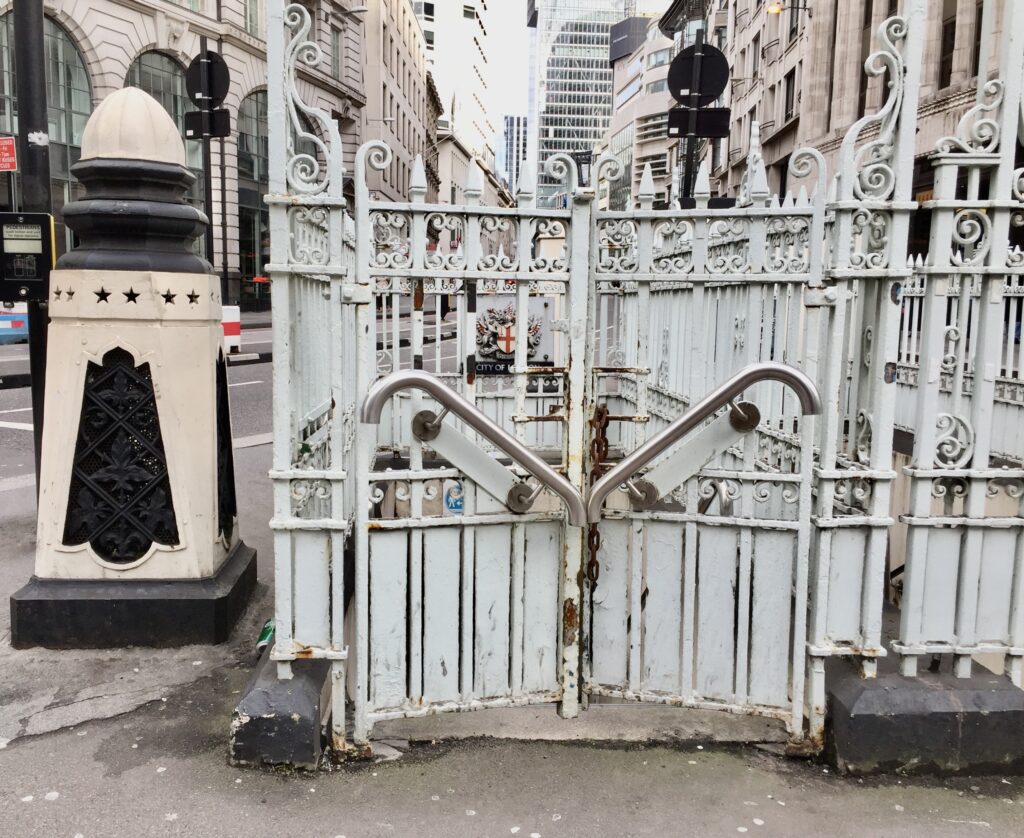
Cathy’s sleuthing revealed that in October 1886 the City of London Corporation unveiled a new public urinal at the corner of Gracechurch Street and Eastcheap. This was the original site of the hollow bollard where it formed part of the ventilation system. Here are the loos today – all locked up …

It was hard to find any 19th century images of the public toilet, but you can see the urinal (circled in yellow) on the 1893-96 OS map below.

layersoflondon.org – OS maps 1893-96

To further visualise it, there’s a description detailed in Bollardology. It comes from William Haywood, an Engineer and Surveyor who was the City of London’s Commissioner of Sewers (think of him as the Joseph Bazalgette, specifically for the City). He was an extraordinary man and one of the pleasures of this book is finding out more about him (along with his somewhat ‘unconventional’ personal life).

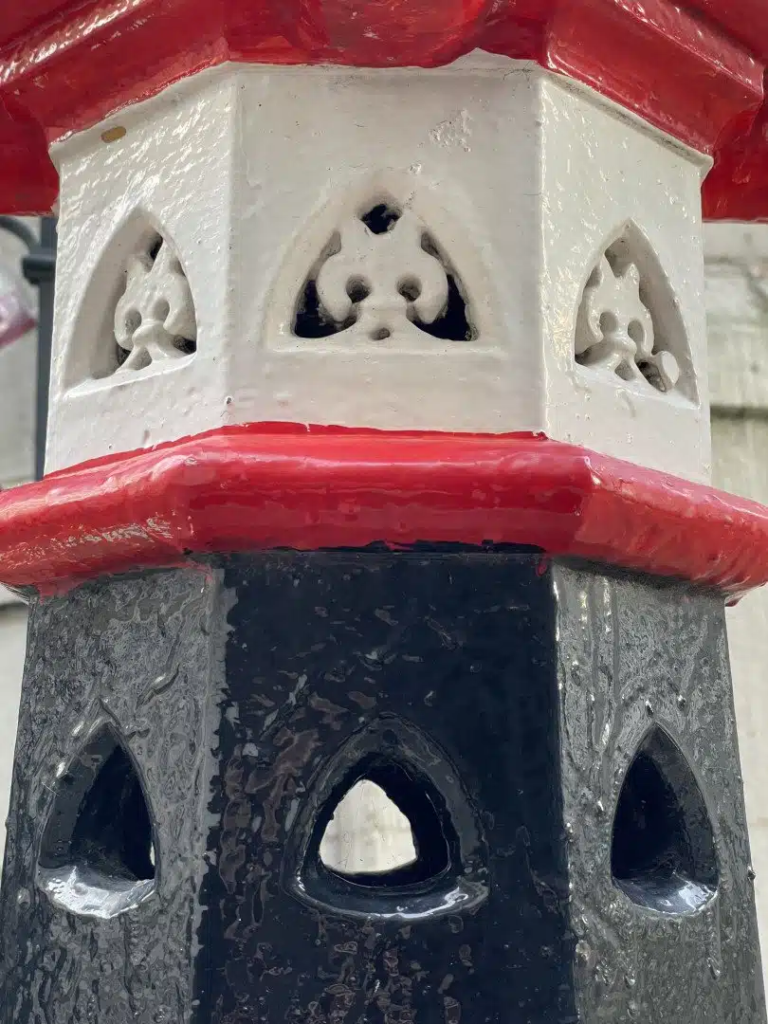
In his report in 1887 he notes there is a ‘large five light lamp standard placed at the centre of the refuge, the base of which forms a ventilating shaft… The other lamp standards and dwarf posts [bollards] placed near the footway curbs are so designed to assist the ventilation.’

Although Katie couldn’t find any 19th century images of the five light lamp standard, she guesses it was similar to the remaining one by the public toilets outside the Royal Courts of Justice …

Five Light Lamp Standard, Royal Courts of Justice | Look Up London

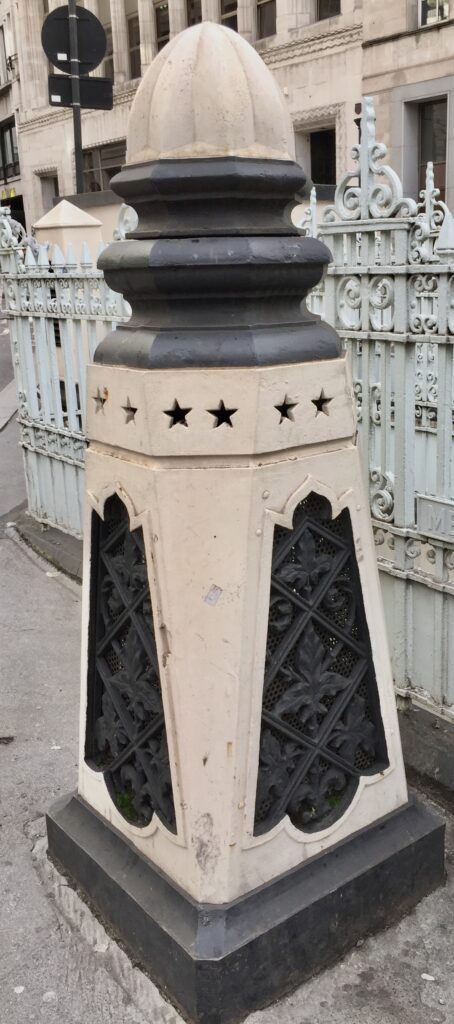
Today only the base of the original large lamp remains and it’s still an attractive bit of street furniture, now painted black and cream …

No record seems to exist as to how the Idol Lane bollard ended up where it is now, about five minutes walk away.

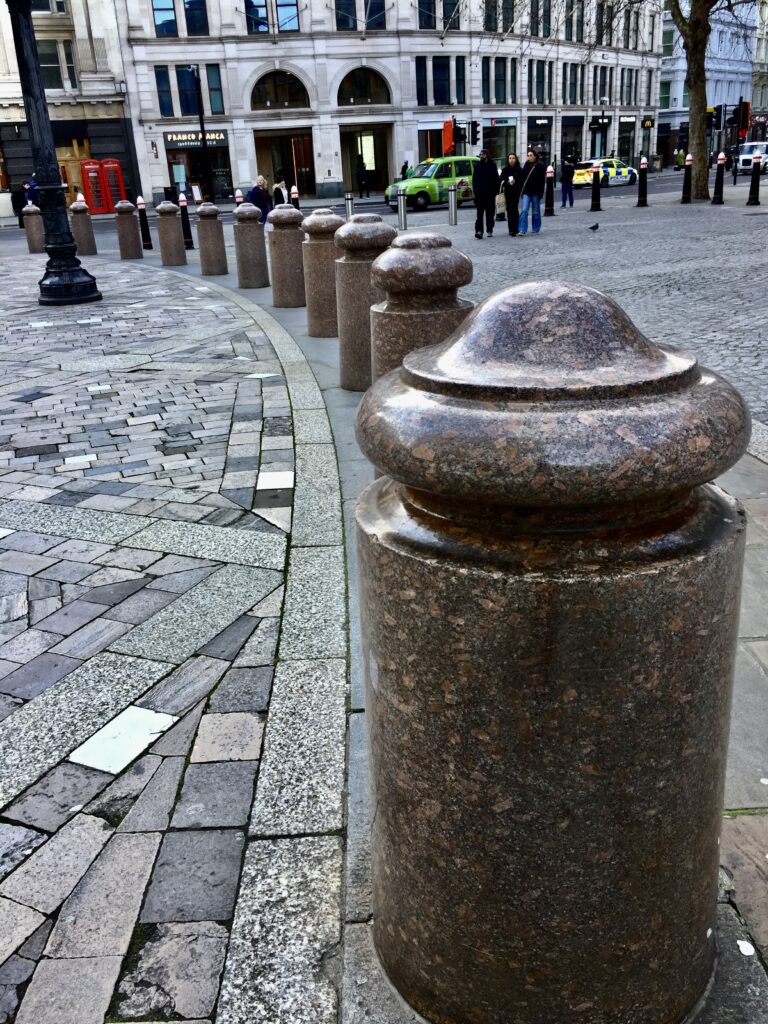
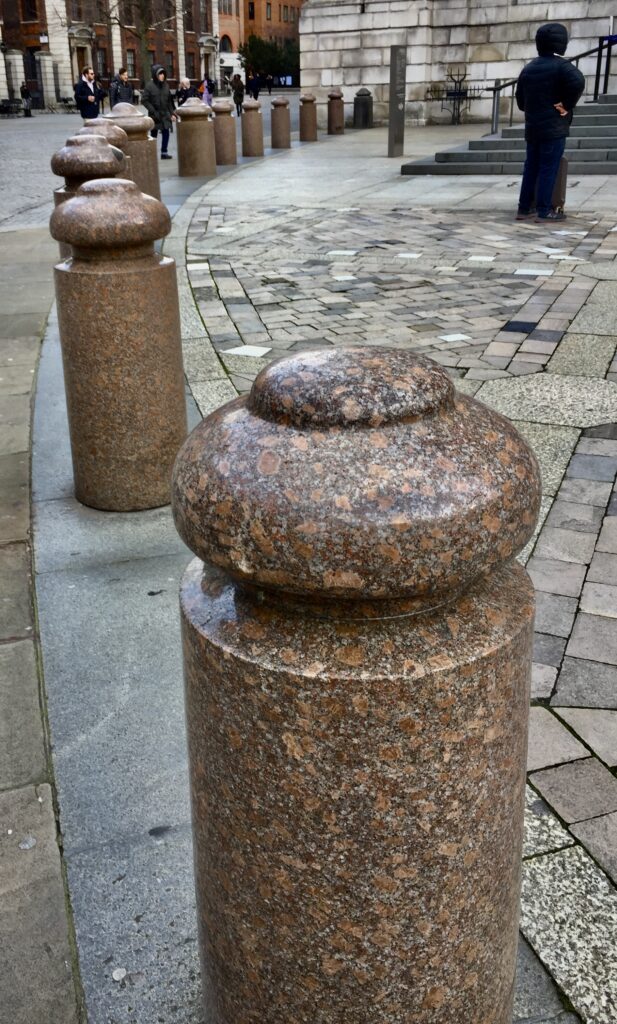
Here’s my personal bollard collection, starting with this semi-circle of 36 lumps of granite installed in 1874 around the west end of St Paul’s Cathedral. They were not called bollards at the time – The Times described them as ‘dwarf, ornamental granite posts’. This part of the Cathedal precinct had previously been closed off by iron railings and the stones marked the new and porous boundary between public and private land – a modernising ‘improvement’ …

The tops of some bollards remind me of a lemon squeezer …

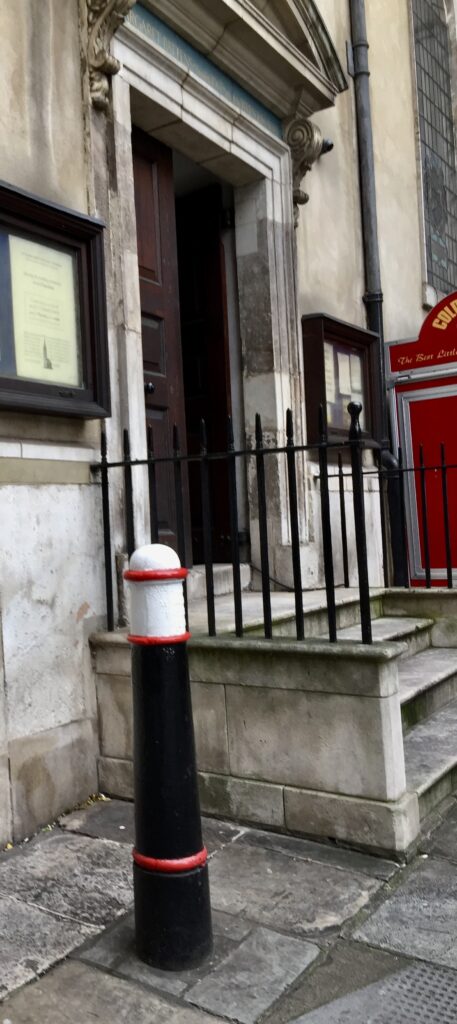
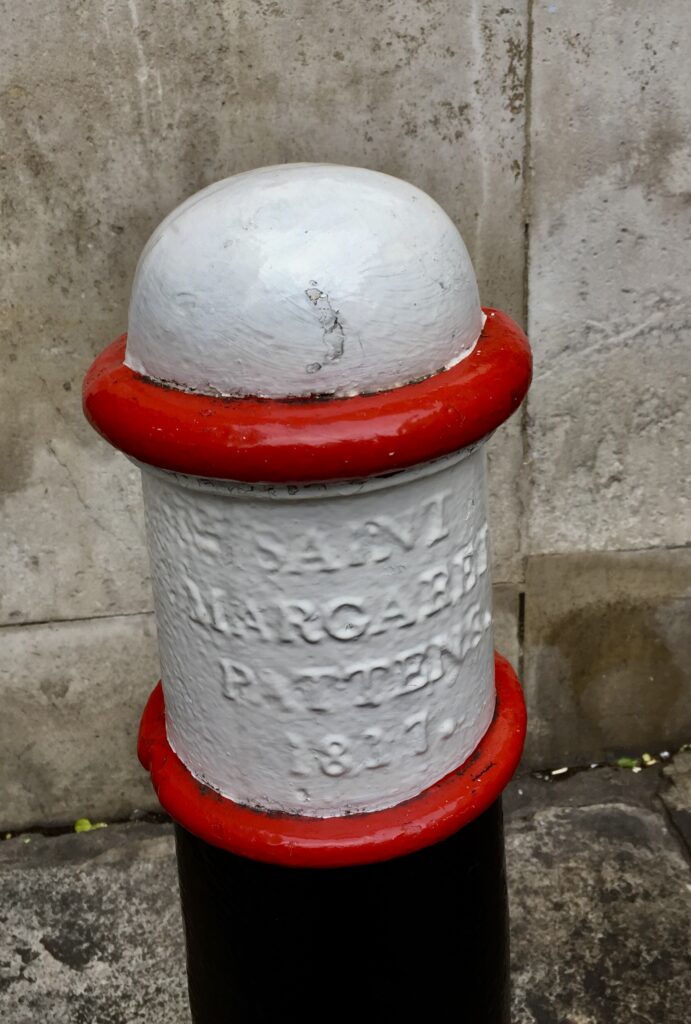
Outside St Margaret Pattens, this is one of a pair dated 1817 …

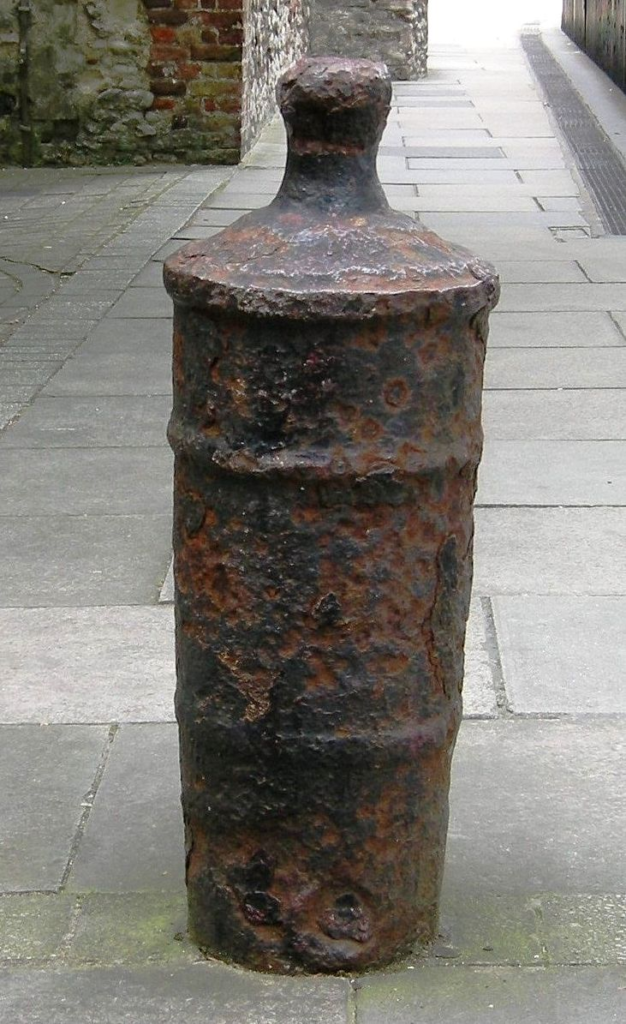
In the courtyard of St Helen’s Bishopsgate is what is often claimed to be the oldest bollard in the City. Experts identify this as the ‘cascable’ end of an 18th century French naval cannon …

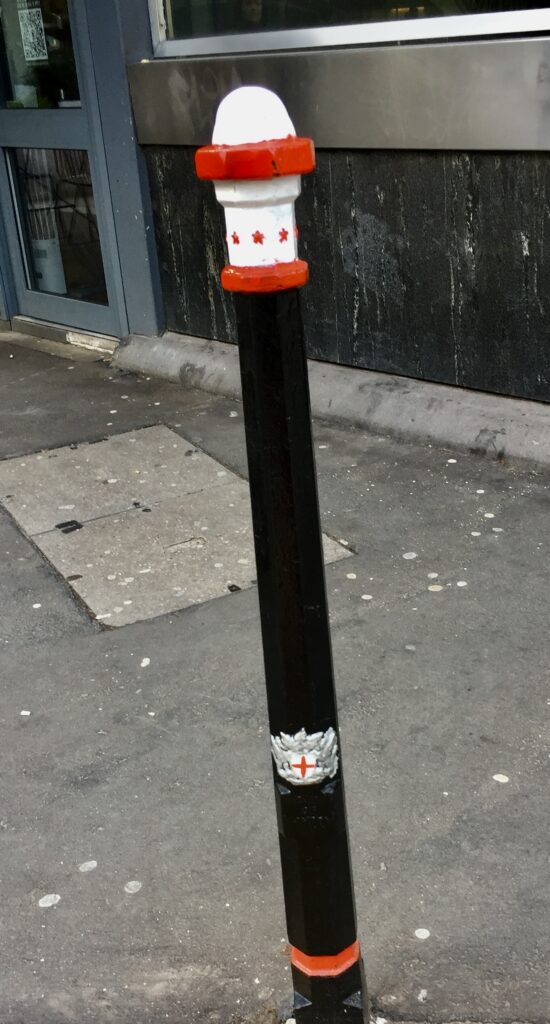
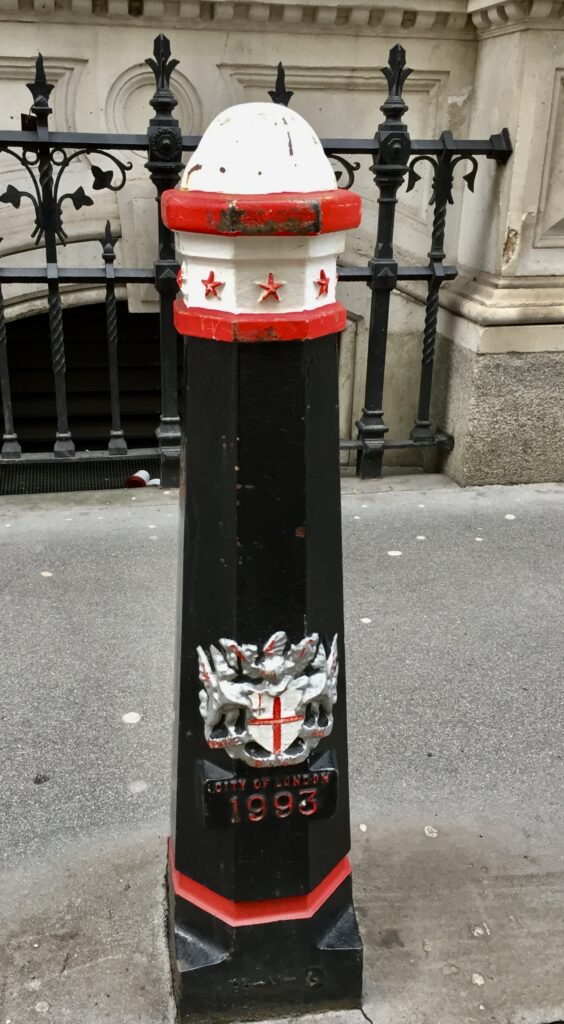
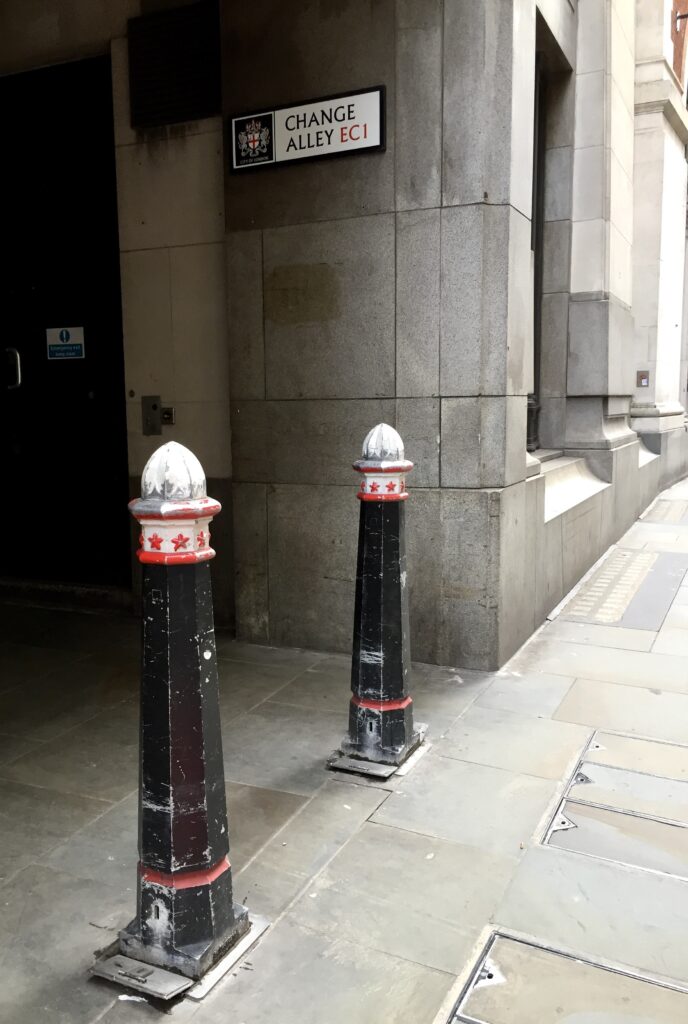
These skinny versions date from 1993 and apparently were often positioned in the spot where parking meters once stood before they were removed …

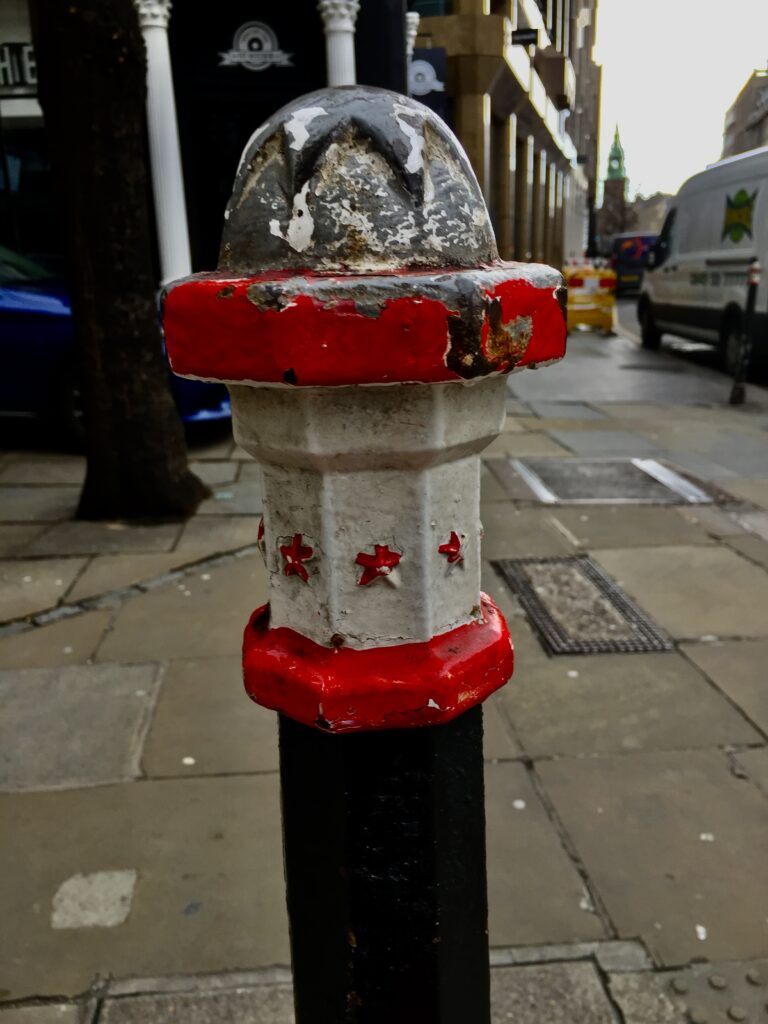
Some show a fair bit of wear and tear …

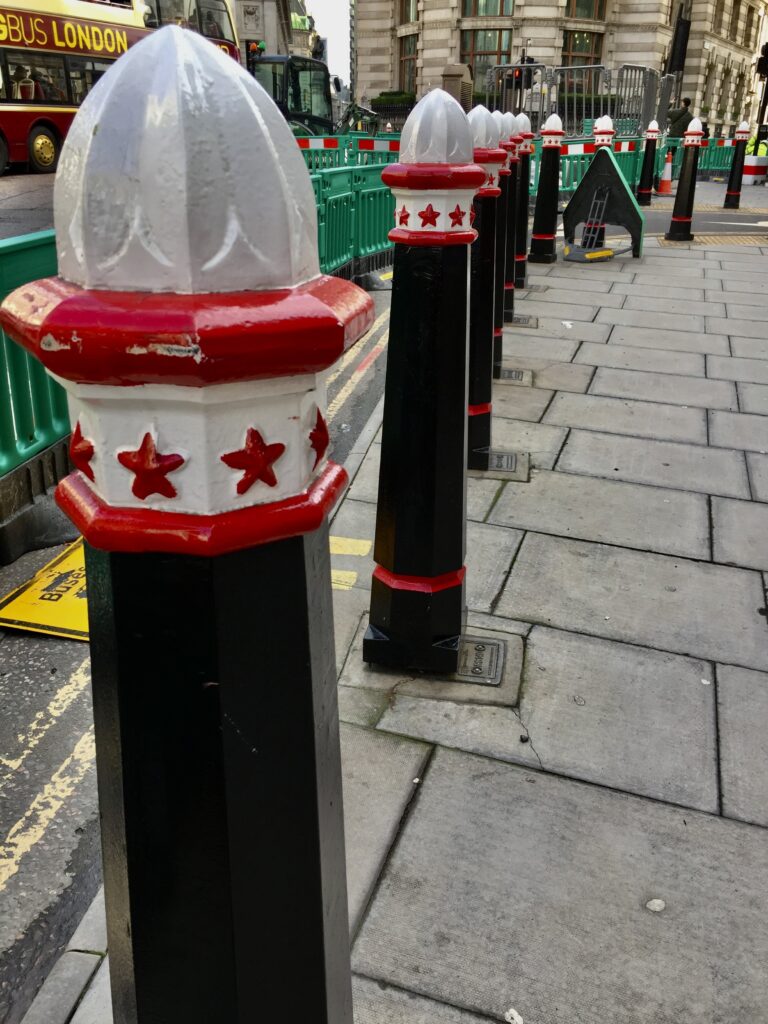
From the 1990s onwards the City started taking branding really seriously and the bollards reinforced the fact that you were in a very special part of London …

Moveable versions …

There’s a positive invasion taking place at Bank Junction …

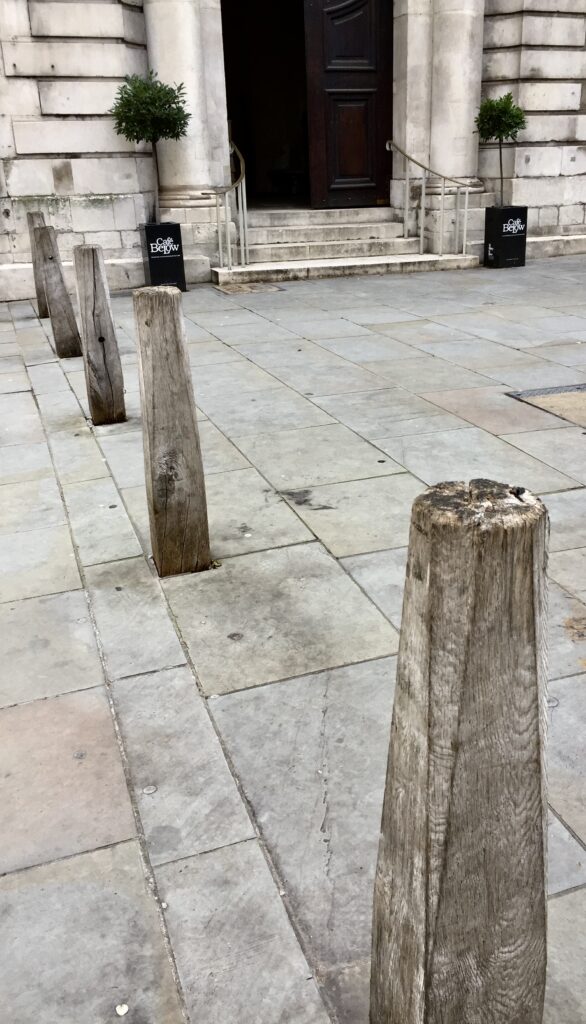
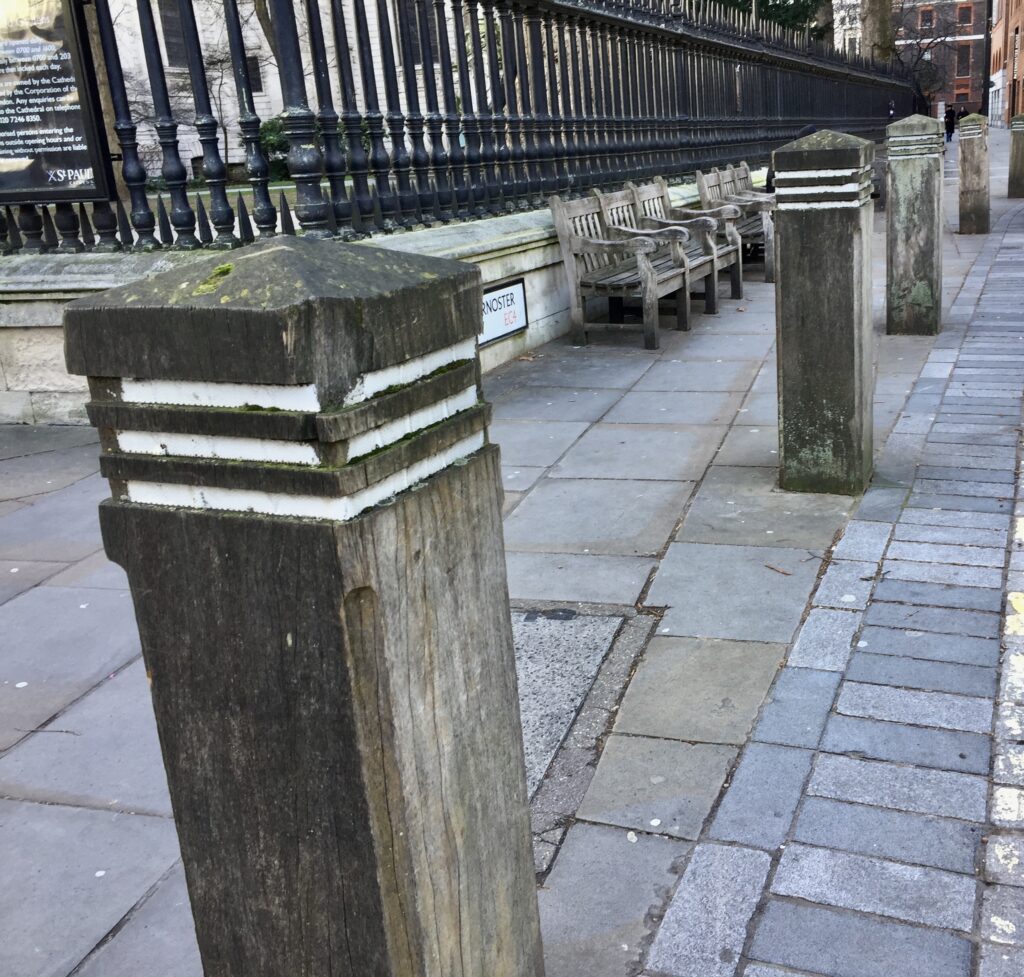
I was surprised to find some wooden versions. These are outside St Mary-le-Bow and date from the 1990s …

These are on Paternoster Row near the entrance to St Paul’s Churchyard …

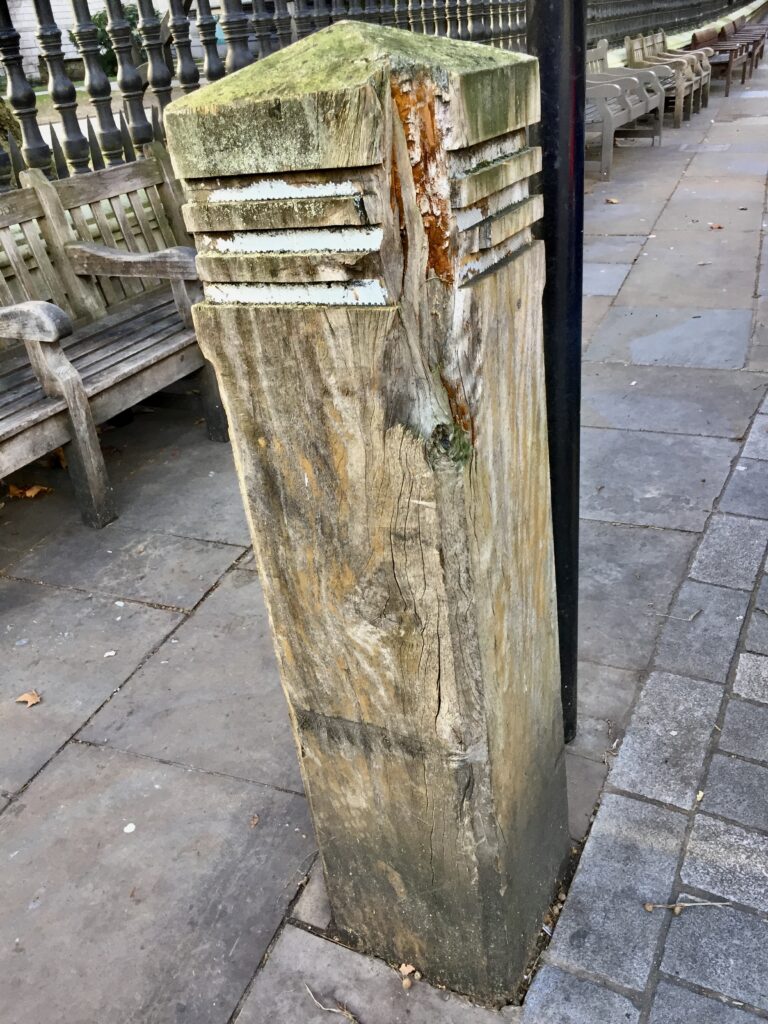
Unfortunately wooden varieties are very prone to damage …

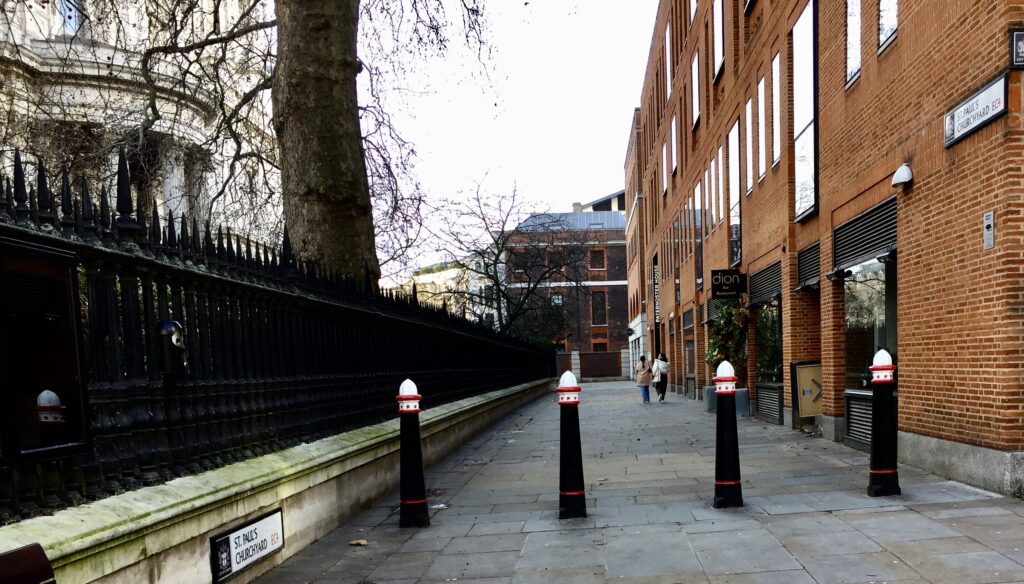
Standing guard at the entrance to St Paul’s Churchyard, these are probably HVMs (Hostile Vehicle Mitigation bollards) helping to keep us safe …

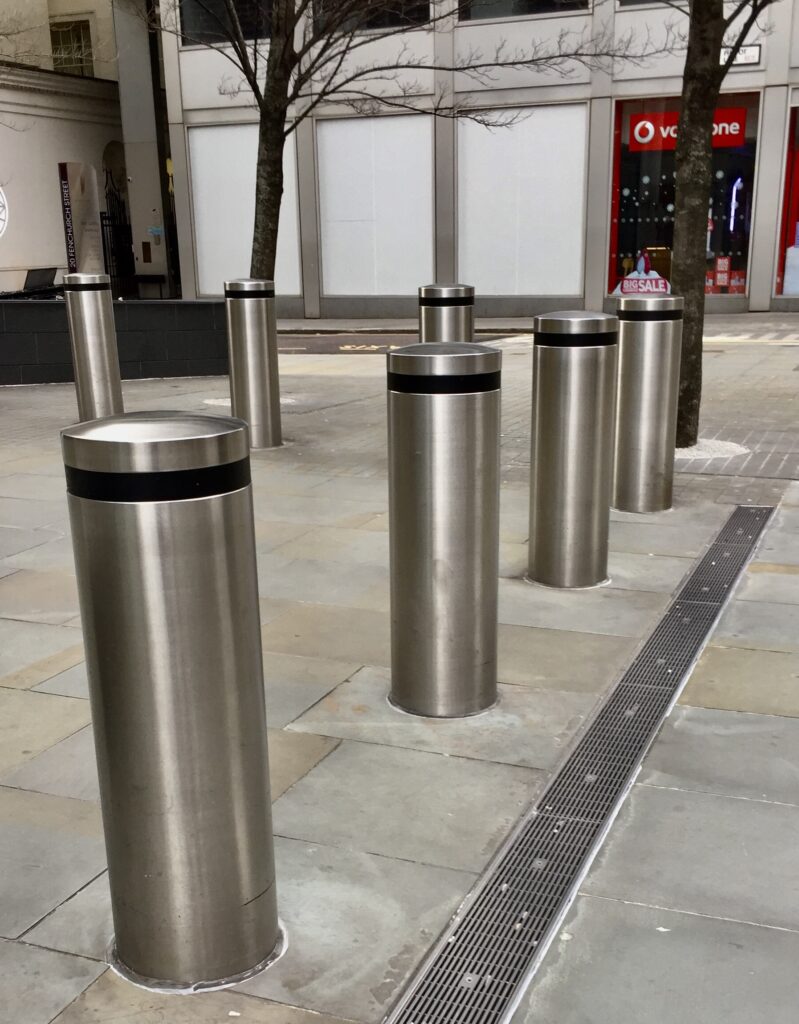
These HVMs are a bit more obvious …

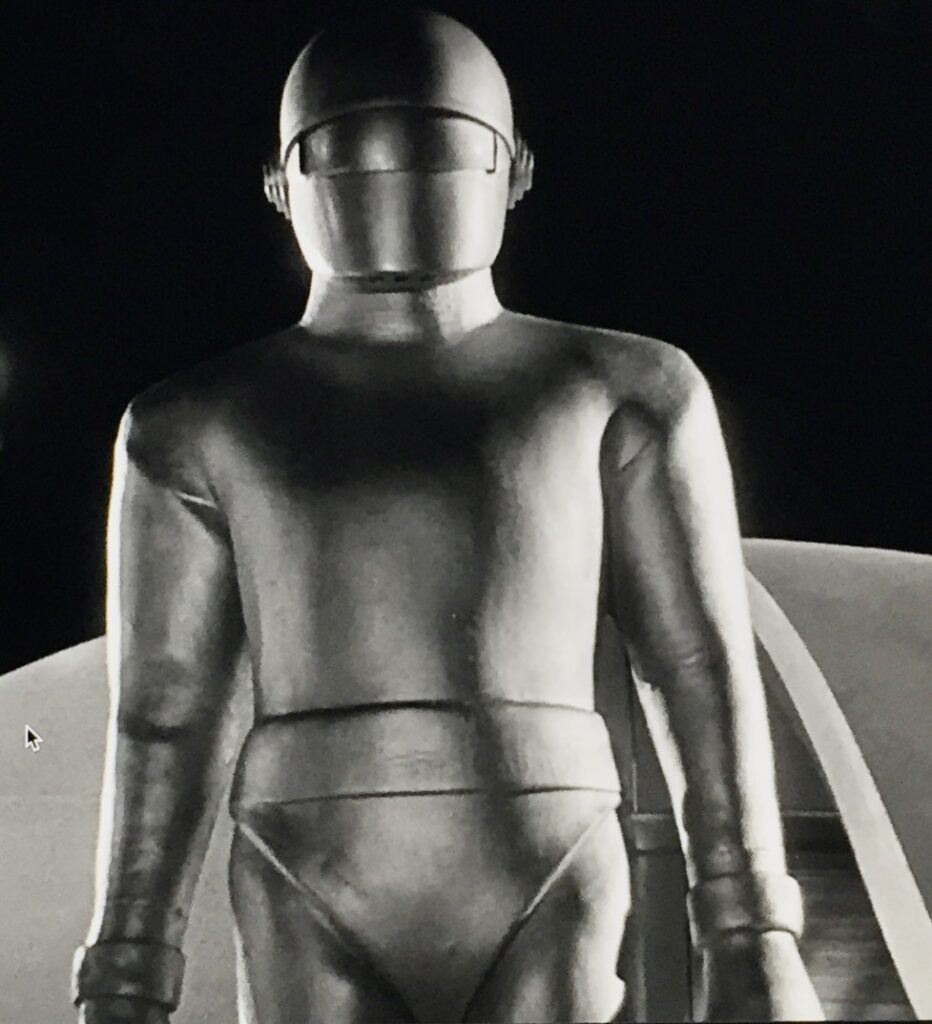
I think they’re really sinister. They reminded me of the alien robot in the 1951 movie The Day the Earth Stood Still. Watch the terrific trailer here …

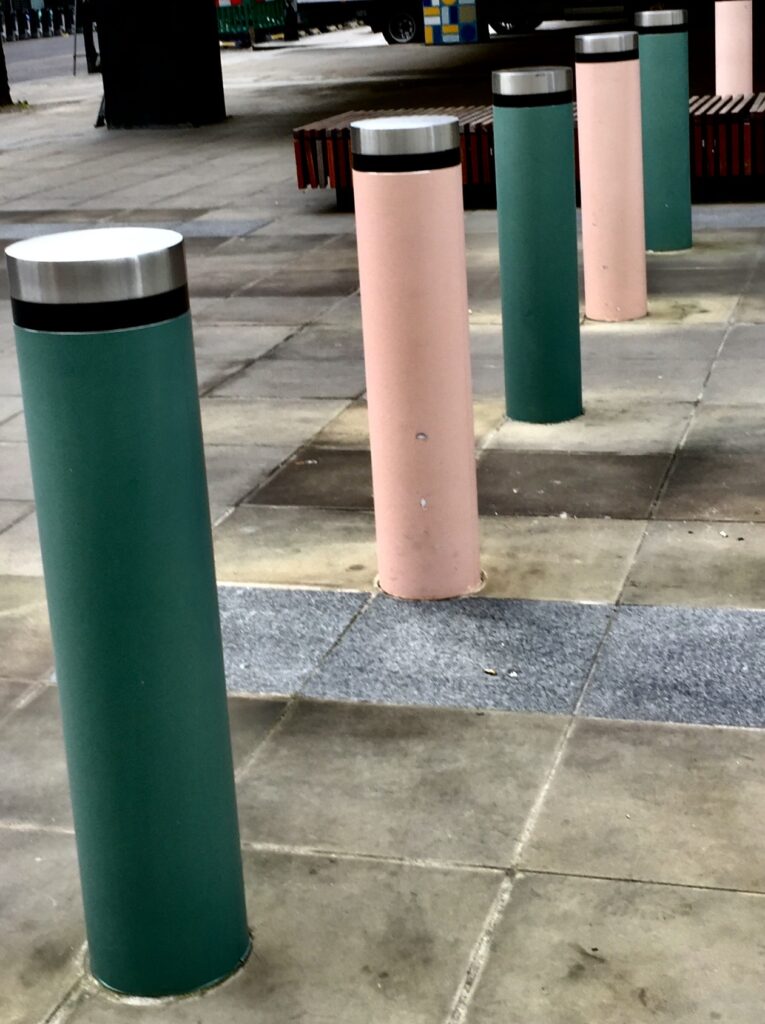
Here colour is used to create a more friendly appearance …

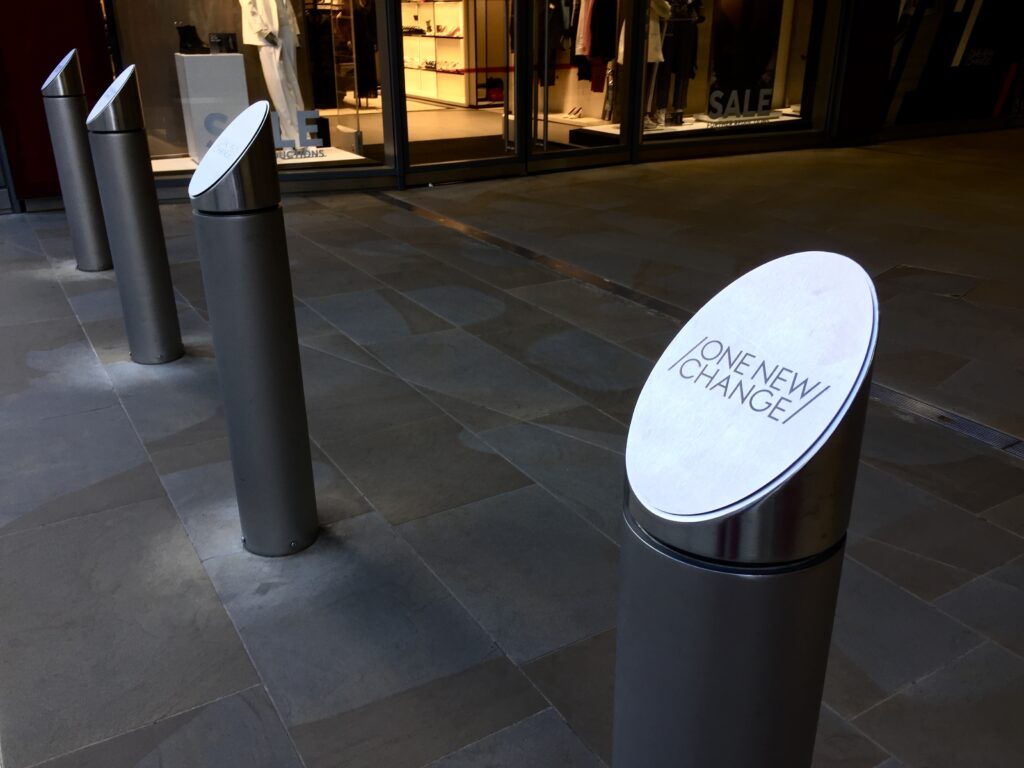
These versions aim to be both decorative and informative …

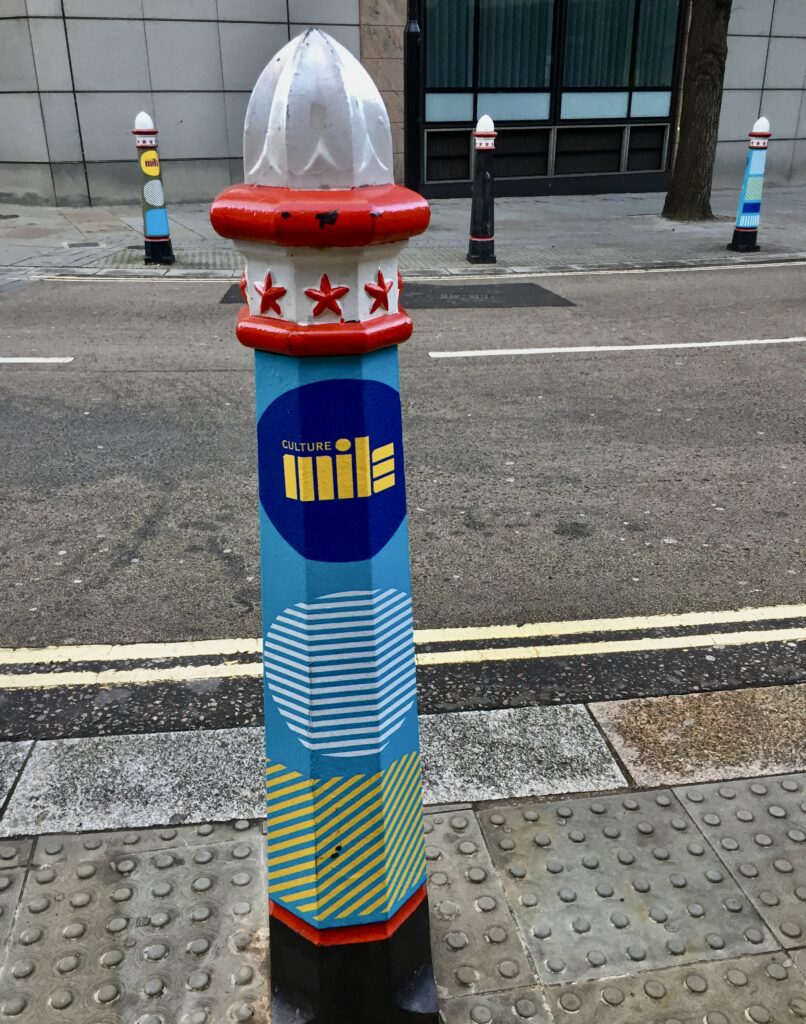
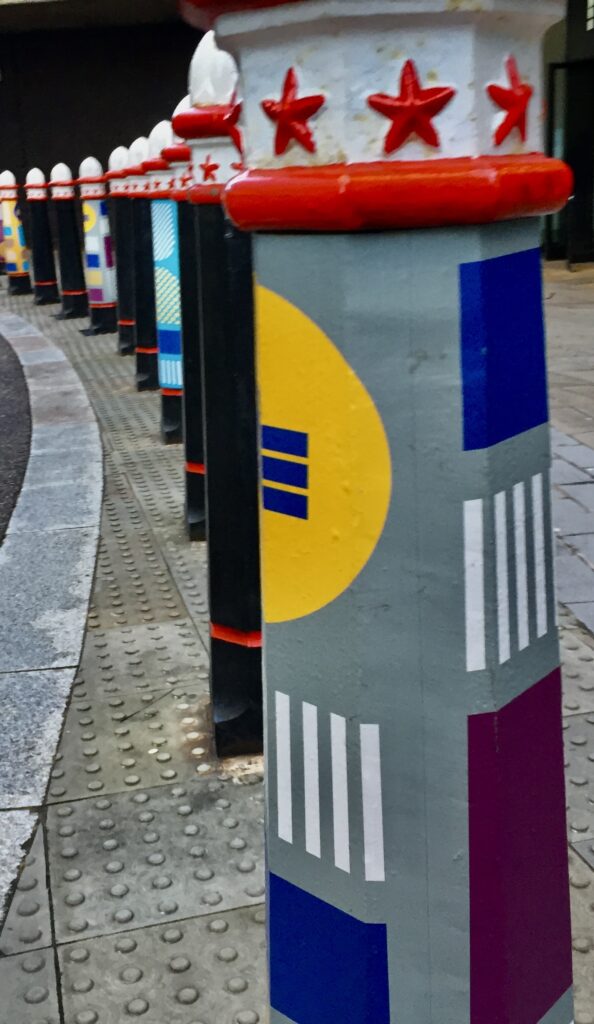
On a more jolly note, some bollards have been colourfully dressed up to promote the City’s Culture Mile …

Finally, how about this quote from the City of London Corporation Street Scene Manual 2005. The writer gets carried away and waxes lyrical as to how bollards positively added to the gaity of City life :

In parts of the City rush hour ‘bollard ballet’ is performed as office workers dodge both each other and the forest of bollards on their way to and from work.

Bollard ballet indeed!

If you would like to follow me on Instagram here is the link …
https://www.instagram.com/london_city_gent/

A wander down Tooley Street – A King of Norway, charming chimps and a beautiful figurehead.

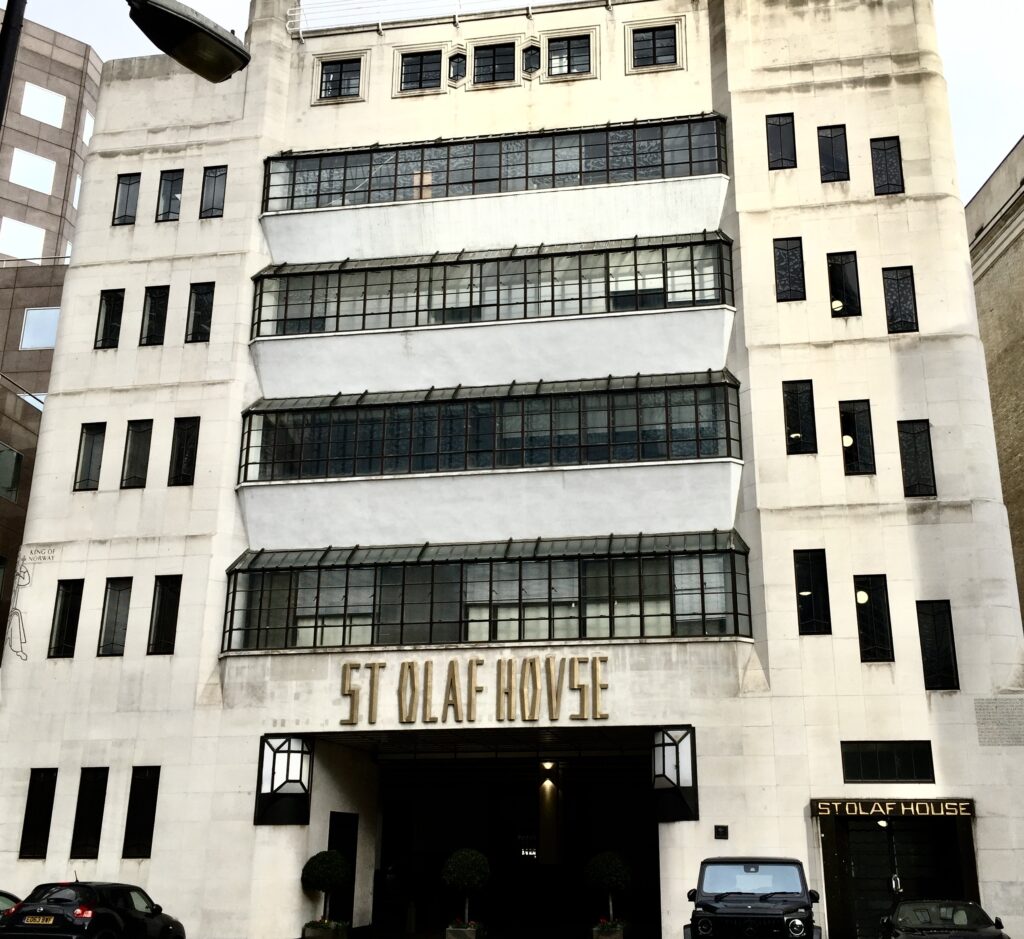
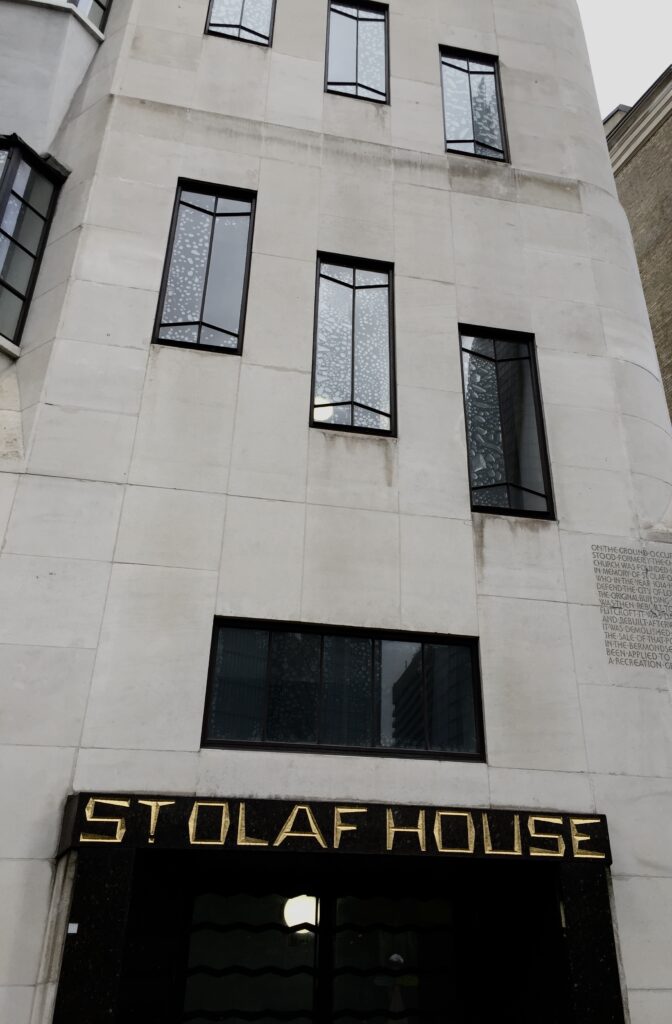
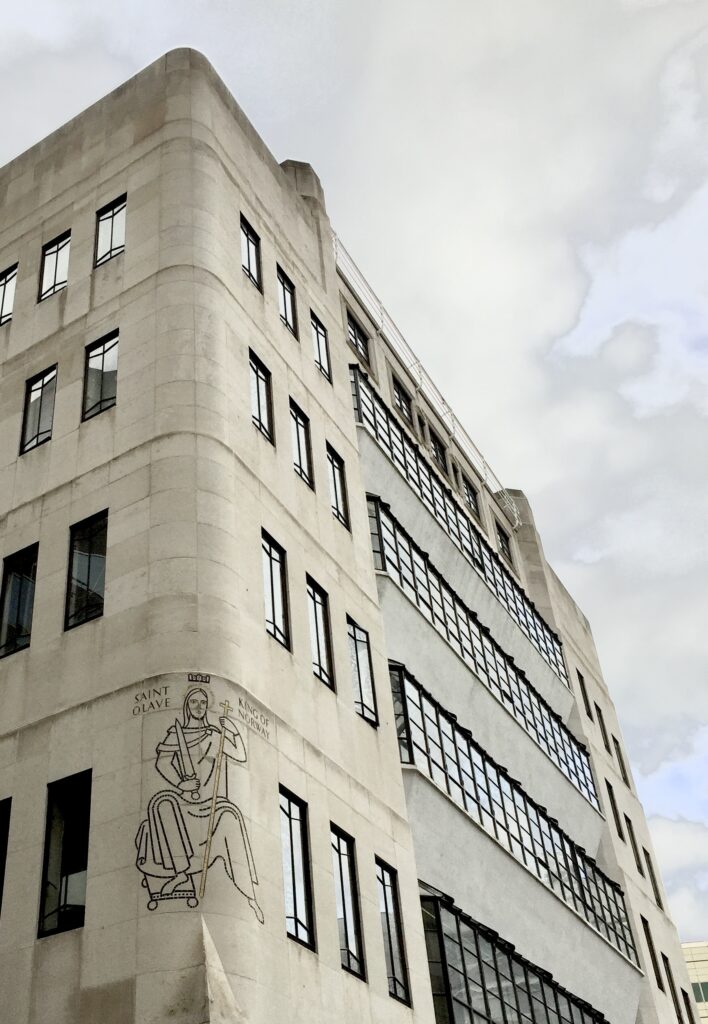
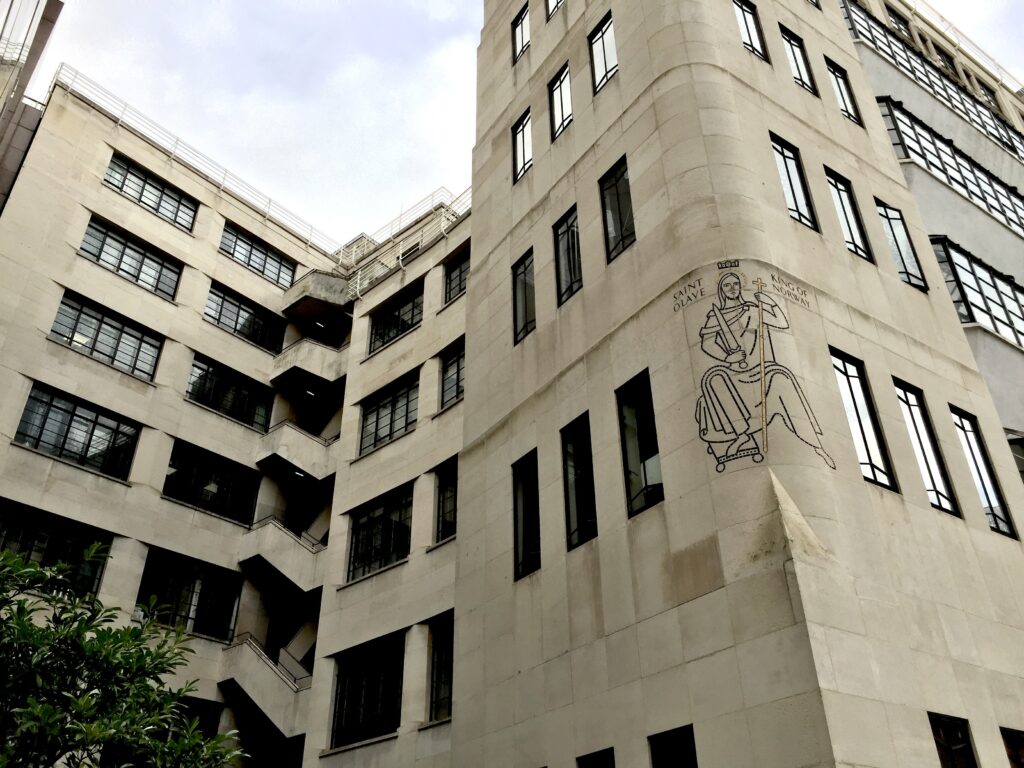
Why is this splendid Art Deco building on Tooley Street called St Olaf House?

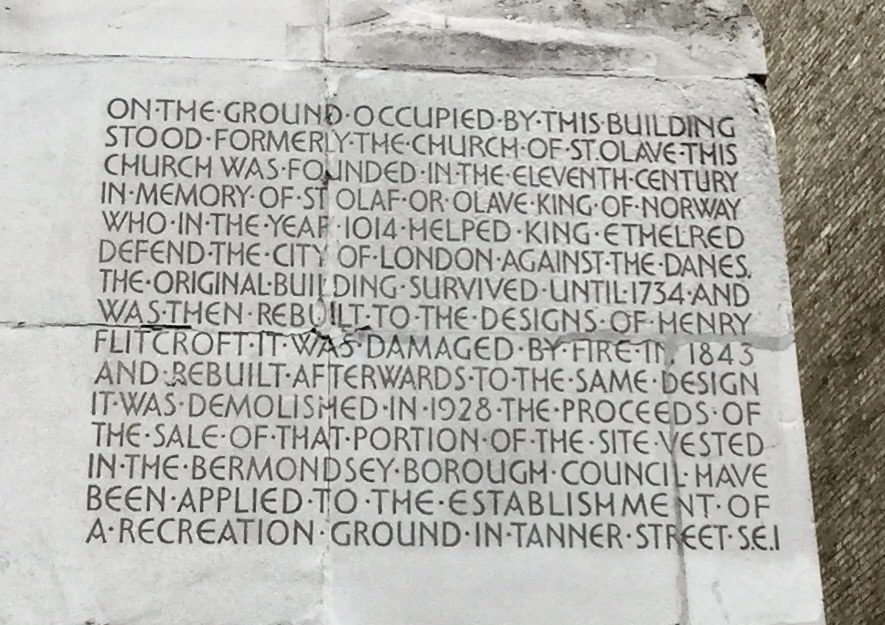
Why is it called St Olaf House? The answer is beautifully engraved on the wall …

The man himself …

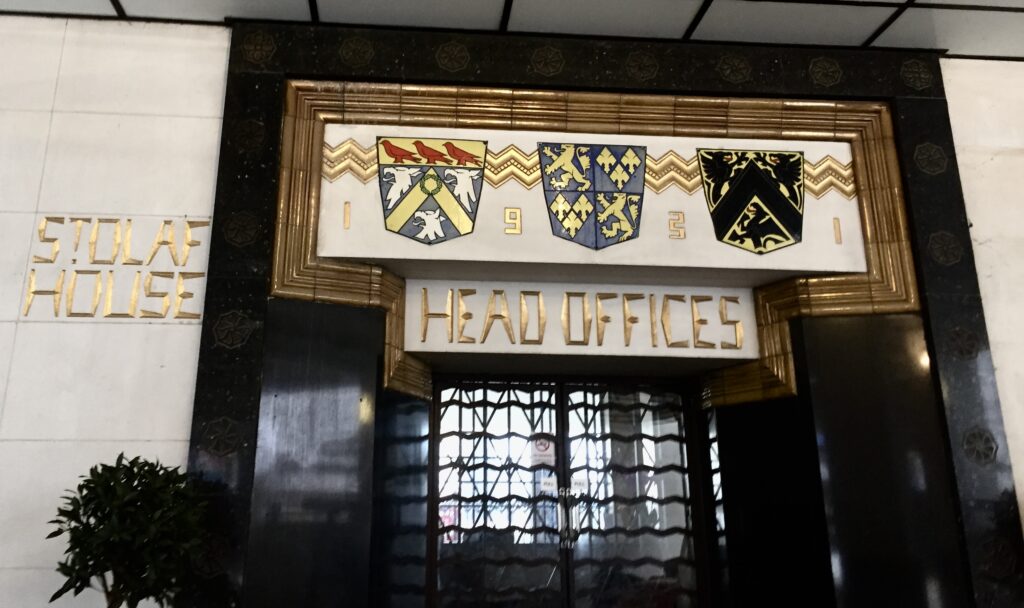
The main entrance …

St Olaf House was built between 1928 and 1932 for the Hay’s Wharf Company and now houses the London Bridge Private Hospital’s consulting and administration rooms. You can read more about the building here.

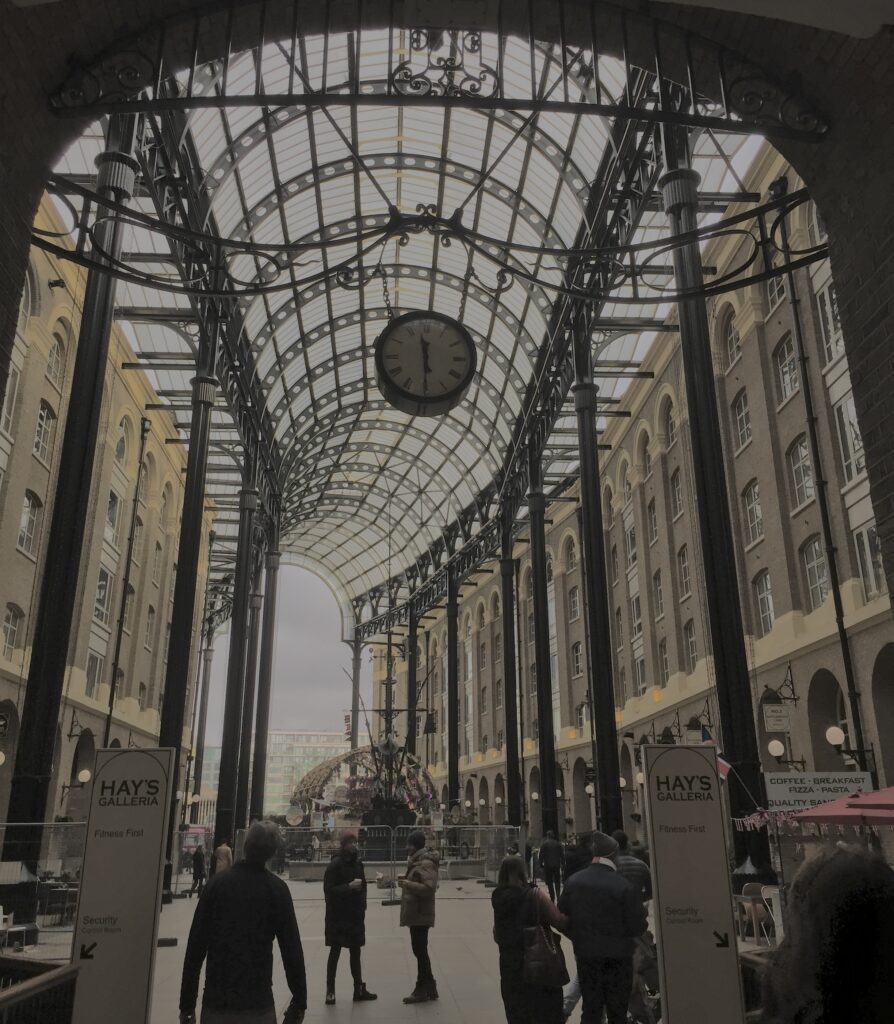
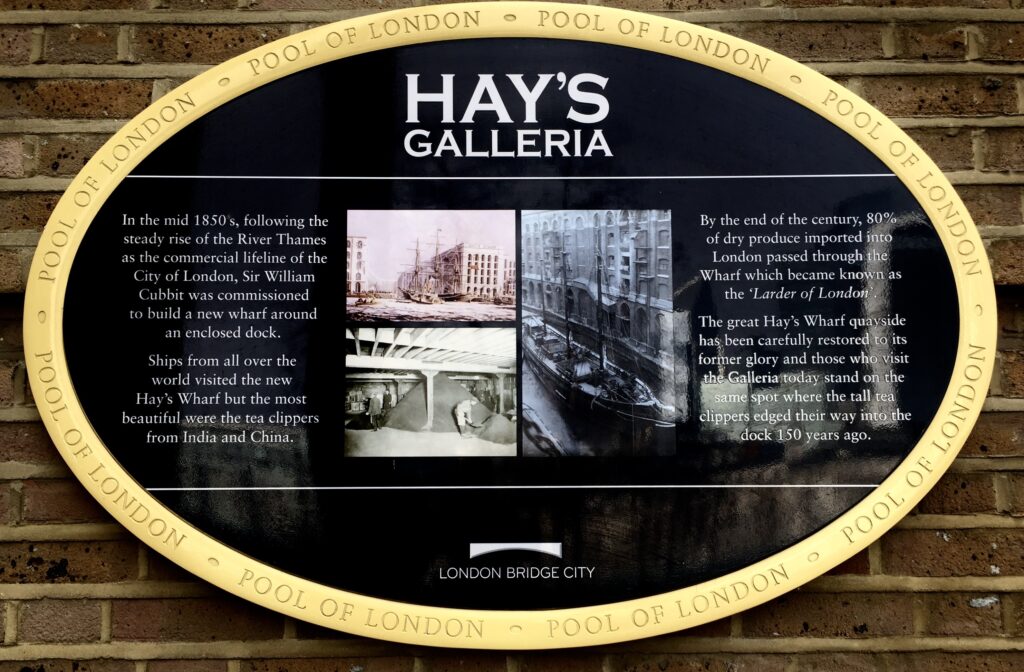
Walking east you come acoss Hay’s Galleria …

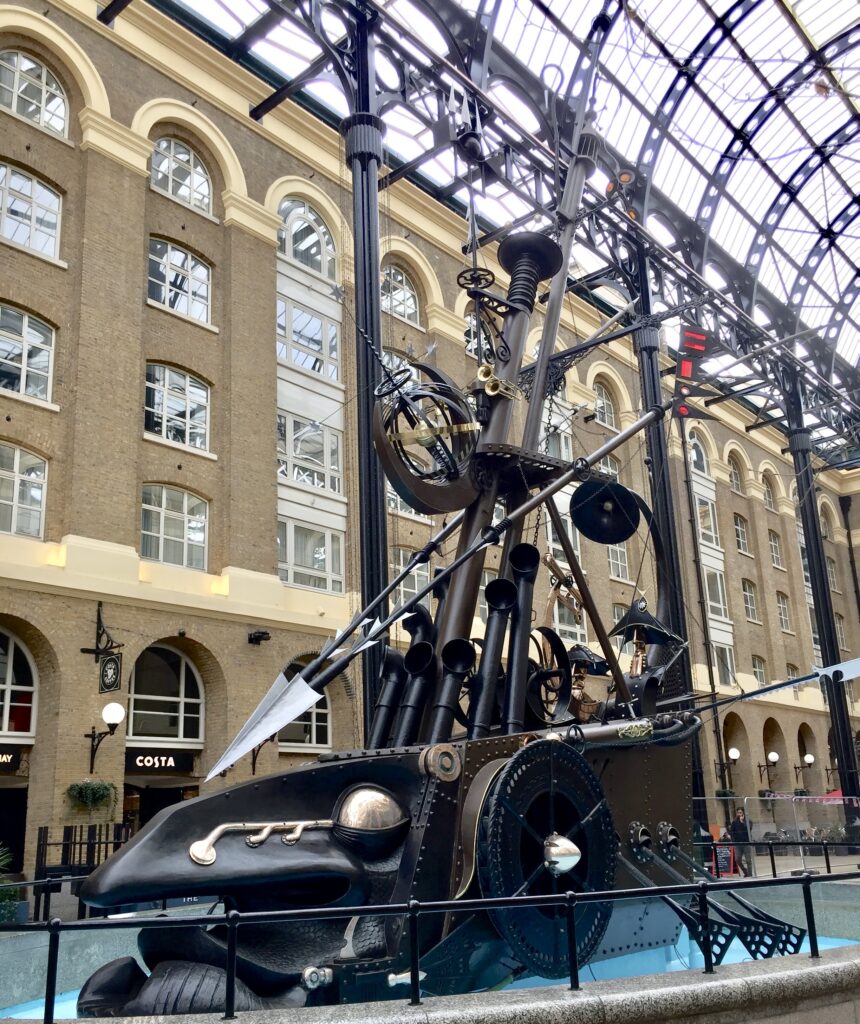
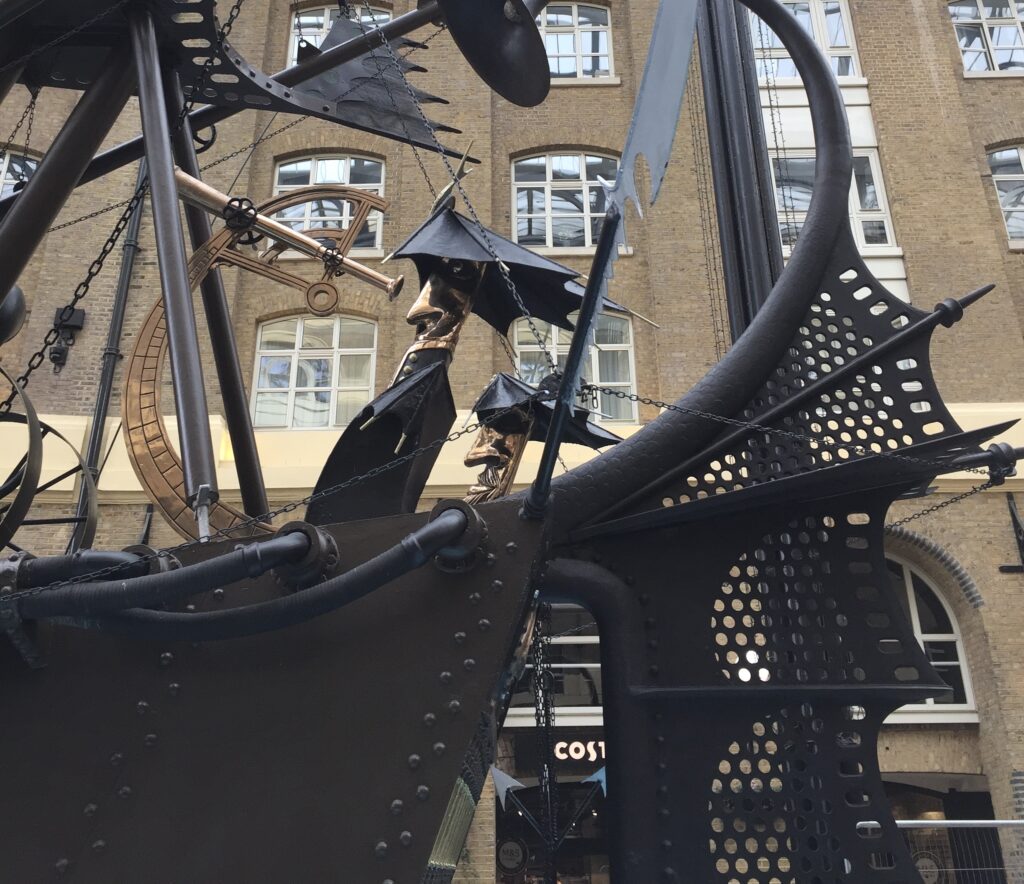
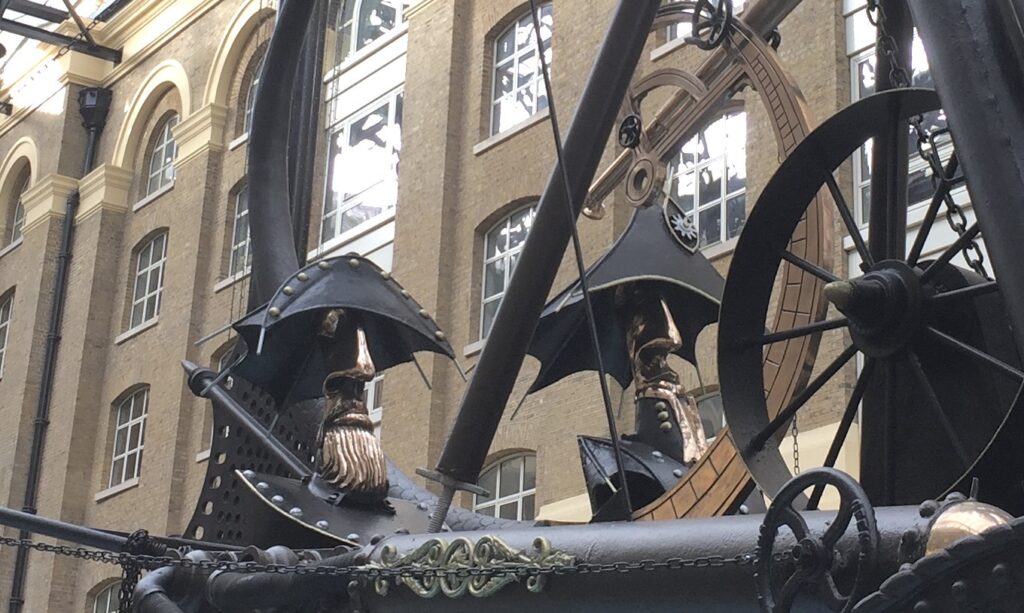
In a fountain at the centre is a 60 ft moving bronze sculpture of a ship, called The Navigators, by sculptor David Kemp, unveiled in 1987 to commemorate the Galleria’s shipping heritage …

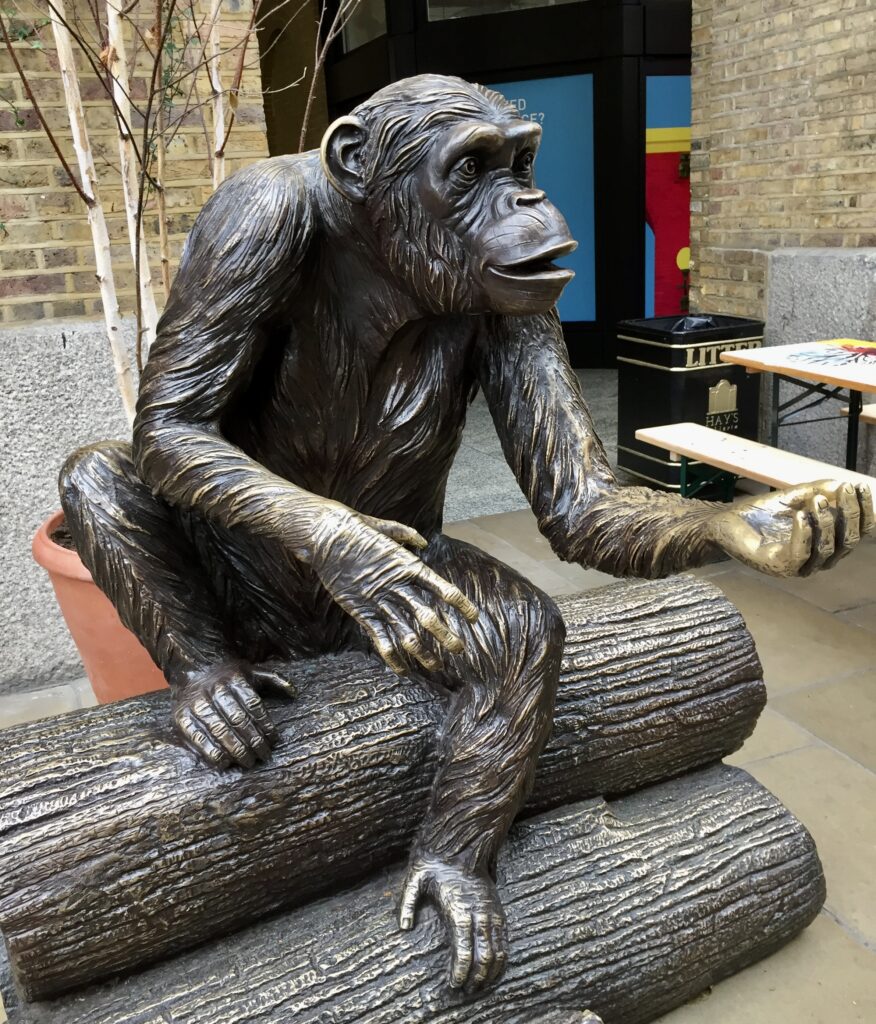
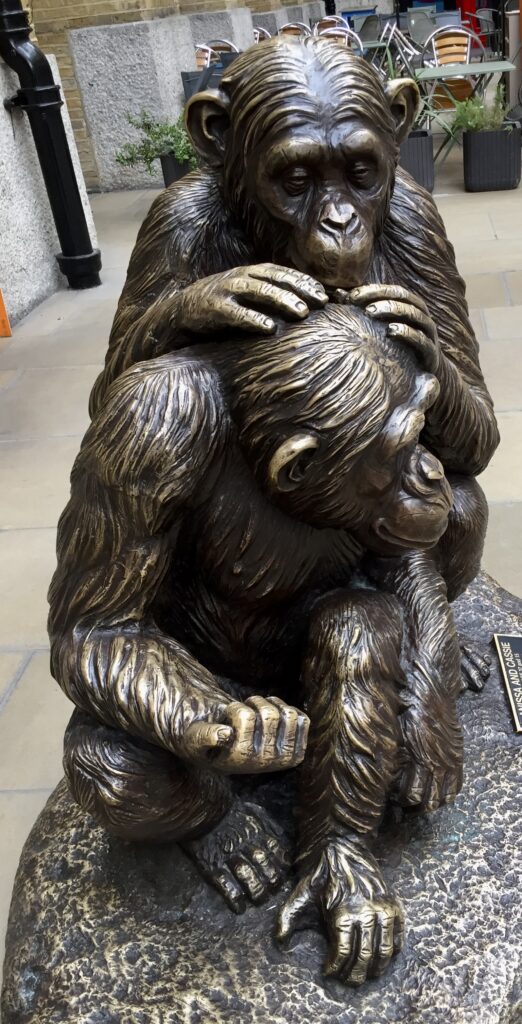
There are also some chimps from the Chimps Are Family Trail …

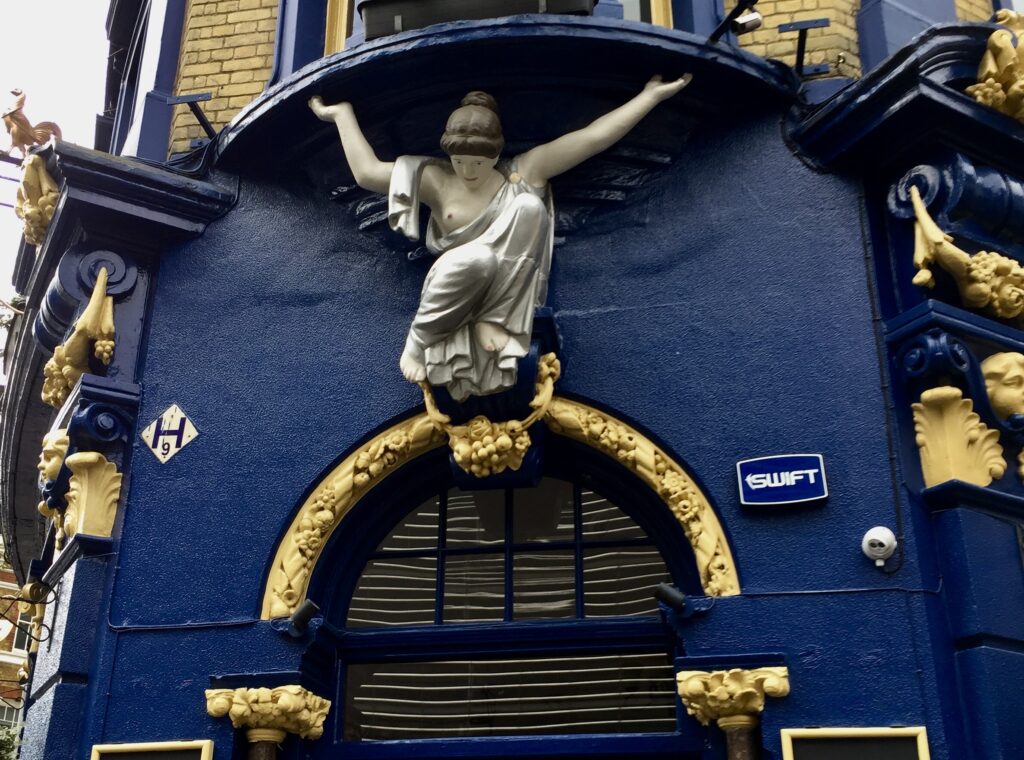
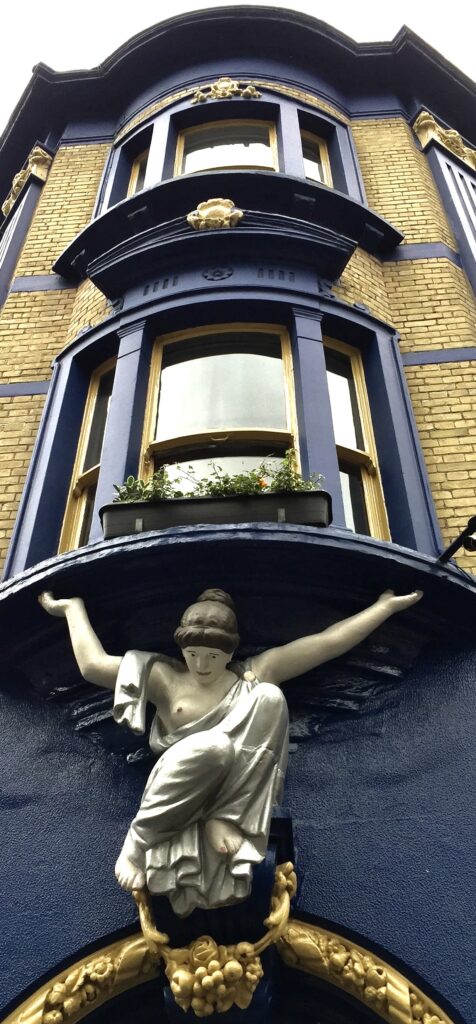
Further east on the south side of the road is The Shipwrights Arms, built in 1884 and now a Grade 2 listed building. I love the beautiful lady figurehead above the main door …

Back on the north side it’s easy to miss this commemorarive plaque …

It reads as follows : To the memory of James Braidwood, superintendent of the London Fire Brigade, who was killed near this spot in the execution of his duty at the great fire on 22nd June 1861. A just man and one that feared god, of good report among all the nation.

I shall be writing more about the heroic James Braidwood and the Great Tooley Street Fire next week.

If you would like to follow me on Instagram here is the link …
https://www.instagram.com/london_city_gent/

Page 29 of 92

Powered by WordPress & Theme by Anders Norén

Symbols & Secrets
Privacy Overview

This website uses cookies so that we can provide you with the best user experience possible. Cookie information is stored in your browser and performs functions such as recognising you when you return to our website and helping our team to understand which sections of the website you find most interesting and useful.