Walking the City of London

Category: Architecture Page 20 of 92

St Mary Aldermary – the most spectacular of the ‘Marys’.

In 1500 there were 15 churches in the City of London dedicated to a St Mary. It was by far the most popular dedication with the next most popular being All Hallows (8 churches) and St Michael (7 churches). This, of course, was helped by the fact that there are two St Marys – Mary the Virgin, the mother of Jesus and Mary Magdalene one of Jesus’s followers who was present at the crucifixion. But even if we count only the churches dedicated to the Virgin Mary, it is still the most popular dedication with a total of 13.

I’ve already written in some detail about the six Marys still in existence but for some reason I rather neglected paying serious attention to St Mary Aldermary – an omission I intend to put right in this week’s blog. Incidentally, the name ‘Aldermary’ possibly derives from ‘Older Mary’ meaning the oldest church in the City dedicated to her.

As every guide to the church will tell you – when you enter just look up!

The nave …
The south side aisle …

The north side aisle …
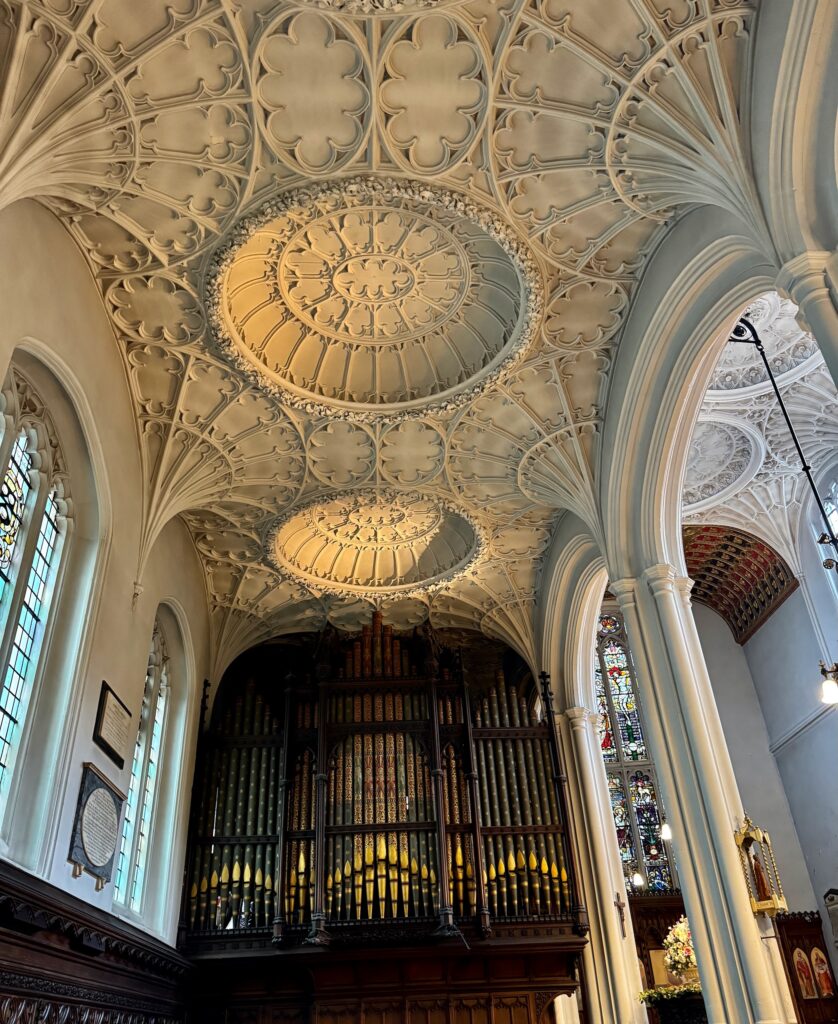
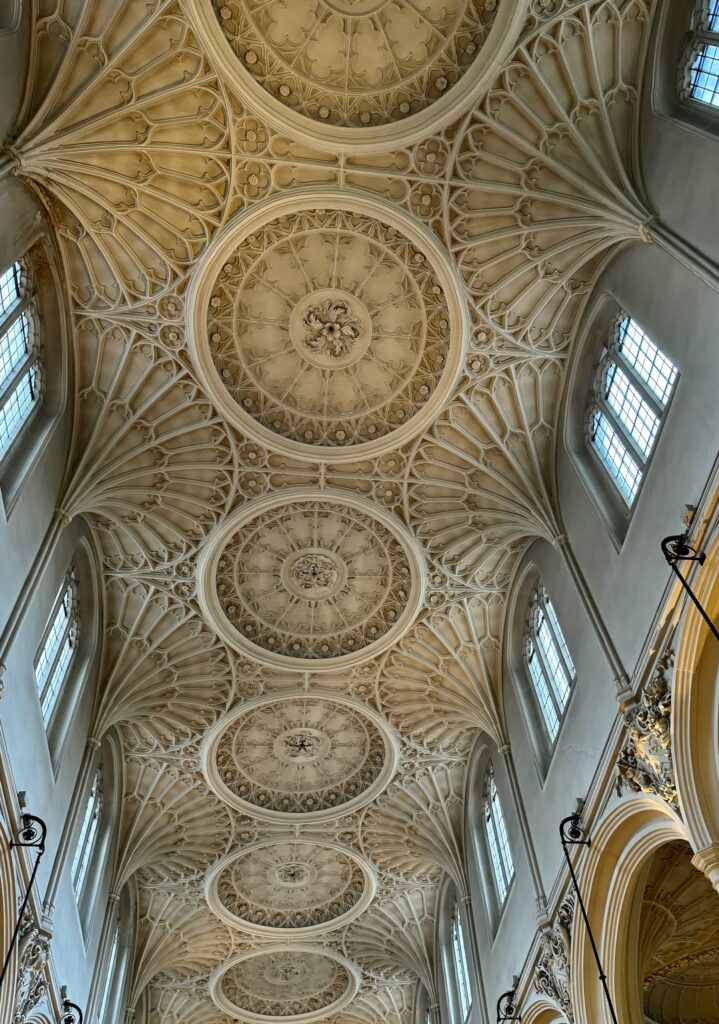
The fabulous plaster fan-vaulted ceiling is more reminiscent of a cathedral and St Mary’s is the only parish church in England known to have one.

It is unclear why Wren chose to rebuild the church (1679-82) in an uncharacteristically Gothic style. Funding came from a personal estate, so it may have been the desire of the executors, or possibly the will of parishoners. Whatever the cause, the fortunate result is arguably the most important late 17th century Gothic church in England.

A quirky feature of the church is the angle of the east wall which followed the line of a pre-1678 passage …
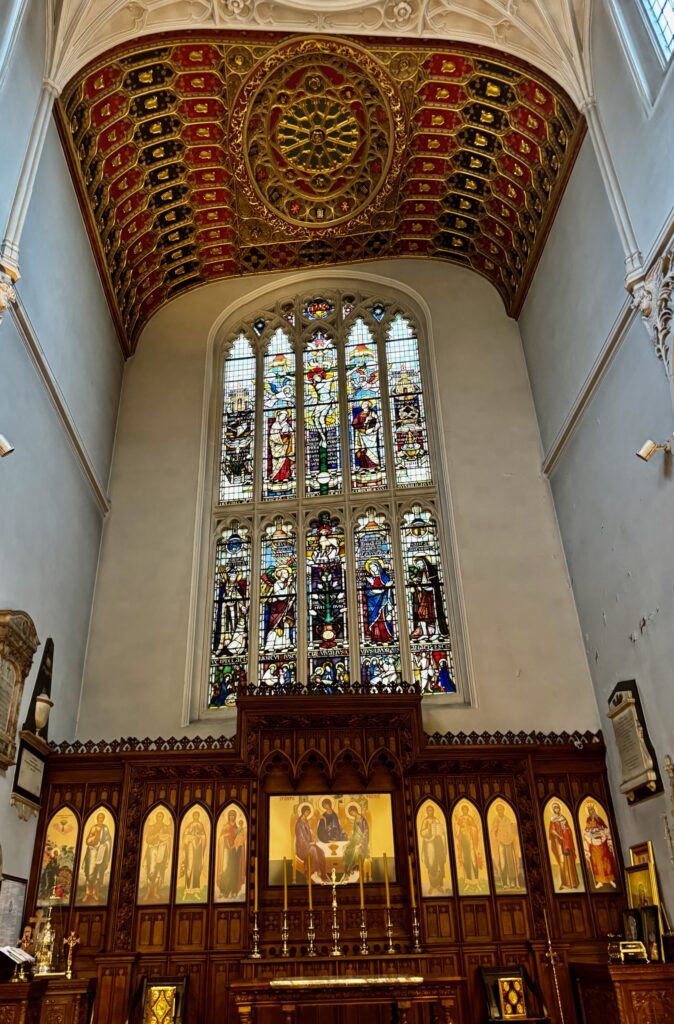
One of the the east windows by Lawrence Lee (1955) is ‘a fusion of sacred and secular with St Thomas, St John the Baptist and Madonna and Child above and panels depicting important episodes from the dramatic history of the church below. The gothic church tower powerfully depicted appears engulfed in the flames of the Great Fire of London of 1666’ …
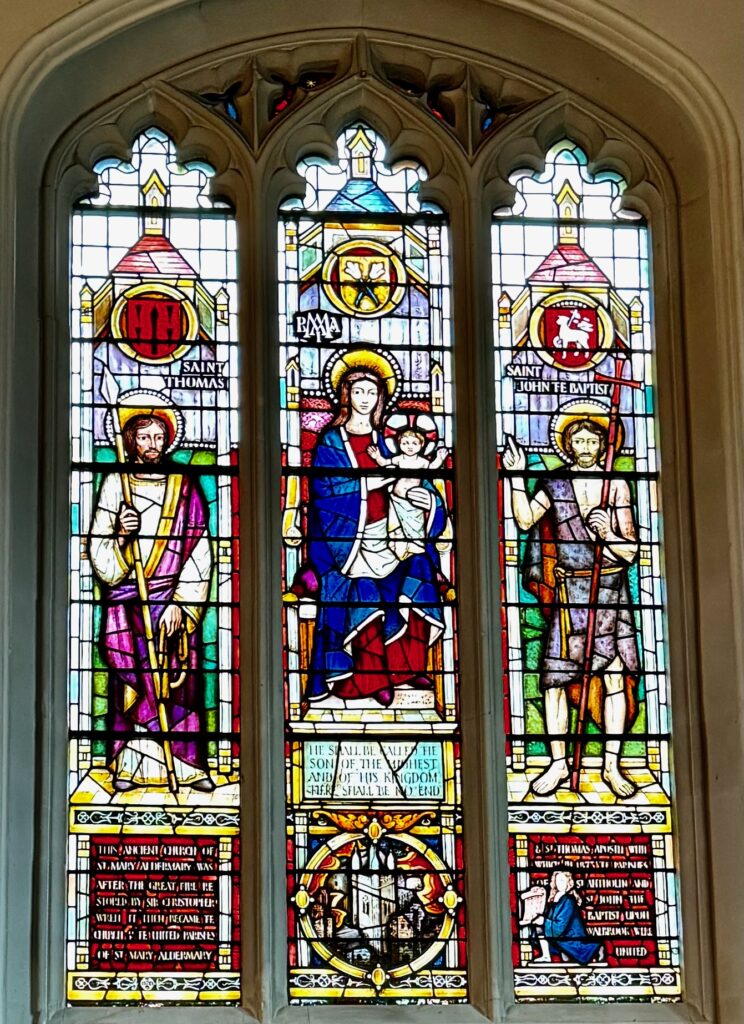
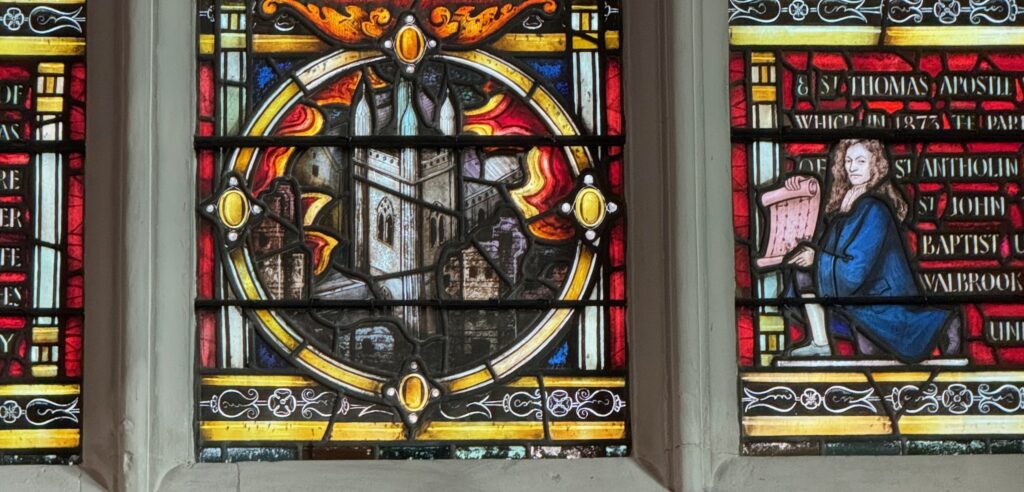
In close up, Sir Christopher Wren kneels to present his plans for the new church …
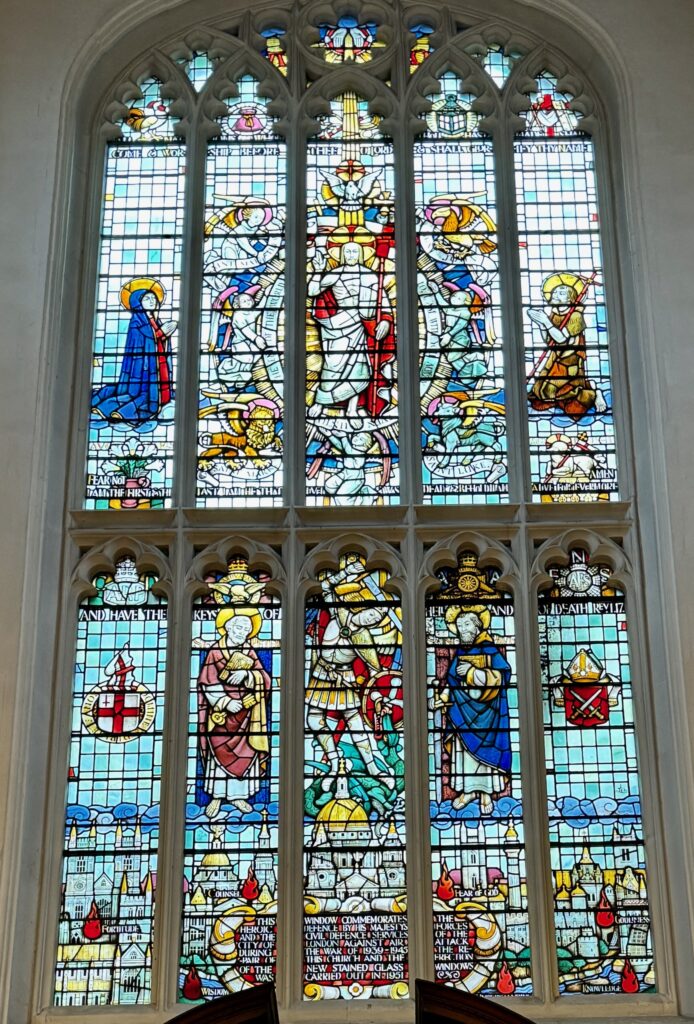
The west window by John Crawford commemorates the defence of London against air attack in the 1939-45 War. It depicts the Risen Christ in Glory with the Hand of God the Father and the Holy Spirit in the form of a Dove. Above are the Instruments of the Passion, while below are the emblems of the four Evangelists. The lower lights show St Michael overcoming the Dragon, representing the force of good vanquishing evil, with St Peter (left) and St Paul (right). At the base is a panorama of London and at the top the arms of the various Services involved …
A blocked off window above the north door, dating from 1876, depicts the Transfiguration …

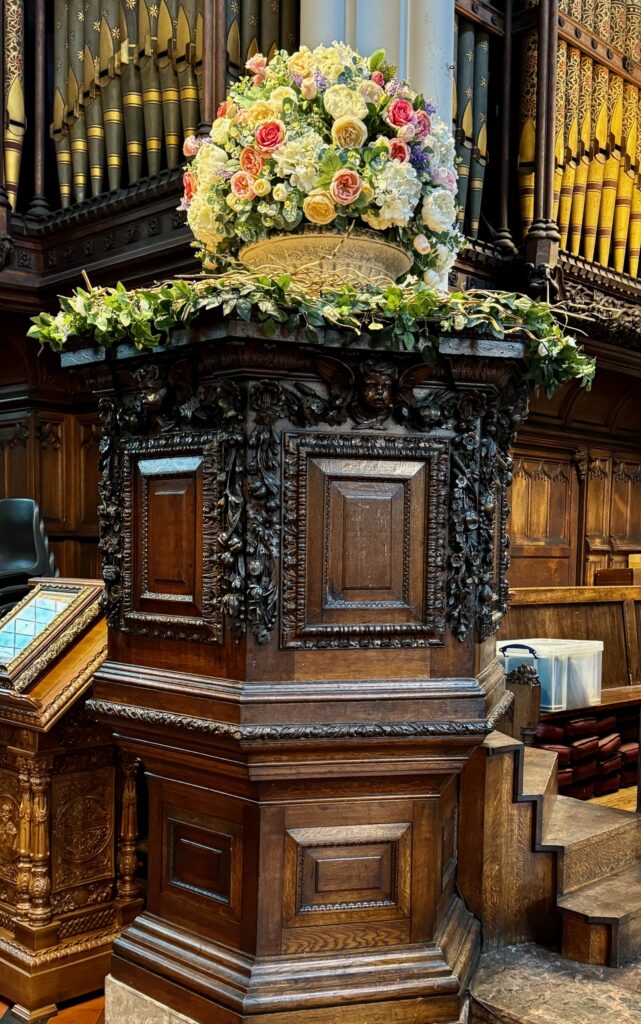
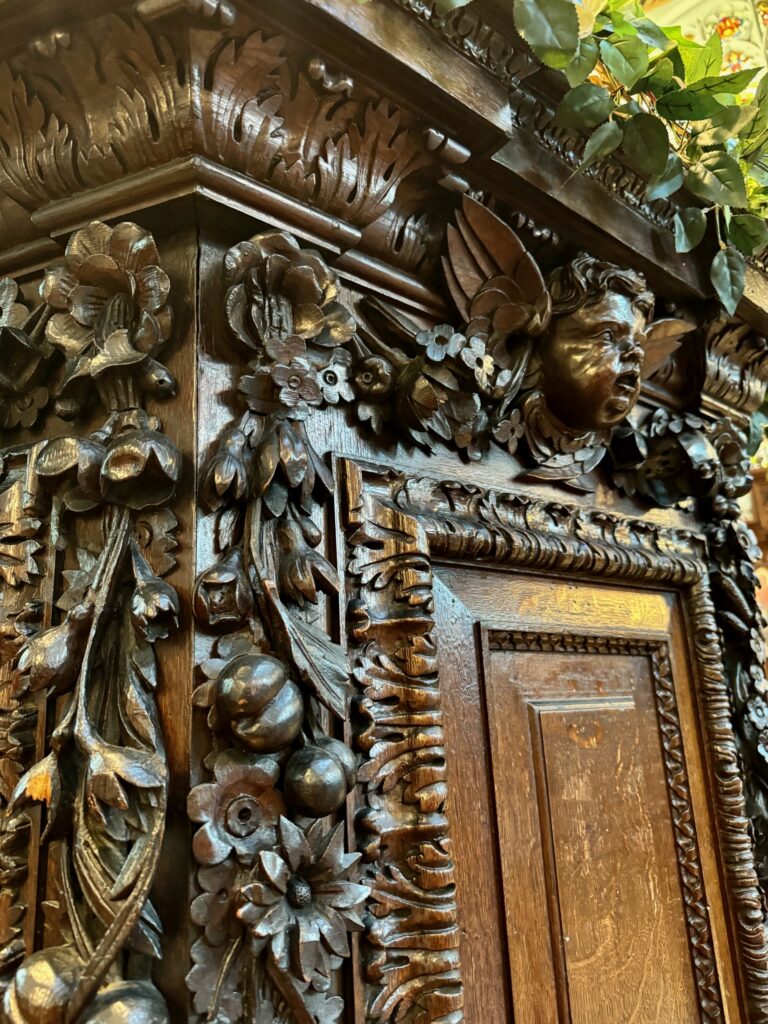
The pulpit is thought to have been carved in 1682 by Grinling Gibbons …
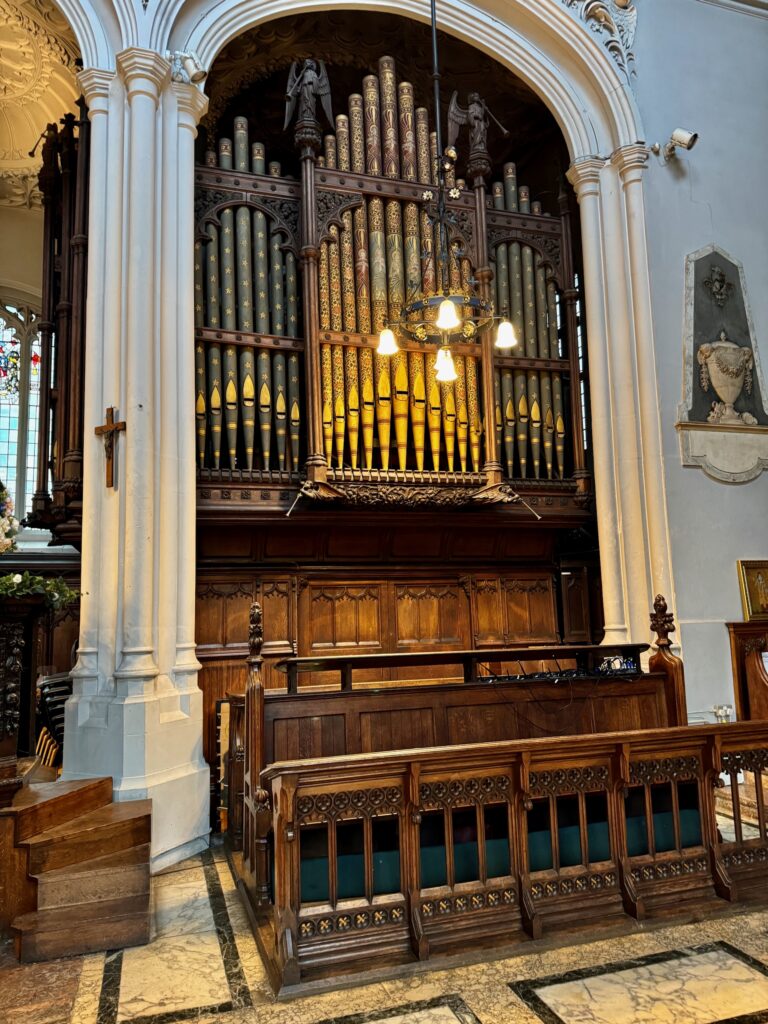
The organ was built by George England in 1791 …
This beautiful, rare wooden sword rest dates from 1682 …
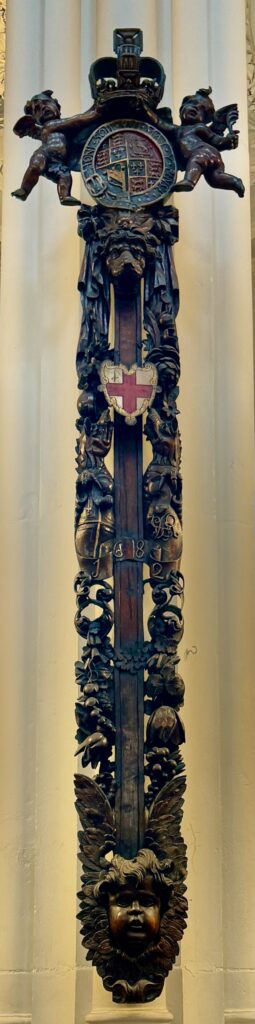
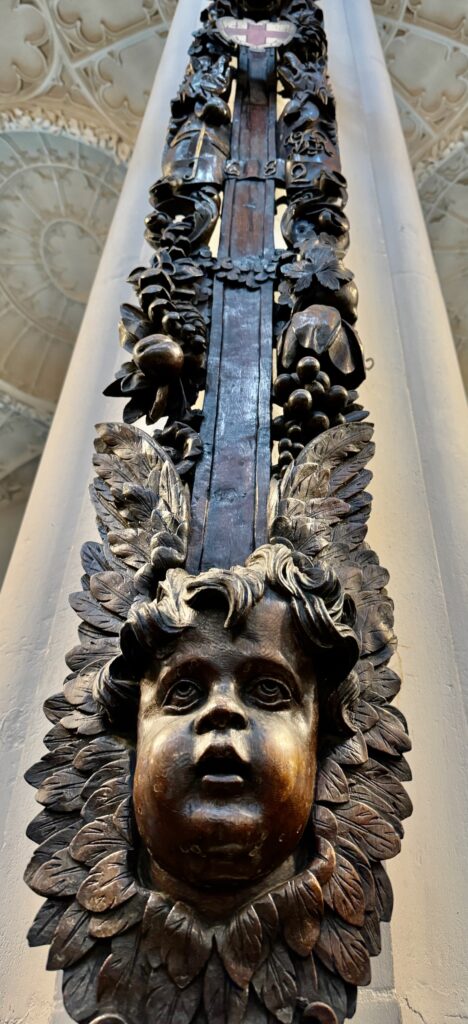
You can read more about the fascinating history of sword rests here.

The font was a gift from a wealthy parishoner called Dutton Seaman in 1627. One commentator describes it as having been ‘designed with jacobean gusto’ …

There is a plaque to James Braidwood, who was married in the church in 1838. He was the first Superintendent of the London Fire Engine Establishment and formed the world’s first municipal fire brigade in Edinburgh. He died tragically whilst fighting the terrible Tooley Street Fire of 1861. You can read all about him and the fire in which he perished in my Tooley Street Fire blog …

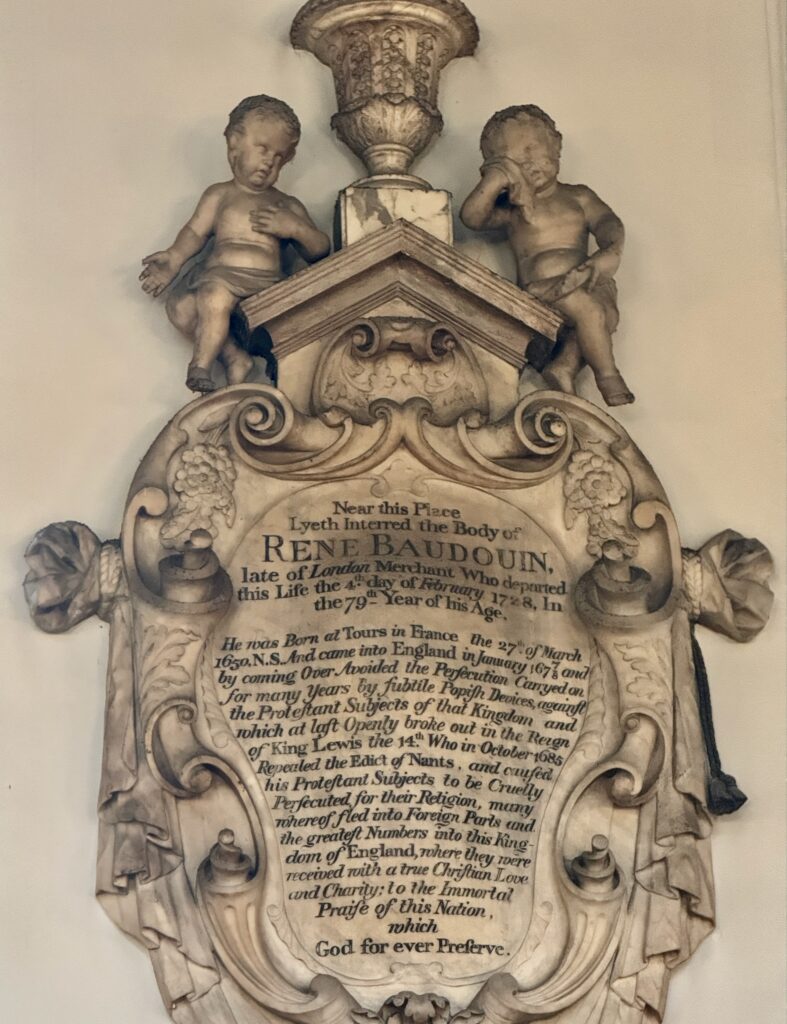
René Baudouin was a Huguenot refugee from Tours in France. He established himself in Lombard Street, London, with a silk merchant Etienne Seignoret. The pair were successful but they were fined for continuing to trade with France during the Anglo-French war (1689-1697) …
There is also a memorial to the brilliant surgeon Percivall Pott who I wrote about in last week’s blog.

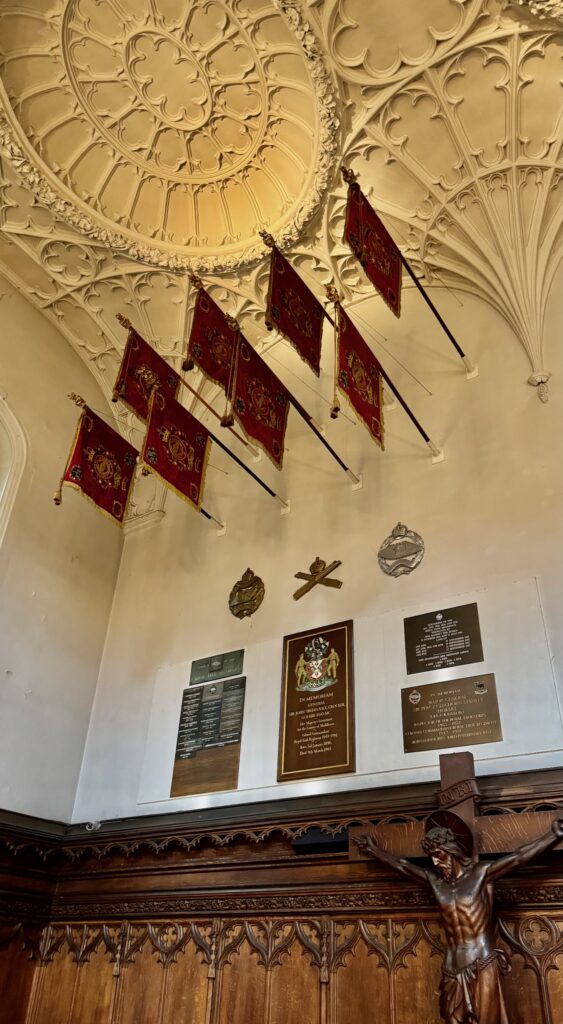
St Mary is the regimental church of the Royal Tank Regiment – ‘Once a Tankie always a Tankie’ …
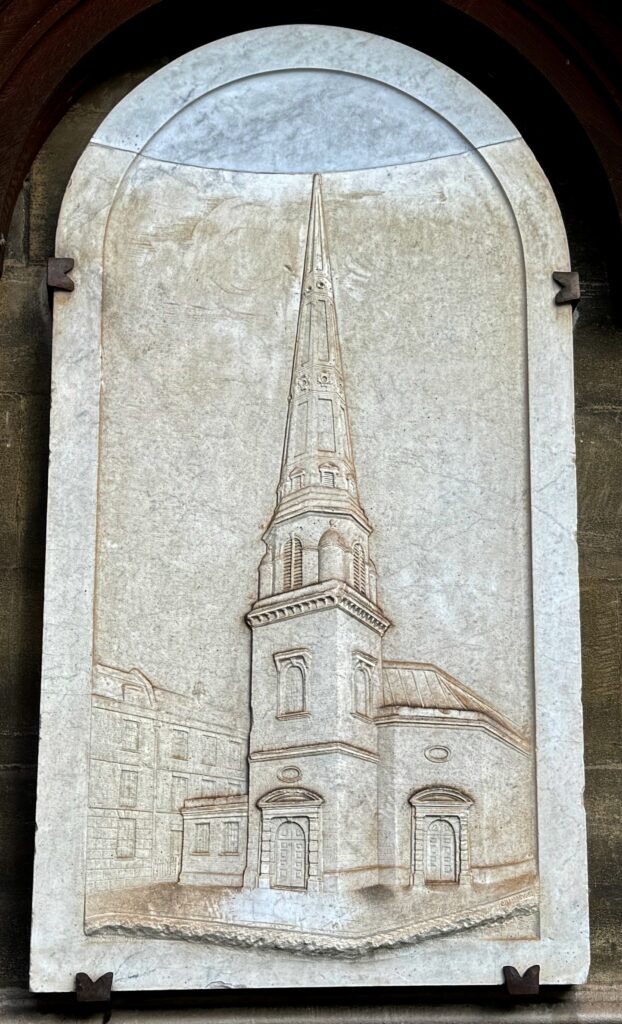
The nearby old City church of St Antholin was demolished in 1875 and the parish merged with St Mary’s. A plaque on the wall outside memorialises this union …
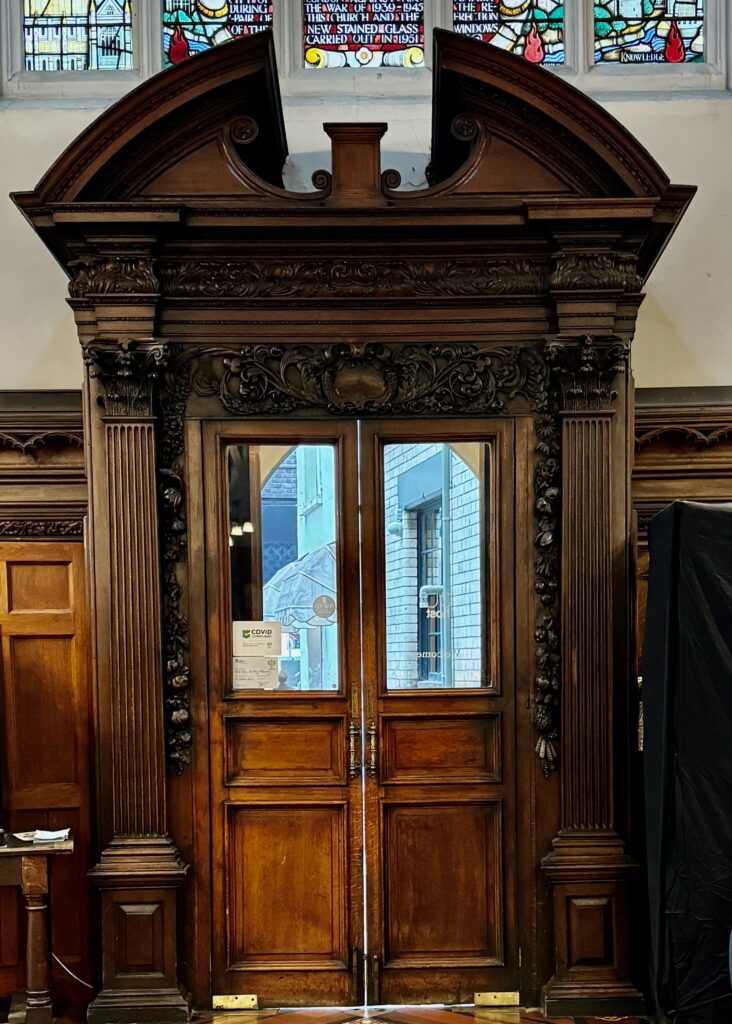
If you entered St Mary’s from the west, the door casing you walked through came from St Antholin …
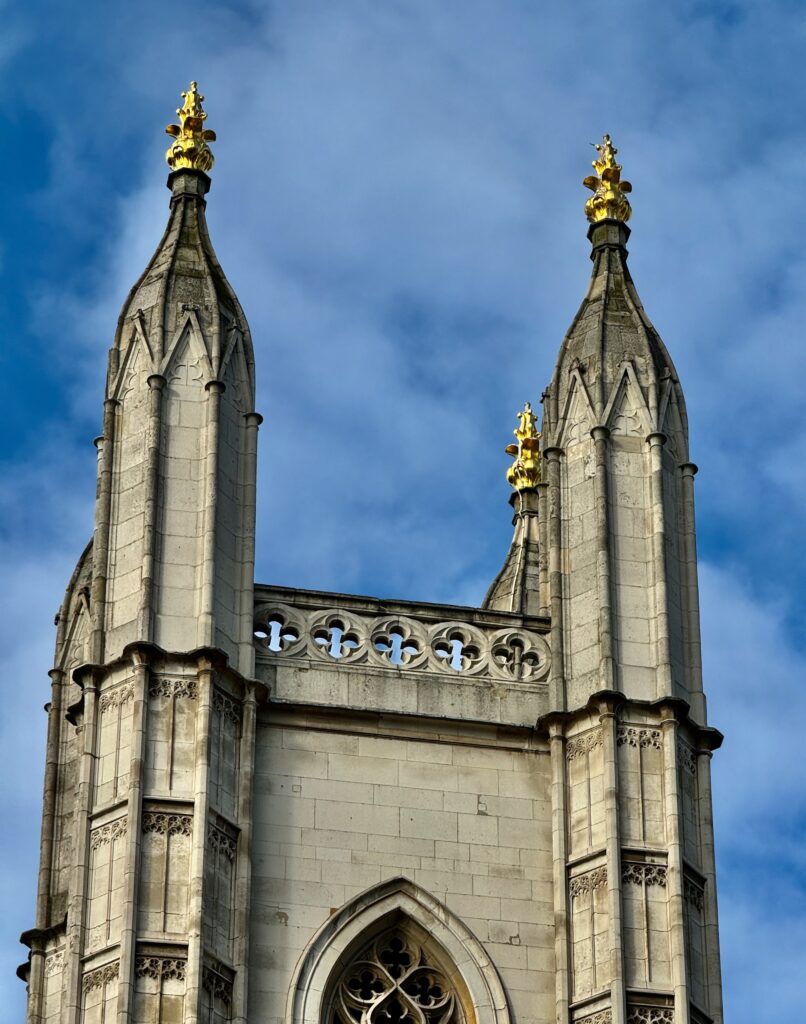
The best view of the church is from the south side of Queen Victoria Street …

The golden finials at the top of the tower are now, I’m told, made of fibreglass!
Remember you can follow me on Instagram …

https://www.instagram.com/london_city_gent/

St Stephen Walbrook – The Samaritans, Sir Henry Moore and a brave doctor.

One day in 1936 a young priest officiated at his first funeral – a 14 year old girl who had killed herself because, when her periods started, she thought it was a sign of a sexually transmitted disease. That there seemed to have been no one she could talk to had a profound effect on him, but it was not until 18 years later that, as he put it,

I read somewhere there were three suicides a day in Greater London. What were they supposed to do if they didn’t want a Doctor or Social Worker … ? What sort of a someone might they want?

He looked at his phone, ‘DIAL 999 for Fire, Police or Ambulance’ it said …

There ought to be an emergency number for suicidal people, I thought. Then I said to God, be reasonable! Don’t look at me… I’m possibly the busiest person in the Church of England.

When the priest, Chad Varah, was offered charge of the parish of St Stephen in the summer of 1953 he knew that the time was right for him to launch what he called a ‘999 for the suicidal’. He was, in his own words, ‘a man willing to listen, with a base and an emergency telephone’. The first call to the new service was made on 2nd November 1953 and this date is recognised as Samaritans’ official birthday.

The Reverend Dr Chad Varah at his telephone – you just had to dial MAN 9000.

It soon became obvious that the volunteers, who used to keep people company whilst they were waiting to speak to Chad, were also capable of helping in their own right and in February 1954 he officially handed over the task of supporting the callers to them.

If you visit the church you can see the phone itself …

St Stephen Walbrook (rebuilt 1672-80) was one of Wren’s largest and earliest churches and the meticulous care taken with it might, some suggest, be because Sir Christopher lived next door. Incidentally, Mr Pollixifen, who lived on the other side, bitterly complained about the building taking his light. Maybe he was mollified when the the church’s internal beauty was revealed.

Views towards St Stephen’s have opened up since completion of the new development on Walbrook, which also houses a meticulously restored Temple of Mithras (see my 25th January 2018 blog: The Romans in London – Mithras, Walbrook and the Games).

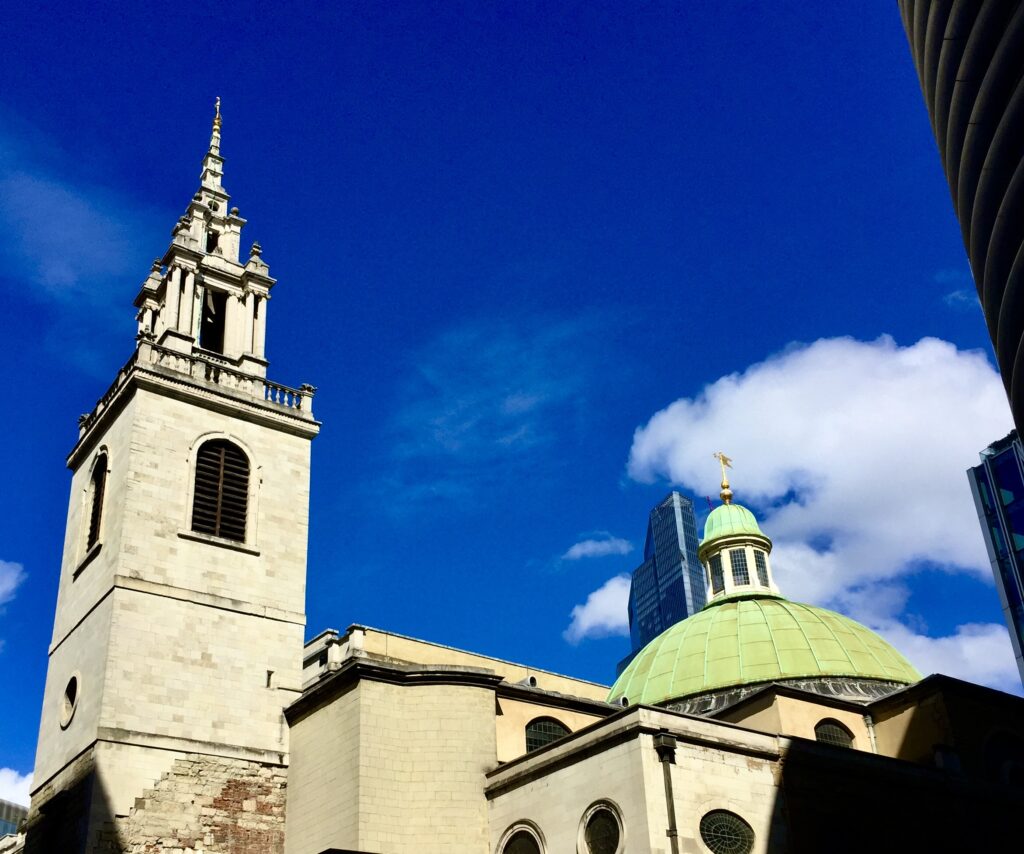
Looking at the exterior one can see the lovely green Byzantine style dome …

The interior is bright, intimate and stunning, old Victorian stained glass having been removed …

Wren’s dome and Sir Henry Moore’s altar

The dome was the first of its kind in any English church and a forerunner of Wren’s work on St Paul’s Cathedral. After being damaged in the Blitz the church was restored by Godfrey Allen in 1951-52. Controversy broke out when, between 1978 and 1987, the church was re-ordered under the sponsorship of churchwarden Peter (later Lord) Palumbo and a striking ten tonne altar by Sir Henry Moore was placed at its centre.

Sometimes I look at church memorial plaques and, if they are entirely in Latin, just rather lazily move on. In this case it was a big mistake since I was ignoring a tribute to a very brave man …

Dr Nathaniel Hodges’ memorial on the north wall. Photograph: Bob Speel.

The Great Plague of 1665-1666 was the worst outbreak in England for over 300 years and London probably lost getting on for 20% of its population. While 68,596 deaths were recorded in the city, the true number was most likely to be over 100,000. Those who could, usually the professionals and the wealthy, fled the city and this included four-fifths of the College of Physicians. Charles II and his courtiers left in July for Hampton Court and then Oxford where Parliament also relocated in October,

Nathaniel Hodges was a 36-year-old doctor practising in London when the pestilence reached the City. London was awash, he said later, with ‘Chymists’ and ‘Quacks’ dispensing, as he put it: ‘… medicines that were more fatal than the plague and added to the numbers of the dead.’

Dr Hodges decided to stay and minister to the sick and dying.

First thing every morning before breakfast he spent two or three hours with his patients. He wrote later …

Some (had) ulcers yet uncured and others … under the first symptoms of seizure all of which I endeavoured to dispatch with all possible care …

hardly any children escaped; and it was not uncommon to see an Inheritance pass successively to three or four Heirs in as many Days.

After hours of visiting victims where they lived he walked home and, after dinner, saw more patients until nine at night and sometimes later.

He survived the epidemic and wrote two learned works on the plague. The first, in 1666, he called An Account of the first Rise, Progress, Symptoms and Cure of the Plague being a Letter from Dr Hodges to a Person of Quality. The second was Loimologia, published six years later …

The above is a later edition of Dr Hodges’ work, translated from the original Latin and published when the plague had broken out in France.

It seems particularly sad to report that his life ended in personal tragedy when, in his early fifties, his practice dwindled and fell away. Finally he was arrested as a debtor, committed to Ludgate Prison, and died there, a broken man, in 1688.

Translated from the Latin, his memorial reads as follows:

Learn to number thy days, for age advances with furtive step, the shadow never truly rests. Seeking mortals, born that they might succumb, the executioner comes from behind. While you breathe you are a victim of death; you know not the hour in which your fate will call you. While you look at monuments, time passes irrevocably. In this tomb is laid the physician Nathaniel Hodges in the hope of heaven; now a son of earth, who was once a son of Oxford. May you survive the plague by his writings. Born 13 September AD 1629 Died 10 June 1688.

If you would like to follow me on Instagram here is the link …

https://www.instagram.com/london_city_gent/

Fun architecture in Eastcheap (and trying out the camera on my new phone!)

Having got myself a new iPhone I thought I would give it a trial run in Eastcheap where there is some unusual architecture to explore.

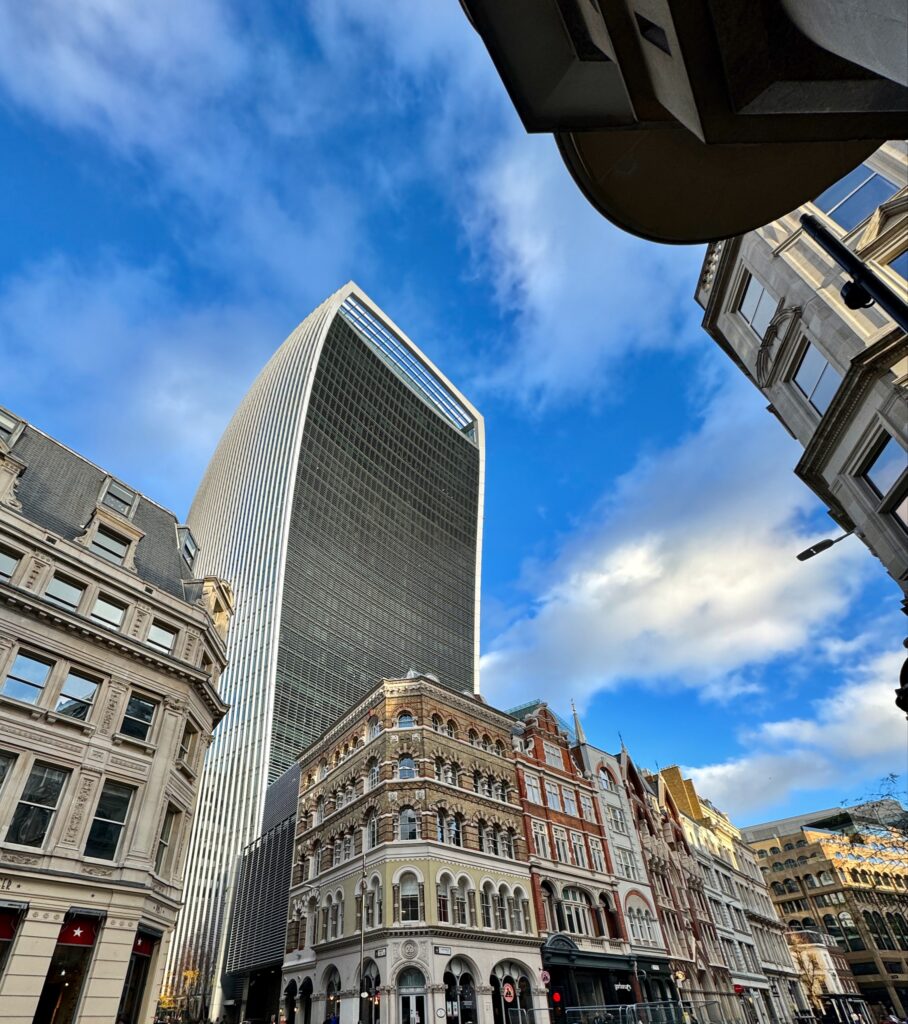
This is what you see as you approach from the west …

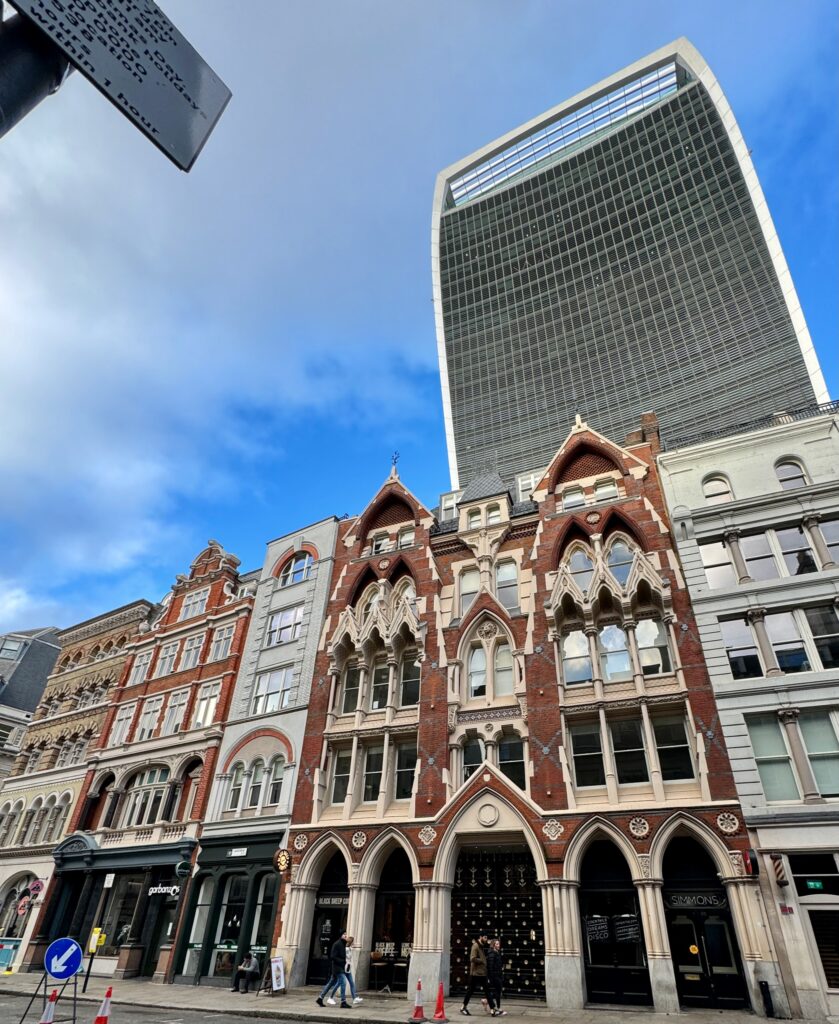
And if you view from the east …

I thought it would be interesting to include these images to illustrate just how the Fenchurch Building a.k.a. the Walkie Talkie dominates the skyline here. It was amusing that, when the building was finished, it was discovered that the glass concentrated and reflected the sun’s rays in such a way that it was scorching cars parked in the street below. The structure was given a new nickname – the Walkie Scorchie.

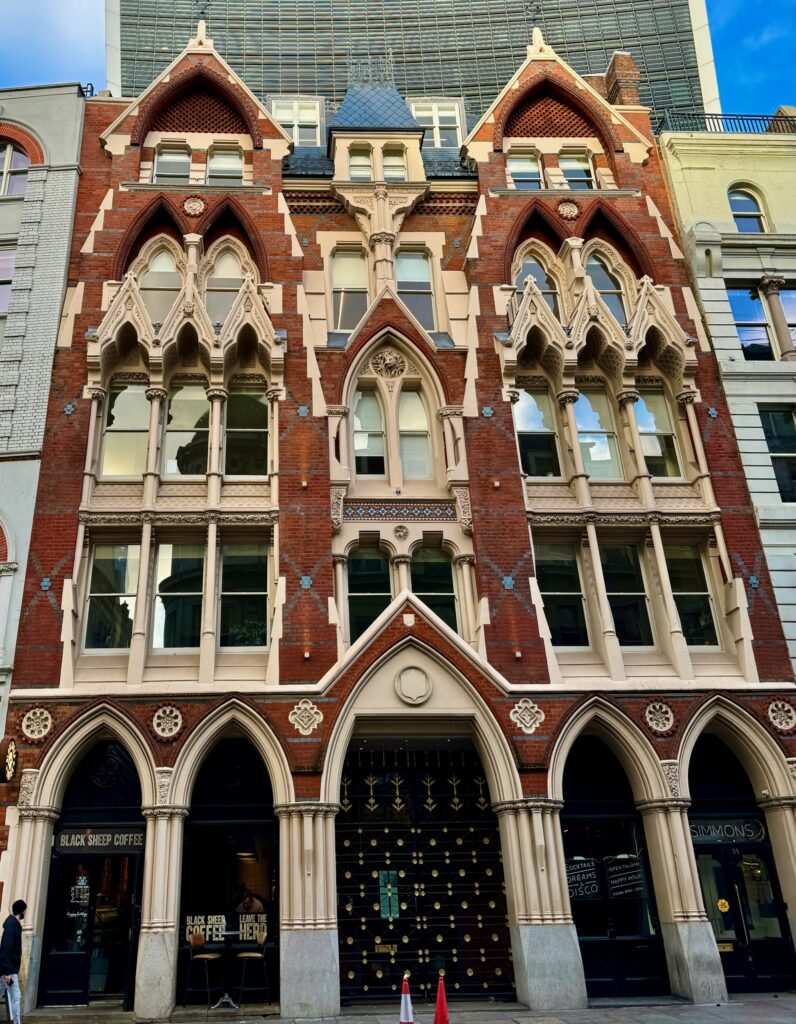
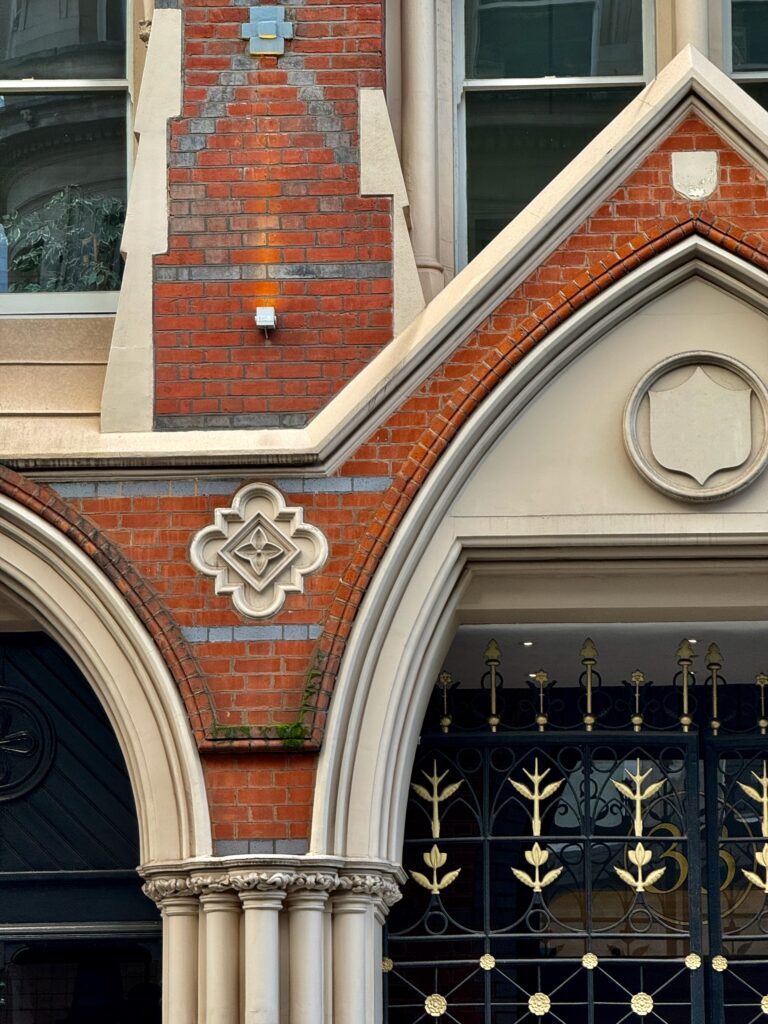
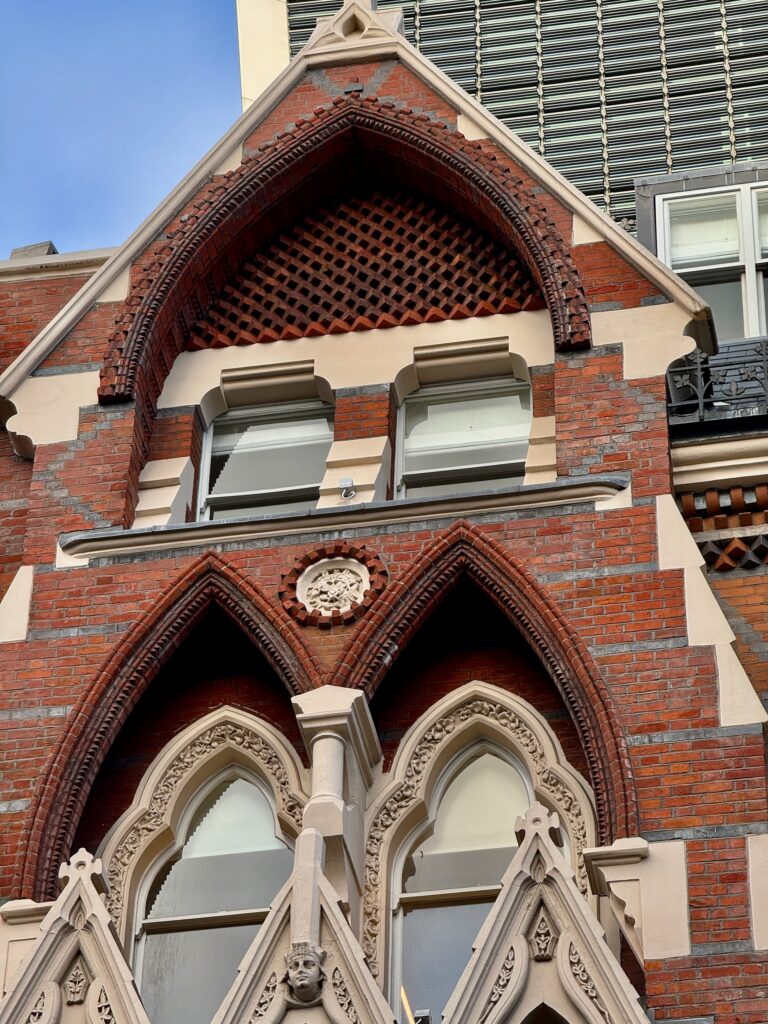
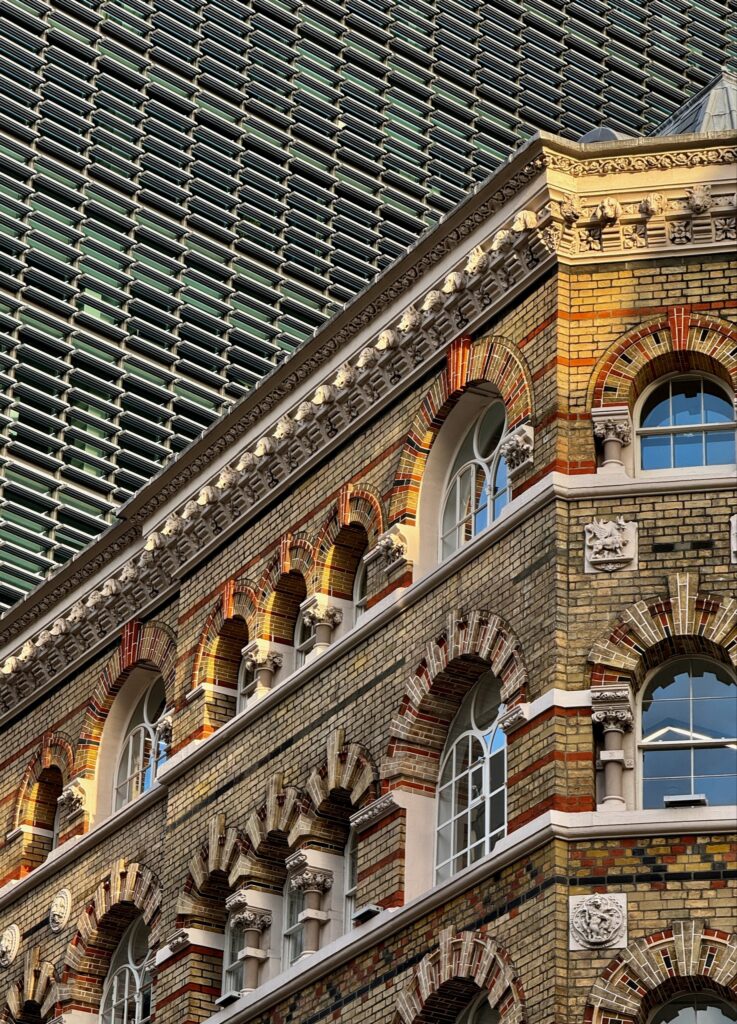
The stars of the show at street level are definitely numbers 33-35. Designed by R L Roumieu and built 1868, today the facade is grade II* listed. The ‘masterpiece’ (as described by Architectural Historian; Pevsner) was made for Hill & Evans, vinegar-makers from Worcester …

Pevsner goes on to describe it as ‘one of the maddest displays in London of gabled Gothic’ and he quotes from Ian Nairn – architectural critic – who calls it ‘the scream that you wake on at the end of a nightmare’.

I love it!

Look at the wonderfully detailed brickwork …

There’s a medieval head wearing a coronet …

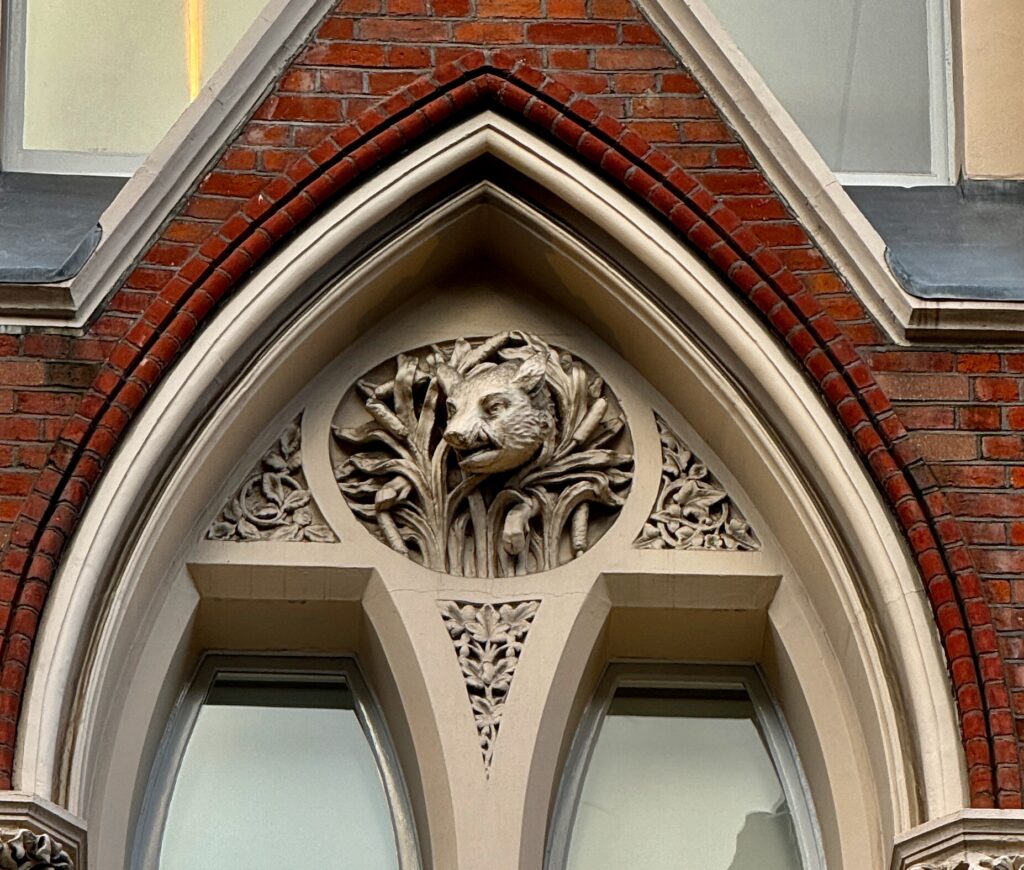
… and a boar crashing through the undergrowth. What’s that all about? …

The animal is a reference to The Boar’s Head Tavern in Eastcheap where Shakespeare set the meetings of Sir John Falstaff and Prince Hal in his Henry IV plays and the medieval head represents the Prince.

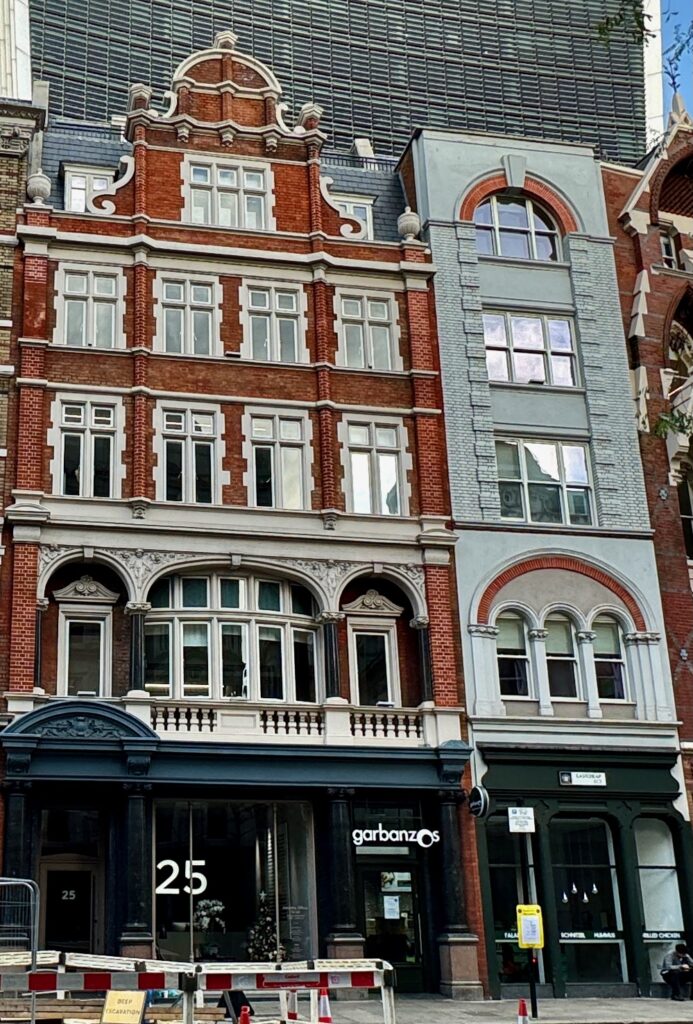
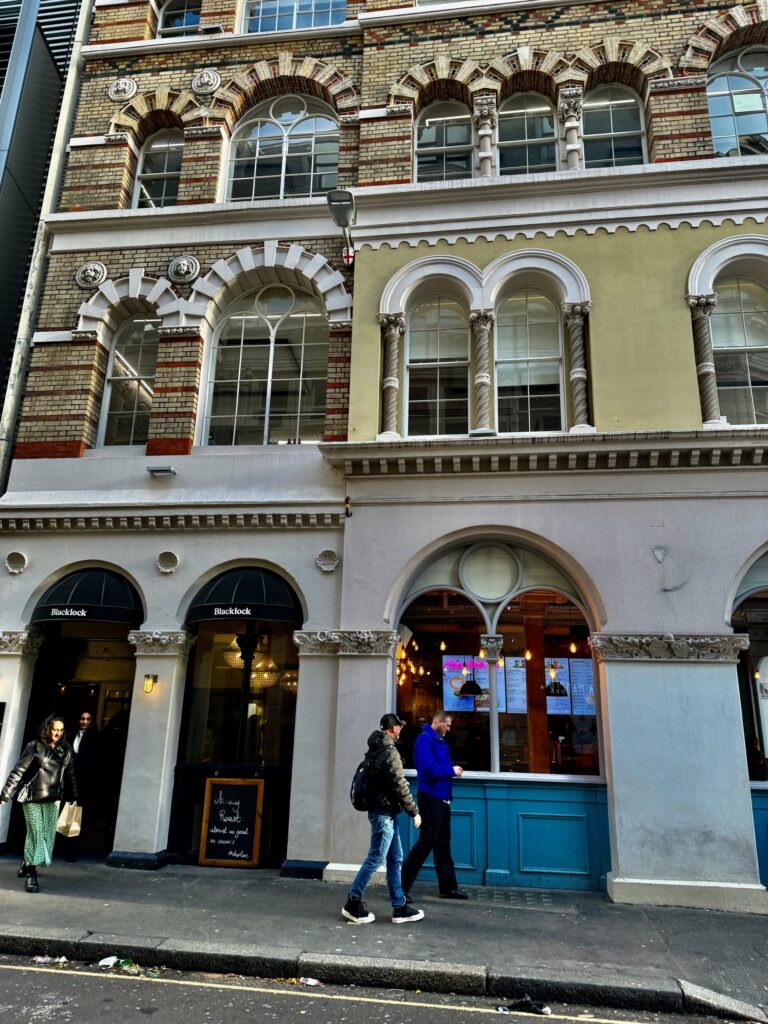
No. 25, by Bird & Walters (1892-93), was a former pub. The narrow and plainer building on the right was built in 1860 …

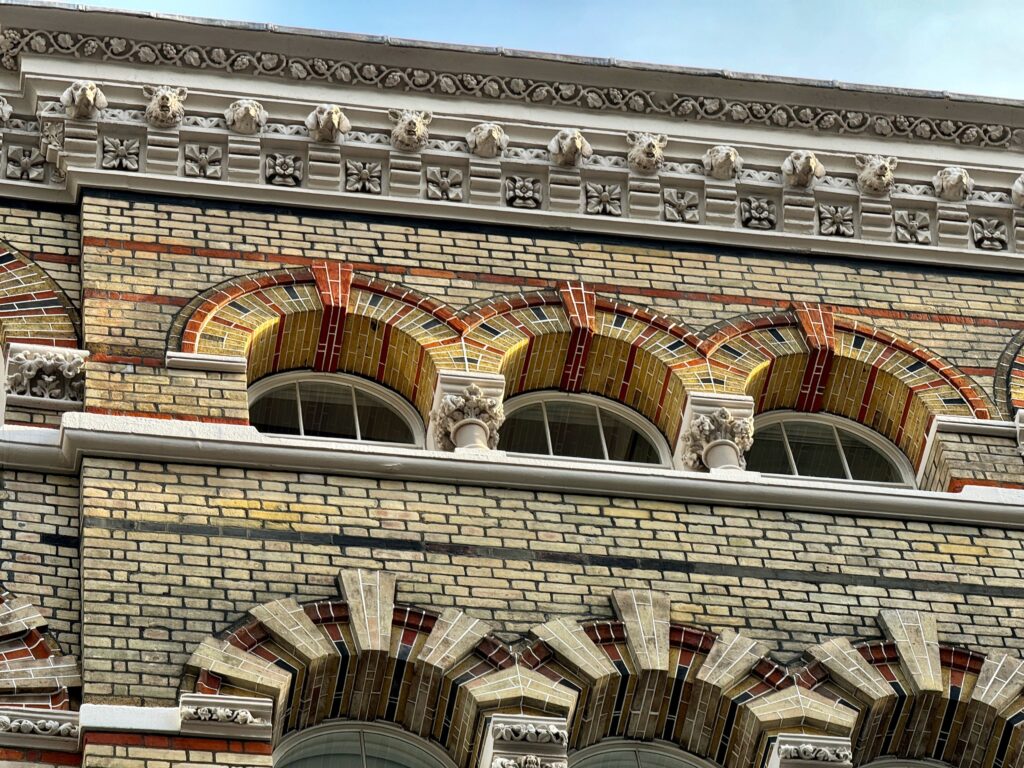
Another 1860 building is the eye-catching one on the corner. It was once the offices and warehouses for Messers Hunt & Crombie, spice merchants …

Just below the roof is a fabulous combo of dogs’ and boars’ heads along with lovely brickwork …

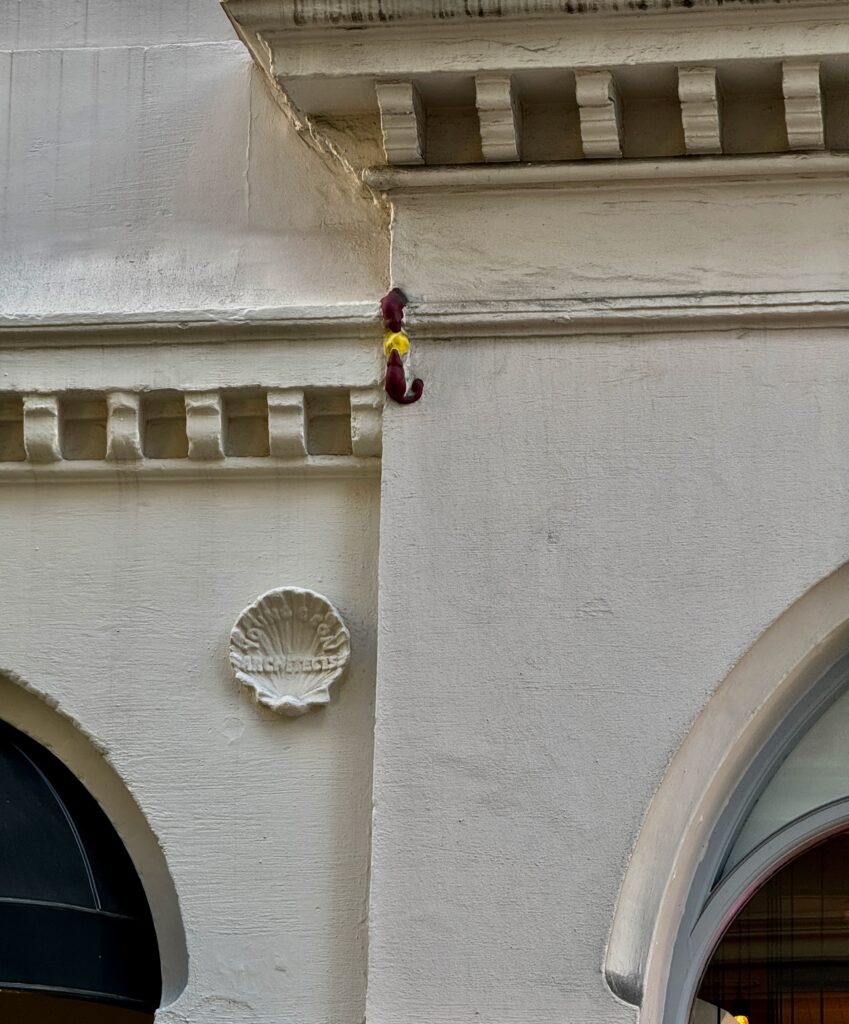
Walk around the corner to see London’s tiniest public sculpture. Thousands of people walk past it every day and have, I’m sure, no idea it is there.

Can you spot it …

It’s two mice eating a piece of cheese …

There are a number of theories as to its origin but nobody knows for sure.

Further east, on the opposite side of the road, are more Eastcheap animals, including the remains of a dead one.

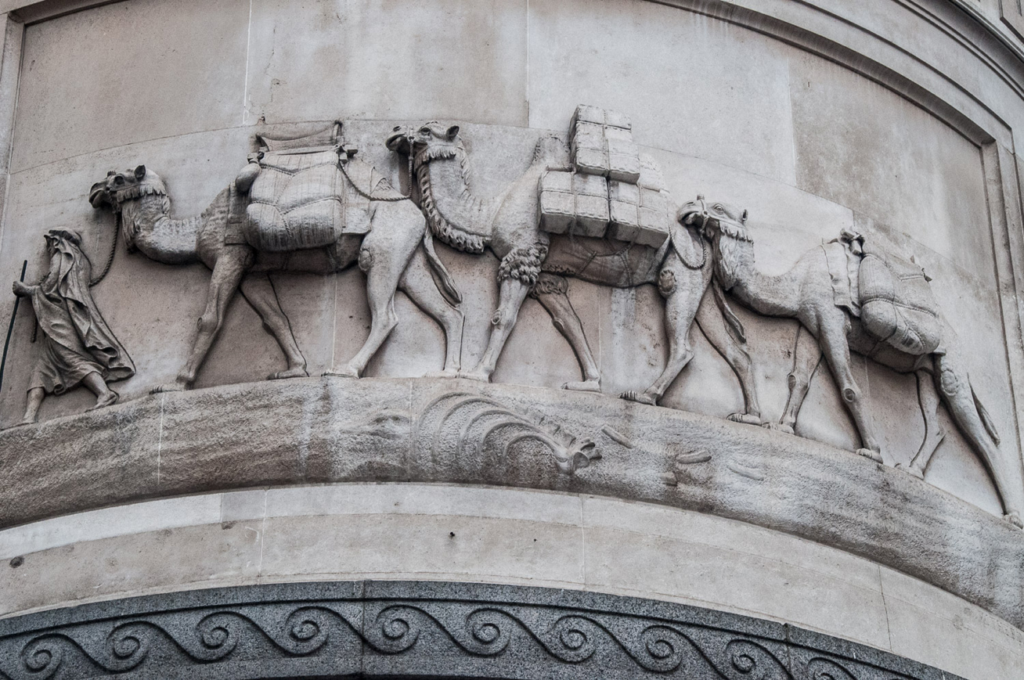
Constructed between 1883 and 1885, the building at number 20 was once the headquarters of Peek Brothers & Co, dealers in tea, coffee and spices, whose trademark showed three camels bearing different shaped loads being led by a Bedouin Arab …

The firm was particularly well known for its ‘Camel’ brand of tea. When Sir Henry Peek (son of one of the original founders) commissioned this building he wanted the panel over the entrance to replicate the trademark, right down to the dried bones of the dead camel lying in the sand in the foreground.

The Peek Brothers letter heading/trademark – Copyright – British Overprint Society – Mark Matlach

He clearly wanted his prestigious building to be enhanced by a suitably eminent sculptor – preferably one with knowledge of camel anatomy.

The sculptor he picked, William Theed, was indeed an extraordinary choice for such a mundane task. Theed was a great favourite of Queen Victoria and Prince Albert and his work can be seen on the Albert Memorial where he sculpted the group Africa the central figure being, of course, a camel …

The Queen also liked and trusted him so much that she asked him to take her beloved Albert’s death mask when the Prince died tragically young in 1861.

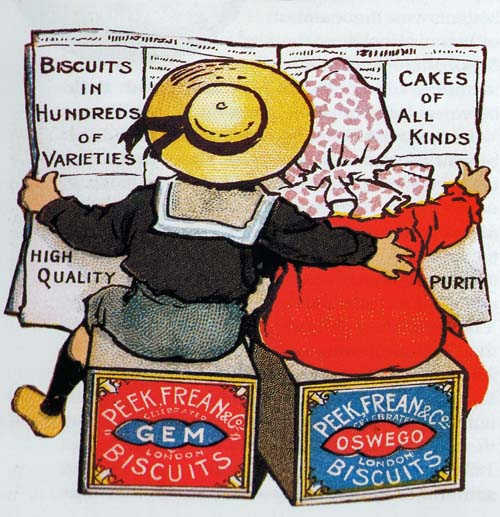
Peeks carried on trading under various names until the 1970s. Another branch of the family ensures that the name lives on by way of the biscuit makers Peek Freans …

As is often the case, I am indebted to Katie Wignall, the Look up London blogger and Blue Badge Guide, for much of the background information on the architecture in today’s blog.

It just remains for me to wish you all a very happy and safe New Year and thank you very much for subscribing.

If you would like to follow me on Instagram here is the link …

https://www.instagram.com/london_city_gent/

Page 20 of 92

Powered by WordPress & Theme by Anders Norén

Symbols & Secrets
Privacy Overview

This website uses cookies so that we can provide you with the best user experience possible. Cookie information is stored in your browser and performs functions such as recognising you when you return to our website and helping our team to understand which sections of the website you find most interesting and useful.