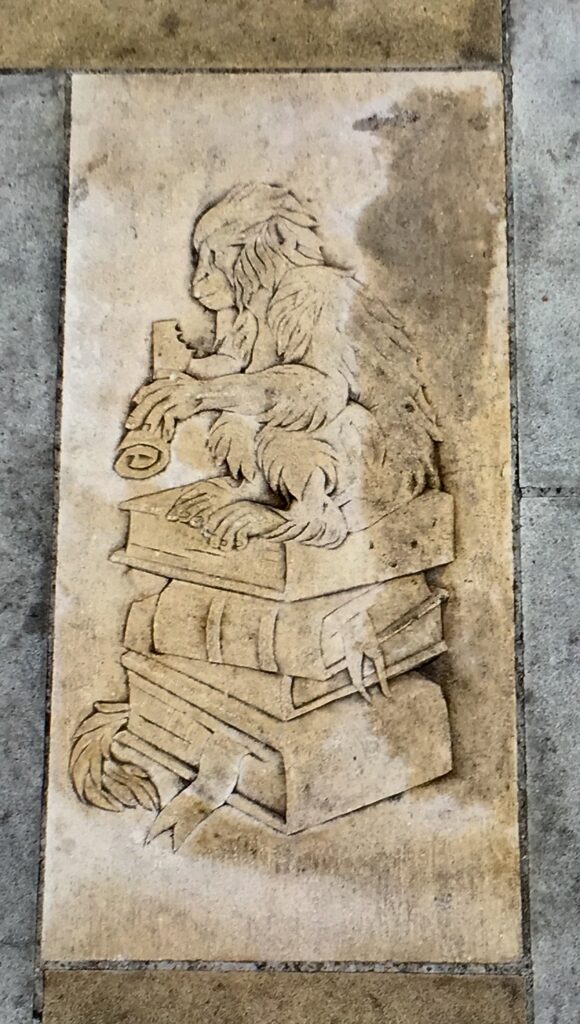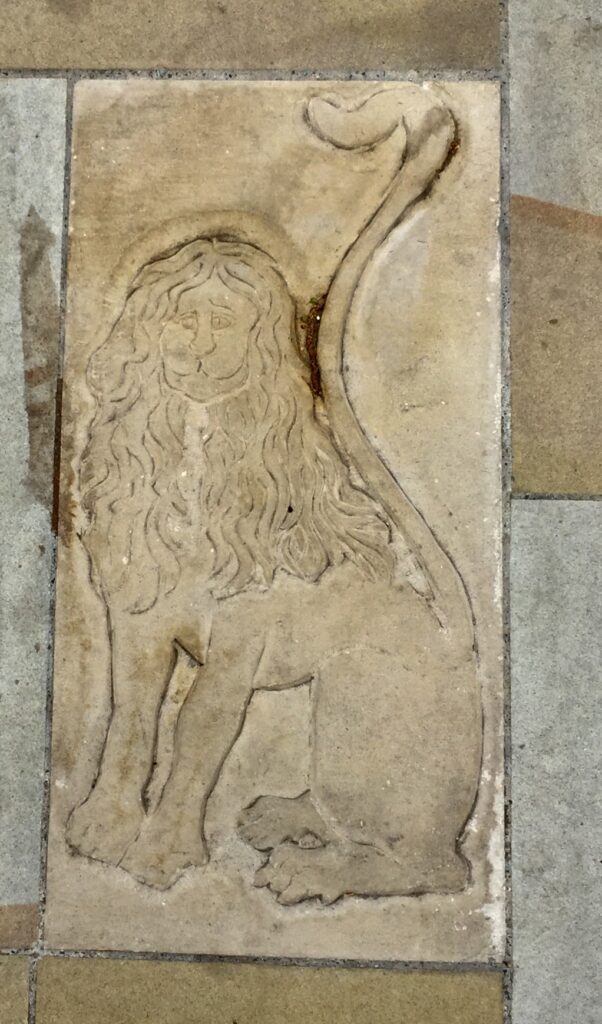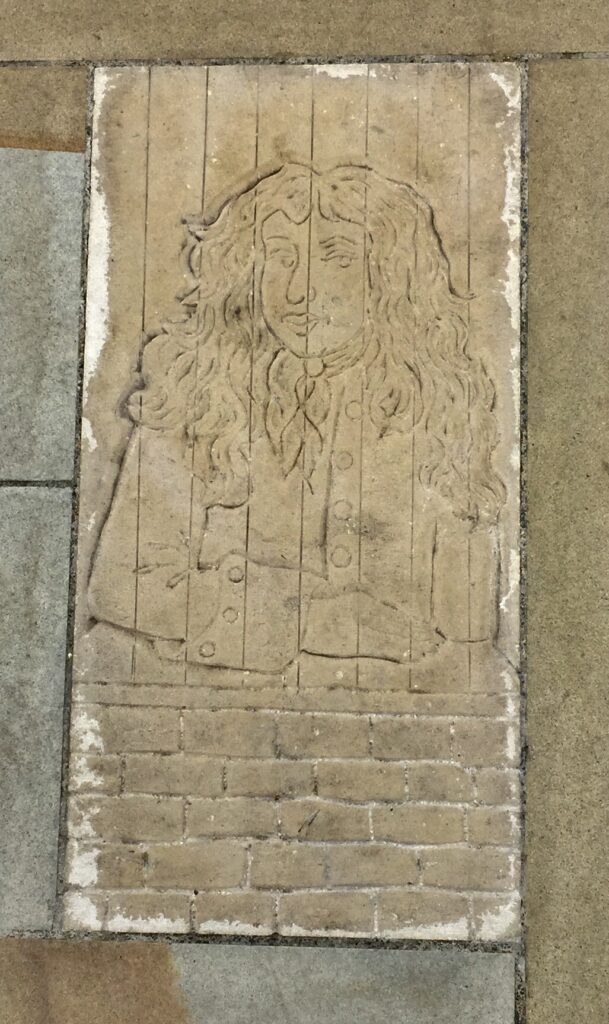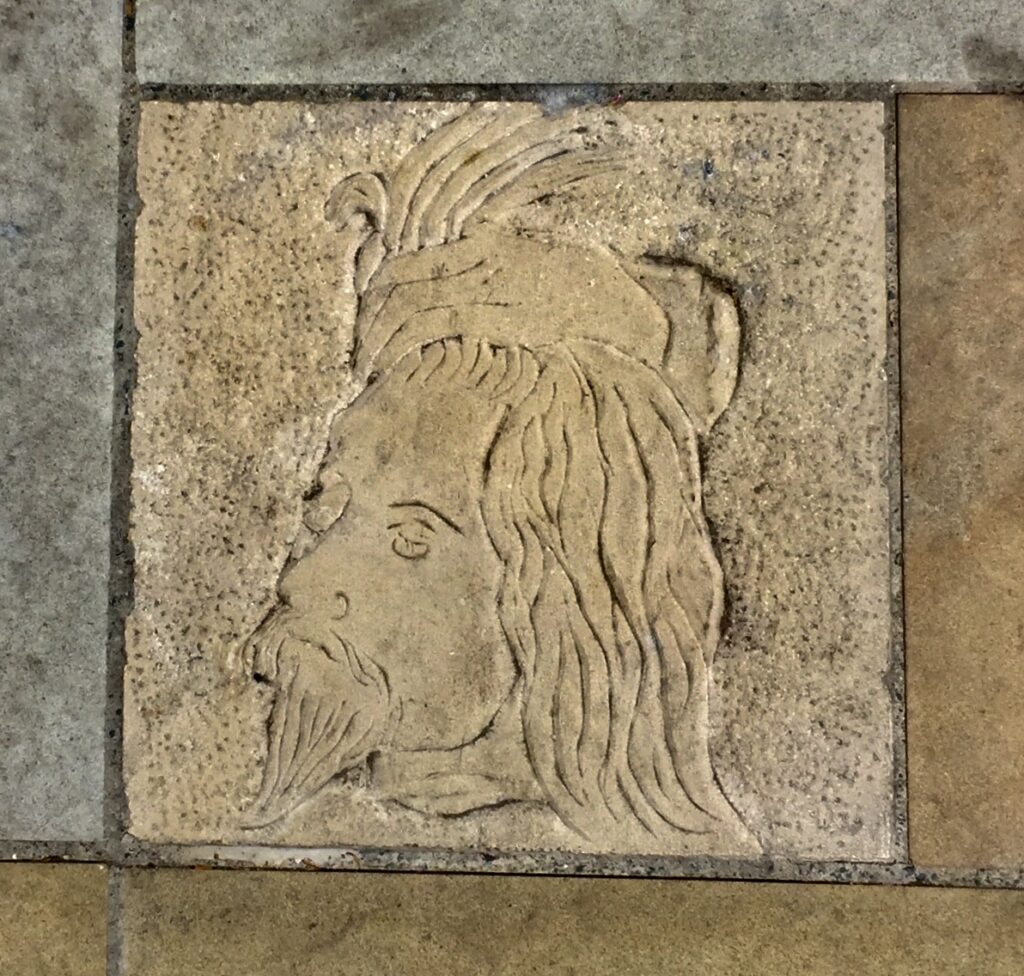
Everyone knows the story of Dick Whittington and his cat. Poor young Dick has given up on his hopes of making a fortune in London and is heading back home. As he climbs Highgate Hill, faithful cat at his side, he hears the bells of St Mary-le-Bow Cheapside ring out the words ‘Turn again Whittington, thrice Lord Mayor of London!’. There are several representations of Whittington and his companion in the City.
The first is a stunning window by the artist and glass maker John David Hayward in St Michael Paternoster Royal on College Hill (EC4R 2RL) where Dick Whittington was buried in 1423. It depicts him on Highgate Hill …
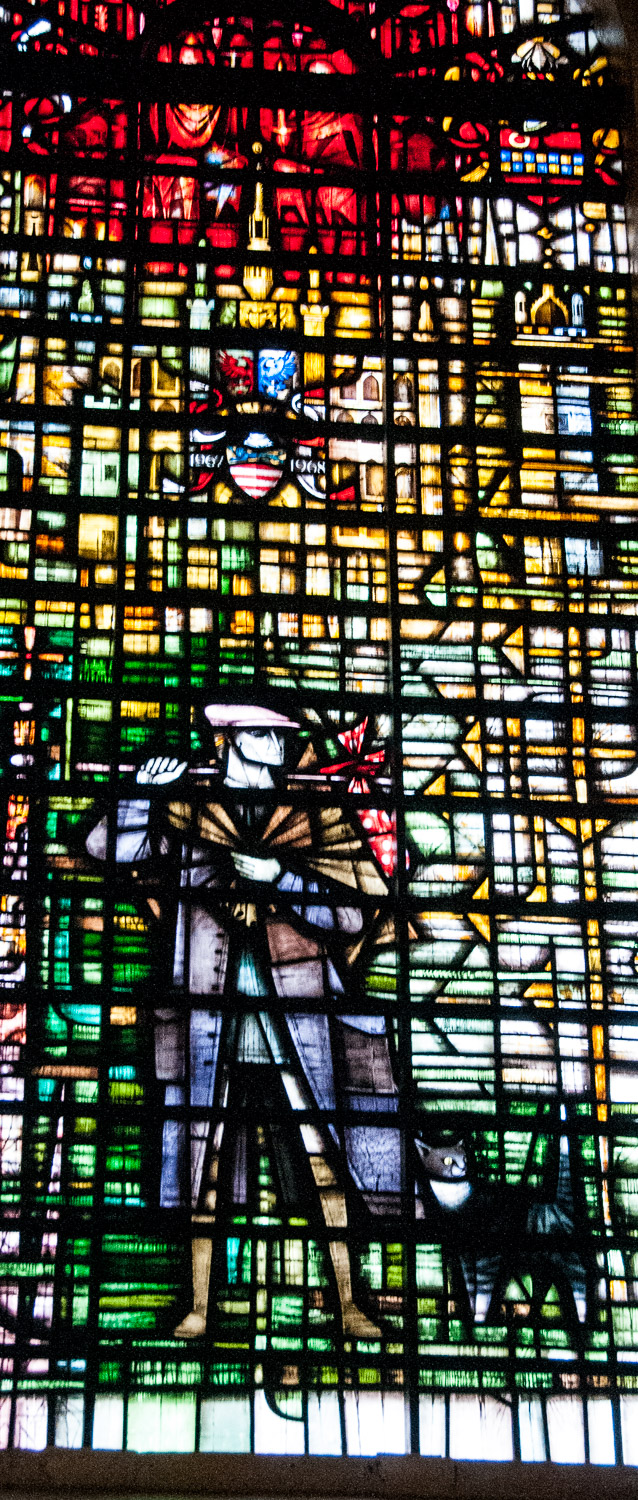
He’s just heard the church bells and glances back …
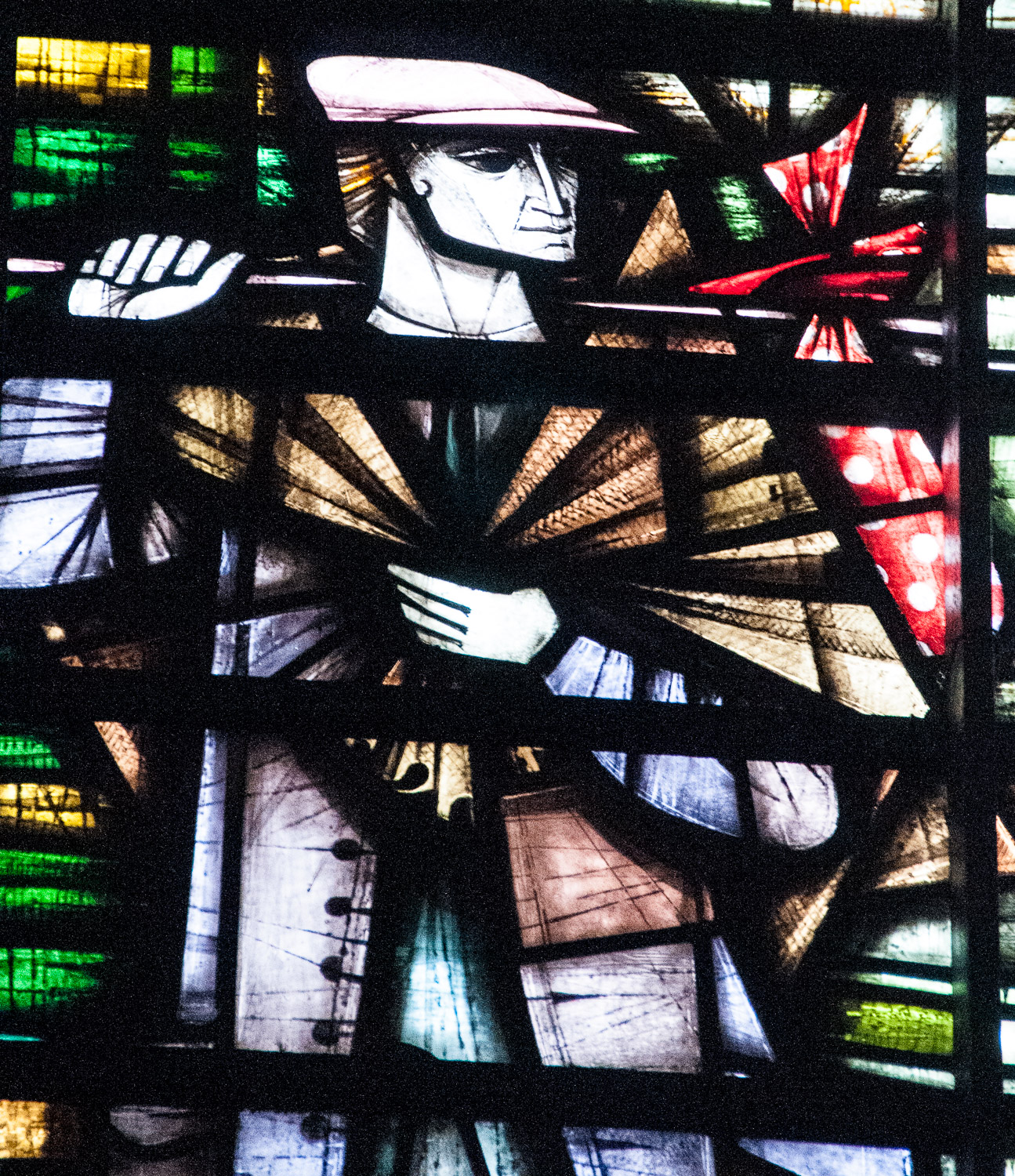
It has been commented that he rather resembles a flat-capped Hoxton Hipster – maybe there is an iPad in that bag.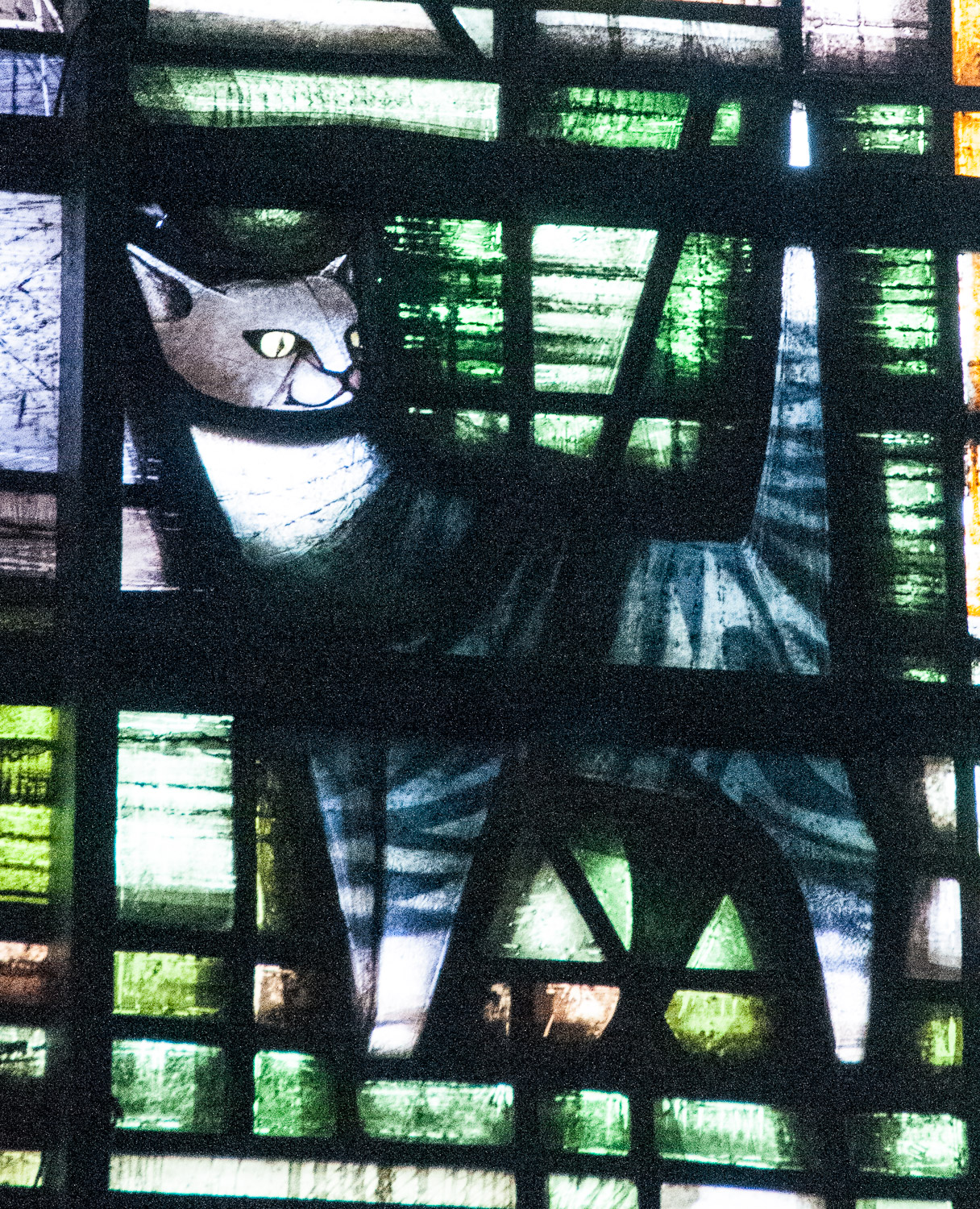
I love the expression on the cat’s face. Perhaps he has seen a mouse.
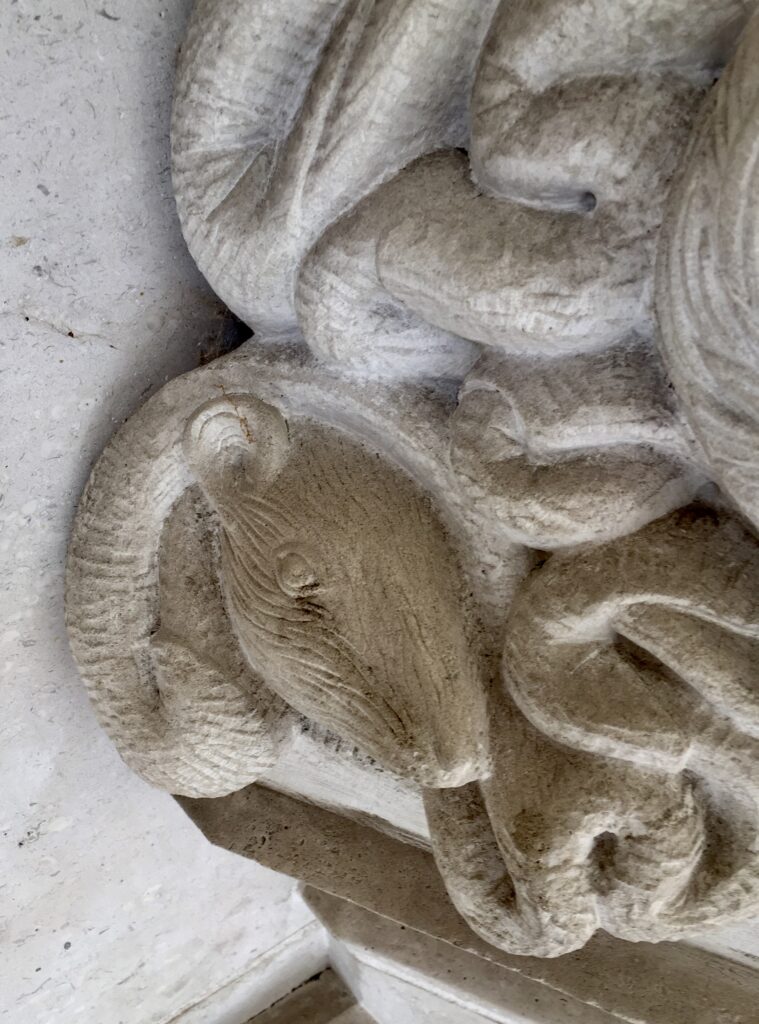
I only recently discovered this sculpture in the ambulatory to The Guildhall Art Gallery (EC2V 5AE). He looks very thoughtful, doesn’t he. Times have been hard (note his torn leggings) and a rather unpleasant creature is peeping out from his pile of clothes – ‘Shall I return to the City and try my luck one more time?’ The milestone indicates it’s three miles away …
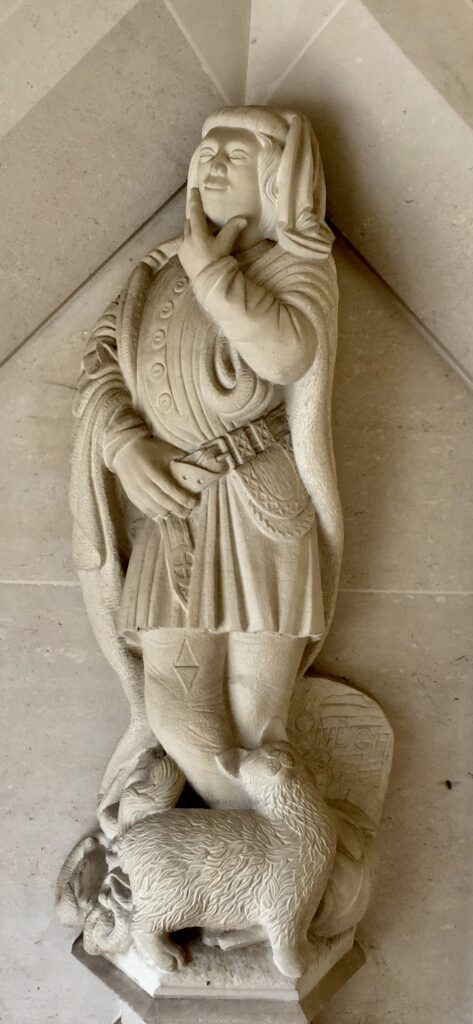
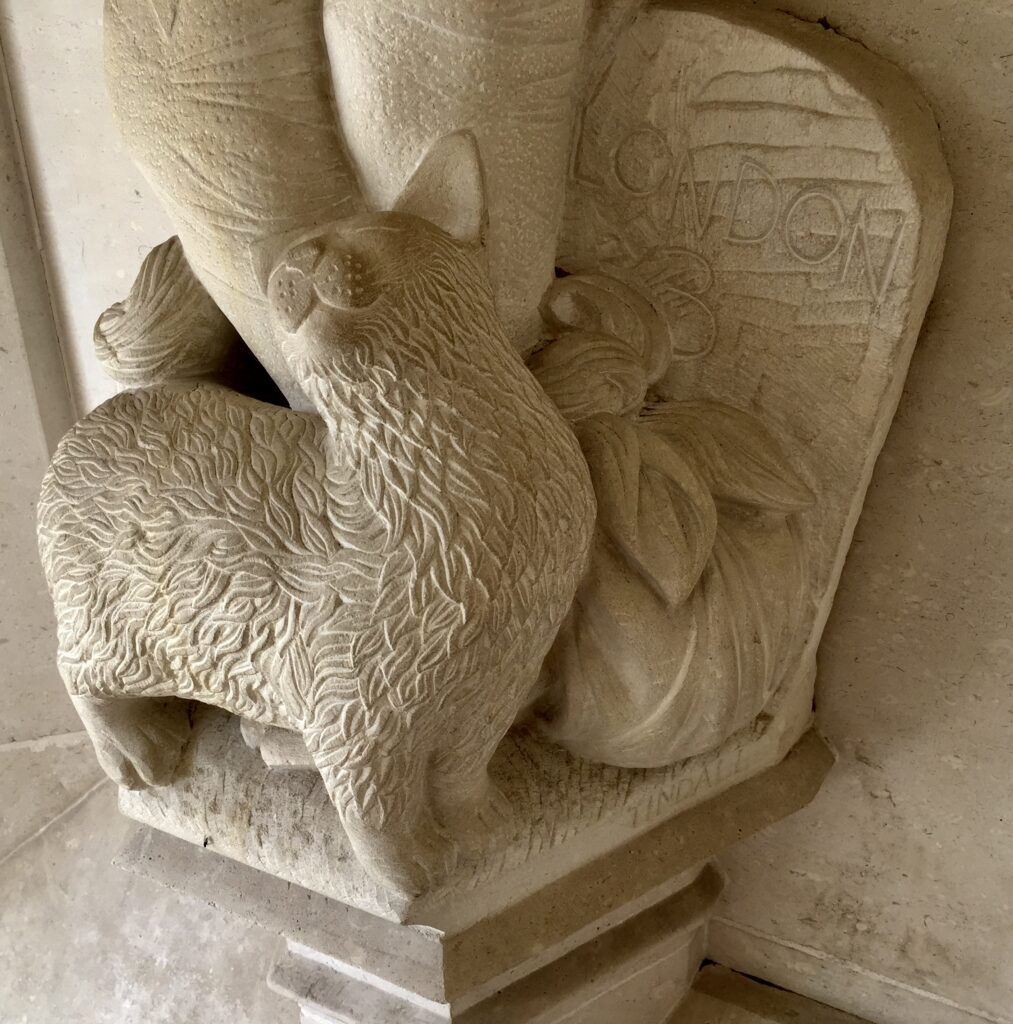
The sculptor Lawrence Tindall has written : ‘My figure, in Portland stone, is carved in a style illustrative of children’s literature. It shows Dick and his cat at the point of turning again on hearing Bow Bells and — look behind him: there is a rat! My idea with this and the other figures was to lighten the atmosphere at the entrance of this impressive building and provide something for visiting children’.
The cat …
And a rat! …
Although the story is a total myth, it burned itself into folklore so deeply that the point on Highgate Hill where he supposedly heard the bells is also commemorated (and I knew exactly where it was). Take the Underground train to Archway, walk up Highgate Hill, and a hundred yards or so further on, you will encounter this charming little memorial …
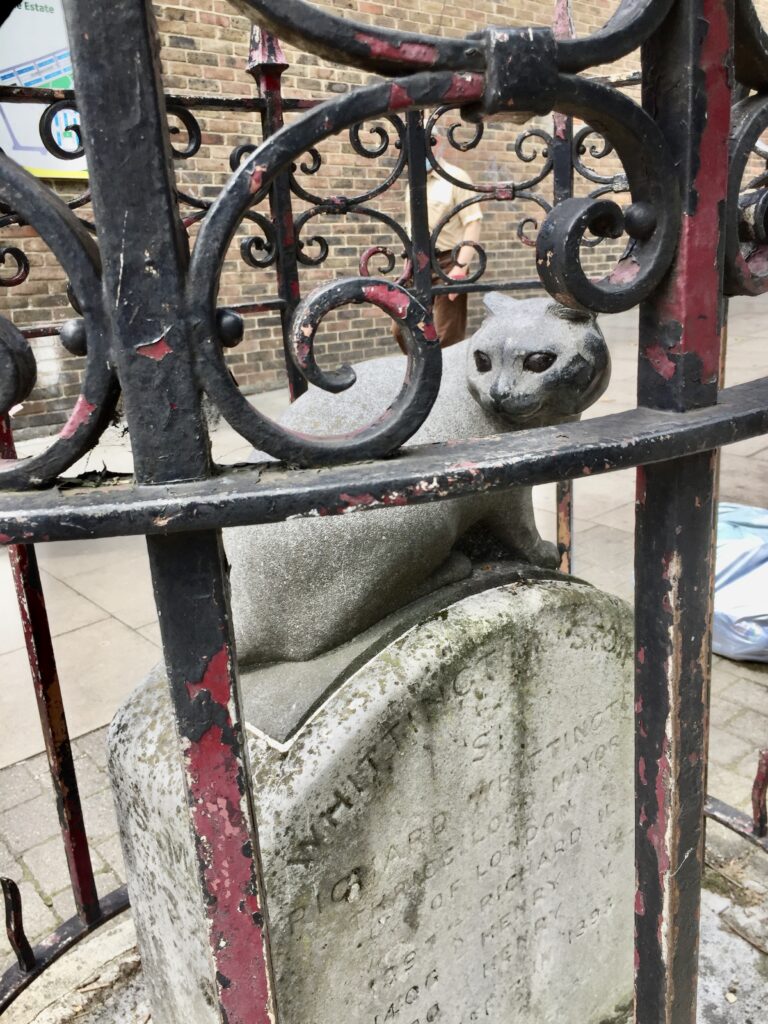
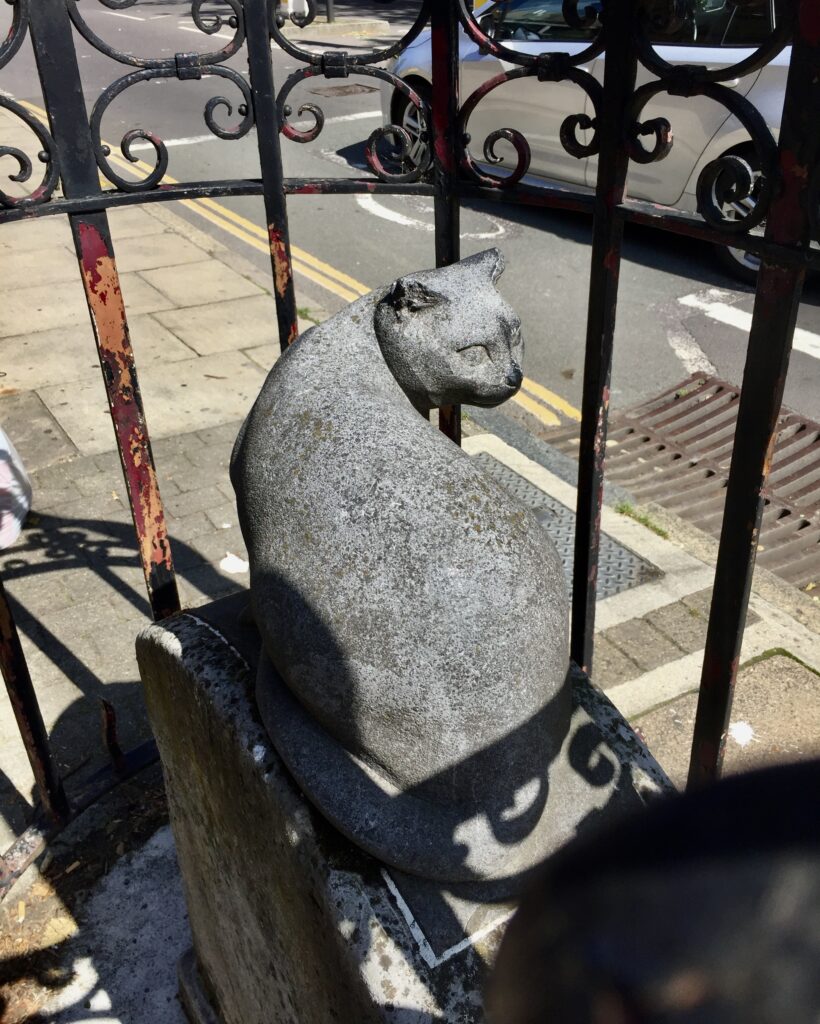
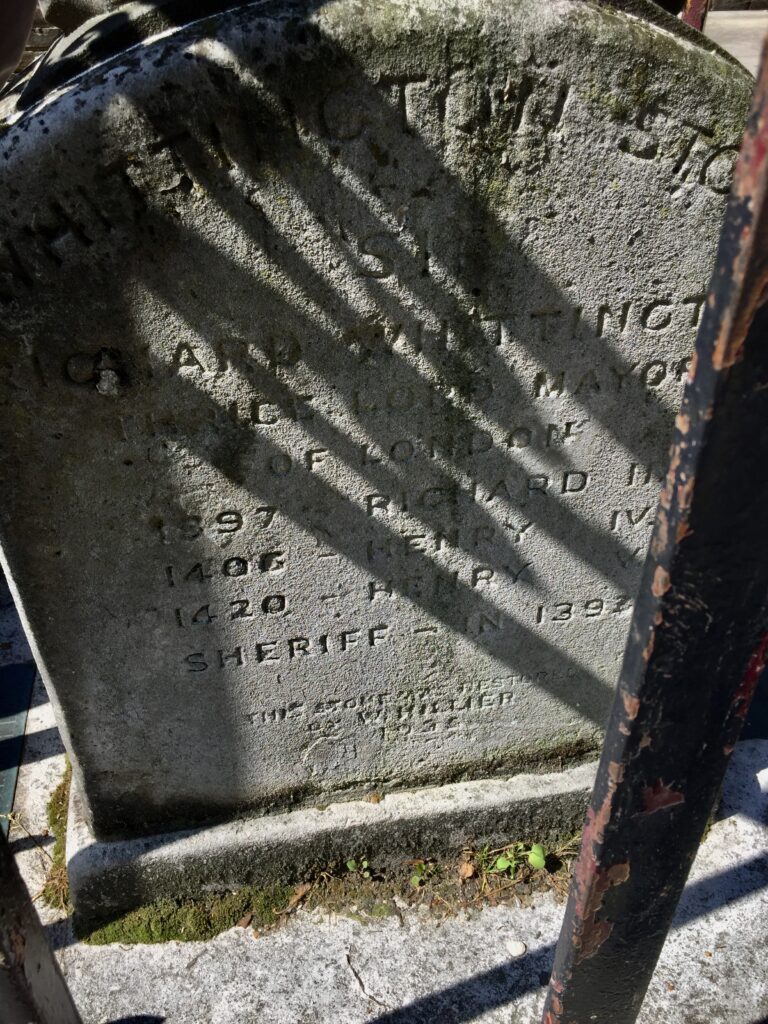
Carved on the side of the stone facing the road are the dates of Whittington’s Mayoralties, the three Kings he served under and the year he was Sheriff …
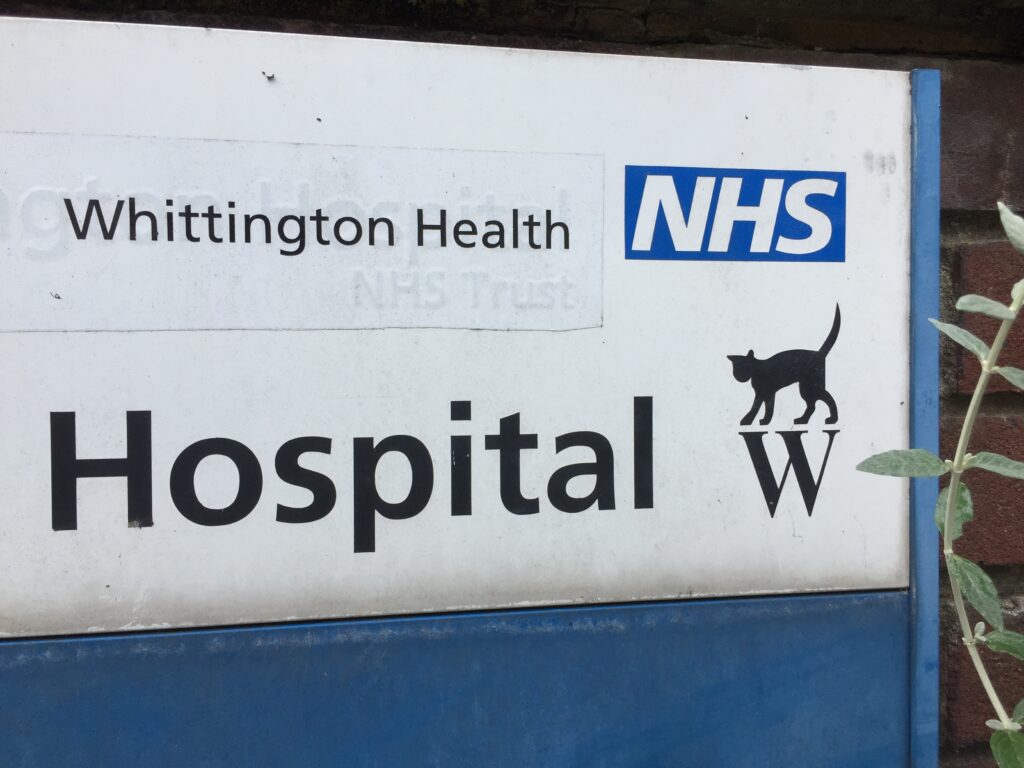
You can read a comprehensive history of the stone and the cat here on the London Remembers website. I recall the cat (made from Irish limestone) being added in 1964 since I walked up the hill almost every day on my way to school. The cat also lives on in the signage of the nearby Whittington Hospital …
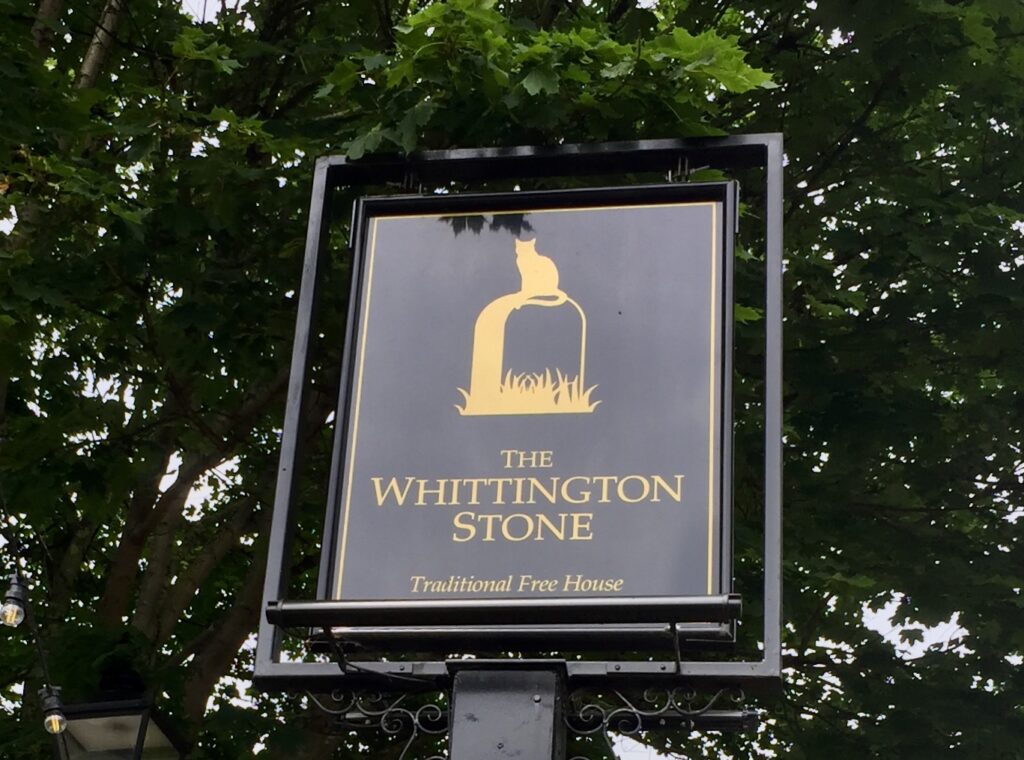
And the pub opposite the stone …
Knowing that I was going to be visiting Highgate I couldn’t resist the temptation to book a self-guided tour of the famous Cemetery.
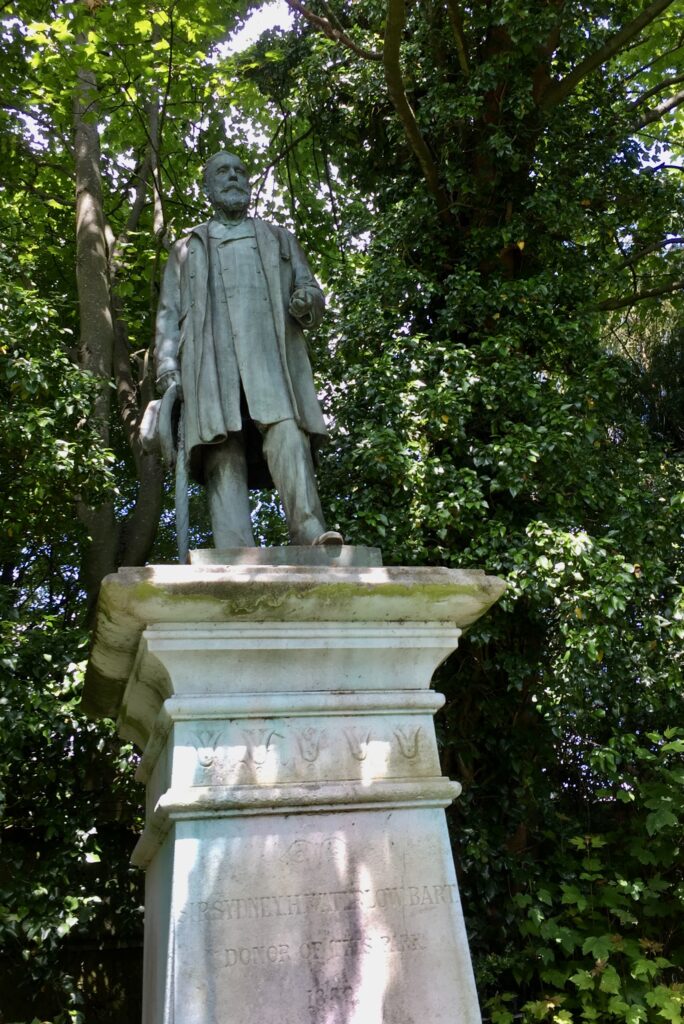
To get there I walked further up the hill and turned left into Waterlow Park. I paused briefly to pay my respects to the wonderful philanthropist Henry Waterlow in the park that he donated to people who were ‘gardenless’ …
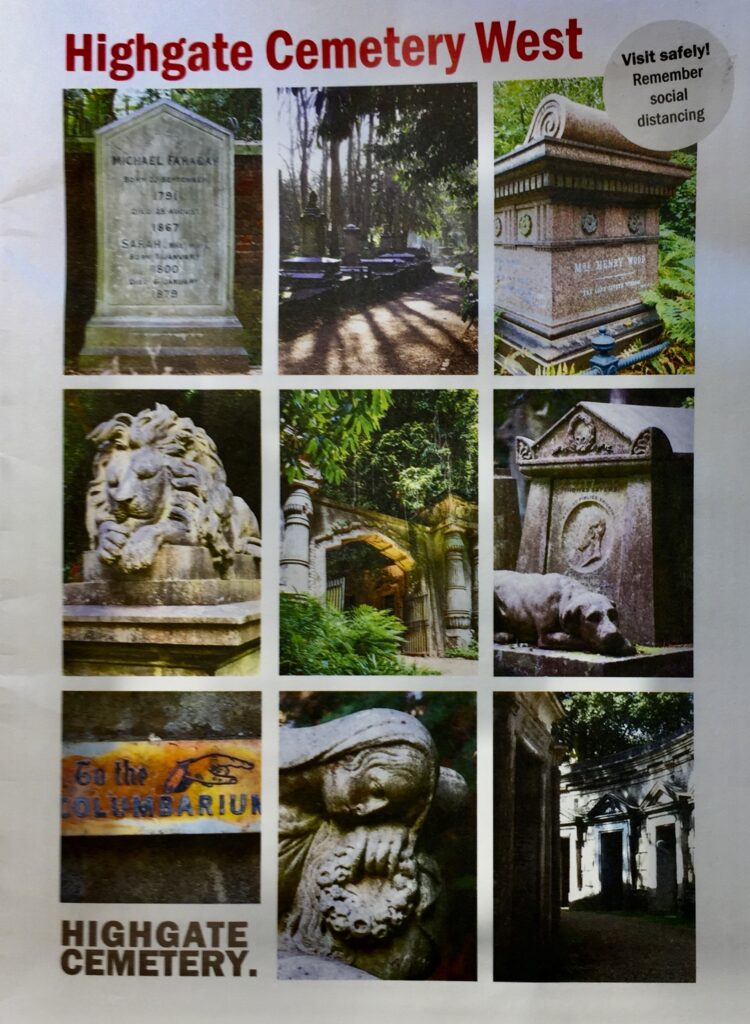
The entrance to the Cemetery is opposite the west entrance to Waterlow Park and is in two sections separated by a road. Paid entry to the West part gets you free entry to the East and includes an excellent printed guide – what a fascinating experience it was. Regular readers will know that I am intrigued by the way animals are represented in sculptures and memorials and here are three from my visit.
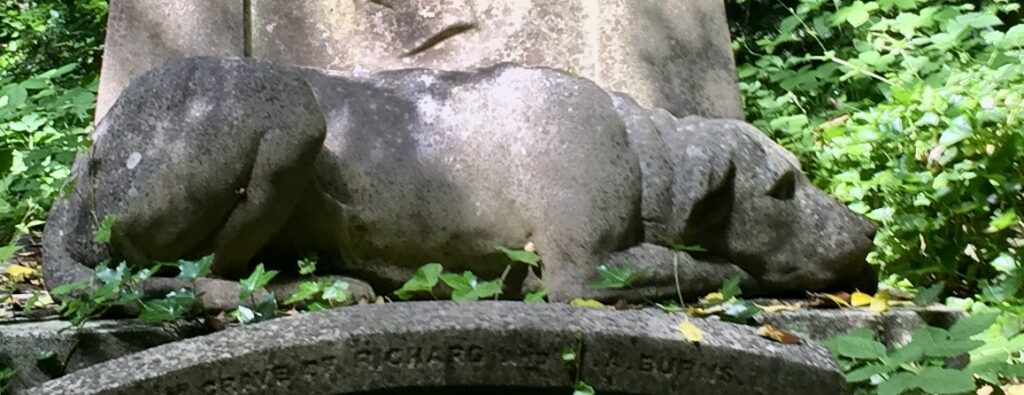
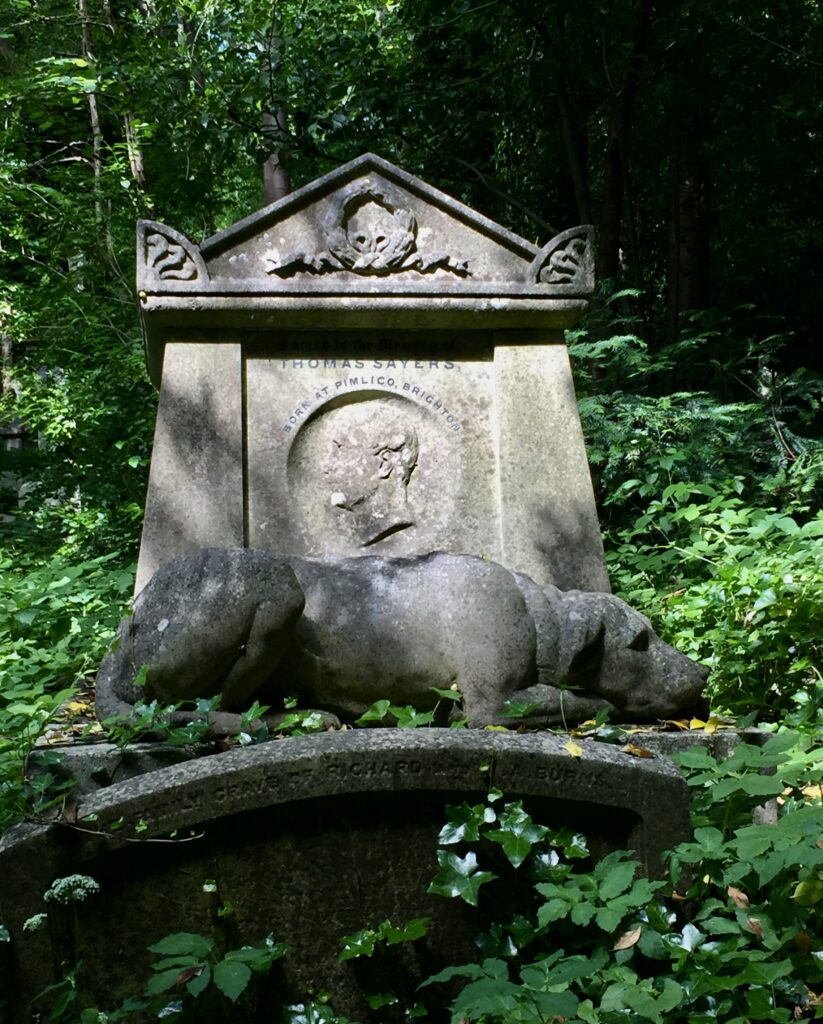
Firstly a very loyal doggie, a huge black mastiff called ‘Lion’ …
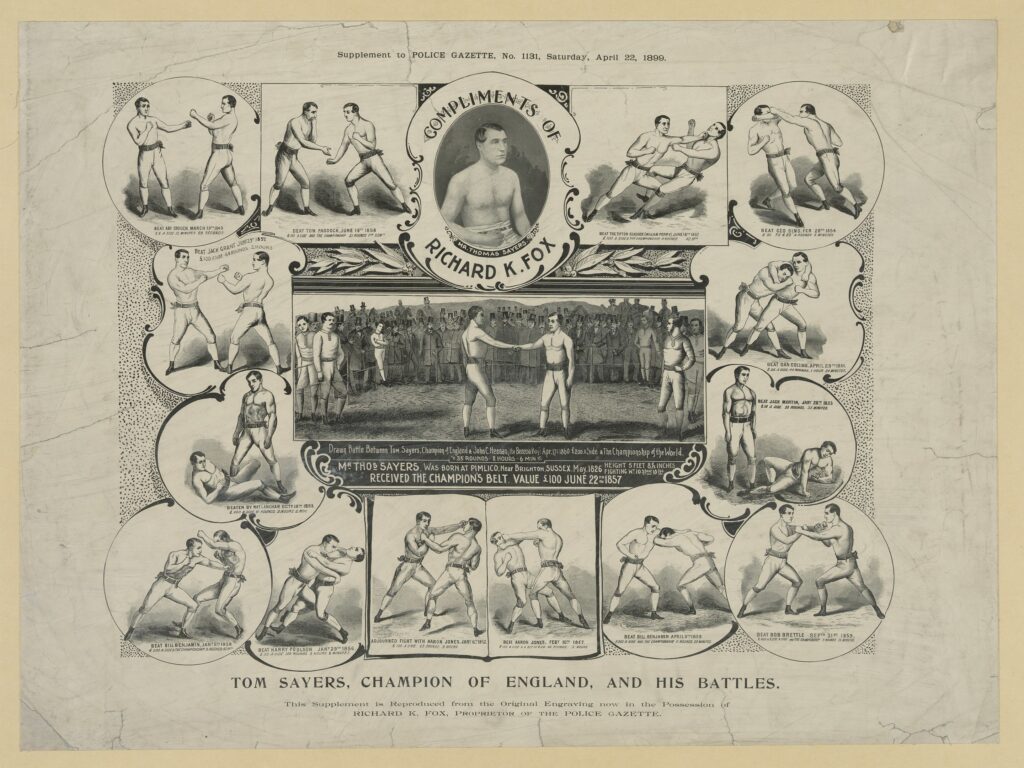
Thomas ‘Tom’ Sayers (1826-65) was an English bare-knuckle prize fighter. There were no formal weight divisions at the time, and although Sayers was only five feet eight inches tall and never weighed much more than 150 pounds, he frequently fought much bigger men. In a career which lasted from 1849 until 1860, he lost only one of sixteen bouts. He was recognized as heavyweight champion of England in 1857, when he defeated William Perry (the ‘Tipton Slasher’).
‘Tom and his battles’, from The Police Gazette …
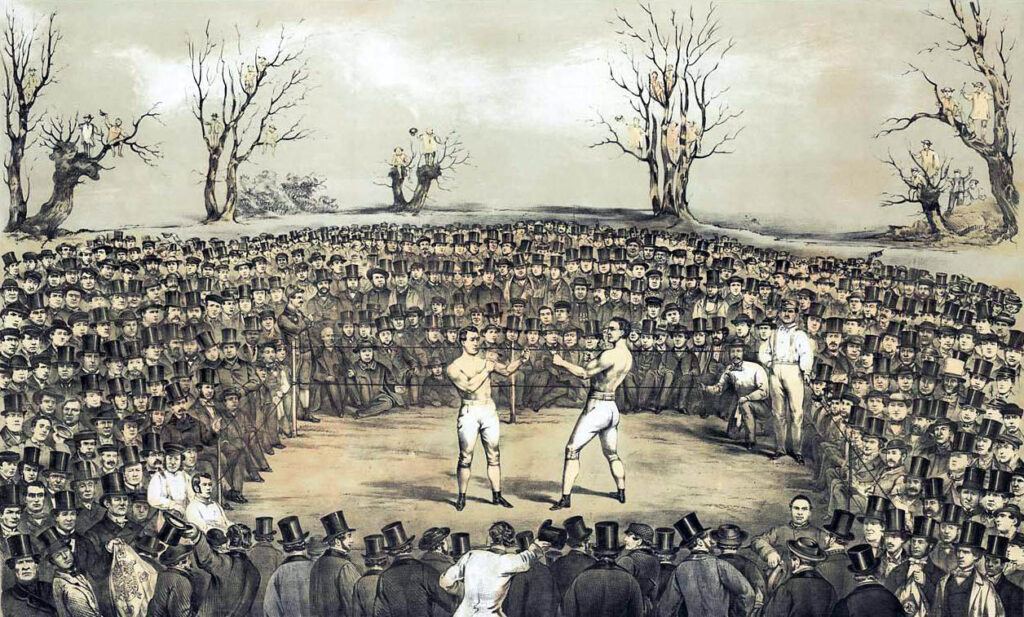
On 17th April 1860 there took place what was claimed to be the first ‘international’ title fight. At 6ft 2in and 195lb John Carmel Heenan, the American contender, towered above Sayers’s 5ft 8in and 149lb as the first round started at 7.29 am. Each severely battered and bloodied, yet unbowed, they would finish, level pegging, tit for tat, their business unsettled as a draw and with all bets off, fully two hours 27 mins and 42 rounds later. The bout was halted when the Aldershot police, brandishing magistrates’ warrants, stormed the ring. This picture of the encounter was painted by a retired boxer called Jem Ward …
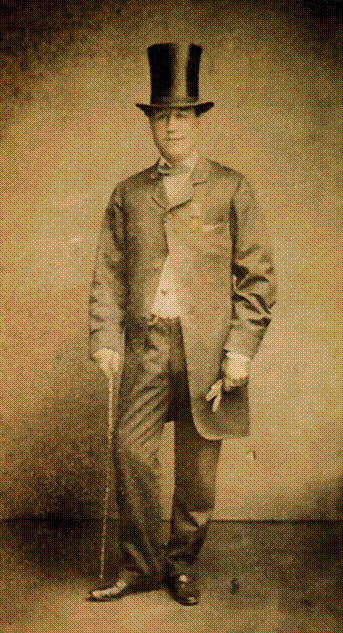
Tom in his prime circa 1860 …
Seriously ill from consumption (tuberculosis) aggravated by diabetes he died aged only 39 at No. 257 Camden High Street on 8 November 1865 in the presence of his father and two children. His funeral a week later attracted some 100,000 people. According to the Spectator magazine, the crowd that accompanied the coffin stretched for more than two miles in length and the bier was drawn by four sable-plumed horses. Lion, the mourner in chief, sat alone in a pony cart …
A real lion called Nero rests, sleeping, on top of the tomb of George Wombwell (1777-1850) …
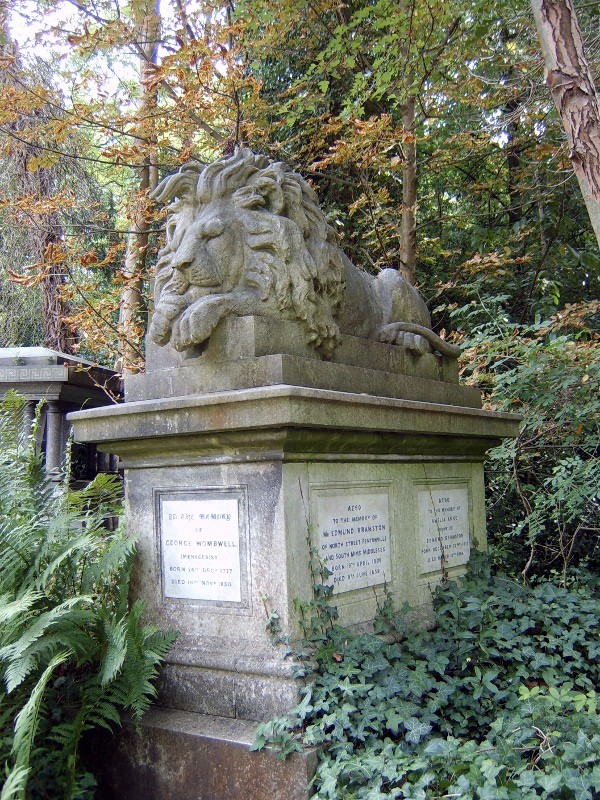
George became a household name as owner of three large travelling animal shows. His menagerie included an elephant, giraffes, a gorilla, a hyena, a kangaroo, leopards, six lions, llamas, monkeys, ocelots, ostriches, panthers, a rhino (billed as ‘the real unicorn of scripture’), three tigers, wildcats and zebras …
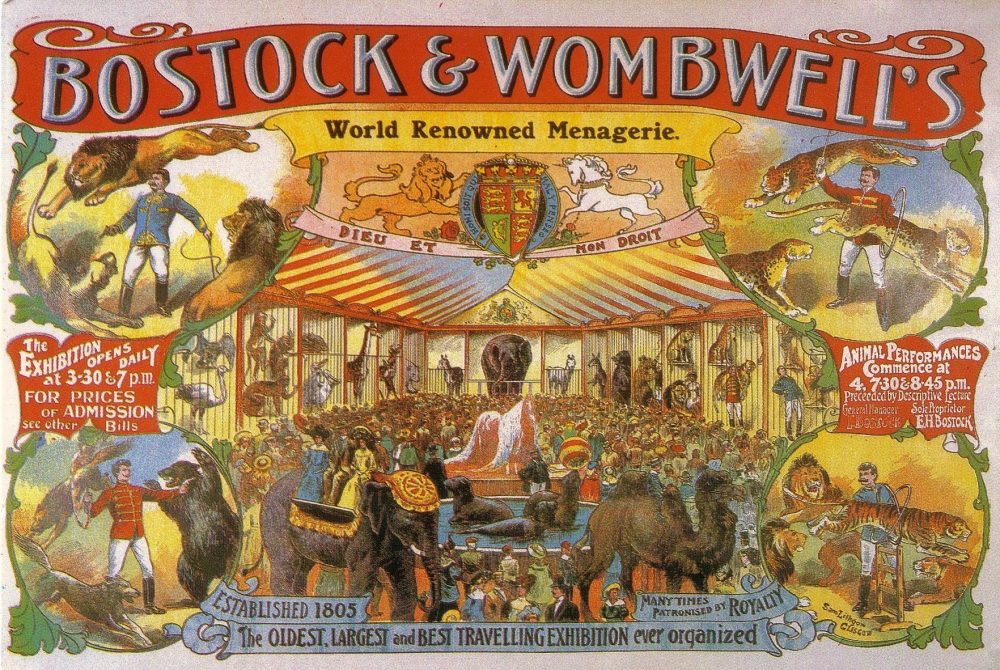
Sadly, because many of the animals were from hotter climes, lots of them died in the British climate. Sometimes Wombwell could profitably sell the body to a taxidermist or a medical school; other times he chose to exhibit the dead animal as a curiosity.
This poor horse on a pedestal looks old, tired and worn out …
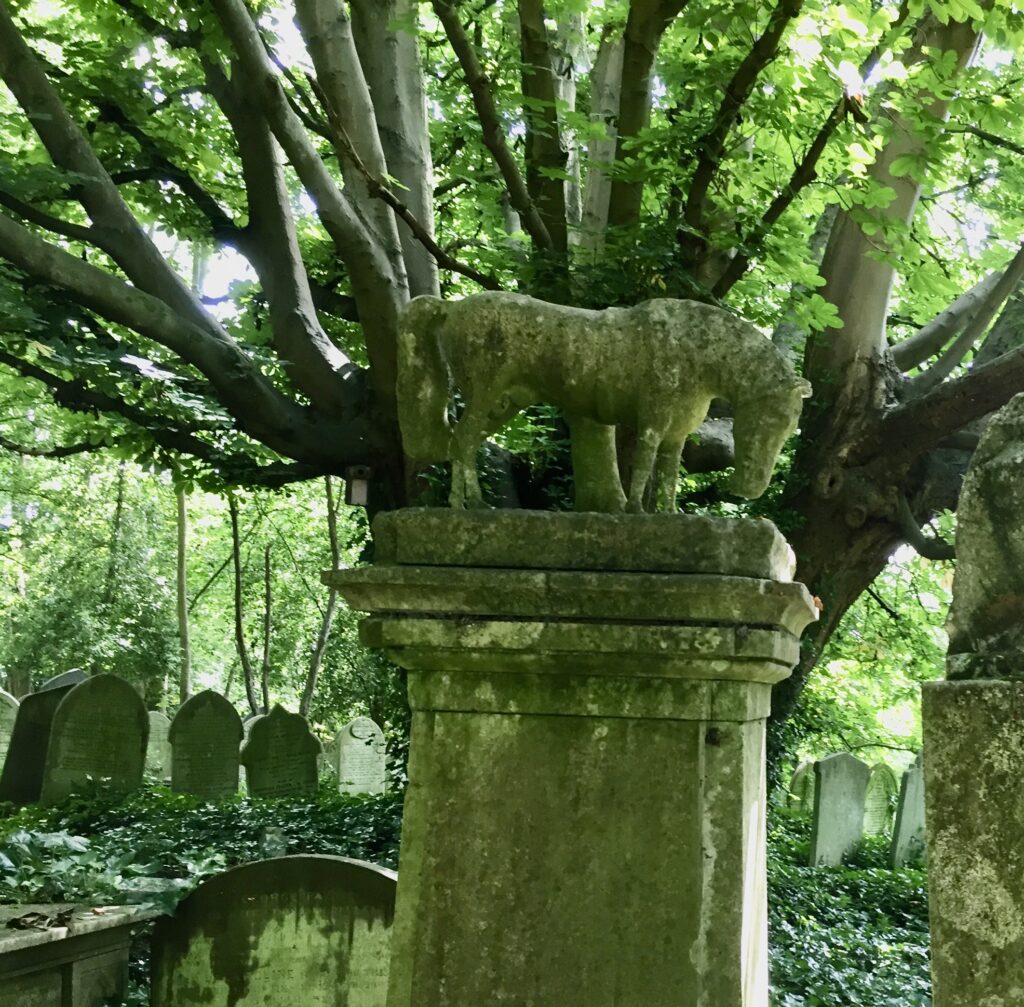
Once upon a time this was taken to be the tomb of John ‘Jack’ Atcheler who claimed to be ‘Horse Slaughterer to Queen Victoria’, and is described as such in the guide. More research has revealed, however, that he is buried elsewhere although there is a John Atcheler beneath the monument. He is the famous man’s son, who died in 1853 aged twenty-two. The grave also holds Jack’s second wife, Sarah, and his son-in-law. The now faded inscription may contain a clue as to why there is a horse on the monument: ‘She’s gone; whose nerve could rein the swiftest steed’. Jack almost certainly paid for the grave and monument and no doubt intended that he would be buried there as well. You can read about Jack in this fascinating article from the Highgate Cemetery Newsletter.
If you visit the East Cemetery other famous people resting there include …
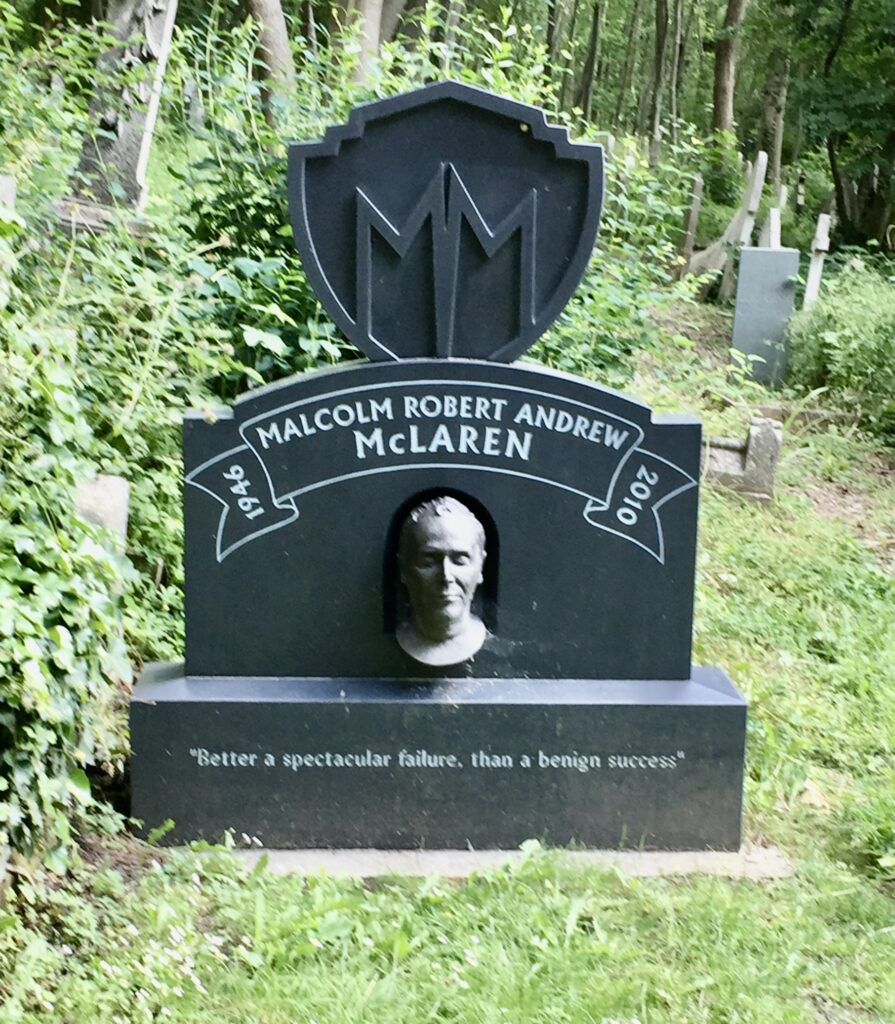
Malcolm McLaren – Better a spectacular failure than a benign success …
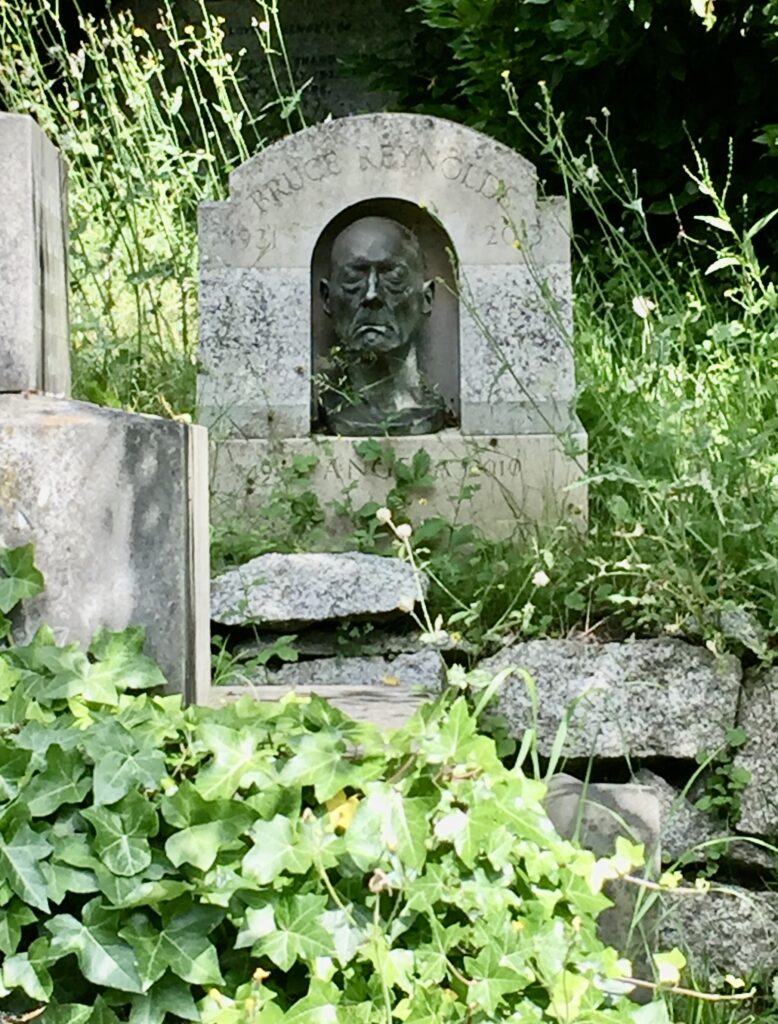
The ‘Great Train Robber’ Bruce Reynolds. The inscription reads ‘C’est la vie’, the words that Reynolds uttered when he was finally arrested in 1968 in Torquay by Tommy Butler, the dogged detective who pursued him to the end …
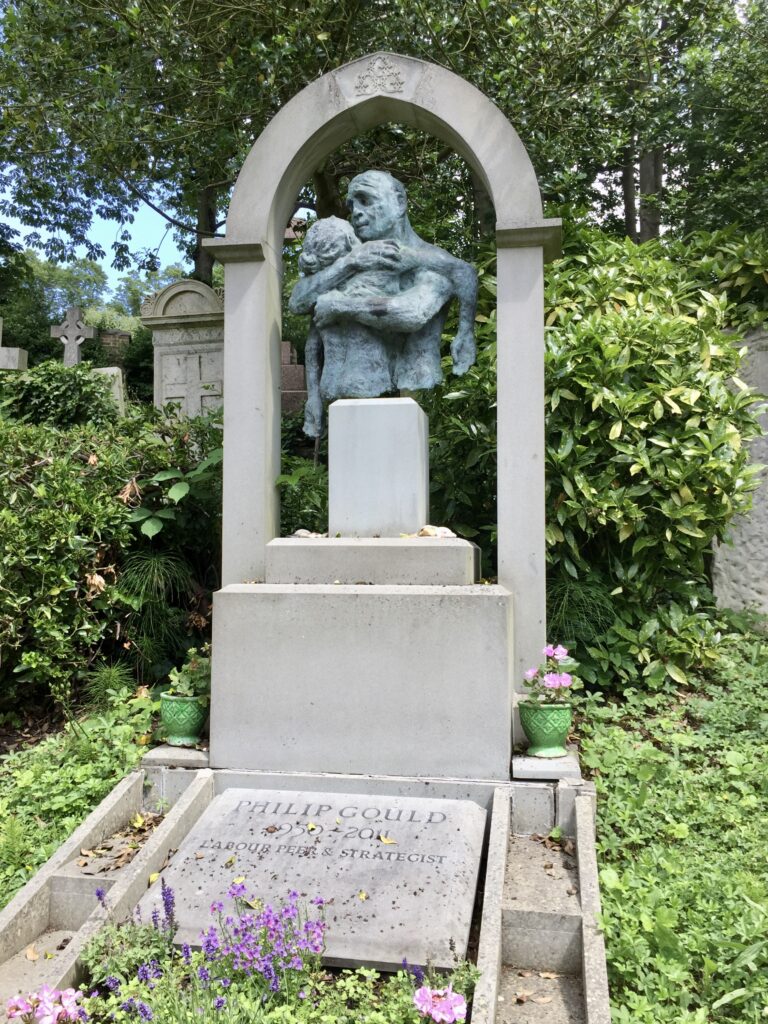
A very moving sculpture marking the tomb of Philip Gould, one of the architects and strategists of New Labour …
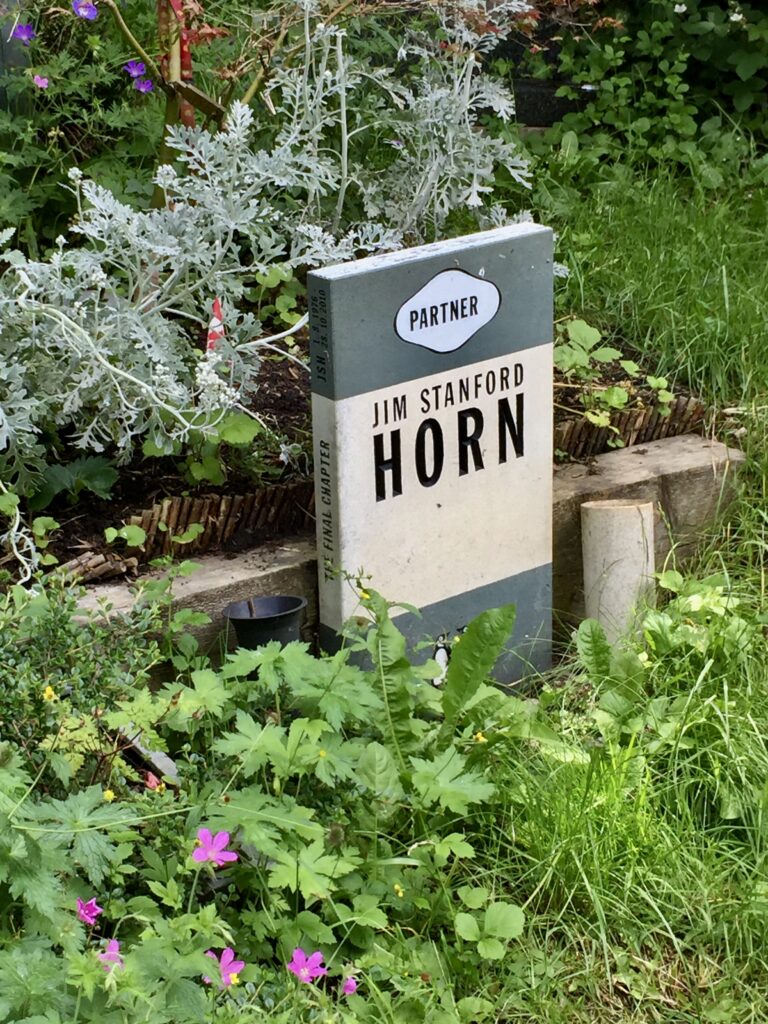
There is also some humour – the book spine reads The final chapter …
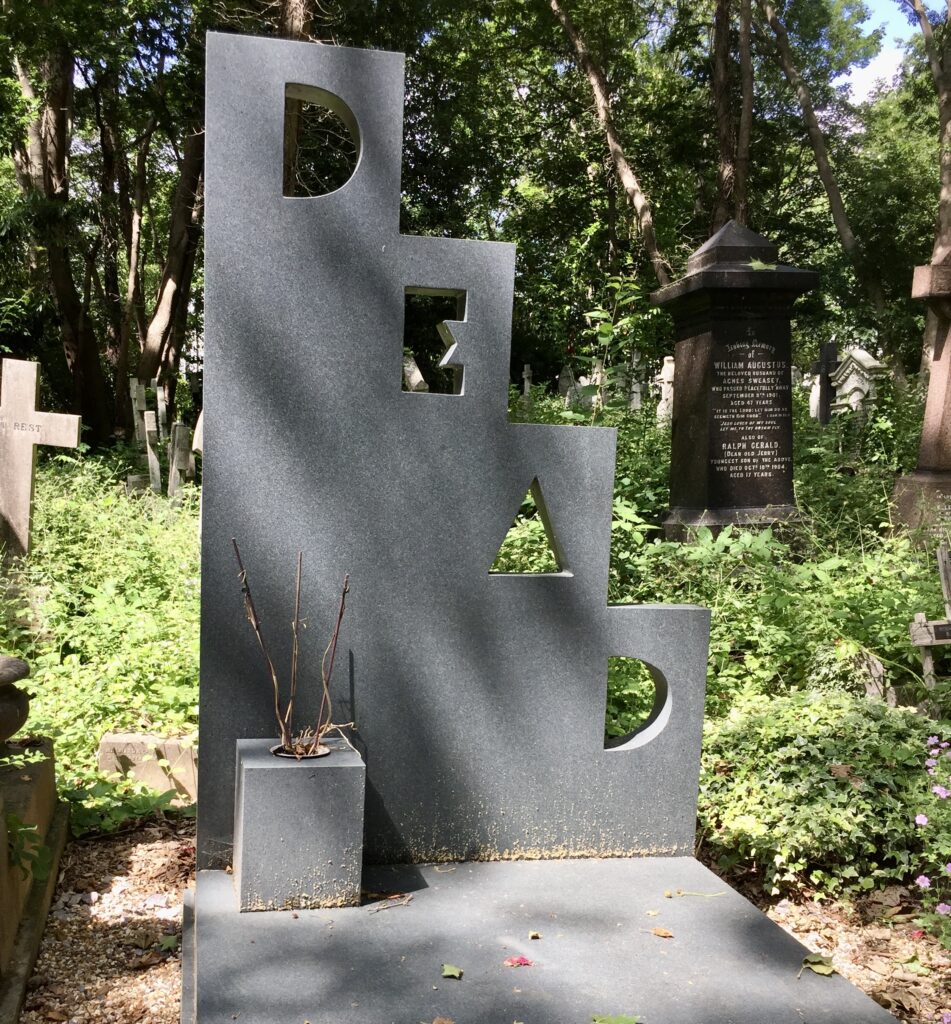
The painter and print-maker Patrick Caulfield (1936-2005) was a contemporary of David Hockney. Regarded as part of the Pop Art movement, and a Turner Prize nominee in 1987, Caulfield designed the memorial which now sits on his grave. Brutally frank! …
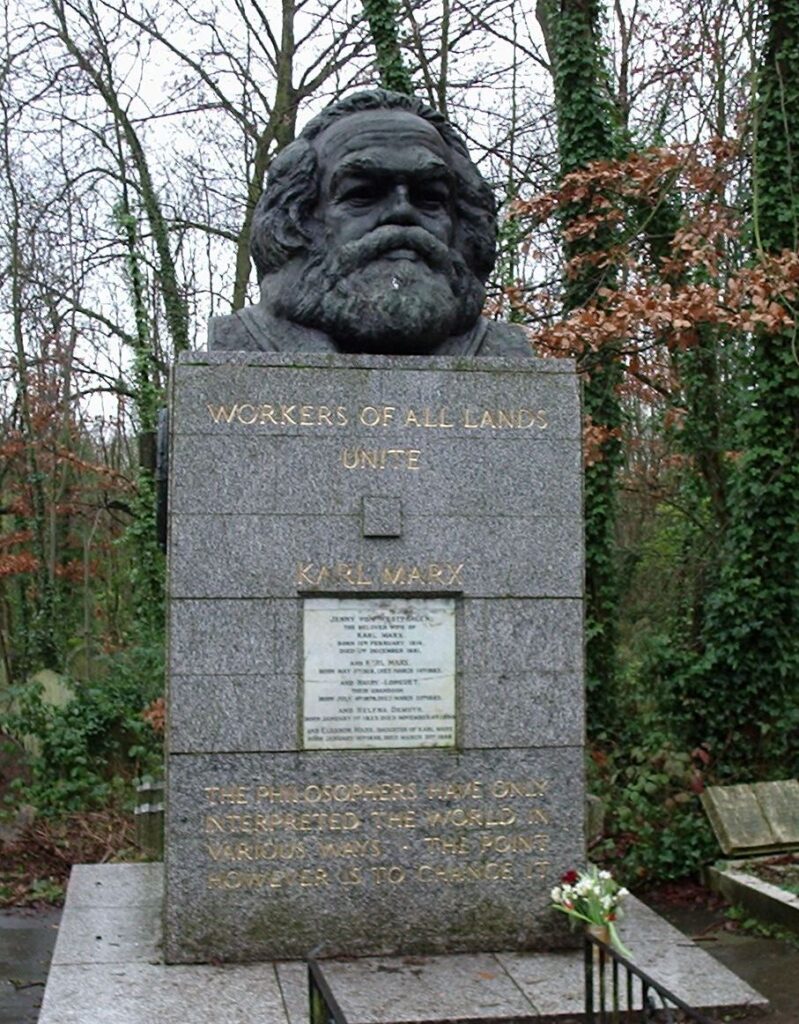
And finally, of course …
If you would like to follow me on Instagram here is the link …