After Remembrance Sunday every year it has become my habit to visit some of the City War Memorials, both to pay my respects and to read some of the moving tributes left by visitors.
The Tower Hill Memorials commemorate over 36,000 men and women of the Merchant Navy and Fishing Fleets who died in both World Wars along with the seafarers killed in the Falklands conflict of 1982. Some of the following images were taken during fondly remembered sunny days!
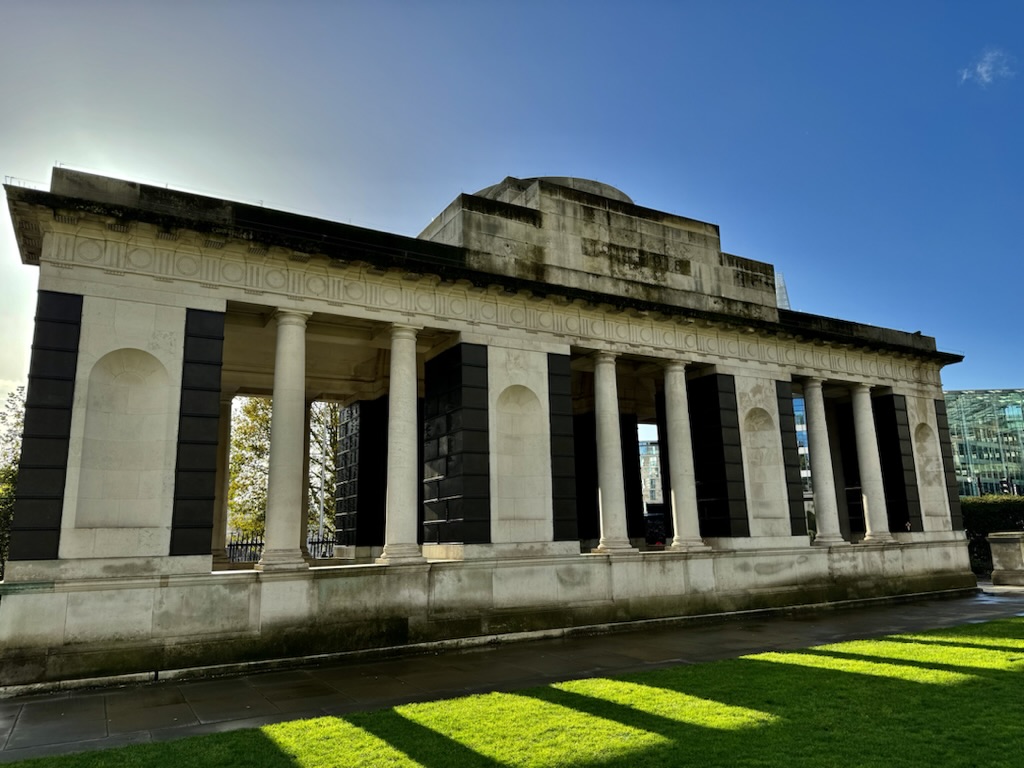
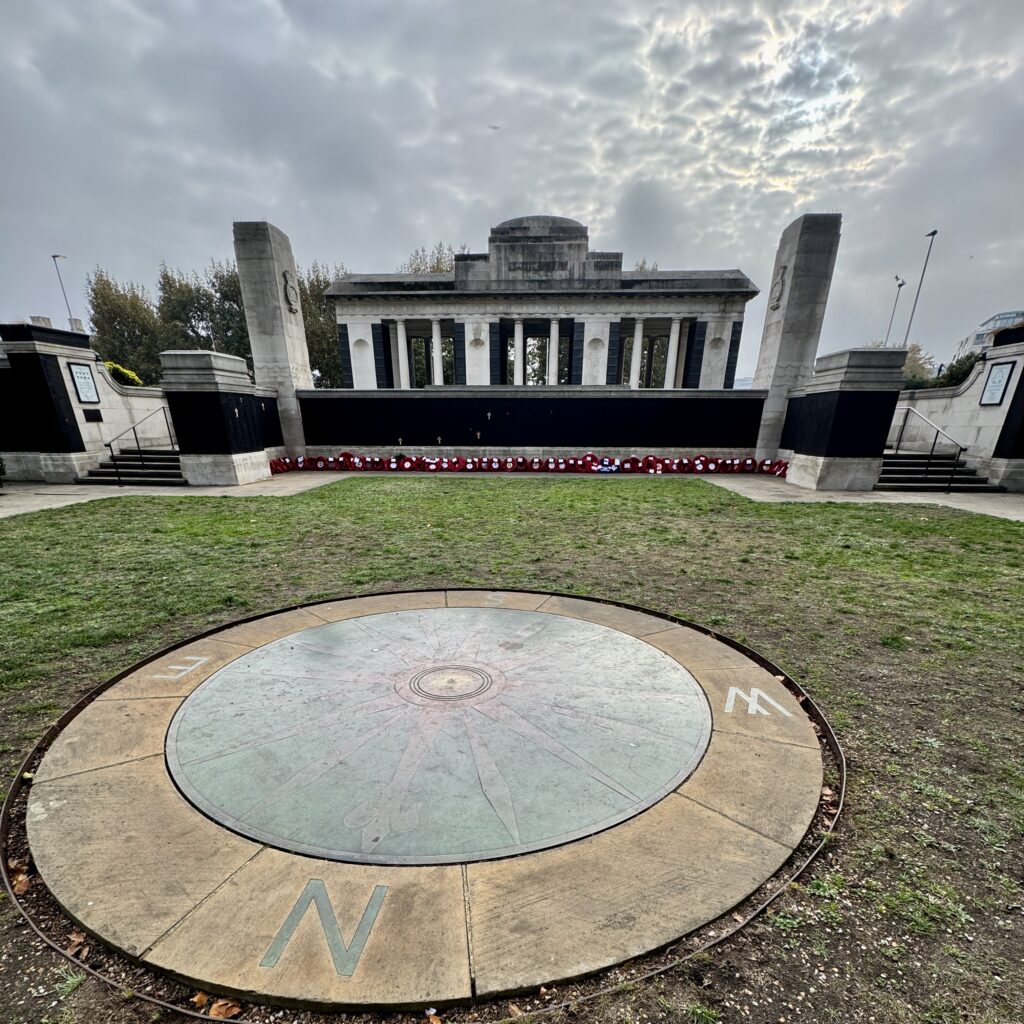
The first memorial was designed by Sir Edwin Lutyens and unveiled in 1928. The main structure is in Portland stone. It takes the form of a vaulted colonnade or pavilion reminiscent of a Doric temple but open at both ends …
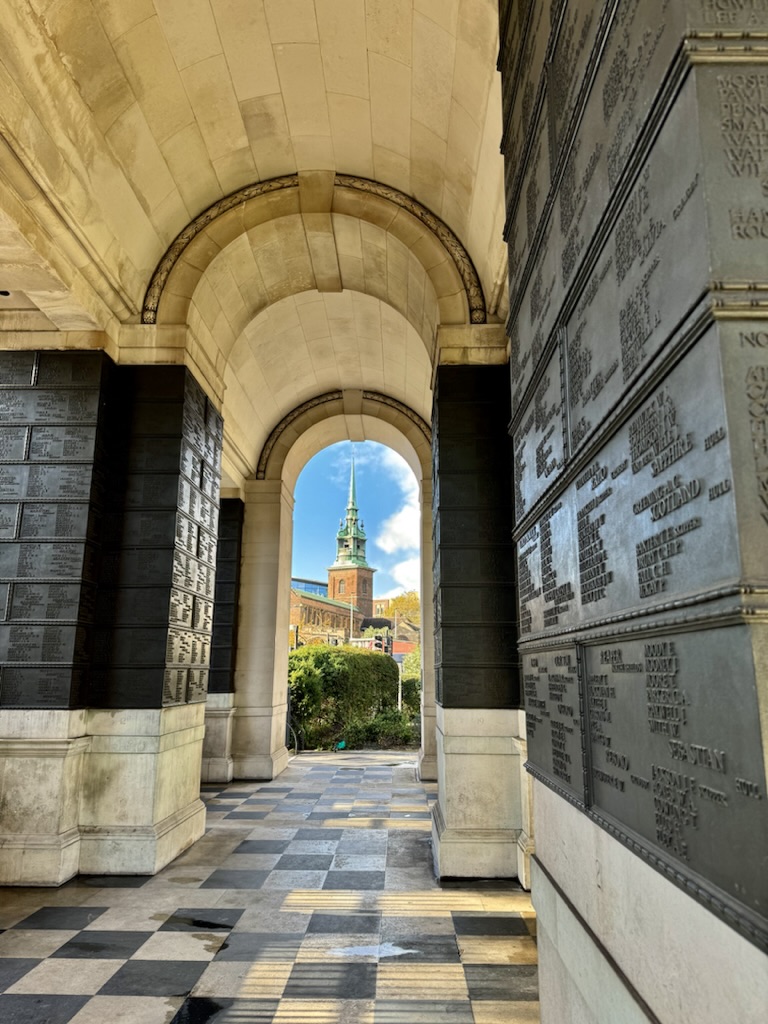
That’s All Hallows-by-the-Tower in the distance …
The second was designed by Sir Edward Maufe and unveiled in 1955 …
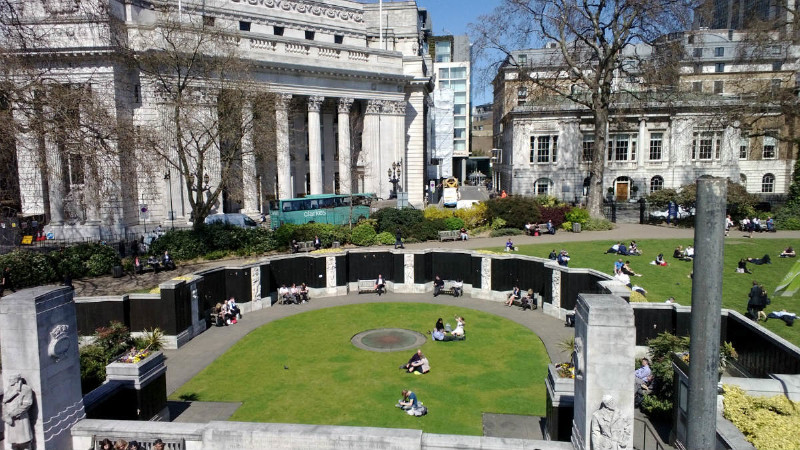
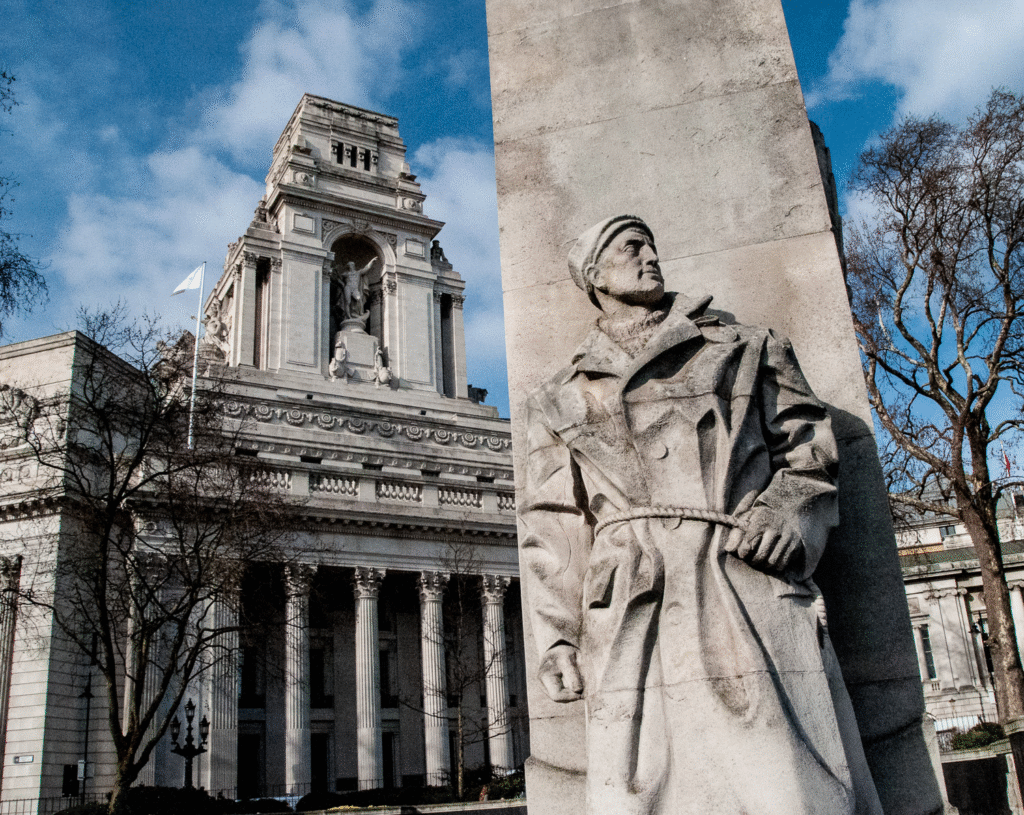
It is a sunken garden with the steps leading down to it flanked by a Mercantile Marine officer …
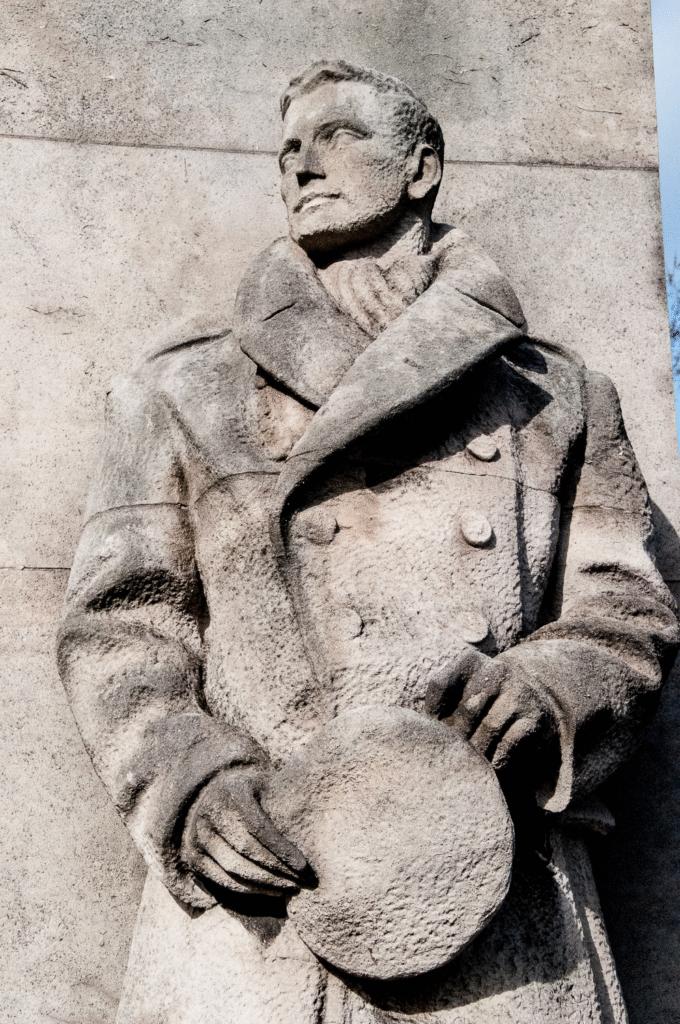
… and a seaman of the Merchant Service. Behind him, in his eyrie above what was once the Port of London Authority building, Father Thames points towards the sea …
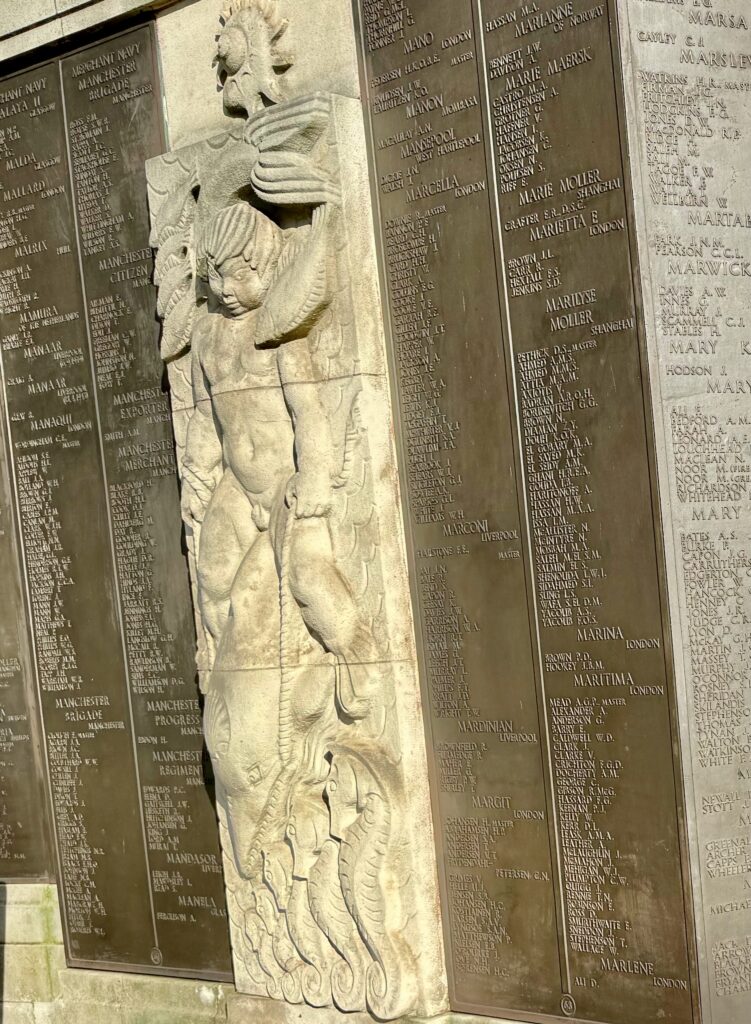
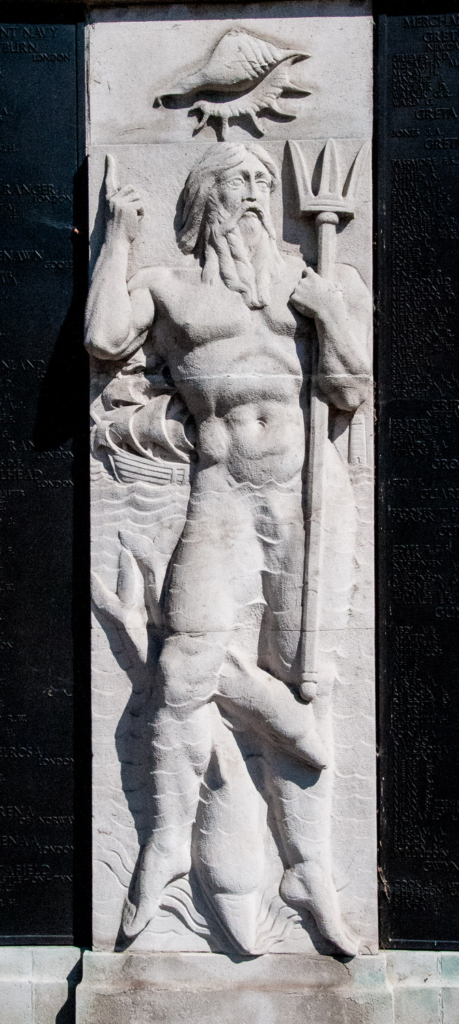
The walls are covered with bronze panels with the names of the dead arranged alphabetically under their ships with the name of the Master or Skipper first in each case if they were among the lost. At regular intervals, between the inscription panels, are allegorical figures representing the Seven Seas.
A little boy rides a dolphin accompanied by seahorses …
Neptune with his trident …
A mermaid combing her hair …
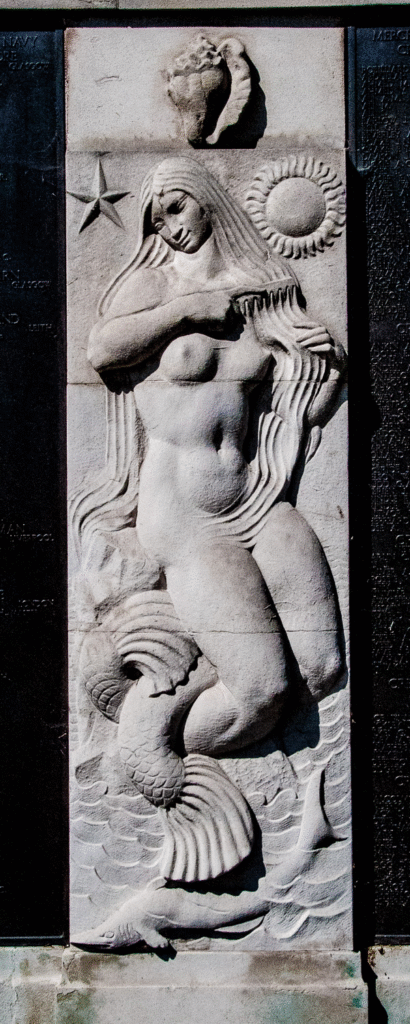
Last Sunday I decided first of all to visit the brass panels bearing the names of those lost as a result of the sinking of RMS Lusitania on 7th May 1915. She was a British ocean liner torpedoed by a German submarine off the coast of Ireland, causing the ship to sink in just 18 minutes.
Not surprisingly, the majority of those remembered on the memorials as a whole are men, but there are women commemorated too, and I decided to find out more about some of those who lost their lives in the Lusitania catastrophe.
Near the top of the memorial you will see the name Endersen A …
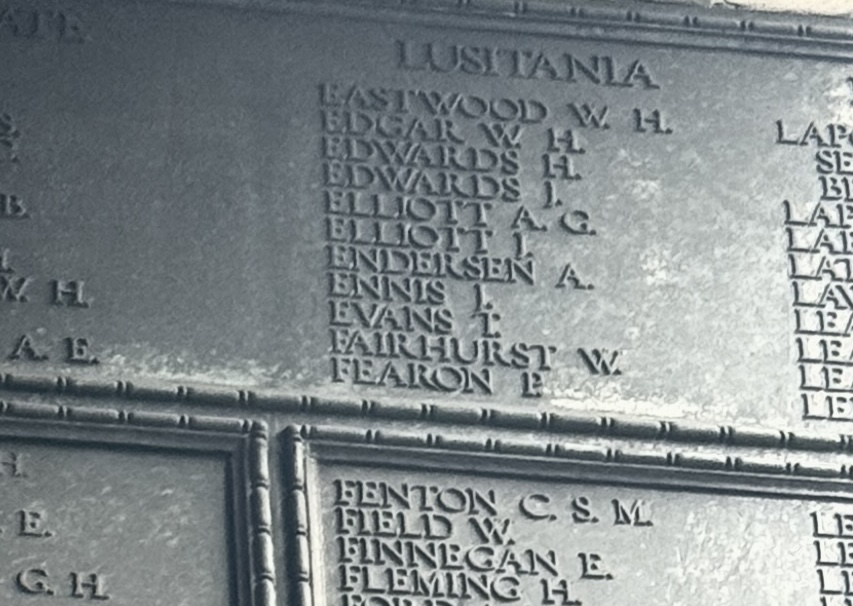
Anna Endresen was born in Norway in 1875, shaped by the hard-working coastal communities of her homeland. She later came to England, building a new life in Liverpool, where she lived with her daughter in Bootle. To fit into her adopted country, she anglicised her surname at times, appearing as Endersen, Enderson, or Henderson — but her purpose never changed: she cared for people at sea.
A professional stewardess and Matron in the British Mercantile Marine, Anna spent years working aboard Cunard liners, tending to passengers and crew. She served on ships such as Cameronia, earning a reputation as a capable, dependable, and compassionate member of staff.
In April 1915, she accepted a posting aboard Lusitania. She signed on in Liverpool on 14 April, reporting for duty three days later. Her pay was £5 a month. Her responsibility was to oversee the women of the Stewards’ Department and care for passengers on what was meant to be a routine crossing to New York.
After the ship was lost her body was later recovered and brought ashore at Queenstown (now Cobh). On 10 May 1915, she was buried in a mass grave at Old Church Cemetery, aged 40. Her personal effects were returned to her daughter later that year. Her estate was was valued at £160, 14 shillings and three pence.
There is an extraordinary postscript to her story.
The “Lusitania casualty pair” refers to the official British First World War campaign and memorial awards issued to the next of kin of civilian and merchant seafarer casualties who died when the Lusitania was sunk. This is the one for Anna …
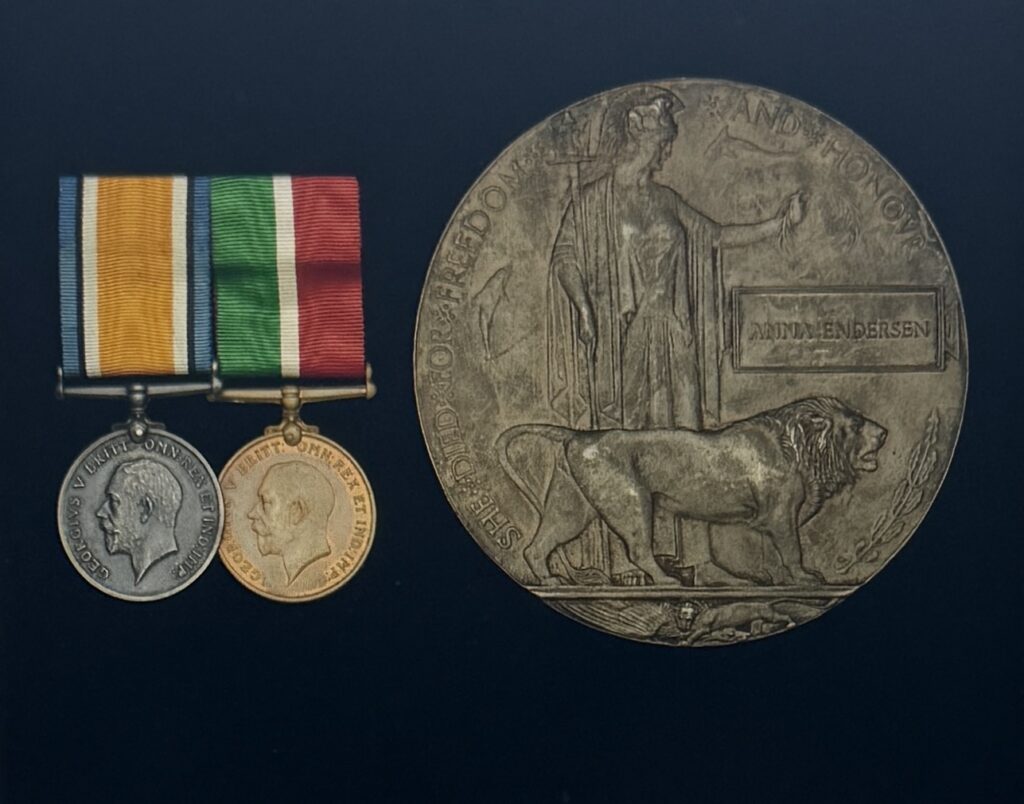
The pair came up for auction on 16 July last year and fetched £11,000. You can read more here.
Then, amazingly, my research identified another lady lost in the disaster whose medals have been sold, they fetched £1500 at Spink but I couldn’t find the date of the auction. Here they are …
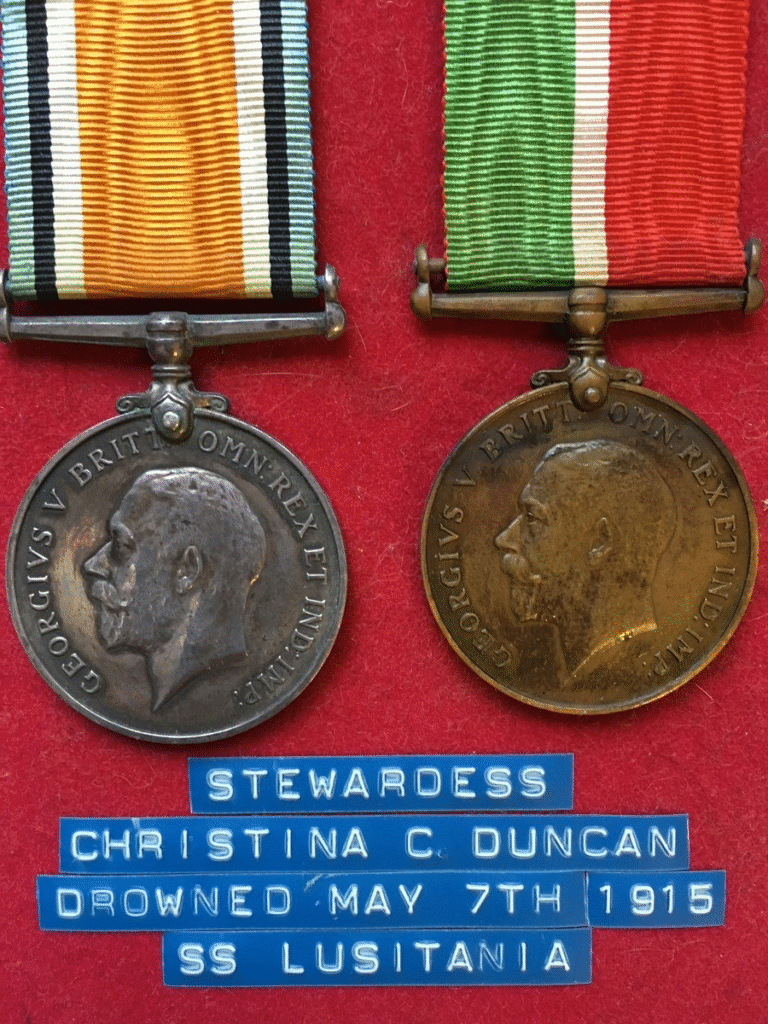
The auction notes state: Christina Campbell Duncan was born in Kirkdale, Liverpool, on 8 March 1879, and followed her father, Andrew, into the Mercantile Marine, about 1910. Prior to her joining the Lusitania on her ill-fated voyage in 1915, she had gained lengthy experience as a stewardess plying the trans-Atlantic route.
In 1904, she married Basil George Rennie in her hometown, but the couple would appear to have separated in the period leading up to the Great War. They did not divorce. He served in the King’s Liverpool Regiment for four years, before settling in Nelson, British Columbia in 1916, following his marriage to Elizabeth Kennedy and enlistment as a 2nd Lieutenant into the Canadian Army.
You can find more detailed biographical notes here.
The plaque containing her name …
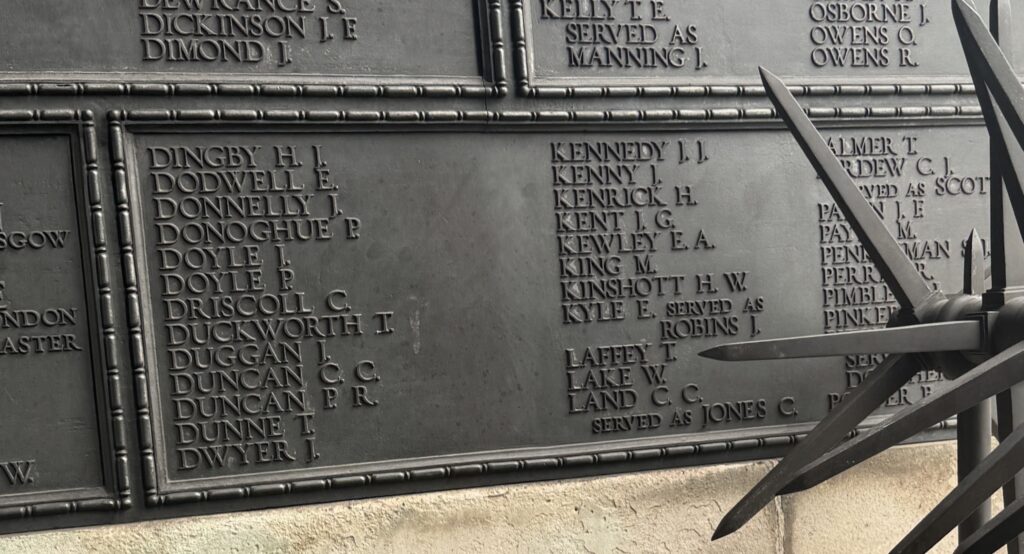
Here is a mention of Hale S …
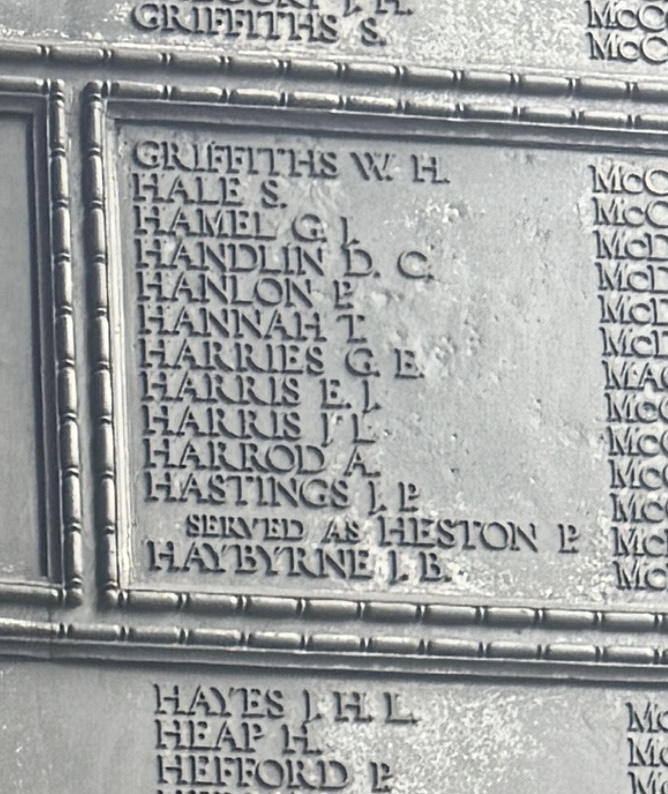
This was Sarah “Sadie” Rachel Orr Hale, aged 29. In 1909 she was employed by the Cunard Steamship Company as a typist on the transatlantic steamers. Between voyages she was employed in the Cunard offices in Liverpool.
Her body was recovered from the sea, and before it was positively identified it was given the reference number 127 in one of Queenstown’s makeshift mortuaries. Following identification it was embalmed then sent to Belfast on 12 May 1915. She was buried the next day in the family grave in the city cemetery in Belfast
Property recovered from her body was sent to her family in Belfast; a wrist watch, a pair of cameo earrings, a gold ring inscribed inside ‘MARQUIS OF DOWNSHIRE Obt. 12TH APRIL 1845’ and a brooch bearing a horse and jockey.
The settlement of her estate raised an interesting point in law.
Sadie had written a number of letters which were to be passed on to her family in the event of her death. These included details of her insurance policies and bank savings accounts, and gave instructions as to the disposal of her property. With the exception of a few items, most of her estate was to be divided equally between two nieces, Helen Margaret Taylor and Dorothy Hamill Taylor.
Sadie’s estate amounted to £443, 12 shillings and 10 pence, but a legal predicament followed, as to whether or not Sadie’s letters amounted to a will. As a legal will required the maker’s signature to be witnessed by two other persons, her family sought an exemption under a provision of the Wills Act, 1837. Under this Act any soldier in actual military service or any mariner or seaman being at sea could dispose of their personal property without their signature being witnessed. The Judge hearing the case deemed that Sadie was a ‘seaman’ for the purposes of the exemption, and therefore ruled that her letters amounted to a legal will and her instructions were carried out.
Both Anna and Sadie’s names were added to the memorial before their bodies were identified. The War Graves Commission has altered its records and stated that, should it ever be necessary to replace the panels, their names will be omitted.
Here are some of the other images I took on the day.
The Falklands conflict memorial …
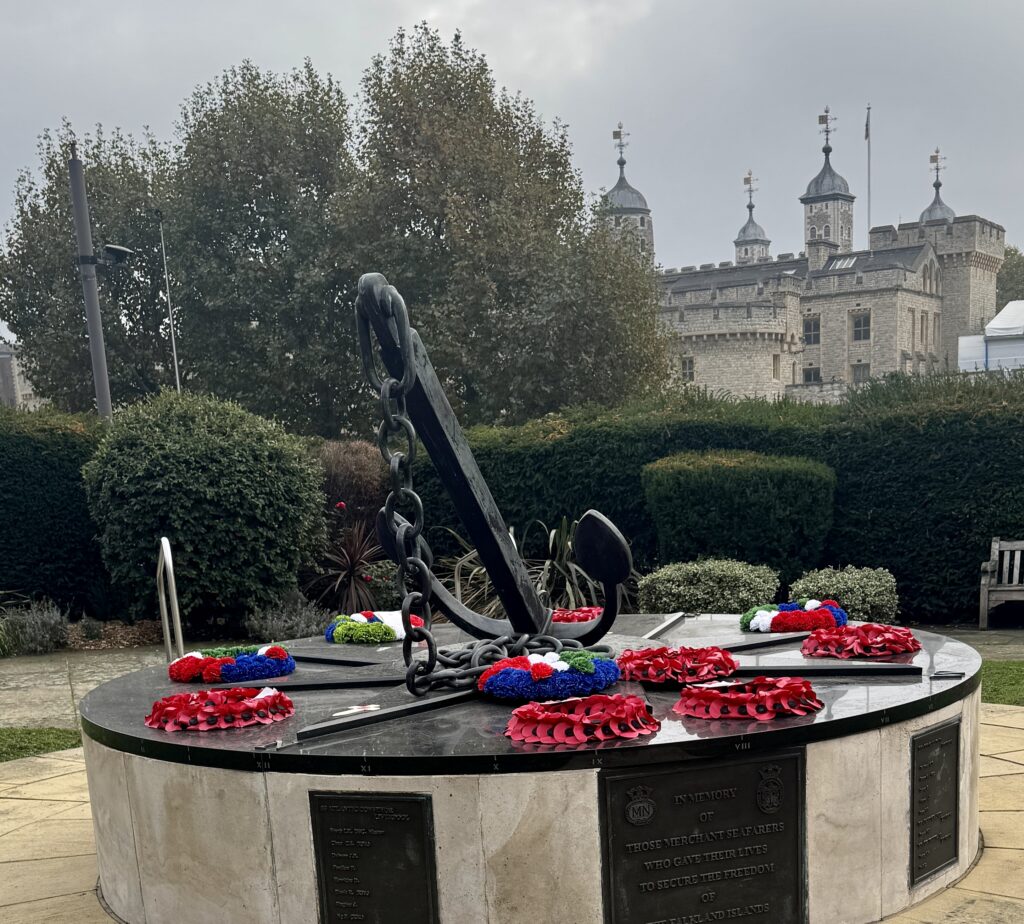
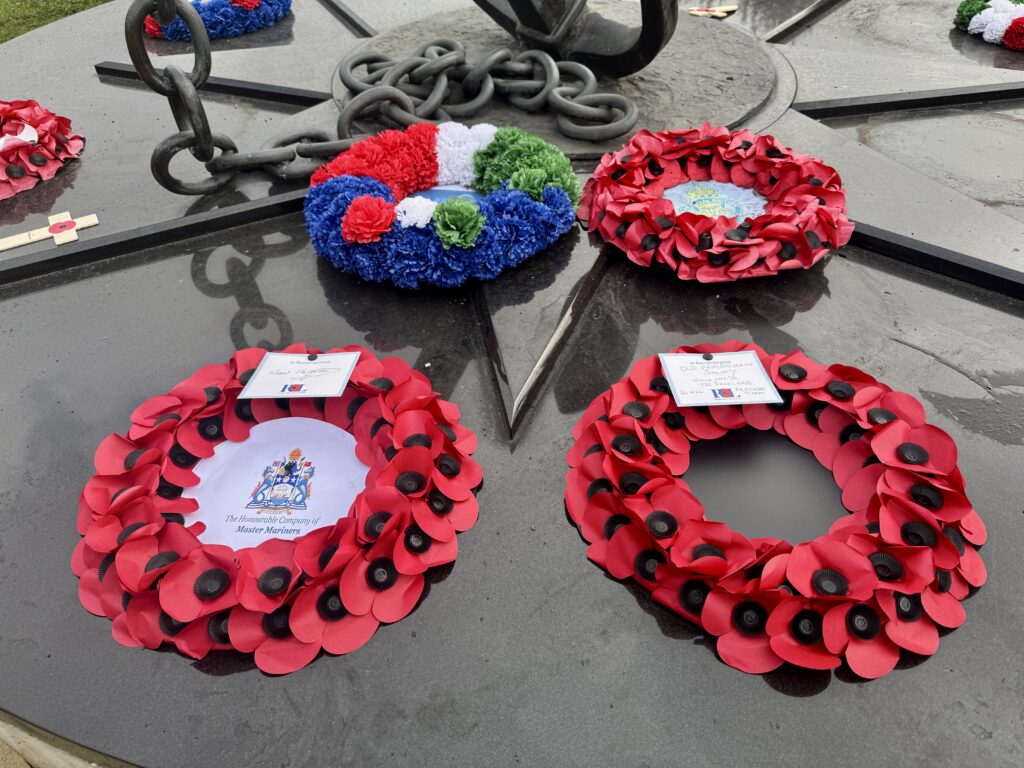
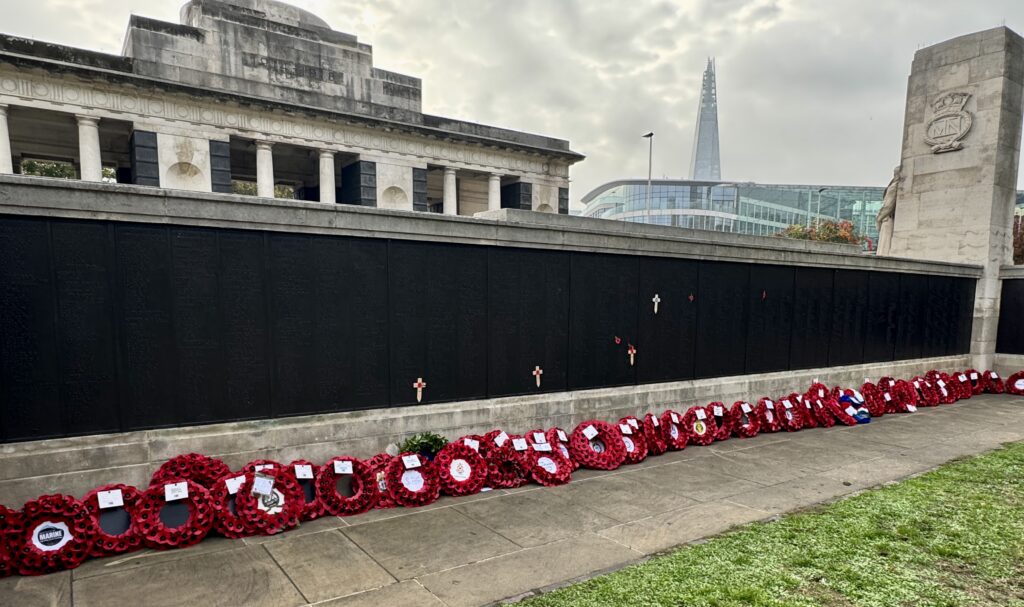
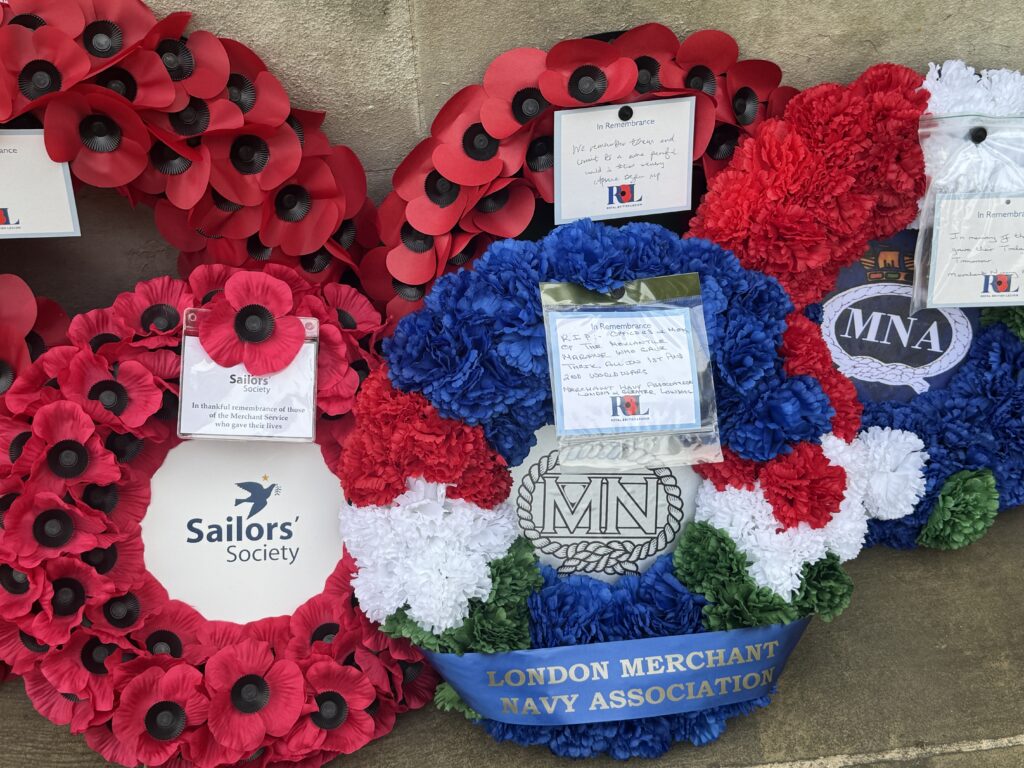
Other wreaths …
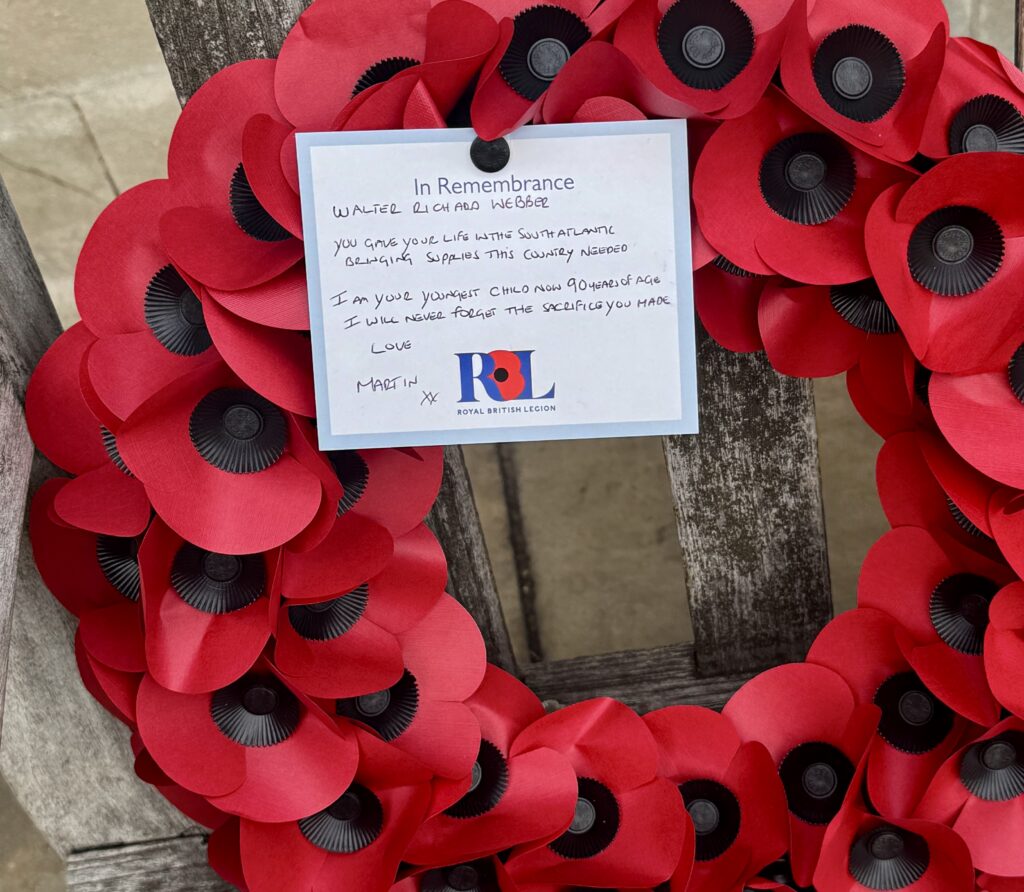
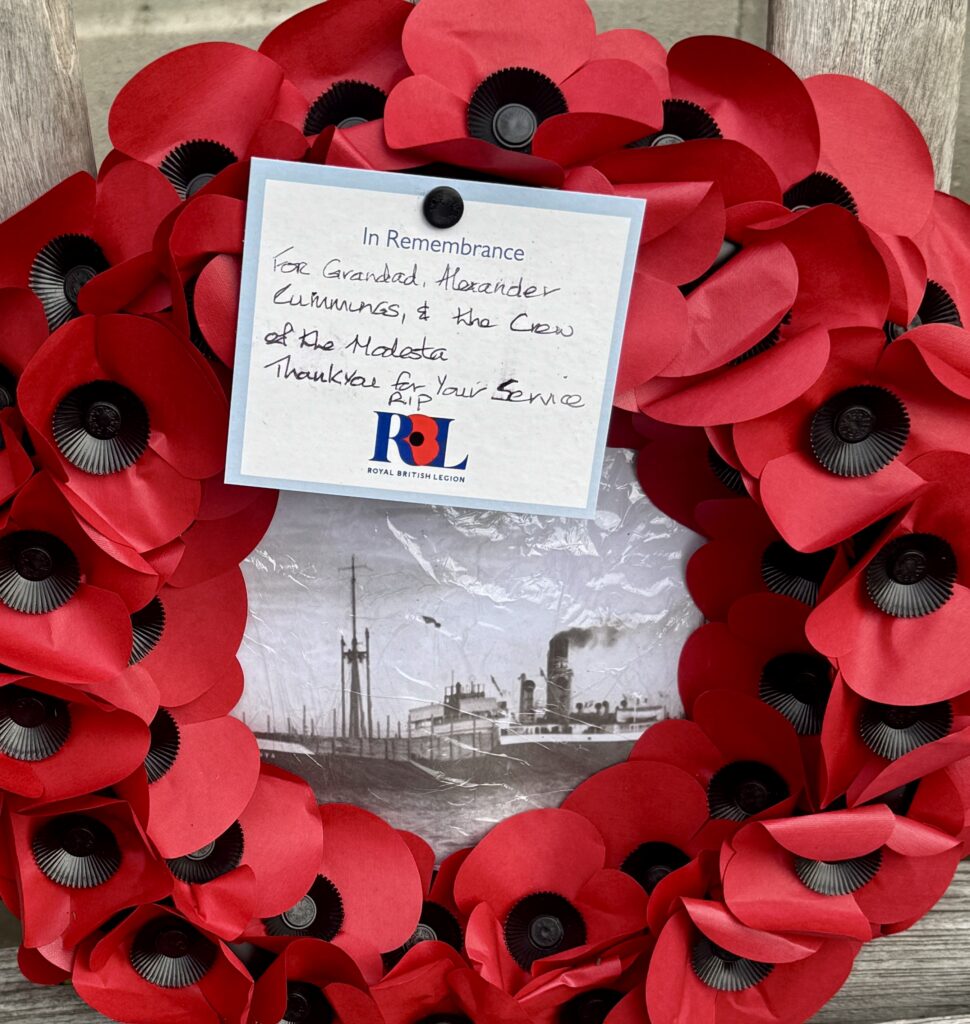
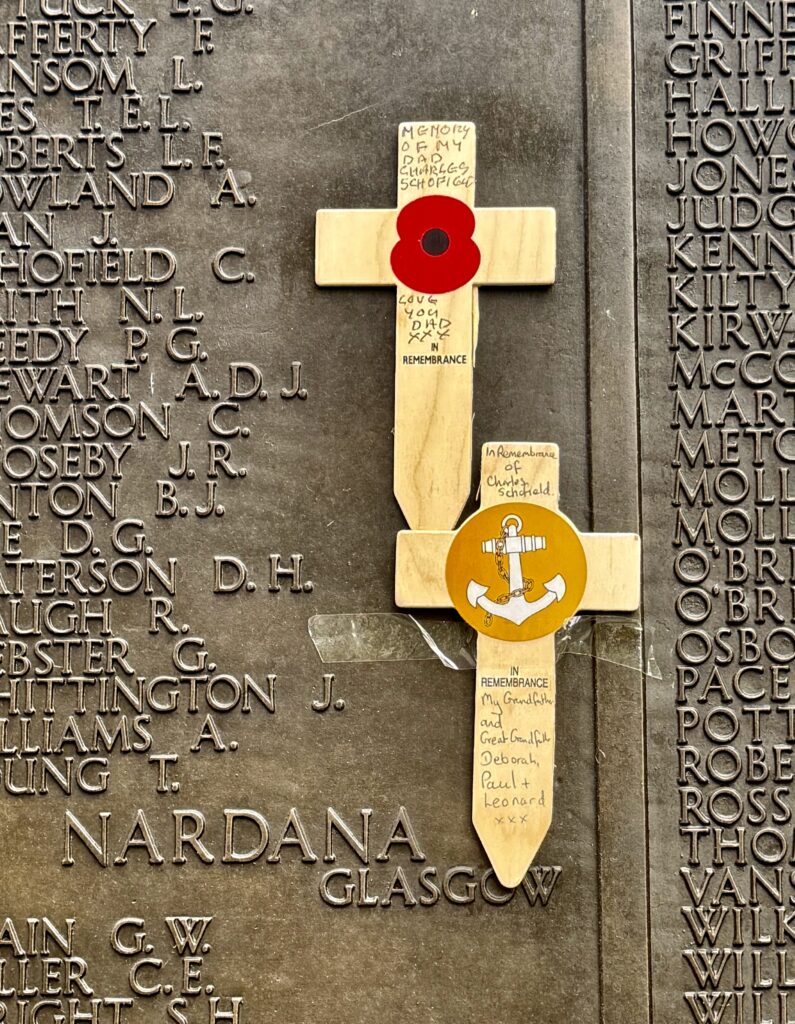
Very personal, moving messages …
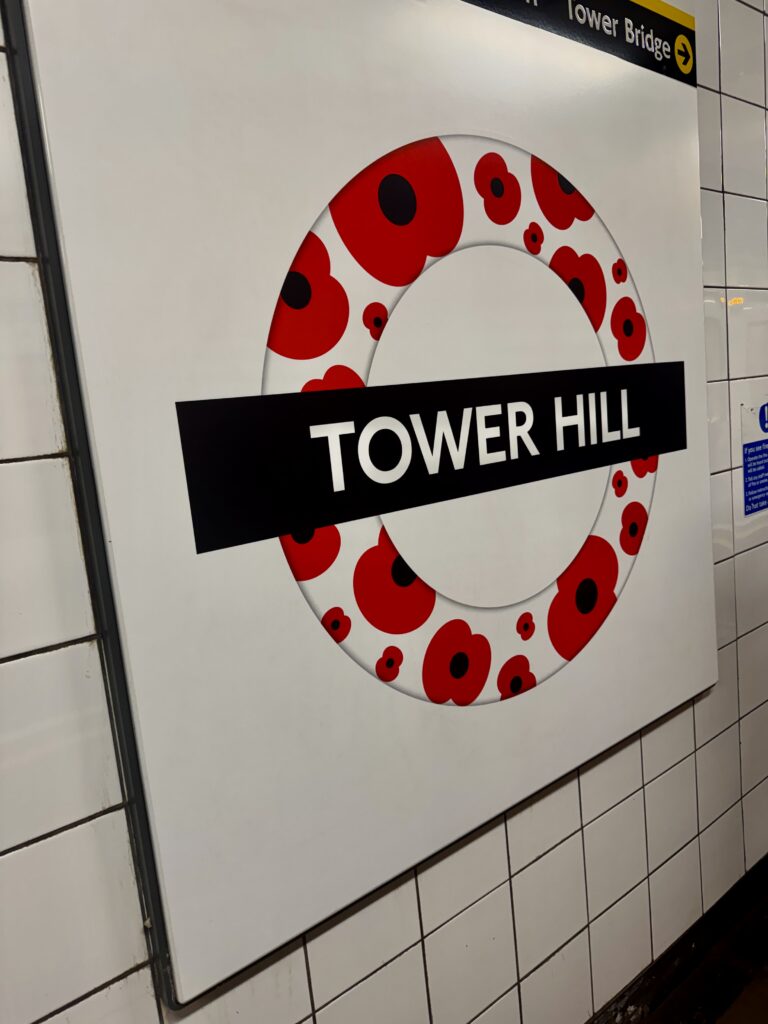
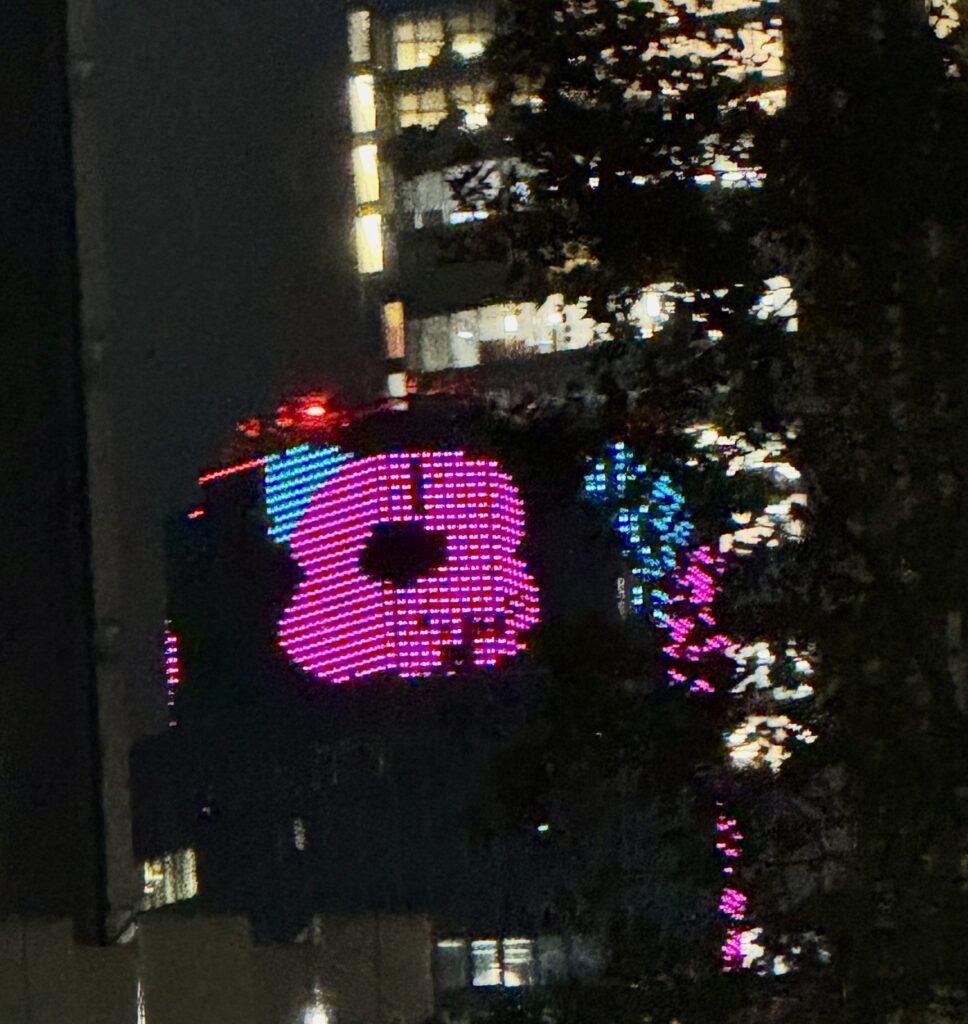
Tower 42 on the evening of 11 November …
In other news.
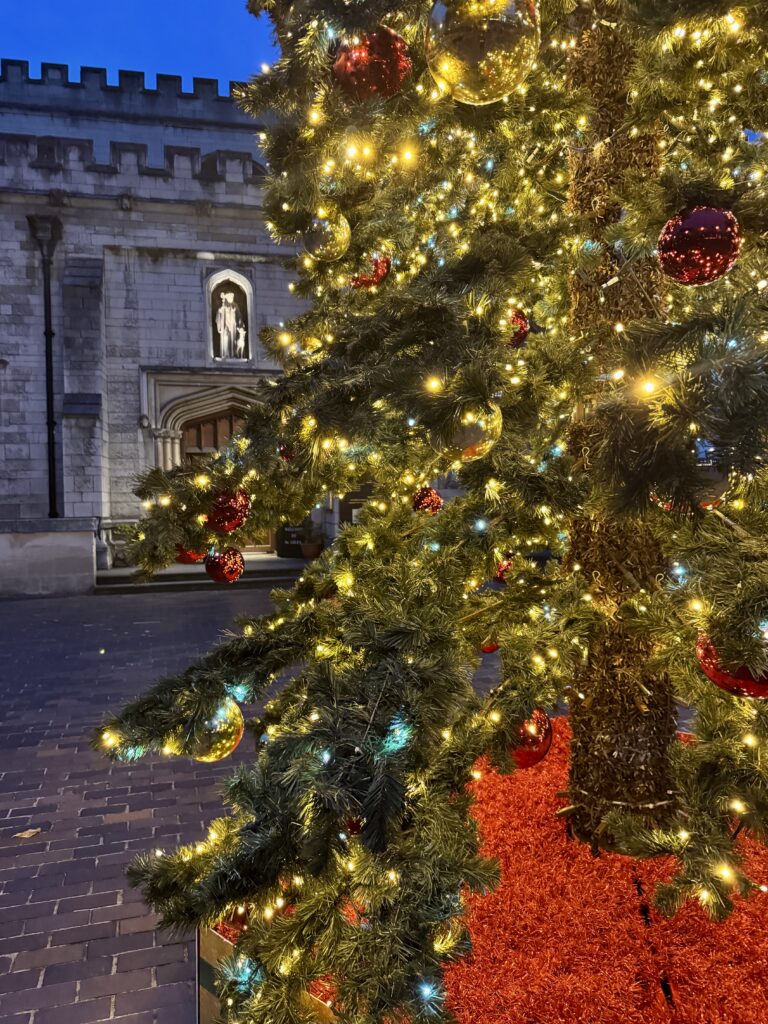
The St Giles tree takes shape from the top down …
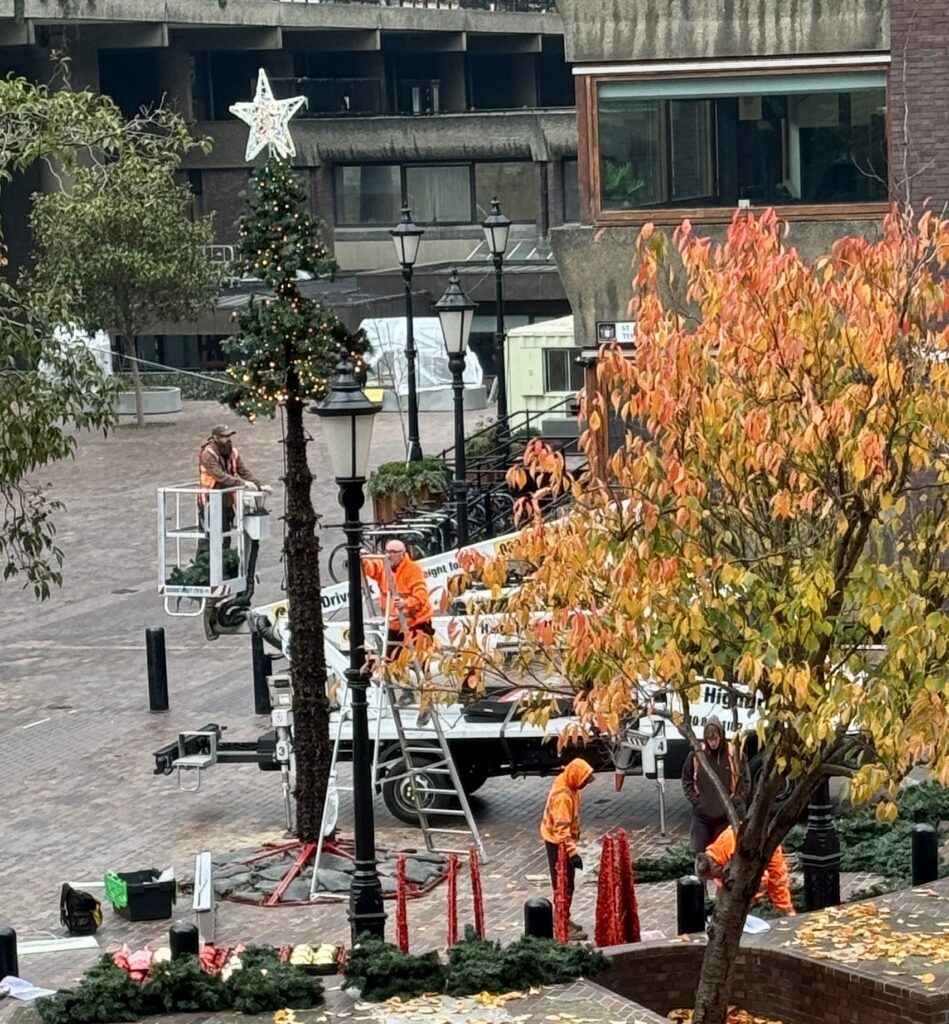
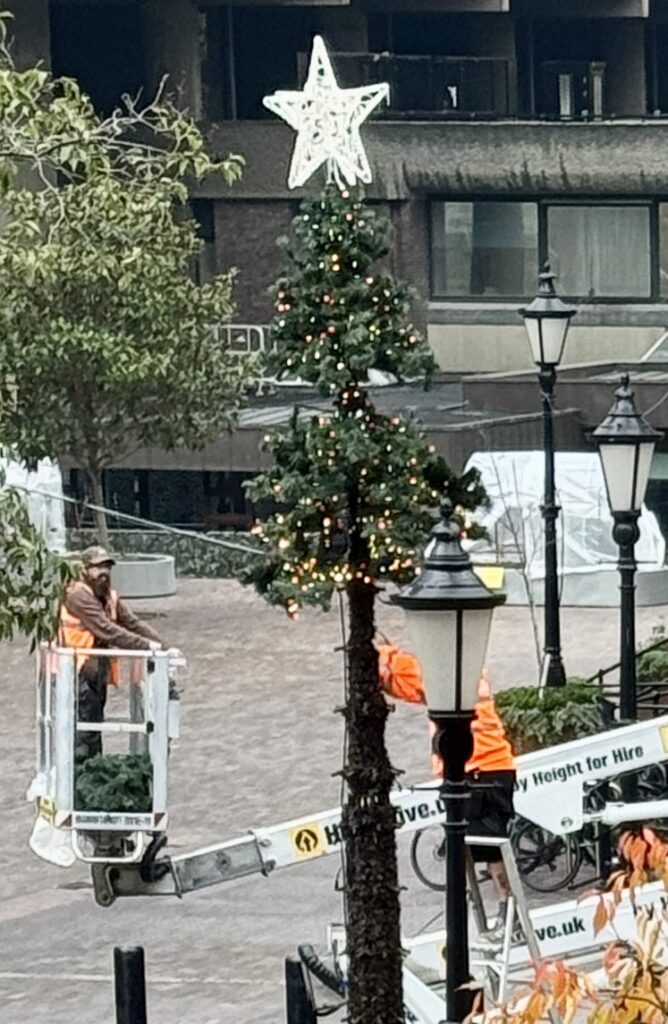
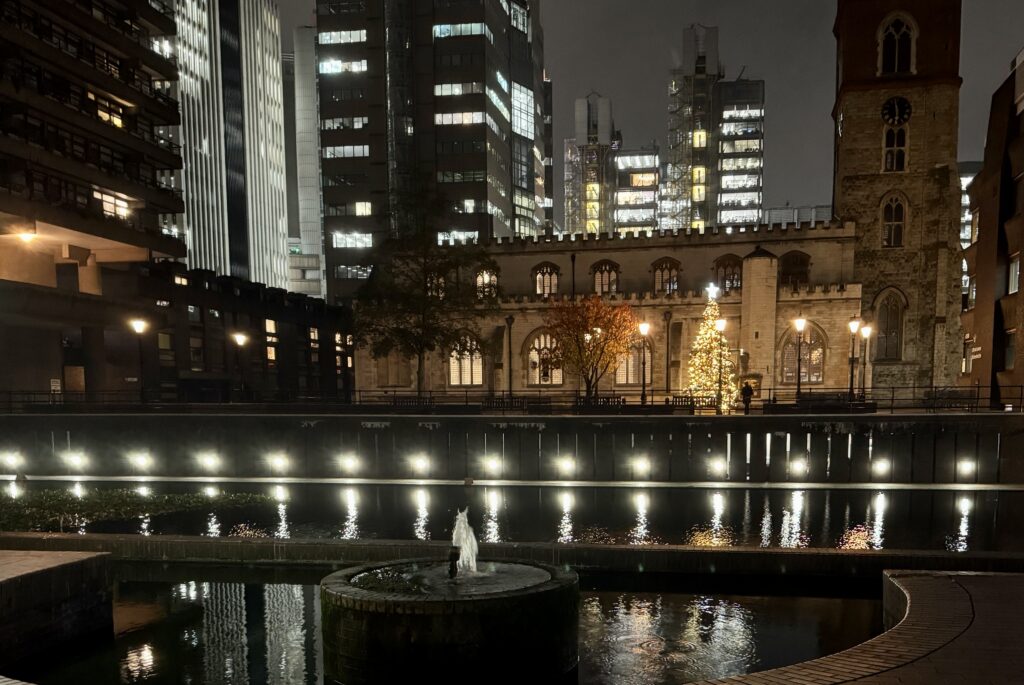
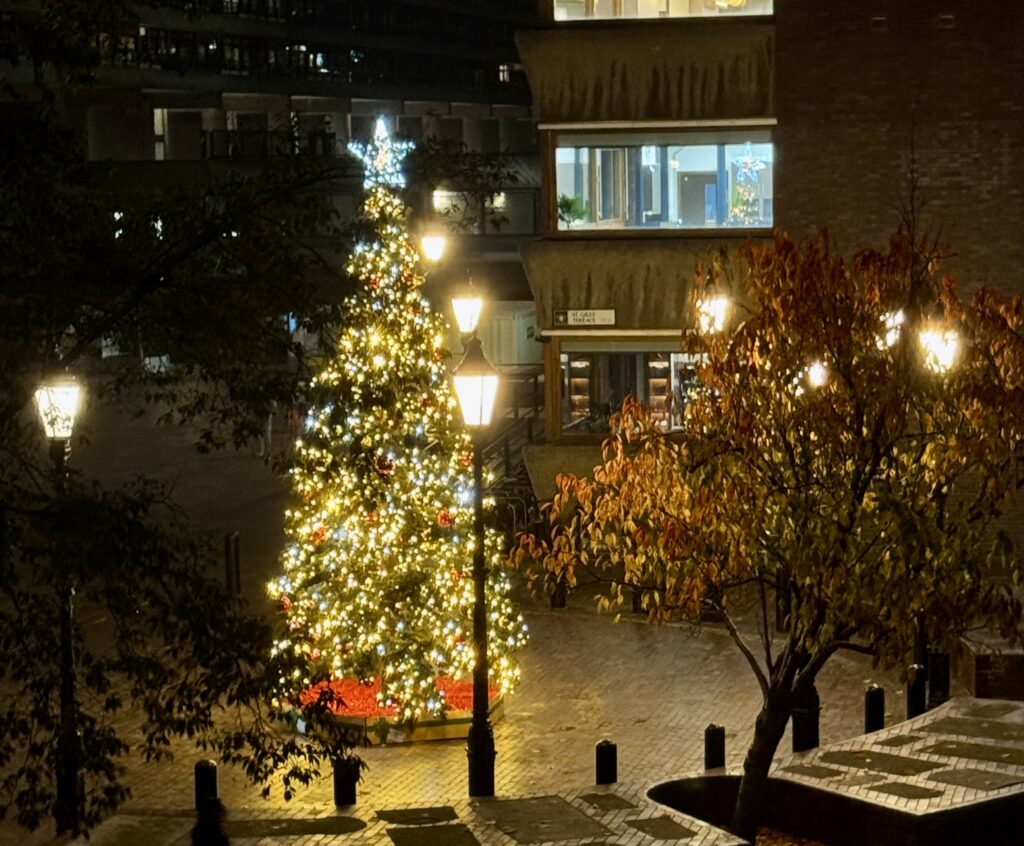
The display lights up during November around Remembrance tide, transitions into an Advent tree, and eventually becomes a Christmas tree for the festive season. It serves as a luminous space for reflection, memorial, and community remembrance in the dark winter months …


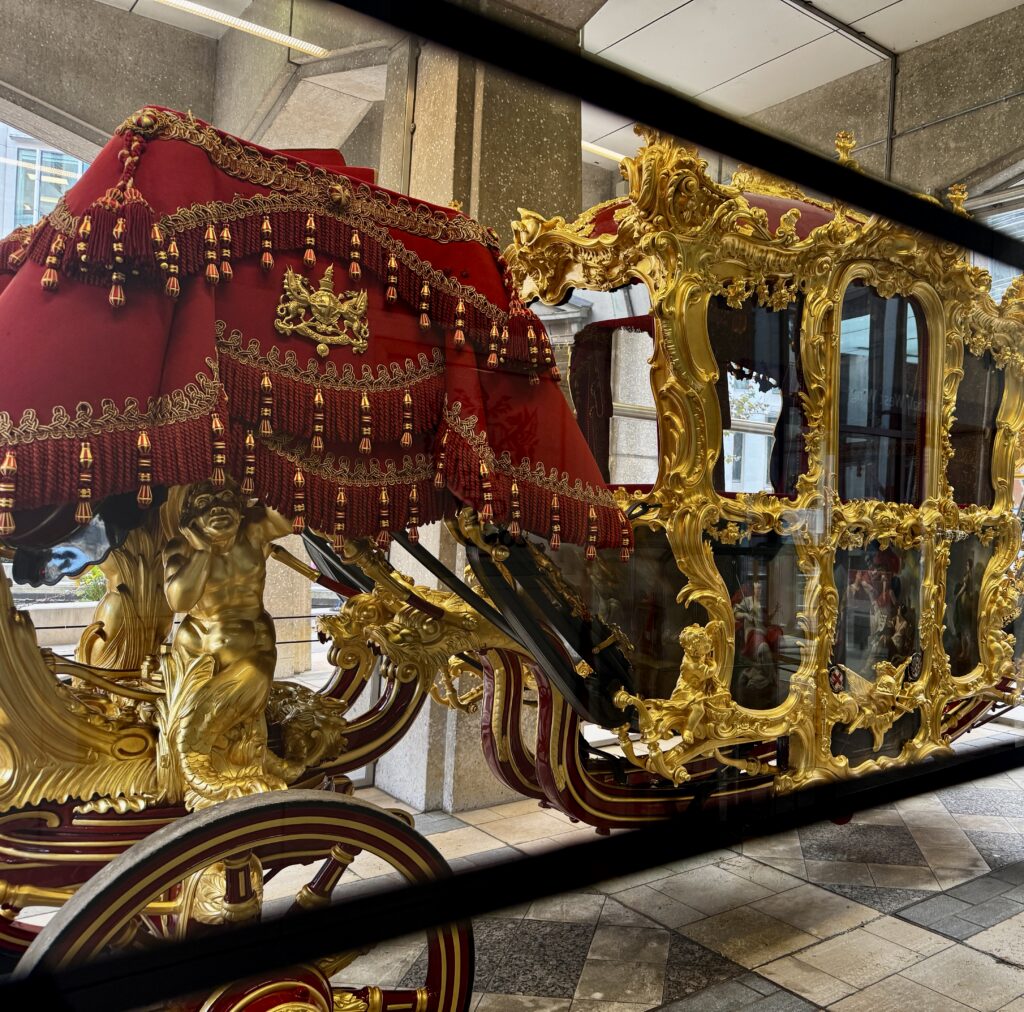
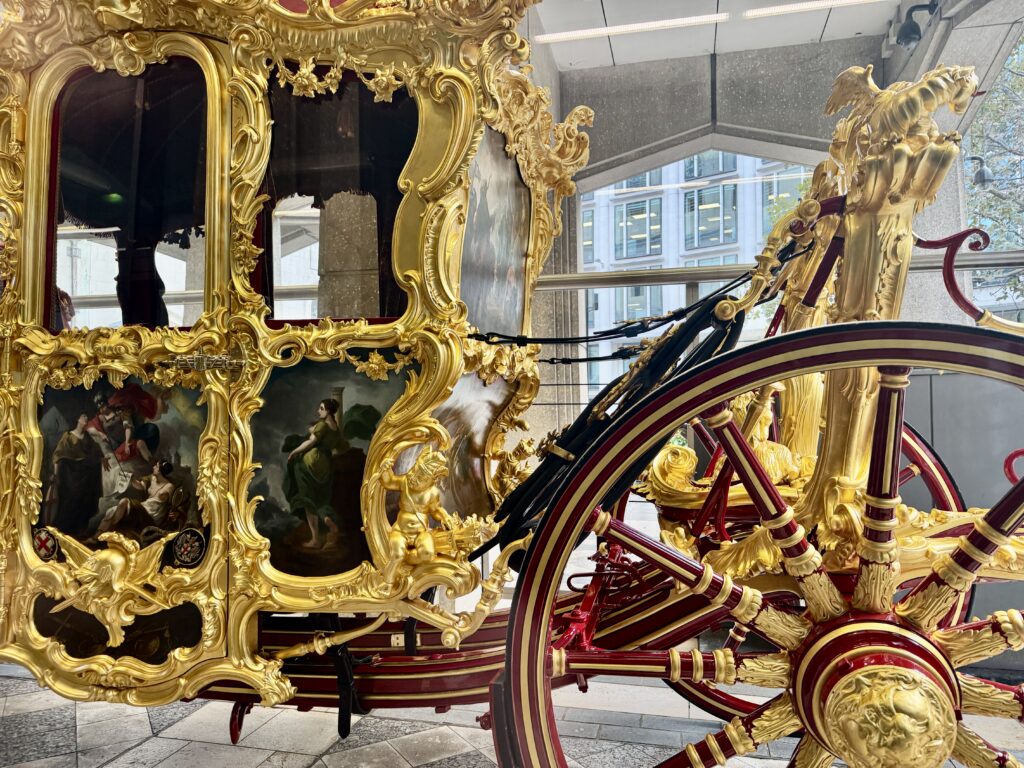
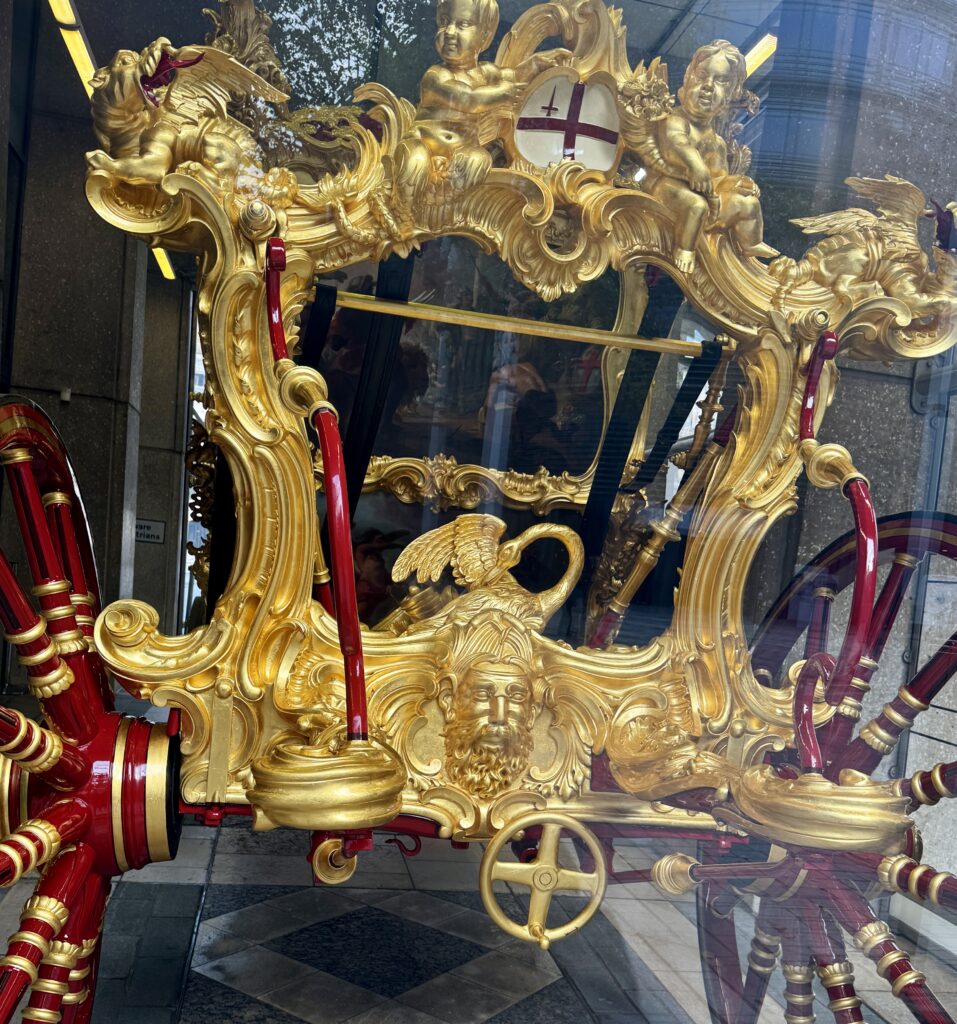
It’s the Lord Mayor’s Show on Saturday and last Sunday the Mayor’s coach was resting outside the Guildhall and it may well still be there…
If you would like to follow me on Instagram here is the link …