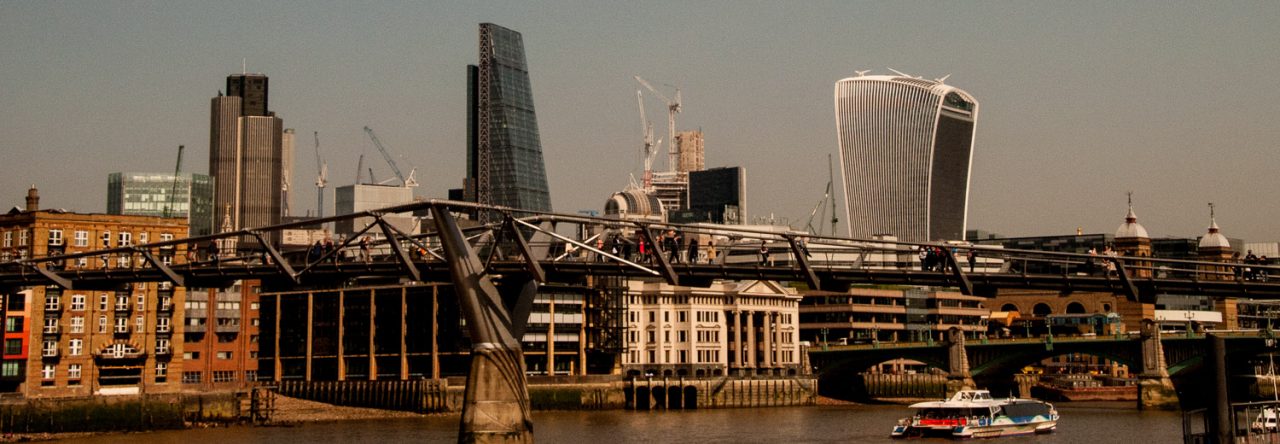
My parents are at rest in Hampstead Cemetery and so I visit occasionally but have never really taken a long look around. I decided to put this right this week when the weather was a bit cooler and this blog is the result.
I knew some famous people were buried there but, unfortunately, there is only one map of the place online and that seems to be a photograph of a map in a glass case, so it’s not very clear …
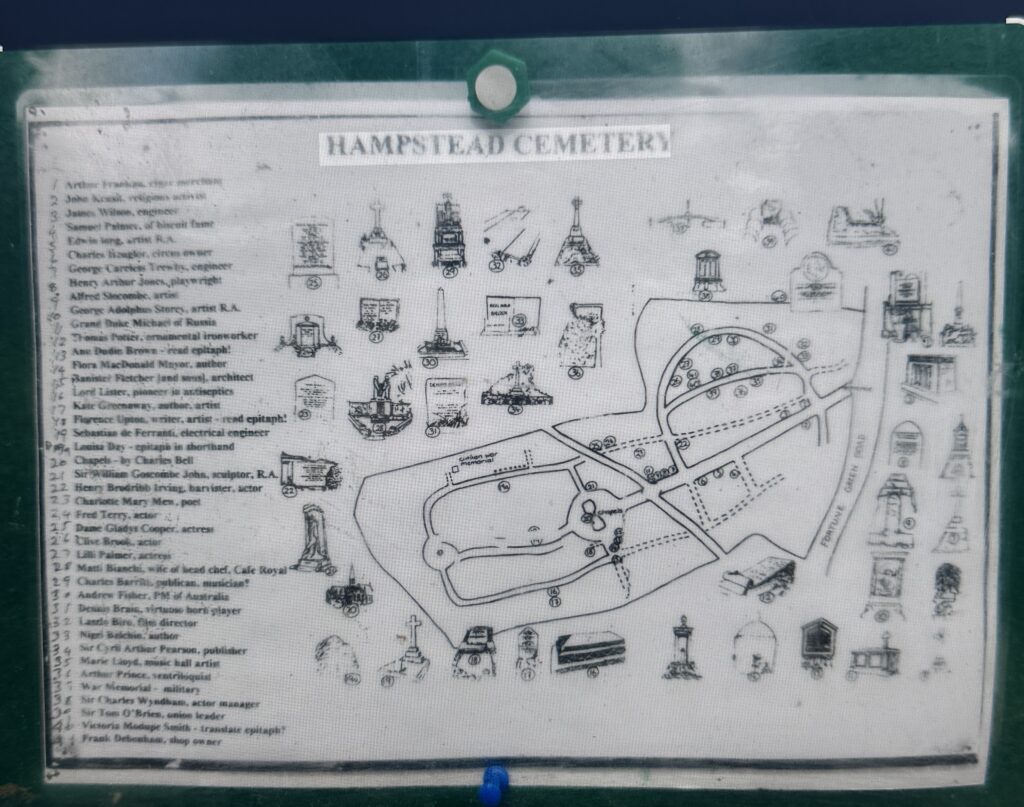
Anyway, I set out optimistically and found a few of the highlights.
The prize for most stunning memorial must probably go to this tomb …
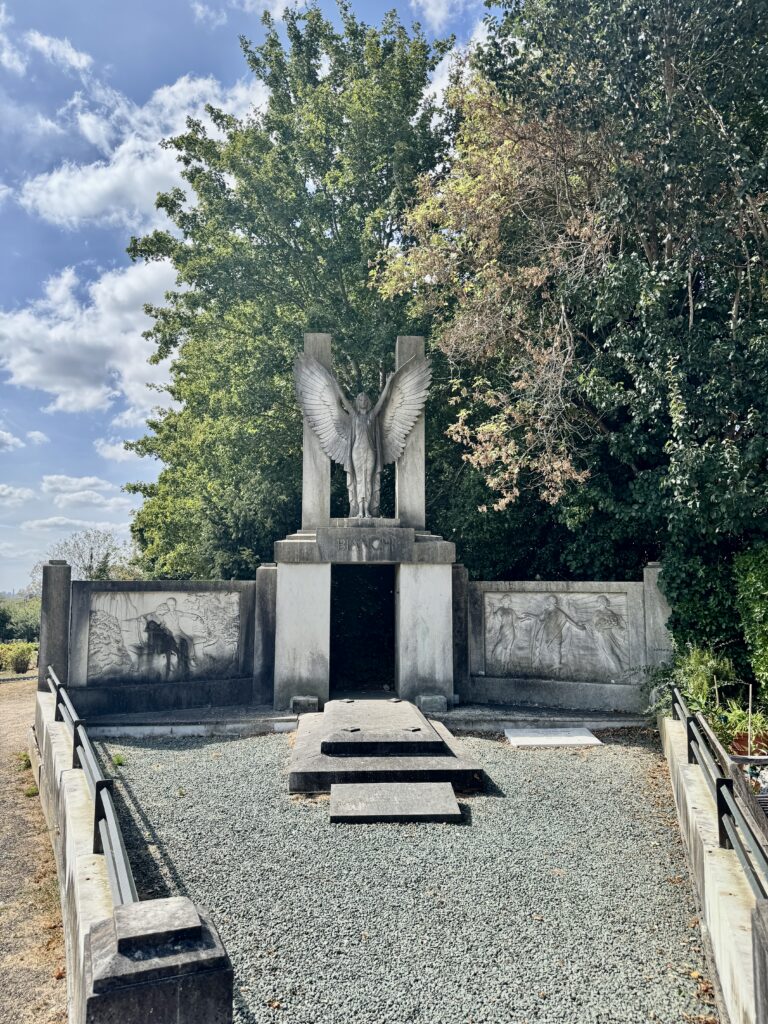
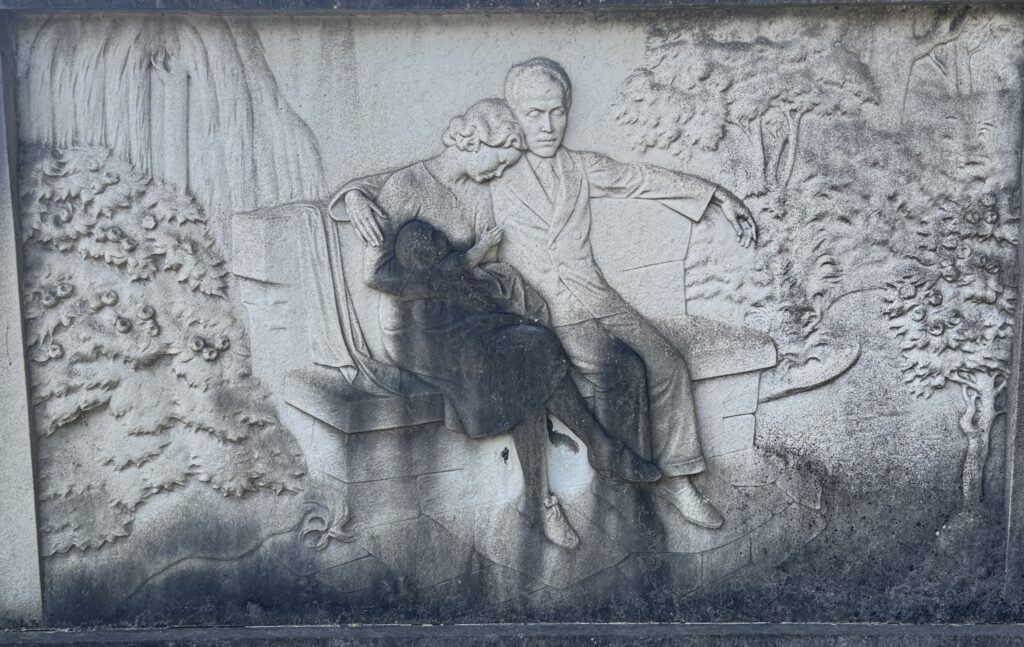
The splendid Grade II listed Art Deco Bianchi memorial was created by Cesare Bianchi for his wife Martha who died in 1936 giving birth to her second child. The memorial is set in a large triangular plot that had wrought iron railings and a gate until they were stolen by thieves in 2011. A futurist angel stands with wings outstretched over a gateway inscribed with the name Bianchi …
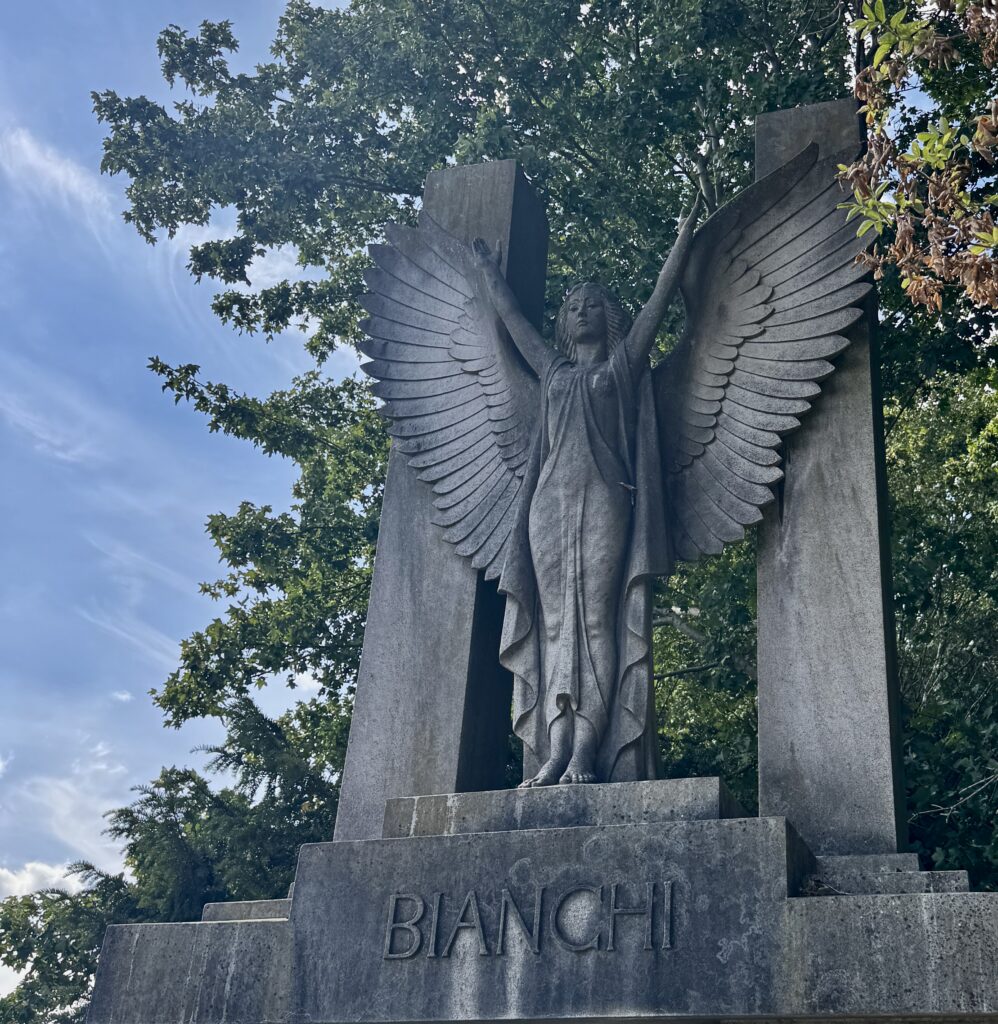
On either side of the gateway are carved relief panels, one showing Martha ascending to heaven accompanied by wingless angels …
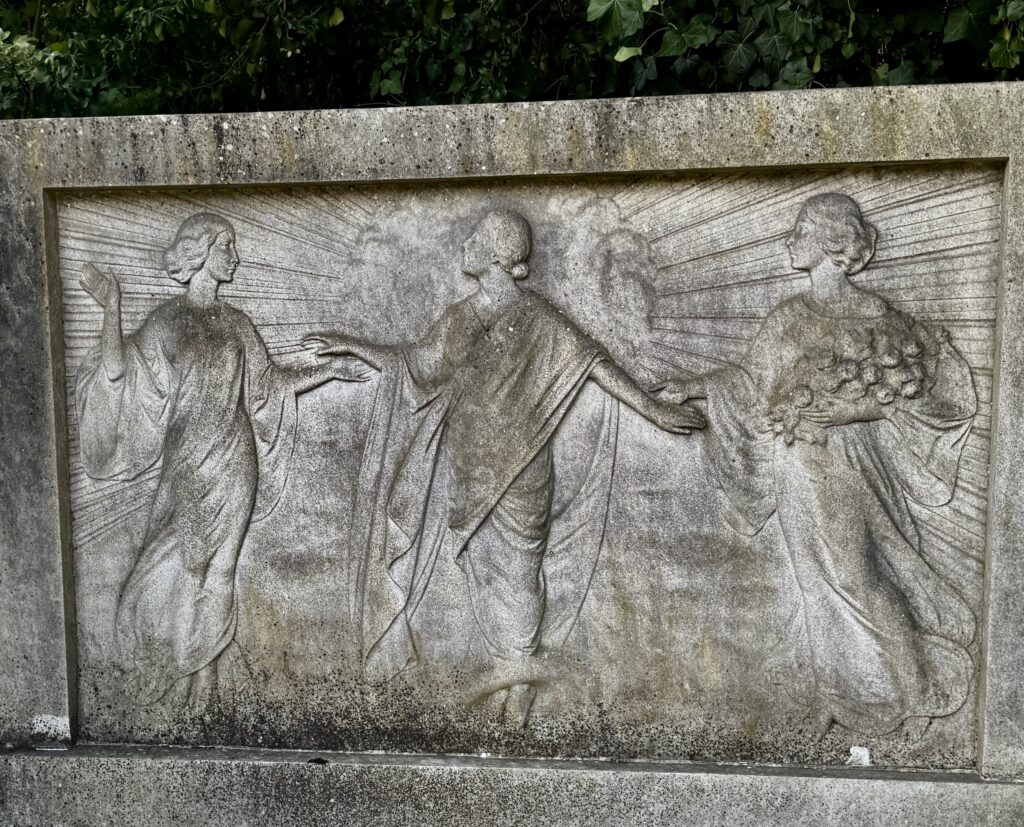
… the other showing Martha and Cesare, apparently reunited in the afterlife, sitting on a bench with Martha finally cradling the baby she presumably never got to hold before she died …
The entry of Italy into the war in June 1940 was a disaster for the family. Despite living for 27 years in Britain, fighting on the same side in the great war, and being a father to a young motherless family, Cesare found himself interned by the British Government as an enemy alien. At the end of June he was in Liverpool, waiting to board a boat for an internment camp in Canada, the British authorities apparently believing that only removal to another continent would ensure that the ex pat Italian community would be unable to help the Axis war effort. Not our finest hour.
On the 30 June Cesare joined 734 other interned Italian men on the SS Arandora Star along with 479 interned Germans and 86 German PoWs, all bound for St John’s Newfoundland. The ship was torpedoed by a U Boat on 2 July. 805 people drowned, but Cesare survived, was returned to Liverpool, and subsequently interned on the Isle of Man until 1942. He subsequently found work in Smithfield Market but was tragically killed when a V2 rocket hit the site on 8 March 1945. Cesare was buried with other victims of the V2 in the City of London Cemetery in Manor Park. He would have certainly wanted to be buried with his wife but the circumstances of his death made that impossible
I am indebted to the brilliant London Dead blog for these details about Cesare and Martha.
This is the tomb of Henry Brodribb Irving (5 August 1870 – 17 October 1919), a British stage actor and actor manager and the eldest son of Sir Henry Irving and his wife Florence …
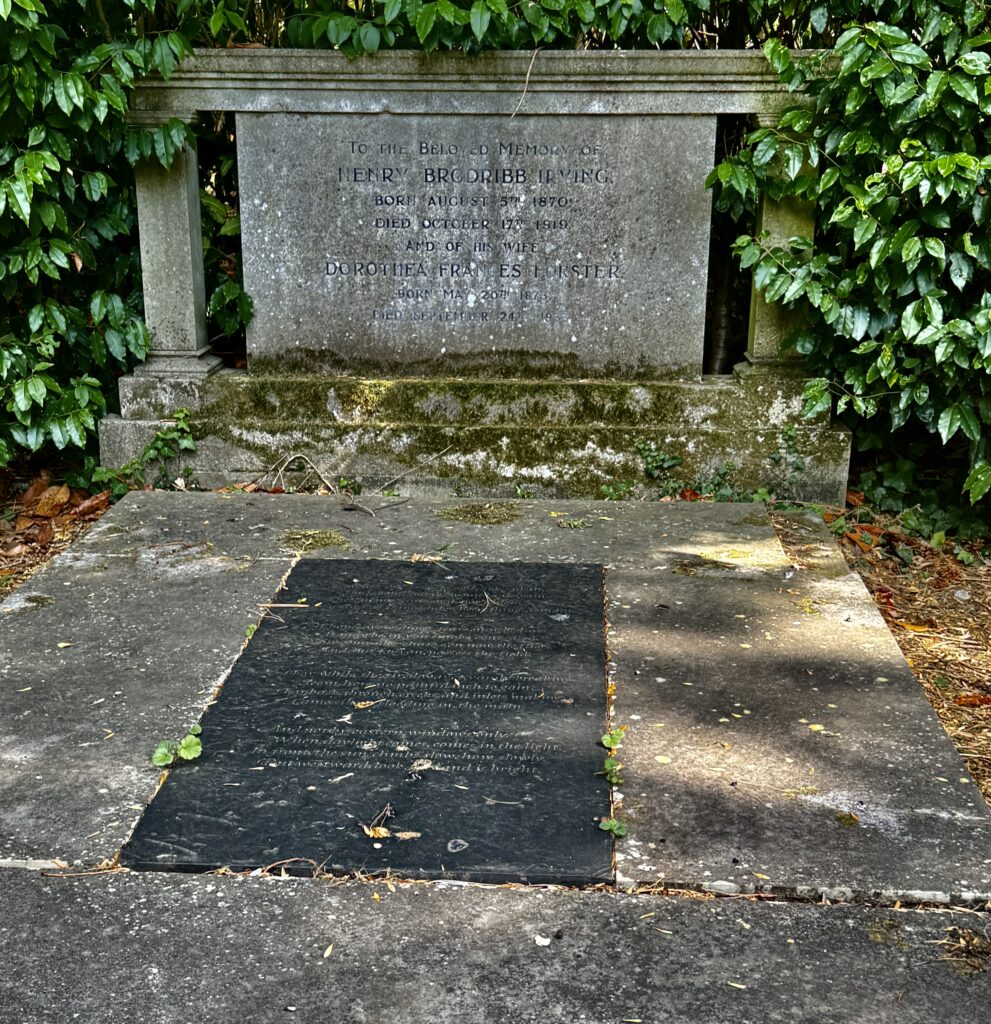
He liked to be known as H B Irvine to distinguish his career from his father’s …
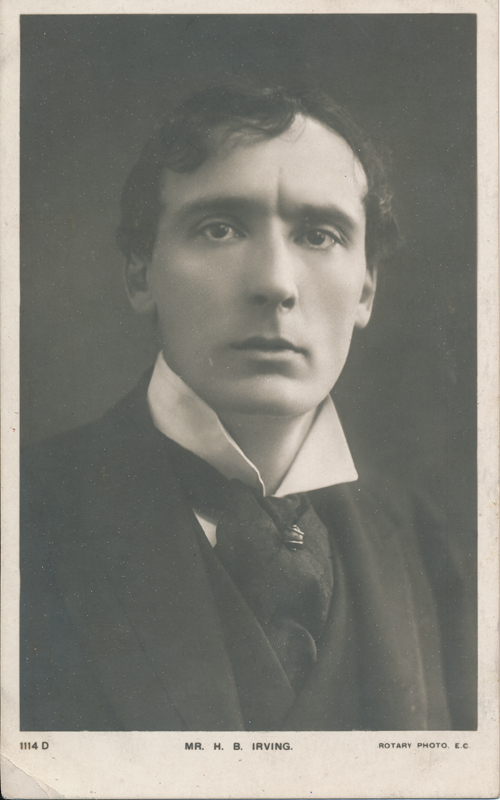
He initially studied and practised law before committing to acting. During World War I he withdrew from the theatre and returned to the law, writing the study for which he is now most famous, A Book of Remarkable Criminals, originally published in 1918, which examined the lives, motivations and crimes of some infamous murderers. He had already published Life of Judge Jeffreys, and Studies of French Criminals and other papers on the subject. After spending twenty years of his life dedicated to the theatre, his greatest success came from being what it was originally intended he should be, a legal expert.
There is a poem inscribed on slate incorporated in the memorial …
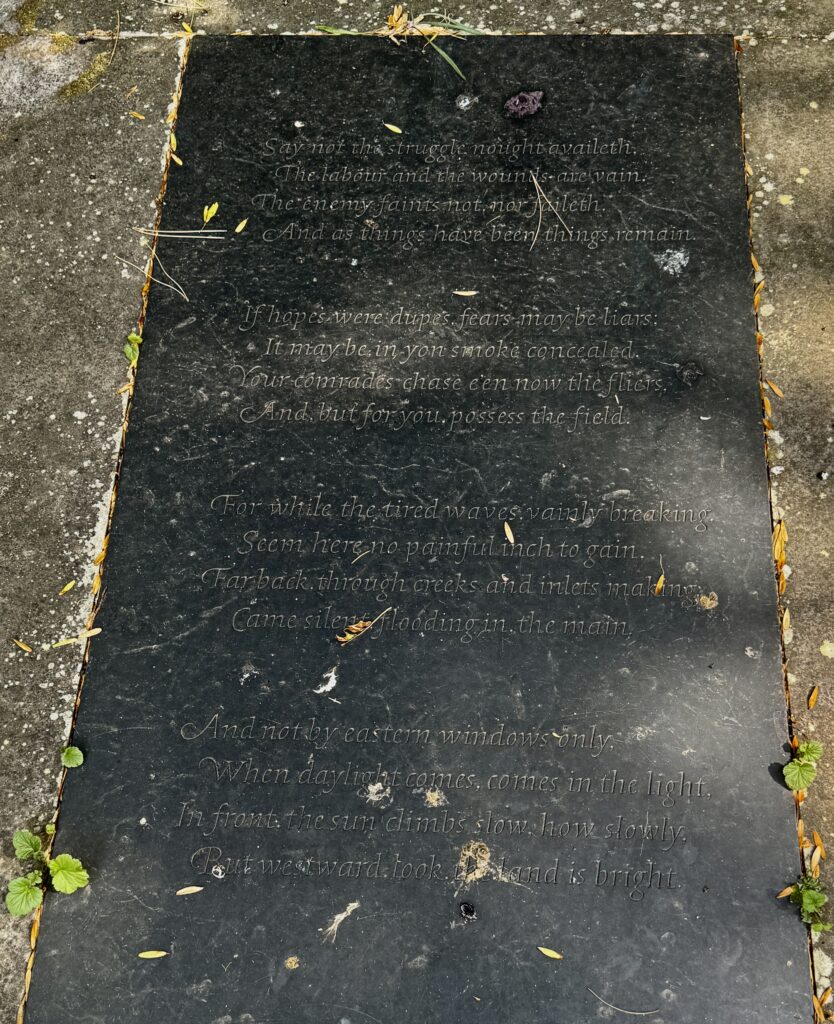
It’s entitled Say not the struggle nought availeth and you can find it here if the image is hard to read. There is also an analysis of the poem and more about the author here.
You could easily walk past this grave …
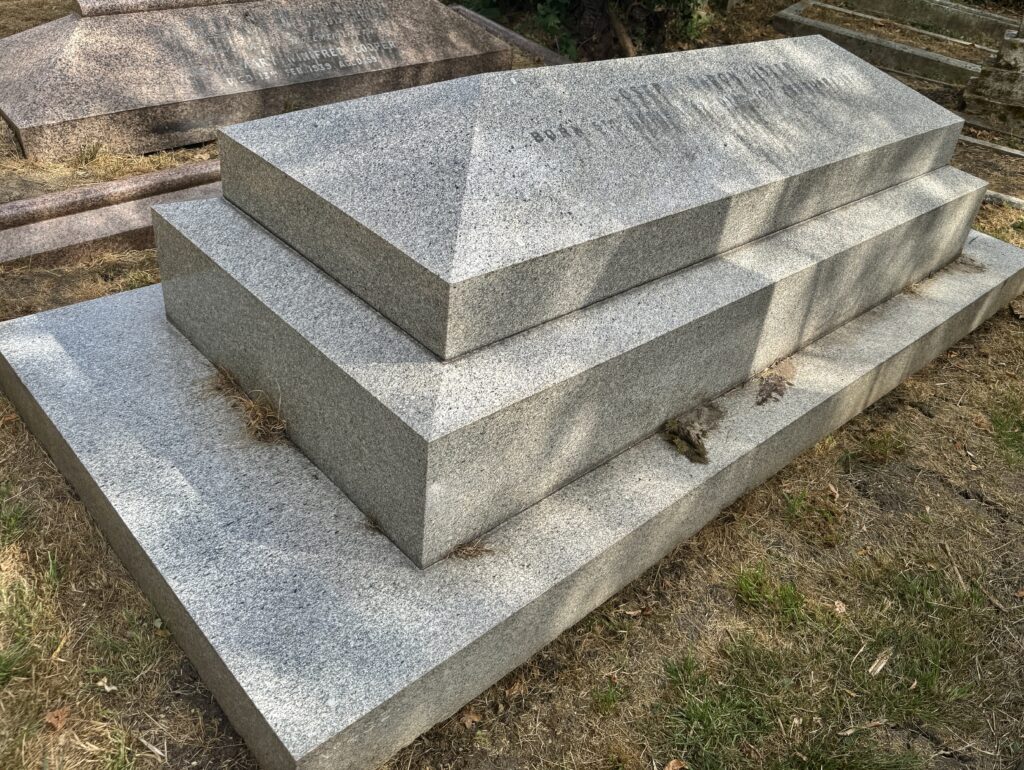
… and not realise that it is the resting place of a man considered by many to be the father of modern surgery, Joseph Lister (1827-1912) …
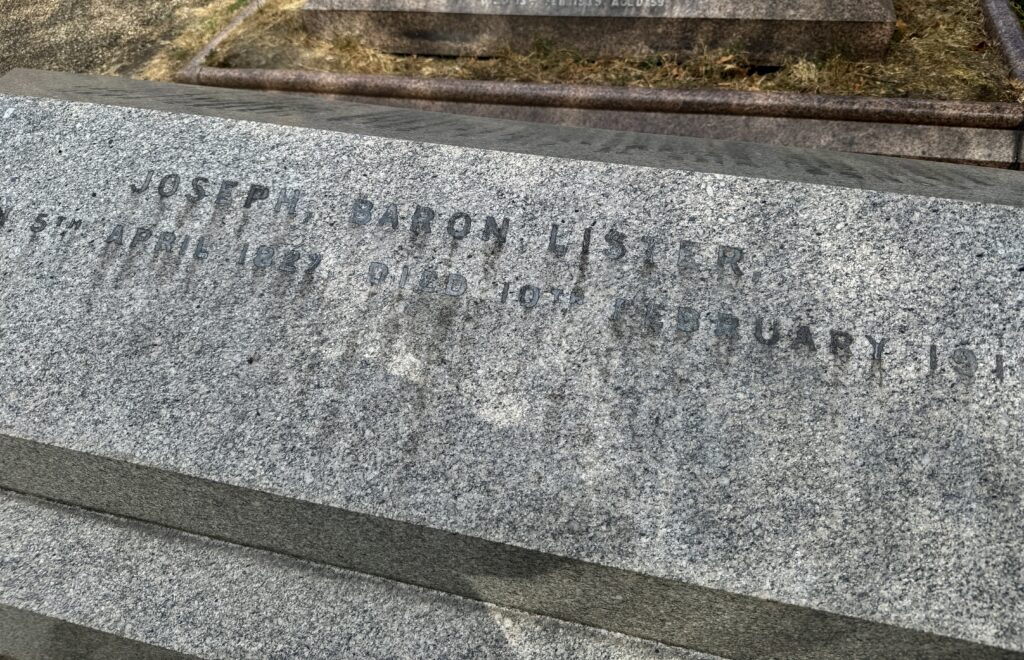
In the mid 19th Century it was highly possible that you would survive an operation, only to die from a post-operative infection. Ether had been first introduced as an anaesthetic in surgery in 1846, reducing the chances of patients dying of pain or shock, but the risk of post-operative death was still significant and it was Joseph Lister in 1865 who introduced the concept of antisepsis in surgery. He introduced carbolic hand washes for surgical staff, carbolic acid baths for instruments and carbolic acid spray to reduce the level of germs in the air. In just three years Lister reduced the death rate in his patients from 47% to 15%.
Lister circa 1890 …
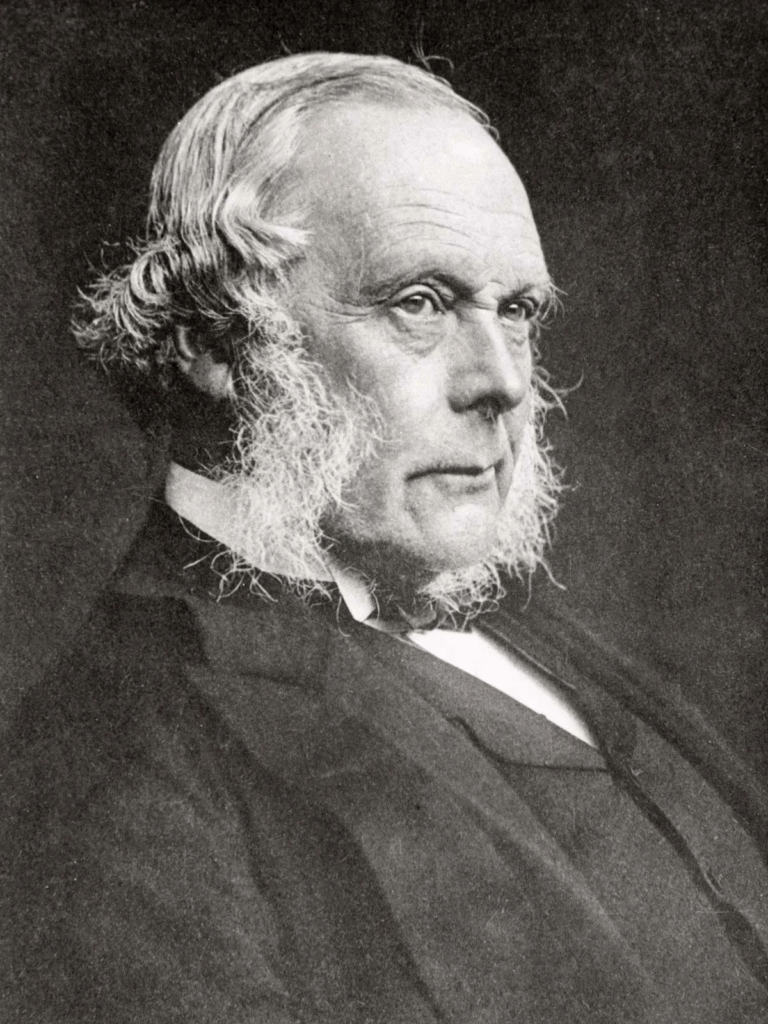
‘He was courteous to all, but sheltered himself behind a natural reserve which many attributed to shyness. A lover of home life and very simple in his tastes, he maintained to the last evidence of his Quaker upbringing by using ‘thou’ and ‘thee’ when writing familiarly to members of his family. No lover of money, he proportioned his fees to what he thought a patient could afford rather than what it was right or customary to charge, and he never, therefore, acquired wealth.’ His modest tomb probably reflects his Quaker beliefs.
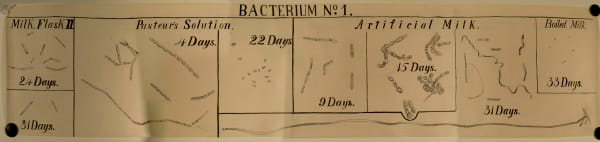
You can read a superb biography here. And see some fascinating material from the Lister archives here, including his version of a PowerPoint presentation …
Then there is this medical gentleman …
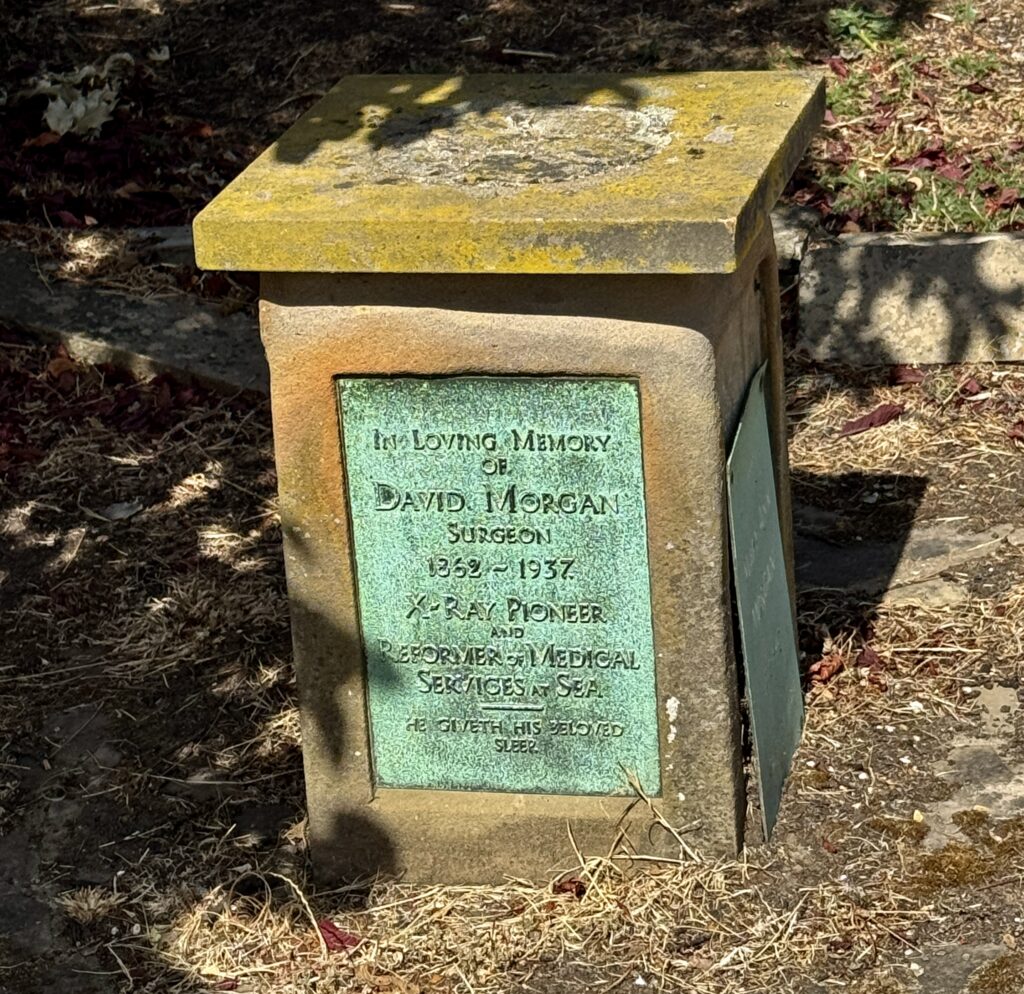
The following text is taken from the book ‘The Good Grave Guide to
Hampstead Cemetery, Fortune Green’ by Marianne Colloms and Dick
Weindling.
One of the pioneers of radiology in the UK, Morgan’s work so badly damaged
his hands that he had to give it up. He joined the Cunard Line in 1897 as
Examining Officer based at Liverpool, with responsibility for all the emigrants and other passengers to America. In 1910 he became medical superintendent and by introducing better equipment and more highly trained personnel, he greatly improved the standard of medical care at sea. He worked for Cunard until he retired in 1926 and came to live in London. Appropriately, the only wreath at his funeral was of blue and white flowers in the shape of the ‘Blue Peter’, the flag flown by a ship leaving port.
The elegant tomb of James Wilson Pasha (1831-1906). ‘Pasha’ was a title given to a man of high rank or office in the Ottoman Empire and North Africa. It was the highest official title of honour, always used with a proper name, which it followed. It was given to soldiers and high civil officials, not to men of religion, and was purely personal and not hereditary …
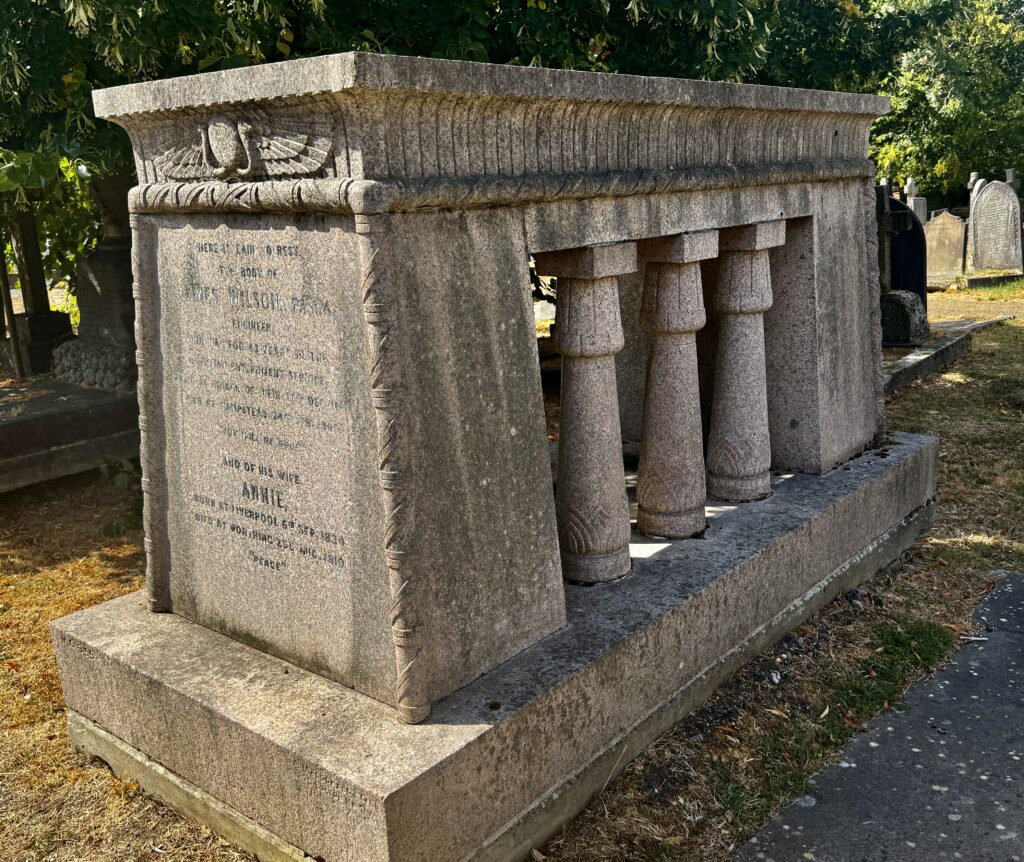
Wilson was a British engineer who played a key role in Egypt’s 19th-century industrial expansion under Khedive Ismail. Trained in Britain, he entered Egyptian government service in the early 1860s and became chief engineer during a period of ambitious modernisation. Wilson was closely involved in the planning and management of large public works, most notably extensive sugar manufacturing enterprises central to Egypt’s economic strategy. His work combined engineering design with large-scale administration and logistics. Awarded the honorary title “Pasha,” he later returned to Britain, where he died in 1906, remembered for his contribution to Egypt’s industrial development.
The Frankau family memorial is in every sense a monumental piece of Art-Deco, Grade II listed by English Heritage in 1999 …
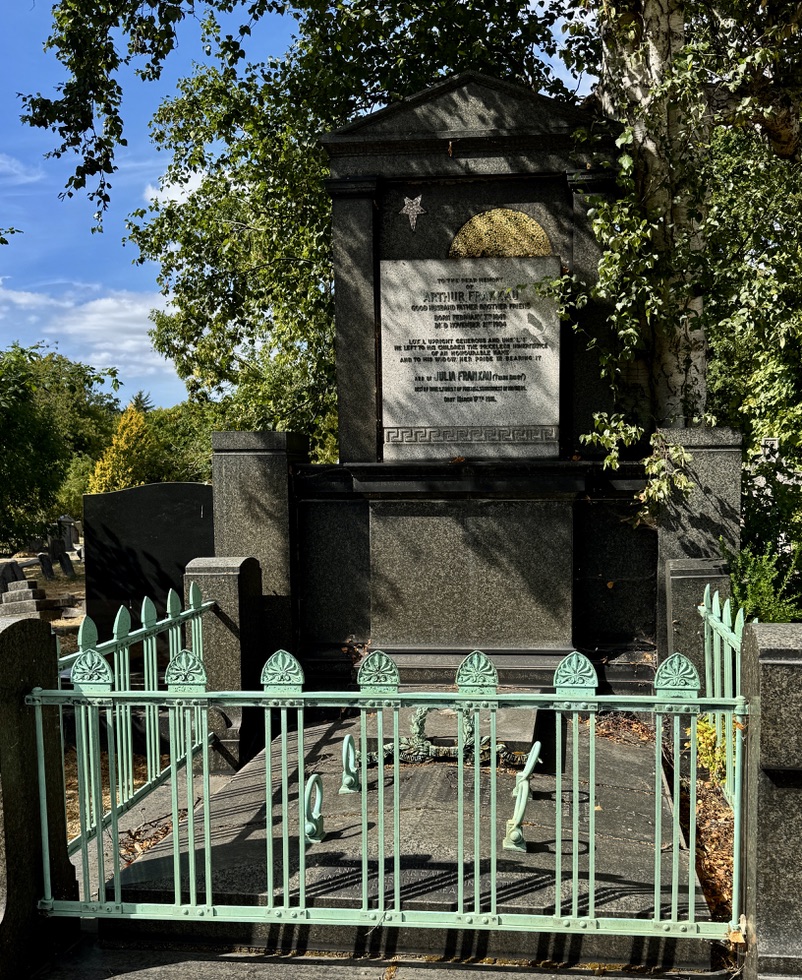
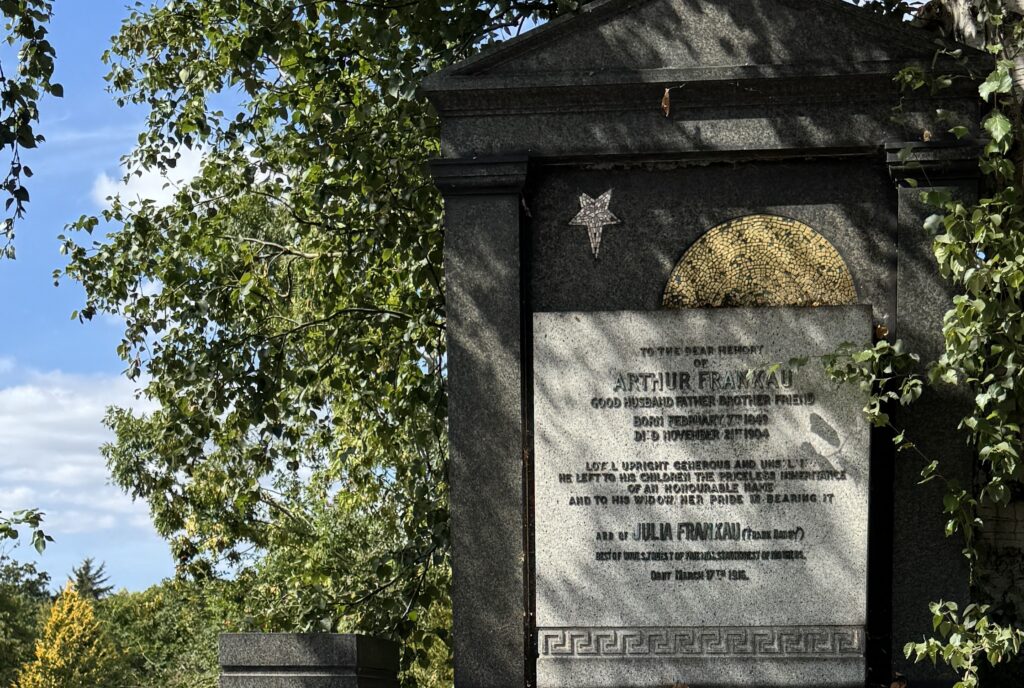
You can read more about this fascinating family and the memorial here and here.
Sometimes I read a memorial and am immediately committed to finding out more. This was one of them …
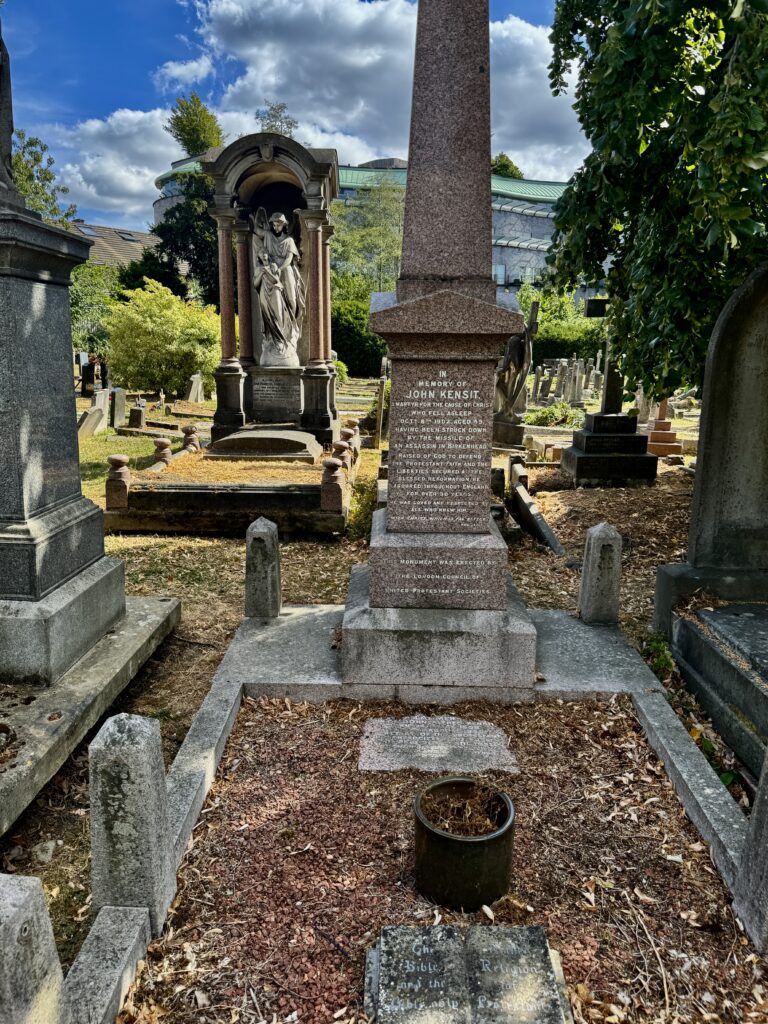
In close up …
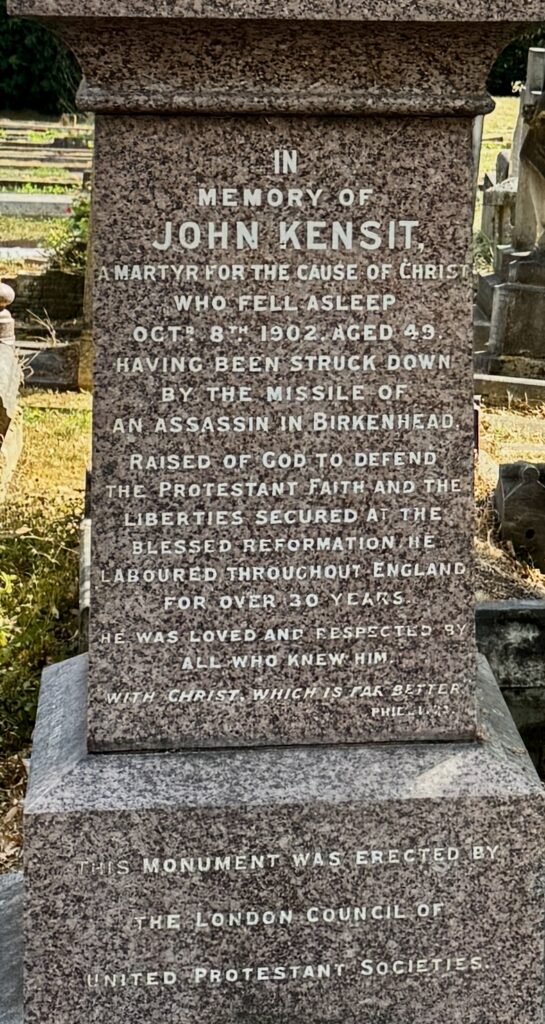
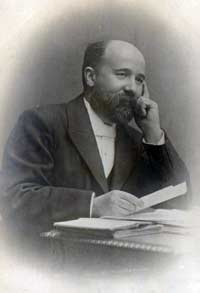
John Kensit (1853–1902) was a prominent English Protestant campaigner and founder of the Protestant Truth Society. He became well known for his opposition to Anglo-Catholic ritualism within the Church of England, which he believed was bringing Catholic practices back into Protestant worship. His campaigns were often controversial and contributed to religious tensions in Liverpool.
John Kensit …
On 25 September 1902, he travelled to Birkenhead to address a Protestant meeting at Claughton Music Hall. As he and his companions left the meeting, they passed through a hostile crowd. A heavy metal file or chisel was thrown and struck Kensit above the left eye, causing a serious wound. He was taken to Liverpool Royal Infirmary.
Although he initially appeared to recover, he later developed pneumonia and blood poisoning. He died in hospital on 8 October 1902, aged 49. A man called John McKeever was accused of throwing the weapon and was charged with Kensit’s murder but was ultimately acquitted at the Liverpool Assizes, with the legal proceedings noting that Kensit’s death was directly triggered by the subsequent illness rather than the impact itself.
The Rider family grave …
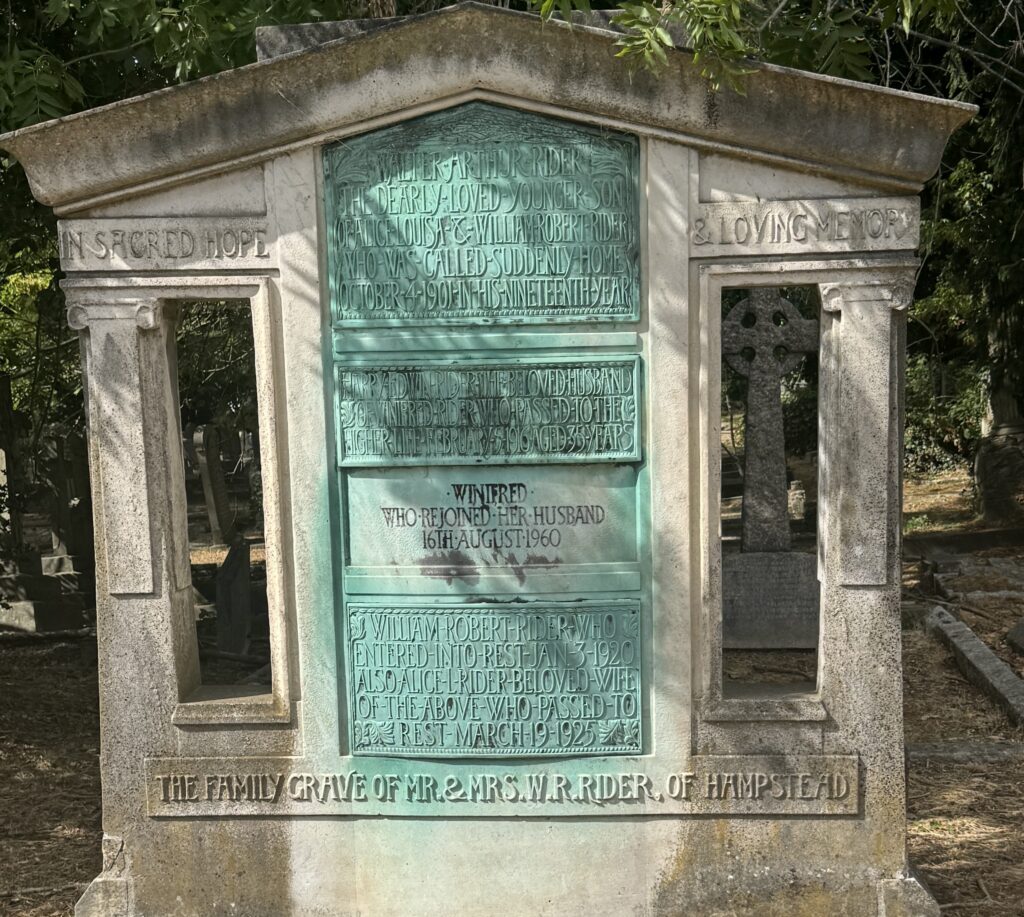
As the topmost bronze plaque makes clear, Alice Lousia and William Robert Rider has this monument created after the death of their nineteen-year-old son, Walter Arthur Rider, in 1901. The father was interred here after his death in 1916, when he was 35, and the mother after her death in 1960 — 59 years after the death of the son.
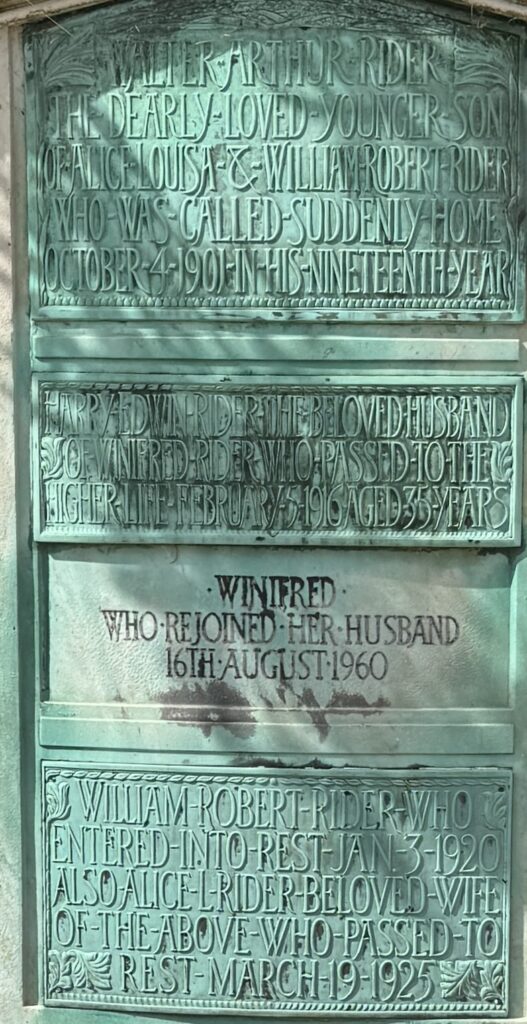
The design of the grave has an Art Deco look but the copper lettering harks back to the earlier Art Nouveau style.
The grave of Captain Bertram Lewis Lima (1880-1919), a newspaper publisher, who became, under the Harmsworth publishing dynasty, Chairman of the Daily Mirror and the Sunday Pictorial …
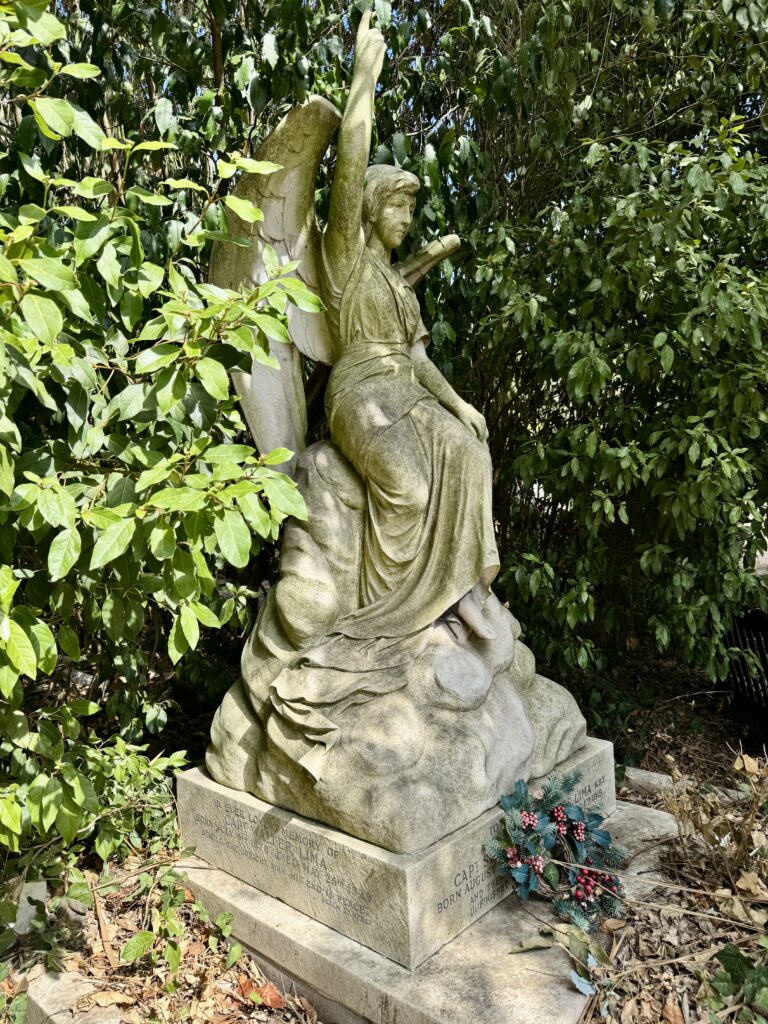
The inscription reads: To the glory of God and in loving memory of Capt. Sir Bertram Lewis Lima KBE. … And then to die so young and leave unfinished what he might achieve!
Unusual to see an exclamation mark on a memorial but, I think, very appropriate for a journalist!
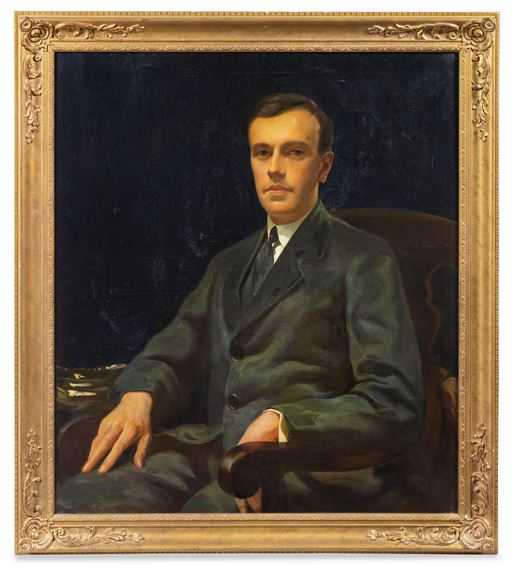
I think this is probably a portrait from the newspaper archive …
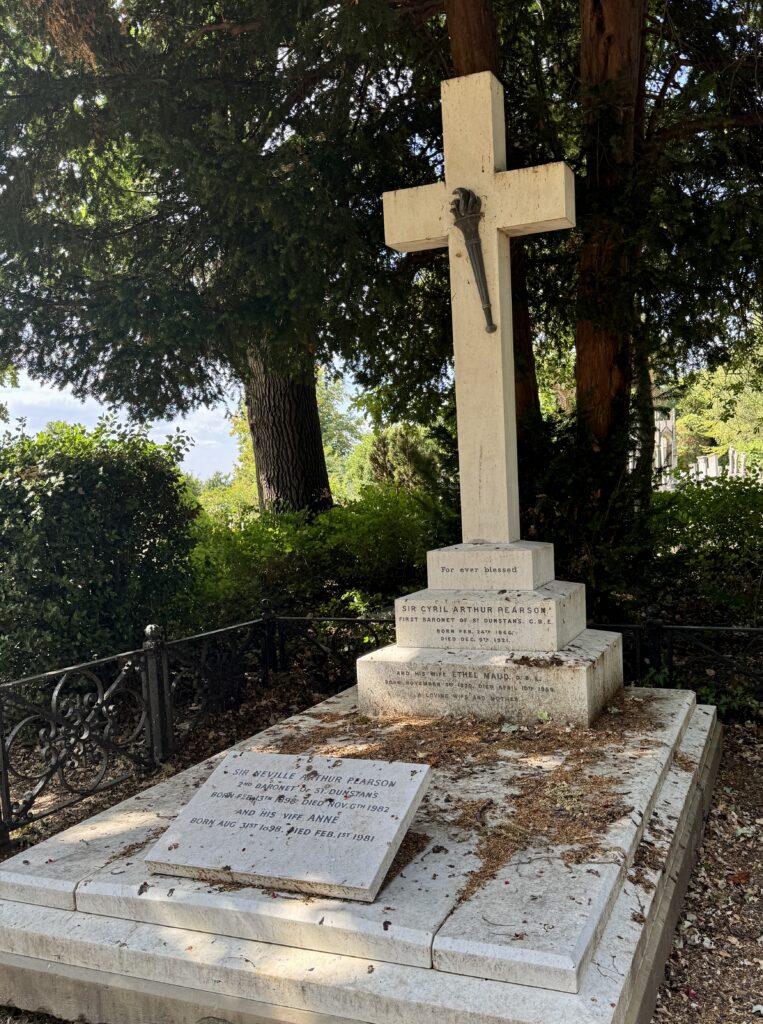
The grave of another publisher, Sir Arthur Pearson (1866-1921) …
At the age of 18 he beat 3,000 other people to win a general knowledge quiz. The prize was a job at the journal Tit-Bits – a position that proved to be the start of a very lucrative publishing career …
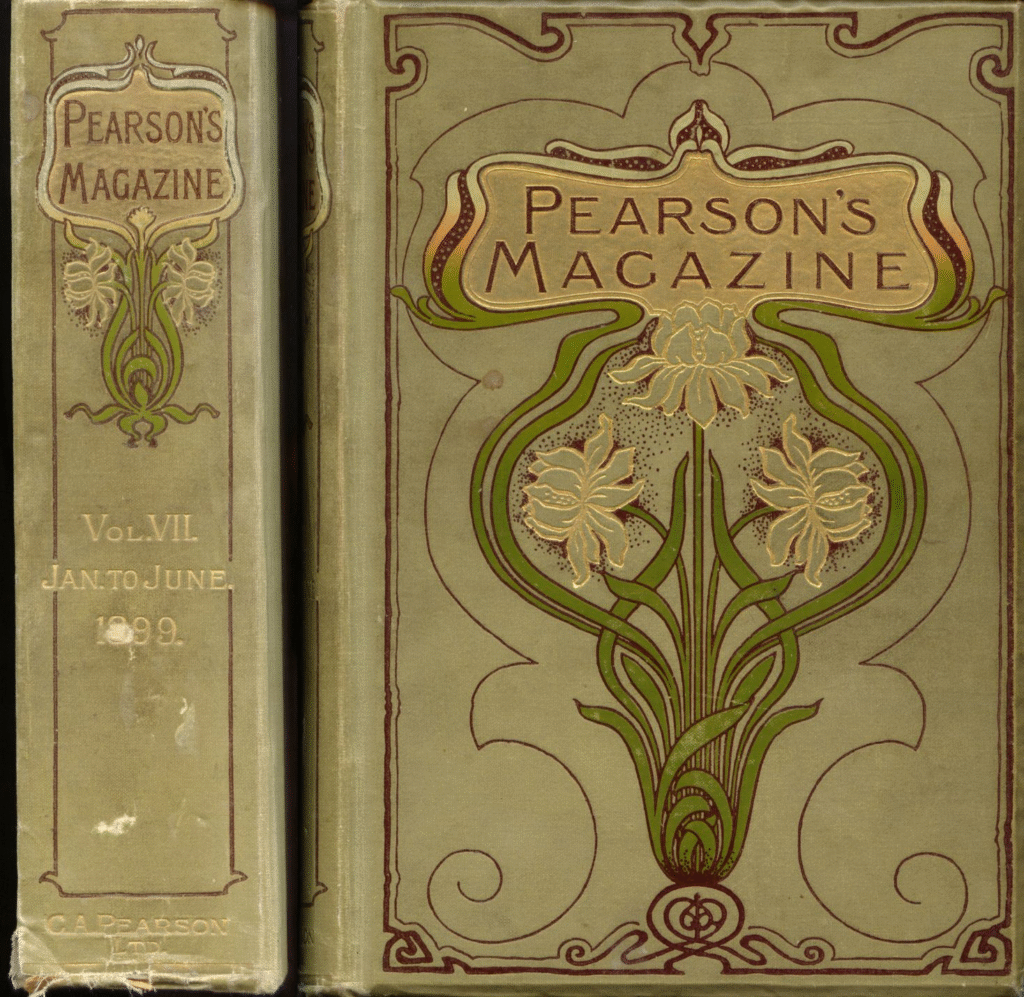
Five years later in 1889 Pearson set up his own publishing company, which started out by publishing the highly successful Pearson’s Weekly …
By 1900 he had launched the Daily Express and in 1904 he acquired The Standard and The Evening Standard.
Pearson soon put his new wealth towards charitable causes. In 1892 he established the Fresh Air Fund, which provided holidays and outings for hundreds of thousands of disadvantaged children, and in 1908 helped Robert Baden-Powell found the Boy Scout movement.
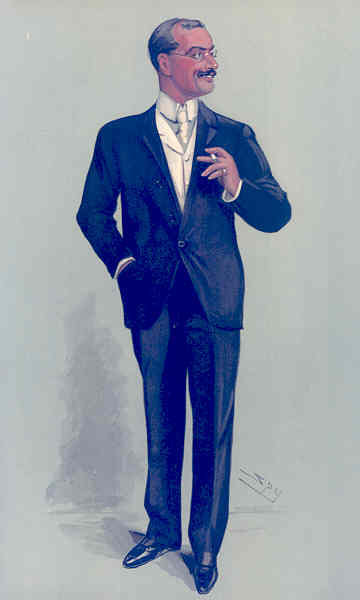
As seen by Spy for Vanity Fair in 1908 …
He had always had bad eyesight and in 1913 he learned that he would soon be completely blind. He told his wife Ethel ‘I will never be a blind man, I am going to be the blind man’. Pearson sold off his remaining publishing interests and began to work tirelessly for blind people. He worked initially as treasurer for the National Institute for the Blind (now the Royal National Institute of Blind People, or RNIB) and then as secretary for the National Relief Fund upon the outbreak of the First World War. In February 1915 he established a hostel for blinded servicemen called St Dunstan’s, a charity which still operates today as Blind Veterans UK.
Pearson around 1915 …
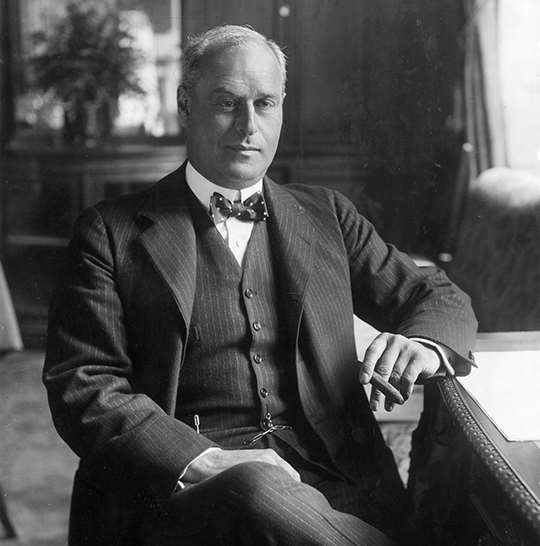
St Dunstan’s Hostel for Blinded Soldiers and Sailors offered a total programme of care and training. Every man who passed the reading test was given a Braille writing machine and men could choose to learn one of a number of different trades, from poultry farming to typing. There was also a wide range of sporting, social, and musical activities. When a patient left St Dunstan’s he was given a set of tools appropriate to the trade he had learnt, and a home and working premises were found for him. In 1917 an aftercare department was established to provide, when necessary, lifelong support.
In recognition of his services to blind people, Pearson was created a baronet in 1916 and appointed Knight Grand Cross of the Most Excellent Order of the British Empire (GBE) in 1917. He died aged just 55 after a freak accident at his Devonshire Street home on 9 December 1921.
I’m still sorting through the other memorial images I took and will write about them at a later date.
On leaving, I had to take a picture of this impressive building across the road from the cemetery entrance …
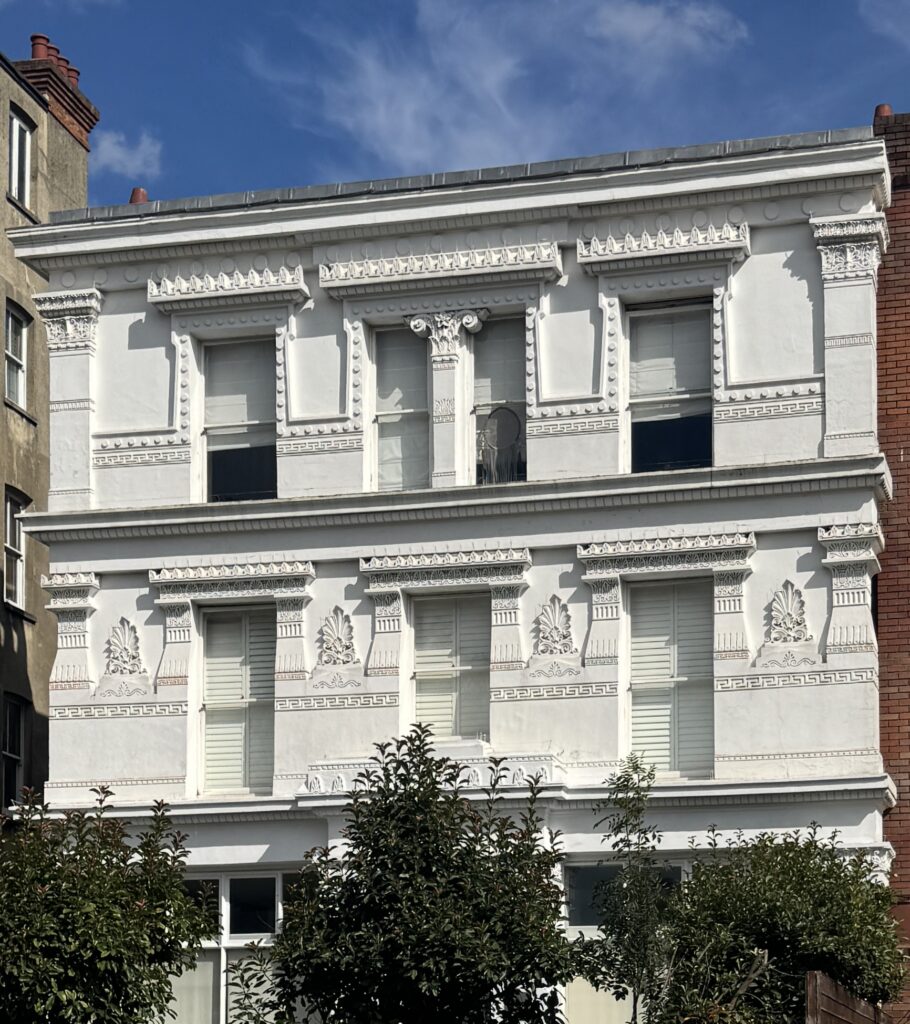
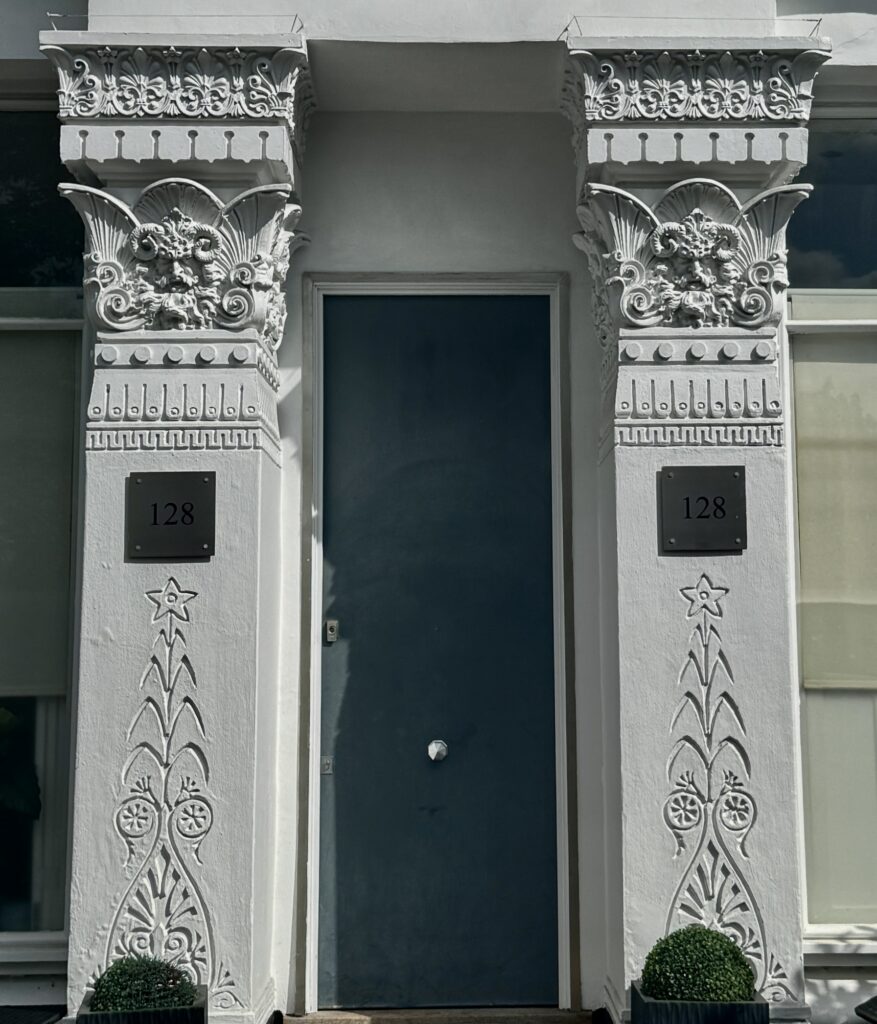
When I was growing up nearby in the 1960s it was a monumental mason’s premises, their skills obviously being demonstrated on the facade. It is now a rather splendid private residence and Grade II listed.
In other news.
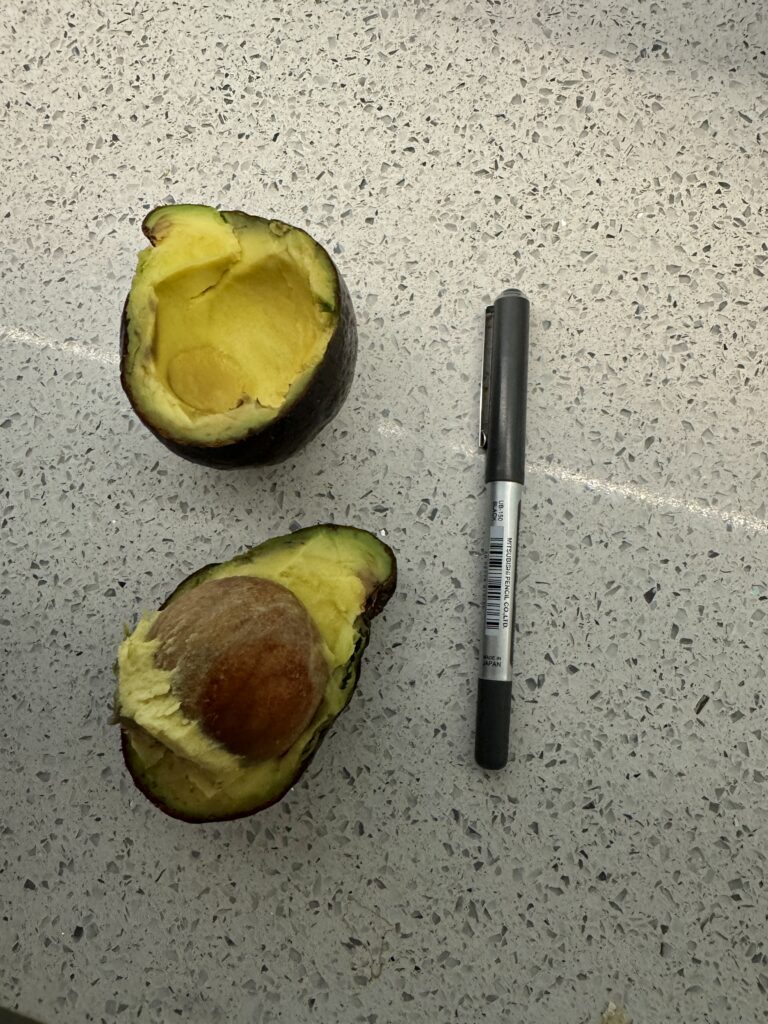
Is this a record size for an avocado stone (pen alongside for scale) …
A mysterious happening. Yesterday afternoon I found a tin of chopped pork outside the entrance to our flats …
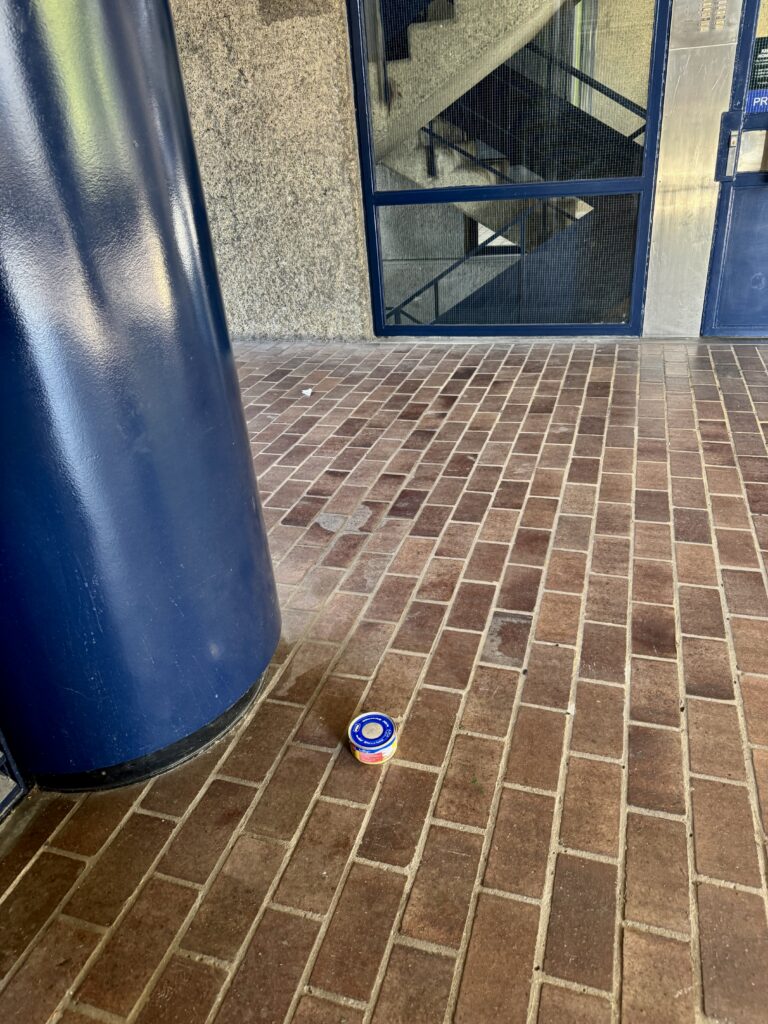
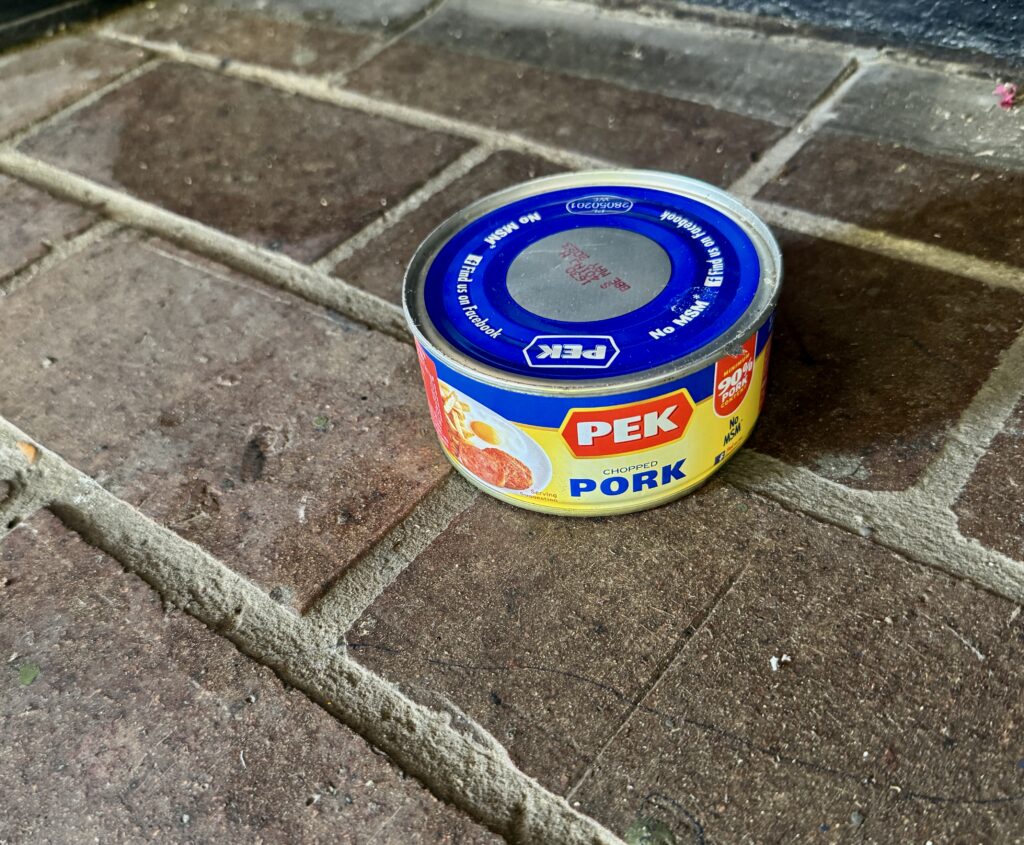
But by evening it had disappeared.
Things can get very exciting round here.
If you would like to follow me on Instagram here is the link …