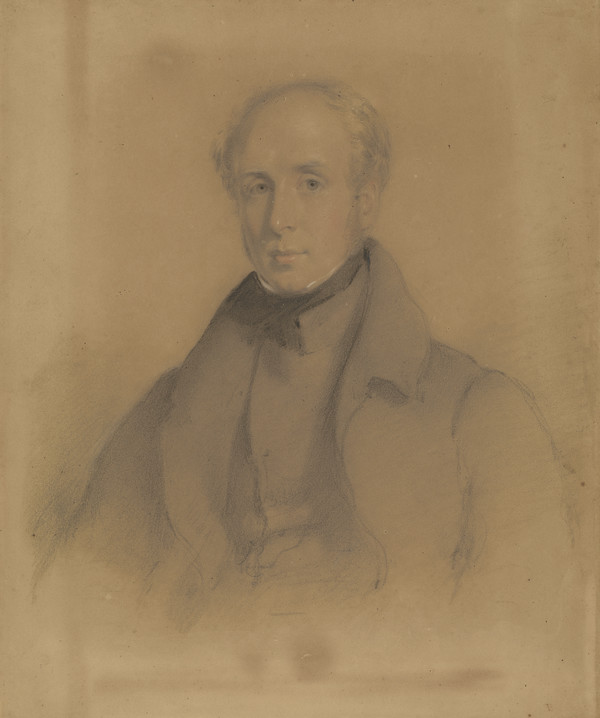
Occasionally I find myself drawn to the peaceful Postman’s Park in King Edward Street (EC1A 7BT). In the late 1890s the idea was mooted that the park would be an ideal location for a memorial to ‘ordinary’ and ‘humble’ folk who had lost their lives endeavouring to save the lives of others. Two of its most enthusiastic supporters were the artists George Frederic Watts (1817 – 1904) and his wife Mary (1849 – 1938). There are some nice images of both him and his wife on the National Portrait Gallery website. Here he is and here his wife Mary. I have written about the memorials before and you can read two of my blogs here and here.
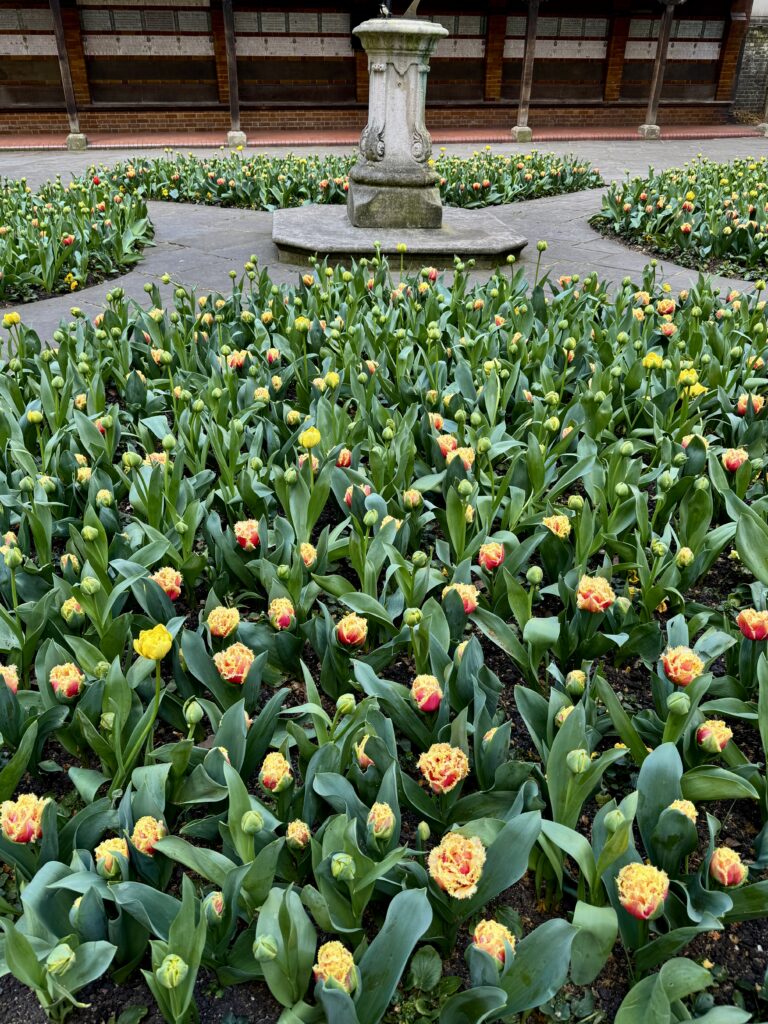
The memorial today in the background behind the sundial …
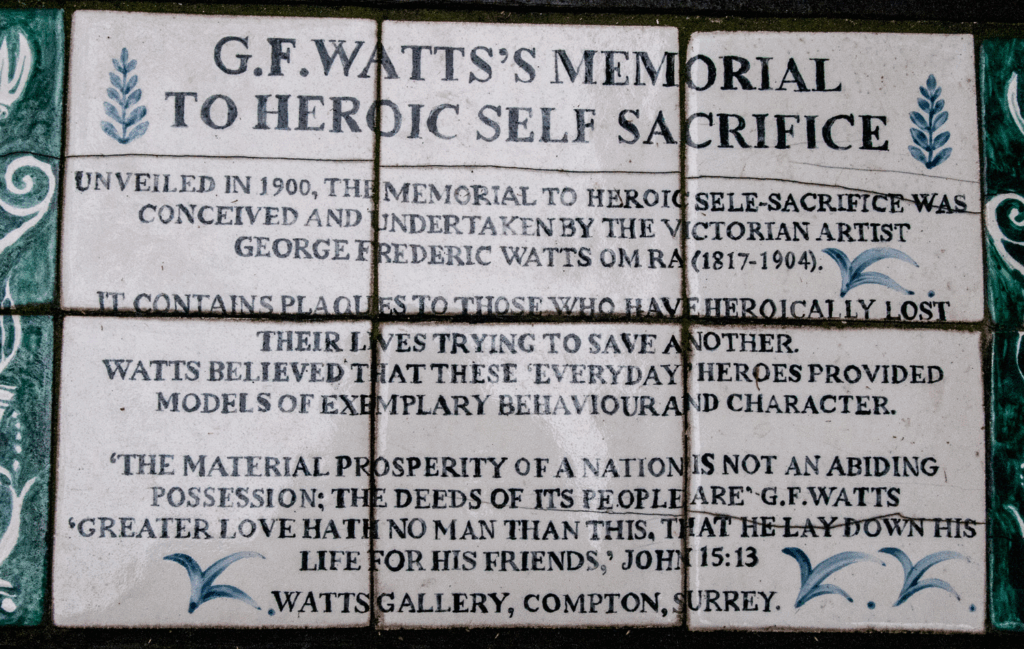
And the plaque describing a little of its story …
I have written about some of the individuals commemorated here before and for this week’s blog I chose some new ones, starting with Walter Peart and Harry Dean …
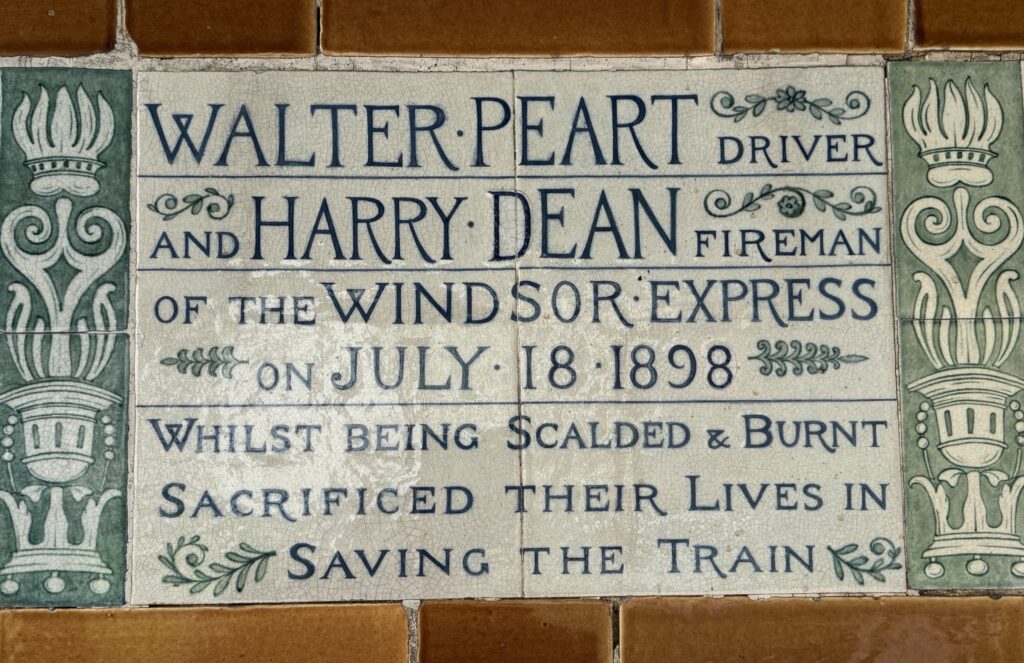
On Monday 18 July 1898, at a time when the Great Western Railway ran trains directly from Windsor to Paddington, the 4.15 pulled out normally from Windsor Central Station. The driver was 43-year-old Walter Peart, the fireman 25-year-old Henry Dean.
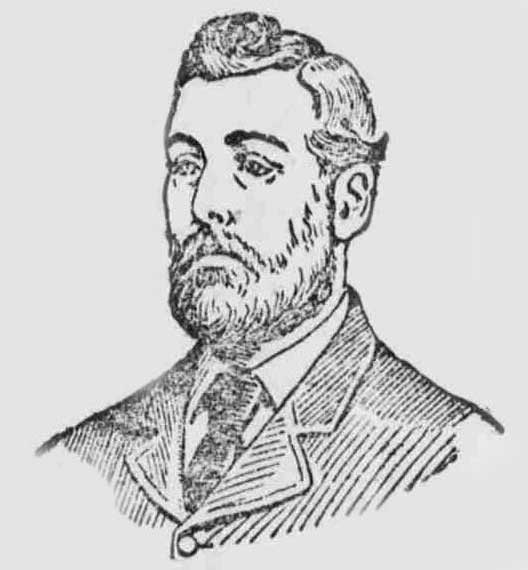
A Portrait of Walter Peart (1857 – 1898) From Lloyd’s Weekly Newspaper, 24th July 1898 Copyright, The British Library Board
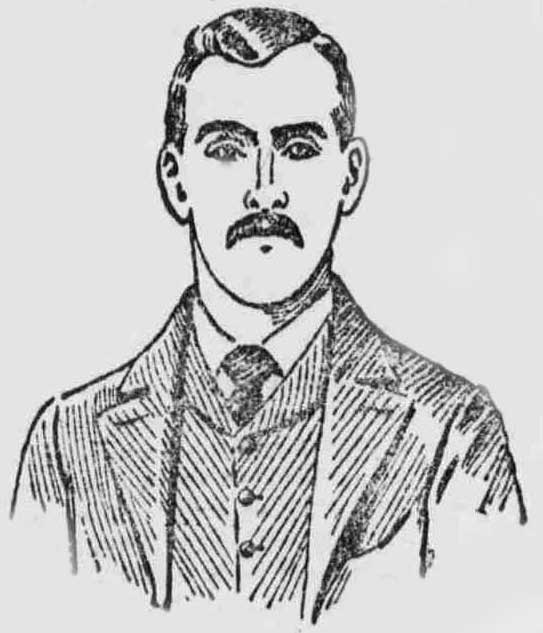
A Portrait of Henry Dean (1873 – 1898) From Lloyd’s Weekly Newspaper, 24th July 1898 Copyright, The British Library Board
The train was approaching Acton when suddenly the connecting-rod of the engine shattered. A piece was driven through the casing of the boiler, there was a violent explosion, the train was enveloped in steam and ash, and in the cab piping, fire and cinders were driven into the two men’s faces. They staggered back, but knew that the train was still running and that if it could not be stopped there would be a catastrophic crash. The driver forced himself forward into the inferno to apply the vacuum brake and the train came to a standstill.
On his way to hospital, Peart asked after his ‘poor mate’, who was in a bad way. He himself was not much better, but he made light of his condition saying proudly, ‘’Never mind – I saved the train.” Both men died the next day in St Mary’s Hospital Paddington.
At the inquest the jury criticised the GWR for their use that day of an engine which only normally pulled goods trains; it was not, in their opinion, ‘fit and proper … for drawing express trains’. But they praised the men’s courage in averting ‘a serious catastrophe’.
A locomotive similar to the one involved in the accident …
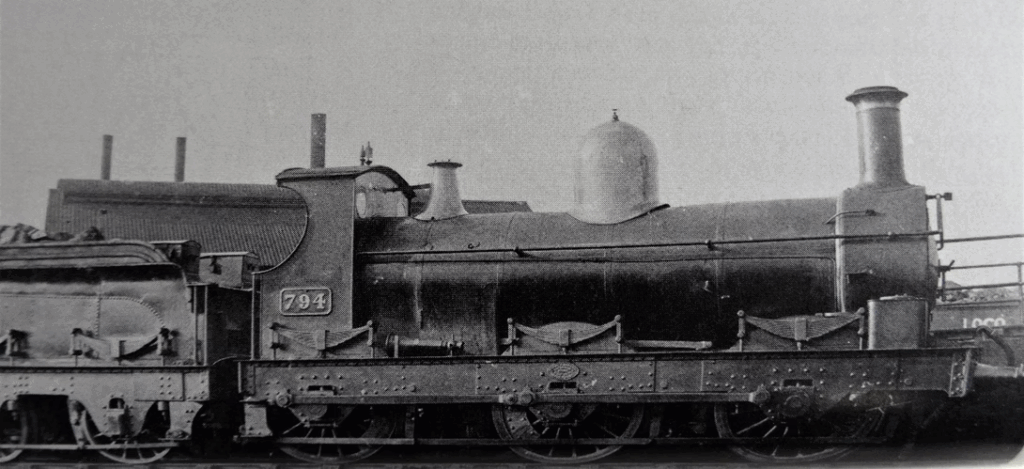
Driver Peart was 43 and left a wife and five children. Fireman Henry Dean was 25 years old and had recently married. Their dependants were assured that the long-established GWR Provident Society would provide for them. George Goschen, 1st Viscount Goschen, who had previously been Chancellor of the Exchequer and was now the First Lord of the Admiralty, had been a passenger on the train. He was returning from an audience with Queen Victoria at Windsor Castle. He was so impressed by the act of heroism and the men’s conspicuous bravery that he raised a subscription for their widows and children. The Daily Telegraph also started a fund to help their families and the Windsor Express records that there were many local donations, including a number from the officers of the 2nd Scots Guards, who were stationed at Victoria Barracks.
You can read more here in the Friends of the National Railway Museum blog.
The next person I researched was shown on the memorial as Frederick Alfred Croft, but this is a case of a wrong surname as the person who performed the act of heroism memorialised here was actually Frederick Alfred Craft …
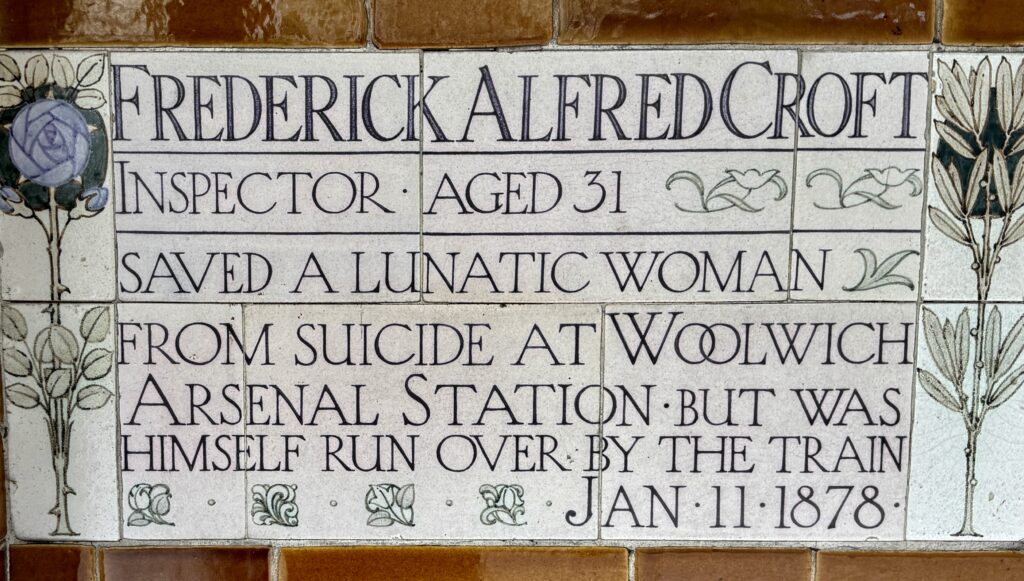
We may flinch a bit nowadays at the description of the woman as a ‘lunatic’ but this was common parlance at the time. The lady whose life he saved was Eliza Newman and, although she suffered from delusions, she was considered to be a ‘perfectly harmless lunatic’ and was generally allowed to live outside of an institution. On 11 January a police physician had concluded that she was ‘of unsound mind, though neither suicidal nor dangerous to others’ but nonetheless licensed her to be immediatly committed to the Kent County Asylum near Maidstone. She was accompanied on the journey by a matron from Woolwich, Sarah Wilkinson, and a poor-law relieving officer called Joseph Moore.
Woolwich Arsenal Station at the turn of the 20th century …
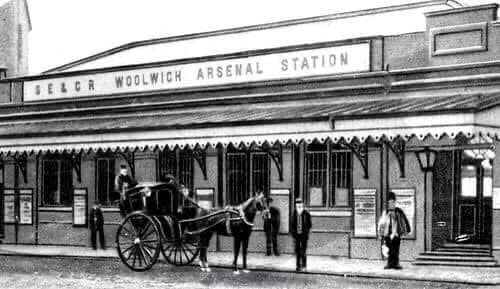
When transporting mental patients or prisoners by train it was common practice, for the safety of other passengers, for the party to travel in a single locked compartment. On arrival at the station, Moore went to look for the stationmaster to make arrangements and purchase tickets.
Whilst waiting on the platform Wilkinson discreetly kept hold of the patient’s coat to stop her walking off. Suddenly, at around 5:30 as the train to Plumstead approached, Eliza pulled away with such force that it left a torn piece of material in the nurse’s hand. She then leapt from the platform onto the rails in front of the approaching engine and Inspector Craft, who was on the platform, immediatly followed with the intention of pulling her out of the engine’s path. She escaped, but poor Craft was hit by the offside buffer and cast under the train. He received horrendous injuries and died later that night from shock and blood loss.
The inquest jury encouraged the public to recognise the gallantry of the deceased by providing for his widow and two small children through the subscription fund that Bartholomew the stationmaster had opened. The fund had already received donations to the value of £24 2s, including £20 from the South Eastern Railway Company, and the jurors all agreed to donate their fee, which came to £3 8s.
Incidentally, Frederick and his wife Elizabeth’s son, Frederick junior, initally followed his father into employmemt on the railways, working as a clerk in his late teens and early twenties. He was probably offered the post in lieu of compensation for his father’s death, as was common practice with railway companies.
My third and final story is about this man …
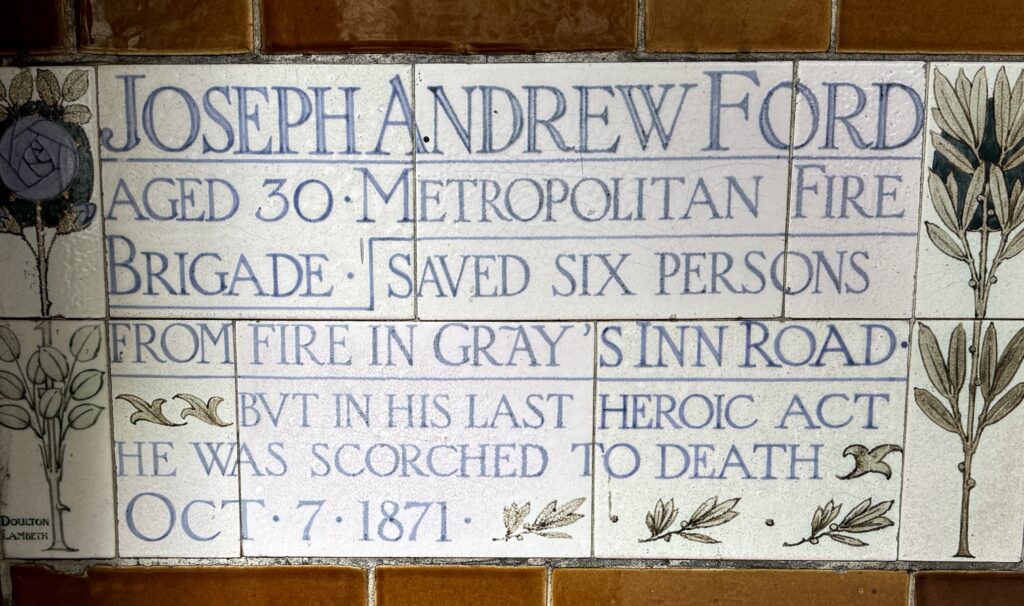
His death was controversial since, after carrying out rescues with extraordinary bravery, Ford died trapped in the wire netting of an escape chute. The Metropolitan Fire Board enquiry found:
“Before he reached the fire three persons had been rescued by the police, who took them down from the second floor window on a builder’s ladder, and on his arrival there were six persons in the third-floor.
He pitched his escape to the left-hand window, and with great difficulty and much exertion and skill succeeded in getting the five persons out safely, the woman in the right-hand window being in the meanwhile rescued by the next escape, and he was in the act of coming down himself when he became enveloped in flame and smoke , which burst from the first-floor window, and, after some struggling in the wire netting, he fell to the pavement.
I have carefully investigated all the circumstances, and I am of the opinion that Ford must have become entangled in some of the netting or other gear aloft, and had to break his way through it in order to clear himself, and that while struggling he got so severely burned that his recovery became hopeless.
It was a work of no ordinary skill and difficulty to save so many persons in the few moments available for the purpose, and when it is mentioned that some of them were very old and crippled, it is no exaggeration to say that it would be impossible to praise too highly Ford’s conduct on this occasion, which has resulted so disastrously to himself.
He leaves his wife and two children – one a daughter aged two years, and the other four months.
Ford was a respectable and trustworthy man, and in all respects and excellent servant to the board.”
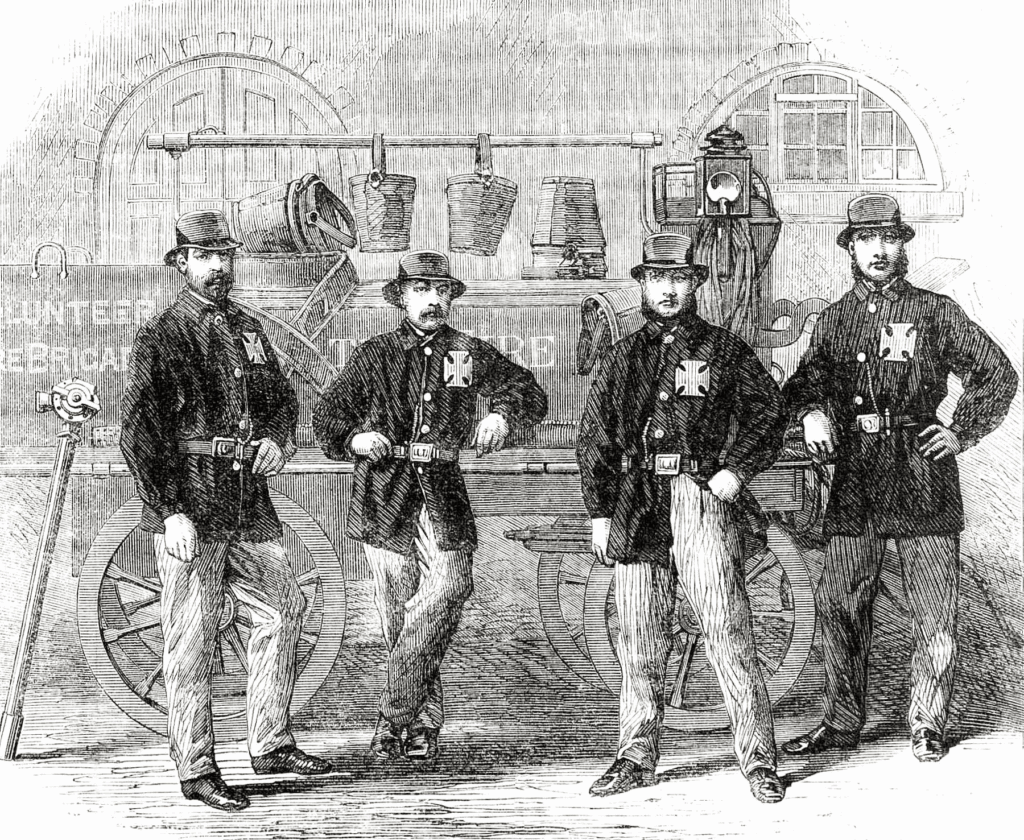
Four firemen in front of their fire engine. The Illustrated London News 4 January 1862.
Literally thousands of people lined the streets of London to witness his coffin on its way to Abney Park Cemetery where it was laid to rest alongside the most famous firefighter London had known, Superintendent James Braidwood …
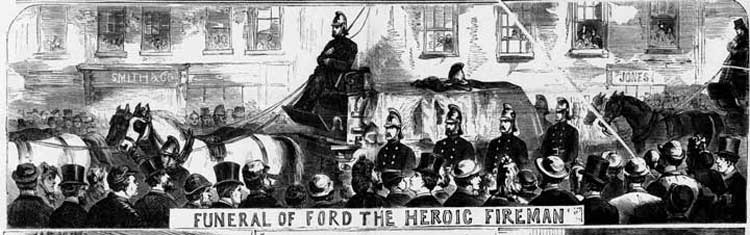
According to The Illustrated Police News:-
“…On the coffin were placed the half-burnt tatters of clothing the torn and smoke-begrimed coat being marked with the meshes of the fatal net-work; the badge, with the name of the dead fireman branded on the handle; and the brass helmet, bruised and batterred, and having one long, deep fearful indentation along the side on which the wearer fell headlong. The crushing force of the concussion was terribly apparant in the beating-in of the strong headgear; and it was but too apparent that the metal must have been driven with great violence on the skull..”
The band from ‘E’ division of brigade played the ‘Dead March’ from Saul as it led the cortège, folowed by Ford’s family and two divisions of Metropolitan Police officers. Behind them followed ‘nearly the whole of the fire engines of the brigade, fully manned, each of the men wearing a band of crêpe on his left arm’.
The Metropolitan Board of Works, responsible for the Metropolitan Fire Brigade (MFB), came under intense criticism for the way it treated his widow Emmeline and his two children, Emmeline Junior and Frederick. The Brigade’s 1865 constitution contained a provision for widows whose husbands died on active duty to receive an annuity, but Ford was the first MFB fireman to do so and there was, therefore, no precedent. A figure of £1 a week was decided upon (less than the £1 8s a week he was earning ) and it was stipulated that it should be ‘revisited’ after six months. When the subscription fund for donations raised £1,000 the Board of Works withdrew its pension provision stating that”[the fund] brought to the widow an actually larger income than the pay her husband received when he was living’. In addition to this, his widow and children had to vacate their home in the fire station!
Surely no way to treat a hero.
Five more true heroes from the memorial …
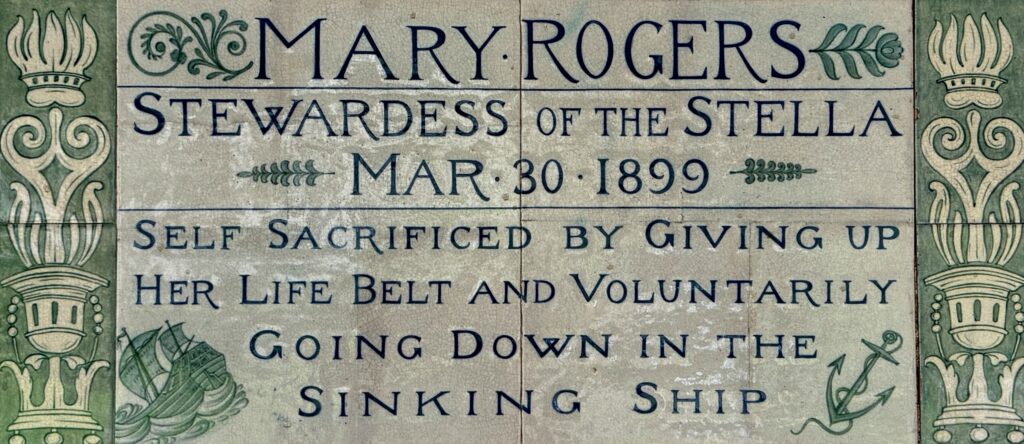
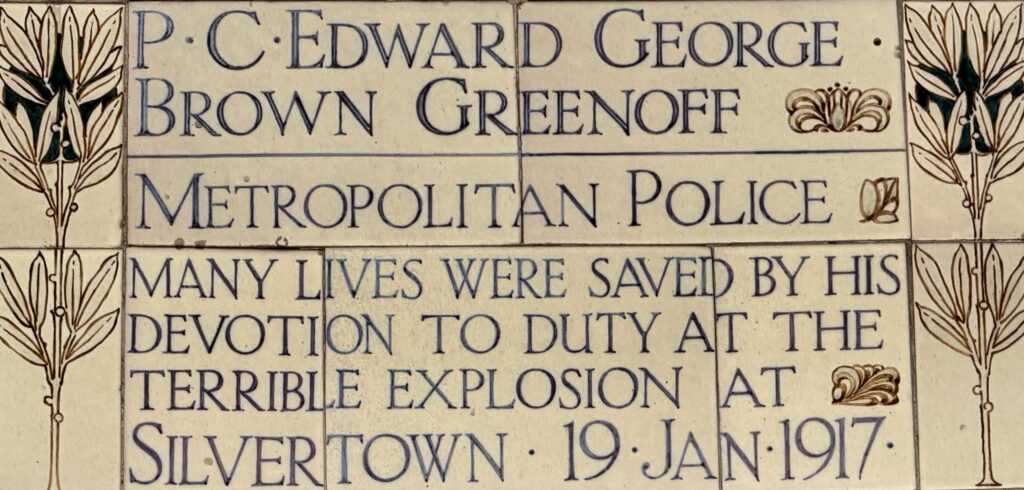
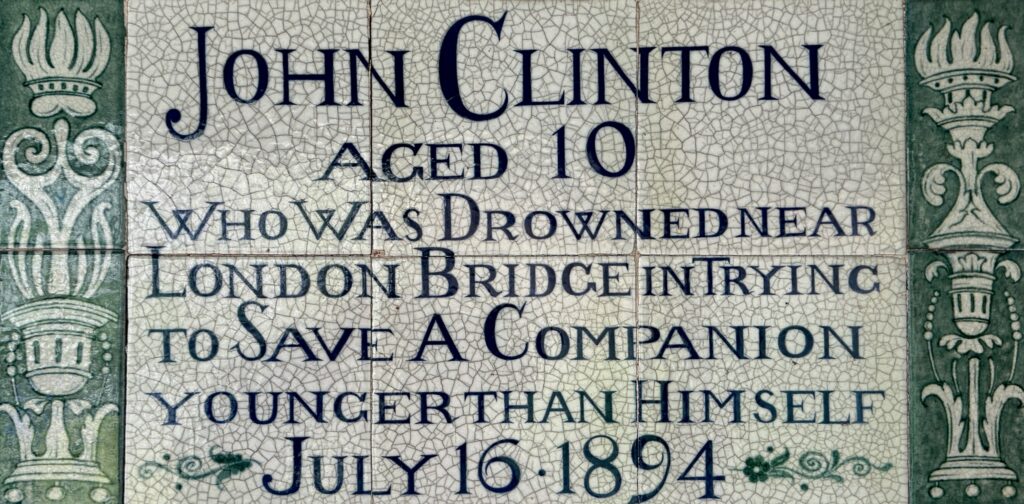
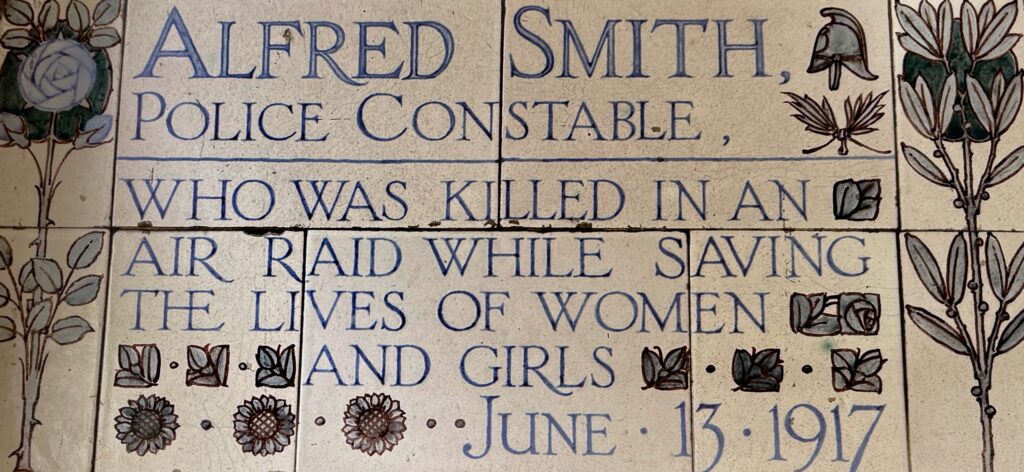
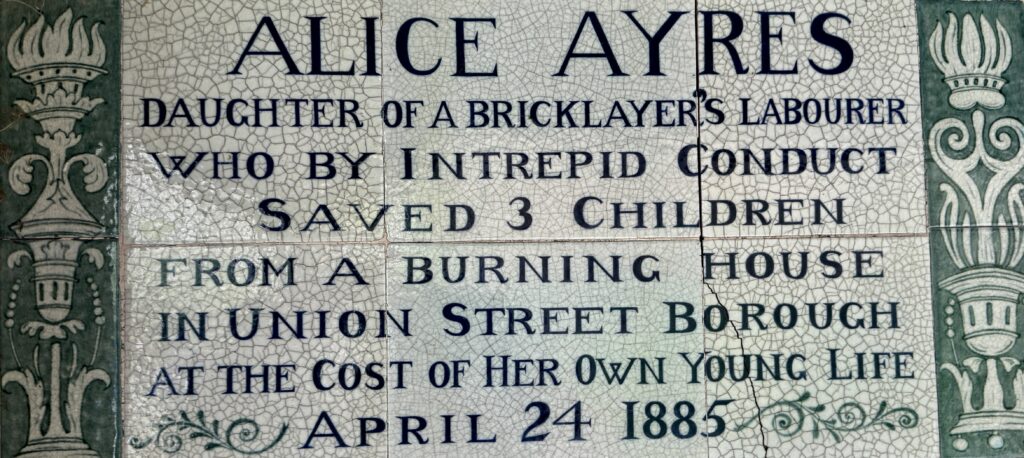
If you want to find out more about them, their stories are told in my book Courage, Crime and Charity in the City of London. Perfect for London lovers and only £10 for over 100 pages in full colour. You can buy it online here or in person at Daunt Books or the Guildhall Gallery shop.
There is a nice small statuette in the middle of the Memorial of Mr Watts himself that was installed in 1905, the year after he died. There was originally a plan to cover it with a protective grille but his widow refused and said the public should be trusted, and she was right …
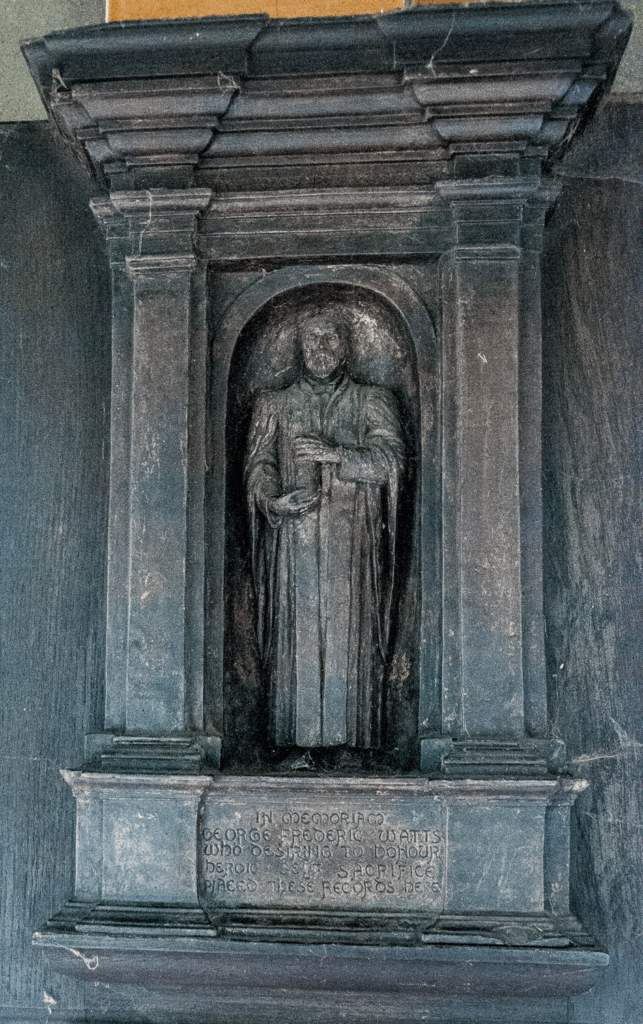
He holds a scroll on which is inscriber the word HEROES.
For the definitive life histories of the Watts Memorial heroes treat yourself to a copy of John Price’s brilliant book Heroes of Postman’s Park – Heroic Self-Sacrifice in Victorian London.
Many thanks also to Windsor Local History Group and London Walking Tours/Ford the fireman for much of my research material.
And now for some flowers.
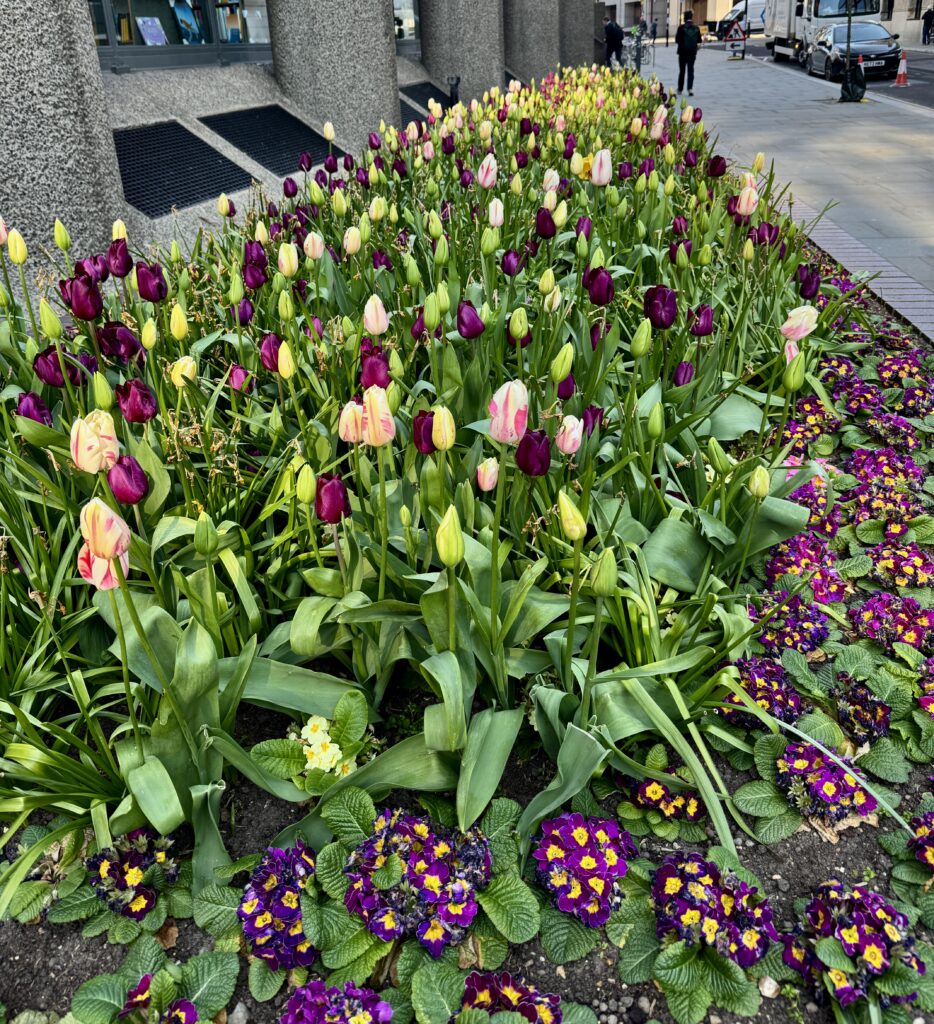
On Silk Street, now that the daffodils have gone over, the clever City gardeners have planted appropriately for the tulips to arrive with perfect timing …
Almost ready …

And open!

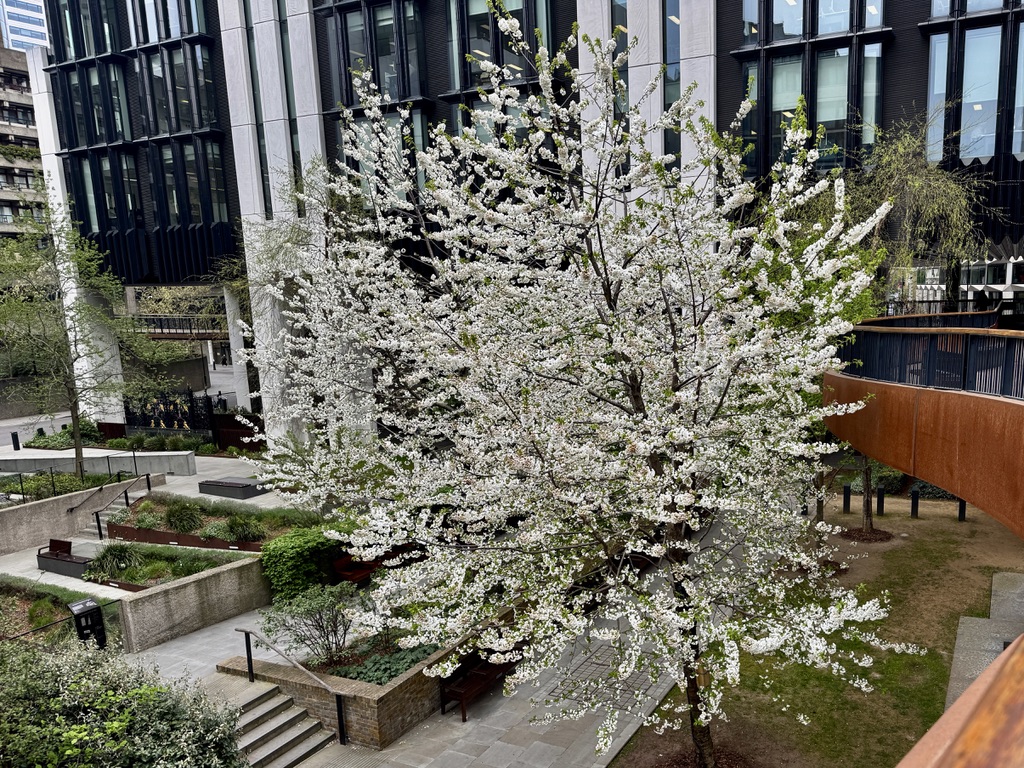
Cherry Blossom at London Wall Place …
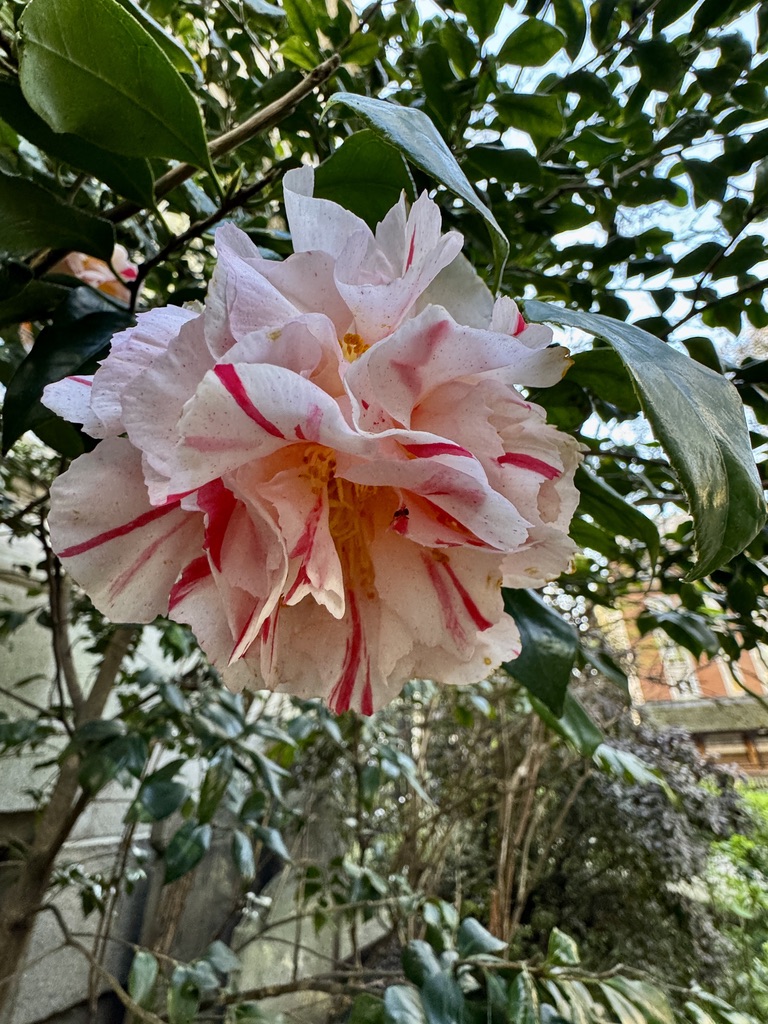
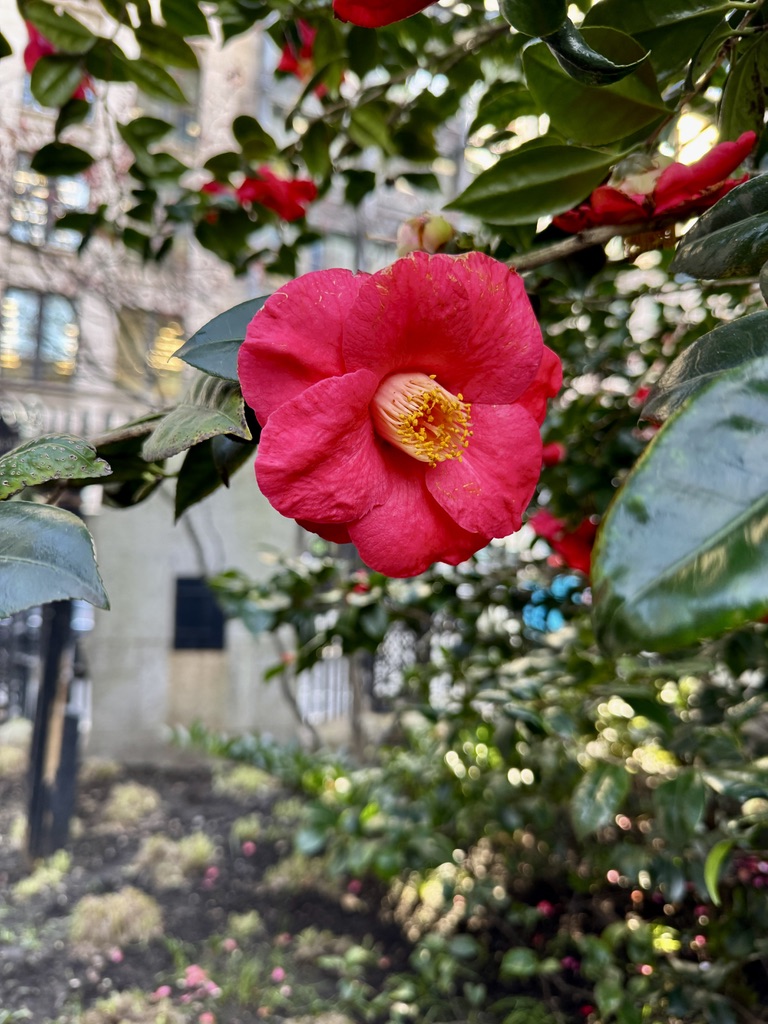
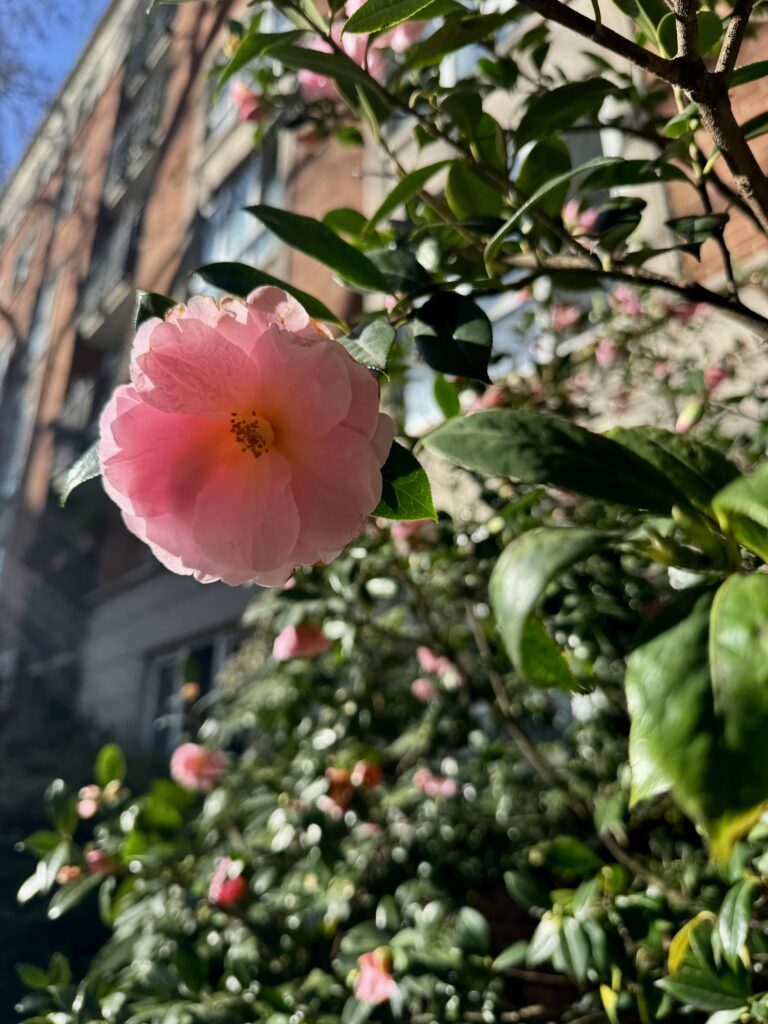
In Postman’s Park (I know I’ve shown some of these before but I like them a lot!) …
The wonderful Handkerchief Tree …
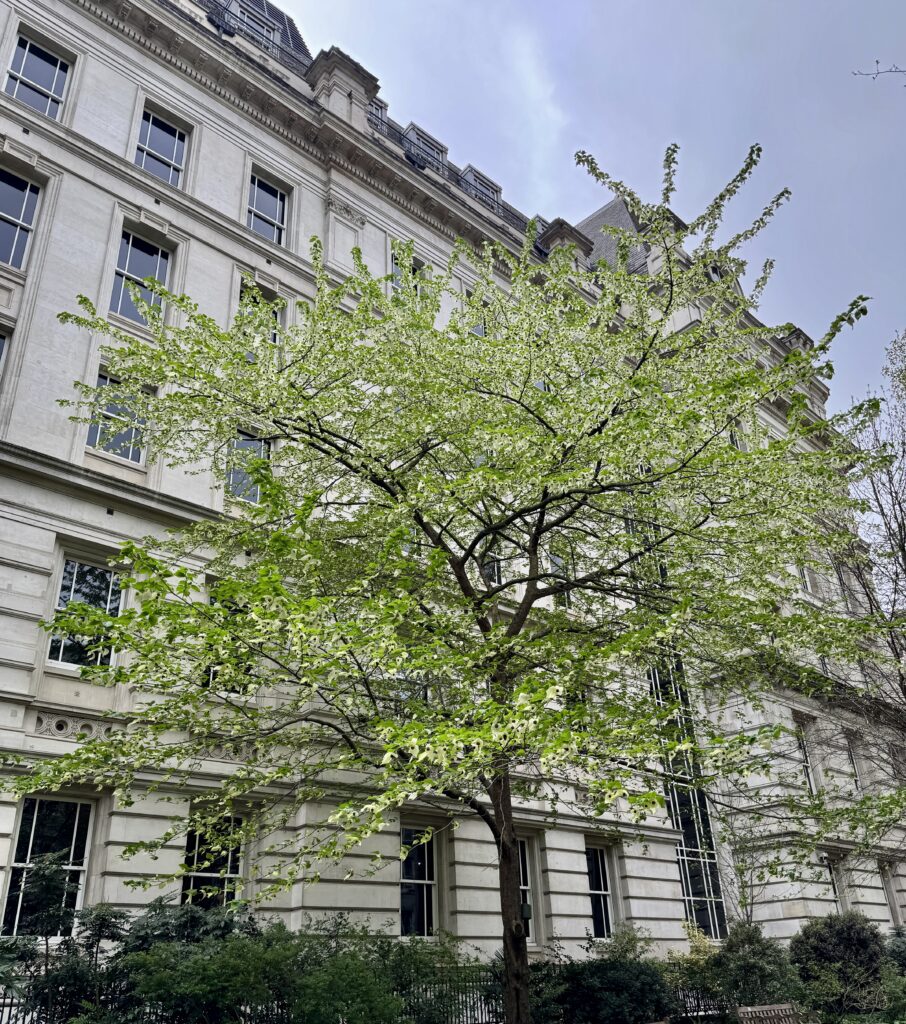
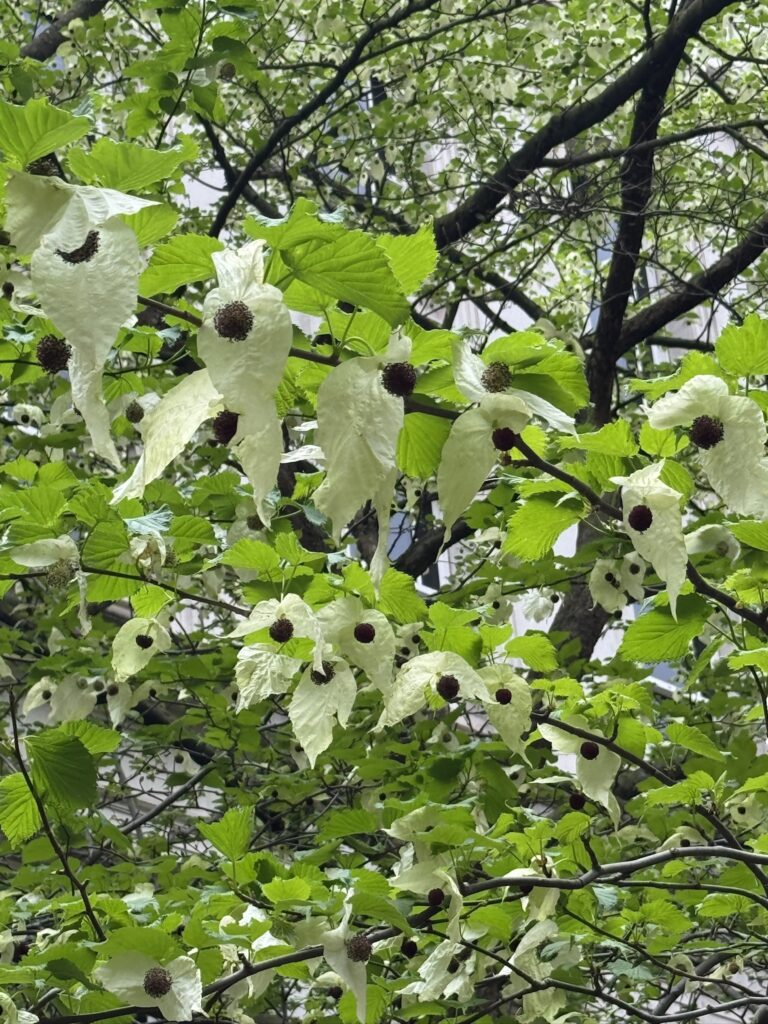
There’s a lovely article about it here, highly recommended.
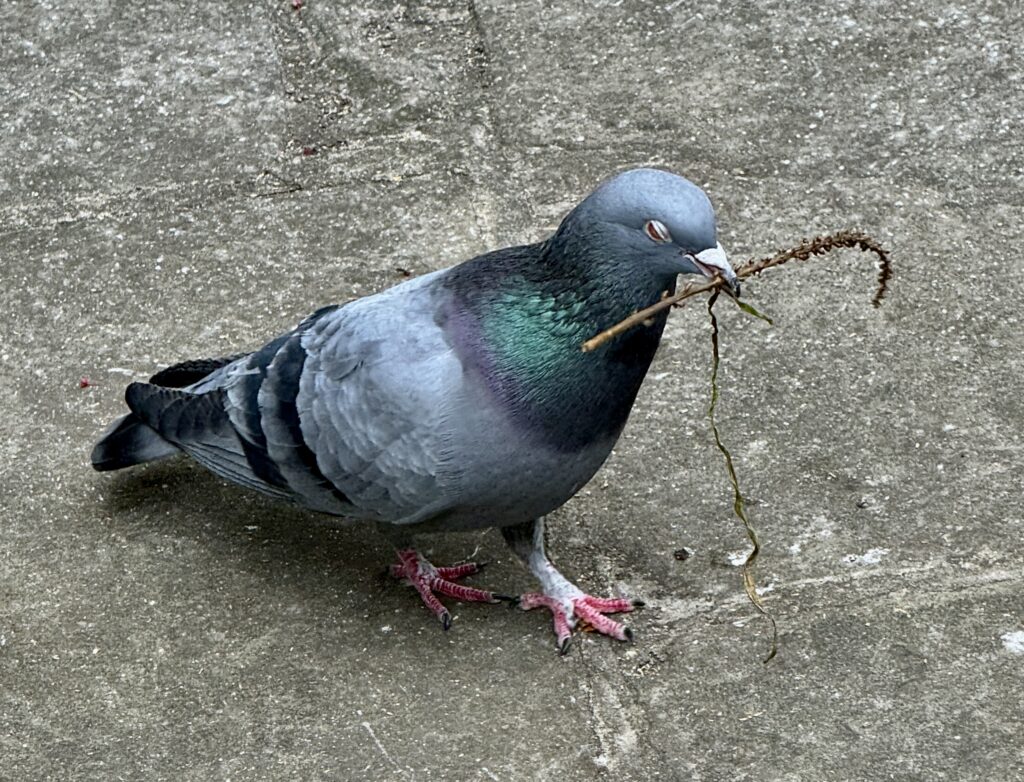
On my walks of an evening I have occasional pigeon encounters …
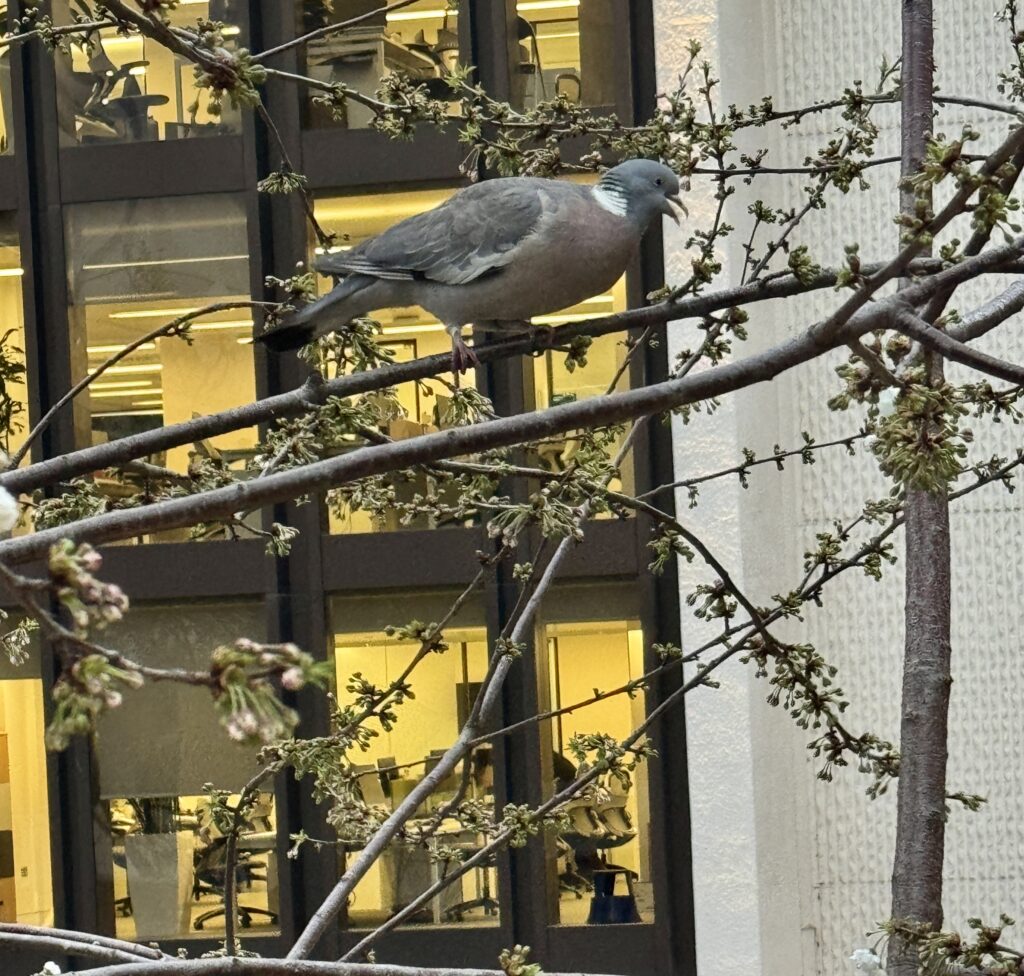
I think this chap has an ongoing nest-building project …
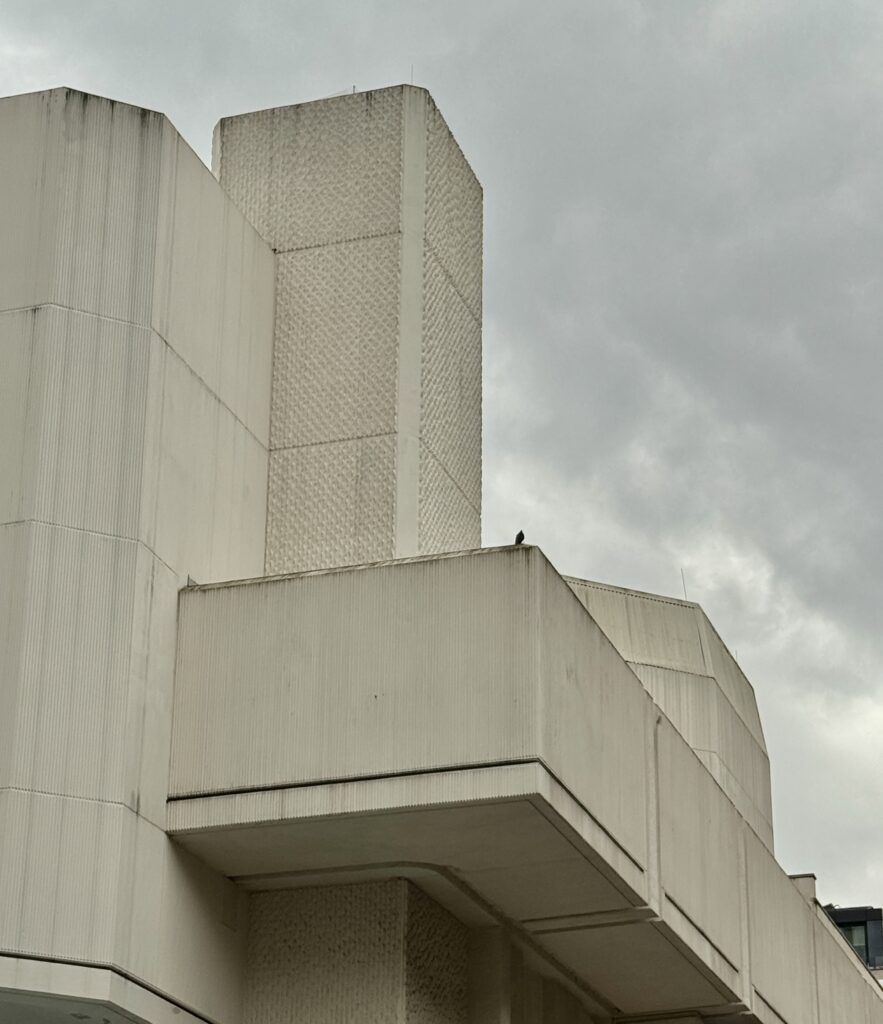
I call this one ‘the sentinel’ …
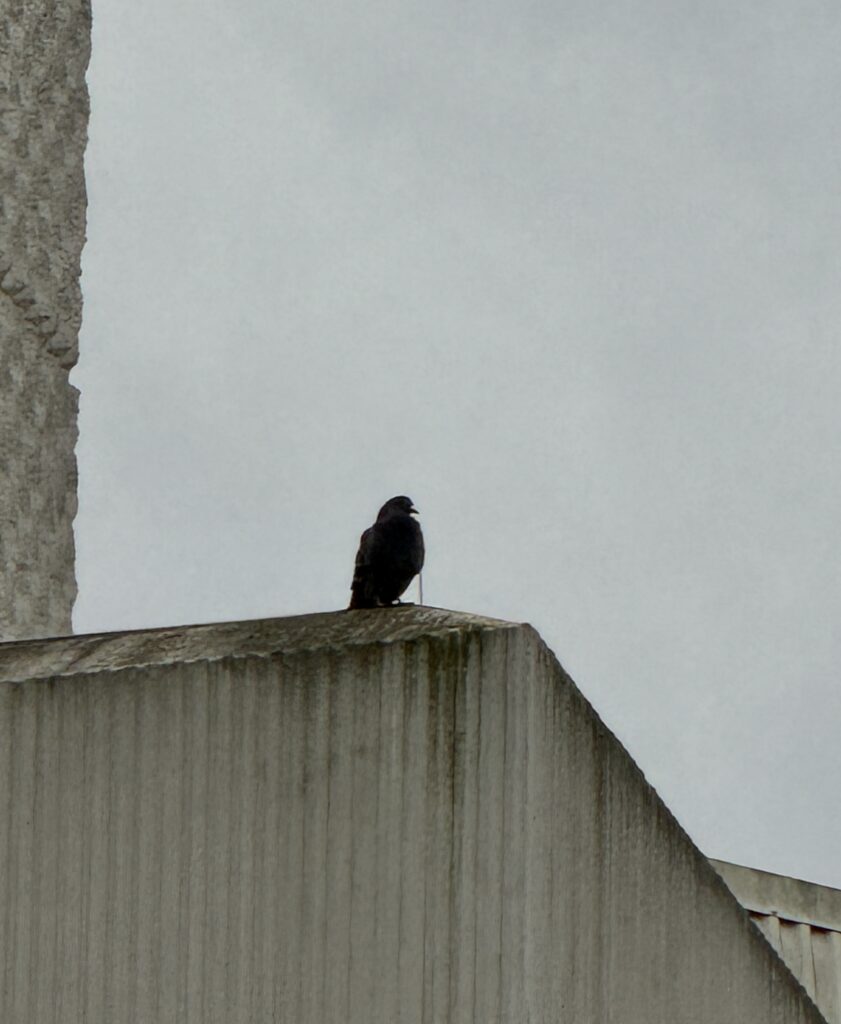
Lonely look-out duty …

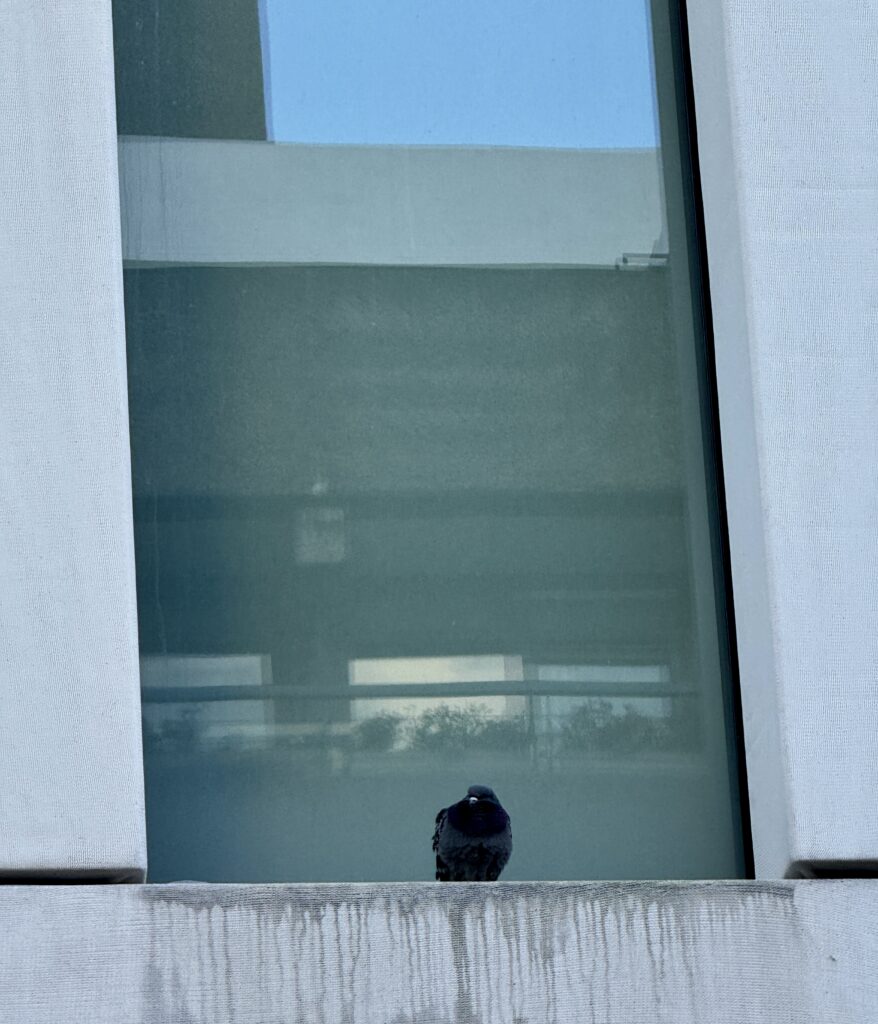
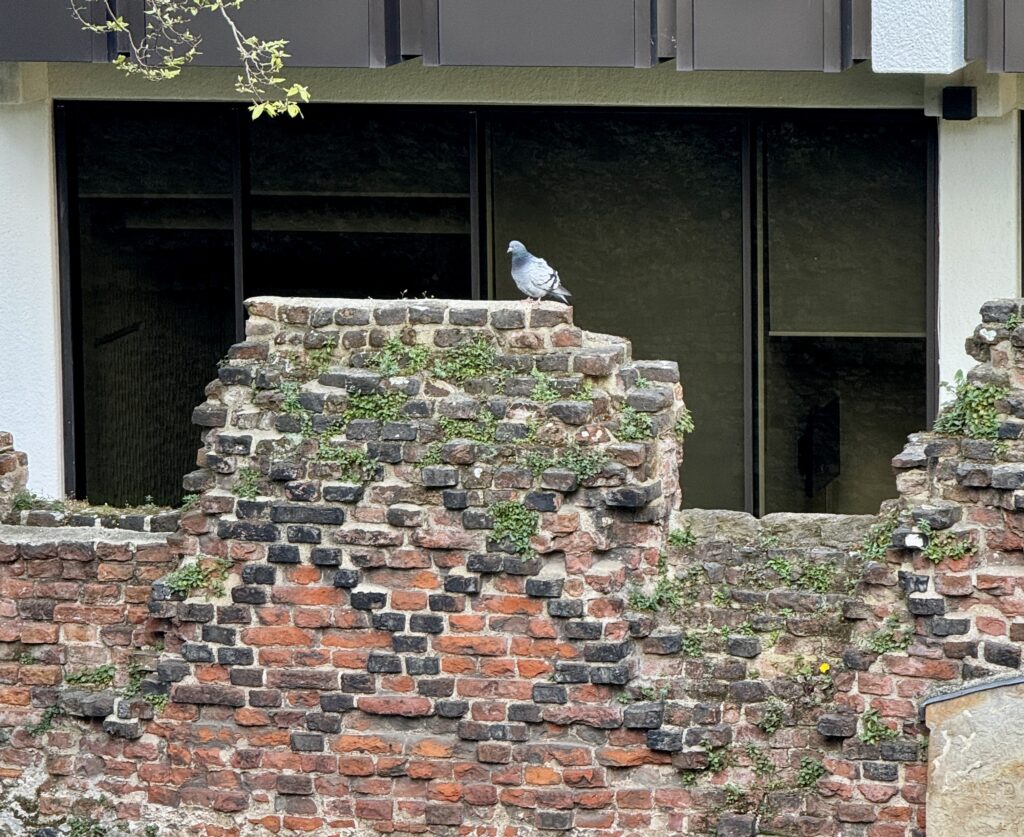
Patrolling the medieval wall …
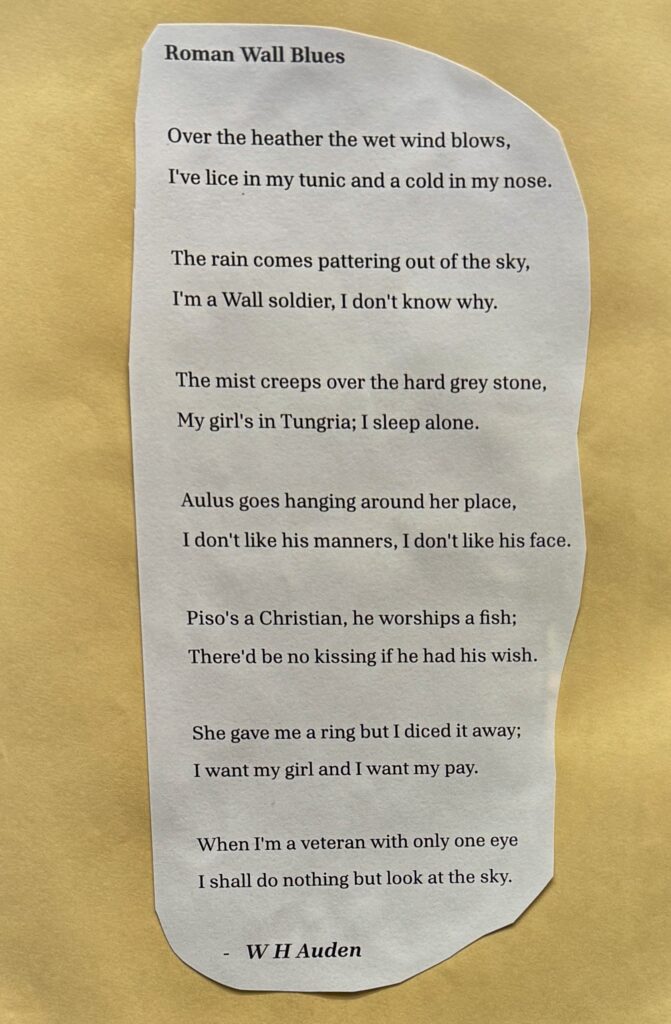
I didn’t know that W H Auden had written a poem about a Roman soldier on duty on the original Roman Wall. Here it is, I love it …
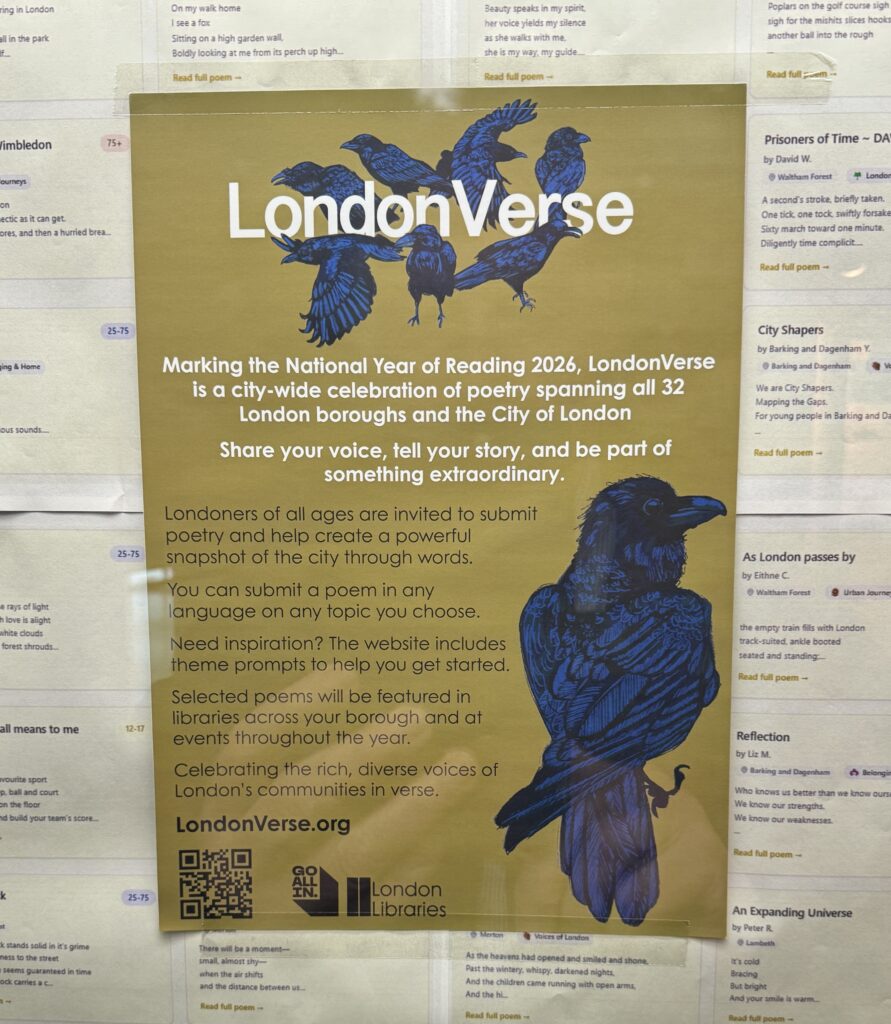
You’ll find it on display in the Barbican Library along with details of the London Verse project …
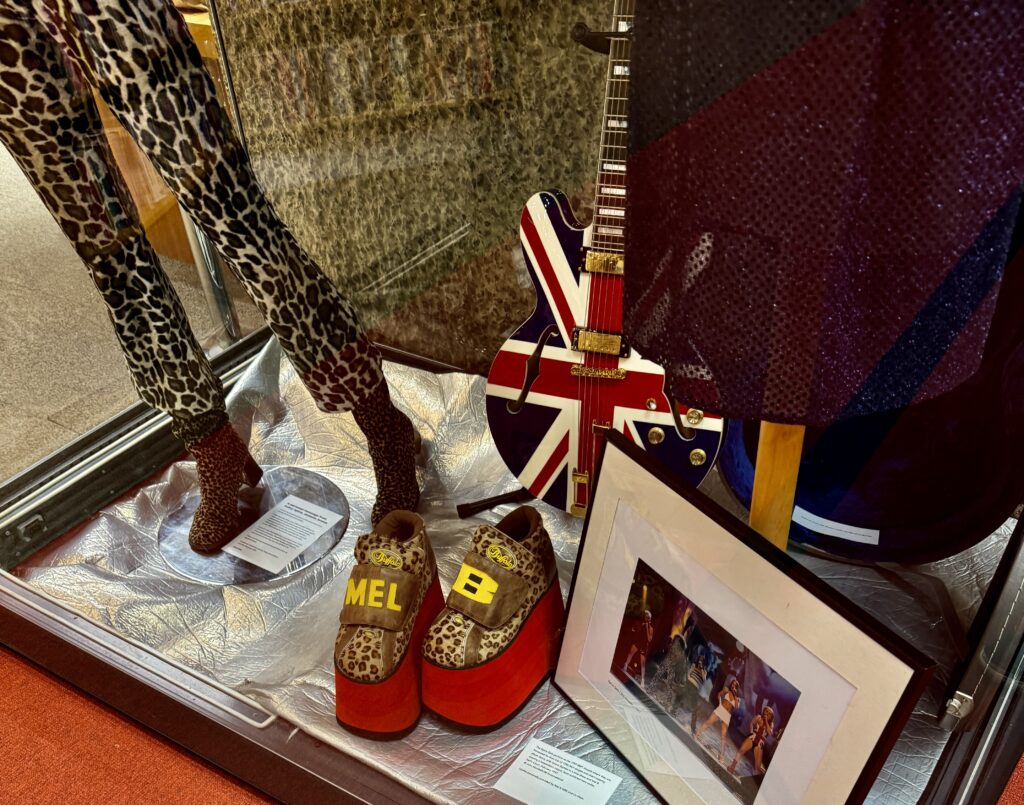
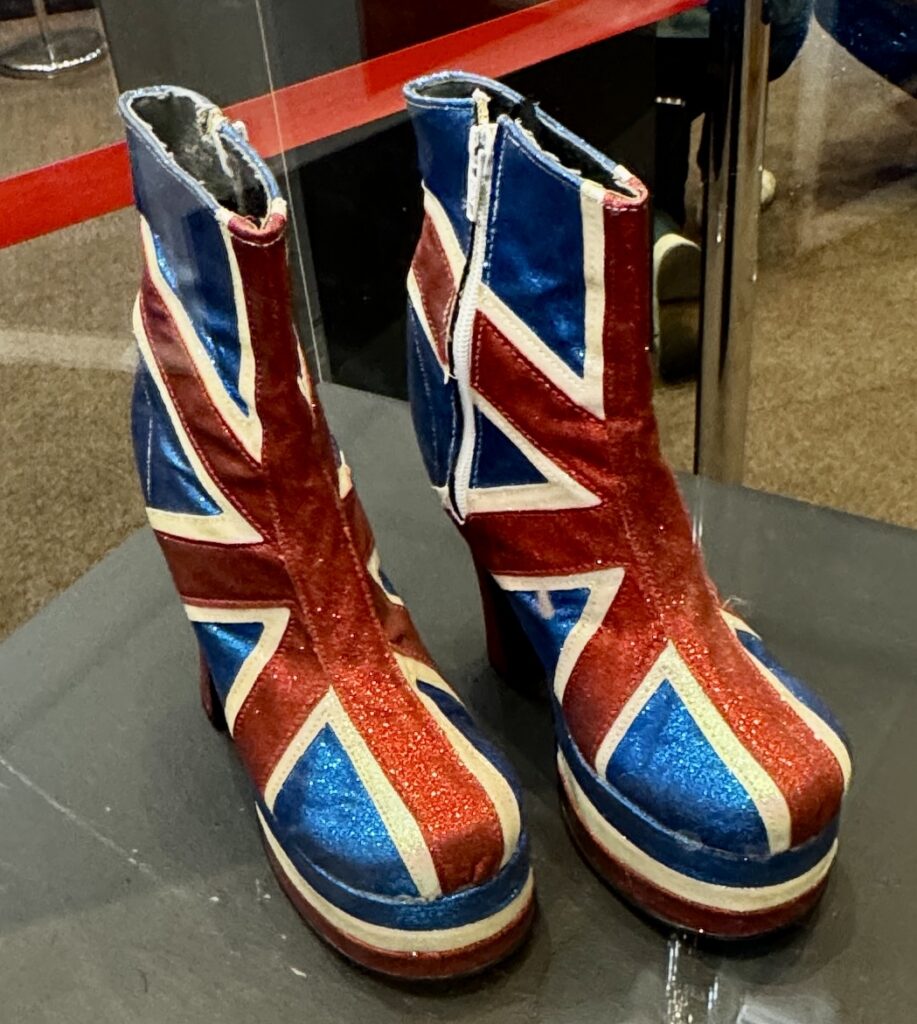
And, finally, these interesting items of footwear will feature in next week’s blog …
If you would like to follow me on Instagram here is the link …