Walking the City of London

Category: Quirky Page 23 of 26

Fun and Miscellany – my 100th blog!

Thank you so much for subscribing to my little publication – especially those of you who have been with me since the very beginning almost two years ago.

For the first anniversary I included things that I had come across that had made me smile and I want to do that again this week. I want as well, however, to include a few items that I thought were interesting but didn’t fit under any broad heading.

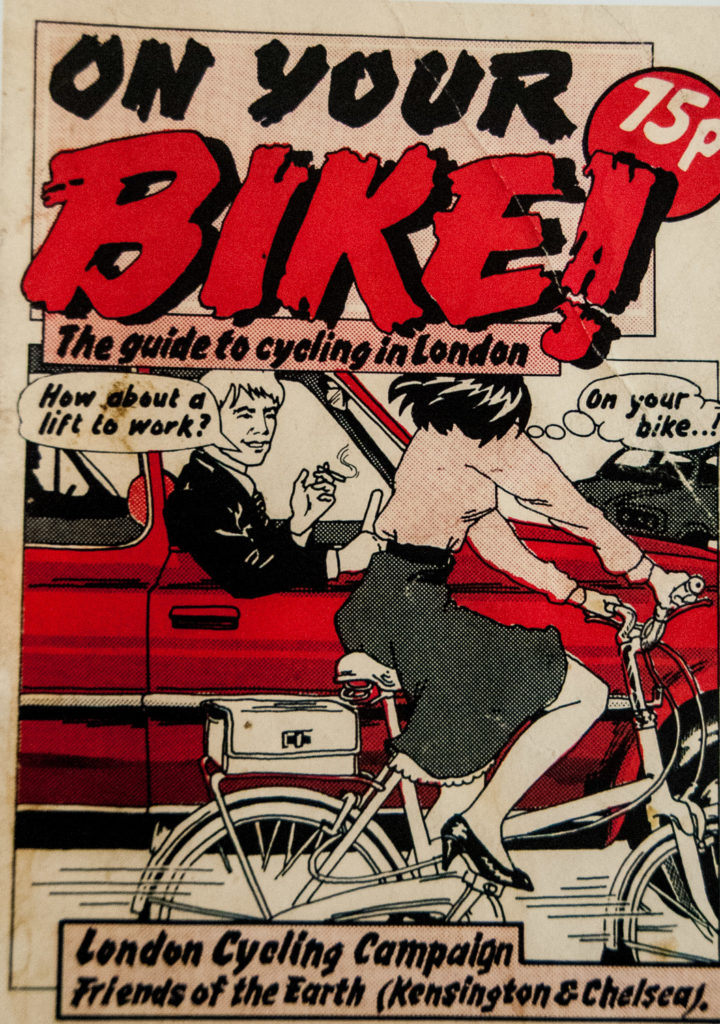
One of the great pleasures of doing research is the occasional joy of serendipity. I recently discovered that encouraging people to cycle to work is nothing new and magazines were being published almost 40 years ago which included maps to help cyclists navigate.

I came across this persuasive cover of On your bike! magazine from 1982 …

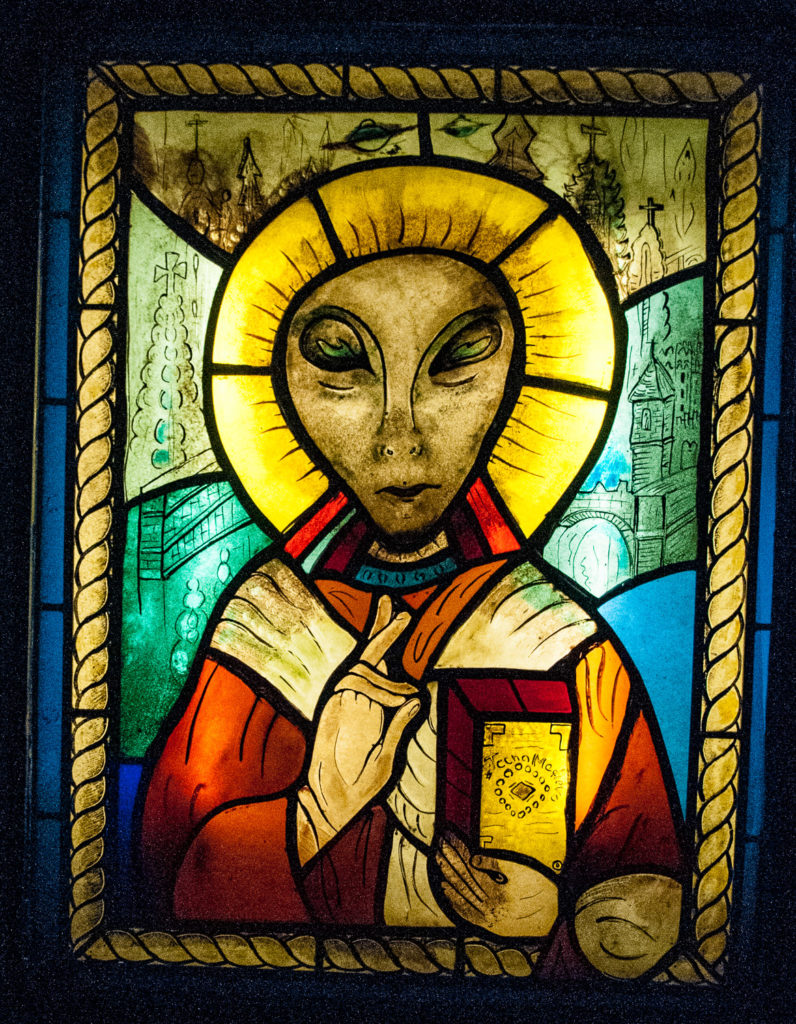
And now something a bit more surreal, a piece of art that was on display at the Guildhall art Gallery until a few weeks ago …

Marcello Pecchioli’s eye-catching stained glass Alien Priest was part of the Gallery’s ‘Visionary Artists’ exhibition. I like the flying saucers in the background.

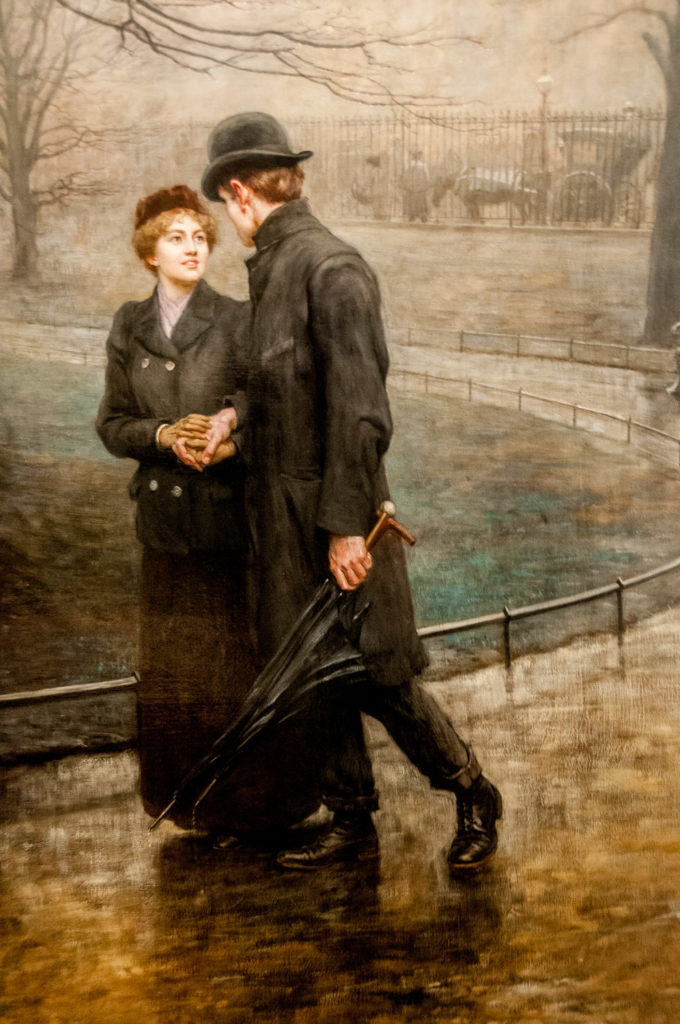
Next up is this picture in the Gallery entitled Garden of Eden by Hugh Goldwin Riviere (1860-1956). Painted in 1901, it depicts a young man and girl walking in a misty, wet park with a horse-drawn cab rank in the background.

I like it because to me it’s one of those pictures that immediately gets you making up a back story to the characters. Surely this is an assignation – a secret lovers meeting, he clasping her hand and she gazing lovingly into his face. Then it struck me: Garden of Eden! A place of dangerous temptation and banishment!

Apparently guides point out that this picture is actually about a mismatch between a wealthy woman who has fallen for a man much below her station: note his clumpy shoes, lack of gloves and his rolled up trouser bottoms. Also the way he’s carrying not one but two umbrellas, intertwined like the two lovers. There are tiny raindrops hanging from the black branches. Surely they represent tears to come? Or am I getting completely carried away? Another commentator has said that she is simply a smartly dressed maidservant on her day off, out walking with her beau.

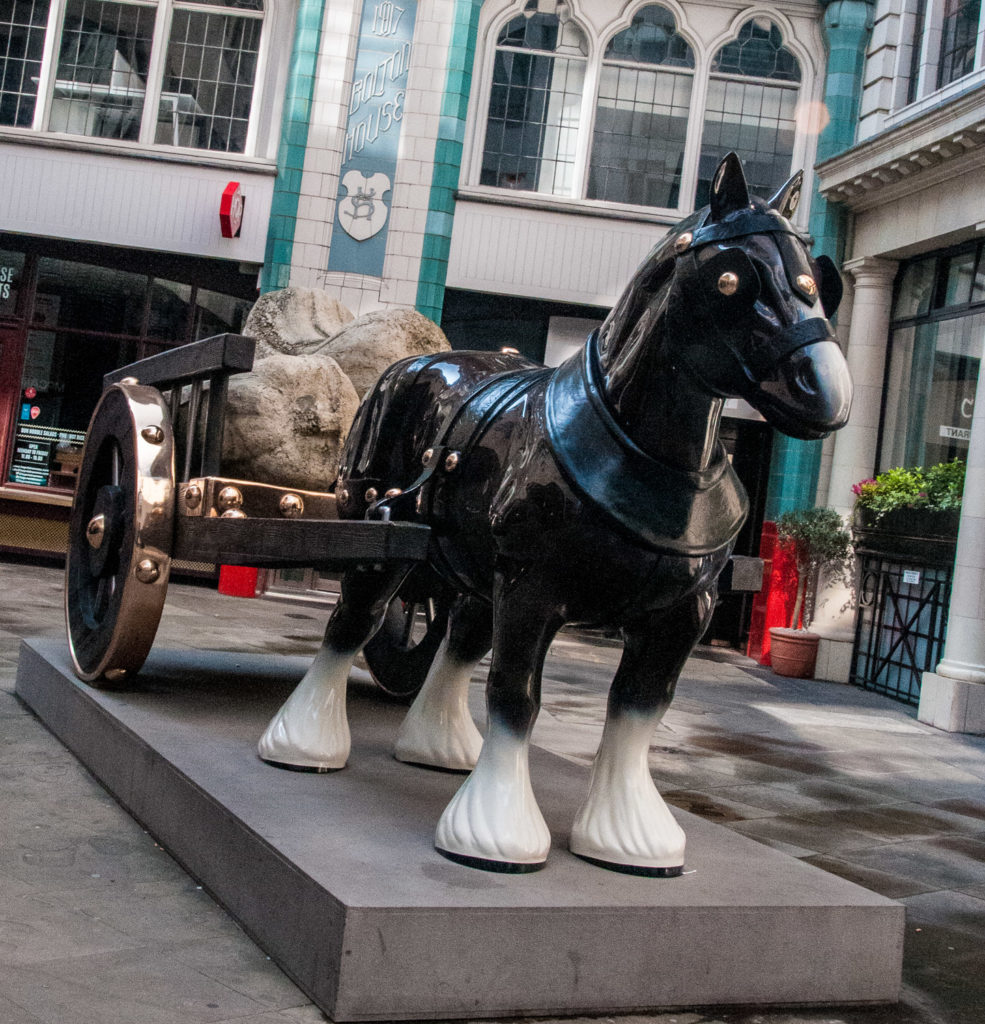
In Cullum Street I was stopped in my tracks by this stunning sculpture by Sarah Lucas entitled Perceval

Part of the ‘Sculpture in the City’ initiative – EC3M 7JJ

It’s a large-scale replica of a traditional china ornament of the kind that took pride of place on many British mantelpieces forty years ago. Perceval was a knight of the Round Table and apparently there is fertility symbolism in the giant concrete marrows on the cart. You can read more about this work here.

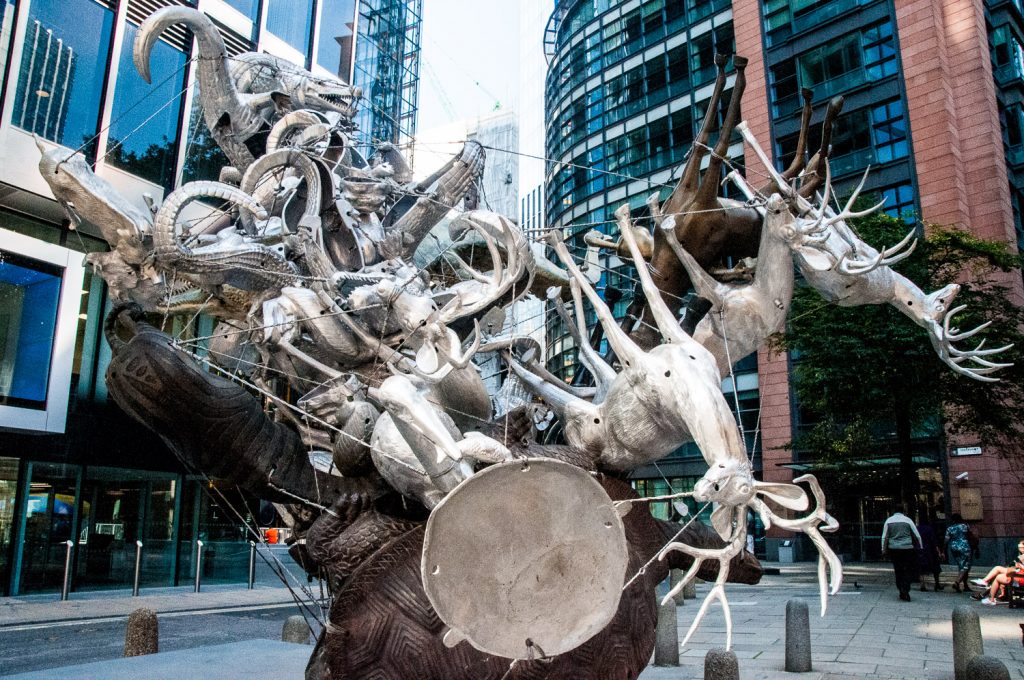
Also for us to admire as part of the Sculpture in the City project is this example entitled Crocodylius Philodendrus by Nancy Rubins at 1 Undershaft (EC3A 6HX). I love it because it’s completely bonkers …

See how many animals you can spot

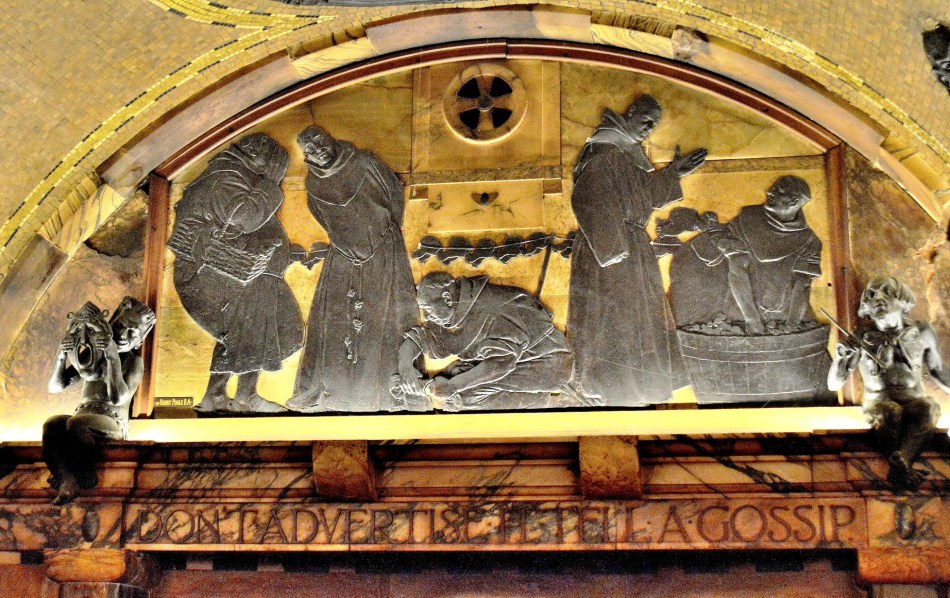
I keep meaning to spend some time in the Blackfriar pub on Queen Victoria Street recording the brilliant brasses there (EC4V 4EG) but I still haven’t got around to it. So in the meantime, here is the advice on one of them …

‘Don‘t advertise – tell a gossip

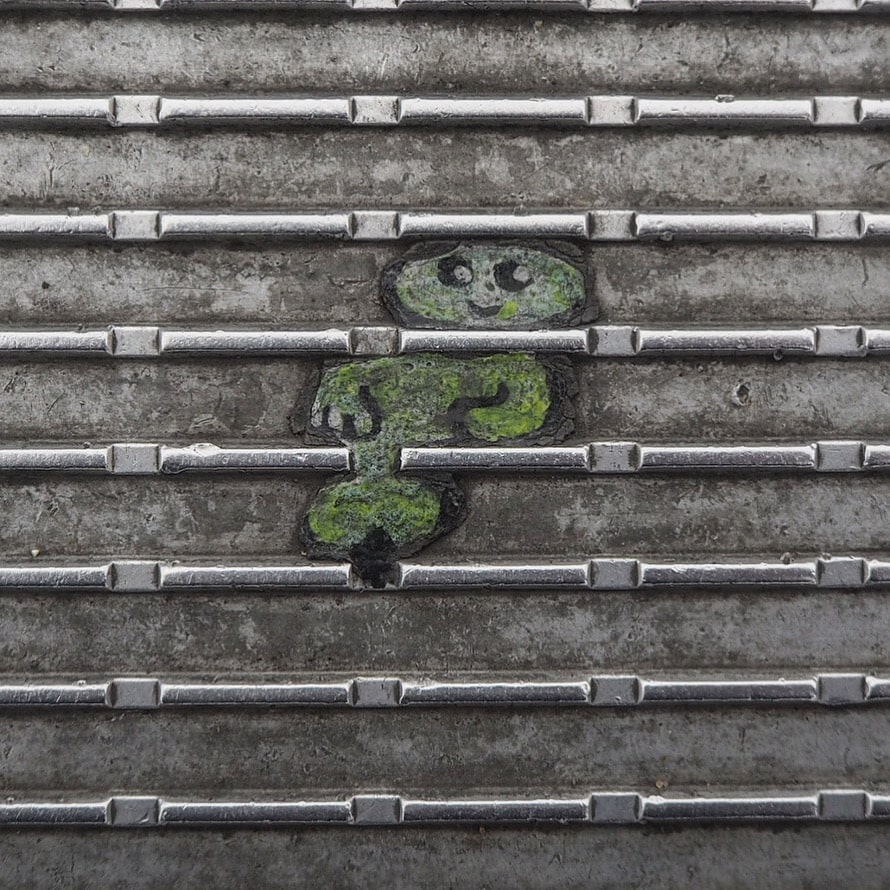
Don’t forget to look down when crossing the Millennium (‘Wobbly’) Bridge and see if you can spot some of the witty work by the artist Ben Wilson. He has painstakingly painted literally dozens of pieces of discarded chewing gum …

I have written more about him in my earlier blog Tales from City Bridges.

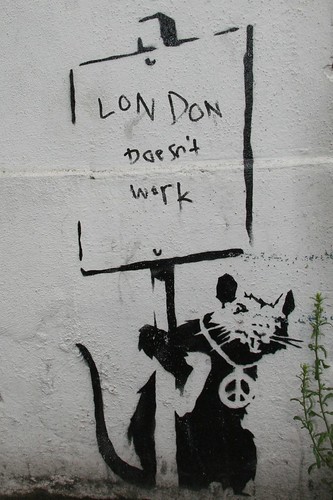
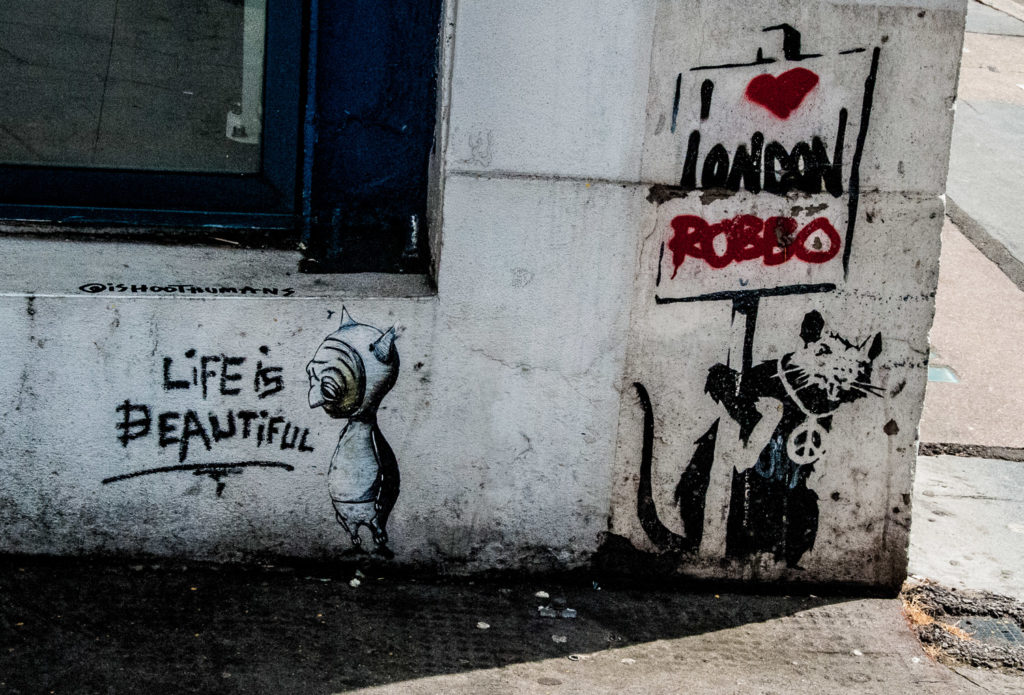
There is a Banksy rat painting in Chiswell Street that has been altered by another artist. Banksy’s piece originally depicted a stencilled ghetto rat holding a placard which read ‘London doesn’t work’ …

Photograph taken by ‘Noodlefish’ 26 August 2006

However, Robbo, Banksy’s rival graffiti artist, reworked the placard by adding his name in red letters. Robbo was known for leaving his mark on many Banksy pieces but I read in the interesting Londonist blog that Robbo died in 2014, bringing the rivalry to an end.

I haven’t been able to find out more about the strange ‘Life is beautiful’ figure next to it.

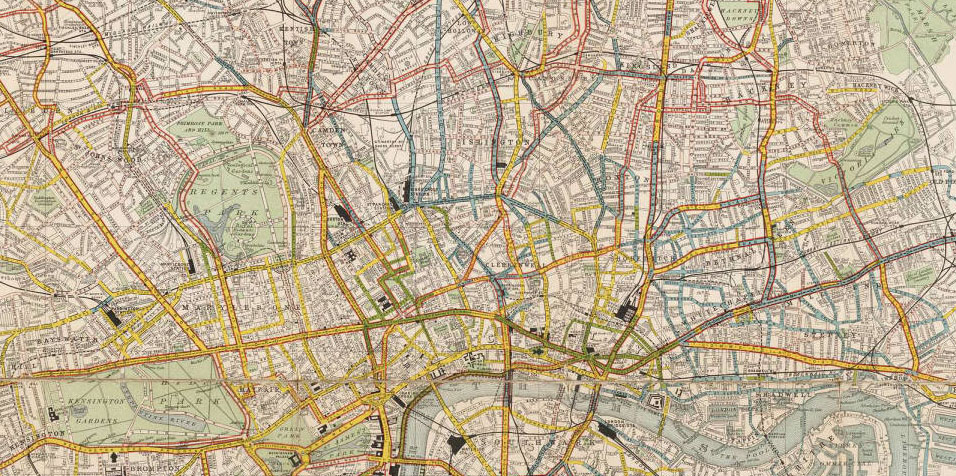
It is hard to imagine now but many of London’s roads were once paved with wood. However a map of London by Bartholomew’s in 1928 shows clearly the expansive reach of the wooden block road paving method. In the map excerpt below, the yellow roads are all paved with wooden blocks …

Read more in the excellent blog ‘Ian Visits’

Many were destroyed in wartime bombing and many also dug up by local residents for burning as heating. Since they were impregnated with tar they burnt furiously and, of course, made a major contribution to London’s filthy air.

For some people this was an entrepreneurial opportunity. This is Alan Sugar being interviewed for the Daily Express in 2010 about when he noticed old blocks being uncovered when roads were being resurfaced …

The workers showed me the blocks, which were impregnated with tar, and they chucked a couple onto the fire – they burned like a rocket. Bingo! It occurred to me that these discarded wooden blocks could be made into fire-lighting sticks. I could cut them up into bundles of sticks and flog them.

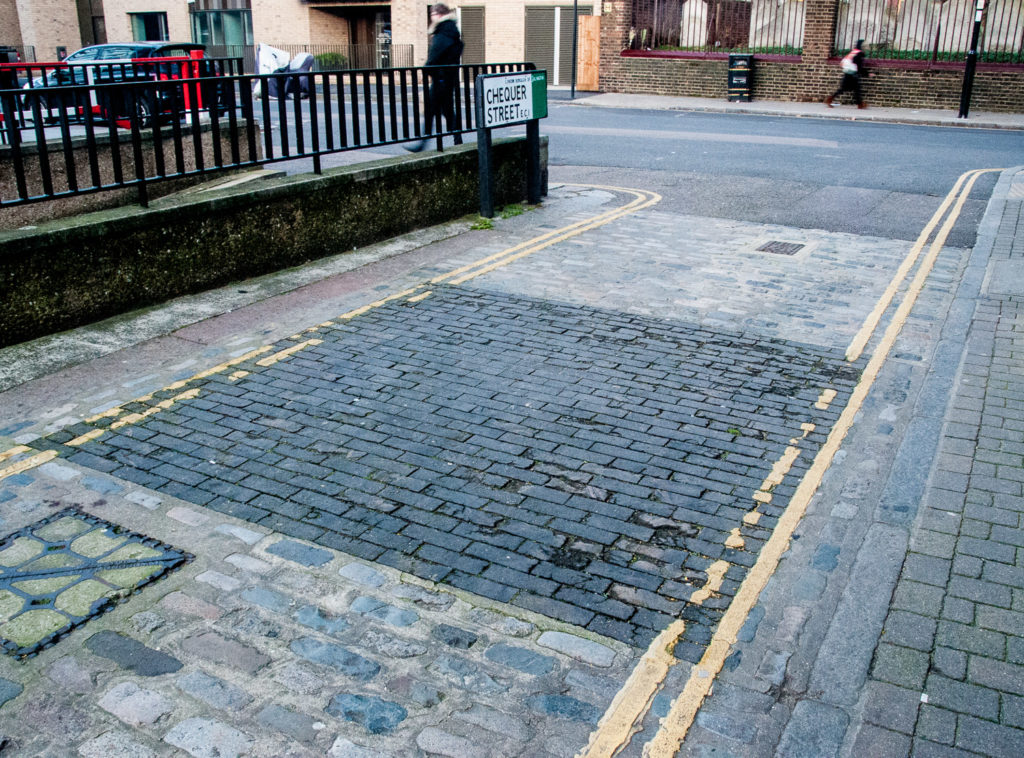
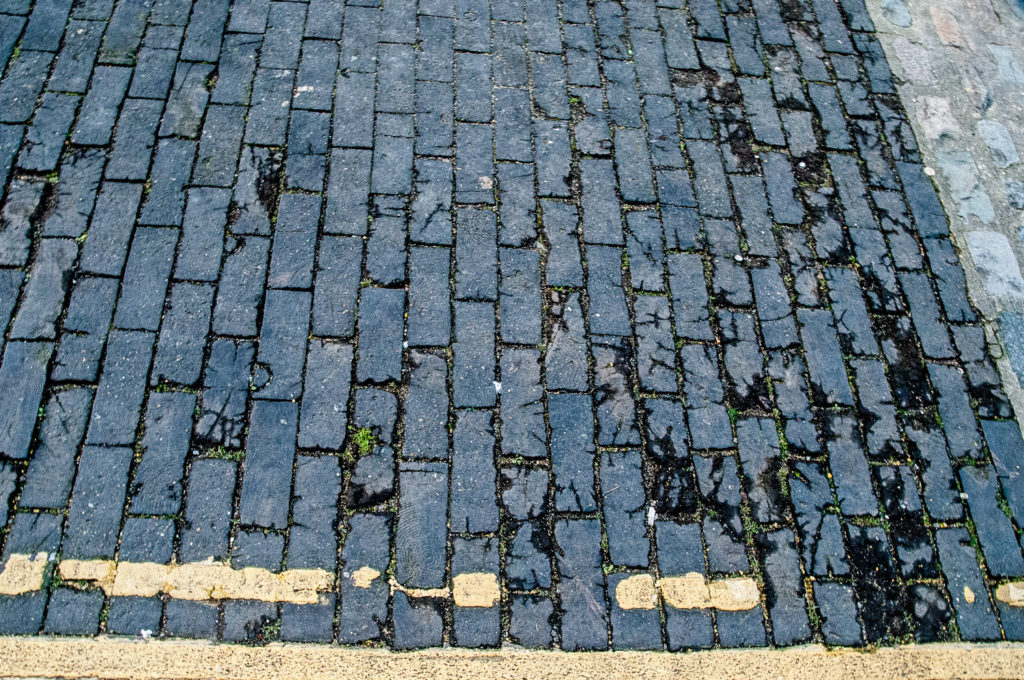
And you can still see a section of wooden road today at the junction of Chequer Street and Bunhill Row EC1 …

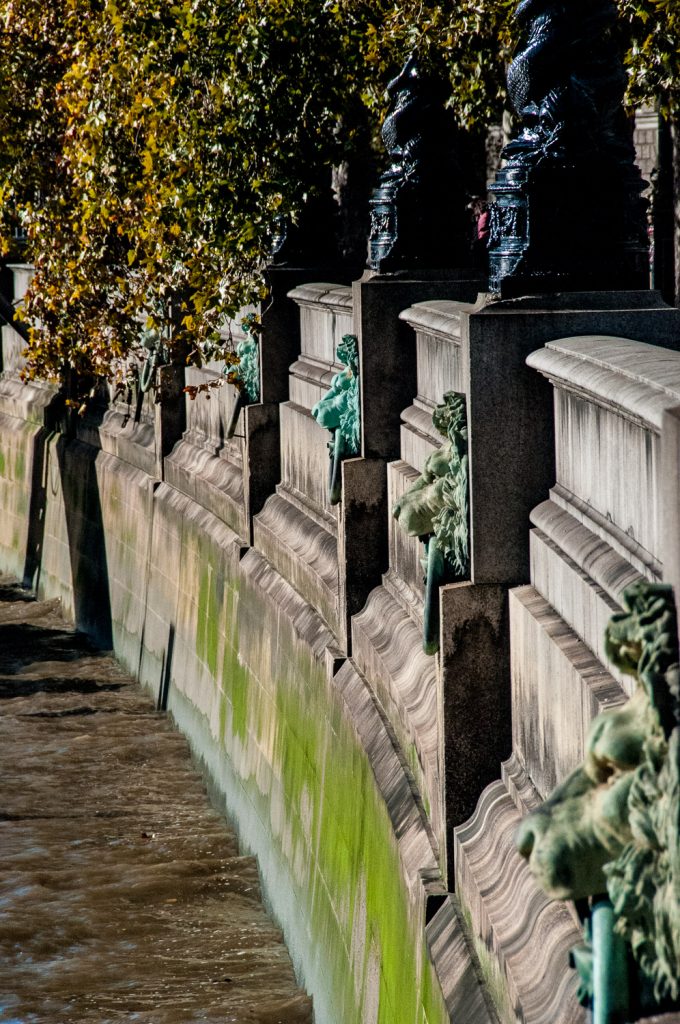
Looking over the wall on the Embankment one day I noticed these lions heads with mooring rings …

They were sculpted by Timothy Butler for Bazalgette’s great sewage works in 1868-70 and it is said that, if the lions drink, London will flood.

And to end with, two more items with watery themes that make me smile.

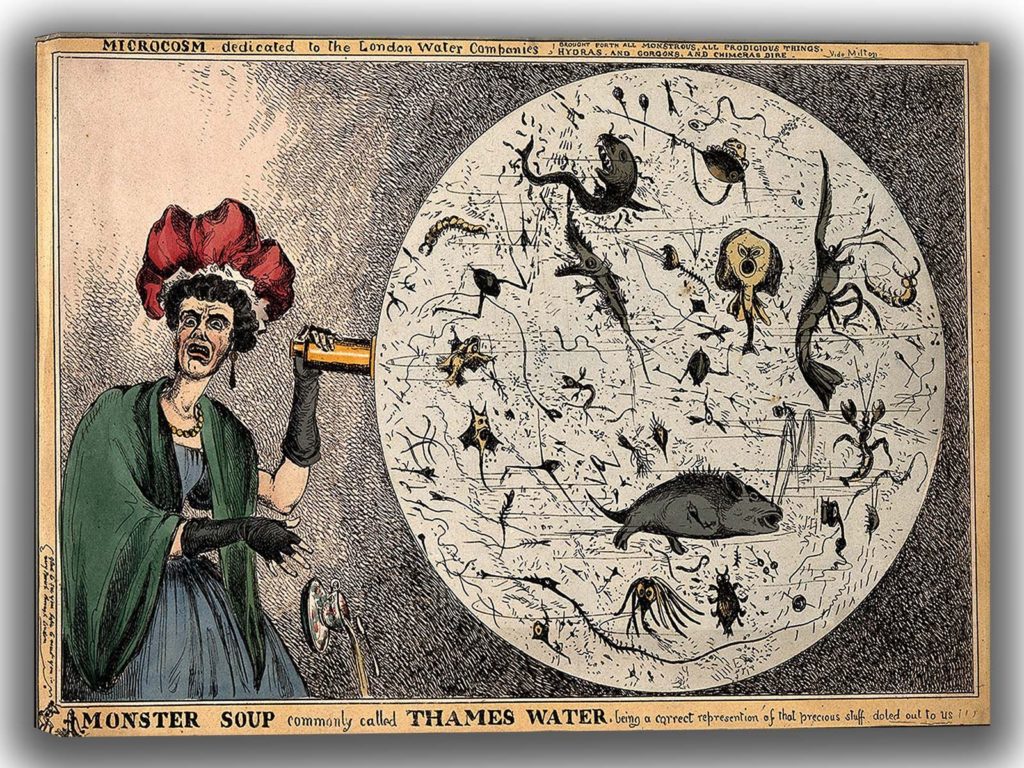
Firstly, a famous satire on the quality of the Metropolitan water supply in 1828. An elderly lady displays her horror and shock on looking at a speck of Thames water through a microscope …

Copyright: British museum

It’s by the artist and caricaturist William Heath (1795-1840) and is entitled Monster Soup commonly called Thames Water being a correct representation of that precious stuff doled out to us! You can read more about the efforts made to get fresh water to Londoners in my blog Philanthropic Fountains.

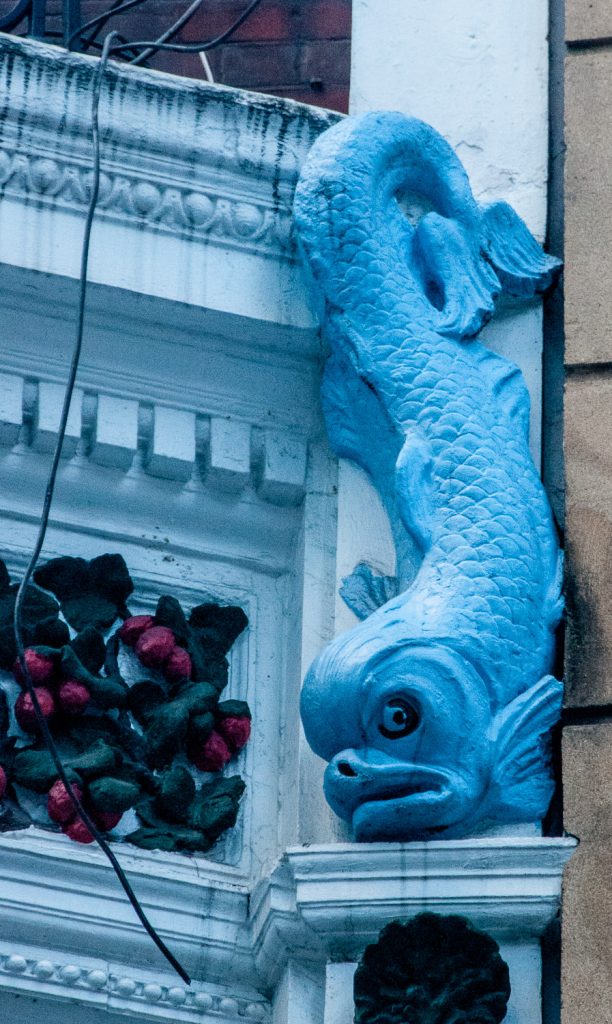
And finally I always say hello to this miserable dolphin on The Ship pub in Hart Street (EC3R 7NB). I also tell him to cheer up – the pub is a listed building and therefore so is he …

Thanks again for subscribing!

Tales from City Bridges

Next time you are walking across the Millennium Bridge (aka the Wobbly Bridge) slow your pace and look down whilst trying to avoid being trampled by the crowds. You will soon be rewarded by seeing some tiny pictures …

There are literally hundreds of them, painted on discarded chewing gum by the artist Ben Wilson …

The artist at work – picture copyright the Look up London blog

‘When a person throws chewing gum, it’s a thoughtless action. I’m turning that around. People think they don’t have an effect. But all the people that chew gum and throw it on the street, they created that. Once painted, it suddenly takes on new meaning and has been given the kind of worth that would otherwise be unthinkable’

Ben Wilson talking to Human Nature magazine

You can read the interview here and see many more pictures here. He’s never been arrested because he’s painting chewing gum not the Bridge. Smart!

Whilst on the subject of quirky bridge features, have a look at this picture I took as I walked across Tower Bridge last weekend …

Is that a lamp post without a lamp? Here’s a view from the other side …

It’s a cast iron chimney that used to be connected to a coal fire in the Royal Fusiliers room under the Bridge, helping them to keep warm whilst on guard duty.

The room has now been enveloped by a restaurant, appropriately named The Sergeant’s Mess

Now to one of my favourite churches, St Magnus-the-Martyr on Lower Thames Street (EC3R 6DN).

It’s believed that the Roman’s first built a crossing over the Thames around here in AD 50. Eventually there were wharves nearby and the churchyard holds a piece of one …

This is not, however, the best feature of the yard.

Take a look at this picture of the ‘old’ Medieval London Bridge where St Magnus can be seen in the top left hand corner …

A plaque as you enter from the street explains why this area is so unique …

For a treat go inside the church where there is a model of the Bridge on display …

It’s enhanced by dozens of little figures going about their business as well as what looks like a visit by the King on horseback …

These pictures are from the London Walking Tours blog.

From 1763 until the old bridge was demolished in 1831, this archway was the main pedestrian entrance onto the bridge. As I walk through it I can’t help thinking about the thousands and thousands who preceded me. Were they heading into the City to make their fortune perhaps? Or maybe leaving in bitter disappointment …

As a further surprise, some of the stones from the old Medieval bridge’s northernmost arch remain in the courtyard …

And finally, here are a few things to look out for as you cross Blackfriars Bridge.

There are these columns rising out of the river …

In 1862-64 a bridge was built to accommodate four trains at one time. John Wolfe-Barry and H M Brunel built a second bridge to increase the number of trains coming into St Paul’s. The columns are the remains of the original bridge, which was removed in 1985 as it was deemed too weak for modern trains.

Note the pulpit-shaped tops of the bridge pillars. They reference the original monastery of the Black Friars or Dominican monks, evicted by Henry VIII during the dissolution of the monasteries in 1538. I have written about the Medieval monasteries in an earlier blog which you can find here.

On the south side is the beautifully painted coat of arms of the London Chatham & Dover Railway …

Note the white horse rampant, symbol of Kent, and the county motto ‘Invicta’ meaning ‘undefeated’ or ‘unconquered’.

And now some features not everyone notices. Peer over the parapet and on either side you will see some birds on the capitals of the bridge supports, meticulously carved in Portland stone by J.B.Philip.

The birds on the west side are fresh water birds and plants to be found on the upper reaches of the river …

And on the east side, sea birds and seaweeds to be found at the mouth of the Thames …

On the north side of the bridge you will see one of my favourite water fountains, recently liberated from behind hoardings and nicely restored …

The pretty lady represents ‘Temperance’ and she originally stood outside the Royal Exchange.

The fountain was inaugurated by Samuel Gurney, MP, the Chairman of the Metropolitan Free Drinking Fountains Association, on 27 July 1861 and you can read more about him, and the Association, in my earlier blog Philanthropic Fountains.

Tales from the City’s courtyards and alleys

One evening in April 1718 a comedian named Bowen (described as a ‘hotheaded Irishman’) was drinking copiously in the Pope’s Head Tavern. Having worked himself into a ‘transport of envy and rage’ he sent for an actor, a comedian and competitor called Quin. As soon as Quin entered, Bowen planted his back against the door, drew his sword, and bade Quin draw his. Quin remonstrated in vain and at last drew in his own defence, trying to disarm his antagonist. Bowen eventually received a mortal wound, of which he died in three days, ‘confessing at last his folly and madness’. Quin was tried, and honourably acquitted. This story, from British History Online*, sent me searching for the scene of the affray – logic telling me that it must be in Pope’s Head Alley (EC3V 9AY).

Sadly the Tavern no longer exists and the alley has been shifted a little to the east from its original location.

It looks a bit sterile from its Cornhill entrance (it leads to Lombard Street) and I wasn’t going to bother to walk down it …

I am glad I did though, because first of all, looking up, I noticed this line of bees and bee hives …


Here is a close-up of one of them …

And then came across the Pope himself …

The bee symbol was traditionally associated with the Barberini family and, in particular, the 17th century Pope Urban VIII Barberini. I honestly don’t know if this is the reason for the bees but that’s my hypothesis.

Below the Pope’s head there is metal fence incorporating the galloping Lloyd’s Bank horse …

So the moral of this tale is – don’t judge an alley by its entrance.


I went on enthusiastically to explore more. I know it’s a cliche, but the phrase ‘stepping back in time’ really does come to mind with some of them.

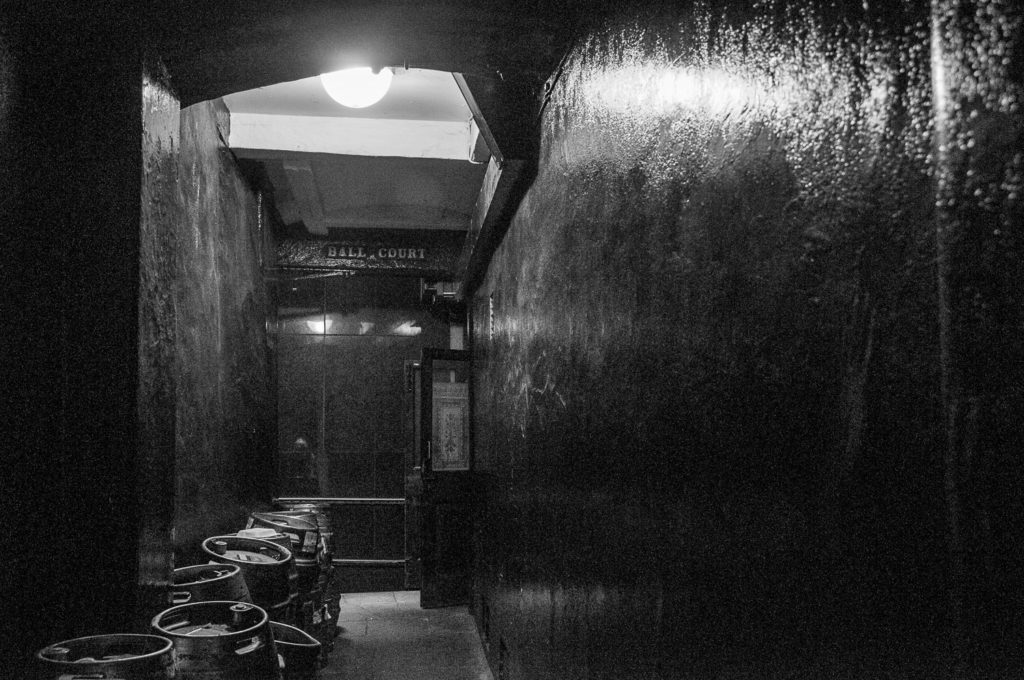
For example, here is a picture I took of Ball Court and a side entrance to Simpsons’s Tavern …

The Tavern’s full address is Ball Court, 38 1/2 Cornhill (EC3V 9DR). It still looks authentically 18th century …

On Cornhill you will find the entrance to Sun Court (EC3V 3NB) …

At the end of the alley the scene opens out considerably …

You are looking at the rear of the Merchant Taylors’ Hall with its lovely curved glass windows. There is a nicely carved rendition of the Merchant Taylors’ coat of arms …

Here is the full colour version …

The motto is a quotation from Gaius Sallustius Crispus: ‘Concordia parvae res crescunt, discordia maxumae dilabuntur‘ : with harmony small things grow, while with discord the mightiest are ruined.

Further along Cornhill another nice surprise awaits you in White Lion Court (EC4V 3NP) …

The gated entrance doesn’t look terribly promising

Once inside you find yourself facing this stunning four-storey house, said to date from 1767 …

Probably originally the home of a wealthy merchant, it was once the offices of Lloyd’s Register of Shipping.

On the wall is another emblem of the Merchant Taylors’ crest …

And a nice example of the Parish Boundary mark for St Peter Cornhill …

I hope you have enjoyed this short tour through some of the City’s courts and alleys. There are many more to visit and I shall cover them in a future blog.

*Incidentally, there are a number of versions of the fight between Quin and Bowen and not all of them coincide with the British History Online account. The fullest I have found appears in the book The Life of Mr James Quin, Comedian, from his commencing Actor to his retreat to Bath. It was published in London in 1766, includes an account of Quin’s trial, and can be found online here.


Page 23 of 26

Powered by WordPress & Theme by Anders Norén

Symbols & Secrets
Privacy Overview

This website uses cookies so that we can provide you with the best user experience possible. Cookie information is stored in your browser and performs functions such as recognising you when you return to our website and helping our team to understand which sections of the website you find most interesting and useful.