Walking the City of London

Category: Commerce Page 22 of 27

On the Tiles again


A few days ago I visited the Lamb Tavern in Leadenhall Market (EC4V 1LR) and came across these splendid tiles depicting Sir Christopher Wren. He is standing in front of The Monument (which still has scaffolding around it) holding up a drawing of how it will look when finished …
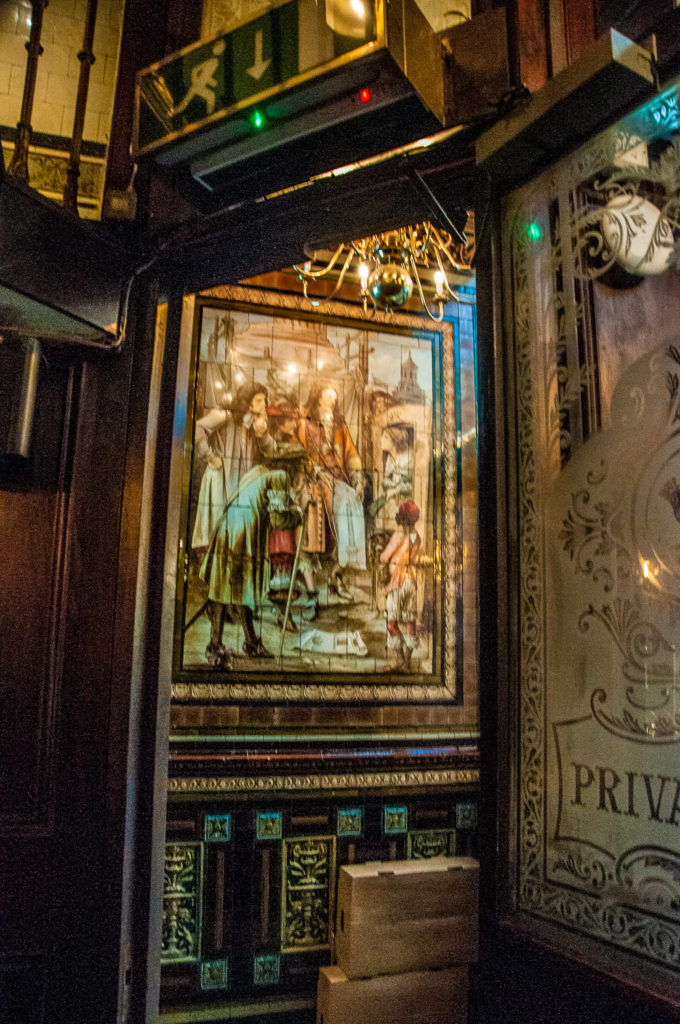
Just look at the characters gathered around him …
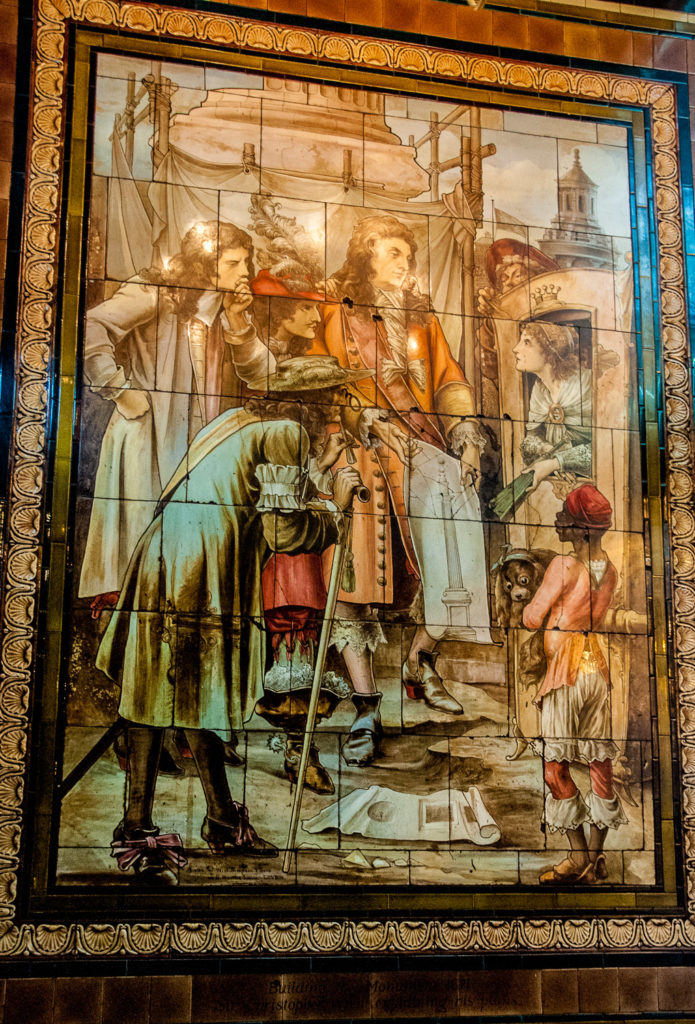
A lady holding a fan leans out of her carriage window to chat to the architect. A child (possibly her servant) stands nearby holding what looks like a pet King Charles spaniel. Some nearby gentlemen are also intrigued, but the chap with the red hat who looks like Errol Flynn might be more interested in the lady. Observe the elegant shoes of the man holding an eyeglass. Not really appropriate for the City’s muddy streets, so maybe he is her carriage companion. The carriage driver looks over his shoulder at the scene. The panel is by W.B. Simpson & Sons and is faintly dated 12th March 1882.

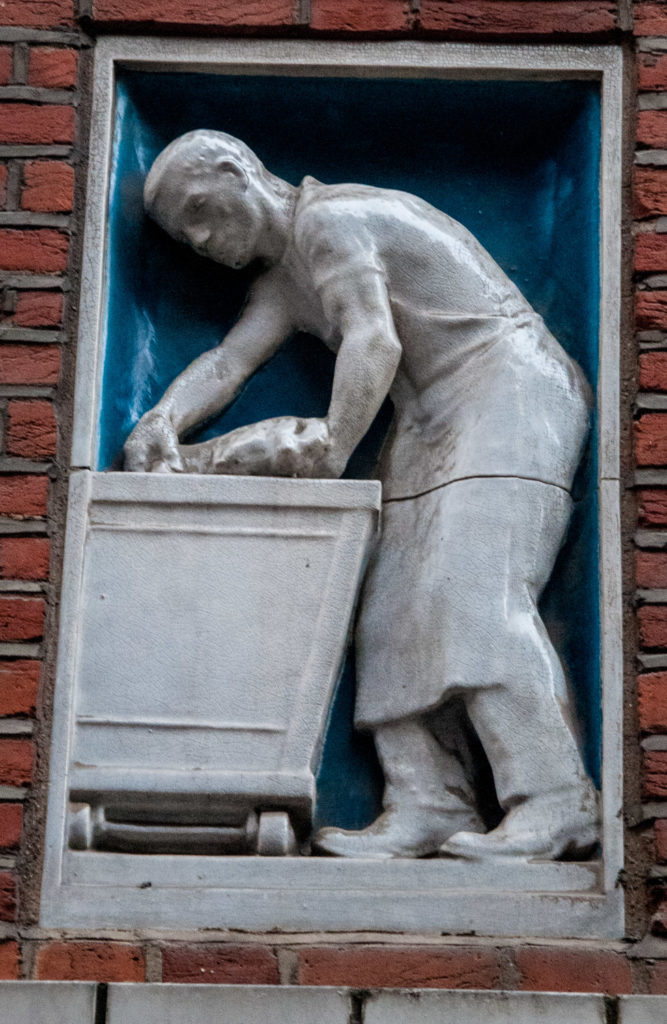
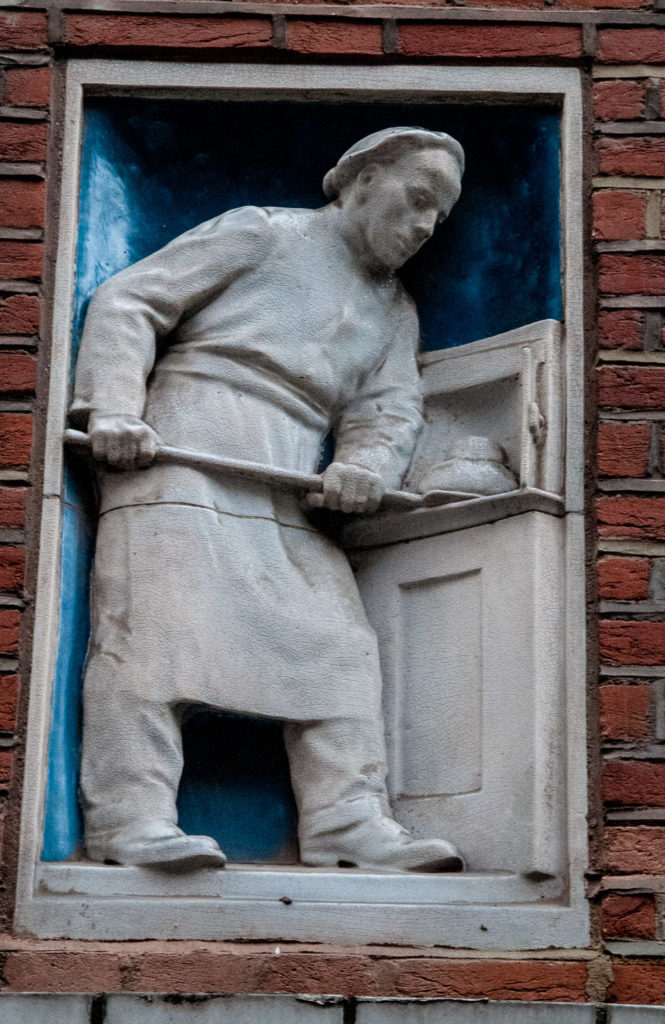
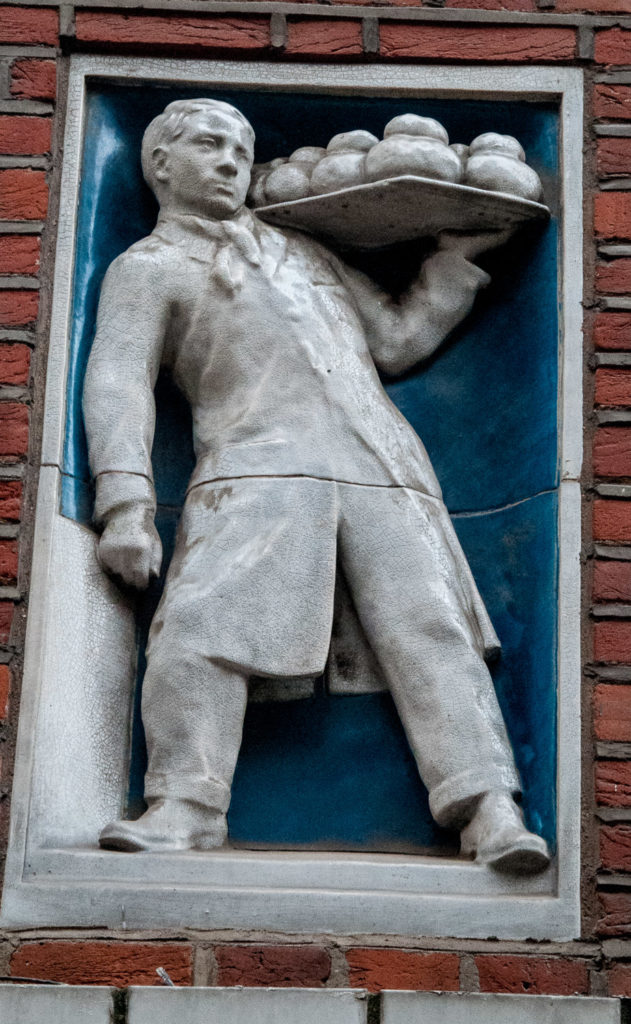
And now another wonderful new discovery for me, the exterior of the former Nordheim Model Bakery at 12-13 Widegate Street (E1 7HP), just off Middlesex Street near Liverpool Street Station. Here are the glazed faience reliefs as a group – they are a joy – showing the bread-making process in beautiful detail …
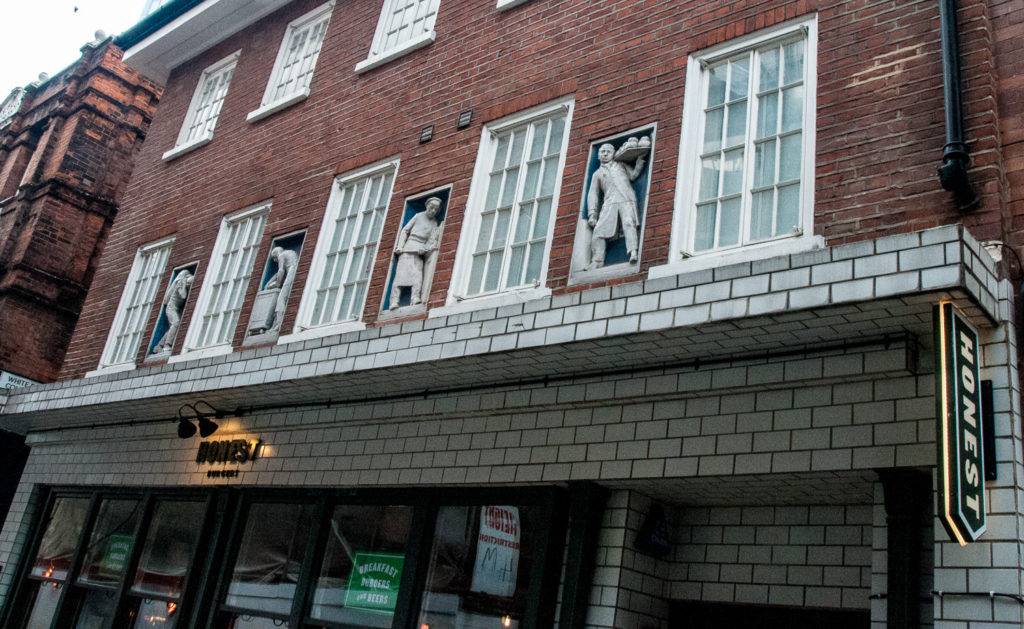
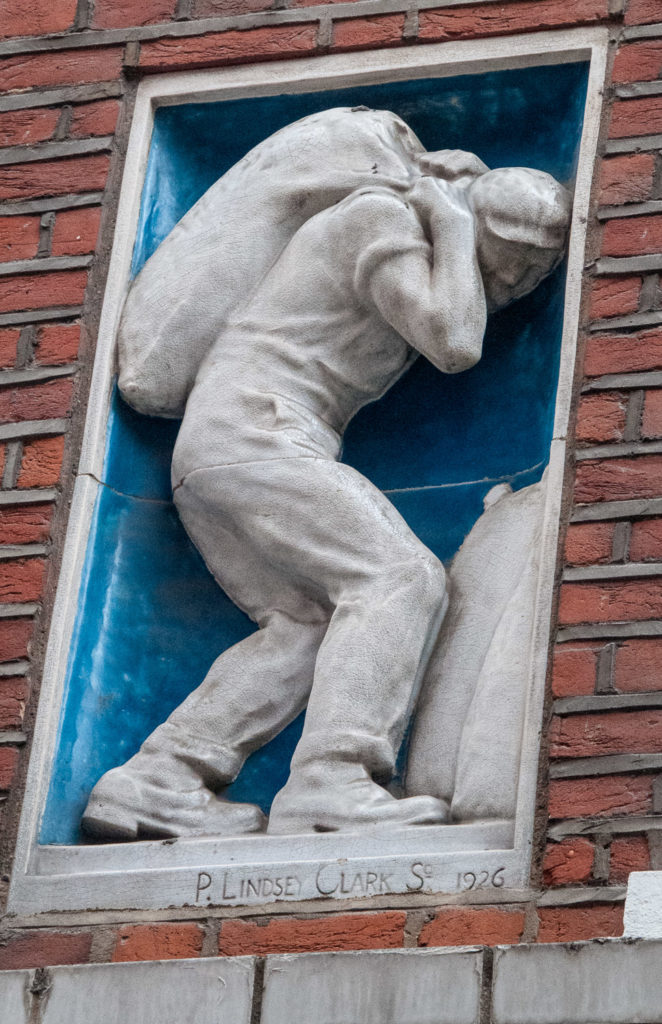
Hauling in the flour
Kneading the dough
Into the oven for baking
Triumphantly carrying the finished product

They date from 1926 and their creator was the sculptor Philip Lindsey Clark (1889-1977). Having joined up with the Artists’ Rifles in 1914, he had distinguished himself in the First World War having been awarded the Distinguished Service Order (DSO) for ‘ … conspicuous gallantry and devotion to duty when in command of the left flank of the Company of the Battalion’. Despite being severely wounded, he had fought on until relieved two days later. His work became more and more religious and he eventually entered a Carmelite order, retired to the West Country, and died there at the age of 88. The panels reminded the Gentle Author of the Stations of the Cross and you can read his posting about these works here.

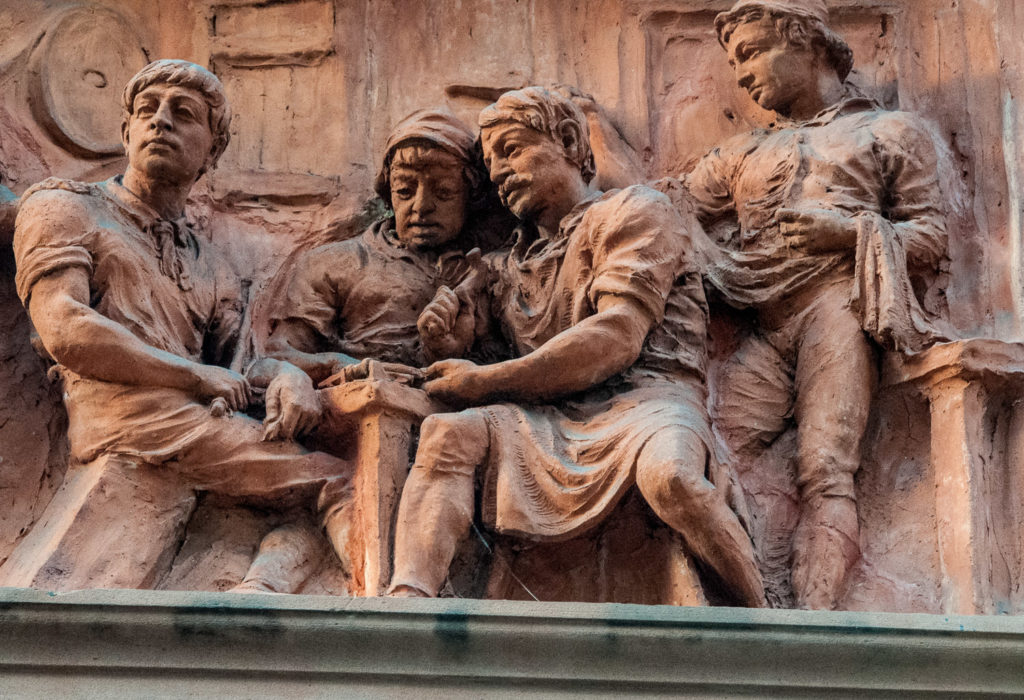
I love this bright red high-relief terracotta frieze on the exterior of Cutlers’ Hall (1886-7) in Warwick Lane (EC3M 7BR). The ancient Cutlers’ Company’s origins go back to 1416, their business originally produced and traded in knives and swords but eventually expanding into household cutlery and domestic wares such as razors and scissors.
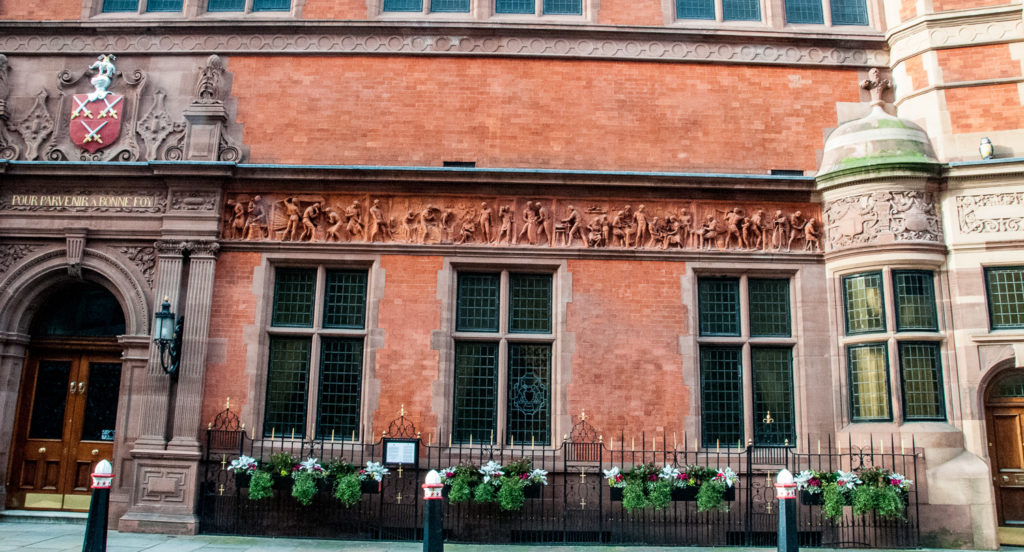
The work realistically depicts late Victorian cutlery production. This is not surprising since the sculptor, Benjamin Creswick (1853-1946) of Sheffield, was once a cutler himself. The frieze (containing 33 figures) was made by E. Goodall & Co of Manchester …
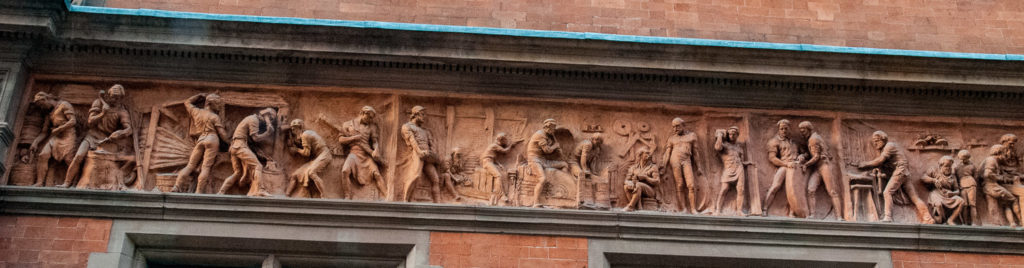
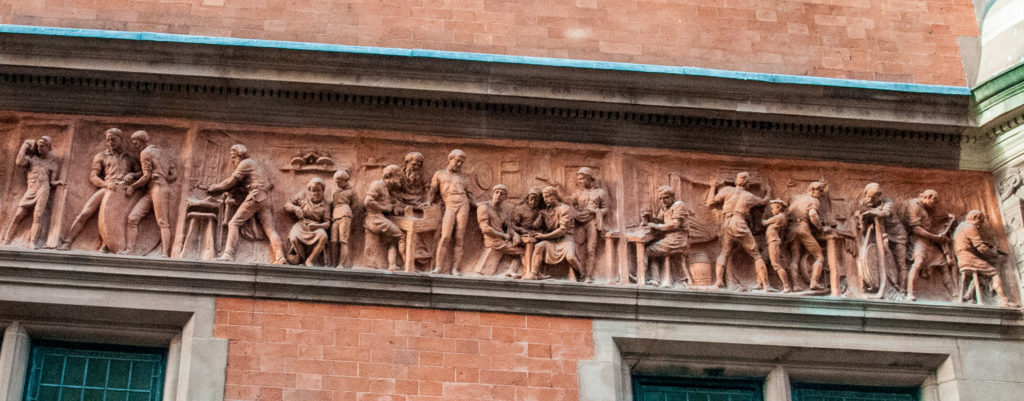
The detail is extraordinary

I had to smile when I noticed this plastic owl just above the terracotta on the right. He’s obviously intended to deter pigeons …
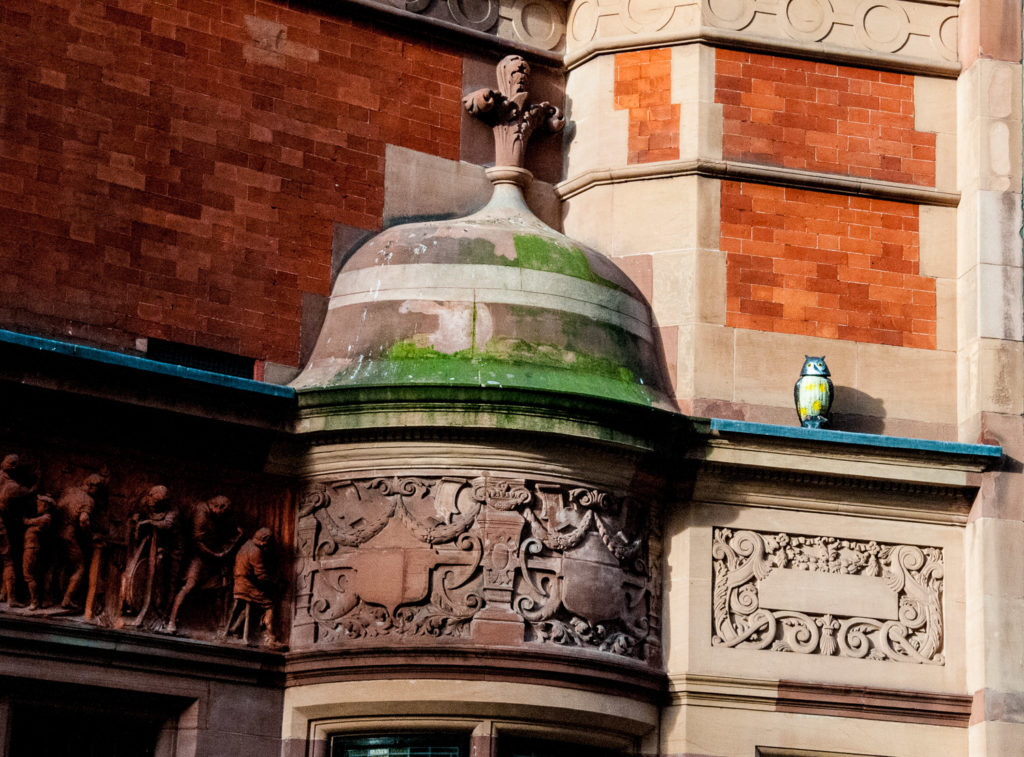
‘To-whit to-whoo!’

The Bishopsgate Institute (230 Bishopsgate EC2M 4QH) is a fascinating cultural centre in the City of London.

The website tells us that the architect for the building was decided by a design competition and Charles Harrison Townsend (1851-1928) was chosen as the winner. Townsend was an inspiring and original architect whose work was individual rather than adhering to any particular style or movement. The Grade II* listed building combines elements of the Arts and Crafts and Art Nouveau styles, but the influences of Townsend’s interest in Romanesque and Byzantine architecture can be seen in the broad semi-circular arched entrance, twin roof turrets and mosaic interior floors. Do go inside and visit the beautifully restored library.
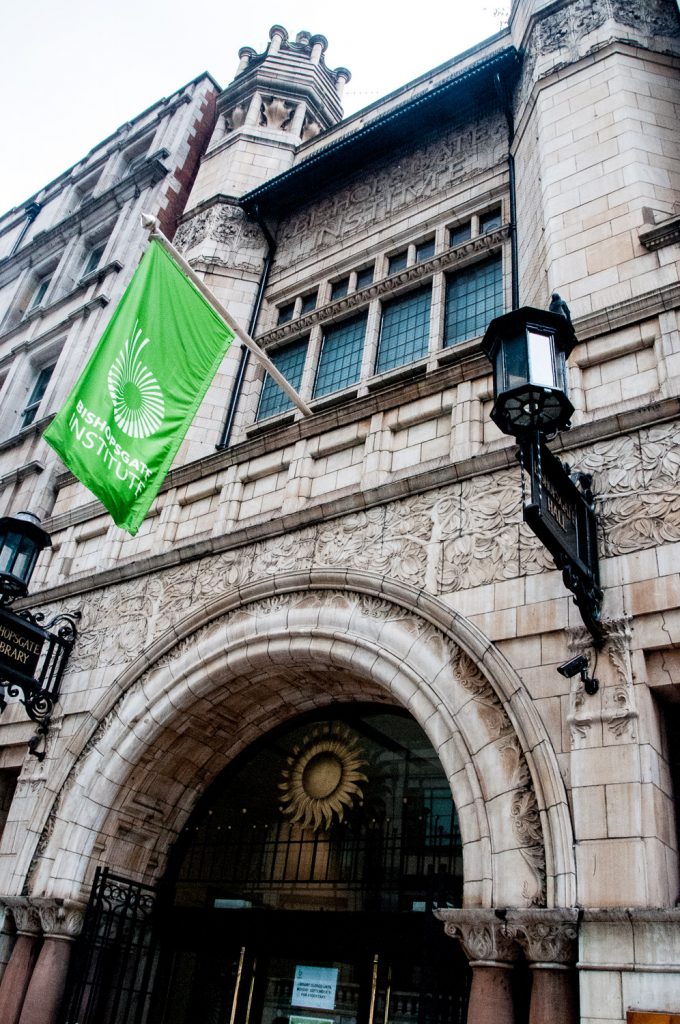
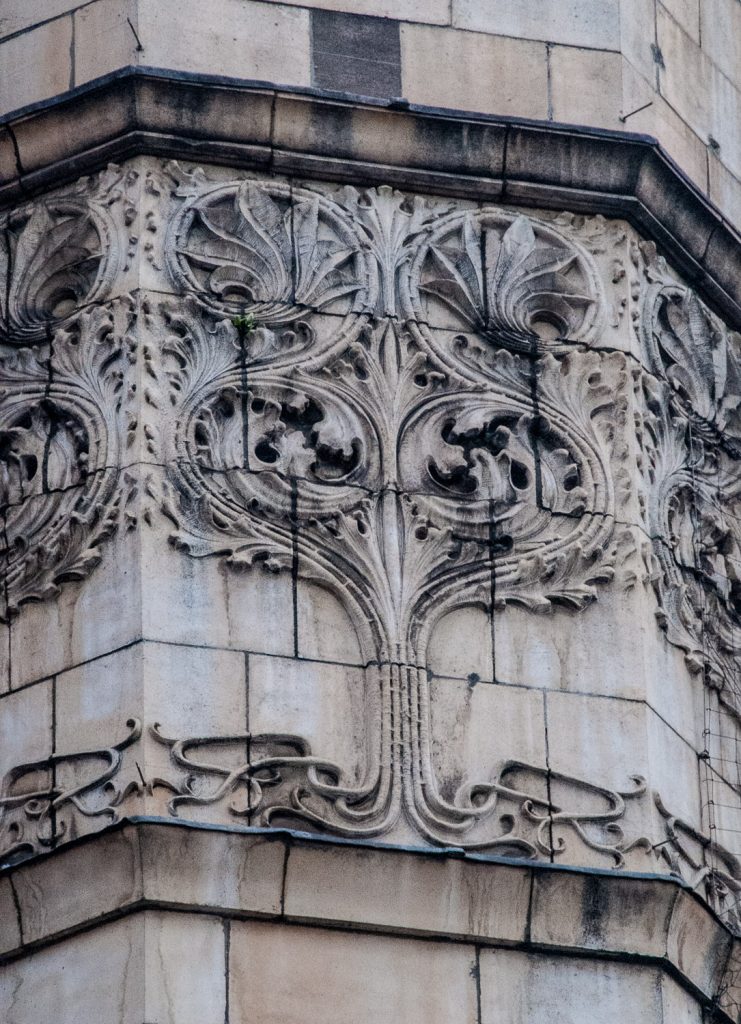
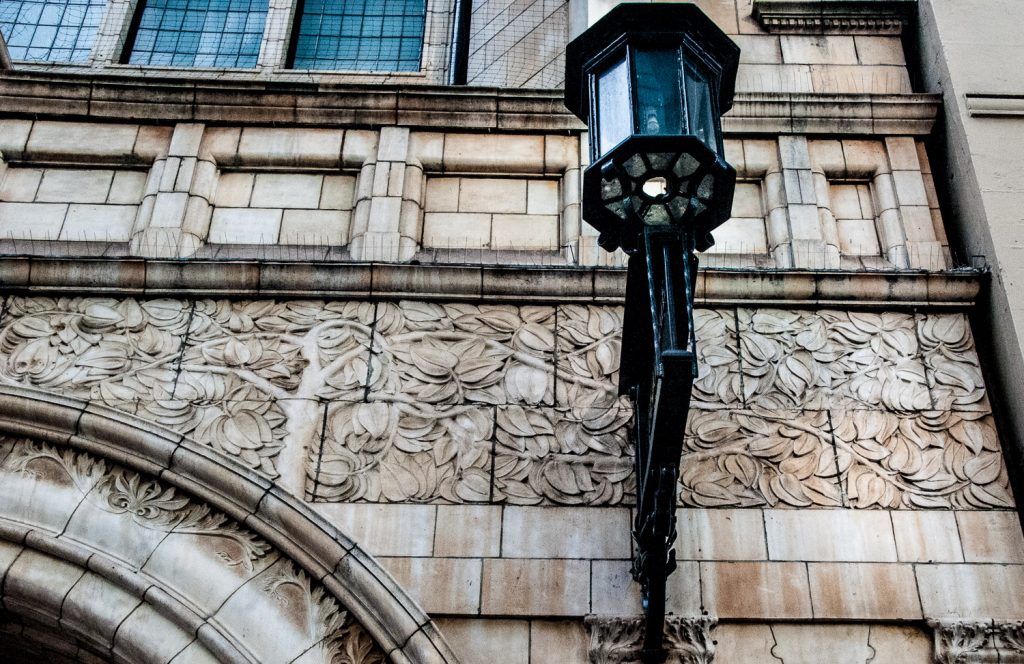
The Tree of Life

And finally (for now) the flamboyant Bolton House at 14-16 Cullum Street EC3M 7JJ. Built in 1907, it has a white faience facade with green and turquoise decoration including the heraldic device of Prior Bolton, after whom the building was named. It’s another lovely example of Art Nouveau completed just before that style went out of fashion.
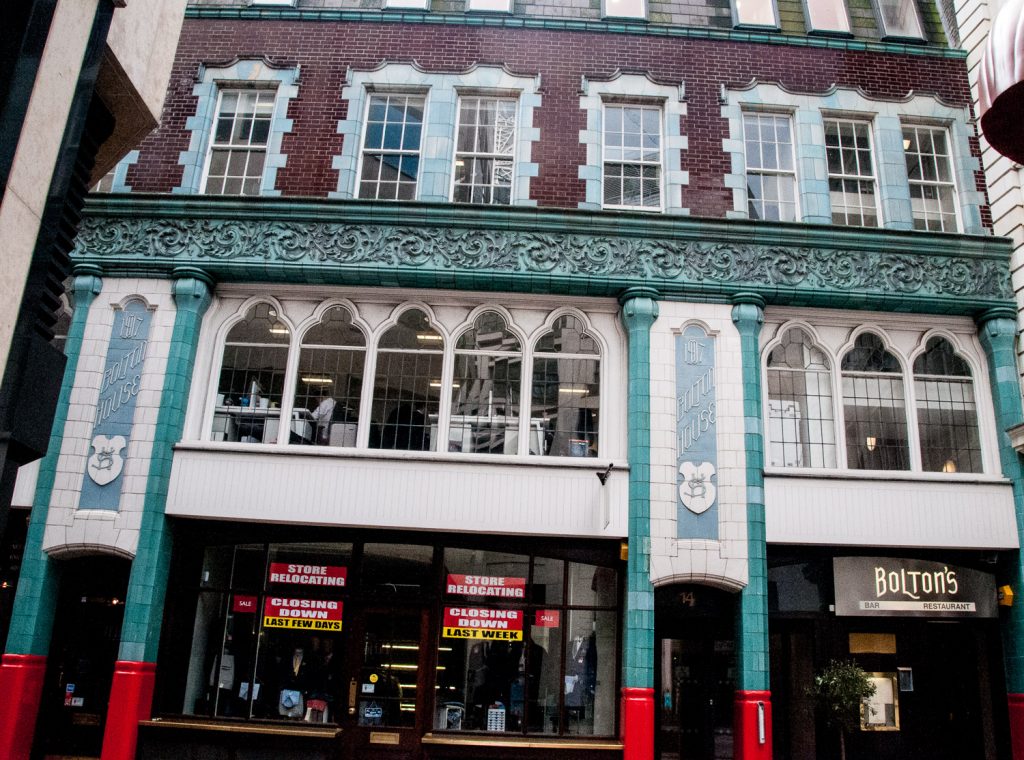
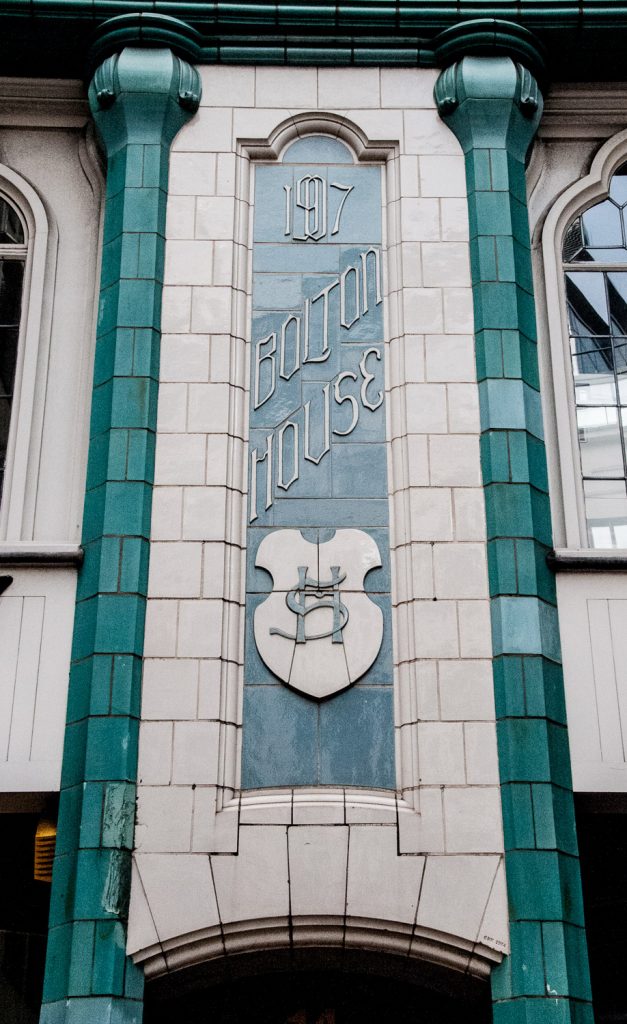
Incidentally, I have already written about the Prior in an earlier blog because of his connection with St Bartholomew the Great. Under the oriel window in the church there is a nice example of a rebus, in this case a representation of a person’s name using a picture. Here Prior Bolton’s name is neatly implied by a crossbow bolt piercing a tun (a type of cask). Bolton was Prior of St Bartholomew the Great between 1505 and 1532 and carried out repair and construction work across the church.

Prior Bolton’s rebus

I am indebted to the Tiles & Architectural Ceramics Society for the source of much of today’s blog. They published a special Gazetteer on the City of London and I have used it for reference. The photographs are my own. My thanks also to Richard Jones of London Walking Tours.
The Bank of England, the Lothbury Ladies and more doors

I really like the exterior of the bank of England, Soane’s curtain wall speaking as it does of security and confidence.

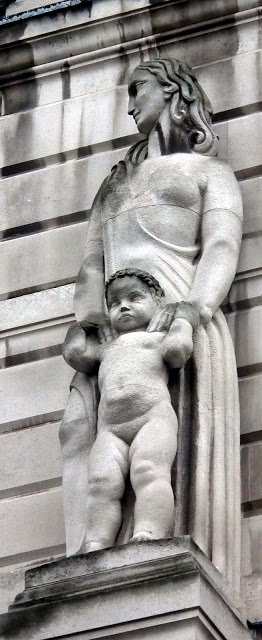
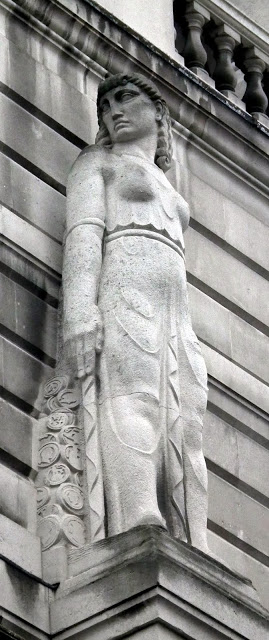
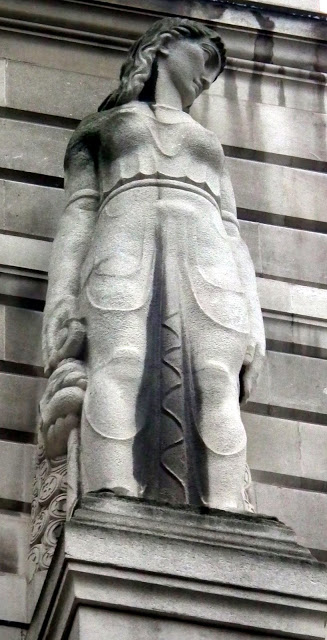
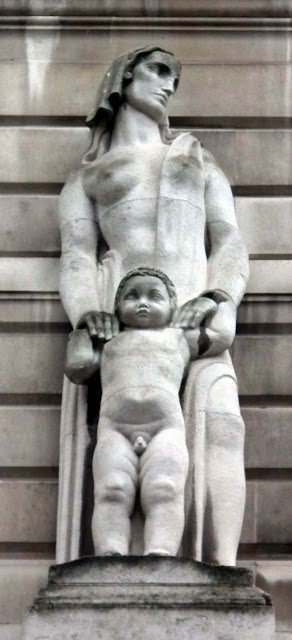
Before I write about the doors, however, there are the four ladies to admire. Carved by Sir Charles Wheeler between 1932 and 1937, and nicknamed the Lothbury Ladies, they are located against the ends of the upper pavilion blocks.

The eastern pair stand in front of cornucopias and piles of money …

According to the splendid Ornamental Passions website, from which these pictures are taken, Wheeler was slightly queasy about these images of prosperity given that this was a time of financial crisis (Britain having just been forced off the gold standard). He thought sheaves of corn might be more suitable and wrote to the architect Sir Herbert Baker suggesting this. Baker ‘clearly told him not to be silly’.

The ladies on the western side are each hold a standing naked child between their legs, one male …

… and one female …

They ‘represent the hope of the future of the renewed Bank and its ideals’.

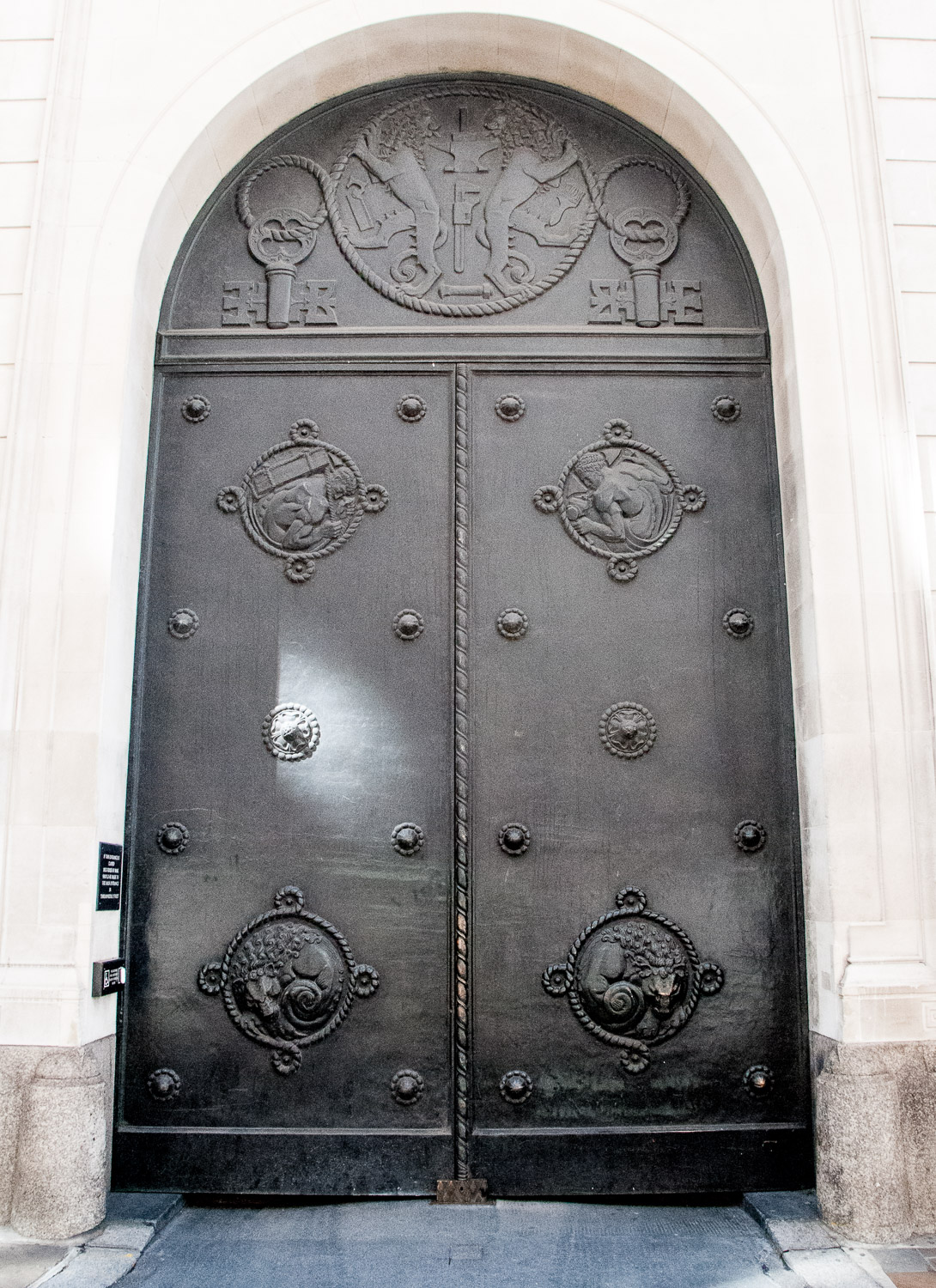
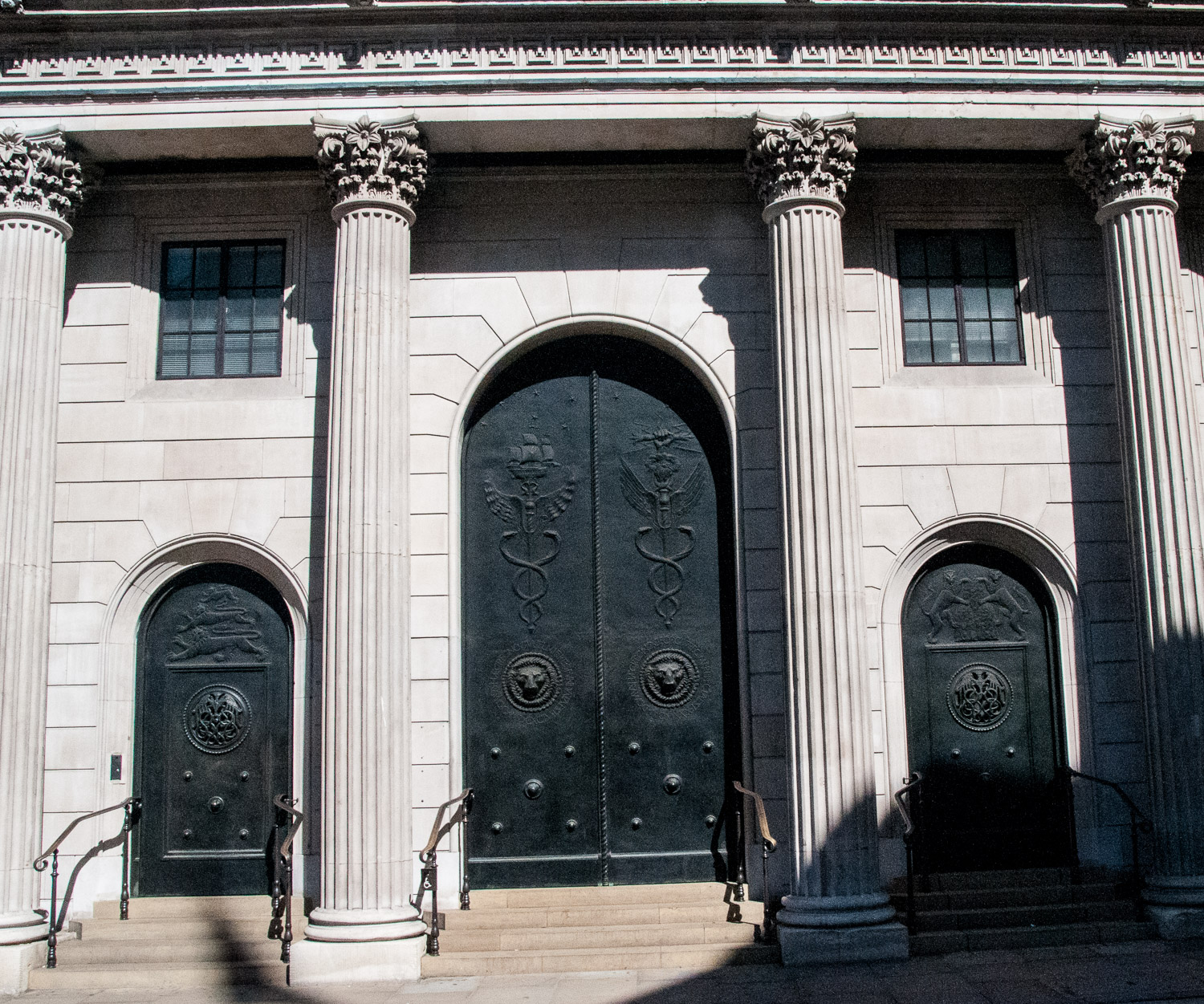
I wrote about the main Threadneedle Street doors in an earlier blog but you will encounter more as you walk around the building. These are the Goods Yard Doors in Lothbury which contain symbols of work – in the tympanum between the two lions rampant are a hammer and anvil, a monkey wrench and a rivet.

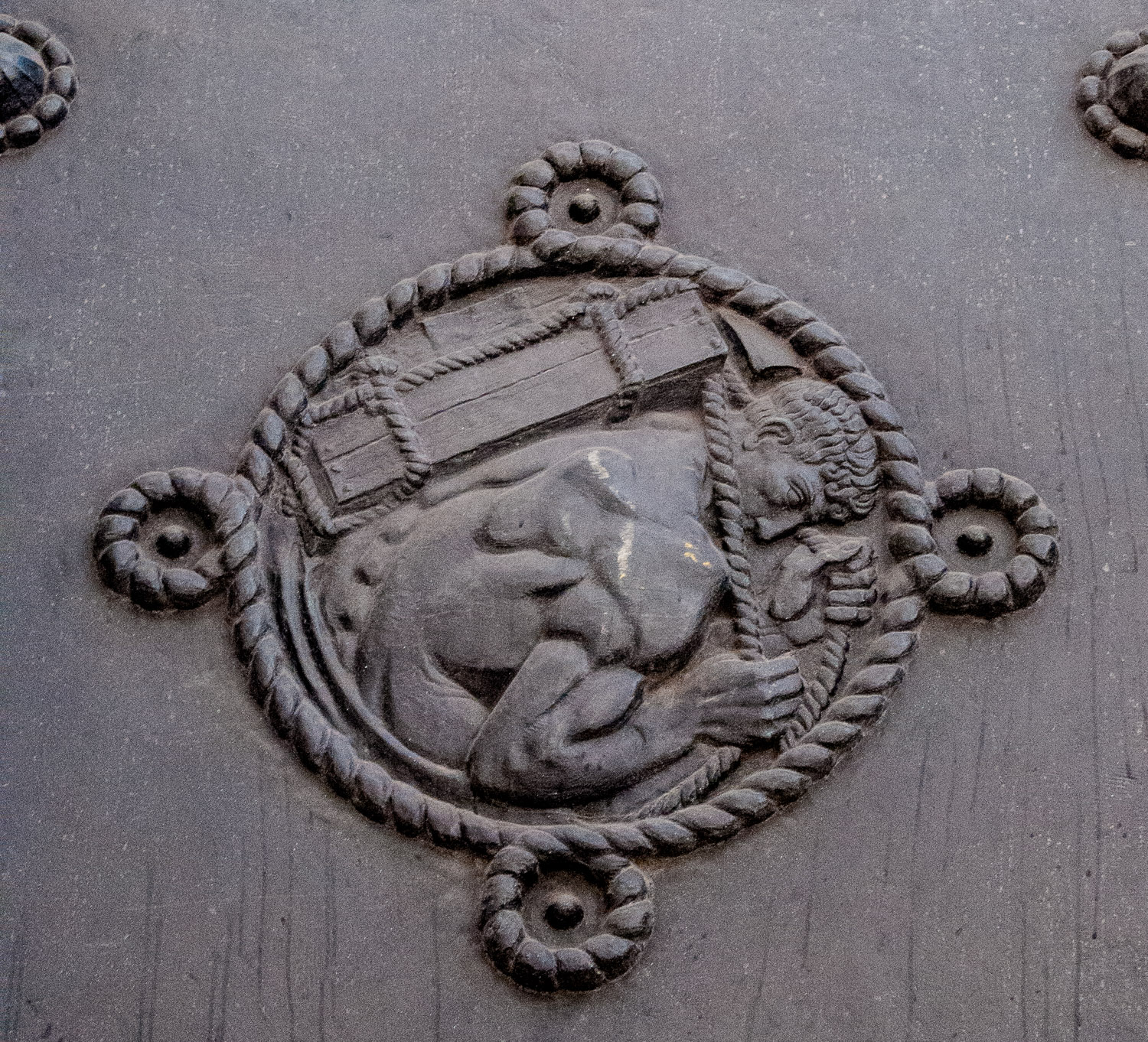
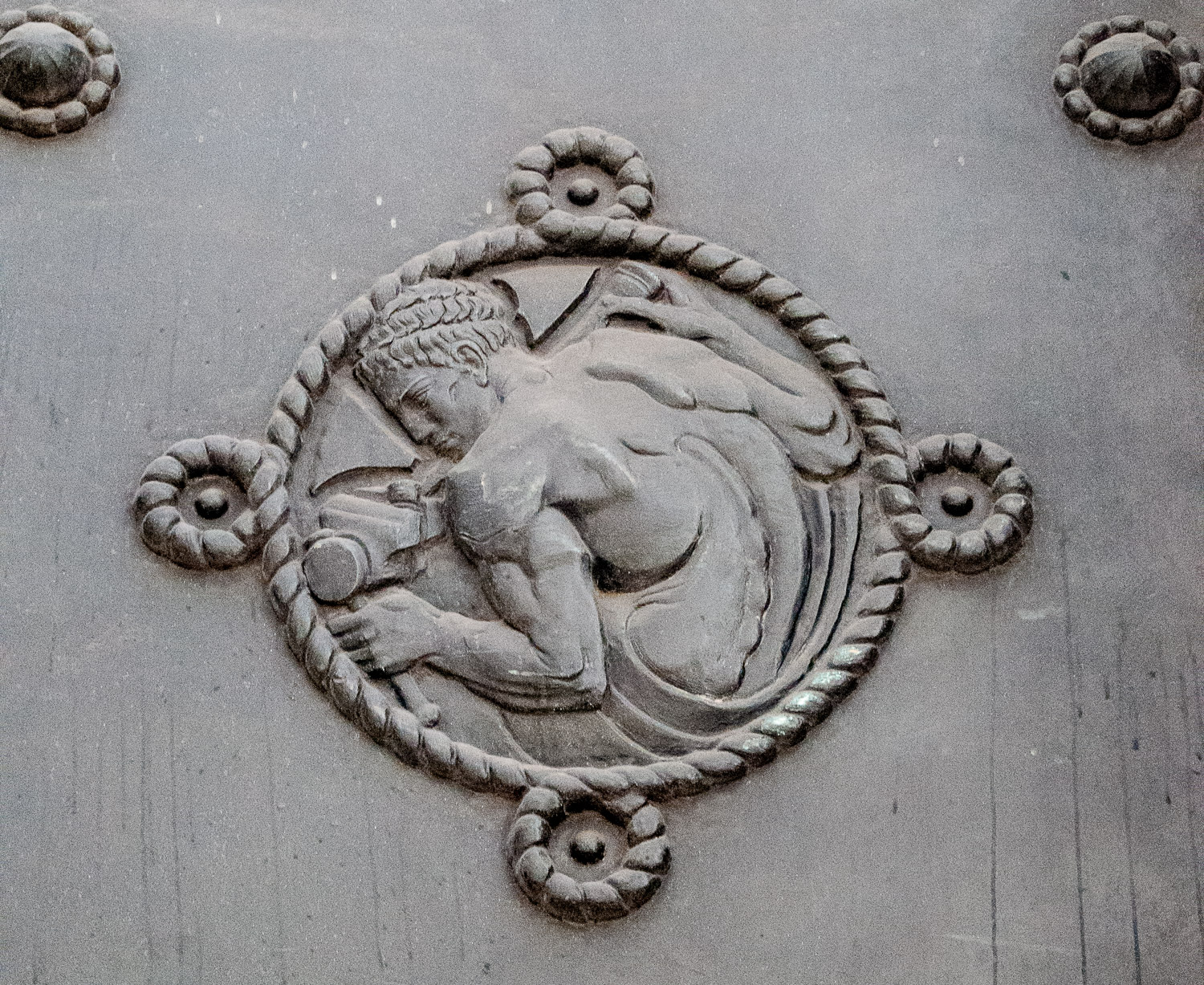
The roundels in the door are surrounded by rope motifs, the upper ones containing half-length nude male figures also symbolising work. The one on the left is carrying a load on his back …

… the one on the right is bent over a vice

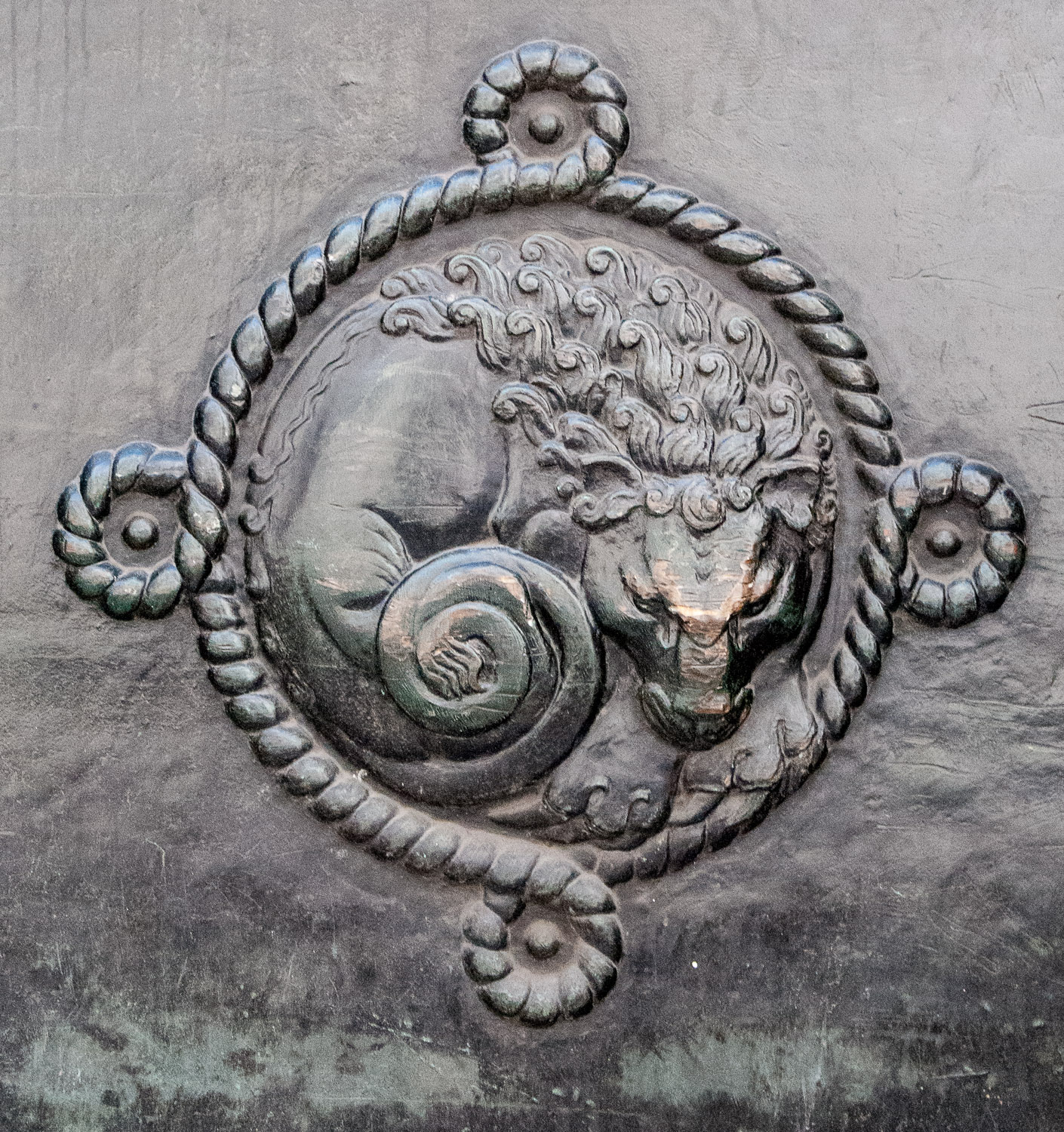
The lower roundels contain curled up lions …

People have obviously been stroking his head.

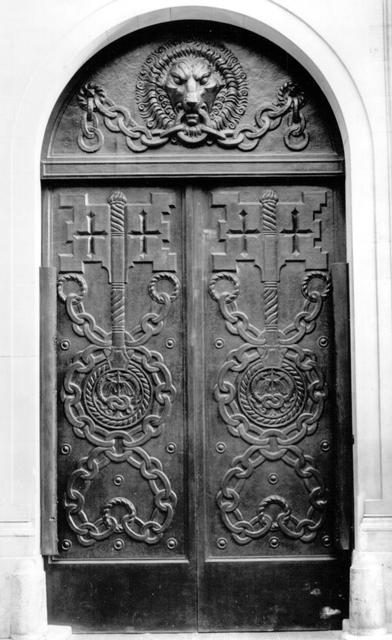
These are the daunting, even menacing, Lothbury Court or Bullion Doors …


Loops of chains hang from a ring in the lion’s mouth and the doors themselves are decorated with huge double-warded keys, the handle of each containing a caduceus. These are the only sliding doors at the bank and Herbert Baker sent a Wheeler a sketch with the rather rude comment …

We already have too many prancing lions and a bullion door must be a more forbidding thing, simple in expression and to a big scale.

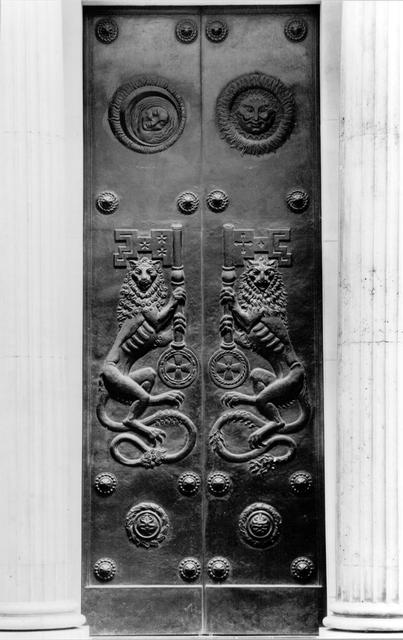
And finally, here are the doors on Princes Street with, yes, more ‘prancing lions’ …

I love their curly tails, and above them a smiling male sun and lady moon.

Incidentally, the main doors are magnificent and this is a link to the blog where I write about them in more detail …


The Royal Exchange

Last week I wrote about the talented Sir Thomas Gresham, the part he played in founding the Royal Exchange and how his generosity is still commemorated on the building itself.

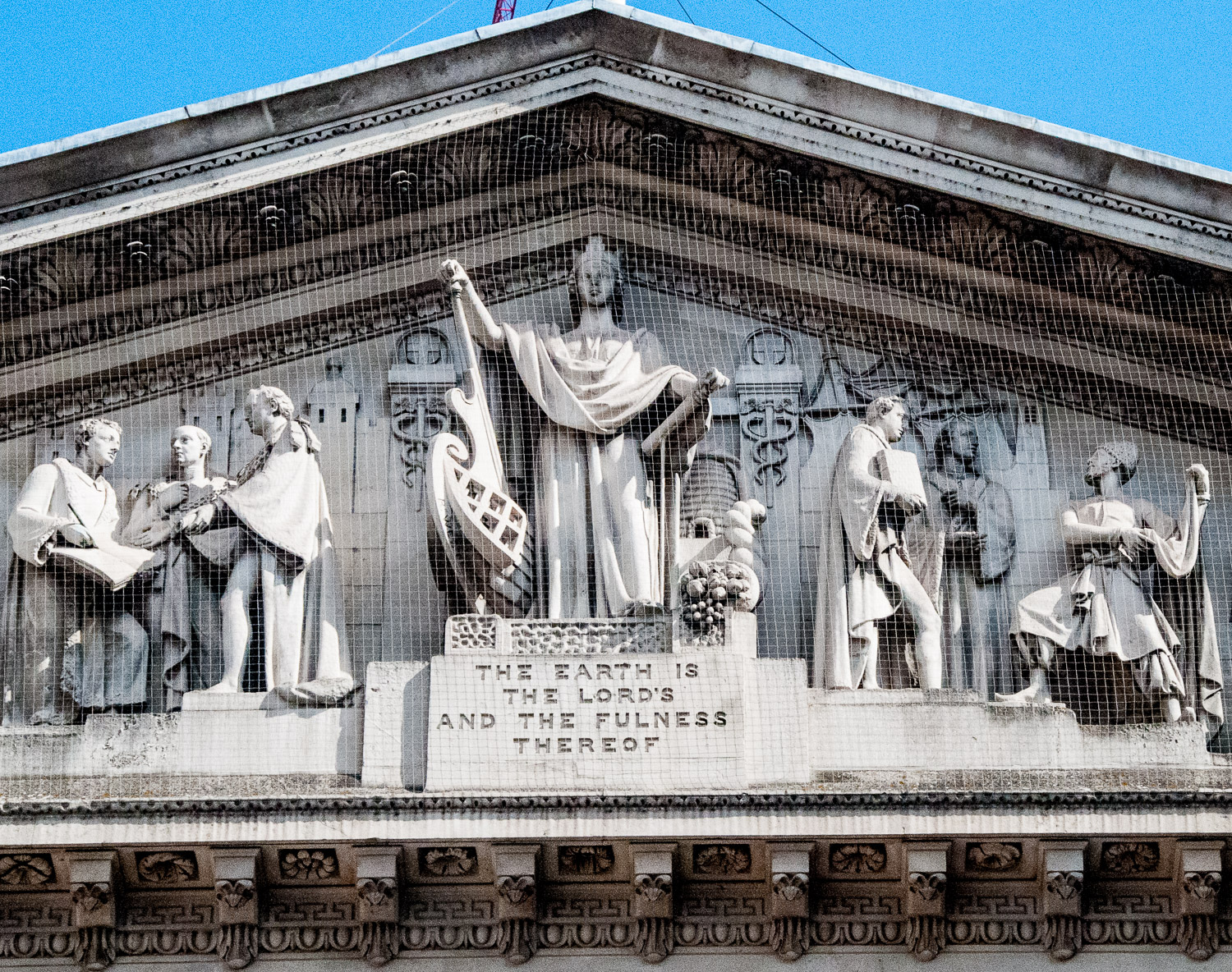
This week I am taking a look at other aspects of the structure starting with the magnificent Portland stone pediment which you can’t miss if you look up as you cross the road at Bank junction. As is often the case, I am indebted to Dr Philip Ward-Jackson and his book Public Sculpture of the City of London for some of the descriptions …

The Exchange itself was designed by William Tite. The pediment sculpture is by Richard Westmacott Junior and deploys seventeen figures.

The inscription on the base on which the figure of commerce stands is from Psalm 24.1., a text chosen by Prince Albert. He laid the foundation stone in 1842.

Commerce holds in her left hand a ‘charter of exchange’ and in her right a rudder. There is also a ship’s prow, a beehive and a cornucopia.

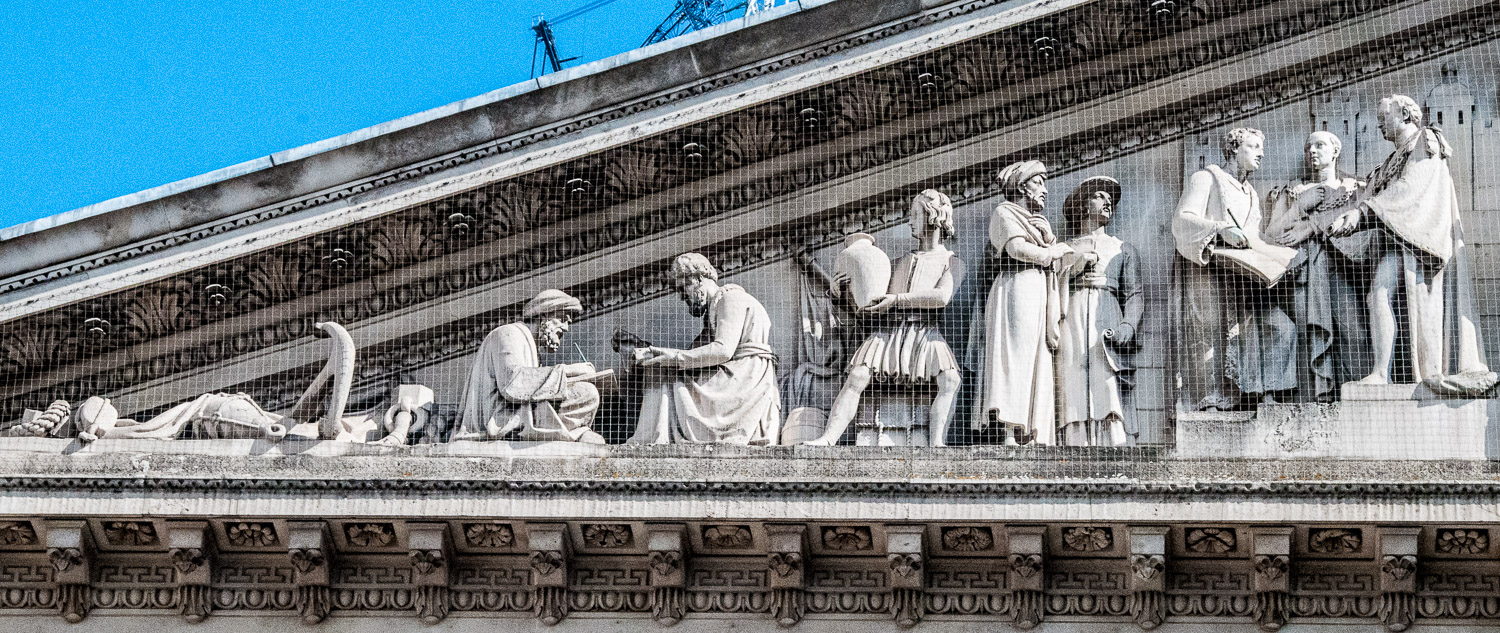
Looking to the left …

… there are three City merchants in the civic robes of Lord Mayor, Alderman and Common Councilman. Beyond these are a Hindu and a Muslim. A young Greek carrying a vase strides towards them whilst looking over his shoulder towards the outermost group. These are an Armenian (occupied with a scroll) and a Turk (‘busy with his daily accounts’). The extreme angle is filled with an anchor and other nautical instruments.

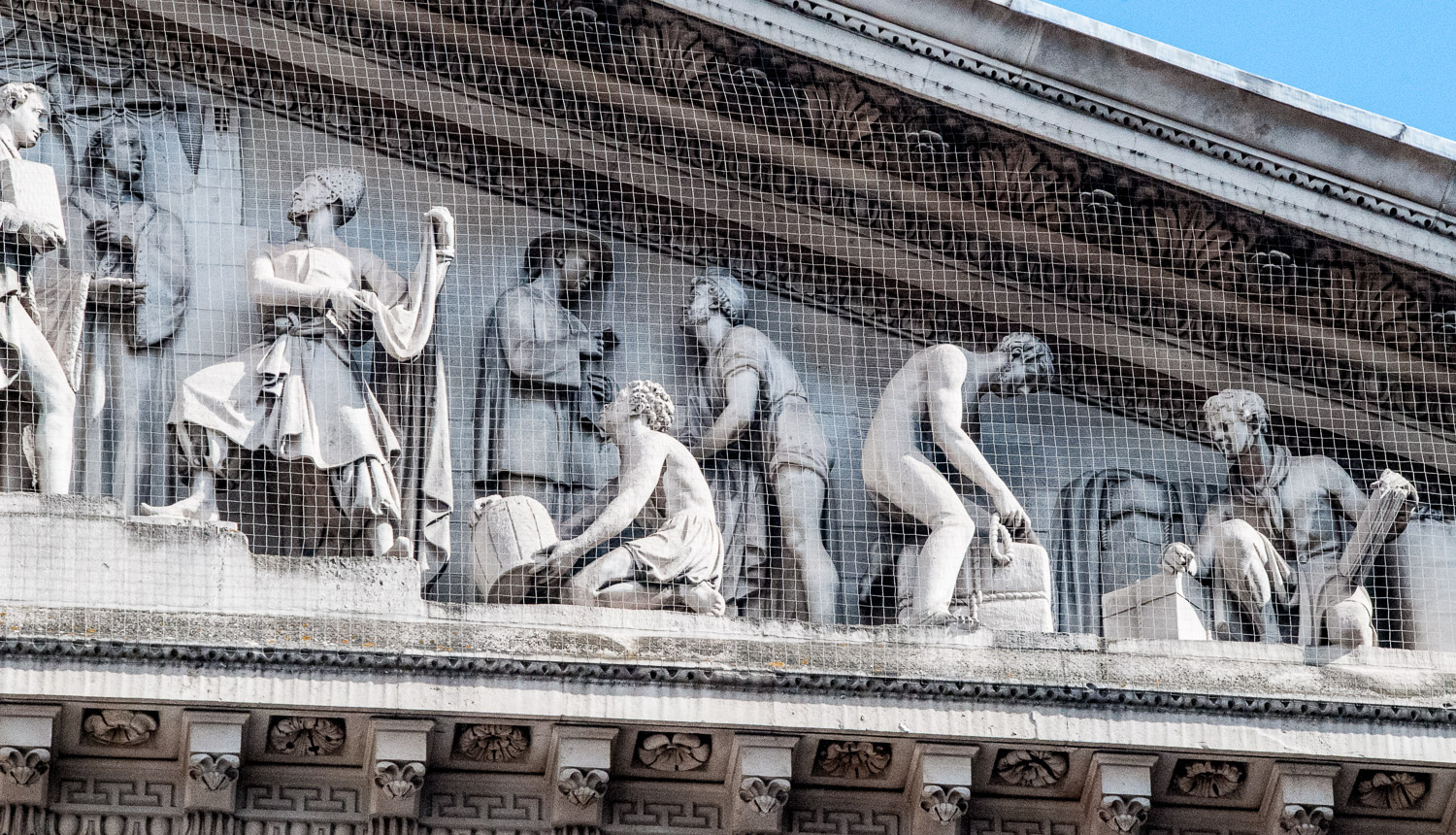
Looking to the right …

… two British merchants are being shown fabric by a Persian. The next group consists of a Chinese merchant, a kneeling African and a Levantine sailor. Beyond these is a British sailor cording a bale of merchandise. The outermost figure, kneeling amongst jars, packages etc, is a supercargo, or shipboard sales manager.

Interestingly, the Exchange was built at the time of the Chinese ‘Opium Wars’, a period which saw the collapse of the Chinese economy. In China today the period 1839 to 1939 is referred to as The Century of Humiliation (which some commentators believe still has an important influence on Chinese attitudes to the West in the 21st century).

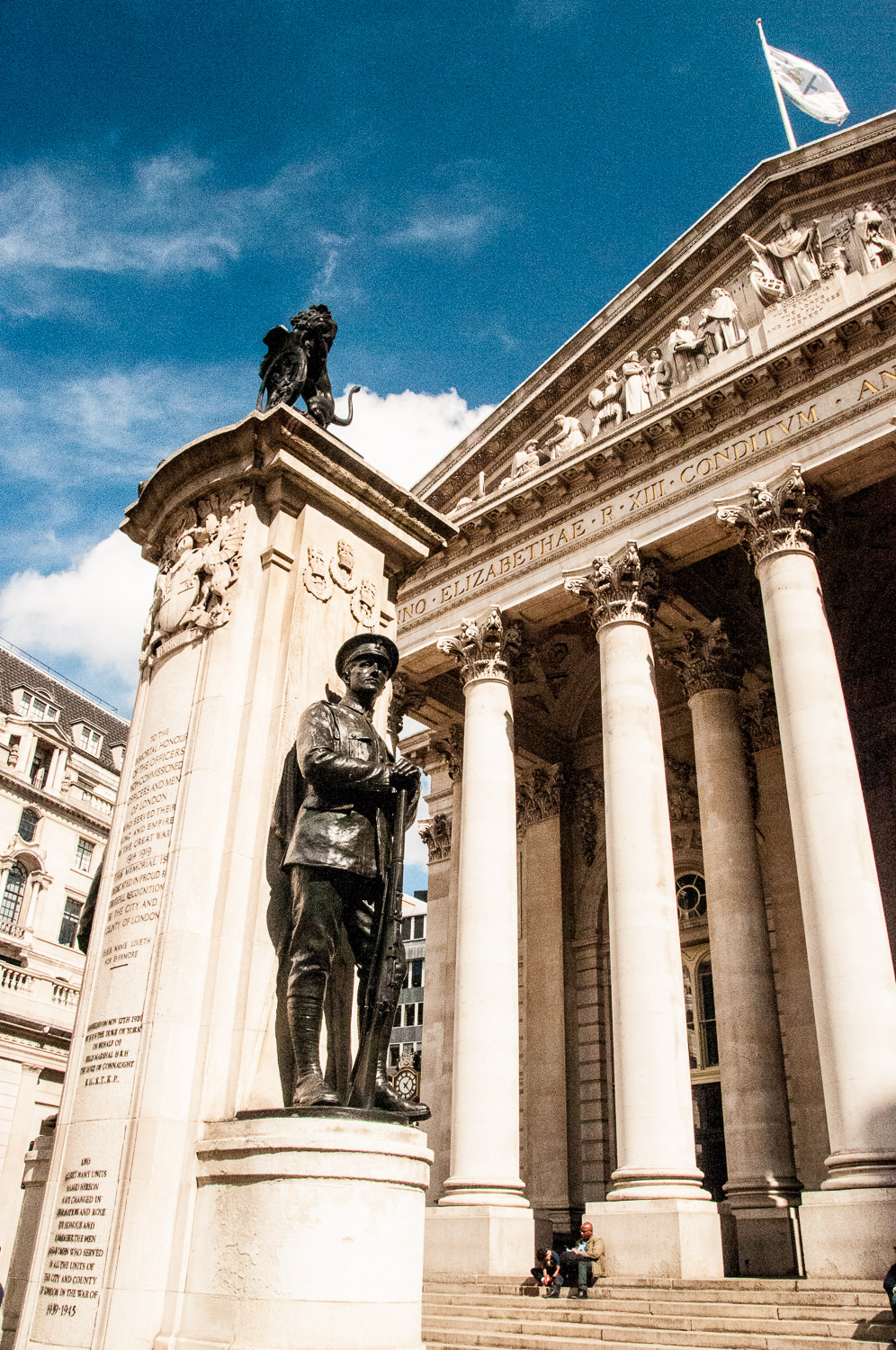
In the foreground stands London Troops War Memorial. Above you can see part of the Latin inscription stating that the Exchange was founded in the thirteenth year of the reign of Queen Elizabeth I and restored in the eighth of Queen Victoria (1844) …

The memorial architect was Sir Aston Webb, the bronzes are by Alfred Drury and the stone carver was William Frith.

On the column is listed all the London regiments that served in the First and Second World Wars and on either side two soldiers stand at ease, one representing the Royal Fusiliers and the other the Royal Field Artillery.

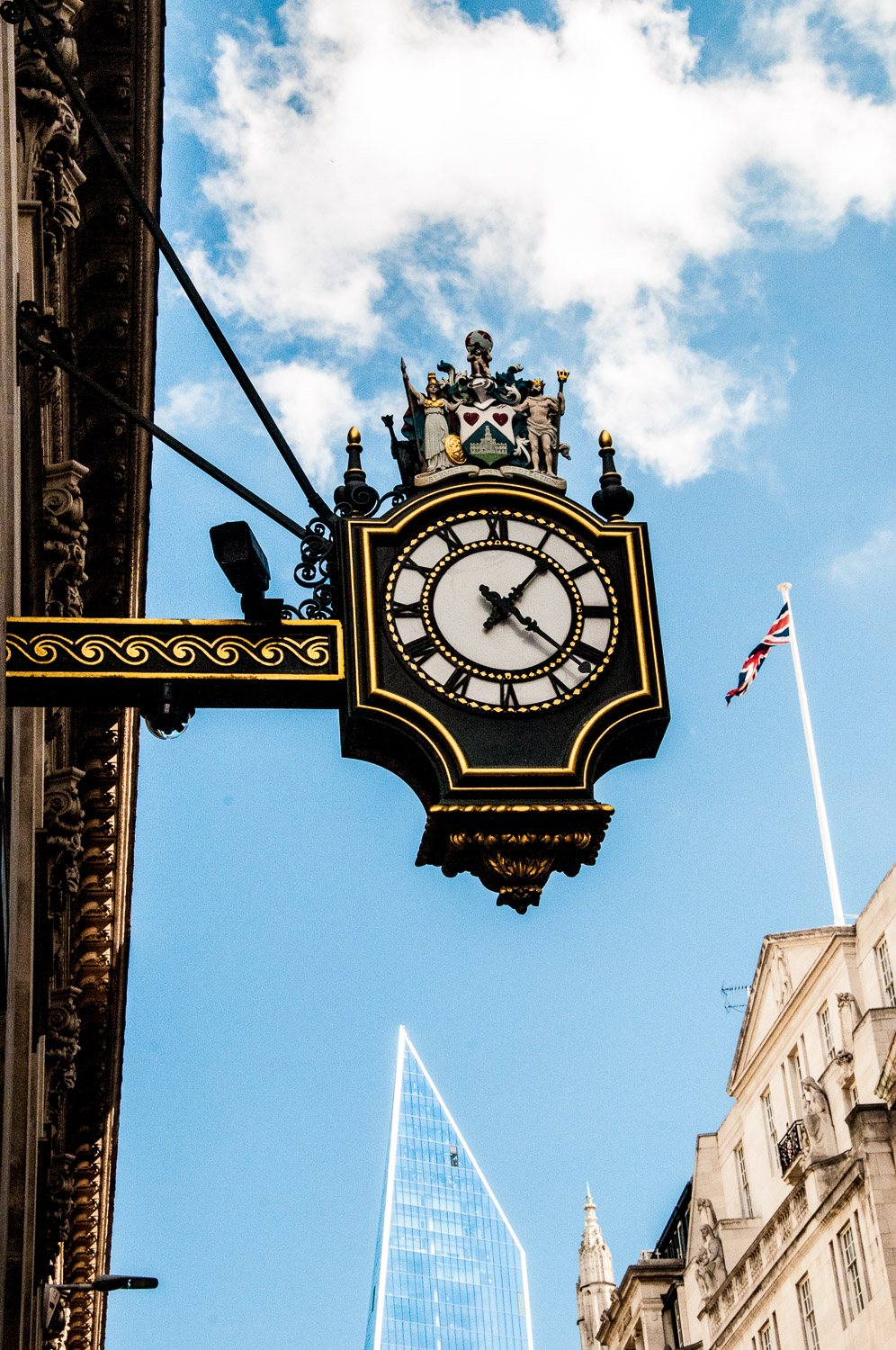
On the south side of the Exchange in Cornhill is this elegant clock …

Britannia and Neptune hold a shield that contains an image of Gresham’s original Royal Exchange. In the distance, peeping up below, is the latest addition to the City skyline, ‘The Scalpel’ in Lime Street.

The inside of the Exchange is now a much used open space where today’s City folk meet once more to gossip, dine, drink coffee and do deals just as Gresham originally intended almost 450 years ago …

 Image: ‘Say I do’ Islington

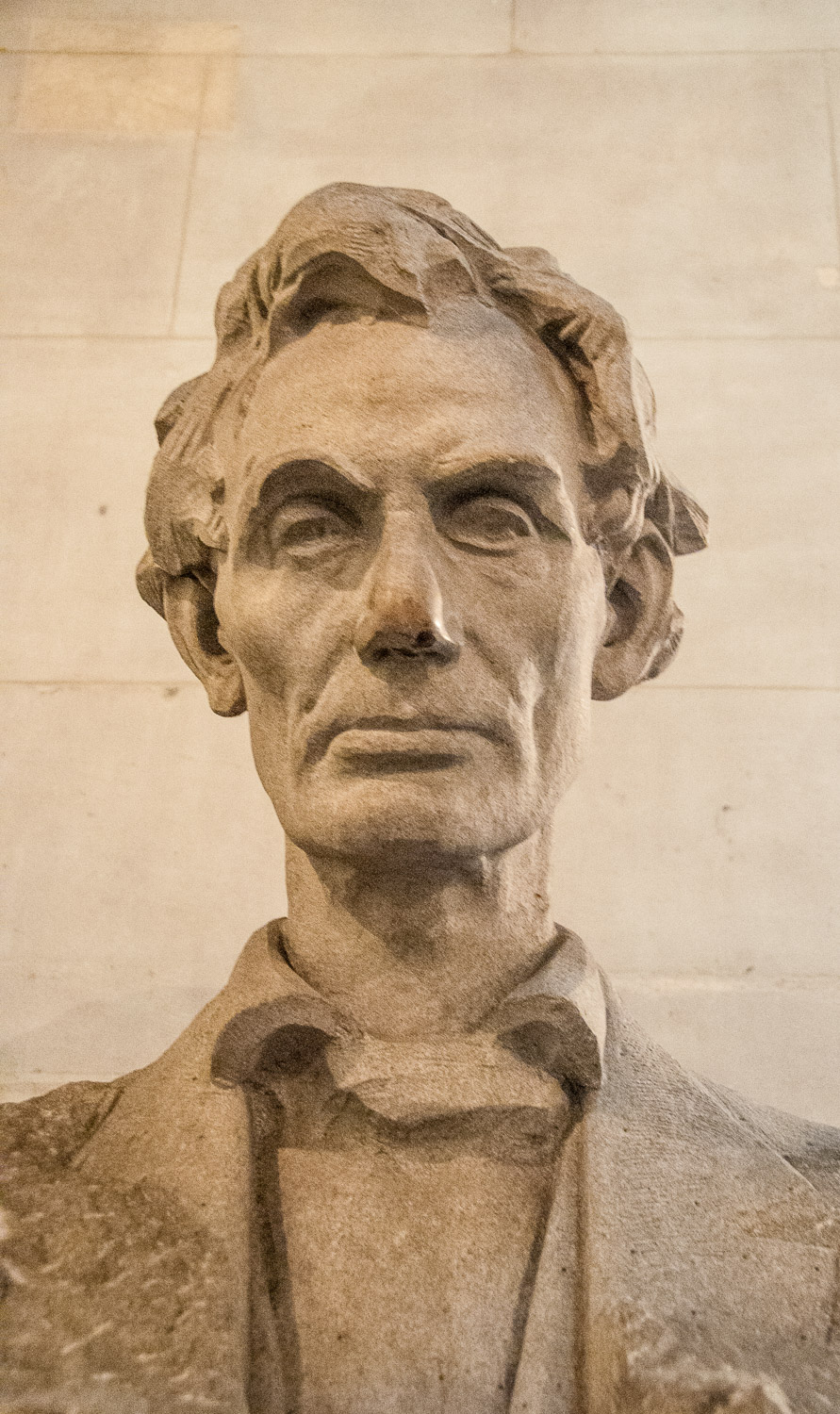
When visiting the Exchange I usually use the main West door but, whilst researching this blog, I went into the East foyer and was really surprised to come across this remarkable, formidable bust of Abraham Lincoln …

Carver: Andrew O’Connor (1928).

The bust is carved from stone quarried in the vicinity of Lincoln’s birthplace. It was presented to the City by the Lincoln Presentation Committee and was unveiled by the Lord Mayor on 12 February 1930.

Finally, behind the posh retail outlets that nestle near the walls of the Exchange, lie an extraordinary set of murals. This one commemorates the loss of the second Royal exchange to fire in 1838 …

Painting by Stanhope Forbes (1899).


To view them you have to climb to the mezzanine floor and look over the balcony. They date from 1892 and are by artists including Sir Frederick Leighton, Sir Frank Brangwyn and Stanhope Forbes.

Amazingly, plans for the building in 2016 would have meant bisecting them in order to extend the retail space. Fierce criticism meant the plans were shelved but you can see what they would have meant if you look at the Spitalfields Life website from August 2016. The site also has some great pictures of all the murals – they are stunning.


Page 22 of 27

Powered by WordPress & Theme by Anders Norén

Symbols & Secrets
Privacy Overview

This website uses cookies so that we can provide you with the best user experience possible. Cookie information is stored in your browser and performs functions such as recognising you when you return to our website and helping our team to understand which sections of the website you find most interesting and useful.