Symbols & Secrets

Walking the City of London

The Roman Wall revisited

One of the great things about writing this blog is that I keep coming across surprises.

Let’s take as an example the Roman Wall. I have only recently discovered that, if you go down into the public car park in (appropriately named) London Wall, you will encounter a part of the wall that was revealed when the car park space was being excavated.

Here it is, next to parking bay 52 …
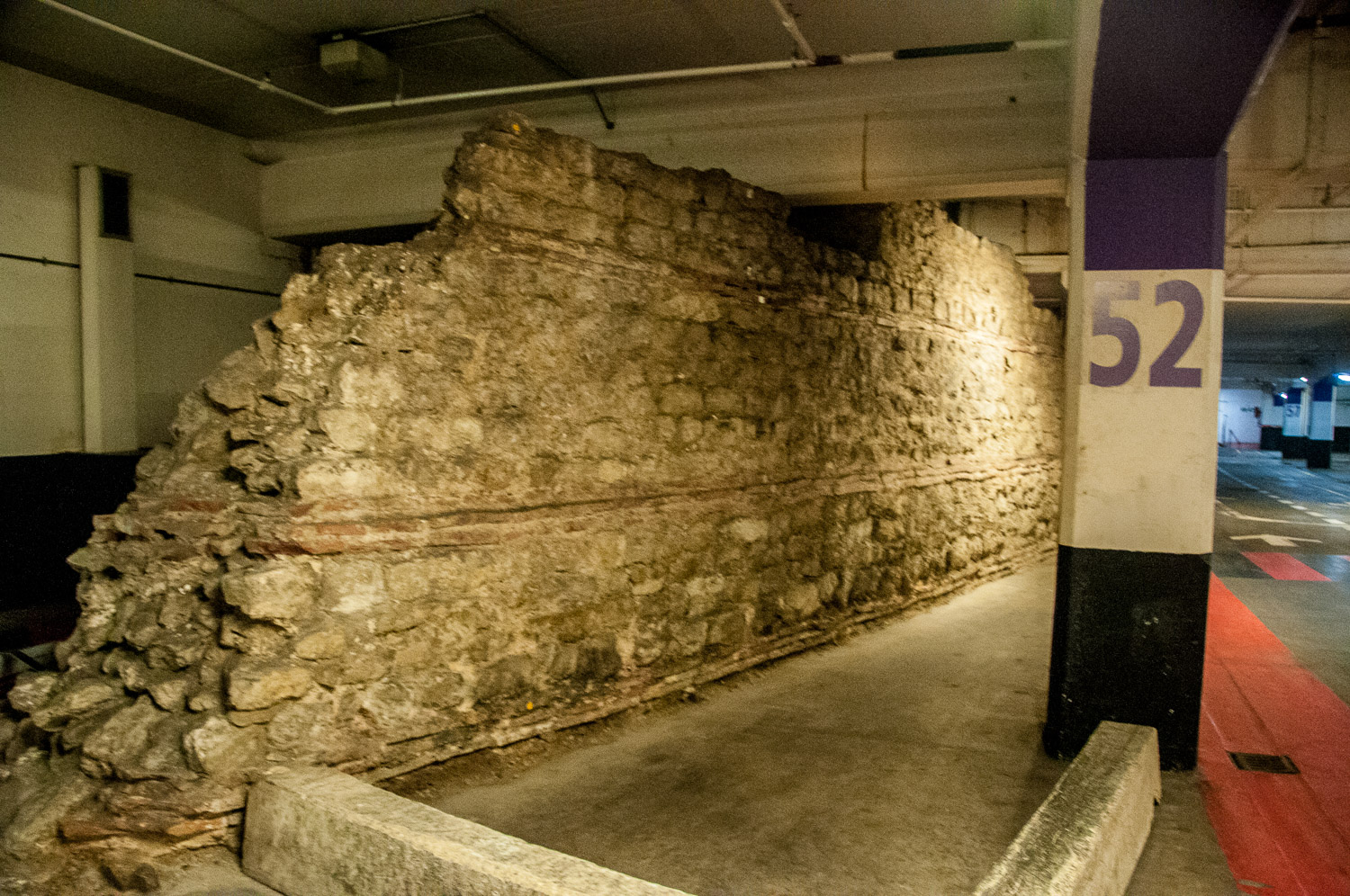
It’s a long walk from the entrance and probably a good idea to mention to the security guard what you are up to.

When you finish in the car park you can access the Highwalk and stroll round to enter the Museum of London. A short way into the exhibition space on the right they have placed a useful viewing point where you can look down upon part of the Roman wall known as Bastion 14.  The medieval masonry construction lies on top of Roman foundations but by the 19th century it was entirely incorporated into the surrounding buildings. World War II bombing, however, revealed much of the structure you see now…
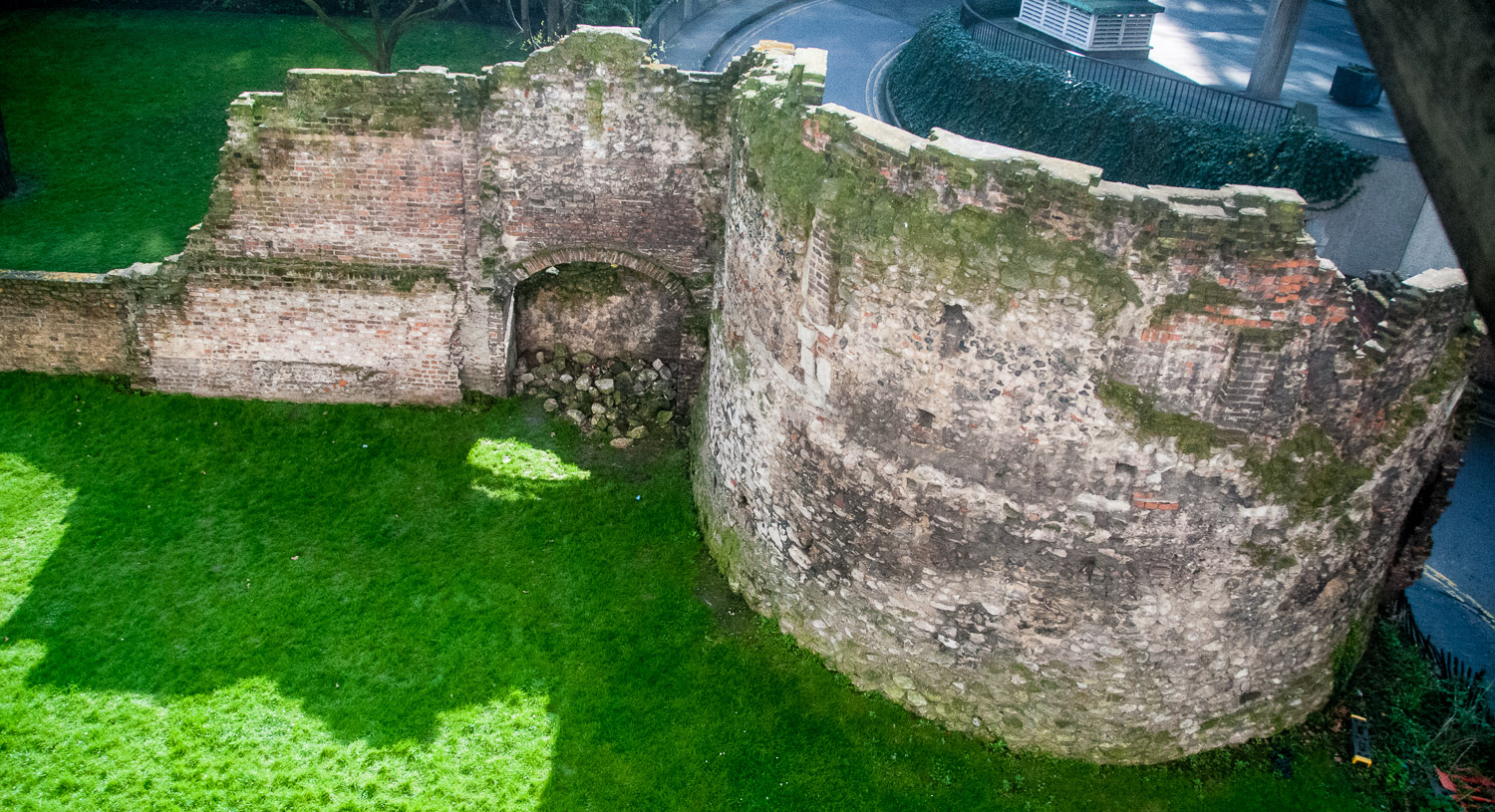
The view from the Museum.

And from the Highwalk …
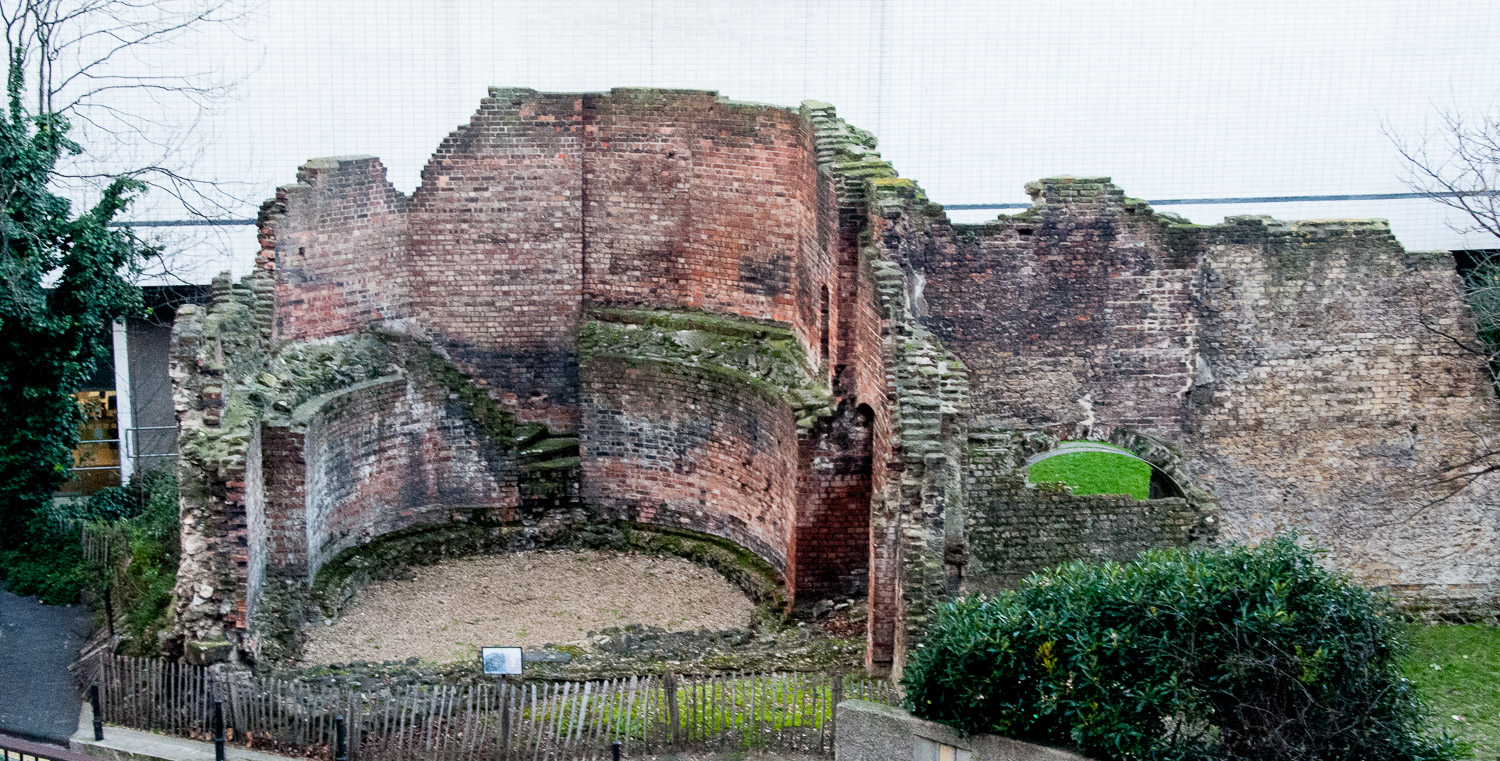
Another view from Bastion Highwalk. You can see the 19th century brickwork.

There has been a lot of construction and redevelopment work going on around London Wall and Fore Street for years now but at last it is coming to an end. St Alphage Gardens are still inaccessible but a view of the Wall has now emerged behind the Salters’ Hall gardens …
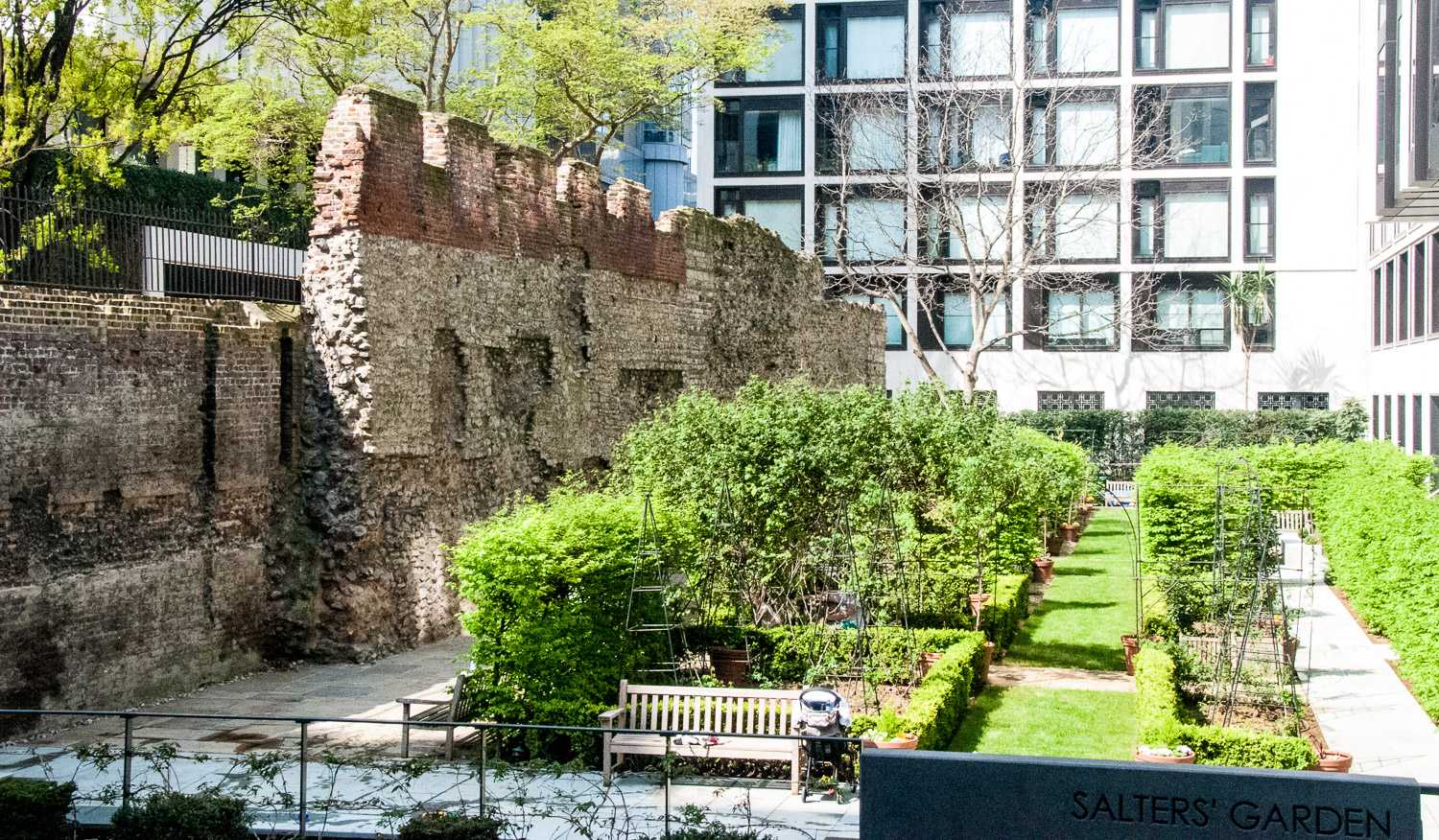
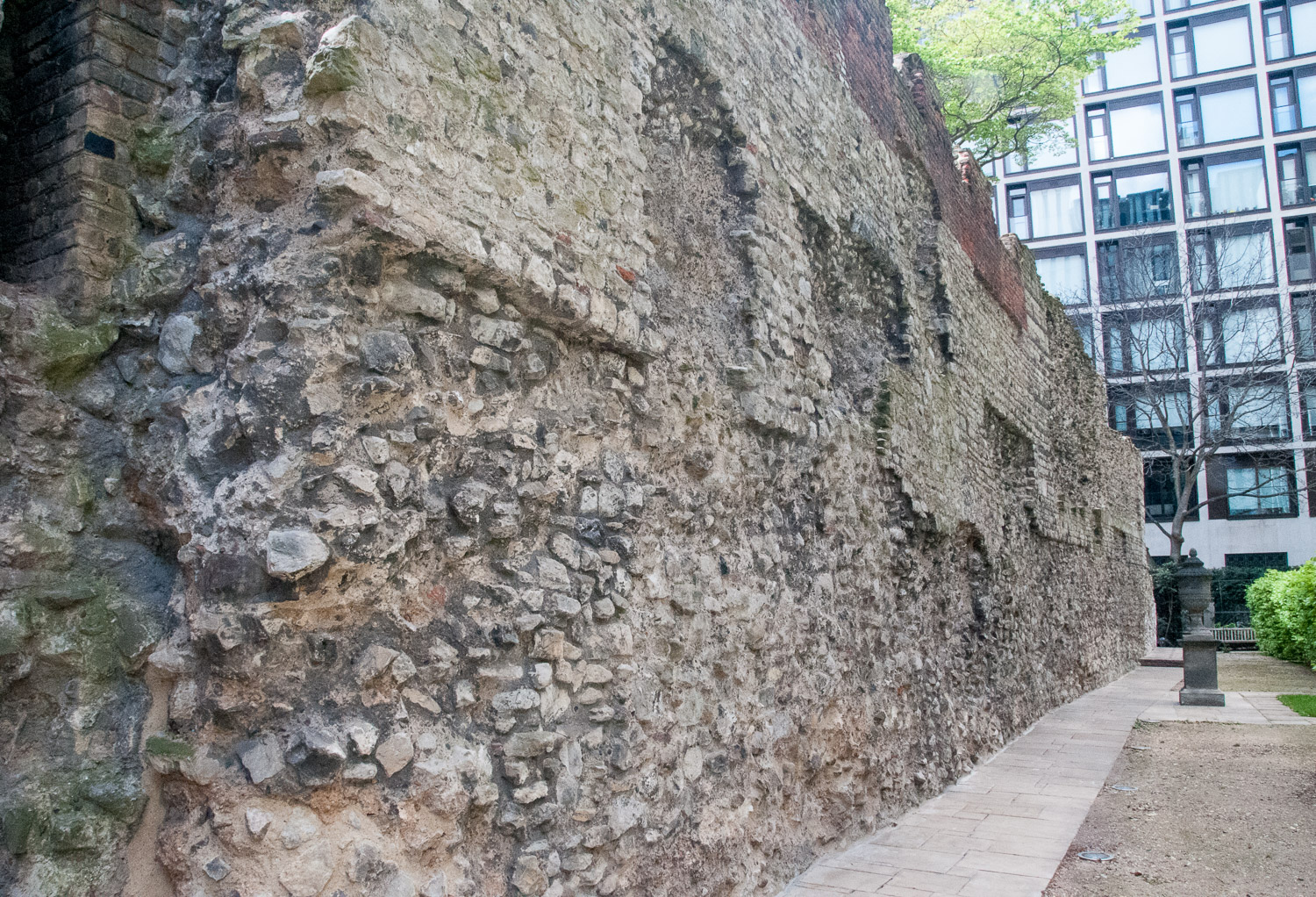
And here is a closer view …
 There is a new public space overlooking the garden which also accommodates the Minotaur who used to be a little isolated on the Highwalk …
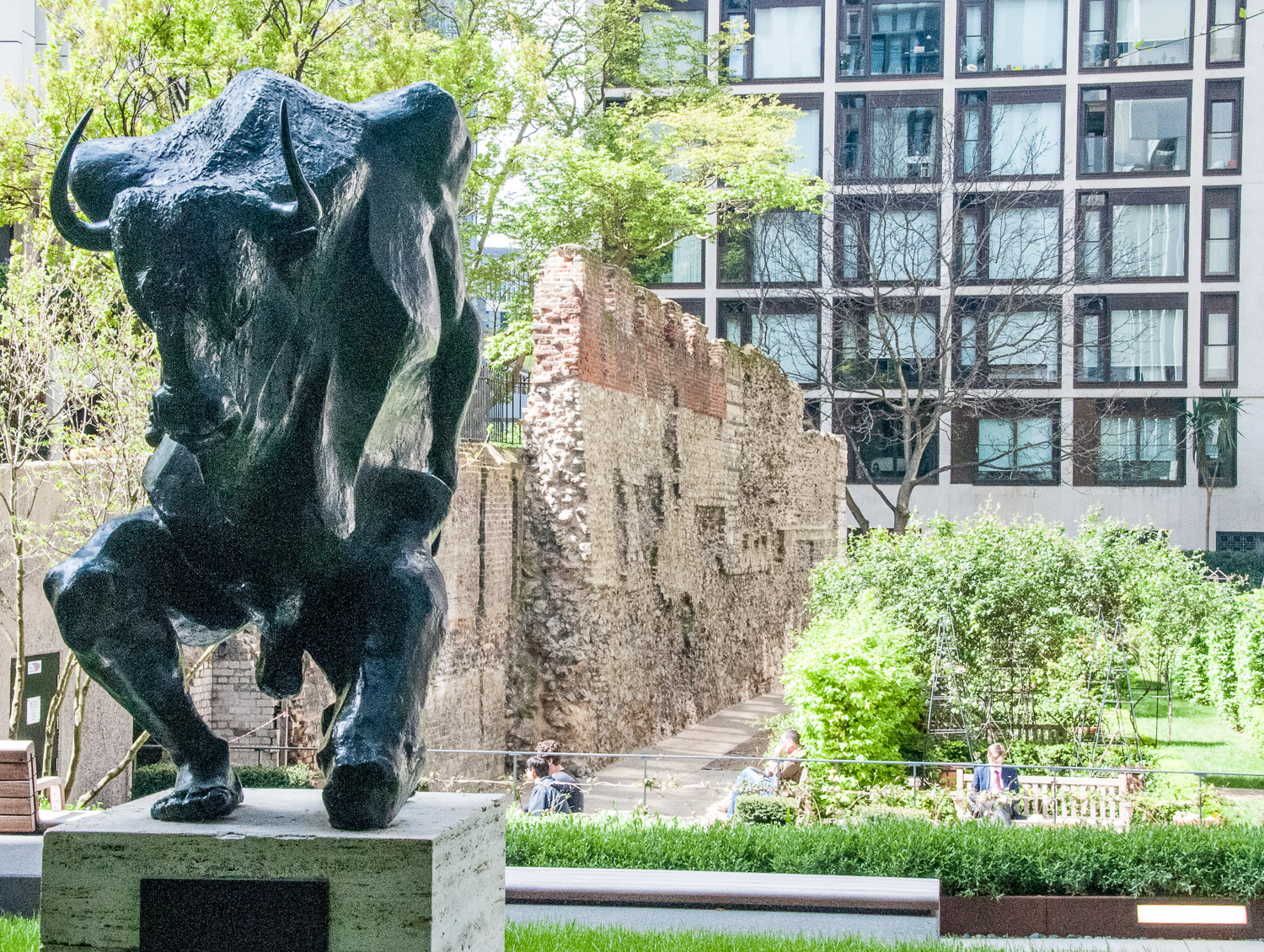
The Minotaur by Michael Ayrton (1968-9)

The Minotaur was originally sited in Postman’s Park and apparently there is a picture somewhere of it when it was unveiled in 1973 with Frederick Cleary standing beside it. Unfortunately I can’t find a copy of the photo but you will have read more about the estimable Mr Cleary in last week’s blog, City Gardens, since a garden was named after him.

Whilst walking along the Wallside Highwalk, I was lucky to catch the wall being used as a vantage point by the heron, a frequent Barbican visitor. He positions himself by the lake for hours at a time but I have never seen him catch a fish …
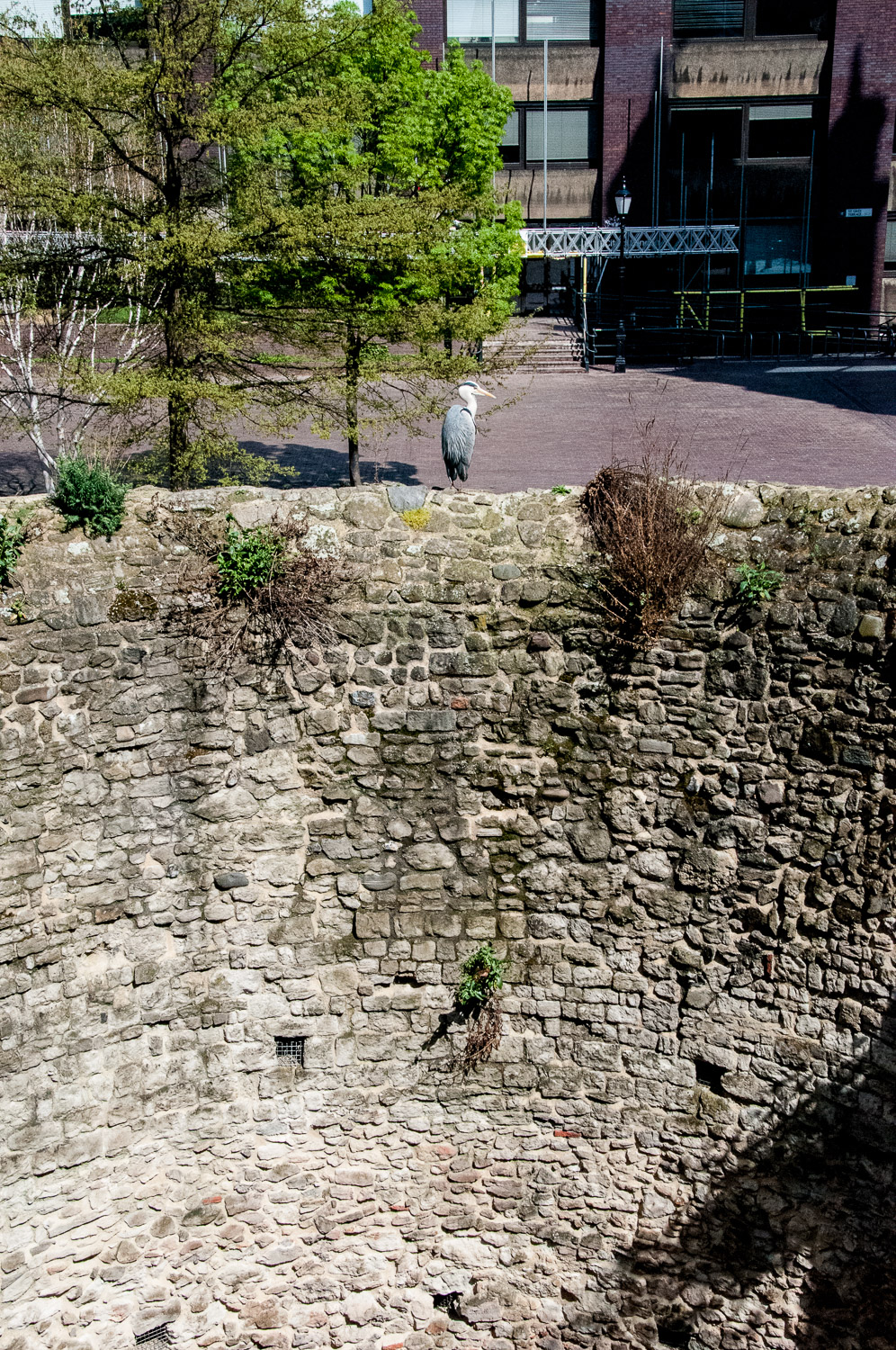
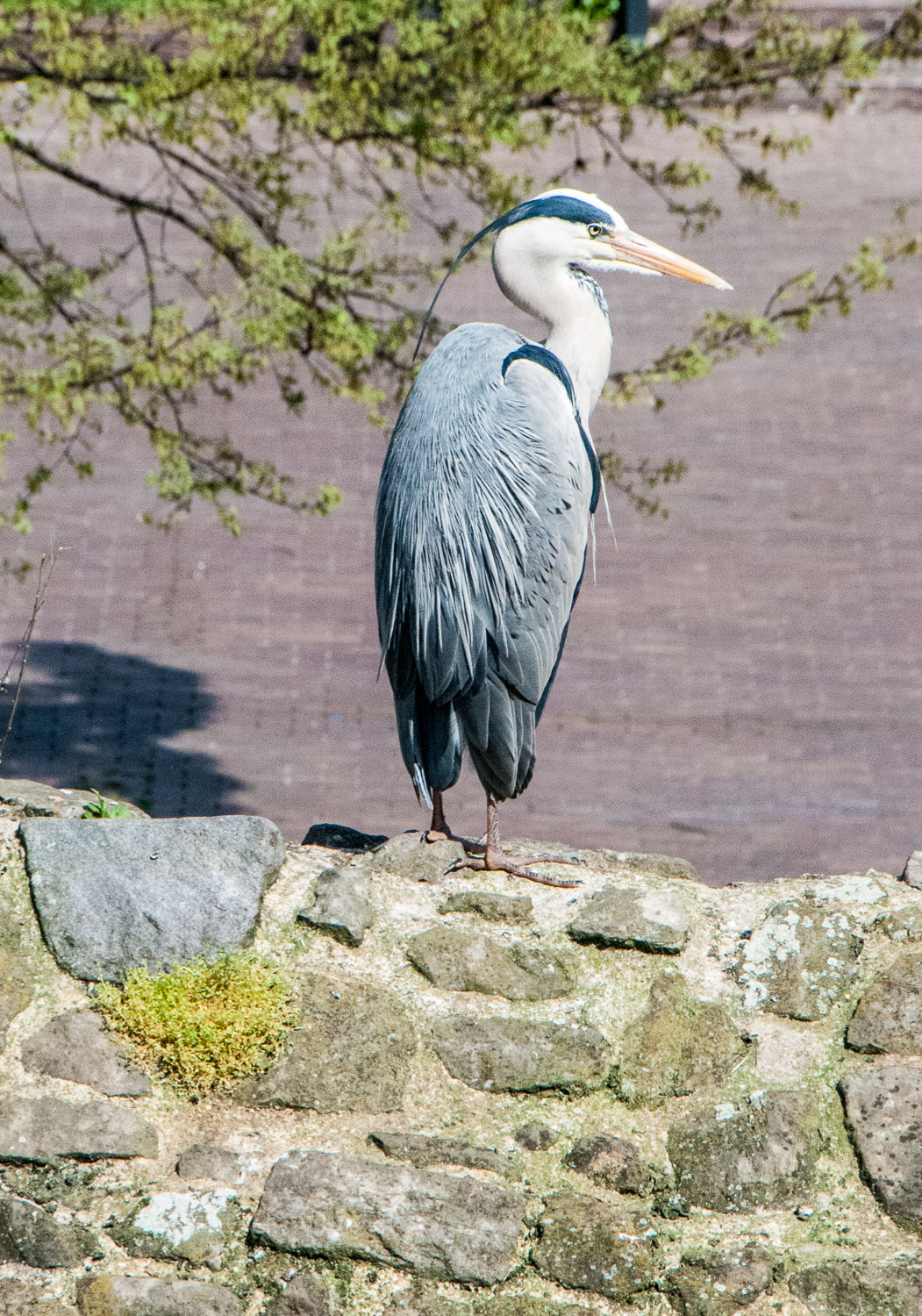
I think his Barbican nickname is Harry.

And finally, I am indebted to the Spitalfields Life blogger, the Gentle Author, for the following London Wall sighting.

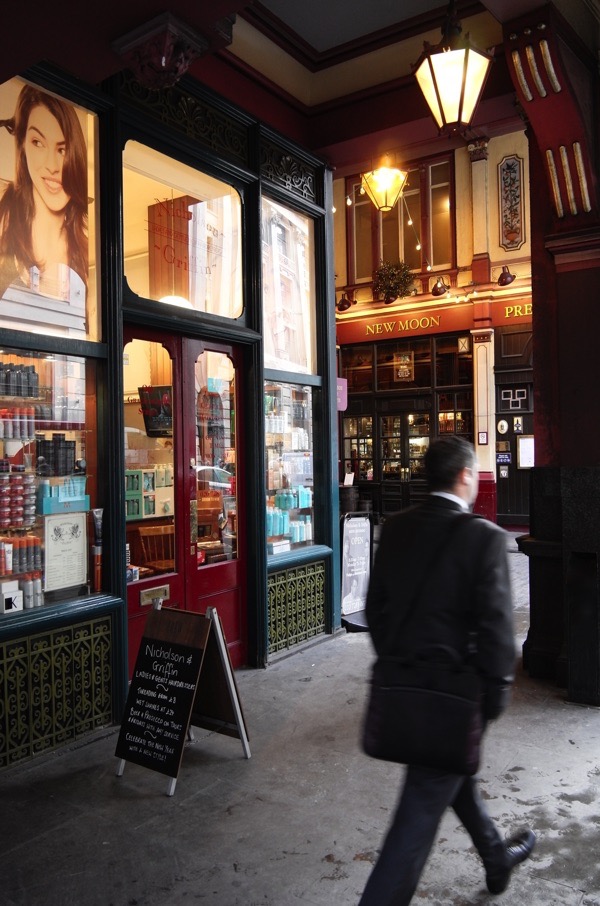
In Gracechurch Street, at the entrance to Leadenhall market, stands the premises of Nicholson and Griffin, Hairdresser and Barber

The Gentle Author visited the shop along with the Inspector of Ancient Monuments and the basement, where the wall can be accessed, is not open to the public. He describes the scene as follows …

At the far corner of this chamber, there is a discreet glass door which leads to another space entirely. Upon first sight, there is undefined darkness on the other side of the door, as if it opened upon the infinite universe of space and time. At the centre, sits an ancient structure of stone and brick. You are standing at ground level of Roman London …

Here are a few of his pictures …
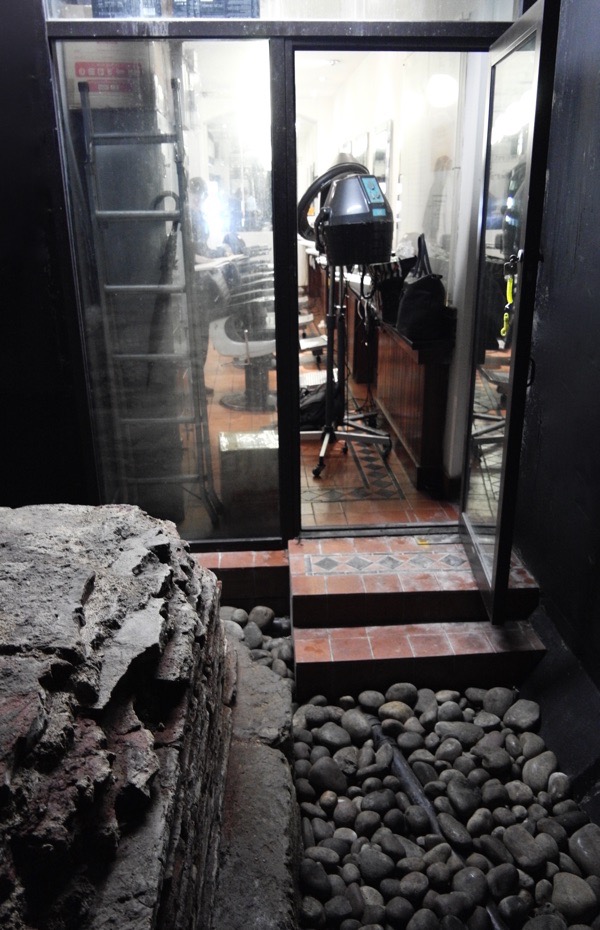
The entrance in the basement.
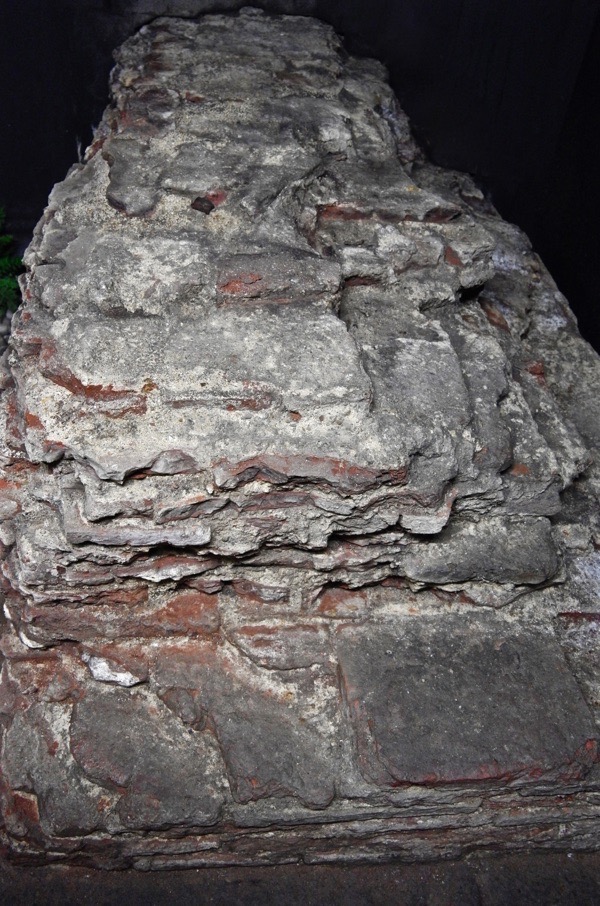
Part of the wall itself.

And he leaves us with this interesting thought …

Once upon a time, countless people walked from the forum into the basilica and noticed this layer of bricks at the base of the wall which eventually became so familiar as to be invisible. They did not expect anyone in future to gaze in awe at this fragment from the deep recess of the past, any more than we might imagine a random section of the city of our own time being scrutinised by those yet to come, when we have long departed and London has been erased.

If you would like to read more about this site and see more pictures, search for Spitalfields Life – the Roman ruins at the hairdressers.
 

City Gardens

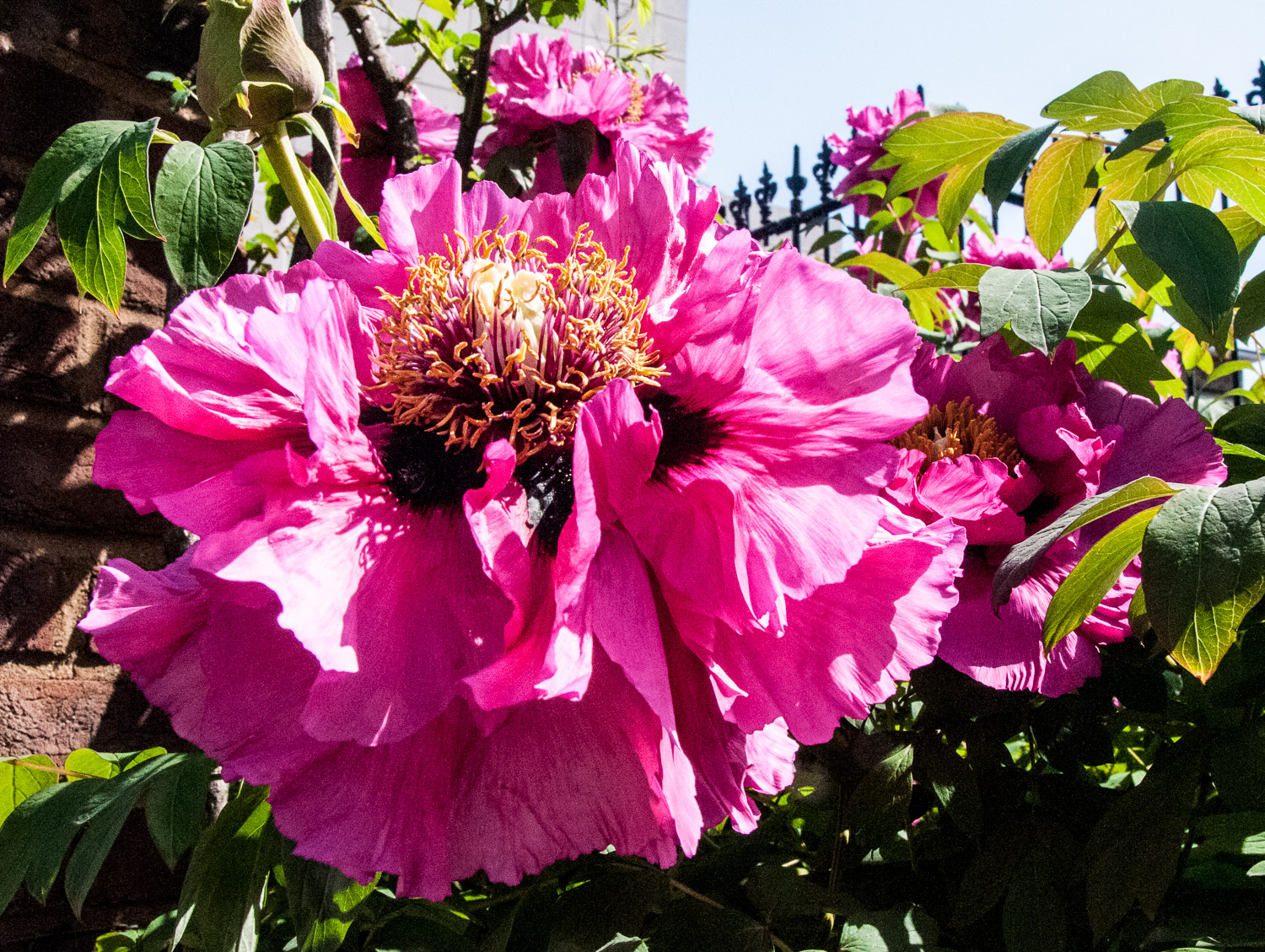
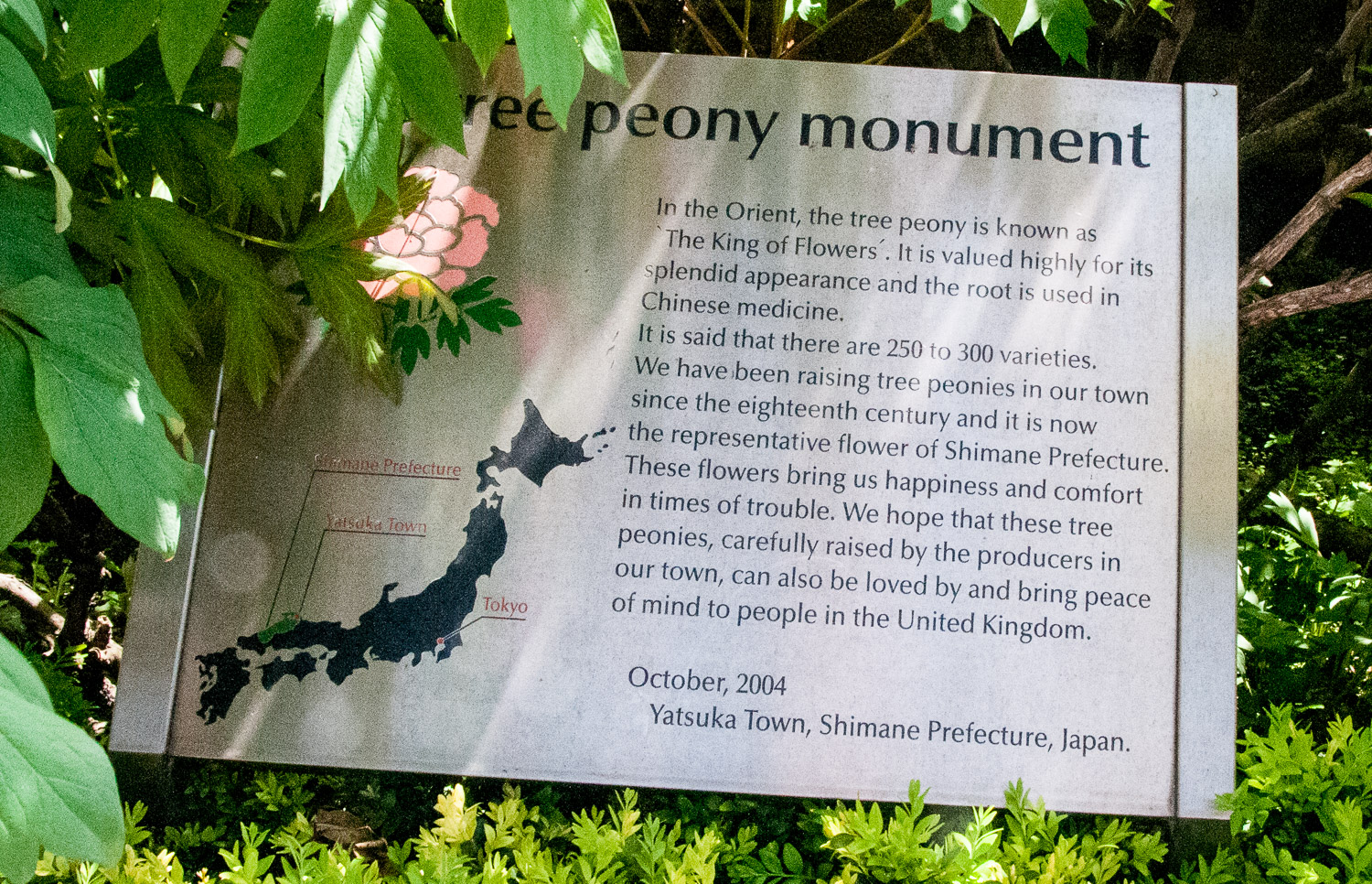
Well, I didn’t know that the little town of Yatsuka in Japan had presented the City with a rather special gift in 2004 – a selection of tree peonies to bring ‘peace of mind to people in the United Kingdom’. I took this picture of one last week when we actually had some sun …

You will find it on Queen Victoria Street EC4V 2AR, the junction with Huggin Hill.

The commemorative plaque.

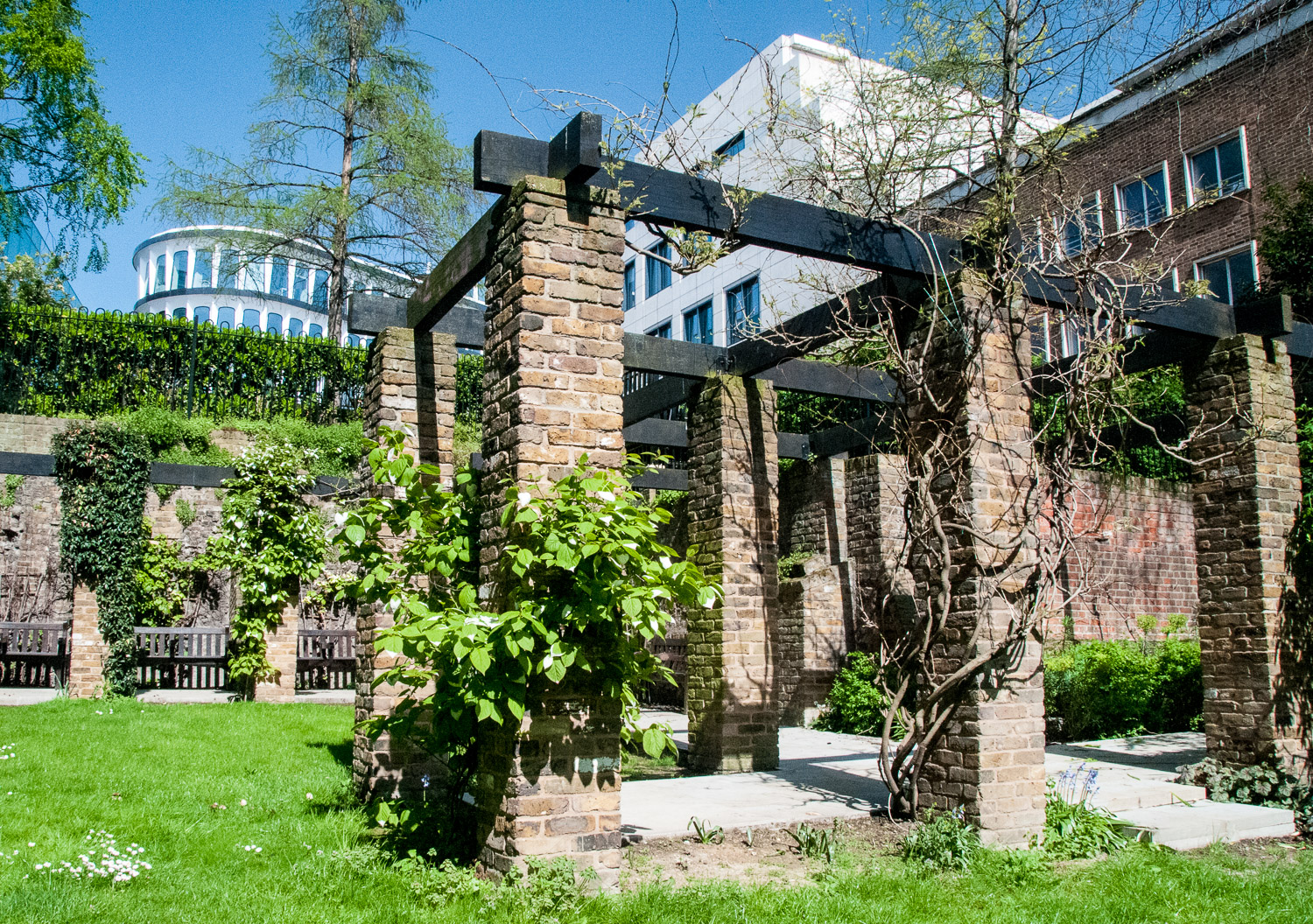
The pergola beside where the peonies live is part of the Cleary Garden – walk alongside the flowers, down some steps, and you can enjoy its quiet seclusion …

The Cleary Garden.

The City Gardens Guide tells us the garden is named after Fred Cleary who, during the 1970s, was instrumental in encouraging the planting of trees and the creation of new gardens throughout the square mile. During the blitz, the house which once stood here was destroyed exposing the cellars. A shoemaker called Joe Brandis decided that he would create a garden from the rubble, collecting mud from the river banks and transporting soil from his own garden in Walthamstow to the site. His success was such that on 29th July 1949 Queen Elizabeth the Queen Mother visited his handiwork.

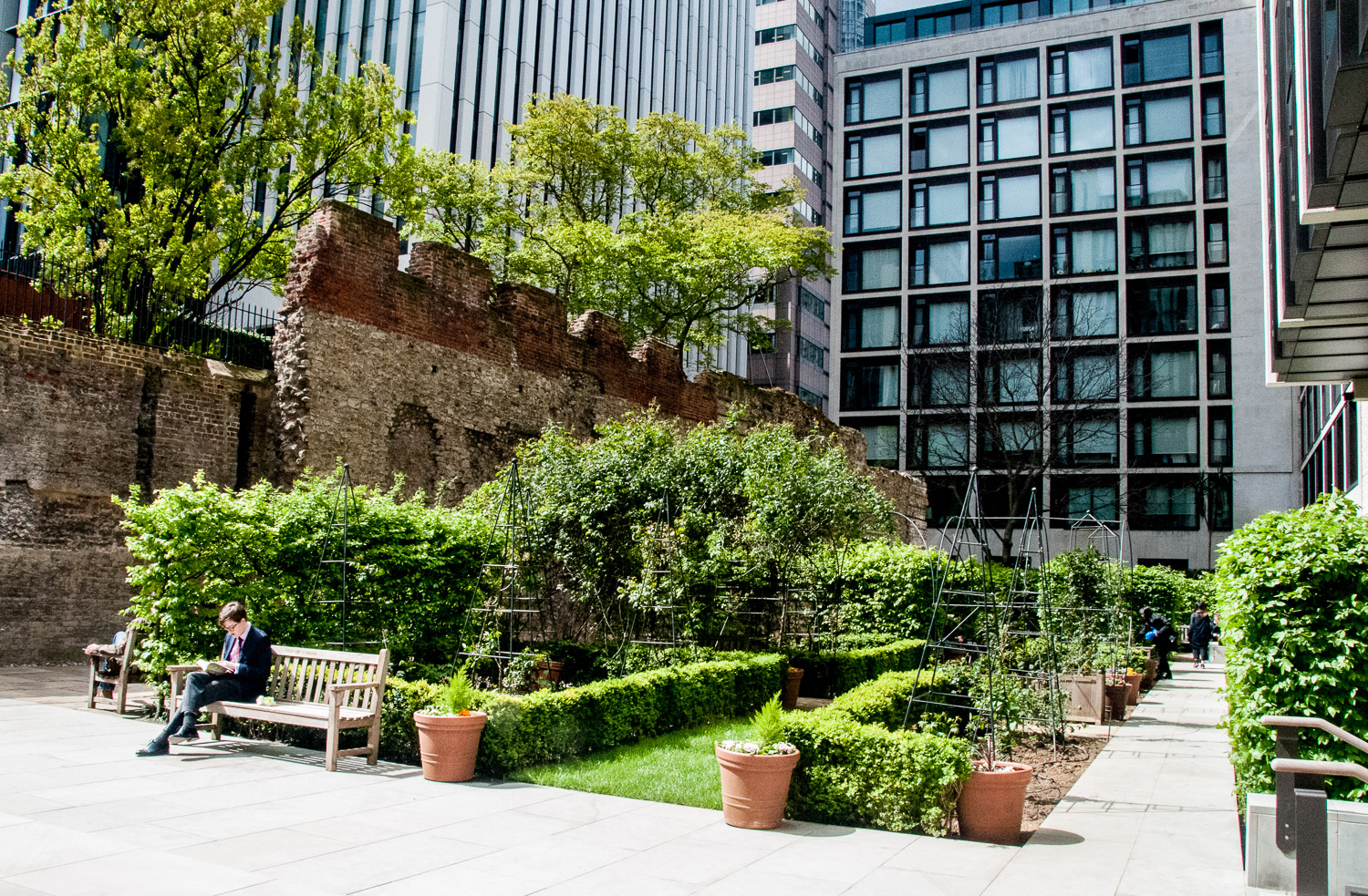
Lots of construction work has been going on around Fore Street and London Wall for years but it is now reaching its conclusion. One great benefit at street level has been the opening up of more public space. Part of this is the Salters’ Hall Garden which nestles alongside the Roman wall …

The Salters’ Hall Garden, 4 Fore Street EC2Y 5DE.

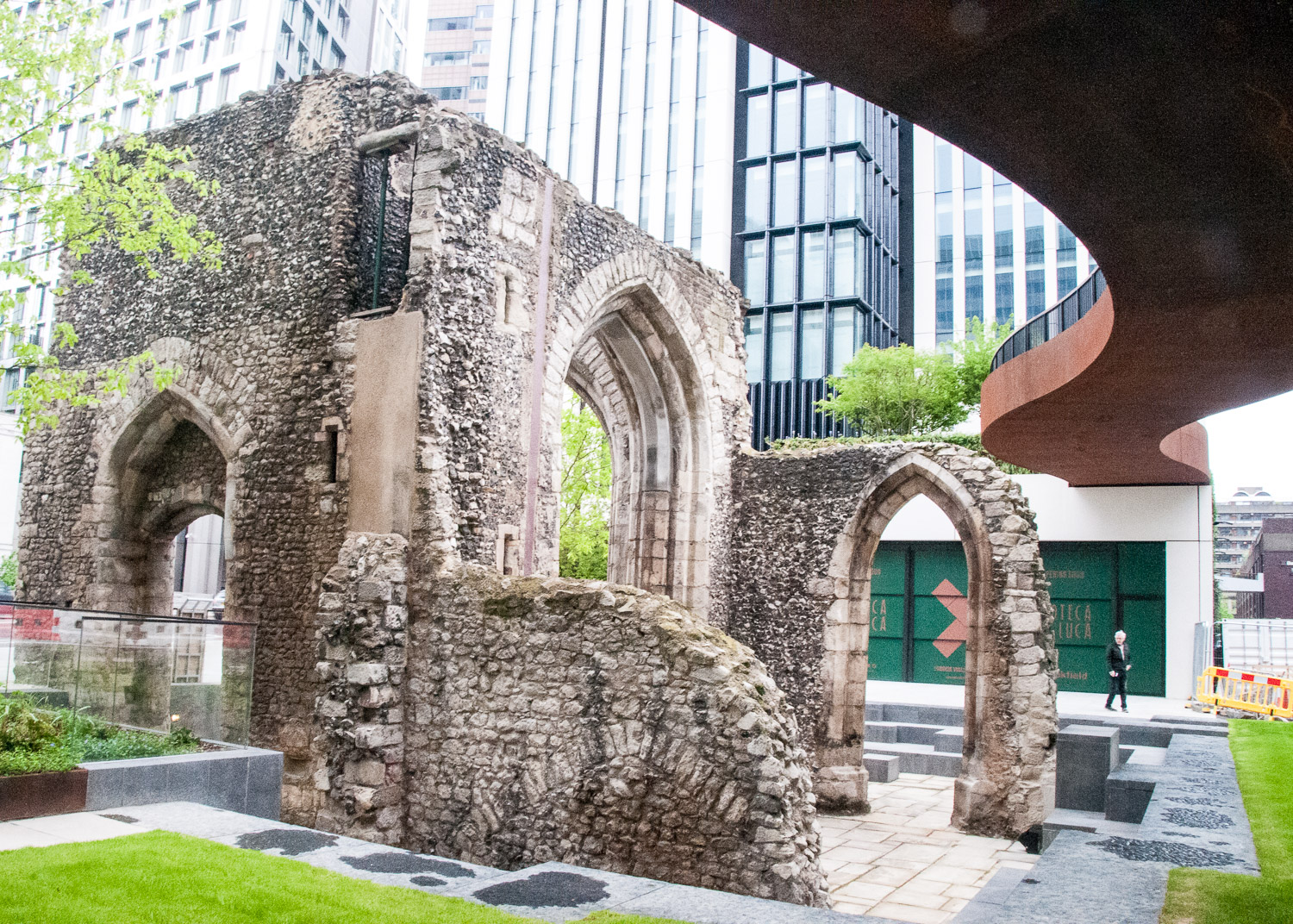
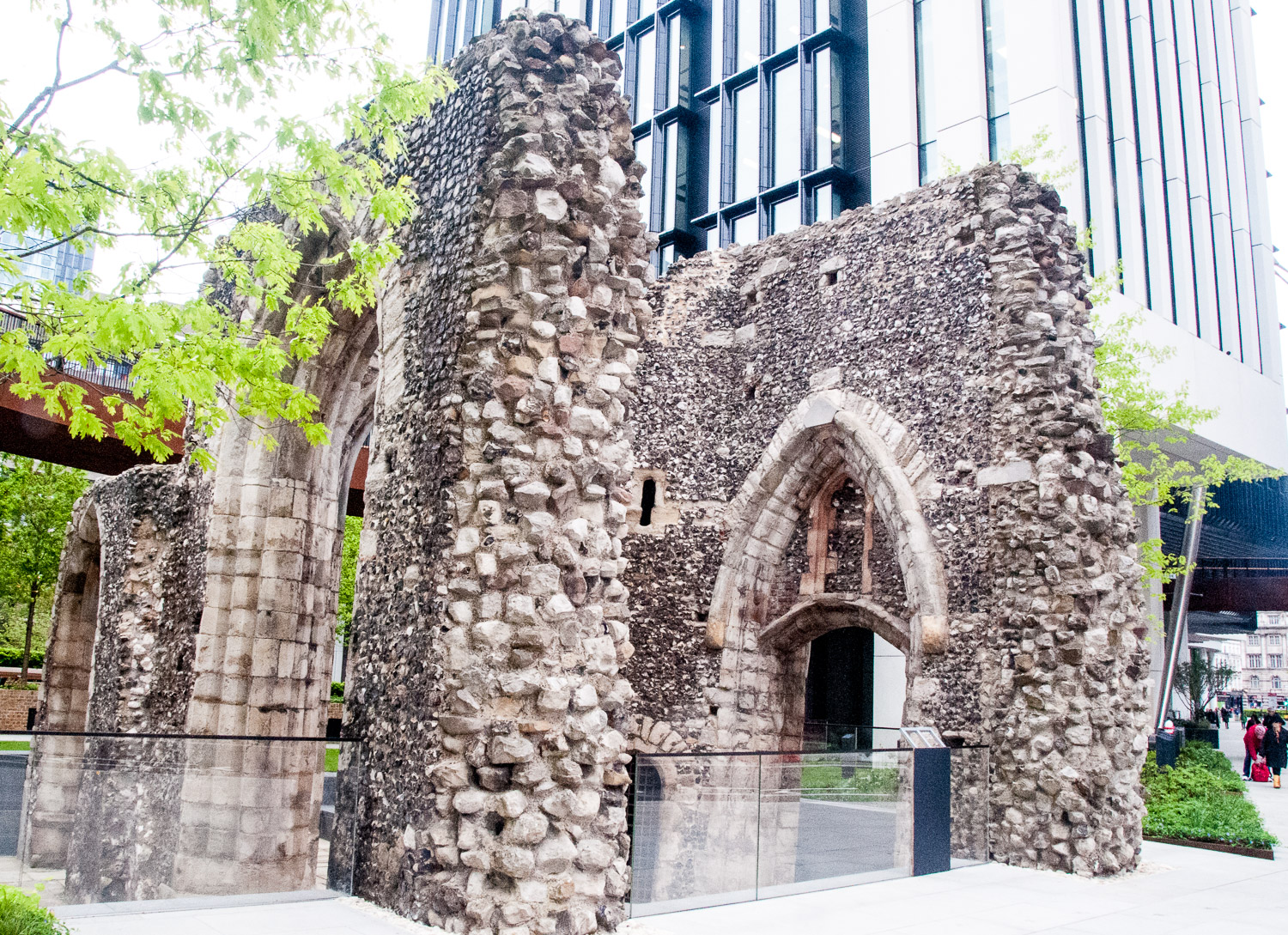
The ruins of the old St Alphage Priory are also now more accessible …

The new Barbican Highwalk weaves its way overhead.

Another view from London Wall.

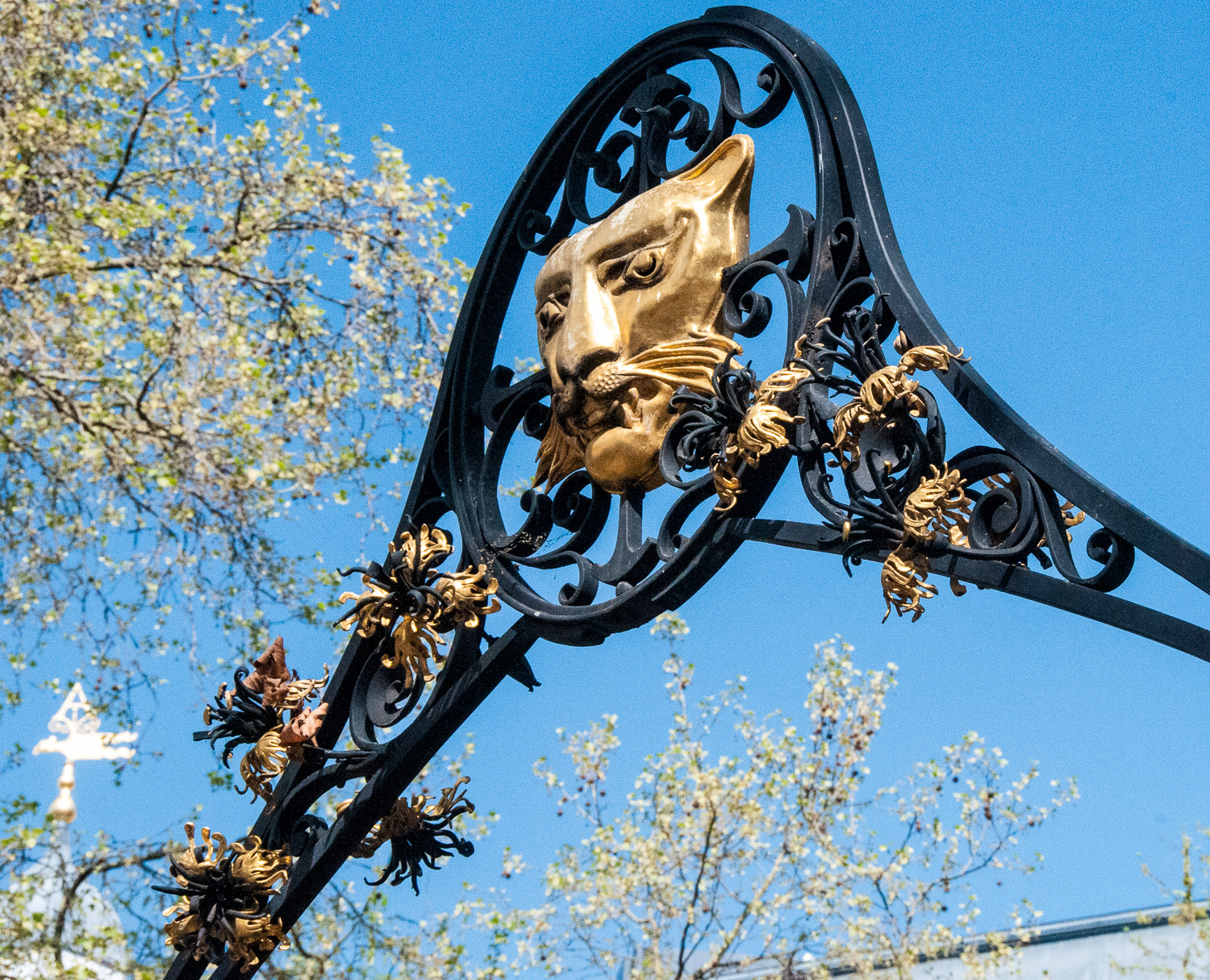
The arch entrance to the churchyard of St John Zachary is very impressive …

25 Gresham Street EC2V 7HN.

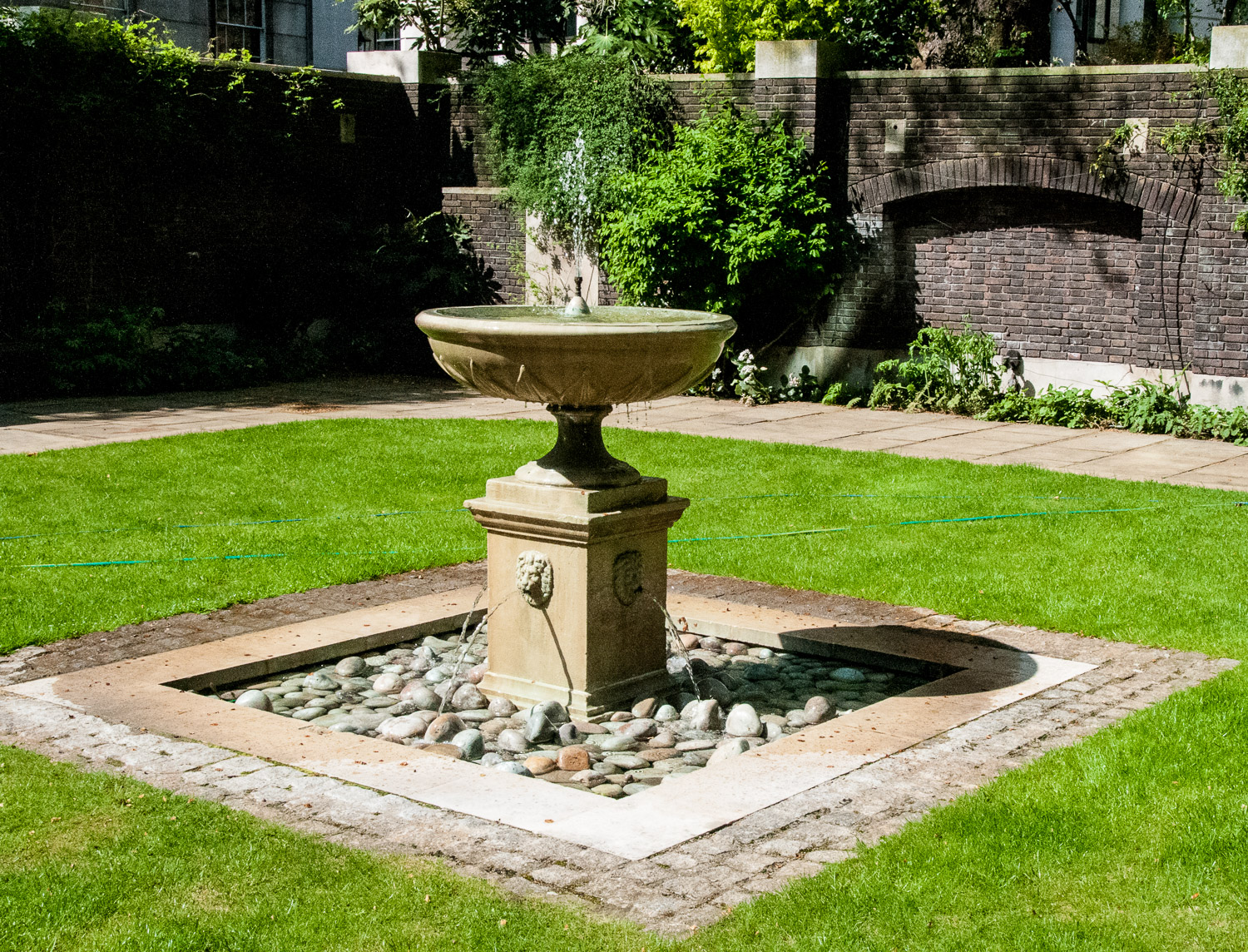
It incorporates the leopard’s head hallmark of the Goldsmiths’ Company Assay Office and the Company livery hall is nearby across the road. Garden features include a fountain …

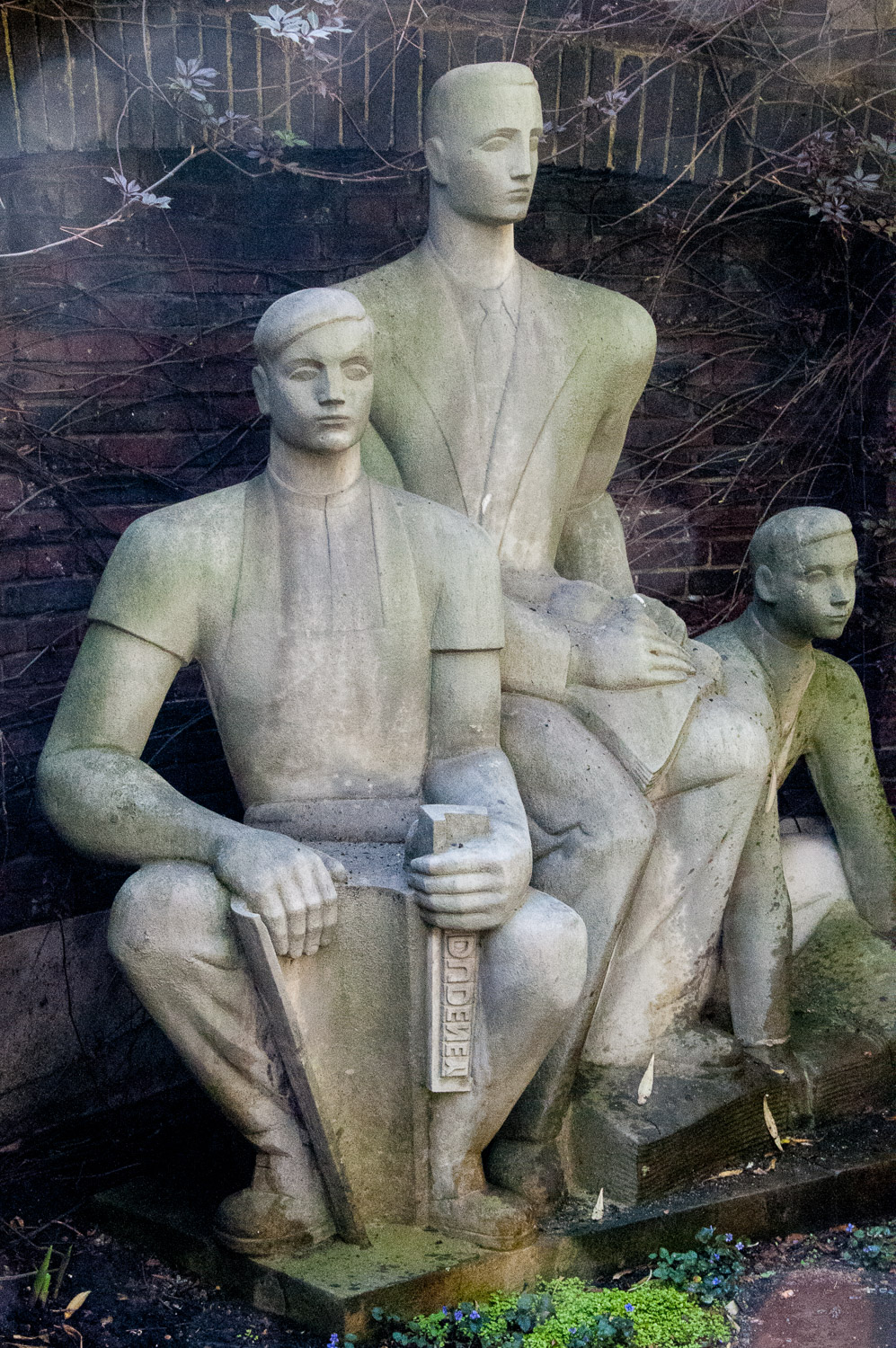
And an intriguing Portland stone statue …

Wilfred Dudeney’s monument Three Printers (1954) has been here since 2009. Commissioned by the Westminster Press Group, it represents the newspaper process with a newsboy (sales), printer and editor (or proprietor), and used to stand by their offices in New Street Square. When the square was redeveloped the Goldsmiths’ Company, as the freeholders of the square, relocated the sculpture here (they had to rescue it from a demolition yard). Look closely, the printer is grasping a ‘stick’ for holding metal type, and Dudeney’s name is in ‘mirror writing’ just as it would have been when typeset the old-fashioned way.

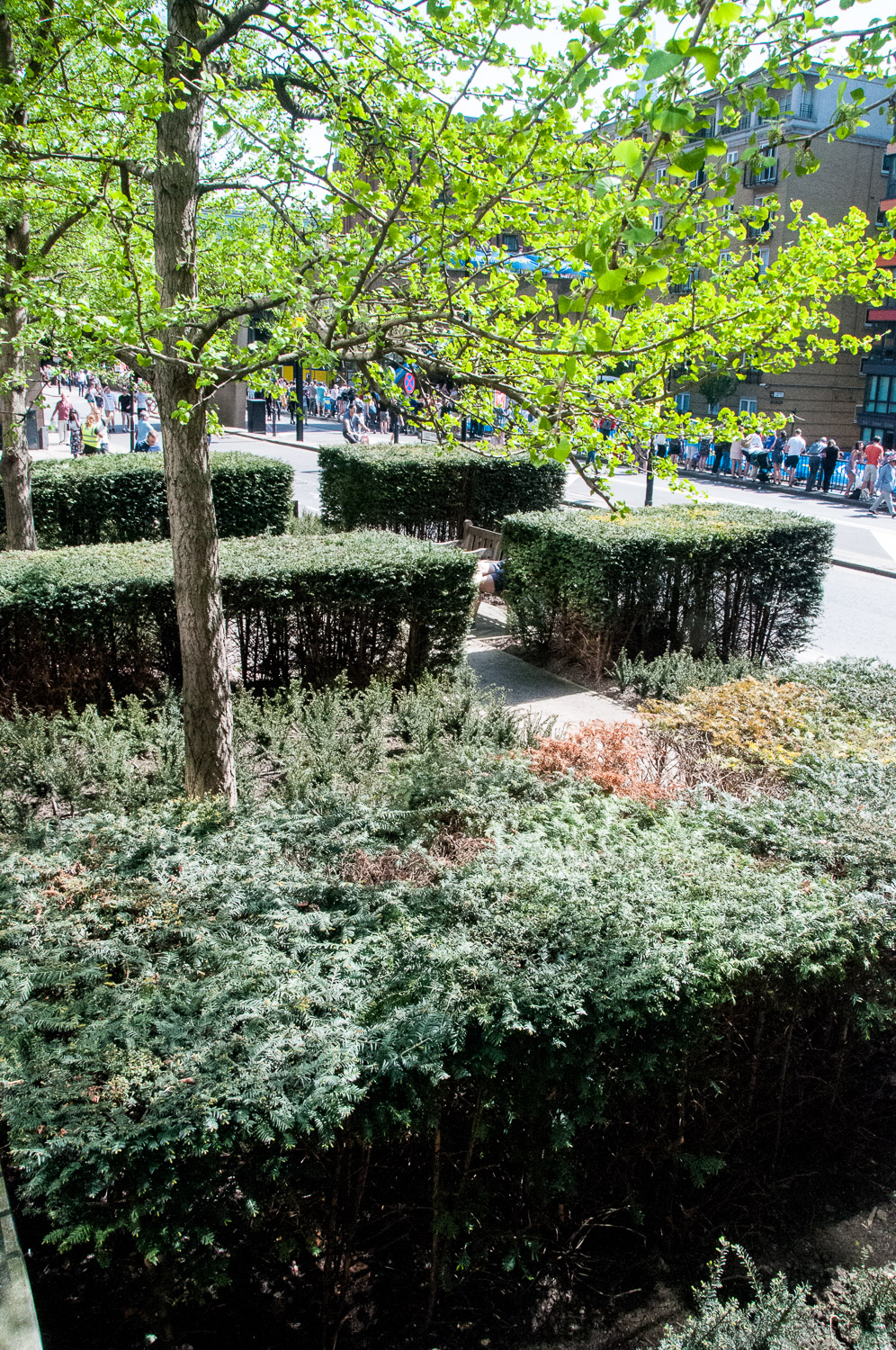
When I visited the little garden at St Mary Somerset it was the day of the London Marathon and spectators had gathered alongside Upper Thames Street …

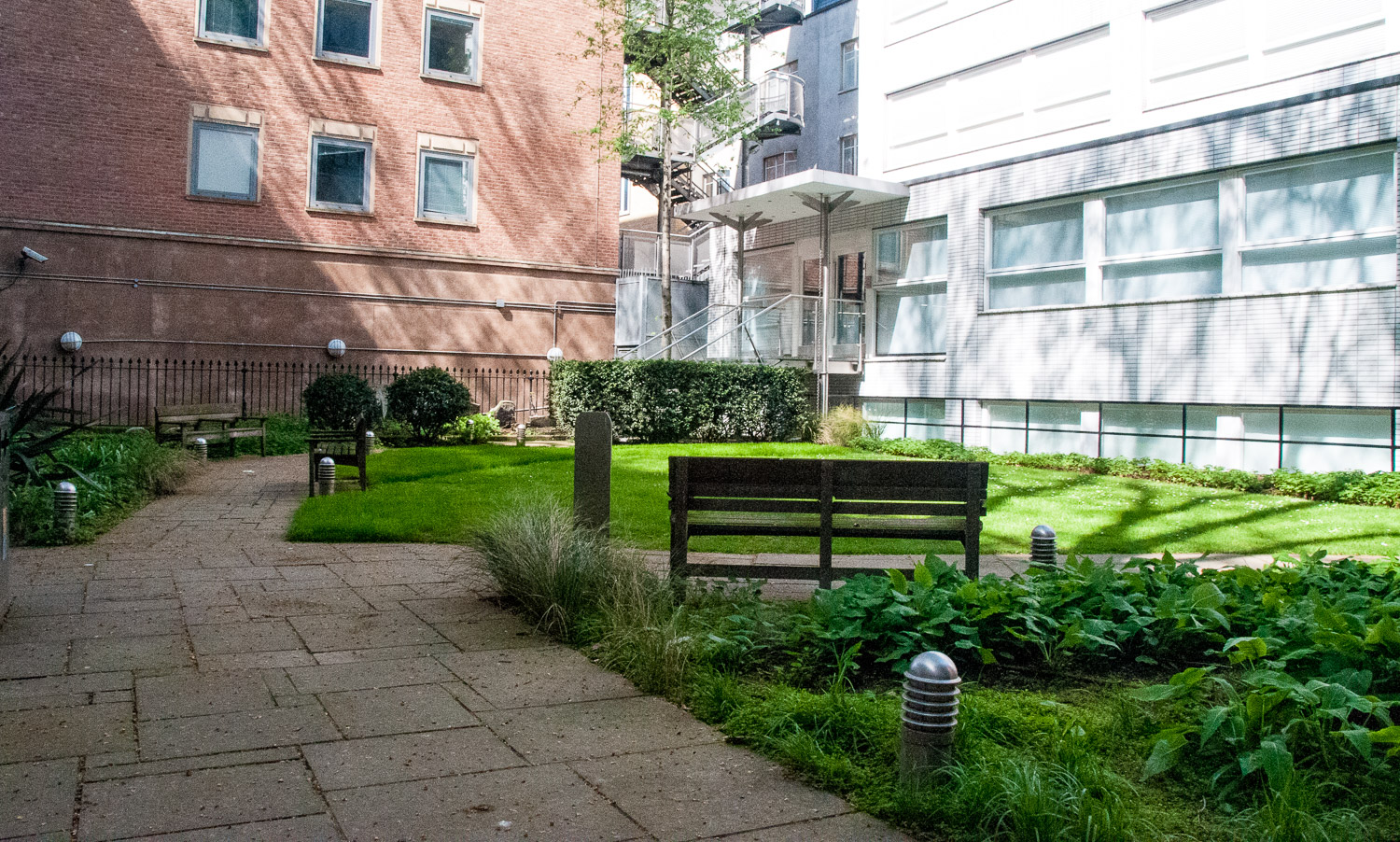
The garden is in two parts and separated by the church tower …

Part of the St Mary Somerset garden.

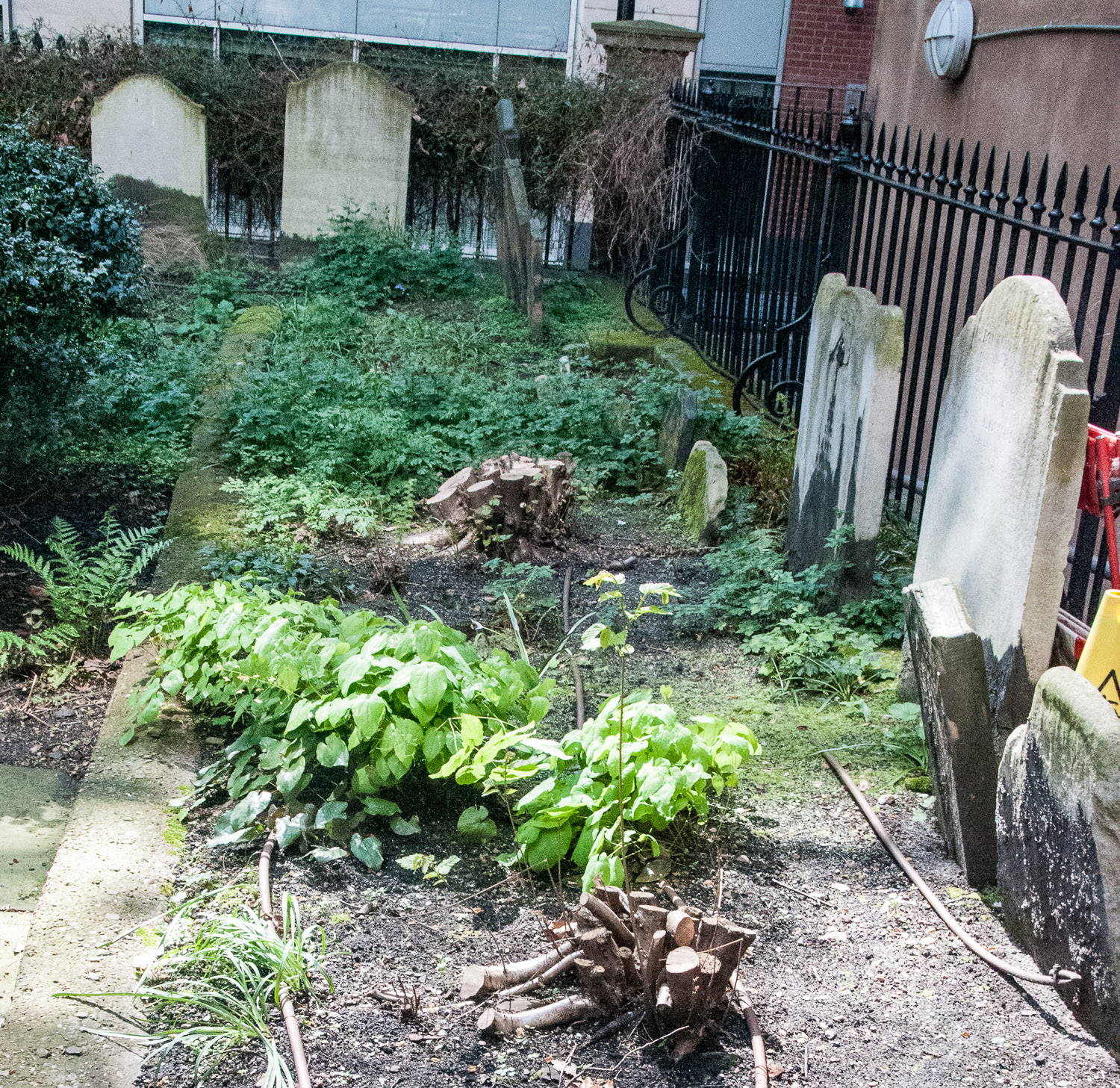
Something else I only discovered recently was that St Dunstan-in-the-West had a burial ground separate from the church – it’s located at Breams Buildings EC4A 1DZ …

The garden is a fragment of the former burial ground with the church located further south facing onto Fleet Street. Bream’s Buildings was an 18th century close off Chancery Lane that was extended to Fetter Lane in 1882.

A few tombstones remain.

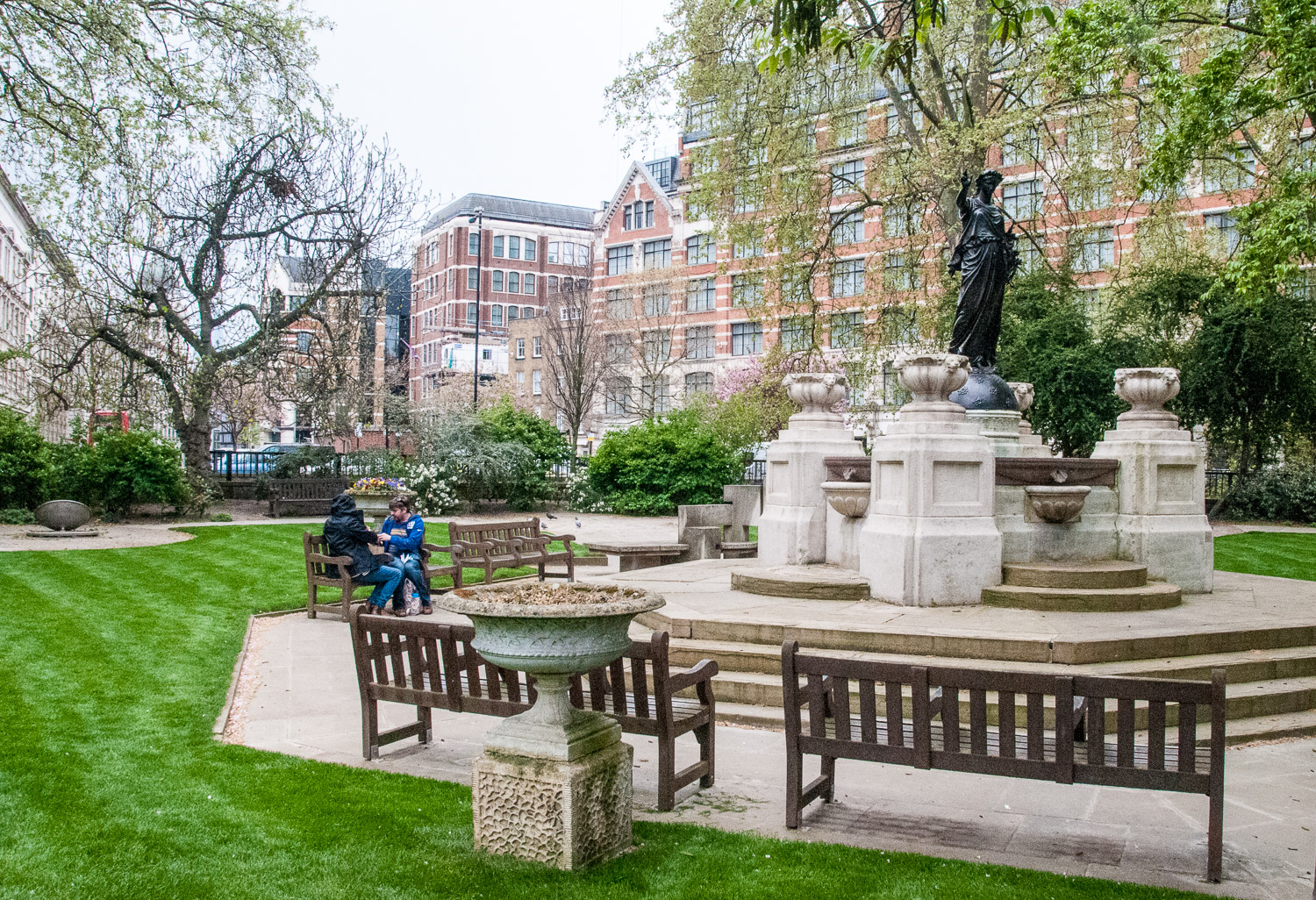
This pretty little expanse of green is in the middle of the West Smithfield Rotunda (EC1A 9BD) …

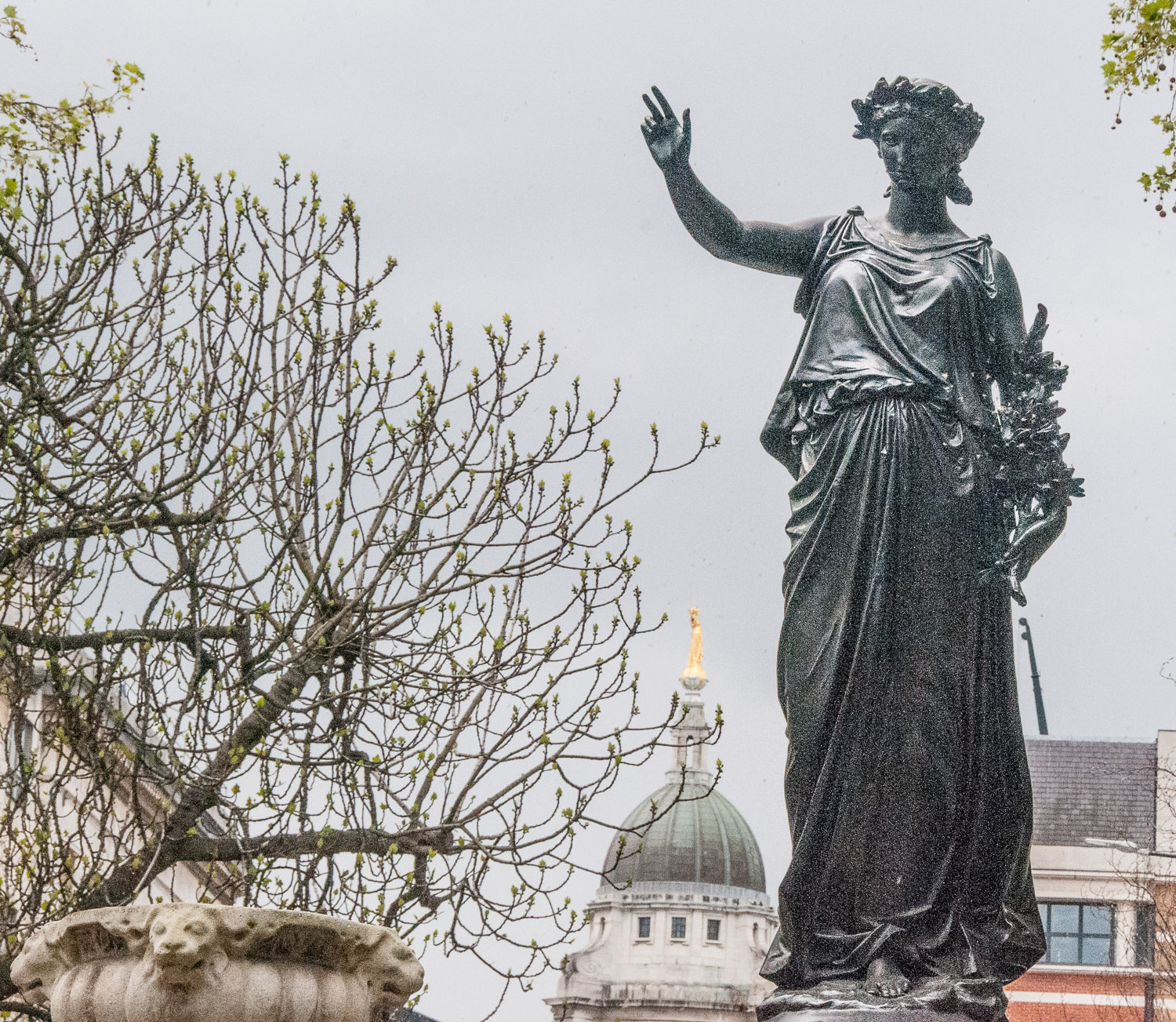
The site was laid out as public gardens by the Corporation of London and opened to the public in 1872. A drinking fountain with a bronze figure representing ‘Peace’ was erected in 1873 …

‘Peace’, with Lady Justice atop the Old bailey in the background.

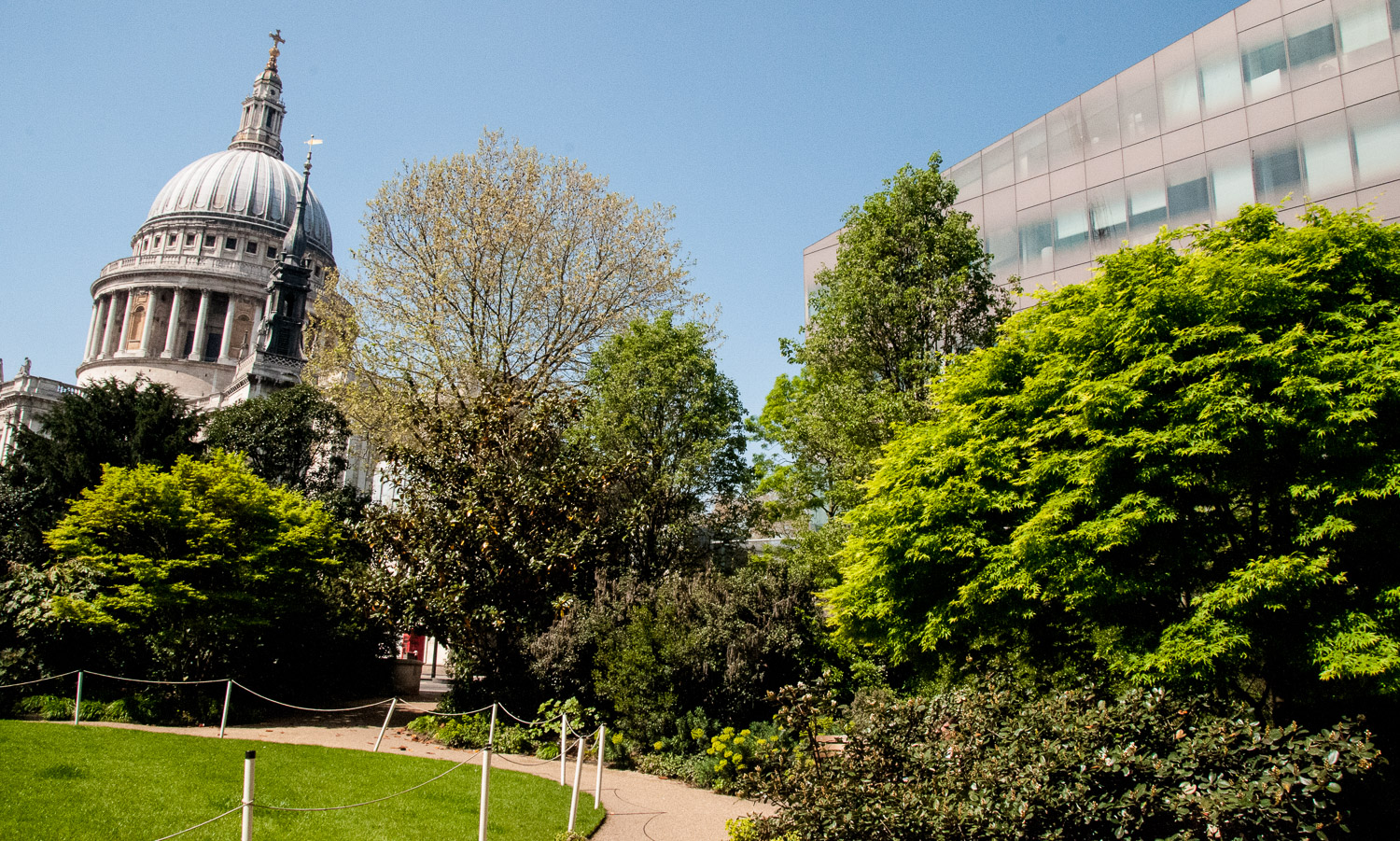
I don’t think this garden has a formal name but it is sheltered from the traffic and has nice views of St Paul’s and St Augustine with St Faiths …

Junction of New Change and Cannon Street.

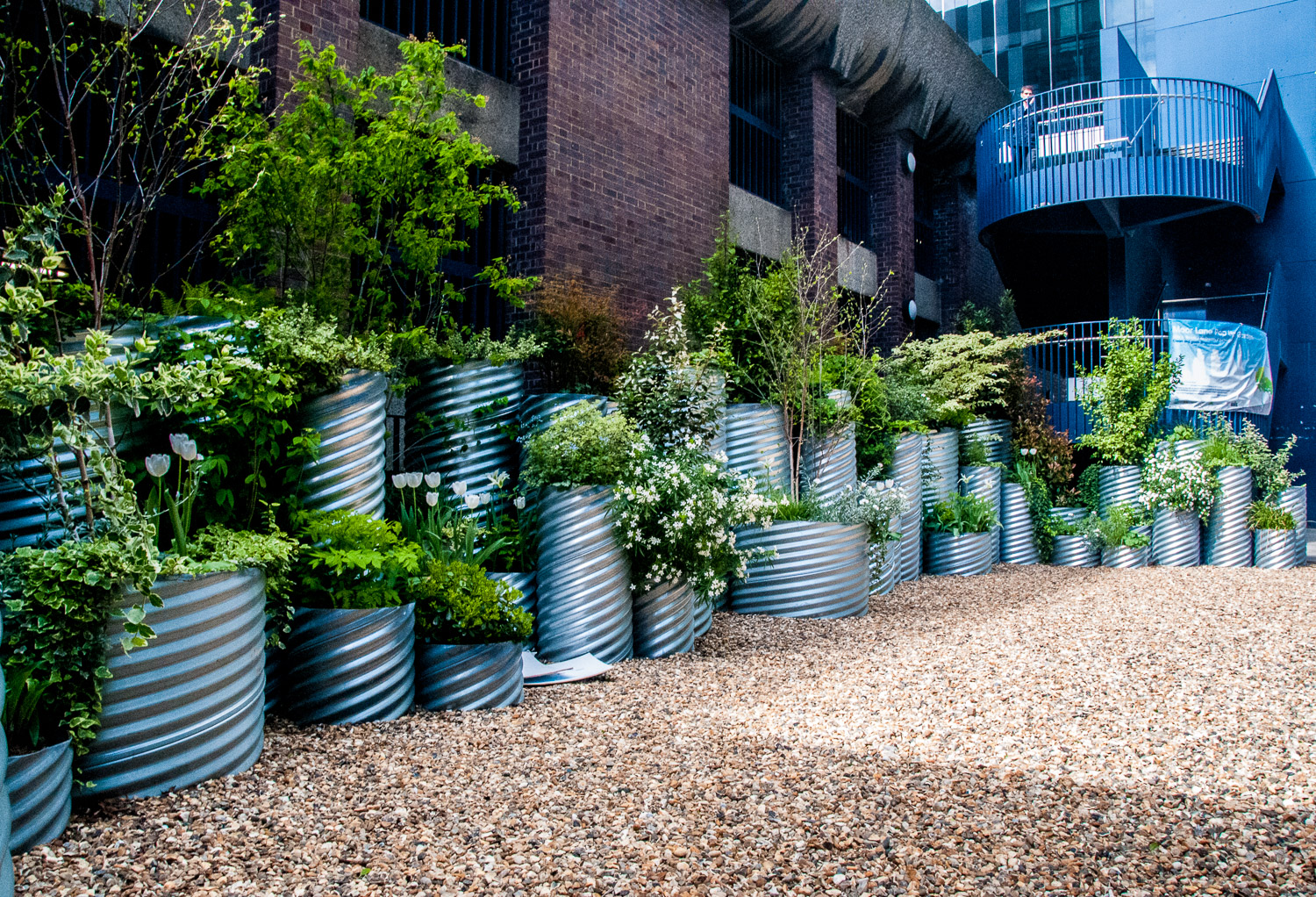
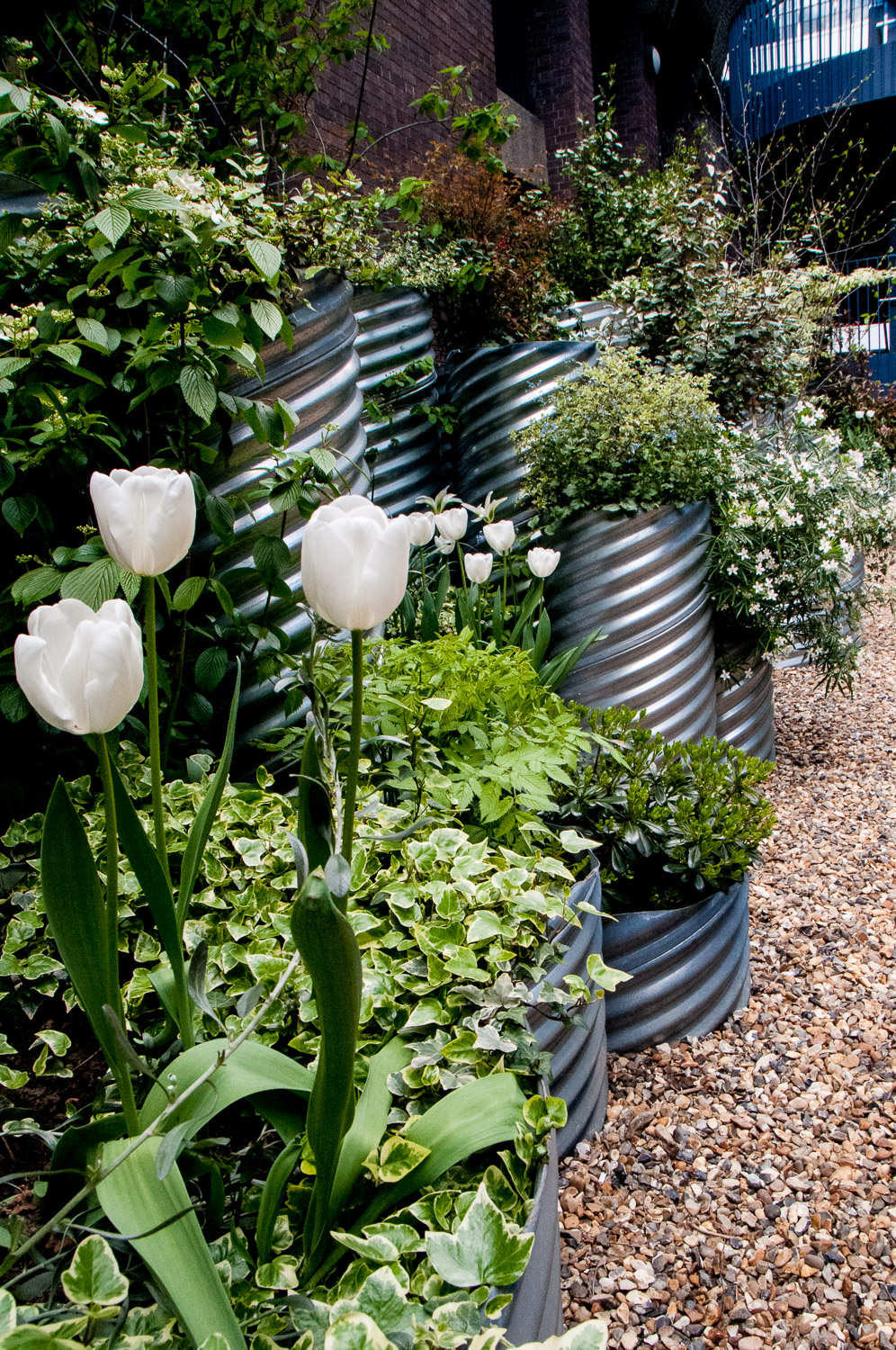
And finally the Moor Lane pop up garden, the first in a series of pop-up gardens commissioned by the City of London. It improves the environment in more ways than one – adding a splash of green to the City’s streets, whilst also helping to improve the quality of it’s air.

Moor Lane EC2Y 9DP.

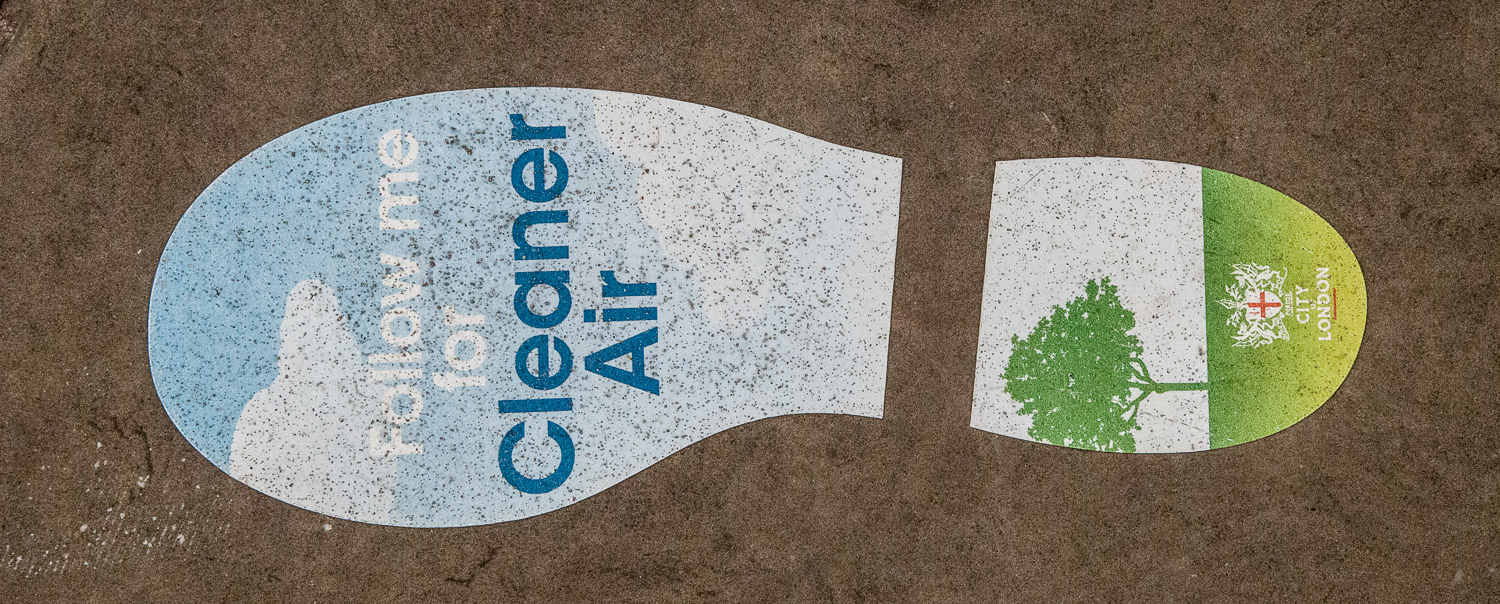
It was designed by Studio Xmple, built by volunteers from Friends of City Gardens and its launch coincided with the UK’s first National Clean Air Day. This aims to raise awareness about the harmful effects of air pollution and educate about how to reduce exposure to it.


The City’s little museums 2

Before Melania Trump arrived in the White House, only one US President’s wife had been born outside America – read on to see who she was.

My first visit was to the Bank of England Museum in Bartholomew Lane EC2. Interactive exhibits mean you can have a go at setting monetary policy or try to navigate some tricky financial crises. It’s a great museum but unfortunately many of the exhibits (such as the building’s architectural development) are not easily photographed so you will have to visit in person to see more.

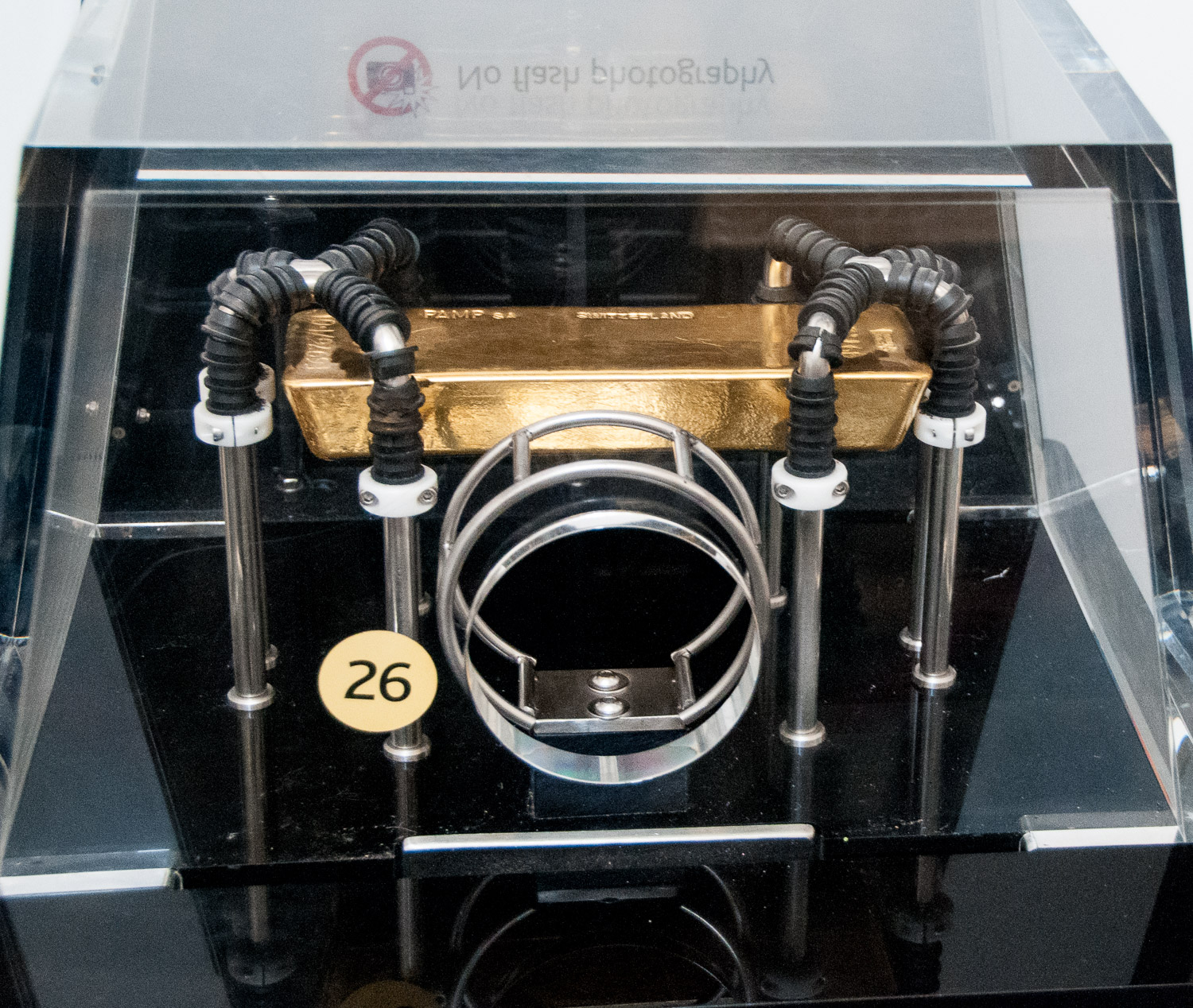
Among the fun things you can do there is to reach into a box and try to pick up a 13 kilo (28 lb) gold bar …

It’s 99.79% pure gold.

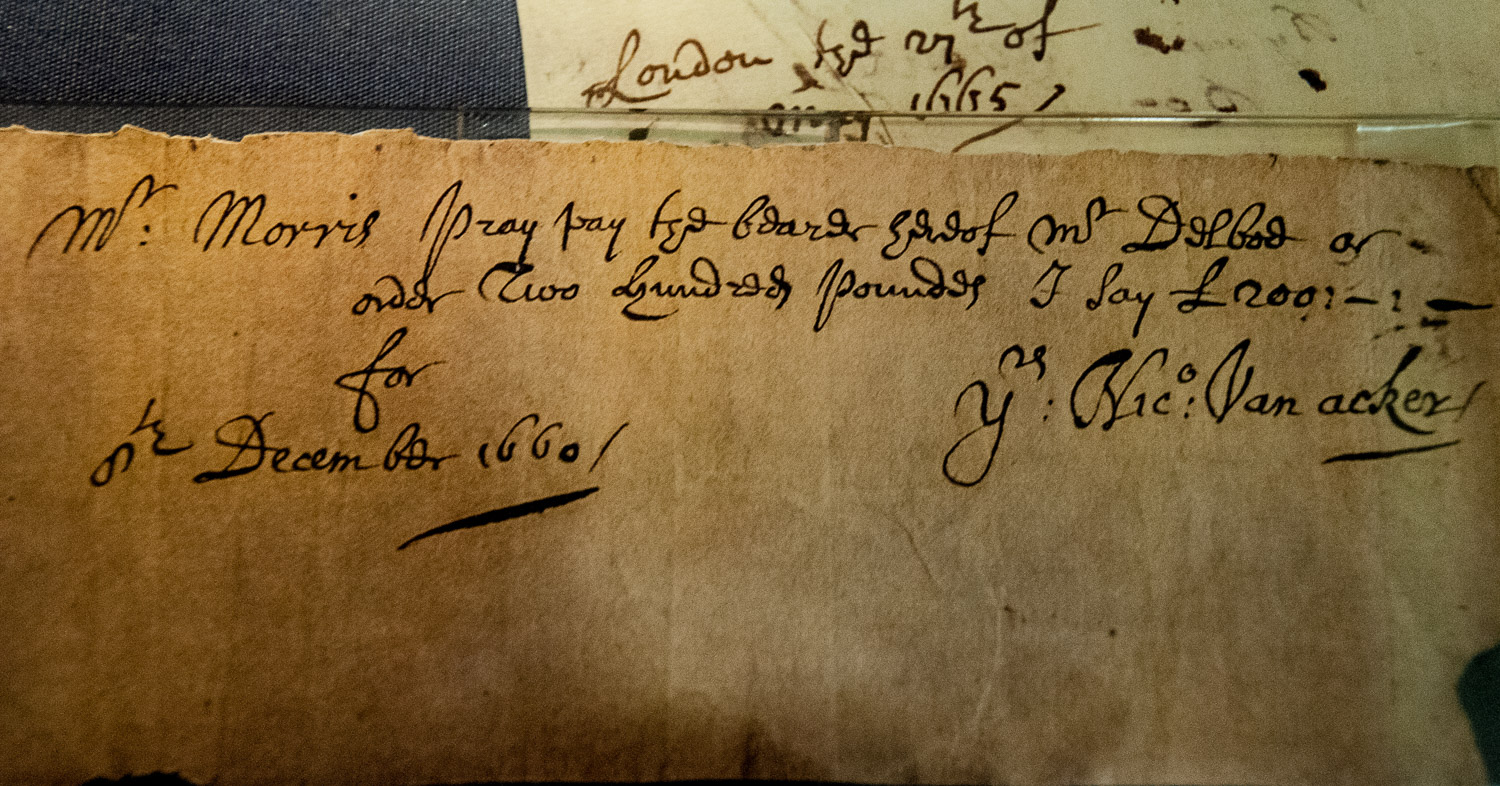
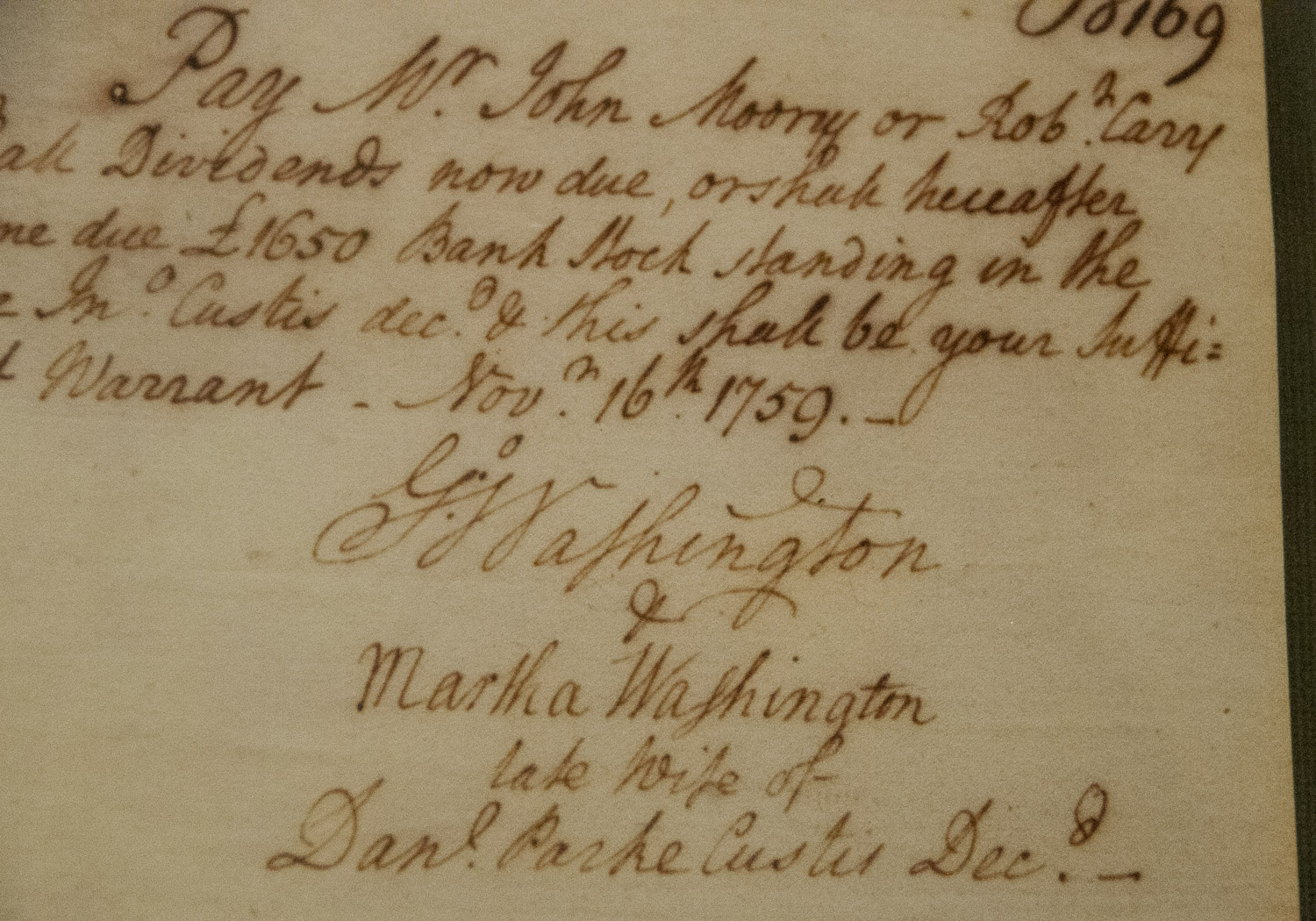
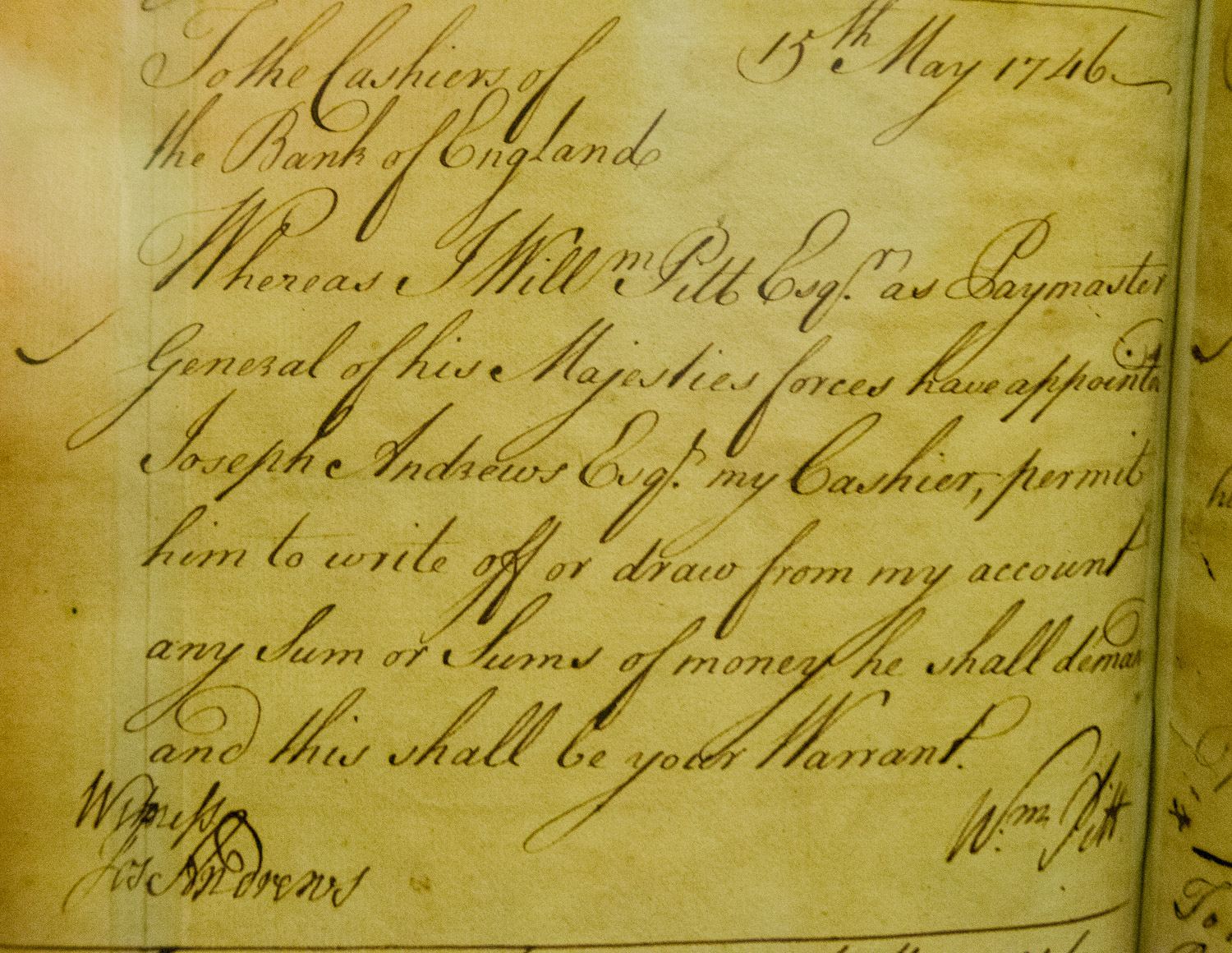
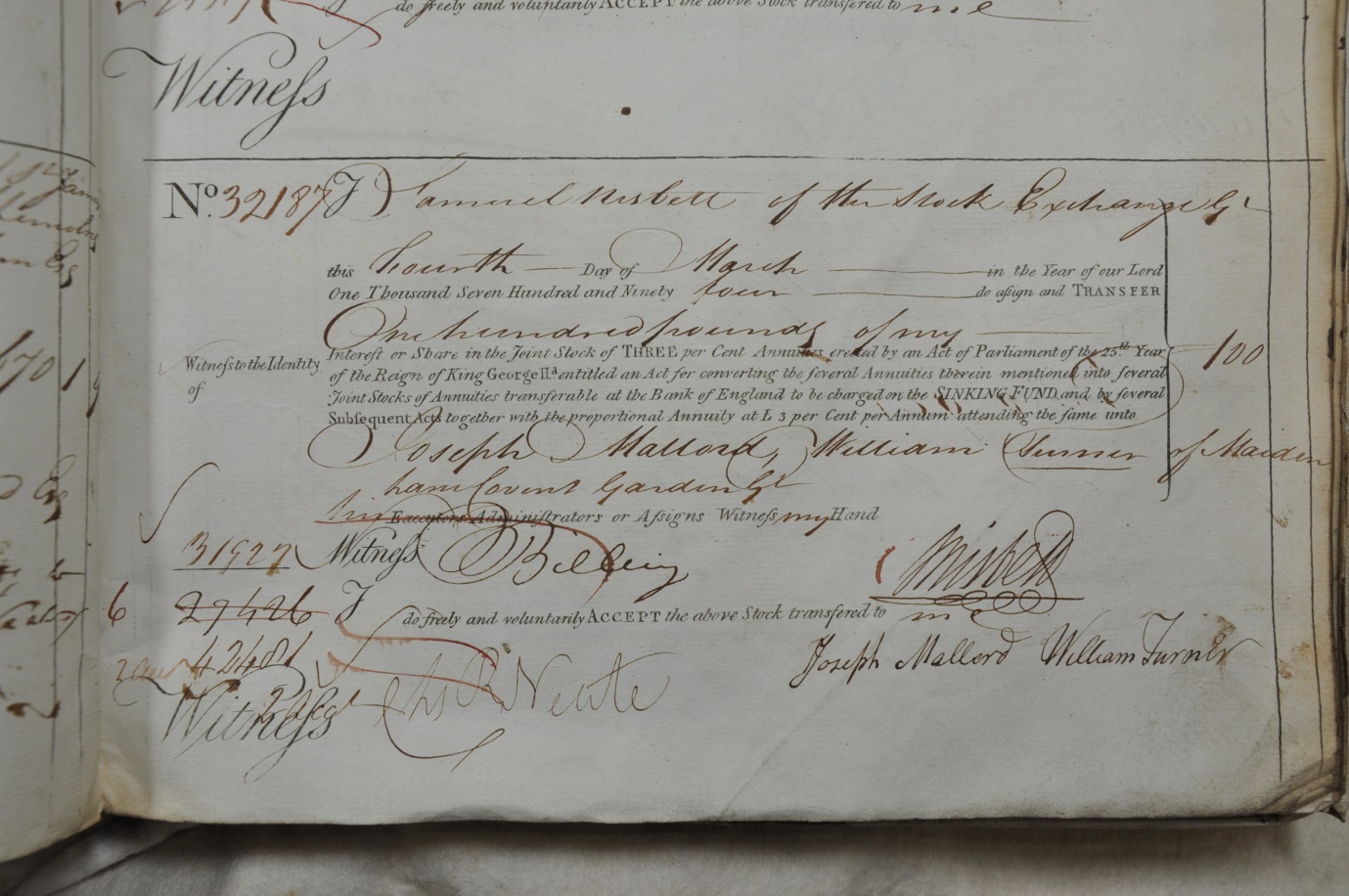
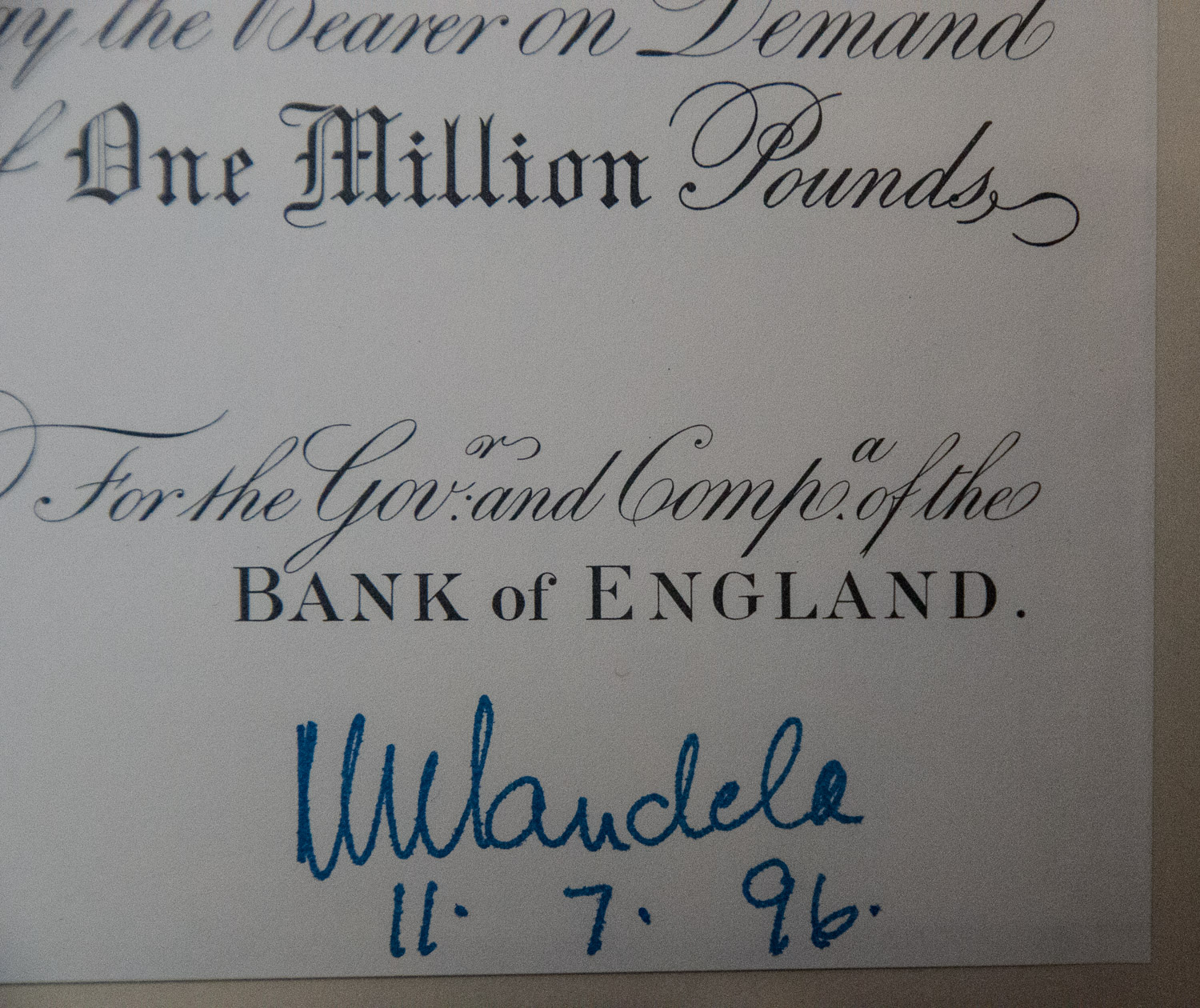
There are some fascinating documents including …

A very early cheque dated 8 December 1660.

A document signed by the first President of the United states, George Washington, and his wife Martha …

The signature of William Pitt the Elder …

And J M W Turner …

And finally a memento of when Nelson Mandela briefly became the Bank’s Chief Cashier when he was a guest in 1996 …

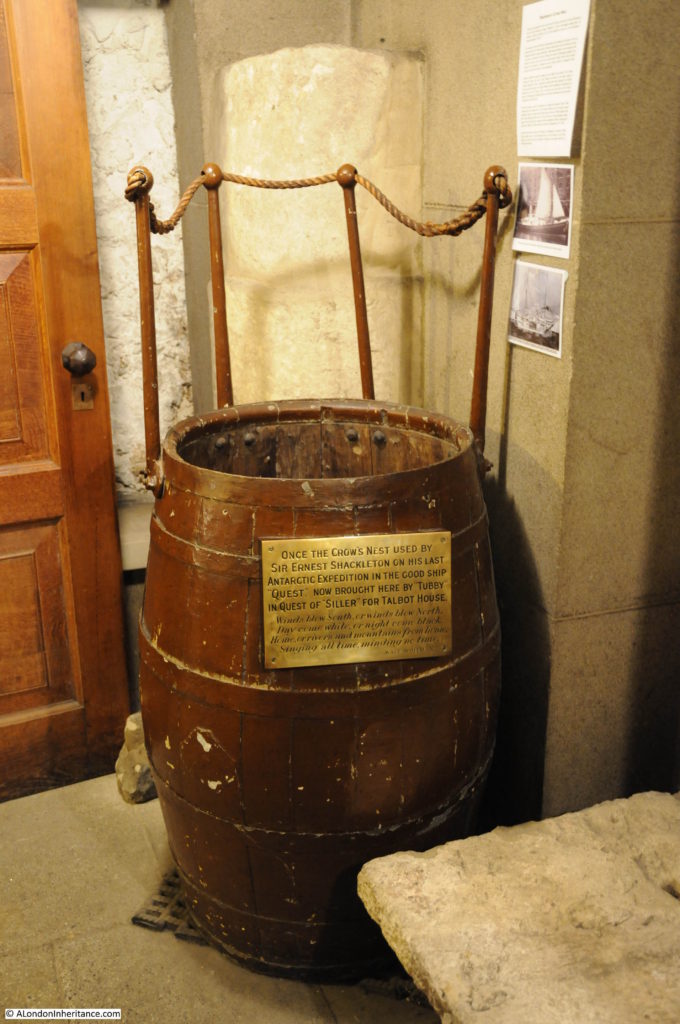
My next visit was to the Crypt at All Hallows-by-the-Tower on Byward Street EC3. The church was seriously damaged during the War but has now been beautifully restored and, when you have had a look around, head downstairs to the crypt. Here, in what is part of the original Saxon church, you will find the original crow’s nest from a ship …

Photo by A London Inheritance.

The Quest sailed from 1917 until sinking in 1962 and was the polar exploration vessel of the Shackleton–Rowett Antarctic Expedition of 1921-1922. It was aboard this vessel that Ernest Shackleton died on 5 January 1922 while the ship was in harbour in South Georgia.

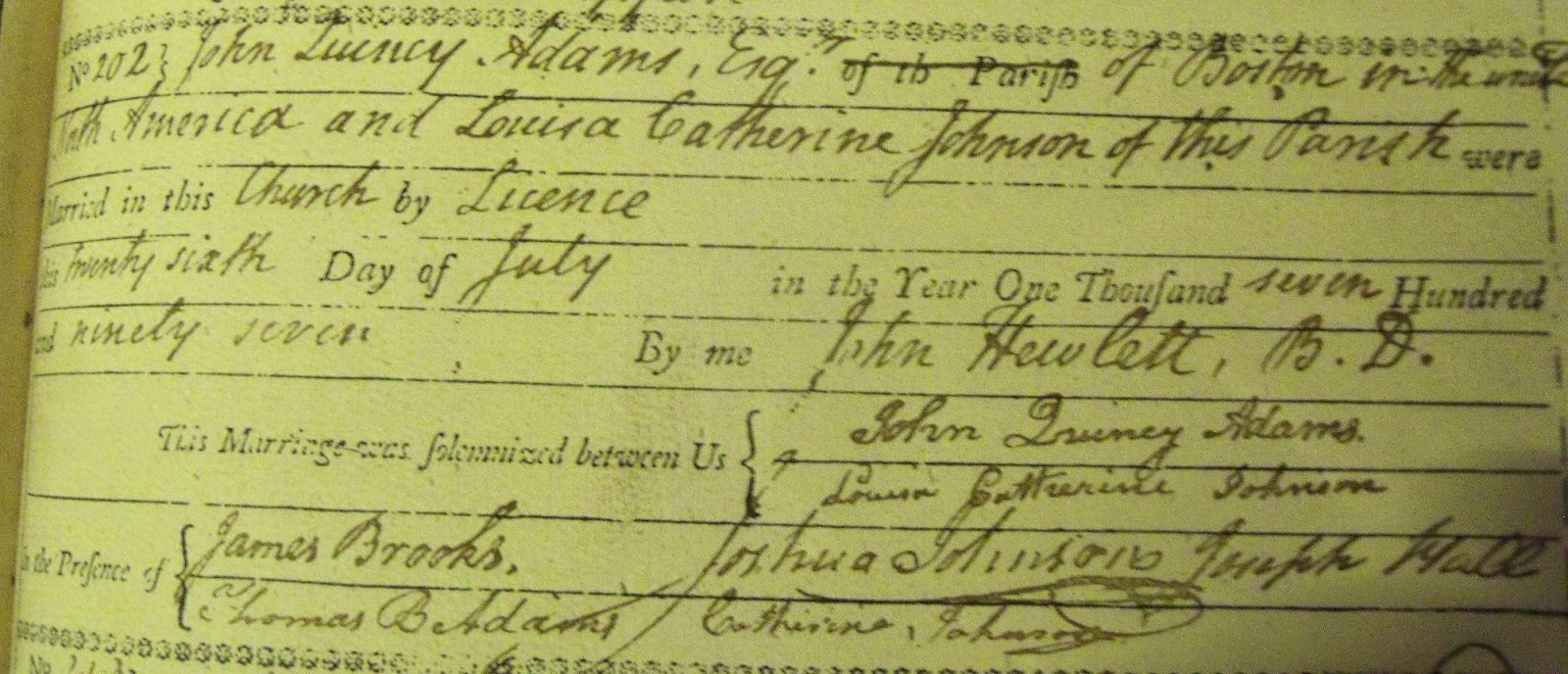
Nearby is displayed the marriage certificate dated 26 July 1797 of John Quincy Adams, later to become the sixth President of the United States. It was his wife Louisa, a local London girl, who was the only foreign born first lady of the United States until the arrival of Melania Trump.

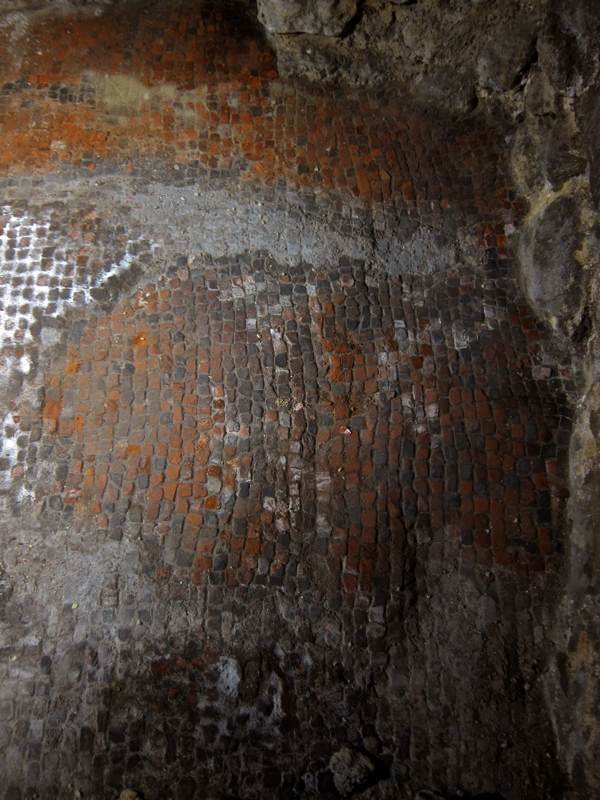
Also in the crypt are remains of the floor of a second or third century Roman house, including part of a corridor and adjacent rooms …

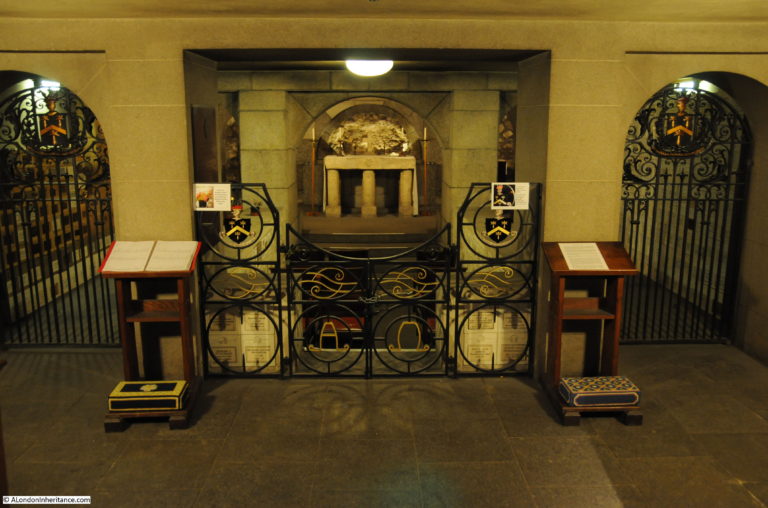
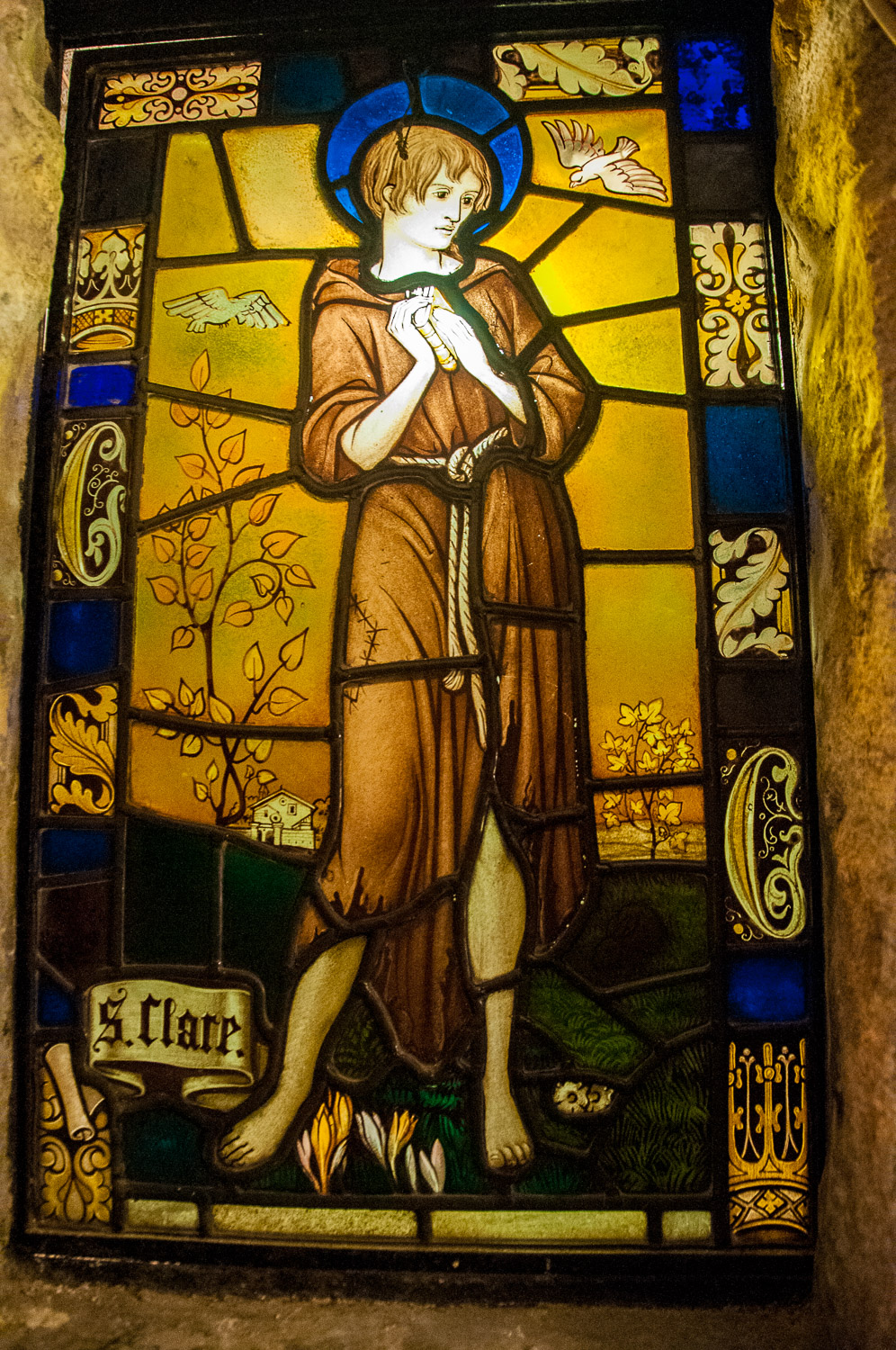
Beneath the present nave is the undercroft of the Saxon church containing three chapels: the Undercroft Chapel, the Chapel of St Francis of Assisi and the Chapel of St Clare.

The Undercroft Chapel. Picture by A London Inheritance.

The Undercroft Chapel is constructed out of the former ‘Vicars’ Vault’, and is now a columbarium for the interment of ashes of former parishioners and those closely associated with the church.

The pretty St Clare chapel stained glass.

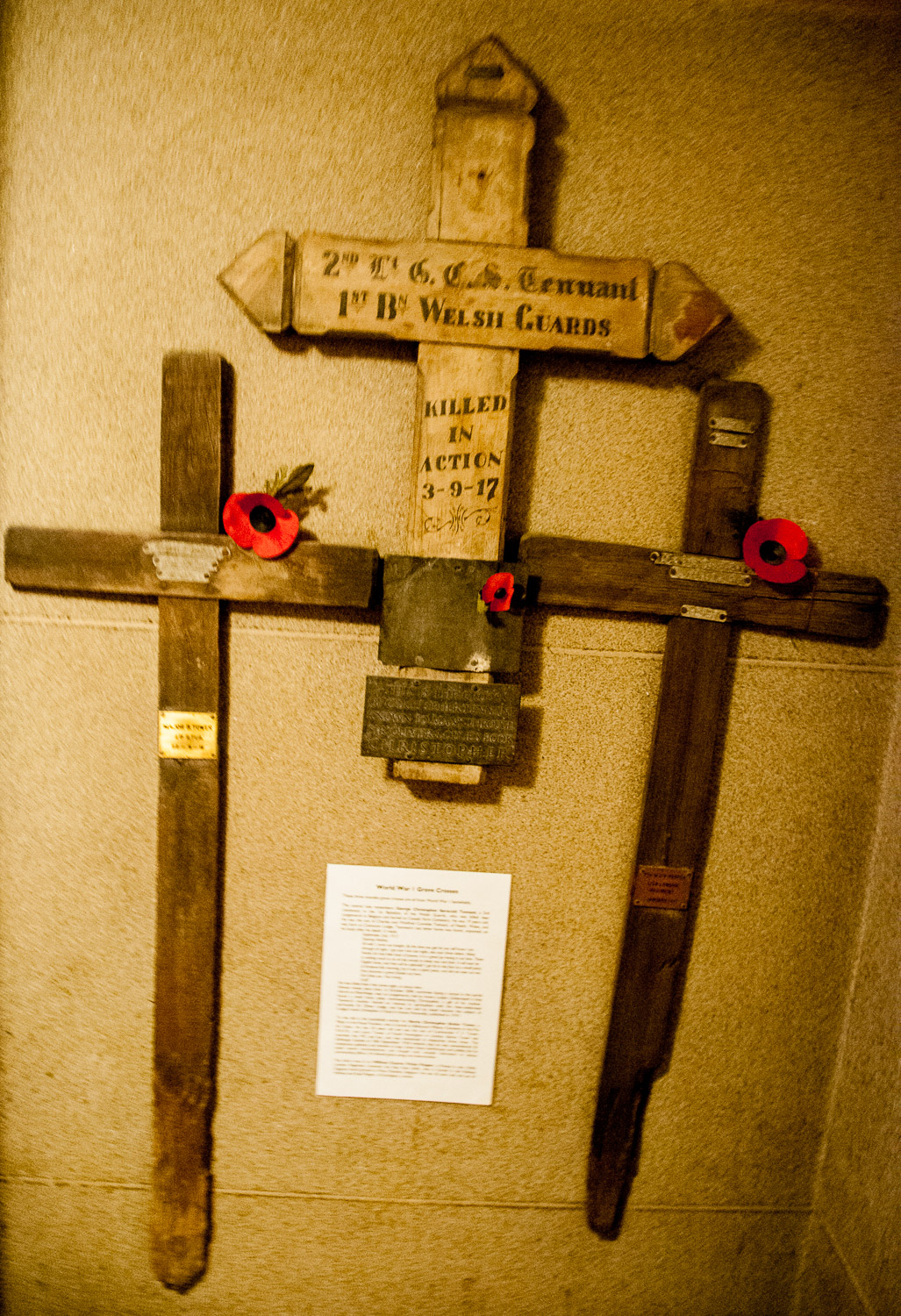
Since this year marks the 100th anniversary of the end of the Great War, I will end this blog with these three crosses removed from World War I battlefields and which can be seen in the museum …

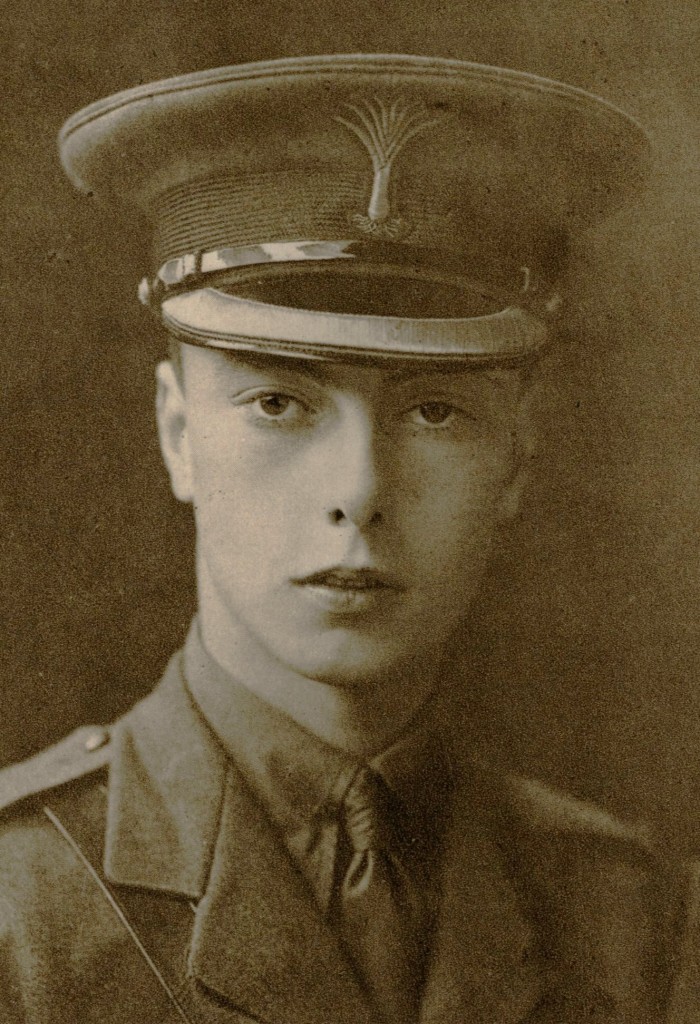
I have done some research on the three men but have only been able to find a picture of one of them.

On the left, Major B. Tower, MC and bar, mentioned in dispatches three times and now buried at Bellacourt Military Cemetery in the Pas-de-Calais. The Edinburgh Gazette of 18th September 1918 remarks that he was remembered ‘for conspicuous gallantry and devotion to duty. Under heavy machine gun and artillery fire he made several reconnaissances and brought back valuable information to various commanding officers. He showed great energy and determination.’

The cross on the right marked the grave of W. C. V. Pepper, a Private in the 1/24th London Regiment and previously the East Kent Buffs. He is buried in Railway Dugouts Burial Ground in West Flanders, Belgium – he was 20 years old and died on New Year’s Day 1917.

In the centre 2nd Lt. G.C.S Tennant. His last letter home was found unposted on his body after his death. It reads:

Sept. 2nd 1917.

Dearest Mother,

All well I come out tonight. By the time you get this you will know I am through all right. I got your wire last night, also your three letters. Many thanks for that little book of poems. It is a great joy having it out here. There is nothing much to do all day except sleep now and then. It will soon be English leave, and that will be splendid! I got hit in the face by a small piece of shrapnel this morning, but it was a spent piece, and did not even cut me. One becomes a great fatalist out here.

God bless you, your loving Cruff.

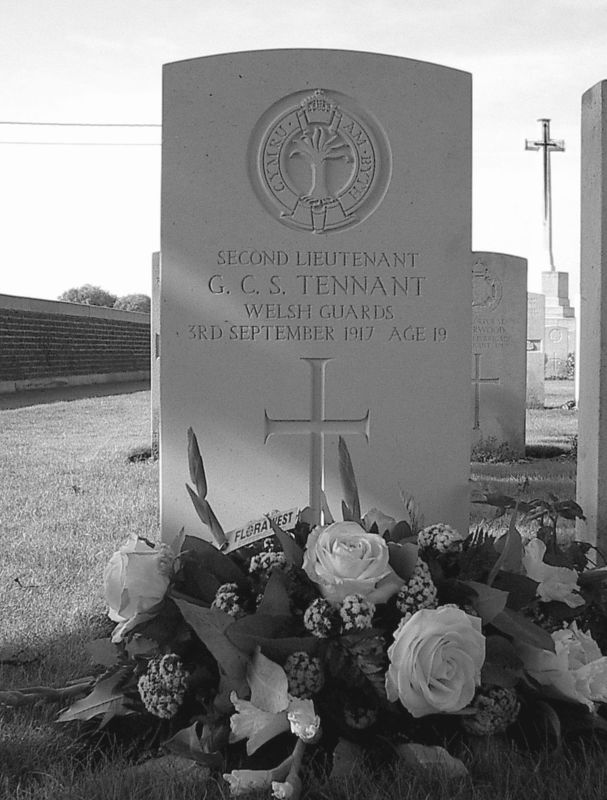
He was killed later that night, at about 4.00 am, and is now buried at Canada Farm Cemetery. He was 19 years old.

George Christopher Serocold Tennant (1897-1917).

After his death one of his men attested:

‘He was specially loved by us men because he wasn’t like some officers who go into their dug-outs and stay there, leaving the men outside. He had us all in all day long … The men would have done more for him than for many another officer because he was so friendly with them and he knew his job. He was a fine soldier, and they knew it.’


Page 138 of 151

Powered by WordPress & Theme by Anders Norén

Symbols & Secrets
Privacy Overview

This website uses cookies so that we can provide you with the best user experience possible. Cookie information is stored in your browser and performs functions such as recognising you when you return to our website and helping our team to understand which sections of the website you find most interesting and useful.