Walking the City of London

Category: Art Page 11 of 30

Fire in the City! Artists in the Blitz.

Five City churches are currently hosting an exhibition of reproductions of paintings by firefighter artists along with contemporary photographs from the London Fire Brigade archive.

The works are displayed on pop-up screens. For example, this one is at

St James Garlickhythe

And this one is in St Mary Aldermary

You will find details of participating churches at the end of the blog along with opening times.

Here I am going to publish examples of some of the work on display, starting with my favourite, Driving by Moonlight, by Mary Pitcairn …

It depicts an AFS volunteer, Gillian “Bobbie” Tanner, at the wheel of a truck. She was awarded the George Medal for bravery and the citation read: ‘On the night of 20 September 1940, Auxiliary G.K.Tanner volunteered to drive a 30 cwt lorry loaded with 150 gallons of petrol. Six serious fires were in progress and for three hours Miss Tanner drove through intense bombing to the point at which the petrol was needed, showing coolness and courage throughout‘.

During the Second World War, women joined the fire service for the first time as volunteers in the AFS working in a variety of roles ranging from control operators to dispatch riders and delivery drivers.

AFS women despatch riders around 1940 …

A 1941 oil painting by Reginald Mills of Mrs Kathleen Sayer an AFS Station Officer …

The Women’s Division of the AFS had its own leadership structure.

This portrait is by Bernard Hailstone

After the war Hailstone had a very successful career as a portrait painter. A gregarious, outgoing man, he went on to paint the last officially commissioned portrait of Sir Winston Churchill in 1955 and later members of the Royal family.

Here he is at work as a fireman circa 1940 attaching a hose to a fire hydrant …

Resting at a Fire by Reginald Mills, around 1941 …

This image has an empty alt attribute; its file name is 9CC50303-E875-4C60-ACCE-DB3DC5C1D9DB_1_201_a-1024x734.jpeg

These AFS firefighters are surrounded by rolled up hose, resting in the back of an appliance vehicle which pulls a trailer pump, while their colleagues in the background continue to fight a fire. You can see a church spire in the background.

Bells Down by Julia Lowenthal …

Julia Lowenthal’s drawings and paintings gave remarkable insights into life inside the fire stations during the Blitz. Unlike most of her fellow firefighter artists she worked primarily in pencil and watercolour. Lowenthal was based in Kilburn and most of her surviving work is of colleagues in the station, and often at rest. Her watercolour sketch Bells Down refers to firefighters being called to action by bells in their fire station.

At the top of a turntable ladder in Eastcheap directing water into a blazing building, terrifying …

Also terrifying, Run! by Reginald Mills ..

There are examples of extraordinary works by Paul Dessau. In one set, four scenes show different stages of the battle to conquer the flames, much in the style (if not the subject matter) of a Hogarth series. Look closely and you’ll see a monstrous form in each panel. In the first stage, termed Overture by the music-loving Dessau, the bombs begin to fall and a smokey menace looms large over the City …

In Crescendo, the flames take hold as a fiery giant smashes down buildings …

Rallentando, as the name suggest, shows the beast tempered, its infernal form withered but still intimidating …

In the final scene, Diminuendo, the foe lies vanquished amid the smoking rubble, the firemen victorious. Yet the creature has untold siblings who will return night after night to challenge the city’s protectors anew …

Cannon Street – also by Dessau …

Aftermath of a bombing raid near Cheapside with St Paul’s in the background …

Rescuing Horses by Reginald Mills …

Red Sunday, 29 December 1940 by W.S.Haines. Haines was a member of the London River Service and unlike other firefighter artists he was not working in the tight confines of the City of London. This meant he had the opportunity for more panoramic pictorial compositions. Here you can see St Pauls Cathedral and the spires of City churches, through the iconic silhouette of Tower Bridge …

The London Blitz lasted from 7 September 1940 until 11 May 1941 and between 7 September and 2 November heavy bombing continued every night except one. More than 20,000 Londoners were killed including 327 men and women from the fire service with over 3,000 seriously injured. The Germans’ key weapon in the Blitz was the incendiary bomb, a device designed not to explode on impact, but able to burn at 2,500 degrees. Thousands of these were dropped creating fires that threatened to overwhelm the capital.

The firefighter memorial opposite St Paul’s Cathedral …

Part is dedicated to the women who died whilst serving in wartime. The lady on the left is an incident recorder and the one on the right a despatch rider …

Fire in the City is open now and can be seen in the following churches:

  • St Mary-le-Bow: Monday to Friday, 7.30am – 6.00pm. Open weekends on an informal basis.
  • St James Garlickhythe: Monday to Wednesday, 10.00am – 4.30pm, Thursday, 11.00am – 3.00pm, Sunday: 9.00am – 1.00pm. Friday & ​​Saturday, Closed.
  • St Mary Aldermary: Tuesday to Friday, 7.30am – 4.00pm
  • St Magnus the Martyr: Tuesday to Friday, 10.00am – 4.00pm, Sunday, 10.00am – 1.00pm (Mass at 11am)
  • St Stephen Walbrook: Monday to Friday, 10.30am – 3.30pm

(Venue details may be subject to change so it is advised to check individual church websites for the latest information). The exhibition will move to a second cluster of churches from Monday 23 October until the end of November (with selected venues hosting displays into December).

If you would like to follow me on Instagram here is the link …
https://www.instagram.com/london_city_gent/

My visit to 22 Bishopsgate.

I think it would be fair to say that 22 Bishopsgate is ‘not everyone’s cup of tea’ and I too am rather ambivalent about it. Second only to The Shard in height, it dominates the City and stands at 278 m (912 ft) tall with 62 storeys. At an all-inclusive total of just over 195,000 sq metres, it’s probably the largest office building ever built in Britain. It even looks down on Tower 42, seen here in the foreground (and pictured later) along with The Gherkin and the Walkie Talkie …

The view of the building from Bank Junction and the Royal Exchange …

Last Saturday the viewing gallery on the 58th floor was opened specially for ‘local residents’ so, of course, I couldn’t resist the opportunity to look down on the City from a new perspective.

A nice surprise was to be had walking through the main reception area where special artwork has been commissioned …

I really liked these wall hangings …

Then onward to the lifts …

With ears popping, we watched the screen in the lift monitor our progress towards our destination, the 58th floor …

You walk out into a vast viewing area with rather disconcerting floor to ceiling glass (at least it’s rather disconcerting for people like me who are not mad keen on heights) …

The views are as spectacular as one might expect …

Looking down on Tower 42 you can see its original design replicating the NatWest Bank logo if seen from above (it was originally the NatWest Tower) …

Canary Wharf in the misty distance …

Next week I’ll be back down to earth, writing about my walk east along the river. Here’s a small sample.

Can you see the chap balanced on a plinth looking across the river …

Here he is again (rather in need of a clean-up, seagulls have no respect for art) …

More about him next week, as well as this ramp where, in 1857, a famous ship was launched …

If you would like to follow me on Instagram here is the link …
https://www.instagram.com/london_city_gent/

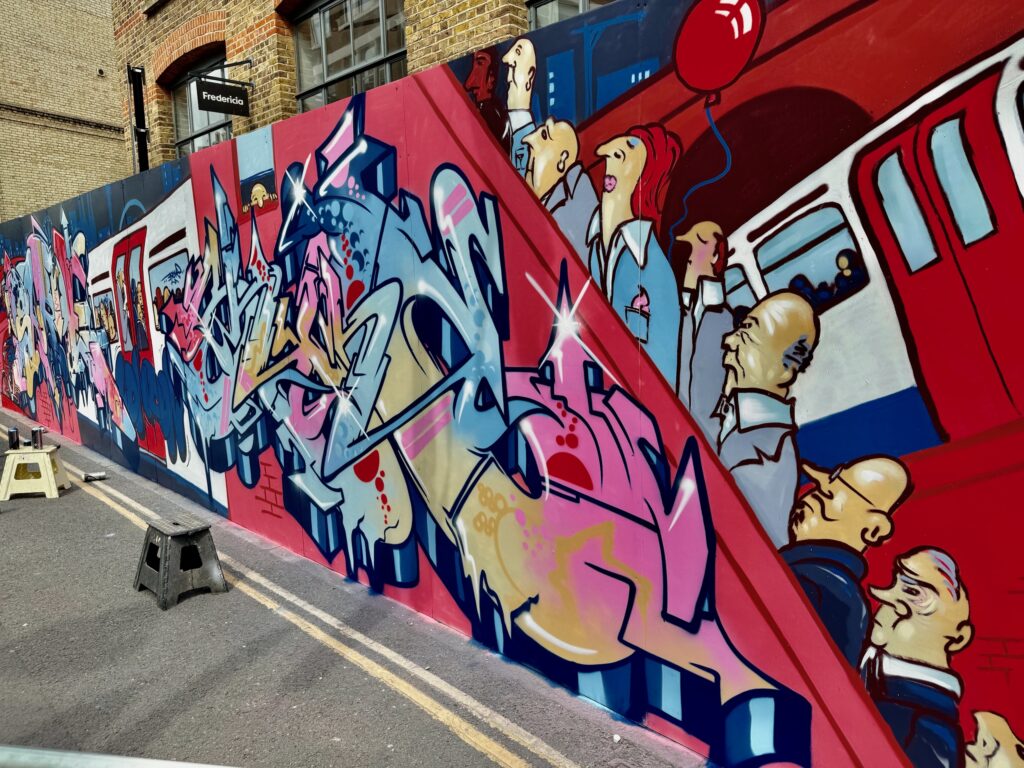
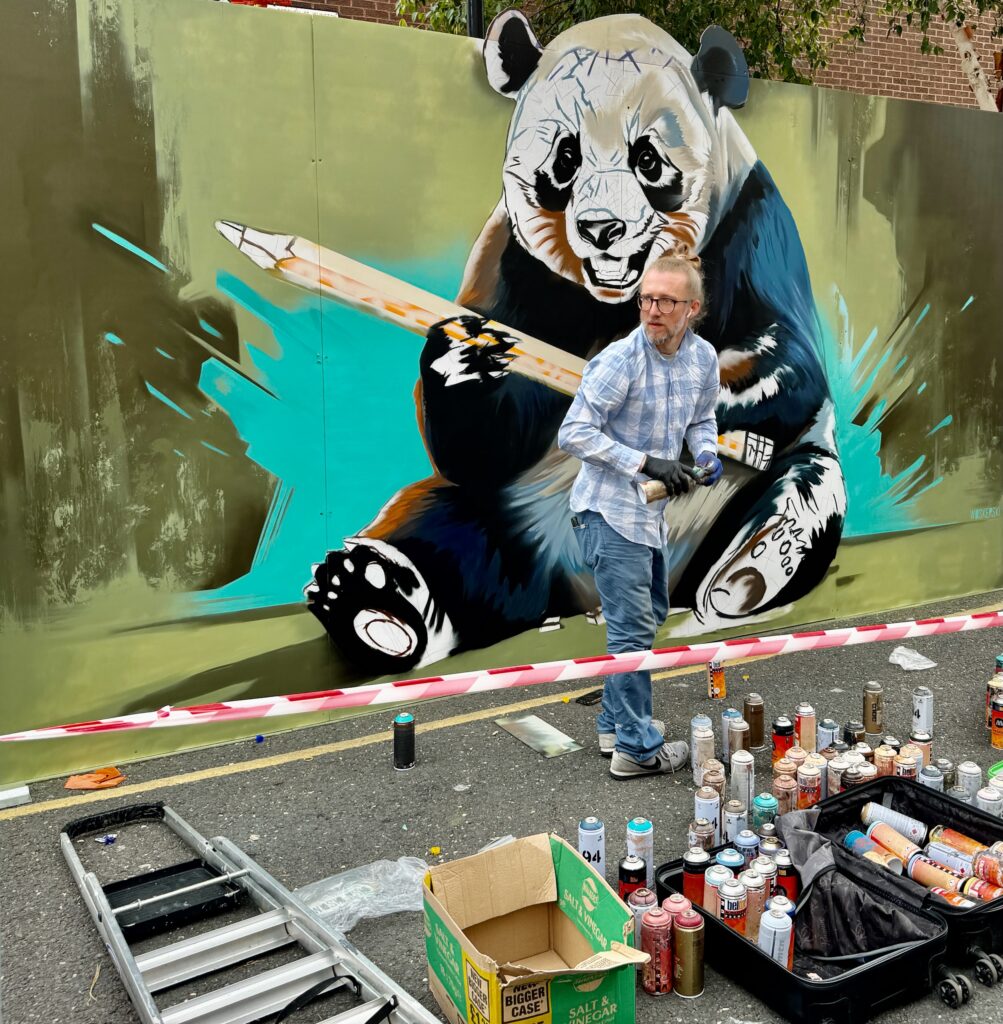
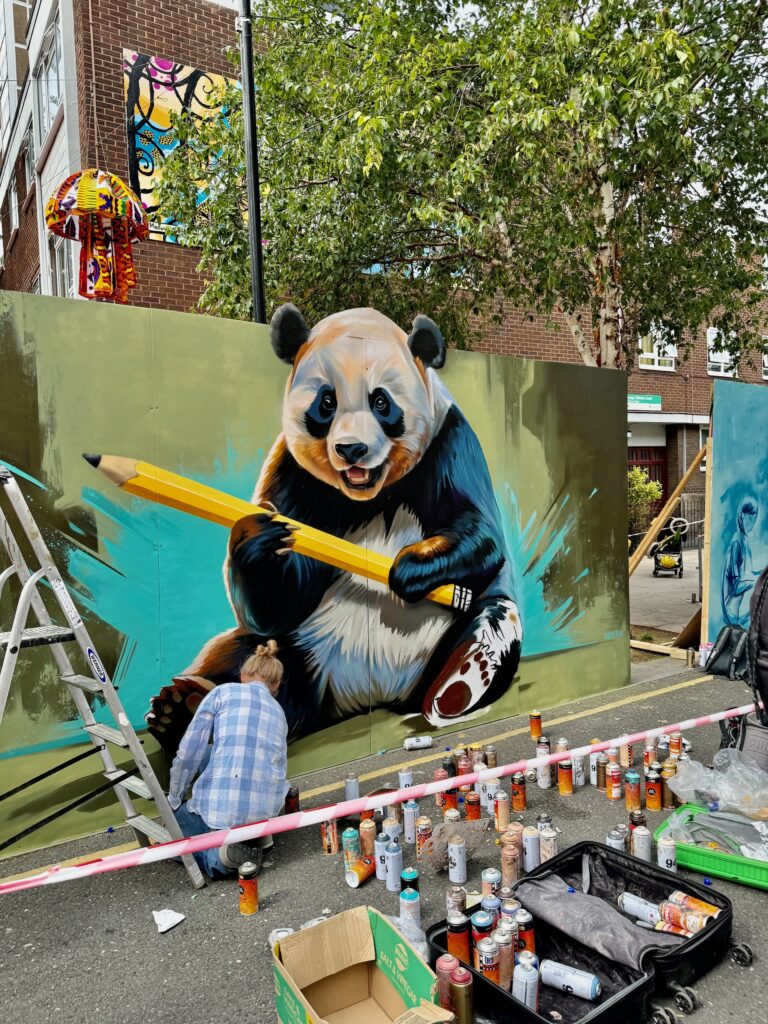
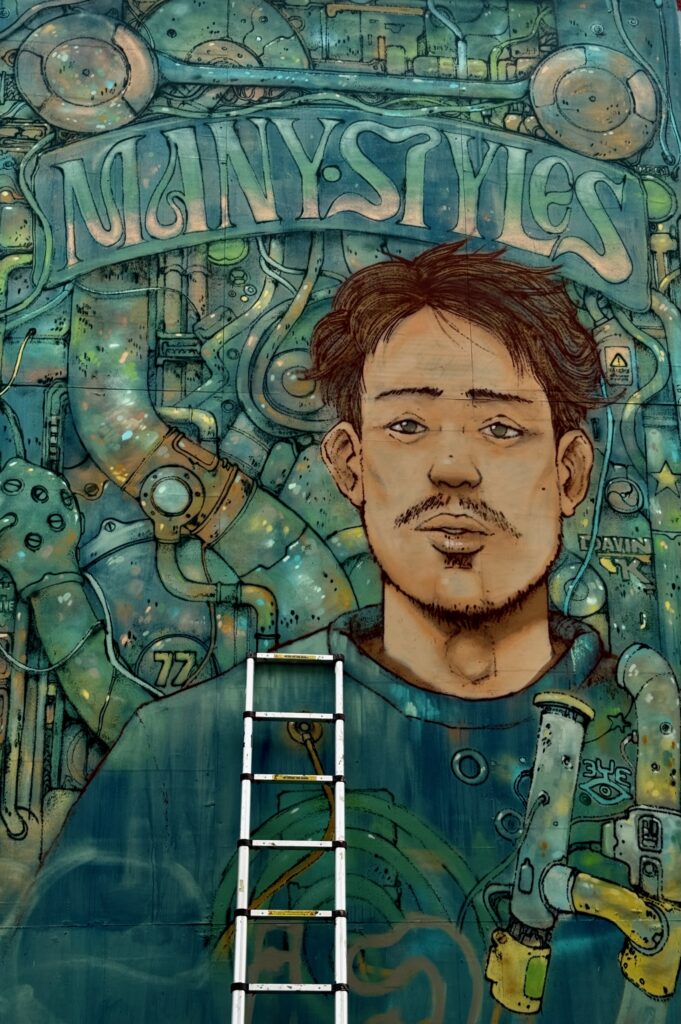
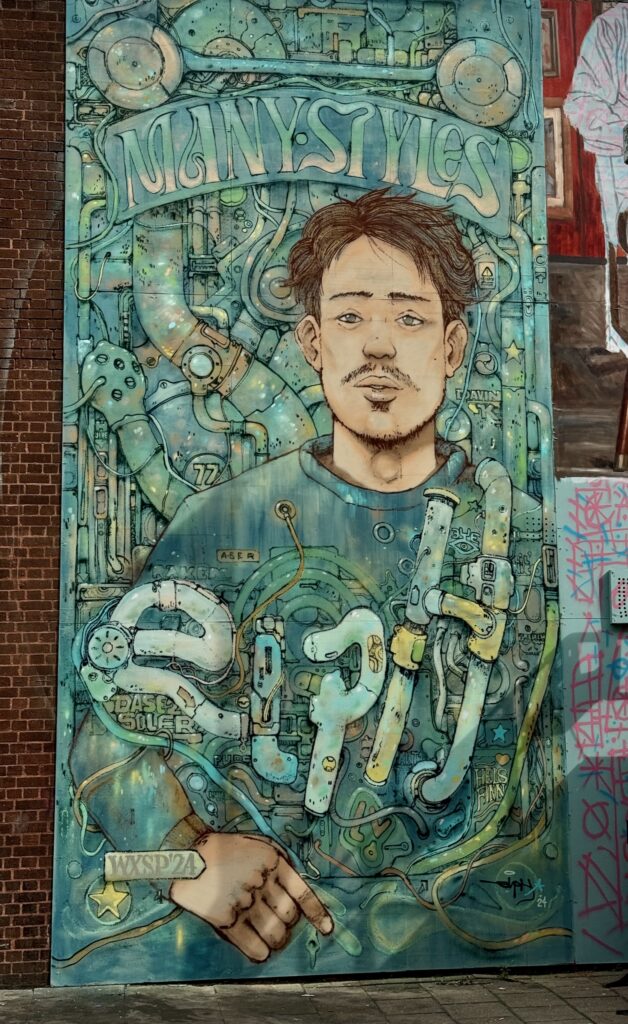
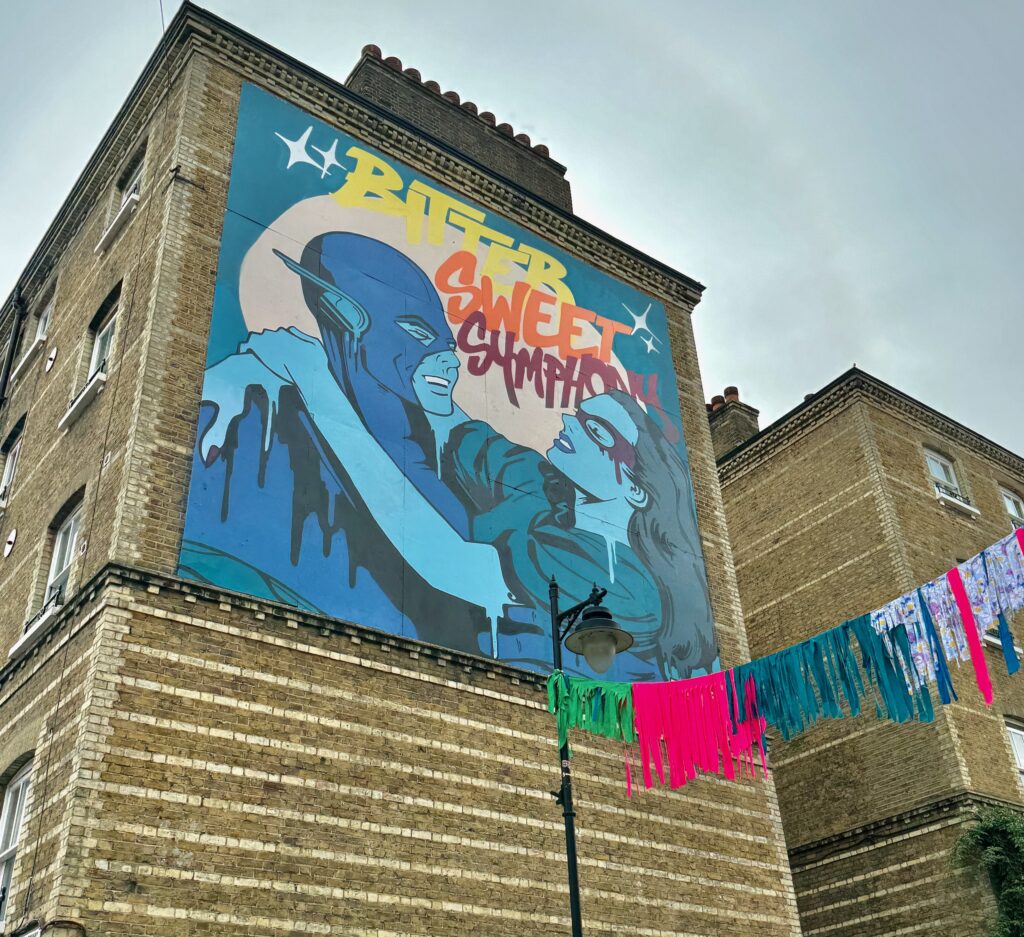
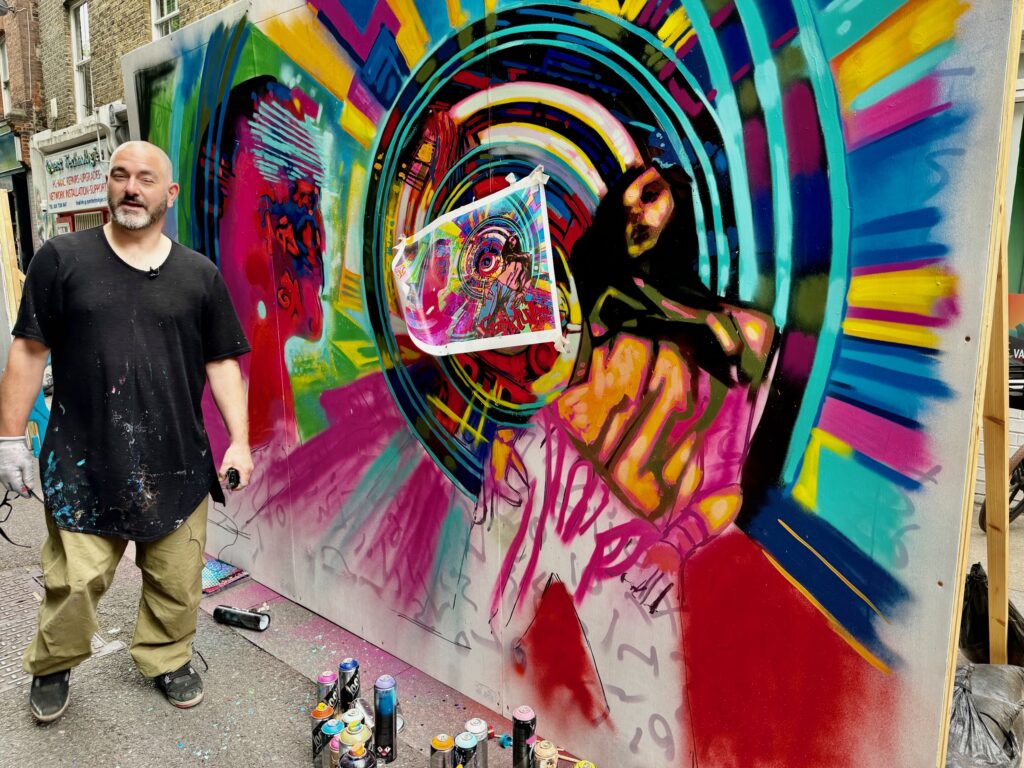
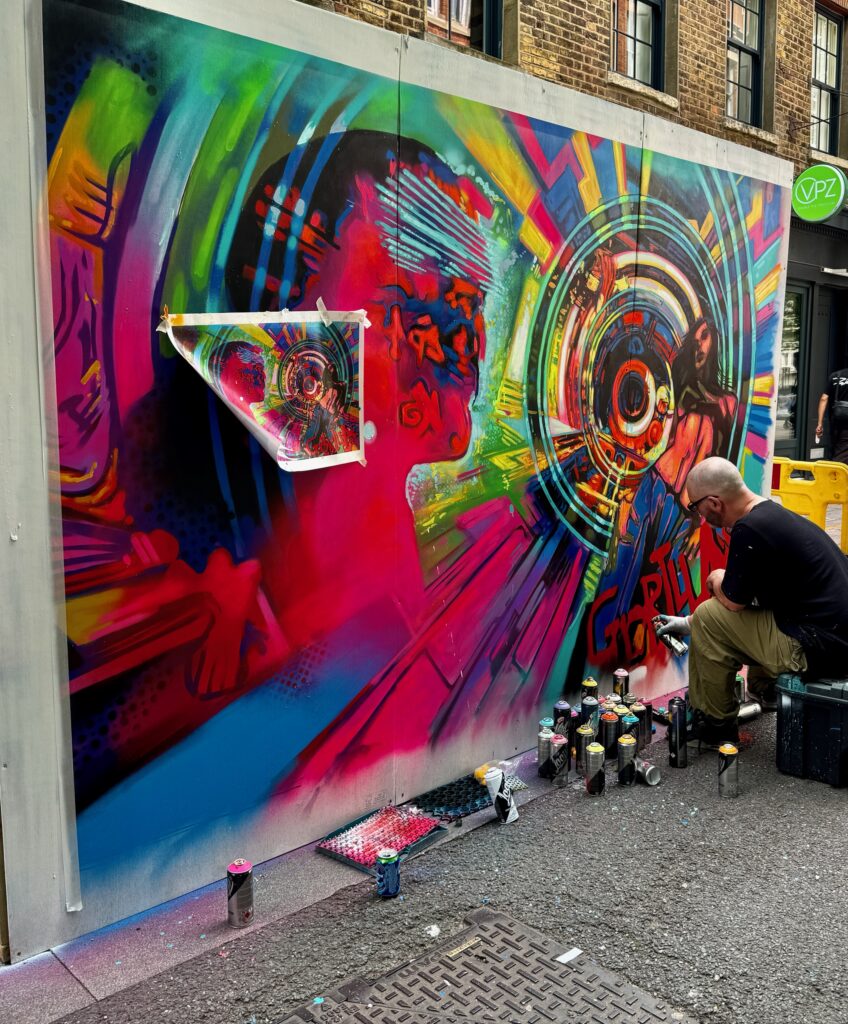
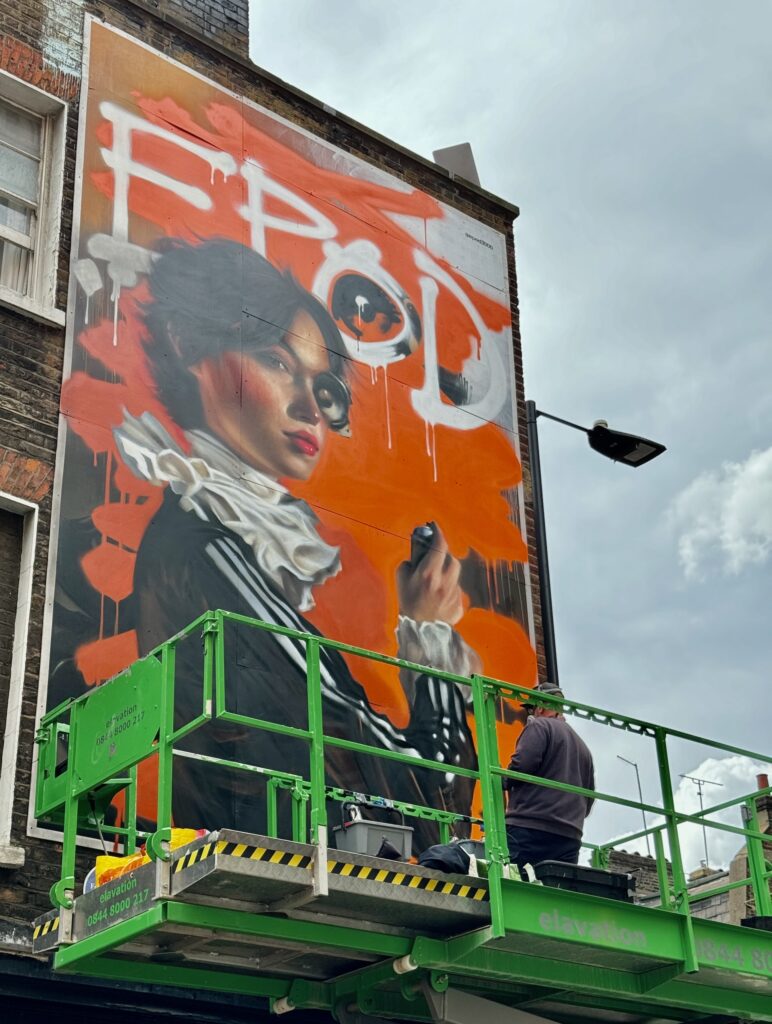
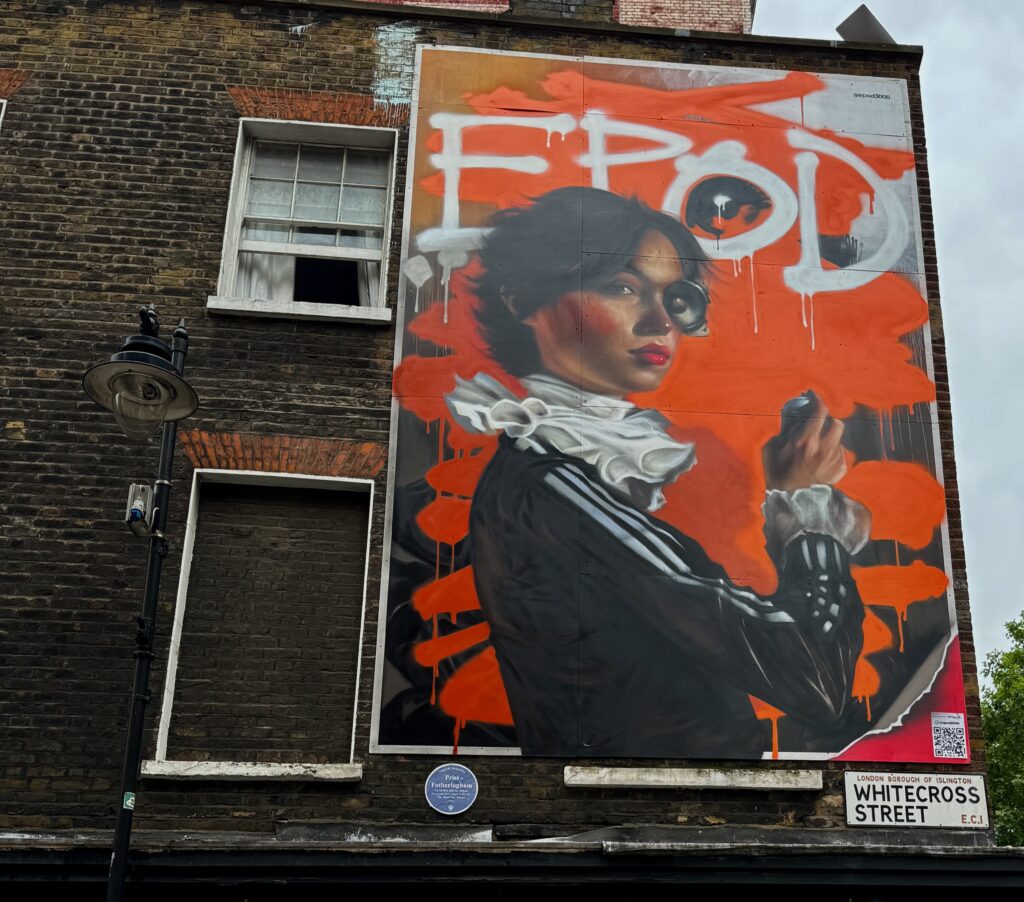
New art on Whitecross Street.

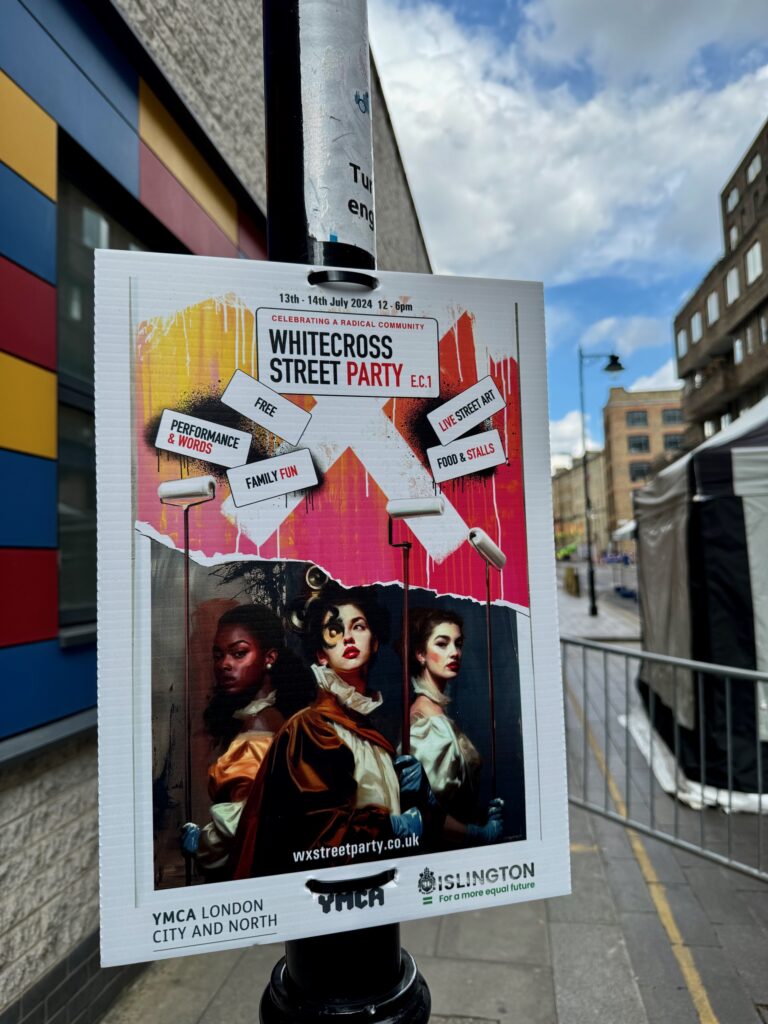
I was teribly disappointed this year when I had to miss the Whitecross Street Party. I read also that, because of inclement weather, it had been restricted to one day rather than two.

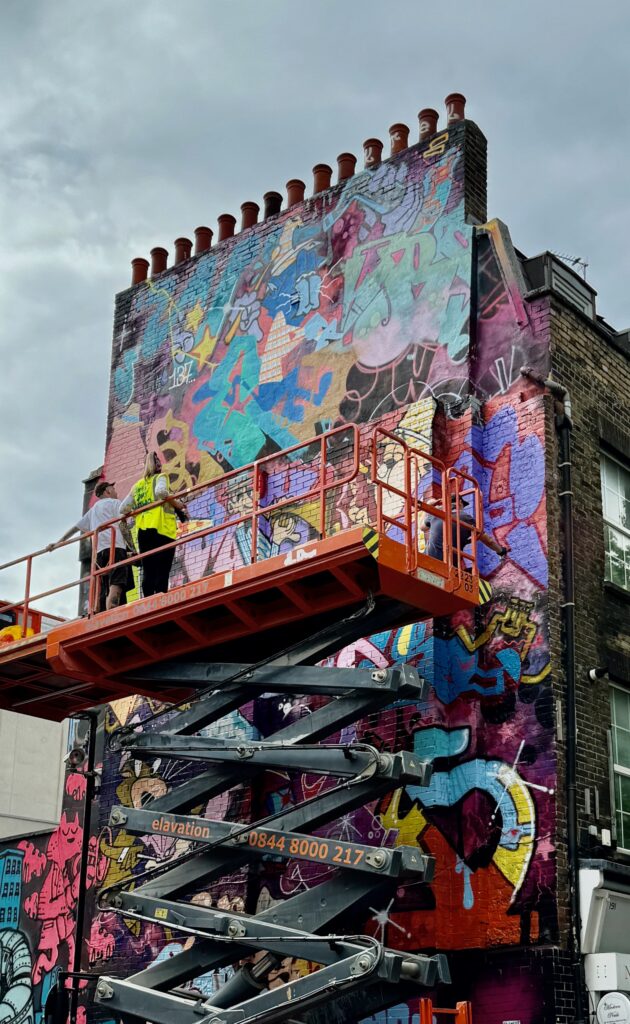
The party is a time when the brilliant Whitecross Street art is replenished and so it was with some trepidation that I visited again yesterday (when we finally had some sunshine!) to see what had been produced.

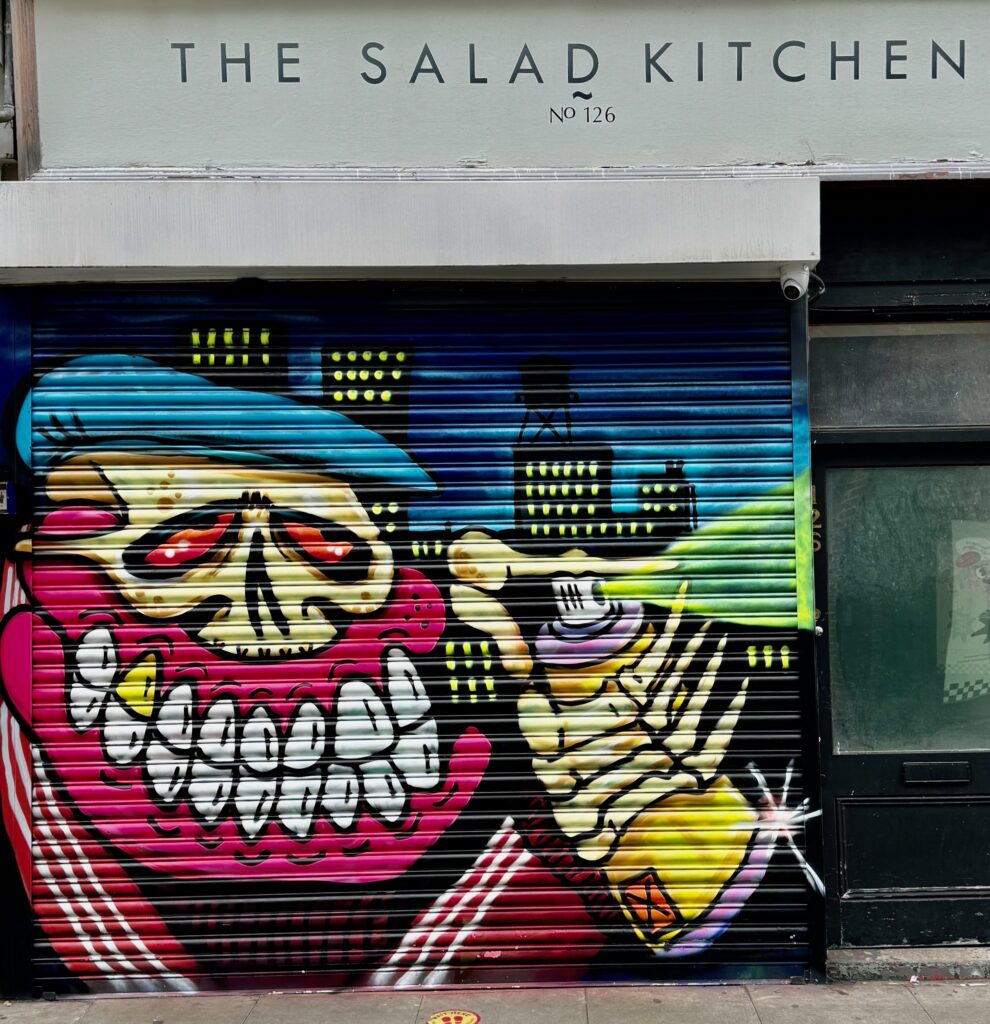
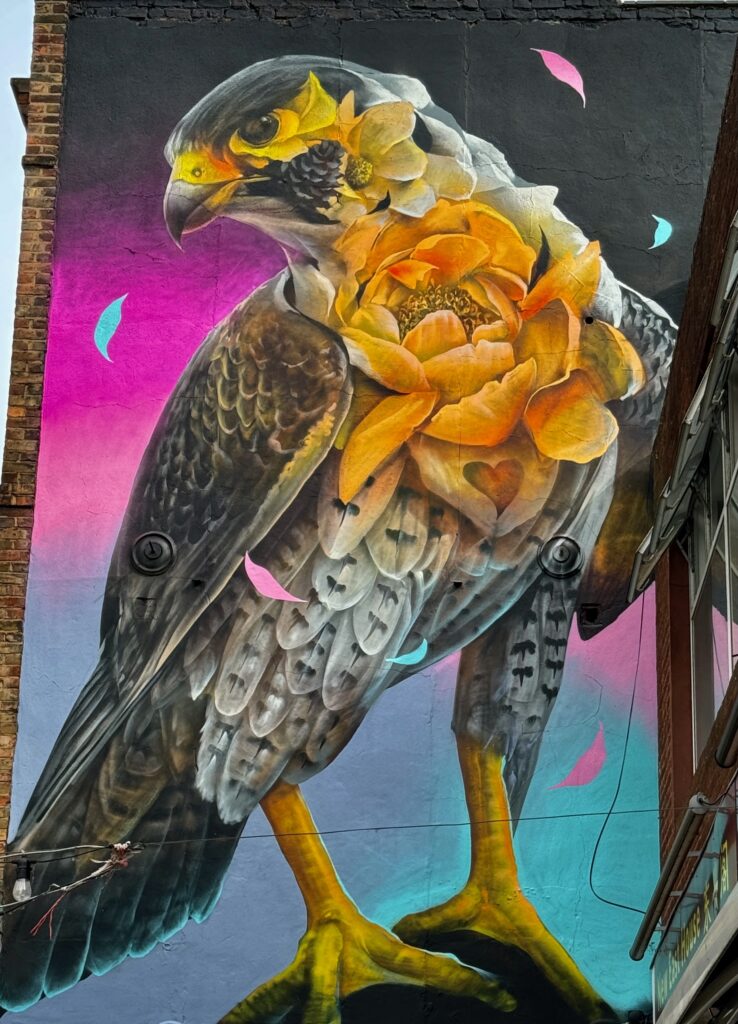
I needn’t have worried. Some old favourites remain and the new work is terrific. Here’s my selection but do go along if you can and see for yourself – especially if it’s a sunny day and you fancy some of the excellent street food that’s available lunchtime Monday to Friday.

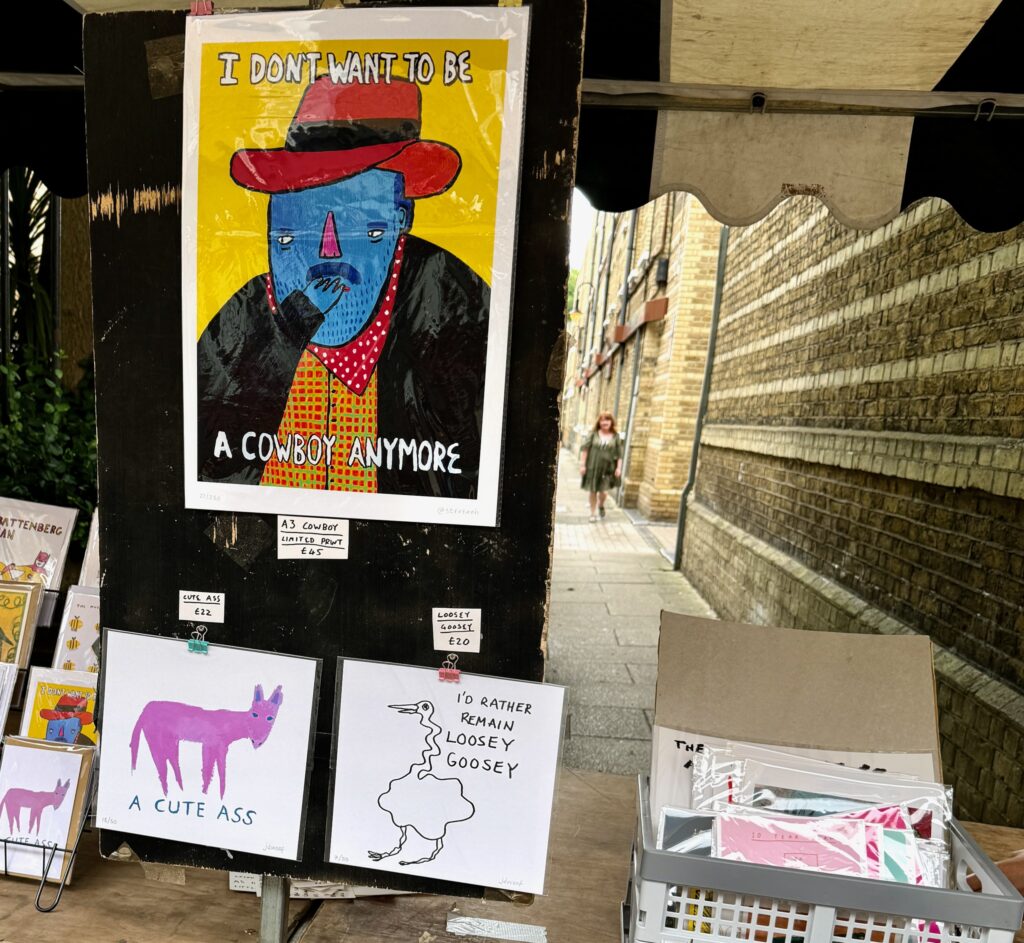
And, as always, there’s some humour too …

Some of my old favourites that are still there …

And finally a tribute to our wonderful City gardeners who brighten up our streets and gardens. I particularly notice the beds in Silk Street since I walk past them almost every day.

From planting on 12th June to full glory on 3rd August with progress in-between …

Poor, lonely echinacea. ‘What am I doing among all these salvias?’

If you would like to follow me on Instagram here is the link …
https://www.instagram.com/london_city_gent/

Page 11 of 30

Powered by WordPress & Theme by Anders Norén

Symbols & Secrets
Privacy Overview

This website uses cookies so that we can provide you with the best user experience possible. Cookie information is stored in your browser and performs functions such as recognising you when you return to our website and helping our team to understand which sections of the website you find most interesting and useful.